Tag: Motley Fool

  • These 2 ASX 300 shares were just upgraded by brokers

    a man in a business suite throws his arms open wide above his head and raises his face with his mouth open in celebration in front of a background of an illuminated board tracking stock market movements.a man in a business suite throws his arms open wide above his head and raises his face with his mouth open in celebration in front of a background of an illuminated board tracking stock market movements.

    Brokers are expecting good things from two S&P/ASX 300 Index (ASX: XKO) shares, judging by today’s rating and price target upgrades.

    A price target is where a broker thinks a share price could be in 12 months from today. The higher the target, the more the brokers expect the company to deliver in terms of share price growth. Of course, there’s no guarantee any share price will rise a certain amount in 12 months – it might not rise at all.

    Having said that, let’s look at two of the ASX 300 shares that brokers are more optimistic about.

    Boss Energy Ltd (ASX: BOE)

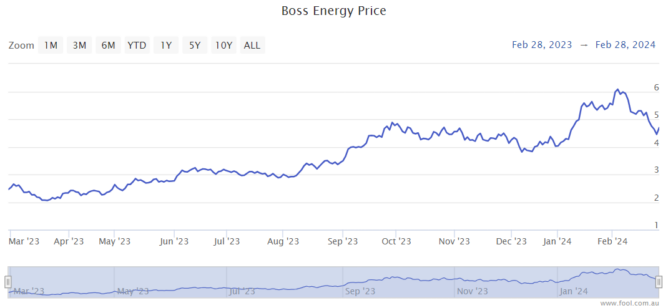
    Broker Bell Potter raised its rating on the energy company to a speculative buy with a price target of $6.34.

    At the current Boss Energy share price, that implies a possible rise of around 30% from here.

    As reported by my colleague James Mickleboro, Bell Potter said this about the ASX uranium share:

    Our valuation is reduced slightly to $6.34/sh (previously $6.41/sh) on changes to our corporate expenditure and associated earnings. With the recent sell-off in BOE we have decided to move to a Speculative Buy (from Speculative Hold) in-line with our ratings structure.

    Uranium fundamentals continue to support our thesis being 1) advancement in Nuclear energy across the globe (60 reactors currently under construction) filtering through to a growing demand for U3O8 and 2) a lack of near-term supply as producers exited the market post Fukushima.

    The recent acquisition of a 30% interest in the Alta Mesa joint venture, diversifies BOE’s operations and revenue streams, making BOE one of only two geographically diversified uranium producers in CY24.

    Thanks to a $62.3 million gain on its “investment in uranium and financial assets”, Boss Energy was able to report an accounting net profit of $57.6 million in the FY24 first-half result, up from a loss of $2.4 million in the prior corresponding period.

    The ASX 300 share also announced it has passed another critical milestone in the development of its Honeymoon project, with the start of commissioning the first ion-exchange circuit within the processing plant. The business added it had seen successful modification and refurbishment of the re-agent systems.

    Those achievements mean Honeymoon is now running 24 hours a day, seven days a week, accelerating its push towards production and ramp-up.

    In the past year, the Boss Energy share price has risen by 90%.
    APM Human Services International Ltd (ASX: APM)

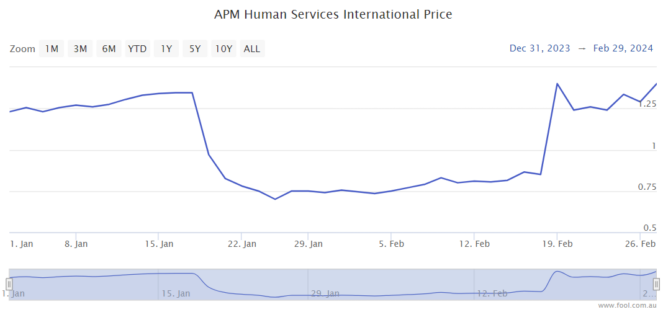
    The broker Jefferies has raised its price target on the ASX 300 share to $1.80. That would be a rise of around 12% from the current APM Human Services International share price.

    Yesterday, the business reported its FY24 first-half result and announced it had received an enlarged bid from CVC of $2 per share, which was 25% higher than the $1.60 per share bid.

    Jefferies’ price target is roughly halfway between the current price and the bid price.

    However, there’s no guarantee there will be a binding bid submitted, though CVC has been granted a four-week exclusivity period until 27 March 2024. The offer is conditional on several elements, including due diligence, debt financing and regulatory approvals.

    Since the start of 2024, the APM share price has risen close to 30%.
    The post These 2 ASX 300 shares were just upgraded by brokers appeared first on The Motley Fool Australia.

    Wondering where you should invest $1,000 right now?

    When investing expert Scott Phillips has a stock tip, it can pay to listen. After all, the flagship Motley Fool Share Advisor newsletter he has run for over ten years has provided thousands of paying members with stock picks that have doubled, tripled or even more.*

    Scott just revealed what he believes could be the ‘five best ASX stocks’ for investors to buy right now. We believe these stocks are trading at attractive prices and Scott thinks they could be great buys right now…

    See The 5 Stocks
    *Returns as of 1 February 2024

    (function() {
    function setButtonColorDefaults(param, property, defaultValue) {
    if( !param || !param.includes(‘#’)) {
    var button = document.getElementsByClassName(“pitch-snippet”)[0].getElementsByClassName(“pitch-button”)[0];
    button.style[property] = defaultValue;
    }
    }

    setButtonColorDefaults(“#0095C8”, ‘background’, ‘#5FA85D’);
    setButtonColorDefaults(“#0095C8”, ‘border-color’, ‘#43A24A’);
    setButtonColorDefaults(“#fff”, ‘color’, ‘#fff’);
    })()

    More reading

    Motley Fool contributor Tristan Harrison has positions in APM Human Services International. The Motley Fool Australia’s parent company Motley Fool Holdings Inc. has no position in any of the stocks mentioned. The Motley Fool Australia has recommended APM Human Services International. The Motley Fool has a disclosure policy. This article contains general investment advice only (under AFSL 400691). Authorised by Scott Phillips.

    from The Motley Fool Australia https://ift.tt/MywNgAn

  • Goldman Sachs says this US stock is replacing Tesla in the Magnificent Seven

    A woman is excited as she reads the latest rumour on her phone.A woman is excited as she reads the latest rumour on her phone.

    Top broker Goldman Sachs reckons US big pharma stock Eli Lilly And Co (NYSE: LLY) has the credentials to replace electric vehicle producer Tesla Inc (NASDAQ: TSLA) in the Magnificent Seven.

    That’s a pretty big call, but then again, Eli Lilly’s GLP-1 diabetes and obesity drugs are a pretty big deal.

    Why could this US stock replace Tesla in the Magnificent Seven?

    Just as electric vehicles have been a game changer in car manufacturing, GLP-1 drugs are a game changer in healthcare and the fight against the global epidemics of Type 2 diabetes and obesity.

    Eli Lilly is the second-mover in the GLP-1 space. It has followed Novo Nordisk (NYSE: NVO), the Danish pharmaceutical company that invented the more well-known GLP-1 drugs, Ozempic and Wegovy.

    But before we go any further, let’s recap who the Magnificent Seven are.

    The club comprises seven of the largest US tech stocks by market capitalisation that have led market returns in recent years. All of them are involved in large technology-driven global growth trends.

    They are Apple Inc, Amazon.com Inc, Alphabet Inc, Meta Platforms Inc, Microsoft Corp, Nvidia Corp, and Tesla Inc.

    The chart below shows their share price percentage growth rate over the past two years.

    Who is Eli Lilly?

    US stock Eli Lilly is a major pharmaceutical company founded by Colonel Eli Lilly 150 years ago.

    Eli Lilly’s diabetes drug is called Mounjaro. Its obesity drug, Zepbound, is simply a larger dose of the same ingredient in Mounjaro, which is tirzepatide.

    Tirzepatide is a GIP and GLP-1 receptor agonist, so it activates both GIP (glucose-dependent insulinotropic polypeptide) and GLP-1 (glucagon-like peptide-1) hormone receptors.

    This is what makes Eli Lilly’s products different to the GLP-1 products of its first-mover rival.

    Novo Nordisk manufactures the world-renowned diabetes drug Ozempic and its obesity equivalent, Wegovy. The key ingredient in both drugs is semaglutide, which is a GLP-1 receptor agonist only.

    Ozempic has the first-mover advantage in the GLP-1 space. The United States Food and Drug Administration approved Ozempic in December 2017, and then Wegovy in June 2021.

    The FDA approved Eli Lilly’s Mounjaro for diabetes in May 2022 and Zepbound in November 2023.

    While Ozempic and Wegovy are the most well-known GLP-1 brands, Zepbound is a significant threat given it is more effective for weight loss.

    In clinical trials, Zepbound delivered an average of 21% weight loss over 72 weeks in patients with obesity, but without diabetes, at the highest dose.

    This compares to a 15% to 16% average weight loss over 68 weeks in patients with obesity or overweight, but no diabetes, taking Wegovy.

    The future of GLP-1s and these US stocks

    Most experts agree the runway for obesity drugs, in particular, is enormous. Novo Nordisk estimates there are 988 million adults and children globally living with obesity. On top of that, there are 483 million people living with Type 2 diabetes. (Obesity is a common precursor to Type 2 diabetes.)

    The astounding effectiveness of these drugs is why both US stocks have shot the lights out in recent times.

    The chart below shows the percentage growth of each US stock over the past two years. As you can see, Eli Lilly has produced better share price growth.

    Eli Lilly shares closed last night at $757.64, up about 202% over the past two years.

    Novo Nordisk shares closed at $121.54, up 137% over the same timeframe.

    Back to the Magnificent Seven…

    All of this excitement over GLP-1s is why Goldman Sachs analyst Chris Shibutani reckons Eli Lilly may be either the 8th magnificent US stock or a replacement for Tesla in the Magnificent Seven.

    As reported on TipRanks, Shibutani says:

    While LLY has traditionally not been discussed as part of the Mag-7 club given it’s not a Tech stock, we believe it is now well-established in the narrative of companies contributing to a major technological development that could have large societal ramifications.

    The analyst notes a rotational preference for Eli Lilly over the electric vehicle maker in recent times.

    We note that recent price action between LLY and TSLA, for example, has been exhibiting a clear rotational preference for LLY as the increasingly favored name between these two mega-cap compounders.

    This is because Tesla is “between two major growth waves”. Meantime, Eli Lilly is “entering a powerful new product cycle” after the US FDA approved Zepbound in November.

    He added:

    It may not be surprising to see this rotation continue, in our view, as mutual-funds continue to right-size their LLY positions.

    Shibutani said the US healthcare stock “screens better” than Tesla on several metrics, including valuation, stock price growth, and catalysts.

    He cites studies that Eli Lilly is undertaking on obesity-related outcomes. The first study relates to sleep apnea, which is often caused by obesity.

    Due in March, the results of that study will be of particular interest to Resmed CDI (ASX: RMD) investors.

    Resmed, which makes CPAP machines used by sleep apnea sufferers, took a more than 30% hit to its share price last year as excitement grew over GLP-1s.

    Resmed CEO Mick Farrell sought to allay investors’ concerns by explaining that the total addressable market for sleep apnea was huge at 1.4 billion by 2050. But he said the company did expect GLP-1s to take away 200 million of that.

    Of the 19 analysts covering the US big pharma stock on TipRanks, 16 say Eli Lilly shares are a buy. Three say hold.

    Of the 34 analysts covering Tesla shares, 12 say buy, 17 say hold, and five say sell.

    The post Goldman Sachs says this US stock is replacing Tesla in the Magnificent Seven appeared first on The Motley Fool Australia.

    Wondering where you should invest $1,000 right now?

    When investing expert Scott Phillips has a stock tip, it can pay to listen. After all, the flagship Motley Fool Share Advisor newsletter he has run for over ten years has provided thousands of paying members with stock picks that have doubled, tripled or even more.*

    Scott just revealed what he believes could be the ‘five best ASX stocks’ for investors to buy right now. We believe these stocks are trading at attractive prices and Scott thinks they could be great buys right now…

    See The 5 Stocks
    *Returns as of 1 February 2024

    (function() {
    function setButtonColorDefaults(param, property, defaultValue) {
    if( !param || !param.includes(‘#’)) {
    var button = document.getElementsByClassName(“pitch-snippet”)[0].getElementsByClassName(“pitch-button”)[0];
    button.style[property] = defaultValue;
    }
    }

    setButtonColorDefaults(“#0095C8”, ‘background’, ‘#5FA85D’);
    setButtonColorDefaults(“#0095C8”, ‘border-color’, ‘#43A24A’);
    setButtonColorDefaults(“#fff”, ‘color’, ‘#fff’);
    })()

    More reading

    Suzanne Frey, an executive at Alphabet, is a member of The Motley Fool’s board of directors. Randi Zuckerberg, a former director of market development and spokeswoman for Facebook and sister to Meta Platforms CEO Mark Zuckerberg, is a member of The Motley Fool’s board of directors. John Mackey, former CEO of Whole Foods Market, an Amazon subsidiary, is a member of The Motley Fool’s board of directors. Motley Fool contributor Bronwyn Allen has positions in Novo Nordisk. The Motley Fool Australia’s parent company Motley Fool Holdings Inc. has positions in and has recommended Alphabet, Amazon, Apple, Goldman Sachs Group, Meta Platforms, Microsoft, Nvidia, ResMed, and Tesla. The Motley Fool Australia’s parent company Motley Fool Holdings Inc. has recommended Novo Nordisk and has recommended the following options: long January 2026 $395 calls on Microsoft and short January 2026 $405 calls on Microsoft. The Motley Fool Australia has positions in and has recommended ResMed. The Motley Fool Australia has recommended Alphabet, Amazon, Apple, Meta Platforms, and Nvidia. The Motley Fool has a disclosure policy. This article contains general investment advice only (under AFSL 400691). Authorised by Scott Phillips.

    from The Motley Fool Australia https://ift.tt/NYwKvP3

  • One ASX mining sector at risk of more pain, and one ready to soar!

    Man in yellow hard hat looks through binoculars as man in white hard hat stands behind him and points.Man in yellow hard hat looks through binoculars as man in white hard hat stands behind him and points.

    The materials sector has been a weak spot within the Australian share market during 2024 so far. Dragging the sector down nearly 11% year-to-date, many ASX mining shares have succumbed to softening commodity prices.

    Still, the entire sector cannot be painted with one brush. Each commodity faces its own set of conditions impacting supply and demand, and thus its price.

    For example, the price of lithium has wilted away amid a softening appetite for EVs. In contrast, energy-dense uranium has flown to new heights as nuclear energy finds a growing place in the energy transition. This is evidence of how different commodities — and their associated ASX mining shares — can perform in dissimilar ways.

    So, what are experts heralding as the next outcast and outperformer in the ASX mining sector?

    Bleak outlook for an industry on life support

    When mines are getting shuttered and companies are chasing government assistance, it’s usually a fair sign that the situation is not good.

    Australia once held the title of fifth-largest nickel producer in the world two short years ago. But those were different times. A time when the battery metal reached US$48,000 per tonne. That price is now a distant memory in 2024, with nickel fetching US$17,000 per tonne today.

    The culprit? Indonesia ramped up nickel production to an enormous 1.8 million tonnes last year — accounting for half the world’s nickel supply. Not only is there a lot more nickel on the market from Indonesia, but it’s also at a price that others are incapable of achieving.

    In turn, BHP Group Ltd (ASX: BHP) had to write down the value of its nickel assets on 15 February. An unnerving US$2.5 billion was erased from the carrying value of the company’s nickel assets in Western Australia.

    According to Sam Berridge of Perennial Funds Management, these troubling conditions could continue. The portfolio manager expects the flood of cheap supply to continue, noting a real concern that nickel prices could be at risk amid new battery chemistries that do not contain nickel.

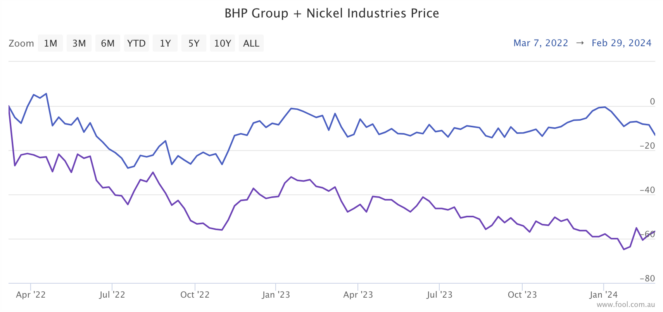
    Although a diversified materials miner, BHP Group has seen its share price weaken 13% since the high nickel prices in 2022. Meanwhile, despite operating in Indonesia, Nickel Industries Limited (ASX: NIC) has suffered a 57% fall in its share price.

    Nickel Industries reported record gross profits today for FY23. However, net profit after tax (NPAT) declined 16% to $176.2 million.

    Which ASX mining sector could prosper?

    It’s not all dark clouds in the Aussie mining sector. Another metal that is critical in the electrification trend is copper. Analysts believe the conductive metal won’t need to weather an oversupply like nickel anytime soon.

    Ben Cleary of Tribeca expects copper to be in a supply deficit for most of the decade citing costs as a deterrent from new supply.

    In addition, much of the world’s supply is centred in Chile and Peru. These jurisdictions are susceptible to interruptions. For instance, 600,000 tonnes of copper production was canned last year between strikes at the Las Bambas mine and a government-enforced closure of the Cobre Panama mine.

    Another commodity expert, Daniel Hynes of ANZ, reckons US$10,000 per tonne of copper is on the cards this year. Currently, a tonne of copper goes for US$8,474, suggesting an 18% upside.

    ASX mining companies with copper exposure include BHP, Rio Tinto Ltd (ASX: RIO), Sandfire Resources Ltd (ASX: SFR), and 29Metals Ltd (ASX: 29M).

    The post One ASX mining sector at risk of more pain, and one ready to soar! appeared first on The Motley Fool Australia.

    Wondering where you should invest $1,000 right now?

    When investing expert Scott Phillips has a stock tip, it can pay to listen. After all, the flagship Motley Fool Share Advisor newsletter he has run for over ten years has provided thousands of paying members with stock picks that have doubled, tripled or even more.*

    Scott just revealed what he believes could be the ‘five best ASX stocks’ for investors to buy right now. We believe these stocks are trading at attractive prices and Scott thinks they could be great buys right now…

    See The 5 Stocks
    *Returns as of 1 February 2024

    (function() {
    function setButtonColorDefaults(param, property, defaultValue) {
    if( !param || !param.includes(‘#’)) {
    var button = document.getElementsByClassName(“pitch-snippet”)[0].getElementsByClassName(“pitch-button”)[0];
    button.style[property] = defaultValue;
    }
    }

    setButtonColorDefaults(“#0095C8”, ‘background’, ‘#5FA85D’);
    setButtonColorDefaults(“#0095C8”, ‘border-color’, ‘#43A24A’);
    setButtonColorDefaults(“#fff”, ‘color’, ‘#fff’);
    })()

    More reading

    Motley Fool contributor Mitchell Lawler has no position in any of the stocks mentioned. The Motley Fool Australia’s parent company Motley Fool Holdings Inc. has no position in any of the stocks mentioned. The Motley Fool Australia has no position in any of the stocks mentioned. The Motley Fool has a disclosure policy. This article contains general investment advice only (under AFSL 400691). Authorised by Scott Phillips.

    from The Motley Fool Australia https://ift.tt/YoO09vE

  • A 22% yield on Fortescue shares? Here’s how these passive income investors achieved it!

    Miner holding cash which represents dividends.Miner holding cash which represents dividends.

    Fortescue Metals Group Ltd (ASX: FMG) shares are down 2.1% in afternoon trade on Thursday.

    At the time of writing, shares in the S&P/ASX 200 Index (ASX: XJO) mining stock are changing hands for $25.46 apiece.

    Longer-term shareholders won’t have much to complain about, though.

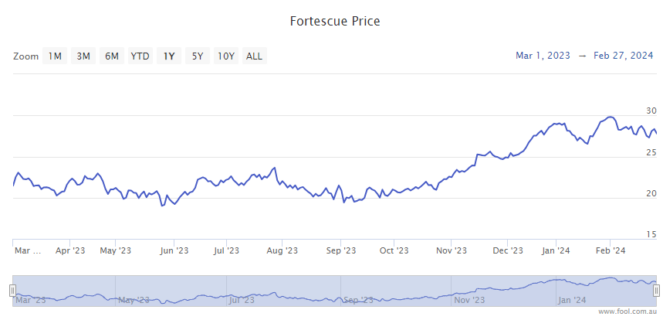
    As you can see in the chart below, shares in the ASX 200 miner remain up a healthy 15% over the past 12 months. And that’s not including the two fully franked dividends.

    Fortescue paid out a final dividend of $1 per share on 28 September.

    Eligible passive income investors can expect the interim dividend of $1.08 per share to land in their bank accounts on 27 March. Fortescue shares traded ex-dividend yesterday, 28 February.

    That equates to a full-year payout of $2.08 per share. Or a fully franked trailing yield of 8.2% at the current share price.

    So, how are some ASX passive income investors earning a yield of 21.6%?

    A supercharged yield from Fortescue shares

    The answer has to do with timing.

    Now, timing the market is no easy feat. Very few investors will get this right with significant consistency. And picking the bottom for ASX stocks in any particular cycle often comes down more to luck than skill.

    With that said, there are times when leading ASX 200 stocks, like Fortescue shares, have been unreasonably hammered due to factors outside of their control. Factors that are likely to fade away in time, offering investors attractive entry points before the wider market shakes off its fear and sends the stock rebounding.

    As legendary investor Warren Buffett says, “Be greedy when others are fearful.”

    An opportune time to have exhibited this greed was during the early months of the global pandemic.

    As uncertainty swept across the world in 2020, Fortescue shares, like most all stocks, were heavily sold off by a cadre of fearful ASX investors.

    On 27 March 2020, this sell-down saw the ASX 200 mining stock close the day trading for $9.60 a share.

    Passive income investors who swallowed their fear and bought in at that bargain price will be earning the same dividends from Fortescue as every other shareholder.

    Meaning these brave investors are earning a fully franked yield of 21.6% from their Fortescue shares.

    Not to mention they’ve enjoyed a four-year share price gain of 165%!

    The post A 22% yield on Fortescue shares? Here’s how these passive income investors achieved it! appeared first on The Motley Fool Australia.

    Wondering where you should invest $1,000 right now?

    When investing expert Scott Phillips has a stock tip, it can pay to listen. After all, the flagship Motley Fool Share Advisor newsletter he has run for over ten years has provided thousands of paying members with stock picks that have doubled, tripled or even more.*

    Scott just revealed what he believes could be the ‘five best ASX stocks’ for investors to buy right now. We believe these stocks are trading at attractive prices and Scott thinks they could be great buys right now…

    See The 5 Stocks
    *Returns as of 1 February 2024

    (function() {
    function setButtonColorDefaults(param, property, defaultValue) {
    if( !param || !param.includes(‘#’)) {
    var button = document.getElementsByClassName(“pitch-snippet”)[0].getElementsByClassName(“pitch-button”)[0];
    button.style[property] = defaultValue;
    }
    }

    setButtonColorDefaults(“#0095C8”, ‘background’, ‘#5FA85D’);
    setButtonColorDefaults(“#0095C8”, ‘border-color’, ‘#43A24A’);
    setButtonColorDefaults(“#fff”, ‘color’, ‘#fff’);
    })()

    More reading

    Motley Fool contributor Bernd Struben has no position in any of the stocks mentioned. The Motley Fool Australia’s parent company Motley Fool Holdings Inc. has no position in any of the stocks mentioned. The Motley Fool Australia has no position in any of the stocks mentioned. The Motley Fool has a disclosure policy. This article contains general investment advice only (under AFSL 400691). Authorised by Scott Phillips.

    from The Motley Fool Australia https://ift.tt/cPKwNXa

  • Shares sold: Why Zip is under fire from its own shareholders

    A man holds his hand under his chin as he concentrates on his laptop screen and reads about the ANZ share price

    A man holds his hand under his chin as he concentrates on his laptop screen and reads about the ANZ share price

    The Zip Co Ltd (ASX: ZIP) share price has been staging a quiet, but rather remarkable recovery in recent months. It was only back in October that the buy now, pay later (BNPL) share was trading for around 26 cents.

    Today, those same shares are worth 94 cents each, up an extraordinary 263% in roughly four months.

    So some Zip shareholders are certainly celebrating this lucrative run. But perhaps not as many as there should be.

    Last October, which turned out in hindsight to be unfortunate timing, Zip undertook what’s known as a ‘small shareholding sale facility’. This involved a share buyback of any shareholder who, at the time, owned under $500 worth of Zip shares.

    These programs are often undertaken by companies that have experienced a massive drop in share prices. This, at the time, included Zip. At that point, the company had seen its sales fall more than 97% between February 2021 and October 2023.

    The purpose of a small shareholding sale facility is to reduce the regulatory burden of the company by removing large numbers of investors who only have small sums invested in the stock.

    Zip ruffles feathers with small share sales

    The problem was this was an ‘opt-out’ program, rather than an ‘opt-in’ one. Zip itself stated in December that 69,669 out of 78,000 eligible small shareholders had not opted out of the program and thus had their shares sold.

    According to a report from the ABC, there are more than a few would-be Zip shareholders who had their holdings stripped because they failed to opt-out. These investors are now feeling ripped off, given the subsequent Zip share price recovery.

    One former shareholder told the ABC this:

    I don’t think there is any justifiable reason a small shareholding sale facility like this should ever be anything but OPT-IN… I think it’s unethical to ever sell someone’s shares without their explicit consent.

    Making matters worse for these investors, Zip’s management was heavily buying shares around the same time smaller investors were having their stock bought back. ASX filings show that Zip chair Diane Smith-Gander and board member Meredith Scott purchased 111,111 and 35,607 shares respectively on 28 September.

    That’s not something that many of Zip’s smaller shareholders reportedly appreciated.

    Another former Zip investor was quoted as stating:

    In my opinion they should know that the timing of their share purchases don’t look great, given they were executed two days before a prohibited trading period and six days before the announcement of the small shareholding sale facility…

    From an optics perspective, I personally think they look terrible. However, in terms of timing the market, they couldn’t have done better.

    Of course, Zip hasn’t done anything illegal here. The company is perfectly entitled to conduct a small shareholding sale facility. And its management is welcome to buy shares of their own company outside the restricted periods.

    Zip itself told the ABC this:

    It was an initiative that was a few months in the planning and… we had a very large register that was very costly to maintain… It [the small shareholding sale facility] was largely a cost-driven exercise. The directors have complied with the shareholding policy or the share purchasing policy of the company and again that was disclosed to market at that time.

    But many of Zip’s former shareholders have taken their complaints to the Australian Securities and Investments Commission (ASIC). ASIC’s response didn’t let Zip entirely off the hook:

    ASIC has not observed any non-compliance but believes there is room for entities to more clearly articulate the action required by those identified as holding small shareholdings should they wish to retain their shares.

    The Zip share price is up 4.97% today at 96 cents a share.

    The post Shares sold: Why Zip is under fire from its own shareholders appeared first on The Motley Fool Australia.

    Wondering where you should invest $1,000 right now?

    When investing expert Scott Phillips has a stock tip, it can pay to listen. After all, the flagship Motley Fool Share Advisor newsletter he has run for over ten years has provided thousands of paying members with stock picks that have doubled, tripled or even more.*

    Scott just revealed what he believes could be the ‘five best ASX stocks’ for investors to buy right now. We believe these stocks are trading at attractive prices and Scott thinks they could be great buys right now…

    See The 5 Stocks
    *Returns as of 1 February 2024

    (function() {
    function setButtonColorDefaults(param, property, defaultValue) {
    if( !param || !param.includes(‘#’)) {
    var button = document.getElementsByClassName(“pitch-snippet”)[0].getElementsByClassName(“pitch-button”)[0];
    button.style[property] = defaultValue;
    }
    }

    setButtonColorDefaults(“#0095C8”, ‘background’, ‘#5FA85D’);
    setButtonColorDefaults(“#0095C8”, ‘border-color’, ‘#43A24A’);
    setButtonColorDefaults(“#fff”, ‘color’, ‘#fff’);
    })()

    More reading

    Motley Fool contributor Sebastian Bowen has no position in any of the stocks mentioned. The Motley Fool Australia’s parent company Motley Fool Holdings Inc. has positions in and has recommended Zip Co. The Motley Fool Australia has no position in any of the stocks mentioned. The Motley Fool has a disclosure policy. This article contains general investment advice only (under AFSL 400691). Authorised by Scott Phillips.

    from The Motley Fool Australia https://ift.tt/iPUnxTC

  • Should you buy Lovisa shares before they go ex-dividend?

    A woman looks questioning as she puts a coin into a piggy bank.

    A woman looks questioning as she puts a coin into a piggy bank.

    If you want to receive the next Lovisa Holdings Ltd (ASX: LOV) dividend, then you will need to be quick.

    That’s because the rapidly growing fashion jewellery retailer’s shares will be going ex-dividend soon.

    When a company’s shares go ex-dividend, it means the rights to the dividend are settled.

    As a result, buying shares on or after that day will lead to you missing out on pay day. Instead, the seller of the shares will be the one getting a paycheck.

    The Lovisa dividend

    As a reminder, earlier this month Lovisa released its half-year results and reported an 18.2% increase in revenue to $373 million and a 12% lift in net profit after tax to $53.5 million.

    This strong growth was underpinned by its global expansion, with 74 stores opening during the half to take the total to 854 by the end of December.

    This allowed the Lovisa board to increase its 30% franked interim dividend by almost 32% to 50 cents per share.

    Based on the current Lovisa share price of $31.87, this equates to a reasonably attractive 1.6% dividend yield for investors.

    When is pay day?

    Investors won’t have long to wait until this dividend is paid.

    Lovisa’s shares are scheduled to go ex-dividend for the 50 cents per share distribution next week on Tuesday 5 March.

    After which, the company is planning to make its payment to eligible shareholders the following month on 18 April.

    Should you invest?

    Most brokers appear to believe that Lovisa’s shares are trading above or about fair value following a strong run over the last 12 months.

    For example, Morgan Stanley has an overweight rating and $32.50 price target on its shares and Bell Potter has a buy rating and $30.70 price target on them. These price targets are both broadly in line with where its shares trade today.

    The post Should you buy Lovisa shares before they go ex-dividend? appeared first on The Motley Fool Australia.

    Wondering where you should invest $1,000 right now?

    When investing expert Scott Phillips has a stock tip, it can pay to listen. After all, the flagship Motley Fool Share Advisor newsletter he has run for over ten years has provided thousands of paying members with stock picks that have doubled, tripled or even more.*

    Scott just revealed what he believes could be the ‘five best ASX stocks’ for investors to buy right now. We believe these stocks are trading at attractive prices and Scott thinks they could be great buys right now…

    See The 5 Stocks
    *Returns as of 1 February 2024

    (function() {
    function setButtonColorDefaults(param, property, defaultValue) {
    if( !param || !param.includes(‘#’)) {
    var button = document.getElementsByClassName(“pitch-snippet”)[0].getElementsByClassName(“pitch-button”)[0];
    button.style[property] = defaultValue;
    }
    }

    setButtonColorDefaults(“#0095C8”, ‘background’, ‘#5FA85D’);
    setButtonColorDefaults(“#0095C8”, ‘border-color’, ‘#43A24A’);
    setButtonColorDefaults(“#fff”, ‘color’, ‘#fff’);
    })()

    More reading

    Motley Fool contributor James Mickleboro has positions in Lovisa. The Motley Fool Australia’s parent company Motley Fool Holdings Inc. has positions in and has recommended Lovisa. The Motley Fool Australia has recommended Lovisa. The Motley Fool has a disclosure policy. This article contains general investment advice only (under AFSL 400691). Authorised by Scott Phillips.

    from The Motley Fool Australia https://ift.tt/UWp0Cgx

  • 2 ASX energy shares going gangbusters on today’s earnings results

    Two workers at an oil rig discuss operations.Two workers at an oil rig discuss operations.

    Two ASX energy shares are setting the bar high today.

    In afternoon trade on Thursday, the All Ordinaries Index (ASX: XAO) is down 0.1%.

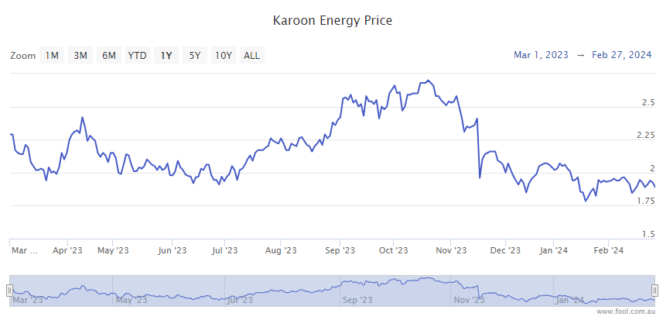
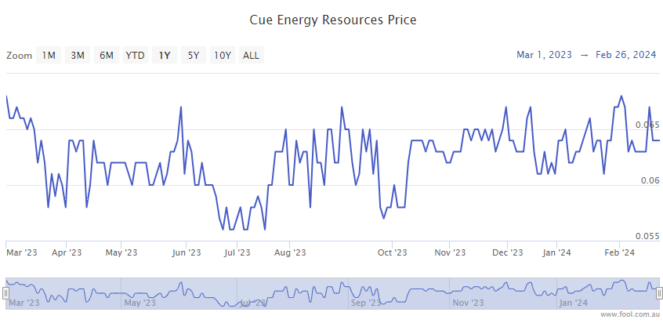
    But energy stocks Karoon Energy Ltd (ASX: KAR) and Cue Energy Resources Ltd (ASX: CUE) are up 3% and 40% respectively following the release of their half-year earnings results.

    Here’s what they reported.

    Karoon share price lifts on profit boost

    The Karoon share price is marching higher after the ASX energy share reported underlying net profit after tax (NPAT) of US$145 million, up 129% from the prior six months.

    The company attributed the boost in profits to higher hydrocarbon sales, improved oil price realisations and lower unit production costs.

    Statutory NPAT of US$122.5 million was up 43% from US$85.4 million in the prior half year. This included one-off costs relating to Karoon’s Who Dat acquisition, along with hedging and foreign exchange losses.

    Sales revenue of US$413 million increased 54.5% from the previous half-year. While underlying earnings before interest, taxes, depreciation and amortisation (EBITDA) of US$283 million increased by 94%.

    Karoon held cash and cash equivalents at 31 December of US$170 million.

    Commenting on the results lifting the ASX energy share today, CEO Julian Fowles said:

    Karoon achieved underlying NPAT of US$144.7 million, which was a record for the company for a six-month period. Baúna Project sales volumes and realised oil prices both increased, up 36% and 13% respectively when compared to the prior six months.

    In addition, we received the first contributions from the Who Dat acquisition in the US Gulf of Mexico, albeit for only 11 days.

    Which brings us to…

    ASX energy share Cue rockets amid special dividend

    The Cue Energy share price is shooting out the lights today on the heels of the company’s own half-year results (1H FY 2024).

    The ASX energy share achieved a 22% year on year increase in six-month revenue to $29 million.

    Underlying EBITDAX (which excludes items like exploration costs) came in at $19 million, up 21% from 1H FY 2023.

    And NPAT leapt 34% year on year to $9 million.

    This saw management declare a 2 cent per share special dividend, which they said was supported by strong cash flow and cash reserves.

    Cue had a cash balance of $23 million as at 31 December, up from $15 million at 30 June.

    Commenting on the strong results sending the ASX energy share rocketing today, Cue CEO Matthew Boyall said, “We’re building on a consistent trend of growth, with revenue increasing more than 200% over the past four years.”

    Boyall added:

    This success is fuelled by several key factors including strong production performance, disciplined reinvestment and an ongoing focus on lowering costs. Our Indonesian assets, particularly the Mahato PSC, were significant contributors, generating $16.4 million in revenue.

    The post 2 ASX energy shares going gangbusters on today’s earnings results appeared first on The Motley Fool Australia.

    Wondering where you should invest $1,000 right now?

    When investing expert Scott Phillips has a stock tip, it can pay to listen. After all, the flagship Motley Fool Share Advisor newsletter he has run for over ten years has provided thousands of paying members with stock picks that have doubled, tripled or even more.*

    Scott just revealed what he believes could be the ‘five best ASX stocks’ for investors to buy right now. We believe these stocks are trading at attractive prices and Scott thinks they could be great buys right now…

    See The 5 Stocks
    *Returns as of 1 February 2024

    (function() {
    function setButtonColorDefaults(param, property, defaultValue) {
    if( !param || !param.includes(‘#’)) {
    var button = document.getElementsByClassName(“pitch-snippet”)[0].getElementsByClassName(“pitch-button”)[0];
    button.style[property] = defaultValue;
    }
    }

    setButtonColorDefaults(“#0095C8”, ‘background’, ‘#5FA85D’);
    setButtonColorDefaults(“#0095C8”, ‘border-color’, ‘#43A24A’);
    setButtonColorDefaults(“#fff”, ‘color’, ‘#fff’);
    })()

    More reading

    Motley Fool contributor Bernd Struben has no position in any of the stocks mentioned. The Motley Fool Australia’s parent company Motley Fool Holdings Inc. has no position in any of the stocks mentioned. The Motley Fool Australia has no position in any of the stocks mentioned. The Motley Fool has a disclosure policy. This article contains general investment advice only (under AFSL 400691). Authorised by Scott Phillips.

    from The Motley Fool Australia https://ift.tt/ain6X2J

  • 4 hot ASX ETFs smashing all-time highs on Thursday

    ETF written in gold with dollar signs on coin.

    ETF written in gold with dollar signs on coin.

    At first glance, it looks as though this Thursday would be a tough one for most ASX investors. After all, the S&P/ASX 200 Index (ASX: XJO) is currently nursing a loss of 0.11%, putting the index at just over 7,650 points. But it hasn’t been a universally rough day, particularly for investors of four ASX exchange-traded funds (ETFs).

    Four ASX ETFs smashing all-time highs today

    First up is the iShares S&P 500 ETF (ASX: IVV). It was only earlier this week that we were discussing a new record high for this US-based index fund. But today, IVV has done it again, hitting a new record of $52.06 a share.

    Then we have the Vanguard US Total Market Shares Index ETF (ASX: VTS). This Thursday has seen VTS units climb up to a new record of $387.41.

    The VanEck Morningstar Wide Moat ETF (ASX: MOAT) hasn’t missed out either. This exchange-traded fund clocked a new high watermark of $126.99 just after market open this morning.

    Then we have the BetaShares Crypto Innovators ETF (ASX: CRYP). CRYP units have continued to enjoy a huge surge that started around this time last month. Today has seen this cryptocurrency-focused ETF soar to a new record high of $5.29.

    Why so many new record highs today?

    You might notice that these four exchange-traded funds have something in common – they all invest in non-ASX shares. Specifically, all four of these ETFs are predominately made up of US shares.

    IVV and VTS are both US-based index funds. Although they track slightly different indexes (IVV follows the S&P 500, whilst VTS tracks the CRSP U.S. Total Market Index), both funds are dominated by the likes of Apple, Microsoft, Alphabet and the other ‘magnificent seven’ stocks.

    With the S&P 500 and the broader US market’s reach continuing to clock new all-time highs in February, it’s no surprise to see their ASX-listed index fund reflections do the same.

    MOAT and CRYP are a little different. Both of these ETFs have more actively managed portfolios. The VanEck Wide Moat ETF holds a concentrated portfolio of companies that are selected on their perceived possession of a wide economic moat.

    The Betashares Crypto Innovators ETF holds companies that are all involved in the mining and trading of cryptocurrency. Roughly 70% of these holdings are US-based. With prices of cryptocurrencies like Bitcoin (CRYPTO: BTC) continuing to gallop higher alongside the US markets, it’s not shocking to see this ETF follow suit.

    Other ETFs clocking new highs

    These four ETFs are not the only ones clocking new highs today.

    We’ve also seen the Betashares Future Of Payments ETF (ASX: IPAY), Global X Australia ex Financials and Resources ETF (ASX: OZXX), iShares S&P 500 Mid-Cap ETF (ASX: IJH), Betashares S&P/ASX Australian Technology ETF (ASX: ATEC), iShares Europe ETF (ASX: IEU) and the BetaShares India Quality ETF (ASX: INDD) hit either new 52-week or record highs today. Amongst many others.

    It’s a good day to be an ETF investor.

    The post 4 hot ASX ETFs smashing all-time highs on Thursday appeared first on The Motley Fool Australia.

    Wondering where you should invest $1,000 right now?

    When investing expert Scott Phillips has a stock tip, it can pay to listen. After all, the flagship Motley Fool Share Advisor newsletter he has run for over ten years has provided thousands of paying members with stock picks that have doubled, tripled or even more.*

    Scott just revealed what he believes could be the ‘five best ASX stocks’ for investors to buy right now. We believe these stocks are trading at attractive prices and Scott thinks they could be great buys right now…

    See The 5 Stocks
    *Returns as of 1 February 2024

    (function() {
    function setButtonColorDefaults(param, property, defaultValue) {
    if( !param || !param.includes(‘#’)) {
    var button = document.getElementsByClassName(“pitch-snippet”)[0].getElementsByClassName(“pitch-button”)[0];
    button.style[property] = defaultValue;
    }
    }

    setButtonColorDefaults(“#0095C8”, ‘background’, ‘#5FA85D’);
    setButtonColorDefaults(“#0095C8”, ‘border-color’, ‘#43A24A’);
    setButtonColorDefaults(“#fff”, ‘color’, ‘#fff’);
    })()

    More reading

    Suzanne Frey, an executive at Alphabet, is a member of The Motley Fool’s board of directors. Motley Fool contributor Sebastian Bowen has positions in Alphabet, Apple, Bitcoin, Microsoft, and VanEck Morningstar Wide Moat ETF. The Motley Fool Australia’s parent company Motley Fool Holdings Inc. has positions in and has recommended Alphabet, Apple, Betashares Crypto Innovators ETF, Bitcoin, Microsoft, and iShares S&P 500 ETF. The Motley Fool Australia’s parent company Motley Fool Holdings Inc. has recommended the following options: long January 2026 $395 calls on Microsoft and short January 2026 $405 calls on Microsoft. The Motley Fool Australia has recommended Alphabet, Apple, VanEck Morningstar Wide Moat ETF, and iShares S&P 500 ETF. The Motley Fool has a disclosure policy. This article contains general investment advice only (under AFSL 400691). Authorised by Scott Phillips.

    from The Motley Fool Australia https://ift.tt/1YtRGdN

  • Why Australian Finance Group, Chalice, DroneShield, and ResMed are sinking today

    A woman with short brown hair and wearing a yellow top looks at the camera with a puzzled and shocked look on her face as the Westpac share price goes down for no reason today

    A woman with short brown hair and wearing a yellow top looks at the camera with a puzzled and shocked look on her face as the Westpac share price goes down for no reason today

    The S&P/ASX 200 Index (ASX: XJO) is having a subdued session on Thursday. In afternoon trade, the benchmark index is down 0.1% to 7,652.9 points.

    Four ASX shares that are falling more than most today are listed below. Here’s why they are dropping:

    Australian Finance Group Ltd (ASX: AFG)

    The Australian Finance Group share price is down 10% to $1.50. This morning, the mortgage broking company released its half-year results and reported a 34% decline in net profit after tax to $7.4 million.

    Chalice Mining Ltd (ASX: CHN)

    The Chalice Mining share price is down 9% to $1.14. This is despite there being no news out of the mineral exploration company today. However, it is worth noting that its shares were on fire on Wednesday. So, this decline could have been driven by profit taking from some investors. Its shares remain up 13% over the last two sessions.

    DroneShield Ltd (ASX: DRO)

    The DroneShield share price is down 21% to 73.5 cents. This may also have been driven by profit taking after some incredible gains. Year to date, the counter drone technology company’s shares are still up 100% despite this decline. In other news, this morning Bell Potter downgraded its shares to a hold rating but with an improved price target of 90 cents.

    ResMed Inc. (ASX: RMD)

    The ResMed share price is down almost 4% to $26.87 despite there being no news out of the sleep treatment company. However, news that there’s a new weight loss wonder drug on the scene could be weighing on sentiment. Viking Therapeutics Inc (NASDAQ: VKTX) shares are up 150% in two days after its experimental drug reportedly helped obesity patients lose almost 15% of their body weight in a mid-stage study.

    The post Why Australian Finance Group, Chalice, DroneShield, and ResMed are sinking today appeared first on The Motley Fool Australia.

    Wondering where you should invest $1,000 right now?

    When investing expert Scott Phillips has a stock tip, it can pay to listen. After all, the flagship Motley Fool Share Advisor newsletter he has run for over ten years has provided thousands of paying members with stock picks that have doubled, tripled or even more.*

    Scott just revealed what he believes could be the ‘five best ASX stocks’ for investors to buy right now. We believe these stocks are trading at attractive prices and Scott thinks they could be great buys right now…

    See The 5 Stocks
    *Returns as of 1 February 2024

    (function() {
    function setButtonColorDefaults(param, property, defaultValue) {
    if( !param || !param.includes(‘#’)) {
    var button = document.getElementsByClassName(“pitch-snippet”)[0].getElementsByClassName(“pitch-button”)[0];
    button.style[property] = defaultValue;
    }
    }

    setButtonColorDefaults(“#0095C8”, ‘background’, ‘#5FA85D’);
    setButtonColorDefaults(“#0095C8”, ‘border-color’, ‘#43A24A’);
    setButtonColorDefaults(“#fff”, ‘color’, ‘#fff’);
    })()

    More reading

    Motley Fool contributor James Mickleboro has positions in ResMed. The Motley Fool Australia’s parent company Motley Fool Holdings Inc. has positions in and has recommended DroneShield and ResMed. The Motley Fool Australia has positions in and has recommended ResMed. The Motley Fool has a disclosure policy. This article contains general investment advice only (under AFSL 400691). Authorised by Scott Phillips.

    from The Motley Fool Australia https://ift.tt/fvxIQ9M

  • Why Harvey Norman, Macquarie Technology, Ramsay Health Care, and Star are rising

    A young male ASX investor raises his clenched fists in excitement because of rising ASX share prices today

    A young male ASX investor raises his clenched fists in excitement because of rising ASX share prices today

    In afternoon trade, the S&P/ASX 200 Index (ASX: XJO) has followed Wall Street’s lead and dropped into the red. At the time of writing, the benchmark index is down 0.15% to 7,647.9 points.

    Four ASX shares that are not letting that hold them back are listed below. Here’s why they are rising:

    Harvey Norman Holdings Limited (ASX: HVN)

    The Harvey Norman share price is up 3% to $4.89. This is despite the retailer releasing its half-year results and reporting a 29.4% decline in profit before tax to $303.8 million and a 23% reduction in its fully franked interim dividend to 10 cents per share. Investors may be pleased to see that the company’s sales returned to growth in January.

    Macquarie Technology Group Ltd (ASX: MAQ)

    The Macquarie Technology share price is up 9% to $77.49. Investors have been buying the technology company’s shares following the release of its half-year results. Macquarie Technology posted a 5.1% increase in revenue to $181.3 million and a 74% jump in net profit after tax to $14.8 million. The company’s data centre business was a key driver of its growth.

    Ramsay Health Care Ltd (ASX: RHC)

    The Ramsay Health Care share price is up 6% to $54.25. This private hospital operator’s shares were trading lower following the release of its half-year results before rebounding. Ramsay reported a 23% decline in profit from continuing operations to $140.4 million. However, management is guiding to profit growth for the full year despite the weak start.

    Star Entertainment Group Ltd (ASX: SGR)

    The Star share price is up 8% to 52 cents. This follows the release of the casino and resorts operator’s first-half results. While the result itself was quite poor, investors appear encouraged by its improving outlook. Management advised: “The start of this calendar year has seen revenue and earnings continue to track our first half run rate.”

    The post Why Harvey Norman, Macquarie Technology, Ramsay Health Care, and Star are rising appeared first on The Motley Fool Australia.

    Wondering where you should invest $1,000 right now?

    When investing expert Scott Phillips has a stock tip, it can pay to listen. After all, the flagship Motley Fool Share Advisor newsletter he has run for over ten years has provided thousands of paying members with stock picks that have doubled, tripled or even more.*

    Scott just revealed what he believes could be the ‘five best ASX stocks’ for investors to buy right now. We believe these stocks are trading at attractive prices and Scott thinks they could be great buys right now…

    See The 5 Stocks
    *Returns as of 1 February 2024

    (function() {
    function setButtonColorDefaults(param, property, defaultValue) {
    if( !param || !param.includes(‘#’)) {
    var button = document.getElementsByClassName(“pitch-snippet”)[0].getElementsByClassName(“pitch-button”)[0];
    button.style[property] = defaultValue;
    }
    }

    setButtonColorDefaults(“#0095C8”, ‘background’, ‘#5FA85D’);
    setButtonColorDefaults(“#0095C8”, ‘border-color’, ‘#43A24A’);
    setButtonColorDefaults(“#fff”, ‘color’, ‘#fff’);
    })()

    More reading

    Motley Fool contributor James Mickleboro has no position in any of the stocks mentioned. The Motley Fool Australia’s parent company Motley Fool Holdings Inc. has no position in any of the stocks mentioned. The Motley Fool Australia has positions in and has recommended Harvey Norman. The Motley Fool has a disclosure policy. This article contains general investment advice only (under AFSL 400691). Authorised by Scott Phillips.

    from The Motley Fool Australia https://ift.tt/DAZcBws