
Tag: Motley Fool

  • Why has the Piedmont Lithium share price tumbled 30% in a month?

    white arrow pointing downwhite arrow pointing down

    The Piedmont Lithium Inc (ASX: PLL) share price is rangebound in afternoon trade on Monday.

    At the time of writing, the share is flat at 50.5 cents apiece, a shade off its 52-week low of 48.5 cents.

    Zooming out, Piedmont has lost more than 28% in the past month of trade and has fallen from a previous high of 93.5 cents on 31 May.

    In broad market moves, the S&P/ASX 300 Metals and Mining Index (ASX: XMM) is flat on the day as well.

    What’s up with the Piedmont Lithium share price?

    Investors have punished the share in CY2022 as a good chunk of the global commodity trade begins to unwind.

    Whilst lithium continues to remain buoyant, key price drivers such as Brent Crude oil have consolidated from a top in March.

    Copper has followed suit and retraced heavily from its March highs. It now trades back in line with November 2020 levels.

    The weakness in these key industrial metals has transposed over the wider metals & mining sector. As a basket, it too has been clamped down recently, shown below in deep blue.

    TradingView Chart

    In fact, as the chart shows, each of these instruments traded with a tight fit over the past 3 months, with each realising losses at the same pace.

    This is not unreasonable to see, seeing the high correlation of various shares within the sector.

    For the Piedmont share price (shown in red), it has traced this basket with striking similarity as investors unload shares, along with the bulk of its peers in the ASX mining index (deep blue).

    Whilst correlation doesn’t mean causation, the trend does suggest there is weakness in the wider mining sector, as represented by each of these instruments.

    Meanwhile, earlier this month, the company also announced that its 25%-owned North American Lithium (NAL) program in Canada aims to start producing lithium spodumene next year.

    This will require a large capital expenditure bill to bring infrastructure up to speed.

    With the battery metal still commanding a premium, this could inflect positively for Piedmont if investors reward the share price.

    With that in mind, time will tell what’s in store for the Piedmont share price next. It is down 43% in the past 12 months.

    The post Why has the Piedmont Lithium share price tumbled 30% in a month? appeared first on The Motley Fool Australia.

    Inflation pressures and bear market opportunities

    According to The Motley Fool’s Chief Investment Officer Scott Phillips, how investors handle their investments right now could have a massive impact on their wealth in years to come.
    While many investors will turn to real estate, gold and other commodities in times of inflation, Scott is quick to point out another way…
    Get the details now…

    Learn More
    *Returns as of July 1 2022

    (function() {
    function setButtonColorDefaults(param, property, defaultValue) {
    if( !param || !param.includes(‘#’)) {
    var button = document.getElementsByClassName(“pitch-snippet”)[0].getElementsByClassName(“pitch-button”)[0];
    button.style[property] = defaultValue;
    }
    }

    setButtonColorDefaults(“#0095C8”, ‘background’, ‘#5FA85D’);
    setButtonColorDefaults(“#0095C8”, ‘border-color’, ‘#43A24A’);
    setButtonColorDefaults(“#fff”, ‘color’, ‘#fff’);
    })()

    More reading

    Motley Fool contributor Zach Bristow has no position in any of the stocks mentioned. The Motley Fool Australia’s parent company Motley Fool Holdings Inc. has no position in any of the stocks mentioned. The Motley Fool Australia has no position in any of the stocks mentioned. The Motley Fool has a disclosure policy. This article contains general investment advice only (under AFSL 400691). Authorised by Scott Phillips.

    from The Motley Fool Australia https://ift.tt/WJozEam
  • Why is the Santos share price on such a tear today?

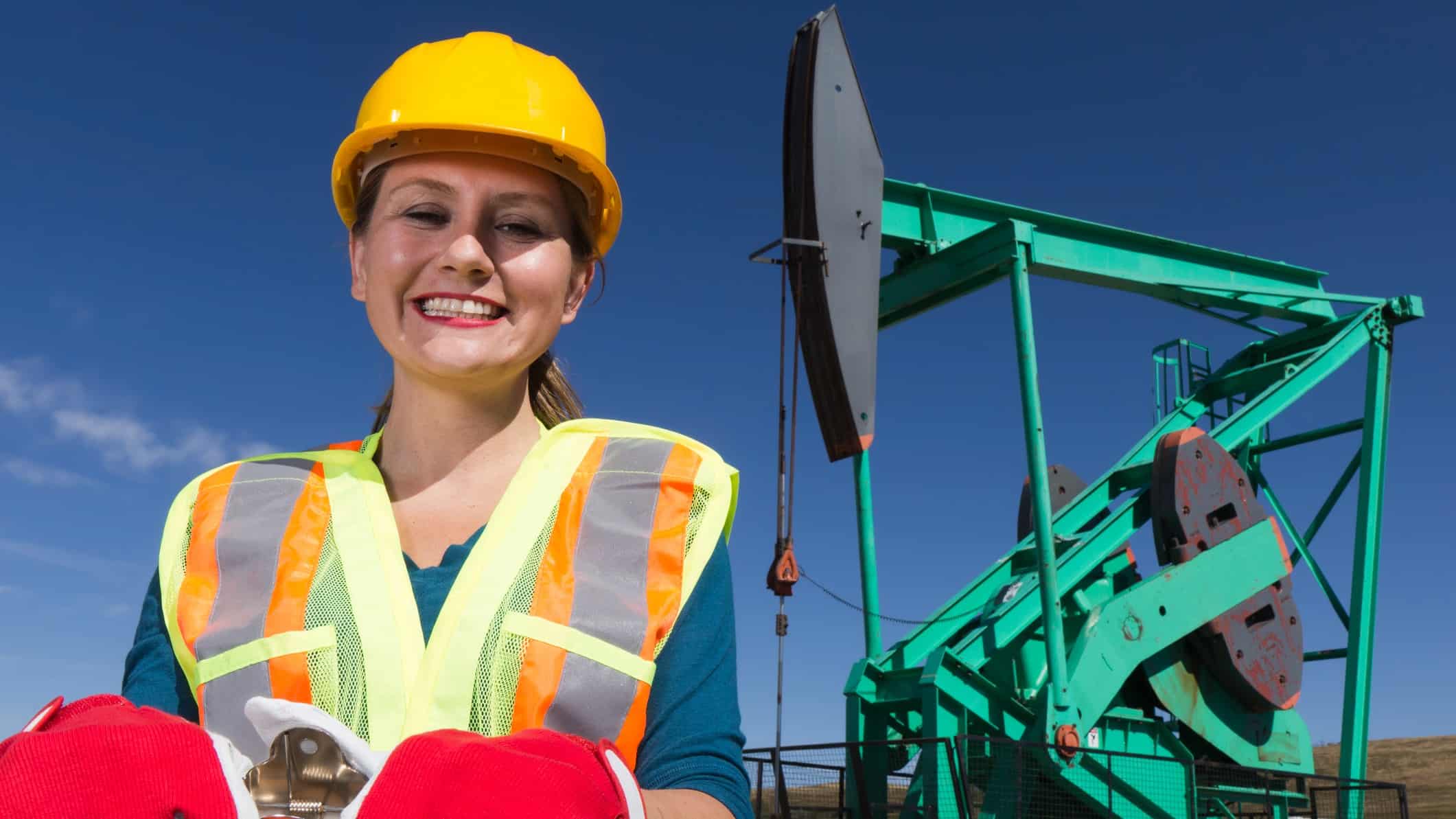
    Female oil rig worker wearing high vis vest, red gloves and hardhat smiles at camera with a green painted oil rig in the backgroundFemale oil rig worker wearing high vis vest, red gloves and hardhat smiles at camera with a green painted oil rig in the background

    The Santos Ltd (ASX: STO) share price is defying the market’s struggles on Tuesday to launch higher amid surging oil prices.

    At the time of writing, the Santos share price is $7.33, 2.37% higher than its previous close. Earlier today, it reached a high of $7.435 a share, a gain of 3.85%.

    For context, the S&P/ASX 200 Index (ASX: XJO) is currently down 0.02%, dragged lower by the flailing tech sector.

    Let’s take a closer look at what’s driving the ASX 200 energy giant to outperform today.

    What’s energising the Santos share price on Tuesday?

    Santos’ stock is taking off on Tuesday alongside many other ASX energy shares.

    In fact, the S&P/ASX 200 Energy Index (ASX: XEJ) is currently the ASX 200’s best performing sector, up 2.31% in early afternoon trading.

    Its rise likely comes on the back of surging oil prices. The price of Brent crude oil gained 5.1% overnight to trade at US$106.27 a barrel while the US Nymex crude price lifted 5.1% to reach US$102.60 a barrel.

    The commodities’ rise came amid a weakening US dollar and news a Russian gas giant told European customers it can’t guarantee gas supplies, Reuters reports.  

    Right now, the Santos share price is among the ASX 200’s energy sector’s best performers.

    However, it’s shadowing the gains of Whitehaven Coal Ltd (ASX: WHC), Beach Energy Ltd (ASX: BPT), Woodside Energy Group Ltd (ASX: WDS), and New Hope Corporation Limited (ASX: NHC). They’re each currently up more than 3%.

    The post Why is the Santos share price on such a tear today? appeared first on The Motley Fool Australia.

    “The worst thing you can do is nothing”

    Motley Fool Chief Investment Officer says right now is not the time to sit on your hands…
    As inflation eats away at cash balances Scott Phillips reveals three stocks for investors to consider that could help fight rising prices…
    … And Santos Ltd isn’t one of them.

    Learn More
    *Returns as of July 1 2022

    (function() {
    function setButtonColorDefaults(param, property, defaultValue) {
    if( !param || !param.includes(‘#’)) {
    var button = document.getElementsByClassName(“pitch-snippet”)[0].getElementsByClassName(“pitch-button”)[0];
    button.style[property] = defaultValue;
    }
    }

    setButtonColorDefaults(“#43B02A”, ‘background’, ‘#5FA85D’);
    setButtonColorDefaults(“#43B02A”, ‘border-color’, ‘#43A24A’);
    setButtonColorDefaults(“#FFF”, ‘color’, ‘#fff’);
    })()

    More reading

    Motley Fool contributor Brooke Cooper has no position in any of the stocks mentioned. The Motley Fool Australia’s parent company Motley Fool Holdings Inc. has no position in any of the stocks mentioned. The Motley Fool Australia has no position in any of the stocks mentioned. The Motley Fool has a disclosure policy. This article contains general investment advice only (under AFSL 400691). Authorised by Scott Phillips.

    from The Motley Fool Australia https://ift.tt/nEOLrI1

  • What’s the outlook for the iron ore price in 2023?

    Three Argosy miners stand together at a mine site studying documents with equipment in the background

    Three Argosy miners stand together at a mine site studying documents with equipment in the background

    If you’re a shareholder of BHP Group Ltd (ASX: BHP), Fortescue Metals Group Limited (ASX: FMG), or Rio Tinto Limited (ASX: RIO), there will no doubt be one metal in particular that is of interest to you – iron ore.

    Due to the significant contribution that their iron ore operations have on their respective profits, the iron ore price has a big impact on these mining giants’ success.

    This morning, BHP released its production update for the fourth quarter and full year. Within that update the Big Australian revealed that it received an average price of US$113.10 per tonne in FY 2022 for its iron ore. This was down 13% year on year from US$130.56 per tonne in FY 2021.

    Investors may now be wondering where iron ore goes from here. In light of this, let’s take a look to see what one leading broker is forecasting for the steel making ingredient.

    Where is the iron ore price heading?

    According to a note out of Goldman Sachs at the end of last week, its analysts are expecting iron ore prices to soften in 2023.

    Firstly, Goldman expects an average price of US$120 per tonne for benchmark iron ore 62% fines in 2022.

    After which, its analysts are expecting a 16.7% decline in FY 2023 to US$100 per tonne. And, as you can see below, the broker doesn’t expect prices to stop falling until 2026. At that point, the broker expects the iron ore price to rebound slightly.

    Goldman Sachs’ forecasts are as follows:

    • US$120 per tonne in 2022
    • US$100 per tonne in 2023
    • US$80 per tonne in 2024
    • US$75 per tonne in 2025
    • US$81 per tonne in 2026

    All in all, the broker appears to believe that the iron ore price peak is now long behind us and it could be a downward trend from here.

    The post What’s the outlook for the iron ore price in 2023? appeared first on The Motley Fool Australia.

    Wondering where you should invest $1,000 right now?

    When investing expert Scott Phillips has a stock tip, it can pay to listen. After all, the flagship Motley Fool Share Advisor newsletter he has run for over ten years has provided thousands of paying members with stock picks that have doubled, tripled or even more.* Scott just revealed what he believes could be the “five best ASX stocks” for investors to buy right now. These stocks are trading at near dirt-cheap prices and Scott thinks they could be great buys right now

    See The 5 Stocks
    *Returns as of July 7 2022

    (function() {
    function setButtonColorDefaults(param, property, defaultValue) {
    if( !param || !param.includes(‘#’)) {
    var button = document.getElementsByClassName(“pitch-snippet”)[0].getElementsByClassName(“pitch-button”)[0];
    button.style[property] = defaultValue;
    }
    }

    setButtonColorDefaults(“#43B02A”, ‘background’, ‘#5FA85D’);
    setButtonColorDefaults(“#43B02A”, ‘border-color’, ‘#43A24A’);
    setButtonColorDefaults(“#fff”, ‘color’, ‘#fff’);
    })()

    More reading

    Motley Fool contributor James Mickleboro has no position in any of the stocks mentioned. The Motley Fool Australia’s parent company Motley Fool Holdings Inc. has no position in any of the stocks mentioned. The Motley Fool Australia has no position in any of the stocks mentioned. The Motley Fool has a disclosure policy. This article contains general investment advice only (under AFSL 400691). Authorised by Scott Phillips.

    from The Motley Fool Australia https://ift.tt/arBcVim

  • ASX 200 retail shares rise as consumer confidence improves

    A smiling man at a shop counter takes payment from a female customer, with racks of plants in the background.A smiling man at a shop counter takes payment from a female customer, with racks of plants in the background.

    ASX 200 retail shares are rising today following news consumer confidence has lifted.

    Among consumer shares leaping today are Harvey Norman Holdings Limited (ASX: HVN), JB Hi-Fi Limited (ASX: JBH), Premier Investments Ltd (ASX: PMV) Wesfarmers Ltd (ASX: WES).

    So let’s take a look at why these ASX 200 retail shares are rising.

    Consumer confidence improves

    JB Hi-Fi shares are lifting 3.64% today, while Harvey Norman shares are up 1.76% and Premier Investments shares are 1.13% in the green. Meanwhile, the Wesfarmers share price is up 0.89%.

    Consumer confidence jumped 0.2% last week, according to the latest ANZ-Roy Morgan research. Confidence grew in South Australia, New South Wales and Queensland, while it was down in Victoria and Western Australia.

    Today’s slight lift in confidence was the first rise since the final week of June, potentially boosting ASX 200 retail shares.

    Commenting on the results, Australian Economics ANZ head David Plank said:

    Consumer confidence steadied as concerns about the economic outlook ebbed, likely driven by the strong labour market print last week.

    High inflation and rising interest rates are feeding into households’ weak assessment of their financial conditions. That is yet to show up in spending behaviour, however.

    Inflation expectations also lowered slightly by 0.2% to 5.8%. Plank said inflation expectations fell to a one month low as global fuel prices moderated. He added:

    Australia’s wholesale petrol prices declined last week fuelling hopes that retail prices will moderate. This will likely be good news for sentiment if it occurs.

    The post ASX 200 retail shares rise as consumer confidence improves appeared first on The Motley Fool Australia.

    Wondering where you should invest $1,000 right now?

    When investing expert Scott Phillips has a stock tip, it can pay to listen. After all, the flagship Motley Fool Share Advisor newsletter he has run for over ten years has provided thousands of paying members with stock picks that have doubled, tripled or even more.* Scott just revealed what he believes could be the “five best ASX stocks” for investors to buy right now. These stocks are trading at near dirt-cheap prices and Scott thinks they could be great buys right now

    See The 5 Stocks
    *Returns as of July 7 2022

    (function() {
    function setButtonColorDefaults(param, property, defaultValue) {
    if( !param || !param.includes(‘#’)) {
    var button = document.getElementsByClassName(“pitch-snippet”)[0].getElementsByClassName(“pitch-button”)[0];
    button.style[property] = defaultValue;
    }
    }

    setButtonColorDefaults(“#0095C8”, ‘background’, ‘#5FA85D’);
    setButtonColorDefaults(“#0095C8”, ‘border-color’, ‘#43A24A’);
    setButtonColorDefaults(“#fff”, ‘color’, ‘#fff’);
    })()

    More reading

    Motley Fool contributor Monica O’Shea has no position in any of the stocks mentioned. The Motley Fool Australia’s parent company Motley Fool Holdings Inc. has positions in and has recommended Harvey Norman Holdings Ltd. The Motley Fool Australia has positions in and has recommended Harvey Norman Holdings Ltd. and Wesfarmers Limited. The Motley Fool Australia has recommended Premier Investments Limited. The Motley Fool has a disclosure policy. This article contains general investment advice only (under AFSL 400691). Authorised by Scott Phillips.

    from The Motley Fool Australia https://ift.tt/ghqfNv0

  • Fundie reveals 2 indicators the bear market may be coming to an end

    Businessman holding bear figurine in one palm and bull figurine in otherBusinessman holding bear figurine in one palm and bull figurine in other

    The S&P/ASX All Ordinaries Index (ASX: XAO) is pretty much flat today, down 0.2% in early afternoon trading on Tuesday.

    However, one expert says the bear market may be coming to an end, but there is also cause to remain bearish.

    In a column on Livewire, chief investment officer at WealthLander Jerome Lander presents both sides of the coin.

    Lander writes that “since I started WealthLander at a time of irrational exuberance and extreme bullishness in January 2021, this is the best period I’ve seen to make a case for a new bull market in equities”.

    Lander also says “the bear is still here today”, and explains why current market conditions might persist. He adds “it is essential to have a balanced and broader perspective, and not be all in or all out of cash”.

    ‘If it feels uncomfortable … this is the time to invest’

    As Lander explains:

    Investors are bearish, and no one wants to invest. Many active managers are down 50% or more from their highs in 2021 and have suffered heavy redemptions. Numerous market indicators indicate extreme bearishness. If it feels uncomfortable to invest right now, that’s precisely why this is the time to invest – before it gets more comfortable.

    The reasons to be long-term bullish are based on two underappreciated factors, according to Lander.

    1. Central banks may soon be forced to give up on “tightening financial conditions aggressively”. Lander says: “… underlying inflationary pressures are already easing and the economic outlook is rapidly deteriorating”.

    Says Lander:

    Interest rate hikes have to stop at some stage because vast amounts of unproductive debt mean that unless central banks want widespread defaults and a deflationary economic collapse … they have to eventually err on the side of tolerating some inflation to whittle away the debt through nominal inflation and currency (cash) and bond (fiat) depreciation (in real terms).

    2. Many assets are worth buying on valuation grounds now. Lander says: “It is easy to find suitable long-term value in markets today, even when many other assets remain overpriced.” 

    Lander says his company prefers “to take a medium-term outlook with a more inflationary bias, backing the case that central banks are about to slow or cease their current trajectory …”

    We hence see supply starved commodities as good value already with a strong fundamental medium-term outlook. We are warming to equity positions; particularly should we see signs of real market capitulation and/or policy change. 

    … investors are likely better off investing something now or gradually easing in than not being invested at all or being late once a policy change is effected.

    The case for a continuing bear market

    Lander nominates two reasons why the bear market might continue.

    1. We are heading to a recession and “Central Banks are making a huge policy mistake — continuing to tighten into a recessionary and stagflationary environment (potentially for political reasons but also because currently, inflation appears out of control)”.

    Lander says:

    Long-term inflationary expectations are not high. Yet Central Banks are committed to imminent hikes and will hike – as they have in every other cycle – until something big breaks.

    Furthermore, we should rely on current central banks being backwards-looking, unreliable and making huge policy mistakes – as they have persistently demonstrated in recent years!

    Lane says investors are still heavily allocated to risk assets, even though they feel bearish, and “may hence be about to capitulate — deciding to redeem in mass when there are one too many interest rates increases …”.

    2. Bear markets that coincide with recession “are usually longer and larger than a simple 20% drawdown, averaging about 33% losses”.

    Lander explains:

    Many investors have been conditioned to using the last 20 years of data rather than considering the stagflation of the 1970s, the post-war supply-side constrained 1940s, or the early 1990s Australian recession when considering the derating potential of market valuations in an inflationary environment. Indeed, losses could eventually exceed 50% in worst-case scenarios.

    To sum up, Lander says the bull case relies on central banks to pull back on rate rises. The bear case relies on central banks to continue hiking rates “despite the mounting evidence they’ll kill the economy”.

    He says: “Both have a case; hence, the outlook is nuanced and unsuitable for any extreme positioning.”  

    The post Fundie reveals 2 indicators the bear market may be coming to an end appeared first on The Motley Fool Australia.

    3 Stocks for Runaway Inflation

    As the world suffers price shocks… and the cost of everything seems to be ticking higher…
    These 3 ASX stocks could be the answer to runaway inflation. Boasting key qualities companies need to not only survive but actively thrive when costs surge.
    Act fast – because in times of inflation, the worst thing you can do is… nothing.

    Learn More
    *Returns as of July 1 2022

    (function() {
    function setButtonColorDefaults(param, property, defaultValue) {
    if( !param || !param.includes(‘#’)) {
    var button = document.getElementsByClassName(“pitch-snippet”)[0].getElementsByClassName(“pitch-button”)[0];
    button.style[property] = defaultValue;
    }
    }

    setButtonColorDefaults(“#0095C8”, ‘background’, ‘#5FA85D’);
    setButtonColorDefaults(“#0095C8”, ‘border-color’, ‘#43A24A’);
    setButtonColorDefaults(“#fff”, ‘color’, ‘#fff’);
    })()

    More reading

    Motley Fool contributor Bronwyn Allen has no position in any of the stocks mentioned. The Motley Fool Australia’s parent company Motley Fool Holdings Inc. has no position in any of the stocks mentioned. The Motley Fool Australia has no position in any of the stocks mentioned. The Motley Fool has a disclosure policy. This article contains general investment advice only (under AFSL 400691). Authorised by Scott Phillips.

    from The Motley Fool Australia https://ift.tt/jNRCaBm

  • The end of ‘Stranger Things’ might actually be a boost for Netflix

    This article was originally published on Fool.com. All figures quoted in US dollars unless otherwise stated.

    A group of young people sit together watching a television very intently with wide-mouthed, awed expressions while one holds a large bowl of popcorn with a bottle of beer in the foreground.

    This article was originally published on Fool.com. All figures quoted in US dollars unless otherwise stated.

    Netflix (NASDAQ: NFLX) released the fourth and penultimate season of Stranger Things between May and July, which amassed millions of views. The creators of Stranger Things have not revealed the launch date for season five, but have confirmed it will be the final season. Here’s why the show’s end might actually be positive for Netflix’s growth. 

    Utilizing talent

    Stranger Things launched on Netflix in July 2016, receiving universal acclaim and making overnight stars of its almost entirely unknown cast. Netflix did not reveal subscriber viewership back then, but analysts have surmised the show reached an average of 14.07 million adults in the U.S. in its first 35 days — making it the third-most-watched season of a Netflix original series at the time.

    The second season soared further, earning a nod from Guinness World Records for the most in-demand digital original series of 2017. The latest season of Stranger Things has only added to the show’s success, becoming the first English-language Netflix series to cross one billion viewing hours within 28 days. The show has become a valuable tool for Netflix to retain subscribers.

    Moreover, the cast and creators of Stranger Things are advantages Netflix can utilize in its fight to win the streaming wars. The show’s creators, Matt and Ross Duffer, often called the Duffer Brothers, announced the launch of their production company, Upside Down Pictures, in early July. The duo has unveiled various upcoming Netflix projects, including a Stranger Things spinoff, a Stephen King adaptation, and a live-action Death Note series. The end of Stranger Things would increase the number of projects the Duffers can devote time to, adding more content to Netflix’s library to attract subscribers. 

    The show’s end would also free up its cast for other projects. Netflix has already had Stranger Things lead Millie Bobby Brown star in the 2021 film Enola Holmes, which became the seventh-most watched Netflix original movie in history, with 76 million views, and prompted a sequel yet to be released. Brown will also star in an upcoming Russo Brothers (Avengers: Infinity War, Endgame) film, The Electric State.

    Once Stranger Things ends, its other immensely popular stars will be increasingly available to take part in additional Netflix originals — potentially pulling in additional fans and subscribers. 

    The Stranger Things “cinematic universe”

    The tremendous success of Stranger Things could lend itself to the creation of a cinematic universe. It also raises the potential for Netflix to have something that could put its library of content in a similar league to its biggest competitors: Walt Disney‘s (NYSE: DIS) Disney+ and Warner Bros. Discovery‘s (NASDAQ: WBD) HBO Max. Both have utilized well-established franchises from their parent companies’ content libraries to inspire streaming originals, encouraging large fanbases to flock to their platform. 

    Disney has gained millions of views on Disney+ with a variety of original series based on various Marvel properties and the Star Wars universe. In January 2021, the Disney+ series WandaVision featured popular Marvel characters and was 81.3 times more watched than the average streaming show across all platforms, according to a TVision analysis. More recently, in May, the Star Wars series Obi-Wan Kenobi premiered on Disney+ and became the most-watched series on the platform ever with the premiere pulling in 2.14 million viewers.

    If Netflix can use the popularity of Stranger Things to kick off a variety of other series and films with some connection to the original show, the show’s many fans could have further reason to retain their Netflix subscriptions. Disney has used its Marvel and Star Wars series to create a consecutive schedule of releases that leaves subscribers less willing to drop Disney+. Netflix could similarly encourage subscriber retention by releasing content based on Stranger Things and other projects starring its actors to keep its members.

    While Stranger Things has a substantial fanbase, the Duffer Brothers also have the potential to entertain Netflix members with different interests. The filmmakers’ upcoming projects prove the potential for Netflix to grab viewers from alternative entertainment domains with a long history of attracting fans. Stephen King adaptations and manga-inspired content have attracted large audiences in the past and can certainly do so for Netflix.

    The future of Stranger Things

    For Netflix to retain Stranger Things as an asset, the last season must satisfy its loyal fans. Keen investors will want to keep an eye on the critic and audience scores of season five’s episodes, particularly its finale. High scores will mean Netflix continues to have the potential to grow a cinematic universe and mean its creators’ names still hold weight when attached to other projects. 

    This article was originally published on Fool.com. All figures quoted in US dollars unless otherwise stated.

    The post The end of ‘Stranger Things’ might actually be a boost for Netflix appeared first on The Motley Fool Australia.

    “The worst thing you can do is nothing”

    Motley Fool Chief Investment Officer says right now is not the time to sit on your hands… As inflation eats away at cash balances Scott Phillips reveals three stocks for investors to consider that could help fight rising prices… … And Netflix isn’t one of them.

    Learn More *Returns as of July 1 2022

    (function() { function setButtonColorDefaults(param, property, defaultValue) { if( !param || !param.includes(‘#’)) { var button = document.getElementsByClassName(“pitch-snippet”)[0].getElementsByClassName(“pitch-button”)[0]; button.style[property] = defaultValue; } } setButtonColorDefaults(“#0095C8”, ‘background’, ‘#5FA85D’); setButtonColorDefaults(“#0095C8”, ‘border-color’, ‘#43A24A’); setButtonColorDefaults(“#FFF”, ‘color’, ‘#fff’); })()

    More reading

    Dani Cook has no position in any of the stocks mentioned. The Motley Fool Australia’s parent company Motley Fool Holdings Inc. has positions in and has recommended Netflix and Walt Disney. The Motley Fool Australia’s parent company Motley Fool Holdings Inc. has recommended the following options: long January 2024 $145 calls on Walt Disney and short January 2024 $155 calls on Walt Disney. The Motley Fool Australia has recommended Netflix and Walt Disney. The Motley Fool has a disclosure policy. This article contains general investment advice only (under AFSL 400691). Authorised by Scott Phillips.

    This article was originally published on Fool.com. All figures quoted in US dollars unless otherwise stated.


    from The Motley Fool Australia https://ift.tt/nGE8pFj
  • ASX 200 slips as RBA minutes foretell further interest rate hikes in 2022

    Boy looks quizzical standing in front of a graph.

    Boy looks quizzical standing in front of a graph.

    It’s been two weeks since the Reserve Bank of Australia (RBA) opted to increase the official cash rate by 0.5%, bringing it to 1.35%. At the time, the RBA also raised the interest rate on Exchange Settlement balances by 0.5% to 1.25%.

    The RBA joined the US Federal Reserve and other leading central banks in ratcheting up interest rates to stem fast-rising inflation, with the latest quarterly figures showing inflation running at 5.1% down under.

    Investors had been told as recently as late 2021 that no rate rises were on the horizon until at least 2024. The unexpectedly early and rapid rises have seen the S&P/ASX 200 Index (ASX: XJO) fall 12% this calendar year.

    This morning, the RBA released the minutes of its last monetary policy meeting, offering insight into why rates were raised and what ASX investors might expect next.

    Inflation at multi-decade highs

    In making its decision to hike rates by 0.5% on 5 July, the RBA noted that “inflation had increased further to multi-decade highs and that the outlook for growth in a number of advanced economies had become more uncertain”.

    The central bank cited risks during the meeting, including falling global household purchasing powers, and Russia’s invasion of Ukraine, which saw sharp rises in fuel, electricity, and food costs across much of the world.

    Members of the Board also noted that price pressure “in parts of the global economy had started to abate”. That was driven by falling metals prices in recent weeks and some improvement in global supply chain logjams.

    RBA notes resilient Australian economy

    The Board also considered the “resilience of the Australian economy” which was evident in the strength of the labour market. Currently, the unemployment rate is at its lowest level in half a century even as the participation rate increased.

    The RBA said the outlook is “for faster wages growth in the period ahead” with a big boost in the national minimum wage announced by the Fair Work Commission. The bank reported that 60% of private sector firms in its liaison program expect wages growth to increase over the coming year. The Board noted that the Wage Price Index “had increased by only 2.4% over the year to the March quarter”.

    The firms in the RBA’s liaison program also reported a greater inclination to pass through cost increases they’re incurring to consumer prices.

    “As a result of these price pressures, inflation was expected to increase in year-ended terms through the remainder of 2022,” the RBA said.

    According to the minutes:

    Members agreed that the outlook for domestic economic activity had eased a little, with a key source of uncertainty relating to the response of households to rising inflation, higher interest rates and declining housing prices in some cities.

    As for the commercial banks

    As you’re likely aware, most of the banks were quick to pass on the RBA’s May and June hikes to existing variable-rate housing borrowers and to most variable-rate small business borrowers. The banks have generally been slower to pass on the increases to their deposit rates.

    The central bank noted, “Fixed-rate loans accounted for almost 40% of outstanding housing credit, and pass-through to these loans was expected to occur progressively over the following couple of years or so.”

    The neutral rate and what to expect next from the RBA

    Noting there’s a “significant degree of uncertainty about estimates of the neutral rate”, the Board said:

    The current level of the cash rate is well below the lower range of estimates for the nominal neutral rate. This suggests that further increases in interest rate will be needed to return inflation to the target over time.

    The RBA expects inflation in Australia to increase in the near term, peaking in late 2022, before falling towards its 2% to 3% target range next year.

    According to the minutes:

    Members agreed that further steps would need to be taken to normalise monetary conditions in Australia over the months ahead. The size and timing of future interest rate increases will continue to be guided by the incoming data and the Board’s assessment of the outlook for inflation and the labour market, including the risks to the outlook.

    The Board remains committed to doing what is necessary to ensure that inflation in Australia returns to the target over time.

    The post ASX 200 slips as RBA minutes foretell further interest rate hikes in 2022 appeared first on The Motley Fool Australia.

    “The worst thing you can do is nothing”

    Motley Fool Chief Investment Officer says right now is not the time to sit on your hands…
    As inflation eats away at cash balances Scott Phillips reveals three stocks for investors to consider that could help fight rising prices…
    … And isn’t one of them.

    Learn More
    *Returns as of July 1 2022

    (function() {
    function setButtonColorDefaults(param, property, defaultValue) {
    if( !param || !param.includes(‘#’)) {
    var button = document.getElementsByClassName(“pitch-snippet”)[0].getElementsByClassName(“pitch-button”)[0];
    button.style[property] = defaultValue;
    }
    }

    setButtonColorDefaults(“#0095C8”, ‘background’, ‘#5FA85D’);
    setButtonColorDefaults(“#0095C8”, ‘border-color’, ‘#43A24A’);
    setButtonColorDefaults(“#FFF”, ‘color’, ‘#fff’);
    })()

    More reading

    Motley Fool contributor Bernd Struben has no position in any of the stocks mentioned. The Motley Fool Australia’s parent company Motley Fool Holdings Inc. has no position in any of the stocks mentioned. The Motley Fool Australia has no position in any of the stocks mentioned. The Motley Fool has a disclosure policy. This article contains general investment advice only (under AFSL 400691). Authorised by Scott Phillips.

    from The Motley Fool Australia https://ift.tt/Z4T0qGO

  • Why are ASX 200 energy shares having such a stellar Tuesday?

    Santos share price worker in front of oil mine puts thumbs upSantos share price worker in front of oil mine puts thumbs up

    A number of ASX 200 energy shares are having a terrific day despite the benchmark S&P/ASX 200 Index (ASX: XJO) heading south.

    For context, the Woodside Energy Group Ltd (ASX: WDS) share price is up 3.64% to $32.44 while fellow energy giant Santos Ltd (ASX: STO) is trekking 3% higher to $7.375 apiece.

    In comparison, the benchmark ASX 200 index is shedding 0.19% to 6,674 points.

    What’s fuelling ASX 200 energy shares today?

    Investors are bidding up energy shares after Saudi Arabia refused to make any promises about future oil production increases.

    Evidently, this has led the S&P/ASX 200 Energy (ASX: XEJ) index to become the best performing sector across the ASX so far today.

    Comprising 11 companies that operate in the oil, gas, and coal sectors, the index is up 2.94% to 10,225 points.

    Oil prices shot up to more than US$100 per barrel on global markets overnight and could stay there for the remainder of the year if supply wanes.

    According to The Guardian, US president Biden held talks with Saudi Crown Prince Mohammed bin Salman on Friday.

    While officials at a US-Arab summit did not discuss soaring energy costs, the OPEC+ cartel said it would not increase oil output and instead assess market conditions.

    With no deal reached, this is driving up energy prices after they hit two-month lows.

    The West Texas Intermediate (WTI) oil price is now up 5.13% from last week’s close.

    In addition, the weaker US dollar is also providing support to commodity markets.

    Rising oil prices mean additional revenue for Australia’s energy companies, which in turn leads to higher share prices.

    This month, the International Energy Agency released its oil market report noting that outlook for oil markets remains uncertain.

    It stated that higher prices and a deteriorating economic environment have started to take their toll on oil demand.

    The post Why are ASX 200 energy shares having such a stellar Tuesday? appeared first on The Motley Fool Australia.

    “The worst thing you can do is nothing”

    Motley Fool Chief Investment Officer says right now is not the time to sit on your hands…
    As inflation eats away at cash balances Scott Phillips reveals three stocks for investors to consider that could help fight rising prices…
    … And Santos Ltd isn’t one of them.

    Learn More
    *Returns as of July 1 2022

    (function() {
    function setButtonColorDefaults(param, property, defaultValue) {
    if( !param || !param.includes(‘#’)) {
    var button = document.getElementsByClassName(“pitch-snippet”)[0].getElementsByClassName(“pitch-button”)[0];
    button.style[property] = defaultValue;
    }
    }

    setButtonColorDefaults(“#0095C8”, ‘background’, ‘#5FA85D’);
    setButtonColorDefaults(“#0095C8”, ‘border-color’, ‘#43A24A’);
    setButtonColorDefaults(“#FFF”, ‘color’, ‘#fff’);
    })()

    More reading

    Motley Fool contributor Aaron Teboneras has no position in any of the stocks mentioned. The Motley Fool Australia’s parent company Motley Fool Holdings Inc. has no position in any of the stocks mentioned. The Motley Fool Australia has no position in any of the stocks mentioned. The Motley Fool has a disclosure policy. This article contains general investment advice only (under AFSL 400691). Authorised by Scott Phillips.

    from The Motley Fool Australia https://ift.tt/sCYla1y

  • How to beat the market with ‘boring’ ASX shares: fundie

    A male investor sits at his desk looking at his laptop screen holding his hand to his chin pondering whether to buy Macquarie sharesA male investor sits at his desk looking at his laptop screen holding his hand to his chin pondering whether to buy Macquarie shares

    Market trends come and go but “boring” ASX shares often win out, according to Atlas Funds Management founder Huge Dive.

    The fundie – responsible for a portfolio that outperformed the S&P/ASX 200 Index (ASX: XJO) by 7.6% over the 12 months to June – told the Australian Financial Review (AFR) ‘trendy’ sectors often don’t compete with market staples in the long term.

    So, which old-school ASX shares appear to have caught Dive’s eye recently? Keep reading to find out.

    Old economy ASX shares > new school stocks: fundie

    Dive is a dotcom bubble veteran, and his learnings from the disastrous early-2000s market crash saw him avoiding the recent buy now, pay later (BNPL) rally.

    “We massively underperformed in that 1999-2000 era by focusing on boring industrial companies,” Dive told the AFR. “But when the market eventually crashed, it was those companies … that ended up doing very well.”

    That experience has led him to focus on “old economy” stocks today. Dive said, courtesy of the AFR:

    In mid-2020, if you were Jeff Bezos, you could’ve bought the entire ASX BNPL sector for $22 billion for an expected loss of $159 million in the following year.

    For roughly the same amount, an investor could own the largest packing manufacturer in the world … one of the most efficient electrical goods retailers on earth … and the power distribution systems in South Australia and Victoria … Your expected following year profits would’ve been $1.8 billion.

    Of course, the fundie refers to packing manufacturer Amcor CDI (ASX: AMC), electronics retailer JB Hi-Fi Limited (ASX: JBH), and electricity-focused investment company Spark Infrastructure.

    The Amcor share price has surged 25% since mid-2020 while that of JB Hi-Fi has traded relatively flat.

    Spark was trading at around $2.20 in mid-2020. It was snapped up in a $10.1 billion takeover – valuing the stock at $2.95 apiece – in December 2021.

    Meanwhile, many of the market’s former ASX BNPL favourites saw their share prices peak in February 2021.

    Stock in both Zip Co Ltd (ASX: ZIP) and Sezzle Inc (ASX: SZL) tumbled more than 90% over the 12 months ended June. And their suffering intensified when the companies abandoned a long-awaited merger plan earlier this month.

    The publication quoted Dive as saying:

    While these three old economy stocks didn’t have the blue sky and sizzle of the BNPL sector, these are also companies that have been around through a range of market conditions, good and bad.

    What makes up the fundie’s portfolio right now?

    Dive manages the Atlas Concentrated Australian Equity Portfolio, which boasted notable ASX 200 infrastructure shares in its top active holdings last month.

    Both Transurban Group (ASX: TCL) and Atlas Arteria Group (ASX: ALX) made the list. They were joined by Amcor, Ampol Ltd (ASX: ALD), and Incitec Pivot Ltd (ASX: IPL).

    Meanwhile, the fundie is bullish on ASX 200 banks such as Commonwealth Bank of Australia (ASX: CBA) and Westpac Banking Corp (ASX: WBC), reports the AFR.

    Though, Dive reportedly stays away from ASX iron ore shares, citing an “unsustainable” iron ore price.

    The post How to beat the market with ‘boring’ ASX shares: fundie appeared first on The Motley Fool Australia.

    Three inflation fighting stocks no ones’ talking about

    Savvy Motley Fool investors may have already found three stock moves to help fight inflation.
    Three ASX stocks that could be hiding right under your nose.

    Learn More
    *Returns as of July 1 2022

    (function() {
    function setButtonColorDefaults(param, property, defaultValue) {
    if( !param || !param.includes(‘#’)) {
    var button = document.getElementsByClassName(“pitch-snippet”)[0].getElementsByClassName(“pitch-button”)[0];
    button.style[property] = defaultValue;
    }
    }

    setButtonColorDefaults(“#0095C8”, ‘background’, ‘#5FA85D’);
    setButtonColorDefaults(“#0095C8”, ‘border-color’, ‘#43A24A’);
    setButtonColorDefaults(“#fff”, ‘color’, ‘#fff’);
    })()

    More reading

    Motley Fool contributor Brooke Cooper has no position in any of the stocks mentioned. The Motley Fool Australia’s parent company Motley Fool Holdings Inc. has positions in and has recommended ZIPCOLTD FPO. The Motley Fool Australia has positions in and has recommended Amcor Limited. The Motley Fool Australia has recommended Westpac Banking Corporation. The Motley Fool has a disclosure policy. This article contains general investment advice only (under AFSL 400691). Authorised by Scott Phillips.

    from The Motley Fool Australia https://ift.tt/eqVI8mU

  • ASX 200 midday update: BHP’s Q4 update, JB Hi-Fi delivers record result

    Man looks shocked as he works on laptop on top a skyscraper with stockmarket figures in graphic behind him.

    Man looks shocked as he works on laptop on top a skyscraper with stockmarket figures in graphic behind him.

    At lunch on Tuesday, the S&P/ASX 200 Index (ASX: XJO) is fighting hard to get into positive territory but has just fallen short. The benchmark index is currently down slightly to 6,682.1 points.

    Here’s what is happening on the ASX 200 today:

    BHP share price rises on production update

    The BHP Group Ltd (ASX: BHP) share price is pushing higher today after investors responded positively to the mining giant’s production update. The Big Australian revealed that its FY 2022 production for iron ore came in at 253.2Mt and its copper production was 1,573.5kt. This was in line with guidance of 249Mt to 259Mt for iron ore and 1,570kt to 1,620kt for copper.

    JB Hi-Fi delivers record results

    The JB Hi-Fi Limited (ASX: JBH) share price is charging higher after the retail giant delivered a record result in FY 2022. Thanks to a strong fourth quarter, JB Hi-Fi expects to report a 3.5% increase in sales to $9,232 million and a 7.7% lift in net profit after tax to $544.9 million. Both are records for the retailer. This reflects growth across the business and from its online operations. The latter’s sales were up 52.8% to $1.6 billion in FY 2022.

    Hub24 shares tumble

    The Hub24 Ltd (ASX: HUB) share price is tumbling on Tuesday despite the investment platform provider reporting a record annual increase in platform inflows of $11.7 billion. This took the company’s total funds under administration (FUA) to $65.6 billion. However, while this was an increase of 11.8% year on year, it was a 4% reduction quarter on quarter. This appears to have spooked investors.

    Best and worst ASX 200 performers

    The best performer on the ASX 200 on Tuesday has been the Lake Resources N.L. (ASX: LKE) share price with an 8% gain. This is despite there being no news out of the embattled lithium developer. Going the other way, the Hub24 share price has been the worst performer with a 5% decline. This follows the release of the company’s aforementioned update.

    The post ASX 200 midday update: BHP’s Q4 update, JB Hi-Fi delivers record result appeared first on The Motley Fool Australia.

    Inflation pressures and bear market opportunities

    According to The Motley Fool’s Chief Investment Officer Scott Phillips, how investors handle their investments right now could have a massive impact on their wealth in years to come.
    While many investors will turn to real estate, gold and other commodities in times of inflation, Scott is quick to point out another way…
    Get the details now…

    Learn More
    *Returns as of July 1 2022

    (function() {
    function setButtonColorDefaults(param, property, defaultValue) {
    if( !param || !param.includes(‘#’)) {
    var button = document.getElementsByClassName(“pitch-snippet”)[0].getElementsByClassName(“pitch-button”)[0];
    button.style[property] = defaultValue;
    }
    }

    setButtonColorDefaults(“#0095C8”, ‘background’, ‘#5FA85D’);
    setButtonColorDefaults(“#0095C8”, ‘border-color’, ‘#43A24A’);
    setButtonColorDefaults(“#fff”, ‘color’, ‘#fff’);
    })()

    More reading

    Motley Fool contributor James Mickleboro has no position in any of the stocks mentioned. The Motley Fool Australia’s parent company Motley Fool Holdings Inc. has positions in and has recommended Hub24 Ltd. The Motley Fool Australia has positions in and has recommended Hub24 Ltd. The Motley Fool has a disclosure policy. This article contains general investment advice only (under AFSL 400691). Authorised by Scott Phillips.

    from The Motley Fool Australia https://ift.tt/asRcKUX