Tag: Motley Fool

  • Why did the BHP share price jump in May?

    Happy miner with his arms folded.Happy miner with his arms folded.

    The recent rebound in ASX mining shares will see the BHP Group Ltd (ASX: BHP) share price exit May with a decent gain.

    Our iron ore miners copped a beating several weeks ago when China imposed a harsh COVID-19 lockdown in Shanghai. But the easing of restrictions and stubbornly high commodity prices have attracted bargain hunters.

    BHP share price records gains in May

    This sets the BHP share price for a gain of around 6% in the month of May. This is in contrast to a 1.5% gain in the Rio Tinto Limited (ASX: RIO) share price and a 2.6% decline in the S&P/ASX 200 Index (ASX: XJO).

    While it isn’t usually easy to put your finger on just one thing affecting a company’s share price, the divestment of BHP’s oil and gas assets into Woodside Energy Group Ltd (ASX: WDS) is one of the key events during the month.

    New Woodside shares

    The Woodside share price will incorporate BHP’s petroleum assets from Thursday. As part of the transaction, Woodside will issue new shares, which will make up around 48% of all Woodside’s outstanding shares (post-merger).

    This means BHP shareholders should get one Woodside share for every 5.534 BHP shares they own. The ex-entitlement date for BHP shareholders was 26 May.

    How the transaction could affect BHP’s share price

    It’s possible some BHP shareholders could have dumped their BHP shares ahead of that date. This may have been due to environmental concerns with some investors refusing to touch carbon-producing ASX energy shares.

    The BHP share price should also be adjusted downwards to reflect the shedding of its petroleum division – all things being equal.

    It seems ESG concerns and the upcoming readjustment in the BHP share price have probably been outweighed by the high energy and commodity prices.

    Could the Woodside share price be next to underperform?

    On the other side of the equation, some might be worried that the Woodside share price could be next to come under pressure in June. This is because carbon-conscious BHP shareholders who have hung on to their BHP shares could dump their Woodside allocation.

    However, JPMorgan thinks there could be eager fund managers waiting to buy the Woodside shares on dips. The broker noted that 70% of fund managers they have surveyed are overweight on ASX energy shares.

    The expanded asset base of Woodside come 2 June will increase the company’s weighting in the sector. That, in turn, will force these fundies to buy Woodside shares on market to maintain their overweight position.

    The post Why did the BHP share price jump in May? appeared first on The Motley Fool Australia.

    Should you invest $1,000 in BHP right now?

    Before you consider BHP, you’ll want to hear this.

    Motley Fool Investing expert Scott Phillips just revealed what he believes are the 5 best stocks for investors to buy right now… and BHP wasn’t one of them.

    The online investing service he’s run for over a decade, Motley Fool Share Advisor, has provided thousands of paying members with stock picks that have doubled, tripled or even more.* And right now, Scott thinks there are 5 stocks that are better buys.

    *Returns as of January 13th 2022

    More reading

    Motley Fool contributor Brendon Lau has positions in BHP Billiton Limited and Rio Tinto Ltd. The Motley Fool Australia’s parent company Motley Fool Holdings Inc. has no position in any of the stocks mentioned. The Motley Fool Australia has no position in any of the stocks mentioned. The Motley Fool has a disclosure policy. This article contains general investment advice only (under AFSL 400691). Authorised by Scott Phillips.

    from The Motley Fool Australia https://ift.tt/eRchsFu

  • The Ethereum share price tumbled 27% in May. Here’s why

    a headless man in a business suit holds out his palm where a graphic image of a sphere appears with the word 'Ethereum' while his other hand points to it amid a dark background.

    a headless man in a business suit holds out his palm where a graphic image of a sphere appears with the word 'Ethereum' while his other hand points to it amid a dark background.

    The Ethereum (CRYPTO: ETH) price is roaring back here on the last day of May.

    The world’s number two token by market cap is up 10% over the past 24 hours, currently trading for US$1,999 (AU$2,776).

    But even with that admirable last minute sprint, the Ethereum price is down 27% since the start of the month, according to data from CoinMarketCap. That puts the token down 47% for the calendar year.

    Why did the Ethereum price tumble in May?

    Ethereum runs the biggest blockchain network in the world. One that allows for the decentralised execution of smart contracts.

    But its real world applications didn’t keep the crypto from falling hard in May.

    A big part of the headwinds dragging the Ethereum price lower is the dawning reality that the past years’ rock bottom interest rates are going to head significantly higher to stem fast rising inflation.

    Most cryptos sold off over the past month, as investors re-evaluated their holdings and many reduced their exposure to risk assets, like high growth tech shares and Ether.

    In fact, the Ethereum price fall is largely in line with the 28% drop in the global crypto market in May.

    Commenting on the crypto market’s struggles earlier this month, eToro’s crypto expert Simon Peters said:

    The market is caught in the wider adversity of investment markets that are battling to decide where comfortable levels are in the wake of interest rate hikes designed to quell soaring inflation around the Western world.

    This is indicative of the major shift in the presence of institutions within the crypto asset market, which now account for a much greater proportion of ownership and tend to bundle their decision-making on crypto with other major assets.

    Un-stablecoin meltdown roils markets

    As if interest rate hikes weren’t enough, 12 May also saw the implosion of a of a top ranked stablecoin.

    When investors lost confidence in the algorithmic stablecoin TerraUSD (CRYPTO: UST) – which was meant to be pegged to the US dollar – and its supporting token, Terra (CRYPTO: LUNA), UST fell as much as 90% while Luna plummeted more than 99% over the coming days.

    The ripple effects of the multi-billion dollars going up in virtual smoke hit most every crypto.

    Ether was no exception.

    In the 12-hour period following the initial panic over the Terra stablecoin collapse, the Ethereum price fell from US$2,432 to US$1,807, a loss of 26%.

    As for what’s ahead for the Ethereum price in June, we’ll dive into that later this week.

    Stay tuned!

    The post The Ethereum share price tumbled 27% in May. Here’s why appeared first on The Motley Fool Australia.

    Should you invest $1,000 in Ethereum right now?

    Before you consider Ethereum, you’ll want to hear this.

    Motley Fool Investing expert Scott Phillips just revealed what he believes are the 5 best stocks for investors to buy right now… and Ethereum wasn’t one of them.

    The online investing service he’s run for over a decade, Motley Fool Share Advisor, has provided thousands of paying members with stock picks that have doubled, tripled or even more.* And right now, Scott thinks there are 5 stocks that are better buys.

    *Returns as of January 13th 2022

    More reading

    The Motley Fool Australia’s parent company Motley Fool Holdings Inc. has positions in and has recommended Ethereum. The Motley Fool Australia has positions in and has recommended Ethereum. The Motley Fool has a disclosure policy. This article contains general investment advice only (under AFSL 400691). Authorised by Scott Phillips.

    from The Motley Fool Australia https://ift.tt/V3HuQL5

  • ResApp share price halted ahead of Pfizer takeover update

    Female doctor with a mask holds out hand in a stop gesture.Female doctor with a mask holds out hand in a stop gesture.

    The ResApp Health Ltd (ASX: RAP) share price won’t be going anywhere on Tuesday.

    This comes as the company requested its shares be placed in a trading halt.

    At the time of writing, shares in the digital health company are frozen at 11 cents apiece.

    Details of the ResApp share price halt

    Prior to the market opening, the company requested trading in its shares be halted while it prepares an announcement.

    According to the company’s release, ResApp is planning to provide an update regarding a proposed acquisition by Pfizer Australia.

    The global biopharmaceutical giant offered to purchase ResApp for 11.5 cents per share in cash. In total, this represents an equity value of around $100 million.

    Following the proposal, ResApp’s directors unanimously recommended its shareholders vote in favour of the scheme of arrangement.

    However, for the deal to go ahead, certain regulatory approvals need to be met. This includes being given the nod from the Australian Competition and Consumer Commission (ACCC).

    ResApp has requested the trading halt remains in place until Thursday 2 June or when the announcement is made, whichever comes first.

    Quick take on ResApp

    ResApp is a digital health company that specialises in developing smartphone apps for the diagnostics and management of respiratory diseases.

    Machine learning algorithms use sound to detect and measure a variety of breathing conditions, such as restricted breathing, snoring, and coughing.

    Its regulatory-approved products include ResAppDx and SleepCheck, which are both approved for sale and marketing in Australia and Europe.

    ResApp share price snapshot

    Since this time last year, ResApp shares have more than doubled in value to register a gain of around 110%.

    In 2022, the company’s shares are 70% higher on the back of the Pfizer takeover offer.

    Based on valuation grounds, ResApp presides a market capitalisation of roughly $94.5 million.

    The post ResApp share price halted ahead of Pfizer takeover update appeared first on The Motley Fool Australia.

    Should you invest $1,000 in ResApp right now?

    Before you consider ResApp, you’ll want to hear this.

    Motley Fool Investing expert Scott Phillips just revealed what he believes are the 5 best stocks for investors to buy right now… and ResApp wasn’t one of them.

    The online investing service he’s run for over a decade, Motley Fool Share Advisor, has provided thousands of paying members with stock picks that have doubled, tripled or even more.* And right now, Scott thinks there are 5 stocks that are better buys.

    *Returns as of January 13th 2022

    More reading

    Motley Fool contributor Aaron Teboneras has no position in any of the stocks mentioned. The Motley Fool Australia’s parent company Motley Fool Holdings Inc. has no position in any of the stocks mentioned. The Motley Fool Australia has no position in any of the stocks mentioned. The Motley Fool has a disclosure policy. This article contains general investment advice only (under AFSL 400691). Authorised by Bruce Jackson.

    from The Motley Fool Australia https://ift.tt/t4pxuYU

  • Do you dare take on this bold challenge from Warren Buffett?

    This article was originally published on Fool.com. All figures quoted in US dollars unless otherwise stated.

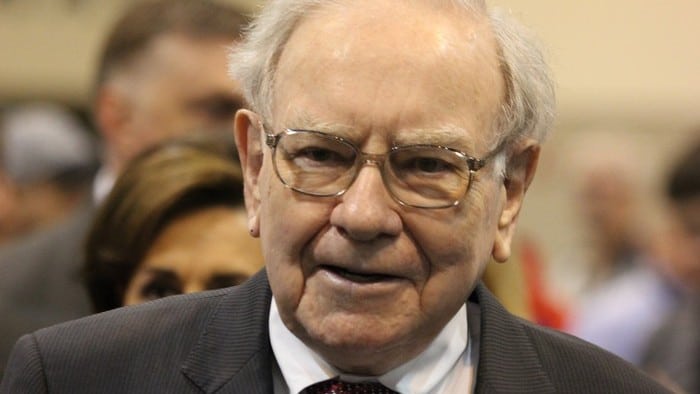
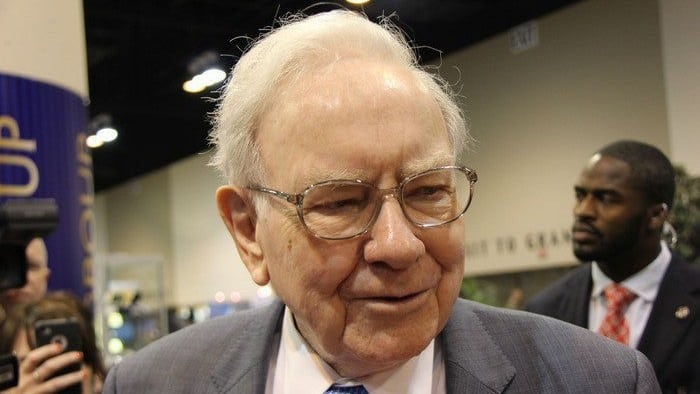
    Legendary share market investing expert and owner of Berkshire Hathaway Warren Buffett

    This article was originally published on Fool.com. All figures quoted in US dollars unless otherwise stated.

    Warren Buffett has spoken to scores of groups of students over the years, answering questions, and he and his business partner Charlie Munger answer shareholder questions for hours at annual meetings of their company, Berkshire Hathaway.

    A frequently asked question is how one might get better at investing, and a frequently offered bit of advice is simply to “read a lot”. In fact, Buffett has suggested reading 500 pages per day!

    Here’s a closer look at that recommendation, along with some suggestions of what you might read.

    The value of reading

    The 500-page recommendation has been recounted by Todd Combs, one of Buffett’s two investing lieutenants (the other being Ted Weschler). Back in 2000, when he was earning his MBA at the Columbia Business School, Buffett pointed at a stack of papers and advised: “Read 500 pages like this every day … That’s how knowledge works. It builds up, like compound interest. All of you can do it, but I guarantee not many of you will do it.”

    Combs did, though, and he has reportedly read as many as 1,000 pages on many days. Much of it isn’t light reading, either —  the recommended kind of reading is informative fare, such as annual reports, trade magazines for various industries, transcripts of conference calls that managements hold every quarter, newspapers, and so on.

    Buffett’s partner Munger is equally bullish on the value of reading, having said, “In my whole life, I have known no wise people who didn’t read all the time — none, zero … If you want wisdom, you’ll get it sitting on your a–. That’s the way it comes.”

    He views reading as very profitable — literally: “I’ve gotten paid a lot over the years for reading through the newspapers.” He has quipped about it, too: “You’d be amazed at how much Warren reads — at how much I read. My children laugh at me. They think I’m a book with a couple of legs sticking out.”

    What to read

    Just as Buffett predicted, most of us probably won’t achieve the reading level of 500 pages per day, but that doesn’t mean we can’t change our reading habits for the better. For example:

    • If you’re not much of a reader, start reading.
    • If you have trouble getting around to reading, make it part of your routine, perhaps finding time early in the morning or before you go to bed.
    • If you are a reader, aim to read more.

    Here are some ideas of what you might read:

    1. Annual reports

    It’s smart to read the annual reports (including the financial statements) from any companies in which you’ve invested — and companies you’re thinking of investing in. Consider reading annual reports from competing companies, too. Buffett has explained: “If we owned stock in a company, in an industry, and there are eight other companies that are in the same industry … I want to be on the mailing list for the reports for the other eight because I can’t understand how my company is doing unless I understand what the other eight are doing.”

    2. News stories and magazine articles

    Both Buffett and Munger are longtime newspaper lovers, and they tend to read several each day. Those who can’t do that might still try to read as much of one good newspaper as they can each day. On top of that, read magazines about business and/or investments and magazine and/or online articles that relate to companies and industries of interest. Keeping up with financial news can give you an edge over other investors.

    3. Trade magazines

    Each industry will tend to have one or more trade magazines for folks in the industry, and these periodicals can impart a lot of inside information, helping you spot up-and-comers in the industry and learn about problems that the industry is facing. The hotel industry has Lodging Magazine, for example, while the fast-food industry has QSR — which stands for “Quick Serve Restaurant”. Many of these magazines exist in not only paper but also online form.

    4. Conference call transcripts

    It’s very common, when a publicly traded company releases its quarterly results (including its annual report), for its management to hold a conference call with analysts who ask questions. These calls can be treasure-troves of insights, and they can give you a sense of what the managers are like, too.

    5. Biographies

    Reading about impressive people and how they moved through their lives and achieved whatever they achieved can be very instructive — sometimes inspiring us, too. A great biography that informs your investing process and decisions doesn’t have to be about an investor or businessperson, either. Reading about politicians, scientists, philosophers, and others can also be valuable.

    6. Books about great businesses

    Reading about great businesses — how they were formed and how they’ve overcome challenges — can help investors learn to spot other great businesses and develop a sense of why some succeed, and others don’t. You might read books centered on particular companies, but books such as Great by Choice: Uncertainty, Chaos, and Luck — Why Some Thrive Despite Them All by Jim Collins and Moten T. Hansen that review many companies, addressing common themes, can also be great.

    7. Books about great investors

    There’s much to be learned from other investors, too — and reading about very successful investors might help you refine your own investing strategy. You can learn from other investors’ mistakes, which can help you avoid making them yourself. Some great investors to investigate include John Bogle, Peter Lynch, John Templeton, T. Rowe Price, and Phil Fisher.

    8. Buffett’s letters to shareholders

    Learn from Warren Buffett himself while you’re at it — the Berkshire Hathaway website offers links to more than 50 years’ worth of his annual letters to shareholders, each of which will impart some investing insights while also delivering a chuckle or two. He writes in a very accessible manner, as if he’s addressing his non-financial-professional sister.

    So consider taking on Buffett’s challenge and see how much you can manage to read. Your investing performance can improve greatly as you absorb many insights and lessons.

    This article was originally published on Fool.com. All figures quoted in US dollars unless otherwise stated.

    The post Do you dare take on this bold challenge from Warren Buffett? appeared first on The Motley Fool Australia.

    Wondering where you should invest $1,000 right now?

    When investing expert Scott Phillips has a stock tip, it can pay to listen. After all, the flagship Motley Fool Share Advisor newsletter he has run for over ten years has provided thousands of paying members with stock picks that have doubled, tripled or even more.*

    Scott just revealed what he believes could be the five best ASX stocks for investors to buy right now. These stocks are trading at near dirt-cheap prices and Scott thinks they could be great buys right now.

    *Returns as of January 12th 2022

    More reading

    Selena Maranjian has positions in Berkshire Hathaway (B shares). The Motley Fool Australia’s parent company Motley Fool Holdings Inc. has positions in and has recommended Berkshire Hathaway (B shares). The Motley Fool Australia’s parent company Motley Fool Holdings Inc. has recommended the following options: long January 2023 $200 calls on Berkshire Hathaway (B shares), short January 2023 $200 puts on Berkshire Hathaway (B shares), and short January 2023 $265 calls on Berkshire Hathaway (B shares). The Motley Fool Australia has recommended Berkshire Hathaway (B shares). The Motley Fool has a disclosure policy. This article contains general investment advice only (under AFSL 400691). Authorised by Scott Phillips.

    This article was originally published on Fool.com. All figures quoted in US dollars unless otherwise stated.


    from The Motley Fool Australia https://ift.tt/sVD2OZ8
  • Why is the Beach Energy share price having such a cracking Tuesday?

    A piggy bank sitting on the beach wearing sunglasses

    A piggy bank sitting on the beach wearing sunglasses

    The S&P/ASX 200 Index (ASX: XJO) is not having such a cracking day thus far this Tuesday. At the time of writing, the ASX 200 is down by a mild 0.35% at just over 7,250 points. That makes the performance of the Beach Energy Ltd (ASX: BPT) share price even more noteworthy. 

    Beach Energy shares are comprehensively defying the markets today. This ASX 200 energy share is presently up a cracking 3.78% at $1.70 a share. This latest rise means Beach shares are now up close to 5% over the last five trading days, and up nearly 30% over 2022 thus far.

    So what might be behind Beach’s market defiance this Tuesday?

    Why is the Beach share price defying the ASX 200’s selloff today?

    Well, it’s got nothing to do with Beach itself it seems, given there are no market announcements out from this oil producer so far today. 

    However, there is a noticeable trend going on today. Beach is not the only company rising in the face of a falling market. Santos Ltd (ASX: STO) is also doing rather well, although not as well as Beach. Santos shares are currently up by 1.5% at $8.32 a share. Indeed, the energy sector is one of the better performing ones on the ASX 200 today. 

    As such, this, and Beach’s impressive share price performance, can probably be put down to the strong showing for oil that we’ve seen over the past 24 hours. As my Fool colleague James flagged this morning, WTI crude oil prices were up 1.8% to US$117.17 a barrel overnight. Brent crude oil prices also rose, this time by 1.9% to US$121.72 a barrel. These rises could be a result of the EU meeting being held over whether to impose additional sanctions on Russian energy. 

    So it appears this is the most likely explanation as to why ASX 200 energy shares like Beach are enjoying such cracking gains today in the face of the broader market’s falls.

    At the current Beach Energy share price, this ASX 200 energy share has a market capitalisation of $3.88 billion, with a dividend yield of 1.18%. 

    The post Why is the Beach Energy share price having such a cracking Tuesday? appeared first on The Motley Fool Australia.

    Should you invest $1,000 in Beach Energy right now?

    Before you consider Beach Energy, you’ll want to hear this.

    Motley Fool Investing expert Scott Phillips just revealed what he believes are the 5 best stocks for investors to buy right now… and Beach Energy wasn’t one of them.

    The online investing service he’s run for over a decade, Motley Fool Share Advisor, has provided thousands of paying members with stock picks that have doubled, tripled or even more.* And right now, Scott thinks there are 5 stocks that are better buys.

    *Returns as of January 13th 2022

    More reading

    Motley Fool contributor Sebastian Bowen has no position in any of the stocks mentioned. The Motley Fool Australia’s parent company Motley Fool Holdings Inc. has no position in any of the stocks mentioned. The Motley Fool Australia has no position in any of the stocks mentioned. The Motley Fool has a disclosure policy. This article contains general investment advice only (under AFSL 400691). Authorised by Scott Phillips.

    from The Motley Fool Australia https://ift.tt/G98azoF

  • Broker gives its verdict on the Woodside share price post-merger

    Gas and oil plant with a inspector in the background.

    Gas and oil plant with a inspector in the background.

    The Woodside Energy Group Ltd (ASX: WDS) share price could be good value following its merger with the petroleum assets of BHP Group Ltd (ASX: BHP).

    That’s the view of one of Australia’s leading brokers.

    What is being said about the Woodside share price?

    According to a note out of Morgans from this morning, the broker has been looking over the merger of its operations with BHP’s petroleum assets.

    The good news is that its analysts believe this combination is a winning one and greatly enhances fundamentals.

    And while the broker feels the immediate impact on its value is broadly neutral (due to the issue of shares to BHP shareholders), it still sees upside in the current Woodside share price.

    The note reveals that Morgans has retained its add rating with a price target of $32.90. This implies potential upside of 9.3% over the next 12 months.

    But it gets better with the broker forecasting an FY 2022 dividend of approximately $2.56 per share. This equates to a yield of 8.5% at today’s Woodside share price.

    Morgans commented:

    A well-timed deal enlarging WDS’ earnings at a time of active investment in new growth. WDS had already expected to protect its shareholder returns post merger, however the earnings growth delivered by the cycle has now positioned the company also for a potential buyback and/or special dividend at its August result.

    Post the merger with BHP Petroleum we maintain our Add recommendation with a $32.90 target price. We view WDS as ideally positioned to generate high quality earnings, maintaining its leverage to the continuing upcycle in oil & gas, tackle its diversified growth profile to unlock more value upside and potentially deliver a shareholder return surprise at its next result.

    The post Broker gives its verdict on the Woodside share price post-merger appeared first on The Motley Fool Australia.

    Should you invest $1,000 in Woodside right now?

    Before you consider Woodside, you’ll want to hear this.

    Motley Fool Investing expert Scott Phillips just revealed what he believes are the 5 best stocks for investors to buy right now… and Woodside wasn’t one of them.

    The online investing service he’s run for over a decade, Motley Fool Share Advisor, has provided thousands of paying members with stock picks that have doubled, tripled or even more.* And right now, Scott thinks there are 5 stocks that are better buys.

    *Returns as of January 13th 2022

    More reading

    Motley Fool contributor James Mickleboro has no position in any of the stocks mentioned. The Motley Fool Australia’s parent company Motley Fool Holdings Inc. has no position in any of the stocks mentioned. The Motley Fool Australia has no position in any of the stocks mentioned. The Motley Fool has a disclosure policy. This article contains general investment advice only (under AFSL 400691). Authorised by Scott Phillips.

    from The Motley Fool Australia https://ift.tt/sg3bPyJ

  • 10 reasons Warren Buffett is such a successful investor

    This article was originally published on Fool.com. All figures quoted in US dollars unless otherwise stated.

    Legendary share market investing expert and owner of Berkshire Hathaway Warren Buffett

    This article was originally published on Fool.com. All figures quoted in US dollars unless otherwise stated.

    You could rightly say that Berkshire Hathaway (NYSE: BRK.A)(NYSE: BRK.B) CEO Warren Buffett knows a thing or two about investing in the stock market.

    Since becoming CEO in 1965, he’s led Berkshire’s Class A shares (BRK.A) to an average annual return of 20.1% and created almost $690 billion in value for shareholders (himself included). On an aggregate basis, Buffett has overseen a greater than 3,600,000% increase in his company’s share price in 57 years. Berkshire Hathaway’s share price could plummet 99% tomorrow, and it would still be handily outperforming the S&P 500, including dividend payouts, since the beginning of 1965.

    But perhaps the greatest aspect of Buffett’s success isn’t his vast outperformance, so much as the transparency and simplicity of the strategy that’s allowed him (and his shareholders) to flourish. What follows are the 10 reasons Warren Buffett has been such a successful investor for nearly six decades as Berkshire’s CEO.

    1. The Oracle of Omaha lets his winners run over the long term

    Despite generating a 20.1% average annual return over 57 years, Buffett isn’t infallible. Berkshire Hathaway has had down years, and will almost certainly have negative-return years in the future.

    But one of his many keys to outperformance has been allowing his winners to run over long periods. Winning stocks like beverage giant Coca-Cola, credit servicer American Express, credit ratings agency Moody’s, and insurer Globe Life, have been continuous holdings since 1988, 1993, 2000, and 2001, respectively.

    2. He tends to gravitate to cyclical companies and industries

    To build on the previous point, the Oracle of Omaha absolutely loves to buy cyclical stocks. By “cyclical,” I mean companies that perform well when the economy is expanding and struggle when it’s contracting.

    Even though recessions are inevitable, periods of expansion last considerably longer. Rather than trying to guess when a recession might occur, Buffett has set Berkshire Hathaway’s portfolio up to benefit from these disproportionately long periods of expansion and the natural growth of the U.S. and global economy over time.

    3. Brand-name, time-tested businesses are popular buys

    Another reason for Buffett’s incredible success is his willingness to invest in brand-name, time-tested businesses. While management teams come and go, Buffett is well aware of the power behind branding and a loyal customer base.

    For instance, Apple (NASDAQ: AAPL) is one of the most recognized brands in the world, and it has an exceptionally loyal customer base. Apple has relied on product innovation to control the lion’s share of the U.S. smartphone market, and is in the process of reinventing itself to emphasize subscription services moving forward. After generating $116.4 billion in operating cash flow over the past 12 months, the data suggests Apple’s strategy is working.

    4. Meanwhile, potential fads and momentum plays are often avoided

    Equally important is Buffett’s avoidance of trends and investments that can be viewed as fads. Although next-big-thing investments, such as genomics, 3-D printing, cannabis, and blockchain technology, have offered incredible growth potential, these trends have also endured large bubble-bursting events.

    Buffett has been particularly critical of crypto blue chip Bitcoin (CRYPTO: BTC), stating that, “If you… owned all of the Bitcoin in the world and you offered it to me for $25, I wouldn’t take it.” The Oracle of Omaha prefers businesses with longevity that produce something. In Buffett’s view, Bitcoin is a major red flag because it doesn’t produce anything. 

    5. Buffett focuses on sectors and industries he knows well

    A fifth reason for Warren Buffett’s success is his narrow research focus. Instead of trying to understand a little bit about every sector of the market, the Oracle of Omaha aims to be highly knowledgeable in a few sectors and industries.

    In particular, Buffett has a keen eye for spotting value and well-rounded businesses in the financial, energy, and consumer staples sectors. Peruse Berkshire Hathaway’s portfolio and its owned/acquired assets, and you’ll find plenty of banks, insurance companies, energy providers, and food/beverage companies. Financial stocks have been Buffett’s go-to for decades.

    6. He leans on his investing team for sectors/industries outside his comfort zone

    Warren Buffett realizes he can’t cover the entire stock market, which is why he relies on his investment team to help him out in the sectors and industries he doesn’t have a firm grasp on. This team includes right-hand man Charlie Munger, as well as “investing lieutenants” Todd Combs and Ted Weschler.

    Combs and Weschler have often been leaned on for their expertise in tech and healthcare. However, a recent example of their investing prowess can be seen in Berkshire’s Kroger position. Buffett’s company is sitting on hearty gains thanks to one or both investing lieutenants recognizing that COVID-19 and inflation would ultimately turn out to be a positive for the nation’s largest grocery chain.

    7. Berkshire’s portfolio is relatively concentrated

    In spite of holding stakes in more than four dozen securities, Berkshire Hathaway’s portfolio is concentrated in just a small handful of stocks. Apple, Bank of America (NYSE: BAC), Chevron (NYSE: CVX), Coca-Cola, and American Express, combine to account for 72.2% of the nearly $343 billion investment portfolio. Further, Berkshire’s top-10 holdings make up 85.3% of invested assets.

    Warren Buffett has long believed that diversification is only necessary is you don’t know what you’re doing. With a narrow research focus and plenty of help from his investing lieutenants in other areas of the market outside of his comfort zone, it’s plainly evident that Buffett and his team feel confident in their research.

    8. Buffett buys when others are fearful

    Yet another reason for Buffett’s long-term outperformance is his inability to be scared away from market corrections, bear markets, and complete meltdowns. Whereas it’s common for investors’ emotions to bait them into poor decision-making during market downturns, Buffett chooses to be greedy when others are fearful.

    As an example, the Oracle of Omaha invested $5 billion into preferred stock of Bank of America in 2011. BofA was struggling mightily at the time under the weight of legal settlements following the housing crash. Since then, Buffett has pivoted this initial investment, as well as subsequent buys, into a nearly $38 billion stake in Bank of America. Today, BofA is highly profitable and returning boatloads of capital to its shareholders. 

    9. Buffett’s company is a passive income powerhouse

    Speaking of returning capital to shareholders, Buffett’s success is also due to his company collecting massive amounts of passive income each year. Taking into account an active first quarter that saw Buffett and his team make a number of investments, Berkshire Hathaway appears to be on track to collect more than $6 billion in dividend income over the next 12 months.

    Integrated oil and gas stock Chevron is currently Berkshire’s golden goose for dividends, with $904.1 million expected to be collected over the next year. Chevron is benefiting from multidecade highs in crude oil and natural gas, and can rely on its midstream (e.g., transmission pipelines and storage) and downstream assets (refineries and chemical plants) if crude and natural gas prices back significantly off their highs.

    10. He’s a big believer in share buybacks

    Lastly, Buffett and Munger have invested heavily in what’s clearly their favorite stock on the planet: their own company. Since Berkshire’s board of directors introduced new share repurchase parameters in July 2018, the Oracle of Omaha has green-lit $61.1 billion worth of buybacks.    

    Buying back stock tends to have a positive impact on the share price of companies that are profitable on a recurring basis. By reducing the number of shares outstanding, earnings per share tends to climb over time. This can make a stock appear more fundamentally attractive, thereby lifting its share price.

    This transparent strategy is the secret sauce that’s allowed Warren Buffett to run circles around the S&P 500 for decades. 

    This article was originally published on Fool.com. All figures quoted in US dollars unless otherwise stated.

    The post 10 reasons Warren Buffett is such a successful investor appeared first on The Motley Fool Australia.

    Wondering where you should invest $1,000 right now?

    When investing expert Scott Phillips has a stock tip, it can pay to listen. After all, the flagship Motley Fool Share Advisor newsletter he has run for over ten years has provided thousands of paying members with stock picks that have doubled, tripled or even more.*

    Scott just revealed what he believes could be the five best ASX stocks for investors to buy right now. These stocks are trading at near dirt-cheap prices and Scott thinks they could be great buys right now.

    *Returns as of January 12th 2022

    More reading

    Sean Williams has positions in Bank of America. Bank of America is an advertising partner of The Ascent, a Motley Fool company. American Express is an advertising partner of The Ascent, a Motley Fool company. The Motley Fool Australia’s parent company Motley Fool Holdings Inc. has positions in and has recommended Apple, Berkshire Hathaway (B shares), Bitcoin, and Moody’s. The Motley Fool Australia’s parent company Motley Fool Holdings Inc. has recommended the following options: long January 2023 $200 calls on Berkshire Hathaway (B shares), long March 2023 $120 calls on Apple, short January 2023 $200 puts on Berkshire Hathaway (B shares), short January 2023 $265 calls on Berkshire Hathaway (B shares), and short March 2023 $130 calls on Apple. The Motley Fool Australia owns and has recommended Bitcoin. The Motley Fool Australia has recommended Apple and Berkshire Hathaway (B shares). The Motley Fool has a disclosure policy. This article contains general investment advice only (under AFSL 400691). Authorised by Scott Phillips. 

    This article was originally published on Fool.com. All figures quoted in US dollars unless otherwise stated.

    from The Motley Fool Australia https://ift.tt/StJBhAZ

  • 3 quality ASX 200 shares with dividend reinvestment plans

    a man with a wry smile is behind ascending piles of coins as he places another coin on top of the tallest stack.a man with a wry smile is behind ascending piles of coins as he places another coin on top of the tallest stack.

    There are a number of quality S&P/ASX 200 Index (ASX: XJO) shares that give investors the opportunity to utilise their dividend reinvestment plan (DRP).

    Dividends can be a way for businesses to reward shareholders by paying out a portion of the profit to investors each year.

    Companies can choose to pay out most of the profit they generate, or retain a good amount of the generated profit to reinvest back into the business.

    But what are investors meant to do with the dividends they receive?

    I think there are three main options that investors can do with it.

    First, investors could spend the dividends on something – living expenses, travel, whatever they want.

    Next, shareholders could decide to receive the dividends as cash and then allocate that cash dividend towards their next share investment.

    Finally, investors could decide to utilise the dividend reinvestment plans (DRP) on offer.

    Benefits of a dividend reinvestment plan

    A DRP allows investors to receive more shares in the business rather than receiving cash.

    Buying more shares gives investors the chance of benefiting from compounding. Over time, the power of compounding can really help boost long-term wealth.

    It’s automatic. Once you select the DRP option, investors don’t need to worry about what to do with the cash or when to invest. This can make things simpler.

    Another benefit is that some ASX 200 shares offer discounts on the shares they issue to investors that use the DRP. For example, DRP shares could be issued at a 2% discount.

    The final benefit, which is more for the business than the shareholder, is that it allows that business to keep more cash in the bank.

    Ansell Limited (ASX: ANN)

    Ansell is one of the ASX 200 shares that offer a DRP. This company is one of the world’s largest manufacturers of safety gloves for industrial and healthcare settings. It also sells things like protective clothing and face masks.

    The Ansell share price has seen a 20% decline since mid-January 2022, so it’s now at a cheaper price.

    Macquarie Group Ltd (ASX: MQG)

    Macquarie is another business that has a DRP. It’s Australia’s largest investment bank and operates in a number of categories including banking and financial services, commodities and global markets, Macquarie Capital (investment banking), and asset management (Macquarie Asset Management).

    Macquarie provides a 1.5% discount with its DRP, allowing investors to receive shares at a cheaper price. The Macquarie share price has fallen by around 10% since the start of 2022.

    Rural Funds Group (ASX: RFF)

    Rural Funds is the third business that I’m going to mention. It has a market capitalisation of more than $1 billion. The ASX 200 share owns a variety of farmland across different sectors including almonds, macadamias, vineyards, cattle, and ‘cropping’ (cotton and sugar).

    The real estate investment trust (REIT) also gives investors a DRP discount, of 1.5%. Rural Funds’ share price has fallen by 5% in 2022 to date.

    The post 3 quality ASX 200 shares with dividend reinvestment plans appeared first on The Motley Fool Australia.

    Wondering where you should invest $1,000 right now?

    When investing expert Scott Phillips has a stock tip, it can pay to listen. After all, the flagship Motley Fool Share Advisor newsletter he has run for over ten years has provided thousands of paying members with stock picks that have doubled, tripled or even more.*

    Scott just revealed what he believes could be the five best ASX stocks for investors to buy right now. These stocks are trading at near dirt-cheap prices and Scott thinks they could be great buys right now.

    *Returns as of January 12th 2022

    More reading

    Motley Fool contributor Tristan Harrison has positions in RURALFUNDS STAPLED. The Motley Fool Australia’s parent company Motley Fool Holdings Inc. has no position in any of the stocks mentioned. The Motley Fool Australia has positions in and has recommended RURALFUNDS STAPLED. The Motley Fool Australia has recommended Ansell Ltd. and Macquarie Group Limited. The Motley Fool has a disclosure policy. This article contains general investment advice only (under AFSL 400691). Authorised by Scott Phillips.

    from The Motley Fool Australia https://ift.tt/bgpjkBI

  • What happened to the CSL share price in May?

    Two happy scientists analysing test results.Two happy scientists analysing test results.

    The CSL Limited (ASX: CSL) share price has outperformed this month despite the company releasing potentially disappointing news.

    The biotechnology stock has slipped 0.03% since the end of April. Meanwhile, the S&P/ASX 200 Index (ASX: XJO) has fallen 2.22%.

    At the time of writing, the CSL share price is $273.22.

    Let’s take a look at all the market has heard from the company this month.

    What’s been going on with CSL this month?

    The CSL share price has seemingly shrugged off the downturn spurred by a delay to the company’s $17.2 billion acquisition earlier this month.

    The biotech giant announced its planned takeover of Vifor Pharma had hit a hurdle on 12 May.

    Regulatory approvals are expected to drag the process out for a few months longer than was previously planned.

    The news dragged the CSL share price 1.8% lower. Though, it lifted another 3.3% the following day.

    The news also wasn’t enough to throw the stock off the course of the S&P/ASX 200 Health Care Index (ASX: XHJ).

    TradingView Chart

    As the above chart shows, CSL shares – represented in orange – have been trading closely in line with the company’s sector – represented in teal – over the last month.

    Meanwhile, the ASX 200 – represented in blue – has been underperforming both.

    There were a number of other happenings that might have bolstered market sentiment in CSL’s stock this month.

    The company announced its plasma collections had reached pre-pandemic levels in early May.

    Additionally, plenty of brokers are bullish on CSL’s stock. Notably, Citi slapped it with a $335 price target and Bell Potter expects big things to come.

    CSL share price snapshot

    While CSL’s stock has outperformed over the last month, it’s struggled over the longer term.

    The company’s shares have slipped 8% year to date. They have also fallen 6% since this time last year.

    The post What happened to the CSL share price in May? appeared first on The Motley Fool Australia.

    Should you invest $1,000 in CSL right now?

    Before you consider CSL, you’ll want to hear this.

    Motley Fool Investing expert Scott Phillips just revealed what he believes are the 5 best stocks for investors to buy right now… and CSL wasn’t one of them.

    The online investing service he’s run for over a decade, Motley Fool Share Advisor, has provided thousands of paying members with stock picks that have doubled, tripled or even more.* And right now, Scott thinks there are 5 stocks that are better buys.

    *Returns as of January 13th 2022

    More reading

    Citigroup is an advertising partner of The Ascent, a Motley Fool company. Motley Fool contributor Brooke Cooper has no position in any of the stocks mentioned. The Motley Fool Australia’s parent company Motley Fool Holdings Inc. has positions in and has recommended CSL Ltd. The Motley Fool Australia has no position in any of the stocks mentioned. The Motley Fool has a disclosure policy. This article contains general investment advice only (under AFSL 400691). Authorised by Scott Phillips.

    from The Motley Fool Australia https://ift.tt/i73YDm5

  • The 1 question you must ask yourself before buying a stock

    This article was originally published on Fool.com. All figures quoted in US dollars unless otherwise stated.

    A middle aged businessman in a suit holds up one finger with his other hand on his hip with an enthusiastic, comical expression on his face.

    This article was originally published on Fool.com. All figures quoted in US dollars unless otherwise stated.

    Investing in stocks can be a risky prospect. Stock values can fluctuate a lot, and that means on a day-to-day or week-to-week basis, you could end up seeing your fair share of on-screen losses in your portfolio.

    But investing in stocks also has a lot of upside — namely, that stocks tend to generate high returns that could make you very wealthy. That assumes, of course, that you’re willing to take a buy-and-hold approach to investing — that is, buy stocks and hang on to them for many years so they can gain value. But, all told, loading up on stocks is a great way to build a lot of wealth for retirement, and it could be your ticket to meeting other major goals as well.

    But if you’re going to buy stocks, it’s important that you do so strategically. And so the next time you’re tempted to add shares of a given stock to your brokerage account, be sure to ask yourself this important question.

    Why am I investing in this company?

    There are different factors that may be motivating you to invest in a given company. Maybe you like the way that company has expanded its product line without taking on too much debt. Maybe you’re a fan of the company’s management team and think it will take the business to a very profitable place. Or maybe you’re looking to diversify your portfolio, so you’ve landed on a company whose market sector you’re currently light on.

    All of these are valid reasons for buying a stock. But one thing you don’t want to do is choose a stock at random without there being a specific thought pattern behind it.

    Along these lines, it’s generally not a good idea to invest in a specific company simply because it tends to be in the news a lot. Sometimes, companies gain publicity for reasons that aren’t ideal (think executive scandals or speculative products). And so hearing a company name mentioned a lot isn’t automatically a good reason to buy it.

    Have a specific plan

    It’s always a good idea to establish an investment strategy based on your goals and risk tolerance. Whenever you’re tempted to buy a stock, you should really make sure the company in question fits into your strategy to some degree.

    If part of your strategy is to load up on a certain number of growth stocks, and you come across a company that you think has solid growth potential, then you should feel comfortable moving forward with that investment. But you definitely shouldn’t just pick stocks out of a hat, or buy the same stocks your friends are buying and hope for the best.

    The more strategic you are in the course of building your portfolio, the more success you’re likely to have as an investor. So digging into the “why” is a good bet before moving forward with any investment choice, even if it’s a company whose shares you’ve purchased many times before.

    This article was originally published on Fool.com. All figures quoted in US dollars unless otherwise stated.

    The post The 1 question you must ask yourself before buying a stock appeared first on The Motley Fool Australia.

    Wondering where you should invest $1,000 right now?

    When investing expert Scott Phillips has a stock tip, it can pay to listen. After all, the flagship Motley Fool Share Advisor newsletter he has run for over ten years has provided thousands of paying members with stock picks that have doubled, tripled or even more.*

    Scott just revealed what he believes could be the five best ASX stocks for investors to buy right now. These stocks are trading at near dirt-cheap prices and Scott thinks they could be great buys right now.

    *Returns as of January 12th 2022

    More reading

    The Motley Fool has a disclosure policy.

    This article was originally published on Fool.com. All figures quoted in US dollars unless otherwise stated.


    from The Motley Fool Australia https://ift.tt/7dzFaO5