Tag: Motley Fool

  • Own ASX lithium shares? Here’s a global expert’s outlook on lithium demand (and supply)

    A person bounces another up high from a seesaw as the one in the air looks through a telescope into the future.A person bounces another up high from a seesaw as the one in the air looks through a telescope into the future.

    Lithium prices may pull back in the near term but will regain strength by 2024, one global analyst predicts.

    Some of the ASX lithium shares we’re talking about here include Pilbara Minerals Ltd (ASX: PLS), Core Lithium Ltd (ASX: CXO), Mineral Resources Limited (ASX: MIN) and Sayona Mining Ltd (ASX: SYA).

    Let’s look at the outlook for lithium prices in more detail.

    ‘Increasing’ lithium deficits

    A global analyst is predicting lithium supply will exceed demand in the near term before returning to increasing deficits. Lithium is a crucial element in electric vehicle (EV) batteries.

    S&P Global Commodity Insights principal research analyst Kevin Murphy said:

    Over the near-term, supply-side growth will exceed demand for lithium. This will lead to a pullback in lithium carbonate spot prices during 2022 and into 2023 although prices will remain well above the lows hit in 2020.

    By 2024 the lithium market is expected to return to increasing deficits which will provide buoyancy to prices.

    Murphy added that lithium carbonate equivalent (LCE) supply is forecast to jump to 1.2 million tonnes by 2026. However, he noted demand could be higher, at 1.25 million tonnes.

    ASX lithium shares had a stellar start to the week amid a positive outlook from analysts at Macquarie.

    The Pilbara Minerals share price soared 5.2% today. Meanwhile, Core Lithium jumped 3.5% and Sayona Mining leapt 6.25%.

    Share price snapshot for ASX lithium shares

    The Sayona Mining share price has exploded 698% in a year, while Core Lithium has rocketed 415%. Meanwhile, the Pilbara Minerals share price has soared 137% in the last 52 weeks.

    In contrast, the S&P/ASX 200 Index (ASX: XJO) has climbed 1.12% in a year.

    The post Own ASX lithium shares? Here’s a global expert’s outlook on lithium demand (and supply) appeared first on The Motley Fool Australia.

    Wondering where you should invest $1,000 right now?

    When investing expert Scott Phillips has a stock tip, it can pay to listen. After all, the flagship Motley Fool Share Advisor newsletter he has run for over ten years has provided thousands of paying members with stock picks that have doubled, tripled or even more.*

    Scott just revealed what he believes could be the five best ASX stocks for investors to buy right now. These stocks are trading at near dirt-cheap prices and Scott thinks they could be great buys right now.

    *Returns as of January 12th 2022

    More reading

    The Motley Fool Australia’s parent company Motley Fool Holdings Inc. has no position in any of the stocks mentioned. The Motley Fool Australia has no position in any of the stocks mentioned. The Motley Fool has a disclosure policy. This article contains general investment advice only (under AFSL 400691). Authorised by Scott Phillips.

    from The Motley Fool Australia https://ift.tt/kOqd27l

  • The latest property band-aid

    Model house with coins and a piggy bank.

    Model house with coins and a piggy bank.Oh boy.

    Am I really going to wade into housing policy?

    In a week so politically charged as this one, given polling day is this Saturday?

    Am I really that nuts?

    You betcha.

    And there will be a small but committed group who will either agree wholeheartedly or disagree violently, no matter what follows, because they’re ‘rusted-on’ to one party or the other.

    If that’s you, feel free to skip this one – I’m here for the policy, not the politics.

    Sorry if that sounds a little punchy… I’m just getting ahead of the hate mail!

    Now, for those who are still here for the ‘make our country better’ stuff, let’s kick off.

    First, I’ve made my views clear on Labor’s ‘Help to Buy’ scheme: It’s a band-aid on a band-aid, using government money because they can’t imagine there’s any other solution to housing affordability that sees deposits take more than a decade to save in some parts of the country.

    And then, last night, the Liberal / National Coalition gave the Opposition an almighty “Hold my beer” as they went one step further: not using government money (though Super contributions are tax-advantaged, so the taxpayer is already kicking in), but inviting us to raid our Super for the second time in a couple of years – this time to buy a house.

    If it feels like the government has a predisposition to see Super as a Magic Pudding, you’re not alone, but we’ll get to that.

    See, both major parties have taken a similar approach: “We know housing is unaffordable for too many people, so here’s our solution.”

    They’ve also taken a similar approach to the solution.

    Or should I say “solution”.

    ‘It’s the least we can do’, they should have said.

    Because it truly is the very least they could do.

    Housing is too unaffordable? We won’t fix it, you can just buy 60% of a house instead!

    Housing is too unaffordable? We won’t fix it, a comfortable retirement is overrated anyway!

    Seriously.

    Yes, a pox on both their houses.

    But I have to say, the Liberal / National policy that was announced yesterday – to let people raid their Super for housing – takes the cake.

    It comes after they encouraged people to raid Super during the COVID crisis.

    And after they wanted to let victims of domestic violence access their Super in 2021.

    To be very, very clear: none of these are undeserving causes.

    But the proposed solutions – making Super a magic pudding any time the government wants to solve a problem – are undeserving answers.

    We should be a country that doesn’t make young people choose between Super and housing.

    Or, as I tweeted to an overwhelming response:

    “Imagine being as wealthy as Australia, but decreeing that young people can have a house, or Super, but not both, because we have neither the vision nor the will to meaningfully address housing policy.

    “What a complete and utter abandonment of principle and duty.”

    Those last two concepts seem hard to find sometimes in politics, don’t they?

    (And again, for the record, I also bagged Labor’s policy.)

    Neither party seems to have a policy response that actually addresses the real problems – just different piggy banks they’re prepared to raid to add another housing band-aid to an ever-growing pile.

    But Super?

    Seriously?

    As I did when the government made it a piggy bank during COVID, I’ll ask you to look around the world, and compare our retirement savings system to literally any other.

    We have the fourth largest retirement savings pool on Earth, despite having only 25 million people.

    Other countries, with non-compulsory, or lower levels of compulsory savings have – surprise! – lower levels of retirement savings.

    Super works.

    And for its success, it’s become a honeypot that government can’t help but try to tap, over and over again, for financial and ideological reasons.

    But my issue isn’t ideological.

    It’s financial.

    Making Australians choose between Super and financial hardship is a false binary.

    Making Australians choose between Super and housing is a false binary.

    Super is for retirement. Full stop.

    Anything else is an undermining of a system that has clearly proven its worth.

    And anything that undermines Super threatens the retirement incomes of Australians (and increases the burden on the Federal budget, after both major parties recognised the intergenerational challenges of a growing retirement cohort and longer lives).

    I’m sorry if this offends your political sensibilities (in either direction).

    But I’m not here to tread gingerly on eggshells.

    I’m here to call it as I see it – usually about shares and investing, but also about issues that impact the financial lives of all of us.

    We need to be good enough, as a country, to solve for housing affordability, without needing governments to tip in millions, or homebuyers to jeopardise their retirements.

    We need to treat Super as sacrosanct, protected for retirement.

    We need to have some serious, tough conversations, rather than reaching for the band-aid (or, worse, the hollow soundbite).

    We need to return to ideals of, as I said in my tweet, duty and principle (and I’ll add ‘service’).

    It’s the least we should expect.

    Fire at will!

    Fool on!

    The post The latest property band-aid appeared first on The Motley Fool Australia.

    Wondering where you should invest $1,000 right now?

    When investing expert Scott Phillips has a stock tip, it can pay to listen. After all, the flagship Motley Fool Share Advisor newsletter he has run for over ten years has provided thousands of paying members with stock picks that have doubled, tripled or even more.*

    Scott just revealed what he believes could be the five best ASX stocks for investors to buy right now. These stocks are trading at near dirt-cheap prices and Scott thinks they could be great buys right now.

    *Returns as of January 12th 2022

    More reading

    Motley Fool contributor Scott Phillips has no position in any of the stocks mentioned. The Motley Fool Australia’s parent company Motley Fool Holdings Inc. has no position in any of the stocks mentioned. The Motley Fool Australia has no position in any of the stocks mentioned. The Motley Fool has a disclosure policy. This article contains general investment advice only (under AFSL 400691). Authorised by Scott Phillips.

    from The Motley Fool Australia https://ift.tt/g4wdQEP

  • Is the NAB share price cheap with its recent pullback?

    A middle-aged woman sits in contemplation over a tablet device considering information about ASX shares and deep in thought.A middle-aged woman sits in contemplation over a tablet device considering information about ASX shares and deep in thought.

    The National Australia Bank Ltd (ASX: NAB) share price has tracked 8% higher in 2022 after strengthening in January.

    However, the NAB share price has levelled off its previous highs and traded down during the past month, leading to many questions about the bank’s valuation and where it might head next.

    The bank’s shares finished the day trading at $31.32 per share, 0.58% higher than their previous close.

    Is the NAB share price cheap?

    Analysts at JP Morgan have a June 2023 price target on National Australia Bank shares of $34.50, a step above the current market price.

    The broker is bullish on the bank. It believes its pre-provision profit growth will continue outstripping peers and that it is “well placed to deliver ongoing growth”.

    The broker said in a recent note:

    We have an overweight recommendation on NAB reflecting stronger-than-peer revenue growth prospects, likely sound cost control, leverage to rising rates, and ongoing capital management.

    NAB’s loan book grew at a 10% annualised pace in the half which was broad-based across divisions. Despite this, margins were well managed, down just 2 basis points half-on-half excluding Markets & liquids.

    NAB looks well placed to drive further healthy growth, with a strong capital surplus and recent investments in processes, technology and people opening up opportunities across the markets it addresses.

    Meanwhile, the number of buy and hold calls is evenly split amongst brokers covering the stock, according to data from Bloomberg.

    There are no sell ratings from this list and the consensus price target is $33.34. What one makes of this is up to them but the stock is positioned only 6% below this value. Thus, calling it ‘cheap’ in value terms may be questionable.

    The NAB share price has clipped a 20% gain in the last 12 months but has cooled off alongside the wider banking sector during May.

    The post Is the NAB share price cheap with its recent pullback? appeared first on The Motley Fool Australia.

    Should you invest $1,000 in National Australia Bank right now?

    Before you consider National Australia Bank, you’ll want to hear this.

    Motley Fool Investing expert Scott Phillips just revealed what he believes are the 5 best stocks for investors to buy right now… and National Australia Bank wasn’t one of them.

    The online investing service he’s run for over a decade, Motley Fool Share Advisor, has provided thousands of paying members with stock picks that have doubled, tripled or even more.* And right now, Scott thinks there are 5 stocks that are better buys.

    *Returns as of January 13th 2022

    More reading

    Motley Fool contributor Zach Bristow has no position in any of the stocks mentioned. The Motley Fool Australia’s parent company Motley Fool Holdings Inc. has no position in any of the stocks mentioned. The Motley Fool Australia has no position in any of the stocks mentioned. The Motley Fool has a disclosure policy. This article contains general investment advice only (under AFSL 400691). Authorised by Scott Phillips.

    from The Motley Fool Australia https://ift.tt/IHWDUNT

  • Here’s why the CBA share price could soon be in for some pain

    An ASX shares broker analysing a chart tracking the A2 Milk share price

    An ASX shares broker analysing a chart tracking the A2 Milk share priceThe Commonwealth Bank of Australia (ASX: CBA) share price is one of the most widely followed on the S&P/ASX 200 Index (ASX: XJO).

    That could be for one or more of several reasons. CBA’s old status as the biggest share on the ASX perhaps. Or its place as the largest of the ASX’s big four banks, and with the most market share. It could even be due to the fact that CommBank used to be a government-owned company.

    Whatever the reason, the bank is a popular flagship share of the ASX 200. This is why many investors might find the idea of the CBA share price falling a painful one. Investors have been used to some decent returns from Commonwealth Bank shares. This was a bank that rose more than 20% last year, after all. Over the past five years, CBA shares remain up almost 30%. And that’s not including the generous dividends (and franking credits) that have been paid along the way.

    But perhaps the good times are coming to an end, at least for a while. That’s the view of more than one broker on the ASX. So is it buy or sell for the CBA share price today?

    CBA share price: Buy or sell?

    Well, broker Goldman Sachs is firmly in the latter camp. Goldman has rated the bank as a sell for a while now. As my Fool colleague James covered recently, it has recently raised its 12-month share price target to $89.86, while maintaining its sell rating. If that were to play out, CBA shares would be facing a fall of around 13% over the next year.

    Goldman reckons the CBA share price is just too expensive and notes that the bank I “more exposed to sector-wide headwinds” than its rivals.

    Brokers at Macquarie largely agree. Macquarie also has a bearish ‘underperform’ rating on CBA shares right now. As we covered last week, the investment bank has a $90 share price target to match its underperform rating.

    Macquarie also believes CommBank shares are expensive, and reckons the bank could struggle to match the performance of its rivals going forward, and thus shouldn’t be commanding today’s share price premium.

    Perhaps that’s not what CBA investors might want to hear today, but that is the view of two of the ASX’s most prominent brokers. Time will only tell if their predictions turn out to be accurate.

    At the current CBA share price, this ASX 200 bank has a market capitalisation of $174.53 billion, with a dividend yield of 3.63%.

    The post Here’s why the CBA share price could soon be in for some pain appeared first on The Motley Fool Australia.

    Should you invest $1,000 in CBA right now?

    Before you consider CBA, you’ll want to hear this.

    Motley Fool Investing expert Scott Phillips just revealed what he believes are the 5 best stocks for investors to buy right now… and CBA wasn’t one of them.

    The online investing service he’s run for over a decade, Motley Fool Share Advisor, has provided thousands of paying members with stock picks that have doubled, tripled or even more.* And right now, Scott thinks there are 5 stocks that are better buys.

    *Returns as of January 13th 2022

    More reading

    Motley Fool contributor Sebastian Bowen has no position in any of the stocks mentioned. The Motley Fool Australia’s parent company Motley Fool Holdings Inc. has positions in and has recommended Goldman Sachs. The Motley Fool Australia has recommended Macquarie Group Limited. The Motley Fool has a disclosure policy. This article contains general investment advice only (under AFSL 400691). Authorised by Scott Phillips.

    from The Motley Fool Australia https://ift.tt/RvtFJXq

  • How big is the BHP dividend yield going to be in 2022 and 2023?

    Calculator on top of Australian 4100 notes and next to Australian gold coins.

    Calculator on top of Australian 4100 notes and next to Australian gold coins.BHP Group Ltd (ASX: BHP) is one of the biggest businesses in the world. It has a market capitalisation of $232 billion according to the ASX. But, how big is the dividend yield going to be?

    In 2021, BHP was actually the largest dividend payer in the world. But that’s now history. What could the 2022 and 2023 dividends look like?

    What we already know

    A few months ago, BHP declared an interim dividend of US$1.50 per share with its FY22 half-year result. That was a 49% increase in the dividend compared to the prior corresponding period.

    The dividend growth came after a significant rise in BHP’s profit. It reported that attributable profit rose 144% to US$9.4 billion, with net operating cash flow increasing by 42% to US$13.3 billion.

    Continuing operations profit from operations jumped 50% to US$14.8 billion while continuing operations underlying attributable profit increased 57% to US$9.7 billion. The continuing operations underlying earnings per share (EPS) went up 57% to US$1.92. This means that BHP paid out 78% of its continuing operations underlying EPS.

    BHP said that its record interim dividend was supported by its “reliable operating performance and continued strong markets” for a number of its resources.

    How big could the dividend be in 2022 and 2023?

    Ultimately, it’s up to the board of BHP to decide on dividend payments. The strength of commodity prices, profit, cash flow and the balance sheet can be influencers on the size of the dividend.

    In Australian dollar terms, Commsec numbers suggest a dividend of $4.53 per share could be paid in FY22. That translates into a potential grossed-up dividend yield of 14.2%.

    Then, in FY23 the forecast on Commsec shows a potential annual dividend of $3.23 per share. That would represent a grossed-up dividend yield of 10.2%.

    But Commsec isn’t the only place with dividend estimates for BHP.

    The broker Citi thinks that BHP could pay a grossed-up dividend yield of 15.1% in FY22. In FY23, the Citi estimate for the BHP dividend translates into a grossed-up dividend yield of 14.6%.

    There’s another broker with an even larger forecast. Credit Suisse thinks that BHP could pay a grossed-up dividend yield of 16.2% in FY22 and 15.5% in FY23.

    Is the BHP share price a buy?

    The brokers at Macquarie think so, with a buy rating and a price target of $60. That implies a possible rise of around 30%.

    Macquarie thinks that the BHP share price will benefit after it divests its petroleum assets to Woodside Petroleum Limited (ASX: WPL). It’s thought that investors that can’t invest in BHP because of environmental, social, and corporate governance (ESG) reasons will then be able to invest in the business.

    The broker thinks that BHP has a positive future with exposure to commodities like nickel, copper and potash in a lower emissions world.

    However, Credit Suisse is neutral on the business with a price target of $50.

    Citi rates BHP as a buy, with a price target of $56.

    The post How big is the BHP dividend yield going to be in 2022 and 2023? appeared first on The Motley Fool Australia.

    Should you invest $1,000 in BHP right now?

    Before you consider BHP, you’ll want to hear this.

    Motley Fool Investing expert Scott Phillips just revealed what he believes are the 5 best stocks for investors to buy right now… and BHP wasn’t one of them.

    The online investing service he’s run for over a decade, Motley Fool Share Advisor, has provided thousands of paying members with stock picks that have doubled, tripled or even more.* And right now, Scott thinks there are 5 stocks that are better buys.

    *Returns as of January 13th 2022

    More reading

    Motley Fool contributor Tristan Harrison has no position in any of the stocks mentioned. The Motley Fool Australia’s parent company Motley Fool Holdings Inc. has no position in any of the stocks mentioned. The Motley Fool Australia has recommended Macquarie Group Limited. The Motley Fool has a disclosure policy. This article contains general investment advice only (under AFSL 400691). Authorised by Scott Phillips.

    from The Motley Fool Australia https://ift.tt/LbCuc2J

  • Do any ASX lithium stocks pay dividends?

    A woman is left blank after being asked a question, she doesn't know the answer.A woman is left blank after being asked a question, she doesn't know the answer.

    You’d have to be living under a rock of some description if you hadn’t noticed the attention that ASX lithium stocks have been getting from investors in recent months and years. Lithium has been one of the hottest areas investors have been looking at on the markets over 2021 and 2022. You only have to look at the share prices of ASX lithium stocks like Pilbara Minerals Ltd (ASX: PLS) to see why.

    Back in late 2020, Pilbara was a company with a share price under $1. Fast forward to January of this year and we were seeing Pilbara shares close to $4 each. The company has cooled off since then, closing today at $2.60. We’ve seen similar patterns emerge for other companies in the lithium space, such as Core Lithium Ltd (ASX: CXO) and AVZ Minerals Ltd (ASX: AVZ). But this still proves how much attention (and cash) ASX lithium stocks like Pilbara and its peers have gotten in recent times.

    As you might guess, excitement about the global transition to electric vehicles and renewable energy, as well as emerging battery technology, are likely behind this increase in interest. But buying lithium stocks is an investment in a business at the end of the day. And ASX investors still have expectations when it comes to their ASX businesses. One of these is dividend income.

    Most ASX shares pay dividends of some sort. That is arguably because ASX investors expect to receive dividend income (as well as franking credits) from their shares.

    Do ASX lithium stocks pay dividends?

    So how do ASX lithium stocks hold up in this regard?

    Not well, to sum it up. For a company to pay a dividend, usually it must first develop strong, consistent cash flows. And most of the companies in the ASX lithium space are yet to achieve such a milestone. Many are not yet even consistently profitable. That’s why Core Lithium and AVZ Minerals don’t even have price-to-earnings (P/E) ratios yet. There are no earnings to speak of.

    There is one exception though. Mineral Resources Limited (ASX: MIN) is not a pure-play lithium company. It has interests in a wide range of commodities and projects. However, one of those is lithium. Mineral Resources owns two hard rock lithium mines in Western Australia.

    This company is also a historical dividend payer. Mineral Resources has doled out two dividends per year for over a decade. That included through 2020. Saying that, the company did skip an interim dividend in 2022, citing “volatile conditions in the iron ore market”. That was the first time it has missed a dividend in over a decade. So even with this sole dividend payer in the lithium space, income can’t be guaranteed.

    So if an ASX investor is seeking regular dividend income, perhaps ASX lithium stocks might not be the best place to look.

    The post Do any ASX lithium stocks pay dividends? appeared first on The Motley Fool Australia.

    Wondering where you should invest $1,000 right now?

    When investing expert Scott Phillips has a stock tip, it can pay to listen. After all, the flagship Motley Fool Share Advisor newsletter he has run for over ten years has provided thousands of paying members with stock picks that have doubled, tripled or even more.*

    Scott just revealed what he believes could be the five best ASX stocks for investors to buy right now. These stocks are trading at near dirt-cheap prices and Scott thinks they could be great buys right now.

    *Returns as of January 12th 2022

    More reading

    Motley Fool contributor Sebastian Bowen has no position in any of the stocks mentioned. The Motley Fool Australia’s parent company Motley Fool Holdings Inc. has no position in any of the stocks mentioned. The Motley Fool Australia has no position in any of the stocks mentioned. The Motley Fool has a disclosure policy. This article contains general investment advice only (under AFSL 400691). Authorised by Scott Phillips.

    from The Motley Fool Australia https://ift.tt/IoJxO8D

  • Why is the Webjet share price outperforming on Monday?

    A happy couple who are customers of Flight Centre wait for their flight at an airport loungeA happy couple who are customers of Flight Centre wait for their flight at an airport lounge

    The Webjet Limited (ASX: WEB) share price showed off against most of the S&P/ASX 200 Index (ASX: XJO) today.

    And it wasn’t alone in the green. The online travel agent’s stock surged alongside many of its travel sector peers.

    At Monday’s close, the Webjet share price was trading at $5.64, 3.11% higher than its previous close.

    For context, the ASX 200 ended the day 0.27% higher.

    Let’s take a closer look at what might be going on with ASX travel shares today.

    What’s driving the Webjet share price higher?

    The Webjet share price gained on Monday. Its movement came as the market digested the latest news from one of the world’s biggest airlines.

    The Dubai-based Emirates airline released its annual results on Friday, leaving ASX participants to deliberate on its performance over the weekend.

    The unlisted airline posted a notable recovery from its previous results in which it reported a US$5.5 billion loss, reports Reuters. This time around, Emirates’ loss came to around US$1.1 billion.

    The company’s revenue also increased 91% on that of the prior 12 months while its earnings before interest, tax, depreciation, and amortisation (EBITDA) improved 282%.

    The improvements came amid a recovery from COVID-19 international travel restrictions and despite increased oil prices and inflation.

    That’s likely good news for the ASX travel sector and for Webjet in particular.

    The online travel agent is due to release its full year earnings on Thursday.

    The Webjet share price was far from the only ASX 200 travel stock trading higher today.

    The share prices of Flight Centre Travel Group Ltd (ASX: FLT) and Qantas Airways Limited (ASX: QAN) share price closed 1.9% and 1.7% higher respectively.

    Meanwhile, stock in Corporate Travel Management Ltd (ASX: CTD) outperformed the lot. It gained 3.4% on Monday.

    The post Why is the Webjet share price outperforming on Monday? appeared first on The Motley Fool Australia.

    Should you invest $1,000 in Webjet right now?

    Before you consider Webjet, you’ll want to hear this.

    Motley Fool Investing expert Scott Phillips just revealed what he believes are the 5 best stocks for investors to buy right now… and Webjet wasn’t one of them.

    The online investing service he’s run for over a decade, Motley Fool Share Advisor, has provided thousands of paying members with stock picks that have doubled, tripled or even more.* And right now, Scott thinks there are 5 stocks that are better buys.

    *Returns as of January 13th 2022

    More reading

    Motley Fool contributor Brooke Cooper has no position in any of the stocks mentioned. The Motley Fool Australia’s parent company Motley Fool Holdings Inc. has no position in any of the stocks mentioned. The Motley Fool Australia has recommended Corporate Travel Management Limited, Flight Centre Travel Group Limited, and Webjet Ltd. The Motley Fool has a disclosure policy. This article contains general investment advice only (under AFSL 400691). Authorised by Scott Phillips.

    from The Motley Fool Australia https://ift.tt/KtaWi4E

  • What’s dragging on the Wesfarmers share price on Monday?

    a businessman in a suit tries to forge ahead but is carrying a rope attached to a large anchor that is stuck in the ground against a background of muted sky and barren earth.a businessman in a suit tries to forge ahead but is carrying a rope attached to a large anchor that is stuck in the ground against a background of muted sky and barren earth.

    The Wesfarmers Ltd (ASX: WES) share price has been rangebound on Monday and remains bottom-heavy at $49.56, down 0.81%.

    After dropping sharply from the open, Wesfarmers’ shares managed to claw back from a low of $49.36 in early trade.

    What’s up with the Wesfarmers share price?

    Whilst ASX consumer discretionary shares are generally trading higher today, Wesfarmers shares have slipped lower.

    Despite no market-sensitive updates, analysts at Citi have downgraded their recommendation on Wesfarmers from neutral to sell.

    The investment bank anticipates that Australian households will have reduced capacity to spend on domestic retail in FY22 and FY23. It predicts the sector is set to face headwinds to the tune of $68 billion and $61 billion respectively.

    It also expects “a further drag from additional interest rate increases and the resumption of normal travel activity in FY24”.

    The broker mentions both Harvey Norman and home hardware giant Bunnings throughout its review, noting the latter’s softer earnings prospects.

    It slashed its valuation on Wesfarmers by 16% to $42 per share, citing risks to “margins normalising back towards pre-COVID levels and slower revenue growth as the housing market cools”.

    Meanwhile, 25% of brokers covering the stock have Wesfarmers still rated as a buy while 50% have it rated as a hold, according to Bloomberg data.

    The remaining 25% of coverage urges its clients to sell Wesfarmers shares. The consensus price target from this list is $49.60, raising questions on whether Wesfarmers is fairly priced at its current levels.

    In the last 12 months, the Wesfarmers share price has compressed down by more than 8% after a 16% slump this year to date.

    The post What’s dragging on the Wesfarmers share price on Monday? appeared first on The Motley Fool Australia.

    Should you invest $1,000 in Wesfarmers right now?

    Before you consider Wesfarmers, you’ll want to hear this.

    Motley Fool Investing expert Scott Phillips just revealed what he believes are the 5 best stocks for investors to buy right now… and Wesfarmers wasn’t one of them.

    The online investing service he’s run for over a decade, Motley Fool Share Advisor, has provided thousands of paying members with stock picks that have doubled, tripled or even more.* And right now, Scott thinks there are 5 stocks that are better buys.

    *Returns as of January 13th 2022

    More reading

    Motley Fool contributor Zach Bristow has no position in any of the stocks mentioned. The Motley Fool Australia’s parent company Motley Fool Holdings Inc. has no position in any of the stocks mentioned. The Motley Fool Australia has positions in and has recommended Wesfarmers Limited. The Motley Fool has a disclosure policy. This article contains general investment advice only (under AFSL 400691). Authorised by Scott Phillips.

    from The Motley Fool Australia https://ift.tt/WmH1pTa

  • Where next for the CSL share price?

    Two medical researchers in white coats collaborate over a computer screen of data in a medical research laboratory

    Two medical researchers in white coats collaborate over a computer screen of data in a medical research laboratoryThe CSL Limited (ASX: CSL) share price has started the week in the red.

    In afternoon trade, the biotherapeutics giant’s shares are down 1.5% to $276.79.

    Where next for the CSL share price?

    According to a note out of Citi, its analysts believe the CSL share price could be heading higher from here.

    The note reveals that its analysts have retained their buy rating and $335.00 price target on the company’s shares.

    Based on the current CSL share price, this implies potential upside of 21% for investors over the next 12 months.

    What is the broker saying?

    Citi has been looking at industry data and believes that it is pointing to continued improvement in plasma collections and strong underlying demand.

    It believes this supports its view that the key drivers of the CSL share price will shift in the near future to product demand and the acquisition of Vifor Pharma.

    It commented:

    The latest quarterly results from Grifols, Takeda and Haemonetics, and recent comments from CSL are all highlighting the continued improvement in plasma collection and strong underlying demand for plasma products.

    This is consistent with our view that over the next six months, we expect the market to shift its focus to the strong underlying plasma product demand, and the closure the Vifor deal, both of which should lead to strength in the share price.

    Our FY23-24 EPS estimates remain 5-6% above consensus (we have included the Vifor consensus estimates in our forecasts). The next catalyst will be the closure of the Vifor transaction which is now expected to complete by the end of Sept (previously June).

    All in all, the broker appears to see the CSL share price as trading at an attractive level for investors at present and I would have to agree due to the points outlined above.

    The post Where next for the CSL share price? appeared first on The Motley Fool Australia.

    Should you invest $1,000 in CSL right now?

    Before you consider CSL, you’ll want to hear this.

    Motley Fool Investing expert Scott Phillips just revealed what he believes are the 5 best stocks for investors to buy right now… and CSL wasn’t one of them.

    The online investing service he’s run for over a decade, Motley Fool Share Advisor, has provided thousands of paying members with stock picks that have doubled, tripled or even more.* And right now, Scott thinks there are 5 stocks that are better buys.

    *Returns as of January 13th 2022

    More reading

    Motley Fool contributor James Mickleboro has no position in any of the stocks mentioned. The Motley Fool Australia’s parent company Motley Fool Holdings Inc. has positions in and has recommended CSL Ltd. The Motley Fool Australia has no position in any of the stocks mentioned. The Motley Fool has a disclosure policy. This article contains general investment advice only (under AFSL 400691). Authorised by Scott Phillips.

    from The Motley Fool Australia https://ift.tt/HbXv3nA

  • DGL share price surges 5% on acquisition announcement

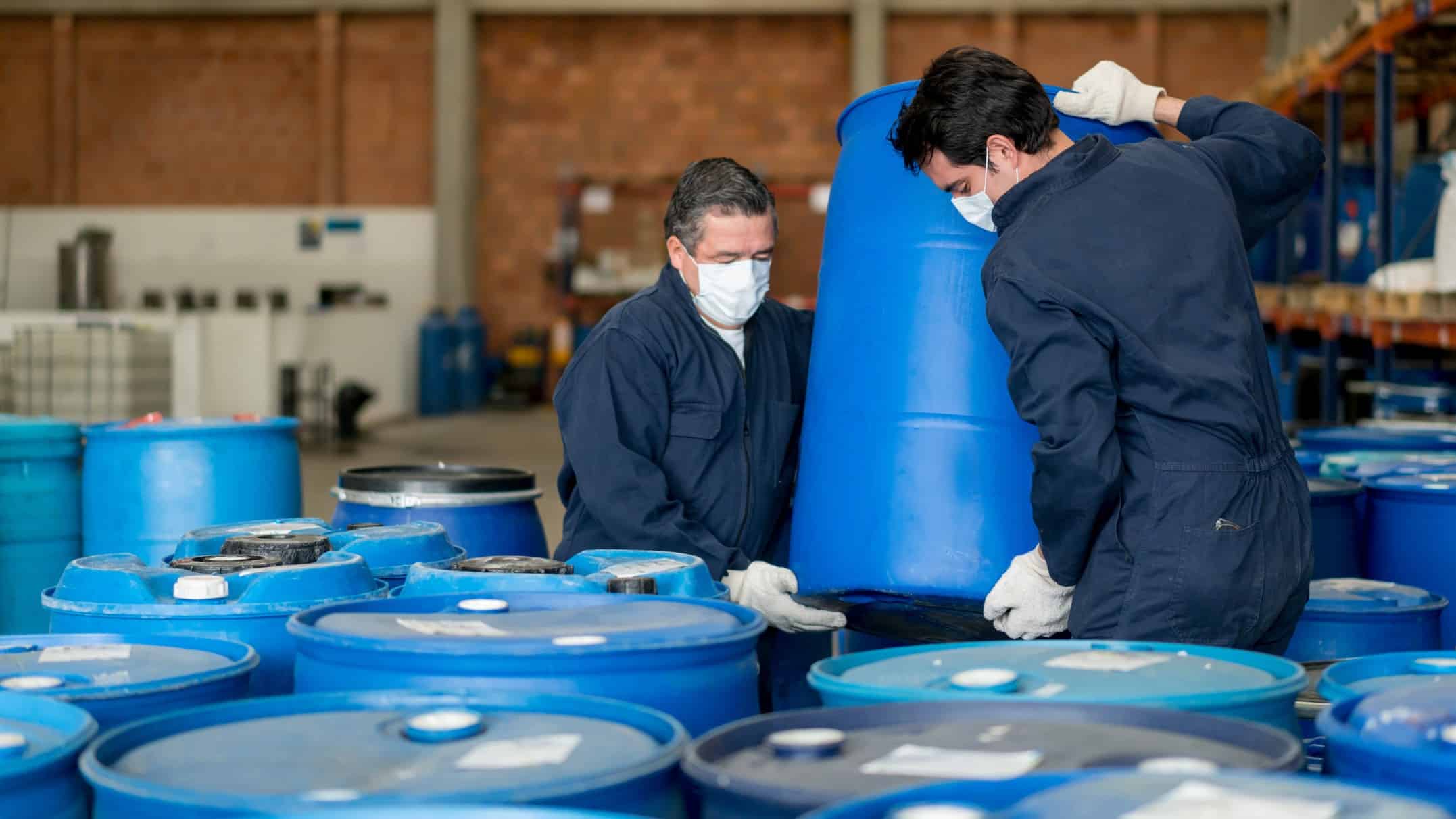
    Male DGL employees working with chemical bins symbolising the rising DGL share price todayMale DGL employees working with chemical bins symbolising the rising DGL share price today

    The DGL Group Ltd (ASX: DGL) share price is on the move today.

    This comes after the company announced the acquisition of a chemical warehousing and distribution business.

    At the time of writing, DGL shares are up 5.36% to $2.95 apiece.

    DGL expands warehousing capacity

    According to its release, DGL advised it has strategically acquired the Temples chemicals warehousing division for $3.5 million.

    Located in Perth, Temples’ chemical storage and warehouse business in one of the largest of its type in Western Australia. The group provides store, consolidate and distributes a variety of freight types within the industry.

    The agreed purchase price represents a valuation of 2.2 times the last twelve months of Temples’ earnings (FY21). The deal is being funded solely by tapping into DGL’s existing cash reserves.

    DGL stated that Temples adds 13,000 tonnes of chemical storage capacity to its Western Australia operations.

    In addition, there is now over 10,000 square kilometres of operational space for transport equipment and shipping container work.

    This takes DGL’s total chemical storage to more than 153,000 tonnes across 56 dedicated chemical management sites.

    DGL founder and CEO, Simon Henry commented:

    The acquisition of Temples chemical warehousing division helps with our organic growth as well as targeted new business opportunities.

    DGL share price summary

    It’s been an impressive 12 months for the DGL share price, rising by more than 192% in value.

    The company entered the ASX in late May with a share price of $1 and has made quick progress since.

    Based on valuation metrics, DGL presides a market capitalisation of roughly $781.74 million, with 269.84 million shares outstanding.

    The post DGL share price surges 5% on acquisition announcement appeared first on The Motley Fool Australia.

    Should you invest $1,000 in DGL right now?

    Before you consider DGL, you’ll want to hear this.

    Motley Fool Investing expert Scott Phillips just revealed what he believes are the 5 best stocks for investors to buy right now… and DGL wasn’t one of them.

    The online investing service he’s run for over a decade, Motley Fool Share Advisor, has provided thousands of paying members with stock picks that have doubled, tripled or even more.* And right now, Scott thinks there are 5 stocks that are better buys.

    *Returns as of January 13th 2022

    More reading

    Motley Fool contributor Aaron Teboneras has no position in any of the stocks mentioned. The Motley Fool Australia’s parent company Motley Fool Holdings Inc. has positions in and has recommended DGL Group Limited. The Motley Fool Australia has recommended DGL Group Limited. The Motley Fool has a disclosure policy. This article contains general investment advice only (under AFSL 400691). Authorised by Scott Phillips.

    from The Motley Fool Australia https://ift.tt/d90b5wN