Tag: Motley Fool

  • Why ‘now is the time’ to buy QBE (ASX:QBE) shares: fundie

    A stopwatch ticking close to the 12 where the words on the face say 'Time to Buy' indicating its the bottom of the falling market and time to buy ASX shares

    A stopwatch ticking close to the 12 where the words on the face say 'Time to Buy' indicating its the bottom of the falling market and time to buy ASX shares

    QBE Insurance Group Ltd (ASX: QBE) shares are in the spotlight in this dawning era of rising interest rates.

    Yesterday (overnight Aussie time) the US Federal Reserve raised its official rate by 0.25%. That brings the Fed’s new target rate to a range of 0.25% to 0.50%.

    While the move was widely expected, it’s worth noting that this marks the first rate increase by the world’s most watched central bank since 2018.

    It’s also worth noting that the Fed flagged the likelihood of a number of additional rate increases ahead in 2022.

    While the Reserve Bank of Australia has yet to follow suit, leading economists expect the RBA will begin tightening its own policies over the coming months.

    Which brings us back to QBE shares.

    Why interest rates matter

    According to Firetrail portfolio manager Scott Olsson, speaking at a Firetrail webinar, QBE shares stand to be big beneficiaries of the looming interest rate hikes.

    “It is a stock that’s been very hard to own over the past 15 years,” Olsson admitted.

    Indeed, if you’d bought QBE shares 15 years ago, you’d be nursing a 66% loss today.

    However, with interest rates likely to move significantly higher over the mid-term, he added, “Now is the time to own QBE.”

    Here’s how the maths work out.

    QBE holds some $3 billion of premiums, before claims payouts.

    So, if interest rates go up just 1%, the insurance giant would book an extra $300 million in profits.

    Another tailwind for QBE shares moving forward, Olsson pointed out, is the 30% lift in business insurance premiums over the past 3 years.

    “That can flow through into better profitability rolling forward,” he said.

    According to Olsson, QBE is currently trading at a 15% discount to its long-term trend.

    “And that just screams very cheap to us, given earnings can grow by 20% into FY23 and 20% again into FY24,” he said.

    How have QBE shares been tracking?

    Over the past 12 months the QBE share price is up 12.1%, outpacing the 5.6% gains posted by the S&P/ASX 200 Index (ASX: XJO) during that same period.

    At the current price of $10.86, QBE shares pay a trailing dividend yield of 2.8%, 10% franked.

    The post Why ‘now is the time’ to buy QBE (ASX:QBE) shares: fundie appeared first on The Motley Fool Australia.

    Should you invest $1,000 in QBE right now?

    Before you consider QBE, you’ll want to hear this.

    Motley Fool Investing expert Scott Phillips just revealed what he believes are the 5 best stocks for investors to buy right now… and QBE wasn’t one of them.

    The online investing service he’s run for over a decade, Motley Fool Share Advisor, has provided thousands of paying members with stock picks that have doubled, tripled or even more.* And right now, Scott thinks there are 5 stocks that are better buys.

    *Returns as of January 13th 2022

    More reading

    The Motley Fool Australia’s parent company Motley Fool Holdings Inc. has no position in any of the stocks mentioned. The Motley Fool Australia has no position in any of the stocks mentioned. The Motley Fool has a disclosure policy. This article contains general investment advice only (under AFSL 400691). Authorised by Bruce Jackson.

    from The Motley Fool Australia https://ift.tt/TQv6SI0

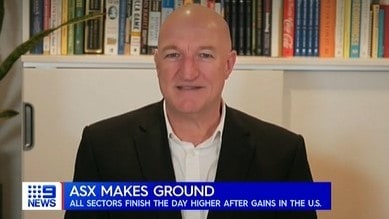
  • Few losers after a good day on the ASX. Scott Phillips on Nine’s Late News

    Motley Fool's Scott PhillipsMotley Fool's Scott Phillips

    Motley Fool Australia Chief Investment Officer Scott Phillips joined Nine’s Late News on Wednesday night to discuss the positive day for the ASX, the falling oil price, another collapse in the property sector, and the day ahead on US markets.

    [youtube https://www.youtube.com/watch?v=E96lpehZD5c?feature=oembed&w=500&h=281]

    The post Few losers after a good day on the ASX. Scott Phillips on Nine’s Late News appeared first on The Motley Fool Australia.

    Wondering where you should invest $1,000 right now?

    When investing expert Scott Phillips has a stock tip, it can pay to listen. After all, the flagship Motley Fool Share Advisor newsletter he has run for over ten years has provided thousands of paying members with stock picks that have doubled, tripled or even more.*

    Scott just revealed what he believes could be the five best ASX stocks for investors to buy right now. These stocks are trading at near dirt-cheap prices and Scott thinks they could be great buys right now.

    *Returns as of January 12th 2022

    More reading

    Motley Fool contributor Scott Phillips has no position in any of the stocks mentioned. The Motley Fool Australia’s parent company Motley Fool Holdings Inc. owns and has recommended Appen Ltd, Life360, Inc., Super Retail Group Limited, and WiseTech Global. The Motley Fool Australia owns and has recommended Appen Ltd, Super Retail Group Limited, and WiseTech Global. The Motley Fool has a disclosure policy. This article contains general investment advice only (under AFSL 400691). Authorised by Bruce Jackson.

    from The Motley Fool Australia https://ift.tt/pXHdQP8

  • Why investors should reduce their exposure to ASX tech shares in 2022: expert

    Two brokers pointing and analysing a share price.

    Two brokers pointing and analysing a share price.ASX tech shares, as whole, haven’t exactly shot the lights out in 2022.

    To say the least.

    Here’s what we mean.

    Since the opening bell on 4 January, the S&P/ASX 200 Index (ASX: XJO) has lost 5.4%.

    That’s not great.

    But it sure beats the 22.1% year-to-date loss posted by the S&P/ASX All Technology Index (ASX: XTX).

    Which sectors haven gained while ASX tech shares have tumbled?

    So, which sectors have been making hay even as ASX tech shares have come under selling pressure?

    With skyrocketing energy and commodities prices, you likely won’t be surprised by the answer.

    Year-to-date the S&P/ASX 200 Resource Index (ASX: XJR) has gained 2.2%. Not at all bad in less than 3 months’ time.

    Yet the S&P/ASX 200 Energy Index (ASX: XEJ) has raced far higher, gaining 15.3% so far in 2022.

    Does that mean the boat has sailed on energy and resource shares and investors should increase their exposure to ASX tech shares?

    Not according Jessica Amir, Saxo Markets Australian market strategist.

    Time to run the slide rule over your portfolio?

    According to Amir, “The Aussie market is searching for direction, and has tracked sideways for 3-months now, awaiting the next big catalyst.”

    “When it comes to the central banks, markets are still in the dark and want to price in how many rate rises will be made in the US, and in Australia,” she said.

    Which brings us back to ASX tech shares.

    According to Amir, “Given profits will be squeezed when rates rise, money has continued to come out of tech … this year and instead go into energy – oil, gas and coal – stocks.”

    Amir continued:

    The Australian Bureau of Statistics alluded to companies’ profit growth being squeezed, from Omicron, higher wages and oil prices. Just imagine what will happen if rates rise 4 times to companies that were born from zero interest rates?

    This is why we advocate for investors to reduce their exposure to tech, and continue to favour commodities, given lack of supply and rising demand overtime.

    ASX tech shares broadly led yesterday’s rally. However, many of them are valued with far future earnings growth in mind, which could place them under renewed pressure as investors eye rate increases.

    As the cost of money rises, some of those values may look increasingly stretched.

    The post Why investors should reduce their exposure to ASX tech shares in 2022: expert appeared first on The Motley Fool Australia.

    Wondering where you should invest $1,000 right now?

    When investing expert Scott Phillips has a stock tip, it can pay to listen. After all, the flagship Motley Fool Share Advisor newsletter he has run for over ten years has provided thousands of paying members with stock picks that have doubled, tripled or even more.*

    Scott just revealed what he believes could be the five best ASX stocks for investors to buy right now. These stocks are trading at near dirt-cheap prices and Scott thinks they could be great buys right now.

    *Returns as of January 12th 2022

    More reading

    The Motley Fool Australia’s parent company Motley Fool Holdings Inc. has no position in any of the stocks mentioned. The Motley Fool Australia has no position in any of the stocks mentioned. The Motley Fool has a disclosure policy. This article contains general investment advice only (under AFSL 400691). Authorised by Bruce Jackson.

    from The Motley Fool Australia https://ift.tt/fXDAgep

  • Is Warren Buffett’s best in the past?

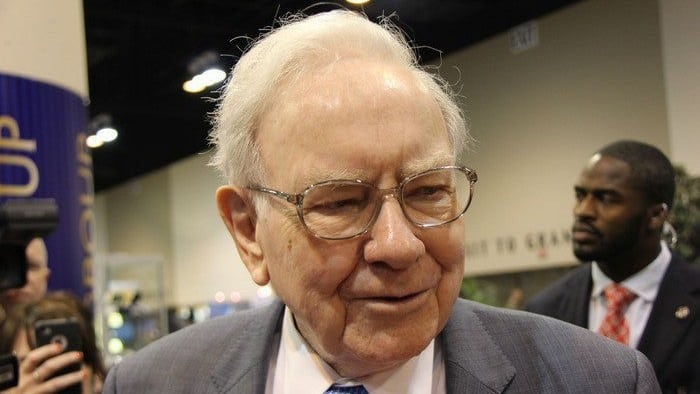
    Legendary share market investing expert and owner of Berkshire Hathaway Warren Buffett

    Legendary share market investing expert and owner of Berkshire Hathaway Warren Buffett

    One of the most oft repeated investing refrains is: ‘trees don’t grow to the sky’.

    In other words, there’s a limit to everything, in terms of how big it can be.

    Maybe a 20c stock can go to $1.

    Maybe even $5 if you’re lucky.

    And CSL Limited (ASX: CSL), at $273, has had a good run, but how much much room is there to grow further?

    $300? Maybe.

    But $400? $500?

    That’s a lofty old price to pay, even for one of the perennial ASX favourites, right?

    What about a company like Berkshire Hathaway Inc (NYSE: BRK.A) (NYSE: BRK.B)? (I own shares, for the record).

    At $7,100 a pop, that’s gotta be as good as it gets, right?

    I mean Buffett isn’t a young man any more.

    True… despite that, Berkshire’s an amazing business.

    But $7,100 per share?

    There must be better options in other parts of the world’s stock markets.

    I mean, maybe it tops out at $10,000. Maybe – just maybe – it can double to $14,000.

    But that’s a lot… for one single, solitary share.

    Can it really keep growing?

    Okay, okay… I jest.

    Well, I kinda outright lied.

    See, Berkshire shares were $7,100 a pop, not today, but way back in June 1990.

    I guess the ride has been pedestrian since then?

    Not really. Just under 31 years later, the share price had risen to – and I hope you’re sitting down – $382,000.

    Each!

    (Now, at this point, I need to clear something up. When I say I own shares in Berkshire Hathaway, as I did earlier, I don’t own multiple shares at $382,000 each! Given the rising price was putting them out of reach of the individual shareholder, Buffett created a second ‘class’ of shares, each worth 1/150,000th of a share. It’s those ‘B Class’ shares I own! Now, back to my point…)

    That gain — from $7,100 to $382,000 — on Berkshire shares was an astronomical 5,200%.

    That’ll pay some bills!

    Of course, the Doubting Thomas’ will now be saying “Okay, okay… but that was then. Surely – this time at last – the show is over!”

    A fair question (even if the permabear doom-and-gloomers are, well, a little tiresome).

    Except, well, I cheated again.

    Not in the numbers — all of the numbers above are spot on.

    Even the number of years.

    Which, if you re-read what I wrote, takes us up only to early 2021.

    So let’s stop playing funny buggers, and bring ourselves up to the present day (for real, this time).

    In the past year?

    Berkshire Hathaway shares are up – you’ll need to sit down again – another 32.1%.

    They’re now selling for $504,036 each.

    (That’s in US dollars, by the way. Buying one with Aussie dollars would set you back $691,612!.)

    The shares that were “obviously” too expensive to go up much more, 12 months ago, went up another $123,000 while we did one trip around the sun.

    That’s… a lot.

    So, a few points here:

    1. Just because a company’s shares look expensive on a ‘price per share’ basis, don’t believe it.
    I could sell a house for $1 million, or I could sell 10 shares in it for $100,000 each, or 100,000 shares for $10 each. Same house. Same total price. The ‘per share’ price is just a mathematical construct that owes more to the number of shares on issue than anything else.

    2. It’s true that trees don’t grow to the sky. No company can grow at huge compound rates forever. But great businesses can grow more quickly, and for longer, than most people give them credit for.

    3. Not for the first time, many investors had written Buffett off. It’s a variation on my last point, but when you find quality, don’t give it away too quickly or too easily.

    4. Speaking of holding on, I hope it didn’t escape you that last year’s $123,000 gain, per share, was 17 times the price you could have paid in mid-1990. Put another way, in 12 short months, long term Berkshire Hathaway shareholders made 17 times their 1990 price. Imagine buying shares in a company for $10 today, and having them go up $170 per share in 2055… after having gone up 53 times in value in the intervening 32 years!

    5. Exciting companies can be, well, exciting. Who doesn’t want to own the coolest new thing? Berkshire Hathaway – the insurance and industrial conglomerate run by a nonagenarian – hasn’t been cool for a long, long time… if it ever was. I have a sneaking suspicion that three decades of extraordinary compound growth makes up for not being one of the cool kids. That doesn’t mean ‘cool’ can’t also be profitable, of course… it just means that you should consider the investment merits of an idea independent of who else is talking about it or excited by it.

    And a bonus one:

    6. For long periods, Berkshire Hathaway shares went nowhere. Sometimes backwards. It’s never a straight, smooth ride, even with the best businesses on the planet. You have to buy, then hold, with conviction, as long as your investment thesis remains intact.

    Maybe you’re thinking “Okay, but this time, surely, the shares are too expensive”.

    You might be right.

    Or maybe, just as in 1990 and 2021, there is meaningful upside left.

    So, instead, here’s a mental exercise:

    Imagine if every company split or consolidated their shares, so that they all sold for $10 per share, each. (Remember, it’s totally possible for any company to do just that – the number of shares is an arbitrary construct).

    Now, ask yourself: Which companies deserve a spot in your portfolio, based on their business model, management, competitive advantages, growth potential, and valuation.

    If you don’t own them already, maybe you should.

    And if you own companies that don’t make that list… well, you might want to reconsider whether they belong in your portfolio.

    Remember, as Warren Buffett himself would remind us, the market is here to serve us, not to inform us.

    It’s up to us to make the right decisions.

    Fool on!

    The post Is Warren Buffett’s best in the past? appeared first on The Motley Fool Australia.

    Wondering where you should invest $1,000 right now?

    When investing expert Scott Phillips has a stock tip, it can pay to listen. After all, the flagship Motley Fool Share Advisor newsletter he has run for over ten years has provided thousands of paying members with stock picks that have doubled, tripled or even more.*

    Scott just revealed what he believes could be the five best ASX stocks for investors to buy right now. These stocks are trading at near dirt-cheap prices and Scott thinks they could be great buys right now.

    *Returns as of January 12th 2022

    More reading

    Motley Fool contributor Scott Phillips owns Berkshire Hathaway (B shares). The Motley Fool Australia’s parent company Motley Fool Holdings Inc. owns and has recommended Berkshire Hathaway (B shares) and CSL Ltd. The Motley Fool Australia’s parent company Motley Fool Holdings Inc. has recommended the following options: long January 2023 $200 calls on Berkshire Hathaway (B shares), short January 2023 $200 puts on Berkshire Hathaway (B shares), and short January 2023 $265 calls on Berkshire Hathaway (B shares). The Motley Fool Australia has recommended Berkshire Hathaway (B shares). The Motley Fool has a disclosure policy. This article contains general investment advice only (under AFSL 400691). Authorised by Bruce Jackson.

    from The Motley Fool Australia https://ift.tt/lR2zGyM

  • Expert: NAB is the ‘top pick’ in banking sector

    a young boy dressed in a business suit and wearing thick black glasses peers straight ahead while sitting at a heavy wooden desk with an old-fashioned calculator and adding machine while holding a pen over a large ledger book.a young boy dressed in a business suit and wearing thick black glasses peers straight ahead while sitting at a heavy wooden desk with an old-fashioned calculator and adding machine while holding a pen over a large ledger book.

    The investment team from WAM Leaders Ltd (ASX: WLE) has named big-four ASX bank National Australia Bank Ltd (ASX: NAB) as the preferred pick in the banking sector.

    Wilson Asset Management acknowledged that two banks were useful contributors to the investment performance of the listed investment company (LIC) WAM Leaders in February 2022.

    The fund manager said the February reporting season was “strong overall”. More companies beat expectations and earnings outlooks were more positive than expected.

    Westpac Banking Corp (ASX: WBC) was one bank that delivered a “sound result” that led to a large increase in the Westpac share price. That rise was 12% over the month.

    But it’s NAB that remains the top ASX bank share pick for WAM Leaders.

    Why is the NAB share price attractive to WAM?

    The fund manager said NAB’s result demonstrated “strong” revenue growth and constrained cost growth.

    NAB’s net interest margin (NIM) deterioration was less than the market was expecting, according to WAM.

    The fund manager believes the bank’s results demonstrated a turning point for investors to focus on the positives of the Reserve Bank of Australia’s interest rate increases, which are expected to start in 2022.

    WAM believes the banking sector will continue to perform in the coming months thanks to valuation support and earnings momentum.

    What did NAB report?

    NAB has a different reporting cycle from most other ASX shares. In February 2022, it reported its first-quarter numbers for the three months to December 2021.

    In that quarterly result, NAB revealed $1.8 billion of cash earnings. That represented 9.1% growth year on year. Compared to the quarterly average of the second half of FY21, the cash earnings were up 12%.

    However, the cash earnings before tax and credit impairment charges were up 6%.

    NAB noted that revenue increased 8% in the quarter, reflecting higher volumes across housing and business lending.

    Excluding impacts from markets and treasury, and higher ‘liquids’, the net interest margin (NIM) fell two basis points due to competitive pressures and housing lending mix, partly offset by lower funding and deposit costs.

    However, while revenue grew 8%, expenses only increased by 2% in the quarter.

    NAB CEO Ross McEwan commented on the numbers the bank revealed:

    These results reflect an ongoing focus on executing our strategy, making the bank simpler for customers and colleagues. This is evident in our improving customer net promoter scores in consumer and business over FY22’s first quarter, which are pleasingly no longer negative. There is more work to do but we are moving in the right direction.

    NAB share price valuation and expected dividend yield

    WAM didn’t reveal what profit and dividends it’s expecting from NAB in FY22.

    However, CommSec numbers for the bank show a forecast for FY22 earnings per share (EPS) of $2.09. That implies the NAB share price is valued at 15x FY22’s estimated earnings.

    Commsec’s forecast includes a potential FY22 grossed-up dividend yield of 6.7%.

    The post Expert: NAB is the ‘top pick’ in banking sector appeared first on The Motley Fool Australia.

    Wondering where you should invest $1,000 right now?

    When investing expert Scott Phillips has a stock tip, it can pay to listen. After all, the flagship Motley Fool Share Advisor newsletter he has run for over ten years has provided thousands of paying members with stock picks that have doubled, tripled or even more.*

    Scott just revealed what he believes could be the five best ASX stocks for investors to buy right now. These stocks are trading at near dirt-cheap prices and Scott thinks they could be great buys right now.

    *Returns as of January 12th 2022

    More reading

    Motley Fool contributor Tristan Harrison has no position in any of the stocks mentioned. The Motley Fool Australia’s parent company Motley Fool Holdings Inc. has no position in any of the stocks mentioned. The Motley Fool Australia has recommended Westpac Banking Corporation. The Motley Fool has a disclosure policy. This article contains general investment advice only (under AFSL 400691). Authorised by Bruce Jackson.

    from The Motley Fool Australia https://ift.tt/4U16DOw

  • Renewable energy shift ‘is about to accelerate’ making Vulcan (ASX:VUL) shares a buy: Broker

    A wide-smiling businessman in suit and tie rips open his shirt to reveal a green t-shirt underneath

    A wide-smiling businessman in suit and tie rips open his shirt to reveal a green t-shirt underneath

    The Vulcan Energy Resources Ltd (ASX: VUL) share price is having a tough time in 2022.

    Since the start of the year, the lithium developer’s shares are down 17%.

    Is the Vulcan share price weakness a buying opportunity?

    One broker believes the Vulcan share price could be dirt cheap following its recent weakness.

    According to a note out of Germany-based Alster Research, its analysts have a buy rating and $20.00 price target on the company’s shares.

    Based on the current Vulcan share price of $8.95, this implies potential upside of over 120% for investors over the next 12 months.

    What did the broker say?

    Alster has noted that “crude oil and natural gas have seen steep price increases” in recent weeks.

    Its analysts believe that these sky high energy prices are likely to be a boost to the transition to renewable energies, which bodes well for Vulcan and its massive Zero Carbon Project in Germany.

    It commented: “Much likely, the push into renewable energies is about to accelerate as energy policy is reevaluated. Going in the same direction, the Fraunhofer Institute sees geothermal energy as a viable substitute for fossil energy sources and recommends action by policymakers and industry for an accelerated penetration. Overall, we expect the conditions for Vulcan to receive a further impetus not only due to the conflict, but also due to the fulfillment of climate targets. We confirm our PT with AUD 20.00, equivalent to EUR 13.22. We reiterate to BUY.”

    All in all, the broker remains “confident about Vulcan’s operational development and improvement in becoming a provider of renewable energy and lithium with a zero-carbon footprint” and appears to see it as a great option for investors seeking exposure to the white metal and decarbonisation theme.

    The post Renewable energy shift ‘is about to accelerate’ making Vulcan (ASX:VUL) shares a buy: Broker appeared first on The Motley Fool Australia.

    Should you invest $1,000 in Vulcan right now?

    Before you consider Vulcan, you’ll want to hear this.

    Motley Fool Investing expert Scott Phillips just revealed what he believes are the 5 best stocks for investors to buy right now… and Vulcan wasn’t one of them.

    The online investing service he’s run for over a decade, Motley Fool Share Advisor, has provided thousands of paying members with stock picks that have doubled, tripled or even more.* And right now, Scott thinks there are 5 stocks that are better buys.

    *Returns as of January 13th 2022

    More reading

    Motley Fool contributor James Mickleboro has no position in any of the stocks mentioned. The Motley Fool Australia’s parent company Motley Fool Holdings Inc. has no position in any of the stocks mentioned. The Motley Fool Australia has no position in any of the stocks mentioned. The Motley Fool has a disclosure policy. This article contains general investment advice only (under AFSL 400691). Authorised by Bruce Jackson.

    from The Motley Fool Australia https://ift.tt/2FphOyq

  • The Woolworths (ASX:WOW) share price has only added $4 in 8 years. Have the dividends been worth it?

    Four ASX dividend shares investors stand in a line holding cash fanned in their hands with thoughtful looks on their facesFour ASX dividend shares investors stand in a line holding cash fanned in their hands with thoughtful looks on their faces

    Like many blue-chip ASX shares on the S&P/ASX 200 Index (ASX: XJO), the Woolworths Group Ltd (ASX: WOW) share price has had its fair, er, share of both good times and bad in recent years.

    If you had bought Woolworths shares at any time in 2020 after March, chances are you’ve been doing very well on your investment. But if you bought Woolies last New Year’s Eve, you’d be down around 5% on your investment.

    Although using ‘points in time’ to judge your investing success like this, you can conjure up all sorts of possible scenarios. But some realities still bite hard. The fact remains that back in April 2014, roughly eight years ago, Woolies was going for just under $32 a share. Yesterday, the ASX 200 grocery giant closed at $36.60 a share. That means the Woolworths share price had put on just over $4… over eight years. That’s a fairly uninspiring return of 14.5% or so over that eight years.

    But this rather sobering statistic hides some important factors to consider.

    How much do Woolworths dividends matter?

    The first is, of course, dividends. As a long-standing ASX 200 blue chip, Woolies has a long history of doling out substantial, fully franked dividends. So what difference do the dividends investors have received between April 2014 and today make to Woolworths investors’ total returns?

    Let’s start with our capital. If an investor bought $10,000 worth of Woolworths shares back then, they would have gotten 313 shares, with some change left over. Today, those 313 shares would be worth $11,455.80 on yesterday’s close.

    But we will also add the dividends that Woolworths has paid out since then. And Since April 2014, Woolworths has paid out a total of $8.34 in ordinary dividends per share, as well as one special dividend of 10 cents per share. That’s a total of $8.44 in dividends per share. We’ll add Woolworths’ upcoming interim dividend too, since it effectively left the company’s share price earlier this month when the shares traded ex-dividend.

    That means the 313 Woolworths shares would have produced $2,763.79 in dividend income.

    Add that to our principal capital and we have a total of $14,219.59. That stretches our total return to 42.2%. That works out to be a compounded annual growth rate of… 4.5% per annum.

    But we have another factor to consider outside the dividends. No, it’s not franking, although with all of Woolworths’ dividends being fully franked, we can probably throw on an extra 2-3% per annum to account for this.

    Forgetting a certain Endeavour?

    Let’s talk Endeavour Group Ltd (ASX: EDV). Woolworths spun out Endeavour, the stable of Woolies’ old bottle shop and liquor businesses. It houses names like BWS and Dan Murphy’s. These all used to be a part of Woolworths, but the group was kicked out of the nest last year.

    Woolworths shareholders received one Endeavour share for every Woolworths share owned back in June. So an investor who has held 313 shares of Woolworths since 2014 would now also own 313 shares of Endeavour. Yesterday, Endeavour closed at $6.98 a share, so let’s add another $2,184.74 to our total returns.

    Endeavour has also paid out one dividend since its ASX listing, which was a payment of 7 cents per share. Plus, it will also pay out another dividend too, which has again already traded ex-dividend from the Endeavour share price. So that means we need to add another $61.04.

    So our grand total for our Woolworths investment (plus principal) over the past eight years is $16,465.38. That works out to be a return of 64.65%, or 6.43% per annum.

    So that’s a lot better than what you might first assume. But again, perhaps not as much as one might expect. Saying that, this is just two points in time, so take it all with a grain of salt.

    At the last Woolworths share price, this ASX 200 grocery giant had a market capitalisation of $43.05 billion, with a dividend yield of 2.57%.

    The post The Woolworths (ASX:WOW) share price has only added $4 in 8 years. Have the dividends been worth it? appeared first on The Motley Fool Australia.

    Should you invest $1,000 in Woolworths right now?

    Before you consider Woolworths, you’ll want to hear this.

    Motley Fool Investing expert Scott Phillips just revealed what he believes are the 5 best stocks for investors to buy right now… and Woolworths wasn’t one of them.

    The online investing service he’s run for over a decade, Motley Fool Share Advisor, has provided thousands of paying members with stock picks that have doubled, tripled or even more.* And right now, Scott thinks there are 5 stocks that are better buys.

    *Returns as of January 13th 2022

    More reading

    Motley Fool contributor Sebastian Bowen has no position in any of the stocks mentioned. The Motley Fool Australia’s parent company Motley Fool Holdings Inc. has no position in any of the stocks mentioned. The Motley Fool Australia has no position in any of the stocks mentioned. The Motley Fool has a disclosure policy. This article contains general investment advice only (under AFSL 400691). Authorised by Bruce Jackson.

    from The Motley Fool Australia https://ift.tt/5VDPmve

  • 2 compelling blue chip ASX shares to buy: top fund manager

    Blue chips with stock written on them.Blue chips with stock written on them.

    The high-performing fund manager Wilson Asset Management (WAM) has recently identified some ASX blue-chip shares that it owns (or owned) in one of its leading portfolios.

    WAM operates several listed investment companies (LICs). Two of those LICs are WAM Capital Limited (ASX: WAM) and WAM Research Limited (ASX: WAX).

    There’s also one called WAM Leaders Ltd (ASX: WLE) which looks at the larger businesses on the ASX, which investors can call ASX blue-chip shares.

    WAM says WAM Leaders actively invests in the highest quality Australian companies.

    The WAM Leaders portfolio has delivered gross returns (that’s before fees, expenses, and taxes) of 15.5% per annum since its inception in May 2016. That is superior to the S&P/ASX 200 Accumulation Index average return of 9.1%.

    These are the blue-chip ASX shares that WAM outlined in its most recent monthly update:

    Endeavour Group Ltd (ASX: EDV)

    Endeavour Group is described as a leading hospitality and liquor business.

    WAM said the company posted a very strong interim result, which showed a combination of “earnings resilience and disciplined management execution”.

    It was noted that the half-year report revealed little impact from COVID-19-related interruptions on the retail business with momentum “continuing to build” in the hotels business as the Omicron COVID-19 variant impact subsides.

    In the interim result, Endeavour reported group sales of $6.34 billion (down 0.3%), online sales of $603 million (up 24.8%) and net profit after tax (NPAT) of $311 million (up 15.6%).

    The fund manager likes both the retail and hotel divisions of the ASX blue-chip share, which are benefiting from increased leisure and entertainment spending by households.

    WAM believes there is a compelling capital expenditure investment profile and multiple growth avenues for Endeavour Group to pursue including its data strategy, the digital arm called ‘Endeavour X’, and private label brands.

    Computershare Limited (ASX: CPU)

    Computershare is another business that is liked by the investment team at Wilson Asset Management.

    This company operates share registries and provides software specialising in financial and share markets. WAM says that it’s one of the most interest-rate exposed companies on the ASX because it earns interest on cash balances.

    It was noted that Computershare’s management quantified the exact exposure in its recent half-year result. A 100 basis point increase in average rates would lead to improved annualised earnings by 26 cents per share.

    WAM clarified that Computershare generated $0.51 of earnings per share (EPS) in the 2021 financial year.

    The fund manager pointed out that six rate rises are predicted for the US over the next 12 months.

    It was only last month that Goldman Sachs raised its Federal Reserve forecast to be seven consecutive 25 basis point rate hikes in 2022.

    For WAM, the Computershare earnings trajectory is “compelling”.

    The post 2 compelling blue chip ASX shares to buy: top fund manager appeared first on The Motley Fool Australia.

    Wondering where you should invest $1,000 right now?

    When investing expert Scott Phillips has a stock tip, it can pay to listen. After all, the flagship Motley Fool Share Advisor newsletter he has run for over ten years has provided thousands of paying members with stock picks that have doubled, tripled or even more.*

    Scott just revealed what he believes could be the five best ASX stocks for investors to buy right now. These stocks are trading at near dirt-cheap prices and Scott thinks they could be great buys right now.

    *Returns as of January 12th 2022

    More reading

    Motley Fool contributor Tristan Harrison has no position in any of the stocks mentioned. The Motley Fool Australia’s parent company Motley Fool Holdings Inc. has no position in any of the stocks mentioned. The Motley Fool Australia has no position in any of the stocks mentioned. The Motley Fool has a disclosure policy. This article contains general investment advice only (under AFSL 400691). Authorised by Bruce Jackson.

    from The Motley Fool Australia https://ift.tt/8pAHgNh

  • Goldman Sachs tips Webjet (ASX:WEB) share price to rise over 20%

    Happy couple waiting for their flight at an airport lounge.

    Happy couple waiting for their flight at an airport lounge.

    The Webjet Limited (ASX: WEB) share price has been a relatively positive performer in 2022.

    Since the start of the year, the online travel agent’s shares have risen by 4.5% to $5.67.

    This compares favourably to a 5.5% decline by the ASX 200 index over the same period.

    Where next for the Webjet share price?

    While opinion remains largely divided on the Webjet share price, one leading broker believes it is great value at the current level.

    According to a recent note out of Goldman Sachs, its analysts have a buy rating and $6.90 price target on the company’s shares.

    Based on the current Webjet share price, this implies potential upside of almost 22% over the next 12 months.

    What did the broker say?

    Goldman Sachs is positive on Webjet and believes investors should choose it ahead of rival Flight Centre Travel Group Ltd (ASX: FLT). The broker has a neutral rating and $19.50 price target on the latter.

    It commented: “We are Buy rated on WEB, which we expect to come out stronger on the other side of the pandemic with growth potential both in the B2B and B2C spaces. WEB also maintains a strong balance sheet with c. 24 months of runway (from September 2021) at zero activity levels.”

    Whereas for Flight Centre, the broker said: “We remain positive on the longer-term outlook for corporate recovery being ahead of pre-COVID levels driven by new contract wins, but more conservative on the leisure outlook. The stock remains fairly valued vs. global travel peers. We maintain our Neutral rating with a 12m Target Price of A$19.50.”

    All in all, this could make Webjet a share to consider if you’re looking for exposure to the travel sector right now.

    The post Goldman Sachs tips Webjet (ASX:WEB) share price to rise over 20% appeared first on The Motley Fool Australia.

    Should you invest $1,000 in Webjet right now?

    Before you consider Webjet, you’ll want to hear this.

    Motley Fool Investing expert Scott Phillips just revealed what he believes are the 5 best stocks for investors to buy right now… and Webjet wasn’t one of them.

    The online investing service he’s run for over a decade, Motley Fool Share Advisor, has provided thousands of paying members with stock picks that have doubled, tripled or even more.* And right now, Scott thinks there are 5 stocks that are better buys.

    *Returns as of January 13th 2022

    More reading

    Motley Fool contributor James Mickleboro has no position in any of the stocks mentioned. The Motley Fool Australia’s parent company Motley Fool Holdings Inc. has no position in any of the stocks mentioned. The Motley Fool Australia has recommended Flight Centre Travel Group Limited and Webjet Ltd. The Motley Fool has a disclosure policy. This article contains general investment advice only (under AFSL 400691). Authorised by Bruce Jackson.

    from The Motley Fool Australia https://ift.tt/LBHfjQY

  • This is when to sell your ASX shares

    Time to sell written on a clock.Time to sell written on a clock.

    Most investment articles you read are focused on which ASX shares you might like to buy, with The Motley Fool no exception.

    However, many experts warn knowing how and when to sell is just as, if not more, important than buying.

    After all, it’s when you dispose of your shares you actually make a loss or a return on your initial investment.

    You can rely on technical indicators — watching how the stock price behaves to determine if and when you should sell.

    But what about qualitative factors? When you buy a share, how and what the business is doing is an important motivator in taking on the investment.

    Fidelity Global Demographics Fund portfolio manager Oliver Hextall offered some ideas recently.

    The qualitative signals to sell

    Hextall told a Fidelity event in Sydney this week that retesting the original investment thesis is an important determinant in whether his team sells a stock.

    “When a stock does well, we’ll review the thesis in light of whatever’s driven the outperformance and we’ll have another think about the valuation,” he said.

    “If we think at that new price all of the attractions that we’re looking for are fairly valued, then we would sell, because we think there’s better opportunities out there.”

    What about if the stock price has fallen?

    “Again, we would review the thesis in light of whatever’s driven the underperformance and we’ll have a look at the valuation,” said Hextall.

    “If we think nothing’s changed or potentially it’s more attractive, we might add to it and keep the stock. But if we think the thesis is broken or fundamentally challenged, then we would sell out.”

    Selling can be ‘painful’

    Hextall admitted selling an investment at a loss is psychologically “painful”, even for professionals.

    He recalled the time when his fund owned shares in European software giant SAP SE (NYSE: SAP).

    “Around the end of 2020, there was a disappointing update… There were execution issues. And when we reviewed that we felt the thesis was challenged and actually broken. So we decided to sell,” he said.

    “On the day, the stock was down maybe 20%, so we crystallised a loss and that was quite painful.”

    But in retrospect it was the right decision. SAP shares have fallen a further 15% since the end of 2020.

    The post This is when to sell your ASX shares appeared first on The Motley Fool Australia.

    Wondering where you should invest $1,000 right now?

    When investing expert Scott Phillips has a stock tip, it can pay to listen. After all, the flagship Motley Fool Share Advisor newsletter he has run for over ten years has provided thousands of paying members with stock picks that have doubled, tripled or even more.*

    Scott just revealed what he believes could be the five best ASX stocks for investors to buy right now. These stocks are trading at near dirt-cheap prices and Scott thinks they could be great buys right now.

    *Returns as of January 12th 2022

    More reading

    Motley Fool contributor Tony Yoo has no position in any of the stocks mentioned. The Motley Fool Australia’s parent company Motley Fool Holdings Inc. has recommended SAP SE. The Motley Fool Australia has no position in any of the stocks mentioned. The Motley Fool has a disclosure policy. This article contains general investment advice only (under AFSL 400691). Authorised by Bruce Jackson.

    from The Motley Fool Australia https://ift.tt/LUTy2Ax