Tag: Motley Fool

  • These 3 ASX 200 shares are topping the volume charts on Monday

    A woman with a loudhailer turns up the volume on her office co-workersA woman with a loudhailer turns up the volume on her office co-workers

    A woman with a loudhailer turns up the volume on her office co-workersThe S&P/ASX 200 Index (ASX: XJO) has kicked the week off on a strong footing, recording a gain of 1.06% at the time of writing to just under 7,140 points.

    But let’s go a little deeper and check out the ASX 200 shares that are currently at the top of the market’s trading volume charts, according to investing.com.

    The 3 most traded ASX 200 shares by volume this Monday

    Whitehaven Coal Ltd (ASX: WHC)

    Whitehaven Coal is first up. This ASX 200 energy share currently has had 13.76 million of its shares traded on the markets so far today. There hasn’t been much out of the company itself today, apart from a share buyback notice which could in itself be boosting volumes.

    But the Whitehaven share price has had a rather wild time of it today. The company is presently up 0.25% at $4.05 a share, but rose as high as $4.22 earlier today before a sharp plunge after lunch brought it to its current level. This probably explains the high volumes we are seeing.

    Incitec Pivot Ltd (ASX: IPL)

    ASX 200 fertiliser, chemical and explosives manufacturer Incitec Pivot is next up this Monday. Today so far, we’ve seen a hefty 15.42 million Incitec shares bought and sold. Again, this doesn’t seem to be the result of anything the company itself has released today.

    However, the Incitec share price is powering ahead. Incitec shares have added 2.43% so far today at $3.79 a share, well outperforming the broader market. It’s this healthy gain that is probably responsible for the elevated trading we are witnessing.

    Nickel Mines Ltd (ASX: NIC)

    Our third and final share of the day is ASX 200 nickel miner Nickel Mines. This popular company had had a notable 24.56 million of its shares swap hands thus far this Monday. Unlike Incitec Pivot though, this seems to be the result of a nasty share price fall.

    Nickel Mines shares are currently down by a depressing 2.58% at $1.16 each. This could be related to some tough love from a broker this morning, which my Fool colleague James touched on earlier. But it’s probably the size of the selloff that is responsible for the elevated trading that we are seeing.

    The post These 3 ASX 200 shares are topping the volume charts on Monday appeared first on The Motley Fool Australia.

    Should you invest $1,000 in Whitehaven Coal right now?

    Before you consider Whitehaven Coal, you’ll want to hear this.

    Motley Fool Investing expert Scott Phillips just revealed what he believes are the 5 best stocks for investors to buy right now… and Whitehaven Coal wasn’t one of them.

    The online investing service he’s run for over a decade, Motley Fool Share Advisor, has provided thousands of paying members with stock picks that have doubled, tripled or even more.* And right now, Scott thinks there are 5 stocks that are better buys.

    *Returns as of January 13th 2022

    More reading

    Motley Fool contributor Sebastian Bowen has no position in any of the stocks mentioned. The Motley Fool Australia’s parent company Motley Fool Holdings Inc. has no position in any of the stocks mentioned. The Motley Fool Australia has no position in any of the stocks mentioned. The Motley Fool has a disclosure policy. This article contains general investment advice only (under AFSL 400691). Authorised by Bruce Jackson.

    from The Motley Fool Australia https://ift.tt/ZLw0Fmy

  • Vulcan (ASX:VUL) investors don’t bite after earnings, shares down 13% YTD

    A disappointed female investor sits in front of her laptop and puts her hand to her forehead and closes her eyes in disappointment over share price fallsA disappointed female investor sits in front of her laptop and puts her hand to her forehead and closes her eyes in disappointment over share price fallsA disappointed female investor sits in front of her laptop and puts her hand to her forehead and closes her eyes in disappointment over share price falls

    Shares in Vulcan Energy Resources Ltd (ASX: VUL) are trading in the red on Monday despite no market-sensitive information today.

    However, investors don’t appear impressed after the company released its interim report and financial results for the half-year ended 31 December 2021 last week.

    Vulcan shares are currently swapping hands at $9.09 apiece, around 4% down on the day.

    Vulcan share price slides since earnings release

    Key takeaways from the company’s earnings results include:

    • Cash and cash equivalents of 134,5 million Euros, up from 70.5 million euros the prior half
    • Net assets of 206.4 million euros, a substantial gain from a base of 81.5 million euros 6 months prior
    • Revenue from continuing operations came in at 689,999 euros, the first recording
    • Net loss after tax (NLAT) of 6.2 million euros, more than 3.6 million euros of June 2021
    • Loss per share of 6.52 euros

    What else happened this half for Vulcan?

    During the half, Vulcan successfully raised $200 million via a placement from existing and new institutional investors. The company notes many of these investors included ESG-focused institutions.

    Vulcan also says its chemical engineering team “successfully produced its first battery quality lithium hydroxide monohydrate (LHM) from piloting operations”.

    “The plant sample exceeded traditional battery grade LHM product including best on the market battery grade specifications required from offtake customers, at >56.5% LiOH.H2O and with very low impurities”, the company said.

    It also noted that it now boasts offtake agreements that are “fully booked for the first 5 years of operation” with names such as Umicore, Stellantis and Volkswagen Group to name a few.

    The company also recorded NLAT of more than 6 million euros, whilst printing its first revenue from operations at a total of 690,000 euros for the period.

    As a result of the successful capital raising and valuation of its asset base, the company now has a net asset value of 206 million euros.

    Management commentary

    Speaking on the company’s renewables and geothermal business, Vulcan directorship said:

    A significant highlight of the reporting period was the acquisition of the operational geothermal renewable energy power plant in the Upper Rhine Valley at Insheim, Germany (the “Insheim Plant”). The acquisition established Vulcan as a renewable energy producer and is a source of revenue for the Company. The plant currently has the technical ability to produce a maximum of 4.8MW renewable power, equivalent to approximately 8,000 households, with an additional ability to produce heating. The plant is producing 2.9 MW of electricity on average and capitalises on the feed-in tariff for geothermal power.

    What’s next for Vulcan?

    At the company’s Upper Rhine Valley Project, its team of geological engineering experts continue to increase their understanding of the sub-surface areas, Vulcan says, and that 3D seismic survey-work will be carried out in advance of drilling. Phase 2 drilling for the site is targeted for 2023, it also noted.

    Vulcan Energy share price snapshot

    The Vulcan Energy share price has soared more than 54% in the past 12 months but is down 13% this year to date.

    In the past week, it has lost 4%, however, it is still leading the benchmark index’s return as shown below.

    TradingView Chart

    The post Vulcan (ASX:VUL) investors don’t bite after earnings, shares down 13% YTD appeared first on The Motley Fool Australia.

    Should you invest $1,000 in Vulan Energy right now?

    Before you consider Vulan Energy, you’ll want to hear this.

    Motley Fool Investing expert Scott Phillips just revealed what he believes are the 5 best stocks for investors to buy right now… and Vulan Energy wasn’t one of them.

    The online investing service he’s run for over a decade, Motley Fool Share Advisor, has provided thousands of paying members with stock picks that have doubled, tripled or even more.* And right now, Scott thinks there are 5 stocks that are better buys.

    *Returns as of January 13th 2022

    More reading

    from The Motley Fool Australia https://ift.tt/msDKelH

  • Neometals (ASX:NMT) shares surge 12% on plans to partner with ‘one of the greatest names in the automobile industry’

    a small child and a pug dog sit in a go cart wearing old fashioned drivers headress and goggles as the drive along a country road with the boy holding his arm in the air and shouting as if celebrating their performance behind the wheel.a small child and a pug dog sit in a go cart wearing old fashioned drivers headress and goggles as the drive along a country road with the boy holding his arm in the air and shouting as if celebrating their performance behind the wheel.a small child and a pug dog sit in a go cart wearing old fashioned drivers headress and goggles as the drive along a country road with the boy holding his arm in the air and shouting as if celebrating their performance behind the wheel.

    The Neometals Ltd (ASX: NMT) share price is rocketing today following the company announcing its intention to collaborate with a major automobile maker.

    At the time of writing, the advanced materials company’s shares are up 12.59% to $1.655 apiece. They hit an intraday high of $1.77 each this morning.

    What’s driving Neometals shares higher?

    Investors appear ecstatic with news surrounding the company, sending the Neometals share price well into positive territory.

    In a statement today, Neometals advised that Mercedes-Benz AG’s wholly-owned subsidiary Licular plans to cooperate with Primobius. The latter is an incorporated joint venture company owned 50:50 by Neometals and SMS group.

    The German automobile powerhouse earlier announced in a media release that Primobius is its preferred technology partner for a proposed battery recycling plant. Plans are underway for the facility to be constructed at Mercedes’ Kuppenheim operations in Southern Germany.

    While currently in advanced discussions, both companies are putting the final touches in place for a formal agreement.

    The recycling plant is aiming to have a normal recycling capacity of 2,500 tonnes per annum of lithium-ion for Licular’s facilities.

    Neometals managing director Chris Reed commented:

    We are proud that Mercedes-Benz, one of the greatest names in the automobile industry, has announced its intention to partner with Primobius. Mercedes-Benz has made public its clear commitment towards sustainable battery recycling, with Primobius as its preferred technology partner for the design and construction of an integrated recycling plant in Kuppenheim.

    Lithium battery recycling supports conservation of resources, decarbonisation and supply chain resilience and we are excited to assist Mercedes in its goal to re-use recovered materials for the manufacture of new cells for Mercedes-EQ vehicle models.

    All of our discussions to date have been very positive and we look forward to continuing our negotiations and entering into binding legal agreements in the near future.

    Neometals share price snapshot

    Over the past 12 months, the Neometals share price has rocketed by almost 340%.

    The company’s shares hit an all-time high of $1.85 in January, before moving in circles thereafter.

    Based on today’s price, Neometals presides a market capitalisation of roughly $900 million, with approximately 548.38 million shares on issue.

    The post Neometals (ASX:NMT) shares surge 12% on plans to partner with ‘one of the greatest names in the automobile industry’ appeared first on The Motley Fool Australia.

    Should you invest $1,000 in Neometals right now?

    Before you consider Neometals, you’ll want to hear this.

    Motley Fool Investing expert Scott Phillips just revealed what he believes are the 5 best stocks for investors to buy right now… and Neometals wasn’t one of them.

    The online investing service he’s run for over a decade, Motley Fool Share Advisor, has provided thousands of paying members with stock picks that have doubled, tripled or even more.* And right now, Scott thinks there are 5 stocks that are better buys.

    *Returns as of January 13th 2022

    More reading

    Motley Fool contributor Aaron Teboneras has no position in any of the stocks mentioned. The Motley Fool Australia’s parent company Motley Fool Holdings Inc. has no position in any of the stocks mentioned. The Motley Fool Australia has no position in any of the stocks mentioned. The Motley Fool has a disclosure policy. This article contains general investment advice only (under AFSL 400691). Authorised by Bruce Jackson.

    from The Motley Fool Australia https://ift.tt/Xb4mEgu

  • Amazon’s putting a bigger focus on grocery this year

    This article was originally published on Fool.com. All figures quoted in US dollars unless otherwise stated.

    a shopper pushes a shopping trolley full of groceries through a scanning device in an Amazon store in the United States.

    This article was originally published on Fool.com. All figures quoted in US dollars unless otherwise stated.

    Amazon (NASDAQ: AMZN) is closing its bookstores and other physical retail locations around the U.S., narrowing its focus to the grocery store segment. This move follows the reopening of Amazon’s first Whole Foods location to incorporate its Just Walk Out technology, which allows shoppers to skip the checkout line.

    Grocery has been an area of focus for Amazon for several years — both physical locations and online. But as more grocery shopping moves online — an area Amazon typically dominates — it’s found itself at a disadvantage compared to brick-and-mortar competitors like Walmart (NYSE: WMT). Shifting its physical retail focus toward grocery could help remove distractions and improve its competitiveness.

    What’s Amazon giving up?

    Amazon currently operates 24 bookstores, 33 “Amazon 4-star” stores, and nine mall pop-up kiosks. It was planning to open 16 more 4-star locations, but plans for those stores have been axed and existing stores will be closed.

    Those stores represent a tiny percentage of Amazon’s physical store footprint. It has more than 500 Whole Foods locations and 25 Amazon Fresh stores. Those locations also have a much larger footprint than the other Amazon physical retail formats. Amazon also operates about two dozen small-format Go convenience stores. Those won’t be closed.

    Amazon’s physical store segment generated $17 billion in revenue last year. That’s less than 4% of Amazon’s total sales for 2021. So the impact on Amazon’s revenue from shuttering its retail stores will likely have just a small impact on physical retail sales, and it’ll be mostly unnoticeable compared to the overall revenue of the company.

    Going after Walmart’s bread and butter — literally

    Walmart dominates the U.S. grocery market, holding an 18% share of the overall market and an even bigger share of the online grocery market. What’s more, it’s still beating the competition. On its earnings call last month, management said it grew its grocery market share in the fourth quarter. 

    Amazon’s website and Whole Foods locations account for just 2.4% of grocery sales in the U.S. Amazon does much better online. It grew to become a leader in online grocery sales in 2017, but it failed to keep up with the growth of the competition.  

    Walmart took a significant share of the growth in online grocery sales in 2020, and it’s created a significant gap between itself and Amazon. Amazon has been able to grow in line with the overall market, maintaining its overall market share, but Walmart has produced excellent results in the space.

    The key to Walmart’s success online has been the rapid rollout of curbside pickup and delivery. It offers pickup at 4,600 stores and delivery from 3,500 as of the end of January. Customers responded well to Walmart, which saw some customers shift from shopping for groceries in its stores.

    Amazon cannot compete with that level of convenience in every market. Curbside pickup is the preferred method of online grocery ordering for 75% of shoppers, according to a survey from Mercatus. It’s no wonder Walmart continues to take share with its massive store footprint.

    Focusing on expanding its physical grocery footprint should allow Amazon to build stores with the omnichannel experience in mind. Stores will be able to fulfill online orders from day one, unlike Walmart, which had to put new processes in place and renovate stores in order to adapt. Moreover, Amazon can provide a better in-store grocery shopping experience by integrating its technology as well as customer perks into the shopping experience. After all, most grocery shopping still happens in stores, and that’s not going to change for a very long time.

    Amazon’s biggest advantage is that grocery remains one of the few categories where its market share is relatively small. While Walmart is working to defend its position as the leading grocery retailer, Amazon has a lot of room to take market share and grow quickly. Removing other distractions in its physical retail strategy will help it make the most of the opportunity. And considering U.S. grocery sales totaled $750 billion in 2020, it’s a pretty big opportunity.

    This article was originally published on Fool.com. All figures quoted in US dollars unless otherwise stated.

    The post Amazon’s putting a bigger focus on grocery this year appeared first on The Motley Fool Australia.

    Should you invest $1,000 in Amazon right now?

    Before you consider Amazon, you’ll want to hear this.

    Motley Fool Investing expert Scott Phillips just revealed what he believes are the 5 best stocks for investors to buy right now… and Amazon wasn’t one of them.

    The online investing service he’s run for over a decade, Motley Fool Share Advisor, has provided thousands of paying members with stock picks that have doubled, tripled or even more.* And right now, Scott thinks there are 5 stocks that are better buys.

    *Returns as of January 13th 2022

    More reading

    John Mackey, CEO of Whole Foods Market, an Amazon subsidiary, is a member of The Motley Fool’s board of directors. Adam Levy owns Amazon. The Motley Fool owns and recommends Amazon. The Motley Fool Australia has recommended Amazon. The Motley Fool has a disclosure policy. This article contains general investment advice only (under AFSL 400691). Authorised by Bruce Jackson.

    This article was originally published on Fool.com. All figures quoted in US dollars unless otherwise stated.


    from The Motley Fool Australia https://ift.tt/iNyt1Ff
  • Why ASX 200 bank shares are storming higher today

    Bank building with word Bank on it.Bank building with word Bank on it.Bank building with word Bank on it.

    ASX financials are leading the other major sectors during Monday’s session, having broken away from the pack in early trade.

    The S&P/ASX 200 Financials Index (ASX: XFJ) has climbed more than 2% into the green during the session, leading Australian large caps in the S&P/ASX 200 Index (ASX: XJO) by over 100 basis points.

    TradingView Chart

    Australian commodity stocks have fared tremendously well these past few weeks amid a fierce rally which commodity baskets are staging on global markets.

    However today, the sector has pared gains such that the S&P/ASX 300 Metals & Mining Index (ASX: XMM) is trading around 27 basis points into the red at the time of writing.

    What’s up with ASX financials today?

    Even more interesting is the relationship between these two sectors over the past month or so. Traditionally – in the large cap space anyway – both mining and bank shares are viewed as more defensible sectors, not in the least due to the sizeable dividends on offer and robust company earnings.

    That’s meant that, over the course of time, the two sectors have behaved relatively similar, ceteris paribus. However, with sector-specific risk and return factors at play, the pair have become less related in recent times.

    Within the banking space, saturation of the mortgage market, pressures to net interest margin and of course record low base rates have hurt earnings in recent years.

    Whereas recently, as close as 2022, the mining sector has benefited from record prices in the commodity markets as mentioned above.

    The result is that as of March, both the metals and mining sector and the ASX financials have moved in almost inverse fashion, shown below.

    TradingView Chart

    ASX financials are flying today, led by Commonwealth Bank of Australia (ASX: CBA), currently up 2% on the day, followed by National Australia Bank Ltd. (ASX: NAB) up less than 2%.

    Shares in Australia and New Zealand Banking Group Ltd (ASX: ANZ) are also up around 2% today, alongside Westpac Banking Corporation (ASX: WBC) shares which are up less than 2%.

    Checking data provided by Bloomberg Intelligence, we see some interesting patterns today with flows into exchange traded funds (ETFs) backing these sectors.

    The most funds’ have left European based “UCITS” type ETFs, whereas the heaviest inflows have been into Australian Government bond ETFs and long-biased ASX equity market ETFs.

    Curiously, the BetaShares S&P/ASX Financial Sector ETF (ASX: QFN) has seen an 0.86% surge of inflows today, and is up 2.5%, whereas the BetaShares Australian Resources Sector ETF (ASX: QRE) has seen reasonable outflows and is in the red.

    Why are ASX financials charging higher?

    In the absence of any market specific events, it appears that the impact of inflation is a large factor according to Bloomberg economist James McIntyre. He notes that, whilst Australia might be the beneficiary of this latest commodities rally, the end-markets might not be so lucky.

    “Surging commodity prices deliver a major windfall to Australia, one of the world’s largest commodity exporters”, McIntyre wrote.

    “But the jackpot comes with a cost: higher inflation – particularly food and gasoline, which account for a hefty chunk of household budgets. The Reserve Bank of Australia will have to tighten [policy] a lot sooner to contain these pressures”.

    That would involve raising base rates in order to increase the cost of money, that being interest, so as to reduce the level of aggregate spending and credit creation in the economy.

    But the prospect of raising rates is good for some and not so good for others. Whilst a hike in commercial mortgage rates is a negative for the consumer, for the banks holding those mortgages, it’s a huge positive.

    “..if the average discount variable mortgage rate was to rise by 2.15%, as predicted by the market, average monthly mortgage payments would rise by 29% from their February 2022 level and 69% nationally from 2015”, Lieth van Olselen, Chief Economist at MB Super says on Macrobusiness.

    “The impact would be even more severe for the circa $500 billion worth of fixed rate mortgages due to expire over the next two years, most of which were originated at rates of under 2.5%”, he added.

    So whilst mortgage-holders are up for a higher bill, for Aussie banks, this is a huge positive – a 29% net increase at the gross interest level would feed more down into net profit, free cash flow, and cash on the balance sheet.

    In fact, see the impact of rising home prices/mortgages, shown in both absolute and inflation-adjusted terms, versus the aggregate of Australian banks’ balance sheets (red), on the chart below.

    The uptick in prices is a positive for the banking sector’s financial health.

    TradingView Chart

    And that could mean higher dividends for eligible shareholders too, not to mention if earnings increase, the attraction from analysts as well.

    The post Why ASX 200 bank shares are storming higher today appeared first on The Motley Fool Australia.

    Wondering where you should invest $1,000 right now?

    When investing expert Scott Phillips has a stock tip, it can pay to listen. After all, the flagship Motley Fool Share Advisor newsletter he has run for over ten years has provided thousands of paying members with stock picks that have doubled, tripled or even more.*

    Scott just revealed what he believes could be the five best ASX stocks for investors to buy right now. These stocks are trading at near dirt-cheap prices and Scott thinks they could be great buys right now.

    *Returns as of January 12th 2022

    More reading

    Motley Fool contributor Zach Bristow has no position in any of the stocks mentioned. The Motley Fool Australia’s parent company Motley Fool Holdings Inc. has no position in any of the stocks mentioned. The Motley Fool Australia has recommended Westpac Banking Corporation. The Motley Fool has a disclosure policy. This article contains general investment advice only (under AFSL 400691). Authorised by Bruce Jackson.

    from The Motley Fool Australia https://ift.tt/u3S7XZs

  • Why now is a great time to invest in ASX shares (even if you’re fearful of an uncertain world)

    a man weraing a suit sits nervously at his laptop computer biting into his clenched hand with nerves, and perhaps fear.

    a man weraing a suit sits nervously at his laptop computer biting into his clenched hand with nerves, and perhaps fear.a man weraing a suit sits nervously at his laptop computer biting into his clenched hand with nerves, and perhaps fear.

    It’s pretty easy to see the benefits of investing in ASX shares, or sharemarkets around the world for that matter, when markets are rising. The S&P/ASX 200 Index (ASX: XJO) gained a very healthy 13% or so over 2021. And that followed even healthier gains across the second half of 2020.

    As such, it was very easy to see the kinds of gains one might be a party to if one invested across those periods. Not to mention the potential cash that one would miss out on if they didn’t.

    But 2022 thus far has given investors a different tale. We are now in mid-March. Yet still the ASX 200 remains in the red year to date. Since the start of 2022, the ASX’s flagship index has lost 5.82% of its value. Suddenly, it’s a lot harder to convince a new investor of the benefits of investing in the share market.

    And that difficulty has been compounded by the wild gyrations we have seen more recently in light of the tragic war in Europe. The world certainly seems an uncertain place right now. And when it costs almost double what it did even a few weeks ago to fill up your car, it can be hard to even contemplate ratcheting up investments into shares. 

    Global uncertainty doesn’t always mean we shouldn’t invest in ASX shares

    But even if the world has become, or even remains, a more uncertain place, it doesn’t mean that investing has automatically become a bad idea. As our Chief Investment Officer here at the Fool, Scott Phillips, has reminded us many times, the share market has seen more than its fair share of wars and other awful geopolitical events over decades and decades. And it has never not gone on to eventually enjoy subsequent new record highs. 

    An article in the Australian Financial Review (AFR) today argues that while the world might indeed stay at a more uncertain level than perhaps we’d like, that might still open up new opportunities for investors. For example, the article quotes intelligence advisor Andrew Shearer, who argued Australia might need to become more self-reliant in the face of global supply chain instability:

    This will include sharply increasing defence spending. But also building stronger manufacturing capability at home and shortening supply chains by pulling back from the globalised just-in-time world we knew before the pandemic.

    Commodities are also an area that is highlighted. The AFR quotes Matthew Klein on this matter. He said that “a synchronised surge in demand for physical goods will continue to put upward pressure on industrial commodity prices, especially since many of those commodities used to come from Russia”.

    We’ve arguably already seen some of the effects of this in the ASX’s resources shares in recent weeks. Shares like BHP Group Ltd (ASX: BHP), Paladin Energy Ltd (ASX: PDN,) and Woodside Petroleum Limited (ASX: WPL) are lifting.

    So while the world may be moving towards a period of higher uncertainty than what we’re used to, that doesn’t mean we shouldn’t be investing. 

    The post Why now is a great time to invest in ASX shares (even if you’re fearful of an uncertain world) appeared first on The Motley Fool Australia.

    Should you invest $1,000 in right now?

    Before you consider , you’ll want to hear this.

    Motley Fool Investing expert Scott Phillips just revealed what he believes are the 5 best stocks for investors to buy right now… and wasn’t one of them.

    The online investing service he’s run for over a decade, Motley Fool Share Advisor, has provided thousands of paying members with stock picks that have doubled, tripled or even more.* And right now, Scott thinks there are 5 stocks that are better buys.

    *Returns as of January 13th 2022

    More reading

    Motley Fool contributor Sebastian Bowen has no position in any of the stocks mentioned. The Motley Fool Australia’s parent company Motley Fool Holdings Inc. has no position in any of the stocks mentioned. The Motley Fool Australia has no position in any of the stocks mentioned. The Motley Fool has a disclosure policy. This article contains general investment advice only (under AFSL 400691). Authorised by Bruce Jackson.

    from The Motley Fool Australia https://ift.tt/3mxG1HP

  • Why has the Treasury Wine (ASX:TWE) share price surged 10% in a month?

    Group of people toasting with wineGroup of people toasting with wineGroup of people toasting with wine

    The Treasury Wine Estates Ltd (ASX: TWE) share price has made significant ground this month.

    The company’s shares have surged nearly 10% from market close on 14 February. The Treasury Wine share price is currently trading at $11.69, up 1.3% on Friday’s close.

    Let’s take a look at what is happening at Treasury Wine.

    Treasury Wine share price surges ahead

    The Treasury Wine share price has turned its fortunes around in the past month after a tough start to the year. The wine giant’s share price fell nearly 15% between market close on 31 December 2021 and 15 February 2022 before picking up again.

    On 16 February, Treasury Wine shares surged nearly 12% on the back of the company’s financial results. Despite a 7.5% drop in net profit and a 6.7% fall in EBITS, the company expressed optimism on its future outlook.

    Commenting on this future agenda, chief executive officer Tim Ford said:

    We have great confidence that by leveraging the unique strengths of our business – our people, our brands and our asset base – we are well placed to capitalise on the significant opportunities across the global markets in which we operate.

    Treasury Wines shares dropped 2.74% on March 2. This was ex-dividend day for the company, as my Foolish colleague Aaron reported. The board maintained a fully-franked interim dividend of 15 cents per share. This will be paid on 1 April.

    Morgans recently recommended Treasury Wine as an “add” with a $13.93 price target. That’s 19% more than the current share price.

    The broker said:

    The foundations are now in place for TWE to deliver strong double digit growth from the 2H22 over the next few years. Trading at a material discount to our valuation and other luxury brand owners, TWE is a key pick for us.

    Share price snapshot

    The Treasury Wine Estates share price has leapt nearly 5% in the past year, although it is down nearly 6% year to date.

    For perspective, the S&P/ASX 200 Index (ASX: XJO) has returned around 5.5% in the past year.

    Treasury Wine has a market capitalisation of about $8.4 billion based on its current share price.

    The post Why has the Treasury Wine (ASX:TWE) share price surged 10% in a month? appeared first on The Motley Fool Australia.

    Should you invest $1,000 in Treasury Wine right now?

    Before you consider Treasury Wine , you’ll want to hear this.

    Motley Fool Investing expert Scott Phillips just revealed what he believes are the 5 best stocks for investors to buy right now… and Treasury Wine wasn’t one of them.

    The online investing service he’s run for over a decade, Motley Fool Share Advisor, has provided thousands of paying members with stock picks that have doubled, tripled or even more.* And right now, Scott thinks there are 5 stocks that are better buys.

    *Returns as of January 13th 2022

    More reading

    The Motley Fool Australia’s parent company Motley Fool Holdings Inc. has no position in any of the stocks mentioned. The Motley Fool Australia has recommended Treasury Wine Estates Limited. The Motley Fool has a disclosure policy. This article contains general investment advice only (under AFSL 400691). Authorised by Bruce Jackson.

    from The Motley Fool Australia https://ift.tt/KVucslv

  • Virtus Health (ASX:VRT) hits 52-week high, accetps CapVest bid

    Two scientists in a Rhythm Biosciences lab cheer while looking at results on a computer.Two scientists in a Rhythm Biosciences lab cheer while looking at results on a computer.Two scientists in a Rhythm Biosciences lab cheer while looking at results on a computer.

    The Virtus Health Ltd (ASX: VRT) share price is soaring more than 7% higher on Monday after the release of a company announcement.

    Shares in the reproductive health company and day surgery provider had been on ice since Friday pending an announcement on an acquisition offer from CapVest Partners LLP.

    As a result of the share price increase today, Virtus also thrust past its 52-week trading high during the session.

    TradingView Chart

    Why is the Virtus health share price charging higher?

    The company advised it has signed a transaction implementation deed with an entity controlled by CapVest Partners.

    Under the deed, CapVest will acquire 100% of Virtus shares by a scheme of arrangement. The offer values Virtus at $8.25 cash per share, less the value of any dividends or distributions declared or paid after today.

    At the time of writing, Virtus shares are trading at $8.25 apiece. They had closed the day flat at $7.70 on Thursday last week prior to being frozen on Friday.

    As part of the deed, CapVest will make a simultaneous off-market takeover offer “conditional on the Scheme failing and a 50.1% minimum acceptance condition, offering total value of $8.10 per share less the Permitted Distributions”.

    According to Virtus’ announcement, the company’s board unanimously recommends the offer, in the absence of a superior proposal and subject to expert review to gauge if it’s in the best interest of shareholders.

    The board said it may also elect to pay a fully franked special dividend to 44 cents per share in total dividends before the implementation date.

    What now?

    Virtus noted that the details laid out within the transaction deed are fully funded and binding.

    The deal is subject to “limited conditions, and is not subject to any conditions within the control or discretion of CapVest”, the company said.

    With respect to the special dividend, there may be tax implications and the amount payable is related to the takeover offer, Virtus said.

    “Eligible shareholders may receive the benefit from these franking credits, subject to their marginal tax rate,” the company remarked.

    “The amount payable by CapVest under the Scheme or Takeover Offer will be reduced respectively by the amount of any such special dividend.”

    In the last 12 months of trading, the Virtus Health share price has soared 37% and now is up 21% for the year to date, well ahead of the S&P/ASX 200 Index (ASX: XJO)’s return of around 4% in 2022.

    The post Virtus Health (ASX:VRT) hits 52-week high, accetps CapVest bid appeared first on The Motley Fool Australia.

    Should you invest $1,000 in Virtus Health right now?

    Before you consider Virtus Health, you’ll want to hear this.

    Motley Fool Investing expert Scott Phillips just revealed what he believes are the 5 best stocks for investors to buy right now… and Virtus Health wasn’t one of them.

    The online investing service he’s run for over a decade, Motley Fool Share Advisor, has provided thousands of paying members with stock picks that have doubled, tripled or even more.* And right now, Scott thinks there are 5 stocks that are better buys.

    *Returns as of January 13th 2022

    More reading

    Motley Fool contributor Zach Bristow has no position in any of the stocks mentioned. The Motley Fool Australia’s parent company Motley Fool Holdings Inc. has no position in any of the stocks mentioned. The Motley Fool Australia has recommended Virtus Health Limited. The Motley Fool has a disclosure policy. This article contains general investment advice only (under AFSL 400691). Authorised by Bruce Jackson.

    from The Motley Fool Australia https://ift.tt/xlvwMbV

  • 3 strong Warren Buffett stocks for a volatile market

    This article was originally published on Fool.com. All figures quoted in US dollars unless otherwise stated.

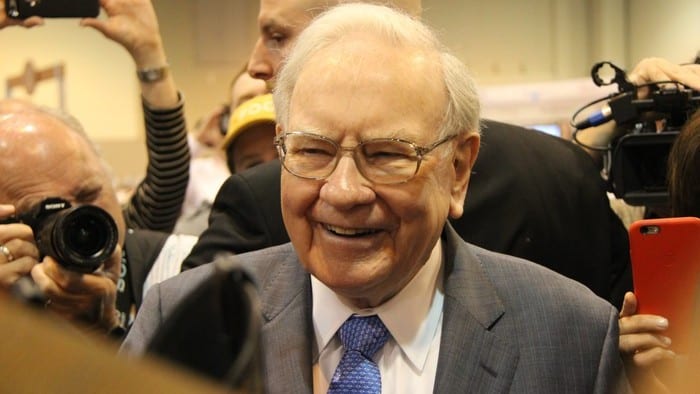
    a smiling picture of legendary US investment guru Warren Buffett.

    This article was originally published on Fool.com. All figures quoted in US dollars unless otherwise stated.

    Warren Buffett is well known as one of the world’s all-time great investors. He made his fortune as a value-focused investor — someone who looks to buy stocks when they’re cheap and profit as they recover. As the recent market downtrend reminds us, that’s often easier said than done, as falling stocks tend to make it feel like your money is evaporating with every down day.

    Still, if Buffett’s success shows us anything, it’s that a strong company that survives a down market can often come out the other side in a much better spot to deliver solid long-term returns for its shareholders.

    With that in mind, we asked three successful investors to pick strong Warren Buffett stocks that are worth considering in today’s volatile market. They picked Coca-Cola (NYSE: KO), Visa (NYSE: V), and Berkshire Hathaway (NYSE: BRK.A)(NYSE: BRK.B). Read on to find out why and decide for yourself whether those companies deserve a spot in your portfolio.

    Volatility goes better with Coke

    Barbara Eisner Bayer — Coca-Cola (NYSE: KO): If anyone knows how to make money in all markets, including volatile ones, it’s Buffett, the famous nonagenarian who has an approximate net worth of $114 billion. And one of the Oracle of Omaha’s favorite stocks is his oldest stock position, which he started purchasing 34 years ago — The Coca-Cola Company.

    Buffett is so in love with the company that he’s known to consume five cans of Coke each day. He even joked to Fortune magazine back in 2015 that his body is made up of “one-quarter Coca-Cola”. It’s no surprise, then, that Berkshire Hathaway owns about $22 billion worth of its shares, or 10% of the company.

    It’s great that Buffett is so fond of Coke, but that in and of itself doesn’t make it a great buy for a volatile market. So let’s look at what does.

    First, Coca-Cola’s products are consumed worldwide and embrace more than its fizzy namesake drink. Its portfolio of beverages has expanded to include changing and healthier tastes, and according to the company, includes “200 brands and thousands of beverages around the world from soft drinks and waters, to coffee and tea.” You’ve probably heard of many of them: Dasani, Fairlife, Fanta, Fuze Tea, Schweppes, Powerade, Smart Water, and Minute Maid. Because these drinks are worldwide staples, people aren’t going to stop drinking them when the stock market goes on a wild ride.

    The company has survived extreme volatility in the past. Back in October 2018, during an extremely turbulent period, Coca-Cola was up 2% while the S&P 500 was down 9%. This happened because the company was, and continues to be, a huge, stable conglomerate with a solid dividend and continuing growth prospects.

    While the company struggled during the coronavirus pandemic, it has finally returned to growth. During its recent fourth-quarter 2021 earnings report, Coca-Cola said net revenue had grown 10% year over year and earnings per share (EPS) were up 65% per share. And management sees brighter days ahead: 2022 revenue growth of 7.5% and EPS growth of 9% are numbers investors can get excited about for such a stable company.

    But the cherry on top of these reasons why Coca-Cola is a great Buffett stock to own during volatile times is its dividend, which currently offers investors a 3% dividend yield. Coca-Cola is also a Dividend Aristocrat and has been raising its payout for 59 years in a row. If stocks start plummeting, investors will still be earning income from the dividend, which is vital when all you’re seeing is red every day in your portfolio.

    If Buffett put down his bottle of Coke and spoke directly to you, he might just say that Coca-Cola — with its stable business, continuing growth prospects, and mighty fine dividend — may be the perfect stock to survive and even thrive through volatile times.

    The power of plastic

    Eric Volkman –Visa (NYSE: V): One of Buffett’s favorite sectors — if not the favorite — is finance. Witness Berkshire’s immense stakes in banks Wells Fargo and Bank of America, for example.

    Among this crowd, one company that should continue to thrive no matter how wild global volatility becomes is one of Berkshire’s many finance industry holdings, Visa. The payment card processor has a brand that is ubiquitous throughout the world and a business model that continually produces oversize profits.

    To understand why, we first have to make the distinction between open-loop card processors and their closed-loop peers. Visa and Mastercard fall into the former category, which essentially means they are payment network operators only, and not card issuers (i.e., the entities such as banks that actually extend the credit on a credit card, or draw funds from an existing account in the case of a debit card).

    This contrasts with closed-loop card companies, most prominently American Express (a longtime Buffett favorite, by the way). These entities act as both the issuer and the network operator.

    There are pluses and minuses to both business models, but I tend to favor the open-loopers. By sticking to facilitating transactions only, a company like Visa is basically a huge middle man, collecting a small piece of every purchase effected through its network. It assumes no credit risk while doing so; that’s for the issuer to worry about.

    Like any effective middle man, Visa’s profitability is sustainably and consistently high (lately it’s boasted 50%-plus net margins).

    And as the world keeps moving away from cash into plastic and digital means of payment, the company’s growth engine keeps humming. The card giant’s first quarter was typical of its recent performance — net revenue surged 24% higher year over year, to $7.1 billion, while non-GAAP (adjusted) net income enjoyed a 25% rocket ride to $3.9 billion.

    No matter how jittery the world economy gets, people are always going to need to buy things. One of the most popular instruments in doing so, in this increasingly cashless environment we shop in, is a Visa card. This company is going to continue to thrive; you can bet on that.

    Why not buy Buffett’s business?

    Chuck Saletta — Berkshire Hathaway (NYSE: BRK.A): Imagine a company that was built from the ground up to be exactly the fortress-like investment that Warren Buffett likes to own. Now imagine that with one purchase, you can not only buy shares in a company like that but also hire Buffett and his hand-picked successors to manage it for you.

    Believe it or not, you can do just that, with an investment in Berkshire Hathaway stock. Berkshire Hathaway is the insurance and investment conglomerate that Buffett runs. Between the strong insurance businesses, the wholly-owned subsidiaries, and the substantial stakes in solid public companies, it is built like a fortress to withstand tough times.

    In addition to the great collection of businesses and world-class investment management team at the helm, you can buy your shares at a reasonable price. Berkshire Hathaway stock recently traded hands at less than nine times trailing earnings and only around 1 1/2 times its accounting book value. That means Buffett’s company can be purchased at a reasonable price, making it the sort of thing Buffett himself would be interested in owning.

    Of course, even with a great business run by one of the greatest investors of all time, there are risks. In particular, Berkshire Hathaway trades at what looks like a cheap valuation in part because of something known as the conglomerate discount. In essence, large and diversified companies are viewed as less focused and nimble than smaller ones. As a result, the market doesn’t often put a rich valuation on companies structured like Berkshire Hathaway.

    Still, that’s a small price to pay for a chance to own an incredibly strong company at a reasonable valuation in incredibly volatile times.

    Great companies in troubled times

    Regardless of whether Coca-Cola, Visa, or Berkshire Hathaway ever make their way into your portfolio, they are all certainly strong businesses that are built to survive a tough market and emerge stronger on the other side. That makes them worth considering as investments to help you navigate these volatile times. And with a stamp of approval from no less an investor than Warren Buffett, they certainly deserve every bit of that consideration.

    This article was originally published on Fool.com. All figures quoted in US dollars unless otherwise stated.

    The post 3 strong Warren Buffett stocks for a volatile market appeared first on The Motley Fool Australia.

    Wondering where you should invest $1,000 right now?

    When investing expert Scott Phillips has a stock tip, it can pay to listen. After all, the flagship Motley Fool Share Advisor newsletter he has run for over ten years has provided thousands of paying members with stock picks that have doubled, tripled or even more.*

    Scott just revealed what he believes could be the five best ASX stocks for investors to buy right now. These stocks are trading at near dirt-cheap prices and Scott thinks they could be great buys right now.

    *Returns as of January 12th 2022

    More reading

    Wells Fargo is an advertising partner of The Ascent, a Motley Fool company. American Express is an advertising partner of The Ascent, a Motley Fool company. Bank of America is an advertising partner of The Ascent, a Motley Fool company. Barbara Eisner Bayer owns Berkshire Hathaway (B shares). Chuck Saletta owns Wells Fargo and has the following options: long January 2024 $50 calls on Wells Fargo, short January 2024 $50 puts on Wells Fargo, short September 2022 $45 puts on Wells Fargo, and short September 2022 $55 calls on Wells Fargo. Eric Volkman has no position in any of the stocks mentioned. The Motley Fool owns and recommends Berkshire Hathaway (B shares), Mastercard, and Visa. The Motley Fool recommends the following options: long January 2023 $200 calls on Berkshire Hathaway (B shares), short January 2023 $200 puts on Berkshire Hathaway (B shares), and short January 2023 $265 calls on Berkshire Hathaway (B shares). The Motley Fool has a disclosure policy. The Motley Fool Australia has recommended Berkshire Hathaway (B shares) and Mastercard. The Motley Fool has a disclosure policy. This article contains general investment advice only (under AFSL 400691). Authorised by Bruce Jackson.

    This article was originally published on Fool.com. All figures quoted in US dollars unless otherwise stated.


    from The Motley Fool Australia https://ift.tt/BfUzRGH

  • Why is the Global Lithium (ASX:GL1) share price powering ahead by 7% today?

    asx share price increase represented by golden dollar sign rocketing out from white domes of lithiumasx share price increase represented by golden dollar sign rocketing out from white domes of lithiumasx share price increase represented by golden dollar sign rocketing out from white domes of lithium

    The Global Lithium Resources Ltd (ASX: GL1) share price has come out of a trading halt on Monday. This comes after the emerging lithium company announced an update on its recent capital raise.

    During early morning, Global Lithium shares reached an intraday and near record high of $1.825. This is slightly under the all-time high of $1.84 achieved on 20 January.

    At the time of writing, Global Lithium shares have since retraced to $1.71, up 7.21%.

    Global Lithium completes placement

    Investors are buying up Global Lithium shares as the company seeks to progress its activities at Marble Bar and Manna Lithium Project.

    According to its release, Global Lithium announced it has received firm commitments for a $29.9 million capital raising.

    The company highlighted that it had strong support from global institutions as well as the introduction of cornerstone shareholder, Mineral Resources Limited (ASX: MIN). The latter is committing to invest $13.6 million for a 5% interest in Global Lithium after the capital raising is completed.

    The placement will see approximately 22.18 million new ordinary shares issued at a price of $1.35 apiece. This represents a 10.8% discount to the 15-day volume-weighted average price (VWAP) before going into a trading halt.

    The company will primarily use the proceeds to underpin the acceleration of its exploration programs and associated study work. This relates to the company’s Marble Bar Lithium Project (MBLP) in the Pilbara and the Manna Lithium Project (Manna) located 100 kilometres east of the Goldfields.

    Global Lithium non-executive chair, Warrick Hazeldine commented:

    As Global Lithium continues to advance our growth strategy with a significant West Australian lithium portfolio in Tier-1 locations, we are delighted to welcome Mineral Resources as a cornerstone investor in this capital raising. Alongside Suzhou TA&A, who continues to maintain their 9.9% stake, the Board is very excited about the depth of knowledge and lithium industry experience within the Company and through its key stakeholders.

    We look forward to developing a long-term working relationship with Mineral Resources given the company’s unrivalled track record in successfully bringing operations into production quickly, processing of hard rock lithium ores and downstream processing.

    Global Lithium share price summary

    Adding to today’s gains, Global Lithium shares have pushed 750% higher in the past 12 months. However, when looking at year-to-date, the company’s shares are hovering around upwards of 80%.

    Based on valuation grounds, Global Lithium presides a market capitalisation of around $232.77 million, with 136.12 million shares outstanding.

    The post Why is the Global Lithium (ASX:GL1) share price powering ahead by 7% today? appeared first on The Motley Fool Australia.

    Should you invest $1,000 in Global Lithium right now?

    Before you consider Global Lithium, you’ll want to hear this.

    Motley Fool Investing expert Scott Phillips just revealed what he believes are the 5 best stocks for investors to buy right now… and Global Lithium wasn’t one of them.

    The online investing service he’s run for over a decade, Motley Fool Share Advisor, has provided thousands of paying members with stock picks that have doubled, tripled or even more.* And right now, Scott thinks there are 5 stocks that are better buys.

    *Returns as of January 13th 2022

    More reading

    Motley Fool contributor Aaron Teboneras has no position in any of the stocks mentioned. The Motley Fool Australia’s parent company Motley Fool Holdings Inc. has no position in any of the stocks mentioned. The Motley Fool Australia has no position in any of the stocks mentioned. The Motley Fool has a disclosure policy. This article contains general investment advice only (under AFSL 400691). Authorised by Bruce Jackson.

    from The Motley Fool Australia https://ift.tt/4pfJHR7