Tag: Motley Fool

  • The 2022 outlook for Beach Energy (ASX:BPT) shares is sunny: expert

    Three women dance and splash about in the shallow water of a beautiful beach on a sunny day.Three women dance and splash about in the shallow water of a beautiful beach on a sunny day.Three women dance and splash about in the shallow water of a beautiful beach on a sunny day.


    Shares in Beach Energy Ltd (ASX: BPT) have reversed course and begun the ascent back up north over these past 3 months.

    Prices have skidded off a low of $1.16 last year and are trading at $1.48 at the time of writing, having gained more than 13% in the past week.

    As such, Beach Energy has started the year off well, with the most recent surge in its share price stemming from the release of its quarterly report last week.

    It now leads the S&P/ASX 300 Metals and Mining Index (ASX: XMM) and several other competitors in 2022 after breaking away from the pack at the start of the year, as seen on the chart below.

    TradingView Chart

    These results haven’t gone unnoticed either. The team at JP Morgan are constructive on Beach Energy shares, assigning an overweight rating on the stock. Analysts at the firm have analysed Beach’s quarterly results in the grand scheme of its long-term growth story, and like what they’ve found. Let’s take a look.

    Strong prices support revenue

    Beach Energy grew quarterly revenue by 3% year on year to $398 million in the three months ending 31 December 2021, above the broker’s internal estimates. Much of the upside was driven by strengths in the commodity markets.

    “Stronger-than-expected revenue was primarily due to higher realised prices for liquids. The realised crude oil price of A$117/bbl was 16% above our estimate. This was only partially offset by lower-than-expected gas prices”, the broker said.

    In fact, Beach Energy realised a gas price of $7.60/GJ this quarter, a 2% gain on the prior period, but still 6% below JP Morgan’s forecasts.

    The firm is also constructive on the company’s project pipeline, noting that “the key highlight from Beach’s growth projects was the delivery of first gas from the Geographe 4 and 5 wells to the Otway gas plant”.

    These catalysts, it reckons, will add to an already superior balance sheet that suggests Beach Energy is well-positioned to pull the trigger on future growth opportunities.

    “We think Beach provides good exposure to a diversified suite of assets in Australia. Net debt is close to zero and therefore Beach has the strongest balance sheet of the large caps under our coverage”, analysts at the firm wrote.

    In fact, Beach Energy is one of JP Morgan’s preferred stocks in the sector, given a healthy blend of driving forces behind its share price.

    “While we acknowledge recent issues at the Western Flank and the sudden departure of the CEO last year has increased operational risk” the firm said, “we would highlight: the company’s exposure to East Coast gas; the balance sheet is also net cash and in a strong position to fund its growth projects; and the stock is trading at a P/NPV of 0.72x”

    It also says that in order for Beach Energy to achieve current production guidance of 21-23mmboe, it needs to produce a minimum of 10-12mmboe in the remaining 2 quarters of FY22.

    Capital expenditures also appear to have fallen well short of full year guidance of $900 million-$1.1 billion, with just $417 million spent year-to-date. The broker noted that this represents a substantial saving.

    JP Morgan rates Beach Energy as a buy and values the company at $1.85 per share.

    In a list of analysts covering Beach Energy provided by Bloomberg Intelligence, 79% have it as a buy whereas just 1 broker has it as a sell.

    Beach Energy share price snapshot

    In the last 12 months, the Beach Energy share price has fallen 14% and is well behind the benchmark indices in that time.

    This year to date however, shares have reversed course and are now trading up around 17% after soaring another 13% in the last week of trading.

    The post The 2022 outlook for Beach Energy (ASX:BPT) shares is sunny: expert appeared first on The Motley Fool Australia.

    Should you invest $1,000 in Beach Energy right now?

    Before you consider Beach Energy, you’ll want to hear this.

    Motley Fool Investing expert Scott Phillips just revealed what he believes are the 5 best stocks for investors to buy right now… and Beach Energy wasn’t one of them.

    The online investing service he’s run for over a decade, Motley Fool Share Advisor, has provided thousands of paying members with stock picks that have doubled, tripled or even more.* And right now, Scott thinks there are 5 stocks that are better buys.

    *Returns as of January 13th 2022

    More reading

    Motley Fool contributor Zach Bristow has no position in any of the stocks mentioned. The Motley Fool Australia’s parent company Motley Fool Holdings Inc. has no position in any of the stocks mentioned. The Motley Fool Australia has no position in any of the stocks mentioned. The Motley Fool has a disclosure policy. This article contains general investment advice only (under AFSL 400691). Authorised by Bruce Jackson.

    from The Motley Fool Australia https://ift.tt/TyqK8jENU

  • Nufarm (ASX:NUF) share price leaps 15% as revenue soars

    A Nufarm investor sits at her desk and stretches her arms above her head in delight at the rising share price todayA Nufarm investor sits at her desk and stretches her arms above her head in delight at the rising share price todayA Nufarm investor sits at her desk and stretches her arms above her head in delight at the rising share price today

    Key points

    • The Nufarm share price is soaring today
    • The company’s latest trading update and outlook was released this morning
    • The agricultural company has reported a 36% increase in revenue for Q1 FY22

    The Nufarm Ltd (ASX: NUF) share price is enjoying another good day on the ASX, currently up 15.05% to $5.35. It follows 4 successive days of gains for the company. Its shares are now up by 22% since Monday.

    The developer and manufacturer of crop protection solutions and seeds released its latest trading update today. The update covers the first quarter of FY22. It reported an increase in revenue and strong adaptation to global supply demands.

    Nufarm also released its outlook for the rest of the financial year. Let’s take a look at what the company announced.

    Nufarm share price surges on 36% revenue increase

    The Nufarm share price is rocketing today on the back of the company’s trading update for Q1 FY22 and outlook. The highlights included:

    • A substantial increase in revenue
    • Favorable trading conditions
    • Adjusted net working capital (ANWC)/sales remain within target of 35-40%.

    Nufarm reported a 36% increase in revenue for the first quarter of FY22 (against the previous corresponding period), citing “favourable weather conditions” as a factor. New products also made up more than 20% of its revenue.

    The company “expects earnings in FY22 will be heavily weighted for the first half of the financial year and is increasingly confident of revenue and earnings growth for the full FY22 financial year”.

    In fact, Nufarm predicts its revenue could increase to more than $4 billion by FY26, due to its existing and upcoming products, and above market growth at an expected 2.3%.

    However, the company also reported it was experiencing “upward pressure on costs due to raw material costs and global logistics challenges which are being offset by the increased revenues”.

    What’s next for Nufarm?

    The Aussie grower is committed to adapting to global growth demands and challenges, including:

    • Catering to a growing global population (estimated 9.7 billion by 2050) and higher living standards by increasing yields
    • Using more sustainable agricultural practices, such as “biologicals, bio-stimulants, mechanical, electric and other novel solutions”
    • Reducing greenhouse gas emissions at manufacturing sites by 30% before 2030 and protecting crops

    Among other essentials, Nufarm expects fuel demand to increase by 50% by 2050. On Tuesday, the farmer reported that it had entered into an agreement with BP to supply sustainable biofuels through its product, Nuseed Carinata oil.

    All in all, 22 of its primary products target an addressable market valued at $6.6 billion (FY22 projected). Nufarm hopes to push its portfolio towards higher margin and growth products, with customer relevance front of mind.

    Nufarm share price snapshot

    Over the past 12 months, the Nufarm share price has increased by 7%. It reached its highest price of $5.60 in April 2021 and its lowest of $4.12 in September 2021.

    The company has a market capitalisation of $2 billion and a price-to-earnings ratio (P/E) of 35.

    The post Nufarm (ASX:NUF) share price leaps 15% as revenue soars appeared first on The Motley Fool Australia.

    Should you invest $1,000 in Nufarm right now?

    Before you consider Nufarm, you’ll want to hear this.

    Motley Fool Investing expert Scott Phillips just revealed what he believes are the 5 best stocks for investors to buy right now… and Nufarm wasn’t one of them.

    The online investing service he’s run for over a decade, Motley Fool Share Advisor, has provided thousands of paying members with stock picks that have doubled, tripled or even more.* And right now, Scott thinks there are 5 stocks that are better buys.

    *Returns as of January 13th 2022

    More reading

    Motley Fool contributor Alice de Bruin has no position in any of the stocks mentioned. The Motley Fool Australia’s parent company Motley Fool Holdings Inc. has no position in any of the stocks mentioned. The Motley Fool Australia has no position in any of the stocks mentioned. The Motley Fool has a disclosure policy. This article contains general investment advice only (under AFSL 400691). Authorised by Bruce Jackson.

    from The Motley Fool Australia https://ift.tt/PQYy8xbTs

  • The Lumos Diagnostics (ASX:LDX) share price is soaring another 8% today. Here’s why

    a group of young people dance together with their hands in the air, moving to music.a group of young people dance together with their hands in the air, moving to music.a group of young people dance together with their hands in the air, moving to music.

    Key points

    • The Lumos Diagnostics share price is up 8% today, and 22% in the last 3 days
    • RAT supply shortages soon coming to an end
    • Victorian government’s investment in Lumos Diagnostics has excited investors

    The Lumos Diagnostics Holdings Ltd (ASX: LDX) share price is again on the move today. This comes after news broke that rapid antigen test (RAT) shortages have started to ease over the past few days.

    During afternoon trade, the medical diagnostics company’s shares are up 7.92% to $1.09 apiece, having earlier been as high as $1.26. This means that since the end of January — the close of trade on Monday — Lumos Diagnostics shares are up by more than 22%.

    RAT supply concerns almost a thing in the past

    Investors are pushing up the Lumos Diagnostics share price following the Federal Health Minister’s comments today regarding RATs.

    According to an article published by news.com.au, Australia’s supply shortage of RATs could soon be at an end.

    Health Minister Greg Hunt said he received a positive message from Chemist Warehouse boss Mario Verrocchi on Wednesday morning.

    “The message from the CEO … was that they have very significant supplies,” Hunt said.

    On January 24, the government launched a scheme to provide free RATs for pensioners and concession cardholders.

    Around 3.1 million RATs have been handed out under the scheme, which is available to roughly 6 million Australians.

    Chemist Warehouse, Australia’s largest pharmacy chain, revealed it has handed out two-thirds of free RATs to eligible users. This equates to about 2 million free RATs.

    The news follows Lumos Diagnostics’ release yesterday in which it advised the Victorian government intends to support a diagnostics manufacturing facility and innovation hub.

    The Andrews government plans to invest $17.2 million in Lumos Diagnostics to establish capability for manufacturing RATs in Victoria.

    However, this is subject to the company meeting a number of requirements such as securing approval from the Australian Therapeutic Goods Administration (TGA) for its RATs.

    Lumos Diagnostics believes if it is granted these rights, production can begin as early as the second quarter of 2022.

    Once the facility is set up, up to 1 million RATs will be initially produced each year. This is expected to increase to up to 50 million RATs a year through the introduction of greater automation and expanding production lines.

    Furthermore, the RATs can also be modified to be used for influenza, infectious diseases, reproductive health, and chronic disease management.

    About the Lumos Diagnostics share price

    Since being listed in July last year, the Lumos Diagnostics share price is down around 12%. However, with this week’s gains, it is up around 13% year to date.

    Lumos Diagnostics has a market capitalisation of about $152 million.

    The post The Lumos Diagnostics (ASX:LDX) share price is soaring another 8% today. Here’s why appeared first on The Motley Fool Australia.

    Should you invest $1,000 in Lumos Diagnostics right now?

    Before you consider Lumos Diagnostics, you’ll want to hear this.

    Motley Fool Investing expert Scott Phillips just revealed what he believes are the 5 best stocks for investors to buy right now… and Lumos Diagnostics wasn’t one of them.

    The online investing service he’s run for over a decade, Motley Fool Share Advisor, has provided thousands of paying members with stock picks that have doubled, tripled or even more.* And right now, Scott thinks there are 5 stocks that are better buys.

    *Returns as of January 13th 2022

    More reading

    Motley Fool contributor Aaron Teboneras has no position in any of the stocks mentioned. The Motley Fool Australia’s parent company Motley Fool Holdings Inc. has no position in any of the stocks mentioned. The Motley Fool Australia has no position in any of the stocks mentioned. The Motley Fool has a disclosure policy. This article contains general investment advice only (under AFSL 400691). Authorised by Bruce Jackson.

    from The Motley Fool Australia https://ift.tt/wdMRouBKt

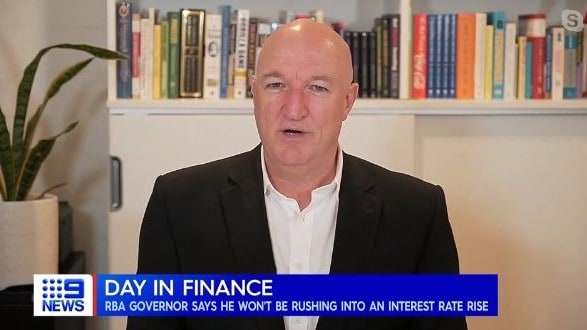
  • Energy stocks surge and RBA hoses down the chances of a rate rise. Scott Phillips on Nine’s Late News

    Motley Fool Chief Investment Officer Scott Phillips on nine newsMotley Fool Chief Investment Officer Scott Phillips on nine newsMotley Fool Chief Investment Officer Scott Phillips on nine news

    Motley Fool Australia Chief Investment Officer Scott Phillips joined Nine’s Late News on Wednesday night to discuss the RBA hosing down expectations of a rate hike, the surge in energy stocks, and Telstra’s new $1.6b investment.

    The post Energy stocks surge and RBA hoses down the chances of a rate rise. Scott Phillips on Nine’s Late News appeared first on The Motley Fool Australia.

    Wondering where you should invest $1,000 right now?

    When investing expert Scott Phillips has a stock tip, it can pay to listen. After all, the flagship Motley Fool Share Advisor newsletter he has run for over ten years has provided thousands of paying members with stock picks that have doubled, tripled or even more.*

    Scott just revealed what he believes could be the five best ASX stocks for investors to buy right now. These stocks are trading at near dirt-cheap prices and Scott thinks they could be great buys right now.

    *Returns as of January 12th 2022

    More reading

    Motley Fool contributor Scott Phillips owns Telstra Corporation Limited. The Motley Fool Australia’s parent company Motley Fool Holdings Inc. has no position in any of the stocks mentioned. The Motley Fool Australia owns and has recommended Amcor Limited and Telstra Corporation Limited. The Motley Fool has a disclosure policy. This article contains general investment advice only (under AFSL 400691). Authorised by Bruce Jackson.

    from The Motley Fool Australia https://ift.tt/e4IT7ynXv

  • The APA (ASX:APA) dividend has grown every year for 18 years. What’s next?

    $100 notes multiplying into the future representing asx growth shares

    $100 notes multiplying into the future representing asx growth shares$100 notes multiplying into the future representing asx growth shares

    There are surprisingly few ASX shares that have a record of dividend increases that is longer than a few years. This is especially the case in the aftermath of the coronavirus pandemic. Between 2019 and today, there are only a select few ASX shares that have dialled up their shareholder payments annually. Any of the big banks? Nope. Woolworths Group Ltd (ASX: WOW)? Sadly not. Telstra Corporation Ltd (ASX: TLS)? Its divined has been a flat 16 cents per share for years.

    BHP Group Ltd (ASX: BHP) may have doled out monster dividends last year, but its income track record is bumpier than an outback road.

    So then you would think that finding a company that has given investors an annual dividend pay rise every year for almost two decades is harder to find than an egg-laying rooster.

    But they are out there. And APA Group (ASX: APA) is one of them.

    Why APA shares are ASX dividend royalty

    Yes, APA has been paying its investors a rising dividend every financial year since FY2004. Back then, investors received a total of 21.5 cents per share. In FY2021, APA shareholders received 51 cents per share in dividend payments. That came after 50 cents per share in FY2020 and 47 cents per share in FY2019. The growth from 21.5 cents per share to 51 cents per share equates to a compounded annual growth rate (CAGR) of 4.92% per annum, which handily outperforms inflation over that period.

    Now, of course, APA isn’t the only ASX share with those kinds of dividend bonafides.

    Brickworks Limited (ASX: BKW) has been paying a consistent dividend for more than 45 years, although it hasn’t always risen every year. In saying that, the company has raised its dividend every year since 2014.

    Before 2020, Ramsay Health Care Limited (ASX: RHC) had given its investors a dividend increase every year since 2000. Unfortunately, the pandemic put an end to that streak for 2020. However, the company did return its dividend payments to 2019 levels in 2021.

    But Washington H. Soul Pattinson and Co Ltd (ASX: SOL) is the undisputed dividend king of the ASX. It has paid a rising dividend every single year since 2000, with no interruptions whatsoever over the ‘COVID era’.

    So APA might not yet be at that dividend share calibre. But it certainly still has a dividend record that is amongst the best the ASX can offer.

    At the current APA share price, the company has a trailing dividend yield of 5.02%. 

    The post The APA (ASX:APA) dividend has grown every year for 18 years. What’s next? appeared first on The Motley Fool Australia.

    Should you invest $1,000 in APA Group right now?

    Before you consider APA Group, you’ll want to hear this.

    Motley Fool Investing expert Scott Phillips just revealed what he believes are the 5 best stocks for investors to buy right now… and APA Group wasn’t one of them.

    The online investing service he’s run for over a decade, Motley Fool Share Advisor, has provided thousands of paying members with stock picks that have doubled, tripled or even more.* And right now, Scott thinks there are 5 stocks that are better buys.

    *Returns as of January 13th 2022

    More reading

    Motley Fool contributor Sebastian Bowen owns Ramsay Health Care Limited, Telstra Corporation Limited, and Washington H. Soul Pattinson and Company Limited. The Motley Fool Australia’s parent company Motley Fool Holdings Inc. owns and has recommended Brickworks and Washington H. Soul Pattinson and Company Limited. The Motley Fool Australia owns and has recommended APA Group, Brickworks, Telstra Corporation Limited, and Washington H. Soul Pattinson and Company Limited. The Motley Fool Australia has recommended Ramsay Health Care Limited. The Motley Fool has a disclosure policy. This article contains general investment advice only (under AFSL 400691). Authorised by Bruce Jackson.

    from The Motley Fool Australia https://ift.tt/oPNkdUHjS

  • What are Stablecoins and how do they differ from other cryptocurrencies?

    a woman with a mobile phone in her hand looks sceptical wity a puzzled expression on her face with an eyebrow raised and pursed lips. wondering how Stablecoins differ from other cryptocurrenciesa woman with a mobile phone in her hand looks sceptical wity a puzzled expression on her face with an eyebrow raised and pursed lips. wondering how Stablecoins differ from other cryptocurrenciesa woman with a mobile phone in her hand looks sceptical wity a puzzled expression on her face with an eyebrow raised and pursed lips. wondering how Stablecoins differ from other cryptocurrencies

    Key points

    • Stablecoins are different from other cryptocurrencies
    • They’re backed by another asset, often a more traditional one
    • Stablecoins are far less susceptible to market moves due to their backing
    • Investors can still earn returns from Stablecoins through various platforms

    It’s been a tumultuous past few months for cryptocurrency. The market has seen wild fluctuations in value, with Bitcoin (CRYPTO: BTC) and other digital currencies plummeting in price. However, one sub-category of digital currencies has been largely immune to the cryptocurrency bloodbath: Stablecoins.

    In this article, we will explore the unique characteristics that set Stablecoins apart from other cryptocurrencies.

    What are Stablecoins?

    It turns out the wild, wild world of crypto is not completely consumed by volatility. Indeed, even the speculative landscape of cryptocurrency demands a need for stability. Perhaps more so than traditional assets.

    The solution… Stablecoins.

    Put simply, Stablecoins are cryptocurrency tokens that have been pegged to another asset with a more stable value. To date, most Stablecoins have been backed by either a fiat currency or a cryptocurrency.

    In other words, the value fluctuates in tandem with the value of a ‘steady’ asset. The largest Stablecoins in the world by market capitalisation all use the United States dollar as their reference point.

    USD Coin (CRYPTO: USDC), for example, is pegged to the US dollar and each USDC token is supposedly backed by a real-world dollar held in reserve. Other notable examples include Tether (CRYPTO: USDT) and Dai (CRYPTO: DAI).

    Stablecoin Price (USD) Market capitalisation (USD)
    Tether $1.00 $77.97 billion
    USD Coin $0.9999 $50.42 billion
    Binance USD $1.00 $15.78 billion
    TerraUSD $0.9994 $11.28 billion
    Dai $1.00 $9.64 billion
    TrueUSD $1.00 $1.51 billion
    Pax Dollar $1.00 $0.94 billion
    Neutrino USD $0.9771 $0.47 billion
    Fei USD $0.994 $0.42 billion
    Tribe $0.6802 $0.31 billion
    Source: CoinMarketCap

    While many of the above Stablecoins are fiat-backed, there are other options open to investors. For the more decentralised-desiring crypto enthusiasts, Stablecoins also come in crypto-backed and algorithmic forms, removing the link to central banks.

    How do they differ from other cryptocurrencies?

    The key difference between Stablecoins and other forms of cryptocurrency is that they are not beholden to the whims of the market.

    Their stability makes them attractive to many cryptocurrency advocates, as they can safely store their money in Stablecoins without fear that their value will fluctuate significantly. But they still offer most of the benefits associated with cryptocurrency.

    While the removal of the downside risk is appealing, keep in mind the upside is no longer present. However, crypto users can take advantage of attractive yields offered on Stablecoins across various platforms at their discretion.

    Unlike traditional cryptocurrencies, this is one of the only ways to accrue returns while holding the token.

    The post What are Stablecoins and how do they differ from other cryptocurrencies? appeared first on The Motley Fool Australia.

    Should you invest $1,000 in Bitcoin right now?

    Before you consider Bitcoin, you’ll want to hear this.

    Motley Fool Investing expert Scott Phillips just revealed what he believes are the 5 best stocks for investors to buy right now… and Bitcoin wasn’t one of them.

    The online investing service he’s run for over a decade, Motley Fool Share Advisor, has provided thousands of paying members with stock picks that have doubled, tripled or even more.* And right now, Scott thinks there are 5 stocks that are better buys.

    *Returns as of January 13th 2022

    More reading

    Motley Fool contributor Mitchell Lawler owns Bitcoin. The Motley Fool Australia’s parent company Motley Fool Holdings Inc. has no position in any of the stocks mentioned. The Motley Fool Australia has no position in any of the stocks mentioned. The Motley Fool has a disclosure policy. This article contains general investment advice only (under AFSL 400691). Authorised by Bruce Jackson.

    from The Motley Fool Australia https://ift.tt/HNyOtPhV4

  • Here’s what this broker thinks of the Westpac (ASX:WBC) Q1 result

    fintech, smart investor, happy investor, technology shares,

    fintech, smart investor, happy investor, technology shares,fintech, smart investor, happy investor, technology shares,

    The Westpac Banking Corp (ASX: WBC) share price is pushing higher in afternoon trade.

    At the time of writing, the banking giant’s shares are up 2% to $21.03.

    Why is the Westpac share price pushing higher?

    Investors have been bidding the Westpac share price higher today in response to its first quarter update.

    In case you missed it, Australia’s oldest bank delivered unaudited cash earnings of $1.58 billion for the three months. This was up 1% over the quarterly average during the second half of FY 2021.

    And while this fell short of Bell Potter’s estimate of $1.82 billion, it was better than some were expecting.

    How did Westpac’s result compare?

    According to a note out of Goldman Sachs, Westpac is currently outperforming its expectations following this update.

    It commented: “WBC announced 1Q22 unaudited cash earnings (ex-notables) of A$1.58 bn, which was 1% higher than the 2H21 quarterly average of A$1.57 bn and run-rating 4% ahead of what is implied by our current 1H22E, with the beat entirely driven by better than expected revenues, which would appear due to Markets and Treasury. The A$118 mn BDD charge was broadly consistent with what is implied by our 1H22E charge of A$233 mn.”

    However, Goldman, which has a neutral rating and $25.60 price target on its shares, does have concerns over its net interest margin (NIM) which fell 8 basis points to 1.91%.

    It concluded: “Overall, today’s headline performance is slightly better than we had been expecting and while it appears largely driven by Markets and Treasury revenues, this should provide some comfort to the market. That said, the underlying decline in the NIM remains significant, with the NIM (ex-Markets and Treasury) 20 bp lower at Dec-21 than it was on average over 2H21. With approximately one-third of this driven by liquids and two-thirds from competition, retail banking profitability remains under intense pressure.”

    The post Here’s what this broker thinks of the Westpac (ASX:WBC) Q1 result appeared first on The Motley Fool Australia.

    Should you invest $1,000 in Westpac right now?

    Before you consider Westpac, you’ll want to hear this.

    Motley Fool Investing expert Scott Phillips just revealed what he believes are the 5 best stocks for investors to buy right now… and Westpac wasn’t one of them.

    The online investing service he’s run for over a decade, Motley Fool Share Advisor, has provided thousands of paying members with stock picks that have doubled, tripled or even more.* And right now, Scott thinks there are 5 stocks that are better buys.

    *Returns as of January 13th 2022

    More reading

    Motley Fool contributor James Mickleboro owns Westpac Banking Corporation. The Motley Fool Australia’s parent company Motley Fool Holdings Inc. has no position in any of the stocks mentioned. The Motley Fool Australia has recommended Westpac Banking Corporation. The Motley Fool has a disclosure policy. This article contains general investment advice only (under AFSL 400691). Authorised by Bruce Jackson.

    from The Motley Fool Australia https://ift.tt/RJ8uiSGn0

  • Own ASX 200 energy shares? Here’s what OPEC’s been up to

    a man stands in overalls and a hardhat with a clipboard in front of stacked black oil drums at an oil industry site.a man stands in overalls and a hardhat with a clipboard in front of stacked black oil drums at an oil industry site.a man stands in overalls and a hardhat with a clipboard in front of stacked black oil drums at an oil industry site.

    Key points

    • ASX 200 energy shares have trounced the index this year
    • Soaring crude prices could head even higher
    • Many OPEC members can’t increase production from current levels

    The S&P/ASX 200 Index (ASX: XJO) is down approximately 7% since the opening bell on 4 January.

    That’s despite some outsized gains posted by leading ASX 200 energy shares.

    The Santos Ltd (ASX: STO) share price, for example, has gained 11% year-to-date.

    Woodside Petroleum Limited (ASX: WPL) shares are up 15%.

    And rival ASX 200 energy share Beach Energy Ltd (ASX: BPT) has also gained 15% so far in 2022.

    While many factors influence the prices of individual ASX 200 energy shares, the soaring price of crude oil has certainly offered some strong tailwinds.

    On 31 December Brent crude was trading for US$77.80 per barrel. Today that same barrel is fetching US$89.40, up 12% to 7-year highs.

    And with the pace of new supplies looking to be outstripped by growing demand, crude could march even higher from here, offering more support to ASX 200 energy shares.

    OPEC’s gradual increase

    The Organization of Petroleum Exporting Countries (OPEC) and its partners, including Russia, successfully managed to cut global production after the pandemic saw demand evaporate and Brent crude oil prices plummet to US$21 per barrel in March 2020.

    As energy demand rebounded when the world began to reopen, OPEC has been gradually opening up the crude spigots.

    Gradually enough to keep oil prices marching higher, and ASX energy shares outperforming the benchmark.

    Speaking ahead of yesterday’s meeting in Riyadh, Saudi Arabia’s Energy Minister Prince Abdulaziz bin Salman said (quoted by Bloomberg), “Prudence as I’ve been preaching about is what saved us in OPEC+. Prudence dictates that you have a bit of a think here and a bit of think there.”

    During the meeting, OPEC+ members agreed to increase the cartel’s production level by 400,000 barrels per day (bpd) in March.

    However, with political unrest afflicting several members, and a broader lack of investment impacting production capacity, analysts say many members already haven’t been meeting their monthly share of crude output.

    As Bloomberg reports:

    The 10 OPEC nations engaged in managing supplies increased by 160,000 barrels a day in January, about two-thirds of their targeted amount. The full 23-nation OPEC+ alliance is cutting far more than required, with a compliance rate of 122% in December…

    That’s led many analysts, including Goldman Sachs Group, led by Damien Courvalin, to offer bullish forecasts for crude oil moving forward, which should come as good news to ASX energy shareholders.

    According to Goldman’s analysts, “Core to our bullish oil price view is the now historically low levels of the oil market’s two buffers: inventory and spare capacity. Even if OPEC+ were ramping up faster, this would only come at the expense of a critically lower level of spare capacity.”

    How have these ASX 200 energy shares been performing?

    As noted above, the 3 ASX 200 energy shares we named have all outperformed the benchmark in 2020.

    They’ve also outpaced it over the past 6 months.

    While the ASX 200 is down 5% over the last 6 months, the Woodside share price is up 19%, the Santos share price is up 14%, and Beach Energy shares have soared 25%. 

    The post Own ASX 200 energy shares? Here’s what OPEC’s been up to appeared first on The Motley Fool Australia.

    Wondering where you should invest $1,000 right now?

    When investing expert Scott Phillips has a stock tip, it can pay to listen. After all, the flagship Motley Fool Share Advisor newsletter he has run for over ten years has provided thousands of paying members with stock picks that have doubled, tripled or even more.*

    Scott just revealed what he believes could be the five best ASX stocks for investors to buy right now. These stocks are trading at near dirt-cheap prices and Scott thinks they could be great buys right now.

    *Returns as of January 12th 2022

    More reading

    The Motley Fool Australia’s parent company Motley Fool Holdings Inc. has no position in any of the stocks mentioned. The Motley Fool Australia has no position in any of the stocks mentioned. The Motley Fool has a disclosure policy. This article contains general investment advice only (under AFSL 400691). Authorised by Bruce Jackson.

    from The Motley Fool Australia https://ift.tt/m5dpwTHcb

  • Why has the A2 Milk (ASX:A2M) share price spilled 5% in a month?

    A young girl sits on her kitchen floor holding a glass of milk with an empty A2 Milk Company bottle next to her and milk puddles on the floorA young girl sits on her kitchen floor holding a glass of milk with an empty A2 Milk Company bottle next to her and milk puddles on the floorA young girl sits on her kitchen floor holding a glass of milk with an empty A2 Milk Company bottle next to her and milk puddles on the floor

    Key points

    • The A2 Milk share price is in the red and down 5.7% over the past 30 days
    • In the past year, the company’s shares have dropped nearly 50%
    • Takeover rumours emerged in late January but no news as yet

    The A2 Milk Company Ltd (ASX: A2M) share price is gravitating lower over the past month after diving nearly 50% in a year.

    Since the first trading day of 2022 on 4 January, the company’s shares have lost 5.7% in value. A2 Milk shares are now trading for $5.25, down 1.31% for the day so far.

    Let’s take a look at how the past 30 days have played out.

    What’s moving the A2 Milk share price?

    A2 Milk shares have been bouncing around in the past month. The biggest fall took place between 20 January and 24 January, when the shares fell 4%.

    A2 Milk is a fresh milk and infant formula company. They sell milk products made from cow’s milk that contain the A2 protein type.

    Falling revenue in China has plagued the company’s share price, with shipments of products between Australia and China severely disrupted by COVID-19.

    It may be that Omicron and interest rate fears plaguing the market as a whole between 20-24 January had an impact on A2 Milk. For perspective, the S&P/ASX 200 Index (ASX: XJO) fell nearly 3% during this period.

    However, it hasn’t been all bad this month for A2 Milk. On 25 January, the A2 Milk share price surged 7% on speculation that it could be a takeover target for the Canadian dairy company Saputo Inc. (TSE: SAP).

    However, the company’s shares had given back some of these gains by 27 January, falling 3.85%. It may be that investors sold off the shares after the takeover rumour wasn’t confirmed. In fact, A2 Milk did not comment on the rumour at all.

    A2 Milk will report its FY22 financial year results on Monday 21 February. In FY21, the company reported a 30% fall in revenue to NZ$1.16 billion and a 79.1% reduction in net profit after tax to NZ$80.7 million.

    One broker is optimistic about the company’s fortunes. My Foolish colleague James reported recently that Bell Potter has a $7.70 price target on A2 Milk shares. That’s 46% more than the current price at the time of writing.

    A2 Milk share price recap

    The A2 Milk share price has fallen by 1.15% over the past 5 days.

    That compares to the S&P/ASX 200 Index (ASX: XJO) which is up 2.25% over the same period.

    The company commands a market capitalisation of roughly $3.9 billion based on the current share price.

    The post Why has the A2 Milk (ASX:A2M) share price spilled 5% in a month? appeared first on The Motley Fool Australia.

    Should you invest $1,000 in A2 Milk right now?

    Before you consider A2 Milk, you’ll want to hear this.

    Motley Fool Investing expert Scott Phillips just revealed what he believes are the 5 best stocks for investors to buy right now… and A2 Milk wasn’t one of them.

    The online investing service he’s run for over a decade, Motley Fool Share Advisor, has provided thousands of paying members with stock picks that have doubled, tripled or even more.* And right now, Scott thinks there are 5 stocks that are better buys.

    *Returns as of January 13th 2022

    More reading

    The Motley Fool Australia’s parent company Motley Fool Holdings Inc. has no position in any of the stocks mentioned. The Motley Fool Australia has recommended A2 Milk. The Motley Fool has a disclosure policy. This article contains general investment advice only (under AFSL 400691). Authorised by Bruce Jackson.

    from The Motley Fool Australia https://ift.tt/34YS7mfro

  • Can the Cochlear (ASX:COH) share price live up to analyst expectations?

    cochlear happy, share price rise, up, increasecochlear happy, share price rise, up, increasecochlear happy, share price rise, up, increase

    After gyrating downwards over the last 6–8 months, the Cochlear Limited (ASX: COH) share price finally bottomed at 52-week lows of $182.06 in late January.

    It has since pushed hard off that level – although at a far smaller trajectory than its 52-week highs of $256.09 in August last year.

    Losing approximately $74 per share is a hard pill to swallow in any length of time, let alone within the course of a financial year.

    Alas, analyst views are mixed on Cochlear’s direction at the moment. Still, there’s been a flurry of remodelling and valuation changes in the last few weeks in response to the changing healthcare landscape (not to mention Omicron as well).

    Can Cochlear live up to these expectations? Let’s take a closer look.

    Sentiment is a mixed salad for Cochlear

    There are firms recommending to buy, hold and sell the company’s shares, however, the weighting appears to be biased towards a hold.

    Out of the 19 analysts covering Cochlear in a list provided by Bloomberg Intelligence, one third have it as a buy, over 44% have it as a hold whereas the remaining 22.2% urge their clients to sell or short Cochlear shares now.

    Amongst this list, the consensus price target is $223.74 per share, indicating the overall sentiment appears to be bullish when factoring the ‘wisdom of the crowd’.

    Credit Suisse recently upgraded its rating on Cochlear to a buy, assigning a $235 per share price target in doing so. Given the recent pullback in share price, this could be an entry signal and also makes the valuation more attractive.

    Fellow broker Citi agrees. It also upgraded Cochlear to a buy today and values the company at a premium of $220 per share.

    Meanwhile, each of Jefferies, Macquarie and Morgan Stanley see the opposite side of the coin. All three firms aren’t so rosy on the outlook for the hearing aid giant for 2022 and beyond.

    Jefferies and Macquarie are both neutral, although both also reduced their valuations on Cochlear in January as well.

    Whereas analysts at Jeffereis value Cochear at $206.40 per share after a 6% haircut, the team at Macquarie are more constructive and see it valued at $222.50 per share (even after a 13% decrease).

    Both downgraded the Cochlear share price to neutral in the last few weeks, in contrast to the two upgrades discussed earlier. JP Morgan is also neutral on the company with a $227 price target.

    Morgan Stanley is bearish however, and urges its clients to sell Cochlear shares after valuing the company at $180 per share in January.

    The broker notes issues on valuation in its recommendation to sell – a rating it shares alongside Goldman Sachs. Analysts at Goldman see Cochlear valued at $197 per share in a note from last year as well.

    Nevertheless, factoring in the scope of analysts covering the company, then the sentiment is clearly bullish on Cochlear shares.

    Which way will the Cochlear share price go?

    Of course, making predictions in the stocks market is a fool’s game, although, perhaps not The Motley Fool’s one. So far in 2022, shares are down 9%, outpacing losses in the wider market.

    Yet, most of the bearish commentary is centred around valuation, and not necessarily the company’s Fundamentals. Even the neutral ratings value the company at a substantial premium to where it is trading at today.

    JP Morgan even notes the same point explicitly in a recent note, saying that “valuation remains our only real concern with Cochlear, so we retain our Neutral rating, given the lack of upside to our DCF-based price target”.

    Cochlear’s products also sit on the podium as the premier offering in hearing implants, non-negotiable, says JP Morgan.

    “In our view, Cochlear can comfortably claim to offer the most reliable implants, based on many years of data. This matters, as the importance of reliability has likely risen in the minds of both clinicians and recipients after two competitors have announced major recalls (corrective field actions) in the last two years” the broker said in a recent note.

    However, revenue growth has ‘faltered’ for Cochlear recently, according to Redpoint Investment Management chief Max Cappetta, when speaking to The Motley Fool’s Tony Yoo last year.

    Cappetta noted that implant sales stagnated during COVID-19 as well, and also believes future growth prospects are already fully priced into the stock.

    Hence, it appears that factors of valuation and concerns around the COVID-19 trajectory are weighing the growth outlook for Cochlear shares coming into the near future.

    As to which way it will go – if the bulls have it, Cochlear might push towards the consensus price target of approximately $224 per share, but the bearish market pundits reckon it could sink to $180–$197 per share.

    In the last 12 months, the Cochlear share price has slipped 6% into the red and is down 9% this year to date. In the past week, shares have regained some steam and are now 2% in the green.

    The post Can the Cochlear (ASX:COH) share price live up to analyst expectations? appeared first on The Motley Fool Australia.

    Should you invest $1,000 in Cochlear right now?

    Before you consider Cochlear, you’ll want to hear this.

    Motley Fool Investing expert Scott Phillips just revealed what he believes are the 5 best stocks for investors to buy right now… and Cochlear wasn’t one of them.

    The online investing service he’s run for over a decade, Motley Fool Share Advisor, has provided thousands of paying members with stock picks that have doubled, tripled or even more.* And right now, Scott thinks there are 5 stocks that are better buys.

    *Returns as of January 13th 2022

    More reading

    Motley Fool contributor Zach Bristow has no position in any of the stocks mentioned. The Motley Fool Australia’s parent company Motley Fool Holdings Inc. owns and has recommended Cochlear Ltd. The Motley Fool Australia has recommended Cochlear Ltd. The Motley Fool has a disclosure policy. This article contains general investment advice only (under AFSL 400691). Authorised by Bruce Jackson.

    from The Motley Fool Australia https://ift.tt/1nBQ8svr7