Tag: Motley Fool

  • This broker just upgraded the ANZ (ASX:ANZ) share price to a buy. Here’s why

    ASX shares upgrade buy Woman in glasses writing on buy on boardASX shares upgrade buy Woman in glasses writing on buy on boardASX shares upgrade buy Woman in glasses writing on buy on board

    The Australia and New Zealand Banking Group Ltd (ASX: ANZ) share price is seesawing today and is currently up 0.49% at $26.66.

    ANZ shares are trailing the S&P/ASX 200 Financials Index (ASX: XFJ), which is up 1.28%. This continues a sharp downturn in the ANZ share price that began in mid-January.

    In that time, ANZ shares have collapsed from a high of $28.75 and are now trading at 6-month lows.

    Despite the recent pullback, the team at JP Morgan upgraded its recommendation on the ANZ share price from neutral to overweight in a note last week.

    The firm has been constructive on ANZ for some time. However, it now has “more confidence in the near term” given a series of factors in the bank’s growth engine. Let’s take a look.

    JP Morgan upgrades ANZ to overweight from neutral

    The broker pulled the trigger on its conviction last week amid a shifting macroeconomic narrative in both Australia and New Zealand, particularly concerning interest rates.

    While it reckons the other majors will suffer a compression to their net interest margins (NIM), it says ANZ will receive NIM support from “likely further rate rises in New Zealand” and the likelihood of several rate hikes in the US.

    If the RBA is slower to the interest rate party, and lifts base rates at a slower pace versus other jurisdictions, this could bode well for the ANZ share price, JP Morgan estimates.

    “In the event that the RBA is slower to lift rates this could see ANZ outperform peers in early 2022,” the broker said.

    Furthermore, analysts at the firm now have greater certainty in ANZ’s top line, noting the bank also gives investors the best exposure to offshore interest rates.

    “ANZ has A$127 billion of Insto deposits in the APEA region, however, most are [term deposits] TDs with short term/on-demand deposits amounting to A$42 billion.”

    What else did the broker say?

    JP Morgan reckons “long-awaited improvements in mortgage processing” are likely to be realised this year. This could potentially improve ANZ’s credit growth prospects.

    This is important, as mortgage growth has been underwhelming from the bank’s end in recent times. Hence the broker thinks this will lead to a gradual improvement in processing efficiencies.

    In fact, ANZ has quite a large exposure to business lending as well. This could offer some protection from the “severe short-term pressure on mortgage margins”.

    Costs are expected to rise this year throughout the sector – something ANZ can’t avoid in FY22. However, from FY23 and beyond, ANZ’s costings should normalise as investment spending will wind back with capital management, JP Morgan says.

    The firm is heavily bullish and values ANZ at $31.50 per share, reflecting the future dividend stream paid to investors and a multiple to FY24 tangible book value estimates.

    At the time of writing, this implies a margin of safety of 18%. As such, with this kind of upside potential, ANZ is one of JP Morgan’s preferred picks in the ASX banking sector.

    ANZ share price snapshot

    The chart below shows the performance of ANZ relative to its peers and the ASX Financials benchmark over the last 12 months.

    The group mostly tracked together until around August last year. Investors have since split the group, with Westpac Banking Corp (ASX: WBC) leading losses and Macquarie Group Ltd (ASX: MQG) sailing above the top.

    TradingView Chart

    ANZ is largely mirroring the sector index and has yet to break away from this level – as with the majority of its peers.

    The ANZ share price has held onto gains in this time and is now up around 10% in the past 12 months. This year to date, however, shares are down about 3.5%. They have also fallen more than 4% over the past week.

    The post This broker just upgraded the ANZ (ASX:ANZ) share price to a buy. Here’s why appeared first on The Motley Fool Australia.

    Should you invest $1,000 in ANZ right now?

    Before you consider ANZ, you’ll want to hear this.

    Motley Fool Investing expert Scott Phillips just revealed what he believes are the 5 best stocks for investors to buy right now… and ANZ wasn’t one of them.

    The online investing service he’s run for over a decade, Motley Fool Share Advisor, has provided thousands of paying members with stock picks that have doubled, tripled or even more.* And right now, Scott thinks there are 5 stocks that are better buys.

    *Returns as of January 13th 2022

    More reading

    Motley Fool contributor Zach Bristow has no position in any of the stocks mentioned. The Motley Fool Australia’s parent company Motley Fool Holdings Inc. has no position in any of the stocks mentioned. The Motley Fool Australia has recommended Macquarie Group Limited and Westpac Banking Corporation. The Motley Fool has a disclosure policy. This article contains general investment advice only (under AFSL 400691). Authorised by Bruce Jackson.

    from The Motley Fool Australia https://ift.tt/gKo4VxUdb

  • ASX 200 (ASX:XJO) midday update: Credit Corp impresses, Boral’s $3bn capital return

    a man in a business suite throws his arms open wide above his head and raises his face with his mouth open in celebration in front of a background of an illuminated board tracking stock market movements.

    a man in a business suite throws his arms open wide above his head and raises his face with his mouth open in celebration in front of a background of an illuminated board tracking stock market movements.a man in a business suite throws his arms open wide above his head and raises his face with his mouth open in celebration in front of a background of an illuminated board tracking stock market movements.

    At lunch on Tuesday, the S&P/ASX 200 Index (ASX: XJO) is on course to start the month with a strong gain. The benchmark index is currently up 0.7% to 7,021.2 points.

    Here’s what is happening on the ASX 200 today:

    Credit Corp half year results impress

    The Credit Corp Group Limited (ASX: CCP) share price is storming higher today after it delivered a first half profit ahead of expectations. Credit Corp posted first half revenue growth of 8% to $203.9 million and net profit after tax growth of 8% to $45.7 million. The latter compares to the market consensus estimate of $42.7 million.

    Boral shares rise on capital return plans

    The Boral Limited (ASX: BLD) share price has jumped on Tuesday after the building materials company announced a multibillion-dollar capital return for shareholders. Boral intends to return $3 billion of surplus capital to shareholders via a $2.65 per share capital reduction and an unfranked 7 cents per share dividend.

    Novonix rises on KORE deal

    The Novonix Ltd (ASX: NVX) share price is rising today after completing its supply agreement and investment in battery cell developer KORE Power. The agreement will see Novonix become KORE Power’s sole graphite anode material supplier. The company has also taken a 5% stake in the battery cell developer through a US$25 million investment.

    Best and worst ASX 200 performers

    The best performer on the ASX 200 today has been the PointsBet Holdings Ltd (ASX: PBH) share price with an 8% gain. This morning Goldman Sachs retained its buy rating but trimmed its price target on the sports betting company’s shares to $9.97. The worst performer has been the Worley Ltd (ASX: WOR) share price with a 2.5% decline on no news.

    The post ASX 200 (ASX:XJO) midday update: Credit Corp impresses, Boral’s $3bn capital return appeared first on The Motley Fool Australia.

    Wondering where you should invest $1,000 right now?

    When investing expert Scott Phillips has a stock tip, it can pay to listen. After all, the flagship Motley Fool Share Advisor newsletter he has run for over ten years has provided thousands of paying members with stock picks that have doubled, tripled or even more.*

    Scott just revealed what he believes could be the five best ASX stocks for investors to buy right now. These stocks are trading at near dirt-cheap prices and Scott thinks they could be great buys right now.

    *Returns as of January 12th 2022

    More reading

    Motley Fool contributor James Mickleboro has no position in any of the stocks mentioned. The Motley Fool Australia’s parent company Motley Fool Holdings Inc. owns and has recommended Pointsbet Holdings Ltd. The Motley Fool Australia has recommended Pointsbet Holdings Ltd. The Motley Fool has a disclosure policy. This article contains general investment advice only (under AFSL 400691). Authorised by Bruce Jackson.

    from The Motley Fool Australia https://ift.tt/mO0wGyz5l

  • Centuria Industrial (ASX:CIP) share price climbs amid upgraded guidance

    a man sits at his computer screen scrolling with his fingers with a satisfied smile on his face as though he is very content with the news he is receiving.a man sits at his computer screen scrolling with his fingers with a satisfied smile on his face as though he is very content with the news he is receiving.a man sits at his computer screen scrolling with his fingers with a satisfied smile on his face as though he is very content with the news he is receiving.

    Key points

    • The Centuria share price is more than 3% higher on Tuesday
    • The company’s 1H FY22 net profit is up 209% compared with the first half of FY21
    • It has expanded its portfolio to 80 industrial assets worth $3.9 billion

    The Centuria Industrial REIT (ASX: CIP) share price is in the green today amid increased profit and improved guidance outlined in its first half-year results for FY22.

    Shares in the real estate investment trust are currently swapping hands at $3.92, up 3.16%. In contrast, the S&P/ASX 200 Index (ASX: XJO) is up 0.49% at the time of writing.

    Let’s take a look at what the company reported to the market today.

    Centuria share price lifts amid half yearly results

    Here are the highlights of Centuria’s report:

    • $308.1 million statutory net profit, up 209% from $99.6 million in the first half of FY2021
    • Upgraded FY22 guidance of at least 18.2 cents per unit (CPU), up from 18.1 CPU
    • Total value of trusts portfolio increased 31.7% on the previous half to $3,878.9 million
    • Net Tangible Assets (NTA) of $4.21 per unit, up 9.9% from $3.83 in the previous half
    • 46.5% twelve month return on equity

    What else happened in the half?

    Centuria expanded its portfolio to include 80 industrial assets worth $3.9 billion. Of these assets, 90% are on the east coast. The company also bought 21 urban infill industrial assets valued at $680 million. This included asset properties in Fairfield and Wetherill Park in NSW.

    Centuria noted east coast markets have low vacancy rates and high tenant demands, improving returns.

    The company achieved 99.2% lease occupancy for the first half of FY22. Rental growth increased by 10% due to higher demand, especially from the e-commerce sector.

    This led to a $281 million like-for-like valuation upgrade. Also in the half, the trust refinanced a secured multi-bank loan facility to an unsecured debt platform in November.

    The company said it is continuing to work on sustainability projects, including climate risk assessments of its assets.

    Management comment

    Centuria fund manager and head of industrial Jesse Curtis said:

    CIP delivered a strong performance throughout the first half of FY22 with significant leasing activity supported by exceptional, double-digit rental growth and strategic acquisitions.

    HY22 marks five years since Centuria assumed management of the REIT. Under Centuria’s active management approach, the quality of CIP’s portfolio has transformed.

    What’s next for Centuria

    The company stated it is starting the second half of FY22 in a strong position due to the upgraded guidance and improved portfolio of 84 industrial assets worth $4 billion.

    The strategy and focus will remain on portfolio leasing to ensure the highest possible occupancy and income from assets. Management is also intent on continuing to acquire quality assets to expand income streams.

    As well, Centuria is targeting a five-star green rating on its development in Dandenong, Victoria.

    Commenting on the future outlook, Curtis added:

    With demand for industrial space expected to remain elevated, thanks to customer shifts to e-commerce plus onshoring to maintain supply chain resilience, and with limited supply within urban infill markets, we expect to see industrial rents continue to rise.

    Coupled with sustained global investment for quality Australian industrial assets, upward pressure continues to be applied on asset values.

    Centuria share price recap

    The Centuria share price has posted a healthy 27% gain in the past year but is down more than 7% year to date.

    For perspective, the benchmark ASX 200 has returned 4.82% over the past year.

    The company has a market capitalisation of about $2.4 billion based on today’s share price.

    The post Centuria Industrial (ASX:CIP) share price climbs amid upgraded guidance appeared first on The Motley Fool Australia.

    Should you invest $1,000 in Centuria Industrial REIT right now?

    Before you consider Centuria Industrial REIT, you’ll want to hear this.

    Motley Fool Investing expert Scott Phillips just revealed what he believes are the 5 best stocks for investors to buy right now… and Centuria Industrial REIT wasn’t one of them.

    The online investing service he’s run for over a decade, Motley Fool Share Advisor, has provided thousands of paying members with stock picks that have doubled, tripled or even more.* And right now, Scott thinks there are 5 stocks that are better buys.

    *Returns as of January 13th 2022

    More reading

    The Motley Fool Australia’s parent company Motley Fool Holdings Inc. has no position in any of the stocks mentioned. The Motley Fool Australia has no position in any of the stocks mentioned. The Motley Fool has a disclosure policy. This article contains general investment advice only (under AFSL 400691). Authorised by Bruce Jackson.

    from The Motley Fool Australia https://ift.tt/EAC0LaZoM

  • Warren Buffett actually made money in January. Here’s how

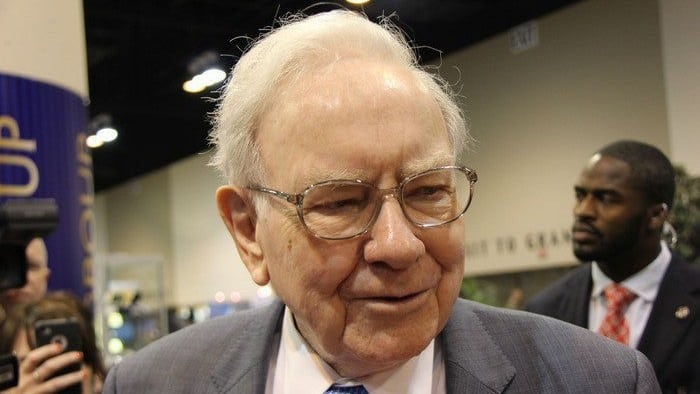
    Legendary share market investing expert and owner of Berkshire Hathaway Warren BuffettLegendary share market investing expert and owner of Berkshire Hathaway Warren BuffettLegendary share market investing expert and owner of Berkshire Hathaway Warren Buffett

    Key points

    • Warren Buffett runs the giant conglomerate Berkshire Hathaway
    • Buffett is well known for his conservative investing style that has given investors decades of compounded returns
    • He was one of the few billionaires that made money last month…

    Warren Buffett has still got it, it seems. As most of us would be aware, last month was not a kind one for ASX shares. The S&P/ASX 200 Index (ASX: XJO) ended up losing more than 6% last month in what was one of the worst January’s ever for ASX shares. The US markets didn’t do any better though. Over January, the S&P 500 Index (INDEXSP: .INX) also had a shocker, falling just over 5%. Both markets would have been a lot worse if it wasn’t for the uptick we saw over the last couple of trading days.

    So with the US markets having a turbulent January, many of the world’s richest people also took haircuts to their net wealth over the month just gone. According to the Bloomberg Billionaires Index, nine out of the top ten richest people in the world saw their wealth go backwards over January. That tenth person was none other than Warren Buffett.

    Yes, January saw everyone from Elon Must, Mark Zuckerberg and Jeff Bezos to Bill Gates, Larry Page and Steve Ballmer lose a significant chunk of change. According to the Index, it was Tesla Inc (NASDAQ: TSLA) CEO Elon Musk whose wealth took the biggest dive though. Over January, Musk saw his fortune shrink by a mind-boggling US$50 billion, leaving him with a fortune ‘only’ worth US$220 billion by the month’s end.

    Bezos saw a US$23.4 billion haircut, while Zuckerberg took a US$12.7 billion hit.

    How did Warren Buffett manage to grow his fortune over January?

    But Warren Buffett managed to grow his net worth by US$4.46 billion to a total of US$113 billion over the month.

    So how did the ‘Oracle of Omaha’ manage to increase his net worth so decisively? Especially when most investors, including his nine compatriots in the top ten list, lost money last month?

    Well, we don’t have to look too far. The vast majority of Mr Buffett’s fortune is tied up in shares of the company he runs, Berkshire Hathaway Inc (NYSE: BRK.A)(NYSE: BRK.B). According to Bloomberg, Buffett owns around 16% of Berkshire, including around 39% of all Class A shares. Class A Berkshire Hathaway shares are today priced at US$469,805 each (not a typo).

    But unlike most shares, Berkshire Hathaway ended up enjoying a very solid January. The shares rose around 3.4% last month. And that is the primary reason Buffett’s net worth followed suit.

    But most of the other billionaires on the list, unlike Buffett, have their fortunes tied up in technology companies. Musk and Bezos have their stakes in Tesla and Amazon.com Inc (NASDAQ: AMZN). While Zuckerberg, Gates and Page have large chunks of Meta Platforms Inc (NASDAQ: FB)Microsoft Corporation (NASDAQ: MSFT) and Alphabet Inc (NASDAQ: GOOG)(NASDAQ: GOOGL) respectively.

    All of these companies took a battering last month, and are the primary reasons why these billionaires saw their fortunes take a commensurate hit.

    Buffett has been ridiculed for many years for not taking larger positions in some of the US’s largest tech companies. Now he’s the one laughing all the way to the bank. 

    The post Warren Buffett actually made money in January. Here’s how appeared first on The Motley Fool Australia.

    Wondering where you should invest $1,000 right now?

    When investing expert Scott Phillips has a stock tip, it can pay to listen. After all, the flagship Motley Fool Share Advisor newsletter he has run for over ten years has provided thousands of paying members with stock picks that have doubled, tripled or even more.*

    Scott just revealed what he believes could be the five best ASX stocks for investors to buy right now. These stocks are trading at near dirt-cheap prices and Scott thinks they could be great buys right now.

    *Returns as of January 12th 2022

    More reading

    John Mackey, CEO of Whole Foods Market, an Amazon subsidiary, is a member of The Motley Fool’s board of directors. Suzanne Frey, an executive at Alphabet, is a member of The Motley Fool’s board of directors. Randi Zuckerberg, a former director of market development and spokeswoman for Facebook and sister to Meta Platforms CEO Mark Zuckerberg, is a member of The Motley Fool’s board of directors. Teresa Kersten, an employee of LinkedIn, a Microsoft subsidiary, is a member of The Motley Fool’s board of directors. Motley Fool contributor Sebastian Bowen owns Alphabet (A shares), Meta Platforms, Inc., and Tesla. The Motley Fool Australia’s parent company Motley Fool Holdings Inc. owns and has recommended Alphabet (A shares), Meta Platforms, Inc., and Microsoft. The Motley Fool Australia has recommended Alphabet (A shares), Alphabet (C shares), Amazon, Berkshire Hathaway (B shares), and Meta Platforms, Inc. The Motley Fool has a disclosure policy. This article contains general investment advice only (under AFSL 400691). Authorised by Bruce Jackson.

    from The Motley Fool Australia https://ift.tt/wHontIKCQ

  • What are brokers saying about the Bubs (ASX:BUB) share price?

    a group of stockbrokers sit in a room with a computer and writing on a wall in chalk indicating calculations and graphs while discussing something on the computer screen.

    a group of stockbrokers sit in a room with a computer and writing on a wall in chalk indicating calculations and graphs while discussing something on the computer screen.a group of stockbrokers sit in a room with a computer and writing on a wall in chalk indicating calculations and graphs while discussing something on the computer screen.

    Key points

    • Bubs delivered a better than expected second quarter update this week
    • Bell Potter and Citi were pleased with its performance
    • Both brokers now have high risk buy ratings on its shares

    The Bubs Australia Ltd (ASX: BUB) share price is out of form on Tuesday.

    In morning trade, the infant formula company’s shares are down 1% to 46.5 cents.

    This is despite a couple of brokers responding positively to Bubs’ second quarter update.

    What are brokers saying about the Bubs share price?

    According to notes out of Bell Potter and Citi, their analysts see value in the Bubs share price at the current level.

    This morning Bell Potter retained its speculative buy rating and lifted its price target by 7.7% to 70 cents. Based on the current Bubs share price, this implies potential upside of 50% for investors over the next 12 months.

    Bell Potter commented: “BUB delivered another strong quarter of growth in 2Q22, which again has been driven in large by the infant nutrition business. Improving secular trade flows to China, continued signs of brand traction and the potential for BUB to benefit in indirect distribution channels as A2M shifts focus to direct China channels, are supportive of our Buy, Speculative risk rating.”

    Whereas Citi has upgraded Bubs’ shares to a high risk buy rating and lifted its price target by 7.9% to 68 cents. This implies potential upside of 46% over the next 12 months.

    Citi believes the improvement in the daigou channel could be a sign of an inflection point being reached after significant weakness over the last couple of years. It also believes “there is scope for further, albeit likely gradual, improvement as borders re-open.”

    Time will tell whether this is a false start or the beginning of the good times.

    The post What are brokers saying about the Bubs (ASX:BUB) share price? appeared first on The Motley Fool Australia.

    Should you invest $1,000 in Bubs right now?

    Before you consider Bubs, you’ll want to hear this.

    Motley Fool Investing expert Scott Phillips just revealed what he believes are the 5 best stocks for investors to buy right now… and Bubs wasn’t one of them.

    The online investing service he’s run for over a decade, Motley Fool Share Advisor, has provided thousands of paying members with stock picks that have doubled, tripled or even more.* And right now, Scott thinks there are 5 stocks that are better buys.

    *Returns as of January 13th 2022

    More reading

    Motley Fool contributor James Mickleboro has no position in any of the stocks mentioned. The Motley Fool Australia’s parent company Motley Fool Holdings Inc. has no position in any of the stocks mentioned. The Motley Fool Australia has recommended BUBS AUST FPO. The Motley Fool has a disclosure policy. This article contains general investment advice only (under AFSL 400691). Authorised by Bruce Jackson.

    from The Motley Fool Australia https://ift.tt/ekwhuOdKE

  • Nufarm (ASX:NUF) share price climbs higher on BP low-carbon fuel deal

    Elders share price Farmer jumping for joy in fieldElders share price Farmer jumping for joy in fieldElders share price Farmer jumping for joy in field

    Key points

    • Nufarm shares on the rise following partnership agreement
    • BP to purchase Nuseed Carinata over the next 10 years
    • Commercial production progressing in several countries

    The Nufarm Ltd (ASX: NUF) share price is heading north on Tuesday morning. This comes after the agricultural chemicals company announced a strategic partnership with BP.

    At the time of writing, Nufarm shares are up 3.15% to $4.59. It’s worth noting that despite today’s rise, the company’s shares have lost almost 6% in value over the past month.

    Nufarm advances on growth plans for Nuseed Carinata

    The Nufarm share price is rising amid hopes the company’s latest news will see penetration into new markets.

    In its release, Nufarm advised it has entered into a long-term strategic offtake and market development agreement with BP.

    This will see BP purchase Nuseed Carinata oil that it plans to process or sell into growing markets to supply sustainable biofuels.

    Nuseed Limited is a wholly-owned subsidiary of Nufarm. Nuseed Carinata is a non-food cover crop, which can be used to produce low-carbon biofuel feedstock. It protects and improves soil between the main crop harvest and the next season’s planting. Replacing fossil fuels with oil reduces emissions, and removes atmospheric carbon while restoring soil carbon.

    Nufarm noted that increased global demand for biofuels is being driven to achieve global greenhouse gas (GHG) reduction targets.

    Under the 10-year deal, BP will compensate Nufarm an agreed sum, along with further payments if certain milestones are met.

    Nuseed is currently increasing commercial production in Argentina and planning expansion programs in South America and the United States. Initial research and market development initiatives are also underway in Europe and Australia.

    Commenting on the deal possibly fuelling the Nufarm share price today, CEO Greg Hunt said:

    Nuseed Carinata is a great example of Nufarm’s approach to developing innovative solutions to support sustainable agriculture. This agreement between Nuseed and bp is validation of Nuseed Carinata’s potential as an advanced, non-food agricultural feedstock for biofuel production.

    As a leading global inputs provider to agriculture, Nufarm is well positioned to help drive and support the expansion of Nuseed’s Carinata platform.

    About the Nufarm share price

    Over the last 12 months, the company’s shares have lost around 6%. The Nufarm share price reached a 52-week high of $5.60 in April, before treading lower.

    Nufarm has a market capitalisation of roughly $1.69 billion, with approximately 379.96 million shares on its books.

    The post Nufarm (ASX:NUF) share price climbs higher on BP low-carbon fuel deal appeared first on The Motley Fool Australia.

    Should you invest $1,000 in Nufarm right now?

    Before you consider Nufarm, you’ll want to hear this.

    Motley Fool Investing expert Scott Phillips just revealed what he believes are the 5 best stocks for investors to buy right now… and Nufarm wasn’t one of them.

    The online investing service he’s run for over a decade, Motley Fool Share Advisor, has provided thousands of paying members with stock picks that have doubled, tripled or even more.* And right now, Scott thinks there are 5 stocks that are better buys.

    *Returns as of January 13th 2022

    More reading

    Motley Fool contributor Aaron Teboneras has no position in any of the stocks mentioned. The Motley Fool Australia’s parent company Motley Fool Holdings Inc. has no position in any of the stocks mentioned. The Motley Fool Australia has no position in any of the stocks mentioned. The Motley Fool has a disclosure policy. This article contains general investment advice only (under AFSL 400691). Authorised by Bruce Jackson.

    from The Motley Fool Australia https://ift.tt/mGvTCL4yB

  • 2 small-cap ASX shares we’ve bet big on: fund manager

    a head shot of gaston amrosa head shot of gaston amrosa head shot of gaston amros

    Ask A Fund Manager

    The Motley Fool chats with fund managers so that you can get an insight into how the professionals think. In this edition, Forager Funds Management senior analyst Gaston Amoros tells why now is the time to buy up small-cap ASX shares.

    Investment style

    The Motley Fool: How would you describe your fund to a potential client?

    Gaston Amros: My name is Gaston Amoros; I’m a senior analyst at Forager Funds Management. Forager Funds Management is a value-oriented funds manager. It’s been around since 2009. 

    Our historical return, or at least the number that I have in my head, is 16% compounded per annum over the last 10 years. And I think that’s around 500 points, so 5% of alpha versus our benchmark. Our benchmark is the All Ordinaries Index (ASX: XAO) and the fund is a listed investment trust in the ASX under the ticker Forager Australian Shares Fund (ASX: FOR).

    In terms of investment philosophy, we typically invest in stocks that are unloved and undervalued. On any given year, the market will present you opportunities, and for some time the opportunities have been typically what people describe as value stocks. These are stocks that have actually rewarded us with the performance that we’ve been harvesting for the past 18 months or last couple of years, I would say.

    We typically go wherever the opportunity is and wherever we see value emerging. That value has worked very well over the last couple of years. We think that now we are starting to see an opening up of opportunities in small-cap growth in particular.

    The other sector that could be interesting is, what people normally describe as COVID beneficiaries that are being thrown out with the proverbial wash water. But I think the one that is more interesting, and that probably I’m hoping that the one that would actually build our returns in the second, over the next couple of years, will be small-cap growth that is now suffering the same fate as some value stocks a few years ago. 

    Biggest convictions

    MF: What are your two biggest holdings?

    GA: Given that we’re talking about that [small-cap] bucket and given that I think it’s where the opportunity is for your readers and where we see the opportunity emerging these days, I think Whispir Ltd (ASX: WSP) would be one of them.

    Whispir is a service platform that helps automate communications workflows with customers or employees via SMS, email, social media posts, etc. They have around 1,000 customers. And they count names that people will be familiar with — like Telstra Corporation Ltd (ASX: TLS), Foxtel, Chemist Warehouse, Australia Post, Qantas Airways Limited (ASX: QAN) and a bunch of others. 

    So someone like Chemist Warehouse, if I remember correctly, they started in 2016 with one use case — particularly it was they were using the Whispir platform for click and collect notifications. I think today there are around 6 use cases, which include COVID vaccinations, e-prescriptions, click and collect, and a few other things. 

    Another customer, for example, [is] the City of Christchurch Council in New Zealand. They use the Whispir platform to coordinate emergency response in the case of earthquakes or in the case of tsunamis. 

    This is time-sensitive, mission-critical communications, either among an employee base, or customers.

    MF: The share price is down more than 40% over the past 12 months, but your team still has plenty of faith in the future?

    GA: We have plenty of faith in the future. It’s one of our largest positions in this sleeve of high-growth companies. We started buying Whispir, I think it was around the middle of the year… entry price was around $2.50. So I think we’re slightly underwater at the moment, but we have a 3-5 year investment horizon, and we’re very confident that we will make more than our fair share over that period of time. 

    Whispir has grown 20%, 30% per annum, historically. They upgraded their FY22 guidance at the time of their AGM. They just reported fiscal Q2. So this is December and they were growing 27% year-on-year. And they added a record number of customers.

    Also, very importantly, in December they announced that transformational deal. They signed Singapore Telecommunications, or Singtel, as a partner in the Asia-Pacific region. So Telstra does the same job for the Whispir here in Australia and New Zealand. 

    Telstra gave them 80% of the revenue that they have in Australia and New Zealand. So if Singtel does anything remotely similar to what Telstra has done for Whispir in Australia, this deal is very transformational. And there isn’t much in people’s numbers for this deal. This is a deal that will start contributing in size from FY23. So what it actually does is de-risks the growth profile. 

    Last but not least, Whispir is traded at around 3 times EV [enterprise value] to revenue. This compares to Xero Limited (ASX: XRO), WiseTech Global Ltd (ASX: WTC), and Altium Limited (ASX: ALU) that are trading between 15 and 20 times EV revenue for a similar growth profile. That gives you an idea of the potential risk-reward here.

    MF: And your other big holding?

    GA: The other one that’s worth mentioning, which is big for us, is Bigtincan Holdings Ltd (ASX: BTH)

    Bigtincan is a leader in sales enablement software. What sales enablement means is essentially a software platform that you deploy either in mobiles or in tablets or in laptops to your salesforce. It does basically 4 things: sales content management, sales training and coaching, document automation, and internal communications. So it’s a bundle. And it integrates to your salesforce.com or to like your SAP or to whatever other ERP or CRM solution people are using. 

    But the important thing to understand is, not all software is created equally. There are software products that insert themselves at the front-end where the revenue is generated for the company, where you get the incremental dollars. And you get software solutions that go in the backend, which are nice to have and they fulfil an important role, but they’re not mission-critical. It’s hard to measure the utility of the backend products, whereas the front end, it’s very clear. Either they’re helping to make more revenue, or they’re not. 

    Bigtincan is one of those that is at the point of vision where the salesforce is actually generating the revenue. You get all that for $7 a pop — basically $7 per user per month. So it’s actually a small investment across a large workforce and the customers are pretty happy. 

    The proof of that is in the fact that it’s been growing ARR [annual recurring revenue] at more than 30% organically over the last few years. The total number is 50% compounded because they’ve been buying and rolling up companies — but their organic growth is north of 30% over the last few years. It’s 97% recurrent revenue. It has pretty interesting unit economics.

    We are very excited — but again, we are a 3-5 year investor. We are very excited about what the future looks like. 

    The post 2 small-cap ASX shares we’ve bet big on: fund manager appeared first on The Motley Fool Australia.

    Wondering where you should invest $1,000 right now?

    When investing expert Scott Phillips has a stock tip, it can pay to listen. After all, the flagship Motley Fool Share Advisor newsletter he has run for over ten years has provided thousands of paying members with stock picks that have doubled, tripled or even more.*

    Scott just revealed what he believes could be the five best ASX stocks for investors to buy right now. These stocks are trading at near dirt-cheap prices and Scott thinks they could be great buys right now.

    *Returns as of January 12th 2022

    More reading

    Motley Fool contributor Tony Yoo owns Whispir Ltd and Xero. The Motley Fool Australia’s parent company Motley Fool Holdings Inc. owns and has recommended Altium, BIGTINCAN FPO, Whispir Ltd, WiseTech Global, and Xero. The Motley Fool Australia owns and has recommended Telstra Corporation Limited, WiseTech Global, and Xero. The Motley Fool Australia has recommended BIGTINCAN FPO and Whispir Ltd. The Motley Fool has a disclosure policy. This article contains general investment advice only (under AFSL 400691). Authorised by Bruce Jackson.

    from The Motley Fool Australia https://ift.tt/NZSGiqcpY

  • ‘We see CBA (ASX:CBA) underperforming’: Why this broker is avoiding Commonwealth Bank in 2022

    A man sitting at his dining table looking at laptop pondering which shares to buyA man sitting at his dining table looking at laptop pondering which shares to buyA man sitting at his dining table looking at laptop pondering which shares to buy

    The Commonwealth Bank of Australia (ASX: CBA) share price opened the session down on Tuesday. At the time of writing, CBA shares are $93.66 each, less than 0.1% below yesterday’s closing price of $93.74.

    The CBA share price has been on a fairly bumpy ride these past few months, having collapsed from a closing high of $110.13 back in November.

    Since then, the bank’s shares hit a bottom of $93 in December and made an attempt at recovery. They peaked at $103 before tumbling once more. As of today, the CBA share price is now trading at 6-month lows.

    Certainly, the team at JP Morgan are cautious about the CBA share price. Its analysts prefer other names in the ASX banking universe.

    The broker is bearish on its outlook for CBA. In a recent note, it urges its clients to sell CBA shares or at least remain underweight in their portfolio allocations. Let’s take a look.

    Why is JP Morgan underweight on CBA?

    Analysts at the investment bank are bearish on CBA given its outlook relative to the other major banks. The broker reckons whilst revenue will be strong, variable costs could offset the carry-through to profit.

    “We forecast revenue growth to be towards the top end of peers in FY23/24; however ongoing cost investment will likely cap pre-provision profit growth to similar levels to the other majors,” the broker said.

    JP Morgan estimates a net interest income of $19.1 billion in FY22 and $19.55 billion in FY23, representing a 2.35% year on year growth.

    At the same time, however, the broker sees this carrying through to just $9.11 billion in cash net profit after tax (NPAT) in FY22, then decreasing to $9 billion cash NPAT in FY23. That’s a decrease of 1.2% over the year.

    The broker also reckons that CBA’s net interest margin (NIM) will contract over the coming years – in line with other banks – decreasing from 2.03% in FY21 to 1.87% In FY22. It also expects a further drop to 1.8% in FY23.

    Not only that, the bank’s capital position, a smaller size than its peers, is also a risk to the company’s earnings outlook in 2022.

    “Further capital management is likely in FY23, supported by its residual franking balance,” the broker said. “However, the surplus capital position is smaller than peers on a market-cap adjusted basis.”

    As such, JP Morgan reckons CBA will touch $90 per share by December. Its valuation reflects the present value of dividends paid to shareholders through to FY24 and the present value of “a multiple of FY24E tangible book value”.

    At the time of writing, this implies a downside potential of around 3% or approximately $3.50 per share.

    “Given these factors, we see CBA underperforming our coverage universe,” the broker said.

    CBA share price summary

    In the last 12 months, the CBA share price has held gains and climbed more than 10% in that time.

    This year to date, things aren’t so rosy with the CBA share price slipping into the red. It’s down almost 8% since January 1 after tanking 4% this past week.

    The chart below shows CBA’s performance against the other Australian majors in the last 12 months.

    TradingView Chart

    The post ‘We see CBA (ASX:CBA) underperforming’: Why this broker is avoiding Commonwealth Bank in 2022 appeared first on The Motley Fool Australia.

    Should you invest $1,000 in Commonwealth Bank of Australia right now?

    Before you consider Commonwealth Bank of Australia, you’ll want to hear this.

    Motley Fool Investing expert Scott Phillips just revealed what he believes are the 5 best stocks for investors to buy right now… and Commonwealth Bank of Australia wasn’t one of them.

    The online investing service he’s run for over a decade, Motley Fool Share Advisor, has provided thousands of paying members with stock picks that have doubled, tripled or even more.* And right now, Scott thinks there are 5 stocks that are better buys.

    *Returns as of January 13th 2022

    More reading

    Motley Fool contributor Zach Bristow has no position in any of the stocks mentioned. The Motley Fool Australia’s parent company Motley Fool Holdings Inc. has no position in any of the stocks mentioned. The Motley Fool Australia has no position in any of the stocks mentioned. The Motley Fool has a disclosure policy. This article contains general investment advice only (under AFSL 400691). Authorised by Bruce Jackson.

    from The Motley Fool Australia https://ift.tt/d4kqXg5wI

  • Novonix (ASX:NVX) share price surges 5% on finalised US investment and supply agreement

    a smiling woman holds an arm in the air as she holds a fully-charged battery symbol with her other hand.a smiling woman holds an arm in the air as she holds a fully-charged battery symbol with her other hand.a smiling woman holds an arm in the air as she holds a fully-charged battery symbol with her other hand.

    Key points

    • The Novonix share price is currently soaring 5%, trading at $7.87
    • The gain follows news of a completed supply agreement with US battery cell developer, KORE Power
    • Novonix has also taken a 5% stake in KORE Power

    The Novonix Ltd (ASX: NVX) share price is taking off after the company announced that its signed and sealed a supply agreement with, and investment in, battery cell developer KORE Power.

    Under the agreement, Novonix will be KORE Power’s only graphite anode material supplier. It has also taken a 5% stake in the company.

    At the time of writing, the Novonix share price is $7.87, 4.93% higher than its previous close.

    Though, that’s lower than its intraday high of $8.14, which represented an 8.5% gain.

    Let’s take a closer look at today’s news from the battery technology company.

    What’s boosting the Novonix share price?

    Tuesday is proving to be a good day for the Novonix share price. That’s despite the market reacting poorly to the company’s initial announcement of its deal with KORE Power.

    This time last week, the company’s stock was tumbling – eventually closing 7.5% lower – after it announced its intent to undergo the agreement that was finalised today.

    Novonix will initially supply KORE Power with 3,000 tonnes of graphite anode material each year for 5 years, beginning in 2024.

    That supply has the potential to increase to 12,000 tonnes of anode material each year by 2027, subject to demand.

    It’s the first significant offtake agreement Novonix has entered as it expanded its production capacity at the new Riverside facility.  

    Additionally, Novonix has taken a 5% stake in KORE Power – paying US$7.50 apiece for around 3.33 million shares in the battery cell developer.

    That brings its total investment to US$25 million. Half of the holding was paid for in cash while the other half was paid via script.

    Speaking on the supply agreement and investment, Novonix co-founder and CEO, Dr Chris Burns commented:

    More than ever, the United States and its neighbours are realising the importance of building a sustainable and energy secure future. Our partnership with KORE Power is a testament to our commitment on executing on our phased growth plan and bringing large-scale production of high-performance battery synthetic graphite to the United States.

    The post Novonix (ASX:NVX) share price surges 5% on finalised US investment and supply agreement appeared first on The Motley Fool Australia.

    Should you invest $1,000 in Novonix right now?

    Before you consider Novonix, you’ll want to hear this.

    Motley Fool Investing expert Scott Phillips just revealed what he believes are the 5 best stocks for investors to buy right now… and Novonix wasn’t one of them.

    The online investing service he’s run for over a decade, Motley Fool Share Advisor, has provided thousands of paying members with stock picks that have doubled, tripled or even more.* And right now, Scott thinks there are 5 stocks that are better buys.

    *Returns as of January 13th 2022

    More reading

    Motley Fool contributor Brooke Cooper has no position in any of the stocks mentioned. The Motley Fool Australia’s parent company Motley Fool Holdings Inc. has no position in any of the stocks mentioned. The Motley Fool Australia has no position in any of the stocks mentioned. The Motley Fool has a disclosure policy. This article contains general investment advice only (under AFSL 400691). Authorised by Bruce Jackson.

    from The Motley Fool Australia https://ift.tt/bKnuRalgH

  • Treasury Wine (ASX:TWE) share price lifts amid latest tariff battle

    Couple look at a bottle of wine while trying to decide what to buy.Couple look at a bottle of wine while trying to decide what to buy.Couple look at a bottle of wine while trying to decide what to buy.

    The Treasury Wine Estates Ltd (ASX: TWE) share price is up 1.79% in early trade to $10.79 per share.

    This comes as the company lobbies the United Kingdom to rethink the nation’s proposed new tax system impacting wine imports.

    Why is the UK’s new import tax regime of concern?

    The Treasury Wine share price could come under renewed pressure if the UK doesn’t amend its new tax regime on imported alcoholic drinks.

    Treasury Wine, which supplies the lion’s share of imported Aussie wine to the UK market, has warned that the new tax system will negate any hoped-for benefits achieved by the free trade agreement.

    As The Australian reports, Treasury Wine’s CEO Tim Ford has written a submission to the UK government saying he supports their efforts to simplify the nation’s complex alcohol import taxes. But he notes that the current regime will unfairly hit Australian wines.

    That’s because the import taxes will rise on wine (and other drinks) with an alcohol content of more than 11.5%. And more than half of Treasury Wine’s products have alcohol contents in the range of 12-15%. Most European wines, on the other hand, fall below the 11.5% threshold.

    The UK’s import duties will also rise with each 0.5% increase in alcohol content. Ford says this narrow range should be expanded to 1.0% as Australian wines tend to have a significant alcohol content variance depending on environmental conditions.

    In Ford’s submission he writes (quoted by The Australian):

    Environmental conditions largely determine alcohol content in wine and are not readily modified after grapes are harvested. Hence, unlike some other beverage types that can innovate towards lower alcohol content, an increased duty burden placed on higher alcohol still wines [is] inherently a tax unavoidably borne by Australian producers…

    TWE believes that further work needs to be done to modify the proposed new duty tax system to ensure that non-tariff, ‘behind the border’ measures do not distort the impact from the reduction in tariffs and retail prices that would result from A-UKFTA’s introduction.

    The UK is the biggest importer of Aussie wines.

    Treasury Wine share price snapshot

    The Treasury Wine share price is down around 14% so far in 2022. This trails the 8% year-to-date loss posted by the S&P/ASX 200 Index (ASX: XJO).

    Over the past 12 months, Treasury Wine shares are up 9%.

    The post Treasury Wine (ASX:TWE) share price lifts amid latest tariff battle appeared first on The Motley Fool Australia.

    Should you invest $1,000 in Treasury Wine right now?

    Before you consider Treasury Wine, you’ll want to hear this.

    Motley Fool Investing expert Scott Phillips just revealed what he believes are the 5 best stocks for investors to buy right now… and Treasury Wine wasn’t one of them.

    The online investing service he’s run for over a decade, Motley Fool Share Advisor, has provided thousands of paying members with stock picks that have doubled, tripled or even more.* And right now, Scott thinks there are 5 stocks that are better buys.

    *Returns as of January 13th 2022

    More reading

    The Motley Fool Australia’s parent company Motley Fool Holdings Inc. has no position in any of the stocks mentioned. The Motley Fool Australia has recommended Treasury Wine Estates Limited. The Motley Fool has a disclosure policy. This article contains general investment advice only (under AFSL 400691). Authorised by Bruce Jackson.

    from The Motley Fool Australia https://ift.tt/bk35sXQUL