Tag: Motley Fool

  • Amazon challenges SpaceX in space

    This article was originally published on Fool.com. All figures quoted in US dollars unless otherwise stated.

    three children wearing athletic short and singlets stand side by side on a running track wearing medals around their necks and standing with their hands on their hips.

    This article was originally published on Fool.com. All figures quoted in US dollars unless otherwise stated.

    Amazon (NASDAQ: AMZN) announced in November that — at long last — it’s getting ready to roll out its Project Kuiper initiative to provide broadband internet service via satellite.  

    And yes, I said Amazon — not SpaceX.

    We’re No. 2! We’re No. 2!

    Thanks to the popularity of Starlink, satellite-provided broadband internet has become an idea most closely associated with SpaceX, not Amazon. In the six years since SpaceX announced plans to put a constellation of 12,000 Starlink satellites in orbit, and in the year and a half since it began opening up Starlink for beta service, Starlink has put about 1,800 operational satellites in orbit and expanded its footprint to 25 countries — and 145,000 customers — receiving satellite internet service. Starlink has progressed toward its goals so far that SpaceX has already begun talking about IPOing its subsidiary.    

    In contrast, Amazon currently has zero satellites in orbit and plans to launch just two this year. But just because it’s far behind SpaceX in this race doesn’t mean Amazon has abandoned its intention to compete.

    In its most recent announcement, Amazon says it plans to deploy its first two internet satellites — KuiperSat-1 and KuiperSat-2 — in Q4 2022. Although equipped with “parabolic antennas, power and propulsion systems, and custom-designed modems,” these first two satellites will not offer any internet service. Rather, Amazon says it will use them just to “test the communications and networking technology that will be used in our final satellite design, and help us validate launch operations and mission management procedures.”

    That accomplished, both satellites will be deorbited and allowed to burn up in Earth’s atmosphere.

    A curious route to space

    But how does Amazon even propose to get KuiperSat-1 and 2 into orbit in the first place?

    Funny you should ask. In addition to the airplanes, trucks, and delivery vans it uses to move packages around the globe, Amazon also shares a founder — Jeff Bezos — with the space company Blue Origin, which has proposed building a large, orbital-class rocket called the New Glenn that would seem ideal for putting Amazon’s satellites into orbit. And yet Amazon made no mention of New Glenn in its recent announcement. Instead, Amazon says it will use RS1 rockets from start-up rocket-maker ABL Space Systems.

    This is curious because ABL Space, like Blue Origin, has never flown a rocket to orbit. Indeed, like Blue Origin itself, ABL is scheduled to make its first orbital launch attempt later this year. (When you consider that Blue Origin has flown multiple suborbital flight tests, in fact, you could even argue that Blue Origin is closer to orbital spaceflight than ABL).

    And yet Amazon is choosing not only to fly its satellites to space with ABL instead of Blue Origin but to establish “a long-term relationship together” with ABL. Very interesting.

    Can Amazon ever catch up to SpaceX?

    Call me a skeptic, but when I consider the lead SpaceX Starlink has over Project Kuiper and how little confidence Amazon seems to be placing in Blue Origin’s ability to put its KuiperSats in orbit, I have to wonder if Project Kuiper is really nothing but a pipe dream.

    Amazon’s choice of ABL’s rocket over Blue Origin’s New Glenn is my first reason for skepticism. Blue Origin’s troubles getting its BE-4 rocket engine (the one that will power New Glenn) ready for operation are well known at this point. And now Amazon’s decision to use ABL’s rocket rather than wait for one from Blue Origin suggests that BE-4 may be even farther behind schedule than is commonly understood.

    If Amazon cannot depend upon Blue Origin’s rockets to deploy Project Kuiper, that will create even more significant problems for Amazon. You see, in 2019, Amazon told the Federal Communications Commission that it will cost “more than $10 billion” to build Project Kuiper and orbit its planned 3,236 satellites. Similarly, SpaceX plans to spend “as much as $10 billion” to create Starlink — and yet, $10 billion will buy SpaceX nearly four times as many satellites — namely, 12,000.   

    Why is that? Well, when SpaceX sends Starlink satellites to orbit, they ride atop SpaceX rockets. Thus, one half of SpaceX’s business subsidizes the other half. But because Blue Origin can’t get its rockets ready for prime time (pun intended), Amazon must hire somebody else to launch its satellites at a presumably higher cost than if it could use New Glenn rockets to launch Project Kuiper.

    This all seems to add up to an insurmountable business advantage SpaceX has over its rival — one that will give Starlink’s profit margins an edge over Project Kuiper’s (if the latter ever gets operational) and one that may even make Project Kuiper so un-profitable as to doom the entire operation.

    Sad to say, it looks like Amazon lost this space race before it even began. 

    This article was originally published on Fool.com. All figures quoted in US dollars unless otherwise stated.

    The post Amazon challenges SpaceX in space appeared first on The Motley Fool Australia.

    Should you invest $1,000 in Amazon right now?

    Before you consider Amazon, you’ll want to hear this.

    Motley Fool Investing expert Scott Phillips just revealed what he believes are the 5 best stocks for investors to buy right now… and Amazon wasn’t one of them.

    The online investing service he’s run for over a decade, Motley Fool Share Advisor, has provided thousands of paying members with stock picks that have doubled, tripled or even more.* And right now, Scott thinks there are 5 stocks that are better buys.

    *Returns as of January 13th 2022

    More reading

    Rich Smith has no position in any of the stocks mentioned.  John Mackey, CEO of Whole Foods Market, an Amazon subsidiary, is a member of The Motley Fool’s board of directors. The Motley Fool Australia’s parent company Motley Fool Holdings Inc. owns and recommends Amazon. The Motley Fool Australia has recommended Amazon. The Motley Fool has a disclosure policy. This article contains general investment advice only (under AFSL 400691). Authorised by Bruce Jackson.

    This article was originally published on Fool.com. All figures quoted in US dollars unless otherwise stated.

    from The Motley Fool Australia https://ift.tt/3fwSqdy
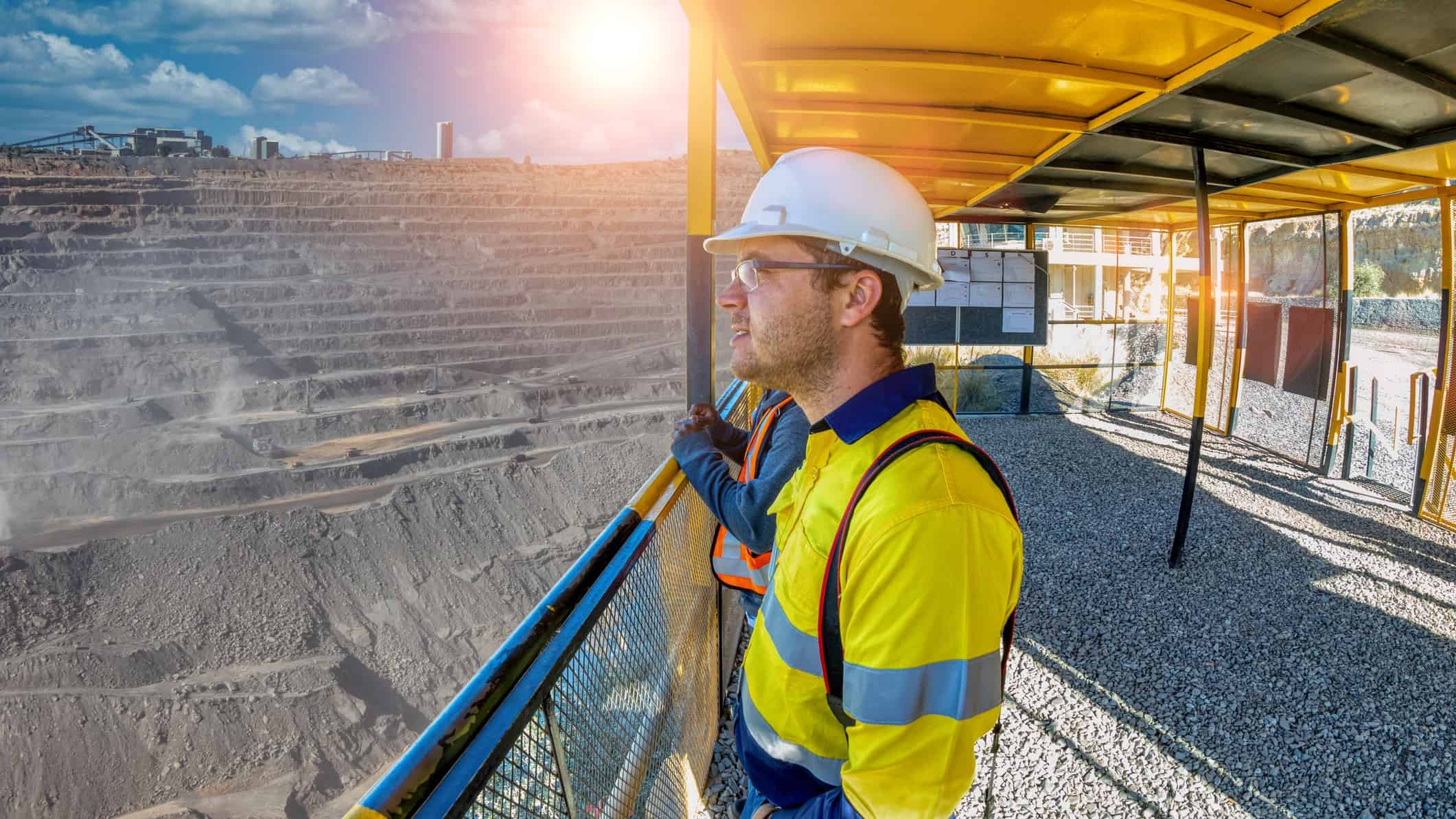
  • South32 (ASX:S32) share price lower despite ‘next generation mine’ update

    A mining worker wearing a white hardhat stands on a platform overlooking a huge coal mine

    A mining worker wearing a white hardhat stands on a platform overlooking a huge coal mineA mining worker wearing a white hardhat stands on a platform overlooking a huge coal mine

    Key points

    • South32 has completed the pre-feasibility study of its Taylor Deposit
    • Results show potential for Taylor to be a multi-decade operation through its zinc-lead-silver underground mine
    • Operation will leverage automation and technology to be carbon neutral

    In morning trade, the South32 Ltd (ASX: S32) share price is edging lower on Monday.

    At the time of writing, the mining giant’s shares are down 0.5% to $4.15.

    Why is the South32 share price falling?

    The South32 share price is falling on Monday after weakness in the materials sector offset an announcement relating to its Hermosa project in the United States.

    According to the release, the company has completed its pre-feasibility study (PFS) for the Taylor Deposit at the 100% owned Hermosa project in Arizona.

    Pleasingly, the PFS support Taylor’s potential to be the first development of a multi-decade operation aiming to establish Hermosa as a globally significant producer of metals critical to a low carbon future and delivering attractive returns over multiple stages.

    The release notes that an initial development case demonstrates a sustainable, highly productive zinc-lead-silver underground mine and conventional process plant, in the first quartile of the industry cost curve.

    As a result, the Taylor Deposit will now progress to a feasibility study, including work streams designed to unlock additional value. This will be by optimising operating and capital costs, extending the life of the resource, and the further assessment of options identified to target a carbon neutral operation. Completion of the feasibility study and a final investment decision to construct Taylor are expected in mid 2023.

    “An important first development option”

    South32’s Chief Executive Officer, Graham Kerr, said: “The Taylor Deposit provides an important first development option for our Hermosa project in Arizona, USA. The project has the potential to sustainably produce the metals critical for a low carbon future across multiple decades from different deposits.”

    “Completing the pre-feasibility study for the Taylor Deposit is an important milestone that demonstrates its potential to be a globally-significant and sustainable producer of base and precious metals in the industry’s first cost quartile. Beyond Taylor, [the] Clark [depost] offers the potential to realise further value from our investment in Hermosa through the production of battery-grade manganese, a mineral designated as critical in the United States.”

    Mr Kerr also revealed that the company intends for the Taylor Deposit operation to leverage automation and other technologies in order to be carbon neutral.

    He explained: “We are designing the Taylor Deposit to be our first ‘next generation mine’, using automation and technology to minimise our impact on the environment and to target a carbon neutral operation in line with our goal of achieving net zero operational carbon emissions by 2050.”

    The post South32 (ASX:S32) share price lower despite ‘next generation mine’ update appeared first on The Motley Fool Australia.

    Should you invest $1,000 in South32 right now?

    Before you consider South32, you’ll want to hear this.

    Motley Fool Investing expert Scott Phillips just revealed what he believes are the 5 best stocks for investors to buy right now… and South32 wasn’t one of them.

    The online investing service he’s run for over a decade, Motley Fool Share Advisor, has provided thousands of paying members with stock picks that have doubled, tripled or even more.* And right now, Scott thinks there are 5 stocks that are better buys.

    *Returns as of January 13th 2022

    More reading

    Motley Fool contributor James Mickleboro has no position in any of the stocks mentioned. The Motley Fool Australia’s parent company Motley Fool Holdings Inc. has no position in any of the stocks mentioned. The Motley Fool Australia has no position in any of the stocks mentioned. The Motley Fool has a disclosure policy. This article contains general investment advice only (under AFSL 400691). Authorised by Bruce Jackson.

    from The Motley Fool Australia https://ift.tt/3A6RZzO

  • Wesfarmers (ASX:WES) share price higher despite guiding to first half profit decline

    asx retail shares represented by woman carrying shopping bags riding up escalator

    asx retail shares represented by woman carrying shopping bags riding up escalatorasx retail shares represented by woman carrying shopping bags riding up escalator

    Key points

    • Wesfarmers’ Kmart Group had a poor half and expects to report the more the halving of its earnings.
    • Bunnings and its chemicals businesses have performed well and offset some of this weakness
    • Wesfarmers expects its half year profit to be down 12.5% to 16.5%

    The Wesfarmers Ltd (ASX: WES) share price is pushing higher on Monday morning.

    In early trade, the conglomerate’s shares are up almost 2% to $54.95.

    Why is the Wesfarmers share price rising?

    The Wesfarmers share price is pushing higher today following the release of an update on its performance during the first half. While the update reveals that the company has had a difficult period, it was still broadly in line with what the market was expecting.

    According to the release, for the six months ended 31 December, Wesfarmers expects to deliver a net profit after tax result in line with current consensus expectations at between $1,180 and $1,240 million. This represents a decline of 12.5% to 16.5% over the prior corresponding period’s net profit after tax of $1,414 million.

    Management advised that this result reflects pleasing results from its Bunnings and Wesfarmers Chemicals, Energy & Fertilisers business, which partially offset weak results from Kmart Group and Officeworks. The latter businesses were impacted by COVID-related disruptions and costs.

    Kmart Group disappoints

    The main drag on the company’s performance during the first half was its Kmart Group business.

    This was due to a 10.3% decline in Kmart and Target sales and just 1% sales growth from its Catch business. The latter could have consequences for the Kogan.com Ltd (ASX: KGN) share price today.

    Management explained that Kmart and Target were significantly impacted by COVID-19 restrictions, with almost 25% of store trading days lost due to government-mandated closures. This led to combined half year earnings before tax (EBT) for Kmart and Target falling to between $215 million and $223 million. Things were even worse for the Catch business, which is expecting to post a loss of between $45 million and $43 million for the half.

    As a result, the Kmart Group business is expected to see its first half EBT more than halve to between $170 million and $180 million from $487 million a year earlier.

    In respect to current trading, management advised that conditions remain tough due to rising Omicron cases. It explained that retail trading conditions weakened in the last two weeks of the 2021 and customer traffic to stores has remained subdued during the first half of January.

    Further details will be provided to the market next month with the release of its audited half year results.

    The post Wesfarmers (ASX:WES) share price higher despite guiding to first half profit decline appeared first on The Motley Fool Australia.

    Should you invest $1,000 in Wesfarmers right now?

    Before you consider Wesfarmers, you’ll want to hear this.

    Motley Fool Investing expert Scott Phillips just revealed what he believes are the 5 best stocks for investors to buy right now… and Wesfarmers wasn’t one of them.

    The online investing service he’s run for over a decade, Motley Fool Share Advisor, has provided thousands of paying members with stock picks that have doubled, tripled or even more.* And right now, Scott thinks there are 5 stocks that are better buys.

    *Returns as of January 13th 2022

    More reading

    Motley Fool contributor James Mickleboro has no position in any of the stocks mentioned. The Motley Fool Australia’s parent company Motley Fool Holdings Inc. has no position in any of the stocks mentioned. The Motley Fool Australia owns and has recommended Wesfarmers Limited. The Motley Fool has a disclosure policy. This article contains general investment advice only (under AFSL 400691). Authorised by Bruce Jackson.

    from The Motley Fool Australia https://ift.tt/3KjxXXC

  • Does the BHP London share price perform the same as the company’s ASX:BHP listing?

    a man in a hard hat and checkered shirt holds paperwork in one hand as he holds his hands upwards in an enquiring manner as though asking a question or exasperated by uncertainty.a man in a hard hat and checkered shirt holds paperwork in one hand as he holds his hands upwards in an enquiring manner as though asking a question or exasperated by uncertainty.a man in a hard hat and checkered shirt holds paperwork in one hand as he holds his hands upwards in an enquiring manner as though asking a question or exasperated by uncertainty.

    Key points

    • BHP is working to unite its global listings by fusing its Australian and London entities
    • The BHP London share price has significantly outperformed its Australian counterpart recently, but BHP’s ASX stock has the long-term lead.
    • The differing performances could be explained by currency fluctuations and franking credits

    Those interested in the BHP Group Ltd (ASX: BHP) share price will likely be aware of the company’s plan to fuse with its London-listed counterpart BHP Group PLC (LON: BHP).

    Currently, BHP is run as 2 separate companies with different legal structures and share registries.

    As part of its unification, shareholders of BHP Plc will have their holdings swapped for BHP Ltd shares.

    However, some might be surprised to learn the BHP London share price has outperformed that of its Australian counterpart recently.

    Let’s take a closer look at which side of the company has been delivering greater returns for shareholders.

    Why has the BHP London share price outperformed its ASX counterpart?

    The BHP share price had a shocking year on the ASX in 2021. It fell 2% over the 12 months ended 31 December.

    Meanwhile, the BHP London share price gained 14% last year.

    Though, ASX investors will be happy to know BHP’s Australian listing has outperformed over the last 5 years.

    Its shares’ value increased 77% over that period, while BHP Plc’s shares gained 65%.

    For context, the S&P/ASX 200 Index (ASX: XJO) gained 13% in 2021 and 30% over the last 5 years.

    According to WaveStone Capital senior investment analyst Duncan Simmonds, the differences in the stocks’ performance is likely due to currency fluctuations and franking credits.

    Simmonds told Livewire the value of the United States dollar over both the British pound and the Australian dollar impacts expectations of BHP’s future cash flows, as the company reports in US dollars.

    Additionally, while the two entities’ shareholders receive identical dividends, franking credits are only available for Australian tax residents. Simmonds stated:

    Assuming 50% of the Ltd shareholders value the franking credits and using consensus dividend estimates, we estimate the premium for Ltd over Plc should be around 15-16%.

    According to BHP, the unification of its London and Australian entities is expected to go ahead later this month. No doubt, many will be watching the BHP share price in the meantime and – if all goes to plan – in its wake.

    The post Does the BHP London share price perform the same as the company’s ASX:BHP listing? appeared first on The Motley Fool Australia.

    Should you invest $1,000 in BHP Group right now?

    Before you consider BHP Group, you’ll want to hear this.

    Motley Fool Investing expert Scott Phillips just revealed what he believes are the 5 best stocks for investors to buy right now… and BHP Group wasn’t one of them.

    The online investing service he’s run for over a decade, Motley Fool Share Advisor, has provided thousands of paying members with stock picks that have doubled, tripled or even more.* And right now, Scott thinks there are 5 stocks that are better buys.

    *Returns as of January 13th 2022

    More reading

    Motley Fool contributor Brooke Cooper has no position in any of the stocks mentioned. The Motley Fool Australia’s parent company Motley Fool Holdings Inc. has no position in any of the stocks mentioned. The Motley Fool Australia has no position in any of the stocks mentioned. The Motley Fool has a disclosure policy. This article contains general investment advice only (under AFSL 400691). Authorised by Bruce Jackson.

    from The Motley Fool Australia https://ift.tt/3Ic35Xm

  • Why is the Step One (ASX:STP) share price racing higher?

    a man looks down at his phone with a look of happy surprise on his face as though he is thrilled with good news.

    a man looks down at his phone with a look of happy surprise on his face as though he is thrilled with good news.a man looks down at his phone with a look of happy surprise on his face as though he is thrilled with good news.

    Key points

    • Step One has launched its first women’s product
    • 40% of purchases are made by female customers
    • Launch driven by strong demand for women’s products

    The Step One Clothing Ltd (ASX: STP) share price is on the move on Monday morning.

    At the time of writing, the underwear retailer’s shares are up 4% to $1.39.

    Why is the Step One share price rising today?

    Investors have been bidding the Step One share price higher today following the release of an announcement which reveals the company’s expansion into the women’s underwear market.

    According to the release, Step One has expanded its product range following significant demand from its female customers. Management notes that approximately 40% of its existing customers are women and they have been requesting similar products for themselves.

    The release notes that the initial product line is a boxer short style, which has been tailored specifically for women after feedback and testing by existing Step One female customers. It features organic bamboo fabric to manage sweat, the signature Step One UltraGlyde panels to combat chafing, and a soft and comfortable waistband for all day use.

    The women’s product is priced at the same level as the equivalent men’s product, with volume discounts applicable on larger cart sizes. It has now launched in Australia and the United Kingdom, with a launch in the USA coming later in 2022.

    Step One’s Founder and CEO, Greg Taylor, commented: “I am very excited that Step One has launched its Women’s line, a key deliverable in our growth strategy to develop complementary product adjacencies. I would like to take the opportunity to express gratitude to our many loyal female customers who not only insisted on a Women’s line but also participated in its design and testing. I am thrilled that we are continuing to disrupt the innerwear industry by offering women an innovative innerwear solution to help them feel their best every day.”

    The post Why is the Step One (ASX:STP) share price racing higher? appeared first on The Motley Fool Australia.

    Should you invest $1,000 in Step One right now?

    Before you consider Step One, you’ll want to hear this.

    Motley Fool Investing expert Scott Phillips just revealed what he believes are the 5 best stocks for investors to buy right now… and Step One wasn’t one of them.

    The online investing service he’s run for over a decade, Motley Fool Share Advisor, has provided thousands of paying members with stock picks that have doubled, tripled or even more.* And right now, Scott thinks there are 5 stocks that are better buys.

    *Returns as of January 13th 2022

    More reading

    Motley Fool contributor James Mickleboro has no position in any of the stocks mentioned. The Motley Fool Australia’s parent company Motley Fool Holdings Inc. has no position in any of the stocks mentioned. The Motley Fool Australia has no position in any of the stocks mentioned. The Motley Fool has a disclosure policy. This article contains general investment advice only (under AFSL 400691). Authorised by Bruce Jackson.

    from The Motley Fool Australia https://ift.tt/3I7VlFK

  • Will the price of gold make a comeback this year?

    golden hawk flying high in the skygolden hawk flying high in the skygolden hawk flying high in the sky

    Key Points

    • Spot price of gold hovering around using $1,800 an ounce
    • Disconnection from current market factors to gold price
    • Demand for the precious metal expected to surge

    The price of gold has failed to live up to investor expectations over the course of 2021. The yellow metal is traditionally seen as a safe haven when markets are in panic mode.

    Yet, during COVID-19, the spot price of gold has travelled sideways to trade under US$1,850 per ounce. It was only for a brief movement in May 2021, that the gold price hit above the US$1,900 mark.

    At the time of writing, the price of gold is fetching for US$1,826.48 per ounce. This means that the precious metal has lost 1.22% since this time last year.

    What’s weighing down the price of gold?

    If history is anything to go by, gold should be gleaming to record highs today.

    Rising inflation amid the lowest interest rates the world has seen, and the economic downfall from COVID-19 should be valid reasons. However, the price of gold has remained relatively steady for the past 18 months.

    In today’s environment, investing in gold is done without acquiring physical bullion due to delivery and storage costs.

    As such, commodity futures exchange offer ‘unallocated’ gold to investors. This means that the precious metal remains the property of the bank, but the investor is essentially a creditor to the bank.

    On the other hand, ‘allocated’ gold enables financial institutions like banks to place leveraged bets on the future price of these metals.

    With a minuscule amount of gold products traded daily on financial exchanges, physical bullion has lost interest among investors. That has forced gold mining companies and investors to accept the futures price for their physical bullion transactions.

    The large increase in trading of futures and options contracts is being blamed for holding back the price of gold.

    Is a comeback on the cards?

    Each year, global gold mining adds around 2,500-3,000 tonnes to the overall above-ground stock of gold. While gold production has shown an upward trend in recent years, this is likely to level off in the future.

    Mine production accounts around 75% of the total gold supply each year. However, annual demand has outpaced how much gold is being produced.

    Jewellery accounts for the largest slice of global gold demand at around 50%. This is followed by central bank reserves at 25%, individuals at 15% and industrial uses at 10%.

    Consumer demand led by gold jewellery has risen strongly in recent times, particularly across emerging markets. Nonetheless, recovering demand for gold jewellery could help push the price of gold higher.

    In addition, new global banking rules could spark fresh interest from investors in owning bullion should inflation continue to soar.

    The post Will the price of gold make a comeback this year? appeared first on The Motley Fool Australia.

    Should you invest $1,000 in Gold right now?

    Before you consider Gold, you’ll want to hear this.

    Motley Fool Investing expert Scott Phillips just revealed what he believes are the 5 best stocks for investors to buy right now… and Gold wasn’t one of them.

    The online investing service he’s run for over a decade, Motley Fool Share Advisor, has provided thousands of paying members with stock picks that have doubled, tripled or even more.* And right now, Scott thinks there are 5 stocks that are better buys.

    *Returns as of January 13th 2022

    More reading

    Motley Fool contributor Aaron Teboneras has no position in any of the stocks mentioned. The Motley Fool Australia’s parent company Motley Fool Holdings Inc. has no position in any of the stocks mentioned. The Motley Fool Australia has no position in any of the stocks mentioned. The Motley Fool has a disclosure policy. This article contains general investment advice only (under AFSL 400691). Authorised by Bruce Jackson.

    from The Motley Fool Australia https://ift.tt/3IbBipT

  • Why has the Regis Resources (ASX:RRL) share price risen 10% in a week?

    two smiling men in high visibility vests and miners helmets stand side by side with a large mound of earth and mining equipment behind them.two smiling men in high visibility vests and miners helmets stand side by side with a large mound of earth and mining equipment behind them.two smiling men in high visibility vests and miners helmets stand side by side with a large mound of earth and mining equipment behind them.

    Key Points

    • Regis share price up 10% since last Tuesday
    • Investor appear to have found the bottom of the company’s shares
    • Non-executive director decides to depart the company

    The Regis Resources Limited (ASX: RRL) share price has been travelling higher over the past week. This comes despite the company providing a shock announcement regarding a resignation from a board member on Friday.

    At market close, the gold miner’s shares finished down 0.25% to $1.995.

    Why are Regis shares on the rebound?

    It appears investors believe that the worst is behind the company now, sending the Regis share price higher last week.

    After hitting a multi-year low of $1.665 on 3 December, Regis shares broke the negative trend to surge higher.

    The relative strength index (RSI) fell to a lowly 24, indicating that the company’s shares were oversold. This may have spurred investors to take advantage of the share price weakness which attracted buyers to the market.

    If the company’s shares can break above the psychological barrier of $2, then further gains could await investors. Currently, there is a support level at $1.90 in place, which may hold provided that the price of gold doesn’t plummet.

    Furthermore, investors shrugged off the news that Regis’ non-executive director, Russell Barwick resigned with immediate effect citing personal reasons.

    The board expressed its appreciation for the contribution that Mr Barwick made since his appointment in March 2020.

    Regis chair, James Mactier said:

    I would like to thank Russell for his work over the last 2 years during which time, notwithstanding the extensive travel restrictions due to COVID-19, he has made a significant contribution to the company.

    Regis share price performance

    It’s been a rough 12 months for the Regis share price, having plummeted by more than 40% for investors. Its shares are marginally higher by 2% for year-to-date after staging a small comeback.

    Based on valuation grounds, Regis has a market capitalisation of roughly $1.51 billion, with approximately 754.78 million shares on issue.

    The post Why has the Regis Resources (ASX:RRL) share price risen 10% in a week? appeared first on The Motley Fool Australia.

    Should you invest $1,000 in Regis share price right now?

    Before you consider Regis share price, you’ll want to hear this.

    Motley Fool Investing expert Scott Phillips just revealed what he believes are the 5 best stocks for investors to buy right now… and Regis share price wasn’t one of them.

    The online investing service he’s run for over a decade, Motley Fool Share Advisor, has provided thousands of paying members with stock picks that have doubled, tripled or even more.* And right now, Scott thinks there are 5 stocks that are better buys.

    *Returns as of January 13th 2022

    More reading

    Motley Fool contributor Aaron Teboneras has no position in any of the stocks mentioned. The Motley Fool Australia’s parent company Motley Fool Holdings Inc. has no position in any of the stocks mentioned. The Motley Fool Australia has no position in any of the stocks mentioned. The Motley Fool has a disclosure policy. This article contains general investment advice only (under AFSL 400691). Authorised by Bruce Jackson.

    from The Motley Fool Australia https://ift.tt/34WvlyS

  • The BrainChip (ASX:BRN) share price has rocketed 100% in a month. Is this AI tech company worth its valuation?

    a man sits on a rocket propelled office chair and flies high above a citya man sits on a rocket propelled office chair and flies high above a citya man sits on a rocket propelled office chair and flies high above a city

    Key Points

    • BrainChip share price accelerates 100% since last month
    • Positive announcements boost market confidence in the company
    • valuation has doubled at $2.57 billion

    The BrainChip Holdings Ltd (ASX: BRN) share price is off to an incredible start in 2022. The company has gathered plenty of investor excitement following the adoption of its Akida technology into a Mercedes concept car.

    At Friday’s market close, the artificial intelligence (AI) technology company’s shares finished 7.14% higher to $1.50 apiece.

    What driving BrainChip shares higher?

    With the world ushering towards an era of technology innovation across AI platforms, BrainChip has been racing ahead.

    In the past few months, the company announced a number of positive developments regarding its Akida chip technology.

    As such, the company struck a deal with Japanese semiconductor firm, MegaChips for developing next-generation edge-based AI solutions.

    Under the multi-year licence agreement, MegaChips will have access to BrainChip’s intellectual property. This will see the use in designing and manufacturing the Akida technology into external customer’s system on chip designs.

    In exchange, BrainChip will receive an upfront license fee and other payments of the transaction.

    In a separate announcement, Information Systems Laboratories is developing an AI-based radar research solution for the United States Air Force. The technology will employ BrainChip’s Akida neural networking processor as a tool to incorporate into their portfolio of research engineering and engineering solutions.

    Most recently, the company submitted a capital call notice to its 8th biggest shareholder, LDA Capital Limited.

    A capital call notice refers to when a company requires funds from a partner whenever the needs arise. The “short-term” loan ensures enough liquidity for the company to fund ongoing investment projects.

    Capital calls are legally binding agreements between both the company and the partner. Failure to adhere to a capital call can result in penalty charges, as well as the partner being forced to sell its shares.

    Under the notice, LDA Capital will subscribe for up to 15 million BrainChip shares. LDA currently holds a 0.68% interest or approximately 11.14 million shares in BrainChip.

    Is BrainChip worth its exorbitant valuation?

    When looking at valuation grounds, BrainChip has a market capitalisation of around $2.57 billion, with around 1.71 billion shares outstanding.

    To put this into perspective, the company is valued just as much as established tech firms like Megaport Ltd(ASX: MP1) and Dicker Data Ltd (ASX: DDR).

    However, in BrainChip’s September quarterly report, receipts from customers totalled US$0.1 million, a decrease of 42% from the prior period. The company noted that it expects the Akida production units and boards to its EAP customers late last year. Although there has been no word on this regarding increased revenues.

    Furthermore, the company spent US$4 million on net operating cash outflows. This reflects an increase of 29% on the US$3.1 million recorded in Q2 FY21.

    BrainChip closed the September quarter with US$23.9 million in cash. Based on the current attrition rate, this gives the company just over 6 quarters of available funding.

    It appears that investors have priced in a lot of good things to come for BrainChip, given its high valuation.

    It is also worth noting that the relative strength index (RSI) is at 89, indicating the company’s shares are overbought.

    The RSI is a momentum oscillator that is used to assess the strength or weakness of a share price. Normal levels range between 30 and 70, as anything outside of this should ring warning bells, particularly at current.

    BrainChip share price snapshot

    BrainChip shares have gained more than 160% over the last 12 months. The BrainChip share price reached a 52-week high of $1.896 last week, before treading lower, possibly as a result of profit-taking.

    The post The BrainChip (ASX:BRN) share price has rocketed 100% in a month. Is this AI tech company worth its valuation? appeared first on The Motley Fool Australia.

    Should you invest $1,000 in BrainChip right now?

    Before you consider BrainChip, you’ll want to hear this.

    Motley Fool Investing expert Scott Phillips just revealed what he believes are the 5 best stocks for investors to buy right now… and BrainChip wasn’t one of them.

    The online investing service he’s run for over a decade, Motley Fool Share Advisor, has provided thousands of paying members with stock picks that have doubled, tripled or even more.* And right now, Scott thinks there are 5 stocks that are better buys.

    *Returns as of January 13th 2022

    More reading

    Motley Fool contributor Aaron Teboneras has no position in any of the stocks mentioned. The Motley Fool Australia’s parent company Motley Fool Holdings Inc. owns and has recommended Dicker Data Limited and MEGAPORT FPO. The Motley Fool Australia owns and has recommended Dicker Data Limited. The Motley Fool Australia has recommended MEGAPORT FPO. The Motley Fool has a disclosure policy. This article contains general investment advice only (under AFSL 400691). Authorised by Bruce Jackson.

    from The Motley Fool Australia https://ift.tt/3A3bLwa

  • 3 exciting ASX growth shares with major upside potential in 2022

    chart showing an increasing share price

    chart showing an increasing share pricechart showing an increasing share price

    The Australian share market is home to a number of companies growing at a rapid rate. Three that could be well-placed for growth are listed below.

    Here’s why they have been rated as buys and tipped to provide strong returns for investors:

    Bigtincan Holdings Ltd (ASX: BTH)

    The first ASX growth share to look at is Bigtincan. This sales enablement platform provider has been growing at a rapid rate in recent years thanks to the increasing popularity of its offering. For example, in FY 2021, Bigtincan reported a 48% increase in annualised recurring revenue (ARR) to $53.1 million. Looking ahead, its position in the market has been strengthened via the acquisition of US-based Brainshark. It is an industry-recognised and multi-awarded leader in its field of sales coaching, learning and readiness. Management expects the acquisition to underpin combined ARR of $119 million in FY 2022. This represents a 124% year on year increase.

    Morgan Stanley is very positive on the company. It currently has an overweight rating and lofty $2.10 price target on its shares.

    IDP Education Ltd (ASX: IEL)

    Another ASX growth share to look at is IDP Education. It is a provider of international student placement services and English language testing services. While the last two years have been tough for the company, its future remains as a bright as ever. Especially given its leading position in a growing market, which has strengthened during the pandemic thanks to easing competition and a key acquisition in the lucrative India market.

    The team at Morgan Stanley is also positive on IDP Education. It currently has an overweight rating and $40.20 price target on its shares.

    Xero Limited (ASX: XRO)

    A final ASX growth to look at is this cloud-based accounting solution provider to small and medium sized businesses. Xero has been growing at a rapid rate in recent years and continued this trend in FY 2022. During the first half, it reported a 23% increase in subscribers to 3 million, a 61% jump in total subscriber lifetime value (LTV) to NZ$9.9 billion, and a 29% lift in annualised monthly recurring revenue (AMRR) to NZ$1,132 million. Positively, Xero’s subscriber count is still well short of its total addressable market of 45 million subscribers globally. This and its plan to monetise its growing user base give it a very long growth runway in the 2020s.

    Goldman Sachs is bullish on Xero. Its analysts currently have a buy rating and $158.00 price target on its shares.

    The post 3 exciting ASX growth shares with major upside potential in 2022 appeared first on The Motley Fool Australia.

    Wondering where you should invest $1,000 right now?

    When investing expert Scott Phillips has a stock tip, it can pay to listen. After all, the flagship Motley Fool Share Advisor newsletter he has run for over ten years has provided thousands of paying members with stock picks that have doubled, tripled or even more.*

    Scott just revealed what he believes could be the five best ASX stocks for investors to buy right now. These stocks are trading at near dirt-cheap prices and Scott thinks they could be great buys right now.

    *Returns as of January 12th 2022

    More reading

    Motley Fool contributor James Mickleboro has no position in any of the stocks mentioned. The Motley Fool Australia’s parent company Motley Fool Holdings Inc. owns and has recommended BIGTINCAN FPO, Idp Education Pty Ltd, and Xero. The Motley Fool Australia owns and has recommended Xero. The Motley Fool Australia has recommended BIGTINCAN FPO. The Motley Fool has a disclosure policy. This article contains general investment advice only (under AFSL 400691). Authorised by Bruce Jackson.

    from The Motley Fool Australia https://ift.tt/3quKiAu

  • How to be 100% invested and still sleep at night

    Retired couple reclining on couch with eyes closedRetired couple reclining on couch with eyes closedRetired couple reclining on couch with eyes closed

    The S&P/ASX 200 Index (ASX: XJO) has gone gangbusters over the last couple of years.

    The index returned a chunky 13% during 2021, and has risen more than 54% since the trough of the March 2020 COVID-19 panic sell-off.

    So it’s not entirely surprising that many investors are nervous that a brutal correction is just around the corner.

    Should you be exiting out of ASX shares and saving it as cash? Then that cash can be used to buy back in later when stocks are cheaper?

    Timing the market is a fool’s game

    Aoris Investment Management chief investment officer Stephen Arnold reminded investors that while that strategy sounds great in theory, in practice it’s playing with fire.

    “History shows that attempting to profit from the market’s zigs and zags along its upwards journey is far more likely to detract from investment returns than add to them,” he said in a letter to investors.

    “What matters is what you own.”

    Those investors who increase their cash allocations trying to foreshadow a market correction suffer from “the fallacy of composition”.

    “They believe that what is true of the whole is also true of all the component parts. Having formed a view on the equity market in totality, they project this view onto all equities.”

    Stock selection is key to beat a correction

    Stock selection is far more important than any market movements, because indices don’t really represent any single portfolio.

    “The index is mostly made up of businesses we don’t own. I’ve seen many poor investment decisions made as a result of confusing these two constructs,” said Arnold.

    “Over an investment cycle, the returns from a stock portfolio such as ours will be largely a function of the change in value of the businesses we own over that multi-year period.”

    According to Arnold, the reality is that returns from any individual ASX share will look “nothing like the average”.

    “Thinking about equity market indices and averages misses the dispersion of stock returns within an index,” he said. 

    “To illustrate this dispersion, in 2021 the returns of the best 20% of the global equity market exceeded those of the worst 20% by almost 90%.”

    ‘The future is unknowable’

    Arnold said he has no view on which way the market will head in 2022.

    “I do, though, have a considered view on the value of each of the 15 companies we own, as well as all those on our reserve list.”

    This is why he remains fully invested and “holds as little in cash” as possible for his clients.

    “I believe the value of the 15 companies we own is rising at a rate of around 10% per annum,” he said.

    “To hold $1 of portfolio capital in cash and eschew the opportunity to have it invested in one of our companies in the expectation that the share price may fall 10% or more from an already attractive level would not be judicious.”

    True long term investors know that yearly events have minimal impact on their ultimate success.

    “The future is unknowable, and we simply have to make peace with that,” he said.

    “In equity investing, living with uncertainty is much easier when we realise that much of what most market participants and commentators fret about, such as election outcomes and monetary policy, have very little bearing on long-term returns.”

    The post How to be 100% invested and still sleep at night appeared first on The Motley Fool Australia.

    Wondering where you should invest $1,000 right now?

    When investing expert Scott Phillips has a stock tip, it can pay to listen. After all, the flagship Motley Fool Share Advisor newsletter he has run for over ten years has provided thousands of paying members with stock picks that have doubled, tripled or even more.*

    Scott just revealed what he believes could be the five best ASX stocks for investors to buy right now. These stocks are trading at near dirt-cheap prices and Scott thinks they could be great buys right now.

    *Returns as of January 12th 2022

    More reading

    Motley Fool contributor Tony Yoo has no position in any of the stocks mentioned. The Motley Fool Australia’s parent company Motley Fool Holdings Inc. has no position in any of the stocks mentioned. The Motley Fool Australia has no position in any of the stocks mentioned. The Motley Fool has a disclosure policy. This article contains general investment advice only (under AFSL 400691). Authorised by Bruce Jackson.

    from The Motley Fool Australia https://ift.tt/3A2SzyO