Tag: Motley Fool

  • 40% drawdown: The Bank of Queensland (ASX:BOQ) share price is struggling. Is it a buy?

    a woman sits in her home with chin resting on her hand and looking at her laptop computer with some reflection with an assortment of books and documents on her table.a woman sits in her home with chin resting on her hand and looking at her laptop computer with some reflection with an assortment of books and documents on her table.a woman sits in her home with chin resting on her hand and looking at her laptop computer with some reflection with an assortment of books and documents on her table.

    ASX financials are front and centre again this week, as rising yields on US Treasuries and a rotation out of risk assets play havoc on international equity markets.

    Investors are flocking to defensive classes – such as financials –  in the wake of shifting interest rates talk emerging from central banks in Australia, the US, and Europe.

    For instance, the iShares U.S. Financials ETF (NASDAQ: IYF) saw inflows of $126.3 million in the final week of December. That’s a 5% gain on the same time in 2020.

    Meanwhile, the Financial Select Sector SPDR Fund (NYSEARCA: XLF) saw the highest volume of inflows last week, reaching $2.34 billion.

    In comparison, the SPDR S&P 500 ETF Trust (ASX: SPY) – which is currently 27% weighted towards the rates sensitive tech sector – saw net outflows of $6,523.72 million in the first week of 2022 alone.

    Why then, is the Bank of Queensland Ltd (ASX: BOQ) share price struggling of late? It is currently in a 40% drawdown, meaning that’s how far it’s trading off its previous record high.

    Let’s take a look at the situation.

    What’s up with the BOQ share price?

    Over a much wider time frame, say the last 5 years, the downward pressure on the BOQ share price has been more than evident.

    The company’s shares have trended downwards from a high of $12.47 back in 2018 and have shown little sign of recovery since.

    The COVID-19 selloff in March 2020 was unkind to BOQ shares. Only in October 2021 did the company return to its pre-pandemic levels.

    However, whilst it’s prudent to consider a stock’s history, today’s forward estimates on the BOQ share price are equally as important. As legendary fund manager Peter Lynch correctly states, the market prices shares on a combination of past earnings history and future earnings expectations.

    Fast forward to the present and the commentary on BOQ is centred around its ability to absorb sector-wide pressures to net interest margins (NIMs) in FY22.

    Goldman Sachs considers BOQ’s deposit book is more rate-sensitive while Jefferies is upbeat on the bank’s cost-budgeting measures targeted for 2022. Both are positive inflection points, according to the brokers.

    The bank is set to embark on a number of new year’s resolutions as well, following a flurry of complaints at its AGM last year about the old technology underpinning its operations.

    As such, the bank has committed to its new “digital transformation strategy”, launched last year.

    So, is it a buy in 2022?

    When examining the list of brokers provided by Bloomberg Intelligence, the majority of coverage on BOQ is bullish for the remainder of 2022.

    Citing the bank’s net interest margin, Jefferies bakes in a 9 basis point contraction in NIM from the previous year in its forward estimates on BOQ.

    It values the bank at a bullish $8.50 per share, alongside the team at Citi who rate it a buy on a $10 per share price target.

    Goldman Sachs has BOQ as a buy as does Macquarie, each valuing the company at $9.67 and $10 per share respectively.

    Meanwhile, JP Morgan favours BOQ the most out of its ASX financial shares. It values the company at $9.80 a share. It also forecasts cash earnings of $507 million for the bank in FY22.

    When comparing the BOQ share price with Commonwealth Bank of Australia Ltd (ASX: CBA), Australia’s largest bank by market cap, most brokers unquestionably prefer BOQ shares right now.

    With this in mind, it’s not surprising to see more than 70% of analysts covering BOQ advocate the share as a buy, as opposed to just 1 broker urging clients to sell.

    As such, going by these predictions, BOQ could be a buy in 2022. However, with equity markets, and risk assets in general, poised for a year of lumpy performance, only time, market mechanics, company fundamentals, and Captain Hindsight will tell.

    The post 40% drawdown: The Bank of Queensland (ASX:BOQ) share price is struggling. Is it a buy? appeared first on The Motley Fool Australia.

    Should you invest $1,000 in Bank of Queensland right now?

    Before you consider Bank of Queensland, you’ll want to hear this.

    Motley Fool Investing expert Scott Phillips just revealed what he believes are the 5 best stocks for investors to buy right now… and Bank of Queensland wasn’t one of them.

    The online investing service he’s run for nearly a decade, Motley Fool Share Advisor, has provided thousands of paying members with stock picks that have doubled, tripled or even more.* And right now, Scott thinks there are 5 stocks that are better buys.

    *Returns as of August 16th 2021

    More reading

    The author has no positions in any of the stocks mentioned. The Motley Fool Australia’s parent company Motley Fool Holdings Inc. has no position in any of the stocks mentioned. The Motley Fool Australia has no position in any of the stocks mentioned. The Motley Fool has a disclosure policy. This article contains general investment advice only (under AFSL 400691). Authorised by Bruce Jackson.

    from The Motley Fool Australia https://ift.tt/3Gm2SjO

  • Made a New Year’s resolution to start investing? Here are some of the benefits of ASX ETFs

    the words ETF in red with rising block chart and arrowthe words ETF in red with rising block chart and arrow

    the words ETF in red with rising block chart and arrowIf you’ve marked the turning of the calendar year with a resolution to start investing, congratulations! Investing in ASX shares and the share market is one of the most tried and tested ways of building wealth and income. Investing has helped millions of people around the world get ahead and participate in the wealth-generating effects of the capitalist system. But for many would-be new investors, it can quickly get overwhelming. There’s jargon and financial knowledge to get around, not to mention the timeless question of what to actually put your hard-earned dollars into. That’s why many new investors turn to exchange-traded funds (ETFs).

    ETFs are one of the most popular methods of investing in the share market, especially so for new investors. Let’s look at some of the reasons why:

    What are the benefits of investing in ETFs?

    Simplicity

    This one mainly applies to index funds like the Vanguard Australian Shares Index ETF (ASX: VAS). An index ETF is a fund that simply mirrors a popular index. The most prevalent of these on the ASX boards would be the S&P/ASX 200 Index (ASX: XJO). The ASX 200 simply holds the largest 200 shares on the Australian share market, weighted according to market capitalisation (size). An ASX 200 ETF will hold everything from Commonwealth Bank of Australia (ASX CBA) and Coles Group Ltd (ASX: COL) to JB Hi-Fi Limited (ASX: JBH)) and Adairs Ltd (ASX: ADH).

    If a company’s success grows over time, so will its presence in the ETF. Conversely, if a company loses its way and shrinks in size, it will lose its place in the ETF. As such, the ETF holder (you) doesn’t need to lift a finger to manage this investment. This is why many beginner investors find ETFs attractive

    Cost

    Traditionally, paying someone else to manage and invest your money ain’t cheap. Managed funds can charge annual fees as high as 2%, which can markedly drag down your returns over time. But another key advantage an ETF can offer is low fees. For example, the Vanguard ETF listed above only charges an annual fee of 0.1%, or $10 for every $10,000 invested every year. That can make a big difference for an investor paying $200 a year to a managed fund, given how long-term compound interest works.

    Diversification

    If you’ve only just begun your investing journey, you may have come across this oft-bandied term (if not, you soon will). Diversification, or ‘not putting all your eggs in one basket’, is something most investors (including we Fools) preach. Life is unpredictable and you never know what kinds of unforeseen problems can hit a well-run business. For example, an investor who only held travel-related companies in January 2020 would have discovered the pitfalls of not being diversified a month or two later.

    This is another area where an ETF can shine. Remember the ASX 200? An ETF tracking this index has your money spread across 200 different companies, all operating in different ways and across all facets of the economy. You have the banks like CBA, grocers like Coles, travel shares like Qantas Airways Limited (ASX: QAN), retailers like Adairs, internet providers like Telstra Corporation Ltd (ASX: TLS)… you get the idea. An index ETF has diversification built in, adding to the ‘bottom drawer’ appeal that we discussed above.

    A final caveat

    Of course, no investment in shares is risk-free, and an ETF is no different. Just because an ETF is low-cost and diversified doesn’t mean that it can’t be whacked in a market crash. That’s why you should always have a long-term time horizon with any share market investment.

    Also, not all ETFs are equal. These days, you can get an ETF that covers just about anything. Some ETFs solely invest in gold bullion, oil futures or biotech shares. These are not diversified in the same way an index ETF is, and are often more expensive too. So make sure the ETF you pick does what you want it to. Otherwise, you may be in for a rude shock.

    Foolish takeaway

    ETFs can be a powerful tool in any investors portfolio, as well as a great choice for a beginenr investor. So if you’ve made the admirable New Year’s resolution to begin your investing journey, ASX ETFs can be a great place to start. Due dilligence, a consistent investing strategy (such as dollar cost-averaging), and a steady hand will come in handy, but if you are keen to get a slice of our economies’ prosperity, an ETF can be a fantastic choice.


    The post Made a New Year’s resolution to start investing? Here are some of the benefits of ASX ETFs appeared first on The Motley Fool Australia.

    Wondering where you should invest $1,000 right now?

    When investing expert Scott Phillips has a stock tip, it can pay to listen. After all, the flagship Motley Fool Share Advisor newsletter he has run for over ten years has provided thousands of paying members with stock picks that have doubled, tripled or even more.*

    Scott just revealed what he believes could be the five best ASX stocks for investors to buy right now. These stocks are trading at near dirt-cheap prices and Scott thinks they could be great buys right now.

    *Returns as of January 12th 2022

    More reading

    Motley Fool contributor Sebastian Bowen owns ADAIRS FPO and Telstra Corporation Limited. The Motley Fool Australia’s parent company Motley Fool Holdings Inc. owns and has recommended ADAIRS FPO. The Motley Fool Australia owns and has recommended ADAIRS FPO, COLESGROUP DEF SET, and Telstra Corporation Limited. The Motley Fool has a disclosure policy. This article contains general investment advice only (under AFSL 400691). Authorised by Bruce Jackson.

    from The Motley Fool Australia https://ift.tt/31V5h68

  • When did Webjet (ASX:WEB) last pay a dividend and when might the next one be?

    a woman looks nervous and uncertain holding a hand to her chin while looking at a paper cut out of a plane that she's holding in her other hand.

    a woman looks nervous and uncertain holding a hand to her chin while looking at a paper cut out of a plane that she's holding in her other hand.a woman looks nervous and uncertain holding a hand to her chin while looking at a paper cut out of a plane that she's holding in her other hand.

    One of the most negatively impacted shares on the Australian share market during the pandemic has been Webjet Limited (ASX: WEB).

    Prior to the pandemic, the online travel agent was growing at a rapid rate and rewarding its shareholders with seemingly ever-increasing dividend payments.

    But all that changed in 2020 when the travel market was turned upside-down by COVID-19.

    What’s happened to the Webjet dividend?

    After well over a decade of consistently paying dividends, these payments came to an abrupt end during the first half of FY 2020 when the true impacts of the pandemic were felt in the travel sector.

    Although Webjet declared a 9 cents per share interim dividend with its half year results, it didn’t actually make the payment as planned. Instead, the Webjet board deferred the payment initially by almost a year until April 2021, then again until July 2022, before eventually deciding to finally pay it last month.

    At the time, Webjet’s Chairman, Roger Sharp, explained why the company was deferring its payment.

    He said: “At Webjet we believe there will be a significant opportunity when the COVID-19 pandemic subsides […] Never has “cash is king” been a more appropriate epithet for the times we live in. Webjet deliberately recapitalised early to build a war chest so it can operate productively through the downturn. We have deferred payment of the FY20 interim dividend until 16 April 2021 and, given the ongoing market uncertainty, are not declaring a final dividend for FY20.”

    When will a dividend be paid again?

    Despite Webjet finally paying the long-deferred dividend in December, the market doesn’t appear optimistic that this signals the restart of regular dividend payments just yet.

    For example, both Citi and Goldman Sachs are expecting there to be no dividend payments in FY 2022 but have wildly different views thereafter.

    Goldman sees scope for a dividend in FY 2023 and has pencilled in a payout of 9 cents per share. Its analysts then expect this to increase to 14 cents per share in FY 2024. Whereas Citi is not forecasting a dividend in FY 2023 but has tipped a modest 3 cents per share dividend in FY 2024.

    As for recommendations, Goldman has a buy rating and $6.90 price target and Citi has a high risk neutral rating and $6.46 price target.

    The post When did Webjet (ASX:WEB) last pay a dividend and when might the next one be? appeared first on The Motley Fool Australia.

    Should you invest $1,000 in Webjet right now?

    Before you consider Webjet, you’ll want to hear this.

    Motley Fool Investing expert Scott Phillips just revealed what he believes are the 5 best stocks for investors to buy right now… and Webjet wasn’t one of them.

    The online investing service he’s run for nearly a decade, Motley Fool Share Advisor, has provided thousands of paying members with stock picks that have doubled, tripled or even more.* And right now, Scott thinks there are 5 stocks that are better buys.

    *Returns as of August 16th 2021

    More reading

    Motley Fool contributor James Mickleboro has no position in any of the stocks mentioned. The Motley Fool Australia’s parent company Motley Fool Holdings Inc. has no position in any of the stocks mentioned. The Motley Fool Australia has recommended Webjet Ltd. The Motley Fool has a disclosure policy. This article contains general investment advice only (under AFSL 400691). Authorised by Bruce Jackson.

    from The Motley Fool Australia https://ift.tt/3zQ1hjM

  • Here are the top 10 ASX shares today

    Two players on a field pump their fists in the air, indicating two of the bestTwo players on a field pump their fists in the air, indicating two of the bestTwo players on a field pump their fists in the air, indicating two of the best

    Today, the S&P/ASX 200 Index (ASX: XJO) pulled higher in a similar fashion to Wall Street’s showing last night. At the end of the session, the benchmark index finished 0.66% higher at 7,438.9 points.

    Pleasingly, most of the sectors across the share market enjoyed a hue of green today. Although, consumer staples and industrials weren’t as lively for investors — each sector losing 0.5% and 0.4% respectively. Meanwhile, the energy and tech sectors glowed brightly today. Market participants were enthusiastic about these segments of the Aussie index after a strong rise in the price of oil overnight and a stronger showing from tech names in the US trading session.

    However, the question is: which shares delivered the biggest returns to investors on the ASX today? Here are the top ten stocks that came through for investors:

    Top 10 ASX shares countdown today

    Looking at the top 200 listed companies, AVZ Minerals Ltd (ASX: AVZ) was the biggest gainer today. Shares in the minerals exploration company surged 10.80% despite there being no new announcements. Find out more about AVZ Minerals here.

    The next biggest gaining ASX share today was Nickel Mines Ltd (ASX: NIC). The nickel producer jumped 6.53% following the price of the electric vehicle battery material rising to a seven-year high overnight. Uncover the latest Nickel Mines details here.

    Today’s top 10 biggest gains were made in these ASX shares:

    ASX-listed company Share price Price change
    AVZ Minerals Ltd (ASX: AVZ) $0.975 10.80%
    Nickel Mines Ltd (ASX: NIC) $1.55 6.53%
    Imugene Ltd (ASX: IMU) $0.37 5.71%
    Beach Energy Ltd (ASX: BPT) $1.38 5.34%
    Liontown Resources Ltd (ASX: LTR) $1.63 5.16%
    TPG Telecom Ltd (ASX: TPG) $6.14 4.96%
    Afterpay Ltd (ASX: APT) $77.00 4.75%
    Allkem Ltd (ASX: AKE) $11.34 4.23%
    Woodside Petroleum Ltd (ASX: WPL) $24.35 4.10%
    Santos Ltd (ASX: STO) $6.98 3.56%
    Data as at 4:00pm AEDT

    Our top 10 ASX shares today countdown is a recurring end-of-day summary to ensure you know which companies were making big moves on the day. Check-in at Fool.com.au after the market has closed during weekdays to see which stocks make the countdown.

    The post Here are the top 10 ASX shares today appeared first on The Motley Fool Australia.

    Wondering where you should invest $1,000 right now?

    When investing expert Scott Phillips has a stock tip, it can pay to listen. After all, the flagship Motley Fool Share Advisor newsletter he has run for over ten years has provided thousands of paying members with stock picks that have doubled, tripled or even more.*

    Scott just revealed what he believes could be the five best ASX stocks for investors to buy right now. These stocks are trading at near dirt-cheap prices and Scott thinks they could be great buys right now.

    *Returns as of January 12th 2022

    More reading

    Motley Fool contributor Mitchell Lawler owns Afterpay Limited. The Motley Fool Australia’s parent company Motley Fool Holdings Inc. owns and has recommended Afterpay Limited. The Motley Fool Australia owns and has recommended Afterpay Limited. The Motley Fool Australia has recommended TPG Telecom Limited. The Motley Fool has a disclosure policy. This article contains general investment advice only (under AFSL 400691). Authorised by Bruce Jackson.

    from The Motley Fool Australia https://ift.tt/3rdZgtA

  • Why did the Computershare (ASX:CPU) share price set another record high today?

    share price soaringshare price soaringshare price soaring

    Shares in technology and financial services provider Computershare Limited (ASX: CPU) inching higher again today and finished trading less than 1% in the green at $20.72.

    This watermark signals another record high for the company, whose share price has started the year with a bang after charging 4% in the green.

    Whilst there’s been no price-sensitive info out of the $12.5 billion company by market cap, let’s take a stroll through as to what’s led us to this point today.

    Computershare cruises to new record highs

    It was a fulfilling year for Computershare investors in 2021. Shares rallied more than 38% across the period after setting a series of higher-highs and higher-lows in that time.

    The momentum prompted analysts at Morgan Stanley to update its modelling on the company, subsequently raising its price target by 20% to $21.50.

    Morgan Stanley notes that Computershare’s current “management” earnings per share (EPS) guidance calls for a 2% growth period in FY22, however, it feels this figure has the potential to be revised upward.

    The broker also bakes in its views on interest rates, treasury yields and cost-budgeting efforts by the company that could materialise in FY22 to support its thesis.

    This is relevant to Computershare given its exposure to interest rates at the belly of the interest rate curve, particularly up to 5-years, which are incredibly attractive to Morgan Stanley.

    As a result, the broker estimates an EPS growth of 10% in FY22 for the company which it sees carrying through until FY23 and FY24.

    Aside from this, ASX tech shares are back in the green today amid a softening reaction to the news that US Fed chair Jerome Powell is considering hiking rates earlier and at a faster pace than previously estimated.

    The S&P/ASX All Technology Index (XTX) is also up more than 1% today after a tumultuous finish to 2021, where it has plunged 7% in the last month alone.

    However, investors are regaining confidence in the tech sector, particularly as the market and strategists digest news of the intended rate hikes.

    Computershare share price snapshot

    In the last 12 months, the Computershare share price has gained more than 48% after rallying 5% in the past month.

    Shares have started the year well and are up almost 4%, well ahead of the benchmark S&P/ASX 200 Index (ASX: XJO)’s return in that time.

    The post Why did the Computershare (ASX:CPU) share price set another record high today? appeared first on The Motley Fool Australia.

    Should you invest $1,000 in Computershare right now?

    Before you consider Computershare, you’ll want to hear this.

    Motley Fool Investing expert Scott Phillips just revealed what he believes are the 5 best stocks for investors to buy right now… and Computershare wasn’t one of them.

    The online investing service he’s run for nearly a decade, Motley Fool Share Advisor, has provided thousands of paying members with stock picks that have doubled, tripled or even more.* And right now, Scott thinks there are 5 stocks that are better buys.

    *Returns as of August 16th 2021

    More reading

    The author has no positions in any of the stocks mentioned. The Motley Fool Australia’s parent company Motley Fool Holdings Inc. has no position in any of the stocks mentioned. The Motley Fool Australia has no position in any of the stocks mentioned. The Motley Fool has a disclosure policy. This article contains general investment advice only (under AFSL 400691). Authorised by Bruce Jackson.

    from The Motley Fool Australia https://ift.tt/3KexgPw

  • The Australian Ethical Investment (ASX:AEF) share price has plunged 8% today. What’s happening?

    Man stands with head on his hands in front of a downward graph.Man stands with head on his hands in front of a downward graph.Man stands with head on his hands in front of a downward graph.

    The Australian Ethical Investment Limited (ASX: AEF) share price has dropped 8% today.

    Since the end of 2021, Australian Ethical shares have fallen by around 18%. That means it has lost around a fifth of its value in that time.

    The ethically-focused business didn’t release any ASX news today. However, it’s worth keeping in mind that over the last six months that Australian Ethical shares have still risen by around 40% despite the recent decline.

    However, last month the company released two announcements that it deemed were market sensitive.

    The first was a business update.

    Earnings and funds under management (FUM)

    Australian Ethical said that for the six months to 31 December 2021, it’s expecting underlying profit after tax before performance fees to be between $5 million and $5.5 million. The mid-point increase would represent an increase on 8% year on year.

    Any performance fees from the Emerging Companies Fund and the newly launched High Conviction Fund will only crystallise on 30 June 2022 if those funds outperform their benchmarks.

    Within that update, FUM had increased by 9% from 30 June 2021 to $6.64 billion. This increase was driven by net inflows of $0.40 billion and the investment performance of $0.17 billion, net of distributions and fees.

    Sentient Impact investment

    About a month ago, Australian Ethical announced it has bought a minority stake in the impact investment business Sentient Impact Group. The investment size was $5.2 million.

    This investment is part of the company’s high-growth strategy as it responds to the demand for ethical investing and the opportunity to build a “bigger, more impactful business”.

    Sentient said that it will continue to manage and control its business operations and investment processes.

    Australian Ethical CEO John McMurdo said:

    Our stake in Sentient is an important step in extending our own capability in the impact investing arena while delivering on our purpose of investing for a better world.

    For our customers who have long prioritised measurable impact alongside financial returns, we believe that our relationship with Sentient will lead to more opportunities to make money matter in addressing the environmental and social challenges the world faces.

    Outlook

    An outlook can have a sizeable impact on investor thoughts on the Australian Ethical share price.

    Australian Ethical says that it has positive momentum. The company noted that mobilising private finance to tackle climate change was high on the agenda during COP26 and shifting capital flows is an essential part of the decarbonisation process.

    It’s going to keep investing for growth given the positive momentum it’s experiencing and the scale of the opportunity.

    Australian Ethical is investing in building the capability of its investment, sales and customer service teams and enhancing its product development and technology platforms. It’s also planning to invest in brand recognition and marketing.

    The post The Australian Ethical Investment (ASX:AEF) share price has plunged 8% today. What’s happening? appeared first on The Motley Fool Australia.

    Should you invest $1,000 in Australian Ethical right now?

    Before you consider Australian Ethical, you’ll want to hear this.

    Motley Fool Investing expert Scott Phillips just revealed what he believes are the 5 best stocks for investors to buy right now… and Australian Ethical wasn’t one of them.

    The online investing service he’s run for nearly a decade, Motley Fool Share Advisor, has provided thousands of paying members with stock picks that have doubled, tripled or even more.* And right now, Scott thinks there are 5 stocks that are better buys.

    *Returns as of August 16th 2021

    More reading

    Motley Fool contributor Tristan Harrison has no position in any of the stocks mentioned. The Motley Fool Australia’s parent company Motley Fool Holdings Inc. owns and has recommended Australian Ethical Investment Ltd. The Motley Fool Australia has recommended Australian Ethical Investment Ltd. The Motley Fool has a disclosure policy. This article contains general investment advice only (under AFSL 400691). Authorised by Bruce Jackson.

    from The Motley Fool Australia https://ift.tt/3fwDiNn

  • Here are the worst performing ASX ETFs of 2021

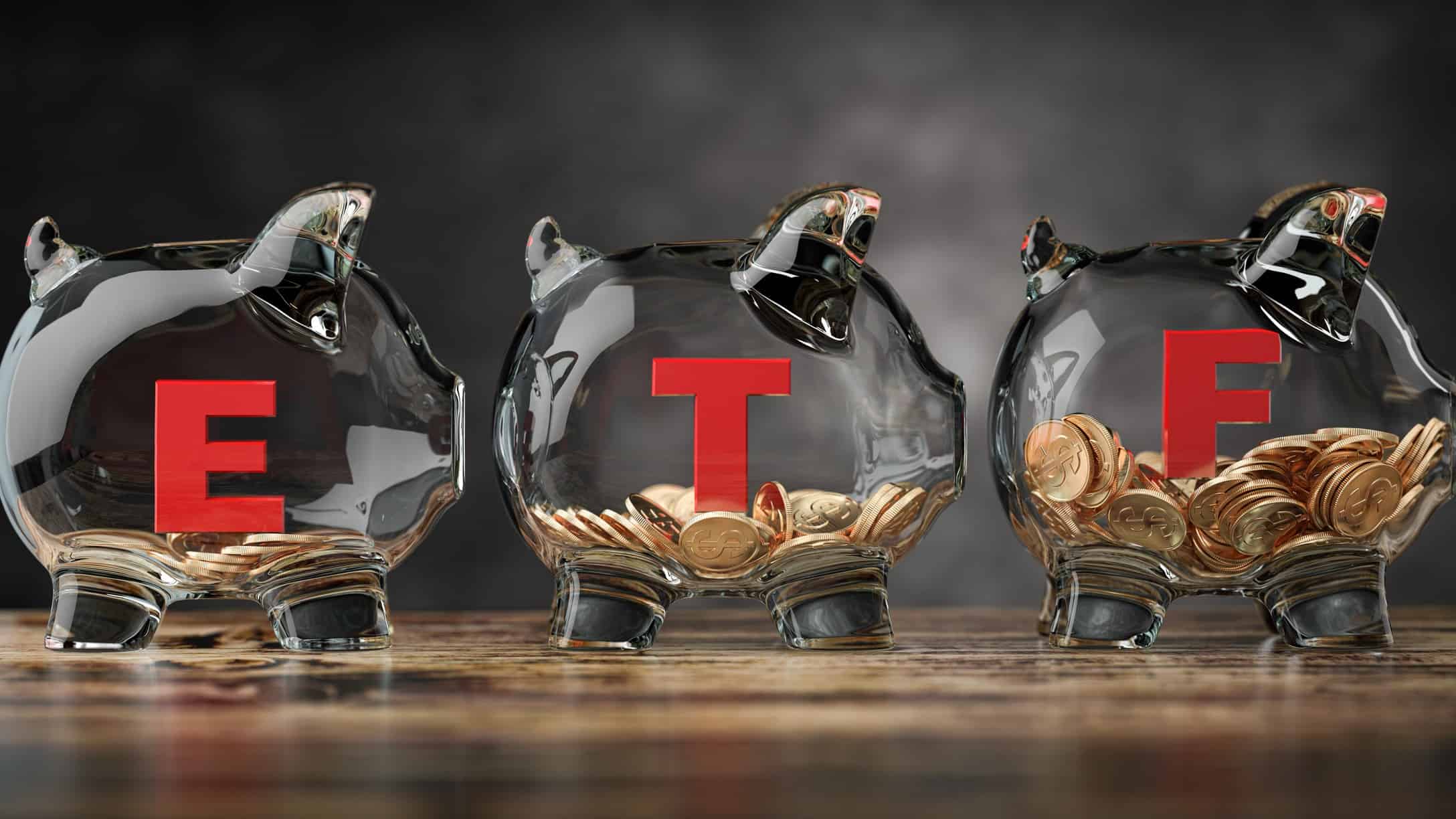
    ETF written in red across three piggybanks.

    Overall, 2021 was a pretty decent year for ASX shares and the share market in general. Over the year just passed, the S&P/ASX 200 Index (ASX: XJO) returned roughly 13% from January to December, with the added bonus of dividends and franking credits thrown in. Thus, any exchange-traded funds (ETFs) that track the ASX 200 Index would have returned similar gains.

    But even though ASX index funds are some of the most popular ETFs with Aussie investors, not all ETFs track indexes like the ASX 200. And as such, not all ASX ETFs had such a lucrative 2021.

    So here is a list of the worst-performing ASX ETFs from last year:

    2021’s worst ASX ETF performers revealed

    BetaShares Asian Technology Tigers ETF (ASX: ASIA)

    This ETF from provider BetaShares is first up. ASIA is a fund that tracks a basket of tech-focused shares from the Asia Pacific region. Many of its holdings hail from the People’s Republic of China (43.9%), but it also has significant exposure to other countries like Taiwan, South Korea and India. You might recognise some of its top holdings like Taiwan Semiconductor Manufacturing Co, Samsung, Tencent Holdings and Alibaba Group Holding Ltd.

    This ETF has clearly felt the repercussions of the slump in many Asian markets over the past year, particularly China’s. It returned -14.94% last year.

    iShares China Large-Cap ETF (ASX: IZZ)

    Another Asia-focused fund, this ETF from iShares was another poor performer last year. As you can probably gather from the name, IZZ invests in the largest companies in China. It holds many of the same companies as ASIA, including Alibaba and Tencent. But other names include Meituan, China Construction Bank Corp and Ping An Insurance. As we’ve just discussed, China hasn’t had the best 12 months, and we can see this reflected in IZZ’s performance. This ETF went backwards by 15.3% last year.

    ETFS S&P Biotech ETF (ASX: CURE)

    Despite its humorous ticker code, investors were probably not too amused by this fund’s 2021 performance. CURE is a thematic ETF that focuses on US companies in the biotechnology space in fields such as genetic analysis and engineering. Some of its top holdings include Arena Pharmaceuticals, Biohaven Pharmaceuticals and Incyte Corp. Unfortunately for investors, this fund failed to engineer any growth last year, falling by 15.8% over 2021. Hopefully 2022 will CURE investors’ woes.

    BetaShares Strong Australian Dollar Fund (ASX: AUDS)

    Here we have a different beast. This fund is a simple one and doesn’t invest in shares at all. Instead, this ETF from BetaShares gives “geared exposure to changes in the value of the Australian dollar against the US dollar”.

    According to the provider, “AUDS generally expects to generate a positive return of between 2% and 2.75% for a 1% rise in the value of the Australian dollar against the U.S. dollar on a given day (and vice versa)”. Unfortunately, the ‘vice versa’ is what occurred over 2021. This ETF fell a nasty 16.54% last year as the Aussie declined in value against the greenback for most of 2021.

    Short ETFs top worst performing funds of 2021

    Our final spot is shared jointly by three ETFs that proved very disappointing indeed for investors. This writer has grouped them together because they all operate in similar ways and their dismal performance can also be blamed on this. The BetaShares Australian Equities Strong Bear Hedge Fund (ASX: BBOZ), the BetaShares U.S. Equities Strong Bear Hedge Fund (ASX: BBUS) and the ETFS Ultra Short Nasdaq 100 Hedge Fund (ASX: SNAS) topped the ASX’s worst ETF performers in 2021 with steep losses of 32.8%, 46.9% and 48.7% respectively.

    These ETFs are ‘short’ funds that use leverage and other financial engineering to rise in value when the indexes they track fall. BBOZ inversely tracks the ASX 200, while both the BBUS and SNAS ETFs do the same for the US markets. Unfortunately for investors in these funds, both countries’ markets rose strongly over 2021, resulting in these heavy losses.

    The post Here are the worst performing ASX ETFs of 2021 appeared first on The Motley Fool Australia.

    Wondering where you should invest $1,000 right now?

    When investing expert Scott Phillips has a stock tip, it can pay to listen. After all, the flagship Motley Fool Share Advisor newsletter he has run for over ten years has provided thousands of paying members with stock picks that have doubled, tripled or even more.*

    Scott just revealed what he believes could be the five best ASX stocks for investors to buy right now. These stocks are trading at near dirt-cheap prices and Scott thinks they could be great buys right now.

    *Returns as of January 12th 2022

    More reading

    Motley Fool contributor Sebastian Bowen has no position in any of the stocks mentioned. The Motley Fool Australia’s parent company Motley Fool Holdings Inc. has no position in any of the stocks mentioned. The Motley Fool Australia has recommended BetaShares Asia Technology Tigers ETF. The Motley Fool has a disclosure policy. This article contains general investment advice only (under AFSL 400691). Authorised by Bruce Jackson.

    from The Motley Fool Australia https://ift.tt/3fhT4vo

  • The Zip (ASX:Z1P) share price had a year to forget in 2021

    Young man looking afraid representing ASX shares investor scared of market crash

    It is fair to say that the Zip Co Ltd (ASX: Z1P) share price had a year to forget in 2021.

    Over the 12 months, the buy now pay later (BNPL) provider’s shares lost 18.1% of their value.

    Though, this is only telling half the story. At one stage in February last year, the Zip share price was up as much as 175% year to date to a record high of $14.53.

    From top to bottom, the company’s shares shed over 70% of their value.

    What happened to the Zip share price?

    Investors were selling down the company’s shares last year after investor sentiment in the BNPL industry waned.

    This was driven by increasing competition, which led to higher than expected investments in sales and marketing (and therefore larger losses), and concerns over regulatory pressure in the United States.

    In respect to increased competition, there were a number of industry events that caused alarm for ASX BNPL shareholders.

    For example, last year PayPal removed merchant fees for its PayPal Pay in 4 product, reports claimed that tech behemoth Apple is interested in offering its own BNPL service, and Mastercard launched its Pay & Split solution.

    Will its shares bounce back in 2022?

    The team at Morgans remains positive on the Zip share price. Last week the broker retained its add rating but cut the price target on its shares by 12% to $7.54. This implies potential upside of 88% over the next 12 months.

    The broker commented: “The [BNPL] sector is suddenly unloved by investors, so solid 1H22 results are required to change sentiment. We expect strong revenue growth for APT and Z1P (~100% on pcp), but we still expect both stocks to report 1H22 NPAT losses.”

    Though, it has also warned that Zip is one of several shares that “earnings visibility remains poor for” heading into reporting season.

    The post The Zip (ASX:Z1P) share price had a year to forget in 2021 appeared first on The Motley Fool Australia.

    Should you invest $1,000 in Zip right now?

    Before you consider Zip, you’ll want to hear this.

    Motley Fool Investing expert Scott Phillips just revealed what he believes are the 5 best stocks for investors to buy right now… and Zip wasn’t one of them.

    The online investing service he’s run for nearly a decade, Motley Fool Share Advisor, has provided thousands of paying members with stock picks that have doubled, tripled or even more.* And right now, Scott thinks there are 5 stocks that are better buys.

    *Returns as of August 16th 2021

    More reading

    Motley Fool contributor James Mickleboro has no position in any of the stocks mentioned. The Motley Fool Australia’s parent company Motley Fool Holdings Inc. owns and has recommended ZIPCOLTD FPO. The Motley Fool Australia has no position in any of the stocks mentioned. The Motley Fool has a disclosure policy. This article contains general investment advice only (under AFSL 400691). Authorised by Bruce Jackson.

    from The Motley Fool Australia https://ift.tt/3K3g5jL

  • What’s driving the Lithium Power (ASX: LPI) share price up today?

    a man in hard hat and high visibility vest speaks on his mobile phone in front of a digging machine with a heavy dump truck vehicle also visible in the background.

    The Lithium Power International Ltd (ASX: LPI) share price hit its 52-week high of 61 cents shortly after opening this morning on the back of a company update.

    The Lithium Power share price has since settled at 59.5 cents, up 2.59% at the time of writing.

    The price movement comes as the miner announced plans to demerge from its Western Australian lithium assets.

    Let’s take a closer look…

    Lithium demerger

    Lithium Power has announced it will spin-out both its Greenbushes and Pilgangoora hard rock lithium assets in WA.

    Instead, these interests will be held by DemergeCo, a wholly-owned subsidiary of Lithium Power, which will now seek to be listed on the ASX.

    Lithium Power has announced its shareholders will receive DemergeCo shares on a pro-rata basis via a capital reduction and in-specie distribution, subject to both shareholder and regulatory approvals.

    The company now intends to focus on its Maricunga Lithium Brine Project in northern Chile.

    Just last week, Lithium Power reported positive advancements and surveying of its WA projects.

    The sites are located immediately along strike from the major Talison lithium mine and adjacent to the assets owned by Pilbara Minerals Ltd (ASX: PLS).

    What does the company say?

    Lithium Power reasons the split will unlock the “strategic value” of the assets and leave the company to focus on developing its flagship site within Chile’s so-called ‘Lithium Triangle’.

    The board believes the decision will compensate existing shareholders, in that it will give “the opportunity to create long term value via a new ASX-listed company” and will allow a “direct level of participation” in these assets.

    Lithium Power CEO Cristobal Garcia-Huidobro said:

    LPI has a number of highly prospective assets located in WA that are at an exciting stage of exploration.

    These assets deserve their own time, attention and resources, and LPI’s Board believes that it is the best outcome for LPI shareholders to create a dedicated, WA-focused company that has the technical, human and financial resources to advance these exciting assets.

    Lithium Power share price snapshot

    The Lithium Power share price has skyrocketed in the last 12 months, up 143%.

    The company hit its previous 52-week-high of 60 cents a share on Monday, before breaking through the 60 cents barrier in reaching its new high this morning.

    The company has a market capitalisation of $208 million.

    The post What’s driving the Lithium Power (ASX: LPI) share price up today? appeared first on The Motley Fool Australia.

    Should you invest $1,000 in Lithium Power right now?

    Before you consider Lithium Power, you’ll want to hear this.

    Motley Fool Investing expert Scott Phillips just revealed what he believes are the 5 best stocks for investors to buy right now… and Lithium Power wasn’t one of them.

    The online investing service he’s run for nearly a decade, Motley Fool Share Advisor, has provided thousands of paying members with stock picks that have doubled, tripled or even more.* And right now, Scott thinks there are 5 stocks that are better buys.

    *Returns as of August 16th 2021

    More reading

    Motley Fool contributor Alice de Bruin has no position in any of the stocks mentioned. The Motley Fool Australia’s parent company Motley Fool Holdings Inc. has no position in any of the stocks mentioned. The Motley Fool Australia has no position in any of the stocks mentioned. The Motley Fool has a disclosure policy. This article contains general investment advice only (under AFSL 400691). Authorised by Bruce Jackson.

    from The Motley Fool Australia https://ift.tt/3qhtAnV

  • Here are the 3 most heavily traded ASX 200 shares this Wednesday

    Boy looks quizzical standing in front of a graph.

    The S&P/ASX 200 Index (ASX: XJO) is having a pleasant time in the sun so far this Wednesday. At the time of writing, the ASX 200 is up a robust 0.68% at 7,440 points.

    So let’s dig deeper and take a look at the ASX shares currently topping the ASX’s share trading volumes, according to investing.com.

    3 most traded ASX 200 shares by volume on Wednesday

    Telstra Corporaiton Ltd (ASX: TLS)

    ASX 200 telco Telstra is first up this Wednesday. This telecommunications and internet giant has had a hefty 13.81 million of its shares trade hands so far today. However, there hasn’t been much in the way of news or announcements out of this company today.

    Therefore, we can probably put this volume down to the movements of the Telstra share price itself. At the time of writing, Telstra shares are up a very pleasing 2.2% to $4.19 after going as high as $4.20 earlier this afternoon. This is the likely reason why so many Telstra shares have been traded today.

    Pilbara Minerals Ltd (ASX: PLS)

    Pilbara Mienrals is next up today. This ASX 200 lithium producer has had a sizeable 18.99 million if its shares change hands as it presently stands. Again, there isn’t much going on with Pilbara today in an official capacity. However, we have also seen a decisive move with the Pilbara share price.

    At present, Pilbara shares are up a happy 1.7% so far at $3.58. However, this company touched a new all-time high of $3.65 a share earlier today. It’s this strong push upwards that is the likely smoking gun for this high ASX 200 volume this Wednesday.

    Liontown Resources Limited (ASX: LTR)

    Last but certainly not least in terms of trading volume, we have Liontown Resources. This ASX 200 lithium explorer has watched 20.23 million of its shares find a new home so far today. We don’t have to look too far for this one though. Liontown has had a fantastic day of trading this Wednesday.

    The shares are presently up a healthy 6.13% at $1.645 each after hitting $1.75 (up 13%) earlier this morning. As my Fool colleague James discussed at the time, this seems to be related to the announcement this morning that Liontown has signed a major agreement with leading battery manufacturer LG Energy Solution.

    The post Here are the 3 most heavily traded ASX 200 shares this Wednesday appeared first on The Motley Fool Australia.

    Should you invest $1,000 in Liontown Resources right now?

    Before you consider Liontown Resources, you’ll want to hear this.

    Motley Fool Investing expert Scott Phillips just revealed what he believes are the 5 best stocks for investors to buy right now… and Liontown Resources wasn’t one of them.

    The online investing service he’s run for nearly a decade, Motley Fool Share Advisor, has provided thousands of paying members with stock picks that have doubled, tripled or even more.* And right now, Scott thinks there are 5 stocks that are better buys.

    *Returns as of August 16th 2021

    More reading

    Motley Fool contributor Sebastian Bowen owns Telstra Corporation Limited. The Motley Fool Australia’s parent company Motley Fool Holdings Inc. has no position in any of the stocks mentioned. The Motley Fool Australia owns and has recommended Telstra Corporation Limited. The Motley Fool has a disclosure policy. This article contains general investment advice only (under AFSL 400691). Authorised by Bruce Jackson.

    from The Motley Fool Australia https://ift.tt/3qjMrii