Tag: Motley Fool

  • ASX 200 shares: A once-a-decade opportunity to get rich?

    Happy female friends taking self portrait through mobile phone at pool's edge, symbolising passive income.Happy female friends taking self portrait through mobile phone at pool's edge, symbolising passive income.

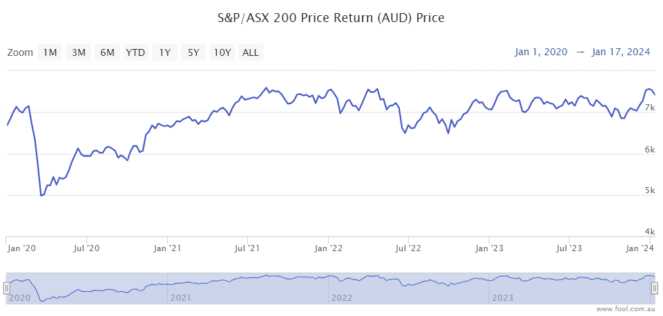
    The S&P/ASX 200 Index (ASX: XJO) has risen 9% since 31 October 2023, and it’s fairly close to its all-time high. Could this be a good time to invest in ASX 200 shares to get rich?
    Once-in-a-decade opportunity?

    It’s common for the share market to go through volatility. There are no rules about when share prices are going to go up and down.

    The share market has seen several moments of heavy declines in the last few years such as the COVID-19 crash in 2020, the inflation-caused decline in 2022 when interest rates started rising, and another interest rate-induced decline in October 2023.

    So, it wouldn’t be true to think the share market can only decline once a decade.

    It’s true that the ASX 200 was a lot cheaper a few months ago and even lower in 2022 and 2020. So, we can’t call the current ASX 200 valuation the best time to invest.

    But, it wouldn’t surprise if ASX 200 shares fell again at some point in 2024. Partly because the market does regularly (but unpredictably) fall, and partly because it has risen strongly in recent times. That’s interesting considering interest rates haven’t actually started falling yet, and may not decline in the US or Australia for many months still. The market may have gotten ahead of itself, but we’ll have to wait and see what happens.

    Can the ASX 200 help us get rich?

    There are a few different ways to invest in 200 of the biggest businesses on the ASX, even if they’re not exactly tracking the ASX 200.

    iShares Core S&P/ASX 200 ETF (ASX: IOZ) and SPDR S&P/ASX 200 (ASX: STW) are two of the most obvious exchange-traded funds (ETFs) that track the index.

    Other good ways to get exposure to the same sorts of ASX 200 shares include the BetaShares Australia 200 ETF (ASX: A200) and the Vanguard Australian Shares Index ETF (ASX: VAS).

    We can regularly invest in these sorts of ASX ETFs without worrying about the valuation too much.

    The last decade of returns from the ASX 200 hasn’t exactly shot the lights out, it has been overshadowed by the global share market where there has been more growth.

    But, if the ASX 200 is able to deliver annual returns per annum of around 9% to 10%, then investors can see their portfolio values double in less than ten years, which is an attractive wealth growth rate. $100 becomes $259 in ten years if it’s growing at 10% per annum, though no one knows what future returns are going to be.

    In other words, I think ASX 200 shares can always help us become wealthier. But, when the share market is noticeably down, it can be a good idea to considering invest more.

    For me, there are individual ASX 200 shares that may be able to deliver much stronger returns than the ASX 200.

    I like to regularly write about the names I see as opportunities. With individual names, I always think there are stocks at valuations that can help us become richer over time.

    The post ASX 200 shares: A once-a-decade opportunity to get rich? appeared first on The Motley Fool Australia.

    Wondering where you should invest $1,000 right now?

    When investing expert Scott Phillips has a stock tip, it can pay to listen. After all, the flagship Motley Fool Share Advisor newsletter he has run for over ten years has provided thousands of paying members with stock picks that have doubled, tripled or even more.*

    Scott just revealed what he believes could be the ‘five best ASX stocks’ for investors to buy right now. These stocks are trading at near dirt-cheap prices and Scott thinks they could be great buys right now…

    See The 5 Stocks
    *Returns as of 10 November 2023

    (function() {
    function setButtonColorDefaults(param, property, defaultValue) {
    if( !param || !param.includes(‘#’)) {
    var button = document.getElementsByClassName(“pitch-snippet”)[0].getElementsByClassName(“pitch-button”)[0];
    button.style[property] = defaultValue;
    }
    }

    setButtonColorDefaults(“#0095C8”, ‘background’, ‘#5FA85D’);
    setButtonColorDefaults(“#0095C8”, ‘border-color’, ‘#43A24A’);
    setButtonColorDefaults(“#fff”, ‘color’, ‘#fff’);
    })()

    More reading

    Motley Fool contributor Tristan Harrison has no position in any of the stocks mentioned. The Motley Fool Australia’s parent company Motley Fool Holdings Inc. has no position in any of the stocks mentioned. The Motley Fool Australia has no position in any of the stocks mentioned. The Motley Fool has a disclosure policy. This article contains general investment advice only (under AFSL 400691). Authorised by Scott Phillips.

    from The Motley Fool Australia https://ift.tt/zOMCrpl

  • Is it now too late to buy Xero stock?

    A man activates an arrow shooting up into a cloud sign on his phone, indicating share price movement in ASX tech sharesA man activates an arrow shooting up into a cloud sign on his phone, indicating share price movement in ASX tech shares

    The ASX tech stock Xero Limited (ASX: XRO) has generated big returns for shareholders. In the past year, it has risen by 50% and in five years it has gone up by 160%.

    This company provides cloud accounting software which aims to help business owners, accountants, bookkeepers and financial advisers access and work on a business’ financial information.

    Its various tools and automated offerings help people save a lot of time. Time is money of course.

    Some investors may be thinking that it’s too late to invest in Xero stock considering it has risen so much and the market capitalisation is now more than $16 billion.

    But, I’m going to say why I don’t think it’s too late to invest in this ASX tech share.

    Strong revenue growth continues

    When revenue is continuing to grow at a good rate, the share price can keep rising.

    Investors would have made a mistake a decade ago to avoid businesses like Visa, Mastercard, Microsoft, Alphabet and Apple because their revenue kept growing and that helped drive profit, which has helped send all of their share prices higher over the years.

    Xero is still doing very well at growing revenue. There are two main elements of its revenue – how many subscribers it has and how much they are paying.

    In the FY24 first half, Xero reported 13% subscriber growth to 3.94 million subscribers and 6% average revenue per user (ARPU) growth to $37.38.

    That combination helped operating revenue soar 21% to almost $800 million and the annualised monthly recurring revenue (AMRR) rose 19% to $1.77 billion.

    If revenue keeps growing more than 10% per annum for many years then Xero’s underlying value could keep increasing strongly.

    Excellent margins

    There’s not much point in growing revenue if it doesn’t help improve the bottom line, in my opinion.

    Revenue growth for Xero is very valuable because of its high-profit margins – it has a gross profit margin of 87.5% (which rose from 87% in the first half of FY23). That means most of the new revenue can turn into usable profit which Xero can spend on more software development or marketing. Extra revenue and gross profit can also flow to the profitability metrics if the company doesn’t spend that money.

    Xero stock is benefiting from rapidly growing profit. HY24 adjusted earnings before interest, tax, depreciation and amortisation (EBITDA) rose 65% to $204.5 million, operating profit increased 225% to $67.4 million and free cash flow soared $91 million to $106.7 million.

    The intangible nature of software could mean Xero’s profit margins continue to rise – where profit rises faster than revenue – which could excite investors even more.

    In FY24, the company is targeting an operating expense to operating revenue ratio of around 75%.

    AI

    Xero is the sort of business that could significantly help subscribers operate more efficiently, assist with better insights and improve their Xero experience, as well as increase the productivity of Xero’s teams to help customers faster.

    Xero stock has already benefited from its ability to help customers through technology, and this could be the next stage of that assistance.

    Foolish takeaway

    I think Xero stock is still a buy, with a lot of potential profit growth to come over the next few years as its market share hopefully increases in places like Australia, the UK, South Africa and the US.

    The post Is it now too late to buy Xero stock? appeared first on The Motley Fool Australia.

    Wondering where you should invest $1,000 right now?

    When investing expert Scott Phillips has a stock tip, it can pay to listen. After all, the flagship Motley Fool Share Advisor newsletter he has run for over ten years has provided thousands of paying members with stock picks that have doubled, tripled or even more.*

    Scott just revealed what he believes could be the ‘five best ASX stocks’ for investors to buy right now. These stocks are trading at near dirt-cheap prices and Scott thinks they could be great buys right now…

    See The 5 Stocks
    *Returns as of 10 November 2023

    (function() {
    function setButtonColorDefaults(param, property, defaultValue) {
    if( !param || !param.includes(‘#’)) {
    var button = document.getElementsByClassName(“pitch-snippet”)[0].getElementsByClassName(“pitch-button”)[0];
    button.style[property] = defaultValue;
    }
    }

    setButtonColorDefaults(“#0095C8”, ‘background’, ‘#5FA85D’);
    setButtonColorDefaults(“#0095C8”, ‘border-color’, ‘#43A24A’);
    setButtonColorDefaults(“#fff”, ‘color’, ‘#fff’);
    })()

    More reading

    Suzanne Frey, an executive at Alphabet, is a member of The Motley Fool’s board of directors. Motley Fool contributor Tristan Harrison has no position in any of the stocks mentioned. The Motley Fool Australia’s parent company Motley Fool Holdings Inc. has positions in and has recommended Alphabet, Apple, Mastercard, Microsoft, Visa, and Xero. The Motley Fool Australia’s parent company Motley Fool Holdings Inc. has recommended the following options: long January 2025 $370 calls on Mastercard and short January 2025 $380 calls on Mastercard. The Motley Fool Australia has positions in and has recommended Xero. The Motley Fool Australia has recommended Alphabet, Apple, and Mastercard. The Motley Fool has a disclosure policy. This article contains general investment advice only (under AFSL 400691). Authorised by Scott Phillips.

    from The Motley Fool Australia https://ift.tt/Q5SxqZH

  • Should you buy Evolution Mining shares following Wednesday’s 17% dive?

    Gold nugget with a red arrow going down.

    Gold nugget with a red arrow going down.

    Evolution Mining Ltd (ASX: EVN) shares had a day to forget on Wednesday.

    During the session, the gold miner’s shares lost 17% of their value to finish at $3.10.

    Investors were hitting the sell button after the company’s quarterly update fell well short of expectations.

    The question now, though, is whether this is a buying opportunity? Let’s find out if it is.

    Should you buy Evolution Mining shares?

    The team at Goldman Sachs has been running the rule over the update. And while the broker was not impressed with its performance, it has seen enough to keep its buy rating.

    Commenting on its performance, its analysts said:

    EVN reported group Dec-Q gold production/sales of 161koz/170koz, well below expectations on lower production at Cowal and Mungari (weather) and ongoing disruptions/underperformance at Redlake.

    While EVN has left group FY24 guidance unchanged (789koz; AISC A$1,340/oz; +/-5%), expecting other assets to meet or exceed the mid-point of their original production guidance (with Cowal and Ernest Henry at the highest confidence), we revise our gold production down to 734koz (from 763koz) on risk of ongoing weather disruptions and ongoing Red Lake underperformance (which we now assume remains below original FY24 guidance over the medium term).

    But despite this, the broker believes there are reasons to stay positive. One of those is its strong free cash flow yield, which remains above 10% for FY 2025 and FY 2026.

    In light of this, the broker has retained its buy rating with a reduced price target of $3.70 (from $4.20).

    Based on the where Evolution Mining shares currently trade, this implies potential upside of over 19% for investors between now and this time next year. It concludes:

    On our LT gold price of US$1,750/oz, EVN is trading on ~1.05x NAV (on our medium-term Red Lake production downgrades), or pricing ~US$1,830/oz gold (peer average ~1.05x NAV (NST 1.1x) and ~US$1,800/oz), though near-term FCF yields of c. 10% in FY25/26E remain attractive vs. peers at ~0-10%.

    The post Should you buy Evolution Mining shares following Wednesday’s 17% dive? appeared first on The Motley Fool Australia.

    Wondering where you should invest $1,000 right now?

    When investing expert Scott Phillips has a stock tip, it can pay to listen. After all, the flagship Motley Fool Share Advisor newsletter he has run for over ten years has provided thousands of paying members with stock picks that have doubled, tripled or even more.*

    Scott just revealed what he believes could be the ‘five best ASX stocks’ for investors to buy right now. These stocks are trading at near dirt-cheap prices and Scott thinks they could be great buys right now…

    See The 5 Stocks
    *Returns as of 10 November 2023

    (function() {
    function setButtonColorDefaults(param, property, defaultValue) {
    if( !param || !param.includes(‘#’)) {
    var button = document.getElementsByClassName(“pitch-snippet”)[0].getElementsByClassName(“pitch-button”)[0];
    button.style[property] = defaultValue;
    }
    }

    setButtonColorDefaults(“#0095C8”, ‘background’, ‘#5FA85D’);
    setButtonColorDefaults(“#0095C8”, ‘border-color’, ‘#43A24A’);
    setButtonColorDefaults(“#fff”, ‘color’, ‘#fff’);
    })()

    More reading

    Motley Fool contributor James Mickleboro has no position in any of the stocks mentioned. The Motley Fool Australia’s parent company Motley Fool Holdings Inc. has positions in and has recommended Goldman Sachs Group. The Motley Fool Australia has no position in any of the stocks mentioned. The Motley Fool has a disclosure policy. This article contains general investment advice only (under AFSL 400691). Authorised by Scott Phillips.

    from The Motley Fool Australia https://ift.tt/tYLGcip

  • How I’d aim to turn $500 a month into a stunning passive income of more than $191k a year

    A couple are happy sitting on their yacht.

    A couple are happy sitting on their yacht.

    Building a passive income of more than $191,000 a year would be life-changing for most Aussies.

    Myself included.

    And ASX dividend shares offer a great means to achieving that goal.

    While my portfolio of ASX shares may lose value over shorter periods, or even an entire year, history shows that longer-term the stock market beats every other asset class.

    Now if I invest $500 each month, or $6,000 a year, I obviously won’t reach my $191,000 annual passive income goal overnight. I’ll need to be patient. And I’ll need to do thorough research on the ASX shares I add to my portfolio.

    If I wasn’t comfortable with that level of research, I’d seek out some expert advice.

    Let’s look at some numbers.

    What kind of returns can I target?

    Let’s get an idea of my timeline to build up to more than $191,000 in yearly passive income. Over the past three years, the S&P/ASX 200 Gross Total Return Index (ASX: XJT), which includes all cash dividends reinvested on the ex-dividend date, has gained 24%. Or an average annual gain of 8%.

    But I believe I could do better. With diligent research or perhaps that expert advice, I believe I could achieve an average 10% annual return over time.

    Now I’d be sure to invest in a diversified basket of ASX shares (at least 10), with a preference for S&P/ASX 200 Index (ASX: XJO) stocks. These tend to be less volatile than small-cap shares, yet the right ones can still deliver tidy gains to investors.

    In 2023, for example, Commonwealth Bank of Australia (ASX: CBA) shares delivered an accumulated gain (including dividends) of 13.4%.

    I’d also lean towards ASX shares that offer franking credits on their dividends. That way, I should be able to hold onto more of my passive income at tax time.

    And I’d also be sure to reinvest any and all dividends coming my way. That will help me achieve my goal significantly sooner.

    The road to more than $191,000 in annual passive income

    As mentioned up top, my road to more than $191,000 a year in passive income isn’t a short one.

    So it’s best to get started earlier in life.

    If I began investing just $500 a month in ASX shares at the age of 30, and achieve my 10% average annual gains, then I can let the magic of compounding do its work.

    Here’s how my ASX share portfolio will have grown over the years:

    • At 10 years: $103,770
    • At 20 years: $383,348
    • At 30 years: $1,140,163
    • At 40 years: $3,188,890

    As you can see, after 40 years of diligently investing $500 a month, and by now ready to retire, my ASX passive income portfolio has grown to almost $3.2 million.

    If can achieve a 6% yield from that portfolio, which I believe I could, that would give me a passive income of $191,333 a year without having to touch that invested capital.

    And leaving that $3,188,890 invested in quality ASX shares should help me keep growing my wealth as markets rise.

    The post How I’d aim to turn $500 a month into a stunning passive income of more than $191k a year appeared first on The Motley Fool Australia.

    Wondering where you should invest $1,000 right now?

    When investing expert Scott Phillips has a stock tip, it can pay to listen. After all, the flagship Motley Fool Share Advisor newsletter he has run for over ten years has provided thousands of paying members with stock picks that have doubled, tripled or even more.*

    Scott just revealed what he believes could be the ‘five best ASX stocks’ for investors to buy right now. These stocks are trading at near dirt-cheap prices and Scott thinks they could be great buys right now…

    See The 5 Stocks
    *Returns as of 10 November 2023

    (function() {
    function setButtonColorDefaults(param, property, defaultValue) {
    if( !param || !param.includes(‘#’)) {
    var button = document.getElementsByClassName(“pitch-snippet”)[0].getElementsByClassName(“pitch-button”)[0];
    button.style[property] = defaultValue;
    }
    }

    setButtonColorDefaults(“#0095C8”, ‘background’, ‘#5FA85D’);
    setButtonColorDefaults(“#0095C8”, ‘border-color’, ‘#43A24A’);
    setButtonColorDefaults(“#fff”, ‘color’, ‘#fff’);
    })()

    More reading

    Motley Fool contributor Bernd Struben has no position in any of the stocks mentioned. The Motley Fool Australia’s parent company Motley Fool Holdings Inc. has no position in any of the stocks mentioned. The Motley Fool Australia has no position in any of the stocks mentioned. The Motley Fool has a disclosure policy. This article contains general investment advice only (under AFSL 400691). Authorised by Scott Phillips.

    from The Motley Fool Australia https://ift.tt/hGwkAgn

  • Brokers name 3 ASX dividend shares to buy now

    Woman calculating dividends on calculator and working on a laptop.

    Woman calculating dividends on calculator and working on a laptop.

    If you’re an income investor on the lookout for some new additions to your portfolio, then read on.

    That’s because listed below are three ASX dividend shares that brokers have recently been named as buys.

    Here’s what sort of dividend yields you can expect from them:

    Coles Group Ltd (ASX: COL)

    The first ASX dividend share that analysts have named as a buy is supermarket giant Coles.

    Citi remains very bullish on the company and has a buy rating and $17.50 price target on its shares.

    While the broker isn’t expecting an overly strong result in FY 2024, it believes solid growth is coming in FY 2025 and FY 2026.

    Citi expects this to underpin fully franked dividends of 64 cents per share in FY 2024, 70 cents per share in FY 2025 and then 79 cents per share in FY 2026. Based on the current Coles share price of $15.50, this will mean yields of 4.1%, 4.5%, and 5.1%, respectively.

    Healthco Healthcare and Wellness REIT (ASX: HCW)

    Another ASX dividend share that analysts are feeling positive on is Healthco Healthcare and Wellness REIT.

    It is a leading health and wellness-focused real estate investment trust with a high quality, diversified portfolio of assets.

    The team at Morgans is positive on the company and has an add rating and $1.67 price target on its shares.

    As for income, it is forecasting dividends per share of 8 cents in both FY 2024 and FY 2025. Based on the current Healthco Healthcare and Wellness REIT unit price of $1.33, this will mean yields of 6% in both years.

    Stockland Corporation Ltd (ASX: SGP)

    A third ASX dividend share that could be a buy according to analysts is Stockland. It is a residential and land lease developer and retail, logistics and office real estate property manager.

    Citi is bullish and notes its “strong medium-term growth outlook and cheap valuation.” The broker has a buy rating and $5.10 price target its shares.

    As well as a cheap valuation, the broker is forecasting some big dividend yields. It expects dividends per share of 27 cents in FY 2024 and FY 2025. Based on the current Stockland share price of $4.41, this will mean yields of 6.1% across both years.

    The post Brokers name 3 ASX dividend shares to buy now appeared first on The Motley Fool Australia.

    Wondering where you should invest $1,000 right now?

    When investing expert Scott Phillips has a stock tip, it can pay to listen. After all, the flagship Motley Fool Share Advisor newsletter he has run for over ten years has provided thousands of paying members with stock picks that have doubled, tripled or even more.*

    Scott just revealed what he believes could be the ‘five best ASX stocks’ for investors to buy right now. These stocks are trading at near dirt-cheap prices and Scott thinks they could be great buys right now…

    See The 5 Stocks
    *Returns as of 10 November 2023

    (function() {
    function setButtonColorDefaults(param, property, defaultValue) {
    if( !param || !param.includes(‘#’)) {
    var button = document.getElementsByClassName(“pitch-snippet”)[0].getElementsByClassName(“pitch-button”)[0];
    button.style[property] = defaultValue;
    }
    }

    setButtonColorDefaults(“#0095C8”, ‘background’, ‘#5FA85D’);
    setButtonColorDefaults(“#0095C8”, ‘border-color’, ‘#43A24A’);
    setButtonColorDefaults(“#fff”, ‘color’, ‘#fff’);
    })()

    More reading

    Citigroup is an advertising partner of The Ascent, a Motley Fool company. Motley Fool contributor James Mickleboro has no position in any of the stocks mentioned. The Motley Fool Australia’s parent company Motley Fool Holdings Inc. has no position in any of the stocks mentioned. The Motley Fool Australia has positions in and has recommended Coles Group. The Motley Fool has a disclosure policy. This article contains general investment advice only (under AFSL 400691). Authorised by Scott Phillips.

    from The Motley Fool Australia https://ift.tt/SIuZR2B

  • 5 things to watch on the ASX 200 on Thursday

    A concerned man looking at his laptop.

    A concerned man looking at his laptop.

    On Wednesday, the S&P/ASX 200 Index (ASX: XJO) was out of form again. The benchmark index fell 0.3% to 7,393.1 points.

    Will the market be able to bounce back from this on Thursday? Here are five things to watch:

    ASX 200 expected to fall again

    The Australian share market looks set to fall again on Thursday following a poor night of trade on Wall Street. According to the latest SPI futures, the ASX 200 is expected to open the day 38 points or 0.5% lower this morning. In late trade on Wall Street, the Dow Jones is down 0.4%, the S&P 500 has fallen 0.8%, and the Nasdaq is 0.95% lower. Rate cut doubts put pressure on markets.

    Oil prices mixed

    ASX 200 energy shares including Beach Energy Ltd (ASX: BPT) and Woodside Energy Group Ltd (ASX: WDS) will be on watch after a mixed night for oil prices. According to Bloomberg, the WTI crude oil price is up 0.3% to US$72.63 a barrel and the Brent crude oil price is down 0.4% to US$77.96 a barrel. This follows the release of mixed economic data from China and the US.

    BHP update

    BHP Group Ltd (ASX: BHP) shares will be on watch on Thursday when the mining giant releases its second quarter update. The market is expecting iron ore shipments of 72.5Mt, which will be a 1% increase quarter on quarter. Elsewhere, copper production is expected to be down slightly to 454kt and met coal is expected to be up 23% to 6.9Mt.

    Gold price tumbles

    ASX 200 gold shares such as Newmont Corporation (ASX: NEM) and Northern Star Resources Ltd (ASX: NST) could have a poor day of trade after the gold price tumbled overnight. According to CNBC, the spot gold price is down 1.05% to US$2,008.9 an ounce. This was driven by rate cut doubts.

    Albemarle sells down Liontown stake

    The Liontown Resources Ltd (ASX: LTR) share price will be on watch today amid reports that Albemarle Corp (NYSE: ALB) is offloading its stake in the lithium developer following its failed $6.6 billion takeover. According to the AFR, the lithium giant was looking to sell the stake for a price of $1.26 to $1.32 per share. The former represents a 7.4% discount to its last close price.

    The post 5 things to watch on the ASX 200 on Thursday appeared first on The Motley Fool Australia.

    Wondering where you should invest $1,000 right now?

    When investing expert Scott Phillips has a stock tip, it can pay to listen. After all, the flagship Motley Fool Share Advisor newsletter he has run for over ten years has provided thousands of paying members with stock picks that have doubled, tripled or even more.*

    Scott just revealed what he believes could be the ‘five best ASX stocks’ for investors to buy right now. These stocks are trading at near dirt-cheap prices and Scott thinks they could be great buys right now…

    See The 5 Stocks
    *Returns as of 10 November 2023

    (function() {
    function setButtonColorDefaults(param, property, defaultValue) {
    if( !param || !param.includes(‘#’)) {
    var button = document.getElementsByClassName(“pitch-snippet”)[0].getElementsByClassName(“pitch-button”)[0];
    button.style[property] = defaultValue;
    }
    }

    setButtonColorDefaults(“#0095C8”, ‘background’, ‘#5FA85D’);
    setButtonColorDefaults(“#0095C8”, ‘border-color’, ‘#43A24A’);
    setButtonColorDefaults(“#fff”, ‘color’, ‘#fff’);
    })()

    More reading

    from The Motley Fool Australia https://ift.tt/hMmGoVc

  • 5 ways to get richer in 2024 without a pay rise

    Woman smiling with her hands behind her back on her couch, symbolising passive income.

    Woman smiling with her hands behind her back on her couch, symbolising passive income.

    We’d all like a pay rise in 2024, especially with the ramp-up in the cost of living over the past couple of years. So if you manage to bag yourself one this year, a preemptive congratulations.

    But even if you don’t manage to get an increase in your take-home pay in 2024, don’t cry. There are still a few ways you can give your wealth a boost.

    So today, let’s talk about some ways you can get a little richer this year, without relying on your boss’ generosity.

    Five ways to get richer in 2024

    Ditch debt and don’t look back

    One of the worst things you can do for your wealth is take out debt to buy assets that don’t appreciate in value. In my view, if you aren’t borrowing money for shares, studies, property or a business, it’s bad debt and should be avoided.

    So if you have credit card debt, a car loan or a personal loan, make it your 2024 mission to pay it off, and leave debt behind forever. Remember, if you have a loan, it’s an asset on somebody else’s books helping them get richer.

    Audit your spending

    I’m not one for recommending a budget to anyone. If you’re so inclined, a budget can be great. But in my experience, budgets tend to put people off managing their money with care.

    So instead, why not do a simple audit of your spending? As they say, a penny saved is a penny earned. It can’t hurt to take 10 minutes to go over your last few months’ spending. You might find that you don’t need that fifth streaming service. Or perhaps the kids have ‘accidentally’ signed you up to YouTube Premium or the top Netflix tier.

    A simple checkup of where your money is going could help you cut the fat from your household spending.

    Get richer by paying yourself first

    One of the best pieces of financial advice I have ever read was this simple idea. Most of us tend to spend our paycheques every week, fortnight or month, and save whatever’s left over. You’ll be amazed at what can happen if you flip this on its head and take your allocated savings out whenever you get paid. As the saying goes, you don’t miss what you don’t have.

    Try it out for yourself for your next paycheque by taking 10% or 20% out as soon as the money hits your bank account. You might just find that you don’t even notice its absence. If you manage this for an entire year, think about how much extra cash you will add to your net worth.

    Clear out the clutter

    I don’t know about you, but I’m someone who seems to attract a lot of worldly possessions. From interesting-looking books to old board games, it’s often difficult to say no to something alluring that comes across your path.

    Thankfully, it’s never been easier to find buyers for anything that you can and might want to sell for a bit of extra cash. So perhaps you might want to take this opportunity to think about your own possessions and how much of them you really ‘need’. Gathering the courage to initiate a purge of your house could give your wealth a real boost this year.

    Get richer by investing in ASX shares

    Last but not least, let’s talk investing. Here at The Motley Fool, we believe investing in ASX shares is one of the best ways for ordinary Australians to build wealth. The best thing about shares is that high-quality companies tend to rise in value over time. That’s whilst paying you passive income in the form of dividends. Getting paid to simply own something is a heck of a feeling.

    If you’re not into stock picking and going through numbers, never fear. It’s easy to invest in ASX shares passively. For example, you can simply buy an ASX index fund that invests in the top 200 or 300 shares on the Australian stock exchange on your behalf. All you have to do is sit back, collect the dividends and watch your wealth slowly grow.

    If you aren’t already invested in ASX shares, do you and your future self a favour and get going.

    The post 5 ways to get richer in 2024 without a pay rise appeared first on The Motley Fool Australia.

    Wondering where you should invest $1,000 right now?

    When investing expert Scott Phillips has a stock tip, it can pay to listen. After all, the flagship Motley Fool Share Advisor newsletter he has run for over ten years has provided thousands of paying members with stock picks that have doubled, tripled or even more.*

    Scott just revealed what he believes could be the ‘five best ASX stocks’ for investors to buy right now. These stocks are trading at near dirt-cheap prices and Scott thinks they could be great buys right now…

    See The 5 Stocks
    *Returns as of 10 November 2023

    (function() {
    function setButtonColorDefaults(param, property, defaultValue) {
    if( !param || !param.includes(‘#’)) {
    var button = document.getElementsByClassName(“pitch-snippet”)[0].getElementsByClassName(“pitch-button”)[0];
    button.style[property] = defaultValue;
    }
    }

    setButtonColorDefaults(“#0095C8”, ‘background’, ‘#5FA85D’);
    setButtonColorDefaults(“#0095C8”, ‘border-color’, ‘#43A24A’);
    setButtonColorDefaults(“#fff”, ‘color’, ‘#fff’);
    })()

    More reading

    Motley Fool contributor Sebastian Bowen has no position in any of the stocks mentioned. The Motley Fool Australia’s parent company Motley Fool Holdings Inc. has positions in and has recommended Netflix. The Motley Fool Australia has recommended Netflix. The Motley Fool has a disclosure policy. This article contains general investment advice only (under AFSL 400691). Authorised by Scott Phillips.

    from The Motley Fool Australia https://ift.tt/F8lc4Js

  • There’s great value right now in the ASX 200, especially in stocks like this one

    A young woman's hands are shown close up with many blingy gold rings on her fingers and two large gold chains around her neck with dollar signs on them.A young woman's hands are shown close up with many blingy gold rings on her fingers and two large gold chains around her neck with dollar signs on them.

    I believe there are always opportunities to be found in the S&P/ASX 200 Index (ASX: XJO), if we look in the right places. I’m going to cover one particular ASX 200 stock that I’m very excited about. That business is Lovisa Holdings Ltd (ASX: LOV), which I think looks better value after dropping 8% in 2023 to date. It’s also down 16% from April 2023.

    Lovisa says its brand was created “out of a need for on-trend fashion jewellery at ready-to-wear prices” and that it’s a brand that “caters to everyone”.

    Strong global growth

    It’s a relatively simple business – sell affordable jewellery to shoppers. The business is able to generate pleasing profit margins on its sales because of how cheap the products are to produce.

    In FY23 the company achieved a gross profit margin of 80%, so extra revenue growth is good news for the business. FY23 revenue rose 30% to $596.5 million and in the first 20 weeks of FY24, sales had increased another 17%.

    The company is significantly growing its global store count to help with its financials – in FY23 it added another 172 net new stores to 801, which included 72 new locations in the US.

    The business is steadily growing its store count in countries like the UK, France, Germany, Australia and South Africa.

    It’s particularly exciting to me that the ASX 200 stock has expanded into promising markets with a lot of growth potential because of the population size, such as Vietnam, China, Canada, Spain, Hong Kong, Italy and Mexico.

    Lovisa’s store count grew by 27% in FY23 and I think it can keep growing its store count by at least 15% to 20% per annum over the next five years, which could be good news for the revenue, net profit, dividend and Lovisa share price if things go well.

    I invested in Lovisa shares roughly three months ago, thinking that it could double its store count in less than five years.

    There are many more countries that Lovisa can expand into, which can unlock more potential growth. The huge Chinese market is particularly compelling if Lovisa can gain traction there.

    Attractive valuation

    Lovisa trades on a higher price/earnings (P/E) ratio than a lot of other ASX retail shares. However, its long-term growth potential makes it very good value in my eyes.

    Forecasts are just a smart guess, but I think we can see the direction that Lovisa’s earnings are going is very positive.

    The current estimates on Commsec suggest the ASX 200 stock could grow its earnings per share (EPS) by 77% between FY23 and FY26 to $1.12. That would put the Lovisa share price at 20 times FY26’s estimated earnings. I think Lovisa will be able to generate plenty of growth after FY26.

    If we look to the long-term I think Lovisa has a very good chance of performing well.

    Decent dividend payer

    Lovisa usually pays an attractive level of passive income to investors each year, with the payout projected to keep rising in FY25 and FY26.

    Profit growth can help fund larger dividends, which could reach 79 cents per share in FY25 and 91 cents per share in FY26, according to Commsec. At the current Lovisa share price, it could be a dividend yield of 4% (excluding franking credits) in FY26.

    The post There’s great value right now in the ASX 200, especially in stocks like this one appeared first on The Motley Fool Australia.

    Wondering where you should invest $1,000 right now?

    When investing expert Scott Phillips has a stock tip, it can pay to listen. After all, the flagship Motley Fool Share Advisor newsletter he has run for over ten years has provided thousands of paying members with stock picks that have doubled, tripled or even more.*

    Scott just revealed what he believes could be the ‘five best ASX stocks’ for investors to buy right now. These stocks are trading at near dirt-cheap prices and Scott thinks they could be great buys right now…

    See The 5 Stocks
    *Returns as of 10 November 2023

    (function() {
    function setButtonColorDefaults(param, property, defaultValue) {
    if( !param || !param.includes(‘#’)) {
    var button = document.getElementsByClassName(“pitch-snippet”)[0].getElementsByClassName(“pitch-button”)[0];
    button.style[property] = defaultValue;
    }
    }

    setButtonColorDefaults(“#0095C8”, ‘background’, ‘#5FA85D’);
    setButtonColorDefaults(“#0095C8”, ‘border-color’, ‘#43A24A’);
    setButtonColorDefaults(“#fff”, ‘color’, ‘#fff’);
    })()

    More reading

    Motley Fool contributor Tristan Harrison has positions in Lovisa. The Motley Fool Australia’s parent company Motley Fool Holdings Inc. has positions in and has recommended Lovisa. The Motley Fool Australia has recommended Lovisa. The Motley Fool has a disclosure policy. This article contains general investment advice only (under AFSL 400691). Authorised by Scott Phillips.

    from The Motley Fool Australia https://ift.tt/h9BrWQo

  • Targeting a $53,000 second income starting with just $1,000 of savings?

    A happy boy with his dad dabs like a hero while his father checks his phone.A happy boy with his dad dabs like a hero while his father checks his phone.

    The goal of many investors who buy ASX shares is to eventually earn a second income.

    And who can blame them? Imagine receiving money in return for no work, with which you can spend on whatever you like.

    But what if you had just $1,000 to start your portfolio?

    Well, I would say you have a thousand more reasons to invest than someone who has nothing.

    Let me show you, hypothetically, how you can turn that $1,000 into five figures of second income each year:

    Start with the grand, but you have to keep adding to it

    Sure, you might only start a stock portfolio with $1,000. But if you have the discipline to save and add to this investment regularly, you will be on your way to financial freedom.

    Can you manage to add $500 to the pool each month?

    With careful advice and research, let’s assume you can average 12% of compound annual growth rate (CAGR) through the years.

    Do you think that’s unrealistic? I put it to you that it’s very possible.

    Take S&P/ASX 200 Index (ASX: XJO) retail stalwart Lovisa Holdings Ltd (ASX: LOV) as an example.

    The past five years has included many shocks to the business, such as COVID-19 and steeply rising interest rates. Notwithstanding those bumps, Lovisa shares have managed to return more than 220% in that period.

    And that’s the secret here. You need to be committed for a few years.

    During that half-decade, there have been multiple instances when Lovisa shares have lost 40% to 50% of their value. But sticking with the stock for the long run has seen handsome returns.

    The CAGR for Lovisa’s share price over the five years is 26.2%.

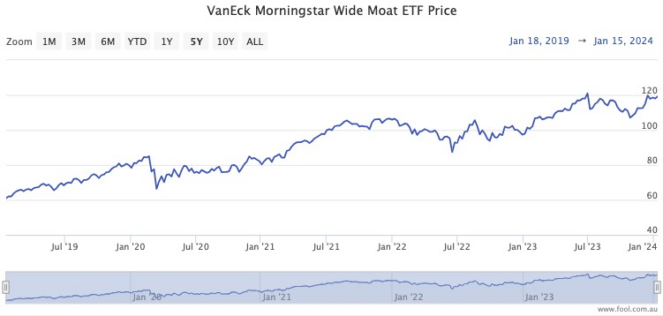
    If you look at exchange-traded funds (ETFs), something like the Vaneck Morningstar Wide Moat ETF (ASX: MOAT) provides instant diversification and decent returns.

    That fund has managed a CAGR of 15% over the last five years.

    There is no reason why 12% is not achievable.

    Second income, here we come

    Now, back to that $1,000.

    Add $500 to it each month with a 12% CAGR, and these are the amounts the portfolio could grow to:

    Years of investment Portfolio size
    9 $91,427
    15 $229,151
    20 $441,960
    Source: investor.gov

    The longer you leave the investment alone, the larger your second income will be.

    From the point you want to stop adding and start harvesting cash, you simply sell off the 12% returns each year.

    After just nine years, your initial $1,000 investment could deliver you the promised five figures of passive income. $10,971 annually, to be precise.

    If you have the patience to let the portfolio grow for 20 years before sinking your teeth into it, then that second income becomes quite substantial.

    How does an average annual cash injection of $53,035 sound to you?

    That, ladies and gentlemen, is the power of ASX stocks and compounding.

    The post Targeting a $53,000 second income starting with just $1,000 of savings? appeared first on The Motley Fool Australia.

    Wondering where you should invest $1,000 right now?

    When investing expert Scott Phillips has a stock tip, it can pay to listen. After all, the flagship Motley Fool Share Advisor newsletter he has run for over ten years has provided thousands of paying members with stock picks that have doubled, tripled or even more.*

    Scott just revealed what he believes could be the ‘five best ASX stocks’ for investors to buy right now. These stocks are trading at near dirt-cheap prices and Scott thinks they could be great buys right now…

    See The 5 Stocks
    *Returns as of 10 November 2023

    (function() {
    function setButtonColorDefaults(param, property, defaultValue) {
    if( !param || !param.includes(‘#’)) {
    var button = document.getElementsByClassName(“pitch-snippet”)[0].getElementsByClassName(“pitch-button”)[0];
    button.style[property] = defaultValue;
    }
    }

    setButtonColorDefaults(“#0095C8”, ‘background’, ‘#5FA85D’);
    setButtonColorDefaults(“#0095C8”, ‘border-color’, ‘#43A24A’);
    setButtonColorDefaults(“#fff”, ‘color’, ‘#fff’);
    })()

    More reading

    Motley Fool contributor Tony Yoo has positions in Lovisa and VanEck Morningstar Wide Moat ETF. The Motley Fool Australia’s parent company Motley Fool Holdings Inc. has positions in and has recommended Lovisa. The Motley Fool Australia has recommended Lovisa and VanEck Morningstar Wide Moat ETF. The Motley Fool has a disclosure policy. This article contains general investment advice only (under AFSL 400691). Authorised by Scott Phillips.

    from The Motley Fool Australia https://ift.tt/FSE89G7

  • Got $500 to invest in stocks? I’d put it in this ASX ETF

    Businessman at the beach building a wall around his sandcastle, signifying protecting his business.Businessman at the beach building a wall around his sandcastle, signifying protecting his business.

    There’s no doubt an exchange-traded fund (ETF) is a handy way to get started in ASX shares.

    Just from buying one stock, new investors can potentially reap diversification that could reduce risk and volatility.

    Plus it can save time and effort in researching individual stocks and the underlying company performance.

    That’s largely taken care of by the index or the formula the ETF follows.

    So if you had $500 to start your investment life, which ASX ETF should you buy?

    In my opinion, Vaneck Morningstar Wide Moat Etf (ASX: MOAT) is one of the best ETFs for beginners.

    What does this ASX ETF do?

    The fund invests in US shares that are constituents of the Morningstar Wide Moat Focus NR AUD Index.

    Those businesses are ones that Morningstar has identified as holding significant competitive advantages. The equity research firm uses the term “wide economic moat” to describe this attribute.

    This means that this ASX ETF’s holdings will be shuffled around from time to time as businesses see their moat increase or decrease.

    Some examples of the current holdings are:

    • Customer relations software giant Salesforce Inc (NYSE: CRM)
    • Antiviral pharmaceutical company Gilead Sciences Inc (NASDAQ: GILD)
    • Security products maker Allegion PLC (NYSE: ALLE)
    • Automatic test equipment manufacturer Teradyne Inc (NASDAQ: TER)

    How has the Wide Moat ETF performed in the past?

    While past performance is not an indicator of the future, the Wide Moat ETF’s track record does show us whether its formula has worked thus far.

    Pleasingly, it has returned a compound annual growth rate (CAGR) of around 15% over the past five years. Remember, that’s a period that includes such market shocks as the COVID-19 panic crash and the post-pandemic inflation correction.

    Wide Moat ETF in some years has also paid out a small dividend. The dividend yield has averaged out to be 2.4%, while last year it was as high as 8.8%.

    The Motley Fool’s Sebastian Bowen reckons this fund is the closest thing Australian investors have to emulating Warren Buffett’s investment style.

    “One of the central tenets of [Buffett’s] style is finding businesses that display what’s known as an economic moat,” he said.

    “This could be a strong and trusted brand, a low-cost advantage, or offering a product or service that customers have no choice but to pay for.”

    The post Got $500 to invest in stocks? I’d put it in this ASX ETF appeared first on The Motley Fool Australia.

    Wondering where you should invest $1,000 right now?

    When investing expert Scott Phillips has a stock tip, it can pay to listen. After all, the flagship Motley Fool Share Advisor newsletter he has run for over ten years has provided thousands of paying members with stock picks that have doubled, tripled or even more.*

    Scott just revealed what he believes could be the ‘five best ASX stocks’ for investors to buy right now. These stocks are trading at near dirt-cheap prices and Scott thinks they could be great buys right now…

    See The 5 Stocks
    *Returns as of 10 November 2023

    (function() {
    function setButtonColorDefaults(param, property, defaultValue) {
    if( !param || !param.includes(‘#’)) {
    var button = document.getElementsByClassName(“pitch-snippet”)[0].getElementsByClassName(“pitch-button”)[0];
    button.style[property] = defaultValue;
    }
    }

    setButtonColorDefaults(“#0095C8”, ‘background’, ‘#5FA85D’);
    setButtonColorDefaults(“#0095C8”, ‘border-color’, ‘#43A24A’);
    setButtonColorDefaults(“#fff”, ‘color’, ‘#fff’);
    })()

    More reading

    Motley Fool contributor Tony Yoo has positions in VanEck Morningstar Wide Moat ETF. The Motley Fool Australia’s parent company Motley Fool Holdings Inc. has positions in and has recommended Gilead Sciences and Salesforce. The Motley Fool Australia’s parent company Motley Fool Holdings Inc. has recommended Teradyne. The Motley Fool Australia has recommended Salesforce and VanEck Morningstar Wide Moat ETF. The Motley Fool has a disclosure policy. This article contains general investment advice only (under AFSL 400691). Authorised by Scott Phillips.

    from The Motley Fool Australia https://ift.tt/Dg5ZocO