Tag: Motley Fool

  • Leading brokers name 3 ASX shares to sell today

    Business man marking Sell on board and underlining it

    Yesterday I looked at three ASX shares brokers have given buy ratings to this week.

    Unfortunately, not all shares are in favour with them right now. Three that have just been given sell ratings are listed below. Here’s why these brokers are bearish on these ASX shares:

    OZ Minerals Limited (ASX: OZL)

    According to a note out of Credit Suisse, its analysts have retained their underperform rating but lifted their price target on this copper miner’s shares to $21.30. The broker lifted its price target to reflect increased production at Carrapateena, current commodity prices, and foreign exchange rates. However, despite this, the broker continues to believe its shares are overvalued, particularly given its belief that its earnings will fall notably in FY 2022. The OZ Minerals share price is trading at $26.39 today.

    Rio Tinto Limited (ASX: RIO)

    A note out of UBS reveals that its analysts have retained their sell rating and $86.00 price target on this mining giant’s shares. This follows the release of a weaker than expected third quarter update last week. UBS continues to believe that iron ore prices will fall meaningfully due to a recovery in supply and a buildup of inventories. And while it still expects big dividends in the second half, it isn’t enough for a more positive rating on its shares. The Rio Tinto share price is fetching $98.64 today.

    Zip Co Ltd (ASX: Z1P)

    Another note out of UBS reveals that its analysts have retained their sell rating and $5.40 price target on this buy now pay later provider’s shares. This follows the release of Zip’s first quarter update on Monday. UBS has concerns that Zip’s active customers in the US (customers that have transacted once in the last 12 months) could contain a significant amount of customers that are no longer active and will drop off once the 12-month period passes. It fears this could weigh on its absolute customer growth in the coming quarters. The Zip share price is trading at $6.99 on Tuesday afternoon.

    The post Leading brokers name 3 ASX shares to sell today appeared first on The Motley Fool Australia.

    Should you invest $1,000 in Zip right now?

    Before you consider Zip, you’ll want to hear this.

    Motley Fool Investing expert Scott Phillips just revealed what he believes are the 5 best stocks for investors to buy right now… and Zip wasn’t one of them.

    The online investing service he’s run for nearly a decade, Motley Fool Share Advisor, has provided thousands of paying members with stock picks that have doubled, tripled or even more.* And right now, Scott thinks there are 5 stocks that are better buys.

    *Returns as of August 16th 2021

    More reading

    Motley Fool contributor James Mickleboro has no position in any of the stocks mentioned. The Motley Fool Australia’s parent company Motley Fool Holdings Inc. owns shares of and has recommended ZIPCOLTD FPO. The Motley Fool Australia has no position in any of the stocks mentioned. The Motley Fool has a disclosure policy. This article contains general investment advice only (under AFSL 400691). Authorised by Bruce Jackson.

    from The Motley Fool Australia https://ift.tt/3pcXFF5

  • The Impedimed (ASX:IPD) share price is up 10% on trial success

    Two scientists in a lab cheer while looking at results on a computer.

    The Impedimed Limited (ASX: IPD) share price is making good ground today, having climbed 10% from the market open to now trade at 16.5 cents.

    Impedimed shares are again on the move after coming out of a trading halt that was requested before the start of trade today.

    Here’s what we know.

    What was announced?

    The company announced positive readouts from its recently completed PREVENT pivotal trial involving cancer-related lymphoedema patients across the US and Australia.

    It’s the end of a 6-year journey for the PREVENT trial which has been examining the effectiveness of Impedimed’s L-Dex technology in reducing the onset of chronic lymphoedema.

    The aim of the study was to determine if early intervention in patients with lymphoedema using “bioimpedance spectroscopy (BIS)” resulted in a lower rate of disease progression. It was compared to using a tape measure to detect the presence of excess fluid.

    The study findings indicate that in patients with early detection using L-Dex, the protocol “resulted in a lower rate of progression to chronic disease than patients with early detection from volume measures using a tape measure”.

    This, it claims, is a result that is statistically significant. The study collected data from 1,200 patients followed for up to three years across 13 hospitals in both countries.

    The results showed that in patients using L-Dex with early detection lymphoedema, the intervention resulted in a 7.9% rate of chronic lymphoedema compared to 19.2% in the tape measure group.

    This represents an absolute reduction of 11.3% and a relative reduction of 59%.

    In addition to these findings, “92% of patients with early detection cancer-related lymphoedema using L-Dex and intervention did not progress [to the chronic stages]”.

    What did Impedimed conclude from its results?

    The company surmised that its methodology “should be a standard approach for prospective breast cancer-related lymphoedema (BCRL) surveillance”.

    It also states its process is more specific in detecting lymphoedema than a tape measure “as it had fewer triggers and longer times to intervention trigger”, based on the data.

    In conclusion, the company said that when compared to a tape measure, the BIS screening method results in a more precise identification of patients more likely to benefit from early compression intervention.

    For reference, lymphoedema is often managed using compression garments to mobilise the excess extracellular fluid.

    Speaking on the announcement, Impedimed CEO Richard Carreon said the results were “significant not just for Impedimed, but for cancer patients at risk of lymphoedema”.

    Touching more on the results, Carreon added:

    This study is consistent with the previous studies showing regular monitoring with L-Dex and simple intervention substantially reduce the risk of developing cancer-related lymphoedema. What differentiates this study is, for the first time, we have a level I randomised controlled trial of sufficient size and duration to result in a statistically significant difference between the outcomes using L-Dex and Tape Measure.

    The Impedimed share price has rallied 22% in the past week, extending its gains in the last month to over 50%.

    The post The Impedimed (ASX:IPD) share price is up 10% on trial success appeared first on The Motley Fool Australia.

    Should you invest $1,000 in Impedimed right now?

    Before you consider Impedimed, you’ll want to hear this.

    Motley Fool Investing expert Scott Phillips just revealed what he believes are the 5 best stocks for investors to buy right now… and Impedimed wasn’t one of them.

    The online investing service he’s run for nearly a decade, Motley Fool Share Advisor, has provided thousands of paying members with stock picks that have doubled, tripled or even more.* And right now, Scott thinks there are 5 stocks that are better buys.

    *Returns as of August 16th 2021

    More reading

    The author Zach Bristow has no positions in any of the stocks mentioned. The Motley Fool Australia’s parent company Motley Fool Holdings Inc. has no position in any of the stocks mentioned. The Motley Fool Australia has no position in any of the stocks mentioned. The Motley Fool has a disclosure policy. This article contains general investment advice only (under AFSL 400691). Authorised by Bruce Jackson.

    from The Motley Fool Australia https://ift.tt/3lSIBKQ

  • What these brokers think of the Zip (ASX:Z1P) share price after its update

    young woman reviewing financial reports at desk with multiple computer screens

    The Zip Co Ltd (ASX: Z1P) share price has been a strong performer on Tuesday.

    In early afternoon trade, the buy now pay later (BNPL) provider’s shares are up 3.5% to $6.99.

    Why is the Zip share price charging higher?

    Today’s gain by the Zip share price appears to have been driven by a positive reaction to the company’s first quarter update from a leading broker.

    In case you missed it, for the three months ended 30 September, Zip reported record quarterly revenue of $136.8 million. This was up 89% year on year and 8% quarter on quarter.

    This strong revenue growth was driven by a 101% increase in quarterly transaction volume to $1.9 billion and an 82% jump in customer numbers to 8 million. Zip also revealed that it successfully completed a global rebrand across six countries during the quarter.

    What was the response?

    The team at Morgans were pleased enough with Zip’s performance during the quarter. The broker noted that Zip’s quarter on quarter revenue growth of 8% was commendable.

    However, it does have concerns that Zip could fall short of consensus revenue estimates in FY 2022. This has led to the broker retaining its add rating but trimming its price target to $8.56.

    Nevertheless, based on the current Zip share price, this still implies potential upside of 22% for investors.

    Anything else?

    Elsewhere, the team at Citi have held firm with their neutral rating and $7.40 price target. This price target suggests there’s 6% upside for the Zip share price.

    Citi commented: “1Q in-line with expectations as customer growth slows while increasing usage supports TTV. Z1P’s 1Q update was in-line with our expectations, except for the pick-up in arrears in ANZ. Looking ahead, 2Q is seasonally the more important quarter and the increase in marketing activity as part of the rebrand in the US could support customer acquisition and growth, however with customer additions slowing for the third consecutive quarter the key concern for us is whether Z1P can maintain its growth rates in the US with increasing competition. Maintain Neutral.”

    The post What these brokers think of the Zip (ASX:Z1P) share price after its update appeared first on The Motley Fool Australia.

    Should you invest $1,000 in Zip right now?

    Before you consider Zip, you’ll want to hear this.

    Motley Fool Investing expert Scott Phillips just revealed what he believes are the 5 best stocks for investors to buy right now… and Zip wasn’t one of them.

    The online investing service he’s run for nearly a decade, Motley Fool Share Advisor, has provided thousands of paying members with stock picks that have doubled, tripled or even more.* And right now, Scott thinks there are 5 stocks that are better buys.

    *Returns as of August 16th 2021

    More reading

    Motley Fool contributor James Mickleboro has no position in any of the stocks mentioned. The Motley Fool Australia’s parent company Motley Fool Holdings Inc. owns shares of and has recommended ZIPCOLTD FPO. The Motley Fool Australia has no position in any of the stocks mentioned. The Motley Fool has a disclosure policy. This article contains general investment advice only (under AFSL 400691). Authorised by Bruce Jackson.

    from The Motley Fool Australia https://ift.tt/3pbi917

  • Why is the Lark (ASX:LRK) share price up 9% on Tuesday?

    Three men celebrating by drinking glasses of whisky

    The Lark Distilling Co Ltd (ASX: LRK) share price is advancing on Tuesday afternoon. This comes after the whisky producer announced an update to its capital raising efforts.

    At the time of writing, Lark shares are up 9.68% to $5.55 a pop. In comparison, the All Ordinaries Index(ASX: XAO) is 0.27% higher to 7,710.6 points.

    What did Lark Distilling announce?

    According to its release, Lark advised it has successfully completed the first tranche of its fully underwritten institutional placement.

    The company received strong interest from both existing institutional shareholders and new investors. However, the overwhelming demand resulted in excess of the funds that Lark sought to raise.

    As such, the first tranche sees $46.5 million collected through the issuance of roughly 9.3 million new shares. The price listed for each share is $5, representing a 1.2% discount to the closing price of $5.06 on 15 October.

    The newly created shares are expected to settle on 21 October, with trading available on the following day.

    Lark managing director, Geoff Bainbridge touched on the placement, saying:

    We would like to thank our shareholders and partners for their strong support of the company as we execute our vision of becoming a global icon in single malt whisky. We have been gratified by the strong response to the institutional placement, with existing and new investors supporting our vision.

    The second tranche, worth $6.4 million is a conditional placement as the company’s directors are wishing to take part. This will involve about 1.3 million new shares based on the same terms and price as above. The placement will need to be approved by shareholders at the company’s Annual General Meeting (AGM) on 29 November.

    Lastly, a Share Purchase Plan (SPP) will give the opportunity to everyday investors to participate in the equity raise. The SPP aims to raise $5 million but may be scaled back or increased depending on the results.

    The SPP will open on 25 October and close on 15 November.

    About the Lark share price

    Over the past 12 months, Lark shares have gained more than 300%, and year-to-date trailing closely behind, up 280%.

    Based on today’s price, Lark presides a market capitalisation of roughly $350.23 million, with approximately 63.1 million shares on hand.

    The post Why is the Lark (ASX:LRK) share price up 9% on Tuesday? appeared first on The Motley Fool Australia.

    Should you invest $1,000 in Lark right now?

    Before you consider Lark, you’ll want to hear this.

    Motley Fool Investing expert Scott Phillips just revealed what he believes are the 5 best stocks for investors to buy right now… and Lark wasn’t one of them.

    The online investing service he’s run for nearly a decade, Motley Fool Share Advisor, has provided thousands of paying members with stock picks that have doubled, tripled or even more.* And right now, Scott thinks there are 5 stocks that are better buys.

    *Returns as of August 16th 2021

    More reading

    Motley Fool contributor Aaron Teboneras has no position in any of the stocks mentioned. The Motley Fool has a disclosure policy. This article contains general investment advice only (under AFSL 400691). Authorised by Bruce Jackson.

    from The Motley Fool Australia https://ift.tt/3C1soZC

  • Is the ASX one of the worst markets in the world for ESG investing?

    boy dressed as an eco warrior and holding a globe.

    A report by 3 major global investment groups has found Australia is among the world’s worst ‘green investment’ destinations. As a result, those interested in environmental, social, and governance (ESG) investing might be disappointed by the amount of climate-focused shares available on the ASX.

    The Investor Group on Climate Change (IGCC), the Asian Investor Group on Climate Change, and Ceres examined how the climate policies of G20 nations work (or don’t work) to draw private investment for ‘green’ initiatives.

    The groups – together, worth more than US$46 trillion – released their report yesterday.

    It found Australia’s current climate targets are likely struggling to attract climate-friendly investments.

    In fact, the groups only graded Russia, Saudi Arabia, and Indonesia’s climate targets as worse than those of Australia.

    However, it’s not all bleak. The IGCC stated if the Australian government amped up its 2030 emissions targets, set a net-zero emissions goal for 2050, and mandated climate risk disclosure it could attract more ‘green’ investments.

    How the groups measured climate policies

    The IGCC, the Asian Investor Group on Climate Change, and Ceres graded G20 nations on 5 policy targets.

    The policy targets are from the Investor Agenda’s 2021 Global Investor Statement to Governments on the Climate Crisis. The groups believe these targets are the key to unlocking trillions of dollars needed to address the climate crisis:

    • National plans to limit global warming to 1.5°C by 2030
    • Commitments to reach net-zero carbon emissions by 2050
    • The implementation of domestic policies to deliver said targets, as well as incentives for private investments in zero-emissions solutions
    • COVID-19 recovery plans that support net-zero emissions targets
    • Commitments to implement mandatory climate risk disclosures aligned with the Task Force on Climate-related Financial Disclosures’ (TCFD) recommendations

    Why might Australia fail at ESG investing?

    Those interested in ESG investing on the ASX might be disappointed to find the Australian Government isn’t doing as much as other nations are to support climate-friendly initiatives.

    Unfortunately, Australia failed to impress the major investment groups on 4 out of 5 climate measures.

    They found Australia’s implementation of climate risk disclosures acceptable but “generic”.

    It also noted that, as they stand, Australia’s 2030 climate targets will see the world between 2°C and 3°C warmer.

    Additionally, the nation doesn’t incentivise private investment that supports zero emissions targets. Australia is one of 7 G20 nations that hasn’t committed to net-zero emissions by 2050.  

    The investment groups noted investors, particularly those interested in ESG investing, see a 2050 net-zero target as the “bare minimum”.

    Finally, Australia spent less than 2% of its COVID-19 economic recovery spending on green initiatives.

    The Age quoted IGCC’s policy director Erwin Jackson as saying:

    There’s a really big gap emerging between Australia’s current 2030 target and what our other major allies and trading partners are doing. That gap is a big concern for investors because… it shows Australia is exposed to the transition in the global economy that is under way…

    Investors want to invest billions, not millions. But you need a good national policy in place to attract the billions. Billions of dollars are being invested in low emissions technology every day. This is a huge opportunity for Australia if we get the settings right.

    How other G20 nations compare

    While Russia, Saudi Arabia, and Indonesia were criticised for not rising to any of the measures, India, Mexico, and Argentina also fell at a single hurdle.

    Meanwhile, the United Kingdom, European Union, France, and Germany topped the tally board. However, no G20 nation received a perfect score.

    Interestingly, Canada and Turkey respectively put 74.5% and 100% of their COVID-19 recovery spending towards green initiatives.

    Australians looking to get involved in ESG investing might want to watch the upcoming COP26 United Nations climate change conference closely.

    There, global leaders may just address the major global investment groups’ worries with notable policy changes.

    The post Is the ASX one of the worst markets in the world for ESG investing? appeared first on The Motley Fool Australia.

    Wondering where you should invest $1,000 right now?

    When investing expert Scott Phillips has a stock tip, it can pay to listen. After all, the flagship Motley Fool Share Advisor newsletter he has run for more than eight years has provided thousands of paying members with stock picks that have doubled, tripled or even more.*

    Scott just revealed what he believes could be the five best ASX stocks for investors to buy right now. These stocks are trading at near dirt-cheap prices and Scott thinks they could be great buys right now.

    *Returns as of August 16th 2021

    More reading

    from The Motley Fool Australia https://ift.tt/3Ga5h1t

  • How Aussie Broadband (ASX:ABB) is just smashing it right now

    two colleagues high five each other as they sit side by side at a long desk in front of their laptop computers in an office environment.

    You can’t wipe the smiles off the faces of Aussie Broadband Ltd (ASX: ABB) shareholders this year, as they’ve seen their investments rise 150%.

    Now they have even more to cheer about.

    Global internet testing company Ookla released its latest quarterly figures this week, declaring Aussie Broadband the fastest fixed broadband provider in Australia.

    In fact, the competition wasn’t even close as Aussie scored 88.33 on the speed test, with the next closest Optus sitting on 59.81:

    table, th, td {
    border: 1px solid black;
    border-collapse: collapse;
    }

    Internet service provider Speed score
    Aussie Broadband 88.33
    Optus 59.81
    iiNet (TPG Telecom Ltd (ASX: TPG)) 58.20
    TPG (TPG Telecom Ltd (ASX: TPG)) 53.93
    Vodafone (TPG Telecom Ltd (ASX: TPG)) 52.70
    Telstra Corporation Ltd (ASX: TLS) 49.00
    Source: Ookla, table created by author

    Shaw and Partners senior investment adviser Adam Dawes said last week he “really likes” Aussie Broadband shares.

    “It’s taking a lot of market share from Telstra,” he said.

    “Telstra is so big, so cumbersome, it can’t be nimble. Aussie Broadband is very, very nimble.”

    Not just fast, but consistent

    However, Aussie Broadband didn’t rate as the fastest provider overall with a small sample of superfast users dragging up the average.

    Ookla also analysed for the most consistent internet service provider, and Aussie came out on top again:

    table, th, td {
    border: 1px solid black;
    border-collapse: collapse;
    }

    Internet service provider Consistency score
    Aussie Broadband 85.7%
    Vodafone 83.2%
    Optus 82.1%
    Telstra 77%
    TPG 75.9%
    iiNet 74.5%
    Source: Ookla, table created by author

    Just last month Aussie Broadband used its bullish share price to raise more than $130 million from both institutional and retail investors.

    “They are going to make some more acquisitions which will be EPS [earnings per share] accretive,” said Dawes.

    “As well, we expect them to announce some other deals with the NBN and some fibre stuff.”

    Aussie Broadband made it a trifecta in Ookla’s latest quarterly report, topping the league table for network latency as well:

    table, th, td {
    border: 1px solid black;
    border-collapse: collapse;
    }

    Internet service provider Median latency (milliseconds)
    Aussie Broadband 9
    iiNet 9
    TPG 10
    Telstra 10
    Vodafone 10
    Optus 10
    Source: Ookla, table created by author

    Latency is an important measure of performance as it’s a measure of how delayed the broadband response is.

    An internet connection can be blindingly quick but if it has high latency, it becomes unusable for uses like games and streaming.

    Aussie Broadband shares are trading for $5.20 early Tuesday afternoon.

    “We’ve got a $5.50 price target on it,” said Dawes last week.

    “I think there’s a little bit of room to move on the upside on that one.”

    The post How Aussie Broadband (ASX:ABB) is just smashing it right now appeared first on The Motley Fool Australia.

    Wondering where you should invest $1,000 right now?

    When investing expert Scott Phillips has a stock tip, it can pay to listen. After all, the flagship Motley Fool Share Advisor newsletter he has run for more than eight years has provided thousands of paying members with stock picks that have doubled, tripled or even more.*

    Scott just revealed what he believes could be the five best ASX stocks for investors to buy right now. These stocks are trading at near dirt-cheap prices and Scott thinks they could be great buys right now.

    *Returns as of August 16th 2021

    More reading

    Motley Fool contributor Tony Yoo owns shares of Aussie Broadband Limited. The Motley Fool Australia’s parent company Motley Fool Holdings Inc. owns shares of and has recommended Aussie Broadband Limited. The Motley Fool Australia owns shares of and has recommended Telstra Corporation Limited. The Motley Fool Australia has recommended Aussie Broadband Limited and TPG Telecom Limited. The Motley Fool has a disclosure policy. This article contains general investment advice only (under AFSL 400691). Authorised by Bruce Jackson.

    from The Motley Fool Australia https://ift.tt/3lVNW4d

  • Why is the VAS (ASX:VAS) share price underperforming the ASX 200 over the past month?

    dissapointed man at falling share price

    The S&P/ASX 200 Index (ASX: XJO) has enjoyed a pretty solid month of returns as we traverse the second half of October on the ASX. Since Monday 20 September, the ASX 200 has added about 2.04%, rising from 7,248.2 points to the current 7,396.3 points at the time of writing. But how has the Vanguard Australian Shares Index ETF (ASX: VAS) performed?

    VAS is, after all, the ASX’s most popular exchange-traded fund (ETF) by funds under management. But instead of tracking the ASX 200 Index, VAS instead tracks the S&P/ASX 300 Index (ASX: XKO). The ASX 300 is similar to the ASX 200, but spreads out its weightings across the largest 300 ASX shares, rather than the more concentrated 200 shares that the ASX 200 follows.

    So over the same period as discussed above, the ASX 300 Index has returned 2.14%, slightly above the ASX 200’s 2.04%. Can we expect the same from VAS units?

    Not exactly as it turns out. Since 20 September, VAS units have returned 0.79%. That’s well under both the ASX 200 and the ASX 300’s raw returns. So what’s going on here?

    One possible explanation could be VAS’s most recent quarterly dividend distribution. This ETF forked out a monster payout just yesterday. VAS unitholders received a distribution worth $1.41 per unit, with the ETF going ex-distribution back on 1 October. This payment alone is worth a yield of 1.49% on the current VAS unit price.

    Since the ASX 200 and ASX 300 are both raw share indexes, they don’t account for dividends in quite the same way as an ETF. As such, much of this seeming performance difference between VAS and the ASX 200 and ASX 300 could be put down to this dividend distribution.

    VAS snapshot

    VAS is one of the few ETFs on the ASX that tracks the ASX 300 Index, which could explain its enduring popularity. This ETF has managed to return a very pleasing 30.96% over the past 12 months, an average of 10.49% per annum over the past 35 years, as well as 10.67% per annum over the past 10 years.

    Its largest holdings (in order of weighting) consist of Commonwealth Bank of Australia (ASX: CBA), CSL Limited (ASX: CSL), BHP Group Ltd (ASX: BHP), Westpac Banking Corp (ASX: WBC) and National Australia Bank Ltd. (ASX: NAB).

    VAS charges a management fee of 0.1% per annum.

    The post Why is the VAS (ASX:VAS) share price underperforming the ASX 200 over the past month? appeared first on The Motley Fool Australia.

    Should you invest $1,000 in VAS right now?

    Before you consider VAS, you’ll want to hear this.

    Motley Fool Investing expert Scott Phillips just revealed what he believes are the 5 best stocks for investors to buy right now… and VAS wasn’t one of them.

    The online investing service he’s run for nearly a decade, Motley Fool Share Advisor, has provided thousands of paying members with stock picks that have doubled, tripled or even more.* And right now, Scott thinks there are 5 stocks that are better buys.

    *Returns as of August 16th 2021

    More reading

    Motley Fool contributor Sebastian Bowen owns shares of National Australia Bank Limited. The Motley Fool Australia’s parent company Motley Fool Holdings Inc. owns shares of and has recommended CSL Ltd. The Motley Fool Australia has no position in any of the stocks mentioned. The Motley Fool has a disclosure policy. This article contains general investment advice only (under AFSL 400691). Authorised by Bruce Jackson.

    from The Motley Fool Australia https://ift.tt/3aMv94Z

  • This leading fund manager thinks these ASX shares might be buys

    ASX shares broker downgrade origami paper fortune teller with buy hold sell and dollar sign options

    The high-performing fund manager Wilson Asset Management (WAM) has recently identified some ASX shares that it owns (or owned) in one of its leading portfolios.

    WAM operates several listed investment companies (LICs). Two of those LICs are WAM Capital Limited (ASX: WAM) and WAM Research Limited (ASX: WAX).

    There’s also one called WAM Leaders Ltd (ASX: WLE) which looks at the larger businesses on the ASX.

    WAM says WAM Leaders actively invests in the highest quality Australian companies.

    The WAM Leaders portfolio has delivered gross returns (that’s before fees, expenses and taxes) of 15.3% per annum since inception in May 2016, which is superior to the S&P/ASX 200 Accumulation Index average return of 10.2%.

    These are the ASX shares that WAM outlined in its most recent monthly update:

    Santos Ltd (ASX: STO) and Oil Search Ltd (ASX: OSH)

    The fund manager explained that Oil Search is the largest oil and gas exploration and development company incorporated in Papua New Guinea, whilst Santos is a leading supplier of natural gas in Australia.

    Both companies benefited in September as oil prices rose to multi-year highs that the market hasn’t seen since 2014.

    Why? WAM thinks it was simply down to the fact that growth was continuing to grow faster than supply.

    Vaccines continue to go into arms around the world in both developed and “emerging” markets. Travel restrictions are easing. These two things combined are helping increase demand for transport-related oil products.

    The fund manager noted that it is estimated that in the US, Europe and India, domestic travel has recovered to pre-pandemic levels, while other markets such as the UK and Japan are not far behind.

    At around a quarter of global oil consumption, gasoline demand has seen the fastest recovery, while jet fuel demand which makes up around 8% of global oil consumption is still down significantly with air traffic globally down 60% compared to 2019.

    There was another element that could be assisting the share prices of these two ASX shares.

    WAM pointed out that OPEC+ (the Organisation of the Petroleum Exporting Countries Plus) has left the policy of increasing supply by 400,000 barrels a day in October and November unchanged. That’s despite international pressure to return supply more rapidly considering the growth in demand.

    The fund manager said that another factor is whether OPEC+ will actually even meet its growth target considering less than half of the growth of production was achieved in August due to disruptions to operations in Angola and Nigeria.

    Oil demand continues to grow, the northern hemisphere is heading into winter and there is ongoing ‘hesitancy’ from OPEC+ members. All of that makes WAM think oil prices will remain elevated for the rest of the 2021 calendar year.

    South32 Ltd (ASX: S32)

    The other ASX share that WAM referred to was the mining business South32. The fund manager said that South32 continues to be a “significant” contributor to WAM Leaders’ outperformance.

    South32 makes half of its cash earnings from aluminium and alumina output, where pricing continues to benefit from “rising cost pressures, China’s power constraints and supply disruption in both PNG and Indonesia.

    The fund manager also noted that the company is benefiting from the metallurgical coal exposure, which makes up around 15% of its earnings. The metallurgical coal market is “tightening” on a strong recovery in global power demand, gas prices and steel production, combined with supply side infrastructure and transport challenges, according to WAM.

    Finally, it was pointed out that the price of metallurgical coal is up by 140% in the last six months, and 90% in the last three months.

    The post This leading fund manager thinks these ASX shares might be buys appeared first on The Motley Fool Australia.

    Should you invest $1,000 in South32 right now?

    Before you consider South32, you’ll want to hear this.

    Motley Fool Investing expert Scott Phillips just revealed what he believes are the 5 best stocks for investors to buy right now… and South32 wasn’t one of them.

    The online investing service he’s run for nearly a decade, Motley Fool Share Advisor, has provided thousands of paying members with stock picks that have doubled, tripled or even more.* And right now, Scott thinks there are 5 stocks that are better buys.

    *Returns as of August 16th 2021

    More reading

    Motley Fool contributor Tristan Harrison has no position in any of the stocks mentioned. The Motley Fool Australia’s parent company Motley Fool Holdings Inc. has no position in any of the stocks mentioned. The Motley Fool Australia has no position in any of the stocks mentioned. The Motley Fool has a disclosure policy. This article contains general investment advice only (under AFSL 400691). Authorised by Bruce Jackson.

    from The Motley Fool Australia https://ift.tt/3pfx1eT

  • Here’s why the Paladin Energy (ASX:PDN) share price is climbing 9% today

    the chemical symbol for uranium on a periodic table.

    The Paladin Energy Ltd (ASX: PDN) share price is rallying on Tuesday following a strong overnight performance for uranium stocks.

    At the time of writing, the Paladin Energy share price is up 9.2% to 95 cents.

    What’s driving the Paladin Energy share price?

    Paladin Energy is taking off after a strong overnight performance from the Global X Uranium Exchange Traded Fund (ETF).

    The fund provides investors exposure to a broad range of companies involved in uranium mining and the production of mining and nuclear-related components.

    The uranium ETF surged 4.72% on Monday night to a record close of US$28.82.

    Headlining the overnight gains was news that the world’s largest uranium producer, Kazakhstan’s Kazatomprom was planning to launch its own physical uranium fund.

    Kazatomprom will raise an initial US$50 million from its founders and an additional US$500 million when the fund is up and running.

    “The Fund will leverage the combination of Kazatomprom’s expertise in the uranium market and NIC’s proven track record, with the AIFC offering investors direct exposure to the attractive opportunity presented by the long-term fundamentals of the uranium market and nuclear industry,” said Kazatomprom CEO Mazhit Sharipov, according to World Nuclear News.

    Physical uranium funds, namely Sprott’s Physical Uranium Trust, have helped drive spot prices from multi-year lows of around US$30/lb in August to 9 year highs of more than US$50/lb by mid-September.

    This broadly coincides with the Paladin Energy share price skyrocketing to a 9 year high of $1.12 on 17 September.

    The strategy of these funds is simple — buy physical uranium off the spot market and store it as a long term investment.

    How does this benefit Paladin Energy?

    Most ASX-listed uranium shares are either explorers or in possession of projects coming out of care and maintenance.

    Paladin Energy is targeting the restart of its “globally significant” Langer Heinrich project, located in Nambia.

    The project’s first production was in 2007, reaching peak production of 5.6 million pounds of uranium in 2014.

    The company estimates restart costs of around US$81 million and is currently progressing the “critical-path elements” to its restart plan.

    The post Here’s why the Paladin Energy (ASX:PDN) share price is climbing 9% today appeared first on The Motley Fool Australia.

    Should you invest $1,000 in Paladin Energy right now?

    Before you consider Paladin Energy, you’ll want to hear this.

    Motley Fool Investing expert Scott Phillips just revealed what he believes are the 5 best stocks for investors to buy right now… and Paladin Energy wasn’t one of them.

    The online investing service he’s run for nearly a decade, Motley Fool Share Advisor, has provided thousands of paying members with stock picks that have doubled, tripled or even more.* And right now, Scott thinks there are 5 stocks that are better buys.

    *Returns as of August 16th 2021

    More reading

    Motley Fool contributor Kerry Sun has no position in any of the stocks mentioned. The Motley Fool Australia’s parent company Motley Fool Holdings Inc. has no position in any of the stocks mentioned. The Motley Fool Australia has no position in any of the stocks mentioned. The Motley Fool has a disclosure policy. This article contains general investment advice only (under AFSL 400691). Authorised by Bruce Jackson.

    from The Motley Fool Australia https://ift.tt/3jeAzud

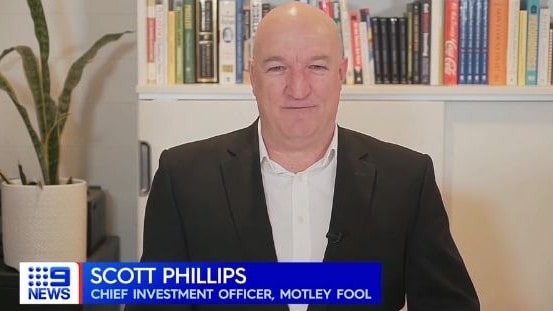
  • Queensland plans to open, and a good day for banks and miners. Scott Phillips on Nine’s Late News

    Motley Fool Chief Investment Officer Scott Phillips

    Motley Fool Australia Chief Investment Officer Scott Phillips joined Nine’s Late News on Monday night to discuss the economic impact of Queensland’s border announcement, plus the market’s response to inflation worries, a big takeover, and what we could expect from the US market overnight.

    The post Queensland plans to open, and a good day for banks and miners. Scott Phillips on Nine’s Late News appeared first on The Motley Fool Australia.

    Wondering where you should invest $1,000 right now?

    When investing expert Scott Phillips has a stock tip, it can pay to listen. After all, the flagship Motley Fool Share Advisor newsletter he has run for more than eight years has provided thousands of paying members with stock picks that have doubled, tripled or even more.*

    Scott just revealed what he believes could be the five best ASX stocks for investors to buy right now. These stocks are trading at near dirt-cheap prices and Scott thinks they could be great buys right now.

    *Returns as of August 16th 2021

    More reading

    Motley Fool contributor Scott Phillips has no position in any of the stocks mentioned. The Motley Fool Australia’s parent company Motley Fool Holdings Inc. owns shares of and has recommended AFTERPAY T FPO, Hub24 Ltd, WiseTech Global, and Xero. The Motley Fool Australia owns shares of and has recommended AFTERPAY T FPO, Class Limited, WiseTech Global, and Xero. The Motley Fool Australia has recommended Hub24 Ltd. The Motley Fool has a disclosure policy. This article contains general investment advice only (under AFSL 400691). Authorised by Bruce Jackson.

    from The Motley Fool Australia https://ift.tt/3vx7qzi