Tag: Motley Fool

  • Bank of Queensland is offering the highest savings interest rate of any ASX bank. What might this mean for shareholders?

    A little girl holds on to her piggy bank, giving it a really big hug.A little girl holds on to her piggy bank, giving it a really big hug.

    Bank of Queensland Ltd (ASX: BOQ) shares outperformed the big four ASX bank shares on Friday.

    The Bank of Queensland share price finished the day at $5.70, up 1.79%.

    By comparison, Commonwealth Bank of Australia (ASX: CBA) shares and ANZ Group Holdings Ltd (ASX: ANZ) shares gained 0.6% and 0.8%, respectively, while National Australia Bank Ltd (ASX: NAB) scraped into the green by 0.15%. Westpac Banking Corp (ASX: WBC) finished in the red.

    Meantime, Bank of Queensland today increased the maximum savings interest rate on its Future Saver account by 0.15% to 5.3%.

    This is the highest ongoing savings interest rate available today, according to RateCity.

    It is being offered to customers aged 14 to 35 years who have up to $50,000 in a Future Saver account.

    Future Saver account holders aged 18 and over have to deposit $1,000 into a linked transaction account and make a minimum of five purchases per month to qualify for the 5.3% savings interest rate.

    What does this mean for Bank of Queensland shares?

    Well, offering the best savings interest rate around is a pretty good look for Bank of Queensland.

    It’s no doubt doing this in the hope of attracting more depositor customers.

    This is important to help the bank fund new home mortgages and business loans for borrowers.

    You see, ASX banks can fund their loans using your savings and money borrowed from other institutions. Some of those institutions are overseas.

    Borrowing externally is typically a more expensive way of funding loans than using deposited funds in savings accounts.

    So, doing things that attract more depositors is a necessary part of banking.

    But there’s a cost to the bank in the form of the interest it has to pay to its depositors.

    So, by offering the best savings interest rate around, the Bank of Queensland is also paying more than other banks to access their savings customers’ money.

    So, it’s a delicate balancing act.

    All of these decisions made by the banks determine their net interest margins (NIMs).

    What is the net interest margin (NIM)?

    The NIM is an important metric in terms of bank earnings.

    It’s the amount of money ASX banks earn from the interest they are paid by borrowers minus the interest they pay to their savings deposit holders.

    The higher the NIM, the better it is for earnings.

    The ASX banks typically get a share price bump when they report improving NIMs or NIMs that are higher than expected.

    That’s what happened to Bank of Queensland shares last October when the junior lender became the first ASX bank to announce a substantially improved NIM on the back of all those RBA rate rises.

    Bank of Queensland revealed a 1.81% NIM for 4Q FY22, well up on its 2H FY22 overall result of 1.75%.

    This was better than the analysts expected, and Bank of Queensland shares skyrocketed 11.3% that day.

    RBA, the gift that keeps on giving to ASX banks

    You can imagine how happy the ASX banks are every time the Reserve Bank puts up the official cash rate.

    Every RBA move gives the ASX banks the green light to raise their interest rates on loans. In other words, they get a pay rise every time the RBA strikes.

    And the RBA has put rates up by a whopping 3.75% over the past 12 months.

    Of course, most lenders have been very quick to pass on these rate rises to their borrowers because they can make more money out of their loans that way.

    They haven’t been so quick to pass them on to savings account holders because that costs them money.

    Stingy.

    Anyway, the result of all these rate changes has been improving NIMs across the board for the banks.

    Let’s take a look at the latest figures.

    What are the NIMs of the major banks?

    The latest NIMs reported by the Bank of Queensland and some of its competitors are:

    • Commonwealth Bank NIM of 2.1% for 1H FY23, up 0.23% on 2H FY22
    • Westpac Banking Corp (ASX: WBC) NIM of 1.96% for 1H FY23, up 0.05% on 2H FY22
    • Bendigo and Adelaide Bank Ltd (ASX: BEN) NIM of 1.88% for 1H FY23, up 0.19% on 2H FY22
    • Bank of Queensland NIM of 1.79% for 1H FY23, up 0.04% on 2H FY22
    • National Australia Bank Ltd (ASX: NAB) NIM of 1.77% for 1H FY23, up 0.14% on 2H FY22
    • ANZ Bank NIM of 1.75% for 1H FY23, up 0.07% on 2H FY22.

    Obviously, there are many factors contributing to an ASX bank’s overall earnings. NIM is just one of them.

    But given how leveraged our banks are to the residential property market, this is a metric worth keeping an eye on.

    Bank of Queensland shares snapshot

    The Bank of Queensland share price is down 16.2% in the year to date.

    In fact, Bank of Queensland shares hit a new 52-week low of $5.60 yesterday.

    Like every other ASX bank share, its price decline is more to do with market sentiment than anything else.

    The collapse of Silicon Valley Bank and Signature Bank in the United States in March made global shares investors very nervous.

    Then Credit Suisse was taken over by UBS due to a bunch of operational difficulties, which created more uncertainty.

    As my colleague James reported earlier today, broker Ord Minnett says Bank of Queensland shares are a buy at this level. It reckons the stock will go to $8.50 within the next 12 months.

    That’s an almost 50% potential upside for investors who buy Bank of Queensland shares now.

    As James reported, the broker “made the move on valuation grounds following significant share price weakness in 2023”.

    Ord Minnett believes the Bank of Queensland is well-placed to grow its loans business and boost its margins once competition eases and the ME Bank integration is completed.

    The post Bank of Queensland is offering the highest savings interest rate of any ASX bank. What might this mean for shareholders? appeared first on The Motley Fool Australia.

    Wondering where you should invest $1,000 right now?

    When investing expert Scott Phillips has a stock tip, it can pay to listen. After all, the flagship Motley Fool Share Advisor newsletter he has run for over ten years has provided thousands of paying members with stock picks that have doubled, tripled or even more.*

    Scott just revealed what he believes could be the ‘five best ASX stocks’ for investors to buy right now. These stocks are trading at near dirt-cheap prices and Scott thinks they could be great buys right now…

    See The 5 Stocks
    *Returns as of April 3 2023

    (function() {
    function setButtonColorDefaults(param, property, defaultValue) {
    if( !param || !param.includes(‘#’)) {
    var button = document.getElementsByClassName(“pitch-snippet”)[0].getElementsByClassName(“pitch-button”)[0];
    button.style[property] = defaultValue;
    }
    }

    setButtonColorDefaults(“#43B02A”, ‘background’, ‘#5FA85D’);
    setButtonColorDefaults(“#43B02A”, ‘border-color’, ‘#43A24A’);
    setButtonColorDefaults(“#fff”, ‘color’, ‘#fff’);
    })()

    More reading

    Motley Fool contributor Bronwyn Allen has positions in Anz Group, Commonwealth Bank Of Australia, and Westpac Banking Corporation. The Motley Fool Australia’s parent company Motley Fool Holdings Inc. has no position in any of the stocks mentioned. The Motley Fool Australia has positions in and has recommended Bendigo And Adelaide Bank. The Motley Fool Australia has recommended Westpac Banking Corporation. The Motley Fool has a disclosure policy. This article contains general investment advice only (under AFSL 400691). Authorised by Scott Phillips.

    from The Motley Fool Australia https://ift.tt/eqdp9vz

  • Brokers say these ASX dividend shares are buys

    an older couple look happy as they sit at a laptop computer in their home.

    an older couple look happy as they sit at a laptop computer in their home.Income investors are a lucky bunch! The Australian share market is home to a large number of quality dividend shares.

    But which ones could be buys? Two that brokers rate highly are listed below. Here’s what you need to know about them:

    HomeCo Daily Needs REIT (ASX: HDN)

    HomeCo Daily Needs could be an ASX dividend share to buy right now.

    In case you’re not familiar with HomeCo Daily Needs, it is a property investment company with a focus on convenience-based assets. These are assets predominantly found across neighbourhood retail, large format retail, and health and services. Essentially, anything that provides daily needs to the public.

    Morgans is very positive on the company and believes it is well-placed to benefit from “accelerating click & collect trends” and its development pipeline. The broker currently has an add rating and $1.50 price target on its shares.

    In addition, it is forecasting some big dividend yields in the near term. The broker expects dividends per share of 8.3 cents in FY 2023 and then 8.4 cents in FY 2024. Based on the current HomeCo Daily Needs share price of $1.21, this will mean yields of 6.9% and 7%, respectively.

    Premier Investments Limited (ASX: PMV)

    Another ASX dividend share to consider buying is Premier Investments.

    It is the retail conglomerate behind popular brands such as Just Jeans, Peter Alexander, and Smiggle.

    Analysts at Macquarie are very positive on the company. In response to its recent half-year results release, which came in ahead of expectations, the broker retained its outperform rating with an improved price target of $30.50.

    The broker is also now forecasting fully franked dividends per share of $1.24 in FY 2023 and then 97 cents in FY 2024. Based on the latest Premier Investments share price of $25.41, this will mean yields of 4.9% and 3.8%, respectively, for income investors.

    The post Brokers say these ASX dividend shares are buys appeared first on The Motley Fool Australia.

    Where should you invest $1,000 right now? 3 dividend stocks to help beat inflation

    This FREE report reveals 3 stocks not only boasting sustainable dividends but that also have strong potential for massive long term returns…

    See the 3 stocks
    *Returns as of April 3 2023

    (function() {
    function setButtonColorDefaults(param, property, defaultValue) {
    if( !param || !param.includes(‘#’)) {
    var button = document.getElementsByClassName(“pitch-snippet”)[0].getElementsByClassName(“pitch-button”)[0];
    button.style[property] = defaultValue;
    }
    }

    setButtonColorDefaults(“#0095C8”, ‘background’, ‘#5FA85D’);
    setButtonColorDefaults(“#0095C8”, ‘border-color’, ‘#43A24A’);
    setButtonColorDefaults(“#fff”, ‘color’, ‘#fff’);
    })()

    More reading

    Motley Fool contributor James Mickleboro has no position in any of the stocks mentioned. The Motley Fool Australia’s parent company Motley Fool Holdings Inc. has no position in any of the stocks mentioned. The Motley Fool Australia has recommended Premier Investments. The Motley Fool has a disclosure policy. This article contains general investment advice only (under AFSL 400691). Authorised by Scott Phillips.

    from The Motley Fool Australia https://ift.tt/aepd9hs

  • Here are the top 10 ASX 200 shares today

    happy business people celebrate, share rise, record price, increasehappy business people celebrate, share rise, record price, increase

    The S&P/ASX 200 Index (ASX: XJO) shook off early losses on Friday to close the final session of the week 0.07% higher at 7,256.7 points.

    That sees the index 0.51% higher week-on-week, thanks mainly to Monday’s 0.78% gain.

    The S&P/ASX 200 Health Care Index (ASX: XHJ) led the way today, rising 1.2%. The S&P/ASX 200 Information Technology Index (ASX: XIJ) also posted a notable 1% gain.

    However, not all was green on Friday. The S&P/ASX 200 Materials Index (ASX: XMJ) was the worst-performing sector, falling 1%, with Newcrest Mining Ltd (ASX: NCM) among the stocks weighing it down.

    The gold mining stock tumbled 2.2% after the company announced it extended the exclusivity period offered to suitor Newmont as it conducts due diligence for what could be a $32 billion acquisition.

    Meanwhile, the S&P/ASX 200 Energy Index (ASX: XEJ) dumped 0.5% after oil prices slumped around 2% overnight.

    So, with all that in mind, let’s dive into today’s top-performing ASX 200 shares.

    Top 10 ASX 200 shares countdown

    The biggest gain on the index on Friday was posted by the Lake Resources NL (ASX: LKE) share price. It lifted 12.52% despite no news having been released by the lithium company.

    These shares made today’s biggest gains:

    ASX-listed company Share price Price change
    Lake Resources NL (ASX: LKE) $0.65 12.52%
    Graincorp Ltd (ASX: GNC) $8.25 5.63%
    Core Lithium Ltd (ASX: CXO) $1.16 4.05%
    News Corp (ASX: NWS) $25.85 4.23%
    Imugene Limited (ASX: IMU) $0.125 4.17%
    Megaport Ltd (ASX: MP1) $5.57 3.72%
    Nanosonics Ltd (ASX: NAN) $5.60 3.70%
    BrainChip Holdings Ltd (ASX: BRN) $0.455 3.41%
    Lendlease Group (ASX: LLC) $8.16 3.16%
    Charter Hall Group (ASX: CHC) $11.28 2.92%

    Our top 10 shares countdown is a recurring end-of-day summary to let you know which companies were making big moves on the day. Check in at Fool.com.au after the weekday market closes to see which stocks make the countdown.

    The post Here are the top 10 ASX 200 shares today appeared first on The Motley Fool Australia.

    FREE Beginners Investing Guide

    Despite what some people may say – we believe investing in shares doesn’t have to be overwhelming or complicated…

    For over a decade, we’ve been helping everyday Aussies get started on their journey.

    And to help even more people cut through some of the confusion “experts’” seem to want to perpetuate – we’ve created a brand-new “how to” guide.

    Yes, Claim my FREE copy!
    *Returns as of April 3 2023

    (function() {
    function setButtonColorDefaults(param, property, defaultValue) {
    if( !param || !param.includes(‘#’)) {
    var button = document.getElementsByClassName(“pitch-snippet”)[0].getElementsByClassName(“pitch-button”)[0];
    button.style[property] = defaultValue;
    }
    }

    setButtonColorDefaults(“#0095C8”, ‘background’, ‘#5FA85D’);
    setButtonColorDefaults(“#0095C8”, ‘border-color’, ‘#43A24A’);
    setButtonColorDefaults(“#fff”, ‘color’, ‘#fff’);
    })()

    More reading

    Motley Fool contributor Brooke Cooper has no position in any of the stocks mentioned. The Motley Fool Australia’s parent company Motley Fool Holdings Inc. has positions in and has recommended Megaport and Nanosonics. The Motley Fool Australia has positions in and has recommended Nanosonics. The Motley Fool Australia has recommended Megaport. The Motley Fool has a disclosure policy. This article contains general investment advice only (under AFSL 400691). Authorised by Scott Phillips.

    from The Motley Fool Australia https://ift.tt/EjHNSZA

  • Three reasons the CBA share price made news this week

    a group of four people in a bank setting with one woman serving a customer and the other two male bank workers grouped together over a document.a group of four people in a bank setting with one woman serving a customer and the other two male bank workers grouped together over a document.

    The Commonwealth Bank of Australia (ASX: CBA) share price got its fair share of media coverage this week.

    That news didn’t focus on the S&P/ASX 200 Index (ASX: XJO) bank stock’s outperformance.

    But it’s worth noting that in late afternoon trading today, the CBA share price is up 2.6% since last Friday’s close at $98.54. That compares to a 0.3% gain posted by the ASX 200.

    Indeed, if the big four bank stock can hold onto its gains today, it will mark a whole week in the green.

    Now, here are three things that put CBA shares in the news this week.

    Why was CommBank making headlines?

    Tuesday was a big day for CommBank following the release of its quarterly results.

    Highlights included a 10% year-on-year increase in cash net profit after tax (NPAT), which reached $2.6 billion.

    Both home lending and business lending were up. Though on the negative side of the ledger, the bank’s net interest margins (NIM) dipped, pressured by a very competitive home loan market and higher interest rates paid on its deposit accounts.

    The CBA share price gained 0.2% on Tuesday.

    CommBank was also in the news after the 2023 federal budget came out.

    CBA’s chief economist Stephen Halmarick said the budget had not impacted the bank’s inflation forecast, advising it continued to see “a return to inflation within the 2% to 3% target by mid-2024”.

    Halmarick added:

    The other economic forecasts in the budget are consistent with our own view that the pace of economic growth will slow meaningfully in the year ahead and the unemployment rate will edge higher.

    CommBank was back in The Motley Fool headlines on Thursday following a bearish assessment from Goldman Sachs.

    On the back of the bank’s quarterly update, the broker retained its sell rating with an $87.78 target for the CBA share price. That’s more than 11% below the current price.

    While overall fairly positive on the bank, Goldman’s primary concerns stem around the premium that CBA trades for compared to the other big four banks.

    Referring to the elevated price-to-earnings (P/E) ratio, Goldman’s analysts noted, “We struggle to justify the stock’s relative PER rating (43% premium to peers vs. 21% 15-yr average).”

    CBA share price snapshot

    Despite the solid week gone by, the CBA share price has yet to recover from its big tumble in mid-February and into March. Year to date, the ASX 200 bank stock is down 2.5%.

    The post Three reasons the CBA share price made news this week appeared first on The Motley Fool Australia.

    Should you invest $1,000 in Commonwealth Bank Of Australia right now?

    Before you consider Commonwealth Bank Of Australia, you’ll want to hear this.

    Motley Fool Investing expert Scott Phillips just revealed what he believes are the 5 best stocks for investors to buy right now… and Commonwealth Bank Of Australia wasn’t one of them.

    The online investing service he’s run for over a decade, Motley Fool Share Advisor, has provided thousands of paying members with stock picks that have doubled, tripled or even more.* And right now, Scott thinks there are 5 stocks that are better buys.

    See The 5 Stocks
    *Returns as of April 3 2023

    (function() {
    function setButtonColorDefaults(param, property, defaultValue) {
    if( !param || !param.includes(‘#’)) {
    var button = document.getElementsByClassName(“pitch-snippet”)[0].getElementsByClassName(“pitch-button”)[0];
    button.style[property] = defaultValue;
    }
    }

    setButtonColorDefaults(“#0095C8”, ‘background’, ‘#5FA85D’);
    setButtonColorDefaults(“#0095C8”, ‘border-color’, ‘#43A24A’);
    setButtonColorDefaults(“#fff”, ‘color’, ‘#fff’);
    })()

    More reading

    Motley Fool contributor Bernd Struben has no position in any of the stocks mentioned. The Motley Fool Australia’s parent company Motley Fool Holdings Inc. has no position in any of the stocks mentioned. The Motley Fool Australia has no position in any of the stocks mentioned. The Motley Fool has a disclosure policy. This article contains general investment advice only (under AFSL 400691). Authorised by Scott Phillips.

    from The Motley Fool Australia https://ift.tt/l9vPH5x

  • NAB share price up amid following the leader on cashbacks

    A man holds his hand under his chin as he concentrates on his laptop screen and reads about the ANZ share priceA man holds his hand under his chin as he concentrates on his laptop screen and reads about the ANZ share price

    The National Australia Bank Ltd (ASX: NAB) share price is up 0.17% to $26.42 amid news the big four bank will be ending generous cashback offers on new and refinanced loans.

    As reported in The Australian, NAB is following the lead of Commonwealth Bank of Australia (ASX: CBA) in ceasing its $2,000 cashback offer on 30 June.

    CBA is ending its own $2,000 offer for new loans and refinance loans on 31 May.

    Why is the cashback offer ending?

    The move follows NAB’s half-year results last week which fell short of expectations.

    NAB revealed a net interest margin (NIM) of 1.77%, which was short of Goldman Sachs’ expectations of 1.83%.

    The ASX 200 bank also reported an 11.6% increase in expenses during the half.

    Cash earnings went up by 17% to $4,070 million but this was lower than consensus estimates of $4,151 million.

    As my Fool colleague James points out, the results appear to indicate that NAB’s NIM has peaked sooner than expected.

    So, it’s not surprising to see the bank dumping cashbacks, given these are traditionally expensive methods of attracting new customers.

    The report quoted NAB CEO Ross McEwan, who said intense competition between the banks for a smaller number of loans had resulted in NAB selling some loans at “sub cost of capital”.

    McEwan said he would make “deliberate choices about … where to pull back”.

    Is the NAB share price a buy?

    ASX 200 bank shares have had a tumultuous time of late.

    The collapse of a couple of United States banks and the forced takeover of Credit Suisse by UBS has rattled markets and bank share prices around the world have fallen.

    Thus, today’s NAB share price may present a buying opportunity for some investors.

    Here’s what has happened to the big four ASX 200 bank shares over the past two months:

    • The Westpac Banking Corp (ASX: WBC) share price has tumbled 9.9%
    • The Commonwealth Bank of Australia (ASX: CBA) share price has fallen 9.5%
    • The National Australia Bank Ltd (ASX: NAB) share price has dropped 8.7%
    • The ANZ Group Holdings Ltd (ASX: ANZ) share price has dipped 3.6%

    Another Fool colleague, Tristan, has outlined his reasoning for calling NAB a buy at today’s share price.

    The post NAB share price up amid following the leader on cashbacks appeared first on The Motley Fool Australia.

    Should you invest $1,000 in National Australia Bank Limited right now?

    Before you consider National Australia Bank Limited, you’ll want to hear this.

    Motley Fool Investing expert Scott Phillips just revealed what he believes are the 5 best stocks for investors to buy right now… and National Australia Bank Limited wasn’t one of them.

    The online investing service he’s run for over a decade, Motley Fool Share Advisor, has provided thousands of paying members with stock picks that have doubled, tripled or even more.* And right now, Scott thinks there are 5 stocks that are better buys.

    See The 5 Stocks
    *Returns as of April 3 2023

    (function() {
    function setButtonColorDefaults(param, property, defaultValue) {
    if( !param || !param.includes(‘#’)) {
    var button = document.getElementsByClassName(“pitch-snippet”)[0].getElementsByClassName(“pitch-button”)[0];
    button.style[property] = defaultValue;
    }
    }

    setButtonColorDefaults(“#43B02A”, ‘background’, ‘#5FA85D’);
    setButtonColorDefaults(“#43B02A”, ‘border-color’, ‘#43A24A’);
    setButtonColorDefaults(“#fff”, ‘color’, ‘#fff’);
    })()

    More reading

    Motley Fool contributor Bronwyn Allen has positions in Anz Group, Commonwealth Bank Of Australia, and Westpac Banking Corporation. The Motley Fool Australia’s parent company Motley Fool Holdings Inc. has positions in and has recommended Goldman Sachs Group. The Motley Fool Australia has recommended Westpac Banking Corporation. The Motley Fool has a disclosure policy. This article contains general investment advice only (under AFSL 400691). Authorised by Scott Phillips.

    from The Motley Fool Australia https://ift.tt/pv6YriB

  • Why are ASX 200 mining stocks having such a shocking end to the week?

    Three miners stand together at a mine site studying documents with equipment in the background

    Three miners stand together at a mine site studying documents with equipment in the background

    S&P/ASX 200 Index (ASX: XJO) mining stocks are having a day to forget today.

    In afternoon trade the ASX 200 is down 0.2%.

    But the big mining shares are falling a lot harder, as witnessed by the 1.4% decline in the S&P/ASX 200 Resource Index (ASX: XJR).

    Here is how the top ASX mining stocks are tracking:

    • Rio Tinto Ltd (ASX: RIO) shares are down 1.8%
    • BHP Group Ltd (ASX: BHP) shares are down 1.6%
    • Fortescue Metals Group Ltd (ASX: FMG) shares are down 1.5%

    So, why such a dour end to the trading week?

    ASX 200 mining stocks tumble alongside iron ore and copper

    All of the above ASX 200 mining stocks derive the majority of their revenue from iron ore.

    Copper also adds a significant amount of revenue for the miners.

    And the price of both metals took another steep fall overnight.

    The iron ore price dropped a precipitous 5.2% to US$97.90 per tonne. That’s at a new six-month low. And it puts the iron ore price down 27% since 15 March.

    That’s the lowest price for the industrial metal since mid-November. And it was only on 15 March that iron ore was trading for just US$134.04 per tonne.

    As you’d expect, the ASX 200 mining stocks have also seen their share prices drop over that period.

    As for copper, the red metal fell 3.7% overnight to US$8,163.50 per tonne. Copper hasn’t dropped as quickly as iron ore but is now down 10% since mid-March.

    The price of both metals has come off the boil over the past weeks amid weaker-than-forecast demand from China.

    The sluggish pace of China’s reopening, according to analysts at Citi could see the iron ore price slide to US$90 per tonne before finding support.

    Another 9% drop in iron ore from here would throw up some unwelcome headwinds for the ASX 200 mining stocks.

    But on the plus side, they’re looking like ever better bargains after the last month’s sell-off.

    The post Why are ASX 200 mining stocks having such a shocking end to the week? appeared first on The Motley Fool Australia.

    FREE Investing Guide for Beginners

    Despite what some people may say – we believe investing in shares doesn’t have to be overwhelming or complicated…

    For over a decade, we’ve been helping everyday Aussies get started on their journey.

    And to help even more people cut through some of the confusion “experts’” seem to want to perpetuate – we’ve created a brand-new “how to” guide.

    Yes, Claim my FREE copy!
    *Returns as of April 3 2023

    (function() {
    function setButtonColorDefaults(param, property, defaultValue) {
    if( !param || !param.includes(‘#’)) {
    var button = document.getElementsByClassName(“pitch-snippet”)[0].getElementsByClassName(“pitch-button”)[0];
    button.style[property] = defaultValue;
    }
    }

    setButtonColorDefaults(“#0095C8”, ‘background’, ‘#5FA85D’);
    setButtonColorDefaults(“#0095C8”, ‘border-color’, ‘#43A24A’);
    setButtonColorDefaults(“#fff”, ‘color’, ‘#fff’);
    })()

    More reading

    Citigroup is an advertising partner of The Ascent, a Motley Fool company. Motley Fool contributor Bernd Struben has no position in any of the stocks mentioned. The Motley Fool Australia’s parent company Motley Fool Holdings Inc. has no position in any of the stocks mentioned. The Motley Fool Australia has no position in any of the stocks mentioned. The Motley Fool has a disclosure policy. This article contains general investment advice only (under AFSL 400691). Authorised by Scott Phillips.

    from The Motley Fool Australia https://ift.tt/z7LMsUD

  • What’s the 5-year forecast for commodity prices and ASX 200 mining shares?

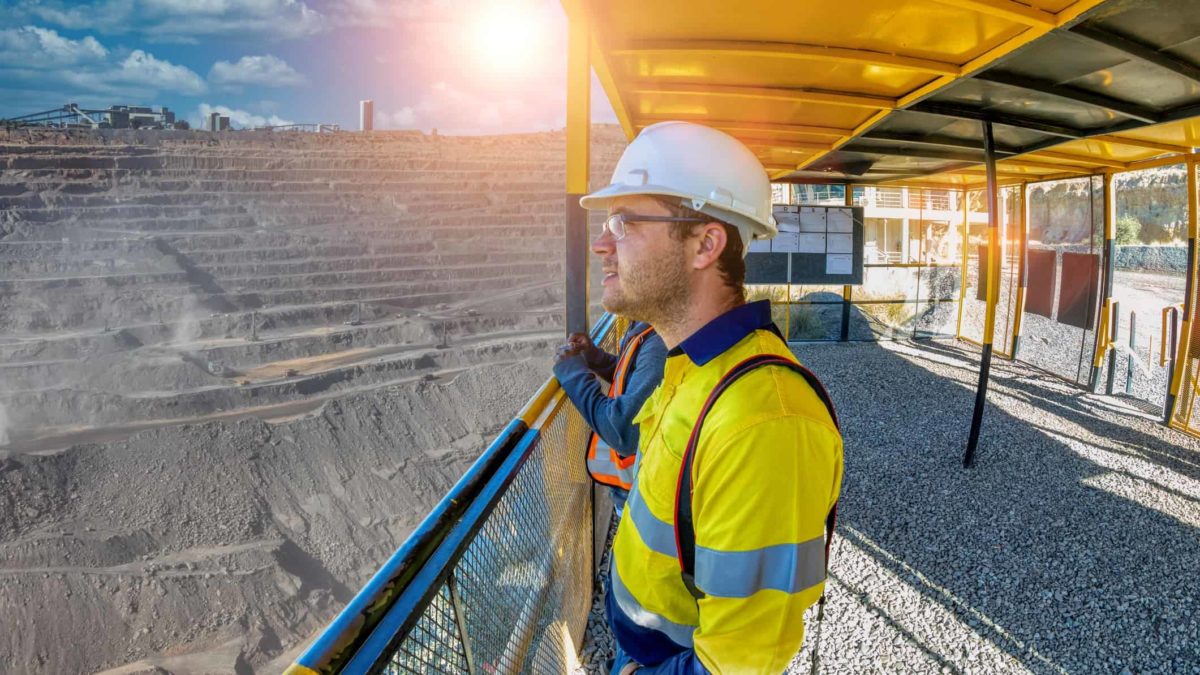
    A mining worker wearing a white hardhat and a high vis vest stands on a platform overlooking a huge mine, thinking about what comes next.A mining worker wearing a white hardhat and a high vis vest stands on a platform overlooking a huge mine, thinking about what comes next.

    ASX 200 mining shares represent nearly a quarter of the entire S&P/ASX 200 Index (ASX: XJO), so it’s no wonder most Australians have some exposure to them either directly or via their superannuation investments.

    Australia is a world leader in resources exploration and development. We’ve got a lot of natural metals and minerals in the ground, and we’re really, really good at extracting, processing, and selling them to the world.

    Mining contributes 13.7% to our gross domestic product (GDP) and directly employs more than 250,000 Australians. Metals, minerals, and energy resources make up more than two-thirds of our exports.

    In other words, energy and mining is humungously big business in Australia.

    In fact, alongside low unemployment, booming commodity prices and larger tax receipts from ASX 200 mining companies are largely to thank for the forecasted first budget surplus in 15 years.

    Australia exported resources worth a record $422 billion in FY22. Our biggest customer was China, with $140 billion worth of exports going there.

    The next largest customer is Japan, worth $54 billion to us, and South Korea, worth $33 billion to us.

    Given China dwarfs them, you can understand why ASX resources analysts pay such close attention to the goings on in the red country.

    And also why it’s so significant that Federal Trade Minister Don Farrell has flown to China this week to push for a full resumption of exports for wine, barley, and other Aussie goods.

    Aussie investors love ASX 200 mining shares

    Given mining companies are such dominant players in our economy, Australian investors have long seen ASX 200 mining shares as their ticket to a financially secure retirement.

    The smaller mineral explorers can deliver share price growth as they develop their assets. In contrast, the big, established miners can deliver a bit of growth and, more so, safe and reliable dividends, often with full franking.

    Given so many of us invest in them, it would be great to have a crystal ball for their performance over the next five years, right?

    Glad you asked.

    Once a year, the Federal Department of Industry, Science and Resources publishes a report detailing its five-year outlook for the mining and energy sectors.

    This includes official predictions for commodity prices on the full range of metals and minerals we dig up based on current and anticipated global demand trends.

    Given ASX 200 mining shares go up and down in line with their associated commodity prices, these predictions could give us a pretty decent clue as to what to expect from our investments in the short to medium term.

    Helpful, right? Well, that five-year outlook was recently published, and we’ve got all the details for you.

    Let’s dig in.

    Commodity price predictions

    The report outlines the Government’s forecasts for commodity prices over the next five years. There is a realised price for FY22, which you can compare to the forecast prices for FY23 and FY28.

    You’ll get an idea of the anticipated direction of each commodity price based on the change between FY23 and FY28.

    Iron ore prices (62% fe)

    FY23: US$97 per tonne (down from US$119 per tonne in FY22)
    FY28: US$69 per tonne

    Examples of ASX 200 iron ore shares affected: BHP Group Ltd (ASX: BHP), Fortescue Metals Group Ltd (ASX: FMG), Rio Tinto Ltd (ASX: RIO), Champion Iron Ltd (ASX: CIA)

    LNG prices

    FY23: $21 per gigajoule (up from $16 per gigjoule in FY22)
    FY28: $13 per gigajoule

    Brent crude oil prices

    FY23: US$89 per barrel (down from US$91 per barrel in FY22)
    FY28: US$75 per barrel

    Examples of ASX energy and oil shares affected: Woodside Energy Group Ltd (ASX: WDS), Santos Ltd (ASX: STO), Beach Energy Ltd (ASX: BPT), Ampol Ltd (ASX: ALD)

    Metallurgical & thermal coal prices

    Metallurgical

    FY23: US$296 per tonne (down from US$387 per tonne in FY22)
    FY28: US$185 per tonne

    Thermal

    FY23: US$313 per tonne (up from US$245 per tonne in FY22)
    FY28: US$103 per tonne

    Examples of ASX 200 coal shares affected: Whitehaven Coal Ltd (ASX: WHC), Yancoal Australia Ltd (ASX: YAL), New Hope Corporation Limited (ASX: NHC), South32 Ltd (ASX: S32)

    Gold prices (LBMA PM)

    FY23: US$1,798 per ounce (down from US$1,832 per ounce in FY22)
    FY28: US$1,713 per ounce

    Examples of ASX 200 gold shares affected: Newcrest Mining Ltd (ASX: NCM), Northern Star Resources Ltd (ASX: NST), Evolution Mining Ltd (ASX: EVN)

    Copper prices

    FY23: US$8,406 per tonne (down from US$9,645 per tonne in FY22)
    FY28: US$9,954 per tonne

    Examples of ASX copper shares affected: Sandfire Resources Ltd (ASX: SFR), South32, BHP (especially following the Oz Minerals takeover), Rio Tinto

    Alumina & aluminium prices

    Alumina

    FY23: US$345 per tonne (down from US$381 per tonne in FY22)
    FY28: US$350 per tonne

    Aluminium

    FY23: US$2,388 per tonne (down from US$2,891 per tonne in FY22)
    FY28: US$2,391 per tonne

    Examples of aluminium shares affected: Alumina Limited (ASX: AWC), Rio Tinto, South32

    Lithium spodumene ore prices

    FY23: US$4,104 per tonne (up from US$1,488 per tonne in FY22)
    FY28: US$2,700 per tonne

    Examples of ASX 200 lithium shares affected: Pilbara Minerals Ltd (ASX: PLS), Allkem Ltd (ASX: AKE), Core Lithium Ltd (ASX: CXO), Liontown Resources Ltd (ASX: LTR), Sayona Mining Ltd (ASX: SYA)

    Nickel prices

    FY23: US$24,414 per tonne (up from US$23,594 per tonne in FY22)
    FY28: US$21,313 per tonne

    Examples of ASX nickel shares affected: IGO Ltd (ASX: IGO), Nickel Industries Ltd (ASX: NIC), BHP, South32

    Uranium prices

    FY23: US$51 per pound (up from US$45 per pound in FY22)
    FY28: US$67 per pound

    Examples of ASX uranium shares affected: Rio Tinto, Paladin Energy Ltd  (ASX: PDN), Boss Energy Ltd (ASX: BOE), Deep Yellow Ltd (ASX: DYL)

    What does all this mean for ASX 200 mining shares?

    It’s important to remember that commodity prices are only one factor in the earnings of miners.

    Smaller miners that are in exploration or early production stages can obviously build their products and grow their client base enough to increase their earnings regardless of falling commodity prices.

    But in the case of the mega miners, which are running enormous mines at pretty much full capacity, commodity prices have a heavier hand in their earnings prospects and share price movements.

    For example, Fortescue is an iron ore pure-play at the moment (hydrogen to come!), and it’s not at all uncommon to see the Fortescue share price move exactly in line with the iron ore price. To illustrate, over the past month, the iron ore price has fallen 11.9%, and Fortescue shares have fallen 10.2%.

    The outlook for ASX 200 mining shares

    Despite a projected fall in many commodity prices over the next five years, Australia is still going to make a motza.

    The Federal Government is expecting another record high for export earnings in FY23 at $464 billion.

    Earnings will then taper back — despite higher volumes of exports — due to lower commodity prices. The projections are $378 billion of export earnings in FY24 and $328 billion in FY25.

    As you can see in the price predictions, global demand is likely to fall for Australia’s most traditionally popular metals and minerals like iron ore and coal, and this will occur for a few reasons.

    Firstly, there is likely to be a slowdown in the world economy due to higher interest rates. Lower global economic activity means less demand for Australian resources and energy exports.

    The International Monetary Fund forecasts world GDP growth of 2.9% in 2023, 3.1% in 2024, and an average of 3.3% for 2025, 2026, and 2027. This compares to growth of 3.4% in 2022.

    Secondly, geopolitical tensions tend to impact household and business confidence, which leads to people delaying big purchases like a new car or new business equipment (i.e., items with a high metal content).

    What about decarbonisation?

    On top of all that, there are the growing global trends of nationalism and decarbonisation.

    Many countries are now seeking to become more self-sufficient with their own secure sources of energy and the commodities of industry and technology, given the lessons of COVID-19 and the war in Ukraine.

    That means they’ll eventually buy fewer of the traditional resources from us, such as coal.

    For example, the United States is ramping up its gas liquefaction capacity. Within a couple of years, it will become the world’s largest LNG supplier and will likely displace Russian fossil fuels sales to the West.

    Now, all of this sounds bad for ASX resources shares. But remember this: We are only at the very start of global decarbonisation. Renewables will not overtake traditional resources any time soon.

    No longer all about iron ore, but it’ll be a slow transition

    It’s going to take decades to build enough wind turbines, hydrogen processing plants, and a huge global lithium battery supply chain before countries stop buying Aussie iron ore, coal, and other mining goodies.

    What will happen, though, is lower global investment in new fossil fuel supplies. That’s going to put a floor under commodity prices as demand slowly tapers off.

    Also, remember that decarbonisation is going to support commodity prices for the metals and minerals in low-emission technologies, like lithium, copper, and nickel.

    The government says these are “set to trade at relatively high prices” over the next five years. That’s because most Western countries are now committed to net zero by 2050, so they’re ramping up their decarbonisation efforts.

    The US is another example here. It is extremely focused on building a renewable energy supply at home.

    The US Inflation Reduction Act contains many attractive incentives to encourage investment in renewable projects like hydrogen production, as well as growing the lithium battery supply chain.

    By 2028, it is expected that Australia’s exports of lithium and base metals (e.g., aluminium, alumina, copper, nickel, and zinc) will equal the export value of all our coal. Pretty amazing.

    While things will keep going in that direction over time, it’s worth remembering that in order for countries to build all the projects they need for decarbonisation, they need inputs like steel and energy.

    This means ongoing demand for iron ore, coal, and other traditional commodities for some time yet.

    What’s next with China?

    We are still largely beholden to China in terms of demand. So, it’s a good thing that the International Monetary Fund expects China to have better economic growth than the rest of us over the next five years.

    The IMF predicts 5.2% growth for China in FY23 and 4.5% in FY24. This compares to forecast world GDP growth of 2.9% in FY23, 3.1% in FY24, and an average of 3.3% for FY25, FY26, and FY27.

    As we learned this week, the Australian Government expects Australian economic growth of 3.25% in FY23, 1.5% in FY24, and 2.25% in FY25.

    The government reckons China may move to stimulate its domestic economy over the next couple of years because its low inflation provides more scope to do that in comparison to other countries.

    This would support global commodity prices and generate additional demand for Australian resources in the short term, and that’s good for ASX 200 mining shares.

    But at the same time, the Chinese Government’s concerns over lower population growth and its debt-laden property sector may reduce demand for some commodities — mainly iron ore. Not so good.

    However, over the outlook period, the Government thinks any void that reduced Chinese demand might create may be filled by another emerging superpower, India.

    The report said:

    India is likely to grow as a source of resource and energy commodity demand over the outlook period, as the economy grows and develops further.

    The post What’s the 5-year forecast for commodity prices and ASX 200 mining shares? appeared first on The Motley Fool Australia.

    FREE Beginners Investing Guide

    Despite what some people may say – we believe investing in shares doesn’t have to be overwhelming or complicated…

    For over a decade, we’ve been helping everyday Aussies get started on their journey.

    And to help even more people cut through some of the confusion “experts’” seem to want to perpetuate – we’ve created a brand-new “how to” guide.

    Yes, Claim my FREE copy!
    *Returns as of April 3 2023

    (function() {
    function setButtonColorDefaults(param, property, defaultValue) {
    if( !param || !param.includes(‘#’)) {
    var button = document.getElementsByClassName(“pitch-snippet”)[0].getElementsByClassName(“pitch-button”)[0];
    button.style[property] = defaultValue;
    }
    }

    setButtonColorDefaults(“#0095C8”, ‘background’, ‘#5FA85D’);
    setButtonColorDefaults(“#0095C8”, ‘border-color’, ‘#43A24A’);
    setButtonColorDefaults(“#fff”, ‘color’, ‘#fff’);
    })()

    More reading

    Motley Fool contributor Bronwyn Allen has positions in Allkem, Alumina, BHP Group, Core Lithium, Fortescue Metals Group, and Woodside Energy Group. The Motley Fool Australia’s parent company Motley Fool Holdings Inc. has no position in any of the stocks mentioned. The Motley Fool Australia has no position in any of the stocks mentioned. The Motley Fool has a disclosure policy. This article contains general investment advice only (under AFSL 400691). Authorised by Scott Phillips.

    from The Motley Fool Australia https://ift.tt/jiSIRAf

  • This ASX small-cap lithium share is leaping 13% on a deal with Rio Tinto

    A businessman leaps in the air outside a city building in the CBD.A businessman leaps in the air outside a city building in the CBD.

    The share price of lithium small-cap Trek Metals Ltd (ASX: TKM) is rocketing on Friday after the company revealed a deal with iron ore giant Rio Tinto Ltd (ASX: RIO).

    It will see the S&P/ASX 200 Index (ASX: XJO) icon exploring Trek Metals’ Jimblebar Project – considered highly prospective for nickel and copper mineralisation.

    Handing over exploration of the project will allow the ASX small-cap to focus its efforts on its flagship Tambourah Lithium Project and its Kendeka Manganese Project.

    Right now, the Trek Metals share price is 13.33% higher than its previous close, trading at 6.8 cents.

    Let’s take a closer look at the latest news from the lithium hopeful.

    ASX small-cap lithium share rockets on Rio Tinto agreement

    The market is bidding the Trek Metals share price higher after the $22 million company announced an exploration agreement with ASX 200 goliath Rio Tinto.

    The agreement grants Rio Tinto the option to earn an 80% joint venture interest in the Jimblebar Project, located in Western Australia’s Pilbara region.

    Trek Metals CEO Derek Marshall commented on today’s news, saying:

    We are delighted to be partnering with Rio Tinto Exploration (RTX) to advance the exploration for magmatic nickel-copper at Jimblebar.

    RTX brings significant technical and operational expertise to the table, and we are very excited to be able to collaborate with their team to generate, refine and test targets across the tenements.

    The deal will initially see Rio Tinto paying $50,000 for an exclusive six-month option to explore the project. Another $25,000 could see that extended by another six months.

    The mining giant has also committed to spending $100,000 at the project over the exclusivity period.

    Beyond that, it has the option to farm in to earn an 80% joint venture interest by funding $5 million of exploration expenditure, including at least 2,000 metres of drilling, within six years.

    If it does so, it will fund Trek Metals’ portion of the venture until the project reaches an advanced scoping study level or Rio Tinto has forked out $40 million, whichever comes first.

    Marshall continued:

    This agreement allows Trek to continue to focus on our flagship Tambourah Lithium Project, where
    we plan to commence our maiden drill program this quarter, and continue to advance our high-grade
    Hendeka Manganese Project, while keeping a free-carried exposure to the nickel-copper potential at
    Jimblebar and allowing it to progress much quicker than would otherwise be achievable.

    Rio Tinto has an extensive presence in the Pilbara region, where it boasts 17 mines, four port terminals, and a 2,000 kilometre rail network.

    The post This ASX small-cap lithium share is leaping 13% on a deal with Rio Tinto appeared first on The Motley Fool Australia.

    FREE Investing Guide for Beginners

    Despite what some people may say – we believe investing in shares doesn’t have to be overwhelming or complicated…

    For over a decade, we’ve been helping everyday Aussies get started on their journey.

    And to help even more people cut through some of the confusion “experts’” seem to want to perpetuate – we’ve created a brand-new “how to” guide.

    Yes, Claim my FREE copy!
    *Returns as of April 3 2023

    (function() {
    function setButtonColorDefaults(param, property, defaultValue) {
    if( !param || !param.includes(‘#’)) {
    var button = document.getElementsByClassName(“pitch-snippet”)[0].getElementsByClassName(“pitch-button”)[0];
    button.style[property] = defaultValue;
    }
    }

    setButtonColorDefaults(“#0095C8”, ‘background’, ‘#5FA85D’);
    setButtonColorDefaults(“#0095C8”, ‘border-color’, ‘#43A24A’);
    setButtonColorDefaults(“#fff”, ‘color’, ‘#fff’);
    })()

    More reading

    Motley Fool contributor Brooke Cooper has no position in any of the stocks mentioned. The Motley Fool Australia’s parent company Motley Fool Holdings Inc. has no position in any of the stocks mentioned. The Motley Fool Australia has no position in any of the stocks mentioned. The Motley Fool has a disclosure policy. This article contains general investment advice only (under AFSL 400691). Authorised by Scott Phillips.

    from The Motley Fool Australia https://ift.tt/8eKMkxJ

  • Why are BHP shares sliding today?

    asx iron ore share price crash represented by meteor speeding through spaceasx iron ore share price crash represented by meteor speeding through space

    BHP Group Ltd (ASX: BHP) shares are down 1.8% in early afternoon trade today.

    Shares in the S&P/ASX 200 Index (ASX: XJO) iron ore miner closed yesterday trading for $44. Shares are currently changing hands for $43.22 apiece.

    The 1.8% decline in BHP shares is significantly more than the 0.2% fall posted by the ASX 200 at this same time.

    But the 1.5% drop in the S&P/ASX 200 Resource Index (ASX: XJR) gives us some clue of why Australia’s biggest miner is coming under selling pressure today.

    What’s happening with the iron ore price?

    BHP shares, as you’d expect, are very sensitive to the price of iron ore, the miner’s biggest revenue earner.

    And iron ore continued its slide, tumbling 5.2% overnight to trade for US$97.90 per tonne.

    That’s the lowest price for the industrial metal since mid-November. And it was only on 15 March that iron ore was trading for just US$134.04 per tonne.

    Adding to the pressure on BHP shares today, copper (the miner’s number two revenue earner) also dropped 3.7% overnight to US$8,163.50 per tonne. That puts the copper price down 10% since mid-March.

    Both metals have come under pressure amid lower demand from China’s factories, as the nation’s vaunted reopening isn’t going quite to plan.

    That’s precisely what Citi analyst Wenyu Yao cautioned late in April when Citi forecast the iron ore price could test US$90 per tonne before finding support.

    “We have been cautious on China’s steel demand and iron ore amid an uneven economic recovery and heightened policy risk, though things have unravelled sooner than our base case,” she said.

    “We see potential risk for further downside below US$100 a tonne if steel demand fails to show meaningful improvement,” Yao added.

    Indeed, as witnessed by the slump in BHP shares today, that further downside risk looks to be eventuating.

    How have BHP shares been performing longer-term?

    BHP shares have seen some big price swings alongside the iron ore and copper prices.

    Over the past year, the ASX 200 miner is down 3.8%. But investors who snapped up shares at the recent lows on 7 September will be sitting on a gain of 19.2%.

    The post Why are BHP shares sliding today? appeared first on The Motley Fool Australia.

    Should you invest $1,000 in Bhp Group right now?

    Before you consider Bhp Group, you’ll want to hear this.

    Motley Fool Investing expert Scott Phillips just revealed what he believes are the 5 best stocks for investors to buy right now… and Bhp Group wasn’t one of them.

    The online investing service he’s run for over a decade, Motley Fool Share Advisor, has provided thousands of paying members with stock picks that have doubled, tripled or even more.* And right now, Scott thinks there are 5 stocks that are better buys.

    See The 5 Stocks
    *Returns as of April 3 2023

    (function() {
    function setButtonColorDefaults(param, property, defaultValue) {
    if( !param || !param.includes(‘#’)) {
    var button = document.getElementsByClassName(“pitch-snippet”)[0].getElementsByClassName(“pitch-button”)[0];
    button.style[property] = defaultValue;
    }
    }

    setButtonColorDefaults(“#43B02A”, ‘background’, ‘#5FA85D’);
    setButtonColorDefaults(“#43B02A”, ‘border-color’, ‘#43A24A’);
    setButtonColorDefaults(“#fff”, ‘color’, ‘#fff’);
    })()

    More reading

    Motley Fool contributor Bernd Struben has no position in any of the stocks mentioned. The Motley Fool Australia’s parent company Motley Fool Holdings Inc. has no position in any of the stocks mentioned. The Motley Fool Australia has no position in any of the stocks mentioned. The Motley Fool has a disclosure policy. This article contains general investment advice only (under AFSL 400691). Authorised by Scott Phillips.

    from The Motley Fool Australia https://ift.tt/uWqUzrC

  • TechnologyOne share price rises on cyber incident update

    A man sits in casual clothes in front of a computer amid graphic images of data superimposed on the image, as though he is engaged in IT or hacking activities.A man sits in casual clothes in front of a computer amid graphic images of data superimposed on the image, as though he is engaged in IT or hacking activities.

    The TechnologyOne Ltd (ASX: TNE) share price is currently up 1.64%, trading at $14.90 after the ASX tech share gave an update today regarding its cyber incident.

    Earlier this week, the company entered a trading halt upon discovering that a third party accessed its internal Microsoft 365 back-office system.

    TechnologyOne today sought to reassure the market about what was going on and what its investigation had uncovered.

    In its announcement to the ASX, the company reminded investors that it acted immediately to investigate the issue.

    TechnologyOne advised it had initiated its cyber response strategy. This included appointing “leading security and forensic experts, among other specialists, to work through containment measures”.

    What TechnologyOne knows so far

    The company reiterated that its customer-facing software as a service (SaaS) platform was “not connected to the Microsoft 365 system and therefore has not been impacted”. It added:

    TechnologyOne reaffirms that its internal back-office system was isolated to contain the incident, that the system was successfully restored and is fully operational.

    Subsequently, third-party cybersecurity experts have confirmed our Microsoft 365 system is secure and there has been no further illegal activity detected.

    The company advised its focus remained on the investigation to determine what data may have been accessed. It will then engage with any impacted individuals on “appropriate actions”.

    In a bid to further reassure customers and investors, the company said:

    TechnologyOne maintains administrative information on its back-office system. The information held by TechnologyOne on its back-office system is separate to customer’s information and data on
    TechnologyOne’s SaaS platform, which is safe and secure.

    As the investigation progresses and further facts are established, the company will “continue to keep all relevant stakeholders updated”.

    What happens next?

    TechnologyOne will update the market on its performance and outlook when it releases its FY23 half-year result on 23 May 2023 — only a couple of weeks away.

    Considering the TechnologyOne share price is in the green today, investors don’t appear too concerned by the cyber incident.

    This is in contrast to the cyber attack on Medibank Private Limited (ASX: MPL) in October last year. The Medibank share price fell materially, as demonstrated in the chart below, when it returned to trading following the attack.

    The post TechnologyOne share price rises on cyber incident update appeared first on The Motley Fool Australia.

    Should you invest $1,000 in Technology One Limited right now?

    Before you consider Technology One Limited, you’ll want to hear this.

    Motley Fool Investing expert Scott Phillips just revealed what he believes are the 5 best stocks for investors to buy right now… and Technology One Limited wasn’t one of them.

    The online investing service he’s run for over a decade, Motley Fool Share Advisor, has provided thousands of paying members with stock picks that have doubled, tripled or even more.* And right now, Scott thinks there are 5 stocks that are better buys.

    See The 5 Stocks
    *Returns as of April 3 2023

    (function() {
    function setButtonColorDefaults(param, property, defaultValue) {
    if( !param || !param.includes(‘#’)) {
    var button = document.getElementsByClassName(“pitch-snippet”)[0].getElementsByClassName(“pitch-button”)[0];
    button.style[property] = defaultValue;
    }
    }

    setButtonColorDefaults(“#0095C8”, ‘background’, ‘#5FA85D’);
    setButtonColorDefaults(“#0095C8”, ‘border-color’, ‘#43A24A’);
    setButtonColorDefaults(“#fff”, ‘color’, ‘#fff’);
    })()

    More reading

    Motley Fool contributor Tristan Harrison has no position in any of the stocks mentioned. The Motley Fool Australia’s parent company Motley Fool Holdings Inc. has positions in and has recommended Technology One. The Motley Fool Australia has recommended Technology One. The Motley Fool has a disclosure policy. This article contains general investment advice only (under AFSL 400691). Authorised by Scott Phillips.

    from The Motley Fool Australia https://ift.tt/B3Fc941