Tag: Motley Fool

  • Brokers name 3 ASX shares to buy now

    A woman wearing yellow smiles and drinks coffee while on laptop.

    A woman wearing yellow smiles and drinks coffee while on laptop.

    It has been another busy week for Australia’s top brokers. This has led to the release of a large number of broker notes.

    Three broker buy ratings that you might want to know more about are summarised below. Here’s why brokers think these ASX shares are in the buy zone:

    Allkem Ltd (ASX: AKE)

    According to a note out of Macquarie, its analysts have retained their outperform rating and $16.70 price target on this lithium miner’s shares. This follows news that the company will merge with fellow lithium miner Livent Corp. Macquarie is a fan of the plan and sees significant potential synergies thanks to their complementary operations across Argentina and Canada. In addition, it highlights how the combination will provide additional conversion capacity at the Olaroz stage 2 operation. The Allkem share price was trading at $14.94 at yesterday’s close.

    Bank of Queensland Ltd (ASX: BOQ)

    A note out of Ord Minnett reveals that its analysts have upgraded this regional bank’s shares to a buy rating with an $8.50 price target. The broker made the move on valuation grounds following significant share price weakness in 2023. In addition, Ord Minnett believes the bank is well-placed to return to system loan growth and boost its margins once competition eases and the ME Bank integration completes. The Bank of Queensland share price is currently fetching $5.60.

    Nextdc Ltd (ASX: NXT)

    Analysts at Morgans have retained their add rating on this data centre operator’s shares with a trimmed price target of $13.50. The broker was pleased to learn of NextDC’s plan to expand overseas. Morgans is confident the plan leverages NextDC’s competitive advantage and believes healthy contract wins across enterprise and cloud should follow. The NextDC share price was trading at $11.78 prior to its trading halt.

    The post Brokers name 3 ASX shares to buy now appeared first on The Motley Fool Australia.

    Wondering where you should invest $1,000 right now?

    When investing expert Scott Phillips has a stock tip, it can pay to listen. After all, the flagship Motley Fool Share Advisor newsletter he has run for over ten years has provided thousands of paying members with stock picks that have doubled, tripled or even more.*

    Scott just revealed what he believes could be the ‘five best ASX stocks’ for investors to buy right now. These stocks are trading at near dirt-cheap prices and Scott thinks they could be great buys right now…

    See The 5 Stocks
    *Returns as of April 3 2023

    (function() {
    function setButtonColorDefaults(param, property, defaultValue) {
    if( !param || !param.includes(‘#’)) {
    var button = document.getElementsByClassName(“pitch-snippet”)[0].getElementsByClassName(“pitch-button”)[0];
    button.style[property] = defaultValue;
    }
    }

    setButtonColorDefaults(“#0095C8”, ‘background’, ‘#5FA85D’);
    setButtonColorDefaults(“#0095C8”, ‘border-color’, ‘#43A24A’);
    setButtonColorDefaults(“#fff”, ‘color’, ‘#fff’);
    })()

    More reading

    Motley Fool contributor James Mickleboro has positions in Allkem and Nextdc. The Motley Fool Australia’s parent company Motley Fool Holdings Inc. has no position in any of the stocks mentioned. The Motley Fool Australia has no position in any of the stocks mentioned. The Motley Fool has a disclosure policy. This article contains general investment advice only (under AFSL 400691). Authorised by Scott Phillips.

    from The Motley Fool Australia https://ift.tt/e8dNUoI

  • Invested $4,000 in South32 shares 5 years ago? Here’s how much passive income you’ve earned

    A young investor working on his ASX shares portfolio on his laptopA young investor working on his ASX shares portfolio on his laptop

    The South32 Ltd (ASX: S32) share price has traded relatively flat over the last five years.

    Indeed, an investor who bought $4,000 worth of the diversified mining company’s stock in May 2018 likely walked away with 997 shares, paying $4.01 apiece.

    Today, that parcel would be worth $4,047.82. The South32 share price last traded at $4.06.

    For comparison, the S&P/ASX 200 Index (ASX: XJO) has climbed 19% in that time.

    So, has the passive income on offer through the mining giant’s dividends made up for its share price’s underwhelming performance? Let’s take a look.

    All dividends paid to those holding South32 shares since 2018

    Here are all the dividends offered to those invested in South32 stock since this time five years ago:

    South32 dividends’ pay date Type Dividend amount
    April 2023 Interim 7.3 cents
    October 2022 Final and special 20.7 cents and 4.4 cents
    April 2022 Interim 11.9 cents
    October 2021 Final and special 4.8 cents and 2.7 cents
    April 2021 Interim 1.8 cents
    October 2020 Final 1.4 cents
    April 2020 Interim 3.3 cents
    October 2019 Final 4.1 cents
    April 2019 Interim 9.6 cents
    October 2018 Final 8.7 cents
    Total:   80.7 cents

    As the chart above shows, each South32 share has yielded 80.7 cents in dividends since this time five years ago.

    That means our figurative investment has provided $807.58 of dividend income over its life.

    Considering both share price gains and dividends, the ASX 200 stock has provided a return on investment (ROI) of around 23%.

    And that might have been bolstered if one were to have reinvested the passive income they received through their South32 shares, thereby compounding any gains.

    Not to mention, all the dividends paid by South32 in that time have been fully franked. Thus, they might have brought additional benefits for some investors at tax time.

    At the time of writing, South32 shares are trading with an impressive 6.9% dividend yield.

    The post Invested $4,000 in South32 shares 5 years ago? Here’s how much passive income you’ve earned appeared first on The Motley Fool Australia.

    Should you invest $1,000 in South32 Limited right now?

    Before you consider South32 Limited, you’ll want to hear this.

    Motley Fool Investing expert Scott Phillips just revealed what he believes are the 5 best stocks for investors to buy right now… and South32 Limited wasn’t one of them.

    The online investing service he’s run for over a decade, Motley Fool Share Advisor, has provided thousands of paying members with stock picks that have doubled, tripled or even more.* And right now, Scott thinks there are 5 stocks that are better buys.

    See The 5 Stocks
    *Returns as of April 3 2023

    (function() {
    function setButtonColorDefaults(param, property, defaultValue) {
    if( !param || !param.includes(‘#’)) {
    var button = document.getElementsByClassName(“pitch-snippet”)[0].getElementsByClassName(“pitch-button”)[0];
    button.style[property] = defaultValue;
    }
    }

    setButtonColorDefaults(“#43B02A”, ‘background’, ‘#5FA85D’);
    setButtonColorDefaults(“#43B02A”, ‘border-color’, ‘#43A24A’);
    setButtonColorDefaults(“#fff”, ‘color’, ‘#fff’);
    })()

    More reading

    Motley Fool contributor Brooke Cooper has no position in any of the stocks mentioned. The Motley Fool Australia’s parent company Motley Fool Holdings Inc. has no position in any of the stocks mentioned. The Motley Fool Australia has no position in any of the stocks mentioned. The Motley Fool has a disclosure policy. This article contains general investment advice only (under AFSL 400691). Authorised by Scott Phillips.

    from The Motley Fool Australia https://ift.tt/Qy7X9B0

  • Has the NIB share price now peaked at $8?

    a doctor wearing a white coat with a stethoscope around her neck stares out a window with her hand to the side of her face as though in deep thought.

    a doctor wearing a white coat with a stethoscope around her neck stares out a window with her hand to the side of her face as though in deep thought.The NIB Holdings Limited (ASX: NHF) share price has been a very strong performer over the last six months.

    Since this time in November, the private health insurer’s shares have raced 19% higher.

    As a comparison, over the same period, the benchmark ASX 200 index has gained just 1.5%.

    This leaves the NIB share price trading at $8.00, which is just 20 cents short of its 52-week high.

    Why has the NIB share price outperformed?

    Investors have been buying NIB’s shares due to its improved outlook and recent update.

    That update revealed that the company has raised its guidance for net policyholder growth for Australian residents in FY 2023 to 4% to 5% from 3% to 4%.

    Management also revealed that ancillary claims are returning to normal, hospital claims are showing a modest uplift but remain subdued, and its net margins remain strong with a gradual return to its 6% to 7% target expected over the longer term.

    Can its shares keep rising or have they peaked?

    As things stand, the broker community appears to believe that the NIB share price may have peaked for the time being.

    For example, Citi and Morgans both have the equivalent of buy ratings on its shares but with price targets of $7.85 and $7.55, respectively. These are both lower than where the company’s shares trade today.

    Elsewhere, Macquarie and Morgan Stanley have the equivalent of hold ratings with price targets of $7.65 and $6.95, respectively, and Ord Minnett has a lighten rating with a $7.00 price target.

    Though, that doesn’t necessarily mean that the NIB share price can’t keep rising. It just means that brokers are unlikely to be recommending its shares to clients until they are trading at a more attractive level.

    In addition, a strong result in August from NIB could have brokers revisiting their models and price targets. Fingers crossed for shareholders that this happens.

    The post Has the NIB share price now peaked at $8? appeared first on The Motley Fool Australia.

    Should you invest $1,000 in Nib Holdings right now?

    Before you consider Nib Holdings, you’ll want to hear this.

    Motley Fool Investing expert Scott Phillips just revealed what he believes are the 5 best stocks for investors to buy right now… and Nib Holdings wasn’t one of them.

    The online investing service he’s run for over a decade, Motley Fool Share Advisor, has provided thousands of paying members with stock picks that have doubled, tripled or even more.* And right now, Scott thinks there are 5 stocks that are better buys.

    See The 5 Stocks
    *Returns as of April 3 2023

    (function() {
    function setButtonColorDefaults(param, property, defaultValue) {
    if( !param || !param.includes(‘#’)) {
    var button = document.getElementsByClassName(“pitch-snippet”)[0].getElementsByClassName(“pitch-button”)[0];
    button.style[property] = defaultValue;
    }
    }

    setButtonColorDefaults(“#43B02A”, ‘background’, ‘#5FA85D’);
    setButtonColorDefaults(“#43B02A”, ‘border-color’, ‘#43A24A’);
    setButtonColorDefaults(“#fff”, ‘color’, ‘#fff’);
    })()

    More reading

    Motley Fool contributor James Mickleboro has no position in any of the stocks mentioned. The Motley Fool Australia’s parent company Motley Fool Holdings Inc. has no position in any of the stocks mentioned. The Motley Fool Australia has recommended NIB Holdings. The Motley Fool has a disclosure policy. This article contains general investment advice only (under AFSL 400691). Authorised by Scott Phillips.

    from The Motley Fool Australia https://ift.tt/sveXMUh

  • Guess which ASX 200 share has just been downgraded by 3 top brokers

    A middle-aged woman sits in contemplation over a tablet device considering information about ASX shares and deep in thought.A middle-aged woman sits in contemplation over a tablet device considering information about ASX shares and deep in thought.

    This ASX 200 share in the building industry has been slashed by three brokers.

    The CSR Limited (ASX: CSR) share price fell 2.81% on Thursday to close at $5.18. This follows the company’s share price sliding 2.6% on Wednesday on the back of its full-year results.

    Let’s take a look at what’s going on with this ASX 200 share.

    What’s the outlook?

    CSR produces building materials for the construction of residential and commercial buildings. The company also owns a stake in the Tomago aluminium smelter in New South Wales.

    Multiple brokers have downgraded their outlook for the CSR share price. Citi has cut CSR to neutral with a $5.45 price target, as my Foolish colleague James reported. This is still 5% higher than the company’s last closing price.

    Further, capital market company CLSA has slashed CSR to sell with a $5 price target, while Jefferies has downgraded CSR to underperform with a $4.50 price target, the Australian Financial Review reported. These broker cuts imply downsides of 3.5% and 13% respectively.

    The broker cuts follow the release of CSR’s annual results for the full year ended 31 March on Wednesday.

    CSR reported statutory net profit after tax fell 19% to $218.5 million. Revenue lifted 13% to $2.6 billion, while group EBIT soared 13% to $329.7 million.

    The NPAT before significant items was up 17% on the previous year. The company had a significant items expense of $6.5 million in 2023, whereas in 2022 the company received an $86 million tax boost from capital tax losses in 2022.

    The company lifted its final dividend to 20 cents per share, up from 18 cents per share in 2022.

    Looking ahead, the company sees challenges for 2024 for its aluminium business. The company said:

    While cost volatility and unpredictability in energy and raw materials makes forecasting
    challenging, at this early stage in the year, the best estimate for YEM24 is a loss in the
    range of -$5 million to -$15 million

    Meanwhile, CSR’s building products segment “made a strong start to the year” with a “pipeline of detached housing projects under construction at historically high levels”. Apartment construction activity is also on the rise.

    As for its property segment, 2024 will include $44 million in contracted earnings at Horsley Park and a further $58 million in 2025. Major projects at Schofields and Badgerys Creek in NSW and Darra in Queensland are continuing to progress.

    CSR share price snapshot

    The CSR share price has shed 9% in the last year.

    This ASX 200 share has a market capitalisation of about $477.8 million based on the latest closing price.

    The post Guess which ASX 200 share has just been downgraded by 3 top brokers appeared first on The Motley Fool Australia.

    Should you invest $1,000 in Csr Limited right now?

    Before you consider Csr Limited, you’ll want to hear this.

    Motley Fool Investing expert Scott Phillips just revealed what he believes are the 5 best stocks for investors to buy right now… and Csr Limited wasn’t one of them.

    The online investing service he’s run for over a decade, Motley Fool Share Advisor, has provided thousands of paying members with stock picks that have doubled, tripled or even more.* And right now, Scott thinks there are 5 stocks that are better buys.

    See The 5 Stocks
    *Returns as of April 3 2023

    (function() {
    function setButtonColorDefaults(param, property, defaultValue) {
    if( !param || !param.includes(‘#’)) {
    var button = document.getElementsByClassName(“pitch-snippet”)[0].getElementsByClassName(“pitch-button”)[0];
    button.style[property] = defaultValue;
    }
    }

    setButtonColorDefaults(“#0095C8”, ‘background’, ‘#5FA85D’);
    setButtonColorDefaults(“#0095C8”, ‘border-color’, ‘#43A24A’);
    setButtonColorDefaults(“#fff”, ‘color’, ‘#fff’);
    })()

    More reading

    Citigroup is an advertising partner of The Ascent, a Motley Fool company. Motley Fool contributor Monica O’Shea has no position in any of the stocks mentioned. The Motley Fool Australia’s parent company Motley Fool Holdings Inc. has no position in any of the stocks mentioned. The Motley Fool Australia has no position in any of the stocks mentioned. The Motley Fool has a disclosure policy. This article contains general investment advice only (under AFSL 400691). Authorised by Scott Phillips.

    from The Motley Fool Australia https://ift.tt/usOTZvN

  • What’s the gold price forecast for the remainder of 2023?

    Gold bars with a share price chart in the background.

    Gold bars with a share price chart in the background.

    The gold industry has been a great place to invest this year. You only need to look at the performance of the S&P/ASX All Ords Gold index to see this.

    Since the start of the year, this index has risen a massive 26%.

    Why are ASX gold shares rising strongly?

    This strong gain has been underpinned by a rising gold price.

    Miners are price takers and not price setters, so the performance of the gold price has a major impact on the profitability of companies such as Evolution Mining Ltd (ASX: EVN), Newcrest Mining Ltd (ASX: NCM), Northern Star Resources Ltd (ASX: NST), and Regis Resources Ltd (ASX: RRL).

    And right now, they are printing money thanks to the sky high gold price.

    As a reminder, the spot gold price is currently fetching US$2,029.2 an ounce, which leaves it within a stone’s throw of the record high of US$2,069.40 set in 2020.

    The big question now, though, is where is the gold price forecast to go from here? Let’s find out.

    Gold price forecast

    According to a recent note out of Goldman Sachs, its commodity team has laid out its forecast for the gold price (and other metals) over the remainder of 2023 and the coming years.

    The good news is that the broker is feeling upbeat about the precious metal and sees scope for gold to break records this year.

    The note reveals that Goldman is forecasting an average gold price of US$2,008 an ounce for the current quarter.

    After which, it expects an average price of US$2,078 an ounce in the third quarter of 2023 and then US$2,108 an ounce in the fourth quarter. This is expected to result in an average price of US$2,021 an ounce for 2023.

    But the gains may not stop there according to its commodities team. They have pencilled in an average price of US$2,175 an ounce for 2024. This represents an increase of 5% from current levels.

    And while Goldman’s gold price forecast predicts an easing back to US$2,087 an ounce in 2025 and then US$2,000 an ounce in 2026, this is still at a very attractive level for gold miners.

    All in all, it appears to be a good time to have some exposure to ASX gold shares in your portfolio.

    The post What’s the gold price forecast for the remainder of 2023? appeared first on The Motley Fool Australia.

    FREE Guide for New Investors

    Despite what some people may say – we believe investing in shares doesn’t have to be overwhelming or complicated…

    For over a decade, we’ve been helping everyday Aussies get started on their journey.

    And to help even more people cut through some of the confusion “experts’” seem to want to perpetuate – we’ve created a brand-new “how to” guide.

    Yes, Claim my FREE copy!
    *Returns as of April 3 2023

    (function() {
    function setButtonColorDefaults(param, property, defaultValue) {
    if( !param || !param.includes(‘#’)) {
    var button = document.getElementsByClassName(“pitch-snippet”)[0].getElementsByClassName(“pitch-button”)[0];
    button.style[property] = defaultValue;
    }
    }

    setButtonColorDefaults(“#0095C8”, ‘background’, ‘#5FA85D’);
    setButtonColorDefaults(“#0095C8”, ‘border-color’, ‘#43A24A’);
    setButtonColorDefaults(“#fff”, ‘color’, ‘#fff’);
    })()

    More reading

    Motley Fool contributor James Mickleboro has no position in any of the stocks mentioned. The Motley Fool Australia’s parent company Motley Fool Holdings Inc. has no position in any of the stocks mentioned. The Motley Fool Australia has no position in any of the stocks mentioned. The Motley Fool has a disclosure policy. This article contains general investment advice only (under AFSL 400691). Authorised by Scott Phillips.

    from The Motley Fool Australia https://ift.tt/dJZq8X3

  • How much would I need to invest in ASX shares for a retirement income of $65,000 per year?

    A grey-haired mature-aged man with glasses stands in front of a blackboard filled with mathematical workings as he holds a pad of paper in one hand and a pen in the other and stands smiling at the camera.A grey-haired mature-aged man with glasses stands in front of a blackboard filled with mathematical workings as he holds a pad of paper in one hand and a pen in the other and stands smiling at the camera.

    Investing in ASX shares can be an effective way to build passive income. But how much would one need to invest on the Aussie stock market to build $65,000 of annual retirement income?

    Well, that depends on many factors. Namely, an investors’ time frame, risk tolerance, and investing strategy.

    Investing for retirement income

    Building a retirement income on the ASX might sound daunting, or even daring, but it needn’t be. Buying ASX shares is essentially buying a piece of a business.

    Businesses with strong track records, experienced management, and competitive business models are likely to continue operating, and growing, for years and decades to come.

    Take the likes of Commonwealth Bank of Australia (ASX: CBA), BHP Group Ltd (ASX: BHP), and the company behind Bunnings and Kmart, Wesfarmers Ltd (ASX:WES), for example.

    Many such businesses will even offer those invested in their shares a portion of their profits in the form of cash – known as dividends. Dividend income can help Australians fund their lifestyles through retirement.  

    Of course, how much income one might need to retire depends on a multitude of variants. If you’re unsure how much you might need, you can take a look at The Motley Fool Australia’s guide on retirement planning.

    But if you’ve already crunched the numbers and found you need around $65,000 a year, here’s how big your ASX portfolio would need to be.

    An ASX portfolio capable of providing $65,000 annually

    The first figure to contemplate when investing for a set among of retirement income is your expected dividend yield. That’s the amount a company pays in dividends each year relative to its share price, expressed as a percentage.

    Most S&P/ASX 200 Index (ASX: XJO) stocks offer a dividend yield of around 4% to 5%. Let’s assume one can realise the higher end of that range.

    A portfolio would need to be worth $1.3 million to bring in $65,000 at a 5% yield.

    However, plenty of shares offer more income than that.

    For instance, Harvey Norman Holdings Ltd (ASX: HVN), Woodside Energy Group Ltd (ASX: WDS), and Fortescue Metals Group Limited (ASX: FMG) boast an average dividend yield of 9.7% between them right now.

    At that rate, a portfolio of ASX shares would need to be worth around $670,000 to offer $65,000 of annual retirement income.

    However, typically, higher dividend yields carry a greater risk of being cut than lower yields.

    It’s also worth factoring in things like tax and inflation into your calculations when assessing your retirement income needs. Both things can quickly eat into your funds, potentially leaving you in sticky situations.

    Starting from scratch

    The prospect of investing such a wad of cash might sound intimidating. But there’s no need to invest it all in one go.

    If one were to consistently invest a manageable amount in ASX growth shares each week, or compound their gains by reinvesting their dividends, their portfolio could grow to such a size in a matter of a few short years or decades.

    Though, no investment is guaranteed to provide returns or downside protection.

    The post How much would I need to invest in ASX shares for a retirement income of $65,000 per year? appeared first on The Motley Fool Australia.

    Billionaire’s strategy for building wealth after 50

    You may know, billionaire Warren Buffett made 99% of his wealth after his 50th birthday. He did this by continuing to buy stocks despite his older age.

    Of course the type of stocks he invested in was crucial to his success. And the same goes for investors approaching retirement…

    Which is why we’ve published a FREE report revealing 5 stocks we think could be perfect for investors as they retire.

    Yes, Claim my FREE copy!
    *Returns as of April 3 2023

    (function() {
    function setButtonColorDefaults(param, property, defaultValue) {
    if( !param || !param.includes(‘#’)) {
    var button = document.getElementsByClassName(“pitch-snippet”)[0].getElementsByClassName(“pitch-button”)[0];
    button.style[property] = defaultValue;
    }
    }

    setButtonColorDefaults(“#0095C8”, ‘background’, ‘#5FA85D’);
    setButtonColorDefaults(“#0095C8”, ‘border-color’, ‘#43A24A’);
    setButtonColorDefaults(“#fff”, ‘color’, ‘#fff’);
    })()

    More reading

    Motley Fool contributor Brooke Cooper has no position in any of the stocks mentioned. The Motley Fool Australia’s parent company Motley Fool Holdings Inc. has positions in and has recommended Harvey Norman. The Motley Fool Australia has positions in and has recommended Harvey Norman and Wesfarmers. The Motley Fool has a disclosure policy. This article contains general investment advice only (under AFSL 400691). Authorised by Scott Phillips.

    from The Motley Fool Australia https://ift.tt/1wGdFHz

  • It’s still rare to find a term deposit paying over 5%. Why not buy ASX dividend shares instead?

    A woman looks quizzical while looking at a dollar sign in the air.A woman looks quizzical while looking at a dollar sign in the air.

    As most Australians would be aware, interest rates have been skyrocketing over the past 12 months or so. At the start of 2022, the cash rate was still stuck at the COVID-era record low of 0.1%. But the Reserve Bank of Australia (RBA) has raised rates 11 out of the past 12 times it has met for its monthly meetings (most recently this month).

    As a result, the cash rate stands at a far higher 3.85% today. That means several things. For once, mortgages are now a heck of a lot more expensive than they were just 12 months ago.

    But it also means the rate of return we are able to get from cash investments is also far higher. But even after these successive rate hikes, it is still difficult (although not impossible) to find a savings account or term deposit yielding above 5% per annum.

    To illustrate, Commonwealth Bank of Australia (ASX: CBA)’s top term deposit rate is now sitting at 4% per annum. But to achieve that, you need to lock up at least $50,000 for 60 months.

    Can you beat a 5% term deposit?

    Now, many Australians, especially those who might have retired, will probably appreciate the capital protection and income certainty that a term deposit can provide. But I argue that most savers might be better parking their cash into ASX dividend shares instead.

    Some ASX dividend shares offer better yields than 4% straight off the bat right now. For example, investing in the CBA share price will bag you a dividend yield of 4.27% on recent pricing. Already that’s beating the bank’s own term deposit rate (without the need to lock the cash away for five years).

    Many ASX shares do even better than that. CBA’s banking stablemate Westpac Banking Corp (ASX: WBC) presently has a dividend yield of more than 6% on the table.

    And a company like JB Hi-Fi Ltd (ASX: JBH) is offering more than 7.6%.

    What’s better, all of these dividends come with full franking credits too. This can boost the real return from these dividends by an additional 43% or so. To illustrate, CBA’s dividend yield is 4.27%. But if we gross this yield up with CBA’s full franking credits, we get a grossed-up yield of 6.1%.

    And we haven’t even got to the best bit yet. A term deposit offers no possibility of capital appreciation. You simply get your principal back at the end of the term, with your interest attached. But an ASX share can (and often does) grow in value over time.

    ASX dividend shares can offer both growth and income

    If a company expands its profits, it will have even more cash in the bank the following year that it can use to increase its dividend. The best companies can consistently become ever more profitable, gifting their loyal investors with an ever-rising share price, matched with an ever-rising dividend.

    Just look at the Washington H. Soul Pattinson and Co Ltd (ASX: SOL) share price over the past decade below if you want proof:

    Yep, Soul Patts shares have more than doubled in value over the past decade, thanks to capital growth. But this company has also increased its annual dividend every single year over this period too. Soul Patts funded 44 cents per share in dividends in 2012. But by 2022, this had risen to 72 cents.

    Term deposits can be great if you value capital preservation and certainty above all else. But if you want the best bang for your bucks, then a good ASX dividend-paying share wins every time.

    The post It’s still rare to find a term deposit paying over 5%. Why not buy ASX dividend shares instead? appeared first on The Motley Fool Australia.

    Looking to buy dividend shares to help fight inflation?

    If you’re looking to buy dividend shares to help fight inflation then you’ll need to get your hands on this… Our FREE report revealing 3 stocks not only boasting inflation-fighting dividends…

    They also have strong potential for massive long-term returns…

    See the 3 stocks
    *Returns as of April 3 2023

    (function() {
    function setButtonColorDefaults(param, property, defaultValue) {
    if( !param || !param.includes(‘#’)) {
    var button = document.getElementsByClassName(“pitch-snippet”)[0].getElementsByClassName(“pitch-button”)[0];
    button.style[property] = defaultValue;
    }
    }

    setButtonColorDefaults(“#0095C8”, ‘background’, ‘#5FA85D’);
    setButtonColorDefaults(“#0095C8”, ‘border-color’, ‘#43A24A’);
    setButtonColorDefaults(“#fff”, ‘color’, ‘#fff’);
    })()

    More reading

    Motley Fool contributor Sebastian Bowen has positions in Washington H. Soul Pattinson and Company Limited. The Motley Fool Australia’s parent company Motley Fool Holdings Inc. has positions in and has recommended Washington H. Soul Pattinson and Company Limited. The Motley Fool Australia has positions in and has recommended Washington H. Soul Pattinson and Company Limited. The Motley Fool Australia has recommended Jb Hi-Fi and Westpac Banking Corporation. The Motley Fool has a disclosure policy. This article contains general investment advice only (under AFSL 400691). Authorised by Scott Phillips.

    from The Motley Fool Australia https://ift.tt/yksqHKd

  • Macquarie forecasts Appen shares to crash a further 47%

    A business woman looks unhappy while she flies a red flag at her laptop.

    A business woman looks unhappy while she flies a red flag at her laptop.

    I think it is safe to say that it has been a week to forget for Appen Ltd (ASX: APX) shares.

    Since this time last week, the artificial intelligence data services company’s shares have fallen over 28%.

    This means that Appen shares are now down 65% over the last 12 months.

    And just when you thought it was safe to go back into the water, one leading broker is warning investors that there could still be even more declines to come.

    Appen shares tipped to sink and sink some more

    According to a note out of Macquarie, its analysts have downgraded Appen’s shares and taken an axe to their valuation.

    The note reveals that Macquarie has downgraded the struggling tech share to an underperform rating and cut its price target by more than half to a lowly $1.18.

    Based on the current Appen share price of $2.21, this implies potential downside of almost 47% for investors over the next 12 months.

    It also suggests that the whole of Appen is only worth in the region of $150 million. A far cry from its multi-billion dollar market capitalisation a few years ago.

    Macquarie has concerns that its poor performance will continue for some time to come, putting pressure on its cash flow and balance sheet.

    Thankfully, with the company having no debt, it sees a capital raising as a moderate risk. However, it certainly is possible given how things are going.

    Elsewhere, analysts at Morgan Stanley are also feeling bearish. The broker has retained its underweight rating and cut its price target to $2.00.

    Morgan Stanley appears concerned how Appen will be able to drive revenue growth while also cutting its costs markedly. All in all, the broker appears to believe investors should stay away until the company has proven its business model.

    The post Macquarie forecasts Appen shares to crash a further 47% appeared first on The Motley Fool Australia.

    Should you invest $1,000 in Appen Limited right now?

    Before you consider Appen Limited, you’ll want to hear this.

    Motley Fool Investing expert Scott Phillips just revealed what he believes are the 5 best stocks for investors to buy right now… and Appen Limited wasn’t one of them.

    The online investing service he’s run for over a decade, Motley Fool Share Advisor, has provided thousands of paying members with stock picks that have doubled, tripled or even more.* And right now, Scott thinks there are 5 stocks that are better buys.

    See The 5 Stocks
    *Returns as of April 3 2023

    (function() {
    function setButtonColorDefaults(param, property, defaultValue) {
    if( !param || !param.includes(‘#’)) {
    var button = document.getElementsByClassName(“pitch-snippet”)[0].getElementsByClassName(“pitch-button”)[0];
    button.style[property] = defaultValue;
    }
    }

    setButtonColorDefaults(“#43B02A”, ‘background’, ‘#5FA85D’);
    setButtonColorDefaults(“#43B02A”, ‘border-color’, ‘#43A24A’);
    setButtonColorDefaults(“#fff”, ‘color’, ‘#fff’);
    })()

    More reading

    Motley Fool contributor James Mickleboro has no position in any of the stocks mentioned. The Motley Fool Australia’s parent company Motley Fool Holdings Inc. has positions in and has recommended Appen. The Motley Fool Australia has no position in any of the stocks mentioned. The Motley Fool has a disclosure policy. This article contains general investment advice only (under AFSL 400691). Authorised by Scott Phillips.

    from The Motley Fool Australia https://ift.tt/qM978r5

  • Why the cash splash on potash could send the BHP share price higher

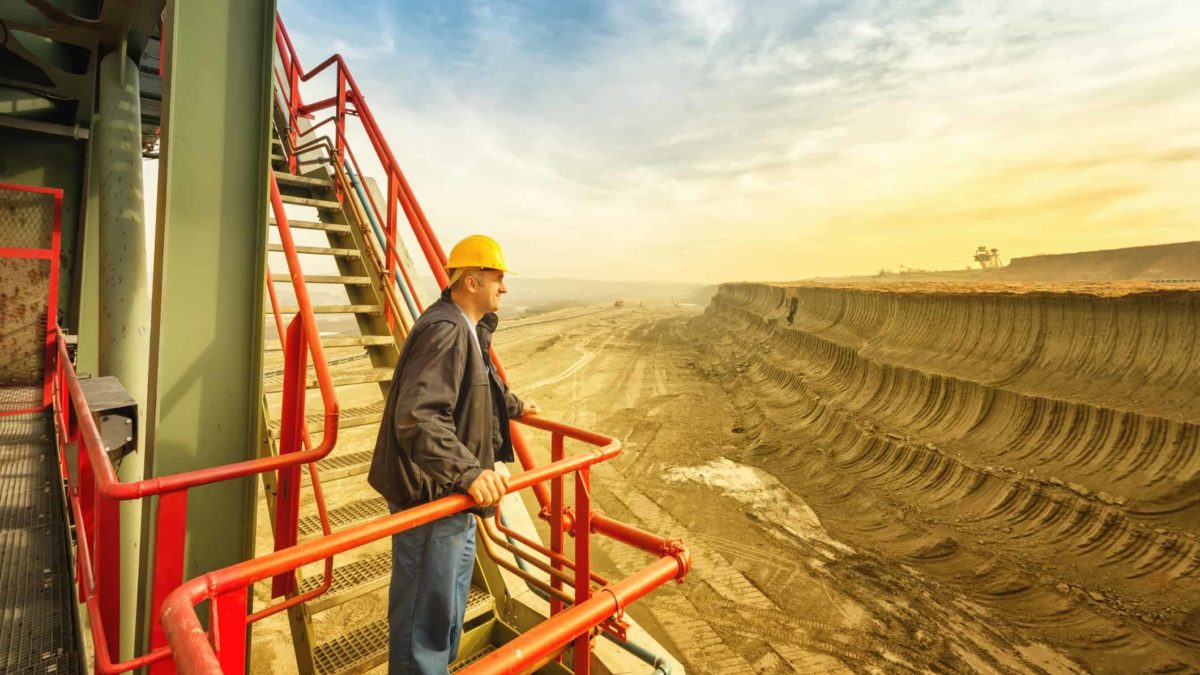
    An engineer takes a break on a staircase and looks out over a huge open pit coal mine as the sun rises in the background.

    An engineer takes a break on a staircase and looks out over a huge open pit coal mine as the sun rises in the background.

    Diversification of earnings in the future could be a real boost for the BHP Group Ltd (ASX: BHP) share price with the expansion into potash.

    BHP already has exposure to multiple commodities including iron, copper, nickel and coal.

    But, in the next few years, BHP is planning to unlock another stream of earnings by growing into a different commodity sector – fertilisers.

    What is potash?

    The ASX mining share describes it as a “potassium-rich salt used mainly as fertiliser to improve the quality and yield of agricultural production.”

    It said that potash fertilisers are a critical source of the potassium that crops need to grow. Potash strengthens the plants, helps them move water and sugar, and defends them against disease.

    BHP also explained that potash and derivative chemicals are used in a variety of applications, including “glass manufacture, oil & gas drilling, aluminium recycling, water softening, fireworks and many more.”

    What’s the appeal of potash?

    More than 70% of global potassium chloride capacity is based on conventional underground mining which is the intended process for BHP’s Jansen potash project. Mining is what BHP does and it seems to be one of the best in the world with its long-term successes and low operating costs.

    BHP thinks that potash demand could double by the late 2040s when it could be a US$50 billion market, partly thanks to the global population rising close to 10 billion by 2050.

    The ASX mining share’s research suggests that there could be a rising calorific intake that involves more varied diets. BHP is projecting that food demand will increase by 50% and “sustainable increases in crop yields will be crucial if we are to continue to feed the world.”

    BHP pointed out that in many parts of the world, “potassium is being removed from the soil faster than it is being replenished.” This suggests there’s an essential global need for potash.

    The company has said that potash could see reliable base demand with “attractive long-term fundamentals and differentiated demand drivers.” It noted that the potash price doesn’t have much correlation to the iron ore price, which could smooth BHP’s earnings through economic cycles.

    Potash reportedly has lower emissions than other types of fertiliser, so it’s “positively leveraged” to decarbonisation.

    How could Jansen help the BHP share price?

    The ASX mining share reminded investors in its most recent quarterly update for the three months to 31 March 2023 that it has approved US$5.7 billion of capital expenditure for stage one of Jansen, with an initial production target date for the end of 2026.

    The goal is to have the capacity to produce 4.35 million tonnes of potash per annum, while the feasibility study for Jansen stage two continues to progress and is reportedly on track to be completed during FY24.

    The Jansen project could have a 100-year life, meaning it could generate earnings for the long term for the business.

    BHP has said that Jansen will use less equipment, have a larger capacity, have lower costs and be more automated than other potash mines. This is expected to mean that Jansen is one of the lowest-cost potash producers in the world when it’s completed.

    In August 2021, BHP suggest that Jansen could earn an internal rate of return (IRR) of 12% to 14%, with an expected payback period of “seven years from first production”. It also suggested that the underlying earnings before interest, tax, depreciation and amortisation (EBITDA) margin could be approximately 70% because of its expected cost position.

    If the ASX mining share can achieve those numbers, then potash could be very useful for the BHP share price as a way to diversify, defend and grow the profit.

    The post Why the cash splash on potash could send the BHP share price higher appeared first on The Motley Fool Australia.

    Should you invest $1,000 in Bhp Group right now?

    Before you consider Bhp Group, you’ll want to hear this.

    Motley Fool Investing expert Scott Phillips just revealed what he believes are the 5 best stocks for investors to buy right now… and Bhp Group wasn’t one of them.

    The online investing service he’s run for over a decade, Motley Fool Share Advisor, has provided thousands of paying members with stock picks that have doubled, tripled or even more.* And right now, Scott thinks there are 5 stocks that are better buys.

    See The 5 Stocks
    *Returns as of April 3 2023

    (function() {
    function setButtonColorDefaults(param, property, defaultValue) {
    if( !param || !param.includes(‘#’)) {
    var button = document.getElementsByClassName(“pitch-snippet”)[0].getElementsByClassName(“pitch-button”)[0];
    button.style[property] = defaultValue;
    }
    }

    setButtonColorDefaults(“#43B02A”, ‘background’, ‘#5FA85D’);
    setButtonColorDefaults(“#43B02A”, ‘border-color’, ‘#43A24A’);
    setButtonColorDefaults(“#fff”, ‘color’, ‘#fff’);
    })()

    More reading

    Motley Fool contributor Tristan Harrison has no position in any of the stocks mentioned. The Motley Fool Australia’s parent company Motley Fool Holdings Inc. has no position in any of the stocks mentioned. The Motley Fool Australia has no position in any of the stocks mentioned. The Motley Fool has a disclosure policy. This article contains general investment advice only (under AFSL 400691). Authorised by Scott Phillips.

    from The Motley Fool Australia https://ift.tt/4jDmif2

  • Why the ‘market hasn’t fully understood’ this ASX rare earths share with huge upside

    two men in hard hats and high visibility jackets look together at a laptop screen that one of the men in holding at a mine site.two men in hard hats and high visibility jackets look together at a laptop screen that one of the men in holding at a mine site.

    Electric vehicle maker Tesla Inc (NASDAQ: TSLA) sent a shiver down the spine of rare earths miners around the globe earlier this year.

    The US company declared that it would shift its battery technology to no longer use rare earth minerals, to free itself from future supply shortages.

    So how realistic is this? 

    Is it just another impulsive thought bubble from mercurial chief Elon Musk, or can it actually happen?

    Tyndall Asset Management portfolio manager Jason Kim set about to answer this dilemma, and named the ASX rare earths stock that he would buy right now:

    What are the options for Tesla if they move away from rare earths?

    The fact that many people don’t realise is that earlier model Teslas didn’t use rare earth minerals.

    “Tesla had previously used AC induction motors (with no rare earths) in their earlier models but replaced them with permanent DC magnet motors which contained rare earths (NdFeB magnets),” said Kim on the Tyndall blog.

    “Tesla’s decision to switch away from AC induction motors was driven by a range of factors, including problems with unbalanced voltage supply, rotor locking, and interference with the complex network of sensors found in modern vehicles.”

    Because of these problems with AC induction, Kim added that many experts can’t see the car maker returning to that technology. 

    So how would Tesla move away from rare earths now?

    According to Kim, the “only current feasible alternative” to rare earths magnets is ferrite magnets. 

    These magnets are already used in EV motor designs from Japan’s Proterial and Germany’s Bayerische Motoren Werke AG (ETR: BMW).

    But it comes at a cost.

    “While ferrite powered motors can match the performance of NeFeB powered motors to some extent, this performance comes with a significant weight and efficiency penalty that has made the switch unattractive to date.”

    If Tesla wants to make the switch, it has to accept trade-offs like lower driving range or a larger battery.

    “Given the bigger batteries, as well as more copper required, some experts believe there is no material cost advantage to using ferrite powered motors to NdFeB powered motors.”

    This is the ASX rare earths stock to buy 

    So Kim’s verdict is that, despite Tesla puffing its chest out, it will not be able to easily transition out of using rare earths.

    “It appears the demand for rare earths will continue to grow and that supply growth still remains an issue,” he said.

    “There are some possible advancements that may result in true alternatives to rare earths in motors, such as manganese bismuth magnets.  However, they are all still in their development infancy, and their commercialisation, if they prove to work, is still several years away.”

    So considering rare earths shares are safe for now, which one would he buy on the ASX at the moment?

    It’s not the one you’re thinking of.

    Iluka Resources Limited (ASX: ILU), which is predominantly a mineral sands miner with a very large presence in titanium dioxide and zircon markets, has been a beneficiary of government support aimed at increasing the supply of critical minerals including rare earths,” said Kim.

    “This support will assist in the acceleration of Iluka’s emerging, but potentially very large, rare earths mining and processing business.”

    The Iluka share price has already risen 20% year to date, all while paying out a dividend yield of close to 4%.

    Kim reckons the stock provides “a unique and undervalued opportunity”. 

    “The market has not fully understood the potential upside from their rare earths opportunity, and the significance of the government support that this project has received.”

    The post Why the ‘market hasn’t fully understood’ this ASX rare earths share with huge upside appeared first on The Motley Fool Australia.

    FREE Guide for New Investors

    Despite what some people may say – we believe investing in shares doesn’t have to be overwhelming or complicated…

    For over a decade, we’ve been helping everyday Aussies get started on their journey.

    And to help even more people cut through some of the confusion “experts’” seem to want to perpetuate – we’ve created a brand-new “how to” guide.

    Yes, Claim my FREE copy!
    *Returns as of April 3 2023

    (function() {
    function setButtonColorDefaults(param, property, defaultValue) {
    if( !param || !param.includes(‘#’)) {
    var button = document.getElementsByClassName(“pitch-snippet”)[0].getElementsByClassName(“pitch-button”)[0];
    button.style[property] = defaultValue;
    }
    }

    setButtonColorDefaults(“#0095C8”, ‘background’, ‘#5FA85D’);
    setButtonColorDefaults(“#0095C8”, ‘border-color’, ‘#43A24A’);
    setButtonColorDefaults(“#fff”, ‘color’, ‘#fff’);
    })()

    More reading

    Motley Fool contributor Tony Yoo has no position in any of the stocks mentioned. The Motley Fool Australia’s parent company Motley Fool Holdings Inc. has positions in and has recommended Tesla. The Motley Fool Australia has recommended Bayerische Motoren Werke Aktiengesellschaft. The Motley Fool has a disclosure policy. This article contains general investment advice only (under AFSL 400691). Authorised by Scott Phillips.

    from The Motley Fool Australia https://ift.tt/ejTUs92