Tag: Motley Fool

  • What’s with the Huon (ASX:HUO) share price today?

    A surprised woman holds a piece of salmon with chopsticks

    The Huon Aquaculture Group Ltd (ASX: HUO) share price is flat on Monday morning. This comes after the salmon producer provided an update on the JBS takeover bid of all Huon shares.

    At the time of writing, the Huon share price is trading at its previous closing price of $3.82 apiece. In comparison, the All Ordinaries Index (ASX: XAO) is up 0.2% to 7,737 points.

    What did Huon announce?

    Huon chair Neil Kearney advised today that Tattarang Agrifood has indicated it may not support the JBS proposal.

    Tattarang Agrifood holds an 18.5% stake in Huon and is owned by West Australian mining magnate Andrew Forrest. Forrest is also the CEO of iron ore giant, Fortescue Metals Group Limited (ASX: FMG).

    In a letter to shareholders, Kearney said Forrest has questioned the animal husbandry practices of JBS and the environmental standards of Huon and the Tasmanian salmon industry.

    This follows the announcement made on 6 August 2021 that Huon entered into definitive agreements with JBS. The latter offered to acquire 100% of Huon shares for a cash consideration of $3.85 per share.

    Based on the last closing price of Huon shares when the strategic review process was announced (26 February 2021), this represents a 61% premium.

    In the early phase of the review process, Tattarang expressed interest in Huon and submitted a non-binding and conditional indicative offer for the business. However, that fell through when Tattarang was invited to participate further in the strategic review process.

    The directors of Huon stated that the JBS offer of $3.85 per share was materially higher than Tattarang’s previous non-binding and conditional indicative offer.

    Huon revealed that a booklet outlining the proposal and voting details will be dispatched to shareholders within four weeks.

    About the Huon share price

    Up until early August when the cash proposal was announced, Huon shares were trading mostly sideways. However, since then the company’s share price rocketed almost 50% to sit around the $3.80 mark.

    When looking at the last 12-month period, Huon shares have posted a gain of around 40%. In 2021 alone, its shares are up just over 20%.

    Huon presides a market capitalisation of roughly $419.7 million, with approximately 109 million shares on its books.

    The post What’s with the Huon (ASX:HUO) share price today? appeared first on The Motley Fool Australia.

    Should you invest $1,000 in Huon right now?

    Before you consider Huon, you’ll want to hear this.

    Motley Fool Investing expert Scott Phillips just revealed what he believes are the 5 best stocks for investors to buy right now… and Huon wasn’t one of them.

    The online investing service he’s run for nearly a decade, Motley Fool Share Advisor, has provided thousands of paying members with stock picks that have doubled, tripled or even more.* And right now, Scott thinks there are 5 stocks that are better buys.

    *Returns as of August 16th 2021

    More reading

    Motley Fool contributor Aaron Teboneras has no position in any of the stocks mentioned. The Motley Fool Australia’s parent company Motley Fool Holdings Inc. has no position in any of the stocks mentioned. The Motley Fool Australia has no position in any of the stocks mentioned. The Motley Fool has a disclosure policy. This article contains general investment advice only (under AFSL 400691). Authorised by Bruce Jackson.

    from The Motley Fool Australia https://ift.tt/3gkGdcA

  • The Telstra (ASX:TLS) share price has gained 23% in the last 6 months

    two people celebrating good news high five each other while jumping in the air with a city landscape in the background.

    The Telstra Corporation Ltd (ASX: TLS) share price may be trading lower on Monday but that hasn’t stopped in from smashing the ASX 200 over the last six months.

    During this time, the telco giant’s shares have gained a sizeable 23.5%.

    As a comparison, the ASX 200 is up 9.3% over the same period.

    Why is the Telstra share price up 23% in six months?

    Investors have been driving the Telstra share price higher over the last six months largely due to optimism that a long-awaited return to growth was on the horizon.

    The good news is that this optimism was not unfounded. Earlier this month, Telstra released its full year results and revealed its expectation of a solid rise in operating earnings in FY 2022.

    In FY 2021, Telstra recorded underlying EBITDA of $6.7 billion. This was within the company’s guidance range of $6.6 billion to $6.9 billion.

    The company is now guiding to underlying EBITDA of $7 billion to $7.3 billion in FY 2022. This represents year on year growth of 4.5% to 9%.

    But it doesn’t stop there. Also giving the Telstra share price a lift was the reiteration of its underlying EBITDA aspiration of $7.5 billion to $8.5 billion in FY 2023.

    This growth is expected to be driven by mobile services revenue growth, its productivity program, and the easing of the NBN headwind. The latter peaked in FY 2020, reduced in FY 2021, and will be substantially less in FY 2022.

    $1.5 billion share buyback

    Another catalyst for the strong Telstra share price gain was the announcement of a $1.35 billion on-market share buyback. This follows the sale of a stake in some of its infrastructure assets.

    Telstra’s CEO, Andrew Penn, commented: “When we launched T22, we committed to establishing a standalone infrastructure business unit for three reasons: to give transparency of those assets, to bring a harder commercial edge to how we operationalise them, and to create optionality with a view to maximising shareholder value.”

    “This share buy-back is a clear demonstration of how we are creating additional long-term value for our shareholders,” he added.

    Where next for its shares?

    The good news is that the team at Ord Minnett still see value in the Telstra share price.

    A recent note reveals that its analysts have a buy rating and $4.40 price target on its shares.

    Based on the latest Telstra share price of $3.97, this implies potential upside of 11% before dividends and almost 15% including them.

    The post The Telstra (ASX:TLS) share price has gained 23% in the last 6 months appeared first on The Motley Fool Australia.

    Should you invest $1,000 in Telstra right now?

    Before you consider Telstra, you’ll want to hear this.

    Motley Fool Investing expert Scott Phillips just revealed what he believes are the 5 best stocks for investors to buy right now… and Telstra wasn’t one of them.

    The online investing service he’s run for nearly a decade, Motley Fool Share Advisor, has provided thousands of paying members with stock picks that have doubled, tripled or even more.* And right now, Scott thinks there are 5 stocks that are better buys.

    *Returns as of August 16th 2021

    More reading

    Motley Fool contributor James Mickleboro has no position in any of the stocks mentioned. The Motley Fool Australia’s parent company Motley Fool Holdings Inc. has no position in any of the stocks mentioned. The Motley Fool Australia owns shares of and has recommended Telstra Corporation Limited. The Motley Fool has a disclosure policy. This article contains general investment advice only (under AFSL 400691). Authorised by Bruce Jackson.

    from The Motley Fool Australia https://ift.tt/3y3AspT

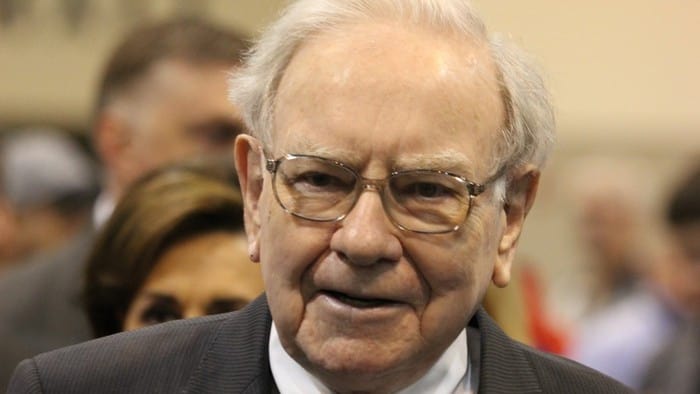
  • Here are Warren Buffett’s biggest stock picks

    This article was originally published on Fool.com. All figures quoted in US dollars unless otherwise stated.

    share market investing expert warren buffett

    This article was originally published on Fool.com. All figures quoted in US dollars unless otherwise stated.

    A unique ability to buy winning stocks has made Warren Buffett the sixth richest person on the planet. His past success and folksy wisdom has made him a household name and one of the most-watched investors in the world. Fortunately, following in his stock-picking footsteps doesn’t require having his phone number on speed dial. Buffett’s investment company, Berkshire Hathaway (NYSE: BRK.A) (NYSE: BRK.B) files its holdings with the Securities and Exchange Commission every quarter and its latest report — released this week — reveals 76% of Berkshire Hathaway’s $293 billion (yes, billion) portfolio is invested in just five stocks in three sectors.

    Buffett’s biggest position

    Warren Buffett’s single biggest position — valued at a jaw-dropping $121.5 billion — is Apple (NASDAQ: AAPL).

    The consumer electronics juggernaut is best known for its cutting-edge computers, smartphones, and tablets, but increasingly, it’s profiting from its services segment. Although consumer electronics products still account for the lion’s share of Apple’s sales, product revenue is highly dependent on new device launches and holiday shopping trends, making consumer electronics revenue “lumpy” throughout the year. Devices are also a relatively low-margin business.

    However, Apple’s services business, which includes the app store, provides it with high-margin, recurring revenue that’s very profit- and dividend-friendly. Last quarter, services accounted for 21.5% of Apple’s total revenue, up from 16% in the same quarter of 2017. The company’s trailing-12-month net income has increased to $87 billion from less than $50 billion and its dividend payout has climbed to $0.88 per share from $0.63 per share over that period.

    So far, Berkshire Hathaway’s unrealized profit on its Apple shares is nearly $90 billion, so it’s been a big winner for Buffett. Importantly, there’s little to suggest he’ll sour on Apple. Apple’s sitting on over $194 billion in cash plus marketable securities on its balance sheet and although it’s already one of the world’s biggest companies, it still delivered 36% year-over-year revenue growth in the quarter ending June 30, suggesting its products and services are still winning over consumers.

    Betting on banks

    Buffett has a penchant for easy-to-understand businesses, so it’s unsurprising that two of his top five largest positions are Bank of America (NYSE: BAC) and American Express (NYSE: AXP), two financial institutions with a relatively simple business model: pocketing interest on loans. He owns $41.6 billion worth of Bank of America stock and $25 billion in American Express shares exiting June, making them his second- and third-biggest positions, respectively.

    Bank of America is the second-largest bank in the United States and the eighth-largest bank globally. It makes money in other ways, including via its capital markets and wealth management solutions, but most of its profit comes from charging interest on loans, including mortgages and credit cards, and fees associated with traditional banking accounts. Similarly, American Express makes money charging merchant transaction fees to retailers that accept American Express credit cards, but its main source of revenue is interest associated with small business borrowing and credit card use.

    Traditionally, banks like Bank of America and American Express are most profitable when the spread between their cost to borrow and interest rates charged to customers is wide. A low interest rate environment has made it harder to maximize that spread, known as net interest margin, but Bank of America and American Express are still producing earnings for shareholders.

    In 2020, Bank of America earned $1.87 per share and American Express earned $3.77 per share despite headwinds associated with a dramatic slowdown in economic activity caused by the COVID-19 shutdowns. In 2021, analysts estimate the companies’ earnings will climb to $3.26 per share and $8.81 per share, respectively, because of rebounding GDP. If so, that should provide management even more wiggle room to increase dividend payouts, providing Buffett with additional incentive to hold onto his shares.

    These businesses are tasty

    Sticking to his keep-it-simple investing approach, two consumer staples companies round out Warren Buffett’s five biggest holdings: Coca-Cola (NYSE: KO) and Kraft Heinz (NASDAQ: KHC).

    Coca-Cola and Kraft Heinz are among the most recognizable brands in the world. Coca-Cola owes its recognition to its self-named soft drink, but it’s expanded its product lineup in recent years to benefit from evolving trends in consumer taste. For example, it insulated itself against consumers’ shift away from sugary drinks by becoming one of the biggest players in bottled and sparkling water. It even launched a hard seltzer under its popular Topo Chico brand in 2020. Berkshire Hathaway’s owned Coca-Cola shares since 1988 and it currently holds 400 million shares, making it Coca-Cola’s single largest shareholder.

    Kraft Heinz was formed by the marriage of Kraft and Heinz in 2015. The combination created a food giant, but its performance has probably been bumpier than Buffett hoped. The steep price paid to merge the companies resulted in a goodwill writedown and dividend cut in 2019, and its $37 share price is down from a peak above $90 in 2017.

    Nevertheless, Buffett seems committed to remaining long his 325.6 million shares. Despite cutting its dividend, Kraft Heinz still provides Berkshire Hathaway with a relatively handsome 4.3% yield, and that’s far better than the Oracle of Omaha can fetch in U.S. Treasuries.

    This article was originally published on Fool.com. All figures quoted in US dollars unless otherwise stated.

    The post Here are Warren Buffett’s biggest stock picks appeared first on The Motley Fool Australia.

    Wondering where you should invest $1,000 right now?

    When investing expert Scott Phillips has a stock tip, it can pay to listen. After all, the flagship Motley Fool Share Advisor newsletter he has run for more than eight years has provided thousands of paying members with stock picks that have doubled, tripled or even more.*

    Scott just revealed what he believes could be the five best ASX stocks for investors to buy right now. These stocks are trading at near dirt-cheap prices and Scott thinks they could be great buys right now.

    *Returns as of August 16th 2021

    More reading

    Todd Campbell owns shares of Apple and Bank of America. Bank of America is an advertising partner of The Ascent, a Motley Fool company. American Express is an advertising partner of The Ascent, a Motley Fool company. The Motley Fool Australia’s parent company Motley Fool Holdings Inc. owns shares of and has recommended Apple and Berkshire Hathaway (B shares). The Motley Fool Australia’s parent company Motley Fool Holdings Inc. has recommended the following options: long January 2023 $200 calls on Berkshire Hathaway (B shares), long March 2023 $120 calls on Apple, short January 2023 $200 puts on Berkshire Hathaway (B shares), short January 2023 $265 calls on Berkshire Hathaway (B shares), and short March 2023 $130 calls on Apple. The Motley Fool Australia has recommended Apple and Berkshire Hathaway (B shares). The Motley Fool has a disclosure policy. This article contains general investment advice only (under AFSL 400691). Authorised by Bruce Jackson.

    This article was originally published on Fool.com. All figures quoted in US dollars unless otherwise stated.

    from The Motley Fool Australia https://ift.tt/3goy6f2

  • Fenix Resources (ASX:FEX) share price up 7% on profit and dividend surge

    Three happy miners standing with arms crossed at quarry

    The Fenix Resources Ltd (ASX: FEX) share price surged on 13% to 30 cents within the first ten minutes of trading after the company released its unaudited FY21 results.

    At the time of writing, shares in the iron ore junior are up 7.55% to 28.5 cents.

    Fenix Resources share price surges on bumper profit results

    At its highest point in the calendar year, the Fenix share price was up 97.8% to an all-time high of 45.5 cents. The company has hit a number of milestones this year as it transitions from an iron ore explorer to producer. Some key financial highlights include:

    • Unaudited sales revenue of $113 million
    • Unaudited net profit before tax of $62 million
    • Unaudited headline net profit after tax (NPAT) of $49 million

    Dividend policy on watch

    The company announced the finalisation of its dividend policy which provides, to the extent its dividends can be fully franked, a payout ratio of 50% to 80% of after-tax earnings.

    With an unaudited headline NPAT of $49 million and market capitalisation of ~$132 million, this implies a price-to-earnings ratio of just 2.55 and a potential dividend yield between 19.58% and 30.6%.

    Management commentary

    Fenix Resources managing director Rob Brierley commented on the results, saying:

    Our unaudited financial results illustrate the rapid and relatively seamless execution of our project delivery strategy. We have hit the ground running and taken advantage of robust iron ore prices. The iron ore swap arrangements we entered into in July are already in-the-money and these arrangements secure Iron Ridge’s future for FY22 and beyond.

    What’s next for Fenix Resources?

    Brierley said that the company is targeting the release of its audited FY21 financial result in mid-September.

    This potential near-term catalyst for the Fenix Resources share price will also include the declaration of its maiden dividend.

    The post Fenix Resources (ASX:FEX) share price up 7% on profit and dividend surge appeared first on The Motley Fool Australia.

    Should you invest $1,000 in Fenix Resources right now?

    Before you consider Fenix Resources, you’ll want to hear this.

    Motley Fool Investing expert Scott Phillips just revealed what he believes are the 5 best stocks for investors to buy right now… and Fenix Resources wasn’t one of them.

    The online investing service he’s run for nearly a decade, Motley Fool Share Advisor, has provided thousands of paying members with stock picks that have doubled, tripled or even more.* And right now, Scott thinks there are 5 stocks that are better buys.

    *Returns as of August 16th 2021

    More reading

    Motley Fool contributor Kerry Sun has no position in any of the stocks mentioned. The Motley Fool Australia’s parent company Motley Fool Holdings Inc. has no position in any of the stocks mentioned. The Motley Fool Australia has no position in any of the stocks mentioned. The Motley Fool has a disclosure policy. This article contains general investment advice only (under AFSL 400691). Authorised by Bruce Jackson.

    from The Motley Fool Australia https://ift.tt/3gqO9t0

  • OML (ASX:OML) share price up on first-half earnings rebound

    boy in celebration pose with pointed fingers raised high

    The oOh!Media Ltd (ASX: OML) share price has tipped slightly higher on Monday after the company released its 1H FY21 results.

    At the time of writing, the OML share price is up 0.46% to $1.523.

    OML share price lifts on EBITDA surge

    The recovering outdoor advertising market has kicked off an earnings recovery for the OML business.

    Despite the OML share price edging lower on Monday, the company delivered a solid financial performance in the first half, with highlights including:

    • Revenue rose 23% against the prior corresponding period (pcp) to $251.6 million.
    • Underlying earnings before interest, tax, depreciation and amortisation (EBITDA) increased 209% to $33.3 million
    • Reported net loss after tax of $9.3 million compared to a loss of $28.0 million in pcp
    • OML achieved #1 market position for outdoor advertising in Australian and New Zealand markets.

    What happened to OML in 1H FY21?

    The OML share price has been bumpy for the past 9 months despite a strong recovery in its financial performance.

    The company advised that revenues in key formats have rebounded strongly, with commute, road and retail advertising formats increasing 26%, 44% and 40% respectively compared to 1H 2020. These three verticals contributed to approximately 90% of group revenues in 1H FY21.

    oOh!Media said that the road format continued to be the best performing category following on from 2020, surpassing 1H 2019 figures by 16%. Commute has continued to be impacted by a decline in rail passenger figures in key stations in the Sydney and Melbourne rail networks. While retail advertising delivered a solid improvement and approaching 1H19 revenue levels.

    Other minor formats including fly and locate (office), continued to be impacted in the first half through lower audience members, with revenues falling 56% and 33% respectively.

    Management commentary

    oOh!Media CEO Cathy O’Conner commented on the first half result, saying:

    We have seen strong audience growth post lockdowns which has led to a significant turnaround in revenue for the half, particularly in our key formats of Road, Retail and Street Furniture in Australia and New Zealand.

    That has also been a function of our strong suburban and regional network where we continue to provide unrivaled reach and frequency for advertisers.

    Looking over at the company’s core Australia and New Zealand operations, O’Conner said that:

    In Australia audience levels were consistent up to May 2021 before declining as a result of the Melbourne lockdown in June. Overall revenue has held consistently at 80% of 2019 levels with revenue in Road performing particularly strongly at 116% of the first half of 2019. New Zealand also performed at or slightly above 2019 levels.

    As conditions have become more fluid during the pandemic, we are seeing advertisers capitalising on the flexibility of digital out of home (DOOH). With the largest quality digital network across the region, oOh! is well positioned to respond.

    What’s next for oOh!Media?

    oOh!Media advised that revenue for Q3 was currently 38% higher than the pcp and 74% higher than Q3 2019.

    The company said that forward visibility remained uncertain “given the ongoing effects of COVID-19 lockdowns and associated movement restrictions”. However, OML expected that when the current lockdowns end, “there will be a strong recovery in audiences and associated revenues as has been the case previously”.

    Despite a largely positive outlook and first half-performance, the OML share price has slipped 6.5% year-to-date.

    The post OML (ASX:OML) share price up on first-half earnings rebound appeared first on The Motley Fool Australia.

    Should you invest $1,000 in oOh! Media right now?

    Before you consider oOh! Media, you’ll want to hear this.

    Motley Fool Investing expert Scott Phillips just revealed what he believes are the 5 best stocks for investors to buy right now… and oOh! Media wasn’t one of them.

    The online investing service he’s run for nearly a decade, Motley Fool Share Advisor, has provided thousands of paying members with stock picks that have doubled, tripled or even more.* And right now, Scott thinks there are 5 stocks that are better buys.

    *Returns as of August 16th 2021

    More reading

    Motley Fool contributor Kerry Sun has no position in any of the stocks mentioned. The Motley Fool Australia’s parent company Motley Fool Holdings Inc. has no position in any of the stocks mentioned. The Motley Fool Australia has recommended oOh!Media Ltd. The Motley Fool has a disclosure policy. This article contains general investment advice only (under AFSL 400691). Authorised by Bruce Jackson.

    from The Motley Fool Australia https://ift.tt/3DitEsn

  • NIB (ASX:NHF) share price sinks 11% despite profit surge

    a doctor comforts a sad patient by holding her hand in a healthcare setting.

    The NIB Holdings Ltd (ASX: NHF) share price is falling heavily on Monday morning. This comes after the private health insurer released its full-year results for the 2021 financial year.

    At the time of writing, NIB shares are down 11.28% to $7.08. It’s worth noting that last Friday, the NIB share price touched a 52-week high of $8.05.

    Let’s take a look at what the company reported.

    NIB share price plummets despite growth across key metrics 

    The NIB share price is sinking today regardless of the company delivering a robust result for the 12 months ending 30 June 2021. Here are some of the key highlights:

    • Total group revenue of $2.6 billion, up 2.9% on the prior corresponding period (FY20 $2.5 billion);
    • Group expense claim of $2 billion, up 2.5% (FY20 $1.95 billion);
    • Group underlying operating profit (UOP) of $204.9 million, up 39.5% (FY20 $146.9 million);
    • Net profit after tax (NPAT) of $160.5 million, up 84.5% (FY20 $87 million); and
    • Fully-franked final dividend of 14 cents per share, up from 4 cents per share.

    What happened in FY21 for NIB?

    NIB experienced strong arhi (Australian Residents Health Insurance) policyholder sales growth and retention. Net arhi policyholder growth lifted 4.2% (26,000 new policyholders) versus 3.1% for the industry average.

    This was partly driven by elevated community awareness for financial protection and risk of disease as a result of COVID-19. Resumption of previously suspended policies, and the benefits of arhi’s distribution strategy, also attributed to the result.

    In addition, its New Zealand business saw stable performance of 5,500 policyholders (excluding international students) added to the books.

    However, both the international inbound and travel businesses were significantly impacted by border closures. Each segment reported a loss despite cost reduction and business efficiency measures implemented throughout the year.

    Iihi (international inbound health insurance) membership recorded a loss of $5.9 million, while NIB travel sales also registered a loss of $13.6 million. NIB remains confident that both iihi and travel sales will bounce back.

    In contrast, these two businesses combined contributed $41.5 million to group earnings in FY19 compared with a loss of $19.5 million in FY21.

    NIB also put aside a $34 million provision for further catch-up of deferred claims in relation to COVID-19. Although it did note that forecasting future claims is extremely difficult to predict at this time.

    What did management say?

    NIB managing director Mark Fitzgibbon commented on the milestone achievement, saying:

    Neither FY21 or FY20 can be considered “normal” given fluctuation in healthcare utilisation and claims experience. A high level of provisioning in our accounts for deferred claims especially caused a substantial decline in FY20 UOP while our FY21 claims experience has turned out better than expected.

    … The pandemic has clearly heightened people’s awareness of the risk of disease and the need for financial protection as well as timely access to treatment. This is reflected in our policyholder growth which has also benefited from improvement in retention and resumption of previously suspended policies.

    What’s next for NIB?

    Looking ahead, NIB expects market conditions for FY22 to remain similar to FY20, with the pandemic having mixed consequences.

    Ahri’s policyholding is expected to lift between 2% to 3%, along with stable and consistent growth in New Zealand.

    The near-term outlook for the iihi and travel businesses is expected to be challenging due to restrictions on foreign entry and travel.

    On a positive note, NIB obtained a licence to sell health insurance in China through its joint venture with Chinese pharmaceutical company Tasly. First sales were made in July; however, the business isn’t expected to be profitable for another couple of years.

    Given the unpredictable nature of COVID-19, NIB refrained from providing an earnings guidance for the FY22 period.

    The post NIB (ASX:NHF) share price sinks 11% despite profit surge appeared first on The Motley Fool Australia.

    Should you invest $1,000 in NIB right now?

    Before you consider NIB, you’ll want to hear this.

    Motley Fool Investing expert Scott Phillips just revealed what he believes are the 5 best stocks for investors to buy right now… and NIB wasn’t one of them.

    The online investing service he’s run for nearly a decade, Motley Fool Share Advisor, has provided thousands of paying members with stock picks that have doubled, tripled or even more.* And right now, Scott thinks there are 5 stocks that are better buys.

    *Returns as of August 16th 2021

    More reading

    Motley Fool contributor Aaron Teboneras owns shares of NIB Holdings Limited. The Motley Fool Australia’s parent company Motley Fool Holdings Inc. has no position in any of the stocks mentioned. The Motley Fool Australia has recommended NIB Holdings Limited. The Motley Fool has a disclosure policy. This article contains general investment advice only (under AFSL 400691). Authorised by Bruce Jackson.

    from The Motley Fool Australia https://ift.tt/3y8Os1w

  • CBA (ASX:CBA) share price gaining as bank rolls out vax centres

    A woman has just received the COVID vaccine, showing the bandage on her upper arm.

    The Commonwealth Bank of Australia (ASX: CBA) share price is up 0.8% this morning.

    CBA’s share price is rising in early trade as the bank reports that it is rolling out COVID-19 vaccination centres.

    What did CommBank report

    In a media release this morning CommBank said it is opening dedicated vaccination centres to help its employees and their families in the national fight against the pandemic. The news is unlikely to have an immediate material impact on the CBA share price.

    The vaccination centres will initially focus in areas of concern in the Greater Sydney area. The first centre opened in Parramatta in early August. Two more opened last week. Centres in Blacktown, Cabramatta, Auburn, Liverpool and Campbelltown are scheduled to open their doors this week.

    CommBank reports it is working on opening more vaccination centres in other local government areas (LGAs) of concern in New South Wales over the coming weeks.

    The vaccination program for employees and their families is on a voluntary basis, and works hand in hand with the rapid antigen testing CBA now offers its branch staff in those same LGAs of concern.

    Commenting on the extraordinary measures, Commonwealth Bank Group Executive Human Resources Sian Lewis said:

    We know that preventative measures like vaccinations, and pre-emptive measures like increased testing, are the best courses of action at this time to help our community combat the spread of COVID-19. As an essential service, with one of the largest workforces in the country, we are committed to implementing safety and support measures to help keep our people, customers, and in turn the broader community, as safe as possible.

    CBA’s employee vaccination program will help speed up the vaccination rollout in NSW, and we are committed, as a bank, to do everything we can to support the rollout across the country.

    The bank said that as vaccine supplies increase it will roll out its vaccination program across Australia. It reports that 90% of 11,000 employees surveyed last week said they plan to get the vaccine.

    CBA share price snapshot

    The CBA share price has been a strong performer over the past 12 months, up 44%. That compares to a gain of 22% on the S&P/ASX 200 Index (ASX: XJO).

    Year to date, CBA’s share price continues to outperform, up 21% in 2021.

    The post CBA (ASX:CBA) share price gaining as bank rolls out vax centres appeared first on The Motley Fool Australia.

    Should you invest $1,000 in CBA right now?

    Before you consider CBA, you’ll want to hear this.

    Motley Fool Investing expert Scott Phillips just revealed what he believes are the 5 best stocks for investors to buy right now… and CBA wasn’t one of them.

    The online investing service he’s run for nearly a decade, Motley Fool Share Advisor, has provided thousands of paying members with stock picks that have doubled, tripled or even more.* And right now, Scott thinks there are 5 stocks that are better buys.

    *Returns as of August 16th 2021

    More reading

    The Motley Fool Australia’s parent company Motley Fool Holdings Inc. has no position in any of the stocks mentioned. The Motley Fool Australia has no position in any of the stocks mentioned. The Motley Fool has a disclosure policy. This article contains general investment advice only (under AFSL 400691). Authorised by Bruce Jackson.

    from The Motley Fool Australia https://ift.tt/3za9RZw

  • Why the Openpay (ASX:OPY) share price is rocketing 12% higher

    A hipster dude leaps in the air with glee, seeing positive news on his tablet.

    The Openpay Group Ltd (ASX: OPY) share price has started the week on a positive note.

    In morning trade, the buy now payer later (BNPL) provider’s shares are up 12% to $1.41.

    Why is the Openpay share price surging higher?

    Investors have been bidding the Openpay share price higher on Monday following the release of a positive announcement.

    According to the release, the BNPL provider has signed a two-year agreement with global information technology giant HP.

    The agreement will see Openpay deliver its OpyPro business to business (B2B) platform to HP, allowing an enhanced trading experience for HP business customers. The OpyPro platform manages trade accounts end-to-end, including account application processing, seamless business customer onboarding, credit checks, approvals, and account management.

    This is the second B2B contract win, following a deal with Woolworths Group Ltd (ASX: WOW) late last year.

    The company expects average order values for HP products to be significant and for the OpyPro product to drive strong transaction value for HP for all on account sales to HP business customers.

    Management commentary

    Openpay’s CEO and Managing Director, Michael Eidel, was very pleased to get HP on the platform.

    He commented, “We are delighted to have signed HP as our second B2B contract win, adding another household name to our growing list of iconic partners. This deal demonstrates Openpay’s ability to attract top tier business partners as we work to make the business-to-business payment experience easier and more efficient.”

    “This will also be the first time we’ve put our relationship with B2B funding partner Lumi, into action. Having Lumi in the mix enables us to continue to deliver OpyPro as a capital light, high transaction-volume SaaS play. We look forward to going live together imminently,” he added.

    Earlier this year the company signed an agreement with Lumi Financial Management to provide SME funding to OpyPro customers. This means OpyPro can remain a pure SaaS, capital light solution.

    Lumi’s CEO, Yanir Yakutiel, commented, “We are extremely excited about our partnership with Openpay and HP. This is something that we have been working on with Openpay in the background for several months and it is always exciting when something that started as an idea comes to life. This rollout is the first of many and we are looking forward to announcing more partnerships in the weeks and months ahead.”

    Despite today’s gain, the Openpay share price is down a disappointing 40% in 2021.

    The post Why the Openpay (ASX:OPY) share price is rocketing 12% higher appeared first on The Motley Fool Australia.

    Should you invest $1,000 in Openpay right now?

    Before you consider Openpay, you’ll want to hear this.

    Motley Fool Investing expert Scott Phillips just revealed what he believes are the 5 best stocks for investors to buy right now… and Openpay wasn’t one of them.

    The online investing service he’s run for nearly a decade, Motley Fool Share Advisor, has provided thousands of paying members with stock picks that have doubled, tripled or even more.* And right now, Scott thinks there are 5 stocks that are better buys.

    *Returns as of August 16th 2021

    More reading

    Motley Fool contributor James Mickleboro has no position in any of the stocks mentioned. The Motley Fool Australia’s parent company Motley Fool Holdings Inc. has no position in any of the stocks mentioned. The Motley Fool Australia has no position in any of the stocks mentioned. The Motley Fool has a disclosure policy. This article contains general investment advice only (under AFSL 400691). Authorised by Bruce Jackson.

    from The Motley Fool Australia https://ift.tt/3j82YlN

  • Audinate (ASX:AD8) share price climbs as FY21 revenue surges 22%

    high, climbing, record high

    The Audinate Group Ltd (ASX: AD8) share price is climbing higher this morning. This follows the audio tech company releasing its FY21 full-year results in the early hours.

    At the time of writing, Audinate shares are up 2.2% to $10.73. The company’s shares have been pushing higher over the past month or so after revealing its FY21 trading update.

    Audinate share price jumps following strong revenue growth

    • Revenue up 22.5% to US$25 million (A$33.4 million)
    • Gross profit increased 23.1% to US$19.2 million compared to prior year
    • Earnings before interest, tax, depreciation, and amortisation (EBITDA) of A$3 million, up 50.1%
    • Bottom line losses narrowed to A$3.4 million, a 17% improvement on FY20
    • Expanded into video products with launch of Bolin Technology and Patton Electronics

    What happened in FY21 for Audinate

    The Audinate share price is rising on Monday after reporting its full-year results. Investors will be thumbing their way through the software and hardware supplier’s latest metrics to make up their own minds.

    According to the release, Audinate managed to pull in total revenue of US$25 million in FY21 – representing an increase of 22.5% from the previous year. This growth was predominantly driven by software products. In fact, software revenue grew by ~62% thanks to an uptick in Dante software royalties.

    Additionally, a positive for the Audinate share price is its narrowing losses on the bottom line. Net losses after tax came in at A$3.4 million, compared to a A$4.1 million loss in FY20. The company noted this improvement was a result of increased revenue, lower income tax expense, and an increase in depreciation and amortisation write-offs.

    Audinate made note of its expanded total addressable market, now residing above A$1 billion in total. This reflects the company’s entrance into video products in addition to audio. During the year, Audinate successfully launched 6 OEM Dante video products. As a result, it now can offer complete ‘Dante AV’ solutions.

    What did management say?

    Commenting on the result, Audinate Co-founder and Chief Executive Officer Aidan Williams said:

    The strong demand for our technology as the AV industry recovers from COVID is particularly
    encouraging for Audinate’s longer-term outlook. In the short term, we expect continued supply chain
    uncertainty throughout the remainder of CY21, and whilst this may limit revenue growth in the near
    term, we remain confident that Audinate can deliver US$ revenue growth in the historical range for
    FY22.

    Additionally, regarding the company’s video product developments, Mr Williams said:

    The launch of Dante video products, record numbers of design wins and the establishment of an
    engineering team in Cambridge, UK are significant milestones as we execute our strategy to
    revolutionise the AV industry.

    What’s next for Audinate?

    The company currently holds a record level of backlog sale orders for the proceeding months. To support future growth in its video and cloud services, Audinate will be targeting a headcount of 170 employees over FY22. This would be a notable increase on the 135 employees as at 30 June 2021.

    Looking ahead, the focus is on driving further design wins for software products, reducing product adoption friction, and improving scalability — among other things.

    Finally, Audinate expects revenue growth to return to the historical range in FY22.

    Audinate share price snapshot

    Shareholders in Audinate would have to be pleased with their returns over the past year. The Audinate share price delivered a significant outperformance of the S&P/ASX 200 Index (ASX: XJO), climbing 97% compared to 21.7%.

    Despite impacts from live music being put on ice due to the pandemic, the audiovisual tech company has ascended to new heights.

    Audinate now holds a market capitalisation of approximately $800 million.

    The post Audinate (ASX:AD8) share price climbs as FY21 revenue surges 22% appeared first on The Motley Fool Australia.

    Should you invest $1,000 in Audinate right now?

    Before you consider Audinate, you’ll want to hear this.

    Motley Fool Investing expert Scott Phillips just revealed what he believes are the 5 best stocks for investors to buy right now… and Audinate wasn’t one of them.

    The online investing service he’s run for nearly a decade, Motley Fool Share Advisor, has provided thousands of paying members with stock picks that have doubled, tripled or even more.* And right now, Scott thinks there are 5 stocks that are better buys.

    *Returns as of August 16th 2021

    More reading

    Motley Fool contributor Mitchell Lawler has no position in any of the stocks mentioned. The Motley Fool Australia’s parent company Motley Fool Holdings Inc. owns shares of and has recommended AUDINATEGL FPO. The Motley Fool Australia owns shares of and has recommended AUDINATEGL FPO. The Motley Fool has a disclosure policy. This article contains general investment advice only (under AFSL 400691). Authorised by Bruce Jackson.

    from The Motley Fool Australia https://ift.tt/3gkPd1d

  • Reliance Worldwide (ASX:RWC) share price hits 52-week high after 111% profit jump

    a happy plumber smiles while repairing bathroom fittings in a home.

    The Reliance Worldwide Corporation Ltd (ASX: RWC) share price has a new annual record after the company released its full-year results.

    At the time of writing, shares in the plumbing manufacturer are trading for $6.17 – up 3.87%. Earlier, shares hit the benchmark high of $6.18. The S&P/ASX 200 Index (ASX: XJO) is 0.39% higher.

    Let’s take a closer look at today’s announcement.

    Reliance Worldwide share price rockets on 86% increase in dividend

    • Net sales of $1.3 billion, which is up 15% on the prior corresponding period (pcp).
    • Reported earnings before interest, taxes, depreciation, and amortisation (EBITDA) of $341 million. That’s a 56% leap on the pcp.
    • Reported NPAT of $188 million – up 111% on the pcp.
    • Basic earnings per share (EPS) of 24 cents – also up 111% on the pcp.
    • Full year dividend of 13 cents per share (6 cent interim + 7 cent final payment), 20% franked. It’s a rise of 86% on the pcp and, on the current share price, is a yield of 2.19%.

    What happened in FY21 for Reliance Worldwide

    In August 2020, the Reliance Worldwide share price was impacted when the Victorian government introduced stage 4 restrictions as part of its ultimately successful attempt to halt the spread of coronavirus during its second wave.

    Reliance Worldwide operates 4 factories in Melbourne that ship across Australia and the wider Asia-Pacific region. After some uncertainty, Reliance assured investors it could operate as an essential business, but under restrictions.

    The booming housing market also may have had affected Reliance Worldwide shares. As Motley Fool previously reported, the flourishing property and construction markets were occurring at a time of low interest rates and government subsidies. ASX construction shares, like Reliance, saw a noticeable uptick at the time.

    What did management say?

    Reliance Worldwide CEO Heath Sharp said the 2021 financial year had been a record one for the Company:

    Over the course of FY2021 we sold more products to more customers than ever before. Each of our regions recorded strong sales growth, and this translated into strong earnings growth. The trend behind this growth was common to all our key markets, and it was the increased spending by property owners on their homes. It was supported by strong new homebuilding activity particularly in Australia where our business has its highest exposure to new residential construction.

    He added:

    Cost inflation pressures were markedly higher in the second half of the year, with input costs such as copper, steel and resins all trending higher, and cost increases also experienced in freight and packaging. These higher costs were able to be mitigated by price increases.

    What’s next for Reliance Worldwide?

    In its statement, Reliance Worldwide says it will not provide an earnings guidance for FY22 “due to the considerable uncertainty surrounding market demand and the potential impacts of further COVID outbreak”.

    The company says it will update investors each quarter on trading conditions in its three regions, including sales and operating earnings.

    Finally, Reliance has signed a new contract with its CEO, which it has also announced today.

    The company says Sharp’s total remuneration will be adjusted to align with appropriate market benchmarks.

    “This will be achieved by implementing a downward adjustment of fixed remuneration by approximately 20% over a transition period of 3 years with a corresponding increase in Short Term Incentive (“STI”) and Long-Term Incentive (“LTI”) opportunities,” according to the company.

    Reliance share price snapshot

    Over the past 12 months, the Reliance Worldwide share price has increased 115%. It has outperformed the S&P/ASX 200 Index (ASX: XJO) by about 90 percentage points in that time. Year-to-date, Reliance shares have gained 52%, outpacing the ASX 200’s 12%.

    Reliance Worldwide has a market capitalisation of around $4.8 billion.

    The post Reliance Worldwide (ASX:RWC) share price hits 52-week high after 111% profit jump appeared first on The Motley Fool Australia.

    Should you invest $1,000 in Reliance Worldwide right now?

    Before you consider Reliance Worldwide, you’ll want to hear this.

    Motley Fool Investing expert Scott Phillips just revealed what he believes are the 5 best stocks for investors to buy right now… and Reliance Worldwide wasn’t one of them.

    The online investing service he’s run for nearly a decade, Motley Fool Share Advisor, has provided thousands of paying members with stock picks that have doubled, tripled or even more.* And right now, Scott thinks there are 5 stocks that are better buys.

    *Returns as of August 16th 2021

    More reading

    Motley Fool contributor Marc Sidarous has no position in any of the stocks mentioned. The Motley Fool Australia’s parent company Motley Fool Holdings Inc. owns shares of and has recommended Reliance Worldwide Corporation Limited. The Motley Fool Australia has recommended Reliance Worldwide Corporation Limited. The Motley Fool has a disclosure policy. This article contains general investment advice only (under AFSL 400691). Authorised by Bruce Jackson.

    from The Motley Fool Australia https://ift.tt/3D2OnQJ