Tag: Motley Fool

  • Telstra (ASX:TLS) share price up as government weighs in on Digicel saga

    a group of islander residents look at their mobile phones under a palm tree.

    The Telstra Corporation Ltd (ASX: TLS) share price has edged into the green this morning after more updates on the company’s Digicel Pacific acquisition.

    Recall that telecommunications giant Digicel owns the major portion of 3G and 4G mobile networks across the Pacific. Its wide footprint in that region generated EBITDA of $235 million in 2020.

    Digicel’s strategic location has made ownership of its assets a contentious issue for geopolitical reasons.

    What’s the latest here?

    The Australian federal government originally approached Telstra to “provide technical advice” regarding the purchase of Digicel Pacific, as per a release on 19 July.

    As a result, a deal between both parties to buy Digicel for approximately $2 billion “is almost inevitable”, yesterday’s Australian Financial Review reports.

    The government’s interest in the transaction is to lend a hand in protecting Digicel’s telco assets “because of concerns Beijing could use the networks to spy on political elites and neighbouring island nations”, according to the Financial Review.

    Telstra CEO Andy Penn has since weighed in, stating the government has its “own interests” in Digicel.

    However, the government will provide “significant debt financing” to Telstra by way of a loan, to fund the $2 billion acquisition.

    According to Penn, Digicel is a “very attractive and successful business”. Telstra would “join with the government to make the purchase” if the decision aligned with the interests of shareholders.

    Telstra also emphasised any progress would be with “financial and strategic risk management from the government”, implying that Telstra’s risk exposure would be low in the deal.

    It also stressed that it would only participate as a “minor portion of the overall transaction” in its equity stake, amid other parameters.

    Telstra shares are now $3.77, up by 0.27% in early morning trading.

    Telstra share price snapshot

    The Telstra share price has posted a return of 26% this year to date, extending the previous 12 month’s return of 8%.

    This has lagged the S&P/ASX 200 Index (ASX: XJO)’s return of around 26% over the past year.

    Telstra has a market capitalisation of almost $45 billion at the time of writing.

    The post Telstra (ASX:TLS) share price up as government weighs in on Digicel saga appeared first on The Motley Fool Australia.

    Wondering where you should invest $1,000 right now?

    When investing expert Scott Phillips has a stock tip, it can pay to listen. After all, the flagship Motley Fool Share Advisor newsletter he has run for more than eight years has provided thousands of paying members with stock picks that have doubled, tripled or even more.*

    Scott just revealed what he believes could be the five best ASX stocks for investors to buy right now. These stocks are trading at near dirt-cheap prices and Scott thinks they could be great buys right now.

    *Returns as of May 24th 2021

    More reading

    from The Motley Fool Australia https://ift.tt/3ymSxQw

  • 3 reasons Microsoft needs to reveal Azure’s financials

    This article was originally published on Fool.com. All figures quoted in US dollars unless otherwise stated.

    microsoft

    This article was originally published on Fool.com. All figures quoted in US dollars unless otherwise stated.

    Microsoft (NASDAQ: MSFT) posted its fourth-quarter earnings on July 27. Its revenue rose 21% year-over-year to $46.2 billion, clearing expectations by $1.9 billion, as its earnings jumped 49% to $2.17 per share and beat estimates by $0.25. Its commercial cloud revenue — which mainly comes from Microsoft 365 (formerly Office 365), LinkedIn, Dynamics CRM, and its cloud infrastructure platform Azure — increased 36% year-over-year to $19.5 billion.

    That marked an acceleration from the commercial cloud segment’s 33% growth in the third quarter, but Azure’s 45% year-over-year constant currency revenue growth actually decelerated from its 46% growth in the third quarter. But on a reported basis, Azure’s revenue still rose 51% — compared to its 50% growth in the previous quarter — so it benefited from more favorable currency tailwinds.

    Azure’s growth rates still look robust, but Microsoft’s refusal to divulge any additional numbers for the cloud platform is frustrating. Let’s discuss three reasons Microsoft should finally pull back that curtain.

    1. It’s one of Microsoft’s most important businesses

    Azure is the commercial cloud unit’s core growth engine. It consistently grows faster than Microsoft/Office 365 and Dynamics 365 and remains the world’s second-largest cloud infrastructure platform after Amazon (NASDAQ: AMZN) Web Services (AWS).

    Azure controlled 22% of the global cloud infrastructure market in the second quarter of 2021, according to Canalys. That puts it behind AWS’ 31% share, but far ahead of Alphabet‘s (NASDAQ: GOOG) (NASDAQ: GOOGL) Google Cloud, which ranked third with an 8% share.

    Revealing exactly how much revenue and profits Azure is generating would let investors know if Microsoft has pricing power in this competitive market, or if it’s merely trading margins for market share.

    2. Amazon and Google aren’t hiding their cloud numbers

    Amazon started reporting AWS’ exact revenue and operating profits in 2015. Google followed suit by reporting Google Cloud’s exact revenue in 2019, then revealing the unit’s operating losses in 2020.

    Amazon’s AWS revenue rose 30% to $45.4 billion, or 12% of its top line, in 2020. The segment’s operating profit increased 47% to $13.5 billion and accounted for 59% of its operating income. In other words, Amazon can subsidize the expansion of its lower-margin retail business with its higher-margin cloud business, which gives it an advantage against other online and brick-and-mortar retailers.

    Alphabet’s Google Cloud revenue rose 46% to $13.1 billion, or 7% of its top line, in 2020. The unit’s operating loss widened from $4.6 billion to $5.6 billion, but Alphabet’s total operating income still increased 20% to $41.2 billion. These numbers suggest Google Cloud is offering lower prices than AWS to expand its market share, but it can afford to pursue this loss-leading strategy because it can offset its cloud losses with its higher-margin ad revenue.

    With Azure, investors still don’t know exactly how much the cloud platform is boosting Microsoft’s revenue, or how much it’s dragging down its earnings growth.

    3. No more vague hints about Azure’s margins

    Microsoft’s management mentions Azure dozens of times during each conference call, but it’s only provided a few hints regarding the platform’s actual gross margins. During Microsoft’s third-quarter conference call in April, CFO Amy Hood said Azure’s gross margin was expanding — but a “sales mix shift to Azure” still weighed down the commercial cloud segment’s total gross margin.

    During the fourth quarter, Microsoft said its commercial cloud gross margin “increased 4 points to 70% despite revenue mix shift to Azure,” and its 14% year-over-year increase in operating expenses was mainly “driven by investments in Azure” — but we don’t know exactly how much it spent.

    These vague statements tell us three things about Azure: it generates much lower margins than Microsoft’s other commercial cloud businesses, it’s offering customers lower rates to keep up with AWS and Google Cloud, and it’s constantly expanding with new investments and services.

    Providing exact revenue and operating profit figures would clear that air and show investors exactly how much money Microsoft is losing (or possibly making) from one of its fastest-growing businesses.

    The key takeaways

    Microsoft’s former CEO Steve Ballmer urged the company to disclose its cloud revenue, margins, and profits back in late 2015, but his successor, Satya Nadella, didn’t comply. Nadella’s stance made sense back then, since Microsoft was just starting its “mobile first, cloud first” transition, but it doesn’t make much sense today — especially after Amazon and Google laid all their cards on the table.

    This article was originally published on Fool.com. All figures quoted in US dollars unless otherwise stated.

    The post 3 reasons Microsoft needs to reveal Azure’s financials appeared first on The Motley Fool Australia.

    Should you invest $1,000 in Microsoft right now?

    Before you consider Microsoft, you’ll want to hear this.

    Motley Fool Investing expert Scott Phillips just revealed what he believes are the 5 best stocks for investors to buy right now… and Microsoft wasn’t one of them.

    The online investing service he’s run for nearly a decade, Motley Fool Share Advisor, has provided thousands of paying members with stock picks that have doubled, tripled or even more.* And right now, Scott thinks there are 5 stocks that are better buys.

    *Returns as of May 24th 2021

    More reading

    Leo Sun owns shares of Amazon. John Mackey, CEO of Whole Foods Market, an Amazon subsidiary, is a member of The Motley Fool’s board of directors. Suzanne Frey, an executive at Alphabet, is a member of The Motley Fool’s board of directors. Teresa Kersten, an employee of LinkedIn, a Microsoft subsidiary, is a member of The Motley Fool’s board of directors. The Motley Fool Australia’s parent company Motley Fool Holdings Inc. owns shares of and has recommended Alphabet (A shares), Alphabet (C shares), Amazon, and Microsoft. The Motley Fool Australia’s parent company Motley Fool Holdings Inc. has recommended the following options: long January 2022 $1,920 calls on Amazon and short January 2022 $1,940 calls on Amazon. The Motley Fool Australia has recommended Alphabet (A shares), Alphabet (C shares), and Amazon. The Motley Fool has a disclosure policy. This article contains general investment advice only (under AFSL 400691). Authorised by Bruce Jackson.

    This article was originally published on Fool.com. All figures quoted in US dollars unless otherwise stated.


    from The Motley Fool Australia https://ift.tt/3ftdGkH

  • Afterpay share price keeps climbing. RBA surprisingly bullish. Scott Phillips on Nine’s Late News

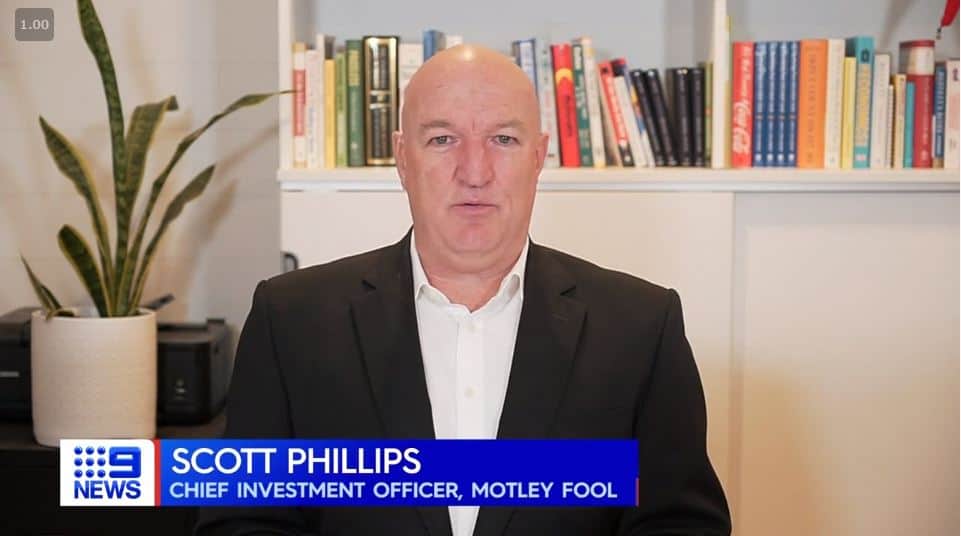
    Scott Phillips on Nine Late News 19 July 2021.

    Motley Fool Australia Chief Investment Officer Scott Phillips joined Nine’s Late News on Tuesday night to discuss the continuing rise in the Afterpay Ltd (ASX: APT) share price, the surprisingly confident tone of the RBA, plus expectations of a higher Aussie dollar.

    The post Afterpay share price keeps climbing. RBA surprisingly bullish. Scott Phillips on Nine’s Late News appeared first on The Motley Fool Australia.

    Wondering where you should invest $1,000 right now?

    When investing expert Scott Phillips has a stock tip, it can pay to listen. After all, the flagship Motley Fool Share Advisor newsletter he has run for more than eight years has provided thousands of paying members with stock picks that have doubled, tripled or even more.*

    Scott just revealed what he believes could be the five best ASX stocks for investors to buy right now. These stocks are trading at near dirt-cheap prices and Scott thinks they could be great buys right now.

    *Returns as of May 24th 2021

    More reading

    Motley Fool contributor Scott Phillips has no position in any of the stocks mentioned. The Motley Fool Australia’s parent company Motley Fool Holdings Inc. owns shares of and has recommended AFTERPAY T FPO. The Motley Fool Australia owns shares of and has recommended AFTERPAY T FPO. The Motley Fool has a disclosure policy. This article contains general investment advice only (under AFSL 400691). Authorised by Bruce Jackson.

    from The Motley Fool Australia https://ift.tt/3lrH9iC

  • Genworth (ASX:GMA) share price jumps 7% on half-year earnings

    happy investor, share price rise, increase, up

    The Genworth Mortgage Insurance Australia Ltd (ASX: GMA) share price has jumped 7.55% higher on Wednesday morning after announcing its half-year earnings result.

    Genworth shares are currently trading hands at $2.28 apiece.

    Genworth share price jumps as dividend returns

    Shares in the Aussie mortgage insurer are on the move after reporting results for the period ended 30 June 2021 (1H 2021).

    A few key highlights from Genworth’s results are:

    • Gross written premium revenue up 21.1% to $289.7 million
    • Net earned premium of $170.9 million, up 13.3% from $150.8 million reported in 1H 2020
    • Statutory net profit of $59.4 million compared to a $90.0 million net loss in 1H 2020
    • Insurance profit of $71.5 million versus a $128.1 million loss in 1H 2020
    • The board declared a 5 cents per share dividend after declining to pay an interim dividend in 1H 2020

    The Genworth share price is climbing higher in early trade following the earnings result and dividend announcement.

    What happened in 1H 2021 for Genworth?

    The Genworth share price has climbed 27% higher in the last 12 months, prior to this morning’s open. Shares in the Aussie mortgage insurer have been boosted by strong underwriting volumes and significant government incentives for home ownership.

    High loan-to-value mortgages have propelled the Genworth share price higher, largely driven by high property prices and first home buyers.

    Genworth Financial Inc sold its entire holding of shares in Genworth back in March. The separation is expected to occur by 31 March 2022 with one-off costs of $15 million to $19 million, largely to be incurred in FY 2021.

    What did management say?

    Genworth CEO and managing director Pauline Blight-Johnston described the first-half result as “pleasing”.

    “The result reflects the improved economy, housing market appreciation, and low interest rates experienced during the half”, Blight-Johnston said.

    “The stronger economy over the first half has provided good momentum for the company, however, the recent COVID-19 restrictions in some states will affect the ongoing economic recovery and have created renewed uncertainty,” she added.

    What’s next for Genworth shares?

    Genworth expects the low delinquency rates (0.60% in 1H 2021) to remain, thanks to ongoing borrower support programs.

    Ongoing COVID-19 disruptions have made FY 2022 forecasting difficult for the company. However, it remains well capitalised with a prescribed capital coverage ratio of 1.74 times.

    The Genworth share price has jumped 7.55% higher following this morning’s result but remains down 4.6% in 2021.

    The post Genworth (ASX:GMA) share price jumps 7% on half-year earnings appeared first on The Motley Fool Australia.

    Should you invest $1,000 in Genworth Mortgage Insurance Australia right now?

    Before you consider Genworth Mortgage Insurance Australia, you’ll want to hear this.

    Motley Fool Investing expert Scott Phillips just revealed what he believes are the 5 best stocks for investors to buy right now… and Genworth Mortgage Insurance Australia wasn’t one of them.

    The online investing service he’s run for nearly a decade, Motley Fool Share Advisor, has provided thousands of paying members with stock picks that have doubled, tripled or even more.* And right now, Scott thinks there are 5 stocks that are better buys.

    *Returns as of May 24th 2021

    More reading

    Motley Fool contributor Ken Hall has no position in any of the stocks mentioned. The Motley Fool Australia’s parent company Motley Fool Holdings Inc. has no position in any of the stocks mentioned. The Motley Fool Australia has no position in any of the stocks mentioned. The Motley Fool has a disclosure policy. This article contains general investment advice only (under AFSL 400691). Authorised by Bruce Jackson.

    from The Motley Fool Australia https://ift.tt/3ynqFM1

  • Vulcan (ASX:VUL) share price gains 8% on news of negative emissions

    a wide smiling businessman in suit and tie rips open his shirt to reveal a green chest underneath.

    The Vulcan Energy Resources Ltd (ASX: VUL) share price is soaring after the company announced its Zero Carbon Lithium Project will produce negative carbon emissions.  

    Vulcan has found the project will remove 2.9 tonnes of carbon dioxide from the atmosphere for every tonne of lithium hydroxide monohydrate produced.

    Right now, the Vulcan share price is $10.76, 8.14% higher than its previous closing price.

    Let’s take a closer look at today’s news from Vulcan.

    Negative CO2 emissions

    The Vulcan share price is charging after the company announced its updated life cycle assessment from its Zero Carbon Lithium Project found it will produce negative carbon emissions.

    The new assessment includes data from the project’s previously updated pre-feasibility study.

    The Zero Carbon Lithium Project ­– located in Western Germany – is Europe’s largest lithium resource.

    The company will use renewable geothermal energy to power the project. In fact, it will produce more renewable energy than it will use, returning the excess to the German electricity grid.

    Vulcan is also refusing to use fossil fuels in its planned operations – a decision it says is industry-leading.

    The new life cycle assessment also leaves the company’s project with the lowest planned carbon footprint in the world’s lithium industry.

    In addition, the brine that Vulcan’s lithium will be extracted from will be returned to its original state. Thus, the project will use less water than other lithium extraction methods.

    Vulcan also noted Western Germany has more water than it needs. This contrasts with other lithium projects – such as those in Western Australia and Chile – which are removing water from environments that need it.  

    Commentary from management

    Vulcan’s managing director Dr Francis Wedin commented on the news driving the company’s share price today:

    At Vulcan, our mission is to produce lithium for batteries with the highest environmental performance of any lithium chemical produced anywhere in the world. We are doing the hard scientific work of decarbonisation by intentionally deploying technologies with lower environmental impacts. European consumers and regulators expect to see actual measured carbon footprint reduction from industry, not just aspirations or untested claims.

    Vulcan share price snapshot

    Vulcan is seemingly proving that going green pays in dividends.

    The Vulcan share price has gained 275% since the start of 2021. It has also increased by 1,949% since this time last year.

    The company has a market capitalisation of around $1.12 billion, with approximately 108 million shares outstanding.

    The post Vulcan (ASX:VUL) share price gains 8% on news of negative emissions appeared first on The Motley Fool Australia.

    Wondering where you should invest $1,000 right now?

    When investing expert Scott Phillips has a stock tip, it can pay to listen. After all, the flagship Motley Fool Share Advisor newsletter he has run for more than eight years has provided thousands of paying members with stock picks that have doubled, tripled or even more.*

    Scott just revealed what he believes could be the five best ASX stocks for investors to buy right now. These stocks are trading at near dirt-cheap prices and Scott thinks they could be great buys right now.

    *Returns as of May 24th 2021

    More reading

    Motley Fool contributor Brooke Cooper has no position in any of the stocks mentioned. 

    The Motley Fool Australia’s parent company Motley Fool Holdings Inc. has no position in any of the stocks mentioned. The Motley Fool Australia has no position in any of the stocks mentioned. The Motley Fool has a disclosure policy. This article contains general investment advice only (under AFSL 400691). Authorised by Bruce Jackson.

    from The Motley Fool Australia https://ift.tt/3fthWk1

  • FY 2021 results preview: Is the CBA (ASX:CBA) share price good value?

    ASX share price on watch represented by woman investor looking at ASX financial results on laptop

    All eyes will be on the Commonwealth Bank of Australia (ASX: CBA) share price this time next week.

    On that day Australia’s largest bank will be releasing its highly anticipated full year results.

    What is the market expecting from CBA in FY 2021?

    According to a note out of Goldman Sachs, for the 12 months ended 30 June, the broker expects:

    • Operating revenue growth of 1.9% to $24,217 million
    • Net interest income growth of 1.7% to $18,922 million
    • Cash earnings from continuing operations up 15% to $8,342 million
    • A final fully franked dividend of $1.95 per share
    • A $3.5 billion or $2.00 per share special dividend.

    What did the broker say?

    As you can see above, while its estimates are actually a touch short of the market consensus, Goldman is confident that Commonwealth Bank will deliver a strong result for FY 2021.

    It also expects the bank to finish the period in a very strong position, leaving it with significant surplus capital.

    Goldman commented: “We highlight that given CBA sits on an implied surplus equivalent to 6.3% of its market capitalisation, combined with the fact that two of its peers (ANZ and NAB) have already announced on-market buy-backs, we forecast a special dividend of c.A$3.5 bn, equivalent to A200¢/share (may alternatively take the form of a structured off-market buyback). However, in light of the recent Covid-19 lockdowns and potential impact on the economy, we note there may be some risk to both the timing and magnitude of capital management.”

    The broker has also suggested that investors keep an eye on its costs. It notes that the other major banks are committed to lowering their cost bases, but CBA has not provided an explicit target around its cost base. In fact, its costs have been increasing as it invests in its future growth.

    Its analysts said: “We note that at the 1H21 result, management stated if the opportunity presents itself, CBA will reinvest to grow future revenues. At the 3Q21 update, underlying expenses increased 1% reflecting increased investment spend along with higher volume related costs. We will be paying close attention to commentary around how CBA is tracking on this front, particularly around investment spend, and for any changes in outlook/approach.”

    Is the CBA share price in the buy zone?

    Goldman Sachs continues to believe the CBA share price is expensive and that better value can be found elsewhere in the sector.

    Its analysts have retained their sell rating and $81.87 price target on its shares. Based on the current CBA share price of $102.80, this implies potential downside of 20% over the next 12 months.

    The post FY 2021 results preview: Is the CBA (ASX:CBA) share price good value? appeared first on The Motley Fool Australia.

    Should you invest $1,000 in CBA right now?

    Before you consider CBA, you’ll want to hear this.

    Motley Fool Investing expert Scott Phillips just revealed what he believes are the 5 best stocks for investors to buy right now… and CBA wasn’t one of them.

    The online investing service he’s run for nearly a decade, Motley Fool Share Advisor, has provided thousands of paying members with stock picks that have doubled, tripled or even more.* And right now, Scott thinks there are 5 stocks that are better buys.

    *Returns as of May 24th 2021

    More reading

    Motley Fool contributor James Mickleboro has no position in any of the stocks mentioned. The Motley Fool Australia’s parent company Motley Fool Holdings Inc. has no position in any of the stocks mentioned. The Motley Fool Australia has no position in any of the stocks mentioned. The Motley Fool has a disclosure policy. This article contains general investment advice only (under AFSL 400691). Authorised by Bruce Jackson.

    from The Motley Fool Australia https://ift.tt/3CcRHrZ

  • Tencent share price plummets 10%, here’s what it means for ASX investors

    A gamer slumps his head in his hands in front of two gaming screens

    Shares in Chinese tech and gaming giant Tencent Holdings Ltd (HKG: 0700) suffered a volatile trading session yesterday. At one point, more than 10% of the company’s value had been erased during trade. The volatility and price weakness are flowing onto ASX investors through the Betashares Asia Technology Tigers ETF (ASX: ASIA).

    So, what is causing these downward movements to one of the biggest companies in the world… let’s take a look.

    Gaming dubbed ‘spiritual opium’

    It was a rollercoaster trading session on the Hong Kong exchange for Tencent investors yesterday. Shares quickly fell by 10.8% before recovering to a 6.1% drop by the end of trading.

    Concerns around tighter gaming regulations appear to be behind the erratic behaviour. This followed a scathing report released by the Chinese state media, referring to games as “spiritual opium”. The story mentioned reports of children playing Tencent’s Honor of Kings for eight hours a day.

    Following the news, Tencent announced increased limits on playtime for minors. Additionally, the company plans to block children under the age of 12 from making in-game purchases.

    Furthermore, Tencent suggested the possibility of banning games completely for kids under 12 years old. The shocking move clearly blindsided investors – prompting some shareholders to sell now and ask questions later.

    Impact on ASX investors

    The continued selloff in the Tencent share price puts further pressure on ASX investors of the Betashares Asia ETF. According to the fact sheet, Tencent makes up 9.7% of the exchange-traded fund, making it the fourth-largest holding.

    However, Tencent is not the only company weighing on the fund. Rather, this is just the latest development in China’s crackdown on industries that are considered to be creating ‘social discontent’.

    The uncertainty has led to downward pressure on the ASIA ETF over the past six months. As a result, ASX investors of the ETF are down 23% during the period.

    The post Tencent share price plummets 10%, here’s what it means for ASX investors appeared first on The Motley Fool Australia.

    Should you invest $1,000 in Tencent right now?

    Before you consider Tencent, you’ll want to hear this.

    Motley Fool Investing expert Scott Phillips just revealed what he believes are the 5 best stocks for investors to buy right now… and Tencent wasn’t one of them.

    The online investing service he’s run for nearly a decade, Motley Fool Share Advisor, has provided thousands of paying members with stock picks that have doubled, tripled or even more.* And right now, Scott thinks there are 5 stocks that are better buys.

    *Returns as of May 24th 2021

    More reading

    Motley Fool contributor Mitchell Lawler has no position in any of the stocks mentioned. The Motley Fool Australia’s parent company Motley Fool Holdings Inc. has no position in any of the stocks mentioned. The Motley Fool Australia owns shares of and has recommended BetaShares Asia Technology Tigers ETF. The Motley Fool has a disclosure policy. This article contains general investment advice only (under AFSL 400691). Authorised by Bruce Jackson.

    from The Motley Fool Australia https://ift.tt/3A4t2Eb

  • Why the Sydney Airport (ASX:SYD) share price will be one to watch

    Happy girl with luggage at airport

    The Sydney Airport Holdings Pty Ltd (ASX: SYD) share price will be in focus when trading resumes this morning. That’s after the Australian Financial Review (AFR) reported the airport will start work on a new hotel precinct in 2022.

    At close of trade yesterday, shares in the company were trading for $7.69 – down 1.28%. The S&P/ASX 200 Index (ASX: XJO) ended yesterday 0.23% lower.

    Let’s take a closer look at today’s news.

    Stay, then fly!

    As the AFR reported, Sydney Airport has received federal government approval to build a 4- to 5-star hotel next to the T3 domestic terminal. The federal government has responsibility for all of Australia’s airports.

    The building is reported to be nine storeys with 321 rooms. It will contain two hotel brands and be located adjacent to the Ibis Budget and Mantra hotels. The hope is that a full retail and hospitality precinct can be established in the area by 2024.

    Sydney Airport has not disclosed the two brands that will operate the hotels, according to the AFR. Let’s see what this means for the Sydney Airport share price.

    Recent Sydney Airport share price news

    Sydney Airport made the news when it received, and then rejected, an unsolicited takeover bid of $8.25 per share. Since then, the company has been under pressure to prove to investors that it can unlock value above the offer price by the consortium of investors.

    The Motley Fool has previously reported expert suggestions that the Sydney Airport share price will not hit that $8.25 figure for a while.

    An analyst at Morgans said that until international travel is up and running again, Sydney Airport’s value will take some time to appreciate substantially.

    Of course, international travel has been shunted by the COVID-19 pandemic. A pick-up in domestic travel, plus trans-Tasman travel to New Zealand, has been devastated by a recent outbreak in the harbour city. With every state shutting their borders to New South Wales, and with this likely to continue for some time, it may be a rough few months for Sydney Airport.

    The company will release its full-year results on Friday 20 August.

    The post Why the Sydney Airport (ASX:SYD) share price will be one to watch appeared first on The Motley Fool Australia.

    Should you invest $1,000 in Sydney Airport Holdings right now?

    Before you consider Sydney Airport Holdings, you’ll want to hear this.

    Motley Fool Investing expert Scott Phillips just revealed what he believes are the 5 best stocks for investors to buy right now… and Sydney Airport Holdings wasn’t one of them.

    The online investing service he’s run for nearly a decade, Motley Fool Share Advisor, has provided thousands of paying members with stock picks that have doubled, tripled or even more.* And right now, Scott thinks there are 5 stocks that are better buys.

    *Returns as of May 24th 2021

    More reading

    The Motley Fool Australia’s parent company Motley Fool Holdings Inc. has no position in any of the stocks mentioned. The Motley Fool Australia has no position in any of the stocks mentioned. The Motley Fool has a disclosure policy. This article contains general investment advice only (under AFSL 400691). Authorised by Bruce Jackson.

    from The Motley Fool Australia https://ift.tt/2VspNrd

  • Why Pfizer shot 4% higher on Tuesday

    This article was originally published on Fool.com. All figures quoted in US dollars unless otherwise stated.

    girl receiving pfizer vaccine

    This article was originally published on Fool.com. All figures quoted in US dollars unless otherwise stated.

    What happened

    Tuesday was another chapter in the Resurgence of Coronavirus Stocks story. One of the leaders of that clutch of companies, Pfizer (NYSE: PFE), rose to close 3.4% higher on the day, easily eclipsing the gain of the S&P 500 index. As has been commonplace in recent days, events are pushing the U.S. and the world to administer more vaccine doses.

    So what

    With vaccine reluctance still quite commonplace in various pockets of the U.S. while the delta variant continues to spread, authorities are trying to batten down the hatches. Tuesday morning, New York City Mayor Bill de Blasio announced that the municipality is mandating proof of at least one dose of vaccine for people both working at and frequenting a big list of businesses. Additionally, city employees must be vaccinated or undergo weekly testing.

    “If you want to participate in our society fully, you’ve got to get vaccinated,” he said in a news conference covering the subject. “It’s time.”

    Pfizer is, famously, a purveyor of one of those vaccines: BNT162b2, which it developed with German biotech BioNTech. Since the two-dose jab received an Emergency Use Authorization (EUA) from the FDA last December, in many jurisdictions it has been the go-to shot. Only two other vaccines (from Moderna and Johnson & Johnson) have received EUAs. None has yet been granted full approval from the regulator.

    Now what

    COVID-19 infections and fatalities continue to rise, at worryingly sharp rates in various locales. Pfizer is going to remain a big weapon in this wearying fight.

    This article was originally published on Fool.com. All figures quoted in US dollars unless otherwise stated.

    The post Why Pfizer shot 4% higher on Tuesday appeared first on The Motley Fool Australia.

    Wondering where you should invest $1,000 right now?

    When investing expert Scott Phillips has a stock tip, it can pay to listen. After all, the flagship Motley Fool Share Advisor newsletter he has run for more than eight years has provided thousands of paying members with stock picks that have doubled, tripled or even more.*

    Scott just revealed what he believes could be the five best ASX stocks for investors to buy right now. These stocks are trading at near dirt-cheap prices and Scott thinks they could be great buys right now.

    *Returns as of May 24th 2021

    More reading

    Eric Volkman has no position in any of the stocks mentioned. The Motley Fool Australia’s parent company Motley Fool Holdings Inc. has recommended Johnson & Johnson and Moderna Inc. The Motley Fool Australia has no position in any of the stocks mentioned. The Motley Fool has a disclosure policy. This article contains general investment advice only (under AFSL 400691). Authorised by Bruce Jackson.

    This article was originally published on Fool.com. All figures quoted in US dollars unless otherwise stated.

    from The Motley Fool Australia https://ift.tt/37hwK0L

  • How do you value the NAB (ASX:NAB) share price?

    parents putting money in piggy bank for kids future

    With the National Australia Bank Ltd (ASX: NAB) share price up 54% over the last 12 months, investors may be wondering if its shares still good value. But how do you value a bank share?

    How do you value the NAB share price?

    When it comes to valuing shares, the traditional price to earnings ratio is often used. This ratio is the result of dividing a company’s share price by its earnings per share.

    However, analysts don’t tend to use this method for banks. There are a number of reasons for this, with one being the fact that a bank’s earnings ignore the significant value sitting on its balance sheet.

    Instead, analysts may prefer to use a price to book ratio when analysing bank shares. Similar to the price to earnings ratio, this ratio divides the company’s share price by the book value per share. The lower the ratio compared to its peers the better.

    But even that is too simplistic for many analysts.

    How else can you value its shares?

    Fortunately, the team at Goldman Sachs have just valued the NAB share price and revealed their methods.

    Goldman Sachs has a conviction buy rating and $30.34 price target on NAB’s shares at present. This is based on a 50:50 blend of its discounted cash flow and return on equity versus price to net tangible assets (NTA) valuation. This is far more complex than the above methods, but I will try and take you through it now.

    Equity value per share:

    • Goldman estimates NAB’s future cash flows at $70,031 million based on a 10.7% discount rate.
    • Estimated value of future franking credits $15,282 million.
    • Total equity value $85,313 million.
    • 3,201 million shares.
    • Equity value per share of $26.66.

    This is then blended evenly with its NTA estimates versus its sustainable return on tangible equity estimate (ROTE) of $34.01 to give us a final valuation of $30.34.

    The good news is that this compares favourably to the current NAB share price of $26.34. This implies potential upside of 15.2% over the next 12 months before dividends.

    Foolish Takeaway

    While Goldman’s valuation model will go over the heads of many readers, the key takeaway is that it demonstrates why a price to earnings ratio can be too simple if you want to effectively value the NAB share price.

    The post How do you value the NAB (ASX:NAB) share price? appeared first on The Motley Fool Australia.

    Should you invest $1,000 in NAB right now?

    Before you consider NAB, you’ll want to hear this.

    Motley Fool Investing expert Scott Phillips just revealed what he believes are the 5 best stocks for investors to buy right now… and NAB wasn’t one of them.

    The online investing service he’s run for nearly a decade, Motley Fool Share Advisor, has provided thousands of paying members with stock picks that have doubled, tripled or even more.* And right now, Scott thinks there are 5 stocks that are better buys.

    *Returns as of May 24th 2021

    More reading

    Motley Fool contributor James Mickleboro has no position in any of the stocks mentioned. The Motley Fool Australia’s parent company Motley Fool Holdings Inc. has no position in any of the stocks mentioned. The Motley Fool Australia has no position in any of the stocks mentioned. The Motley Fool has a disclosure policy. This article contains general investment advice only (under AFSL 400691). Authorised by Bruce Jackson.

    from The Motley Fool Australia https://ift.tt/37k1MVW