Tag: Motley Fool

  • The least productive argument in investing…

    Investor covering eyes in front of laptop

    “There are two types of people…” are the first six words for many a quip.

    My favourite one, by the way, is:

    “There are two types of people. Those who can infer…”

    (Think about it.)

    Such shorthand is great for a gag.

    It can sometimes even be helpful.

    But only sometimes.

    Maybe even rarely.

    Are there really ever just two types of people?

    Can we really be that easily boxed in, outside the joke version?

    “There are two types of people. Those who think I’m funny, and those who are wrong.”

    I guess some things in life are binary.

    But not many.

    And even then, the value comes not from the blanket characterisation, but in understanding the nuance, the differences, and the grey areas.

    The exception might often prove the rule, but those exceptions are where the real interest lies.

    It’s true, too, in investing.

    Is there anything more tired than the ‘value versus growth’ debate?

    It’s useless on so many levels.

    Firstly, each defies definition, so you end up debating the semantics of that definition, rather than the worth of each approach.

    I mean, what is value? Buying businesses for less than they’re worth?

    Maybe.

    But you reckon any ‘growth’ investors intend to only buy businesses for more than they’re worth?

    And what’s growth?

    Businesses that are growing?

    There aren’t too many value investors filling their boots only with businesses in decline.

    And, yes, already you’re thinking ‘yes, but…’

    Which is the point.

    Such grand characterisations (stereotypes? caricatures?) are about as helpful as modern politics: you can argue for hours, but the whole charade is a waste of my time, and yours.

    Most people reading this will consider themselves part of one camp or the other.

    And that’s fine.

    But, again to invoke my political analogy, once you’ve done that, you stop trying to find the truth, and spend your time defending your turf, no matter what.

    Indeed there’s actually a basis for the phenomenon in behavioural psychology: as soon as you question someone else’s view, you are more likely to make them dig in, rather than rationally consider it.

    Explains a lot of Australian politics recently, doesn’t it?

    And even more of social media.

    But — and I need you to stay with me, here — it’s not just ‘them’.

    It’s ‘us’, too.

    I have a mathematical brain. It’s just how I think. So, when presented with the opportunity to calculate growth rates, ratios and — the holy grail of value investors — discounted cash flows, I was there.

    I’m that old that my first efforts in that field were numbers typed into Excel, from hard copy annual reports mailed to me. Yes, this was pre-internet — or at least before companies offered copies of their reports in pdf format.

    I had rates, ratios and valuations everywhere.

    I knew every number and every calculation for every company I watched.

    Until I realised that the result was that, in the words of the famous phrase ‘I knew the price of everything and the value of nothing’.

    So I became a growth guy, right?

    Not really.

    At least not in the way the word is usually applied.

    Forced to choose, I eschew both labels, usually considering myself a ‘quality’ guy.

    Sometimes, I buy ‘expensive’ quality — Amazon.com, Inc. (NASDAQ: AMZN) when it wasn’t profitable.

    Other times, I buy ‘cheaper’ quality — Washington H. Soul Pattinson and Co. Ltd (ASX: SOL), when it was trading at a big discount to net tangible assets.

    Both have done well, since I bought them.

    I still own shares of both companies.

    Would a value investor have bought Amazon? Maybe. But not many.

    Would a growth investor have bought Soul Patts? Maybe. But not likely.

    Now, I’m not trying to say I’m some special case, twice as clever as someone who identifies with one camp or the other.

    I’m sure there are growth investors with better track records than mine.

    And I’m sure there are value investors with better track records than mine.

    My point is that the labels, in and of themselves, are all but useless.

    And worse than useless are the arguments over which is better.

    The value guys almost always want growth in their investments.

    The growth guys almost always believe the companies they buy are undervalued by the market.

    Yep… it’s an artificial distinction.

    (By the way, this is probably the dumbest article to write. At least if I was bagging one camp or the other, I’d have full-throated support of my ‘team’. Criticising both — or at least the extreme ends of both — just doubles the number of people I annoy!)

    To be clear, if you’re happily in one of those camps, that’s great.

    And it’s just as hard to turn a value investor into a growth one as it is to turn a growth investor into a value one.

    My aim isn’t to tell any of you that you’re wrong.

    It’s to remind you that, despite the labels, you share more in common than you may like to admit.

    And to tell those of you who haven’t yet picked a team, that you really don’t need to.

    See, at the end of the day, artificial labels don’t hurt anyone except you.

    Instead of wasting time picking, then defending, your turf, I reckon you’re better off understanding how both groups differ — and what they have in common.

    Then, apply what you’ve learned, your own way.

    And don’t get stuck.

    Remember, even Warren Buffett’s style evolved as he learned more, and as his situation evolved.

    And, as I said earlier, if you want to pick one word, I’d choose ‘quality’.

    As Buffett says. “Time is the friend of the wonderful business, the enemy of the mediocre”.

    Because even if you get the price slightly wrong, you’ll still own a great business. Getting the price wrong on a poor business can be kryptonite for your portfolio.

    Fool on!

    The post The least productive argument in investing… appeared first on The Motley Fool Australia.

    Wondering where you should invest $1,000 right now?

    When investing expert Scott Phillips has a stock tip, it can pay to listen. After all, the flagship Motley Fool Share Advisor newsletter he has run for more than eight years has provided thousands of paying members with stock picks that have doubled, tripled or even more.*

    Scott just revealed what he believes could be the five best ASX stocks for investors to buy right now. These stocks are trading at near dirt-cheap prices and Scott thinks they could be great buys right now.

    *Returns as of May 24th 2021

    More reading

    John Mackey, CEO of Whole Foods Market, an Amazon subsidiary, is a member of The Motley Fool’s board of directors. Motley Fool contributor Scott Phillips owns shares of Amazon and Washington H. Soul Pattinson and Company Limited. The Motley Fool Australia’s parent company Motley Fool Holdings Inc. owns shares of and has recommended Amazon. The Motley Fool Australia’s parent company Motley Fool Holdings Inc. has recommended the following options: long January 2022 $1,920 calls on Amazon and short January 2022 $1,940 calls on Amazon. The Motley Fool Australia owns shares of and has recommended Washington H. Soul Pattinson and Company Limited. The Motley Fool Australia has recommended Amazon. The Motley Fool has a disclosure policy. This article contains general investment advice only (under AFSL 400691). Authorised by Bruce Jackson.

    from The Motley Fool Australia https://ift.tt/3f6UtoC

  • Altium (ASX:ALU) share price may benefit after rejecting bid: Fund manager

    Young girl wearing glasses flexes her left bicep confidently.

    The Altium Limited (ASX: ALU) share price has underperformed the S&P/ASX 200 Index (ASX: XJO) this year. However, there are still experts who believe the printed circuit board software company offers an enticing proposition.

    At the close of trade today, the Altium share price finished down 1.93% to $33. Unfortunately, investors are in the red year to date by 2.91%.

    Expert bullish on Altium share price

    While some investors might worry about the lack of performance from Altium recently, portfolio managers at investment fund Smallco don’t share the same concerns.

    According to the fund’s June quarterly update, Altium remains one of Smallco’s largest and longest-held positions in the Smallco Broadcap Fund. However, the exact weighting is not disclosed.

    Furthermore, Smallco referred to the inevitably rejected takeover bid from Autodesk, Inc. (NASDAQ: ADSK) for Altium. The non-binding offer made in June was for $38.50 per share. This represented a 41% premium to the previous trading price.

    Altium has been pursuing a strategy of industry transformation through dominance. With the largest pool of PCB design users, a rapidly growing cloud product and the industry leading search engine for electronic parts, Altium is uniquely placed within the industry to execute on its vision to create a platform that connects the electronics and product design worlds to the electronics supply chain and manufacturing partners.

    Based on the above statement from Smallco, it seems the fund also considered the offer to undervalue Altium’s growth prospects. These prospects and the Altium share price will be in the spotlight come 23 August 2021, with the company set to report its FY21 result.

    Brokers take on the company

    Analysts at Bell Potter also took another look at Altium after Autodesk walked away. According to the note, the broker retained its hold rating but decreased its price target to $35.

    The reasoning is based on how quickly Autodesk lost interest in acquiring Altium. Additionally, the broker didn’t rule out further takeover interest. However, the incident with Autodesk leads the brokers to think valuation is an obstacle.  

    Based on the current Altium share price, the PCB software provider has a market capitalisation of $4.37 billion.

    The post Altium (ASX:ALU) share price may benefit after rejecting bid: Fund manager appeared first on The Motley Fool Australia.

    Should you invest $1,000 in Altium right now?

    Before you consider Altium, you’ll want to hear this.

    Motley Fool Investing expert Scott Phillips just revealed what he believes are the 5 best stocks for investors to buy right now… and Altium wasn’t one of them.

    The online investing service he’s run for nearly a decade, Motley Fool Share Advisor, has provided thousands of paying members with stock picks that have doubled, tripled or even more.* And right now, Scott thinks there are 5 stocks that are better buys.

    *Returns as of May 24th 2021

    More reading

    Motley Fool contributor Mitchell Lawler has no position in any of the stocks mentioned. The Motley Fool Australia’s parent company Motley Fool Holdings Inc. owns shares of and has recommended Altium and Autodesk. The Motley Fool Australia owns shares of and has recommended Altium. The Motley Fool Australia has recommended Autodesk. The Motley Fool has a disclosure policy. This article contains general investment advice only (under AFSL 400691). Authorised by Bruce Jackson.

    from The Motley Fool Australia https://ift.tt/2WnOHbH

  • Bitcoin leaps 8% as Australia’s inflation surprises to the upside

    man and woman looking at bitcoin mining

    Bitcoin (CRYPTO: BTC) as an inflation hedge?

    It’s not the first time the idea has come up for debate.

    But with Australia’s inflation surprising to the upside and Bitcoin’s price rising, the question has taken on new urgency.

    In figures released earlier today, Australia’s Consumer Price Index (CPI) for the June quarter increased 0.8%. That brings the annual inflation figure up to 3.8%.

    Now, many analysts believe the sharp price rises are transitory, largely driven by one-off issues caused by the COVID pandemic. But just how long inflation continues to trend higher, and just how high it may go, remains to be seen.

    Bitcoin, in the meantime, is up 8.0% over the past 24 hours and up 30.3% over the past 7 days, according to data from CoinMarketCap.

    The digital token is currently worth US$40,034 (AU$54,100).

    Bitcoin as an inflation hedge?

    Now I’m not saying that Australia’s inflation figures are directly driving the Bitcoin price higher today.

    But following unprecedented amounts of fiscal and monetary support to stem off a COVID economic depression, the inflation bugbear is lurking in major economies across the globe.

    The spectre of a new inflationary era is of increasing concern to Australian investors. And many are now looking to properly position their portfolios in the face of rising costs.

    The issue appears to be of particular concern among Bitcoin and other crypto supporters. That’s according to a survey commissioned by crypto platform Gemini, founded by Cameron and Tyler Winklevoss.

    In fact, 79% of the 1,010 crypto enthusiasts on the independent panel said they think inflation will become a real problem Down Under over the next 5 years. 85% of the panel also said they believe it’s a good idea to invest in appreciating assets during inflationary periods.

    Asked which of 7 types of investments they believed were safest should inflation persist, 41% chose property. 19% chose cryptocurrencies and another 19% chose shares, locking cryptos and shares in a tie for second place. Only 9% opted for commodities “such as gold, silver and energy”.

    Commenting on the results, Asia-Pacific managing director of Gemini Jeremy Ng said:

    As an asset in limited supply, fast growing cryptocurrencies such as Bitcoin can be a strong inflation hedge against devaluing fiat currencies. For this reason, we find many investors hold crypto such as Bitcoin, rather than using them as a means of payment…

    It is telling that 10% more investors prefer crypto to gold, silver and other commodities. I regard Bitcoin as gold 2.0 as both assets share many similar characteristics. The reason it is 2.0 is because Bitcoin trumps gold in many aspects such as scarcity, storage cost, portability and divisibility.

    What about crypto’s notorious volatility?

    The Bitcoin price, as touched on up top, is well-known for its wild price swings. In 2021 alone it traded as low as US$29,111 in January and as high as US$64,829 in April.

    While that remains a concern, Ng points to its rising acceptance by institutional investors as likely to smooth the volatility. “Institutional investors entering the market will help to dampen Bitcoin’s price swings,” he said.

    And for investors who’ve been able to stomach the historic price swings, Jeremy notes that, “Bitcoin … has had the highest average return across all asset classes in the last decade. At an average annualised return rate of over 200%, Bitcoin’s average return is over 10 times that of Nasdaq-100 index which was the second ranked asset class.”

    While that’s true for the 10 years gone by, there’s no guarantees about how the token will perform in the years ahead.

    As with all crypto and share investments, don’t invest more than you can afford to lose.

    The post Bitcoin leaps 8% as Australia’s inflation surprises to the upside appeared first on The Motley Fool Australia.

    Should you invest $1,000 in Bitcoin right now?

    Before you consider Bitcoin, you’ll want to hear this.

    Motley Fool Investing expert Scott Phillips just revealed what he believes are the 5 best stocks for investors to buy right now… and Bitcoin wasn’t one of them.

    The online investing service he’s run for nearly a decade, Motley Fool Share Advisor, has provided thousands of paying members with stock picks that have doubled, tripled or even more.* And right now, Scott thinks there are 5 stocks that are better buys.

    *Returns as of May 24th 2021

    More reading

    The Motley Fool Australia’s parent company Motley Fool Holdings Inc. owns shares of and has recommended Bitcoin. The Motley Fool Australia has no position in any of the stocks mentioned. The Motley Fool has a disclosure policy. This article contains general investment advice only (under AFSL 400691). Authorised by Bruce Jackson.

    from The Motley Fool Australia https://ift.tt/3y9KxT5

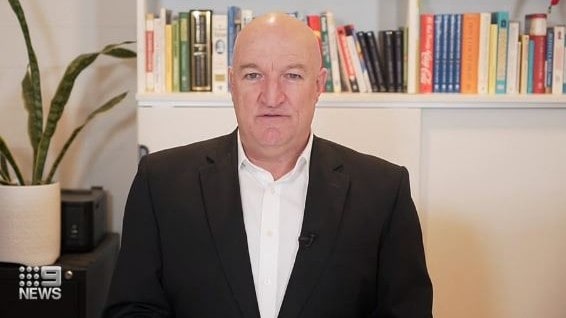
  • Oz Minerals, Bluescope and Temple & Webster share prices surge. Scott Phillips on Nine’s Late News

    Motley Fool Chife Investment Officer Scott Phillips on nine news

    Motley Fool Australia Chief Investment Officer Scott Phillips joined Nine’s Late News on Tuesday night to discuss impressive results from Oz Minerals Limited (ASX: OZL), BlueScope Steel Limited (ASX: BSL) and Temple & Webster Group Ltd (ASX: TPW), plus the outlook for inflation.

    The post Oz Minerals, Bluescope and Temple & Webster share prices surge. Scott Phillips on Nine’s Late News appeared first on The Motley Fool Australia.

    Wondering where you should invest $1,000 right now?

    When investing expert Scott Phillips has a stock tip, it can pay to listen. After all, the flagship Motley Fool Share Advisor newsletter he has run for more than eight years has provided thousands of paying members with stock picks that have doubled, tripled or even more.*

    Scott just revealed what he believes could be the five best ASX stocks for investors to buy right now. These stocks are trading at near dirt-cheap prices and Scott thinks they could be great buys right now.

    *Returns as of May 24th 2021

    More reading

    Motley Fool contributor Scott Phillips has no position in any of the stocks mentioned. The Motley Fool Australia’s parent company Motley Fool Holdings Inc. owns shares of and has recommended Temple & Webster Group Ltd. The Motley Fool Australia has recommended Temple & Webster Group Ltd. The Motley Fool has a disclosure policy. This article contains general investment advice only (under AFSL 400691). Authorised by Bruce Jackson.

    from The Motley Fool Australia https://ift.tt/3f6yUVh

  • Pilbara Minerals (ASX:PLS) share price on watch following record Q4 update

    Mining worker making frame with his hands and peering through it

    There are now two reasons for investors to keep an eye on the Pilbara Minerals Ltd (ASX: PLS) share price when it returns from its trading halt.

    This follows the release of the lithium producer’s fourth quarter update this afternoon.

    Why is the Pilbara Minerals share price in a trading halt?

    On Tuesday the Pilbara Minerals share price was placed into a trading halt pending an application to the Supreme Court of Western Australia. The application is seeking orders in relation to its inadvertent failure to lodge a cleansing notice within the prescribed five-day period after the issue of shares on 25 June.

    While this is very sloppy by Pilbara Minerals, it isn’t likely to have a material impact on its share price when it returns to trade.

    One things that could, though, is the release of its fourth quarter update this afternoon.

    How is Pilbara Minerals performing?

    According to the release, the company was on form again during the fourth quarter, which could bode well for the Pilbara Minerals share price when it returns to trade.

    The release explains that the company delivered production of 77,162 dry metric tonnes (dmt) of spodumene concentrate during the three months ended 30 June. This was achieved with a unit cash operating cost of US$441 per dmt, which was up 15% quarter on quarter. The increase in its cash cost was due largely to higher sea freight costs, additional investment in mining equipment, and higher royalty costs.

    And while production was down slightly on the third quarter, it didn’t stop the company from reporting record spodumene concentrate shipments of 95,972 dmt. This is up from 71,229 dmt in the third quarter and exceeds its guidance of 75,000-90,000 dmt.

    Also breaking records was its spodumene concentrate sales, which came in at 109,190 dmt. This is inclusive of tonnes loaded onto a vessel late in the March quarter which departed in early April.

    Lithium pricing continues to improve

    Also potentially giving the Pilbara Minerals share price a boost upon its return is management’s commentary regarding the lithium market.

    It advised that there has been continued strengthening in global lithium materials demand. This led to China domestic lithium carbonate prices remaining stable and China domestic lithium hydroxide prices increasing by 16% since March. This means the latter has now regained its premium over the former.

    In addition to this, it revealed that the spodumene concentrate spot market continued to tighten during the quarter.

    Given the positive industry trends the company is experiencing, things are looking positive for its potential POSCO Downstream Joint Venture (DSJV). Management advised that things are progressing and both parties are targeting a Final Investment Decision in late August 2021.

    The Pilbara Minerals share price has doubled in value in 2021.

    The post Pilbara Minerals (ASX:PLS) share price on watch following record Q4 update appeared first on The Motley Fool Australia.

    Should you invest $1,000 in Pilbara Minerals right now?

    Before you consider Pilbara Minerals, you’ll want to hear this.

    Motley Fool Investing expert Scott Phillips just revealed what he believes are the 5 best stocks for investors to buy right now… and Pilbara Minerals wasn’t one of them.

    The online investing service he’s run for nearly a decade, Motley Fool Share Advisor, has provided thousands of paying members with stock picks that have doubled, tripled or even more.* And right now, Scott thinks there are 5 stocks that are better buys.

    *Returns as of May 24th 2021

    More reading

    Motley Fool contributor James Mickleboro has no position in any of the stocks mentioned. The Motley Fool Australia’s parent company Motley Fool Holdings Inc. has no position in any of the stocks mentioned. The Motley Fool Australia has no position in any of the stocks mentioned. The Motley Fool has a disclosure policy. This article contains general investment advice only (under AFSL 400691). Authorised by Bruce Jackson.

    from The Motley Fool Australia https://ift.tt/3rG4kqQ

  • Here’s why the Telstra (ASX:TLS) share price just hit a new 52-week high

    rising ASX Telstra share price represented by man jumping in the air for joy looking at mobile phone

    The Telstra Corporation Ltd (ASX: TLS) share price just hit a new annual high. By market close, shares in the telco giant were swapping hands for $3.77 – down 0.79%. However, shares did reach an intraday, and yearly high, of $3.83. Meanwhile, the S&P/ASX 200 Index (ASX: XJO) slumped 0.76% today.

    While there haven’t been any market announcements since 19 July, Telstra shares have been on the up.

    Let’s take a closer look.

    Another record-breaking day

    While Telstra hasn’t made any announcements recently, investor sentiment is probably pushing its share price higher.

    For example, for the first time in a long time, Telstra is talking growth. CEO Andy Penn said back in February he was aiming for earnings before interest, taxes, depreciation, and amortisation (EBITDA) to be higher in FY22 and greater again in FY23.

    “To get the real benefits from all the effort we’ve already made, Telstra needs to be bold. I’ve set an aspiration for mid to high single-digit growth in underlying EBITDA in FY22 and $7.5 to $8.5 billion of underlying EBITDA in FY23. I am confident we can deliver this if we remain focused,” he said at the time.

    Another possible reason the Telstra share price is reaching new heights? Dividends.

    It’s expected to pay 16 cents per share for FY21 and again for FY22 – which calculates at a yield of 4.2%. Goldman Sachs expects the dividend, and the share price, to increase to 18 cents and $4.20, respectively.

    In market news, the last announcement Telstra made was confirming it was looking to buy Oceania company Digicel Pacific in partnership with the Australian government.

    A little further back, the largest appreciation of the Telstra share price in a single day in 2021 occurred on 30 June. That was the day Telstra announced the sale of a 49% interest in its mobile towers business. $1.4 billion of the net proceeds (50%) is expected to be returned to shareholders, either via a buyback or a special dividend.

    Telstra share price snapshot

    Over the past 12 months, the Telstra share price increased 11.9%. Year-to-date it is up an even greater 25.3%. Over the last 5 years, however, its value has plummeted 35%.

    Telstra has a market capitalisation of approximately $45.2 billion.

    The post Here’s why the Telstra (ASX:TLS) share price just hit a new 52-week high appeared first on The Motley Fool Australia.

    Should you invest $1,000 in Telstra right now?

    Before you consider Telstra, you’ll want to hear this.

    Motley Fool Investing expert Scott Phillips just revealed what he believes are the 5 best stocks for investors to buy right now… and Telstra wasn’t one of them.

    The online investing service he’s run for nearly a decade, Motley Fool Share Advisor, has provided thousands of paying members with stock picks that have doubled, tripled or even more.* And right now, Scott thinks there are 5 stocks that are better buys.

    *Returns as of May 24th 2021

    More reading

    The Motley Fool Australia’s parent company Motley Fool Holdings Inc. has no position in any of the stocks mentioned. The Motley Fool Australia owns shares of and has recommended Telstra Corporation Limited. The Motley Fool has a disclosure policy. This article contains general investment advice only (under AFSL 400691). Authorised by Bruce Jackson.

    from The Motley Fool Australia https://ift.tt/3BQlJSj

  • Capricorn Metals (ASX:CMM) share price soars 22% on major acquisition

    rising gold share price represented by a green arrow on piles of gold block

    The Capricorn Metals Ltd (ASX: CMM) share price has soared well into the green across today’s session. At the time of writing, the gold producer’s share price is $2.23, up 21.53%.

    Today’s gains come as the company announced it had acquired 100% of the Mt Gibson gold project in Western Australia.

    Let’s zoom in on what the Australian gold producer released earlier today.

    Acquisition to boost total reserves

    Capricorn released it had acquired the Mt Gibson project at a cost of “less than $20 per resource ounce”, in addition to a “1% NSR royalty”.

    The acquisition bolsters Capricorn’s resource base to 4.2 million ounces, including resources at its Karlawinda gold project.

    The Mt Gibson project was “placed on care and maintenance” where the processing plant was decommissioned and removed when gold was selling at “around $450 per ounce”.

    Prior to the decommission, production at this site from 1986 – 1999 was “in excess of 868,000 ounces” from open pits up to 100 metres deep.

    Capricorn has since completed a “JORC compliant inferred mineral resource estimate” for the site and arrived at a total of 2.08 million ounces of gold.

    The company will start technical and environmental studies “required to underpin a reserve estimate” and also conduct a feasibility study on the project “in due course”.

    Speaking on the announcement, Capricorn executive chair Mark Clark said:

    There is every reason to be optimistic about the opportunity with last gold production over 30 years ago from very shallow open pits when the gold price was around A$450 per ounce. We look forward to undertaking an extensive drilling programme to infill and significantly extend the shallow drilling depths to allow an update to the current 2.1 million ounce resource

    Capricorn Metals share price snapshot

    The Capricorn metals share price has posted a year to date return of 20% and is up 15% across the past 12 months.

    These returns have lagged the S&P / ASX 200 Index (ASX: XJO)’s return of ~23% over the past year.

    Capricorn Metals has a market capitalisation of $642 million at the time of writing.

    The post Capricorn Metals (ASX:CMM) share price soars 22% on major acquisition appeared first on The Motley Fool Australia.

    Should you invest $1,000 in Capricorn Metals right now?

    Before you consider Capricorn Metals, you’ll want to hear this.

    Motley Fool Investing expert Scott Phillips just revealed what he believes are the 5 best stocks for investors to buy right now… and Capricorn Metals wasn’t one of them.

    The online investing service he’s run for nearly a decade, Motley Fool Share Advisor, has provided thousands of paying members with stock picks that have doubled, tripled or even more.* And right now, Scott thinks there are 5 stocks that are better buys.

    *Returns as of May 24th 2021

    More reading

    The author Zach Bristow has no positions in any of the stocks mentioned. The Motley Fool Australia’s parent company Motley Fool Holdings Inc. has no position in any of the stocks mentioned. The Motley Fool Australia has no position in any of the stocks mentioned. The Motley Fool has a disclosure policy. This article contains general investment advice only (under AFSL 400691). Authorised by Bruce Jackson.

    from The Motley Fool Australia https://ift.tt/3l5BmPI

  • ANZ (ASX:ANZ) share price dips as bank flags cost of Sydney lockdowns

    falling asx share price represented by invor's leg with ball and chain attached

    Shares in Australia and New Zealand Banking Group Ltd (ASX: ANZ) are trading lower on Wednesday, down 0.68% to $27.72.

    Headlining today’s challenges for the ANZ share price and the broader S&P/ASX 200 Index (ASX: XJO) is likely to be the Sydney lockdown, extended for another four weeks to 28 August.

    Lockdowns weigh on the ANZ share price

    According to an ABC news report today, the economics teams from the Commonwealth Bank of Australia (ASX: CBA) and ANZ are forecasting major contractions in the Australian economy for the September quarter.

    The report said the ANZ predicted a 1.3 per cent slide for the economy over the June quarter.

    “CBA is also more pessimistic about the economic impact of the lockdown within the September quarter, predicting a 2.7 per cent slump in activity.”

    This comes hard on the heels of upbeat commentary from the RBA July monetary policy meeting, where it said:

    … the Australian economy was transitioning from recovery to expansion. GDP had increased by a stronger-than-expected 1.8 per cent in the March quarter to be almost 1 per cent above its pre-pandemic level. The solid momentum in growth had continued into the early part of the June quarter.

    Hopeful rebound on the horizon

    Both ANZ and CBA are optimistic about an economic rebound in the last three months of the calendar year, according to the ABC report.

    “CBA is forecast a 1.9 per cent lift, which would not completely erase the fall in the current quarter, although ANZ’s economists believe Australia’s economy will play catch up with stronger growth (from a lower base) in 2022.”

    This is in line with observations from the RBA’s July meeting, where board members said:

    … as observed following earlier lockdowns, spending was expected to rebound when containment measures were eased, supported by highly accommodative policy settings, the strengthened balance sheets of many households and firms, and an increase in the pace of vaccinations.

    A range bound ANZ share price

    The ANZ share price is up an impressive 20% year-to-date. But most of the headway was made between January and early March.

    The ANZ share price has since struggled to break above $29.50 but has been bouncing strongly off lows of $27.00.

    With the Australian economy now expected to take a turn for worse, ANZ investors might have to brace for more volatility leading into the August reporting season.

    The post ANZ (ASX:ANZ) share price dips as bank flags cost of Sydney lockdowns appeared first on The Motley Fool Australia.

    Should you invest $1,000 in ANZ right now?

    Before you consider ANZ, you’ll want to hear this.

    Motley Fool Investing expert Scott Phillips just revealed what he believes are the 5 best stocks for investors to buy right now… and ANZ wasn’t one of them.

    The online investing service he’s run for nearly a decade, Motley Fool Share Advisor, has provided thousands of paying members with stock picks that have doubled, tripled or even more.* And right now, Scott thinks there are 5 stocks that are better buys.

    *Returns as of May 24th 2021

    More reading

    Motley Fool contributor Kerry Sun has no position in any of the stocks mentioned. The Motley Fool Australia’s parent company Motley Fool Holdings Inc. has no position in any of the stocks mentioned. The Motley Fool Australia has no position in any of the stocks mentioned. The Motley Fool has a disclosure policy. This article contains general investment advice only (under AFSL 400691). Authorised by Bruce Jackson.

    from The Motley Fool Australia https://ift.tt/3ya1g8G

  • Here are the US shares ASX investors were buying last week

    US economy and sharemarket with piggy bank

    Most weeks, Commonwealth Bank of Australia (ASX: CBA)’s share trading house CommSec tells us the most traded US shares that its ASX investors have been buying and selling the previous week.

    Since CommSec is one of the most popular brokers in Australia, this information can give us a very interesting idea of the US shares that ASX investors are looking at today.

    My Fool colleague James already looked at some of the most popular ASX shares yesterday. So here are the top 10 US shares that CommSec users were trading last week. This week’s data covers 19-23 July.

    ASX investors checking out some new shares

    1. Tesla Inc (NASDAQ: TSLA) – representing 3% of total trades with a 64%/36% buy-to-sell ratio.
    2. Apple Inc (NASDAQ: AAPL) – representing 2.9% of total trades with a 60%/40% buy-to-sell ratio.
    3. GameStop Corp. (NYSE: GME) – representing 2.4% of total trades with a 93%/7% buy-to-sell ratio.
    4. AMC Entertainment Holdings Inc (NYSE: AMC) – representing 2.2% of total trades with a 75%/25% buy-to-sell ratio.
    5. NVIDIA Corporation (NASDAQ: NVDA) – representing 2.1% of total trades with a 92%/8% buy-to-sell ratio.
    6. Microsoft Corporation (NASDAQ: MSFT)
    7. Moderna Inc (NASDAQ: MRNA)
    8. DiDi Global Inc (NASDAQ: DIDI)
    9. Alibaba Group Holding Ltd (NYSE: BABA)
    10. Alphabet Inc Class C (NASDAQ: GOOG)

    What can we learn from these trades?

    Some interesting numbers to go through this week. So, the top three usual US shares are all here again this week in Tesla, Apple and GameStop.

    However, Tesla is back on top after coming in at number 3 last week. Likewise, GameStop is back to number 3 after topping out last week’s list.

    What’s particularly striking about these 3 companies is their buy-/sell ratios. Investors seem equally divided on both Tesla and Apple, with rough 60/40 ratios respectively for buy and sell trades.

    However, the GameStop ship is listing heavily towards the buys, with an astonishing 93% of all trades on the buy side. GameStop shares appreciated roughly 15% between 15 and 20 July so perhaps this is what’s sparking this activity.

    Other than those regulars, we have some new shares that haven’t turned up on this list for a while. This includes COVID vaccine developer Moderna, as well as China ride-hailing share DiDi and Google parent company Alphabet.

    Finally, it’s worth noting chipmaker NVIDIA’s presence. NVIDIA was on last week’s list at number 6 but makes the top 5 cut this week with another uber-bullish buy-sell ratio of 92/8.

    NVIDIA shares went through something of a correction earlier this month, falling more than 12% between 6-16 July leading up to a 4-for-1 stock split on 20 July.

    It seems this dip really caught ASX investors’ attention. NVIDIA shares are up a mind-blowing 1,245% over the past 5 years alone.

    The post Here are the US shares ASX investors were buying last week appeared first on The Motley Fool Australia.

    Wondering where you should invest $1,000 right now?

    When investing expert Scott Phillips has a stock tip, it can pay to listen. After all, the flagship Motley Fool Share Advisor newsletter he has run for more than eight years has provided thousands of paying members with stock picks that have doubled, tripled or even more.*

    Scott just revealed what he believes could be the five best ASX stocks for investors to buy right now. These stocks are trading at near dirt-cheap prices and Scott thinks they could be great buys right now.

    *Returns as of May 24th 2021

    More reading

    Suzanne Frey, an executive at Alphabet, is a member of The Motley Fool’s board of directors. Teresa Kersten, an employee of LinkedIn, a Microsoft subsidiary, is a member of The Motley Fool’s board of directors. Motley Fool contributor Sebastian Bowen owns shares of Tesla. The Motley Fool Australia’s parent company Motley Fool Holdings Inc. owns shares of and has recommended Alibaba Group Holding Ltd., Alphabet (A shares), Alphabet (C shares), Apple, Microsoft, Nvidia, and Tesla. The Motley Fool Australia’s parent company Motley Fool Holdings Inc. has recommended the following options: long March 2023 $120 calls on Apple and short March 2023 $130 calls on Apple. The Motley Fool Australia has recommended Alphabet (A shares), Alphabet (C shares), Apple, and Nvidia. The Motley Fool has a disclosure policy. This article contains general investment advice only (under AFSL 400691). Authorised by Bruce Jackson.

    from The Motley Fool Australia https://ift.tt/2TCGO14

  • Why Afterpay, Nickel Mines, Nitro, & St Barbara shares are sinking

    ASX shares skills shortage downgrade arrow causing the ground to crack symbolising a recession

    The S&P/ASX 200 Index (ASX: XJO) has followed the lead of US markets and tumbled lower today. In afternoon trade, the benchmark index is down 0.7% to 7,377.9 points.

    Four ASX shares that are falling more than most today are listed below. Here’s why they are sinking:

    Afterpay Ltd (ASX: APT)

    The Afterpay share price is down 3.5% to $99.12. This decline appears to have been driven by weakness in the tech sector today. This follows a pullback on the Nasdaq index overnight and the expectation for further declines tonight. The S&P/ASX All Technology Index is down a very disappointing 1.85% in afternoon trade.

    Nickel Mines Ltd (ASX: NIC)

    The Nickel Mines share price has crashed 9.5% lower to $1.06. Investors have been selling this nickel producer’s shares following the release of a disappointing second quarter update. Although Nickel Mines delivered solid quarter on quarter sales growth, a jump in costs meant its operating earnings were largely flat over the three months. Management blamed the weaker margins on a jump in energy costs relating to rising coal prices.

    Nitro Software Ltd (ASX: NTO)

    The Nitro Software share price is down 5% to $3.28. This follows the release of the document productivity software company’s second quarter update. Investors have been selling the company’s shares despite it reaffirming its annualised recurring revenue guidance and lowering its operating loss guidance. Weakness in the tech sector could be outweighing the positives from the result.

    St Barbara Ltd (ASX: SBM)

    The St Barbara share price is down 2.5% to $1.73. This morning the gold miner released its fourth quarter update and revealed a 24% reduction in quarterly production to 82,698 ounces. This led to full year gold production coming in at 327,662 ounces with an AISC of $1,616 per ounce. Looking ahead, management is guiding to FY 2022 production of 305,000 to 355,000 ounces with a higher AISC of $1,710 to $1,860 per ounce.

    The post Why Afterpay, Nickel Mines, Nitro, & St Barbara shares are sinking appeared first on The Motley Fool Australia.

    Wondering where you should invest $1,000 right now?

    When investing expert Scott Phillips has a stock tip, it can pay to listen. After all, the flagship Motley Fool Share Advisor newsletter he has run for more than eight years has provided thousands of paying members with stock picks that have doubled, tripled or even more.*

    Scott just revealed what he believes could be the five best ASX stocks for investors to buy right now. These stocks are trading at near dirt-cheap prices and Scott thinks they could be great buys right now.

    *Returns as of May 24th 2021

    More reading

    Motley Fool contributor James Mickleboro has no position in any of the stocks mentioned. The Motley Fool Australia’s parent company Motley Fool Holdings Inc. owns shares of and has recommended AFTERPAY T FPO. The Motley Fool Australia owns shares of and has recommended AFTERPAY T FPO. The Motley Fool Australia has recommended Nitro Software Limited. The Motley Fool has a disclosure policy. This article contains general investment advice only (under AFSL 400691). Authorised by Bruce Jackson.

    from The Motley Fool Australia https://ift.tt/3BNBfyb