Tag: Motley Fool

  • Lower ASX 200 shares? The ground is moving on interest rates

    Share market uncertainty

    The financial markets are going through some turbulence at the moment. Yes, the S&P/ASX 200 Index (ASX: XJO) is enjoying a day in the green today, up 1% to 7,000 points. But over the past month, the ASX 200 has been rather volatile. Just in the past 10 days alone, the ASX has gone from making a new record high of 7,172 points, to falling as low as 6,919 points yesterday.

    Volatility abounds

    The large US indexes are also showing some volatility. Although the Dow Jones Industrial Average (INDEXDJX: .DJI) is only ~2.5% off of the all-time high it hit earlier in the month, we have seen some significant gyrations in recent days. The tech-heavy Nasdaq Composite (INDEXNASDAQ: .IXIC) Index has been far more tempestuous. After hitting its own record high back on 26 April, the Nasdaq has given up around 6% of its value since then. In just the past week, this index has gained 3% and lost 3%.

    That’s just shares though. Other financial markets have been far more volatile. The bond market has been fluctuating wildly in recent months. According to CNBC, the yield on 10-year US Treasuries was around 1.56% on 6 May. By 12 May, it had risen to almost 1.7%, and is going for 1.66% at the time of writing. That might not sound like a big deal, but it does indicate a decisive shift in what markets are pricing in.

    And we haven’t even got to cryptocurrencies yet. Bitcoin (CRYPTO: BTC) prices are currently at a 3-month low after cratering more than 22% in the past week alone. Since topping out at just over US$60,000 a coin in mid-April, Bitcoin is now priced at US$38,000.

    All of this is connected to two things: interest rates and inflation. Well, more just interest rates, but the two usually come hand in hand and inflation normally comes first.

    Interest rates and inflation

    Until about a month ago, the markets were very content with both the US Federal Reserve and the Reserve Bank of Australia (RBA)’s complacency on inflation. Both central banks committed to only raising rates when inflation was comfortably above 2%, and both full employment and positive wage growth achieved.

    Rates would not be going up for years, both banks said. And quantitative easing (QE) programs would also stay in place. 2024 was the year most floated as the earliest a rate hike might happen. In other words, both banks were telling us that markets could keep rising until then.

    Today, those sunny skies are growing clouded. Said cloud is the inflation figures the US economy recorded for the month of April. The consumer price index (CPI) number, measuring price increases for American goods and services, rose by 0.9% for the month of April. That was the largest monthly rise since 2009. And it was also not what the Fed was predicting. At the time, Fed officials said that the rise was likely to be “transitory”.

    But perhaps things are changing. The Fed has just released the minutes from its April meeting. While the bank reiterated its commitments in line with what we discussed above, it stated the following toward the end of its release:

    In assessing the appropriate stance of monetary policy, the Committee will continue to monitor the implications of incoming information for the economic outlook. The Committee would be prepared to adjust the stance of monetary policy as appropriate if risks emerge that could impede the attainment of the Committee’s goals. The Committee’s assessments will take into account a wide range of information, including readings on public health, labor market conditions, inflation pressures and inflation expectations, and financial and international developments.

    The fickle Fed?

    Now that sounds like the Fed is keeping the door open on adjusting monetary policy earlier than it otherwise has flagged. It’s certainly a departure from the iron-clad commitment to near-zero rates and QE until 2024. It all depends on future US inflation numbers if the April rise was indeed ‘transitory’ or the start of an inflation surge.

    If it’s the latter scenario, it’s likely the US economy will see rate hikes before 2024. And if the US is hiking rates, it’s very likely our own RBA would have to follow suit. If this comes to pass, we can expect to see a lot of volatility on the ASX share market, as well as on global markets.

    Interest rates change the game for shares. They make other assets, particularly ‘risk-free’ government bonds, more attractive to hold as investments. Many investors won’t be interested in a US government bond that pays an interest rate of 1.66% (around where it is today), even if it is risk-free. If that same bond is yielding 4, 5 or 6%, it’s a whole different kettle of fish. In the past, this has resulted in lower share prices.

    Foolish takeaway

    All of this is hypothetical. None of us truly know when the Fed, or the RBA, is going to adjust monetary policy. Or the impact such an adjustment might have on ASX shares. But the past does give us some clues, and they indicate that rates rising would be bad news for shares. So although this isn’t the most enthralling area to watch, it might still be well worth watching for every ASX share investor.

    Where to invest $1,000 right now

    When investing expert Scott Phillips has a stock tip, it can pay to listen. After all, the flagship Motley Fool Share Advisor newsletter he has run for more than eight years has provided thousands of paying members with stock picks that have doubled, tripled or even more.*

    Scott just revealed what he believes are the five best ASX stocks for investors to buy right now. These stocks are trading at dirt-cheap prices and Scott thinks they are great buys right now.

    *Returns as of February 15th 2021

    More reading

    The post Lower ASX 200 shares? The ground is moving on interest rates appeared first on The Motley Fool Australia.

    from The Motley Fool Australia https://ift.tt/3fBkqMN

  • Is the Afterpay (ASX:APT) share price cheap? Here’s what 1 broker thinks

    woman surrounded by question marks as if wondering about as share price

    Afterpay Ltd (ASX: APT) shares have been struggling recently in the wake of broader market volatility, the underperformance of tech shares and sharp selloffs in the buy now, pay later (BNPL) sector.

    Today, the Afterpay share price has managed to work its way up to a 7.25% gain. But at its current level of $92.74 on Thursday, it’s still a long way off from its February highs of around $160.

    With the company promising continued international expansion and hoping for explosive levels of growth, could the Afterpay share price be a bargain at current price levels? Here’s what Macquarie had to say on Thursday.

    Macquarie upgrades Afterpay shares from neutral to outperform

    Macquarie has come out with a bold upgrade for the Afterpay share price, retaining a $120 target price and outperform rating.

    What’s surprising is that Macquarie’s upgrade comes not that long after its grim near-term commentary for the BNPL industry on 24 March. This was when the broker acknowledged the explosive growth of the sector but said that an “excessive number of participants has entered the industry in the near term resulting in industry overcapacity”.

    The broker also said it expects this period to be followed by “a few years of industry consolidation (i.e., pain for all players) before industry normalisation at a healthier supply/demand equilibrium”.

    In terms of a timeline, Macquarie’s research report said “the period of pain typically lasts for 1-2 years, followed by a year or so of recovery before share prices return to levels prior to oversupply”. By the industry normalisation stage, the broker believes that “not only does the industry come out more robust but typically the strong emerge stronger whilst the weak, weaker”.

    In today’s broker note, Macquarie observed that there is limited brand loyalty among BNPL players in the United States. The broker’s survey reveals that an estimated 70% of users would prefer to sign up with a different BNPL provider rather than switch stores.

    Macquarie does believe, however, that Afterpay could have an edge in the all-important US market given its large two-sided network of merchants and users. The broker’s findings rank Afterpay as the highest among its peers in the context of merchant/user networks.

    The broker also shed light on brand perception in the US, ranking PayPal, Affirm and Afterpay in the top three, in that order, among the brands surveyed.

    Foolish takeaway

    Shareholders will no doubt be encouraged to see a previously cautious broker update its rating of Afterpay shares from neutral to outperform.

    However, the recent drivers of the Afterpay share price have largely been outside of the company’s control. Factors such as the S&P/ASX 200 Info Tech Index (ASX: XIJ) falling 15% year to date, the Affirm share price sitting around record lows and smaller ASX-listed BNPL shares such as Laybuy Group Holdings Ltd (ASX: LBY) and Openpay Group Ltd (ASX: OPY) sliding more than 50% in the last 12 months are likely to have dragged on the Afterpay share price.

    Where to invest $1,000 right now

    When investing expert Scott Phillips has a stock tip, it can pay to listen. After all, the flagship Motley Fool Share Advisor newsletter he has run for more than eight years has provided thousands of paying members with stock picks that have doubled, tripled or even more.*

    Scott just revealed what he believes are the five best ASX stocks for investors to buy right now. These stocks are trading at dirt-cheap prices and Scott thinks they are great buys right now.

    *Returns as of February 15th 2021

    More reading

    The post Is the Afterpay (ASX:APT) share price cheap? Here’s what 1 broker thinks appeared first on The Motley Fool Australia.

    from The Motley Fool Australia https://ift.tt/3wkYV9D

  • Why the Advanced Human Imaging (ASX:AHI) share price is jumping 15%

    rising asx share price represented by woman jumping in the air happily

    The Advanced Human Imaging Ltd (ASX: AHI) share price has been a very strong performer on Thursday.

     In afternoon trade, the software company’s shares are up over 15% to $1.82.

    Why is the Advanced Human Imaging share price surging higher?

    Investors have been buying the shares of Advanced Human Imaging, formerly known as MyFiziq, following the release of an announcement today.

    According to the release, the company has signed a binding terms sheet with US based on-device blood pathology company Jana Care.

    The release explains that Jana Care has developed and patented an on-device blood screening tool called Aina. The patented Aina device is capable of providing rapid, accurate readouts of key blood chemistry elements in several chronic disease categories – cardiovascular, renal and metabolic (CVRM). It is used in over 1,500 clinics by over 10,000 health workers with more than 200,000 patients.

    The company notes that the device delivers rapid, accurate readouts that are extremely valuable for healthcare partners and patients that have deployed personal health management apps via their carers, life/health insurers, wellness managers, fitness organizations, and telehealth doctors/facilities.

    Furthermore, the device avoids the need for the patient to go to a medical facility or phlebologist to provide blood and then wait for the results.

    What now?

    The Aina device diagnostic solution will be provided by Advanced Human Imaging via its CompleteScan app to its partners for their onward use by selected persons whose blood chemistry information is needed on a timely and accurate basis.

    The first demonstratable product is expected to be made available in the third quarter of 2021.

    Advanced Human Imaging’s Chief Executive Officer, Vlado Bosanac, commente: “The commercial distribution arrangement we have undertaken with Jana is an extremely important addition to the remote care and health assessment platform we are delivering to our partners and the vast communities they service around the world. The work Jana has and is doing in the care and identification of chronic disease is of paramount importance and a perfect addition to our offering.”

    “The use case is powerful, when a user performs a FaceScan or a BodyScan we are able to detect a number of potential risk parameters that relate to chronic diseases. These markers are not dissimilar to the checks a doctor would perform when a patient is attending the doctors practice. If the performed scans identify any of the markers, this will assist the care provider in the need to facilitate a blood test, at which time via the Aina device we will facilitate the draw, analysis and diagnostic reports for both the patient, doctor and care provider.”

    Where to invest $1,000 right now

    When investing expert Scott Phillips has a stock tip, it can pay to listen. After all, the flagship Motley Fool Share Advisor newsletter he has run for more than eight years has provided thousands of paying members with stock picks that have doubled, tripled or even more.*

    Scott just revealed what he believes are the five best ASX stocks for investors to buy right now. These stocks are trading at dirt-cheap prices and Scott thinks they are great buys right now.

    *Returns as of February 15th 2021

    More reading

    The post Why the Advanced Human Imaging (ASX:AHI) share price is jumping 15% appeared first on The Motley Fool Australia.

    from The Motley Fool Australia https://ift.tt/3oAK3kW

  • Estrella (ASX:ESR) share price is exploding today, up 17%. Here’s why

    happy looking men working at a mine, indicating a share price rise for ASX resource shares

    The Estrella Resources Ltd (ASX: ESR) share price has shot up today after the company intersected “massive” nickel and copper sulphides in West Australia’s Carr Boyd ranges.

    Estrella shares are up 17% at 5.5 cents at the time of writing, after peaking this morning at an intraday high of 6.5 cents.

    Let’s take a closer look at the latest results from its 100% owned Kimberley mine.

    “Massive nickel, copper sulphide potential”

    Estrella’s most recent drilling hole intersected a 12.9 metre long zone of massive, semi-massive, breccia, matrix and
    disseminated nickel, copper and iron sulphides.

    The company is seeking to become a large ore producer, and this find reinforces a previous intersection of nickel and copper sulphides found 40 metres north of the current strike zone.

    According to the company’s update, the sulphide and rock textures in this drilling region confirm basal contact mineralisation and “massive nickel and copper sulphide potential”.

    The core of these findings is now being cut away and sent for assays, which usually take one to two weeks to return an accurate grade result.

    Estrella was particularly encouraged by the drilling results, as it accelerates its third phase of drilling in the region to test downhole electromagnetic targets. It’s also currently looking to find additional potential zones.

    Estrella management comments

    Estrella managing director Chris Daws welcomed the results, saying:

    I am extremely pleased with this significant intersection as it further validates our exploration strategy at the T5 Conductor. Make no mistake, our resolve to locate a world-class orebody for our shareholders is unwavering and this intersection is yet another promising sign that we are homing in on this orebody.

    Phase 3 drilling in particular has been highly successful, with a 100 per cent strike rate for hitting nickel-copper sulphides.

    Estrella share price snapshot

    Estrella investors had the time of their life in October last year, when the Estrella share price shot from one cent to 17 cents in two days, a casual 450% rise.

    Since then it’s been on a downward trend back to earth, and has fallen around 30% this year-to-date despite today’s huge gains.

    Where to invest $1,000 right now

    When investing expert Scott Phillips has a stock tip, it can pay to listen. After all, the flagship Motley Fool Share Advisor newsletter he has run for more than eight years has provided thousands of paying members with stock picks that have doubled, tripled or even more.*

    Scott just revealed what he believes are the five best ASX stocks for investors to buy right now. These stocks are trading at dirt-cheap prices and Scott thinks they are great buys right now.

    *Returns as of February 15th 2021

    More reading

    The post Estrella (ASX:ESR) share price is exploding today, up 17%. Here’s why appeared first on The Motley Fool Australia.

    from The Motley Fool Australia https://ift.tt/3ovzW0J

  • Why Flight Centre, Iluka, Nuix, & Oil Search shares are tumbling lower

    Investor covering eyes in front of laptop

    In afternoon trade, the S&P/ASX 200 Index (ASX: XJO) is on course to record a solid gain. At the time of writing, the benchmark index is up 1.1% to 7,009.7 points.

    Four ASX shares that have failed to follow the market higher today are listed below. Here’s why they are tumbling lower:

    Flight Centre Travel Group Ltd (ASX: FLT) 

    The Flight Centre share price is down 3% to $14.83. Investors have been selling Flight Centre and other travel booking shares following an update by Qantas Airways Limited (ASX: QAN). The airline operator revealed that it would be cutting travel agent commissions for international flights from 5% to 1% from 2022 as part of its plan to reduce its cost of sales.

    Iluka Resources Limited (ASX: ILU)

    The Iluka share price has fallen 5.5% to $7.71 following the release of an update on its Sierre Rutile operation. According to the release, the operation has been struggling with business challenges recently. In light of this, it will be pausing production later this year for six months. During the break, management will evaluate whether it can continue its operations in its current mining area. It also withdrew its production guidance of 145,000 tonnes of rutile over 2021.

    Nuix Ltd (ASX: NXL)

    The Nuix share price has sunk 8% to $3.37. This decline appears to have been driven by reports of a major legal case that could include damages of more than $200 million. According to the SMH, former CEO Eddie Sheehy triggered the lawsuit after Nuix slashed the value of options issued to him. That decision cost Sheehy $118 million in Nuix’s December IPO.

    Oil Search Ltd (ASX: OSH)

    The Oil Search share price is down 2% to $3.72. Investors may be selling Oil Search’s shares today following a pullback in oil prices overnight. Both Brent and WTI crude oil prices fell 3% amid concerns over rising COVID-19 cases in Asia.

    Where to invest $1,000 right now

    When investing expert Scott Phillips has a stock tip, it can pay to listen. After all, the flagship Motley Fool Share Advisor newsletter he has run for more than eight years has provided thousands of paying members with stock picks that have doubled, tripled or even more.*

    Scott just revealed what he believes are the five best ASX stocks for investors to buy right now. These stocks are trading at dirt-cheap prices and Scott thinks they are great buys right now.

    *Returns as of February 15th 2021

    More reading

    The post Why Flight Centre, Iluka, Nuix, & Oil Search shares are tumbling lower appeared first on The Motley Fool Australia.

    from The Motley Fool Australia https://ift.tt/3f7TBkl

  • The PainChek (ASX:PCK) share price is rising on its latest announcement

    A happy smiling kid points his fingers up, indicating a rising share price

    Shares in PainChek Ltd (ASX: PCK) are gaining today after news the company has received regulatory clearances for its app, PainChek Infant. At the time of writing, the PainChek share price is up 6.15%, with shares in the company swapping hands for 6.9 cents apiece.

    As a result of the clearances, PainChek can market its pain sensing app for babies in Australia, Europe, the United Kingdom, Canada, Singapore, and New Zealand.

    PainChek also announced its successful Infant Face-Only study is being peer-reviewed for publication. The study determined the app could successfully analyse a baby’s facial expressions and evaluate if they’re in pain.

    Let’s take a closer look at the latest news from Painchek.  

    PainChek Infant

    Painchek has announced that it’s received a number of regulatory approvals needed market its PainChek Infant app.

    The company now plans to launch its infant app in a number of countries. It will focus particularly on the hospital and home care markets.

    PainChek says that its app can help healthcare professionals, parents, and carers to evaluate if a non-verbal child is in pain. Additionally, the app will help gauge how much pain the child is in.

    According to PainChek, there are around 400 million pre-verbal children globally. Moreover, one quarter is born to first-time parents. Furthermore, PainChek stated this gives it a large market entry point.

    The company also said that, while clinicians have access to paper-based pain measuring tools for infants, they are rarely used. Additionally, it claimed that high levels of exposure to pained infants can sometimes lead to medical professionals dismissing babies’ pain signals.

    PainChek plans to continue expanding its app’s abilities. Currently, it is working to broaden the age range of children whose pain can be assessed. It will do so by conducting further research and clinical studies. It is also currently conducting a study at Melbourne’s Royal Children’s Hospital.

    PainChek already has an app available that uses facial expressions to sense pain in non-verbal adults.

    Commentary from management

    PainChek’s CEO Philip Daffas commented on the PainChek Infant app’s approval, saying:

    We’re delighted to achieve this regulatory milestone ahead of schedule and continue to expand PainChek’s global markets. The PainChek Infant App is unique in that it completes a microfacial analysis through a 3 second video assessment and provides the carer with an instant result in relation to the infant’s pain severity level…

    Having established the initial PainChek Adult App and the business model in aged care, this broad portfolio of offerings provides the foundation for our global market entry into the larger home care and the hospital markets.

    PainChek share price snapshot

    The PainChek share price needs the good news as it battles a tough 2021 on the ASX.

    Currently, the PainChek share price is down 12.5% year to date. It’s also fallen 56% since this time last year.

    The company has a market capitalisation of around $73 million, with approximately 1.1 billion shares outstanding.

    Where to invest $1,000 right now

    When investing expert Scott Phillips has a stock tip, it can pay to listen. After all, the flagship Motley Fool Share Advisor newsletter he has run for more than eight years has provided thousands of paying members with stock picks that have doubled, tripled or even more.*

    Scott just revealed what he believes are the five best ASX stocks for investors to buy right now. These stocks are trading at dirt-cheap prices and Scott thinks they are great buys right now.

    *Returns as of February 15th 2021

    More reading

    The post The PainChek (ASX:PCK) share price is rising on its latest announcement appeared first on The Motley Fool Australia.

    from The Motley Fool Australia https://ift.tt/3u155Kj

  • Australian Agricultural Company (ASX:AAC) share price slips on full-year results

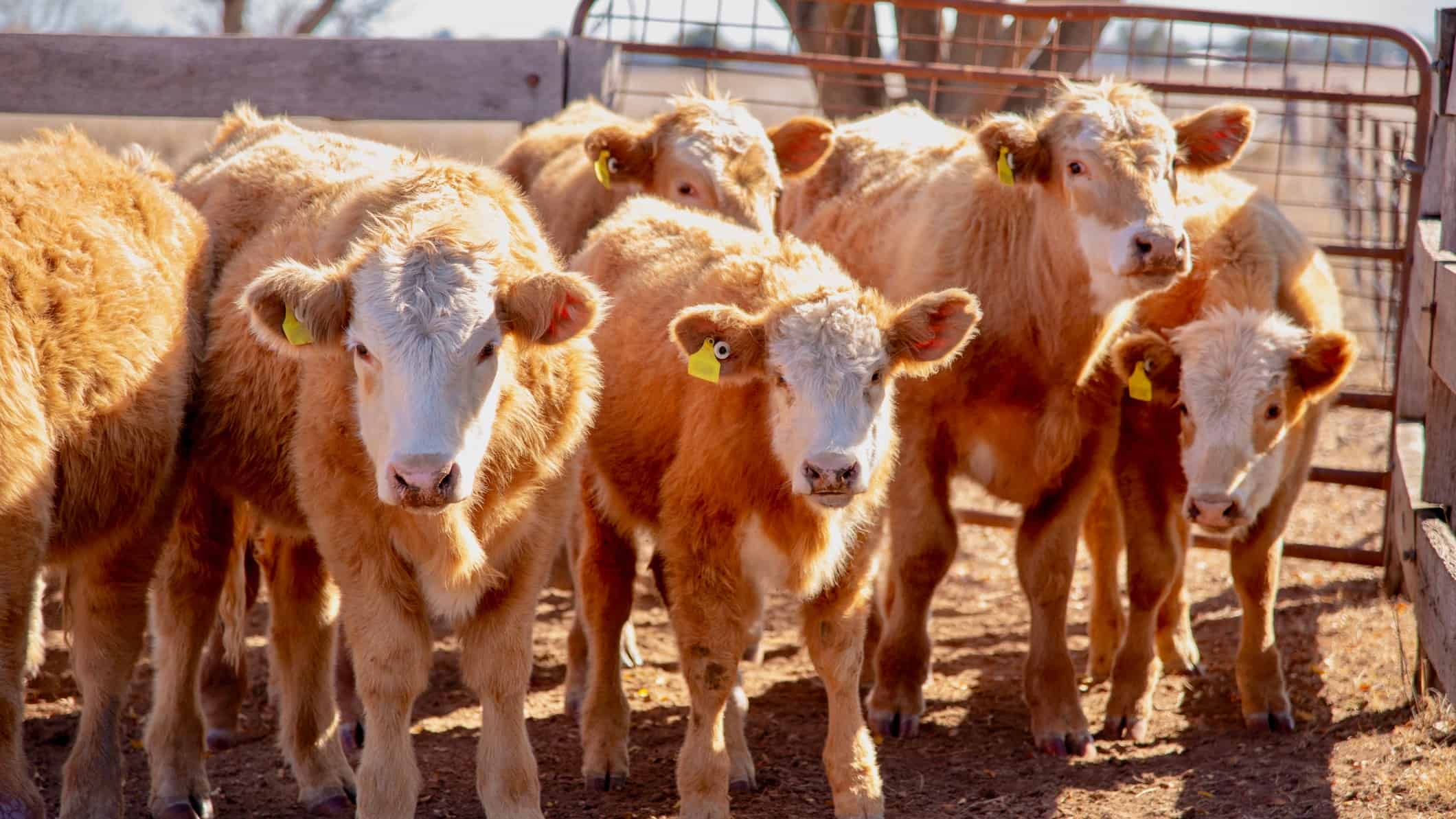
    beef cattle in stockyard

    The Australian Agricultural Company Ltd (ASX: AAC) share price is edging lower during mid-afternoon trade. This follows the company’s release of its full-year results for the 2021 financial year.

    At the time of writing, the Australian cattle producer’s shares are fetching for $1.20, down 1.6%.

    How did Australian Agricultural Company perform for FY21?

    Investors are hitting the sell button in light of the company’s challenging COVID-19 economic environment.

    For the period ending 31 March 2021, the Australian Agricultural Company reported a fall in meat and cattle sales. The business experienced lower calving in 2018-2020 due to a prolonged drought and the Gulf flood event, which impacted 2021’s result.

    Meat sales dropped to $200 million, reflecting a 29.6% decline from the $229.6 million achieved in the prior corresponding period.

    Cattle sales on the other hand, also sunk to $65.5 million, tumbling 39% from $104.5 million recorded in FY20.

    Overall, total sales came to $265.5 million, signifying a 68.6% downturn on the $334.1 million made this time last year.

    Operating profit lifted to $24.4 million, with $17.7 million included pre-JobKeeper. This reflected a jump from the $15.2 million received over the prior comparable period. The improved metric was attributed to higher meat sales per kilo, up 8% which offset the 19% fall in meat volume sales. In addition, management carefully reduced costs across the business which supported the strong performance.

    As a result, statutory earnings before interest, tax, depreciation and amortisation (EBITDA) came to $99.3 million, an increase of $19.2 million over FY20.

    Net tangible sales per share jumped to $1.75, compared against $1.53 from the end of March last year. This was driven by improvements in the livestock market values and in the property portfolio.

    Australian Agricultural Company noted it retains a robust balance sheet, with comfortable headroom under existing bank covenants. The closing cash balance stood at $8.9 million, however, the business has over $1 billion in net assets.

    Management commentary

    Australian Agricultural Company managing director and CEO, Hugh Killen said:

    The fundamentals of the business remain strong and we’ve made progress with our brands, which is encouraging considering the ongoing challenges that we will navigate over the coming few years.

    The last 12 months have been dominated by uncertainty across many industries and ongoing disruption across our key markets around the world.

    Importantly though, our herd rebuild has commenced, with a 47% increase in calves in FY21 compared to FY20.

    Australian Agricultural Company share price summary

    Over the past 12 months, Australian Agricultural Company shares have risen just under 10%. The company’s share price reached a high of $1.24 in early April before profit-taking swooped in. However, its shares have rebound and are within a whisker of breaking new territory.

    Australian Agricultural Company has a market capitalisation of roughly $729 million, with around 602 million shares outstanding.

    Where to invest $1,000 right now

    When investing expert Scott Phillips has a stock tip, it can pay to listen. After all, the flagship Motley Fool Share Advisor newsletter he has run for more than eight years has provided thousands of paying members with stock picks that have doubled, tripled or even more.*

    Scott just revealed what he believes are the five best ASX stocks for investors to buy right now. These stocks are trading at dirt-cheap prices and Scott thinks they are great buys right now.

    *Returns as of February 15th 2021

    More reading

    The post Australian Agricultural Company (ASX:AAC) share price slips on full-year results appeared first on The Motley Fool Australia.

    from The Motley Fool Australia https://ift.tt/3oy2KWi

  • The Sydney Airport (ASX:SYD) share price is up as travellers start moving again

    jet plane representing flight centre share price about to take off at night on illuminated runway

    An increase in the number of passengers passing through its gates has caused the Sydney Airport Holdings Pty Ltd (ASX: SYD) share price to rise. At the time of writing, the Sydney Airport share price is $5.80 – 3.48% higher than yesterday’s closing price.

    The take-off followed the release of the airport’s traffic performance report for April 2021 which found domestic travel is only down 34.8% compared to April 2019.

    Let’s take a look at how many travellers passed through what is normally Australia’s busiest airport last month.

    Taking to the sky

    Sydney Airport noticed an increase in traffic in both its international and domestic terminals last month.

    53,000 people travelled through Sydney’s international terminal last month, which is 21.7% more than in April 2020.

    For comparison, the airport only saw 33,000 international travellers in March 2021.

    This increase in movement could be down to the travel agreement between Australia and New Zealand. The two-way quarantine-free travel bubble began on 19 April. It meant that, for the first time since COVID-19 closed many international borders, Australians and New Zealanders could freely travel out of their countries.

    While the number of international passengers seems to be improving, it’s still 96.2% fewer than that of April 2019.  

    Sydney Airport stated that the number of international travellers is unlikely to improve again until the Federal Government eases international travel restrictions.

    The airport’s total passenger traffic was down 58.1% compared to April 2019. That’s an improvement on both March (down 68%) and February (down 79%).

    When it came to domestic travel, slightly less than two thirds of the airport’s normal operations have resumed.

    Last month, 1.48 million people passed through Sydney Airport while travelling within Australia.

    Sydney Airport share price snapshot

    So far, 2021 hasn’t been good to the Sydney Airport share price on the ASX.

    Currently, it’s down 10.45% year to date. Though, it’s gained 3.89% since this time last year.

    After the travel restrictions brought on by COVID-19, the airport has an eye-watering price-to-earning (P/E) ratio of 92.59. It also has a market capitalisation of around $15 billion, with approximately 2.7 billion shares outstanding.

    Where to invest $1,000 right now

    When investing expert Scott Phillips has a stock tip, it can pay to listen. After all, the flagship Motley Fool Share Advisor newsletter he has run for more than eight years has provided thousands of paying members with stock picks that have doubled, tripled or even more.*

    Scott just revealed what he believes are the five best ASX stocks for investors to buy right now. These stocks are trading at dirt-cheap prices and Scott thinks they are great buys right now.

    *Returns as of February 15th 2021

    More reading

    The post The Sydney Airport (ASX:SYD) share price is up as travellers start moving again appeared first on The Motley Fool Australia.

    from The Motley Fool Australia https://ift.tt/3fudJMl

  • Why the BHP (ASX:BHP) share price is trading lower today

    The BHP Group Ltd (ASX: BHP) share price is on course to record another decline today. This is despite the mining giant announcing the commencement of production at a new mine.

    At the time of writing, the BHP share price is down over 1% to $48.18.

    Why is the BHP share price trading lower today?

    Today’s weakness in the BHP share price appears to have been driven by a softening iron ore price.

    According to CommSec, the spot benchmark iron ore price fell by 3.7% or US$8.30 a tonne overnight to US$215.45 a tonne.

    This is also weighing on the Rio Tinto Limited (ASX: RIO) share price. Its shares are down 1% at the time of writing.

    What did BHP announce?

    Failing to keep the BHP share price in positive territory today was the announcement of the achievement of first ore at the US$3.6 billion South Flank mine in the central Pilbara, Western Australia.

    According to the release, South Flank is an 80 Mtpa sustaining mine, and will be the most technically advanced high quality iron ore mine in Western Australia.

    Together with the existing Mining Area C, it will form the largest operating iron ore hub in the world. This hub is expected to produce 145 million tonnes of iron ore each year.

    BHP’s President of Minerals Australia, Edgar Basto, commented: “South Flank is Australia’s largest new iron ore mine in over 50 years and is on time and on budget. South Flank’s high quality ore will increase WAIO’s average iron ore grade from 61 to 62 per cent, and the overall proportion of lump from 25 to 30-33 per cent.”

    “South Flank’s ore will supply global steel markets for the next 25 years, helping to build electricity, transport and urban infrastructure across the globe. And its high quality ore will have an important role in helping BHP’s customers lower their greenhouse gas emissions,” he added.

    Western Australia’s Premier, Mark McGowan, was pleased to see the project achieve its first production.

    He said: “The South Flank project is an example of my government’s commitment to working with industry to take advantage of the international market and business development trends to create Western Australian jobs. I congratulate BHP on the first production of ore and look forward to this project continuing to provide jobs for Western Australians and delivering considerable economic benefit for our state.”

    Where to invest $1,000 right now

    When investing expert Scott Phillips has a stock tip, it can pay to listen. After all, the flagship Motley Fool Share Advisor newsletter he has run for more than eight years has provided thousands of paying members with stock picks that have doubled, tripled or even more.*

    Scott just revealed what he believes are the five best ASX stocks for investors to buy right now. These stocks are trading at dirt-cheap prices and Scott thinks they are great buys right now.

    *Returns as of February 15th 2021

    More reading

    The post Why the BHP (ASX:BHP) share price is trading lower today appeared first on The Motley Fool Australia.

    from The Motley Fool Australia https://ift.tt/3ouMO7g

  • Why the EML Payments (ASX:EML) share price is bouncing 16% higher

    The EML Payments Ltd (ASX: EML) share price is bouncing back after a day to forget on Wednesday.

    The payments company’s shares were up as much as 16% to $3.24 at one stage today. They have now eased back a touch but remain 7% higher at $3.00 currently.

    Why is the EML Payments share price jumping?

    There appear to be a couple of catalysts for the strong rise in the EML Payments share price on Thursday.

    One is bargain hunters swooping in on the belief that its shares were oversold on Wednesday when they lost 45% of their value.

    That decline occurred after EML Payments revealed that its Irish business, which oversees its Prepaid Financial Services European operations, could have its licence revoked by the Central Bank of Ireland. This is in relation to Anti-Money Laundering/Counter Terrorism Financing compliance concerns.

    Given that this business accounted for 27% of total revenue during the third quarter, the loss of its licence would be a major blow. However, given how far its shares fell, some investors may believe the selling was overdone.

    Macquarie retains outperform rating

    Also giving the EML Payments share price a boost today was news that analysts at Macquarie Group Ltd (ASX: MQG) have retained their outperform rating on its shares.

    The broker has, however, slashed its price target materially to $4.00. This is largely to reflect the removal of the Irish business from its valuation. However, Macquarie is optimistic that regulatory action won’t be as drastic as that.

    Based on the current EML Payments share price, this price target implies potential upside of 50% for its shares over the next 12 months.

    While this is still well short of its recent high of $5.89, it certainly is an attractive potential return for anyone that wasn’t already holding shares.

    Where to invest $1,000 right now

    When investing expert Scott Phillips has a stock tip, it can pay to listen. After all, the flagship Motley Fool Share Advisor newsletter he has run for more than eight years has provided thousands of paying members with stock picks that have doubled, tripled or even more.*

    Scott just revealed what he believes are the five best ASX stocks for investors to buy right now. These stocks are trading at dirt-cheap prices and Scott thinks they are great buys right now.

    *Returns as of February 15th 2021

    More reading

    The post Why the EML Payments (ASX:EML) share price is bouncing 16% higher appeared first on The Motley Fool Australia.

    from The Motley Fool Australia https://ift.tt/3u3Ea0G