Tag: Motley Fool

  • These iron ore miners are outperforming the BHP (ASX:BHP) share price in 2021

    asx shares represented by bankers approaching finish line in a race

    Iron ore prices have surged to well over US$200 per tonne for the first time on record. This has helped iron ore heavyweight BHP Group Ltd (ASX: BHP) to remain sitting near all-time record highs. 

    While the BHP share price is up a solid 15% year to date, these smaller players have delivered even better year-to-date returns against their large-cap peer. 

    Mining shares beating the BHP share price this year

    Champion Iron Ltd (ASX: CIA) 

    Champion Iron is a $3.7 billion market cap explorer and development company with major projects in southern Labrador Trough, Canada’s largest iron ore producing region.

    The company is highly profitable, generating earnings before interest, tax, depreciation, and amortisation (EBITDA) of $598.5 million in the last 12-months.

    Champion’s profitability is underpinned by its high-grade 66.3% Fe iron ore and ongoing phase II construction which is expected to double production in the short-medium term. The company believes the completion of phase II will position it as one of the largest high-grade iron ore producers in the world. 

    The Champion Iron share price is up almost 50% year to date, far outpacing the returns of the BHP share price. 

    Mineral Resources Ltd (ASX: MIN) 

    Mineral Resources is a diversified mining services provider, iron and lithium producer and a major holder of highly prospective gas permits. 

    The company’s recent financial performance has been driven by its record iron ore production, taking advantage of today’s sky-high prices.

    Over the next five years, Mineral Resources is eyeing a number of revenue-growth initiatives. These include plans to double revenue from its mining services and ramp up iron ore production from 20Mtpa to 90Mtpa. Mining services currently accounts for approximately one-third of the company’s overall revenues.

    The Mineral Resources share price has more than doubled in the last 12-months and has climbed by around 20% year to date. The company’s strong cash flow translated into a 355% increase on 1H20 dividends to $1.00 per share. This compares to the $1.311 interim dividend paid out by BHP shares. 

    BCI Minerals Ltd (ASX: BCI)

    BCI Minerals is a much smaller company, boasting a market cap of just ~$260 million. The company’s main iron ore asset is its Iron Valley Mine which is mined under royalty payments from Mineral Resources. The mine has contributed record EBITDA for the company in FY21, with a $20.2 million contribution in 3Q21.

    The BCI share price was relatively stagnant for most of 2021, bouncing around the 30 cents level. It’s finally broken above its trading range and is currently trading close to its 6-year high at 41.5 cents, or a year-to-date return of 38%.

    While iron ore continues to be a significant earner for the company, it has also made a $60 million investment to accelerate its Mardie project to produce salt and potash. 

    Arguably though, BCI represents a much more speculative stock compared to BHP shares, which are considered blue chip.

    Where to invest $1,000 right now

    When investing expert Scott Phillips has a stock tip, it can pay to listen. After all, the flagship Motley Fool Share Advisor newsletter he has run for more than eight years has provided thousands of paying members with stock picks that have doubled, tripled or even more.*

    Scott just revealed what he believes are the five best ASX stocks for investors to buy right now. These stocks are trading at dirt-cheap prices and Scott thinks they are great buys right now.

    *Returns as of February 15th 2021

    More reading

    Motley Fool contributor Kerry Sun has no position in any of the stocks mentioned. The Motley Fool Australia has no position in any of the stocks mentioned. The Motley Fool has a disclosure policy. This article contains general investment advice only (under AFSL 400691). Authorised by Bruce Jackson.

    The post These iron ore miners are outperforming the BHP (ASX:BHP) share price in 2021 appeared first on The Motley Fool Australia.

    from The Motley Fool Australia https://ift.tt/3wkAvge

  • Why the Titomic (ASX:TTT) share price is storming 10% higher today

    Blue light arrows pointing up, indicating a strong rising share price

    The Titomic Ltd (ASX: TTT) share price is on the move today following a reshape in its leadership team.

    At the time of writing, the company’s shares are trading at 46 cents apiece, up 10.98% for the day.

    What did Titomic announce?

    Investors are pushing Titomic shares higher after gaining a renowned expert to steer the company ahead.

    In its announcement, Titomic advised that Mr Herbert Koeck, a recognised 3D printing solutions specialist, will become its new CEO. The appointment of Mr Koeck will replace interim CEO Mr Nobert Schulze, who will step into another role.

    Over the last 5 years, Mr Koeck took on a position within the executive management team with 3D-printing solution supplier, 3D-Systems Corporation. As executive vice president global-go-to-market, Mr Koeck oversaw sales and global orders for the group, having an influence on product development.

    Prior to this, Mr Koeck held the role of managing director for Europe, the Middle East, and Africa at Hewlett Packard.

    Management comments

    Titomic chair, Dr Andreas Schwer welcomed the new addition, saying:

    Herbert is a proven leader with deep additive manufacturing experience, hard core marketing skills, business vision and ability to bring people together. His experience in bringing advanced technologies to customers around the world is exactly what Titomic needs as the Company enters its next chapter focusing on commercialising its Cold Spray Additive Manufacturing (CSAM) technology centred on building partnerships as well as joint ventures with customers.

    Incoming Titomic CEO, Mr Koeck went on to add:

    It is an honour to accept this position as CEO of Titomic. As a team, Titomic’s employees have contributed their skills and talents to position Titomic as a leading global additive manufacturing company. The opportunity ahead is vast for Titomic and to capture the potential we must focus clearly, move fast and continue to transform.

    Share price snapshot

    Since this time last year, Titomic shares are down to more than 30%, with year-to-date performance also sinking around 10%. The company’s share price hit a high of 92 cents in February, before treading lower.

    Based on today’s price, Titomic has a market capitalisation of around $70 million, with approximately 153 million shares on offer.

    Where to invest $1,000 right now

    When investing expert Scott Phillips has a stock tip, it can pay to listen. After all, the flagship Motley Fool Share Advisor newsletter he has run for more than eight years has provided thousands of paying members with stock picks that have doubled, tripled or even more.*

    Scott just revealed what he believes are the five best ASX stocks for investors to buy right now. These stocks are trading at dirt-cheap prices and Scott thinks they are great buys right now.

    *Returns as of February 15th 2021

    More reading

    Motley Fool contributor Aaron Teboneras has no position in any of the stocks mentioned. The Motley Fool Australia has no position in any of the stocks mentioned. The Motley Fool has a disclosure policy. This article contains general investment advice only (under AFSL 400691). Authorised by Bruce Jackson.

    The post Why the Titomic (ASX:TTT) share price is storming 10% higher today appeared first on The Motley Fool Australia.

    from The Motley Fool Australia https://ift.tt/3yqtmNE

  • Is the worst over for the CSL (ASX:CSL) share price?

    A teacher in front of a classroom chalkboard filled with questionmarks, indicating share market uncertainty

    Although the CSL Limited (ASX: CSL) share price has been on a decent run over the last couple of months, it is still down significantly from its high.

    The biotherapeutics company’s shares are currently fetching $274.07, which is down 15% from its 52-week high.

    Why is the CSL share price underperforming?

    The CSL share price has been out of favour with investors over the last 12 months due to the significant plasma collection headwinds it has been facing.

    The company has a large network of plasma collection centres, predominantly in the United States, which collect the core ingredient for many of its therapies.

    Initially, collections were lower because of lockdowns and lower mobility. Then came COVID-19 stimulus payments, which meant that some donors who make donations as a source of extra income didn’t need to do so.

    This ultimately led to companies like CSL increasing payments to encourage donations, putting pressure on the margins for its lucrative immunoglobulin products.

    And while increased demand for seasonal flu vaccines because of the pandemic offset some of this weakness, it wasn’t enough for some investors to stay on board, which has weighed on the CSL share price.

    Is this a buying opportunity?

    As you might have guessed from the recent performance of the CSL share price, things appear to be improving in respect to collections thanks to the success of the vaccine rollout in the United States.

    This view has been reinforced following the release of updates by industry peers Haemonetics and Takeda.

    In light of this, earlier this week Citi reaffirmed its buy rating and $310.00 price target on the company’s shares.

    What did Citi say?

    Citi commented: “Over the last few weeks, most of CSL’s listed competitors have reported results. When we look at the data overall, it points to an improvement in the rate of plasma collection in April, which has been the main impediment to growth throughout the pandemic. It also points to continued strong demand for the end-product, in particular IG. Overall this gives us confidence in our Buy call on CSL, although we are yet to see the earnings trough for the company which will occur in FY22 given the long lead times from plasma collection to sale.”

    Where to invest $1,000 right now

    When investing expert Scott Phillips has a stock tip, it can pay to listen. After all, the flagship Motley Fool Share Advisor newsletter he has run for more than eight years has provided thousands of paying members with stock picks that have doubled, tripled or even more.*

    Scott just revealed what he believes are the five best ASX stocks for investors to buy right now. These stocks are trading at dirt-cheap prices and Scott thinks they are great buys right now.

    *Returns as of February 15th 2021

    More reading

    James Mickleboro has no position in any of the stocks mentioned. The Motley Fool Australia’s parent company Motley Fool Holdings Inc. owns shares of CSL Ltd. The Motley Fool Australia has no position in any of the stocks mentioned. The Motley Fool has a disclosure policy. This article contains general investment advice only (under AFSL 400691). Authorised by Bruce Jackson.

    The post Is the worst over for the CSL (ASX:CSL) share price? appeared first on The Motley Fool Australia.

    from The Motley Fool Australia https://ift.tt/2RnWLY6

  • ASX construction giants under fire over cost blowouts, lack of competition

    falling asx share price represented by sad looking builder

    Macquarie Group Ltd (ASX: MQG), Transurban Group (ASX: TCL) and other Australian construction giants are in the spotlight over a new Grattan Institute report, criticising cost blowouts and a lack of competition within the industry.

    The Macquarie share price is down 2.9% today to $149 per share, adding to a loss of 4.15% this month, while Transurban shares have fallen 3.5% today and 2.9% over the past month.

    Who’s benefitting from the infrastructure boom?

    The Australian policy think tank’s report centred on Macquarie’s “inadequate development” of the Sydney Metro City and Southwest project.

    The cost of the rail network upgrade has ballooned by more than half a billion dollars from its original contract of $2.7 billion, despite Macquarie winning the contract after submitting an unsolicited proposal to the NSW state government.

    Macquarie’s construction of Sydney Martin Place train station alone has risen by more than $200 million “with no justification provided in central documentation”.

    Meanwhile, Melbourne’s West Gate tunnel construction, awarded to Transurban, has been delayed by two years, with no revelation of who’s forking the bill for continued setbacks.

    Queensland’s 2018 rail upgrades for the state’s New Generation Rollingstock trains also cost an additional $361 million in refitting to meet the nation’s disability access requirements.

    In their latest state budgets, Queensland, Victoria and NSW set aside more than $400 billion for infrastructure projects, with the federal government adding another $110 billion.

    Grattan argued that state government spending sprees on infrastructure contracts have been overshadowing a lack of financial prudence in protecting against cost overruns.

    Grattan calls for international competition

    Australian government spending on rail projects is in the top quarter of OECD countries: 26% higher than in Canada, 29% higher than Japan.

    Grattan argued that unsolicited proposals for construction projects should be subject to greater scepticism, given construction contracts have been skewed towards Australian companies:

    It’s common for governments to end up paying firms more than the amount publicly claimed when the contracts were signed, yet we rarely find out the legal basis of the claim, or how the size of the additional payment was arrived at.

    Few firms have the technical and financial capability to win contracts worth $1 billion or more. So it’s crucial that international firms can enter the Australian market, bringing global innovation and know-how.

    In selecting a successful bidder, governments should not weight local experience any more heavily than is justified to provide infrastructure at the lowest long-term cost.

    It also argues that governments should be willing to enforce original project budgets. 

    When they sign a contract, they should show by their actions that they will not pay additional amounts for risks that contractors have agreed to take on.

    In response, the Australian Constructors Association called many of the claims questionable while highlighting the benefits of creating greater efficiencies within the sector.

    The ACA highlighted the need to focus on greater issues in construction: from a higher representation of women in its workforce to more focus on preventing construction worker suicide.

    It said it always “advocates for maximising local content wherever commercially practical in a competitive bid process” and backed the efficacy of ‘market-led proposals’ such as Macquarie’s Martin Place project.

    The Grattan Institute’s latest report on the cost of Australian infrastructure provides some useful recommendations that unfortunately are overshadowed by poorly supported claims that further damage an already fragile construction industry.

    If we could just halve the gap in productivity growth between the construction industry and other industries over the past 30 years, we could construct an extra $15 billion of infrastructure every year for the same level of expenditure and employ an extra 15,000 people. That is equivalent to constructing another three Western Sydney Airports every single year.

    Construction share price snapshot

    So, is the Australian construction and industrials industry “fragile”?

    You may think that record government infrastructure spending is good news for the biggest construction companies on the S&P/ASX 200 Index (ASX: XJO)? Think again.

    Some ASX infrastructure and construction giants have performed relatively poorly, despite record spending and the ASX hitting its highest value over the past few weeks. Take Transurban and Decmil (ASX: DCG), for example. Their share price has fallen a respective 2.7% and 44% over the past 12 months.

    And despite Australia’s infrastructure boom, it’s slightly more challenging to track the overall sector performance due to the diversification of many of its companies and the lack of a construction index on the ASX. Some companies are still performing well.

    Recent losses in the Macquarie Group share price are possibly a result of controversial reports around its business handling of Nuix Ltd (ASX NXL), but it’s still up 42% over the past 12 months.

    Meanwhile, strong performers like Boral Limited (ASX: BLD) shares are up 13% this month and 162% over the past 12 months. The SRG Global (ASX: SRG) share price is also up by 113% over the past year. 

    Where to invest $1,000 right now

    When investing expert Scott Phillips has a stock tip, it can pay to listen. After all, the flagship Motley Fool Share Advisor newsletter he has run for more than eight years has provided thousands of paying members with stock picks that have doubled, tripled or even more.*

    Scott just revealed what he believes are the five best ASX stocks for investors to buy right now. These stocks are trading at dirt-cheap prices and Scott thinks they are great buys right now.

    *Returns as of February 15th 2021

    More reading

    Lucas Radbourne-Pugh has no position in any of the stocks mentioned. The Motley Fool Australia’s parent company Motley Fool Holdings Inc. recommends Nuix Pty Ltd. The Motley Fool Australia owns shares of and has recommended Macquarie Group Limited. The Motley Fool Australia owns shares of Transurban Group. The Motley Fool Australia has recommended Nuix Pty Ltd. The Motley Fool has a disclosure policy. This article contains general investment advice only (under AFSL 400691). Authorised by Bruce Jackson.

    The post ASX construction giants under fire over cost blowouts, lack of competition appeared first on The Motley Fool Australia.

    from The Motley Fool Australia https://ift.tt/3wfbALc

  • Why is the Bubs Australia (ASX:BUB) share price on fire today?

    A graph ablaze with fire going up, indicating a fired up and surged share price

    The Bubs Australia Ltd (ASX: BUB) share price is on fire today. Bubs shares are currently up a healthy 6.15% to 34 cents a share. That compares pretty well against the S&P/ASX 200 Index (ASX: XJO), which has lost a nasty 2.06% today, translating into an outperformance from Bubs of more than 8%. But things don’t look quite as rosy if we examine Bubs’ share price performance over the past year or two.

    Bubs shares have been through the wringer in recent months. And over the past 2 years really. Since topping out at a high of around $1.42 a share back in May 2019, it has been a one-way ticket for investors ever since. Bubs is now down around 75% from those highs on today’s pricing. Bubs shares are also down 30% over the past month, 42.5% year to date and almost 58% over the past 12 months. The company is even down 28% from the low point the company reached in the COVID-induced market crash last year.

    As my Fool colleague James Mickleboro explored last week, Bubs has been hit on multiple fronts. Supply channels to China have dried up. Brokers have not been kind to the company. And Bubs has been doing a lot of dilutive capital raising of late.

    So what about today’s positive move? Has Bubs finally turned a corner?

    Has the Bubs share price finally bottomed out?

    Well, it’s not entirely clear as of yet why bubs shares are outperforming today. There have been no official announcements or news out of the company since 10 May. That was when an announcement of a new chief operating officer, Fabrizio Jorge, for the company was made public.

    It’s possible that a prominent broker has changed their minds on bubs, or at least sees some upside from here. It’s also possible that a large institutional investor has taken a look at the bubs share price, and decided it’s finally too cheap to ignore. ASX data does show that there is a significant level of trading activity in the stock today, with 1.7 million shares changing hands at the time of writing. That’s a lot more than the almost-600,000 shares that traded yesterday.

    Whatever the reason for the sharp rise in the Bubs share price today, it’s a move that will undoubtedly be welcomed by bubs shareholders. At the current share price, Bubs has a market capitalisation of $211.4 million.

    Where to invest $1,000 right now

    When investing expert Scott Phillips has a stock tip, it can pay to listen. After all, the flagship Motley Fool Share Advisor newsletter he has run for more than eight years has provided thousands of paying members with stock picks that have doubled, tripled or even more.*

    Scott just revealed what he believes are the five best ASX stocks for investors to buy right now. These stocks are trading at dirt-cheap prices and Scott thinks they are great buys right now.

    *Returns as of February 15th 2021

    More reading

    Motley Fool contributor Sebastian Bowen has no position in any of the stocks mentioned. The Motley Fool Australia has recommended BUBS AUST FPO. The Motley Fool has a disclosure policy. This article contains general investment advice only (under AFSL 400691). Authorised by Bruce Jackson.

    The post Why is the Bubs Australia (ASX:BUB) share price on fire today? appeared first on The Motley Fool Australia.

    from The Motley Fool Australia https://ift.tt/2QvONeR

  • How on earth do you justify Australian house prices?

    model house and reducing stacks of coins with percentages, house prices asx

    “How on earth do you justify Australian house prices?”

    It’s a question usually asked, rhetorically, in exasperation by those trying to buy their first homes, or by others worried on their behalf.

    But what if we tried to actually answer it?

    Now, I’m no demographer. And I don’t have the resources of the ABS behind me (but I did use their numbers, in part, to try to work it out). I also don’t claim that my thoughts are academically supported, nor peer-reviewed.

    Instead, I grabbed the back of the proverbial envelope and did some maths. (And because this is an emotive topic, let me be clear: none of what follows is a value judgement on whether it should be the case. It’s just the numbers, telling a story).

    I think there are three major reasons for the unusually large house price increases we’ve seen over the last 40 or so years. (There’s a fourth, but it doesn’t really go easily into the maths. It’s more a ‘barrier’ than a question of an impact on prices. I’ll cover that at the end.)

    Here’s my attempt to (very roughly) quantify them.

    First, household incomes.

    The western world took too long to treat women as equal members of society, ensuring they had equal suffrage. And we still – in 2021 – haven’t fixed the gender pay gap.

    But one improvement between those two times was the increase in female workforce participation. Rules requiring married women to resign from the public service were repealed. Laws banning gender discrimination were introduced. Contraception and more available childcare and early childhood education gave women more choice.

    That meant more women able to, and choosing to, work. An important, overdue, improvement.

    But there seems to have been a downside, ironically for those women themselves. The addition of a second income in many (then, soon after, most) households meant more room in the family budget.

    And that ‘room – the extra discretionary household income – was soon “competed away”:

    Couples decided they could – and would – pay a little more for the house they wanted. Others, who also wanted that same house, figured they could do the same.

    Soon, the silent, perpetual rolling auction of home sales turned those choices into necessities. If everyone else was paying more, it was a case of putting up or being locked out.

    Data from the Australian Institute of Family Studies in 2020 suggests that:

    “Changes to employment patterns, including a larger female workforce, have resulted in significant increases to household income, with the 2017/18 financial year average weekly household income at $2,242 before tax, up from $1,361 in 1995/96.”

    That’s an increase of 65% in just over 20 years.

    They didn’t offer data before 1995.

    According to a study from Griffith University, in 1970, female workforce participation was 38.6%. More recent data puts it at 57.6%.

    I think it’s reasonable to add 20% to that household income increase, if we were to imagine what the increase might have been since, say, 1980. That might even be too low, but better to be conservative.

    So let’s take a stab and say that household income might be up around 85% since 1980, and much of it because of the increase in female workforce participation.

    And while I’m hopeful women spent a decent proportion of that extra household income on their own wants and needs, it’s also probable that, on top of a second car, better telly and a few other things, much of the economic bounty of women’s liberation ended up going into higher house prices.

    So let’s take another stab and say that half of the increase in household income is thanks to women entering the workforce in larger numbers.

    That means our first number is 42.5%

    Let’s turn, then, to the second factor: loan terms.

    When I was a kid (and when I bought my first property) the standard loan term was 25 years. These days, without any fanfare I can recall, the standard has crept to 30 years.

    Now, much of the “benefit” of those extra 5 years is taken up by interest (the debt compounds over a longer timeframe because the principal is repaid more slowly), but some goes into prices.

    Here’s the maths.

    Let’s say I wanted to borrow $800,000 over 25 years.

    The average monthly repayment, according to ASIC’s MoneySmart calculator, would be $3,549 per month at the current average interest rate of 2.4% (and excluding fees).

    But if I pay it back over 30 years, instead, I can now borrow $910,000 instead.

    Like magic, my borrowing capacity has gone up by 14%. (Oh, and I’d pay another $100k in interest, too!)

    So that’s our second number: 14%

    Let’s go to the big one, last: Interest rates.

    The website info choice says:

    “Interest rates on home loans hit 10.38 per cent pa in July 1974 and stayed at around that level until September 1980.”

    And, as we just saw from MoneySmart, the current rate is 2.4%.

    Let’s do the maths on the same 25-year loan, above, but at 10.4% rather than 2.4%. (I’m using 25 years rather than 30, so we don’t double count the factors).

    Instead of $3,549 per month paying off an $800,000 loan, I could only borrow $379,000.

    So falling rates have more than doubled my borrowing capacity.

    Our third number: A gain of 111%

    It’s time to roll it all together:

    Today, a household that can afford to put $3,549 a month into a mortgage can afford to borrow $910,000. And let’s assume they can afford to pay lenders mortgage insurance and have a 5% deposit.

    They could buy a $955,000 house.

    Now, let’s start adjusting for those factors.

    First, my rough guess on the impact of second incomes. If we assume:

    1. Household incomes are up around 42% because of more women entering the workforce; and 
    2. Two thirds of that extra income gets put toward mortgage repayments

    Then the average household can afford to pay around 28% more for a house, these days. Or, in the past, it was 28% less.

    So for the individual, let’s say the monthly repayments fall to $2,772.

    Let’s go back to a 25 year loan.

    And let’s increase the interest rate to 10.4%

    My borrowing capacity falls from $910,000 to $296,000.

    With a 5% deposit, I can only buy a $310,000 house, rather than one selling for $955,000.

    Or, expressed another way, the impact of:

    – More women in the workforce;

    – Longer repayment periods; and 

    – Lower rates

    … means we’re now able to pay more than three times as much for a house as we might have, 40 years ago.

    I promised you a fourth factor, too.

    That’s the deposit required. When I was a kid, a 20% deposit was standard. Now, it’s as little as 5% (and sometimes less). Using our example, 20% of $310,000 is $62,000 and 5% of $955,000 is $47,500. So, in theory, the lower deposit is adding to demand as well, especially after adjusting for increases in income.

    It’s hard to directly attribute the impact of the change in deposit requirement (and we’d have to add the cost of lenders mortgage insurance, too), but I didn’t want to leave it unmentioned.

    So where does that leave us?

    Well, first, these numbers are rough. In some cases, educated guesses. And, as ever, ‘correlation does not equal causation’.

    Perhaps, most importantly, I want to be very, very clear that I’m not suggesting that more women in the workforce are somehow to ‘blame’ for the situation we’re in. God knows they’re blamed for a lot they’re not responsible for these days, and this should be no different.

    It does seem inescapable that we all, as a society, allowed the benefits of women’s liberation to be, in some small or large part, siphoned off into higher house prices. But ‘blaming’ it is the wrong response. (For my part, it would be nice to think a smart(er) society might have used the increased economic benefit to work less, overall, for more leisure time, and/or for families to enjoy the benefits of extra income in ways other than higher mortgage repayments!)

    Back to the summary, then.

    There may well be other reasons.

    Some of my numbers and/or assumptions might be wrong.

    But I thought it was a useful exercise to go through, as we grapple with ‘how high is too high’ for house prices, and we think about how we got here. 

    You’ll note, too, that I didn’t even touch the introduction of negative gearing and capital gains tax changes. It seems impossible that these changes wouldn’t have added fuel to the fire, though calculating ‘how much fuel’ and ‘how much hotter the fire’ is a much more difficult exercise.

    In the other direction, you can argue that the numbers above should be more carefully inflation-adjusted, too (though the increase in household earnings takes care of some of that).

    But I think we can reasonably, mathematically, explain – at least directionally – some of the reasons Australian housing has increased so meaningfully over the past few decades.

    And one thing seems clear – to me, at least: households are unlikely to add a third income any time soon, interest rates are essentially as low as they can get without going negative, and God forbid 35- or 40-year mortgages become the norm.

    Which means, even if we can explain why house prices have increased so far and so fast, it’s very unclear how they increase meaningfully from here.

    Where to invest $1,000 right now

    When investing expert Scott Phillips has a stock tip, it can pay to listen. After all, the flagship Motley Fool Share Advisor newsletter he has run for more than eight years has provided thousands of paying members with stock picks that have doubled, tripled or even more.*

    Scott just revealed what he believes are the five best ASX stocks for investors to buy right now. These stocks are trading at dirt-cheap prices and Scott thinks they are great buys right now.

    *Returns as of February 15th 2021

    More reading

    The Motley Fool Australia has no position in any of the stocks mentioned. We Fools may not all hold the same opinions, but we all believe that considering a diverse range of insights makes us better investors. The Motley Fool has a disclosure policy. This article contains general investment advice only (under AFSL 400691). Authorised by Scott Phillips.

    The post How on earth do you justify Australian house prices? appeared first on The Motley Fool Australia.

    from The Motley Fool Australia https://ift.tt/2S6kyLY

  • Aussies’ financial wellbeing at all-time high: CBA (ASX:CBA) report

    rising asx share price represented by 2 piggy banks on seesaw with tags saying rich and poor

    The Commonwealth Bank of Australia (ASX: CBA) has found the average Australian’s financial wellbeing is 7.8% higher this year, despite us having endured both a pandemic and a recession. Notwithstanding the upbeat news, Commonwealth shares, along with the wider share market, are seeing significant falls today. 

    At the time of writing, the Commonwealth share price is down 2.29% to $95.52. Similarly, the S&P/ASX 200 Index (ASX: XJO) is trading 2.03% lower for the day so far.

    Let’s take a look at what CBA’s latest Consumer Financial Wellbeing Report has found.

    Aussies boost their financial fitness

    CommBank’s Australian Consumer Financial Wellbeing report for the quarter ending 31 March has found the largest year-on-year increase to Australians’ financial wellbeing since the bank began compiling the quarterly report in 2017. This has left Australians with record-high levels of financial wellbeing.

    The report is based on the Melbourne Institute’s Observed Financial Wellbeing Scale. It looks at the extent to which Australians have freedom, control, and security over their finances, as well as whether they can meet their current and future financial obligations.

    In addition to our financial wellbeing levels notching up their best improvement, the Commonwealth Bank’s report found the median Australian income has increased by $6,936 over the last 12 months. Australians’ median outflows only increased by $4,611 over the same time frame.

    Further, 16% fewer Aussies are living paycheque to paycheque than this time last year.

    It also found 17% fewer Australians are spending at high levels, while 10% more now have what’s deemed a sufficient financial safety net.

    Professor John de New, from the University of Melbourne’s Melbourne Institute: Applied Economic & Social Research, commented on the findings. New said:

    This unexpected improvement in financial wellbeing could be explained by a number of factors including: the targeted and swift Australian Government fiscal policy intervention (including the introduction of JobKeeper and JobSeeker); expansionary monetary policy through historically low interest rates; widespread loan deferrals; emergency access to superannuation; and changes to consumer spending patterns amid lockdowns and economic uncertainty…

    With total employment and other macro-economic indicators almost back to their pre-pandemic levels, this increase in savings buffer, prudent behaviour and associated improvement in financial wellbeing will serve Australians well to deal with future challenges as the economy continues its recovery.

    Management commentary

    CBA executive manager of financial wellbeing Ben Grauer commented on the findings, saying:

    While clearly there are people struggling or worse off from the pandemic, more Australians feel better off, more financially secure and more in control of their finances. Spending less, saving more and paying down debt have been the big stories from this past year.

    Our research shows customers’ financial wellbeing is more closely linked to their financial behaviours, rather than how financially knowledgeable they are or how much they earn.

    Commonwealth Bank share price snapshot

    Despite today’s falls, CBA shares are having a great year on the ASX.

    Currently, the Commonwealth Bank share price is up by around 16% year to date, having reached a new all-time high of $98.85 yesterday. It’s also gained around 60% since this time last year. 

    Where to invest $1,000 right now

    When investing expert Scott Phillips has a stock tip, it can pay to listen. After all, the flagship Motley Fool Share Advisor newsletter he has run for more than eight years has provided thousands of paying members with stock picks that have doubled, tripled or even more.*

    Scott just revealed what he believes are the five best ASX stocks for investors to buy right now. These stocks are trading at dirt-cheap prices and Scott thinks they are great buys right now.

    *Returns as of February 15th 2021

    More reading

    Motley Fool contributor Brooke Cooper has no position in any of the stocks mentioned. The Motley Fool Australia has no position in any of the stocks mentioned. The Motley Fool has a disclosure policy. This article contains general investment advice only (under AFSL 400691). Authorised by Bruce Jackson.

    The post Aussies’ financial wellbeing at all-time high: CBA (ASX:CBA) report appeared first on The Motley Fool Australia.

    from The Motley Fool Australia https://ift.tt/3eYi0bO

  • Odyssey Gold (ASX:ODY) share price freefalls 20% despite update

    A stockmarket chart on a red background with an arrow going down, indicating falling share price

    The Odyssey Gold Ltd (ASX: ODY) share price is deep in the red on the ASX today. This follows the company’s announced assay results from its maiden diamond drill hole at its Bottle Dump section.

    Forming part of the Tuckanarra project, Odyssey Gold controls an 80% interest in the Western Australian gold mine. The 52 square kilometre site comprises four main pits – – Bottle Dump, Maybelle, Cable and Bollard.

    At the time of writing, the gold miner’s shares are fetching for 15.5 cents, down a sizeable 20.5%.

    What were the results?

    Investors are driving Odyssey Gold shares down despite the company providing exciting gold results.

    According to the release, Odyssey Gold advised significant visible gold from its first intercept at Bottle Dump. The diamond drill hole intersected gold at around 249 meters, along with sheared quartz vein contacts and interpreted magnetite alteration.

    A core of 28 centimetres long comprising of the gold veinlet and nearby disseminated visible gold was sent to Perth laboratory for analysis. To preserve the gold vein and core, Odyssey Gold selected the PhotonAssay technique.

    This non-destructive method uses high powered x-rays to bombard rock samples and activate atoms of gold and other metals. A highly sensitive detector then picks up the unique atomic signatures from these elements to identify their concentrations.

    The core had to be split into three parts as the central subsample exceeded an upper detection limit of 12,000g/t gold. Because of the strong results, a second calibration method is underway to determine the value of the sample. The new technique will have an upper detection limit of 35,000g/t gold.

    The company is expected to provide the results when available.

    Odyssey Gold share price review

    Since listing on the ASX board in January, Odyssey Gold shares have accelerated close to 250%. The company’s share price reached an all-time high of 22.5 cents last week before dropping lower from profit-taking.

    On valuation metrics, Odyssey Gold presides a market capitalisation of roughly $67 million, with 452 million shares outstanding.

    Where to invest $1,000 right now

    When investing expert Scott Phillips has a stock tip, it can pay to listen. After all, the flagship Motley Fool Share Advisor newsletter he has run for more than eight years has provided thousands of paying members with stock picks that have doubled, tripled or even more.*

    Scott just revealed what he believes are the five best ASX stocks for investors to buy right now. These stocks are trading at dirt-cheap prices and Scott thinks they are great buys right now.

    *Returns as of February 15th 2021

    More reading

    Motley Fool contributor Aaron Teboneras has no position in any of the stocks mentioned. The Motley Fool Australia has no position in any of the stocks mentioned. The Motley Fool has a disclosure policy. This article contains general investment advice only (under AFSL 400691). Authorised by Bruce Jackson.

    The post Odyssey Gold (ASX:ODY) share price freefalls 20% despite update appeared first on The Motley Fool Australia.

    from The Motley Fool Australia https://ift.tt/3ouSsGl

  • Top broker tips Carsales (ASX:CAR) share price to race 20% higher

    carsales share price

    The Carsales.Com Ltd (ASX: CAR) share price is defying the market selloff and pushing higher on Wednesday.

    In afternoon trade, the auto listings company’s shares are up 1% to $17.26.

    Why is the Carsales share price pushing higher?

    Today’s gain appears to be a delayed response to a bullish broker note out of Morgans on Tuesday.

    According to the note, the broker has upgraded the company’s shares to an add rating with an improved price target of $20.82.

    Based on the current Carsales share price, this implies potential upside of ~20% over the next 12 months excluding dividends.

    And if you include the 56 cents per share fully franked dividend it expects in FY 2021, this potential return stretches to almost 24%.

    What did Morgans say?

    Morgans has been looking into Carsales’ US$624 million acquisition of US-based Trader Interactive and likes what it sees.

    This is even after accounting for the “full” price the company is paying for the digital marketing solutions and services provider to the commercial truck, recreational vehicle, powersports, and equipment industries.

    Morgans said: “In one of the better deals for PE [private equity], CAR’s acquisition of a 49% stake in Trader Interactive (TI) for US$624m at a trailing EV/EBITDA multiple of 26.5x (a 28% premium to their comparative multiple) appears quite full (PE having paid US$680m for the whole asset in 2017, with some acquisitions added since).”

    “Having gotten our head around the above, we are supportive of the deal and see the strategic merit. TI appears to have strong market positions in a number of verticals, in a large addressable market (4x domestic auto, 16x domestic non-auto) with upside from increased dealer penetration and improved monetisation of existing dealers.”

    “We back CAR’s expertise to deliver product and user experience improvements in TI to drive topline growth ahead of historic rates. Additionally, the multiple paid is only slightly above the most recent large comparative transaction (the 26.1x trailing multiple paid for AutoScout24 in early 2020).”

    The broker concluded: “With robust earnings growth forecast (15% EPS CAGR FY21-23) and CAR trading at a much lower premium to its 10yr historic trading averages than the other larger classifieds players, we see both relative and absolute value in CAR, moving to an Add rating.”

    Overall, this could make the Carsales share price worth considering at the current level.

    Where to invest $1,000 right now

    When investing expert Scott Phillips has a stock tip, it can pay to listen. After all, the flagship Motley Fool Share Advisor newsletter he has run for more than eight years has provided thousands of paying members with stock picks that have doubled, tripled or even more.*

    Scott just revealed what he believes are the five best ASX stocks for investors to buy right now. These stocks are trading at dirt-cheap prices and Scott thinks they are great buys right now.

    *Returns as of February 15th 2021

    More reading

    Motley Fool contributor James Mickleboro has no position in any of the stocks mentioned. The Motley Fool Australia has recommended carsales.com Limited. The Motley Fool has a disclosure policy. This article contains general investment advice only (under AFSL 400691). Authorised by Bruce Jackson.

    The post Top broker tips Carsales (ASX:CAR) share price to race 20% higher appeared first on The Motley Fool Australia.

    from The Motley Fool Australia https://ift.tt/3frQ0fG

  • Motley Fool CIO Scott Phillips looks to the week ahead on Nine News (and a stock for the bottom drawer)

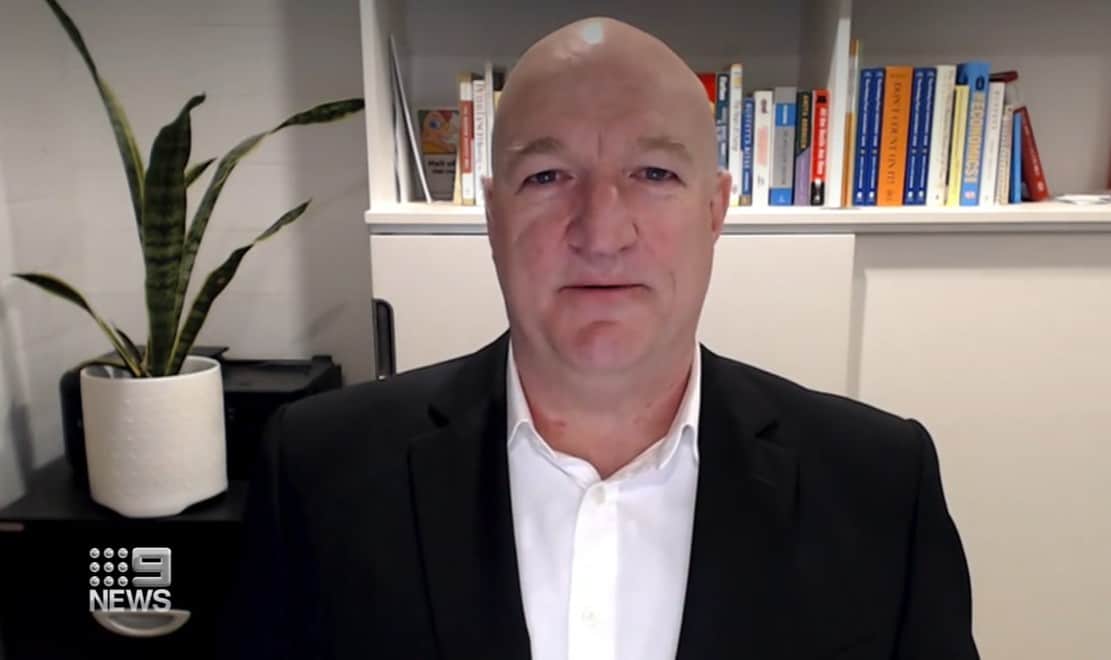
    Scott talks about the volatility facing investors this week, a company he owns and thinks you can put in the bottom drawer — Washington H. Soul Pattinson and Co Ltd (ASX: SOL), jobs and wages, unemployment, and retail trade figures.

    https://fast.wistia.com/embed/medias/kjr0b972pt.jsonphttps://fast.wistia.com/assets/external/E-v1.js

    Where to invest $1,000 right now

    When investing expert Scott Phillips has a stock tip, it can pay to listen. After all, the flagship Motley Fool Share Advisor newsletter he has run for more than eight years has provided thousands of paying members with stock picks that have doubled, tripled or even more.*

    Scott just revealed what he believes are the five best ASX stocks for investors to buy right now. These stocks are trading at dirt-cheap prices and Scott thinks they are great buys right now.

    *Returns as of February 15th 2021

    More reading

    Motley Fool contributor Scott Phillips owns shares of Washington H. Soul Pattinson and Company Limited. The Motley Fool Australia owns shares of and has recommended Washington H. Soul Pattinson and Company Limited. The Motley Fool has a disclosure policy. This article contains general investment advice only (under AFSL 400691). Authorised by Bruce Jackson.

    The post Motley Fool CIO Scott Phillips looks to the week ahead on Nine News (and a stock for the bottom drawer) appeared first on The Motley Fool Australia.

    from The Motley Fool Australia https://ift.tt/3u444Bk