Tag: Motley Fool

  • Exploring the golden window of opportunity for ASX ESG investors

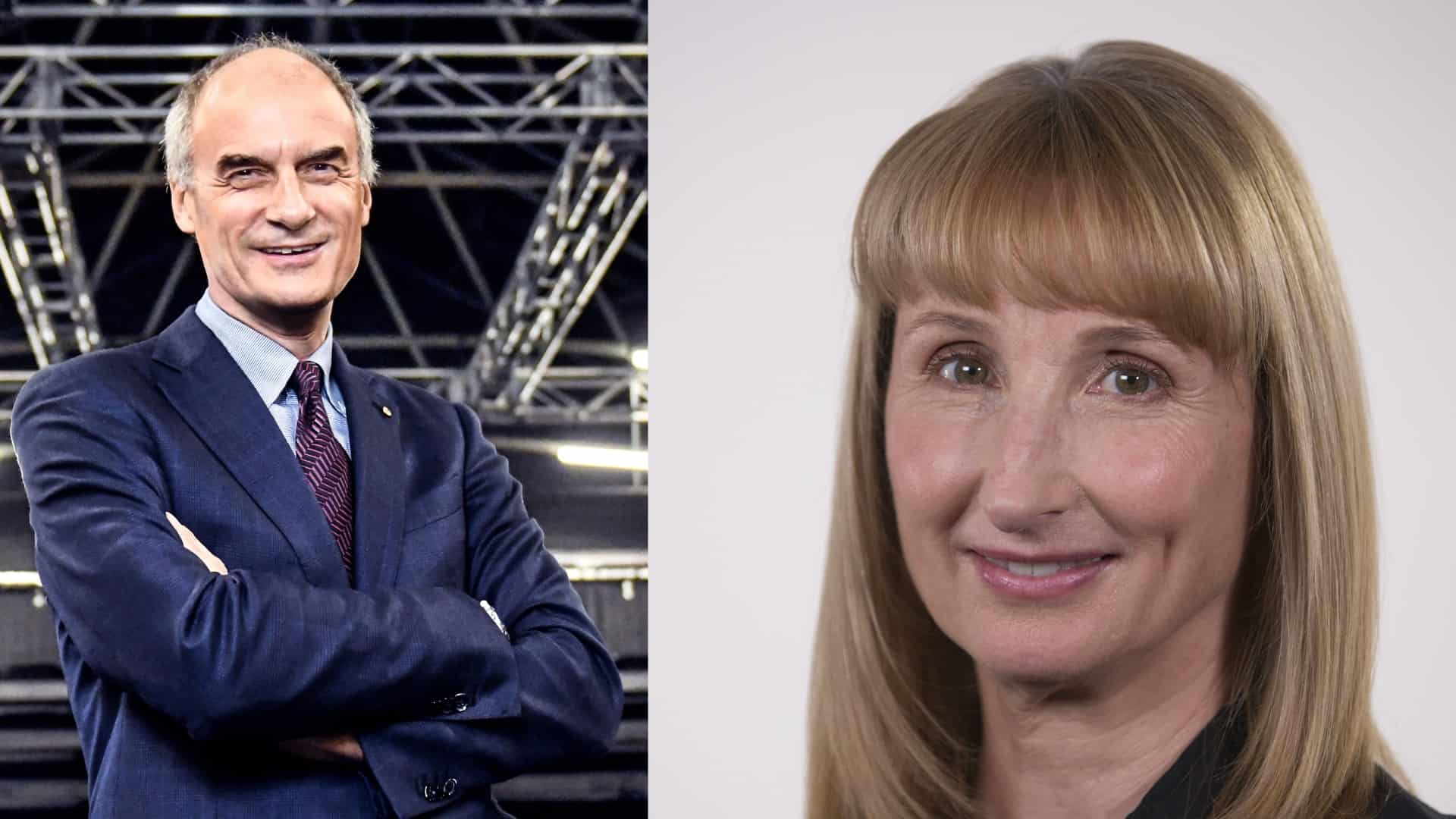
    ESG investment fund managers Helga Birgden and Martyn Meyer

    The Motley Fool chats with fund managers so that you can get an insight into how the professionals think. In this edition, Martyn Myer – immediate past president, Myer Foundation – and Helga Birgden – global head of responsible investment, Mercer – make the case for ASX ESG investments.

    A bit of background

    You may have heard environmental, social, and governance (ESG) investing referred to as ethical or responsible investing. That’s because ESG takes into account environmental, social and governance factors as material to investment returns.

    Last year, the Myer Foundation partnered with Mercer’s Responsible Investment business to help achieve its goal of having 100% of its portfolio invested in companies with high ESG rankings.

    Now on to our interview with Helga Birgden and Martyn Myer.

    Why should Australian investors seek out sustainable investments? 

    Martyn: Given the current climate change issues, it’s humanity that’s in trouble, not the planet. If we don’t get it right, all bets are off. What sort of planet are we going to leave our children and grandchildren? There are lots of things that we can be doing that won’t break the bank. There are lots of things that we have to be doing, not should, but have to.

    Helga: These [ESG] investments can outperform too. Not all responsible investment strategies outperform over all periods. But because we’re long-term investors, focused on returns and truly sustainable investment solutions, we see outperformance. 37% or $1.15 trillion of assets of a total of $3.4 trillion are managed under responsible investment categories according to the RIAA [Responsible Investment Association Australasia]. The Australian equity universe has done very well for those that applied sustainable characteristics.

    For example, a sample of the Mercer Fund’s highly rated responsible investment Australian equity strategies have outperformed against the S&P/ASX 300 Index (ASX: XKO) benchmark over the last 7 years to December 2020. As of the middle of last year those [responsible investment] equities delivered annual returns of 10.4% over the last 3 years, compared to 5.2% from the ASX 300.

    Martyn: If you invest with ESG principles in mind in a sophisticated way, you invest with economic and social tailwinds behind your investment instead of headwinds. It means that lots of things you’re investing in are growing far faster than GDP. So, you’re investing in growth, but for a very sound reason.

    Now there are plenty of ESG funds that apply very simple screening techniques, they sort of do it after the fact. Whereas the sophisticated funds that Mercer helped us find do it from the beginning, it’s integrated into their whole investment management process.

    Helga: It’s very important to take a nuanced view and a sophisticated view, because not all strategies are equal. Income strategies, for example, have lagged over the last couple of years. What we’re talking about here is understanding the investment thesis and portfolio construction in detail. And recognising the importance of the sustainability characteristics around climate and sustainable development, etc.

    What are the biggest concerns investors should have about the impact of climate change on their ASX portfolio? 

    Martyn: If you’re in the wrong assets you could end up in stranded assets. I don’t mean just in climate terms. If you think in governance terms, Crown Resorts Ltd (ASX: CWN) is a classic example. Look what happens when the governance of the board and the most senior management level is bad. They’re about to lose their licenses around the country. It could destroy billions of dollars in shareholder value. And you can boil that down to poor governance. Westpac Banking Corp (ASX: WBC) had similar problems, Rio Tinto Limited (ASX: RIO) had problems like that. Even Facebook Inc (NASDAQ: FB) and its interaction with the federal government.

    So it’s not just climate issues. If you’re not investing with these sorts of things in mind, you could invest in companies in danger of blowing up their business models or becoming stranded assets and destroying shareholder value.

    Helga: One of the biggest concerns for investors is about what should be in their portfolios in the light of current policy commitments in Australia. We are framed to reduce our pollution by 15% by 2023 if we are to meet the Paris Agreement goal. That’s only 2 years away. And 45% absolute carbon emissions reductions in the next 9 years. For investors that’s pretty significant.

    A study by Deutsche Bank AG (NYSE: DB) showed that companies that have strong climate change news, which can be evidenced, outperformed as much as 20% cumulatively over the last 12 years. There is the economic reality that climate is being priced in. And Australian equities are going to need to make up an important part of carbon reduction in portfolios.

    We now see some of the leading companies committing to net zero targets like Santos Ltd (ASX: STO), Woodside Petroleum Limited (ASX: WPL), and Wesfarmers Ltd (ASX: WES). And the institutional investor community as well, such as HESTA Super, UniSuper, Aware Super.

    There’s a reason they’re doing that. APRA, ASIC, the RBA have all called out to banks, insurers and superfunds to look at their exposure to the physical risks of climate change.

    A lot of the global commitments on emissions stretch out to 2050. What are the more immediate impacts of national emissions reduction plans on ASX share prices?

    Martyn: Here in Australia, the financial markets and the corporates are moving much faster than the federal government. The state governments are moving faster too. They’ve all committed to zero emissions by 2050, but they’ve also committed to 50% or more reductions by 2030.

    In investment terms, the next decade represents a great opportunity to earn alpha, using these [ESG screening] techniques. But I think after a decade this stuff will be so mainstream that there won’t be the opportunity to add alpha out of it. There’s this golden window of opportunity to use these tools and find the funds and the companies that are doing ESG really effectively. And you can have 3–5% per year in alpha. But it won’t last forever. It will all become mainstream and priced in. And those companies that don’t do it will have gone bust or disappeared or taken over.

    How do you weigh up the different factors in E, S, and G investing? Is any one more important than the other?

    Martyn: We don’t emphasise one over another. Having said that the Myer Foundation is very focused on climate. But we’ve found that the very best companies and funds are integrating all of these 3 issues. If the governance isn’t good, then you’re never going to get the other stuff right.

    Helga: At Mercer, we rate strategies for E, S, and G. In order for a manger’s strategy to rate well on ESG they have to show their research, portfolio construction, portfolio holdings and manager policy is consistent within their portfolio, how they are managing all 3 E, S, and G risks and opportunities. But, as Martyn rightly points out, governance is absolutely core. Assessing the financial risks associated with ESG requires a comprehensive approach, so that shareholders know what they’re getting.

    How do you qualify the social aspect of ESG from an investor perspective? 

    Helga: The social aspects are increasingly important. They are key topics like diversity inclusion, workplace safety, income inequality, financial inclusion. For example, what we call ‘just transition’. With the move to a net zero economy, we have to look after workers in the fossil fuel industry. So job reskilling and training, and mental health are all important to companies as we transition. Modern slavery risk in supply chain is another big issue we’ve done a lot of work on at Mercer for investor clients.

    Key areas of concern include gender – how companies approach and promote gender equality and women’s empowerment across the value chain – and human rights. Issues like digital inclusion, making sure everyone has access to information we may take for granted, are increasingly important.

    Martyn: Older people and minorities more often don’t have access to digital technologies. That can affect things like information and access to the vaccines, as they’re seeing in America.

    How much concern is greenwashing and how can investors address this? 

    Martyn: The Myer Foundation struggled when we decided we wanted to go 100% [ESG]. How could we possibly do all the due diligence necessary to find those funds who are not greenwashing. Who are instead doing it in a sophisticated way. That’s when we asked Mercer to help us, they’ve tracked all of these strategies for 15 years or more. They helped us scan more than 10,000 strategies, and we really came down to the best 25 we could find in 3 asset classes.

    But there’s no doubt greenwashing is going on. And they should be called out, and I think they will be over time. They won’t get the rating from companies like Mercer.

    Helga: We have to be very alert to greenwashing. But I think most investors have a very good ‘BS’ filter, especially in Australia. We’re good at spotting it a mile off. It comes down to research and the ratings process. We have an independent team of 250 people researching every day into manager strategies and how they are implemented. The ESG aspects are core to their assessment.

    The best way for investors to avoid greenwashing is to make sure you have access to good research and work with industry groups. For example, the Responsible Investment Association of Australasia has some great information and resources. But greenwashing is certainly going to be around for a while, with so much interest in the [ESG] subject.

    For companies low on the ESG ratings, could less demand from increasingly responsible investors and ESG focused exchange-traded funds (ETFs) lead to improved dividend returns for those still buying shares? 

    Martyn: In the short-term, the answer is probably yes. But it’s the sort of risk that I wouldn’t want to take. A superfund would be concerned about the issues of stranded assets, business models being blown up or social licenses to operate getting ripped up.

    We’re long-term investors. We’ve been in equities for nearly 100 years. I think you just can’t take those sorts of risks. Even in the short-term, the volatility is just going to get worse.

    Helga: It really comes down to the investor’s purpose and time frame, etc. But, yes, that may be the case. If investors don’t allocate capital to those sorts of companies, there will always be another investor who will step in. But there is abundant research showing that the cost of capital for such companies goes up.

    Martyn: I should stress here that a lot of uninitiated investors think that there’s a trade-off here. They think if they invest along ESG principles they sacrifice returns. We actually see that entirely in reverse. If you do it in a sophisticated way it adds a lot of value.

    Where do you see the most opportunity for responsible investing on the ASX in 2021? 

    Helga: There are great opportunities around green property and energy efficiency. You don’t need to be investing in something new. There is a lot of robust investment in existing technologies and very strong returns in the whole energy efficiency theme.

    If an investor is wanting to de-carbonise their portfolio, they do have to be aware of timing in the short-term. There is such a things as de-carbonisation at the right price. At times it’s not tactical. There might be times when there’s market exuberance around green stocks. You need to be savvy about that.

    Martyn: Of course, none of this obviates the need to follow good investment principles, to have a diversified portfolio of various asset classes.

    Where to invest $1,000 right now

    When investing expert Scott Phillips has a stock tip, it can pay to listen. After all, the flagship Motley Fool Share Advisor newsletter he has run for more than eight years has provided thousands of paying members with stock picks that have doubled, tripled or even more.*

    Scott just revealed what he believes are the five best ASX stocks for investors to buy right now. These stocks are trading at dirt-cheap prices and Scott thinks they are great buys right now.

    *Returns as of February 15th 2021

    More reading

    Randi Zuckerberg, a former director of market development and spokeswoman for Facebook and sister to its CEO, Mark Zuckerberg, is a member of The Motley Fool’s board of directors. Bernd Struben has no position in any of the stocks mentioned. The Motley Fool Australia’s parent company Motley Fool Holdings Inc. owns shares of and recommends Facebook. The Motley Fool Australia owns shares of Wesfarmers Limited. The Motley Fool Australia has recommended Crown Resorts Limited and Facebook. The Motley Fool has a disclosure policy. This article contains general investment advice only (under AFSL 400691). Authorised by Bruce Jackson.

    The post Exploring the golden window of opportunity for ASX ESG investors appeared first on The Motley Fool Australia.

    from The Motley Fool Australia https://ift.tt/3bSj6Dj

  • The big four banks offer these juicy dividend yields to ASX investors

    Woman holding up wads of cash

    On Tuesday the Reserve Bank met for the second time of the year to decide on the cash rate.

    Although cash rate futures were hinting that there was a possibility of a cut to zero, the central bank held firm and kept rates on hold at 0.1%.

    What now?

    While this is a small win for income investors, it doesn’t do much for them in the grand scheme of things. Term deposits and savings accounts remain at ultra low levels and show little sign of lifting from here in the next couple of years.

    In light of this, it looks set to remain difficult for investors to generate sufficient income from these assets for some time to come.

    But never fear, the Australian share market is home to a number of dividend shares that offer yields that smash those on offer with term deposits.

    Among those shares are the big four banks. Here’s why income investors might be better off with their shares rather than their term deposits or savings accounts.

    Australia and New Zealand Banking GrpLtd (ASX: ANZ)

    Analysts at Morgans expect ANZ to pay a dividend of $1.45 per share in FY 2021 and then $1.61 per share in FY 2022. Based on the current ANZ share price of $26.97, this represents yields of 5.4% and 6%.

    Commonwealth Bank of Australia (ASX: CBA)

    Ord Minnett is forecasting dividends of $3.20 per share and $3.60 per share over FY 2021 and FY 2022, respectively. Based on the latest CBA share price, this equates to fully franked yields of 3.8% and 4.25%.

    National Australia Bank Ltd (ASX: NAB)

    As for NAB, UBS is expecting dividends of $1.25 per share and $1.40 per share over the next two years. With the NAB share price currently fetching $25.24, this represents yields of 4.95% and 5.5%.

    Westpac Banking Corp (ASX: WBC)

    Finally, Morgans has also pencilled in dividends of $1.32 per share in FY 2021 and $1.43 per share in FY 2022 from Australia’s oldest bank. Based on the latest Westpac share price, this will mean yields of 5.45% and 5.9%.

    These Dividend Stocks Could Be Your Next Cash Kings (FREE REPORT)

    Motley Fool Australia’s Dividend experts recently released a brand-new FREE report revealing 3 dividend stocks with JUICY franked dividends that could keep paying you meaty dividends for years to come.

    Our team of investors think these 3 dividend stocks should be a ‘must consider’ for any savvy dividend investor. But more importantly, could potentially make Australian investors a heap of passive income.

    Don’t miss out! Simply click the link below to grab your free copy and discover these 3 high conviction stocks now.

    Returns As of 15th February 2021

    More reading

    Motley Fool contributor James Mickleboro owns shares of Westpac Banking. The Motley Fool Australia has no position in any of the stocks mentioned. The Motley Fool has a disclosure policy. This article contains general investment advice only (under AFSL 400691). Authorised by Bruce Jackson.

    The post The big four banks offer these juicy dividend yields to ASX investors appeared first on The Motley Fool Australia.

    from The Motley Fool Australia https://ift.tt/2PrWn9A

  • 3 reasons why Brickworks is a great ASX dividend share

    janus henderson share price increasing represented by pile of australian one hundred dollar notes

    Brickworks Limited (ASX: BKW) is a compelling ASX dividend share for investors focused on income.

    Brickworks is a diversified building products business which sells a number of different products through multiple businesses. The company can trace its history back to 1934.

    Some of those businesses include Austral Bricks, Austral Masonry, Austral Precast, Bristle Roofing, Southern Cross Cement, Urban Stone, GB Masonry and Pronto Panel.

    Here are three reasons why Brickworks could be considered such a good ASX dividend share:

    Dividend reliability

    There are few businesses on the ASX with a dividend record like Brickworks.

    The company can boast that its normal dividend has been maintained or increased every year since 1976.

    When the business held its annual general meeting (AGM), Brickworks Chair Robert Millner said:

    We are proud to be one of the very few S&P/ASX 200 Index (ASX: XJO) companies who have increased dividends to our shareholders during the pandemic and have not needed to raise equity or receive government support payments. Including this year’s dividend increase, we have now maintained or increased normal dividends for the last 44 years.

    The ASX dividend share also boasted that it has had a strong history of total value creation.

    It said that $1,000 invested in Brickworks would have grown to be worth around $470,000 at the time of the AGM.

    Defensive source of cashflow for funding

    Whilst Brickworks is most well known for its building products, the business essentially funds its dividends from the cashflow from its other assets.

    There are two main assets that Brickworks’ dividend is supported by. One of those is the investment conglomerate Washington H. Soul Pattinson and Co. Ltd (SAX: SOL), which Brickworks now owns 39.4% of. Soul Patts has a diversified portfolio of investments, which are both listed and unlisted.

    Soul Patts’ biggest investment include TPG Telecom Ltd (ASX: TPG), New Hope Corporation Limited (ASX: NHC), Australian Pharmaceutical Industries Ltd (ASX: API) and Brickworks. In terms of sectors, it’s invested across industries like financial services, resources, telecommunications, technology, energy and pharmaceuticals.

    Brickworks said that Soul Patts has delivered outstanding returns over the long term and it’s expected to continue to deliver a growing stream of earnings and dividends over time.

    The ASX dividend share also owns a 50% stake of a joint venture trust with Goodman Group (ASX: GMG) where Brickworks sells surplus operational land into the trust at market value and Goodman funds the infrastructure works, to create serviced land ready for development.

    Once a lease pre-commitment is secured, the serviced land can then be used as security, with debt funding used to cover the cost of constructing the facilities.

    Brickworks gets access to Goodman’s development skills and its quality customers, whilst Goodman gets access to Brickworks’ prime industrial land.

    The ASX dividend share is receiving steadily-growing rental profit distributions from this JV trust. Brickworks says that it’s expecting the trust’s gross assets to go up by $900 million in value and the rental profit distributions to rise by at least 25% when two huge warehouses are built for Coles Group Ltd (ASX: COL) and Amazon.

    Long-term growth

    At the current Brickworks share price, it has a grossed-up dividend yield of 4.5%. But that’s today’s yield. Investors who bought many years ago would be getting a much higher yield on cost thanks to the steady dividend growth. In FY20 alone the dividend rose by 4% to $0.59 per share.

    As the dividends from Soul Patts and the profit distributions from the joint venture trust grow then this will be able to fund bigger Brickworks dividends over time.

    Where to invest $1,000 right now

    When investing expert Scott Phillips has a stock tip, it can pay to listen. After all, the flagship Motley Fool Share Advisor newsletter he has run for more than eight years has provided thousands of paying members with stock picks that have doubled, tripled or even more.*

    Scott just revealed what he believes are the five best ASX stocks for investors to buy right now. These stocks are trading at dirt-cheap prices and Scott thinks they are great buys right now.

    *Returns as of February 15th 2021

    More reading

    Motley Fool contributor Tristan Harrison has no position in any of the stocks mentioned. The Motley Fool Australia owns shares of and has recommended Brickworks and Washington H. Soul Pattinson and Company Limited. The Motley Fool Australia owns shares of COLESGROUP DEF SET. The Motley Fool has a disclosure policy. This article contains general investment advice only (under AFSL 400691). Authorised by Bruce Jackson.

    The post 3 reasons why Brickworks is a great ASX dividend share appeared first on The Motley Fool Australia.

    from The Motley Fool Australia https://ift.tt/383oEd2

  • Billionaire Hamish Douglass says that rising interest rates could cause a share market crash

    ASX

    Billionaire investor Hamish Douglass, who’s the lead investor of global equity funds like Magellan Global Fund (ASX: MGF), has said that rising interest rates could cause big problems for the share market.

    Hamish Douglass webinar

    In a webinar yesterday, entitled ‘Global equities: The year of living dangerously’, Mr Douglass gave his latest thoughts about the share market, inflation, interest rates and other topics.

    As a build up to the webinar, the following questions were part of the advertising for the event: “With a backdrop of emerging viral mutations, vast global fiscal stimulus, zero interest rates and possible pressures on inflation numbers entering the view finder, how is risk being priced? Was November’s stunning market rally a one-off? How do we see 2021 panning out? With these issues currently at play, markets appear complex, even dangerous.”

    The Australian Financial Review reported that he said that share markets could face a “huge reckoning” if inflation causes central banks to increase interest rates which would be a disaster, according to Mr Douglass.

    The AFR quoted Mr Douglass saying:

    Interest rates are close to zero [and] asset prices are very high, reflecting low interest rates. If you raise interest rates to head off a real inflation threat, then hang on to your chairs.

    If I have to take a view I think this will be transitory, the fiscal stimulus will pass through the economy, and then we are going to be looking back into a factual situation of lower long-term structural economic growth.

    But I do think that the bond market is going to be very volatile through the rest of this year. People know that bond rates have gone up.

    Interest rates aren’t the only thing on Mr Douglass’ mind right now. You’ve probably read about how a subreddit on Reddit called wallstreetbets, which is essentially a forum for people discussing shares, decided to heavily invest in the US gaming retailer called GameStop Corp (NYSE: GME). The share price has been very volatile since then. 

    Mr Douglass said that the amount of people who were essentially gambling on GameStop, with no relation to investment principles, scared him. The more people that did it, the more it worries him about how it could end and unwind.

    How is Mr Douglass positioning the portfolios?

    What is one of Australia’s most famous investors doing with all of the above in mind?

    He’s not afraid of going having cash, sometimes the portfolio has had a cash position of more than 10%. At the end of January 2021 the Magellan Global Fund had a cash position of 7% of the portfolio. In the webinar he said that the portfolio is currently 96% invested.

    However, the Magellan Global Fund has investments in a number of consumer staples and utilities which Mr Douglass claims would very likely be resilient if there’s elevated levels of inflation.

    At the end of December 2020, it had names in the portfolio like Starbucks, Reckitt Benckiser, PepsiCo, Nestle, Yum! Brands, McDonalds, Estee Lauder and LVMH (Moet Hennessy Louis Vuitton).

    Only time what is going to happen with inflation, interest rates and the share market.

    Where to invest $1,000 right now

    When investing expert Scott Phillips has a stock tip, it can pay to listen. After all, the flagship Motley Fool Share Advisor newsletter he has run for more than eight years has provided thousands of paying members with stock picks that have doubled, tripled or even more.*

    Scott just revealed what he believes are the five best ASX stocks for investors to buy right now. These stocks are trading at dirt-cheap prices and Scott thinks they are great buys right now.

    *Returns as of February 15th 2021

    More reading

    Motley Fool contributor Tristan Harrison owns shares of Magellan Global Fund. The Motley Fool Australia has no position in any of the stocks mentioned. The Motley Fool has a disclosure policy. This article contains general investment advice only (under AFSL 400691). Authorised by Bruce Jackson.

    The post Billionaire Hamish Douglass says that rising interest rates could cause a share market crash appeared first on The Motley Fool Australia.

    from The Motley Fool Australia https://ift.tt/3b8SEWC

  • 5 things to watch on the ASX 200 on Wednesday

    ASX share

    On Tuesday the S&P/ASX 200 Index (ASX: XJO) gave back its strong early gains to finish the day lower. The benchmark index dropped 0.4% to 6,762.3 points.

    Will the market be able to bounce back from this on Wednesday? Here are five things to watch:

    ASX 200 futures pointing higher

    It looks set to be a better day for the Australian share market on Wednesday. According to the latest SPI futures, the ASX 200 is poised to open the day 15 points or 0.2% higher. In late trade on Wall Street, the Dow Jones is up 0.1%, the S&P 500 is down 0.1%, and the Nasdaq index is 0.7% lower.

    Oil prices rise

    Energy producers such as Beach Energy Ltd (ASX: BPT) and Santos Ltd (ASX: STO) could push higher today after oil prices strengthened. According to Bloomberg, the WTI crude oil price is up 0.4% to US$60.83 a barrel and the Brent crude oil price is up 0.25% to US$63.81 a barrel.

    Tech shares on watch

    It could be a tough day for tech shares such as Afterpay Ltd (ASX: APT) and Xero Limited (ASX: XRO) on Wednesday. This follows a poor night of trade on the tech-focused Nasdaq index. The local tech sector has a tendency to follow the illustrious index’s lead.

    Gold price charges higher

    Gold miners Evolution Mining Ltd (ASX: EVN) and Resolute Mining Limited (ASX: RSG) could have a positive day after the gold price charged higher. According to CNBC, the spot gold price is up 0.75% to US$1,735.70 an ounce after bond yields softened.

    Shares going ex-dividend

    Another group of shares will be going ex-dividend this morning and could trade lower. This includes Bravura Solutions Ltd (ASX: BVS), InvoCare Limited (ASX: IVC), IOOF Holdings Limited (ASX: IFL), Link Administration Holdings Ltd (ASX: LNK), and Treasury Wine Estates Ltd (ASX: TWE). The latter will be paying eligible shareholders a 15 cents per share fully franked dividend on 1 April.


    Where to invest $1,000 right now

    When investing expert Scott Phillips has a stock tip, it can pay to listen. After all, the flagship Motley Fool Share Advisor newsletter he has run for more than eight years has provided thousands of paying members with stock picks that have doubled, tripled or even more.*

    Scott just revealed what he believes are the five best ASX stocks for investors to buy right now. These stocks are trading at dirt-cheap prices and Scott thinks they are great buys right now.

    *Returns as of February 15th 2021

    More reading

    James Mickleboro has no position in any of the stocks mentioned. The Motley Fool Australia’s parent company Motley Fool Holdings Inc. owns shares of Bravura Solutions Ltd and Link Administration Holdings Ltd. The Motley Fool Australia owns shares of and has recommended Treasury Wine Estates Limited. The Motley Fool Australia owns shares of AFTERPAY T FPO and Xero. The Motley Fool Australia has recommended Bravura Solutions Ltd, InvoCare Limited, and Link Administration Holdings Ltd. The Motley Fool has a disclosure policy. This article contains general investment advice only (under AFSL 400691). Authorised by Bruce Jackson.

    The post 5 things to watch on the ASX 200 on Wednesday appeared first on The Motley Fool Australia.

    from The Motley Fool Australia https://ift.tt/302eZPo

  • These ASX silver shares fell today, along with the price of silver

    asx silver shares represented by silver coin being squeezed in nut cracker

    South32 Ltd (ASX: S32), Silver Mines Limited (ASX: SVL), Manuka Resources Ltd (ASX: MKR), and Silver Lake Resources Limited (ASX: SLR)’s share prices all finished lower at the close of trading today.

    The South32 share price ended the day 1.79% lower while Silver Mines shares were down 4.55%. Manuka Resources shares were selling 3.33% under yesterday’s close while the Silver Lake share price fell 4.29%. To put these numbers in perspective, the All Ordinaries Index (ASX: XAO) finished just 0.47% down on yesterday.

    The slump in these ASX mining share prices can be attributed to today’s fall in silver.

    Today’s drop in the silver price

    Silver fell by 1.83% today in commodities trading to US$26.20 at the time of writing. For comparison, the next closest precious metal to fall in price as steeply was copper. However, copper’s commodity price dropped by only half that of silver.

    Despite today’s fall in price, silver has been on an upward trajectory over the past year. The metal was trading at US$11.77 in March last year. That means, even after today’s falls, the current silver price is trading 123% higher than at the same time last year. 

    The fall in the price of silver today, however, wreaked havoc on ASX silver shares. The wider market began the day positively only to fall following news the Reserve Bank of Australia would keep interest rates steady.

    Silver shares, meanwhile, were in decline from today’s opening. Since the shares mentioned above are reliant on particular commodities, it is common for their share prices to fluctuate along with the commodity’s price.

    Share price snapshots

    Despite today’s turmoil, three of the abovementioned four shares are currently trading higher than this time last year, some by significant margins. The exception is the Silver Lake Resources share price which has fallen by around 15% over the past year.

    The South32 share price closed today at $2.74. Only last week, it hit a new 52-week high of $2.88. During the onset of COVID-19 in March last year, South32 shares hit a low of $1.59.

    The Silver Mines share price was trading at 22 cents at close of trading today. Only one month ago, Silver Mines shares hit a 52-week high of 36 cents. This time last year, shares in the company were trading at 8 cents each. Investors who bought in one year ago would be sitting on a tidy return of 175% based on the current Silver Mines share price. 

    Manuka Resources shares were selling for 44 cents each at today’s closing. While down from its record high of 71 cents, the Manuka share price is still double that of its initial public offering (IPO) price of 22 cents a pop.

    The exception to these 12-month gains is the Silver Lake Resources share price, which closed today’s session at $1.33. This time last year, investors were buying Silver Lake shares for $1.58. The company’s shares have also been on the decline year to date, having fallen nearly 30% since the start of the year. 

    Based on current share prices, the market capitalisations of South32, Silver Mines, Manuka Resources, and Silver Lake Resources are around $13.3 billion, $261 million, $42 million, and $1.2 billion, respectively.

    Where to invest $1,000 right now

    When investing expert Scott Phillips has a stock tip, it can pay to listen. After all, the flagship Motley Fool Share Advisor newsletter he has run for more than eight years has provided thousands of paying members with stock picks that have doubled, tripled or even more.*

    Scott just revealed what he believes are the five best ASX stocks for investors to buy right now. These stocks are trading at dirt-cheap prices and Scott thinks they are great buys right now.

    *Returns as of February 15th 2021

    More reading

    Motley Fool contributor Marc Sidarous has no position in any of the stocks mentioned. The Motley Fool Australia has no position in any of the stocks mentioned. The Motley Fool has a disclosure policy. This article contains general investment advice only (under AFSL 400691). Authorised by Bruce Jackson.

    The post These ASX silver shares fell today, along with the price of silver appeared first on The Motley Fool Australia.

    from The Motley Fool Australia https://ift.tt/3bQuZJY

  • How did WAAAX shares perform this reporting season?

    ASX tech shares

    As the reporting season wraps up, WAAAX shares have provided mixed outcomes.

    Australia’s answer to the United States’ FAANG shares (Facebook, Amazon, Apple, Netflix, and Google), WAAAX consists of 5 ASX technology shares.

    These are WiseTech Global Ltd (ASX: WTC), a logistics platform provider; Afterpay Ltd (ASX: APT), the buy now, pay later behemoth; and Altium Limited (ASX: ALU), an electronics design software provider. It also includes Appen Ltd (ASX: APX), which provides data used in training artificial intelligence (AI) systems, and Xero Limited (ASX: XRO), a cloud-based accounting software provider.

    So how have WAAAX shares performed this reporting season? Let’s take a look.

    Wisetech 

    Wisetech is navigating the evolving impacts of the COVID-19 pandemic on international trade. The logistics industry saw volatility and a marked slowdown across all transport modes in the pandemic’s early stages.

    But signs of recovery emerged in mid-2020, and momentum has been improving. Wisetech grew revenue 16% to $238.7 million in 1H FY21, while underlying NPAT increased 61% to $43.6 million. The company declared an interim dividend of 2.7 cents per share (up 59%). This reflects a payout ratio of 20% of underlying NPAT. 

    Wisetech says COVID-19 has accelerated structural changes in the industry, providing a strong tailwind for the digitisation of global logistics solutions. Customer levels started to improve in mid-2020, and transaction numbers have since trended upwards.

    The company is continuing to invest in product innovation to leverage the structural shift to digitising global supply chains. The long term strategy is to expand the CargoWise platform globally while improving profitability. Wisetech says it is on track to deliver $10 million in net cost reductions in FY21 and achieve a $20 to $30 million run-rate for FY22. 

    Afterpay 

    Afterpay saw significant growth during the 1H FY21, with underlying sales increasing to $9.8 billion. This was a 106% increase on the $4.8 billion in underlying sales reported in 1H FY20.

    Increased adoption of online shopping by consumers in lockdown has helped bolster sales and customer numbers. Afterpay reported 13.1 million customers at the end of 2020, an 80% increase on the prior corresponding period.

    The North American market is growing strongly with 8 million active customers, up 127% over the past year. Merchant numbers have also grown, up by 73% to 74.7k. Afterpay made a net transaction margin of $213.9 million during the half, equating to 2.2% of underlying sales. 

    Afterpay’s continued focus on global expansion has seen an increase in international markets’ proportion of total sales. International markets accounted for 34% of underlying sales in 1H FY20 but increased to 51% in 1H FY21.

    Afterpay is now planning launches into Spain, France, and Italy, while also progressing its early-stage investment in Asia.

    The company is also planning to enter the banking arena with a money management app, Afterpay Money. The app will include payments and savings and come with a linked debit card.  New cards can be added to the digital wallet, and customers can even have their salary paid into the account directly. 

    Altium 

    Altium reported a 12% increase in its subscriber base for 1H FY21, but a 4% decline in revenue which was down to US$89.6 million. This followed eight consecutive years of double-digit revenue growth.

    Altium says the decline reflects the economic slowdown caused by extreme COVID conditions in the US and Europe and a challenging post-COVID market in China. The company also undertook a hard pivot to the cloud during the first half but has reported early signs of growing momentum in the second half.

    The company declared a dividend of 19 cents per share, down 5% from 20 cents per share for 1H FY20. Altium says that while there is emerging optimism thanks to the roll-out of COVID vaccines, it continues to view fiscal 2021 as a pre-vaccine year.

    Therefore full-year revenue guidance is expected to be at the lower end of the range from US$190 million to US$195 million. 

    Appen 

    Appen maintained solid revenue growth in the full year to 31 December 2020. Revenues were up 12% to $599.9 million, which gave underlying earnings before interest, tax, depreciation and amortisation (EBITDA) of $108.6 million.

    Investments in sales and marketing yielded 136 new customers across a variety of sectors. Many are small, but Appen says they will increase its market penetration and lay a strong foundation for growth in coming years.

    “2020 was a breakout year for new sales, new projects, committed revenue and our entry into China, but it was not without its challenges,” said Appen’s CEO Mark Brayan. 

    The company’s B2B selling was impacted by the move to working from home, which resulted in fewer customer wins in Q2 and Q3 before bouncing back in Q4.

    Nonetheless, Appen declared a final dividend of 5.5 cents per share. Appen has advised that full-year underlying EBITDA for 2021 is expected to be in the range of $120 million to $130 million, representing growth of 18% – 28%.

    Appen says it is in sound financial health with $78 million in cash and no debt at 31 December 2020. 

    Xero 

    Xero’s financial year ends on 31 March, after which we can expect its full-year results. Xero’s half-year results released in November showed a 21% increase in operating revenue despite challenging conditions.

    Subscriber numbers grew to 2.453 million, a 396,000 increase year-on-year. Net profit after tax increased $33.2 million to $34.5 million.

    Xero has been supporting customers through the pandemic with software enhancements reflecting government initiatives such as JobKeeper. The company’s strategic priorities are centred on driving cloud accounting and building for global scale and innovation. 

    Mixed results for WAAAX

    The impact of the coronavirus pandemic on WAAAX shares has varied. Afterpay saw significant growth thanks to structural tailwinds. Altium, however, felt the impact of COVID conditions in the form of declining revenue.

    WAAAX shares are now adjusting to the new normal and readying operations for a post-COVID world. Investors will be watching keenly to see how WAAAX shares adapt to this new operating environment. 

    Where to invest $1,000 right now

    When investing expert Scott Phillips has a stock tip, it can pay to listen. After all, the flagship Motley Fool Share Advisor newsletter he has run for more than eight years has provided thousands of paying members with stock picks that have doubled, tripled or even more.*

    Scott just revealed what he believes are the five best ASX stocks for investors to buy right now. These stocks are trading at dirt-cheap prices and Scott thinks they are great buys right now.

    *Returns as of February 15th 2021

    More reading

    John Mackey, CEO of Whole Foods Market, an Amazon subsidiary, is a member of The Motley Fool’s board of directors. Suzanne Frey, an executive at Alphabet, is a member of The Motley Fool’s board of directors. Randi Zuckerberg, a former director of market development and spokeswoman for Facebook and sister to its CEO, Mark Zuckerberg, is a member of The Motley Fool’s board of directors. Kate O’Brien owns shares of Altium, Amazon, Appen Ltd, and Apple. The Motley Fool Australia’s parent company Motley Fool Holdings Inc. owns shares of and recommends Alphabet (A shares), Alphabet (C shares), Amazon, Apple, Facebook, and Netflix. The Motley Fool Australia’s parent company Motley Fool Holdings Inc. owns shares of Appen Ltd. The Motley Fool Australia’s parent company Motley Fool Holdings Inc. recommends Altium and recommends the following options: long January 2022 $1920 calls on Amazon and short January 2022 $1940 calls on Amazon. The Motley Fool Australia owns shares of AFTERPAY T FPO, Altium, WiseTech Global, and Xero. The Motley Fool Australia has recommended Alphabet (A shares), Alphabet (C shares), Amazon, Apple, Facebook, and Netflix. The Motley Fool has a disclosure policy. This article contains general investment advice only (under AFSL 400691). Authorised by Bruce Jackson.

    The post How did WAAAX shares perform this reporting season? appeared first on The Motley Fool Australia.

    from The Motley Fool Australia https://ift.tt/2Oc1jij

  • Why the EMvision (ASX: EMV) share price closed 13% higher today

    healthcare asx share price rise represented by happy doctor

    The EMvision Medical Devices Ltd (ASX: EMV) share price closed 13.2% higher today after the company made a funding announcement.

    The EMvision share price finished off the trading session at $2.74 this afternoon.

    Here’s a wrap of where the funding will come from for the medical imaging technology provider, and why it may have moved the share price.

    Australian Stroke Alliance wins bid

    In today’s release, EMvision advised that its commercial collaboration partner, the Australian Stroke Alliance (ASA), submitted a successful bid to the Stage 2 Medical Research Future Fund (MRFF) for a 5-year program to transform pre-hospital stroke care. 

    The MRFF stage 2 program was awarded $100 million from the federal government, with 40 million allocated to ASA. 

    Of the $40 million, ASA has advised EMVision that it will receive “$8 million of this non-dilutive cash funding in staged payments weighted to the earlier years of the program”. 

    This poses the opportunity for EMvision to commercialise its medical imaging technology and work toward further developments.

    Executive commentary on funding

    Commenting on the ASA collaboration, EMvision CEO Dr Ron Weinberger said:

    The ASA brings together an end-to-end medical program to save and improve the lives of patients of one of the most debilitating medical emergencies in the world. No such consortium exists internationally, and the ASA will become a template for not only managing stroke, but other medical emergencies.

    The ASA leadership has worked tirelessly to put Australia centre stage in this global battle to save healthy lives and is to be congratulated. We are grateful to the Australian government for recognising this vision and awarding one of the largest medical research grants in Australian history.

    ASA co-chief investigator and neurologist, Professor Geoffrey Donnan, added:

    We are excited to be commencing this ground-breaking research program. Lightweight portable and affordable brain imaging is the next frontier in stroke care…”

    EMvision share price snapshot

    Despite falling 22.4% year-to-date, the EMvision share price has gained 20.1% over the previous 6-month period.

    The company’s market capitalisation is approximately $171.2 million, and 70.8 million shares are outstanding.

    Where to invest $1,000 right now

    When investing expert Scott Phillips has a stock tip, it can pay to listen. After all, the flagship Motley Fool Share Advisor newsletter he has run for more than eight years has provided thousands of paying members with stock picks that have doubled, tripled or even more.*

    Scott just revealed what he believes are the five best ASX stocks for investors to buy right now. These stocks are trading at dirt-cheap prices and Scott thinks they are great buys right now.

    *Returns as of February 15th 2021

    More reading

    Gretchen Kennedy has no position in any of the stocks mentioned. The Motley Fool Australia’s parent company Motley Fool Holdings Inc. owns shares of EMvision Medical Devices Limited. The Motley Fool Australia has no position in any of the stocks mentioned. The Motley Fool has a disclosure policy. This article contains general investment advice only (under AFSL 400691). Authorised by Bruce Jackson.

    The post Why the EMvision (ASX: EMV) share price closed 13% higher today appeared first on The Motley Fool Australia.

    from The Motley Fool Australia https://ift.tt/3kCnSbT

  • Is the CBA (ASX:CBA) share price a buy for the dividend?

    CBA share price

    Could the Commonwealth Bank of Australia (ASX: CBA) share price be a buy for the dividend?

    What has the CBA share price been doing recently?

    Just over a year ago, the CBA share price was above $90 in mid-February 2020. It then plunged 40% to the bottom of the COVID-19 crash when it seemed like there were going to be very large economic repercussions because of all the impacts.

    But then central banks across the world stepped in to provide support, whilst the Australian federal government announced support such as jobkeeper and increased jobseeker payments.

    Between 23 March 2020 and the end of October 2020, the CBA share price went up 27%.

    The good news of the efficacy, or effectiveness, of the COVID-19 vaccines was then announced in November 2020. Since the start of November, the CBA share price has risen another 23%.

    The CBA share price has risen so much that it’s almost back to its pre-COVID-19 highs.

    Has the profit recovered as well?

    CBA recently reported its FY21 half-year result where the bank said that disciplined execution delivered strong outcomes with market share gains in its core businesses, increased provisioning and a significant capital surplus.

    Statutory net profit of $4.88 billion represented a decline of 20.8% compared to the first half of FY20. However, cash net profit only fell by 10.8% to $3.89 million.

    The major bank said that the low interest rate world we’re living in is impacting profit. It reported a 10 basis point decline of the net interest margin (NIM) to 2.01% because of higher levels of deposits.

    CBA’s significant capital surplus was shown with an increase to its common equity tier 1 (CET1) capital ratio of 12.6%, up 90 basis points year on year.

    The CEO of CBA, Matt Comyn, said:

    This position of strength means we are uniquely placed to respond to the rapidly changing operating context while continuing to support our customers, contribute meaningfully to our communities and deliver business performance.

    We have refreshed our strategic priorities to build on our strong foundations and position us for the future. This is an evolutionary change to enable the bank to focus on the new challenges and opportunities ahead.

    However, Mr Comyn also said that there are several health and economic risks that could hurt the speed of the recovery, but the bank is prepared for this.

    What about the CBA dividend?

    CBA’s board decided that a dividend payout ratio of around two thirds of cash profit would be appropriate.

    It decided to pay a fully franked dividend of $1.50 per share, up 53% on the second half of FY20. However, this still represented a cut of 25% year on year.

    This means that the last twelve months of dividends amounts to a grossed-up dividend yield of 4.2% at the current CBA share price.

    Broker Macquarie Group Ltd (ASX: MQG) said that the dividend wasn’t as big as it thought it would be. However, the broker thinks the final FY21 dividend could be around $2 per share because of CBA’s comments about the dividend payout ratio expected to be somewhere between 70% to 80% for FY21. Macquarie has a share price target of $80 for CBA, which means the broker thinks CBA shares will fall by mid-single digits over the next year – it thinks it’s a sell.

    However, UBS has one of the most positive expectations of CBA and its dividend, compared to other brokers. The broker likes how much capital the bank has and that it’s benefiting from the resurgent Australian economy.

    UBS has a CBA share price target of $90 and it expects a dividend of $3.60 for the full year, equating to a grossed-up dividend yield of 6%.

    Where to invest $1,000 right now

    When investing expert Scott Phillips has a stock tip, it can pay to listen. After all, the flagship Motley Fool Share Advisor newsletter he has run for more than eight years has provided thousands of paying members with stock picks that have doubled, tripled or even more.*

    Scott just revealed what he believes are the five best ASX stocks for investors to buy right now. These stocks are trading at dirt-cheap prices and Scott thinks they are great buys right now.

    *Returns as of February 15th 2021

    More reading

    Motley Fool contributor Tristan Harrison has no position in any of the stocks mentioned. The Motley Fool Australia owns shares of and has recommended Macquarie Group Limited. The Motley Fool has a disclosure policy. This article contains general investment advice only (under AFSL 400691). Authorised by Bruce Jackson.

    The post Is the CBA (ASX:CBA) share price a buy for the dividend? appeared first on The Motley Fool Australia.

    from The Motley Fool Australia https://ift.tt/3e3bqAG

  • ASX 200 slides lower, A2 Milk surges, Gold Road sinks

    ASX 200

    The S&P/ASX 200 Index (ASX: XJO) went down 0.4% today to 6,762 points.

    The ASX 200 started the day up around 1%, but steadily slid downwards to finish in the red.

    Here are some of the highlights from the day:

    Commonwealth Bank of Australia (ASX: CBA)

    The CBA share price finished the day higher by 0.5% despite yesterday’s news that CBA’s subsidiaries would be facing legal proceedings by the Australian Securities and Investments Commission (ASIC).

    Commonwealth Securities Limited (Commsec) and Australian Investment Exchange Limited (AUSIEX) are the two subsidiaries in question.

    CBA said that the errors were reported to ASIC and that Commsec and AUSIEX have been working with ASIC.

    ASIC has filed with the Federal Court and published on its website a statement of agreed facts and contraventions, recognising the co-operation of Commsec and AUSIEX and that they don’t intend to defend against the proceedings.

    CBA stated that:

    The proceedings relate to issues in respect of regulatory data requirements, trade confirmation requirements (primarily related to exchange traded options), best execution requirements and reconciliations of client monies. In addition, for CommSec only, the proceeding relate to issues in respect of brokerage payments, warrant agreement forms and automated order processing filters.

    The issues arose from errors such as information technology system coding or systems issues, human error and/or data entry errors. The only issue where there was any direct financial loss to some customers was in relation to instances of brokerage overcharging.

    Commsec disclosed that it has paid total remediation of $6.5 million, which is made up of refunds and other compensation payments to customers.

    Big movements in the ASX 200

    There were some large movers in the ASX 200.

    The best performer in the ASX 200 was the A2 Milk Company Ltd (ASX: A2M) share price which went up around 7.5% today on no specific company news.

    At the bottom of the ASX 200, the Gold Road Resources Ltd (ASX: GOR) share price dropped by around 8%. It wasn’t the only gold miner that suffered – the Northern Star Resources Ltd (ASX: NST) share price fell 4.3%, the Evolution Mining Ltd (ASX: EVN) share price dropped 3%, the Resolute Mining Limited (ASX: RSG) share price dropped 2.4% and the Silver Lake Resources Limited (ASX: SLR) share price fell 4.3%.

    Another of the biggest declines in the ASX 200 today was buy now, pay later business Zip Co Ltd (ASX: Z1P) which fell around 6%.

    Ansell Limited (ASX: ANN)

    The Ansell share price initially reacted very positively to the announcement that it may start up its share buy back again.

    The personal protection safety solutions business reminded investors that its share buyback was extended for 12 months commencing from 13 November 2020.

    While Ansell hasn’t bought any shares recently, it told the market that it could restart buying back its shares under the buyback program from 5 March 2021, after the conclusion of dividend re-investment plan pricing period on 4 March 2021.

    Where to invest $1,000 right now

    When investing expert Scott Phillips has a stock tip, it can pay to listen. After all, the flagship Motley Fool Share Advisor newsletter he has run for more than eight years has provided thousands of paying members with stock picks that have doubled, tripled or even more.*

    Scott just revealed what he believes are the five best ASX stocks for investors to buy right now. These stocks are trading at dirt-cheap prices and Scott thinks they are great buys right now.

    *Returns as of February 15th 2021

    More reading

    Motley Fool contributor Tristan Harrison has no position in any of the stocks mentioned. The Motley Fool Australia owns shares of and has recommended A2 Milk. The Motley Fool Australia has recommended Ansell Ltd. The Motley Fool has a disclosure policy. This article contains general investment advice only (under AFSL 400691). Authorised by Bruce Jackson.

    The post ASX 200 slides lower, A2 Milk surges, Gold Road sinks appeared first on The Motley Fool Australia.

    from The Motley Fool Australia https://ift.tt/3bTgZPn