Tag: Motley Fool

  • Some of my best gains last year were invisible

    invisible asx share gains represented by giraffe standing against matching background

    We spend a lot of time, as investors, obsessing over our portfolios.

    The big winners. The big losers. The ones that got away.

    It’s natural.

    It can even be healthy (well, the ‘keeping score’ part, not the obsessing part).

    Like it or not, this investing game has a very stark, unforgiving scorecard.

    Either you’re making money, or you’re not.

    Either you’re beating the market, or you’re not.

    There’s nowhere to hide.

    (Actually, there are plenty of places to hide, for the dishonest. There is no shortage of underperforming fund managers and investment advisers who simply ignore their past failures, hide them, or simply rebrand. If you’re taking advice, ask to see the whole truth!)

     But, if you’re honest — and you really want to invest well — the scoreboard is the brutal truth.

    I’m pleased to say that the service I run, Motley Fool Share Advisor, is currently showing an average return, per recommendation, of 60.5%, compared to 39.6% for the All Ordinaries Index (ASX: XAO) (both including dividends) since inception in 2011.

    That’s every recommendation. Ever.

    The great, the good, the ordinary and the terrible.

    Not just over an arbitrary time frame.

    Not just some of our recommendations.

    Every stock, ever recommended.

    Individually, there have been some big winners and some big losers. 

    And, by the way, our members get to see all of that information, in all its glory, on the site.

    We hide nothing.

    Still, a scorecard can be, if not misleading, not quite the full story.

    Here’s an example:

    One of my recommendations is up 15% since 2016.

    The market is up 60%. 

    So, we’ve made money, but lost to the index. 

    Not ideal.

    Still, those numbers hide an important lesson.

    The company is Virtus Health Ltd (ASX: VRT), the assisted reproduction (IVF) provider.

    See, at one point, our Virtus recommendation, with a cost basis of $5.39, had fallen to $1.56 — a plunge of more than 70%.

    That was in the depths of the COVID market crash.

    Since then?

    The shares are trading at $6.13 at the time of writing — close enough to four times their price of just 11 short months ago.

    That 300% gain won’t show up anywhere, of course.

    And I’m not suggesting it should — after all, our cost base is $5.39, not $1.56.

    But here’s the thing: plenty of people were selling at $1.56 in March. Plenty sold for $2.00 and $2.50 either side of that low, too.

    No, I’m not doing victory laps. We’re up, but still lagging the market.

    But I am mindful that it could have been a whole lot worse. We could have given in to the gloom. We could have sold, in sadness and frustration. 

    And, if we had, we would have missed out on the almost-300% gain that we earned just by refusing to let the market call the tune.

    (I should add, too, that while we didn’t pick the very bottom of the share price journey, we did re-recommend Virtus to our members at $2.90 in April. Taken together, our Virtus position is ahead of the market. But that’s not my point.)

    So, while we should all focus on the net result from our investments (and time will tell whether we simply overpaid for Virtus the first time around), it’s important that we sometimes break down the components of our results, to isolate the lessons — successes and mistakes — that go into the final score.

    If I was a footy coach, I might talk about a game of two halves.

    If I was a management consultant, I might say focus on the process, and the result will look after itself.

    But, as a simple investor, I’m going to remind you that past prices, chart patterns and the market’s current moods should be irrelevant.

    The only thing that matters is today’s price and long-term future, business performance.

    That’s not always easy to remember — or put into practice — when times are tough.

    But if you can, it might just meaningfully improve your results.

    Fool on!

    Where to invest $1,000 right now

    When investing expert Scott Phillips has a stock tip, it can pay to listen. After all, the flagship Motley Fool Share Advisor newsletter he has run for more than eight years has provided thousands of paying members with stock picks that have doubled, tripled or even more.*

    Scott just revealed what he believes are the five best ASX stocks for investors to buy right now. These stocks are trading at dirt-cheap prices and Scott thinks they are great buys right now.

    *Returns as of February 15th 2021

    More reading

    Motley Fool contributor Scott Phillips has no position in any of the stocks mentioned. The Motley Fool Australia has recommended Virtus Health Limited. The Motley Fool has a disclosure policy. This article contains general investment advice only (under AFSL 400691). Authorised by Bruce Jackson.

    The post Some of my best gains last year were invisible appeared first on The Motley Fool Australia.

    from The Motley Fool Australia https://ift.tt/3pTsJGF

  • The big themes from ASX reporting season

    Wooden block letters spelling 'Recap' on a yellow background

    As ASX reporting season comes to an end, Commsec reflects on the key themes in its ‘Earnings season: Half-time report’. 

    Here’s a closer look at some of the insights from the online stockbroking platform’s commentary.

    By the numbers

    As at 22 February, more than 80% of the companies that have reported results managed to produce a statutory profit. Commsec reveals that this figure is well up on the 75% that reported a profit during the August reporting season last year. 

    In the six months to December 2020, 72 companies, or 85%, elected to pay a dividend. This compares to the 68% which paid a distribution back in June 2020. Of the 72 companies paying dividends, 47% lifted the amount, 15% kept the payout steady and 38% cut their dividend amounts. 

    Aggregate cash at hand as at December 31 2020 is up 48% on a year ago, most notably boosted by retailers and banks. 

    Companies need to be agile 

    Commsec notes that companies that acted quickly and decisively on cutting down expenses and shoring up the capital base, especially via capital raisings or debt, have been largely successful. 

    Then it was a case of having a plan on lockdown. Certainly, the retailers that either had an online presence to begin with, or were quick to put plans in place, have been hugely successful. 

    Stimulus is here to stay

    There is still abundant stimulus and support being applied to the economy. The Reserve Bank has maintained its stance that support won’t be removed too quickly, and that ultra-low interest rates will be maintained for at least another three years. 

    Commsec hopes to see a transition from government support to a business-led recovery. But a near-term threat for businesses is the imminent tapering of JobKeeper.

    Infrastructure to drive economic recovery

    There has been a global theme of infrastructure spending to drive economic recovery. Commsec expects spending on infrastructure, super-low interest rates, and a home-building boom spurred on by HomeBuilder (and state-based schemes) to provide the domestic economy with momentum over 2021.

    A commodity supercycle taking place?

    China’s insatiable demand for commodities has helped prop up commodity prices across the board. Iron ore is near 9-year highs. Copper is near 9-year highs. Oil is above pre-COVID levels. The main challenges that counteract soaring commodity prices are the firmer Australian dollar which are at two-year highs of almost 80 cents. 

    Higher commodity prices means more significant cash flows and propped up dividend yields for ASX mining shares. The likes of Fortescue Metals Group Limited (ASX: FMG) is currently paying a market leading (and sustainable) dividend yield of 9.80%. 

    Closing thoughts for ASX reporting season

    CommSec expects the All Ordinaries Index (ASX: XAO) to be in a range of 7,200–7,600 by end of 2021, with the range for the S&P/ASX 200 Index (ASX: XJO)  between 7,000–7,400 points.

    Commsec stated that its main concern is determining whether equities have become, or are becoming, too expensive. It cited rising rates as a near-term challenge to interest rate-sensitive sectors of the share market. This has been evidenced in recent days as bond yields have been on the rise, causing sectors such as ASX 200 tech shares to tank

    Where to invest $1,000 right now

    When investing expert Scott Phillips has a stock tip, it can pay to listen. After all, the flagship Motley Fool Share Advisor newsletter he has run for more than eight years has provided thousands of paying members with stock picks that have doubled, tripled or even more.*

    Scott just revealed what he believes are the five best ASX stocks for investors to buy right now. These stocks are trading at dirt-cheap prices and Scott thinks they are great buys right now.

    *Returns as of February 15th 2021

    More reading

    Motley Fool contributor Kerry Sun has no position in any of the stocks mentioned. The Motley Fool Australia has no position in any of the stocks mentioned. The Motley Fool has a disclosure policy. This article contains general investment advice only (under AFSL 400691). Authorised by Bruce Jackson.

    The post The big themes from ASX reporting season appeared first on The Motley Fool Australia.

    from The Motley Fool Australia https://ift.tt/3pYaRdP

  • Why this ASX tech ETF is in the buy zone

    tech shares represented by woman holding hand out to touch icons on digital screen

    There is an enormously wide range of ASX exchange-traded funds out there for Aussie investors to peruse. There are your standard market-tracking funds that blindly follow the S&P/ASX 200 Index (ASX: XJO).

    Then there are specific, or thematic ETFs, that might focus on an individual sector, such as robotics or health care.

    There are even funds that don’t cover shares at all — ETFs can track all manner of assets, from property, to government bonds, to gold and silver.

    A US tech-focused ETF

    The BetaShares Nasdaq 100 ETF (ASX: NDQ) lies somewhere in the middle of this wide range. This ETF tracks an index – the NASDAQ-100 (INDEXNASDAQ: NDX) to be precise. But this index doesn’t cover an entire market, as an ASX 200 ETF might. Over in the United States, there are 2 primary stock exchanges – the Nasdaq and the New York Stock Exchange.

    The Nasdaq, for a variety of reasons, tends to be the exchange that tech companies like to list on. So you won’t find ‘old-style’ companies like General Motors Inc (NYSE: GM) or 3M Co (NYSE: MMM). Instead, it’s top constituents are tech giants like Apple Inc (NASDAQ: AAPL), Microsoft Inc (NASDAQ: MSFT) and Tesla Inc (NASDAQ: TSLA). These are the companies that the BetaShares Nasdaq 100 ETF tracks. Thus, it’s not really an index fund in the same vein as a fund tracking the S&P 500 Index (INDEXSP: .INX) is, but it’s more index-like than a pure tech-focused ETF.

    So what does NDQ give you as an investor? Well, As we discussed earlier, Apple, Microsoft and Tesla make up 3 of the fund’s 4 largest current holdings. Amazon.com Inc (NASDAQ: AMZN) is the other. But you’ll also get moderate exposure to other tech giants like Facebook Inc (NASDAQ: FB), Alphabet Inc (NASDAQ: GOOG)(NASDAQ: GOOGL), Paypal Holdings Inc (NASDAQ: PYPL). Netflix Inc (NASDAQ: NFLX), and Adobe Inc (NASDAQ: ADBE).

    So why consider this ETF today?

    NDQ suffers rare pullback

    Well, it hasn’t had a very pleasant few weeks.

    NDQ units are down around 9% since 5 February, which happens to be the date NDQ made its last all-time high. Indeed, on the current unit price, NDQ is now down 2.5% year to date as well. Today alone, it’s lost 2.7% at the time of writing. The weakness is of course underpinned by a shaky start to the year for the underlying Nasdaq 100 Index.

    There’s another factor in play as well. Since Nasdsaq companies are listed on a US exchange, a rising Aussie dollar also means that the value of NDQ’s holdings in Aussie dollar terms has also been falling.

    Now, the Nasdaq is renowned for being an index that has delivered stellar performance almost non-stop over the past decade. The BetaShares Nasdaq ETF has only been around since 2015. But since its launch, it has returned roughly 163% in capital gains alone.

    Including dividend distributions that equates to an average of around 21.25% per annum. Speaking of dividends, this ETF currently offers a trailing distribution yield of 2.4%. That’s not bad for a US-based ETF coming from a market not known for its love of a dividend.

    All of this adds up to make the BetaShares Nasdaq 100 ETF worthy of consideration today.

    Where to invest $1,000 right now

    When investing expert Scott Phillips has a stock tip, it can pay to listen. After all, the flagship Motley Fool Share Advisor newsletter he has run for more than eight years has provided thousands of paying members with stock picks that have doubled, tripled or even more.*

    Scott just revealed what he believes are the five best ASX stocks for investors to buy right now. These stocks are trading at dirt-cheap prices and Scott thinks they are great buys right now.

    *Returns as of February 15th 2021

    More reading

    John Mackey, CEO of Whole Foods Market, an Amazon subsidiary, is a member of The Motley Fool’s board of directors. Suzanne Frey, an executive at Alphabet, is a member of The Motley Fool’s board of directors. Teresa Kersten, an employee of LinkedIn, a Microsoft subsidiary, is a member of The Motley Fool’s board of directors. Randi Zuckerberg, a former director of market development and spokeswoman for Facebook and sister to its CEO, Mark Zuckerberg, is a member of The Motley Fool’s board of directors. Sebastian Bowen owns shares of 3M, Alphabet (A shares), Facebook, and Tesla. The Motley Fool Australia’s parent company Motley Fool Holdings Inc. owns shares of and recommends Adobe Systems, Alphabet (A shares), Amazon, Apple, Facebook, Microsoft, Netflix, PayPal Holdings, and Tesla. The Motley Fool Australia’s parent company Motley Fool Holdings Inc. owns shares of BETANASDAQ ETF UNITS. The Motley Fool Australia’s parent company Motley Fool Holdings Inc. recommends 3M and recommends the following options: long January 2022 $1920 calls on Amazon, short January 2022 $1940 calls on Amazon, and long January 2022 $75 calls on PayPal Holdings. The Motley Fool Australia has recommended Adobe Systems, Alphabet (A shares), Amazon, Apple, BETANASDAQ ETF UNITS, Facebook, Netflix, and PayPal Holdings. The Motley Fool has a disclosure policy. This article contains general investment advice only (under AFSL 400691). Authorised by Bruce Jackson.

    The post Why this ASX tech ETF is in the buy zone appeared first on The Motley Fool Australia.

    from The Motley Fool Australia https://ift.tt/3uvm60O

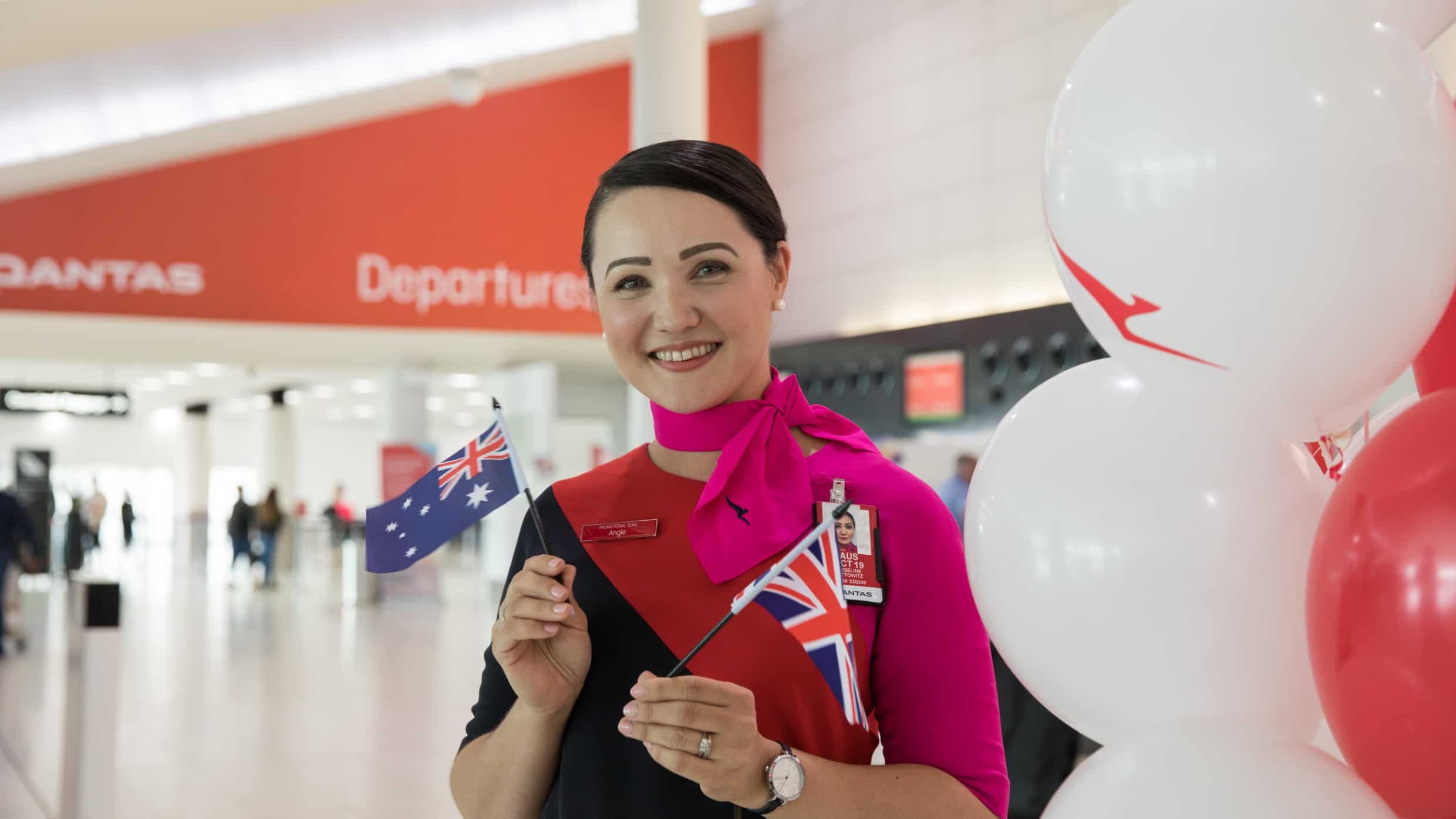
  • Is the Qantas (ASX:QAN) share price great value?

    qantas share price

    The Qantas Airways Limited (ASX: QAN) share price is trading lower with the market on Friday.

    In afternoon trade, the airline operator’s shares are down 2% to $4.99.

    Is the weakness in the Qantas share price a buying opportunity?

    According to analysts at Goldman Sachs, investors should consider today’s weakness in the Qantas share price as a buying opportunity.

    A note out of the investment bank this morning reveals that its analysts have retained their buy rating but trimmed their price target to $6.38. This follows the release of its half year results on Thursday.

    Based on the current Qantas share price, this price target implies potential upside of almost 28% for its shares over the next 12 months.

    What did Goldman Sachs say?

    While Goldman Sachs acknowledges that COVID-19 disruptions are not necessarily over, it is becoming increasingly positive due to vaccine rollouts.

    In fact, the broker believes Qantas is one of the best placed companies under its coverage to benefit materially from the rollout. It explained:

    “We reiterate our Buy rating on Qantas (QAN.AX) with our revised 12-month Target Price of A$6.38 presenting 25% upside from current levels. QAN has been significantly disrupted by the repeated closure of domestic borders over the past 12 months in reaction to localised outbreaks across all states. With the increasing prevalence of newer more infectious strains of the COVID-19 virus, we can’t rule out an ongoing dynamic of unpredictable and reactionary border closures. With c.80% of pre-covid (FY19) earnings coming from its domestic-oriented and loyalty businesses, QAN has and continues to be materially operationally and financially affected by this dynamic, and as such is one of the best placed stocks in our coverage to benefit materially from the Australian COVID-19 Vaccination program as it rolls out across the country this week.”

    Goldman Sachs also notes that the company is aiming to increase domestic capacity to 80% of pre-COVID levels in the fourth quarter of FY 2021. Its analysts feel this is possible due to what they have seen over in New Zealand.

    “QAN continues to prepare its business for a broad based re-start of domestic activity, and has planned to increase domestic capacity in 3Q21 to 60%, and 4Q21 to 80% of pre-covid levels, suggesting a very rapid recovery in overall domestic volumes for QAN on a re-opening. On today’s analyst call QAN highlighted that it was gaining share from rivals at both the premium and discount ends of the market, and that this had underpinned the strong demand they were witnessing leading into the April holiday period. Qantas Domestic is expecting demand at 80% of pre-covid levels and Jetstar expecting closer to 100% of pre-covid levels. These rates of market recovery are consistent with those seen in NZ following its lockdowns in CY20.”

    Where to invest $1,000 right now

    When investing expert Scott Phillips has a stock tip, it can pay to listen. After all, the flagship Motley Fool Share Advisor newsletter he has run for more than eight years has provided thousands of paying members with stock picks that have doubled, tripled or even more.*

    Scott just revealed what he believes are the five best ASX stocks for investors to buy right now. These stocks are trading at dirt-cheap prices and Scott thinks they are great buys right now.

    *Returns as of February 15th 2021

    More reading

    Motley Fool contributor James Mickleboro has no position in any of the stocks mentioned. The Motley Fool Australia has no position in any of the stocks mentioned. The Motley Fool has a disclosure policy. This article contains general investment advice only (under AFSL 400691). Authorised by Bruce Jackson.

    The post Is the Qantas (ASX:QAN) share price great value? appeared first on The Motley Fool Australia.

    from The Motley Fool Australia https://ift.tt/2PhsGrP

  • The Zip (ASX: Z1P) share price has slumped 26% in 8 days

    asx share price falling lower represented by investor wearing paper bag on head with sad face

    Despite nearly doubling this year, Zip Co Ltd (ASX: Z1P) shares have taken a beating in the last two weeks. As the trading week draws to an end, the Zip share price is sitting on falls of more than 26% since the market’s close on Tuesday last week. 

    So what’s going on?

    Why is the Zip share price so volatile this week? 

    The Zip share price has slumped by more than 18% this week alone despite the company reporting strong levels of growth across the board in its FY21 half-year result

    Results aside, the broader market could be the one to blame for the weakness in the Zip share price. 

    This week, rising bond yields have taken centre stage as higher yields signal higher borrowing costs and inflation.

    Higher borrowing costs could impact businesses and economic growth. Meanwhile, higher yields can put pressure on interest-sensitive sectors of the share market including  S&P/ASX 200 Index (ASX: XJO) tech shares. Elsewhere, cyclical sectors that typically generate strong cash flows such as financials, real estate, materials and utilities tend to perform better under higher interest rates. 

    We are also seeing the impacts of rising bond yields play out in the United States. The tech-heavy Nasdaq Composite (NASDAQ: .IXIC) has slumped 5% this week while the S&P 500 Index (SP: .INX) is flat and the Dow Jones Industrial Average Index (DJX: .DJI) is down 2%. 

    Its not just the Zip share price 

    The Zip share price is not alone in its recent slump. Its buy now, pay later (BNPL) peers have also stumbled by similar amounts. 

    The Afterpay Ltd (ASX: APT) share price is currently down by more than 22% this week after hitting a record high of $160.05 last week. 

    The Sezzle Inc (ASX: SZL) share price is also down around 19% after the company announced record growth for CY20 and strong positive trends continuing in the new year

    Elsewhere, the likes of Openpay Group Ltd (ASX: OPY), Laybuy Holdings Ltd (ASX: LBY), Splitit Ltd (ASX: SPT) and Humm Group Ltd (ASX: HUM) are all down between 5% and 20% this week. 

    The S&P/ASX Information Technology Index (ASX: XIJ) has also fallen 13% this week, compared to the approximate 1.4% drop for the ASX 200. 

    Market awaiting US listing rumours

    Speculation that management was exploring a dual listing in the US caused the Zip share price to surge by around 20% on 8 February. 

    The company’s FY21 half-year results did not provide any update on funding or dual listing rumours. 

    Where to invest $1,000 right now

    When investing expert Scott Phillips has a stock tip, it can pay to listen. After all, the flagship Motley Fool Share Advisor newsletter he has run for more than eight years has provided thousands of paying members with stock picks that have doubled, tripled or even more.*

    Scott just revealed what he believes are the five best ASX stocks for investors to buy right now. These stocks are trading at dirt-cheap prices and Scott thinks they are great buys right now.

    *Returns as of February 15th 2021

    More reading

    Kerry Sun has no position in any of the stocks mentioned. The Motley Fool Australia’s parent company Motley Fool Holdings Inc. owns shares of ZIPCOLTD FPO. The Motley Fool Australia’s parent company Motley Fool Holdings Inc. recommends Sezzle Inc. The Motley Fool Australia owns shares of AFTERPAY T FPO. The Motley Fool Australia has recommended Humm Group Limited and Sezzle Inc. The Motley Fool has a disclosure policy. This article contains general investment advice only (under AFSL 400691). Authorised by Bruce Jackson.

    The post The Zip (ASX: Z1P) share price has slumped 26% in 8 days appeared first on The Motley Fool Australia.

    from The Motley Fool Australia https://ift.tt/3kqROrs

  • What’s with the Ava Risk (ASX:AVA) share price today?

    asx share price on watch represented by investor peering over top of bench

    The Ava Risk Group Ltd (ASX: AVA) share price has been edging higher for most of the day as the company announced its half-year results for the period ending 31 December.

    But after opening at 58 cents this morning, shares in the infotech company are right back where they started at market close yesterday, now trading at 56 cents.

    Let’s take a closer look at the company’s results.

    How did Ava Risk perform?

    In the first half of FY21, Ava Risk saw substantial increases across various key metrics.

    The risk management services and technologies provider grew its ordinary activities revenue by 72% to $35.159 million. This was aided by the company’s services division which saw revenue increase by $9.243 million.

    Moreover, perimeter security and access control contributed an additional $5.470m of sales revenue. Ava Risk reported substantial revenues from its Indian Defence contract and the Australian Department of Defence, despite COVID-19 delays.

    The company’s sales orders backlog has fallen significantly, down from $16.7 million in HY20 to $3.4 million as of December 31, 2020.

    Regarding the company’s margin, Ava Risk boasted an improved gross margin of 57%, up from 49% in the prior corresponding quarter (pcp). This was aided by improved margins in the technology division driven by the Indian contract deal.

    For the half, operating expenses excluding depreciation, amortisation and interest were $8.637 million. As a result, the company made a net profit of $11.03 million.

    As such, Ava Risk holds net assets of $34.075 million with no external debts or borrowings.

    About the Ava Risk share price

    Ava Risk offers a range of solutions, including intrusion detection for perimeters, pipelines and data networks, biometric and card access control, as well as the secure international logistics and storage of high-value assets. Based in Victoria, the tech company has a market capitalisation of $135 million.

    Ava Risk has declared a special dividend of 2 cents per share, to be paid on 10 March.

    The Ava Risk Share price has performed well over the last six months, gaining 150%.

    Where to invest $1,000 right now

    When investing expert Scott Phillips has a stock tip, it can pay to listen. After all, the flagship Motley Fool Share Advisor newsletter he has run for more than eight years has provided thousands of paying members with stock picks that have doubled, tripled or even more.*

    Scott just revealed what he believes are the five best ASX stocks for investors to buy right now. These stocks are trading at dirt-cheap prices and Scott thinks they are great buys right now.

    *Returns as of February 15th 2021

    More reading

    Motley Fool contributor Daniel Ewing has no position in any of the stocks mentioned. The Motley Fool Australia has no position in any of the stocks mentioned. The Motley Fool has a disclosure policy. This article contains general investment advice only (under AFSL 400691). Authorised by Bruce Jackson.

    The post What’s with the Ava Risk (ASX:AVA) share price today? appeared first on The Motley Fool Australia.

    from The Motley Fool Australia https://ift.tt/37QHl3p

  • Why the SportsHero (ASX:SHO) share price is on a winning streak today

    cheering sports fans looking at smart phone representing surging pointsbet share price

    The SportsHero Ltd (ASX: SHO) share price is on the up today after the company posted its results for the FY21 half-year. Shares are trading 5.41% higher compared to yesterday’s close. At the time of writing, the SportsHero share price is sitting at 3.9 cents per share.

    Let’s take a closer look at why its shares are rising today and what was released.

    What’s impacting the SportsHero share price?

    Despite posting losses for the six-month period ending 31 December 2020, the social competition platform’s shares are rising. Notably, the loss of US$775,000 is lower than the US$916,000 of the prior corresponding period (pcp).

    While sales income was still minimal (only US$7,757 compared to nothing in the pcp), expenses were down on the pcp.

    A stronger Australian dollar saved the company around US$50,000 and employee expenses were reduced by US$116,000 on the pcp. A US$104,000 saving in net loss of joint venture (accounted for using the equity method) from the pcp was counteracted by a US$160,000 increase in share-based payments compared to the pcp.

    In further good news for investors, the earnings per share (EPS) loss dropped from 0.31 cents per share in the pcp to 0.21 cents per share.

    No dividend was paid for the FY21 half-year.

    Main takeaways from the report

    • OlahBola, an app covering international football for the Indonesian market was launched in July 2020.
    • Mint Capital Advisors injected $5 million into SportsHero in the form of a financing facility. SportsHero issued 5 million shares to Mint Capital in return.
    • OlahBola achieved 1.1 million new unique users by October 2020.
    • In November 2020, SportsHero signed a deal with MolaTV, (exclusive rights holders in Indonesia to English Premier League and German Bundesliga football) to stream its content on the OlahBola app. MolaTV pays SportsHero 10% of all MolaTV subscription revenue generated through the app.
    • Veritas Securities raised $1.3 million in working capital for the company in November 2020. In February 2021, the company raised a further $1.5 million from First Growth Funds Limited.

    SportsHero share price snapshot

    SportsHero’s shares are trading higher off the back of today’s announcement. It is also true the SportsHero share price has nearly doubled since this time last year. Back then, shares were selling at 2 cents each.

    However, in August 2018 SportsHero shares were selling for as high as 22 cents each. In fact, the current SportsHero share price is 99.5% lower than its all-time high of $7.68. This level was last observed in April 2011.

    Where to invest $1,000 right now

    When investing expert Scott Phillips has a stock tip, it can pay to listen. After all, the flagship Motley Fool Share Advisor newsletter he has run for more than eight years has provided thousands of paying members with stock picks that have doubled, tripled or even more.*

    Scott just revealed what he believes are the five best ASX stocks for investors to buy right now. These stocks are trading at dirt-cheap prices and Scott thinks they are great buys right now.

    *Returns as of February 15th 2021

    More reading

    Motley Fool contributor Marc Sidarous has no position in any of the stocks mentioned. The Motley Fool Australia has no position in any of the stocks mentioned. The Motley Fool has a disclosure policy. This article contains general investment advice only (under AFSL 400691). Authorised by Bruce Jackson.

    The post Why the SportsHero (ASX:SHO) share price is on a winning streak today appeared first on The Motley Fool Australia.

    from The Motley Fool Australia https://ift.tt/3aT39gQ

  • Why the Resolute Mining (ASX:RSG) share price is pushing higher today

    The Resolute Mining Limited (ASX: RSG) share price has avoided the market selloff and is edging higher today.

    In afternoon trade, the gold miner’s shares are up 1% to 65 cents.

    Why is the Resolute share price rising?

    Investors have been buying Resolute shares for a couple of reasons on Friday.

    One is the heightened demand for safe haven assets because of the market selloff, the other is the release of its full year results this afternoon.

    In respect to the latter, Resolute reported revenue of US$618.3 million and underlying earnings before interest, tax, depreciation and amortisation (EBITDA) of US$269.7 million. This represents a 15.4% and 87% increase, respectively, over the prior corresponding period.

    This was driven by a 2.7% increase in production to 395,136 ounces, a small reduction in its all-in sustaining cost (AISC) to US$1,074 per ounce, and a 16.2% jump in the average price received to US$1,562 per ounce.

    It is, however, worth noting that this was well short of its original guidance of production of 500,000 ounces with an AISC of US$980 per ounce. Which goes some way to explaining why the Resolute share price is trading just a touch above its 52-week low right now.

    On the bottom line, Resolute record a small net profit after tax of US$5 million. This compares to a loss of US$78.5 million a year earlier.

    Management commentary

    Resolute’s Interim CEO, Stuart Gale, was pleased with the performance given the numerous challenges it faced in 2020.

    He said: “I’m very proud of the way that the team at Resolute has responded to the 2020 challenges of COVID-19, a Malian political Coup d’Etat and industrial action at Syama. We have kept our operations running safely and are now well positioned to capitalise on the investments in our assets to deliver on 2021 production targets, focus on operational efficiencies and generate cash flows.”

    “Balance sheet improvement remains a key objective for us and cash flows from operations together with proceeds from asset sales will be prioritised to repay debt. Pleasingly, we were able to complete a number of corporate transactions during 2020 which reduced net debt by $92 million and simplified the balance sheet.”

    Outlook

    Unfortunately, the company isn’t expecting to grow its production or cut costs in FY 2021.

    It is forecasting total gold production of 350,000 ounces to 375,000 ounces at an AISC of US$1,200 to US$1,275 per ounce.

    Once again, this probably explains why the Resolute share price is down a disappointing 42% over the last 12 months.

    Where to invest $1,000 right now

    When investing expert Scott Phillips has a stock tip, it can pay to listen. After all, the flagship Motley Fool Share Advisor newsletter he has run for more than eight years has provided thousands of paying members with stock picks that have doubled, tripled or even more.*

    Scott just revealed what he believes are the five best ASX stocks for investors to buy right now. These stocks are trading at dirt-cheap prices and Scott thinks they are great buys right now.

    *Returns as of February 15th 2021

    More reading

    Motley Fool contributor James Mickleboro has no position in any of the stocks mentioned. The Motley Fool Australia has no position in any of the stocks mentioned. The Motley Fool has a disclosure policy. This article contains general investment advice only (under AFSL 400691). Authorised by Bruce Jackson.

    The post Why the Resolute Mining (ASX:RSG) share price is pushing higher today appeared first on The Motley Fool Australia.

    from The Motley Fool Australia https://ift.tt/2ZSPEHG

  • iCar Asia (ASX:ICQ) share price stalls on sliding revenue

    asx share price stall represented by woman in car looking annoyed

    iCar Asia Ltd (ASX:ICQ) shares are languishing in mid-afternoon trade following the release of the company’s full-year results. In earlier trade, the iCar Asia share price was trading nearly 5% higher at 34 cents. However, at the time of writing, the company’s shares have retreated back to 32 cents, flat for the day with around an hour of trade remaining.

    Let’s take a look at how the car listings company performed over the period.

    Why is the iCar Asia share price stuck in neutral?

    The iCar Asia share price is going nowhere today as investors seem ambivalent about the company’s latest results.

    According to its release, iCar Asia finished the year strongly after rebuilding momentum throughout 2020.

    But for the six months ending 31 December 2020, iCar Asia reported revenue of $14 million, a decline of 5% year on year. The reduced earnings reflected a slowdown during most of the year due to government-mandated lockdown measures caused by COVID-19.

    iCar Asia stated that all operating countries were faced with some kind of challenges. In light of this, iCar Asia launched new product innovations and focused on customer relationship management to minimise the negative impact.

    As a result of the implemented initiatives, along with the gradual recovery, iCar Asia achieved its highest ever monthly revenue for December. Unaudited revenue for the month reached $1.8 million which represented a 27% increase on the prior corresponding period (pcp). Furthermore, the fourth quarter as a whole grew to monthly average revenue of $1.405 million. This is compared to $1.195 million in Q3, $899 million in Q2, and $1.186 million in Q1.

    The group also undertook cost-containment measures to limit the damage from the pandemic. This included a drop in headcount, voluntary pay reductions, hiring freezes, and a cutback in marketing spend. From the stringent actions taken, iCar Asia recorded operating expenses at $19.2 million, a 9% reduction on the pcp.

    However, while savings were made across the business, earnings before interest, tax, depreciation and amortisation (EBITDA) came to a loss of $6.4 million. This was a 5% improvement on FY19’s result which saw EBITDA at $6.7 million in the red.

    iCar Asia closed the year with a balance of $2.2 million in cash and equivalents. Around $13 million worth of undrawn facilities are available should the company wish to tap into its line of credit.

    Management commentary

    iCar Asia managing director and CEO Hamish Stone commented on the latest results. He said:

    2020 was a year full of unprecedented challenges due to COVID-19. iCar Asia is pleased that we have managed these challenges well, as shown in the results for 2020.

    With the recovery from COVID-19 gathering momentum and with access to more than adequate funding to grow the business, iCar Asia remains optimistic of ongoing growth in 2021 ahead and to continue to be the leading partner to the recovery of the ASEAN automotive markets.

    Foolish takeaway

    Management further noted that negotiations surrounding the non-binding proposal from Autohome Inc. to acquire iCar Asia are still ongoing. Autohome had put forward a proposal to purchase iCar Asia’s entire issued share capital at 50 cents apiece.

    The offer is subject to a number of conditions as well as court approval. iCar Asia stated it will update the market accordingly when further details arise.

    The iCar Asia share price has risen nearly 7% over the last six months but has shed more than 11% over the past year.

    Where to invest $1,000 right now

    When investing expert Scott Phillips has a stock tip, it can pay to listen. After all, the flagship Motley Fool Share Advisor newsletter he has run for more than eight years has provided thousands of paying members with stock picks that have doubled, tripled or even more.*

    Scott just revealed what he believes are the five best ASX stocks for investors to buy right now. These stocks are trading at dirt-cheap prices and Scott thinks they are great buys right now.

    *Returns as of February 15th 2021

    More reading

    Motley Fool contributor Aaron Teboneras has no position in any of the stocks mentioned. The Motley Fool Australia has no position in any of the stocks mentioned. The Motley Fool has a disclosure policy. This article contains general investment advice only (under AFSL 400691). Authorised by Bruce Jackson.

    The post iCar Asia (ASX:ICQ) share price stalls on sliding revenue appeared first on The Motley Fool Australia.

    from The Motley Fool Australia https://ift.tt/3aTPyWl

  • Why the Damstra (ASX:DTC) share price is crashing 11% lower today

    man looking down falling line chart, falling share price

    The Damstra Holdings Ltd (ASX: DTC) share price is out of form on Friday and tumbling lower.

    In afternoon trade, the integrated workplace management solutions provider’s shares are down over 11% to $1.18.

    Why is the Damstra share price down 10%?

    There have been a couple of catalysts for today’s decline in the Damstra share price.

    The first and main catalyst is the market selloff, which has been particularly severe in the technology sector.

    So much so, the S&P/ASX All Technology Index (ASX: XTX) is down almost 5% this afternoon. This compares to a 2% decline by the benchmark S&P/ASX 200 Index (ASX: XJO).

    What else happened?

    In addition to this, this morning Damstra released its half year results, which may have fallen short of some investors’ expectations.

    For the six months ended 31 December, Damstra reported a 29.6% increase in revenue to $13.3 million.

    However, despite this strong top line growth, the company’s pro forma earnings before interest, tax, depreciation and amortisation (EBITDA) declined by 4% to $2.5 million. This was driven by the company’s acquisition of the loss-making Vault Intelligence business during the half.

    This ultimately led to Damstra posting a loss after tax of $5.5 million for the half.

    At the end of the period, the company had a cash balance of $7.5 million and no debt.

    Management commentary

    Damstra’s CEO, Christian Damstra, commented: “Damstra has performed very well in the first half of FY21, despite some external challenges, and we continue to execute on our strategic growth agenda. We are particularly pleased with the benefits from the Vault acquisition. What was a loss-making business has been seamlessly integrated with minimal impact on our underlying financial performance.”

    “Our Gross Margin increased to 75% and EBITDA margin was maintained above 20% (at 21% compared to 25% in the PCP), demonstrating earnings leverage from increased scale. This was most clearly shown during Q2 where the rate of increase in costs was less than half the rate of increase in revenue. Looking forward, we are confident that structural costs will continue to rise at a rate of less than half that of revenue.”

    Outlook

    Mr Damstra revealed that the company’s growth has accelerated since the end of the half.

    “Pleasingly, we are now seeing growth accelerating, building on our positive Q2 momentum. January unaudited revenue was up 61% on PCP and we expect this positive trend to continue. COVID did impact some of our client operations, particularly in the northern hemisphere, which in some instances slowed contract signing and onsite installation of our product solutions. Importantly we did not lose any clients as a result of COVID and activity levels are beginning to return.”

    Despite today’s decline, the Damstra share price is up 21% over the last 12 months.

    Where to invest $1,000 right now

    When investing expert Scott Phillips has a stock tip, it can pay to listen. After all, the flagship Motley Fool Share Advisor newsletter he has run for more than eight years has provided thousands of paying members with stock picks that have doubled, tripled or even more.*

    Scott just revealed what he believes are the five best ASX stocks for investors to buy right now. These stocks are trading at dirt-cheap prices and Scott thinks they are great buys right now.

    *Returns as of February 15th 2021

    More reading

    James Mickleboro has no position in any of the stocks mentioned. The Motley Fool Australia’s parent company Motley Fool Holdings Inc. owns shares of and recommends Damstra Holdings Ltd. The Motley Fool Australia has recommended Damstra Holdings Ltd. The Motley Fool has a disclosure policy. This article contains general investment advice only (under AFSL 400691). Authorised by Bruce Jackson.

    The post Why the Damstra (ASX:DTC) share price is crashing 11% lower today appeared first on The Motley Fool Australia.

    from The Motley Fool Australia https://ift.tt/3uwj7Fj