Tag: Motley Fool

  • 3 ASX 200 gold miners paying dividends

    Hand holding gold nugget ASX stocks buy

    There are quite a few S&P/ASX 200 Index (ASX: XJO) gold miners that pay dividends.

    Some of those gold miners pay larger dividends than others.

    Newcrest Mining Limited (ASX: NCM)

    Newcrest Mining has a market capitalisation north of $20 billion.

    Today, the company announced a new dividend policy to generate shareholder returns.

    Newcrest’s new policy will target a payout of 30% to 60% of annual free cash flow to be paid in dividends. This is an increase from the previous range of 10% to 30%.

    The board said that it was comfortable with the new policy having regard to Newcrest’s strong balance sheet, with minimal near term debt obligations and with financial policy metrics all very comfortably within targets, as well as its high free cash flow generation during a period of high gold prices.

    The ASX 200 gold miner declared an interim dividend of US$0.15, fully franked. This was 100% higher than the prior year.

    In terms of the rest of the profit result, Newcrest reported that both its statutory profit and underlying profit was $553 million, up 134% and 98% respectively. Earnings per share (EPS) was 121% higher.

    Newcrest said that its all-in sustaining cost (AISC) margin was $842 per ounce, up 48%.

    The company said that it generated record free cash flow for the half year to December 2020 of $439 million.

    Broker Morgans has forecast a full year FY21 dividend from Newcrest of just over 47 cents, which equates to grossed-up dividend yield of 2.5%.

    Evolution Mining Ltd (ASX: EVN)

    This is another ASX 200 gold miner. It hasn’t reported its FY21 half-year result yet, but it has announced its quarterly report for the period to December 2020.

    The company said that, for the quarter, it generated $258.9 million of mine operating cashflow, $170.5 million of net mine cashflow and $99.3 million of group cashflow. This cashflow helped Evolution Mining reduce net bank debt by $93.4 million to $86.9 million.

    The above result was driven by gold production increasing by 6% quarter on quarter to 180,305 ounces. The all-in cost (AIC) declined by 5% to $1,582 per ounce for an AIC margin of $834 per ounce.

    Evolution Mining’s management said that major projects investment remains on track to grow low-cost, high-margin production base.

    The company has a few gold mines across Australia, with one in Canada.

    Using the trailing dividends of Evolution Mining, at the current share price it has a grossed-up dividend yield of 4.8%. Evolution Mining has increased its dividend each year since 2016.

    St Barbara Ltd (ASX: SBM)

    This ASX 200 gold miner has operations in Australia, Canada and Papua New Guinea.

    Its assets include the Leonora operations in Western Australia, the Atlantic Gold operations in Nova Scotia, Canada and the Simberi operations in Papua New Guinea.

    St Barbara also hasn’t released its report for the first half of FY21, but it did release its quarterly highlight to 31 December 2020.

    Quarter on quarter, St Barbara increased its gold production by 23% to 89,670 ounces in the second quarter of FY21. Its all-in sustaining cost (AISC) reduced to A$1,517 per ounce, down from A$1,711 per ounce in the first quarter of FY21.

    The operational cash contribution in the FY21 second quarter was $83 million, up from $23 million in the first quarter of FY21.

    For FY21, St Barbara is expecting to produce 370,000 ounces to 410,000 ounces of gold at an AISC of between A$1,360 to A$1,510 per ounce.

    At the current St Barbara share price, it has a grossed-up dividend yield of 5%.

    Where to invest $1,000 right now

    When investing expert Scott Phillips has a stock tip, it can pay to listen. After all, the flagship Motley Fool Share Advisor newsletter he has run for more than eight years has provided thousands of paying members with stock picks that have doubled, tripled or even more.*

    Scott just revealed what he believes are the five best ASX stocks for investors to buy right now. These stocks are trading at dirt-cheap prices and Scott thinks they are great buys right now.

    *Returns as of June 30th

    More reading

    Motley Fool contributor Tristan Harrison has no position in any of the stocks mentioned. The Motley Fool Australia has no position in any of the stocks mentioned. The Motley Fool has a disclosure policy. This article contains general investment advice only (under AFSL 400691). Authorised by Bruce Jackson.

    The post 3 ASX 200 gold miners paying dividends appeared first on The Motley Fool Australia.

    from The Motley Fool Australia https://ift.tt/372PQYZ

  • Why the Incannex (ASX:IHL) share price is soaring 13%

    blocks trending up

    The Incannex Healthcare Ltd (ASX: IHL) share price is soaring today as the company announced that it is mulling a US listing. Shares in the small-cap health care stock are currently trading 12.82% higher as a result. This has held Incannex shares to rise to a price of 22 cents.

    Why is the Incannex share price flying?

    Today the Incannex share price is trading strongly higher. This comes as the company announced that it is intending to list on the US market. The company has executed a binding consulting agreement with EAS Advisors to facilitate the listing.

    Incannex noted that the predominant purpose of the arrangement was for EAS to introduce it to US banks and institutions. With the aim of dual listing the company on either the Nasdaq Composite (INDEXNASDAQ: .IXIC) or the NYSE Composite (INDEXNYSEGIS: NYA). While also retaining its listing on the ASX.

    It is worth noting that the term of the agreement is 12 months. EAS will be paid both with Incannex options and a standard retainer. The advisory firm is also going to assist with financial modelling, presentation preparation, and external data room maintenance. This will be on top of generating global investor awareness.

    Management Comments

    CEO and Managing Director of Incannex Healthcare, Joel Latham, welcomed the news by saying:

    After several months of getting to know one another, Eddie and EAS have joined our broader team to evaluate opportunities to list IHL securities in the United States on one of the main markets. We have made this decision because of deep investor interest and corporate activity in both cannabinoid-based pharmaceuticals and psychedelic therapeutic endeavours in North America. We’re delighted to be working with the team at EAS, which has an excellent track record of growing international awareness for ASX companies.

    About the Incannex share price

    The Incannex share price has performed well as of late as it recently released positive drug results.

    In the last month alone, its shares are up a whopping 37.5%, easily outpacing the All Ordinaries Index (ASX: XAO). Incannex is currently valued at $229.24 million.

    Where to invest $1,000 right now

    When investing expert Scott Phillips has a stock tip, it can pay to listen. After all, the flagship Motley Fool Share Advisor newsletter he has run for more than eight years has provided thousands of paying members with stock picks that have doubled, tripled or even more.*

    Scott just revealed what he believes are the five best ASX stocks for investors to buy right now. These stocks are trading at dirt-cheap prices and Scott thinks they are great buys right now.

    *Returns as of June 30th

    More reading

    Motley Fool contributor Daniel Ewing has no position in any of the stocks mentioned. The Motley Fool Australia has no position in any of the stocks mentioned. The Motley Fool has a disclosure policy. This article contains general investment advice only (under AFSL 400691). Authorised by Bruce Jackson.

    The post Why the Incannex (ASX:IHL) share price is soaring 13% appeared first on The Motley Fool Australia.

    from The Motley Fool Australia https://ift.tt/3rFkfUW

  • Did China just blink on its Aussie coal ban? ASX energy shares in the spotlight

    A miner holds two hands full of coal, indicating share price movement for coal and energy companies

    As we’re enjoying a comfortably warm summer in Australia – it’s 37 degrees outside my window in the Adelaide Hills today – spare a thought for the many shivering Chinese people. Not to mention some of China’s steel makers, watching the quality of their product deteriorate.

    Just as much of Australia’s summer temperatures are coming in below average, so too are China’s winter temperatures. Which comes at an inopportune time for Chinese authorities, who imposed an unofficial ban on Australian thermal and coking coal in late September. A ban that’s now official.

    As the Wall Street Journal reports: “China’s central government made the embargo official at a mid-December meeting with major Chinese electricity producers, who are big buyers of thermal coal.”

    If you’re not familiar, thermal coal is predominantly used in power plants while coking coal (which generates more heat) is mostly used in steel production.

    China’s “self-inflicted wounds”

    Now coal isn’t the only Aussie commodity China has hit with embargos.

    A range of Australia imports including wine, meat, seafood and timber were restricted as diplomatic relations between the 2 nations deteriorated last year. While there are a number of sticking points between our governments, “Canberra’s call for an independent global inquiry into the origins of COVID-19” was not well received by Beijing.

    For the moment, Beijing is sticking to its guns on the Aussie coal ban. But at considerable cost to China’s own wellbeing.

    As Atilla Widnell, managing director of Navigate Commodities, told the South China Morning Post: “China’s punitive economic measures are causing self-inflicted wounds.”

    Indeed, coal buyers in China have been forced to source their product from anywhere but Australia, leading to lower quality coal alongside higher prices. According to the WSJ, Chinese coal importers are paying hefty premiums to buy from more distant markets. Premiums that come atop an 84% price rise since midyear.

    The China Coal Transportation and Distribution Association stated, “Coal buyers are on tenterhooks watching the import market. It’s been hard to replenish low coal inventory and shortages, while demand is unabated.”

    Coal prices rallying

    Varying supply issues from coal producers around the world, including heavy rains in Queensland, have squeezed new coal supplies in recent months. This comes alongside plenty of demand from major coal importers like India and Japan.

    As the SCMP notes, this has helped drive the price of hard coking coal from around US$98 per tonne in mid-November to approximately US$150 per tonne at the end of January.

    The supply crunch has analysts saying that “China may come under pressure to lift its ban on Australian coking coal and copper concentrates amid dwindling supplies of high quality raw materials…”

    Atop the higher costs, the coking coal coming onto the Chinese market from other nations isn’t the same quality as Australia’s:

    Pressure has built on steel mills’ profit margins, while concerns over the low quality of steel output have risen, as a result of using inferior coking coal.

    Some local mills and traders have petitioned their local governments over recent weeks for relief from the Australian coal ban, according to Fastmarkets.

    Li Min, a Fastmarkets coal analyst says, “Other steel mills and trading houses in China, which have cargoes of Australian coal waiting in anchorage, have requested to offload their cargoes through customs but have not got any firm replies yet.”

    Widnell adds:

    High quality coking coal supply is essential to support a stable and uniform reduction of the blast furnace iron burden. Most Chinese coke ovens have limited tolerance for using Mongolian and other semi-soft coking coals. Without the use of high-grade premium hard coking coal, Chinese metallurgical coke batteries and output will deteriorate over time.

    Did Beijing just blink?

    According to Bloomberg, there are now 61 bulk carriers in limbo outside of Chinese ports, waiting to offload their cargos of coal. Those ships are crewed by some 1,200 sailors, many stranded at sea since October.

    But there may be a reprieve coming for both those sailors and their cargos:

    China plans to allow some stranded Australian coal shipments to unload despite ongoing curbs on imports, a move aimed at showing goodwill to countries with seafarers stuck on the vessels, a person familiar with the situation said.

    The measure doesn’t mean China is loosening its ban on Australian coal imports and it’s uncertain if the deliveries will be cleared by customs…

    While we’re unlikely to see an immediate end to China’s Aussie coal ban, the pressure is clearly building from within for Beijing to deliver affordable electricity and support its crucial steel making sector.

    Atop that, the World Health Organisation’s findings that biological facilities in Wuhan were not the cause of the COVID pandemic may help ease some of the tensions between Canberra and Beijing.

    Three leading ASX coal shares

    Any move by Beijing to lift the ban on Australian coal imports will come as good news to ASX coal producers.

    Here are 3 of Australia’s larger coal shares.

    First up, Yancoal Australia Ltd (ASX: YAL), with a market cap of $3.25 billion. Year-to-date, Yancoal’s share price is down 4%. Yancoal pays an 8.8% annual dividend yield, unfranked.

    Second up, Whitehaven Coal Ltd (ASX: WHC), with a market cap of $1.55 billion. Year-to-date, Whitehaven’s share price is down 5%. Whitehaven pays an annual dividend yield of 1.0%, unfranked.

    And third is New Hope Corporation Limited (ASX: NHC), with a market cap of $1.04 billion. Year-to-date, the New Hope share price is down 13%. New Hope pays an annual dividend yield of 4.7%, fully franked.

    Where to invest $1,000 right now

    When investing expert Scott Phillips has a stock tip, it can pay to listen. After all, the flagship Motley Fool Share Advisor newsletter he has run for more than eight years has provided thousands of paying members with stock picks that have doubled, tripled or even more.*

    Scott just revealed what he believes are the five best ASX stocks for investors to buy right now. These stocks are trading at dirt-cheap prices and Scott thinks they are great buys right now.

    *Returns as of June 30th

    More reading

    Motley Fool contributor Bernd Struben has no position in any of the stocks mentioned. The Motley Fool Australia has no position in any of the stocks mentioned. The Motley Fool has a disclosure policy. This article contains general investment advice only (under AFSL 400691). Authorised by Bruce Jackson.

    The post Did China just blink on its Aussie coal ban? ASX energy shares in the spotlight appeared first on The Motley Fool Australia.

    from The Motley Fool Australia https://ift.tt/2Z75IVK

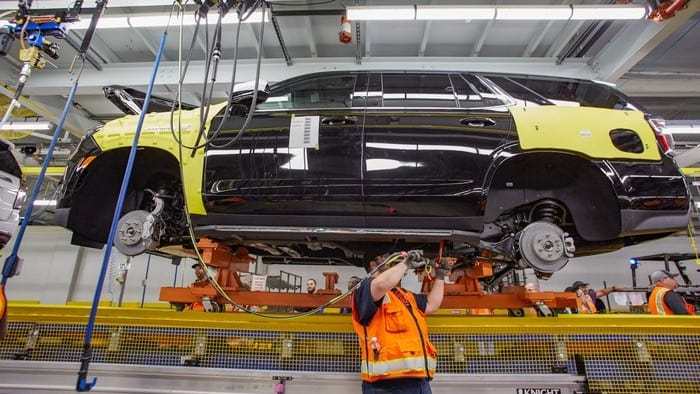
  • General Motors (NYSE:GM) profit beats estimates, but chip shortage could cost $2 Billion in 2021

    This article was originally published on Fool.com. All figures quoted in US dollars unless otherwise stated.

    This article was originally published on Fool.com. All figures quoted in US dollars unless otherwise stated.

    General Motors (NYSE: GM) reported a fourth-quarter profit that beat Wall Street’s estimates, but said that an ongoing shortage of semiconductors could shave up to $2 billion from its profits in 2021. 

    GM’s guidance for 2021 calls for an adjusted operating profit between $10 billion and $11 billion, taking into account the net impact of between $1.5 billion and $2 billion resulting from the worldwide chip shortage. 

    About the chip shortage

    GM said on Tuesday that it will extend shutdowns at three of its North American assembly plants until at least mid-March, amid a shortage of chips that has hit auto production in factories around the world. The chip manufacturers have struggled to keep pace with a sharp rise in sales of personal computers amid the COVID-19 pandemic. 

    CEO Mary Barra said on Wednesday that GM is prioritizing production of its pickup trucks and big SUVs, profitable products that are in high demand. The company expects manufacturing of those products to remain on plan through the year, Barra said, and the supply disruptions won’t have any impact on its future-product efforts.

    GM’s fourth-quarter results were good

    On an adjusted basis, excluding one-time items, GM earned $1.93 per share in the fourth quarter on revenue of $37.5 billion. Both numbers exceeded the average estimates of Wall Street analysts polled by Thomson Reuters, which called for adjusted EPS of $1.63 on revenue of $26.12 billion. 

    GM’s results were a significant improvement on the fourth quarter of 2019, which began amid a United Auto Workers strike that idled the company’s U.S. factories. The improvement was driven by good results in North America, as sales of its newest products remained strong despite the pandemic.

    • GM North America earned $2.6 billion in adjusted earnings before interest and tax (“EBIT-adjusted,” in GM-speak) on good sales of pickup trucks and its new full-size SUVs. Margin of 8.7% was an improvement from the strike-battered year-ago result, but was dented a bit by pandemic-related production cuts. 
    • In China, GM’s joint ventures generated $248 million of equity income, up slightly from $239 million a year ago. Sales were up, but competitive pressures hurt pricing, and compliance-related costs dented overall results. 
    • GM Financial, the company’s financial-services subsidiary, earned $1.04 billion in pre-tax profit in the fourth quarter, up from $498 million a year ago. Leverage declined a bit from a year ago (to an 8.0 multiple from 8.3) as liquidity rose to $26.6 billion. 

    Debt, cash, and one-time items

    GM’s automotive business ended 2020 with $22.3 billion in cash and an additional $18.2 billion in available credit lines, for total liquidity of $40.5 billion. Against that, it had $17.5 billion in debt, and another $12.4 billion in underfunded pension liabilities. 

    The company said that it expects “no significant mandatory contributions” to its U.S. pension plans over the next five years. The plans were underfunded by $5.4 billion as of Dec. 31. 

    GM has repaid the full balance of the revolving account it drew down in the spring of 2020, when it idled most of its factories amid the first wave of the pandemic. In addition, it paid off about $800 million of unsecured debt in South America, it said. 

    The automaker had several small one-time items in the fourth quarter, including some small credits and charges related to overseas restructuring and buyouts of some Cadillac dealers that chose not to participate in the brand’s transition to electric vehicles. The net impact was a credit of $5 million. 

    GM said that production of its big (and hugely profitable) SUVs will remain on track this year, despite a semiconductor shortage.

    GM’s full guidance for 2021

    For 2021, the company said that auto investors should expect:

    • EBIT-adjusted between $10 billion and $11 billion. (2020: $9.7 billion. 2019: $8.4 billion.) 
    • Adjusted EPS between $4.50 and $5.25. (2020: $4.90. 2019: $4.82.)
    • Adjusted automotive free cash flow between $1 billion and $2 billion. (2020: $2.6 billion. 2019: $1.1 billion. “Automotive” figures exclude results from GM Financial.)
    • Capital expenditures between $9 billion and $10 billion, on accelerated electric-vehicle investments and deferred spending from 2020. (2020: $5.25 billion. 2019: $7.49 billion.)

    Those figures include GM’s current estimates of the impact of the chip shortage, which it expects will reduce EBIT-adjusted by $1.5 billion to $2 billion, and trim adjusted automotive free cash flow by $1.5 billion to $2.5 billion.

    This article was originally published on Fool.com. All figures quoted in US dollars unless otherwise stated.

    Where to invest $1,000 right now

    When investing expert Scott Phillips has a stock tip, it can pay to listen. After all, the flagship Motley Fool Share Advisor newsletter he has run for more than eight years has provided thousands of paying members with stock picks that have doubled, tripled or even more.*

    Scott just revealed what he believes are the five best ASX stocks for investors to buy right now. These stocks are trading at dirt-cheap prices and Scott thinks they are great buys right now.

    *Returns as of June 30th

    More reading

    The Motley Fool Australia has no position in any of the stocks mentioned. The Motley Fool has a disclosure policy. This article contains general investment advice only (under AFSL 400691). Authorised by Bruce Jackson.

    John Rosevear owns shares of General Motors. The Motley Fool has no position in any of the stocks mentioned. The Motley Fool has a disclosure policy.

    The post General Motors (NYSE:GM) profit beats estimates, but chip shortage could cost $2 Billion in 2021 appeared first on The Motley Fool Australia.

    This article was originally published on Fool.com. All figures quoted in US dollars unless otherwise stated.

    from The Motley Fool Australia https://ift.tt/2MKIylH

  • The Market Herald (ASX:TMH) share price just jumped 85%. Here’s why

    A happy woman looks at her mobile phone and fist pumps, indicating a share price rise

    The Market Herald Ltd (ASX: TMH) share price exploded today. This comes after the company provided an update on the pilot launch of its Australian business television streaming network.

    The Market Herald share price closed the day up an astonishing 85.71% to 78 cents. It’s worth noting that its shares reached an intraday high of 84 cents during midday.

    What did The Market Herald announce?

    The Market Herald share price is rocketing higher as investors are fighting to get a hold of its shares.

    According to its release, The Market Herald advised that the Australian streaming business television network platform saw growth in a number of key metrics. For the period ending 31 December, the company achieved the following:

    • Reached a total audience of 2.3 million content users per month
    • Aggregate total de-duplicated audience of more than 1 million users per month
    • Average daily viewing of 1,231 hours of original content per day
    • Average daily view streams of 500,000 per day
    • Commissioned 2 market news show formats
    • Developed proprietary streaming news playout technology
    • Sold $1.1 million worth of annualised cross-platform sponsorships
    • Received $290,000 in cash receipts during the pilot period.

    The company has attributed these outstanding results to management’s initiative to provide viewers a disruptive delivery model that revitalises business and finance journalism. As a result, this attracted the largest business streaming audience when compared to other well-known brands. This includes Bloomberg, Yahoo Finance, Sky News, MSN Money, Reuters, and others.

    In addition, The Market Herald is also exploring the production launch of Scheduler – a software-as-a-service (SaaS) based cloud subscription platform — in other markets. Management hopes to target the $1 billion global playout workflow market.

    Quick take on The Market Herald

    Based in Australia, The Market Herald operates as multi-platform business and finance news organisation. The company provides share trading and investment management discussions, as well as news and insights for active investors.

    Management commentary

    Jag Sanger, managing director of The Market Herald commented on the company’s achievements:

    The successful launch of our Australian business television streaming network allows us to first target the $1.5bn Australian online video advertising market – and second build unique cross-platform offers for brands to connect with our affluent and influential audience.

    During the pilot period we engaged with well-known financial services brands and signed $1.1m of annualised contracts based on or driven by our video streaming offer.

    Comparison with other brands providing primarily Australian business and finance investor focused news streaming content shows that we have the largest audience by view streams – the most comparable video measurement metric – and the youngest audience. We offer wealth and luxury brands the best way to reach the most affluent and influential audience in Australia.

    The Market Herald share price snapshot

    The Market Herald share price has gained more than 170% in the past month alone, reaching an all-time high.

    Based on the current share price, The Market Herald commands a market capitalisation of roughly $132 million.

    Where to invest $1,000 right now

    When investing expert Scott Phillips has a stock tip, it can pay to listen. After all, the flagship Motley Fool Share Advisor newsletter he has run for more than eight years has provided thousands of paying members with stock picks that have doubled, tripled or even more.*

    Scott just revealed what he believes are the five best ASX stocks for investors to buy right now. These stocks are trading at dirt-cheap prices and Scott thinks they are great buys right now.

    *Returns as of June 30th

    More reading

    Motley Fool contributor Aaron Teboneras has no position in any of the stocks mentioned. The Motley Fool Australia has no position in any of the stocks mentioned. The Motley Fool has a disclosure policy. This article contains general investment advice only (under AFSL 400691). Authorised by Bruce Jackson.

    The post The Market Herald (ASX:TMH) share price just jumped 85%. Here’s why appeared first on The Motley Fool Australia.

    from The Motley Fool Australia https://ift.tt/2Z5b83B

  • ASX 200 drops slightly, Telstra rises, AMP sinks

    ASX 200

    The S&P/ASX 200 Index (ASX: XJO) fell by 0.1% today to 6,850 points.

    Here are some of the highlights from the ASX:

    Telstra Corporation Ltd (ASX: TLS)

    The Telstra share price went up around 3% after reporting its FY21 half-year result.

    Telstra reported that its total income fell 10.4% to $12 billion. On a reported basis, earnings before interest, tax, depreciation and amortisation (EBITDA) fell 14.7% to $4.1 billion and adjusted for lease accounting, EBITDA declined 11.7% to $4 billion.

    Looking at underlying EBITDA, it decreased by 14.2% to $3.3 billion. Telstra explained that the largest two contributors to this decline were the estimated impact from the in-year NBN headwind of $370 million and an estimated $170 million impact from COVID-19. Excluding both of these, Telstra said that underlying EBITDA was broadly flat compared to the first half of FY20.

    One area that Telstra continues to see growth with is its mobile division. During the half, Telstra added more than 80,000 postpaid handheld mobile services with “healthy performance” across all segments and brands. It also added more than 46,000 unique prepaid handheld users and more than 163,000 wholesale mobile services.

    However, Telstra said that mobile revenue declined due to lower hardware sales and the impact of international roaming from COVID-19.

    The Telstra board declared an interim dividend of 8 cents per share and expect the annual dividend to be 16 cents per share.

    Telstra now expects full year income for FY21 to be in the range of $22.6 billion to $23.2 billion and underlying EBITDA in the range of $6.6 billion to $6.9 billion.

    Magellan Financial Group Ltd (ASX: MFG)

    Magellan revealed its FY21 half-year result. It said that average funds under management (FUM) went up 9% to $100.9 billion, with management and service fees revenue up 8% to $311.4 million. Profit before tax and performance fees of the funds management business went up 8% to $256.2 million.

    Net profit after tax grew 3% to $202.3 million, whilst adjusted net profit after tax fell 2% to $213.1 million.

    Magellan said that it expects the funds management business expenses in FY21 to be at the lower end of the $110 million to $115 million range.

    The ASX 200 dividend share gave an insight into how its investments in Barrenjoey and Guzman y Gomez are going. Guzman y Gomez has $410 million of annualised global sales, with $387 million of annualised Australian sales. Australian like for like sales growth was 27% in FY21 to date. Barrenjoey has welcomed David Gonski as the independent chair. The Barrenjoey advisory business has been operating since late 2020. The markets businesses are due to go live progressively from the second quarter of 2021.

    For the first half of FY21, Magellan decided to increase the interim dividend by 5% to 97.1 cents per share.

    AMP Limited (ASX: AMP)

    The diversified financial business reported its FY20 result to investors today.

    AMP advised that Ares does not intend to proceed with its takeover offer of AMP for a price of $1.85. The company said that it continues to engage constructively with Ares in relation to AMP Capital as part of the portfolio review.

    The company said that its underlying net profit was down 33% to $295 million, reflecting the impacts of COVID-19 on clients, AMP and the broader economy and financial markets. The FY20 statutory profit was $177 million, reversing the $2.5 billion loss in FY19.

    AMP’s assets under management (AUM) in Australian wealth management was down 8% and in AMP Capital was down 7%.

    The ASX 200 company decided not to declare a dividend, though it did have $521 million of surplus capital at 31 December 2020.

    AMP said that 80% of the client remediation is now complete. It’s on schedule to be fully complete in the middle of 2021.

    The review of the business confirmed the best outcome for shareholders is the transformation of the Australian wealth management and AMP bank, as well as the New Zealand wealth management businesses. It’s reviewing options for AMP Capital.

    Where to invest $1,000 right now

    When investing expert Scott Phillips has a stock tip, it can pay to listen. After all, the flagship Motley Fool Share Advisor newsletter he has run for more than eight years has provided thousands of paying members with stock picks that have doubled, tripled or even more.*

    Scott just revealed what he believes are the five best ASX stocks for investors to buy right now. These stocks are trading at dirt-cheap prices and Scott thinks they are great buys right now.

    *Returns as of June 30th

    More reading

    Motley Fool contributor Tristan Harrison owns shares of Magellan Financial Group. The Motley Fool Australia owns shares of and has recommended Telstra Limited. The Motley Fool has a disclosure policy. This article contains general investment advice only (under AFSL 400691). Authorised by Bruce Jackson.

    The post ASX 200 drops slightly, Telstra rises, AMP sinks appeared first on The Motley Fool Australia.

    from The Motley Fool Australia https://ift.tt/3a74T5y

  • Why the GrainCorp (ASX:GNC) share price has climbed today

    asx rural real estate shares represented by green up trending arrow sitting in a field of green crops

    The Graincorp Ltd (ASX: GNC) share price zoomed up today after the company provided earnings guidance for its 2021 financial year in an update to the market.

    Shares in the Australian grain company opened 5.8% higher at $4.93 this morning. Since then, the Graincorp share price has trended downwards, trading at $4.75 at the time of writing.

    Details from the guidance

    In today’s guidance, Graincorp advised it expects to report FY21 underlying earnings before interest, tax, depreciation and amortisation (EBITDA) of $230 million to $270 million. This would suggest an increase of 113% from FY20’s EBITDA of $108 million on the low range estimate.

    The company also expects net profit after tax (NPAT) for FY21 will come in at $60 million to $85 million. In comparison, Graincorp reported a net loss of $16 million on its FY20 results.

    The company added that this would include the $70 million maximum payment threshold, payable by Graincorp, under the crop production contract.

    Graincorp CEO commentary

    Commenting on the guidance, Graincorp CEO Robert Spurway said:

    We experienced near optimal conditions across much of eastern Australia during the recent winter cropping season and this has translated into one of the largest crops in recent history.

    The business reportedly has recorded its largest grain receivals in recent history, hitting 13.9 million tonnes. This figure is even greater than Graincorp’s last season of bumper crops in 2016-17, which amounted to 12.9 million tonnes.

    Keeping with the times

    In its AGM presentation also released today, Graincorp noted that the company has remained resilient to COVID-19 impacts by accelerating contactless deliveries via its digital offerings CropConnect and FastWeigh.

    The presentation said 10,000 grain growers were now registered on the CropConnect platform.

    Graincorp share price snapshot

    The Graincorp share price has gained 10% over the past 12 months. For comparison, the S&P/ASX 200 Index (ASX: XJO) is down 3.3% in the same period.

    In late March of 2020, the company experienced its 52-week low, clocking in at $2.90. That means the Graincorp share price has appreciated 63.4% since March last year.

    Based on the current Graincorp share price, the company has a market capitalisation of $1.07 billion.

    Where to invest $1,000 right now

    When investing expert Scott Phillips has a stock tip, it can pay to listen. After all, the flagship Motley Fool Share Advisor newsletter he has run for more than eight years has provided thousands of paying members with stock picks that have doubled, tripled or even more.*

    Scott just revealed what he believes are the five best ASX stocks for investors to buy right now. These stocks are trading at dirt-cheap prices and Scott thinks they are great buys right now.

    *Returns as of June 30th

    More reading

    Motley Fool contributor Mitchell Lawler has no position in any of the stocks mentioned. The Motley Fool Australia has no position in any of the stocks mentioned. The Motley Fool has a disclosure policy. This article contains general investment advice only (under AFSL 400691). Authorised by Bruce Jackson.

    The post Why the GrainCorp (ASX:GNC) share price has climbed today appeared first on The Motley Fool Australia.

    from The Motley Fool Australia https://ift.tt/2Z58Xgn

  • Here’s why the Doctor Care Anywhere (ASX:DOC) share price gained 57% in two months

    increase in asx medical software share price represented by doctor making excited hands up gesture

    The Doctor Care Anywhere Ltd (ASX: DOC) share price has shot up roughly 57% since early December 2020. During today’s trading, it’s dipped 0.74% and is presently trading at $1.34.

    Doctor Care Anywhere is a company which offers a range of telehealth services. Its services include 24-hour GP access by video or phone call.

    Access to telehealth services has become of particular importance as communities continue navigating through the coronavirus

    Let’s take a look at what’s been moving the Doctor Care share price over these past few months.

    Doctor Care Anywhere signs deal with Allianz

    On 22 December 2020, Doctor Care Anywhere announced it was entering a strategic partnership with Allianz Partners international health line of business.

    The Doctor Care share price started climbing after this and gained approximately 4% over the following 2 weeks.

    The agreement with Allianz allows Allianz Partners international private medical insurance (iPMI) holders to access Doctor Care Anywhere consultations for a fixed price.

    Commenting on the deal, Dr. Bayju Thakar, Founder & CEO of Doctor Care Anywhere, said:

    “We are thrilled by the opportunity to work with another world leading insurer; this is further recognition of the value that the Doctor Care Anywhere platform brings to patients, payors and providers. Being engaged by Allianz Partners adds to the company’s growth trajectory and supports our ability to service patient needs globally. This agreement is integral to our strategic plans for 2021 and beyond, helping us to deliver joined-up, accessible, quality health and disease care in the UK and globally.”

    Share price bumps following quarterly results

    After the release of the company’s quarterly results on 27 January 2021, the Doctor Care Anywhere share price fired up 6% stronger.

    Quarterly highlights included a 151% increase in revenue to 3.8 million pounds.

    Part of the driving force behind this gain was the total number of patients entitled to Doctor Care Anywhere services, referred to as ‘Eligible Lives’.

    The 4Q21 ‘Eligible Lives’ total was 2.2 million people. This was a 186% increase compared to 4Q20. 

    The company reported cash of 38.4 million pounds as of 31 December 2020.

    The Doctor Care Anywhere share price has climbed around 22% over the previous 12 month period.

    Where to invest $1,000 right now

    When investing expert Scott Phillips has a stock tip, it can pay to listen. After all, the flagship Motley Fool Share Advisor newsletter he has run for more than eight years has provided thousands of paying members with stock picks that have doubled, tripled or even more.*

    Scott just revealed what he believes are the five best ASX stocks for investors to buy right now. These stocks are trading at dirt-cheap prices and Scott thinks they are great buys right now.

    *Returns as of June 30th

    More reading

    Motley Fool contributor Gretchen Kennedy has no position in any of the stocks mentioned. The Motley Fool Australia has no position in any of the stocks mentioned. The Motley Fool has a disclosure policy. This article contains general investment advice only (under AFSL 400691). Authorised by Bruce Jackson.

    The post Here’s why the Doctor Care Anywhere (ASX:DOC) share price gained 57% in two months appeared first on The Motley Fool Australia.

    from The Motley Fool Australia https://ift.tt/3qeiYnE

  • 3 reasons why the Rio Tinto (ASX:RIO) share price is up today

    3 reasons for asx 200 share price rise represented by hand holding up 3 fingers

    The Rio Tinto Limited (ASX: RIO) share price is on the rise today, currently trading 1.3% higher at $119 a share.

    Here are 3 reasons why the Rio Tinto share price could be getting a lift at the moment.

    Rio Tinto dividend is on the way

    With the miner’s annual results release scheduled for 17 February 2021, eager investors are already anticipating the next Rio Tinto dividend. The dividend record date is 5 March 2021.

    With the price of iron ore still on fire, the Australian Financial Review reported that a record dividend payout is expected from Rio Tinto. Consensus forecasts are predicting a $4.20 interim dividend.

    UBS has also forecast a record dividend for Fortescue Metals Group Limited (ASX: FMG), predicting a dividend of $1.45 a share.

    Eased tensions with traditional landowners

    Following a conflict based on the destruction of a 46,000-year-old heritage site, Rio Tinto has managed to break bread with the Puutu Kunti Kurrama and Pinikura people (PKKP).

    According to The Australian, the PKKP felt there was a breach of trust following Rio Tinto’s recent unveiling of a new executive team. Initially, there were perceptions that this was a move to mislead the PKKP Board and Elders.

    While Rio Tinto admits that the company had ‘fresh misteps’ regarding its communications with the PKKP, it maintains that the focus remains rebuilding a relationship with the PKKP.

    The PKKP has since released the following statement:

    “The PKKP acknowledges that it was not the intention of the Rio Tinto Chairman Simon Thompson to mislead the PKKP Board and Elders at the joint board meeting.”

    Rio Tinto share price creeps up as new team takes effect

    As mentioned, on 28 January 2021, the company announced the appointment of a new executive team. Since this information was released, the Rio Tinto share price has crept up about 6.5%.

    As part of the restructure, the company appointed Jakob Stausholm as permanent chief executive officer of Rio Tinto’s iron ore business.

    Commenting on his appointment, Mr Stausholm said:

    While Rio Tinto continues to deliver strong safety and operational performance, despite the ongoing challenges of COVID-19, there are improvements we can achieve across the business to make Rio Tinto more resilient, and an even stronger performer and employer. I want to re-establish Rio Tinto as a trusted partner for host communities, governments and other stakeholders.

    The Rio Tinto share price is up roughly 19% over the past 12 months. The mining giant has a market capitalisation of approximately $43.6 billion and 1.6 billion shares outstanding.

    Where to invest $1,000 right now

    When investing expert Scott Phillips has a stock tip, it can pay to listen. After all, the flagship Motley Fool Share Advisor newsletter he has run for more than eight years has provided thousands of paying members with stock picks that have doubled, tripled or even more.*

    Scott just revealed what he believes are the five best ASX stocks for investors to buy right now. These stocks are trading at dirt-cheap prices and Scott thinks they are great buys right now.

    *Returns as of June 30th

    More reading

    Motley Fool contributor Gretchen Kennedy has no position in any of the stocks mentioned. The Motley Fool Australia has no position in any of the stocks mentioned. The Motley Fool has a disclosure policy. This article contains general investment advice only (under AFSL 400691). Authorised by Bruce Jackson.

    The post 3 reasons why the Rio Tinto (ASX:RIO) share price is up today appeared first on The Motley Fool Australia.

    from The Motley Fool Australia https://ift.tt/2Z5jBUv

  • What’s with the Xero (ASX:XRO) share price drop today?

    asx share price fall represented by lady in striped tshirt making sad face against orange background

    The S&P/ASX 200 Index (ASX: XJO) is having a pretty flat day today. At the time of writing, the ASX 200 is down a measly 0.08% to 6,851 points.

    One ASX growth share is faring a little worse, though. The Xero Limited (ASX: XRO) share price is down 2.58% at the time of writing to $130.38 a share. Xero shares closed at $133.81 yesterday but opened at $133.47 this morning and have trended lower ever since.

    Today’s move continues a trend in 2021 – a year that has surprisingly not been a good one for Xero. Since the start of the year, Xero shares are down 12%. In fact, Xero has fallen more than 15% since its last all-time high back in December.

    To be fair, Xero did have a corker of a year in 2020, rising roughly 85% over the year. But still, the ASX 200 is up 2.7% in 2021, while Xero is down almost 12%.

    So what’s going on today?

    Well, there are no major announcements out of Xero recently. Apart from some routine stock issuance notices (unlikely to move the market). But an interesting report from the Australian Financial Review (AFR) today might have something to do with Xero’s movements.

    MYOB told to mind its own competition

    The AFR reports that Xero’s competitor MYOB has run into trouble with the Australian Competition and Consumer Commission (ACCC) regarding a potential acquisition.

    MYOB is proposing to acquire the Australian arm of GreatSoft, a South African-based company. GreatSoft offers a cloud-based accounting software model that can integrate with other software, including Xero’s. MYOB used to be an ASX-listed company but was acquired by the private equity group KKR a few years ago.

    The ACCC has outlined preliminary competition concerns over the proposed deal. It stated that “we are concerned that if MYOB acquired GreatSoft, there would only be three major suppliers of practice management software to medium-to-large accounting firms”.

    Typically, an announcement that one of Xero’s rivals is being hampered by the ACCC might cause investors to assume it would benefit Xero. But perhaps investors are worried that the ACCC’s assessment of the accounting software market as potentially uncompetitive might spill over to Xero in the future.

    Or perhaps investors are simply continuing to take profits off the table after Xero’s stellar year last year. The company does have an eye-watering price-to-earnings (P/E) ratio of 548 on current prices. That could be making some investors uneasy.

    Whatever the reason for Xero’s poor share price performance today, all we know for certain is that investors are getting jittery.

    Where to invest $1,000 right now

    When investing expert Scott Phillips has a stock tip, it can pay to listen. After all, the flagship Motley Fool Share Advisor newsletter he has run for more than eight years has provided thousands of paying members with stock picks that have doubled, tripled or even more.*

    Scott just revealed what he believes are the five best ASX stocks for investors to buy right now. These stocks are trading at dirt-cheap prices and Scott thinks they are great buys right now.

    *Returns as of June 30th

    More reading

    Motley Fool contributor Sebastian Bowen has no position in any of the stocks mentioned. The Motley Fool Australia owns shares of Xero. The Motley Fool has a disclosure policy. This article contains general investment advice only (under AFSL 400691). Authorised by Bruce Jackson.

    The post What’s with the Xero (ASX:XRO) share price drop today? appeared first on The Motley Fool Australia.

    from The Motley Fool Australia https://ift.tt/372I94S