Tag: Motley Fool

  • How to make a yearly income of $60,000 from ASX shares

    income dividend shares

    It is possible to create a yearly income of $60,000 of dividends from ASX shares, if compound interest can be utilised.

    How compounding can help

    Albert Einstein once supposedly said about compound interest: “Compound interest is the eight wonder of the world. He who understands it, earns it, he who doesn’t, pays it.”

    Compounding in financial terms means when your money earns interest and then that interest earns interest. It builds like a snowball.

    With a 5% interest rate, a single $100 investment will only make $5 over one year. But if that $100 is given 10 years to grow at a 5% interest rate, and the money is re-invested each year, then it grows to $163. It takes less than 15 years for the $100 to double to be $200.

    Over the long-term, the ASX share market has returned around 10% per annum over the decades.

    According to Vanguard, Australian shares have produced returns of 9.6% per annum since 1970.

    There are various compound interest calculators. Moneysmart has one.

    If an investor put $10,000 into the ASX share market and it returned 10% per annum over the next two decades then it would turn into just over $73,000 over the next two decades. That’s assuming that no other investments are made.

    Most employees make at least quarterly investments into their superannuation funds through their employer. Some people also decide to invest regularly into shares outside of superannuation.

    If that same investor put in the $10,000 at the start and then invested $200 every month for the next 20 years, with the ASX share market making returns of 10% per annum, then it turns into $225,000 over 20 years.

    There are many different scenarios that you can play around with using the calculator.

    If the investor put in $1,000 a month instead of $200 a month then they’d have $832,650 after that 20 year period.

    Where does the $60,000 of yearly dividends come in?

    Given enough time and contributions, it is possible that the portfolio value would be well in excess of $1 million. That portfolio could generate dividends each year.

    For example, if a 25-year old decided to invest $1,000 a month into the ASX share market over the next 25 years until they were 50 and the share market returned 10% per annum then it would turn into a portfolio worth $1.45 million.

    If the portfolio were invested in ASX shares that had an overall dividend yield of 4.5% then it would generate $65,250 of dividends each year (which is actually more than $60,000).

    Many ASX shares have a unique advantage in relation to dividends because of the Australian taxation system which generates franking credits for companies that pay corporate tax.

    As the Australian Taxation Office (ATO) states: “Dividends paid to shareholders by Australian resident companies are taxed under a system known as imputation. This is where the tax the company pays is imputed, or attributed, to the shareholders. The tax paid by the company is allocated to shareholders as franking credits attached to the dividends they receive.

    If you are an Australian resident, it will “reduce your tax liability from all forms of income (not just dividends) and from your taxable net capital gain” and/or “refund any excess franking to you after any income tax and Medicare levy liabilities have been met.”

    The franking credits have the effect of boosting the after-tax dividend yield from ASX shares.

    The 4.5% yield is just one example yield. If the dividend yield of the portfolio is lower, then it requires a higher portfolio value to generate the same amount of dividends. If the dividend yield of the portfolio is higher then the required portfolio value to generate the same amount of dividends is lower. Getting back to the $60,000 dividend target, a simple example would be a $1 million portfolio with a 6% dividend yield would make $60,000 of annual dividends. 

    Where to invest $1,000 right now

    When investing expert Scott Phillips has a stock tip, it can pay to listen. After all, the flagship Motley Fool Share Advisor newsletter he has run for more than eight years has provided thousands of paying members with stock picks that have doubled, tripled or even more.*

    Scott just revealed what he believes are the five best ASX stocks for investors to buy right now. These stocks are trading at dirt-cheap prices and Scott thinks they are great buys right now.

    *Returns as of June 30th

    More reading

    Motley Fool contributor Tristan Harrison has no position in any of the stocks mentioned. The Motley Fool Australia has no position in any of the stocks mentioned. The Motley Fool has a disclosure policy. This article contains general investment advice only (under AFSL 400691). Authorised by Bruce Jackson.

    The post How to make a yearly income of $60,000 from ASX shares appeared first on The Motley Fool Australia.

    from The Motley Fool Australia https://ift.tt/3aCIIU2

  • 2 ASX dividend shares with yields above 4%

    piles of australian one hundred dollar notes

    Some of the dividend shares on the ASX have yields of more than 4%.

    The Reserve Bank of Australia (RBA) interest rate is now just 0.1%, which is almost as close to 0% as you can go.

    There are some businesses that currently have yields which are much higher than the RBA interest rate. The below businesses were among the few that increased their income payments to investors during the 2020 calendar year:

    Brickworks Limited (ASX: BKW)

    Brickworks increased its FY20 dividend by 4% to 59 cents per unit. That means at the current Brickworks share price it has a grossed-up dividend yield of 4.2%.

    The business hasn’t cut its dividend since 1976.

    The ASX dividend share funds its dividend from two core asset groups. The first area of long-term support for the Brickworks dividend is the holding of Washington H. Soul Pattinson and Co. Ltd (ASX: SOL) shares. Major investments of Soul Patts include Brickworks, TPG Telecom Ltd (ASX: TPG), New Hope Corporation Limited (ASX: NHC) and Australian Pharmaceutical Industries Ltd (ASX: API).

    Soul Patts has a diversified asset exposure to various industries including telecommunications, financial services, mining, energy, pharmaceuticals, agriculture and swimming schools.

    Soul Patts is an ASX dividend share with the longest dividend record on the ASX, having increased its dividend to shareholders every single year since 2000.

    Brickworks expects Soul Patts to continue to deliver a growing stream of earnings and dividends over the long term.

    The other dividend-supporting segment of Brickworks is its joint venture property trust where the development activity at Oakdale West continues at an “unprecedented” scale.

    Brickworks says that the trend towards online shopping, and demand for more sophisticated facilities will drive growth. It has enough land left for at least a 5-year development pipeline.

    At the moment there are two large-scale warehouses being built at Oakdale West. One for Amazon and one for Coles Group Ltd (ASX: COL). After these facilities are completed over the next couple of years, it’s expected to increase the gross assets of the trust to more than $3 billion and the net rental distributions to Brickworks are expected to increase by more than 25%.

    Charter Hall Long WALE REIT (ASX: CLW)

    This is an ASX dividend share operating as a real estate investment trust (REIT).

    It describes itself as Australia’s largest and most diversified long weighted average lease expiry (WALE) REIT.

    Charter Hall Long WALE REIT is invested across various assets including telco exchanges, agri-logistics, industrial, office and long WALE retail.

    It owns over 450 properties that are worth more than $4 billion and its occupancy rate is above 97%. The WALE is around 14 years, which is among the longest on the ASX.

    The ASX dividend shares have a number of major tenants including Telstra Corporation Ltd (ASX: TLS), Australian government entities, BP, Woolworths Group Ltd (ASX: WOW), Inghams Group Ltd (ASX: ING), Coles, Metcash Limited (ASX: MTS), Arnott’s Group, Westpac Banking Corp (ASX: WBC) and Wesfarmers Ltd’s (ASX: WES) Bunnings.

    In FY21 the REIT is expecting operating earnings per share (EPS) of no less than 29.1 cents per security, which translates to a yield of 6.2%.

    Where to invest $1,000 right now

    When investing expert Scott Phillips has a stock tip, it can pay to listen. After all, the flagship Motley Fool Share Advisor newsletter he has run for more than eight years has provided thousands of paying members with stock picks that have doubled, tripled or even more.*

    Scott just revealed what he believes are the five best ASX stocks for investors to buy right now. These stocks are trading at dirt-cheap prices and Scott thinks they are great buys right now.

    *Returns as of June 30th

    More reading

    Motley Fool contributor Tristan Harrison owns shares of Washington H. Soul Pattinson and Company Limited. The Motley Fool Australia owns shares of and has recommended Brickworks, Telstra Limited, and Washington H. Soul Pattinson and Company Limited. The Motley Fool Australia owns shares of COLESGROUP DEF SET, Wesfarmers Limited, and Woolworths Limited. The Motley Fool has a disclosure policy. This article contains general investment advice only (under AFSL 400691). Authorised by Bruce Jackson.

    The post 2 ASX dividend shares with yields above 4% appeared first on The Motley Fool Australia.

    from The Motley Fool Australia https://ift.tt/2Mx6I30

  • To short or not to short? GameStop (NYSE:GME) ripple effect endures

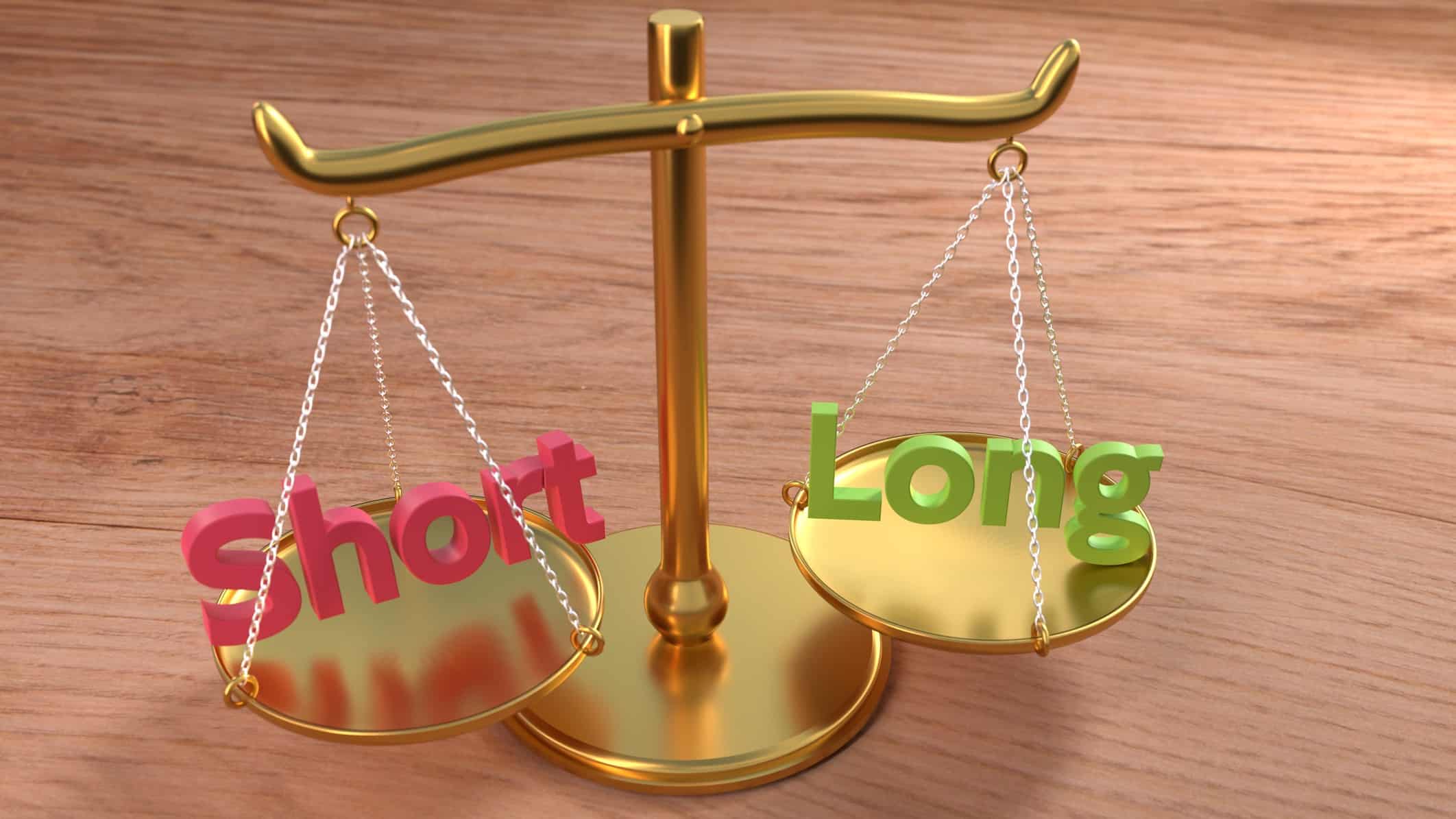
    asx shares short sell represented by set of scales with the word short on one side and long on the other

    The mania over gaming vendor GameStop Corp (NYSE: GME)’s wild share price rise and subsequent fall is fading almost as quickly as it began.

    But the wider implications of the Reddit army’s ability to influence share markets isn’t likely to go away soon.

    In case you’re just tuning in (from, say, Mars) the Reddit army is the cohort of retail investors using social media groups like WallStreetBets to coordinate their investment plans. Their initial targets were short sellers, mostly hedge funds, who hope to profit when a company’s share price falls.

    In an oversimplified nutshell, short selling is generally done by selling borrowed shares with the intent to buy them back later at a lower price. The short seller then returns the shares and pockets the difference, minus the borrowing fee paid.

    As one of the most shorted shares, GameStop was one of the stocks the Reddit crowd snapped up, driving the price through the roof. Hedge funds were forced to cover their positions, buying shares and further fuelling the price gains.

    By the time the GameStop share price peaked last week, on 27 January, it was up 1,915% in 2021.

    Then reality hit. And the losses started hitting hard.

    The GameStop share price crashed 42% again yesterday (overnight Aussie time). And it’s down another 8% in overnight trading. Investors who bought at the 27 January high are now nursing losses of 85%.

    Ouch!

    GameStop’s permanent implications

    According to Andrew Macken, fund manager of Montaka Global Investments (quoted by the Australian Financial Review):

    This is a new world now. No-one imagined a GameStop could happen. This will have permanent implications for how short portfolios are managed within the professional long short industry.

    Macken’s solution? He’s now mostly shorting exchange-traded fund (ETF) indexes instead, reducing the stock specific risks that could see a shorted share rise by the likes of 1,915%.

    So, what kind of presence do retail investors have on the ASX? According to Morgan Stanley analyst Chris Nicol, online retail investors represented 11% of the market’s total turnover and 9% of total trades in January.

    Short sellers digging in

    While some short sellers took a bath during the Reddit army’s attack on their positions, hedge funds as a whole aren’t throwing in the towel.

    As Bloomberg reports:

    On the short side, they’re targeting some of last year’s best performers — those with businesses that will be less robust once people return to their pre-pandemic routines — as well as industries that may languish because of altered consumer tastes or habits, such as movie-theater operators like AMC.

    Addressing the unprecedented run higher in shares like GameStop and entertainment and movie company AMC Entertainment Holdings Inc (NYSE: AMC), Hampton Road Capital Management founder John Thaler said:

    You’ve had a very unhealthy abandonment of discipline around valuation. If something happens to pop the bubble, these investors will retreat and it will have a cascading effect — with losses begetting more losses.

    South Korea’s short selling ban puts sharemarket on thin ice

    South Korea imposed a ban on short selling during the COVID-driven share market meltdown last March. While that may have saved some short-term investor pain, many analysts fear that, in the end, this could cause more harm than good.

    As Bloomberg reports:

    A growing number of fund managers and traders are worried that South Korea’s pandemic-imposed ban on short-selling, the world’s longest-such restriction, has artificially propped up the country’s stock market rally.

    Jeon Kyung-Dae is the chief investment officer for equities at Macquarie Investment Management Korea. Jeon highlights that with Korea’s ban on short selling “bearish bets on overvalued stocks are now being delayed and accumulated… That means there will be a short-term shock in Korea equities when the short-selling is available for all stocks.”

    Vince Lorusso is a fund manager at Changebridge Capital in the US city of Boston. According to Lorusso, who runs an equity long-short exchange-traded fund:

    We don’t see a lot of evidence that banning short selling improves market liquidity or reduces volatility. To ban short-selling would take away a valuable market tool for price discovery and a range of other things.

    Could the Reddit army turn about-face?

    Could the Reddit army turn about-face and opt to short sell themselves?

    According to Bloomberg, “some options experts say the message-board masses could exploit this so-called gamma squeeze in reverse, by weaponizing puts to power a sell-off”.

    The ‘gamma squeeze’ in question here has to do with the options markets. During the massive run up in the share prices of stocks like GameStop, many retail traders were buying call options. A call option gives you the right but no obligation to buy a certain number of shares at a predetermined price within a set time frame.

    With call options on shares like GameStop and AMC soaring, dealers were forced to buy the shares to hedge their exposures. That only drove the share prices higher.

    The same, some analysts worry, could happen in reverse if the retail army buys put options on a certain share. A put option gives you the right, but no obligation, to sell a certain number of shares at a predetermined price within a set time frame.

    That could see options dealers having to sell shares that are already under pressure, turbocharging any losses.

    According to Cem Karsan, founder of Aegea Capital Management LLC, “Put buying en masse would add to dealers’ short put positioning and could create much more severe structural leverage imbalance to the downside.”

    In case you’re wondering, the most shorted share on the S&P/ASX 200 Index (ASX: XJO) this week was Webjet Limited (ASX: WEB), with a short interest of 14.2% on Monday.

    Where to invest $1,000 right now

    When investing expert Scott Phillips has a stock tip, it can pay to listen. After all, the flagship Motley Fool Share Advisor newsletter he has run for more than eight years has provided thousands of paying members with stock picks that have doubled, tripled or even more.*

    Scott just revealed what he believes are the five best ASX stocks for investors to buy right now. These stocks are trading at dirt-cheap prices and Scott thinks they are great buys right now.

    *Returns as of June 30th

    More reading

    Motley Fool contributor Bernd Struben has no position in any of the stocks mentioned. The Motley Fool Australia owns shares of and has recommended Macquarie Group Limited and Webjet Ltd. The Motley Fool has a disclosure policy. This article contains general investment advice only (under AFSL 400691). Authorised by Bruce Jackson.

    The post To short or not to short? GameStop (NYSE:GME) ripple effect endures appeared first on The Motley Fool Australia.

    from The Motley Fool Australia https://ift.tt/2O2IZI8

  • These were the worst performing ASX 200 shares last week

    asx shares falling lower represented by investor wearing paper bag on head with sad face

    The S&P/ASX 200 Index (ASX: XJO) was back on form last week and charged notably higher. The benchmark index jumped 3.5% over the five days to end the period at 6,840.5 points.

    Unfortunately, not all shares were able to climb higher with the market last week. Here’s why these were the worst performing ASX 200 shares last week:

    Worley Ltd (ASX: WOR)

    The Worley share price was the worst performer on the ASX 200 last week with an 8.3% decline. Investors were selling the engineering company’s shares following the release of a trading update. That update revealed that Worley’s performance has been impacted very negatively by COVID-19. As a result of these COVID headwinds and a stronger Australian dollar, Worley revealed that it expects to report half year aggregated revenue of $4.4 billion to $4.5 billion and underlying EBITA of $200 million to $210 million. This is down materially on the $5,998 million and $366 million, respectively, it reported in the prior corresponding period.

    Northern Star Resources Ltd (ASX: NST)

    The Northern Star share price wasn’t far behind with a 7.6% decline over the five days. This appears to be related to the company’s merger with Saracen Mineral, which completed last week. The transaction will create a new top 10 global gold major with immediate production of 1.6 million ounces per annum and a pathway to 2 million ounces. A decent pullback in the spot gold price last week also weighed on its performance.

    Unibail-Rodamco-Westfield CDI (ASX: URW)

    The Unibail-Rodamco-Westfield share price was out of form last week and dropped 7.4%. This decline appears to have been the result of profit taking after a strong rise a week earlier. That rise was driven indirectly by a short squeeze initiated by traders from Reddit in the United States. The shopping centre operator had a high level of its shares held short last month.

    Service Stream Limited (ASX: SSM)

    The Service Stream share price was a poor performer and dropped 6.8% over the period. This also appears to have been driven by profit taking after a strong gain by the essential network services company’s shares last week. That followed news that it had won a major contract with telco giant Telstra Corporation Ltd (ASX: TLS).

    This Tiny ASX Stock Could Be the Next Afterpay

    One little-known Australian IPO has doubled in value since January, and renowned Australian Moonshot stock picker Anirban Mahanti sees a potential millionaire-maker in waiting…

    Because ‘Doc’ Mahanti believes this fast-growing company has all the hallmarks of genuine Moonshot potential, forget ‘buy now pay later’, this stock could be the next hot stock on the ASX.

    Doc and his team have published a detailed report on this tiny ASX stock. Find out how you can access what could be the NEXT Afterpay today!

    Returns as of 6th October 2020

    More reading

    Motley Fool contributor James Mickleboro has no position in any of the stocks mentioned. The Motley Fool Australia owns shares of and has recommended Telstra Limited. The Motley Fool Australia has recommended Service Stream Limited. The Motley Fool has a disclosure policy. This article contains general investment advice only (under AFSL 400691). Authorised by Bruce Jackson.

    The post These were the worst performing ASX 200 shares last week appeared first on The Motley Fool Australia.

    from The Motley Fool Australia https://ift.tt/3rqScbD

  • 2 top ETFs to buy next week

    Wooden blocks depicting letters ETF, ASX ETF

    There are some top exchange-traded funds (ETFs) that are producing top returns and may be worth considering.

    One of the benefits of ETFs is that they can provide diversification across a large number businesses or assets in a single investment.

    Here are two ETFs that may be worthy considerations:

    VanEck Vectors Morningstar Wide Moat ETF (ASX: MOAT)

    This particular ETF isn’t talking about castles and moats with water. It’s about finding businesses that research firm Morningstar believes possess sustainable competitive advantages, or ‘wide economic moats’.

    For Morningstar, and the ETF, to make into the ETF’s portfolio, the target companies must be trading at attractive prices relative to Morningstar’s estimate of fair value. Morningstar uses an extensive equity research process to come to that conclusion.

    The businesses that are in this portfolio are entirely from the US, though the underlying earnings of those companies can come from many different countries.

    However, there is diversification through the different sector weightings. At the end of January 2021, healthcare was 19.5% of the portfolio, information technology was 18.7% of the portfolio, financials was 17.3% of the portfolio, industrials was 11.7% of the portfolio, consumer staples was 10.6% of the portfolio and consumer discretionary was 7.4%. Other sectors with smaller allocations include communication services, materials, energy and utilities.

    Looking at the largest holdings at the end of January 2021, they were: John Wiley & Sons, Charles Schwab, Corteva, Cheniere Energy, Wells Fargo, Blackbaud, Intel, Bank of America, Biogen and Constellation Brands.

    In terms of the annual management fee, its yearly cost is 0.49%.

    After those fees, VanEck Vectors Morningstar Wide Moat ETF’s net fees have been an average of almost 15% per annum over the last three years and an average of 17.1% per annum over the last five years.

    Betashares Nasdaq 100 ETF (ASX: NDQ)

    This ETF is about giving investors exposure to 100 of the biggest non-financial businesses listed on the NASDAQ, which is a stock exchange in the US.

    You’ll find many of the world’s biggest technology companies within the holdings of this ETF. On 4 February 2021, the biggest ten positions in the portfolio were: Apple, Microsoft, Amazon, Tesla, Alphabet, Facebook, Nvidia, PayPal, Netflix and Intel.

    But there are many other businesses in the ETF’s holdings which are among the global leaders in their category such as Adobe, Cisco Systems, Broadcom, PepsiCo, Qualcomm, Costco, Starbucks, Advanced Micro Devices, Booking Holdings, Intuitive Surgical, Activision Blizzard, Mondelez International, Zoom, Modern and Docusign.

    Looking at the sector allocation of the portfolio, just under half is invested in IT shares, then there’s 19.2% allocated to consumer discretionary and 18.6% is invested in communication services. Other sectors in the portfolio include healthcare, consumer staples, industrials and utilities.

    The ETF has an annual management fee of 0.48% per annum, which is lower than many active fund managers.

    The net returns of the ETF have been better than the ASX. Over the last year the net return has been 25.8%, over the last three years it has produced average returns per annum of 25.7% and since inception the ETF has returned an average of 21.25% per annum.

    Where to invest $1,000 right now

    When investing expert Scott Phillips has a stock tip, it can pay to listen. After all, the flagship Motley Fool Share Advisor newsletter he has run for more than eight years has provided thousands of paying members with stock picks that have doubled, tripled or even more.*

    Scott just revealed what he believes are the five best ASX stocks for investors to buy right now. These stocks are trading at dirt-cheap prices and Scott thinks they are great buys right now.

    *Returns as of June 30th

    More reading

    Motley Fool contributor Tristan Harrison has no position in any of the stocks mentioned. The Motley Fool Australia owns shares of and has recommended BETANASDAQ ETF UNITS. The Motley Fool Australia has recommended VanEck Vectors Morningstar Wide Moat ETF. The Motley Fool has a disclosure policy. This article contains general investment advice only (under AFSL 400691). Authorised by Bruce Jackson.

    The post 2 top ETFs to buy next week appeared first on The Motley Fool Australia.

    from The Motley Fool Australia https://ift.tt/36Hh339

  • ASX 200 rises 1%, Zip soars, REA reports

    ASX 200

    The S&P/ASX 200 Index (ASX: XJO) went up by 1.1% today to 6,841 points.

    Here are some of the highlights from the ASX:

    REA Group Limited (ASX: REA)

    The real estate business announced its FY21 half-year result today for the period to 31 December 2020.

    It said that revenue was down 2% to $430.4 million. However, operating expenses fell by 13% to $145.8 million. Earnings before interest, tax, depreciation and amortisation (EBITDA) rose by 9% to $290.2 million, including associates. Net profit after tax (NPAT) went up 13% to $172.1 million and earnings per share (EPS) increased by 13% to 130.7 cents.

    The REA Group board decided to increase the interim dividend by 7% to 59 cents.

    The ASX 200 share said that the residential property market has shown continued signs of recovery with national residential listings increasing by 4% for the half, including an increase in Sydney listings of 19%. However, in Melbourne the lockdowns caused first quarter listings to decline by 44%. There was a rebound of listings in the following three months, leading to an overall decrease in the Melbourne market of 11% for the half.

    REA Group said that it had been concentrating on costs, with all cost categories showing a decrease due to a combination of ongoing cost management initiatives, COVID-19 related savings and the deferral of some marketing spend in the second half.

    In January, national residential listings were flat, with an increase in Melbourne of 12% and a decline in Sydney of 1%. The company continues to see strong levels of buyer enquiry, underpinned by low interest rates and healthy bank liquidity.

    REA Group CEO Owen Wilson said: “We have delivered a remarkable first half result, particularly given the Melbourne market came to a virtual standstill during the lockdown. I am proud of the way our teams focused on the things we could control to deliver outstanding customer support and product enhancements to help consumers navigate the disruptions.

    “Australia’s property market appears to be on the march again, showing signs of a strong recovery in November and December. This was fuelled by the easing of COVID-19 restrictions, combined with increasing consumer confidence, record low interest rates and healthy bank liquidity.”

    The REA Group share price went up 1.6% today.

    Splitit Ltd (ASX: SPT)

    The Splitit share price dropped 2% after announcing an agreement for growth with Goldman Sachs.

    Splitit said that it has signed a three-year US$150 million receivables warehouse facility with the US investment bank.

    This doubles the size of Splitit’s existing credit facilities, supporting US and European growth.

    Splitit said that this gives the potential for gross margin expansion by reducing the use of existing shorter term, higher cost funding.

    The CEO of Splitit, Brad Paterson, said: “This large committed facility from Goldman Sachs is a key pillar of our merchant sales volume growth strategy. Demand from merchants in the US and Europe for our funded model has never been stronger, and couple with our existing strong balance sheet, we now have the foundations in place to accelerate our growth plans whilst also driving improved margins.”

    Major market movers

    There were some large movements in the ASX 200 today. The News Corp (ASX: NWS) share price went up 13.2% after reporting its own result.

    Other big gains were the Zip Co Ltd (ASX: Z1P) share price rising by 8%, the Virgin Money UK (ASX: VUK) share price grew by 7.1%, the EML Payments Ltd (ASX: EML) share price rose 7.1% and the Nearmap Ltd (ASX: NEA) share price went up 7%.

    At the red end of the ASX 200, the Janus Henderson Group (ASX: JHG) share price fell 5.6% after making an announcement.

    Where to invest $1,000 right now

    When investing expert Scott Phillips has a stock tip, it can pay to listen. After all, the flagship Motley Fool Share Advisor newsletter he has run for more than eight years has provided thousands of paying members with stock picks that have doubled, tripled or even more.*

    Scott just revealed what he believes are the five best ASX stocks for investors to buy right now. These stocks are trading at dirt-cheap prices and Scott thinks they are great buys right now.

    *Returns as of June 30th

    More reading

    Tristan Harrison has no position in any of the stocks mentioned. The Motley Fool Australia’s parent company Motley Fool Holdings Inc. owns shares of and recommends EML Payments. The Motley Fool Australia’s parent company Motley Fool Holdings Inc. owns shares of ZIPCOLTD FPO. The Motley Fool Australia owns shares of and has recommended Nearmap Ltd. The Motley Fool Australia has recommended EML Payments and REA Group Limited. The Motley Fool has a disclosure policy. This article contains general investment advice only (under AFSL 400691). Authorised by Bruce Jackson.

    The post ASX 200 rises 1%, Zip soars, REA reports appeared first on The Motley Fool Australia.

    from The Motley Fool Australia https://ift.tt/3tuvUI4

  • What sent the Race Oncology (ASX:RAC) share price rocketing 20% today?

    Investor riding a rocket blasting off over a share price chart

    The Race Oncology Ltd (ASX: RAC) share price rocketed 20.98% today, closing the day at $2.48 per share.

    Race Oncology Ltd (RAC) is an Australian pharmaceutical company with developments in the cancer field. The company produces a chemotherapy drug called Bisantrene, which has been the subject of more than 40 phase II clinical studies.

    Today’s gains cap off a big week for the Race Oncology share price, which has boosted more than 45% in the past 5 days.

    While there was no news out of Race Oncology today, its quarterly report was released on 27 January 2021. We take a closer look at the company’s recent performance. 

    A summary of the Race Oncology financials

    In its most recent quarterly report for the period ended 31 December 2020, Race Oncology reported cash and equivalents of $5.58 million, compared with $5.66 million at 30 September 2020. 

    Net outflows were supported by a $262,000 cash injection received from conversion of options and receipt of the $387,000 R&D tax rebate. 

    Operating activities totalled $728,000, a decrease of $115,000 from the prior quarter.

    Race Oncology currently has a market capitalisation of $275.7 million with 129.5 million shares outstanding.

    Race Oncology announces new ‘three pillar’ strategic plan

    Race Oncology also used the quarterly update to announce the company’s new ‘three pillar’ strategic plan.

    The concept behind the plan is to maximise the potential down-streaming from activities related to the company’s Bisantrene treatment. This includes license applications or corporate sales to scaled pharmaceutical companies.

    The company believes the new strategy will “significantly expand” opportunities for Bisantrene while protecting its legacy applications.

    Commenting on the new strategy, Race Oncology CEO Phillip Lynch said:

    The team was excited to share the new Three Pillar strategy at the recent Annual General Meeting. It is the result of a comprehensive review of our core asset, assessing the competitive and commercial environment, and aligning on a goal to actively pursue Bisantrene’s potential as a potent inhibitor of FTO and precision oncology agent. This decision has the potential to unlock significant value for shareholders and the team is progressing the required assessments to ensure we maximise the probability of success.

    FTO stands for fat mass and obesity-associated protein. The company continues to investigate Bisantrene’s use as an FTO inhibitor.

    The Race Oncology share price has exploded more than 780% higher over the past 12 months.

    Where to invest $1,000 right now

    When investing expert Scott Phillips has a stock tip, it can pay to listen. After all, the flagship Motley Fool Share Advisor newsletter he has run for more than eight years has provided thousands of paying members with stock picks that have doubled, tripled or even more.*

    Scott just revealed what he believes are the five best ASX stocks for investors to buy right now. These stocks are trading at dirt-cheap prices and Scott thinks they are great buys right now.

    *Returns as of June 30th

    More reading

    Motley Fool contributor Gretchen Kennedy has no position in any of the stocks mentioned. The Motley Fool Australia has no position in any of the stocks mentioned. The Motley Fool has a disclosure policy. This article contains general investment advice only (under AFSL 400691). Authorised by Bruce Jackson.

    The post What sent the Race Oncology (ASX:RAC) share price rocketing 20% today? appeared first on The Motley Fool Australia.

    from The Motley Fool Australia https://ift.tt/3oORumT

  • 2 fantastic ETFs to buy for strong potential returns

    Block letters 'ETF' on yellow/orange background with pink piggy bank

    If you’re wanting to add some diversification to your portfolio in 2021, then you might want to look at exchange traded funds (ETFs).

    ETFs are a great way to achieve this because they give investors easy access to a large and diverse number of different shares through a single investment.

    With that in mind, listed below are two ETFs which are highly rated. Here’s what you need to know about them:

    BetaShares Global Cybersecurity ETF (ASX: HACK)

    The BetaShares Global Cybersecurity ETF aims to track the performance of an index providing investors with exposure to the leading companies in the growing global cybersecurity sector.

    With cybercrime on the rise, demand for cybersecurity services is expected to increase strongly in the future. And given how this side of the market is heavily under-represented on the ASX at present, BetaShares believes this ETF give investors an easy way to invest in the sector.

    Included in the fund are both global cybersecurity giants and emerging players from a range of global locations. Among its holdings you’ll find Accenture, Cisco, Cloudflare, Crowdstrike, and Okta.

    In respect to the latter, Okta provides large enterprises with workforce identity solutions. Its customer identity and access management (CIAM) solutions ensure an organisation’s remote workforce is who they claim to be and that they only have access to the business applications they need to perform their job.

    Demand for its offering has been growing rapidly over the 12 months as more and more people work from home.

    VanEck Vectors Morningstar Wide Moat ETF (ASX: MOAT)

    Another ETF to look at is the VanEck Vectors Morningstar Wide Moat ETF. This fund gives investors a slice of 48 US-based stocks which are judged to have sustainable competitive advantages or “moats”.

    Historically, companies with moats have generated strong returns for investors. This is why investing in companies with moats is a key investment tenet for Warren Buffett.

    Among the ETF’s holdings you will find global blue chips such as Amazon, American Express, Boeing, Coca-Cola, Microsoft, Pfizer, and Yum! Brands. Over the last 10 years the ETF has outperformed the ASX 200 index materially with an average total return of 18% per annum.

    Where to invest $1,000 right now

    When investing expert Scott Phillips has a stock tip, it can pay to listen. After all, the flagship Motley Fool Share Advisor newsletter he has run for more than eight years has provided thousands of paying members with stock picks that have doubled, tripled or even more.*

    Scott just revealed what he believes are the five best ASX stocks for investors to buy right now. These stocks are trading at dirt-cheap prices and Scott thinks they are great buys right now.

    *Returns as of June 30th

    More reading

    Motley Fool contributor James Mickleboro has no position in any of the stocks mentioned. The Motley Fool Australia owns shares of BETA CYBER ETF UNITS. The Motley Fool Australia has recommended VanEck Vectors Morningstar Wide Moat ETF. The Motley Fool has a disclosure policy. This article contains general investment advice only (under AFSL 400691). Authorised by Bruce Jackson.

    The post 2 fantastic ETFs to buy for strong potential returns appeared first on The Motley Fool Australia.

    from The Motley Fool Australia https://ift.tt/39Q4bcN

  • Brokers name 2 ASX blue chips to buy

    Hand writing Time to Buy concept clock with blue marker on transparent wipe board.

    If you’re wanting to add a few blue chip shares to your portfolio this month, then you might want to check out the ones listed below.

    Here’s why these ASX blue chip shares are highly rated:

    Cochlear Limited (ASX: COH)

    Cochlear is one of the world’s leading implantable hearing device manufacturers. Thanks to its portfolio of high quality devices and its high level of investment in research and development, Cochlear has been growing its sales and earnings at a consistently solid rate over the last decade.

    The good news is that with populations around the world getting older, its target demographic is expanding each year. This, and the industry’s high barriers to entry, bode well for its growth over the next decade or two.

    One broker that is positive on the company is Macquarie. Late last year the broker put an outperform rating and $241.00 price target on its shares. This compares to the latest Cochlear share price of $208.11.

    Telstra Corporation Ltd (ASX: TLS)

    A second ASX blue chip share to consider is Telstra. Due to its improving outlook thanks to the early success of its T22 strategy and the easing NBN headwinds, Telstra has been tipped to return to growth in the not so distant future.

    Before then, Telstra could make some radical changes that will see it split into three separate businesses. Management expects this to allow the company to take advantage of potential monetisation opportunities and unlock value for shareholders.

    Goldman Sachs is positive on the company and currently has a buy rating and $3.80 price target on its shares. The broker is also forecasting a 16 cents per share fully franked dividend in FY 2021 and beyond.

    Based on the current Telstra share price, this would provide investors with a generous 5.1% fully franked dividend yield.

    Where to invest $1,000 right now

    When investing expert Scott Phillips has a stock tip, it can pay to listen. After all, the flagship Motley Fool Share Advisor newsletter he has run for more than eight years has provided thousands of paying members with stock picks that have doubled, tripled or even more.*

    Scott just revealed what he believes are the five best ASX stocks for investors to buy right now. These stocks are trading at dirt-cheap prices and Scott thinks they are great buys right now.

    *Returns as of June 30th

    More reading

    James Mickleboro has no position in any of the stocks mentioned. The Motley Fool Australia’s parent company Motley Fool Holdings Inc. owns shares of Cochlear Ltd. The Motley Fool Australia owns shares of and has recommended Telstra Limited. The Motley Fool Australia has recommended Cochlear Ltd. The Motley Fool has a disclosure policy. This article contains general investment advice only (under AFSL 400691). Authorised by Bruce Jackson.

    The post Brokers name 2 ASX blue chips to buy appeared first on The Motley Fool Australia.

    from The Motley Fool Australia https://ift.tt/3ttwgyr

  • ASX stock of the day: Temple & Webster (ASX:TPW) goes from strength to strength

    surging asx ecommerce share price represented by woman jumping off sofa in excitement

    The Temple & Webster Group Ltd (ASX: TPW) share price continues to deliver for shareholders. At the time of writing, TPW shares are up a healthy 8.76% to $11.05 a share. That gives this ASX growth star a market capitalisation of $1.33 billion and a price-to-earnings (P/E) ratio of 94.66.

    Even though it has seen a hefty jump in valuation today, the Temple & Webster share price is still a ways from the 52-week high of $14.05 a share we saw back in October.

    So who is Temple & Webster? And just how much has this company grown over the past few years?

    Furniture at your door

    Temple & Webster is an online marketplace dedicated to furniture, decor, and all things ‘home’. The company launched in 2011. 

    According to the company, its name comes from William Temple and John Webster, who were “convict artisans” commissioned to make fine furniture for Governor Lachlan Macquarie in colonial Australia in the early 1820s.

    Unlike furniture/homewares retailers such as Harvey Norman Holdings Limited (ASX: HVN) and Nick Scali Limited (ASX: NCK), which happen to be Temple & Webster’s competitors, this company is online only.

    Its online store offers products as diverse as wall art, lighting, rugs, board games, gym equipment, turntables, and bird cages. That’s all in addition to every piece of furniture you can think of, including beds, lounges, and dining tables.

    The company offers payment through a range of buy now, pay later (BNPL) providers like PayPal Holdings Inc (NASDAQ: PYPL), Zip Co Ltd (ASX: Z1P), Humm Group Ltd (ASX: HUM), and (of course) Afterpay Ltd (ASX: APT).

    Why are Temple & Webster shares so popular?

    Even though today’s market moves have propelled Temple & Webster almost 9% higher, there has been no major news out of the company that might provoke such a decisive gain.

    My Fool colleague James Mickleboro postulated this morning that a possible reason could be a half-year earnings report from property classifieds giant REA Group Ltd (ASX: REA). REA spoke positively about the Australian housing market in its update, which investors may have determined might mean higher demand for Temple & Webster’s products. 

    But Temple & Webster has a very strong track record of its own. Temple & Webster shares are up more than 186% over the past 12 months, and up more than 1,700% over the past 5 years. Needless to say, this company has been growing fast.

    Just this week, the company delivered its earnings results for the 6 months to 31 December 2020. Temple & Webster reported year-on-year revenue growth of 118% to $161.6 million, assisted by active customer growth of 102%. That helped the company post earnings before interest, tax, depreciation, and amortisation (EBITDA) of $14.8 million, which was up a staggering 556% year on year.

    Temple & Webster is one of the few ASX companies that have enjoyed a boon from the pandemic and associated lockdowns. Furniture was one of the few areas left that investors might have assumed online retailers would not disrupt — 2020 and COVID-19 turned that logic on its head.

    Excitement over the company’s future, as well as the REA report this morning, is probably the reason behind the Temple & Webster share price outperformance today. It will be interesting to see what 2021 brings!

    Where to invest $1,000 right now

    When investing expert Scott Phillips has a stock tip, it can pay to listen. After all, the flagship Motley Fool Share Advisor newsletter he has run for more than eight years has provided thousands of paying members with stock picks that have doubled, tripled or even more.*

    Scott just revealed what he believes are the five best ASX stocks for investors to buy right now. These stocks are trading at dirt-cheap prices and Scott thinks they are great buys right now.

    *Returns as of June 30th

    More reading

    Sebastian Bowen has no position in any of the stocks mentioned. The Motley Fool Australia’s parent company Motley Fool Holdings Inc. owns shares of and recommends PayPal Holdings. The Motley Fool Australia’s parent company Motley Fool Holdings Inc. owns shares of AFTERPAY T FPO, Temple & Webster Group Ltd, and ZIPCOLTD FPO and recommends the following options: long January 2022 $75 calls on PayPal Holdings. The Motley Fool Australia has recommended Humm Group Limited, PayPal Holdings, REA Group Limited, and Temple & Webster Group Ltd. The Motley Fool has a disclosure policy. This article contains general investment advice only (under AFSL 400691). Authorised by Bruce Jackson.

    The post ASX stock of the day: Temple & Webster (ASX:TPW) goes from strength to strength appeared first on The Motley Fool Australia.

    from The Motley Fool Australia https://ift.tt/2YKjUUm