Tag: Motley Fool

  • Why Tesla stock fell on Thursday

    This article was originally published on Fool.com. All figures quoted in US dollars unless otherwise stated.

    Tesla's new Model S interior.

    This article was originally published on Fool.com. All figures quoted in US dollars unless otherwise stated.

    What happened

    Shares of Tesla Inc (NASDAQ: TSLA) fell sharply on Thursday, declining as much as 7.3% at one point. As of 11.15am EST, however, the stock was down only 2.4%.

    The growth stock’s decline follows the electric-car maker’s fourth-quarter earnings release. Tesla reported worse-than-expected adjusted earnings per share, likely explaining why shares are down today. 

    So what

    Tesla announced fourth-quarter revenue of $10.7 billion, up 46% year over year. This was ahead of analysts’ average forecast for revenue of $10.4 billion. Adjusted EPS of $0.80 was notably nearly double the $0.41 Tesla reported in the year-ago quarter, but lower than a consensus analyst estimate of $1.03. 

    The company’s strong revenue and earnings growth was primarily driven by a 61% year-over-year increase in vehicle deliveries.

    Now what

    Management is optimistic about 2021. The company guided for vehicle deliveries this year to increase more than 50% versus 2020. This is an acceleration from the 36% year-over-year growth in total vehicle deliveries Tesla saw last year.

    “While 2020 was a critical year for Tesla, we believe that 2021 will be even more important,” management said in the company’s fourth-quarter update.

    Of course, investors should keep in mind that the stock’s lofty valuation has arguably already priced in big growth for years to come.

    This article was originally published on Fool.com. All figures quoted in US dollars unless otherwise stated.

    Where to invest $1,000 right now

    When investing expert Scott Phillips has a stock tip, it can pay to listen. After all, the flagship Motley Fool Share Advisor newsletter he has run for more than eight years has provided thousands of paying members with stock picks that have doubled, tripled or even more.*

    Scott just revealed what he believes are the five best ASX stocks for investors to buy right now. These stocks are trading at dirt-cheap prices and Scott thinks they are great buys right now.

    *Returns as of June 30th

    More reading

    Daniel Sparks has no position in any of the stocks mentioned. The Motley Fool Australia’s parent company Motley Fool Holdings Inc. owns shares of and recommends Tesla. The Motley Fool Australia has no position in any of the stocks mentioned. The Motley Fool has a disclosure policy. This article contains general investment advice only (under AFSL 400691). Authorised by Bruce Jackson.

    The post Why Tesla stock fell on Thursday appeared first on The Motley Fool Australia.

    This article was originally published on Fool.com. All figures quoted in US dollars unless otherwise stated.

    from The Motley Fool Australia https://ift.tt/3cmsuRw

  • 53% share price jump lands GME Resources (ASX: GME) in trading halt

    A woman with a sign of a questionmark gestures 'stop' with herholds her hand

    The GME Resources Ltd (ASX: GME) share price is once again shooting through the roof, after lifting yesterday on no news.

    We reported at the time on the GameStop Corp (NYSE: GME) short squeeze phenomenon that has led the US company’s shares returning over 100X in the last year. Yesterday it looked like our Aussie GME counterpart might have experienced a case of mistaken identity, with both companies sharing the GME ticker code.

    GME share price isn’t going anywhere

    Today GME Resources shares have been halted, as the mineral explorer prepares to release an announcement regarding a price query. This is likely a ‘please explain’ from the ASX due to the rapid 53% increase on no news.

    Ironically, this GME Resources even more similar to GameStop, as the US company experienced its own volatility-induced trading halt last night. Reportedly, GameStop triggered the NASDAQ’s code M, a volatility trading pause in regard to an exchange-listed issue. However, GameStop was trading again within minutes.

    Brokers taking action

    The madness that has been unfolding over the last week in the GameStop share price has led to hedge funds losing billions of dollars as they scramble to unwind short positions. With the collectivism showing no signs of slowing down, some brokers including Robinhood and Interactive Brokers, have put in place restrictions for trading GameStop. Reportedly, users of the platforms are now only able to close positions and not take on new ones.

    It will be interesting to see if any restrictions are imposed on ASX-listed companies. Although, ASX-listed companies tend to have much lower short interest, which makes them less likely for a short squeeze target.

    What about the ASX GME share price?

    Currently, GME Resources remains in a trading halt. The company will likely submit an explanation to the ASX as to why the shares have skyrocketed. From there, the next step is unknown. It will be in the hands of the ASX as to whether they allow GME Resources to resume trading today.

    It certainly is an interesting time to be in the stock market!

    GME Resources share price snapshot

    Including today’s dramatic jump in share price, the GME Resources share price has now returned 133% in the last year. The company’s market capitalisation now tops $72 million.

    Where to invest $1,000 right now

    When investing expert Scott Phillips has a stock tip, it can pay to listen. After all, the flagship Motley Fool Share Advisor newsletter he has run for more than eight years has provided thousands of paying members with stock picks that have doubled, tripled or even more.*

    Scott just revealed what he believes are the five best ASX stocks for investors to buy right now. These stocks are trading at dirt-cheap prices and Scott thinks they are great buys right now.

    *Returns as of June 30th

    More reading

    Motley Fool contributor Mitchell Lawler has no position in any of the stocks mentioned. The Motley Fool Australia has no position in any of the stocks mentioned. The Motley Fool has a disclosure policy. This article contains general investment advice only (under AFSL 400691). Authorised by Bruce Jackson.

    The post 53% share price jump lands GME Resources (ASX: GME) in trading halt appeared first on The Motley Fool Australia.

    from The Motley Fool Australia https://ift.tt/2M5H0T3

  • What Is a Gamma Squeeze?

    This article was originally published on Fool.com. All figures quoted in US dollars unless otherwise stated.

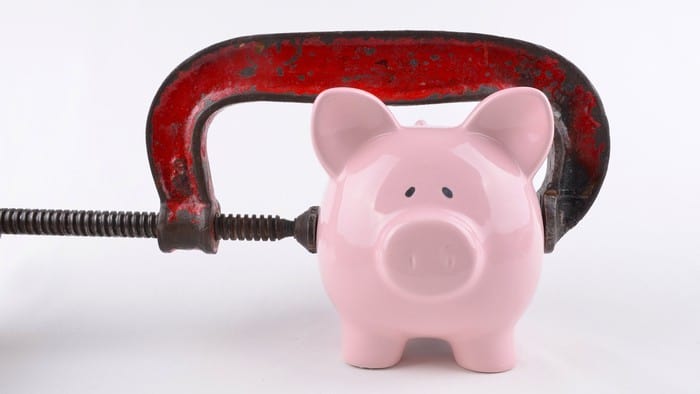
    Stock gamma squeeze or short squeeze represented by piggy bank being squeezed in vice

    This article was originally published on Fool.com. All figures quoted in US dollars unless otherwise stated.

    In investing, a “squeeze” typically refers to times when rapid price movements in a company’s stock force investors to make changes in their investment positions that they otherwise wouldn’t. Those forced moves often drive even more price changes and forced moves, creating a nasty feedback loop that can last quite awhile before it crashes.

    One of the more common types of squeezes is known as a short squeeze — when a rising stock price forces people who had sold the stock short to buy back those shares, driving stock prices higher. Related to the short squeeze is something known as a gamma squeeze.

    A gamma squeeze takes things one step further, forcing additional stock-buying activity due to open options positions on the underlying stock. A gamma squeeze is behind a large part of the recent meteoric rise in the share price of GameStop Corp (NYSE: GME).

    Why options trading can create stock volatility

    Options are traded a little bit differently than stocks are. When you open an options contract, chances are that you are not trading with another individual investor, but rather with a market maker. You and your counterparty (typically the market maker) are likely creating the options contract — both the assets and the liabilities they entail — out of thin air, within the structure of standardized contracts.

    Market makers aren’t entering into these transactions out of the goodness of their hearts, but rather to make a profit from the trade. The market maker typically uses a sophisticated pricing model known as the Black-Scholes options pricing model to figure out what the option should cost.

    The price at which the market maker will actually trade with you generally figures in a bit of a statistical profit based on that pricing model. On top of that, the market maker will likely use a little bit of that potential profit, along with other capital, to hedge his or her bets by buying or shorting stock, depending on the option in question, in case the market moves the wrong way from that market maker’s perspective. It’s that hedging activity that can create the conditions that make a gamma squeeze possible.

    It’s all Greeks to me

    The Black-Scholes model doesn’t just spit out a price for an options contract. It also enables the calculation of a number of risk measures based on that price that are collectively known as the Greeks. One of those Greeks — known as gamma — is often used by market makers to figure out how much to hedge their bets.

    The higher the gamma, the larger a stock position the market maker will need in order to have an effective hedge against open options positions. As a result, as gamma changes, market makers with open options positions are often forced to buy or sell the underlying stock to keep their own books properly hedged. Large amounts of that forced buying or selling activity is what creates a gamma squeeze.

    Where does gamma come from?

    To understand gamma, you first have to get a handle on an option’s delta (another Greek), which represents the expected change in the price of an option based on changes in the price of the underlying stock. For instance, if a call option has a delta of 0.2, its price is expected to rise about $0.20 for a $1 rise in the underlying stock. An option’s delta will change based on how far away the stock price is from the exercise price of the option, and in which direction.

    The chart below shows a sample graph of what an options delta chart would look like for a long call option on a stock. A long call option gives its holder the right to buy 100 shares of stock at a given price, while the seller of the option will hold the reciprocal obligation to sell those shares at the exercise price. Looking to the chart, option delta is a nearly flat line around zero when a stock’s price is well below the option’s exercise price. It is also a nearly flat line around 1 when that stock’s price is well above the option’s exercise price.

    Sample graph of delta for a long call option on a stock. Shaped like an S curve

    Chart by Author.

    In the middle, though, that delta chart curves upward, reaching a value of 0.5 and reaching its steepest slope at exactly the option’s strike price.  It’s the slope of the option’s delta chart that represents the option’s gamma, and that slope — and thus the gamma — is at its steepest at exactly that option’s exercise price.

    What can create the conditions for a gamma squeeze to occur?

    In GameStop’s case, many people have long expected the company to be forced to declare bankruptcy, thanks to a business model that has been largely disrupted by digital downloads of games. When they expect such bad news, investors may be tempted to borrow and short the stock. So many people had made that decision regarding GameStop that more than 100% of the company’s total float had been sold short at one point.

    Because of the potential for a short squeeze, many investors who short stocks don’t simply sell a stock, but rather they cover their shorts by buying long, offsetting, out-of-the-money calls (i.e. exercise price of the call is above the price shares trade at when the calls were purchased). Say an investor shorted 100 shares of GameStop at $10 per share back in October 2020. That investor could have bought a $15 call option to cover that bet for a fairly cheap price back then.

    That would have protected the investor from a short squeeze causing a spike in GameStop’s price, at the cost of some of the potential profits if the company’s shares did continue falling toward zero. The market maker on the other side of that options trade would have probably used a gamma calculation to determine how many shares of GameStop to buy in order to set up a hedge.

    Fast forward to January 2021, the GameStop short squeeze is in full swing. GameStop’s challenging fundamentals haven’t dramatically improved, but the stock price is much higher thanks to the short squeeze. That higher stock price attracts even more short-sellers,  who want to profit from the even deeper distance GameStop’s shares may fall.

    Those new short-sellers in turn buy more out-of-the-money long call options to protect themselves from the possibility that its shares will rise further. On top of that pressure, speculators who are betting the stock will continue its meteoric rise may also be buying out-of-the-money call options in the hope their bet pays off. Especially if there isn’t much time value left on those call options because they’re close to expiring, the risk/reward trade-off can look mighty tempting.

    That forces the market maker on the opposite side of that options trade to buy more shares to hedge, which in turn causes the stock to rise more. As the stock rises to approach that option strike price, the market maker is forced to buy even more shares as a gamma hedge, and thus you wind up with a gamma squeeze.

    What goes up, will very likely come down

    The key thing to note about gamma squeezes, though, is that they are often very sharp, double-edged swords. Just as they can force buying pressure, they can also force selling pressure. Recall that gamma is based on the slope of that delta chart above, and that chart has the steepest slope (and thus, the most gamma) at exactly the option’s strike price. Get too far away from that price, and gamma starts to fade, reducing (and in fact often reversing) the pressure to hedge.

    Likewise, as those options contracts close, are exercised, or expire, the market maker no longer needs to hold a hedge against an options position that no longer exists. That also reduces the buying pressure on the stock, which could cause the squeeze to reverse itself.

    No matter what the driver of their eventual reversal, gamma squeezes don’t last forever. And when they reverse, the move in the opposite direction can be just as gut-wrenching (if not more so) than the initial squeeze itself was.

    Either way, volatility during and immediately after a gamma squeeze is usually extreme, and predictability goes straight out the window. As a result, whether it’s with GameStop or any other company going through a gamma squeeze, the best thing to do might just be to wait until it’s over. Once it’s over, you can look through whatever wreckage remains and determine whether it offers you an investment opportunity you really want to take advantage of for the long term.

    This article was originally published on Fool.com. All figures quoted in US dollars unless otherwise stated.

    Where to invest $1,000 right now

    When investing expert Scott Phillips has a stock tip, it can pay to listen. After all, the flagship Motley Fool Share Advisor newsletter he has run for more than eight years has provided thousands of paying members with stock picks that have doubled, tripled or even more.*

    Scott just revealed what he believes are the five best ASX stocks for investors to buy right now. These stocks are trading at dirt-cheap prices and Scott thinks they are great buys right now.

    *Returns as of June 30th

    More reading

    Chuck Saletta has no position in any of the stocks mentioned. The Motley Fool Australia has no position in any of the stocks mentioned. The Motley Fool has a disclosure policy. This article contains general investment advice only (under AFSL 400691). Authorised by Bruce Jackson.

    The post What Is a Gamma Squeeze? appeared first on The Motley Fool Australia.

    This article was originally published on Fool.com. All figures quoted in US dollars unless otherwise stated.

    from The Motley Fool Australia https://ift.tt/36pixiq

  • Short squeezes: Everything you need to know about the recent investing movement

    Have you noticed something strange going on in certain stocks recently? Take GameStop. Not only has the stock more than quadrupled in January alone, but on Monday, Jan. 25, GameStop opened about 50% higher than its Friday closing price and briefly rose by more than 115% before sharply retreating to close up by “only” 18%.

    Obviously, this level of volatility is highly unusual. The recent price action in GameStop and several other stocks can be attributed to a phenomenon known as a short squeeze. Here’s a closer look at what that means, how it works, and why it can cause massive spikes in stock prices like we’ve seen this week.

    What is a short squeeze?

    There are hundreds of factors that could potentially move a stock’s price, but on a short-term basis, stock prices are functions of basic supply and demand. If more shares are available for sale than people are willing to buy, the price will go down until enough buyers are interested. Conversely, if there are more investors who want to buy shares than the market can accommodate, the stock’s price will move higher until enough shareholders are willing to sell shares to all of the interested buyers. The latter is the basic idea underpinning a short squeeze — but more on that later.

    Short interest

    Short squeezes are most commonly seen in stocks that have a lot of short-sellers betting against them. You can find this by looking up a stock’s short interest, which is often included in a long-form stock quote you get from your broker.

    Short interest is typically updated at the end of each month and tells you the quantity of shares sold short as a percentage of the stock’s float, or the number of shares that are actually available to trade. For example, if a company has a float of 10 million shares and 2 million shares are currently sold short, it would have a short interest of 20%. 

    Here’s why hedge funds and other investors frantically try to cover short positions when stocks rocket higher like this. Let’s say that you short 100 shares of a stock at $20 a share, meaning that the maximum you can profit is $2,000 if the stock goes to zero. If the stock goes to $40, you’ve lost $2,000, or 100% of what you hoped to make. If it goes to $60, you’ve lost 200%. And if it goes to $100 or more…well, you get the idea. The loss potential when a short position goes the wrong way is unlimited and can cost some of these large short-sellers billions. That’s why we’re seeing desperate buying in GameStop, AMC, and some of the other heavily shorted stocks that are spiking higher.

    What’s “normal” for short interest depends on the company, the overall economic environment, and several other factors. But generally, a short interest in the double digits indicates that there is quite a bit of pessimism about the stock. Here are a few stocks that currently have high short interest and some with relatively low short interest for comparison’s sake.

    Company (Symbol) Short Interest (12/31/20) Company (Symbol) Short Interest (12/31/20)
    GameStop (NYSE:GME) 140.3% Apple 2.1%
    Tanger Outlets 49.6% Microsoft 1.9%
    Bed Bath & Beyond 37.2% Amazon 0.8%
    AMC Entertainment 53% Procter & Gamble 0.6%

    Data source: TD Ameritrade.

    Notice that all of the stocks on the left have been behaving very strangely in terms of rapid up-and-down movements in the recent short-squeeze environment. Those on the right haven’t been unusually volatile.

    How a short squeeze happens

    Here’s the basic idea of how a short squeeze happens:

    • A stock is heavily shorted due to investor pessimism. For example, AMC Entertainment has been heavily shorted because many investors believed the movie operator wouldn’t be able to survive the disruptive effects of the COVID-19 pandemic.
    • Some event happens that creates optimism in the stock. This could take the form of actual company news, broader economic developments, or some other update. For example, AMC recently announced that bankruptcy was effectively “off the table” after raising fresh capital.
    • Shares rise in response to the good news. As a result, short-sellers suffer losses, which could lead to margin calls (brokers forcing investors with short positions to either deposit more money or close out their positions).
    • Because covering a short position involves buying shares, this creates even more demand for the stock. The price moves even higher, and more short-sellers are forced to close their positions.

    For stocks with truly massive amounts of short interest relative to the volume of available shares, this effect can snowball for some time, leading to tremendous volatility and huge spikes in the share price. Looking at GameStop’s short interest, it’s no wonder why the stock has been so reactive to the recent wave of short squeezes.

    The Foolish bottom line

    One important thing for long-term investors to keep in mind is that a short squeeze has nothing to do with the long-term investment thesis. It can certainly be nerve-racking to deal with such high volatility, but it’s important to tune out the noise and focus on the long-term case for owning the stock.

    Where to invest $1,000 right now

    When investing expert Scott Phillips has a stock tip, it can pay to listen. After all, the flagship Motley Fool Share Advisor newsletter he has run for more than eight years has provided thousands of paying members with stock picks that have doubled, tripled or even more.*

    Scott just revealed what he believes are the five best ASX stocks for investors to buy right now. These stocks are trading at dirt-cheap prices and Scott thinks they are great buys right now.

    *Returns as of June 30th

    More reading

    Matthew Frankel, CFP owns shares of Apple and Tanger Factory Outlet Centers and has the following options: short February 2021 $140 calls on Apple. John Mackey, CEO of Whole Foods Market, an Amazon subsidiary, is a member of The Motley Fool’s board of directors. Teresa Kersten, an employee of LinkedIn, a Microsoft subsidiary, is a member of The Motley Fool’s board of directors. The Motley Fool Australia’s parent company Motley Fool Holdings Inc. owns shares of and recommends Amazon, Apple, and Microsoft and recommends the following options: long January 2022 $1920 calls on Amazon and short January 2022 $1940 calls on Amazon. The Motley Fool Australia has recommended Amazon and Apple. The Motley Fool has a disclosure policy. This article contains general investment advice only (under AFSL 400691). Authorised by Bruce Jackson.

    The post Short squeezes: Everything you need to know about the recent investing movement appeared first on The Motley Fool Australia.

    from The Motley Fool Australia https://ift.tt/3a8HI9U

  • Why the Mesoblast (ASX:MSB) share price is rising today

    Five stacked building blocks with green arrows, indicating rising inflation or share prices

    The Mesoblast Limited (ASX: MSB) share price jumped out of the blocks in early trade on Friday. Today’s early moves comes after the Aussie biotech’s latest quarterly report to the market.

    At the time of writing, the Mesoblast share price is trading up 3.23% at $2.40.

    Why is the Mesoblast share price climbing higher?

    Mesoblast provided an update on its pipeline of late-stage product candidates and an activity report for the second quarter ended 31 December 2020 (Q2 2020). That included Phase 3 trials of rexlemestrocel-L for advanced chronic heart failure.

    Mesoblast CEO, Dr Silviu Itescu, was “very pleased” to see significant reductions in cardiac mortality and major vascular events.

    The “strong data” from this randomised controlled Phase 3 trial underpin Mesoblast’s discussions with potential strategic partners. The results will also support the company’s interactions with United States Food and Drug Administration (FDA), Dr Itescu said.

    Quarterly highlights

    The Mesoblast share price has climbed higher in early trade following the update on a number of key developments.

    Key highlights within the quarterly report include:

    • Revenues from royalties on TEMCELL HS Inj. sales for the second quarter climbed to US$2.1 million compared to US$2.0 million in Q2 2019.
    • Mesoblast amended its existing agreement with Hercules to extend the interest-only loan period up to March 2022, subject to achieving certain milestones.
    • The Aussie biotech is waiting on 60-day results from its COVID-19 ARDS trial in Q1 2021. The results will be analysed by Mesoblast and Novartis to identify meaningful clinical outcomes.
    • Mesoblast’s cash on hand at period-end of US$77.5 million. The company may receive up to an additional US$92.5 million through existing financing facilities and strategic partnerships.
    • Mesoblast intends to meet with the FDA during Q1 2021 for further discussion. The company is seeking accelerated approval of remestemcel-L in the treatment of children with steroid-refractory acute graft-versus-host disease (SR-aGVHD).

    The Mesoblast share price has been on somewhat of a rollercoaster ride in recent months. Shares in the Aussie biotech are down 20.3% in the last 12 months but have climbed 6.2% in January 2021

    Our TOP healthcare stock is trading at a 30% discount to its highs

    If there’s one thing for sure, 2020 has been the year we embraced sanitisation. Scott Phillips has discovered a little-known Australian healthcare company could be set to reap the rewards of the post-covid world.

    Better yet, this fast-growing company is currently trading at a 30% discount from its highs. Scott believes in this stock so much, he’s staked $209k of our own company money on it. Forget ‘buy now pay later’, this stock could be the next hot stock on the ASX.

    Scott and his team have published a detailed report on this tiny ASX stock. Find out how you can access our TOP healthcare stock today!

    As of 2.11.2020

    More reading

    Motley Fool contributor Ken Hall has no position in any of the stocks mentioned. The Motley Fool Australia has no position in any of the stocks mentioned. The Motley Fool has a disclosure policy. This article contains general investment advice only (under AFSL 400691). Authorised by Bruce Jackson.

    The post Why the Mesoblast (ASX:MSB) share price is rising today appeared first on The Motley Fool Australia.

    from The Motley Fool Australia https://ift.tt/36lxeTC

  • Trading for GameStop, AMC, and Express stocks halted for volatility as popular brokerages like Robinhood take action

    This article was originally published on Fool.com. All figures quoted in US dollars unless otherwise stated.

    a trader on the stock exchange holds his head in his hands, indicating a share price drop

    This article was originally published on Fool.com. All figures quoted in US dollars unless otherwise stated.

    Extreme volatility caused trading halts for several popular stocks on Thursday morning. Among them were video game retailer GameStop Corp (NYSE: GME), movie theater company AMC Entertainment Holdings Inc (NYSE: AMC), and fashion retailer Express, Inc (NYSE: EXPR). According to data from Nasdaq, all three stocks triggered code M, a volatility trading pause for an “exchange-listed issue”. Trading resumed a few minutes later.

    With short-squeeze mania running rampant on the stock market, these stocks are trading with extremely high volume. As of 10.40am EST, GameStop’s trading volume was already over 20 million shares, according to Yahoo Finance. This volume has caused all three of these stocks to more than double during January alone, with GameStop stock surging over 1,500%.

    The mayhem is concerning to many on Wall Street, and brokerages are starting to take action to turn down the temperature. According to a blog post today from the company, Robinhood is restricting actions for GameStop, AMC, Express, and more. Users will only be allowed to close their positions for now, and the popular brokerage is also raising its margin requirements. Robinhood isn’t alone. Interactive Brokers made a similar move.

    The retail investing crowd trading GameStop stock isn’t taking this new development lying down. Robinhood users are inundating app stores with one-star reviews. On Alphabet‘s Google Play app store, Robinhood’s previously stellar rating has dropped to a single star this morning. This likely wasn’t the kind of press the company was looking for considering it’s reportedly thinking about an initial public offering (IPO) later this year.

    This article was originally published on Fool.com. All figures quoted in US dollars unless otherwise stated.

    Where to invest $1,000 right now

    When investing expert Scott Phillips has a stock tip, it can pay to listen. After all, the flagship Motley Fool Share Advisor newsletter he has run for more than eight years has provided thousands of paying members with stock picks that have doubled, tripled or even more.*

    Scott just revealed what he believes are the five best ASX stocks for investors to buy right now. These stocks are trading at dirt-cheap prices and Scott thinks they are great buys right now.

    *Returns as of June 30th

    More reading

    Suzanne Frey, an executive at Alphabet, is a member of The Motley Fool’s board of directors. Jon Quast owns shares of Nasdaq. The Motley Fool Australia’s parent company Motley Fool Holdings Inc. owns shares of and recommends Alphabet (A shares) and Alphabet (C shares). The Motley Fool recommends Interactive Brokers and Nasdaq and recommends the following options: short March 2021 $55 puts on Interactive Brokers. The Motley Fool Australia has recommended Alphabet (A shares) and Alphabet (C shares). The Motley Fool has a disclosure policy. This article contains general investment advice only (under AFSL 400691). Authorised by Bruce Jackson.

    The post Trading for GameStop, AMC, and Express stocks halted for volatility as popular brokerages like Robinhood take action appeared first on The Motley Fool Australia.

    This article was originally published on Fool.com. All figures quoted in US dollars unless otherwise stated.

    from The Motley Fool Australia https://ift.tt/3qZwAD5

  • The BlueScope (ASX:BSL) share price surges on a profit upgrade today

    Resources shares bluescope profit update share price

    The BlueScope Steel Limited (ASX: BSL) share price stormed up the leader board this morning after it posted a 12% profit upgrade.

    The BSL share price surged 6.4% to $17.05 in morning trade. This makes it the second best performer on the S&P/ASX 200 Index (Index:^AXJO).

    The Service Stream Limited (ASX: SSM) share price is only marginally in front of the BSL share price. The SSM share price jumped 6.7% to $1.85 after it signed a deal with Telstra Corporation Ltd (ASX: TLS).

    Profit upgrade boosts the BSL share price

    Coming back to BlueScope, management expects first half FY21 earnings before interest and tax (EBIT) to reach around $530 million.

    This is ahead of the previous guidance of $475 million and all parts of BlueScope’s businesses are performing strongly.

    “All operating segments have performed well across the half,” said BSL’s chief executive Mark Vassella.

    “We have seen strong volumes and improving steel spreads in our largest steelmaking business in Australia and the US, along with strong earnings improvements from our other businesses.

    “The results are a continued demonstration of BlueScope’s operational leverage from our diverse portfolio of businesses.”

    Firing on all cylinders

    The group’s Australian Steel Products (ASP) business produced a much better result compared to the previous half. This is due to strong domestic construction and distribution segment demand, particularly for coated and painted product.

    Management even went as far as to say it’s experiencing the strongest domestic mill sales volumes in a decade as steel spreads continued to strengthen.

    It’s US North Star division also experienced a rebound. There was a significant increase in benchmark Midwest hot rolled coil prices, above raw material price rises, in recent months.

    BlueScope’s Building Products Asia & North America segment also recovered from its COVID-19 doldrums.

    Small cracks in BlueScope’s profit update

    But it isn’t all good news. The company commented that the earnings surge at its Buildings North America division won’t be repeated in the second half of FY21. This is because the first half was bolstered by a $40 million property sale.

    Management also added an air of caution as it can’t say if the expanding steel spreads that lifted its profits will be sustained.

    Volatile macroeconomic and market factors, including the potential of further supply chain and demand disruptions from the pandemic, is convoluting the outlook.

    BlueScope will officially release its interim profit results on 22 February, where it will provide further comments on trading conditions.

    This Tiny ASX Stock Could Be the Next Afterpay

    One little-known Australian IPO has doubled in value since January, and renowned Australian Moonshot stock picker Anirban Mahanti sees a potential millionaire-maker in waiting…

    Because ‘Doc’ Mahanti believes this fast-growing company has all the hallmarks of genuine Moonshot potential, forget ‘buy now pay later’, this stock could be the next hot stock on the ASX.

    Doc and his team have published a detailed report on this tiny ASX stock. Find out how you can access what could be the NEXT Afterpay today!

    Returns as of 6th October 2020

    More reading

    Motley Fool contributor Brendon Lau owns shares of BlueScope Steel Limited and Telstra Limited. Connect with me on Twitter @brenlau.

    The Motley Fool Australia owns shares of and has recommended Telstra Limited. The Motley Fool Australia has recommended Service Stream Limited. The Motley Fool has a disclosure policy. This article contains general investment advice only (under AFSL 400691). Authorised by Bruce Jackson.

    The post The BlueScope (ASX:BSL) share price surges on a profit upgrade today appeared first on The Motley Fool Australia.

    from The Motley Fool Australia https://ift.tt/39u02LI

  • Revealed: ASX company underpaid staff $2.3 million

    asx share penalty represented by lots of fingers pointing at disgraced businessman

    Retailer Dusk Group Ltd (ASX: DSK) is now back-paying more than $2.3 million in wages after signing an enforceable undertaking with the Fair Work Ombudsman.

    The company, which only listed on the ASX in early November, sells candles and home fragrance products via 115 shops in Australia.

    Dusk staff complained last year that the retailer had not properly paid out an entitlement that was triggered when an employee had a break of less than 12 hours between shifts.

    The company then found more than 1,500 former and current service staff, assistant store managers and store managers in all states and territories were underpaid.

    Some employees are owed as much as $26,000, according to the Ombudsman.

    The Motley Fool has contacted Dusk for comment.

    Dusk has plenty of remediation to do

    As well as back-paying the missing wages, Dusk must pay a $45,000 “contrition payment” to the federal government.

    The retail chain must also apologise to its staff via physical media, social media and online notices. A telephone hotline must also be manned using an external provider for 12 months to field employee enquiries.

    The enforceable undertaking commits the company to put in measures to prevent future breaches.

    “These measures include engaging, at Dusk’s own cost, an expert auditing firm to assess the outcomes of its rectification program and audit its compliance with workplace laws over the next two years,” said Fair Work Ombudsman Sandra Parker.

    “This matter demonstrates how important it is for employers to place a high priority on ensuring they are aware of every lawful entitlement they must pay their employees. The underpayment of just a single entitlement can result in a large-scale back-payment bill.”

    The company is also paying out interest and superannuation related to the back-pay. It has until 22 February to complete remediation with all former and current employees.

    A small-cap ASX share to watch

    At the time of writing on Friday, the Dusk share price is trading 3.1% higher at $2.33 giving it a market capitalisation of around $149 million. The business floated on the ASX in November with an initial public offer (IPO) price of $2 per share.

    WAM Microcap Ltd (ASX: WMI) last week named Dusk as an ASX share to watch, citing it as a beneficiary of Australians staying home more during the COVID-19 pandemic.

    Dusk has forecast sales in the first half of financial year 2021 to land between $90 million to $90.5 million, up from $58.7 million in the same period the previous year.

    The company’s earnings before interest and tax (EBIT) guidance was between $26 million to $27 million, which would be a big boost from $9.7 million the prior year.

    This Tiny ASX Stock Could Be the Next Afterpay

    One little-known Australian IPO has doubled in value since January, and renowned Australian Moonshot stock picker Anirban Mahanti sees a potential millionaire-maker in waiting…

    Because ‘Doc’ Mahanti believes this fast-growing company has all the hallmarks of genuine Moonshot potential, forget ‘buy now pay later’, this stock could be the next hot stock on the ASX.

    Doc and his team have published a detailed report on this tiny ASX stock. Find out how you can access what could be the NEXT Afterpay today!

    Returns as of 6th October 2020

    More reading

    Motley Fool contributor Tony Yoo has no position in any of the stocks mentioned. The Motley Fool Australia has no position in any of the stocks mentioned. The Motley Fool has a disclosure policy. This article contains general investment advice only (under AFSL 400691). Authorised by Bruce Jackson.

    The post Revealed: ASX company underpaid staff $2.3 million appeared first on The Motley Fool Australia.

    from The Motley Fool Australia https://ift.tt/39qwU7L

  • Here’s why the Kogan (ASX:KGN) share price is sinking 5% lower

    hands at keyboard with ecommerce icons

    The Kogan.com Ltd (ASX: KGN) share price is out of form on Friday and dropping lower again.

    In morning trade, the ecommerce company’s shares are down 5% to $18.70.

    Why is the Kogan share price dropping lower?

    Investors have been selling Kogan’s shares following the release of an update on its performance during the first half of FY 2021.

    According to the release, for the six months ended 31 December, Kogan’s gross sales (including the Mighty Ape acquisition) increased 96% over the prior corresponding period.

    Thanks to margin expansion, the company’s gross profit and earnings before interest, tax, depreciation and amortisation (EBITDA) grew at an even quicker rate.

    Gross profit was up more than 120% on the prior corresponding period and EBITDA rose over 140%.

    Key drivers of this growth were a record-breaking performance during Black Friday, the acquisition of Mighty Ape, and a significant increase in customer numbers. At the end of the period, Kogan.com had 3,003,000 customers and Mighty Ape had 719,000 customers.

    Taking a little bit of the shine of the strong result were some additional charges totalling $3.4 million.

    These comprise logistics demurrage charges of $1.9 million driven by one-off warehousing and supply chain interruptions and a $1.5 million write-down of personal protective equipment (PPE) inventory held by Kogan.com following a reduction in COVID-19 cases in Australia.

    Management also advised that it recorded an unspecified but significant unrealised foreign exchange loss due to the rise in the Australian dollar.

    Nevertheless, at the end of the half, Kogan had a very strong balance sheet with a cash balance of $78.9 million.

    Management commentary

    Kogan.com Founder & CEO, Ruslan Kogan, commented: “We are proud to have delivered another record half while undertaking significant investments into the future of the business.”

    “We delivered our largest acquisition to date, in Mighty Ape and expanded the Kogan.com community of members to more than 3 million active customers. We are investing into building strong customer relationships by expanding our logistics capability, our marketing reach and our systems and infrastructure – giving us the foundation to continue delighting customers as the business further scales.”

    Commenting on the Black Friday sales period, Mr Kogan revealed that the company experienced incredible demand from consumers.

    He explained: “The Black Friday week saw some of the most extraordinary trading we have ever seen – with 7 out of our top 10 days ever occurring during the Black Friday period.”

    “Customers have come to rely on Kogan.com to deliver their Christmas shopping needs, and we are proud to have satisfied well over a million happy shoppers this Christmas period. Keeping up with the extreme demand is an engineering, supply chain, and logistical challenge that our team loves working on and solving,” he concluded.

    This Tiny ASX Stock Could Be the Next Afterpay

    One little-known Australian IPO has doubled in value since January, and renowned Australian Moonshot stock picker Anirban Mahanti sees a potential millionaire-maker in waiting…

    Because ‘Doc’ Mahanti believes this fast-growing company has all the hallmarks of genuine Moonshot potential, forget ‘buy now pay later’, this stock could be the next hot stock on the ASX.

    Doc and his team have published a detailed report on this tiny ASX stock. Find out how you can access what could be the NEXT Afterpay today!

    Returns as of 6th October 2020

    More reading

    Motley Fool contributor James Mickleboro has no position in any of the stocks mentioned. The Motley Fool Australia owns shares of and has recommended Kogan.com ltd. The Motley Fool has a disclosure policy. This article contains general investment advice only (under AFSL 400691). Authorised by Bruce Jackson.

    The post Here’s why the Kogan (ASX:KGN) share price is sinking 5% lower appeared first on The Motley Fool Australia.

    from The Motley Fool Australia https://ift.tt/2YqU8Ex

  • What’s with the Rhipe (ASX:RHP) share price today?

    flat asx share price represented by investor shrugging

    The Rhipe Ltd (ASX: RHP) share price is trading flat this morning. This comes after the software company provided investors with a business update on its preliminary results for the first half of FY21.

    In early morning trade, the Rhipe share price swapped hands for $2.01, up 1.5% but has since retreated to it opening price of $1.98. Let’s take a look at the results.

    What’s driving the Rhipe share price higher?

    In today’s release, Rhipe highlighted that for the period ending 31 December, growth has been achieved across all key metrics.

    Group revenue rose to $30.5 million, reflecting an increase of 15% over the prior corresponding period (pcp). The company attributed the positive result to its subscription software licencing of Microsoft public cloud products. In the last 6 months, Microsoft Office365 licensees jumped more than 90,000 seats to record a total of 720,000 seats.

    As a result, gross profit also lifted to $27.7 million, representing a gain of 11% compared to this time last year.

    Operating expenses moved slightly higher to $19 million, a marginal 3% increase over the pcp. Its licencing business achieved lower costs due to fewer employees, marketing, and travel-related outflows as a result of COVID-19. However, expenses rose from its rhipe solutions business as the company focused its efforts on investing for the future.

    Group operating profit (gross profit minus operating expenses) came to $8.8 million, up 34% on H1 FY20. The overall result was complemented by strong growth in its licensing business, and management’s strict cost control.

    Earnings before interest, tax, depreciation and amortisation (EBITDA) grew to $7.7 million, an uplift of 10% over the comparable period.

    Rhipe reported to have a cash balance of $57.5 million at the end of the first-half, after paying dividends to shareholders, and investing in the Parallo acquisition.

    Outlook

    Management noted that despite COVID-19 operating challenges, its large and diversified reseller base has proven resilient. It believes the robust performance will continue to run into the second-half, especially with future investments to drive business growth.

    Consequently, the group is forecasting its full-year operating profit for FY21 to be $17.5 million. This would imply an 27% increase when compared to the prior year’s result.

    The company is scheduled to release its final half-year results for the 2021 financial year on 16 February.

    Where to invest $1,000 right now

    When investing expert Scott Phillips has a stock tip, it can pay to listen. After all, the flagship Motley Fool Share Advisor newsletter he has run for more than eight years has provided thousands of paying members with stock picks that have doubled, tripled or even more.*

    Scott just revealed what he believes are the five best ASX stocks for investors to buy right now. These stocks are trading at dirt-cheap prices and Scott thinks they are great buys right now.

    *Returns as of June 30th

    More reading

    Motley Fool contributor Aaron Teboneras has no position in any of the stocks mentioned. The Motley Fool Australia has no position in any of the stocks mentioned. The Motley Fool has a disclosure policy. This article contains general investment advice only (under AFSL 400691). Authorised by Bruce Jackson.

    The post What’s with the Rhipe (ASX:RHP) share price today? appeared first on The Motley Fool Australia.

    from The Motley Fool Australia https://ift.tt/2McENVL