Tag: Motley Fool

  • Treasury Wine (ASX:TWE) share price sinks 12% after responding to China export tariff

    glass of red wine spilling TWE share price

    The Treasury Wine Estates Ltd (ASX: TWE) share price is sinking lower this morning.

    This follows the wine company’s response to the Chinese Ministry of Commerce (MOFCOM) announcing tariffs on Australian wine exports.

    At the time of writing, the wine company’s shares are down 12% to $8.14.

    How did Treasury Wine respond?

    This morning Treasury Wine Estates announced that it will implement a series of plans to reduce the impact of the provisional anti-dumping measure on imports of certain categories of wine from Australia into China.

    According to the release, a deposit rate of 169.3% will be applied to the imported value of Treasury Wine Estates’ wine in containers of two-litres or less. This provisional measure will remain in place until 28 August 2021 at the latest.

    However, the company notes that the final determination of the anti-dumping investigation will determine if the measure will be maintained, adjusted, or removed.

    Management advised that it will continue to engage with MOFCOM as part of the investigation, which is ongoing.

    What impact will this have?

    The company has warned that while the provisional measure remains in place, demand for its portfolio in China is expected to be extremely limited.

    This certainly is a bitter blow for the company given how important the market is for its business. It advised that in FY 2020, China represented approximately two-thirds of the total Asia region earnings or 30% of its overall group earnings.

    It sells a premium portfolio in China, with luxury and masstige wine contributing 63% of volume and 91% of revenue in the country in FY 2020. Of the remaining portfolio, Rawson’s Retreat is the largest volume commercial brand sold by it in China.

    What now?

    Since the commencement of the investigation, Treasury Wine Estates has been developing a detailed response plan. This plan will now commence immediately.

    These initiatives aim to reduce the impact on earnings and maintain the long-term diversification and strength of its business model and brands.

    While benefits are likely to be limited in FY 2021, management expects them to progressively reach their full potential over a two to three-year period.

    The plan includes the reallocation of Penfolds Bin and Icon range from China to other key luxury growth markets, the accelerated investment in sales and marketing resource and capability across these markets, and the reallocation of luxury grape sourcing to other premium brands.

    It also intends to make enhancements to its China business model and changes to its global operating model.

    “Extremely disappointed.”

    The company’s CEO, Tim Ford, commented: “We are extremely disappointed to find our business, our partners’ businesses and the Australian wine industry in this position. We will continue to engage with MOFCOM as the investigation proceeds to ensure our position is understood. We call for strong leadership from governments to find a pathway forward.”

    “The strength of our brands, including Penfolds, combined with our diversified business model will allow TWE to implement a range of changes and plans that will enable us to manage through the significant impact of these measures going forward, as outlined in this announcement,” he added.

    Mr Ford warned that the Australian wine sector would be hit hard and jobs would inevitably be lost.

    He explained: “However, there is no doubt this will have a significant impact on many across the industry, costing jobs and hurting regional communities and economies which are the lifeblood of the wine sector.”

    “We will continue to work with our valued partners to further understand the implications and how we can work with the industry, governments and others to support the sector. At the same time, we will continue to work with our customers and partners in China to demonstrate our long-term commitment to the growing number of Chinese consumers who enjoy our brands,” the CEO concluded.

    Forget what just happened. We think this stock could be Australia’s next MONSTER IPO…

    One little-known Australian IPO has doubled in value since January, and renowned Australian Moonshot stock picker Anirban Mahanti sees a potential millionaire-maker in waiting…

    Because ‘Doc’ Mahanti believes this fast-growing company has all the hallmarks of genuine Moonshot potential, forget ‘buy now pay later’, this stock could be the next hot stock on the ASX.

    Returns as of 6th October 2020

    More reading

    Motley Fool contributor James Mickleboro has no position in any of the stocks mentioned. The Motley Fool Australia owns shares of and has recommended Treasury Wine Estates Limited. We Fools may not all hold the same opinions, but we all believe that considering a diverse range of insights makes us better investors. The Motley Fool has a disclosure policy. This article contains general investment advice only (under AFSL 400691). Authorised by Scott Phillips.

    The post Treasury Wine (ASX:TWE) share price sinks 12% after responding to China export tariff appeared first on Motley Fool Australia.

    from Motley Fool Australia https://ift.tt/39nSJFC

  • Kathmandu (ASX:KMD) share price on watch after CEO resigns

    asx share executive resignation represented by resignation letter and personal items in box on desk

    Clothing and outdoor gear retailer Kathmandu Holdings Ltd (ASX: KMD) has today announced the resignation of its chief executive, Xavier Simonet. The Kathmandu share price will be one to watch today following this announcement.

    What was announced today?

    Kathmandu says Simonet will resign from the company to take up a senior role with the Australian Public Service. The company did not mention specifically which government department he will be serving. 

    Simonet has been with Kathmandu for the last five years in the chief executive role, and will remain with the company through his mandatory six-month notice period, or until the board decides to release him.

    What did Simonet achieve during his tenure?

    Simonet led the company through what he called a “transformational journey from a leading Australasian retailer to a global brand.”

    During his tenure, he was involved in major acquisitions for the group – which included the purchases of iconic Australian surf wear brand, Rip Curl, for $350 million in 2019, as well as the American hiking boots company, Oboz, for $97 million in 2017.

    What did management say?

    Kathmandu chair, David Kirk, said:

    We are disappointed to lose Xavier, but understand his desire to take up a senior role in the Australian Public Service, for which he is very well credentialed. We wish him well in the important work he will undertake.

    Xavier has led Kathmandu Holdings through a period of growth and repositioning of the company. Kathmandu, Rip Curl and Oboz are three iconic brands which together create a world class outdoor adventure company, diversified by geography, channel to market and seasonality.

    Xavier will remain with us for up to six months while we undertake a comprehensive search for his successor.

    Mr Simonet, commenting on his resignation said:

    I have had an awesome time at Kathmandu Holdings, where I have spent the last five immensely exciting years.

    The Group has great brands, passionate teams and strong values. I am very grateful to our teams, to the Board of Directors, to our shareholders and to my Chairman, David Kirk, for their support.

    Sales results and the Kathmandu share price in 2020

    For the 12 months ending 31 July 2020, Kathmandu reported a 48.7% increase in sales to NZ$801.5 million. This was driven by a nine-month contribution from the Rip Curl business and strong online sales growth. The latter was up 63% over the 12 months to NZ$106.4 million.

    However, for the first quarter of FY21, Kathmandu has revealed a 24% decline in retail sales at group level as coronavirus restrictions lingered in Australia and overseas.

    The Kathmandu share price has lost over 40% in 2020. It started the year at $2.21 before dropping to as low as 47 cents in March. It has partially recovered since and, at the current price of $1.23, commands a market capitalisation of $869 million.

    Where to invest $1,000 right now

    When investing expert Scott Phillips has a stock tip, it can pay to listen. After all, the flagship Motley Fool Share Advisor newsletter he has run for more than eight years has provided thousands of paying members with stock picks that have doubled, tripled or even more.*

    Scott just revealed what he believes are the five best ASX stocks for investors to buy right now. These stocks are trading at dirt-cheap prices and Scott thinks they are great buys right now.

    *Returns as of June 30th

    More reading

    Motley Fool contributor Eddy Sunarto has no position in any of the stocks mentioned. The Motley Fool Australia has no position in any of the stocks mentioned. We Fools may not all hold the same opinions, but we all believe that considering a diverse range of insights makes us better investors. The Motley Fool has a disclosure policy. This article contains general investment advice only (under AFSL 400691). Authorised by Scott Phillips.

    The post Kathmandu (ASX:KMD) share price on watch after CEO resigns appeared first on Motley Fool Australia.

    from Motley Fool Australia https://ift.tt/3qbjlzB

  • Afterpay (ASX:APT) share price under heavy fire from industry giants

    asx guilty charge represented by lots of fingers all pointing at business man investor

    Sebastian Siemiatkowski, CEO of Swedish-based Klarna, was last week scathing of Afterpay Ltd‘s (ASX: APT) merchant fees, referring to them as an extortion scheme. Mr. Siemiatkowski’s attack, as reported in the Australian Financial Review (AFR), also included calls for regulators to provide a “cap” on merchant fees. The sentiment was echoed by Matt Comyn, CEO of Commonwealth Bank of Australia (ASX: CBA). This attack follows on from confirmation that United States payments giant, Affirm, intends to enter the Australian buy now, pay later (BNPL) market, while other payments giants like Paypal Holdings Inc (NASDAQ: PYPL) have been entering the US market. The Afterpay share price fell by 3% last week.

    CommBank has a 5.5% stake in Klarna and the companies jointly fund and own (with 50:50 ownership rights) Klarna’s Australian and New Zealand business.

    The battle at the margins

    Afterpay averages a 4% merchant fee per transaction. However, the average merchant cost for credit or debit cards is 1%. Klarna claims its average merchant fees are around 2.1%. 

    Afterpay co-chief executive, Anthony Eisen, has disputed the claims, stating that Klarna charges similar merchant fees to Afterpay, as well as 20% interest on a range of bank-like credit products. “We know exactly where they are and they are not out of kilter with us, and even if they were – why are more merchants choosing us then in the US and Australia?” he said. Klarna is an unlisted bank based in Sweden. It was the first BNPL operator there, but the platform only represents one of its service offerings. 

    Klarna has 500 Australian merchants, while Afterpay has 48,000. Moreover, Klarna has 400,000 downloads while Afterpay has 3.5 million active Australian users. As also reported by the AFR, Ord Minnett analyst, Phillip Chippindale, told clients on Wednesday that the Klarna average merchant fee was likely to also be around 4%. Meanwhile, Hayden Capital stated that, in the US, Klarna’s merchant fees can be as high as 5.99%.

    Mr Eisen concluded:

    We have never styled Afterpay as a banking product and as a result we have a more frequent and loyal customer base, and that is what merchants care about because that is what drives their business – it’s those customers we can drive into the right channel that is the value we add and that makes the difference.

    Defending the Afterpay share price

    Afterpay has a history of hitting back against its critics. A recent report from the Australian Securities and Investments Commission (ASIC) criticised the BNPL sector on a number of fronts. Within a day, Afterpay responded, pointing out that consumers benefitted from more choice as competition expands, as opposed to a previously narrow, bank-dominated payments industry.

    The Australian market leader went on to laud its built-in consumer protections, juxtaposing them with those of other BNPL providers. These include never selling or enforcing debt. Moreover, Afterpay sees itself as a platform rather than a payments company or credit provider. In the view of the company, it is second only to Alphabet Inc‘s (NASDAQ: GOOGL) (NASDAQ: GOOG) Google as a referral service for retailers.

    Despite a rash of competitors, Afterpay remains the leading BNPL company in Australia, and is growing rapidly in the US and the United Kingdom. At the close of trade on Friday, the Afterpay Share price was at $94.70.

    This Tiny ASX Stock Could Be the Next Afterpay

    One little-known Australian IPO has doubled in value since January, and renowned Australian Moonshot stock picker Anirban Mahanti sees a potential millionaire-maker in waiting…

    Because ‘Doc’ Mahanti believes this fast-growing company has all the hallmarks of genuine Moonshot potential, forget ‘buy now pay later’, this stock could be the next hot stock on the ASX.

    Doc and his team have published a detailed report on this tiny ASX stock. Find out how you can access what could be the NEXT Afterpay today!

    Returns as of 6th October 2020

    More reading

    Suzanne Frey, an executive at Alphabet, is a member of The Motley Fool’s board of directors. Daryl Mather has no position in any of the stocks mentioned. The Motley Fool Australia’s parent company Motley Fool Holdings Inc. owns shares of and recommends Alphabet (A shares), Alphabet (C shares), and PayPal Holdings and recommends the following options: long January 2022 $75 calls on PayPal Holdings. The Motley Fool Australia owns shares of AFTERPAY T FPO. The Motley Fool Australia has recommended Alphabet (A shares), Alphabet (C shares), and PayPal Holdings. We Fools may not all hold the same opinions, but we all believe that considering a diverse range of insights makes us better investors. The Motley Fool has a disclosure policy. This article contains general investment advice only (under AFSL 400691). Authorised by Scott Phillips.

    The post Afterpay (ASX:APT) share price under heavy fire from industry giants appeared first on Motley Fool Australia.

    from Motley Fool Australia https://ift.tt/2HSCd5a

  • How the biggest companies are the worst investments

    a small fish in a big bowl eyeballs a big fish in a small bowl, indicating the biggest companies are npt always the best investments

    There is a belief among conservative retail investors that the largest publicly listed companies produce the most reliable returns.

    They got to the top by ruling their market and have plenty of cash – so it makes sense, right? The cliché “too big to fail” comes to mind.

    Paul Moore, chief investment officer at Sydney’s PM Capital, has now shattered that theory.

    Moore this week compared the top 10 biggest companies by market capitalisation at the turn of each decade since the 1980s. And he found the turnover in the club mind-blowing.

    “It is rare for a stock to be in the top 10 at the start of one decade and to still be there at the start of the next decade ten years later,” he said on Livewire.

    “For example, in 1990 there were two survivors from the 1980 list, and in 2010 there were three survivors from the 2000 list. Since 1980 there have been no more than 30% ‘survivor’ stocks.”

    Top 10 shares by market capitalisation

    1980

    1990

    2000

    2010

    2020

    IBM (NYSE: IBM)

    Nippon Telegraph And Telephone Corp (TYO: 9432)

    Microsoft Corporation (NASDAQ: MSFT)

    Exxon Mobil

    Apple

    AT&T Inc (NYSE: T)

    Bank of Tokyo-Mitsubishi

    General Electric

    PetroChina Company Limited (SHA: 601857)

    Microsoft

    Exxon 

    Industrial Bank of Japan

    NTT Docomo Inc (TYO: 9437)

    Apple Inc (NASDAQ: AAPL)

    Amazon.com Inc (NASDAQ: AMZN)

    Standard Oil

    Sumitomo Mitsui Financial Group Inc (TYO: 8316)

    Cisco Systems Inc (NASDAQ: CSCO)

    BHP Group Ltd (ASX: BHP)

    Facebook Inc (NASDAQ: FB)

    Schlumberger NV (NYSE: SLB)

    Toyota Motor Corp (TYO: 7203)

    Walmart Inc (NYSE: WMT)

    Microsoft

    Alphabet Inc Class C (NASDAQ: GOOG)

    Royal Dutch Shell Plc (AMS: RDSA)

    Fuji Bank

    Intel Corporation (NASDAQ: INTC)

    Industrial And Commercial Bank Of China (SHA: 601398)

    Alphabet Inc Class A (NASDAQ: GOOGL)

    Mobil

    Dai-Ichi Kangyo Bank

    Nippon Telegraph And Telephone Corp

    Petroleo Brasileiro SA Petrobras (BVMF: PETR4)

    Johnson & Johnson (NYSE: JNJ)

    Atlantic Richfield

    IBM

    Exxon Mobil Corporation (NYSE: XOM)

    China Construction Bank (SHA: 601939)

    Visa Inc (NYSE: V)

    General Electric Company (NYSE: GE)

    UFJ Bank

    Lucent Technologies

    Royal Dutch Shell Plc (AMS: RDSA)

    Nestle

    Eastman Kodak Company (NYSE: KODK)

    Exxon

    Deutsche Telekom AG (ETR: DTE)

    Nestle SA (SWX: NESN)

    Procter & Gamble Co (NYSE: PG)

    Survivors from previous decade:

    2

    2

    3

    3

    Source: PM Capital; Table created by author

    So what does this mean?

    The frequent turnover means a company currently among the largest has very little upside. In fact, it will be a struggle to just maintain the status quo and stay one of the largest.

    So why would any investor put money into a company that has few upward prospects?

    “An investor is more likely to pick the top for those stocks than get in at the bottom or at reasonable valuations,” Moore said.

    “Smart investors may want to consider how exposed they, and their managed funds, are to the top 10 stocks.”

    Buying up these giants goes against the classic axiom of not letting past performance dictate investment decisions.

    The rise of index funds and exchange-traded funds (ETFs) has exacerbated the problem. The most-owned stocks become even more overheated because passive funds are obliged to buy into them. 

    Then they become larger and the funds have to buy even more – it’s a self-feeding cycle.

    Which companies will make the top 10 in 2030?

    Moore said wise investors would try to figure out the top 10 of the next decade.

    And the arrival of the coronavirus pandemic and market crash presented a “once-in-a-lifetime” chance to pick out sunken “quality cyclical and industrial” shares.

    “For example, commodity stocks post COVID-19 were at an all-time low compared to the rest of the market,” he said.

    “Stocks like Teck Resources Ltd (NYSE: TECK) and Freeport-McMoRan Inc (NYSE: FCX) have gained significant ground since the March lows but their valuations remain reasonable when considered against their long term outlooks.”

    The winning shares in the next 10 years would be those that drive “secular trend shifts”, such as copper usage in global electrification, according to Moore. Those positioned for the forthcoming cyclical economic recovery would do well too.

    “While they are unlikely to all end up in the top 10 of the MSCI World Index, we believe they will grow at a greater rate than the overall market and provide adequate investment returns.”

    Where to invest $1,000 right now

    When investing expert Scott Phillips has a stock tip, it can pay to listen. After all, the flagship Motley Fool Share Advisor newsletter he has run for more than eight years has provided thousands of paying members with stock picks that have doubled, tripled or even more.*

    Scott just revealed what he believes are the five best ASX stocks for investors to buy right now. These stocks are trading at dirt-cheap prices and Scott thinks they are great buys right now.

    *Returns as of June 30th

    More reading

    John Mackey, CEO of Whole Foods Market, an Amazon subsidiary, is a member of The Motley Fool’s board of directors. Suzanne Frey, an executive at Alphabet, is a member of The Motley Fool’s board of directors. Teresa Kersten, an employee of LinkedIn, a Microsoft subsidiary, is a member of The Motley Fool’s board of directors. Randi Zuckerberg, a former director of market development and spokeswoman for Facebook and sister to its CEO, Mark Zuckerberg, is a member of The Motley Fool’s board of directors. Tony Yoo owns shares of Alphabet (A shares) and Amazon. The Motley Fool Australia’s parent company Motley Fool Holdings Inc. owns shares of and recommends Alphabet (A shares), Alphabet (C shares), Amazon, Apple, Facebook, Microsoft, and Visa. The Motley Fool Australia’s parent company Motley Fool Holdings Inc. recommends Intel and Johnson & Johnson and recommends the following options: long January 2021 $85 calls on Microsoft, short January 2021 $115 calls on Microsoft, short January 2022 $1940 calls on Amazon, and long January 2022 $1920 calls on Amazon. The Motley Fool Australia has recommended Alphabet (A shares), Alphabet (C shares), Amazon, Apple, and Facebook. We Fools may not all hold the same opinions, but we all believe that considering a diverse range of insights makes us better investors. The Motley Fool has a disclosure policy. This article contains general investment advice only (under AFSL 400691). Authorised by Scott Phillips.

    The post How the biggest companies are the worst investments appeared first on Motley Fool Australia.

    from Motley Fool Australia https://ift.tt/37irA4i

  • Is the Bapcor (ASX:BAP) share price a buy?

    At least two experts think the Bapcor Ltd (ASX: BAP) share price is a buy.

    An overview of Bapcor

    According to the ASX, Bapcor has a market capitalisation of around $2.4 billion.

    Bapcor is the largest auto parts business in Australasia. It has a variety of businesses. Burson Auto Parts provides parts quickly to mechanics across the country. It has a variety of wholesale specialist businesses including AAD, it also recently acquired the Commercial Truck Parts Group which provides parts for light and heavy commercial trucks. It has a retail segment with its key business being Autobarn. Bapcor has service businesses such as Midas and ABS. Finally, the company has a growing presence in Asia, with a network in Thailand.

    Recent trading update

    The company recently gave a trading update about how it performed in the first quarter of FY21.

    It reminded investors that government restrictions were imposed in Victoria and Auckland which had a negative impact on trading operations in those places. However, despite those impacts, Bapcor said its businesses have continued to perform extremely well.

    Burson Trade revenue was up 10%, with same store sales growth of 7.7% – it was up 17% excluding Victoria. New Zealand revenue grew by 6% on same store sales growth of 4%. Retail revenue soared 47% higher, with Autobarn same stores sales going up 36%. Finally, specialist wholesale revenue went up 45%, though excluding acquisitions revenue went up 18%. Overall, group revenue went up by 27%.

    Bapcor CEO Darryl Abotomey commented in the company’s trading update about the company’s defensive qualities: “The automotive market is a resilient industry and historically has performed strongly in difficult economic circumstances. Recent trading is another example of its resilience assisted by the increase in sales on second hand cars, reduction in use of public and shared transport modes as well as government stimulus. We envisage that the impacts of COVID-19, including the expected increase in domestic tourism and increased use of vehicles and will continue to drive the Bapcor businesses.”

    What the experts think of the Bapcor share price

    The WAM investment team at WAM Capital Limited (ASX: WAM) said that Bapcor has benefited from an increase in domestic travel, reduced usage of public transport and increased second-hand car sales. WAM Capital said the ASX share has a strong balance sheet and it believes it’s well placed to make earnings accretive acquisitions.

    At the end of October 2020, Bapcor was one of the 20 largest positions in the WAM Capital portfolio.

    The Motley Fool Dividend Investor rates the Bapcor share price as a buy. The team recently commented on Bapcor’s trading update, with the following commentary:

    “Bapcor’s business tends to show strong resilience even in weak economic environments, and the last few months have shown that is again the case. Its strong sales are — in part — thanks to the increase in sales of second hand cars, reduction in public transport and government initiatives such as Job Keeper and other support packages.

    A reason for the strong first quarter is pandemic-related and, for this reason we think it would be a mistake to extrapolate future performance based on the growth rates of the last few months. Nevertheless, it is pleasing to see the company is capitalising on current tailwinds within its industry.

    According to Commsec estimates, at the current Bapcor share price it’s trading at under 18x FY23’s estimated earnings. Bapcor currently offers a trailing grossed-up dividend yield of 3.5%.

    Where to invest $1,000 right now

    When investing expert Scott Phillips has a stock tip, it can pay to listen. After all, the flagship Motley Fool Share Advisor newsletter he has run for more than eight years has provided thousands of paying members with stock picks that have doubled, tripled or even more.*

    Scott just revealed what he believes are the five best ASX stocks for investors to buy right now. These stocks are trading at dirt-cheap prices and Scott thinks they are great buys right now.

    *Returns as of June 30th

    More reading

    Motley Fool contributor Tristan Harrison has no position in any of the stocks mentioned. The Motley Fool Australia owns shares of and has recommended Bapcor. We Fools may not all hold the same opinions, but we all believe that considering a diverse range of insights makes us better investors. The Motley Fool has a disclosure policy. This article contains general investment advice only (under AFSL 400691). Authorised by Scott Phillips.

    The post Is the Bapcor (ASX:BAP) share price a buy? appeared first on Motley Fool Australia.

    from Motley Fool Australia https://ift.tt/3o5PmqN

  • ASX 200 Weekly Wrap: ASX 200 on track for a top month

    investor looking excited at rising asx 200 share price on laptop

    The S&P/ASX 200 Index (ASX: XJO) made it 4 out of 4 weeks in the green last week, as the index reached yet another post-March high. It was a week of gentle ups and downs for the ASX 200, which had climbed as high as 6,700 points in intra-day trading on Wednesday before retreating away from these highs on Thursday and Friday.

    These gains, coming after what have been some spectacular rises over the preceding weeks, have put the ASX 200 on track to have one of its best months of the year so far (barring a cataclysmic day of trading today). The increases also briefly wiped out the year’s losses mid week, and put the ASX 200 ahead for the year for the first time since late February. But alas, it was not to last, for at Friday’s close, the index remains down 1.3% year to date.

    Even so, it has been a spectacular month. Since Friday 30 October, the ASX 200 has notched up gains worth 11.4%. That’s a pretty remarkable feat considering the index usually delivers, on average, an annual return far lower than that. At Friday’s close, the ASX 200 has now delivered a rise of more than 45% since the lows of 23 March. We still remain 7.8% away from the all-time high of 7,162 points we saw back on 20 February.

    However, we can’t say the same for the United States markets, which, last week, broke an all-time high – with the Dow Jones Industrial Average Index (DJX: .DJI) crossing the 30,000-point threshold for the first time in history.

    Wine and cheese?

    But, back to the ASX. What were some of the big stories of the week? Well, perhaps the biggest event of note happened on Friday, when the Chinese government announced that, effective 28 November, tariffs (import taxes) would be placed on all Australian wines over the weekend. This decision was supposedly made in response to alleged ‘dumping’ of Aussie wines into the Chinese market at uncompetitive pricing. That’s an allegation the Australian government denies is valid, according to reporting in the Australian Financial Review (AFR) on Friday. However, it didn’t stop shares of the ASX’s biggest wine producer, Treasury Wine Estates Ltd (ASX: TWE) from going into freefall. The Treasury Wine share price plunged 11.25% on Friday to $9.23 before the company quickly placed it in a trading halt, which will be effective until 1 December.

    In other news last week, we also got wind that Bega Cheese Ltd (ASX: BGA)  has successfully purchased Lion Dairy & Drinks from Japanese giant Kirin Holdings Co Ltd for $534 million. This portfolio includes well-known brands like Juice Brothers, Farmers Union, Big M, Pura, Yoplait, Dairy Farmers and Dare. Bega picked up the iconic Vegemite brand from US giant Mondelez International Inc (NASDAQ: MDLZ) back in 2017. Investors enthusiastically embraced the move when it was announced on Friday, with the Bega share price rising 7.11% to $5.42 in response.

    How did the markets end the week?

    Well. The ASX 200 started the week at 6,539.2 points and finished up at 6,601.1 points for a healthy week-to-week gain of 0.95%. Monday kicked things off with a 0.3% gain, which was supplemented on Tuesday with another 1.3% on top. Wednesday added 0.6%, but Thursday and Friday saw the mood dampen for ASX investors, delivering 0.7% and 0.53% losses respectively. Those 2 days were only the fifth and sixth days of losses in November so far. However, it wasn’t enough to break the ASX 200’s winning streak, and the index finished up in the green, making it 4 out of 4 weeks of gains.

    Meanwhile, the All Ordinaries Index (ASX: XAO) also had a strong week, rising from 6,739.9 points to 6,816.8 points, a week-to-week gain of 1.14%.

    Which ASX 200 shares were the biggest winners and losers?

    In our most salacious segment, we look at the shares that topped and bottomed the ASX 200 charts the previous week. So put the kettle on while we start with the worst-performing ASX 200 shares from last week:

    Worst ASX 200 losers

     % loss for the week

    Virgin Money UK (ASX: VUK)

    (12.64%)

    Megaport Ltd (ASX: MP1)

    (9.71%)

    Northern Star Resources Ltd (ASX: NST)

    (8.41%)

     Pro Medicus Limited (ASX: PME)

    (6.82%)

    Last week’s wooden spoon went to British bank, Virgin Money UK. Investors evidently weren’t too impressed with the company’s full-year results, which were released last week, and included a 77% collapse in net profits.

    Data company, Megaport, was also in the wars, although this move appears to be driven by shifting sentiment rather than concrete numbers or any market announcements out of the company.

    Gold miner, Northern Star, was also out of favour last week. Like all ASX gold miners, money has been shifting away from Northern Star shares as demand for ‘save haven’ assets like gold dries up in the expectation of a successful COVID-19 vaccine.

    Let’s now turn to last week’s winners:

    Best ASX 200 gainers

     % gain for the week

    Platinum Asset Management Ltd (ASX: PTM)

    14.77%

    Whitehaven Coal Ltd (ASX: WHC)

    13.57%

    Pendal Group Ltd (ASX: PDL)

    13.52%

    Mesoblast Limited (ASX: MSB)

    11.81%

    Last week was a good one for asset/fund managers. Pendal and Platinum are both ASX fundies that have been benefitting from a rising ASX 200. A rising share market often translates into higher funds under management for fundies, so it’s possible the market is trading off of this sentiment. In other news, Pendal also announced last week that it would be entering the cryptocurrency space as well, which could have played a role in this sentiment. 

    Meanwhile, Whitehaven seems to be benefitting from optimism over possible demand from Chinese steel mills in 2021, while pharma company, Mesoblast, seems to be continuing to benefit from its recently announced deal with the Swiss giant Novartis AG (NYSE: NVS).

    What does this week look like for the ASX 200?

    As per usual, there are a couple of notable events to keep an eye on this week. We have Zip Co Ltd‘s (ASX: Z1P) annual general meeting to look forward to today. Kentucky Fried Chicken operator, Collins Foods Ltd (ASX: CKF), will be delivering some half-year results on Tuesday. No doubt investors’ will be hoping for some finger-lickin’ good numbers from that one. And we have Solly Lew’s Premier Investments Limited (ASX: PMV) also holding its annual general meeting on Friday.

    Before we go, here is a look at the major ASX 200 blue chip shares as we embark on another week:

    ASX 200 company

    Trailing P/E ratio

    Last share price

    52-week high

    52-week low

    CSL Limited (ASX: CSL)

    48.32

    $303

    $342.75

    $242.67

    Commonwealth Bank of Australia (ASX: CBA)

    19.74

    $80.71

    $91.05

    $53.44

    Westpac Banking Corp (ASX: WBC)

    32.06

    $20.43

    $25.96

    $13.47

    National Australia Bank Ltd. (ASX: NAB)

    21.49

    $23.32

    $27.49

    $13.20

    Australia and New Zealand Banking Group Ltd (ASX: ANZ)

    19.07

    $23.09

    $27.29

    $14.10

    Woolworths Group Ltd (ASX: WOW)

    40.8

    $37.56

    $43.96

    $32.12

    Wesfarmers Ltd (ASX: WES)

    34.82

    $49.89

    $50.67

    $29.75

    BHP Group Ltd (ASX: BHP) 18.16

    $38.72

    $41.47

    $24.05

    Rio Tinto Limited (ASX: RIO)

    17.04

    $102

    $107.79

    $72.77

    Coles Group Ltd (ASX: COL)

    24.47

    $17.94

    $19.26

    $14.01

    Telstra Corporation Ltd (ASX: TLS)

    20.34

    $3.11

    $3.94

    $2.66

    Transurban Group (ASX: TCL)

    $14.16

    $16.44

    $9.10

    Sydney Airport Holdings Pty Ltd (ASX: SYD)

    102.17

    $6.72

    $9.07

    $4.26

    Newcrest Mining Ltd (ASX: NCM)

    23.99

    $27.09

    $38.15

    $20.70

    Woodside Petroleum Limited (ASX: WPL)

    $22.73

    $36.28

    $14.93

    Macquarie Group Ltd (ASX: MQG)

    20.77

    $137.49

    $152.35

    $70.45

    And finally, here is the lay of the land for some leading market indicators:

    • S&P/ASX 200 Index (XJO) at 6,601.1 points.
    • All Ordinaries Index (XAO) at 6,816.8 points.
    • Dow Jones Industrial Average Index (DJX: .DJI) at 29,910.37 points after rising 0.13% on Friday night (our time).
    • Gold (Spot) swapping hands for US$1,789.03 per troy ounce.
    • Iron ore asking US$127.68 per tonne.
    • Crude oil (Brent) trading at US$48.18 per barrel.
    • Australian dollar buying 73.85 US cents.
    • 10-year Australian Government bonds yielding 0.90% per annum.

    That’s all folks, see you next week!

    Where to invest $1,000 right now

    When investing expert Scott Phillips has a stock tip, it can pay to listen. After all, the flagship Motley Fool Share Advisor newsletter he has run for more than eight years has provided thousands of paying members with stock picks that have doubled, tripled or even more.*

    Scott just revealed what he believes are the five best ASX stocks for investors to buy right now. These stocks are trading at dirt-cheap prices and Scott thinks they are great buys right now.

    *Returns as of June 30th

    More reading

    Sebastian Bowen owns shares of Mondelez International, National Australia Bank Limited, Newcrest Mining Limited, and Telstra Limited. The Motley Fool Australia’s parent company Motley Fool Holdings Inc. owns shares of and recommends MEGAPORT FPO and Pro Medicus Ltd. The Motley Fool Australia’s parent company Motley Fool Holdings Inc. owns shares of CSL Ltd. The Motley Fool Australia owns shares of and has recommended Macquarie Group Limited, Telstra Limited, and Treasury Wine Estates Limited. The Motley Fool Australia owns shares of COLESGROUP DEF SET, Transurban Group, Wesfarmers Limited, and Woolworths Limited. The Motley Fool Australia has recommended MEGAPORT FPO and Pro Medicus Ltd. We Fools may not all hold the same opinions, but we all believe that considering a diverse range of insights makes us better investors. The Motley Fool has a disclosure policy. This article contains general investment advice only (under AFSL 400691). Authorised by Scott Phillips.

    The post ASX 200 Weekly Wrap: ASX 200 on track for a top month appeared first on Motley Fool Australia.

    from Motley Fool Australia https://ift.tt/3ljvlLP

  • Is the Westpac (ASX:WBC) share price a buy?

    Westpac share price

    Is the Westpac Banking Corp (ASX: WBC) share price a buy? One fund manager from Pengana Capital Group Ltd (ASX: PCG) thinks that it is.

    What’s Westpac?

    Westpac is one of the biggest ASX banks. Indeed, it’s one of the biggest companies in Australia.

    Some readers may not know that Westpac operates several other retail brands including RAMS, Bank of St George and Bank of Melbourne.

    What has happened recently with the bank?

    The Westpac share price has gone up by almost 18% since 4 November 2020, with news of the high effective rate of the Moderna vaccine and the BioNTech-Pfizer vaccine coming during the last few weeks.

    Whilst it’s still down 21% from where it was on 21 February 2020, it has actually risen 45% since the COVID-19 crash bottom of 23 March 2020.

    It was at the start of this month (November) that the company reported its FY20 result. That seems like a long time ago, it was just before the US election.

    Westpac reported that its cash earnings fell by 62% to $2.61 billion and statutory net profit after tax (NPAT) dropped by 66% to $2.29 billion. Excluding notable items, cash earnings still fell by 34% to $5.23 billion.

    The big four ASX bank said that its net interest margin (NIM), which measures how much profit a bank makes from its loans, fell by 4 basis points to 2.08%.

    Its common equity tier 1 (CET1) capital ratio was 11.13%, which was above the Australian Prudential Regulation Authority (APRA) benchmark of 10.5% to be unquestionably strong.

    The bank said at that 28 October 2020, $16.6 billion of Australian home loans were being deferred (which is represented by 41,000 mortgage accounts). This has reduced from $54.7 billion which was represented by 146,000 mortgage accounts.

    It also had $1 billion in Australian small business loans in deferral (represented by 4,300 small business customers). This has reduced from $10.1 billion.

    Westpac did pay a fully franked final dividend of 31 cents per share. At the current Westpac share price that equates to a grossed-up dividend yield of 2.2%.

    Why does Pengana think the Westpac share price is a buy?

    Pengana fund manager Rhett Kessler revealed that his fund was increasing its exposure to the banks.

    He said there are a number of reasons to want to increase exposure to the banks.

    He thinks the big banks, like Westpac, may benefit from a meaningful reduction of the loan deferrals. Banks can grow from accelerated loan growth supported by low interest rates and first homeowner support. Westpac and other banks could be beneficiaries from the supportive federal budget, improving housing finance approvals and house prices holding up better than expected. The final reason to like the banks is that they may have lower than anticipated loss provisioning.

    Pengana continues to focus on companies that have resilient business models, robust balance sheets, competent management and are available at a reasonable price. It also focuses on owning businesses that have demonstrated a track record of “having the power” in their various stakeholder relationships.

    According to earnings estimates on Commsec, the Westpac share price is valued at 12x FY23’s estimated earnings. The Commsec estimate for Westpac’s dividend in FY23 is $1.20 per share, which would equate to a grossed-up dividend yield of 8.4%.

    Looking For Bargain Buys? These Cheap Stocks Could Be Just What You’re After (FREE REPORT)

    Scott Phillips has released a FREE stock report revealing 5 stocks that he believes are WAY undervalued by the market at these current prices.

    Scott thinks these 5 stocks are a ‘must consider’ for any savvy investor.

    Don’t miss out! Simply click the link below to grab your free copy and discover Scott’s 5 bargain stocks now.

    Click Here For Your Free Stock Report

    More reading

    Motley Fool contributor Tristan Harrison has no position in any of the stocks mentioned. The Motley Fool Australia has no position in any of the stocks mentioned. We Fools may not all hold the same opinions, but we all believe that considering a diverse range of insights makes us better investors. The Motley Fool has a disclosure policy. This article contains general investment advice only (under AFSL 400691). Authorised by Scott Phillips.

    The post Is the Westpac (ASX:WBC) share price a buy? appeared first on Motley Fool Australia.

    from Motley Fool Australia https://ift.tt/3obpTfB

  • These are the 10 most shorted shares on the ASX

    Every Monday I like to look at ASIC’s short position report to find out which shares are being targeted by short sellers.

    This is because I believe it is well worth keeping a close eye on short interest levels as high levels can sometimes be a sign that something isn’t quite right with a company.

    With that in mind, here are the 10 most shorted shares on the ASX this week according to ASIC:

    • Webjet Limited (ASX: WEB) remains the most shorted share on the ASX after its short interest lifted slightly to 13.3%. Short sellers are not giving up on this online travel agent despite a surge in its share price this month thanks to COVID-19 vaccine optimism.
    • Western Areas Ltd (ASX: WSA) has seen its short interest slide to 11%. Short sellers have been targeting the nickel producer after a weak start to the financial year and lower than expected grades led to management downgrading its production guidance.
    • Myer Holdings Ltd (ASX: MYR) has seen its short interest remain flat at 9.7%. Although there is currently takeover speculation surrounding this department store operator, it hasn’t scared off short sellers just yet. They appear to believe Myer will struggle in the current operating environment.
    • Speedcast International Ltd (ASX: SDA) still has short interest of 9.4%. The communications satellite technology provider’s shares remain suspended while it undertakes a recapitalisation.
    • InvoCare Limited (ASX: IVC) has short interest of 8.6%, which is down week on week yet again. A number of short sellers appear to have been closing positions after the funerals company announced acquisitions in the pet cremation industry.
    • Inghams Group Ltd (ASX: ING) has 8.3% of its shares held short, which is flat week on week. Although the poultry company revealed an improvement in its performance in FY 2021, some short sellers aren’t giving up on this trade just yet.
    • Mesoblast Limited (ASX: MSB) has seen its short interest remain flat at 8.3%. Unfortunately for short sellers, the Mesoblast share price continued to surge higher last week. Investors have been buying its shares after it announced a major deal with pharma giant Novartis that could be worth upwards of US$1.25 billion.
    • Metcash Limited (ASX: MTS) has seen its short interest rise to 8.2%. Short sellers appear to believe the wholesale distributor isn’t performing as well as you might expect during the pandemic. We won’t have to wait long to find out, its half year results are due next week.
    • Tassal Group Limited (ASX: TGR) has entered the top 10 with short interest of 8.1%. Short sellers don’t appear to believe management will deliver on its earnings growth guidance in FY 2021 due to COVID headwinds.
    • Flight Centre Travel Group Ltd (ASX: FLT) has short interest of 8.1%. Short sellers have been closing positions amid an improving outlook in the travel sector due to the COVID vaccines.

    Where to invest $1,000 right now

    When investing expert Scott Phillips has a stock tip, it can pay to listen. After all, the flagship Motley Fool Share Advisor newsletter he has run for more than eight years has provided thousands of paying members with stock picks that have doubled, tripled or even more.*

    Scott just revealed what he believes are the five best ASX stocks for investors to buy right now. These stocks are trading at dirt-cheap prices and Scott thinks they are great buys right now.

    *Returns as of June 30th

    More reading

    Motley Fool contributor James Mickleboro has no position in any of the stocks mentioned. The Motley Fool Australia owns shares of and has recommended Webjet Ltd. The Motley Fool Australia has recommended Flight Centre Travel Group Limited and InvoCare Limited. We Fools may not all hold the same opinions, but we all believe that considering a diverse range of insights makes us better investors. The Motley Fool has a disclosure policy. This article contains general investment advice only (under AFSL 400691). Authorised by Scott Phillips.

    The post These are the 10 most shorted shares on the ASX appeared first on Motley Fool Australia.

    from Motley Fool Australia https://ift.tt/37g2gfm

  • 3 ASX dividend shares with 5%+ yields to buy today

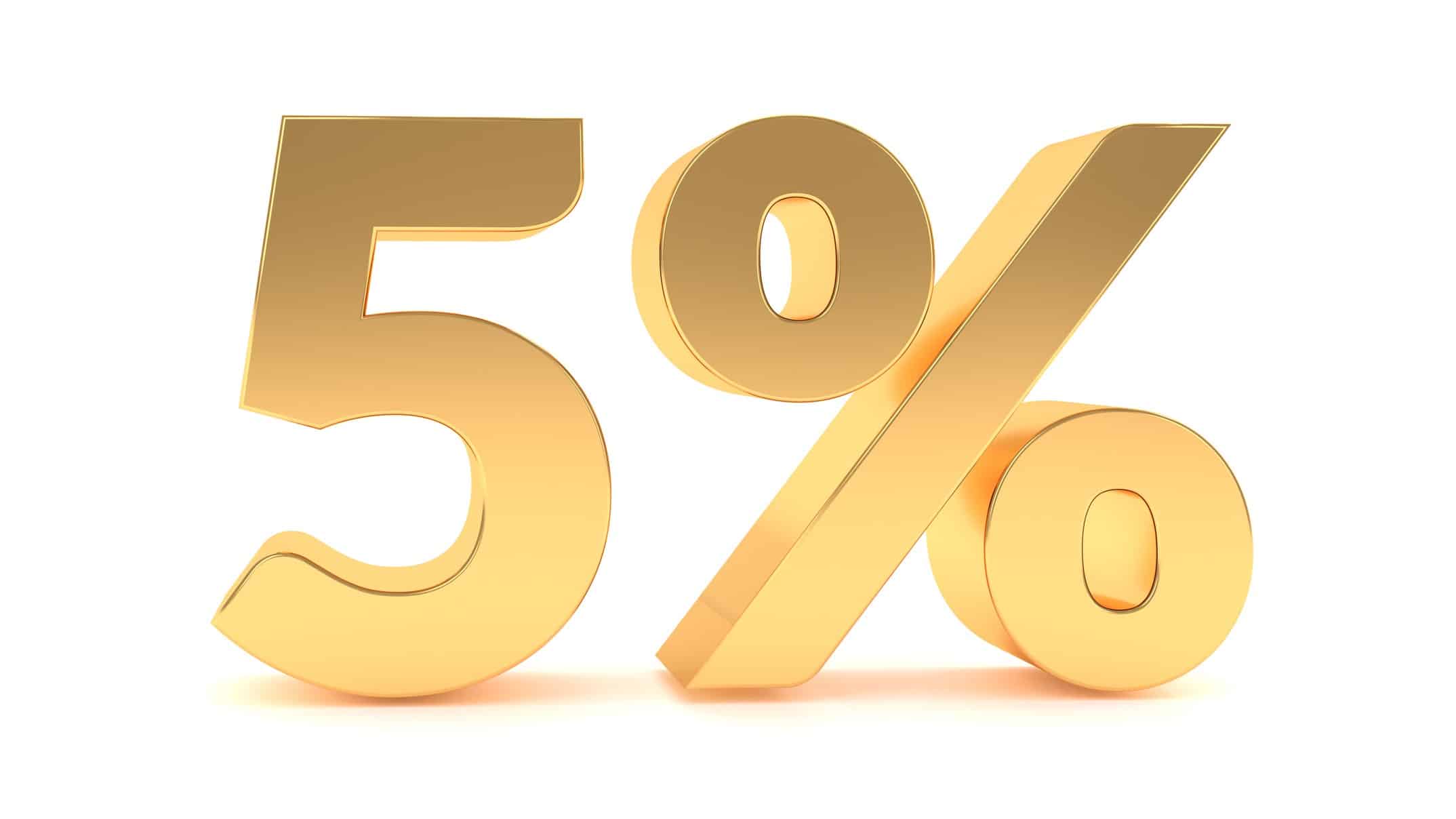
    large goklden symbol of 5% representing yield of dividend shares

    With interest rates continuing to slide, it has become almost impossible for income investors to generate a sufficient level of income from traditional interest-bearing assets.

    The good news is that the Australian share market is home to a large number of dividend shares offering notably better yields.

    Three that come highly rated are listed below. Here’s what you need to know about them:

    Aventus Group (ASX: AVN)

    Aventus is the owner and operator of 20 large format retail parks across Australia and counts major retailers such as ALDI, Bunnings, Officeworks, and The Good Guys as tenants. Its high weighting to everyday needs has been a huge positive this year and has allowed it to collect the majority of its rent as normal despite the pandemic.

    Analysts at Goldman Sachs have a buy rating and $2.76 price target on its shares. They also estimate that the current Aventus share price currently offers a forward 6.1% dividend yield.

    Fortescue Metals Group Limited (ASX: FMG)

    Fortescue is one of the world’s leading iron ore producers. It has world class, ultra-low cost operations which have been generating high levels of free cash flow for many years. This is particularly the case this year, with iron ore price climbing to US$123.63 a tonne on Friday. This compares to Fortescue’s current C1 costs of US$12.74 per wet metric tonne.

    At present, Macquarie has an outperform rating and $20.00 price target on its shares. It is forecasting a $1.64 per share fully franked in FY 2021. Based on the current Fortescue share price, this equates to a massive 8.8% dividend yield.

    Telstra Corporation Ltd (ASX: TLS)

    This telco giant has an increasingly positive outlook thanks to the easing of the NBN headwind, the arrival of 5G internet, and its T22 strategy. The latter is cutting costs and simplifying its business. Management also announced provisional plans to split into three separate entities. This is expected to unlock value for shareholders.

    Credit Suisse appears to be a fan of its plan and recently put an outperform rating and $3.85 price target on its shares. It is also expecting the company to maintain its fully franked 16 cents per share dividend for the foreseeable future. Based on the latest Telstra share price, this represents a 5.1% dividend yield.

    These Dividend Stocks Could Be Your Next Cash Kings (FREE REPORT)

    Motley Fool Australia’s Dividend experts recently released a brand-new FREE report revealing 3 dividend stocks with JUICY franked dividends that could keep paying you meaty dividends for years to come.

    Our team of investors think these 3 dividend stocks should be a ‘must consider’ for any savvy dividend investor. But more importantly, could potentially make Australian investors a heap of passive income.

    Don’t miss out! Simply click the link below to grab your free copy and discover these 3 high conviction stocks now.

    Returns As of 6th October 2020

    More reading

    Motley Fool contributor James Mickleboro has no position in any of the stocks mentioned. The Motley Fool Australia owns shares of and has recommended Telstra Limited. The Motley Fool Australia has recommended AVENTUS RE UNIT. We Fools may not all hold the same opinions, but we all believe that considering a diverse range of insights makes us better investors. The Motley Fool has a disclosure policy. This article contains general investment advice only (under AFSL 400691). Authorised by Scott Phillips.

    The post 3 ASX dividend shares with 5%+ yields to buy today appeared first on Motley Fool Australia.

    from Motley Fool Australia https://ift.tt/36jsTkd

  • Wilson Asset Management thinks these 2 ASX shares are a buy

    Respected fund manager Wilson Asset Management (WAM) has recently identified two ASX shares that it owns in its portfolio.

    WAM operates several listed investment companies (LICs). Two of those LICs are WAM Capital Limited (ASX: WAM) and WAM Research Limited (ASX: WAX).

    There’s also one called WAM Leaders Ltd (ASX: WLE) which looks at the larger businesses on the ASX.

    WAM says WAM Leaders actively investors in the highest quality Australian companies.

    The WAM Leaders  portfolio has delivered gross returns (that’s before fees, expenses and taxes) of 9.9% per annum since inception in May 2016, which is superior to the S&P/ASX 200 Accumulation Index average return of 6.4%.

    These are the two ASX shares that WAM outlined in its most recent monthly update:

    BlueScope Steel Limited (ASX: BSL)

    BlueScope Steel is the third largest manufacturer of painted and coated steel products globally. According to the ASX, BlueScope has a market capitalisation that’s getting close to $9 billion.

    WAM pointed out that in October, the ASX share announced that it expects first half FY21 earnings before interest and tax (EBIT) of around $340 million, which would be a 30% increase on the prior period.

    The fund manager explained: “Australian steel products and the Asia and North America building products are expected to deliver improved results. BlueScope has benefited from monetary and fiscal stimulus globally, which has led to increased infrastructure spend from governments, strong demand for steel domestically and in Asia and the recovery of the US automotive industry, which has led to steel spreads continuing to push higher globally.”

    Further to that, BlueScope Steel managing director and CEO Mark Vassella commented: “All operating segments are performing well and momentum has continued to build as we approach the end of the first half of FY21. Residential alterations and additions activity, demand for detached new housing, and growth in demand for e-commerce warehouse and logistics facilities are all robust and US automotive industry demand is recovering strongly.”

    According to Commsec, the BlueScope Steel share price is valued at 10x FY23’s estimated earnings.

    Challenger Ltd (ASX: CGF)

    Challenger is a large investment manager focused on delivering annuity streams to customers, usually retirees. According to the ASX, it has a market capitalisation of close to $4 billion.

    The annuity leader recently released its quarterly update for the three months to 30 September 2020. It showed a 4% increase in group assets to $89 billion and a 46% growth in annuity sales on the prior corresponding period. Funds under management (FUM) went up by 5% for the quarter, including $3.6 billion of net inflows. At the time, the company said it has made significant progress deploying the ‘life’ cash balance into higher yielding investments. Total life net inflows for the quarter were $114 million.

    WAM said: “Challenger trades closely to its net tangible asset (NTA) backing and we believe there is significant value, particularly in the funds management business, that is not appreciated by the market or reflected in the underlying NTA.”

    The ASX share reaffirmed its FY21 normalised net profit before tax guidance range of between $390 million and $440 million. Earnings are expected to be weighted toward the second half of FY21, reflecting the majority of rental abatements supporting life’s property tenants recognised in the first half and the progressive development of life’s cash and liquids over the year.

    According to Commsec, the Challenger share price is valued at 12x FY23’s estimated earnings.

    Where to invest $1,000 right now

    When investing expert Scott Phillips has a stock tip, it can pay to listen. After all, the flagship Motley Fool Share Advisor newsletter he has run for more than eight years has provided thousands of paying members with stock picks that have doubled, tripled or even more.*

    Scott just revealed what he believes are the five best ASX stocks for investors to buy right now. These stocks are trading at dirt-cheap prices and Scott thinks they are great buys right now.

    *Returns as of June 30th

    More reading

    Motley Fool contributor Tristan Harrison has no position in any of the stocks mentioned. The Motley Fool Australia owns shares of and has recommended Challenger Limited. We Fools may not all hold the same opinions, but we all believe that considering a diverse range of insights makes us better investors. The Motley Fool has a disclosure policy. This article contains general investment advice only (under AFSL 400691). Authorised by Scott Phillips.

    The post Wilson Asset Management thinks these 2 ASX shares are a buy appeared first on Motley Fool Australia.

    from Motley Fool Australia https://ift.tt/39uMiAz