Tag: Motley Fool

  • Here are the stocks Warren Buffett has been buying and selling

    This article was originally published on Fool.com. All figures quoted in US dollars unless otherwise stated.
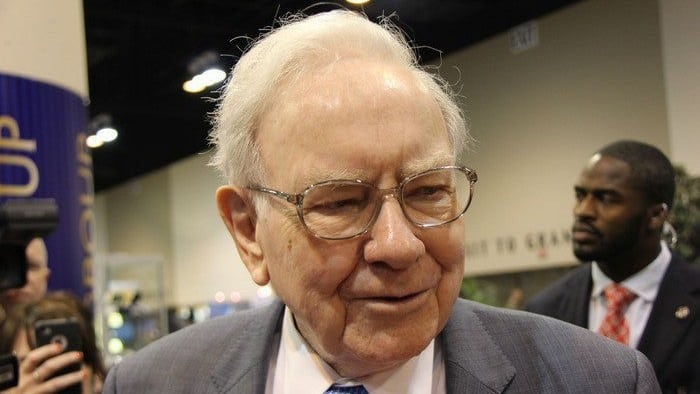
    Investor Warren Buffett

    This article was originally published on Fool.com. All figures quoted in US dollars unless otherwise stated.

    When Berkshire Hathaway (NYSE: BRK.A)(NYSE: BRK.B) released its third-quarter earnings report, we learned that Warren Buffett and his team had quite an active quarter in the stock market. The cost basis of Berkshire’s massive stock portfolio increased by about $9.6 billion, and it appeared that there had been some selling in the portfolio as well.

    Well, on Monday afternoon we got a glimpse of what the Oracle of Omaha has been buying and selling with the release of Berkshire’s Form 13F, which institutional money managers are required to file 45 days after the end of each quarter. Here’s a breakdown of the recent moves investors should know about.

    Here’s what Buffett and his stock pickers have been buying

    We already knew about a couple stock purchases Buffett and his lieutenants made – specifically that they spent more than $2 billion adding to their already large position in Bank of America and invested $720 million in Snowflake‘s recent IPO. But the company’s quarterly report indicated that this was just a tiny fraction of Berkshire’s stock buying activity.

    With that in mind, here’s a rundown of what stocks Berkshire Hathaway added to its portfolio in the third quarter:

    Company (Symbol)

    Shares Bought

    Market Value of New Shares (rounded)

    New Position?

    Bank of America (NYSE: BAC)

    85,092,006

    $2.35 billion

    No

    Snowflake (NYSE: SNOW)

    6,125,376

    $1.44 billion

    Yes

    General Motors (NYSE: GM)

    5,319,000

    $224 million

    No

    AbbVie (NYSE: ABBV)

    21,264,316

    $1.86 billion

    Yes

    Merck (NYSE: MRK)

    22,403,102

    $1.86 billion

    Yes

    Bristol Myers (NYSE: BMY)

    29,971,194

    $1.81 billion

    Yes

    Kroger (NYSE: KR)

    3,038,360

    $99 million

    No

    T-Mobile US (NASDAQ: TMUS)

    2,413,156

    $318 million

    Yes

    Pfizer (NYSE: PFE)

    3,711,780

    $136 million

    Yes

    Liberty Latin America Class K (NASDAQ: LILAK)

    66,567

    $780,000

    No

    Data source: Berkshire Hathaway SEC filings. Market value as of 16/11/2020.

    The biggest story on the buying side was the addition of not one but four big pharma stocks. Buffett (or one of his stock pickers) initiated stakes worth nearly $6 billion altogether, including three large and nearly equal-sized positions in AbbVie, Merck, and Bristol Myers.

    Aside from this, the initiation of a new position in T-Mobile US is also noteworthy, although a $318 million investment is rather small by Berkshire’s standards. This isn’t totally a surprise – Berkshire reportedly considered a large investment in Sprint (now a part of T-Mobile) in 2017.

    In addition to the stocks in the chart above, it’s also worth noting that Berkshire also repurchased more than $9 billion of its own stock during the quarter.

    Berkshire also hit the sell button on a few stocks

    While Berkshire was an active buyer of stocks in the third quarter, the quarterly report indicated that Buffett and company may have continued to pare back some of their other bank investments and that they may have taken some profits in their largest holding, Apple. Here are the particulars of these moves.

    Company (Symbol)

    Shares Sold

    Market Value of Shares Sold

    Did Berkshire Sell All Shares?

    Apple (NASDAQ: AAPL)

    36,326,710

    $4.37 billion

    No

    DaVita (NYSE: DVA)

    2,000,000

    $226 million

    No

    Wells Fargo (NYSE: WFC)

    110,202,265

    $2.74 billion

    No

    Axalta Coating Systems (NYSE: AXTA)

    650,000

    $18.4 million

    No

    Liberty Global (NASDAQ: LBTYA)

    1,300,000

    $29.3 million

    No

    Barrick Gold (NYSE: GOLD)

    8,918,701

    $229 million

    No

    M&T Bancorp (NYSE: MTB)

    1,616,561

    $205 million

    No

    PNC Financial (NYSE: PNC)

    3,430,759

    $433 million

    No

    JPMorgan Chase (NYSE: JPM)

    21,241,160

    $2.50 billion

    No, but sold 95% of stake

    Liberty Latin America (NASDAQ: LILA)

    160,478

    $1.9 million

    No

    Costco (NASDAQ: COST)

    4,333,363

    $1.69 billion

    Yes

    Data source: Berkshire Hathaway SEC filings. Market value as of 13/11/2020.

    We knew Berkshire sold some Apple, and Berkshire’s SEC filing confirmed it. The same goes for bank stocks, with the Wells Fargo, JPMorgan Chase, and other bank-stock sales adding up to nearly $6 billion.

    On the selling side, the biggest surprise is definitely the sale of the company’s entire Costco stake. This likely resulted in a big profit for Berkshire, as Costco stock is trading for about $380 per share right now, roughly 10 times what Berkshire likely paid for it.

    Also surprising is that Berkshire sold more than 40% of its Barrick Gold investment, which was just initiated during the second quarter.

    An active quarter that shows Berkshire is ready to put money to work

    Between Berkshire’s massive buybacks, this quarter’s wave of other stock purchases, and some other investments Berkshire has made recently, it is crystal clear that Warren Buffett is now in capital deployment mode. And with about $140 billion in cash and equivalents still on the balance sheet, this could be just the beginning.

    This article was originally published on Fool.com. All figures quoted in US dollars unless otherwise stated.

    Where to invest $1,000 right now

    When investing expert Scott Phillips has a stock tip, it can pay to listen. After all, the flagship Motley Fool Share Advisor newsletter he has run for more than eight years has provided thousands of paying members with stock picks that have doubled, tripled or even more.*

    Scott just revealed what he believes are the five best ASX stocks for investors to buy right now. These stocks are trading at dirt-cheap prices and Scott thinks they are great buys right now.

    *Returns as of June 30th

    More reading

    Matthew Frankel, CFP owns shares of Apple, Bank of America, Berkshire Hathaway (B shares), General Motors, and Wells Fargo and has the following options: short January 2021 $23 puts on Bank of America and short November 2020 $22.5 puts on Wells Fargo. The Motley Fool Australia’s parent company Motley Fool Holdings Inc. owns shares of and recommends Berkshire Hathaway (B shares) and recommends the following options: long January 2021 $200 calls on Berkshire Hathaway (B shares), short January 2021 $200 puts on Berkshire Hathaway (B shares), and short December 2020 $210 calls on Berkshire Hathaway (B shares). The Motley Fool Australia has recommended Berkshire Hathaway (B shares). We Fools may not all hold the same opinions, but we all believe that considering a diverse range of insights makes us better investors. The Motley Fool has a disclosure policy. This article contains general investment advice only (under AFSL 400691). Authorised by Scott Phillips.

    The post Here are the stocks Warren Buffett has been buying and selling appeared first on Motley Fool Australia.

    This article was originally published on Fool.com. All figures quoted in US dollars unless otherwise stated.

    from Motley Fool Australia https://ift.tt/3kxta6U

  • Average Aussie needs 22 weeks to earn what Elon Musk does in 5 minutes

    young man serving a group of customers at restaurant

    There’s always a lot of discussion about the levels of executive pay, especially in publicly listed companies that everyday retail investors own.

    Do chief executives really have that hard a job? Does intelligence or business acumen deserve as big a pay packet as rare athletic or dramatic talent?

    Regardless of which side of the debate you’re on, it’s amazing to see how much top executives take home compared to the average person on the street.

    For example, a study has found Tesla Inc (NASDAQ: TSLA) chief Elon Musk takes just 5 minutes to earn what an average Australian does in almost six months.

    According to Gigacalculator.com, a typical Australian worker needs to work for 22 weeks, 2 days and 3 hours to match what Musk makes over the duration of one pop song.

    Musk makes an astonishing $21,030 every 5 minutes.

    Rank Chief executive Company AUD earned in 5 minutes How long an average Australian needs to earn this much
    1 Elon Musk Tesla Inc (NASDAQ: TSLA) $21,030 22 weeks, 2 days and 3 hours
    2 Tim Cook Apple Inc (NASDAQ: AAPL) $4,725 5 weeks and 2 hours
    3 Tom Rutledge Charter Communications Inc (NASDAQ: CHTR) $4,133 4 weeks , 2 days and 1 hour
    4 Joseph Ianniello CBS Corporation (NASDAQ: VIAC) $4,118 4 weeks and 2 days
    5 Sumit Singh Chewy Inc (NYSE: CHWY) $3,821 4 weeks and 3 hours
    6 Jonathan Gray Blackstone Group Inc (NYSE: BX) $3,803 4 weeks and 3 hours
    7 Robert Swan Intel Corporation (NASDAQ: INTC) $3,498 3 weeks, 3 days and 6 hours
    8 Sundar Pichai Alphabet Inc (NASDAQ: GOOGL) $3,044 3 weeks, 1 day and 2 hours
    9 Satya Nadella Microsoft Corporation (NASDAQ: MSFT) $2,731 1 week, 4 days and 7 hours
    10 Douglas Ingram Sarepta Therapeutics Inc (NASDAQ: SRPT) $2,481 1 week, 2 days and 7 hours
    Source: Gigacalculator.com; Table created by author

    There is daylight between Musk and the second longest, Apple Inc (NASDAQ: AAPL) chief executive Tim Cook.

    “It would take Australians 5 weeks and 2 hours to earn the same amount the Apple CEO does in five minutes ($4,725),” Gigacalculator’s report read.

    “In the space of five minutes, Cook can buy three iPhone 12s without breaking a sweat.”

    Interestingly, the 10 highest paid CEOs in the world all work for publicly listed companies.

    In Australia, The Motley Fool previously reported IDP Education Ltd (ASX: IEL) boss Andrew Barkla is the highest paid CEO in the ASX 200. His $37.76 million salary equates to about $968.20 for 5 minutes of work.

    Do they deserve these pay packets?

    The study also found that 78% of Australians thought it “unjustified” for CEOs to earn millions per year. Even more (86%) thought the salary difference between them and the average Joe and Jane was “too wide” and needed to be reduced.

    Regardless of which side of the debate you’re on, the fact remains the performance of these business leaders have a huge bearing on the livelihood of many. Their decisions affect the fortunes of thousands or even millions of shareholders, staff, suppliers and customers.

    Perhaps chief executives should improve their communication skills to better publicise their work.

    Seven-out-of-ten Australians told the research that they don’t understand what CEOs do on a daily basis, while 65% demanded more transparency on their duties.

    Gigacalculator based its comparisons on an average gross annual full-time salary in Australia of $48,360. The study assumed CEOs worked an average of 62.5 hours each week, based on a Harvard Business Review report. The average Australian was assumed to have worked 40 hours each week.

    Our TOP healthcare stock is trading at a 30% discount to its highs

    If there’s one thing for sure, 2020 has been the year we embraced sanitisation. Scott Phillips has discovered a little-known Australian healthcare company could be set to reap the rewards of the post-covid world.

    Better yet, this fast-growing company is currently trading at a 30% discount from its highs. Scott believes in this stock so much, he’s staked $209k of our own company money on it. Forget ‘buy now pay later’, this stock could be the next hot stock on the ASX.

    Scott and his team have published a detailed report on this tiny ASX stock. Find out how you can access our TOP healthcare stock today!

    As of 2.11.2020

    More reading

    Suzanne Frey, an executive at Alphabet, is a member of The Motley Fool’s board of directors. Teresa Kersten, an employee of LinkedIn, a Microsoft subsidiary, is a member of The Motley Fool’s board of directors. Tony Yoo owns shares of Alphabet (A shares). The Motley Fool Australia’s parent company Motley Fool Holdings Inc. owns shares of and recommends Alphabet (A shares), Apple, Microsoft, and Tesla. The Motley Fool Australia’s parent company Motley Fool Holdings Inc. owns shares of Idp Education Pty Ltd. The Motley Fool Australia’s parent company Motley Fool Holdings Inc. recommends Chewy, Inc. and Intel and recommends the following options: long January 2021 $85 calls on Microsoft and short January 2021 $115 calls on Microsoft. The Motley Fool Australia has recommended Alphabet (A shares) and Apple. We Fools may not all hold the same opinions, but we all believe that considering a diverse range of insights makes us better investors. The Motley Fool has a disclosure policy. This article contains general investment advice only (under AFSL 400691). Authorised by Scott Phillips.

    The post Average Aussie needs 22 weeks to earn what Elon Musk does in 5 minutes appeared first on Motley Fool Australia.

    from Motley Fool Australia https://ift.tt/32SRkTj

  • The end of Stamp Duty… and the beginning of a new tax

    asx investor placing wooden house block on other blocks spelling words stamp duty

    I have a finance question for you:

    Would you rather pay a large, upfront fee for something, or a smaller annual one?

    Your answer, I hope, is ‘it depends’.

    Because, well, it does.

    It depends on a lot of things, but primarily: the two amounts in question, and the length of time over which the annual amount is paid.

    I reckon paying $100 upfront for something is meaningfully worse than paying $1 per year, on the reasonable assumption I won’t be around in 2120.

    Equally, if I have to pay for more than 5 years, I’d take the upfront option if the yearly payment was $20.

    In between those two scenarios, though, the numbers get very fuzzy, very quickly.

    And a lot of other considerations should be added in, too.

    I’d rather pay a gym membership monthly, rather than paying for a couple of years in advance, even at a decent discount.

    Why?

    Well, the gym might close. I might no longer be able to workout due to illness, injury or relocation. There might be a better gym that opens up down the street after 3 months.

    Or, you know, I might not go as often as I should — or I might stop going altogether — however unlikely that seems.

    And then there’s the discount. If I was offered $10/month or $230 upfront for two years, I’m pretty sure I’m taking the monthly deal.

    But if I could join for 2 years for $99?

    Well, then I start doing the maths. I only have to go for 10 of the next 24 months to break even. After that, I’m ahead.

    At $49 it’s probably a steal.

    But overall, as I said, ‘it depends’.

    Which is the first thought that came into my mind when I saw the news that the NSW Government is planning to replace one-off stamp duty, paid when you buy a property, with an annual land tax.

    Now, I have no interest in scaring the horses, so lets get a couple of things out of the way:

    1. It’s just a proposal, for now

    2. It’s proposed to only apply to future purchases; and

    3. The proposal suggests that buyers can choose either option.

    In a quote designed to make the proposal clearer, NSW Treasurer Dominic Perrottet said:

    “This will be like the Netflix of property tax.”

    So, is this a case of ‘Property Tax and chill’? Or are we being sucked into bingeing on more reality TV than is good for us?

    (I say ‘we’, because this isn’t just a NSW issue. You can bet your entire stamp duty bill that other state treasurers are watching this experiment very, very closely.)

    I’ll be frank: right now, the answer is, as I alluded to above, ‘it depends’.

    But I do have some concerns.

    First, how much is the annual tax likely to be?

    We don’t yet know if it’ll be an attractive option, relative to the current upfront scenario.

    Second, what is the impact on homeowners, particularly pensioners and other retirees, who might find themselves ‘asset rich, but cash poor’? 

    Do we face them being thrown out of their own homes? Or the explosion of ‘reverse mortgages’, allowing the finance industry to get its claws into previously debt-free retirees who feel they have no other option than to either sell up or give in?

    Third — and this is my great fear — will the new annual land tax become a tax on innumeracy and human frailty?

    Because, let’s face it, most of us aren’t anywhere near good enough with money.

    If you play the lotto, the dogs or the pokies, you’re likely to lose. But people do.

    If you carry a credit card balance, you’re getting screwed. But people do.

    If we take away Super, most of us won’t save enough for retirement, either.

    Put simply, we’re not very good, as a species at managing money.

    We’re even worse at thinking ahead. Making things ‘Future Scott’s’ problems is all too easy for me today.

    Future Scott would be much better served if I put down the chocky, and went for a run.

    Future Scott would be better off if I didn’t buy that new phone, or the new telly.

    Future Scott would have been hundreds of thousands of dollars better off if I hadn’t bought a new car when I was 25…

    You get the idea.

    So what are the odds that people are going to make good choices when they have the option of ponying up $50,000 in stamp duty today, or paying $3,000 a year in property tax forever?

    “Future Scott (or Future Sally, Future John or Future Samira) be damned”, in all probability.

    Lastly, you remember the property speculation that, in large part, caused the Global Financial Crisis in the US?

    You know one of the reasons we didn’t have the same thing here? 

    Stamp Duty.

    Yep, the cost of ‘flipping’ a house is currently prohibitive, thanks to the lump sum you lose every time you buy.

    Now, I can’t prove it, but don’t you reckon there would have been just a little more housing speculation if it was much, much cheaper to buy and sell?

    And, especially given the cost of housing here in Australia, don’t you reckon ‘more speculation’ is the last thing we need?

    Me too.

    Yes, there are likely benefits to the planned scheme. The list of potential drawbacks, above, isn’t supposed to paint the idea as ‘all bad’. But you’ll get plenty of ‘charm offensive’ speeches and articles on the positives, so this is my attempt to make sure you’re armed with all of the (potential) problems, too.

    And now you are. Choose wisely.

    Fool on!

    Where to invest $1,000 right now

    When investing expert Scott Phillips has a stock tip, it can pay to listen. After all, the flagship Motley Fool Share Advisor newsletter he has run for more than eight years has provided thousands of paying members with stock picks that have doubled, tripled or even more.*

    Scott just revealed what he believes are the five best ASX stocks for investors to buy right now. These stocks are trading at dirt-cheap prices and Scott thinks they are great buys right now.

    *Returns as of June 30th

    More reading

    Scott Phillips has no position in any of the stocks mentioned. The Motley Fool Australia’s parent company Motley Fool Holdings Inc. owns shares of and recommends Netflix. The Motley Fool Australia has recommended Netflix. We Fools may not all hold the same opinions, but we all believe that considering a diverse range of insights makes us better investors. The Motley Fool has a disclosure policy. This article contains general investment advice only (under AFSL 400691). Authorised by Scott Phillips.

    The post The end of Stamp Duty… and the beginning of a new tax appeared first on Motley Fool Australia.

    from Motley Fool Australia https://ift.tt/3pLwwam

  • Here are the US shares that CommSec customers are buying

    Road sign for 'Wall St' with US flags in background

    Most weeks, Commonwealth Bank of Australia‘s (ASX: CBA) CommSec brokering platform tells us the international shares (which are almost always American) proving popular with its customers.

    Because CommSec is one of the largest online brokers in the country, this data can be indicative of general investing trends in our market. This week’s data covers 9-13 November.

    So here are the top 10 United States shares that CommSec customers were buying last week:

    Most traded US shares on the ASX

    The five most traded international shares last week were the following:

    1. Nio Inc (NYSE: NIO) – representing 6.4% of total trades with an 81%/19% buy-to-sell ratio.
    2. Tesla Inc (NASDAQ: TSLA) – representing 4.7 % of total trades with a 77%/23% buy-to-sell ratio.
    3. Alibaba Group Holding Ltd (NYSE: BABA) – representing 2.9% of total trades with an 82%/18% buy-to-sell ratio.
    4. Pfizer Inc (NYSE: PFE) – representing 2.6% of total trades with a 90%/10% buy/sell ratio.
    5. Apple Inc (NASDAQ: AAPL) – representing 4.2% of total trades with a 57%/43% buy-to-sell ratio.

      The next five most traded shares were these:

    6. Xpeng Inc (NYSE: XPEV)

    7. Zoom Video Communications Inc (NASDAQ: ZM)

    8. Microsoft Corporation (NASDAQ: MSFT)

    9. Amazon.com Inc (NASDAQ: AMZN)

    10. Palantir Technologies Inc (NYSE: PLTR)

    What can we learn from these trades?

    We noted last week that the bullish patterns we had been used to seeing had been moderating somewhat. I wrote then that “our coverage of the US shares ASX investors were buying from 19-23 October shows none of the top 5 US shares having a buy-sell ratio of less than 80%/20%, yet 4 out of 5 of the top shares this week are below this ratio”.

    This week, we are continuing to see this trend play out. Only one stock in the top 5 this had a buy/sell ratio at or better than 90%/10%, which was Pfizer.

    Interestingly, Pfizer is a company that rarely features on this list. We can probably put its enthusiastic presence this week down to one factor: the company’s announcement of a more-successful-than-hoped coronavirus vaccine candidate last week.

    Other than that, we see similar trends playing out this week compared to last week. Electric vehicle companies Nio and Tesla continue to compete for that top spot. Last week saw Nio pip Tesla for the first time, and it’s notable to see this continue this week. Nio shares are up 65% over the past month though, so it’s not hard to guess where this interest is coming from. Investors seem to be cooling on big tech though. Only one FAANG stock makes the top 5 this week (Apple), and frequent ‘top 5er’ Amazon barely scraped in the top 10.

    Where to invest $1,000 right now

    When investing expert Scott Phillips has a stock tip, it can pay to listen. After all, the flagship Motley Fool Share Advisor newsletter he has run for more than eight years has provided thousands of paying members with stock picks that have doubled, tripled or even more.*

    Scott just revealed what he believes are the five best ASX stocks for investors to buy right now. These stocks are trading at dirt-cheap prices and Scott thinks they are great buys right now.

    *Returns as of June 30th

    More reading

    John Mackey, CEO of Whole Foods Market, an Amazon subsidiary, is a member of The Motley Fool’s board of directors. Teresa Kersten, an employee of LinkedIn, a Microsoft subsidiary, is a member of The Motley Fool’s board of directors. Sebastian Bowen owns shares of Pfizer and Tesla. The Motley Fool Australia’s parent company Motley Fool Holdings Inc. owns shares of and recommends Alibaba Group Holding Ltd., Amazon, Apple, Microsoft, Tesla, and Zoom Video Communications and recommends the following options: long January 2021 $85 calls on Microsoft, short January 2021 $115 calls on Microsoft, short January 2022 $1940 calls on Amazon, and long January 2022 $1920 calls on Amazon. The Motley Fool Australia has recommended Amazon, Apple, and Zoom Video Communications. We Fools may not all hold the same opinions, but we all believe that considering a diverse range of insights makes us better investors. The Motley Fool has a disclosure policy. This article contains general investment advice only (under AFSL 400691). Authorised by Scott Phillips.

    The post Here are the US shares that CommSec customers are buying appeared first on Motley Fool Australia.

    from Motley Fool Australia https://ift.tt/3nzkqim

  • CIMIC (ASX:CIM) share price on watch after $800m Australian Defence contract win

    The CIMIC Group Ltd (ASX: CIM) share price will be on watch on Wednesday following an after-market announcement.

    What did CIMIC announce?

    On Tuesday afternoon CIMIC revealed that its CPB Contractors business has been selected by the Australian Government’s Department of Defence to deliver the development phase of the Australia-Singapore Military Training Initiative (ASMTI) facilities project in North Queensland.

    In addition to this, CPB Contractors has been named as the preferred contractor to manage the second phase of the project. This is currently scheduled to commence mid-2022.

    The ASMTI facilities are being developed in order to support Australian Defence Force training and increased access by personnel of the Singapore Armed Forces to Australian military training areas.

    According to the release, combined, the two phases of the project are expected to generate approximately $800 million in revenue for CPB Contractors.

    The project design work will commence in early 2021 and construction of the ASMTI facilities is scheduled to be completed in late 2027.

    CIMIC Group’s Chief Executive Officer, Juan Santamaria, notes that the company has a long history of working with the Defence Force.

    He said: “We have a history of working with the Australian Defence Force, providing our regional projects experience and technical expertise to safely deliver key projects. We’re proud to continue to deliver long-term value to the Commonwealth.”

    This sentiment was echoed by CPB Contractors’ Managing Director, Jason Spears.

    Mr Spears commented: “CPB Contractors has been reliably delivering projects for the Department of Defence for more than 20 years. We will work collaboratively with the Department to ensure the economic opportunities created by this project are maximised through the involvement of local suppliers.”

    CPB Contractors has previously delivered some of Australia’s most significant Defence infrastructure projects. This includes the RAAF Base Williamtown Redevelopment Stage 2 and HMAS Albatross Redevelopment Stage 3 in New South Wales.

    Where to invest $1,000 right now

    When investing expert Scott Phillips has a stock tip, it can pay to listen. After all, the flagship Motley Fool Share Advisor newsletter he has run for more than eight years has provided thousands of paying members with stock picks that have doubled, tripled or even more.*

    Scott just revealed what he believes are the five best ASX stocks for investors to buy right now. These stocks are trading at dirt-cheap prices and Scott thinks they are great buys right now.

    *Returns as of June 30th

    More reading

    Motley Fool contributor James Mickleboro has no position in any of the stocks mentioned. The Motley Fool Australia has no position in any of the stocks mentioned. We Fools may not all hold the same opinions, but we all believe that considering a diverse range of insights makes us better investors. The Motley Fool has a disclosure policy. This article contains general investment advice only (under AFSL 400691). Authorised by Scott Phillips.

    The post CIMIC (ASX:CIM) share price on watch after $800m Australian Defence contract win appeared first on Motley Fool Australia.

    from Motley Fool Australia https://ift.tt/38QSwdM

  • Why the Telstra (ASX:TLS) share price can go even higher from here

    asx share price increase represented by golden dollar sign rocketing out from white domes

    The Telstra Corporation Ltd (ASX: TLS) share price ran out of steam on Tuesday and dropped lower.

    The telco giant’s shares dropped 1.5% to $3.12.

    Despite this, the Telstra share price is still up 16% since the start of the month.

    Why is the Telstra share price surging higher in November?

    Investors have been fighting to get hold of Telstra’s shares this month following the release of a big announcement at its investor day event.

    At the event, the company announced a proposed restructuring which would create three separate legal entities.

    Telstra’s CEO, Andrew Penn, believes the restructure will allow the company to take advantage of potential monetisation opportunities for its infrastructure assets which could create additional value for shareholders.

    The restructure will see Telstra split up into InfraCo Fixed, InfraCo Towers, and ServeCo.

    InfraCo Fixed would own and operate Telstra’s passive or physical infrastructure assets. These are the ducts, fibre, data centres, subsea cables, and exchanges that support its fixed telecommunications network.

    The InfraCo Towers business would own and operate Telstra’s passive or physical mobile tower assets. Though, Telstra intends to monetise these assets over time given the strong demand and compelling valuations for this type of high-quality infrastructure.

    Finally, ServeCo, which is the core business, would continue to focus on creating innovative products and services, supporting customers and delivering the best possible customer experience. It would also own the active parts of its network.

    This includes the radio access network and spectrum assets, to ensure that Telstra continues to maintain its industry leading mobile coverage and network superiority.

    Can the Telstra share price go higher?

    One leading broker that still sees meaningful upside for the Telstra share price is Goldman Sachs.

    It reiterated its buy rating and $3.75 price target on the company’s shares following the announcement of the aforementioned plan.

    This price target implies potential upside of over 25% including dividends over the next 12 months.

    Commenting on plans, Goldman said: “We believe the update from Telstra will be viewed positively, given: (1) it reflects a greater willingness to monetize its attractive infrastructure assets to create shareholder value; and (2) underlying earnings trends, particularly in mobile, which looks to be trending favorably, supporting the improved FY23 ROIC target.”

    “This supports our positive view on Telstra, which continues to be predicated on: (1) A positive mobile inflection approaching, which typically drives outperformance; (2) The 16cps dividend is a sustainable, and could be supplemented by meaningful TowerCo proceeds; and (3) Significant Infrastructure value, which could be crystallized over time as we head towards NBN privatization,” it concluded.

    Where to invest $1,000 right now

    When investing expert Scott Phillips has a stock tip, it can pay to listen. After all, the flagship Motley Fool Share Advisor newsletter he has run for more than eight years has provided thousands of paying members with stock picks that have doubled, tripled or even more.*

    Scott just revealed what he believes are the five best ASX stocks for investors to buy right now. These stocks are trading at dirt-cheap prices and Scott thinks they are great buys right now.

    *Returns as of June 30th

    More reading

    Motley Fool contributor James Mickleboro has no position in any of the stocks mentioned. The Motley Fool Australia owns shares of and has recommended Telstra Limited. We Fools may not all hold the same opinions, but we all believe that considering a diverse range of insights makes us better investors. The Motley Fool has a disclosure policy. This article contains general investment advice only (under AFSL 400691). Authorised by Scott Phillips.

    The post Why the Telstra (ASX:TLS) share price can go even higher from here appeared first on Motley Fool Australia.

    from Motley Fool Australia https://ift.tt/3kDyPbE

  • Analysts name 2 of the best ASX shares to buy now

    two ladies playing amongst clothes on a store rack

    It’s hard to know which ASX shares are the best to buy right now. The coronavirus pandemic is still eliciting massive uncertainties in both the economy and society. As such, the investing world is still arguably very much ‘in-flux’.

    Luckily, there’s no penalty for receiving (or following) the recommendations of experts in this space. So here are 2 ASX shares that analysts at the Motley Fool rate as ‘buys’ today.

    2 of the best ASX shares to buy now

    Premier Investments Limited (ASX: PMV)

    Premier Investments might not be a company you’ve heard of. But it’s far more likely you’d be familiar with some of its store brands.

    Premier owns a stable of successful Aussie retailers, including stationary seller Smiggle, clothing shops Just Jeans and JayJays, as well as the purveyor of high-end sleepwear Peter Alexander.

    One might be worried about the prospects of investing in a retail company in 2020. But Premier’s performance this year arguably puts any of these fears to rest.

    Back in September, the company released it’s full-year results for the 12 months to 25 July 2020.  Despite the pandemic, Premier Investments thrived over the year, posting a 29% increase to net profits. This was largely driven by online sales, which soared almost 49% over the period.

    Premier also maintained it’s 70 cents per share dividend from 2019 in 2020. Premier Investments is currently rated as a ‘buy’ in the Motley Fool’s ‘Everlasting Income’ service.

    Macquarie Group Ltd (ASX: MQG)

    Macquarie Group is routinely called a ‘bank’, and is even sometimes lobbed in with the big four like Commonwealth Bank of Australia (ASX: CBA) as the ‘ASX’s fifth bank’.

    But the reality is Macquarie is not your typical ASX banking share.

    It does offer mortgages, bank accounts, credit cards and loans like CBA and the others. But most of Macquaries’ earnings come from other spheres, such as asset management (Macquarie offers a range of managed funds), commodity trading and investment banking.

    This makes it less vulnerable to factors that negatively affect the other ASX banks, like a sluggish economy, low credit growth and low interest rates.

    Macquarie has done very well for its investors over the past few months. Macquarie Group shares are up more than 94% since 23 March, and up 10% in November so far alone. 

    Analysts at the Motley Fool’s ‘Share Advisor’ service, as well as the ‘Dividend Investor’ and ‘Everlasting Income’ services, currently rate Macquarie Group as a ‘buy’ today.

    Where to invest $1,000 right now

    When investing expert Scott Phillips has a stock tip, it can pay to listen. After all, the flagship Motley Fool Share Advisor newsletter he has run for more than eight years has provided thousands of paying members with stock picks that have doubled, tripled or even more.*

    Scott just revealed what he believes are the five best ASX stocks for investors to buy right now. These stocks are trading at dirt-cheap prices and Scott thinks they are great buys right now.

    *Returns as of June 30th

    More reading

    Motley Fool contributor Sebastian Bowen has no position in any of the stocks mentioned. The Motley Fool Australia owns shares of and has recommended Macquarie Group Limited and Premier Investments Limited. We Fools may not all hold the same opinions, but we all believe that considering a diverse range of insights makes us better investors. The Motley Fool has a disclosure policy. This article contains general investment advice only (under AFSL 400691). Authorised by Scott Phillips.

    The post Analysts name 2 of the best ASX shares to buy now appeared first on Motley Fool Australia.

    from Motley Fool Australia https://ift.tt/3lEhO2p

  • ASX 200 rises again on Tuesday

    ASX 200

    The S&P/ASX 200 Index (ASX: XJO) went up again today, rising by 0.2% to 6,498 points.

    Another promising vaccine

    US company Moderna has said that its COVID-19 vaccine is 94.5% effective. The effectiveness rate is similar to the Pfizer rate of 90%.

    However, a key difference is that Moderna’s vaccine can be stored at regular fridge temperatures for many weeks, which will help with its distribution. Pfizer’s vaccine has to be stored at around minus 80C.

    Dr Fauci, a leading American infection specialist said: “The vaccine is really the light at the end of the tunnel”.

    The company thinks it will have enough required safety data by next week and will then apply for emergency use authorisation before the end of the year.

    International share markets climbed in reaction to this additional good news. The ASX 200 went higher as well.  

    Afterpay Ltd (ASX: APT)

    It has been a busy week of announcements for Afterpay. Yesterday it responded to the ASIC report into the buy now, pay later industry.

    Today it held its AGM. The company highlighted that it will be increasing its investments to achieve a number of outcomes. It wants to enhance its platform and continue to grow its people resources. Afterpay wants to pursue co-marketing opportunities and invest with its retail partners. It wants to consolidate its market-leading position in existing markets. Afterpay also aims to grow into new markets faster and leverage an early mover advantage.

    The buy now, pay later business also announced that both Anthony Eisen and Nick Molnar would be co-CEOs of the ASX 200 company.

    Afterpay co-CEOs Anthony Eisen and Nick Molnar commented: “Since we founded Afterpay we have always been aligned and excited about the opportunity to create a globally relevant, customer centric business. Not only are we well on our way to achieving this, we are accelerating our efforts to leverage the momentum we have generated.

    “The decision to become co-CEOs is a logical one considering our global expansion plans and ambitious long term goals. We are both committed to leading the business over the long term, and driving our strategy to continue generating value for shareholders.”

    The Afterpay share price fell by 5.4% today.

    Charter Hall Group (ASX: CHC)

    The Charter Hall share price fell around 6% today.

    The property business announced that its wholesale partnership LWHP, which comprises VFMC, Telstra Super and Charter Hall as partners, acquired a $353 million portfolio of six Bunnings assets located in metro markets.

    The portfolio of Bunnings Warehouse retail stores was acquired with a yield of 4.63%. The portfolio, 85% of which is located in Sydney, Melbourne and Brisbane, has a weighted average lease expiry (WALE) of 10 years and 2.5% annual rent reviews.

    Charter Hall managing director and CEO David Harrison said: “We are proud to further expand our strong relationship with Wesfarmers Ltd (ASX: WES) and Bunnings Group. Across the Charter Hall platform we now have in excess of $2.4 billion invested in 59 Bunnings stores, 50 of which are located in metropolitan locations. This transaction represents our seventh Bunnings portfolio acquired since 2006 when we first recognised the strength of the Bunnings business, the relatively low rents per square metre of lettable area and the large prime sites Bunnings typically occupy.”

    LWHP fund manager Ben Ellis explained that the partnership had been one of the most successful partnerships delivered an internal rate of return since inception which has exceeded 15% per annum.

    Where to invest $1,000 right now

    When investing expert Scott Phillips has a stock tip, it can pay to listen. After all, the flagship Motley Fool Share Advisor newsletter he has run for more than eight years has provided thousands of paying members with stock picks that have doubled, tripled or even more.*

    Scott just revealed what he believes are the five best ASX stocks for investors to buy right now. These stocks are trading at dirt-cheap prices and Scott thinks they are great buys right now.

    *Returns as of June 30th

    More reading

    Motley Fool contributor Tristan Harrison has no position in any of the stocks mentioned. The Motley Fool Australia owns shares of AFTERPAY T FPO and Wesfarmers Limited. We Fools may not all hold the same opinions, but we all believe that considering a diverse range of insights makes us better investors. The Motley Fool has a disclosure policy. This article contains general investment advice only (under AFSL 400691). Authorised by Scott Phillips.

    The post ASX 200 rises again on Tuesday appeared first on Motley Fool Australia.

    from Motley Fool Australia https://ift.tt/2K5dlYv

  • Leading brokers name 3 ASX shares to sell today

    stylised silhouette of a bear on financial graph background

    On Monday I looked at three ASX shares that brokers have given buy ratings to this week.

    Unfortunately, not all shares are in favour with them right now. Three that have just been given sell ratings are listed below.

    Here’s why these brokers are bearish on these ASX shares:

    Evolution Mining Ltd (ASX: EVN)

    According to a note out of Macquarie, its analysts have downgraded this gold miner’s shares to an underperform rating and cut the price target on them to $5.30. The broker believes that the US 10-year bond yield has now bottomed and expects the yield curve to continue to lift. In light of this, it has cut its medium term gold price forecasts meaningfully. This has led to earnings downgrades for Evolution and other gold miners. The Evolution share price is trading at $5.71 on Tuesday.

    Goodman Group (ASX: GMG)

    A note out of Goldman Sachs reveals that its analysts have retained their sell rating and $12.24 price target on this property company’s shares. The broker has been looking into the industry and continues to believe its shares are expensive in comparison to peers. It notes that Goodman is targeting earnings per share growth of 9% this year. After which, based on executive remuneration, the company is targeting 6% to 9% per annum growth over the medium term. It doesn’t believe this level of growth justifies the premium its shares trade at. The Goodman share price is changing hands for $18.72.

    National Australia Bank Ltd (ASX: NAB)

    Analysts at Morgan Stanley have downgraded this banking giant’s shares to an underweight rating with an improved price target of $20.10. While the broker expects dividends to start their recovery in 2021 and notes that NAB has a strong capital position, it sees downside risks to margins and loan growth forecasts. In light of this and its strong share price recovery, it has downgraded its shares today. The NAB share price is trading at $21.83 this afternoon.

    Where to invest $1,000 right now

    When investing expert Scott Phillips has a stock tip, it can pay to listen. After all, the flagship Motley Fool Share Advisor newsletter he has run for more than eight years has provided thousands of paying members with stock picks that have doubled, tripled or even more.*

    Scott just revealed what he believes are the five best ASX stocks for investors to buy right now. These stocks are trading at dirt-cheap prices and Scott thinks they are great buys right now.

    *Returns as of June 30th

    More reading

    Motley Fool contributor James Mickleboro has no position in any of the stocks mentioned. The Motley Fool Australia has no position in any of the stocks mentioned. We Fools may not all hold the same opinions, but we all believe that considering a diverse range of insights makes us better investors. The Motley Fool has a disclosure policy. This article contains general investment advice only (under AFSL 400691). Authorised by Scott Phillips.

    The post Leading brokers name 3 ASX shares to sell today appeared first on Motley Fool Australia.

    from Motley Fool Australia https://ift.tt/35CxEoz

  • Why the Webjet (ASX:WEB) share price is up 48% in November

    asx share price rising higher represented by red paper plane flying above other white paper planes

    The Webjet Limited (ASX: WEB) share price is continuing to march higher today, up 2.0% in afternoon trading. Today’s gains follow on the 18% rise posted last week, which sees the Webjet share price up 48% so far in November.

    By comparison the S&P/ASX 200 Index (ASX: XJO) is up 9.7% so far this month.

    However, while the ASX 200 is now only down 2.9% year to date, the Webjet share price is still 45.6% lower, despite November’s meteoric rise. That’s because the company is still battling back from seeing its shares lose more than 77% in the early months of the COVID-19 breakout.

    What does Webjet do?

    Headquartered in Melbourne, Webjet is a digital focused travel agency operating in Australia and New Zealand, with customers across the global consumer and wholesale markets.

    Webjet’s business consists of a B2C division comprising the Webjet, Online Republic and WebBeds brands, and a B2B division comprising the Lots of Hotels, Sunhotels and FIT Ruums brands. The company’s operations are primarily online/technology-based.

    Webjet shares first listed on the ASX in 1997.

    Why is the Webjet share price rallying?

    The Webjet share price is taking off for much the same reason it tanked earlier this year. Or the opposite reason, to be more precise.

    When the pandemic swept across the globe, domestic and international travel came to a virtual standstill. Travel related shares like Webjet, Qantas Airways Limited (ASX: QAN) and Flight Centre Travel Group Ltd (ASX: FLT) took some of the biggest losses.

    Travel shares have also been some of the laggards during the wider market rebound. Many investors have remained on the sidelines, wary that the unknown new virus could thwart humanity’s best efforts at developing a vaccine and indefinitely stall the return of international travel.

    Those fears were partly put to rest last week when Pfizer Inc. (NYSE: PFE) and BioNTech SE (NASDAQ: BNTX) announced that their vaccine has proven 90% effective at preventing symptomatic coronavirus infections.

    Investor anxiety over the travel sector was further eased overnight, after Moderna Inc (NASDAQ: MRNA) reported its vaccine could top those results, proving to be 94.5% effective in late-stage trials.

    With investors now hopeful that domestic and global travel will reopen much faster than anticipated, the Webjet share price has been one to benefit.

    Man who said buy Kogan shares at $3.63 says buy these 3 ASX stocks now

    When investing expert Scott Phillips has a stock tip, it can pay to listen. After all, the flagship Motley Fool Share Advisor newsletter he has run for more than eight years has provided thousands of paying members with stock picks that have doubled, tripled or even more.*

    In this FREE STOCK REPORT, Scott just revealed what he believes are the 3 ASX stocks for the post COVID world that investors should buy right now while they still can. These stocks are trading at dirt-cheap prices and Scott thinks these could really go gangbusters as we move into ‘the new normal’.

    *Returns as of 6/8/2020

    More reading

    Motley Fool contributor Bernd Struben has no position in any of the stocks mentioned. The Motley Fool Australia owns shares of and has recommended Webjet Ltd. The Motley Fool Australia has recommended Flight Centre Travel Group Limited. We Fools may not all hold the same opinions, but we all believe that considering a diverse range of insights makes us better investors. The Motley Fool has a disclosure policy. This article contains general investment advice only (under AFSL 400691). Authorised by Scott Phillips.

    The post Why the Webjet (ASX:WEB) share price is up 48% in November appeared first on Motley Fool Australia.

    from Motley Fool Australia https://ift.tt/2Kc37FP