Tag: Motley Fool

  • Nearmap (ASX:NEA) targets return of 20-40% year-on-year growth

    Growth of ASX 200 tech shares represented by man's hand grabbing onto red ladder that is pointed towards sky

    The Nearmap Ltd (ASX: NEA) share price is less than 4% down from where it started the year. And if the company can achieve its forecast of a return to 20-40% year-on-year growth, shares could well trend higher.

    Nearmap had a good start to the trading day this morning, with the share price up 0.4% in early morning. That came as the wider S&P/ASX 200 Index (ASX: XJO) posted a 1.2% gain in the first 20 minutes of trading.

    Since then, as you likely know, the ASX has been shuttered due to an as yet unexplained market outage.

    What does Nearmap do?

    Nearmap was founded in 1998 in Perth, Western Australia. The company provides high resolution aerial imagery technology and location data for companies and government customers across Australia, the United States, Canada and New Zealand. Its technology allows customers to conduct detailed virtual site visits rather than needing to fly to and over the locations in person.

    Nearmap shares first traded on the ASX in 2000.

    How remote work is helping the Nearmap share price

    While many businesses continue to struggle with government COVID-19 mitigation measures, Nearmap’s business model has proven more resilient.

    At the company’s annual general meeting last week, Nearmap revealed strong growth in its annualised contract value (ACV).

    In the US and Canada, which form a large part of the company’s growth ambitions, ACV increased 27% in FY20. ACV also grew in Australia and New Zealand, up 11%.

    Building on this positive momentum, Nearmap forecast ACV of $120 million to $128 million in FY21. Over the medium to longer term, Nearmap is forecasting ACV growth in the range of 20% to 40%.

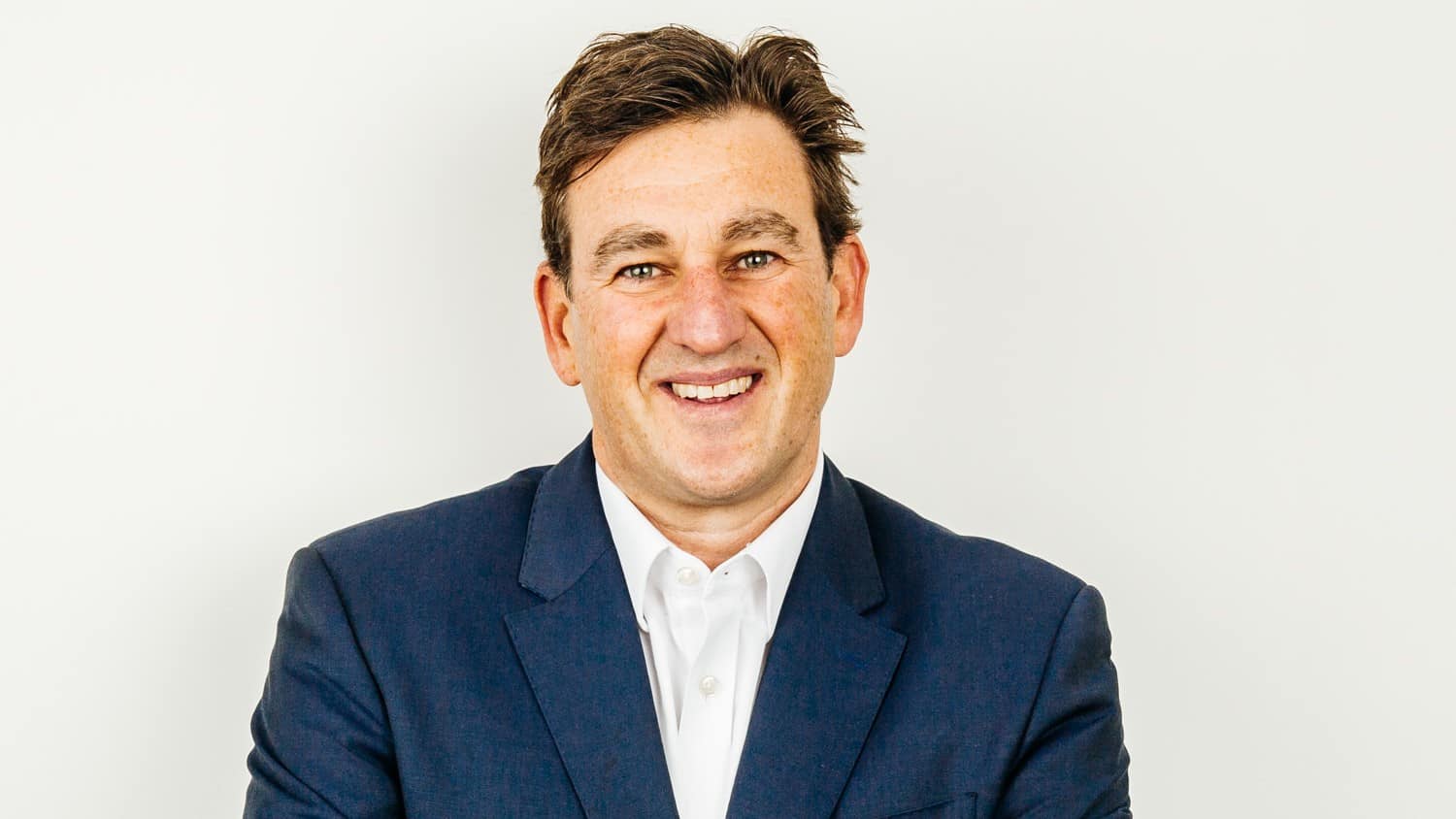
    Addressing the company’s relative resilience in the face of the pandemic, Nearmap chief executive Rob Newman told the Australian Financial Review (AFR):

    Some (customers) have been negatively affected, but others are relying on us more and our business is very resilient in this time…

    People still need to insure homes, local governments still have to provide services and people’s roofs still need to be fixed… The capital raise in September is setting us up to accelerate growth and we see fiscal 21 as the way to build the foundation to scale rapidly.

    We’re seeing this year as a foundational year to return to 20 per cent to 40 per cent year-on-year growth.

    Where to invest $1,000 right now

    When investing expert Scott Phillips has a stock tip, it can pay to listen. After all, the flagship Motley Fool Share Advisor newsletter he has run for more than eight years has provided thousands of paying members with stock picks that have doubled, tripled or even more.*

    Scott just revealed what he believes are the five best ASX stocks for investors to buy right now. These stocks are trading at dirt-cheap prices and Scott thinks they are great buys right now.

    *Returns as of June 30th

    More reading

    Bernd Struben has no position in any of the stocks mentioned. The Motley Fool Australia’s parent company Motley Fool Holdings Inc. owns shares of Nearmap Ltd. The Motley Fool Australia has recommended Nearmap Ltd. We Fools may not all hold the same opinions, but we all believe that considering a diverse range of insights makes us better investors. The Motley Fool has a disclosure policy. This article contains general investment advice only (under AFSL 400691). Authorised by Scott Phillips.

    The post Nearmap (ASX:NEA) targets return of 20-40% year-on-year growth appeared first on Motley Fool Australia.

    from Motley Fool Australia https://ift.tt/3kzblVc

  • The Adore Beauty (ASX:ABY) share price on watch after Morgan Stanley “overweight” recommendation

    Smiling woman applying face cream in mirror

    The Adore Beauty Group Ltd (ASX: ABY) share price will be one to watch following an “overweight” recommendation by broker Morgan Stanley.

    The online beauty retailer first hit the radar of most ASX investors during its initial public offering (IPO) on 23 October.

    On its first day of trading, Adore Beauty shares gained as much as 10% in intraday trading from the IPO price of $6.75, reaching $7.42 per share.

    Shares were heading strongly higher in early morning trade today, up 2.0%, before the ASX shuttered its doors for as yet unexplained technical issues.

    Despite that bounce, Adore Beauty’s share price remains down 11.6% since the closing bell rang on 23 October.

    For comparison, the All Ordinaries Index (ASX: XAO) is up 4.9% over that same time.

    What does Adore Beauty do?

    Online beauty retailer Adore Beauty was founded by Kate Morris in 2000 when she launched her business in her Melbourne garage with the aid of a $12,000 loan from her boyfriend’s parents.

    On 23 October 2020, the company officially went public with its ASX IPO. Adore Beauty stocks more than 230 leading beauty brands, offering customers quick and easy access to some 11,000 products, ranging from premium to everyday use.

    Why does Morgan Stanley see upside to Adore Beauty’s share price?

    Broker Morgan Stanley has put a price target of $8.35 on Adore Beauty’s shares alongside an overweight recommendation. That represents a 36% share price gain from the current $6.12 per share.

    As the Australian Financial Review reports, the broker sees a lot of growth potential ahead for the online beauty retailer. And it thinks that Adore Beauty’s own revenue forecasts are too conservative.

    Adore forecasts revenues of $89 million in the first half of 2020-21, while Morgan Stanley has that figure at $93.6 million, rising to $103.9 million in the second half year:

    The total addressable market for the e-commerce beauty retailer is estimated at $3.2 billion by 2023-24 (or $12.9 billion including in-store sales), analyst Joseph Michael concludes, implying 30 per cent compound annual growth between now and then. The strong growth is supported by our estimate of an increase in online penetration to 25 per cent by 2023-24 from 7 per cent in 2018-19.

    If Adore Beauty can overcome the risks to its growth forecast – including competition from the brands it sells and a post-COVID consumer return to brick and mortar shopping over online – the share price will be one to watch.

    Where to invest $1,000 right now

    When investing expert Scott Phillips has a stock tip, it can pay to listen. After all, the flagship Motley Fool Share Advisor newsletter he has run for more than eight years has provided thousands of paying members with stock picks that have doubled, tripled or even more.*

    Scott just revealed what he believes are the five best ASX stocks for investors to buy right now. These stocks are trading at dirt-cheap prices and Scott thinks they are great buys right now.

    *Returns as of June 30th

    More reading

    Motley Fool contributor Bernd Struben has no position in any of the stocks mentioned. The Motley Fool Australia has no position in any of the stocks mentioned. We Fools may not all hold the same opinions, but we all believe that considering a diverse range of insights makes us better investors. The Motley Fool has a disclosure policy. This article contains general investment advice only (under AFSL 400691). Authorised by Scott Phillips.

    The post The Adore Beauty (ASX:ABY) share price on watch after Morgan Stanley “overweight” recommendation appeared first on Motley Fool Australia.

    from Motley Fool Australia https://ift.tt/2ID9n90

  • This cheap ASX share is supplying US giants: fundie

    asx fund manager Dean Fergie

    Ask A Fund Manager

    The Motley Fool chats with fund managers so that you can get an insight into how the professionals think. In this edition, Cyan Investment Management director and portfolio manager, Dean Fergie, reveals two Aussie businesses that are winning big contracts, and some ASX-listed foreign companies to avoid.

    The Motley Fool: What’s your fund’s philosophy?

    DF: Our philosophy is to find smaller, less well-known stocks that are commercially proven but not well-recognised and likely to go through a sustained growth phase for the next 3 to 5 years or more. 

    We tend to avoid really speculative businesses and businesses that are mature, and look for the next ones that are up-and-coming.

    MF: So is it fair to say that your investments are focused on smaller cap?

    DF: Yeah. Our philosophy is that the bigger you get, the harder it is to grow at double digit-plus rates. So by definition you have to look down at the spine of the market.

    COVID-19 crash 

    MF: How’s the fund going this year with all the volatility?

    DF: The short answer is volatile. We took a lot of pain when COVID first came out and then have retraced some of that and more since that time.

    MF: Did you manage to buy anything during the March dip?

    DF: We bought quite a few stocks. I think we played it reasonably well. But you can probably always do a little bit better in hindsight. 

    What I saw is the stocks or the funds that were really defensively positioned in March did really, really well. Then in April and May they all did relatively poorly and vice versa. 

    We made some smart investment positions, but did we put all our money into that cohort of tech stocks that have done exceptionally well? No, unfortunately not.

    I think more than ever it’s a really important time to be diversified. Because if you’ve got all your stocks in a really defensive basket, or a really aggressive basket, or technology-laden, or value-based, there’ll be times when you’ll do incredibly well and times where you’ll do incredibly poorly. And it’s very uncertain when those periods are going to be. 

    Buying and selling 

    MF: What do you look at closely when considering buying a share?

    DF: The ability to scale… Obviously that leads to technology businesses, specifically software, but also businesses that can grow organically or that are embarking on potentially a new kind of business angle that’s not largely been explored already. 

    We look at a lot of tech businesses, financial services, and we’re quite big in education. We’ve dabbled quite successfully in some food businesses — one of our early investments that was successful was Bellamy’s Australia Limited (ASX: BAL). Professional services as well.

    MF: What triggers you to sell a share?

    DF: Disappointment in terms of management execution, or potentially if there’s new competitors to come into the market, or just companies [that] disappoint on an earnings front. 

    If you think you’re losing money on something, or if something’s changed, just sell out. Take the capital loss and move into something that’s more successful. That’s the way we look at things.

    MF: Even if the company is doing reasonably well, would you sell out because it’s reached a certain target that you might have set for yourself?

    DF: Yeah, there’s an element of that. I guess what happens is that if you have stocks that become very successful, they become quite a large part of your portfolio. We have a hard limit of not having any one position more than 10% of our portfolio. So when you have businesses that rise exponentially, you’re forced to sell them down. I think that’s sensible. 

    One of the beauties of stocks is that you have these incremental changes to your holdings. It’s not like buying a house where you’re either all in or all out. You can fine-tune your exposure to stocks relatively easily and cost-effectively. 

    That’s one of the great advantages of the stock market that I think a lot of investors don’t really take advantage of. They want to buy everything at the bottom and sell everything at the top, and that’s unrealistic. 

    So we just buy more stocks at lower prices and sell more of them at higher prices, and not try and be too binomial about those decisions.

    What’s coming up?

    MF: Where do you think the world is heading at the moment?

    DF: I wouldn’t be alone in saying that the broader economy has got a lot of challenges ahead. But what we’re seeing in 2020 is that there’s been a massive disconnect between economic outlook and the stock market. They just don’t reflect each other anymore. 

    A lot of that has actually been driven by incredibly low interest rates. Just emotionally, investors don’t want to leave their money in any kind of defensive asset class if it’s not giving them any return. 

    So every opportunity where there’s a market dip, they’ve looked at getting into the stock market. And even the biggest funds, the pension funds, and massive super funds tend to be allocating more towards equities. On top of that, you’ve got a massive amount of retail day traders in the market sending stocks sky high with massive volumes. 

    So whilst I think the near-term economic outlook does look challenging, I don’t think it’s necessarily a bad thing for the stock market because even if you’ve got businesses that are earning 3% or 4% earnings yields and potentially 1% or 2% dividend yield fully franked, that’s a better outcome, if you’re prepared to take the capital risk, than leaving your money in the bank right now.

    At the end of the day, that’s what drives the stock market, demand versus supply.

    MF: That situation you just described, do you think it’s a fundamental structural change that’s here to stay? Or do you think the situation will return back to “normal”?

    DF: It will depend on the direction of interest rates. They clearly can’t go very much lower unless they go negative and I don’t think that’s looking like a realistic outcome. 

    I would suggest that a lot of that rotation into stocks has already happened. The All Ordinaries Index (ASX: XAO) is not back to pre-COVID highs, but it almost is. Certainly the smaller end, the Emerging Companies Index, is 10% above where it was pre-COVID. 

    So you’re seeing a lot of money flow back into the stock market really, really aggressively. And it almost creates its own demand. It’s almost like this elastic band in that you rail against the bullishness of the stock market till it runs so far that you just give up and cave in — and go and buy stocks like everyone else. 

    But there are patches of the market that look crazily overvalued.

    When we saw a potential vaccine come out and all those tech stocks tumble within the space of a day, I think that was a little bit of a warning sign — a canary in the coal mine — that it just can’t go on forever. 

    Sooner or later, all investors are going to come back to buying things on fundamentals. 

    Overrated and underrated shares

    MF: What’s your most underrated stock at the moment?

    DF: One stock that we’ve held for a while and just hasn’t performed like we expected is a business called Quickstep Holdings Limited (ASX: QHL), which is an advanced carbon fibre manufacturer. 

    They do a lot of work for the defence force… It’s capped at sort of $60 million [market capitalisation], it does about $80 million in revenue, and is moderately profitable. 

    They just penned a deal to buy a maintenance division of Boeing Co (NYSE: BA), which will add to their revenue. We look at that on just basic earnings multiples and revenue multiples and think it looks really cheap. 

    Then when you look at it versus a number of these other advanced manufacturers in terms of like Titomic Ltd (ASX: TTT), AML3D Ltd (ASX: AL3), and Amaero International Ltd (ASX: 3DA)… it just looks ridiculously good value. So that’s one we like. 

    It’s been a long slog for them to get where they are now, but they’ve got a lot of cash on their balance sheet. Contracts with global defence force businesses like Boeing, Lockheed Martin Corporation (NYSE: LMT) and Northrop Grumman Corporation (NYSE: NOC) — I just think it looks like a no-brainer in terms of a business to buy into, but the market just hasn’t recognised it yet.

    Another one that’s going great guns at the moment is a hospital software provider called Alcidion Group Ltd (ASX: ALC). Again, they just signed a $9 million deal with a hospital in the UK. And they’ve got more than 20 million bucks in recurring revenue. They’re getting very close to profitability. Global rollout. Reference sites.

    MF: I see that one’s spiked up this month?

    DF: Yeah. It hasn’t really done too much in the last 6 to 12 months. Everyone got pretty excited, went from I think about 6 cents to about 30, and has sort of come back.

    With a lot of stocks, they run on momentum and then they kind of lose a bit of momentum and people get bored and they want to be on the next big thing regardless of what it is. So often you need a new contract or something new to excite people about it. 

    I think [Alcidion]’s one of these businesses that just hasn’t been big on announcing new contracts, but they’ve signed some that are really, really significant for a business that size. 

    And you’ve seen that with the success of companies such as Pro Medicus Limited (ASX: PME) and the like. When those businesses get some success, certainly overseas, they can become very, very big businesses. 

    MF: What do you think is the most overrated stock at the moment?

    DF: I look at businesses like these Israeli technology ones like Weebit Nano Ltd (ASX: WBT), Dotz Nano Ltd (ASX: DTZ), Audio Pixels Holdings Ltd (ASX: AKP)

    They’re all speculative businesses that are doing nothing in terms of revenue, keep sucking in investor cash, and don’t make money. And they’ve got valuations in the hundreds of millions of dollars and I’m not necessarily sure that they’ve got anything particularly special. 

    I’d say the same thing about businesses like Titomic — [they] don’t really do much and they’re still capped at a couple of hundred million bucks.

    MF: Do you think there’s a phenomenon these days of amateur investors egging each other on in internet forums?

    DF: Oh, no doubt. A lot of investors will buy stocks because they’re going up. It’s pure speculation, but they just want to be in something because they think it’ll be worth more next week than this week, not because they understand it, not because they think they’re buying it at a cheap price, just simply because it’s going up. 

    You look at Kogan.com Ltd (ASX: KGN), Temple & Webster Group Ltd (ASX: TPW), Adore Beauty Group Ltd (ASX: ABY) as well. They’ve all got good business models, but the selling product online is not necessarily a business that’s got huge barriers to entry. I mean, anyone can open up a Shopify store. 

    Sure, you don’t have the customer base, you don’t have the reputation, you don’t have the buying power, but they’re not businesses that I think should be trading on 6 times sales and 100 times earnings. I can’t see them scaling up any time soon. 

    There’s a lot out there that I would be very, very wary of on a purely valuation perspective.

    Looking back

    MF: Which stock are you most proud of from a past purchase?

    DF: Afterpay Ltd (ASX: APT) is the obvious one. 

    MF: Do you still hold it?

    DF: No, we sold out a while ago. 

    One that we bought quite a while ago is RAIZ Invest Ltd (ASX: RZI). That one did struggle for a while. It’s an online investing platform — I think they offer a really, really good product. Their app’s got great functionality. 

    They’re getting a lot of long-term customers — more people are interested in investing. I think that’s a business that’s got tailwinds from the structural change that people want to think more about investing in stock markets and not leave their money in the bank. 

    Secondly, it’s a technology play and it’s getting good growth both here and they’re looking to launch overseas as well. So that’s one that I think will go really well. 

    But probably our two biggest winners we’ve ever had are Afterpay and Bellamy’s and, oddly enough, we made a lot of money out of Experience Co Ltd (ASX: EXP) for a while before it kind of went really badly.

    Stocks never go up and down in a straight line. And that’s one where we got in early and managed to get out enough of them that we ended up getting a good return for our portfolio over a period where it went up 2 or 3 times before they… struggled a little bit.

    MF: Has COVID-19 changed or altered your investment methods at all?

    DF: What’s happened is that investors, if you think of yourself as a traditional strong “numbers and valuation” player… then you would have left a hell of a lot of money on the table. 

    I think you’re naive to think that the market is just driven by valuations. It’s not. It’s driven by sentiment, excitement, enthusiasm, momentum, those sorts of things. And they will drive stocks much higher than might be, in your view, intrinsic value. And they can all disappear overnight. 

    So you’ve got to appreciate that there’s a lot of other drivers in the market other than pure financial fundamentals and try and kind of second guess where other investors are going to either see risk or opportunity in the market — and try and take advantage of that.

    Advice for your readers is try and blend a little bit of fundamental analysis with what you see as an opportunity and excitement towards positions. 

    Probably the highest profile stock float this year has been Adore Beauty because it’s a mainstream business. A lot of females know about it. It’s run by a female founder. It’s a great news story. 

    But it was, we thought… incredibly expensive. 

    People I saw were saying “Oh look, you know, there’s a girl… and she wants to buy shares because she thinks it’s a really good company.” 

    You’ve got to put a framework of what you’re buying around it. What are you getting for your money? And if you don’t know that, you shouldn’t really be investing because it’s not that straightforward.

    This Tiny ASX Stock Could Be the Next Afterpay

    One little-known Australian IPO has doubled in value since January, and renowned Australian Moonshot stock picker Anirban Mahanti sees a potential millionaire-maker in waiting…

    Because ‘Doc’ Mahanti believes this fast-growing company has all the hallmarks of genuine Moonshot potential, forget ‘buy now pay later’, this stock could be the next hot stock on the ASX.

    Doc and his team have published a detailed report on this tiny ASX stock. Find out how you can access what could be the NEXT Afterpay today!

    Returns as of 6th October 2020

    More reading

    Tony Yoo owns shares of AFTERPAY T FPO and Temple & Webster Group Ltd. The Motley Fool Australia’s parent company Motley Fool Holdings Inc. owns shares of Alcidion Group Ltd, Kogan.com ltd, and Temple & Webster Group Ltd. The Motley Fool Australia’s parent company Motley Fool Holdings Inc. recommends Pro Medicus Ltd. The Motley Fool Australia owns shares of and has recommended Pro Medicus Ltd. The Motley Fool Australia owns shares of AFTERPAY T FPO and EXPERNCECO FPO. The Motley Fool Australia has recommended Alcidion Group Ltd, Kogan.com ltd, and Temple & Webster Group Ltd. We Fools may not all hold the same opinions, but we all believe that considering a diverse range of insights makes us better investors. The Motley Fool has a disclosure policy. This article contains general investment advice only (under AFSL 400691). Authorised by Scott Phillips.

    The post This cheap ASX share is supplying US giants: fundie appeared first on Motley Fool Australia.

    from Motley Fool Australia https://ift.tt/35AkZ5z

  • Why the Global Health (ASX:GLH) share price is surging up today

    Global Health Limited (ASX: GLH) shares rocketed up in early trade today after the announcement of a major contract win with the Western Australian Government.

    Before the market halt this morning, the Global Health share price was trading 50% higher at 60 cents. This compares to the All Ordinaries Index (ASX: XAO) which was up 1.2% to 6,687 points.

    What is moving the Global Health share price

    Global Health has won a contract with Western Australia’s Mental Health Commission (WA MHC).

    Under the deal, the digital health company will implement its MasterCare electronic medical record (EMR) platform to WA MHC. The agreement will service for up to 10 years and is scheduled to go live on July 1, 2021.

    WA MHC is responsible for a network of mental health, drug and alcohol services. These services are purchased from a range of government and non-government providers that help rehabilitation efforts.

    The MasterCare EMR platform will enable WA MHC to meet key reporting requirements for alcohol and other drug treatment services. With the adoption of MasterCare, the organisation can manage client treatment and connect different infrastructure to alternate digital heath programs.

    The project’s initial phase is worth $850,000 in the first year alone. This includes implementation, services and subscription of MasterCare EMR, MasterCare dashboards-as-a-service and ReferalNet secure messaging platform. There is a possible upgrade path to MasterCare+ SaaS platform over the term.

    Management commentary

    Global Health general manager of the MasterCare platform, Kye Cherian, said:

    We are really excited by the opportunity to work with the WA Mental Health Commission on this project. They deliver a fantastic service that provides critical support to individuals and families that need it most. As a product team, we are proud to be working with community health organisations of this calibre.

    This project further strengthens our claim as the premier solution for community health organisations across Australia and improves on the MasterCare products credentials in this space.

    Global share price summary

    The Global share price has been a strong performer over the year. Its shares have jumped from 14.5 cents at the beginning of the year to 60 cents today. This represents a gain of more than 300% for the stalwart investors who decided not to cash in on their profits.

    Where to invest $1,000 right now

    When investing expert Scott Phillips has a stock tip, it can pay to listen. After all, the flagship Motley Fool Share Advisor newsletter he has run for more than eight years has provided thousands of paying members with stock picks that have doubled, tripled or even more.*

    Scott just revealed what he believes are the five best ASX stocks for investors to buy right now. These stocks are trading at dirt-cheap prices and Scott thinks they are great buys right now.

    *Returns as of June 30th

    More reading

    Motley Fool contributor Aaron Teboneras has no position in any of the stocks mentioned. The Motley Fool Australia has no position in any of the stocks mentioned. We Fools may not all hold the same opinions, but we all believe that considering a diverse range of insights makes us better investors. The Motley Fool has a disclosure policy. This article contains general investment advice only (under AFSL 400691). Authorised by Scott Phillips.

    The post Why the Global Health (ASX:GLH) share price is surging up today appeared first on Motley Fool Australia.

    from Motley Fool Australia https://ift.tt/2H3MkUc

  • Here’s why Netflix will one day be a cash cow

    This article was originally published on Fool.com. All figures quoted in US dollars unless otherwise stated.

    A man drawing an arrow on a growth chart, indicating a surging share price

    This article was originally published on Fool.com. All figures quoted in US dollars unless otherwise stated.

    It wasn’t long ago when Netflix Inc‘s (NASDAQ: NFLX) negative cash flow was a hot topic among investors following the company. But the streaming-TV giant showed a starkly different financial profile in 2020, swinging from burning through billions of dollars annually in 2019 to generating billions of dollars, or positive free cash flow.

    While this free cash flow level isn’t sustainable in the near-term (more on this below), it hints at what’s to come. In fact, it wouldn’t be surprising to one day see Netflix generate more than $10 billion annually in free cash flow.

    Here’s a closer look at the free cash flow teaser you don’t want to miss.

    A window into Netflix’s future

    In the third quarter of 2019, Netflix reported negative free cash flow of $502 million. This means the company’s cash flow from operations less capital expenditures took a bite out of Netflix’s cash position. This was a fairly low rate of cash burn for Netflix compared to other quarters. In the third quarter of 2018, for instance, free cash flow was negative $859 million; for the full year of 2019, free cash flow was negative $3.3 billion. 

    Fast forward to 2020: Third quarter 2020 free cash flow was positive $1.1 billion. Year-to-date reported free cash flow is $2.2 billion. This compares to negative $1.6 billion for the year-ago trailing-9-month period. 

    It gets worse before it gets better

    But here’s the catch. Netflix’s free cash flow in 2020 has benefited from a sharp slowdown in spending on original productions. As production ramps up in the fourth quarter, management expects to return to negative free cash flow, bringing full-year free cash flow to $2 billion. Looking to 2021, management expects free cash flow to be between negative $1 billion and breakeven.

    In Netflix’s second-quarter 2020 shareholder letter, management pointed out that the company’s recent financial profile presents an “early snapshot” of how the company could generate free cash flow once revenue has grown to the point that content spending is a much smaller portion of total sales.

    “This resulted in a FCF margin of +15% in Q2,” management said in its second-quarter earnings call. “Of course, our plan is to continue to grow our content spend (as we don’t believe we are anywhere near maturity), but the [quarter’s free cash flow profile] may prove illustrative.”

    This may be just the tip of the iceberg

    So, what could Netflix’s free cash flow look like at maturity?

    While it may take more than five years for Netflix’s content spending to stop growing rapidly, investors can apply a free cash flow margin of 15% to a reasonable estimate of the company’s revenue five years from now to get an idea of where things are headed.

    Assuming Netflix’s annualised revenue growth rate slows from an average rate of 32% over the past three years to a rate of 15% over the upcoming five years, the streaming-TV giant’s free cash flow margin of 15% on $48 billion of annual revenue (up from about $24 today) would translate to annual free cash flow of more than $7 billion in 2025. While investors should take this back-of-the-napkin math with a grain of salt, it suggests annual free cash flow could rise to more than $10 billion within the next 10 years.

    This exercise makes Netflix’s $213 billion market capitalisation today look a bit more reasonable.

    This article was originally published on Fool.com. All figures quoted in US dollars unless otherwise stated.

    Where to invest $1,000 right now

    When investing expert Scott Phillips has a stock tip, it can pay to listen. After all, the flagship Motley Fool Share Advisor newsletter he has run for more than eight years has provided thousands of paying members with stock picks that have doubled, tripled or even more.*

    Scott just revealed what he believes are the five best ASX stocks for investors to buy right now. These stocks are trading at dirt-cheap prices and Scott thinks they are great buys right now.

    *Returns as of June 30th

    More reading

    Daniel Sparks has no position in any of the stocks mentioned. The Motley Fool Australia’s parent company Motley Fool Holdings Inc. owns shares of and recommends Netflix. The Motley Fool Australia has recommended Netflix. We Fools may not all hold the same opinions, but we all believe that considering a diverse range of insights makes us better investors. The Motley Fool has a disclosure policy. This article contains general investment advice only (under AFSL 400691). Authorised by Scott Phillips.

    The post Here’s why Netflix will one day be a cash cow appeared first on Motley Fool Australia.

    This article was originally published on Fool.com. All figures quoted in US dollars unless otherwise stated.

    from Motley Fool Australia https://ift.tt/32Nn8cu

  • Why Aurelia Metals, PolyNovo, SKYCITY, & Tyro shares are dropping lower

    shares lower

    In afternoon trade the S&P/ASX 200 Index (ASX: XJO) remains suspended following a system upgrade failure at the Australian stock exchange. Prior to the pause, the benchmark index was up a solid 1.2% to 6,484.3 points.

    Four shares that have failed to follow the market higher today are listed below. Here’s why they are dropping lower:

    Aurelia Metals Ltd (ASX: AMI)

    The Aurelia Metals share price is down almost 12% to 44.5 cents. Investors have been selling the gold mining and exploration company’s shares after it completed its institutional placement and the institutional component of pro rata accelerated non-renounceable entitlement offer. Aurelia notes that it had strong institutional support, raising approximately $93 million at a discount of 43 cents per share. The proceeds will be used to fund the acquisition of the Dargues Gold Mine.

    PolyNovo Ltd (ASX: PNV)

    The PolyNovo share price is down 2.5% to $2.96 despite there being no news out of the medical device company. This may be due to profit taking after a strong gain on Friday following the release of a positive announcement. That announcement revealed that the US FDA has approved its pivotal trial investigation device exemption.

    SKYCITY Entertainment Group Limited (ASX: SKC)

    The SKYCITY share price has fallen 4% to $2.84. This morning the casino and resorts operator revealed that its chief executive officer, Graeme Stephens, will retire from the role at the end of the month. He will be replaced by its chief operating officer, Michael Ahearne. No explanation was given for the sudden departure of the chief executive officer.

    Tyro Payments Ltd (ASX: TYR)

    The Tyro share price is down 0.5% to $3.98. This is despite the release of a strong weekly trading update by the payments company. According to the release, as of 13 November, Tyro had recorded transaction value of $0.889 billion month to date. This was up 15% on the prior corresponding period.

    Where to invest $1,000 right now

    When investing expert Scott Phillips has a stock tip, it can pay to listen. After all, the flagship Motley Fool Share Advisor newsletter he has run for more than eight years has provided thousands of paying members with stock picks that have doubled, tripled or even more.*

    Scott just revealed what he believes are the five best ASX stocks for investors to buy right now. These stocks are trading at dirt-cheap prices and Scott thinks they are great buys right now.

    *Returns as of June 30th

    More reading

    James Mickleboro has no position in any of the stocks mentioned. The Motley Fool Australia’s parent company Motley Fool Holdings Inc. owns shares of POLYNOVO FPO and Tyro Payments. The Motley Fool Australia has recommended Sky City Entertainment Group Ltd. We Fools may not all hold the same opinions, but we all believe that considering a diverse range of insights makes us better investors. The Motley Fool has a disclosure policy. This article contains general investment advice only (under AFSL 400691). Authorised by Scott Phillips.

    The post Why Aurelia Metals, PolyNovo, SKYCITY, & Tyro shares are dropping lower appeared first on Motley Fool Australia.

    from Motley Fool Australia https://ift.tt/3pyAyT5

  • Here are the shares Magellan has been buying recently

    buy and hold

    Magellan Financial Group Ltd (ASX: MFG) is one of the ASX’s most successful fund managers. It has (as of 31 October) just over $103 billion in assets under management, making it one of the largest fundies in Australia as well.

    Chief investment officer and co-founder, billionaire Hamish Douglass, is someone that many ASX investors look to for advice and guidance, given the stellar performance of Magellan’s funds. As an example, the unlisted flagship Magellan Global Fund (a managed fund) has returned an average of 15.91% per annum over the past decade.

    So here’s a look at the shares that Magellan was buying (and holding) in October.

    Magellan in the spotlight

    According to the company’s latest updates, the Global Fund is 88% invested in shares, and is holding 12% cash. Magellan lists the top 10 holdings of the Global Fund (in alphabetical order) as follows:

    1. Alibaba Group Holding Ltd (NYSE: BABA)
    2. Alphabet Inc (NASDAQ: GOOG)(NASDAQ: GOOGL)
    3. Facebook Inc (NNASDAQ: FB)
    4. Microsoft Corporation (NASDAQ: MSFT)
    5. Novartis AG
    6. Reckitt Benckiser Group
    7. Starbucks Corporation (NASDAQ: SBUX)
    8. Tencent Holdings (OTCMKTS: TCEHY)
    9. WEC Energy Group Inc (NYSE: WEC)
    10. Xcel Energy Inc (NASDAQ: XEL)

    The Global Fund portfolio typically holds between 20 and 40 stocks, and targets a cash distribution yield of 4% annually. As of October, the fund is positioned with 40% of holdings in US companies, 12% in Western Europe, 19% in China and 17% in other countries.

    Let’s turn to Magellan’s High Conviction Fund, which instead aims to hold between 8-12 companies in a concentrated portfolio, and targets a 3% annual cash distribution yield. Magellan tells us that, again, the fund is 88% invested and is holding 12% cash.

    The Magellan High Conviction Fund’s top 5 holdings are as follows:

    1. Alibaba Group
    2. Alphabet
    3. Microsoft
    4. Starbucks
    5. Tencent

    This fund is more balanced, geographically speaking, than the Global Fund. 30% of its holdings are in US companies, with another 30% in Chinese companies. Western Europe is at 12%, with other countries at 17%. Unlike the Global Fund (which is unhedged), the High Conviction Fund has the ability to hedge its cash positions against different currencies. The update tells us that the High Conviction Fund’s cash reserves were hedged 17% to the Australian dollar, as of 31 October.

    What can we learn from these holdings?

    Going off the 2 funds’ portfolios, we can see a number of companies are consistent, large positions across both funds. These are namely ‘big tech’ stocks like Alphabet and Microsoft, as well as the Chinese e-commerce giants Alibaba and Tencent. Consumer staples also feature heavily, with Starbucks’ presence in both portfolios, as well as the Global Fund’s position in Reckitt Benckiser (maker of products like Dettol, Air Wick and Clearasil)

    Man who said buy Kogan shares at $3.63 says buy these 3 ASX stocks now

    When investing expert Scott Phillips has a stock tip, it can pay to listen. After all, the flagship Motley Fool Share Advisor newsletter he has run for more than eight years has provided thousands of paying members with stock picks that have doubled, tripled or even more.*

    In this FREE STOCK REPORT, Scott just revealed what he believes are the 3 ASX stocks for the post COVID world that investors should buy right now while they still can. These stocks are trading at dirt-cheap prices and Scott thinks these could really go gangbusters as we move into ‘the new normal’.

    *Returns as of 6/8/2020

    More reading

    Suzanne Frey, an executive at Alphabet, is a member of The Motley Fool’s board of directors. Teresa Kersten, an employee of LinkedIn, a Microsoft subsidiary, is a member of The Motley Fool’s board of directors. Randi Zuckerberg, a former director of market development and spokeswoman for Facebook and sister to its CEO, Mark Zuckerberg, is a member of The Motley Fool’s board of directors. Sebastian Bowen owns shares of Alphabet (A shares) , Starbucks and Facebook. The Motley Fool Australia’s parent company Motley Fool Holdings Inc. owns shares of and recommends Alibaba Group Holding Ltd., Alphabet (A shares), Facebook, and Microsoft and recommends the following options: long January 2021 $85 calls on Microsoft and short January 2021 $115 calls on Microsoft. The Motley Fool Australia has recommended Alphabet (A shares) and Facebook. We Fools may not all hold the same opinions, but we all believe that considering a diverse range of insights makes us better investors. The Motley Fool has a disclosure policy. This article contains general investment advice only (under AFSL 400691). Authorised by Scott Phillips.

    The post Here are the shares Magellan has been buying recently appeared first on Motley Fool Australia.

    from Motley Fool Australia https://ift.tt/2UBK5KR

  • Leading brokers name 3 ASX shares to buy today

    Buy ASX shares

    With so many shares to choose from on the ASX, it can be hard to decide which ones to buy.

    The good news is that brokers across the country are doing a lot of the hard work for you.

    Three top shares that leading brokers have named as buys this week are listed below. Here’s why they are bullish on them:

    Afterpay Ltd (ASX: APT)

    According to a note out of Morgan Stanley, its analysts have retained their overweight rating and lifted the price target on this payments company’s shares to $120.00. The broker believes that the holiday season will be a strong one and is expecting Afterpay’s active customer numbers to surge to 11.9 million. It also believes its partnerships with Stripe and Wix will be a boost in the near future and notes that it has launched a cross-border trade option for merchants. Overall, this has led to the broker bumping its forecasts higher. The Afterpay share price is trading at $101.40 on Monday.

    Lovisa Holdings Ltd (ASX: LOV)

    Analysts at Morgans have retained their add rating and lifted the price target on this retailer’s shares to $12.78. This follows the announcement of an agreement to acquire beeline stores in the European market. The broker notes that the deal is highly favourable for Lovisa, with beeline essentially paying it to take it over. In addition to this, the broker notes that the company’s same store sales are continuing their recovery. In light of the above, Morgans has lifted its earnings forecasts accordingly. The Lovisa share price is fetching $11.60 today.

    Ramsay Health Care Limited (ASX: RHC)

    A note out of Macquarie reveals that its analysts have retained their outperform rating and lifted the price target on this private hospital operator’s shares to $73.65. This follows the release of a first quarter trading update last week. The broker notes that Ramsay’s Australian revenue was higher in the first quarter, though this was offset by higher costs. Nevertheless, the broker remains positive on the future and believes it is well positioned for long term growth. The Ramsay share price is changing hands for $67.60 today.

    Man who said buy Kogan shares at $3.63 says buy these 3 ASX stocks now

    When investing expert Scott Phillips has a stock tip, it can pay to listen. After all, the flagship Motley Fool Share Advisor newsletter he has run for more than eight years has provided thousands of paying members with stock picks that have doubled, tripled or even more.*

    In this FREE STOCK REPORT, Scott just revealed what he believes are the 3 ASX stocks for the post COVID world that investors should buy right now while they still can. These stocks are trading at dirt-cheap prices and Scott thinks these could really go gangbusters as we move into ‘the new normal’.

    *Returns as of 6/8/2020

    More reading

    Motley Fool contributor James Mickleboro has no position in any of the stocks mentioned. The Motley Fool Australia owns shares of AFTERPAY T FPO. The Motley Fool Australia has recommended Ramsay Health Care Limited. We Fools may not all hold the same opinions, but we all believe that considering a diverse range of insights makes us better investors. The Motley Fool has a disclosure policy. This article contains general investment advice only (under AFSL 400691). Authorised by Scott Phillips.

    The post Leading brokers name 3 ASX shares to buy today appeared first on Motley Fool Australia.

    from Motley Fool Australia https://ift.tt/2H3EoSU

  • Why the CSL (ASX: CSL) share price is climbing higher today

    biotech shares

    The CSL Limited (ASX: CSL) share price is climbing higher today on news that the global biotech giant will be building a manufacturing facility in Australia.

    The CSL share price kicked off the day reaching as high as $315.85. However, before the ASX experienced a technical glitch which halted market trade, CSL shares slightly retreated to $315.04, up 1.8%.

    What is driving the CSL share price?

    CSL advised that its subsidiary, Seqirus, plans to invest more $800 million in the construction of an influenza vaccine manufacturing facility.

    Based in Melbourne, the state-of-the-art factory will produce and supply flu vaccines to Australia and the rest of the world. The decision follows a deal with the Federal Government for a range of life-saving treatments to the Australian population for over 10 years. This includes anti-venoms for Australian snakes, spiders and marine creatures, and influenza pandemic protection.

    Under the terms of the deal, the Morrison government will contribute $1 billion over 12 years along with CSL’s Seqirus investment. The Victorian Government is also expected to commit to the project but has yet to announce a support package.

    The new facility will be built at a site in the Melbourne Airport Business Park, with construction to start in 2021. Housing innovative cell-based technology to produce these critical vaccines, CSL will also manufacture Seqirus’ MF59 substance. The latter is a formula that is added to improve immune response and reduce the amount of antigen needed for each vaccine.

    Final completion is projected to be around mid-2026, with the facility becoming fully operational.

    What did the head of CSL say?

    Commenting on the opportunity, CSL CEO and managing director Paul Perreault said:

    Providing safe and effective influenza vaccines is essential in securing our defences against serious public health threats.

    The facility will be an important addition to our global influenza manufacturing supply chain, incorporating the technology platform used in our Holly Springs, North Carolina facility. Cell-influenza vaccine technology offers many advantages over the existing process including being more scalable and offering faster production – particularly important in the case of influenza pandemics.

    As a proudly Australian company, we are pleased to make this investment in world- class advanced manufacturing. This decision will ensure the future of 1,000+ Science Technology Engineering & Manufacturing jobs in Victoria and a supply chain of more than $300 million annually.

    About the CSL share price

    The CSL share price has been on a mini-rollercoaster ride over the past 6 months. Besides reaching today’s new high since May, shares in the biotech company have been up and down alongside COVID-19 and economic  impacts.  

    As Australia largest company, CSL has a market capitalisation of $143.3 billion and a price-to-earnings (P/E) ratio of 68.2.

    Our TOP healthcare stock is trading at a 30% discount to its highs

    If there’s one thing for sure, 2020 has been the year we embraced sanitisation. Scott Phillips has discovered a little-known Australian healthcare company could be set to reap the rewards of the post-covid world.

    Better yet, this fast-growing company is currently trading at a 30% discount from its highs. Scott believes in this stock so much, he’s staked $209k of our own company money on it. Forget ‘buy now pay later’, this stock could be the next hot stock on the ASX.

    Scott and his team have published a detailed report on this tiny ASX stock. Find out how you can access our TOP healthcare stock today!

    As of 2.11.2020

    More reading

    Aaron Teboneras owns shares of CSL Ltd. The Motley Fool Australia’s parent company Motley Fool Holdings Inc. owns shares of CSL Ltd. The Motley Fool Australia has no position in any of the stocks mentioned. We Fools may not all hold the same opinions, but we all believe that considering a diverse range of insights makes us better investors. The Motley Fool has a disclosure policy. This article contains general investment advice only (under AFSL 400691). Authorised by Scott Phillips.

    The post Why the CSL (ASX: CSL) share price is climbing higher today appeared first on Motley Fool Australia.

    from Motley Fool Australia https://ift.tt/3f1KU9n

  • RCEP trade deal boosts Australian exporter share prices

    hand reaching out of water for life buoy representing asx shares needed for Tesla to survive

    Export-heavy shares have been given a boost today after Australia confirmed its participation in the world’s largest ever free trade agreement – the Regional Comprehensive Economic Partnership (RCEP).

    In earlier trading, major Australian wine exporter Treasury Wine Estates Ltd (ASX: TWE) share price rose by 3% to $9.46.  Crop protection developer Nufarm Limited (ASX:NUF) is up 2% to $4.07, while copper exporter Sandfire Resources Ltd (ASX: SFR) also lifted 2% to $4.36.

    What’s the big deal with RCEP?

    RCEP has been billed as the world’s largest ever trade deal, covering more than 30% of global GDP, and 30% of the world’s population. It has been 9 years in the making, and its founding members announced over the weekend include China, Japan, South Korea, 10 members of the Association of Southeast Asian Nations (ASEAN), and of course, Australia.

    By participating in this deal, the Australian Government hopes that it can diversify Australia’s export markets, and not become reliant one or two big trading partners. Trade Minister Simon Birmingham emphasised the importance of this diversification by saying that ASEAN nations have a big role to play in this trading bloc. He says:

    ASEAN put together is Australia’s second largest trading partner. It includes some of the most dynamic economies in the region, such as Vietnam and Indonesia. Those 10 RCEP nations with enormous diversity are central to the strategic relationship that Australia has with our region.

    We see the opportunity for huge economic growth and trade growth between Australia and the nations of ASEAN, but also for integration of supply chains that can give Australian businesses easier and better access and greater diversification over time amongst those countries.

    Why is RCEP good for Australian export-driven companies

    Analysts have commented RCEP could provide some sort of calm amid the trade tensions between China and Australia, as both countries are members of the new bloc. The trade deal could also reduce Australia’ economic reliance on China, especially since the latter has recently issued investigations into and potential bans on Australian products such as wine, copper, sugar, barley, and others. Exporters of these products will stand to benefit from this latest trade agreement. 

    Man who said buy Kogan shares at $3.63 says buy these 3 ASX stocks now

    When investing expert Scott Phillips has a stock tip, it can pay to listen. After all, the flagship Motley Fool Share Advisor newsletter he has run for more than eight years has provided thousands of paying members with stock picks that have doubled, tripled or even more.*

    In this FREE STOCK REPORT, Scott just revealed what he believes are the 3 ASX stocks for the post COVID world that investors should buy right now while they still can. These stocks are trading at dirt-cheap prices and Scott thinks these could really go gangbusters as we move into ‘the new normal’.

    *Returns as of 6/8/2020

    More reading

    Motley Fool contributor Eddy Sunarto has no position in any of the stocks mentioned. The Motley Fool Australia owns shares of and has recommended Treasury Wine Estates Limited. We Fools may not all hold the same opinions, but we all believe that considering a diverse range of insights makes us better investors. The Motley Fool has a disclosure policy. This article contains general investment advice only (under AFSL 400691). Authorised by Scott Phillips.

    The post RCEP trade deal boosts Australian exporter share prices appeared first on Motley Fool Australia.

    from Motley Fool Australia https://ift.tt/3kBvHwV