Tag: Motley Fool

  • Here are the 3 best performing IPO shares in 2020

    Man in white business shirt touches screen with happy smile symbol

    In 2020 so far, a total of 43 companies went public by floating their shares on the Australian Stock Exchange through initial public offerings (IPO).

    Although some of those companies are struggling to maintain their initial share price , other IPO shares have been strong performers.

    Today I’m going to talk about the 3 best-performing companies from this group, all of which have seen their share prices increase markedly since their debut.

    Douugh Ltd (ASX: DOU)

    Neobank company Douugh first listed in early October at an oversubscribed IPO share price of 3 cents. It’s currently trading at 25 cents, giving investors a 733% return in just one month. 

    For those unfamiliar, neobanks perform almost identical functions to traditional brick-and-mortar banks, but do so exclusively online without physical branches.

    The company’s core product is its AI-powered smart phone app and bank account that the it hopes will allow its customers to take control of their financial wellness. Significantly, the company entered into a global partnership with Mastercard in 2019.

    Douugh is one of a handful of Australian neobanks with the likes of Volt, 86 400 and Xinja – none of which are currently listed on the ASX.

    Cosol Ltd (ASX: COS)

    IT services provider Cosol listed its shares on the ASX in January at an IPO share price of 20 cents. Today it is trading at 67 cents, a remarkable 235% increase in just 10 months.

    Cosol’s main offering is the ABB’s Ellipse enterprise asset management (EAM) software solution powered by Hitachi. EAM is basically a process that manages the lifecycle of a company’s physical assets to maximise their use and economic return.

    Cosol also has partnerships with solution providers SAP (NYSE: SAP) and IFS (NYSE: IFS), working largely in the mining industry.

    It also recently acquired the US-based EAM specialist company AddOns for US$1.5 million. Cosol said the acquisition is in line with its ambitions of becoming a global player in EAM.

    Of most significance, Cosol was awarded a $3.24 million contract in August by the Australian Department of Defence to manage the department’s EAM systems.

    4DMedical Limited (ASX: 4DX) 

    Health technology company 4D Medical made its debut on the ASX in August at an IPO share price of 73 cents. It is currently trading at $2.25, which represents a 212% increase in three months.

    4D Medical is an early stage lung imaging software maker. The company’s proprietary product is the XV Technology, which converts X-ray images into four-dimensional quantitative data. Its goal is to replace old technology such as X-ray and CT scans, which according to the company are ”out-of-date and not fit for purpose anymore”.

    4D Medical’s main clients are obviously hospitals. Its main selling point to hospitals is that its software does not require any large capital expenditure, as the company is able to integrate its software with the hospital’s existing systems. 4D Medical charges a fee on a per scan basis, charging US$175 per test using the XV Technology.

    As mentioned, the product is still at an early stage and needs to be commercialised on a mass scale.

    Forget what just happened. We think this stock could be Australia’s next MONSTER IPO…

    One little-known Australian IPO has doubled in value since January, and renowned Australian Moonshot stock picker Anirban Mahanti sees a potential millionaire-maker in waiting…

    Because ‘Doc’ Mahanti believes this fast-growing company has all the hallmarks of genuine Moonshot potential, forget ‘buy now pay later’, this stock could be the next hot stock on the ASX.

    Returns as of 6th October 2020

    More reading

    Motley Fool contributor Eddy Sunarto has no position in any of the stocks mentioned. The Motley Fool Australia has no position in any of the stocks mentioned. We Fools may not all hold the same opinions, but we all believe that considering a diverse range of insights makes us better investors. The Motley Fool has a disclosure policy. This article contains general investment advice only (under AFSL 400691). Authorised by Scott Phillips.

    The post Here are the 3 best performing IPO shares in 2020 appeared first on Motley Fool Australia.

    from Motley Fool Australia https://ift.tt/3oWjFBt

  • Alkane Resources (ASX:ALK) share price rises 5% on key update

    asx share price higher represented by stacks of gold coins growing higher

    Gold producer Alkane Resources Limited (ASX: ALK) provided key updates on its drilling project at Roswell at today’s annual general meeting (AGM). At the time of writing, the Alkane share price is trading 4.84% higher at $1.30. 

    What’s moving the Alkane share price?

    The Alkane share price is on the move today after the company provided some key updates on its ongoing drilling project at Roswell.

    Over the past two years, Alkane Resources has undertaken extensive exploration at the Roswell and San Antonio deposits with the aim of identifying an inferred mineral resource.

    The Roswell deposit is part of the 440sq km Tomingley Gold Project in New South Wales.

    At today’s AGM, the company said that after an additional 29,000 metres of drilling, the Roswell deposit now stands at 10.1 million tonnes grading 2.04g/t of gold, or around 660,000 oz. This is an increase of 50% from the previous update in January, which is significant.

    It also mentioned that the drilling is continuing to the south of Roswell, and an update on the San Antonio deposit is anticipated in December. 

    Other key takeaways from the AGM

    • The company holds liquid assets of $92 million in cash, bullion and listed investments as at 30 September 2020.
    • Significant shareholder value was created through the demerger of Australian Strategic Materials Ltd (ASX: ASM) in July.
    • There are strong indications of large deposits at Boda, where a further 30,000-metre drilling operation is still in progress. 
    • Investments with strategic alliances are intact. These include 19.9% of Genesis Minerals Ltd (ASX: GMD) and 12.17% of Calidus Resources Ltd (ASX: CAI).

    How has Alkane Resources performed?

    Alkane Resources has produced return on equity of 13.77%, 11.52%, and 5.3% for the last three years respectively.

    The company has also been reporting solid liquidity on its balance sheet, with the current ratio sitting comfortably at 4.87, supported by today’s announcement that it holds $92 million in liquid assets. 

    The Alkane share price has performed impressively this year, up by more than 120%, which includes today’s gain of nearly 5%. At its current price, Alkane has a market capitalisation of around $740 million.

    Where to invest $1,000 right now

    When investing expert Scott Phillips has a stock tip, it can pay to listen. After all, the flagship Motley Fool Share Advisor newsletter he has run for more than eight years has provided thousands of paying members with stock picks that have doubled, tripled or even more.*

    Scott just revealed what he believes are the five best ASX stocks for investors to buy right now. These stocks are trading at dirt-cheap prices and Scott thinks they are great buys right now.

    *Returns as of June 30th

    More reading

    Motley Fool contributor Eddy Sunarto has no position in any of the stocks mentioned. The Motley Fool Australia has no position in any of the stocks mentioned. We Fools may not all hold the same opinions, but we all believe that considering a diverse range of insights makes us better investors. The Motley Fool has a disclosure policy. This article contains general investment advice only (under AFSL 400691). Authorised by Scott Phillips.

    The post Alkane Resources (ASX:ALK) share price rises 5% on key update appeared first on Motley Fool Australia.

    from Motley Fool Australia https://ift.tt/32aErDW

  • With interest rates near zero these ASX income shares are in focus

    Woman with binoculars on green background, looking through binoculars, journey, find and search concept.

    There were three big events I, and most Aussies, had a close eye on yesterday.

    We’re still awaiting the definitive outcome of the United States elections. Both the White House and the Senate can potentially go to Joe Biden and the Democrats, or Donald Trump and the Republicans.

    We do know that Twilight Payment, ridden by Jye McNeil, took first place at the Melbourne Cup.

    And, of far more significance to Australia’s savers, we know that the Reserve Bank of Australia (RBA) cut the official cash rate, as was widely expected. The cash rate was dropped from the already historic low 0.25% to a new razor thin 0.10%

    Debtors, rejoice.

    Savers, not so much.

    The RBA also announced an unprecedented (for Australia) level of new quantitative easing (QE). The RBA will now buy $100 billion of government bonds over the next 6 months, vowing “to do more if necessary”.

    So when can Australia’s savers, reliant on the income of their term deposits to keep ahead of the bills, expect to see interest rates head comfortably higher?

    Don’t hold your breath.

    The central bank stated the cash rate won’t go up until inflation “is sustainably within the 2 to 3 per cent target range”.

    And how long, pray tell, is that?

    According to the RBA, “Given the outlook, the Board is not expecting to increase the cash rate for at least three years.”

    RBA governor acknowledges low deposit rate “difficulties”

    Even with inflation running below 2%, the returns from term deposits are effectively negative. Meaning each year, after you add in the dwindling interest earned on your cash deposit, your savings are worth less than you started with.

    Conundrum?

    You bet.

    And one that RBA Governor Philip Lowe openly acknowledged, saying:

    The Board recognises that low rates can encourage some additional risk-taking as investors search for yield. It also recognises that low deposit rates can create difficulties for some people. These issues will need to be closely watched over the months ahead. But the Board judged that the bigger risk at the moment was the threat to our economy and to balance sheets from an extended period of high unemployment. Today’s decision will lessen that risk.

    What’s a diligent saver to do?

    With negligible to negative real returns on term deposits, the spotlight is on the income potential of ASX dividend shares. These are companies that pay out (regularly, you hope) some of their profits to shareholders.

    You also hope that the share price of these ASX dividend shares goes up in time, as any capital losses can offset the dividend payments, potentially leaving you worse off.

    Which is why the RBA acknowledged that searching for yield does involve “some additional risk-taking”.

    That’s because term deposits – especially with banks covered by the Australian government’s deposit guarantee – are, well, as safe as money in the bank. Which is not 100% safe, mind you. But about as close as you can get.

    2 stand-out ASX dividend shares to consider

    With that said let’s look at 2 high-performing income shares, both of which are part of the S&P/ASX 200 Index (ASX: XJO).

    First up is Sonic Healthcare Limited (ASX: SHL), the world’s third largest pathology medicine company with operations in 8 countries. Sonic pays a 2.4% trailing dividend yield, 26% franked.

    It also has a lengthy proven track record of increasing share prices, dating back to 1999. Not that there weren’t some down periods in that time. But the trend has been steadily higher, with Sonic’s share price up 1,204% since January 1999.

    The Motley Fool’s own Edward Vesely first recommended Sonic in his investment advisory, Dividend Investor, on 16 July 2019. He noted the company’s solid cash flows and defensive earnings, its growth opportunities in highly fragmented overseas markets, and a consistent and growing dividend as reasons to buy.

    On 20 October, Edward wrote that Sonic, “has seen revenue surge to start the new financial year. So far the company has conducted more than 9 million Covid-19 tests globally”, while adding the caveat that, “this level of growth will not continue indefinitely.”

    Atop the dividend payments, Sonic’s share price is up 33% since Edward first tipped the stock to his members. Over that same time the ASX 200 is down 10%.

    The second ASX dividend paying share in the spotlight today is Amcor CDI (ASX: AMC). Amcor was also recommended by Edward in Dividend Investor. He tipped the global packaging company on 19 November 2019.

    Edward cited the anticipated benefits from Amcor’s merger with Bemis, its shareholder-friendly management, and 4.6% trailing dividend yield (unfranked) as reasons to buy.

    Atop the regular dividends, Amcor’s share price is up 9.4% since 19 November last year, while the ASX 200 is down 11.9%.

    At the current share price, both Sonic Healthcare and Amcor retain a buy rating over at Dividend Investor.

    These Dividend Stocks Could Be Your Next Cash Kings (FREE REPORT)

    Motley Fool Australia’s Dividend experts recently released a brand-new FREE report revealing 3 dividend stocks with JUICY franked dividends that could keep paying you meaty dividends for years to come.

    Our team of investors think these 3 dividend stocks should be a ‘must consider’ for any savvy dividend investor. But more importantly, could potentially make Australian investors a heap of passive income.

    Don’t miss out! Simply click the link below to grab your free copy and discover these 3 high conviction stocks now.

    Returns As of 6th October 2020

    More reading

    Motley Fool contributor Bernd Struben has no position in any of the stocks mentioned. The Motley Fool Australia owns shares of and has recommended Amcor Limited. The Motley Fool Australia has recommended Sonic Healthcare Limited. We Fools may not all hold the same opinions, but we all believe that considering a diverse range of insights makes us better investors. The Motley Fool has a disclosure policy. This article contains general investment advice only (under AFSL 400691). Authorised by Scott Phillips.

    The post With interest rates near zero these ASX income shares are in focus appeared first on Motley Fool Australia.

    from Motley Fool Australia https://ift.tt/34Uh5E6

  • MyDeal.com.au (ASX:MYD) share price up 7% on trading update

    woman throwing arms up in celebration whilst looking at asx share price rise on laptop computer

    The MyDeal.com.au Ltd (ASX: MYD) share price has pushed higher following the company’s release of a Q1 trading update and investor presentation.

    About MyDeal.com.au

    The MyDeal.com.au share price had an initial public offering price (IPO) of $1.00 with an indicative market capitalisation of $258.8 million at the offer price. It is an online retail marketplace operating within the Australian e-commerce market for household goods such as furniture and homewares. The platform connects merchants with consumers via its scalable proprietary marketplace technology and capital-lite business model. 

    According to the company, MyDeal.com.au sees significant growth in Australia over the next 5 years due to improvements in technology and millennials entering its core demographic age. It describes online penetration rates in Australia for furniture and homeware sales as in its infancy compared to the United Kingdom and United States. MyDeal estimates that online sales penetration is approximately 5.1% compared to the respective 15.2% and 16.6% in the UK and US. 

    Q1FY21 trading update 

    The company highlighted FY21 first quarter gross sales of $56.7 million, up 317% year on year. This represents a gross sales run rate of approximately $226.7 million. Its active customers increased 268% year on year to a record 669,897 as at 30 September 2020.

    The company launched its own private label business, Duke Living, to leverage its proprietary marketplace data to offer quality products at affordable prices. Duke Living follows a just-in-time inventory model and outsourced warehousing to reduce capital requirements. It also possesses the flexibility to sell goods through other marketplaces such as those operated by eBay Inc (NASDAQ: EBAY) and Amazon.com, Inc (NASDAQ: AMZN) to drive volumes. This brand has generated gross sales exceeding $1.6 million between its launch in June 2020 and 30 September 2020. 

    Taking a closer look at its customer metrics, MyDeal points to an increase in new customers and repeat orders as drivers in its run rate growth. In this quarter, approximately 50% of its transactions were from repeat customers. From a demographic perspective, its core customer base sits within the key disposable income demographic with 25% of customers within the 25-34 age bracket and 20% within the 35-44 age bracket. 

    Moving forward, MyDeal aims to build an iOS and Android app that will improve the mobile shopping experience, reduce marketing costs and increase customer stickiness. The company will also be on the lookout for any acquisitions that complement its vision and objectives. 

    The MyDeal.com.au share price is currently up 6.56% at the time of writing following its solid maiden quarterly update and a wider rebound in the ASX 200. 

    Change in director’s interest 

    In addition to its positive quarterly update, MyDeal.com.au also announced one of its board members had acquired an additional 200,000 shares at $1.296 per share.

    Insider purchases don’t always equate to positive medium to long-term share price performance. However, it does show the confidence of management and its willingness to put skin in the game. 

    This Tiny ASX Stock Could Be the Next Afterpay

    One little-known Australian IPO has doubled in value since January, and renowned Australian Moonshot stock picker Anirban Mahanti sees a potential millionaire-maker in waiting…

    Because ‘Doc’ Mahanti believes this fast-growing company has all the hallmarks of genuine Moonshot potential, forget ‘buy now pay later’, this stock could be the next hot stock on the ASX.

    Doc and his team have published a detailed report on this tiny ASX stock. Find out how you can access what could be the NEXT Afterpay today!

    Returns as of 6th October 2020

    More reading

    John Mackey, CEO of Whole Foods Market, an Amazon subsidiary, is a member of The Motley Fool’s board of directors. Lina Lim has no position in any of the stocks mentioned. The Motley Fool Australia’s parent company Motley Fool Holdings Inc. owns shares of and recommends Amazon. The Motley Fool Australia’s parent company Motley Fool Holdings Inc. recommends eBay and recommends the following options: long January 2021 $18 calls on eBay, short January 2021 $37 calls on eBay, short January 2022 $1940 calls on Amazon, and long January 2022 $1920 calls on Amazon. The Motley Fool Australia has recommended Amazon. We Fools may not all hold the same opinions, but we all believe that considering a diverse range of insights makes us better investors. The Motley Fool has a disclosure policy. This article contains general investment advice only (under AFSL 400691). Authorised by Scott Phillips.

    The post MyDeal.com.au (ASX:MYD) share price up 7% on trading update appeared first on Motley Fool Australia.

    from Motley Fool Australia https://ift.tt/2I2Se86

  • ASX copper miners brush off latest Chinese tariff threat

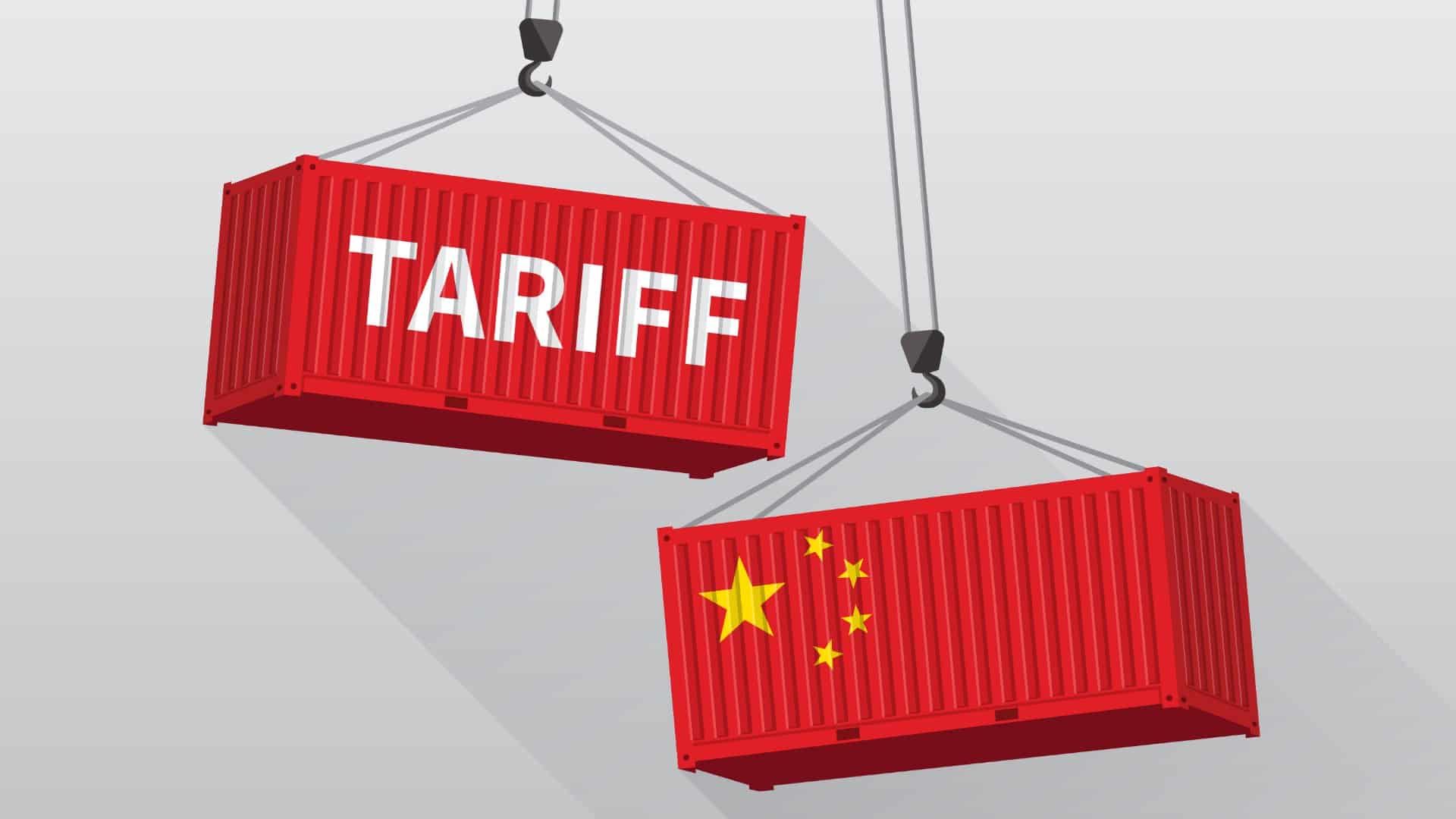
    Two red shipping containers with the word 'Tariff' and Chinese flag

    Shares in ASX copper miners are outperforming today even as multiple reports confirmed China added Australian copper to its list of “banned” imports.

    The Sandfire Resources Ltd (ASX: SFR) share price jumped 3.4% to $4.27 and the OZ Minerals Limited (ASX: OZL) share price added 1% to $14.82 during lunch time trade.

    In contrast, the S&P/ASX 200 Index (Index:^AXJO) is struggling at breakeven while the Fortescue Metals Group Limited share price and Rio Tinto Limited (ASX: RIO) share price tumbled.

    ASX copper miners the latest victims of China’s tantrum

    The outperformance of our copper miners comes even as Bloomberg reported that China is ordering its traders to stop buying at least seven types of Aussie commodities.

    On top of Aussie copper ore and concentrate, other imports being targeted include wine, coal, barley, lobsters, sugar and timber.

    It’s the clearest sign yet that relations between Australia and its most important trading partner are continuing to deteriorate.

    Why copper is holding firm despite trade threat

    But Sandfire Resources is downplaying the risk to its earnings from the copper ban. It believes it can find other buyers for its copper, reported the Australian Financial Review.

    What’s more, the miner’s cash pile that stands close to $400 million will buy it time to seek out new markets.

    OZ Minerals is also brushing off the threat. Its chief executive Andrew Cole pointed out that China can’t produce its own copper, unlike coal or wine. This means, China will still need to import the red metal from somewhere, if not Australia.

    If the trade tension drives the price of copper higher, Chinese authorities may very well have to swallow their pride and reverse the decision.

    China is world’s largest importer of copper

    China buys around half of Australia’s copper exports and is the largest importer of the commodity in the world, according to data from Statista.

    The Asian giant purchased US$40.8 billion worth of copper in 2019, which is more than the next five largest importers.

    Outlook for ASX copper miners still look bright

    Further, the COVID‐19 pandemic may be providing a net benefit to copper producers. While global factory production may have tumbled in the near-term, copper exports from Latin America may be impeded for years.

    For instance, production at Escondida, which holds the world’s largest copper reserves and is co-owned by BHP Billiton Ltd (ASX: BHP) and Rio Tinto, may not recovery to pre-COVID levels for three years.

    In the meantime, industrial production (particularly in China) is starting to recover.

    Cost blowouts and longer-than expected lead times in getting new copper mines up and running will further crimp supply.

    This explains why analysts remain upbeat on the outlook for copper as the price of the commodity improved 0.2% to US$3.09 a pound today despite news of the Chinese tariff.

    These Dividend Stocks Could Be Your Next Cash Kings (FREE REPORT)

    Motley Fool Australia’s Dividend experts recently released a brand-new FREE report revealing 3 dividend stocks with JUICY franked dividends that could keep paying you meaty dividends for years to come.

    Our team of investors think these 3 dividend stocks should be a ‘must consider’ for any savvy dividend investor. But more importantly, could potentially make Australian investors a heap of passive income.

    Don’t miss out! Simply click the link below to grab your free copy and discover these 3 high conviction stocks now.

    Returns As of 6th October 2020

    More reading

    Motley Fool contributor Brendon Lau owns shares of BHP Billiton Limited, OZ Minerals Limited, and Rio Tinto Ltd. Connect with me on Twitter @brenlau.

    The Motley Fool Australia has no position in any of the stocks mentioned. We Fools may not all hold the same opinions, but we all believe that considering a diverse range of insights makes us better investors. The Motley Fool has a disclosure policy. This article contains general investment advice only (under AFSL 400691). Authorised by Scott Phillips.

    The post ASX copper miners brush off latest Chinese tariff threat appeared first on Motley Fool Australia.

    from Motley Fool Australia https://ift.tt/3mN0bxq

  • Quantitative Easing (QE) is here. What does it means for ASX shares?

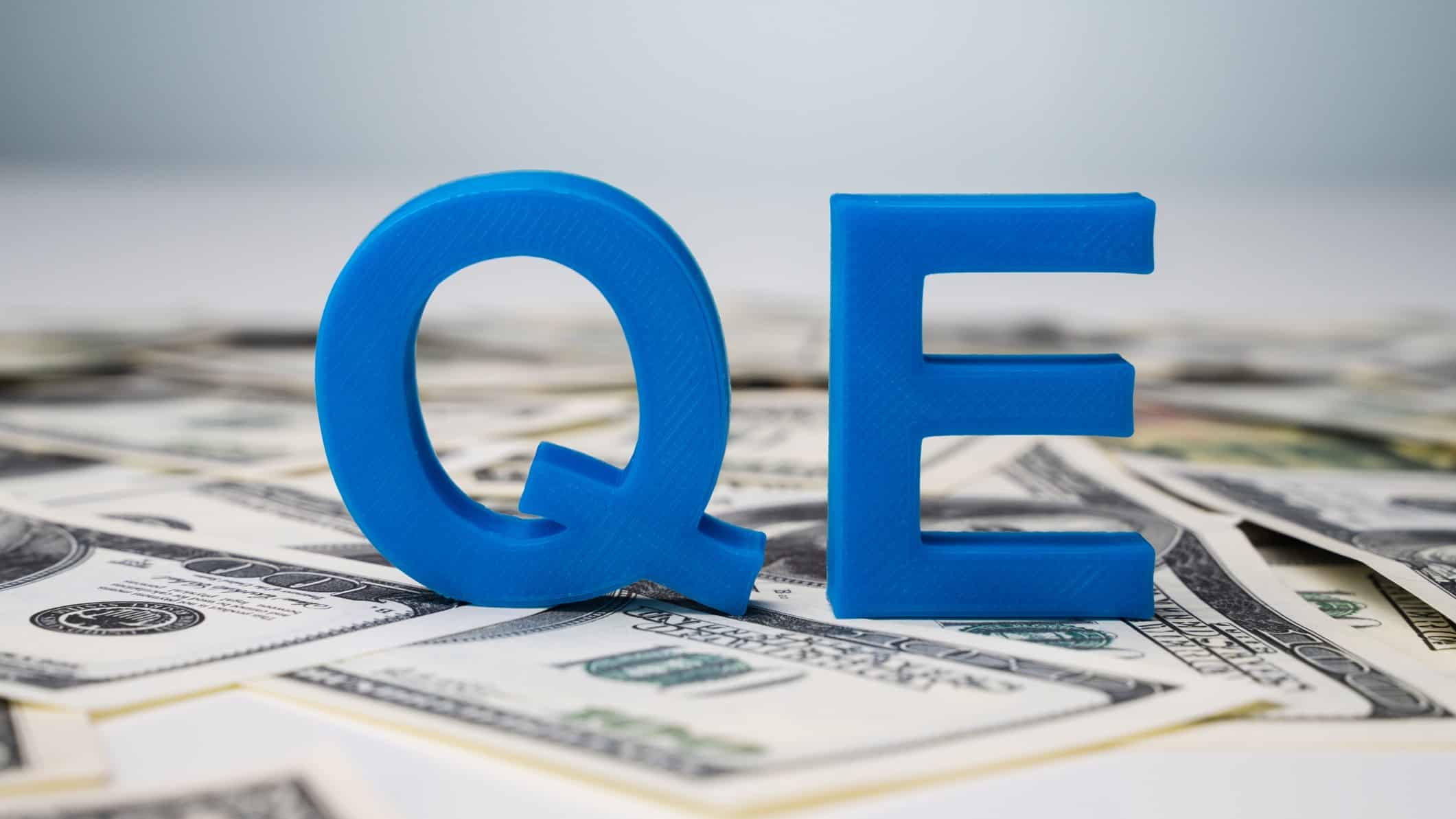
    quantitative easing represented by letters QE sitting on piles of cash

    Yesterday, we heard from the Reserve Bank of Australia (RBA) after its monthly meeting concluded for November. Most headlines discussed how the RBA lowered interest rates to yet another record low of 0.1%, down from the previous level of 0.25%. This will have many ramifications, some of which we discussed yesterday.

    However, the RBA made another very important announcement that I think is worthy of discussion today. In addition to the cash rate cut, the RBA also announced that it would be undertaking a massive government bond-buying program, which some are calling Quantitative Easing (QE). QE is a new policy in Australia, but not around the world. In fact, the United States Federal Reserve has initiated several rounds of QE over the past decade, starting in the immediate aftermath of the global financial crisis. QE involves the central bank buying massive amounts of government bonds. This has the effect of lowering borrowing costs throughout the economy, which in turn is supposed to spur and encourage economic growth as a result.

    Until now, Australia has avoided QE, but no longer. The RBA yesterday announced it would be going on a bond-buying spree of its own, promising to purchase $100 billion worth of government bonds over the next 6 months, with an aim to buy $5 billion worth every week until then.

    According to reporting in yesterday’s Australian Financial Review (AFR), RBA Governor Philip Lowe told Australians that “the lower interest rates and our plan to buy $100 billion of government bonds over the next six months will help people get jobs and support the recovery of the Australian economy”.

    So what does this mean for ASX shares?

    QE for the ASX?

    QE is normally viewed as highly supportive of assets like shares. That’s because it crowds out buyers in the bond market, forcing more capital into those markets, which then tends to spill over into other asset markets. It also lowers the yields of government bonds, which also pushes out buyers not willing to accept rock-bottom bond yields.

    We’ve seen this play out over in the US. Since November 2010, the Dow Jones Industrial Average Index (DJX: .DJI), a flagship US index, is up more than 145%, whilst the Nasdaq Composite (NASDAQ: .IXIC), another flagship index, is up more than 330%.

    One could conclude that QE has played a significant part in these returns. Thus, that’s probably why the S&P/ASX 200 Index (ASX: XJO) was up a hefty 1.9% after the RBA’s QE program news yesterday. 

    Where to invest $1,000 right now

    When investing expert Scott Phillips has a stock tip, it can pay to listen. After all, the flagship Motley Fool Share Advisor newsletter he has run for more than eight years has provided thousands of paying members with stock picks that have doubled, tripled or even more.*

    Scott just revealed what he believes are the five best ASX stocks for investors to buy right now. These stocks are trading at dirt-cheap prices and Scott thinks they are great buys right now.

    *Returns as of June 30th

    More reading

    Motley Fool contributor Sebastian Bowen has no position in any of the stocks mentioned. The Motley Fool Australia has no position in any of the stocks mentioned. We Fools may not all hold the same opinions, but we all believe that considering a diverse range of insights makes us better investors. The Motley Fool has a disclosure policy. This article contains general investment advice only (under AFSL 400691). Authorised by Scott Phillips.

    The post Quantitative Easing (QE) is here. What does it means for ASX shares? appeared first on Motley Fool Australia.

    from Motley Fool Australia https://ift.tt/34S8kKX

  • Travel shares are flying higher today. Here’s why.

    travel

    Travel shares are trading higher today after a border announcement by New South Wales Premier Gladys Berejiklian. The premier declared NSW would reopen its border to Victorians on Monday 23 November.

    She also called on other Australian states to reopen their borders to NSW. 

    “If NSW has the guts to open our borders to Victoria, you should have the guts to open your borders to us. It is in our national interest. It is in the interest of all our citizens,” she said.

    The decision means that Victorians wishing to travel to NSW after 23 November will no longer have to get government permission or quarantine for 14 days. 

    Prior to this announcement, NSW was open to all Australian states except Victoria. This latest border relaxation will make NSW the only state in the country to have open borders with every other state. 

    Which shares are trading higher?

    After the announcement, share prices in travel-related companies have climbed.

    At the time of writing,  Qantas Airways Limited (ASX: QAN) rose by 3.24% to $4.62, while Sydney Airport Holdings Pty Ltd (ASX: SYD) climbed by 3.1% to $5.98.

    Also flying higher are Flight Centre Travel Group Ltd (ASX: FLT), which soared up by 6.81% to $13.02, and Corporate Travel Management Ltd (ASX: CTD) rose 3.23% to $15.97.

    Forget what just happened. We think this stock could be Australia’s next MONSTER IPO…

    One little-known Australian IPO has doubled in value since January, and renowned Australian Moonshot stock picker Anirban Mahanti sees a potential millionaire-maker in waiting…

    Because ‘Doc’ Mahanti believes this fast-growing company has all the hallmarks of genuine Moonshot potential, forget ‘buy now pay later’, this stock could be the next hot stock on the ASX.

    Returns as of 6th October 2020

    More reading

    Motley Fool contributor Eddy Sunarto has no position in any of the stocks mentioned. The Motley Fool Australia owns shares of and has recommended Corporate Travel Management Limited. The Motley Fool Australia has recommended Flight Centre Travel Group Limited. We Fools may not all hold the same opinions, but we all believe that considering a diverse range of insights makes us better investors. The Motley Fool has a disclosure policy. This article contains general investment advice only (under AFSL 400691). Authorised by Scott Phillips.

    The post Travel shares are flying higher today. Here’s why. appeared first on Motley Fool Australia.

    from Motley Fool Australia https://ift.tt/362N58p

  • Pendal (ASX:PDL) share price falls 7% on disappointing FY20 result

    falling asx share price represented by woman making sad face

    The Pendal Group Ltd (ASX: PDL) share price has fallen by around 7% today, trading at $6.36 at the time of writing. This comes after the company published an annual report earlier this morning revealing that many important KPIs have underperformed.

    What’s moving the Pendal share price?

    The market is no doubt responding to a number of Pendal’s missed KPIs. Most striking is the fall in net profit after tax (NPAT), which has fallen by 25% against FY19. In addition, operating revenue fell by 3%, funds under management (FUM) fell by 4% against the previous corresponding period (pcp), and cash earnings per share fell by 11%. The Pendal dividend payment has also fallen by 18%.

    Operating expenses were 3% higher compared to the pcp. According to the report, the increase in expenses is attributed to investments in the global executive team, and technological improvements.

    The company’s base management fees declined 5%, which Pendal attributed largely to its lower average FUM (4% lower than pcp). The base management fee margin remained relatively stable, down one basis point (bps) to 48 bps, which Pendal has attributed to a slight change in asset mix over the year.

    According to today’s announcement, the decline in Pendal’s FUM was the result of net outflows of $6.5 billion and unfavourable foreign currency movements of $2.3 billion, as the US dollar (-5.1%) and British pound (-0.9%) weakened against the Australian dollar. 

    The company reported its outflows were primarily $3.3 billion in net redemptions from European strategies, with investors continuing to reduce their exposure to the region over Brexit concerns and investment underperformance.

    Management commentary

    The group’s chief executive officer Mr Emilio Gonzalez commented:

    The global economic and health crisis has accelerated a number of secular trends in the global asset management industry and highlighted the importance of ESG factors affecting the sustainability of businesses; a need to broaden distribution channels and to reduce costs in the operating model.

    Pendal has already made progress in all of these areas and recognises the need to increase the pace of investment in order to position the company to take advantage of the opportunities inherent in these trends and deliver long-term sustainable FUM growth.

    Mr Gonzalez highlighted that the company’s ability to execute on this strategy will require a multi-year investment, indicating that Pendal’s fixed costs for the 2021 financial year are expected to increase by 8–10%.

    “We believe this strategy will deliver a more cost effective model and increase FUM by around 50% by FY25,” he added.

    Despite today’s losses, the Pendal share price is still up by more than 16% in the past month. 

    Where to invest $1,000 right now

    When investing expert Scott Phillips has a stock tip, it can pay to listen. After all, the flagship Motley Fool Share Advisor newsletter he has run for more than eight years has provided thousands of paying members with stock picks that have doubled, tripled or even more.*

    Scott just revealed what he believes are the five best ASX stocks for investors to buy right now. These stocks are trading at dirt-cheap prices and Scott thinks they are great buys right now.

    *Returns as of June 30th

    More reading

    Motley Fool contributor Daryl Mather has no position in any of the stocks mentioned. The Motley Fool Australia has no position in any of the stocks mentioned. We Fools may not all hold the same opinions, but we all believe that considering a diverse range of insights makes us better investors. The Motley Fool has a disclosure policy. This article contains general investment advice only (under AFSL 400691). Authorised by Scott Phillips.

    The post Pendal (ASX:PDL) share price falls 7% on disappointing FY20 result appeared first on Motley Fool Australia.

    from Motley Fool Australia https://ift.tt/3jWZYpu

  • Afterpay (ASX:APT) share price still higher than these big broker targets

    asx share price upgrade represented by hand drawing line under the word upgrade

    The Afterpay Ltd (ASX: APT) share price has been a standout performer among buy now, pay later (BNPL) shares. Afterpay’s competitors such as Zip Co Ltd (ASX: Z1P), Splitit Ltd (ASX: SPT), Sezzle Inc (ASX: SZL), Laybuy Holdings Ltd (ASX: LBY) and Openpay Group Ltd (ASX: OPY) are all well below their record all-time highs, while Afterpay may go up even higher

    The company’s upbeat quarterly update saw a series of positive broker updates come about for the Afterpay share price target. However, given Afterpay’s ballooning $28 billion valuation on $519.2 million revenue and a loss of $22.9 million in FY20, the general concensus is cautious. These broker upgrades are still below the current Afterpay share price of $99.04.

    Cautious updates to the Afterpay share price 

    UBS Group AG (NYSE: UBS) has been the least optimistic broker for its Afterpay share price target. The broker has maintained a price target within the $20 range throughout Afterpay’s run to $100. Yesterday, the broker nudged its price target from $28.50 to $30.00 and retains a sell rating. Despite continuing improvement in transaction values and customer growth, the broker still sees this market leader as overvalued. 

    Goldman Sachs Group Inc (NYSE: GS) raised its Afterpay share price target from $93.45 to $94.40 and retains a neutral rating. It reacted positively to Afterpay’s first quarter trading update and notes robust customer growth in the United States and improving margins. However, the broker remains cautious about increasing competition. Afterpay’s current share price is ahead of its target so it retains a neutral rating. 

    What investors can look forward to

    While the Afterpay quarterly update was positive and highlighted its strong growth trajectory, it also shed light on its global expansion and demographic tailwinds. 

    In August, Afterpay launched its product in Canada, with a number of large retailers now live, integrating or signed. In its FY20 results, Afterpay outlined its plan to enter the rest of Europe via the acquisition of Pagantis. This acquisition is progressing well and is on track for completion by the end of the 2020 calendar year, pending regulatory approval by the Bank of Spain.

    This will provide Afterpay a licence to operate in Spain, France, Italy and Portugal as well as pending licence passport applications in Germany and Poland. The company has completed a cross-functional, 100-day integration plan to launch as soon as possible, post completion. 

    Plans to expand into Asia are also progressing well with the established base in Singapore to drive the development of the Southeast Asia market. Its acquisition of local BNPL ‘Empatkali’ in Indonesia is also under way.

    Forget what just happened. We think this stock could be Australia’s next MONSTER IPO…

    One little-known Australian IPO has doubled in value since January, and renowned Australian Moonshot stock picker Anirban Mahanti sees a potential millionaire-maker in waiting…

    Because ‘Doc’ Mahanti believes this fast-growing company has all the hallmarks of genuine Moonshot potential, forget ‘buy now pay later’, this stock could be the next hot stock on the ASX.

    Returns as of 6th October 2020

    More reading

    Lina Lim has no position in any of the stocks mentioned. The Motley Fool Australia’s parent company Motley Fool Holdings Inc. owns shares of ZIPCOLTD FPO. The Motley Fool Australia’s parent company Motley Fool Holdings Inc. recommends Sezzle Inc. The Motley Fool Australia owns shares of AFTERPAY T FPO. The Motley Fool Australia has recommended Sezzle Inc. We Fools may not all hold the same opinions, but we all believe that considering a diverse range of insights makes us better investors. The Motley Fool has a disclosure policy. This article contains general investment advice only (under AFSL 400691). Authorised by Scott Phillips.

    The post Afterpay (ASX:APT) share price still higher than these big broker targets appeared first on Motley Fool Australia.

    from Motley Fool Australia https://ift.tt/368hp1M

  • Share trade platform provides free $1 million protection for clients

    share trade broking platform free offer represented by the word free lit up on wall

    An online broking platform has offered free, $1 million insurance for its users in case it becomes insolvent.

    Multinational platform, eToro, announced Wednesday that all its Australian, Europe and United Kingdom customers would receive the coverage automatically at no cost.

    “The insurance will form the third layer of protection for clients after segregated trust accounts and regulatory protections,” stated the company.

    “In the unlikely event that eToro were [sic] to enter a state of insolvency, the policy would kick in to cover clients for losses above the relevant financial compensation schemes to a value of AU$1 million, and in accordance with the purchased policy.”

    The insurance will cover both cash held on the platform and open accounts, but exclude cryptocurrency assets.

    Everyday Australians have lost millions in the past

    You might think an online broking provider going bankrupt is a fanciful prospect. But there are several recent examples in Australia where everyday investors have lost money from their broker collapsing.

    Only a couple of months ago, online customers of collapsed broker BBY found out they would only receive 44 cents for each dollar they were owed.

    To rub salt in the wound, the liquidator accused former director and tennis legend, Ken Rosewall, of receiving $3.3 million while the company was insolvent.

    Last year, online broker Halifax went down, taking $20 million of client money with it.

    “The primary cause of the deficiency appears to be the use of client monies to fund operating losses since at least January 2017,” said administrator Ferrier Hodgson.

    “The management accounts, audited accounts and lodgements with ASIC all appear to present with accounting irregularities.”

    The lost $20 million represented about 9% of investors’ cash.

    eToro stated its million-dollar insurance policy would provide “peace of mind” for its 15 million users.

    “It signals the fintech’s ongoing commitment to providing the best possible user experience and safeguarding client wellbeing.”

    The coverage is underwritten by Lloyd’s of London.

    eToro was established in 2007 and is a platform that allows investors to mimic the portfolios of other successful users.

    Where to invest $1,000 right now

    When investing expert Scott Phillips has a stock tip, it can pay to listen. After all, the flagship Motley Fool Share Advisor newsletter he has run for more than eight years has provided thousands of paying members with stock picks that have doubled, tripled or even more.*

    Scott just revealed what he believes are the five best ASX stocks for investors to buy right now. These stocks are trading at dirt-cheap prices and Scott thinks they are great buys right now.

    *Returns as of June 30th

    More reading

    Motley Fool contributor Tony Yoo has no position in any of the stocks mentioned. The Motley Fool Australia has no position in any of the stocks mentioned. We Fools may not all hold the same opinions, but we all believe that considering a diverse range of insights makes us better investors. The Motley Fool has a disclosure policy. This article contains general investment advice only (under AFSL 400691). Authorised by Scott Phillips.

    The post Share trade platform provides free $1 million protection for clients appeared first on Motley Fool Australia.

    from Motley Fool Australia https://ift.tt/3l8dNmk