Tag: Motley Fool

  • S&P 500 could rally for next 8 weeks: Wall Street analysts

    Rising asx share price represented by woman with excited expression holding laptop

    Rising asx share price represented by woman with excited expression holding laptopThe S&P 500 Index (INDEXSP: .INX) could be on track to deliver an impressive rally over the next two months, according to experts.

    After rising by around 10% since the start of the year to 2 February 2023, it then dropped over 5% to 1 March 2023.

    But, experts believe that the US share market is poised to perform well in the coming months. This could be good news for the global share market and the ASX share market because of how influential investor sentiment in the US can be on the world of the world’s share markets.

    Why the positivity?

    The Australian Financial Review quoted Stifel’s chief equity strategist Barry Bannister’s thoughts on the situation:

    The bearish chorus of Wall Street strategists continues to fight the S&P 500 rally since the intraday low (3491.58) on October 13 with those strategists flip-flopping from calling an imminent recession (caused by the Federal Reserve) to no recession (so, the Fed must cause one).

    They can call it a bear market rally, a bear trap or call it a banana…we are not ignoring potential six-month 10-15 per cent rallies.

    After May this [S&P 500] rally may be mostly over.

    According to the AFR’s reporting, Stifel thinks that the US Federal Reserve will stop increasing interest rates in June when it hits 5.25%. This could lead to business earnings hurting in the second and the possibility of a recession increasing in September as the labour market’s strength “wanes”.

    Another expert, Fundstrat Global’s Tom Lee, thinks that the S&P 500 is going to rise for the next eight weeks.

    While Lee acknowledged uncertainty after a strong performance by the S&P 500 since October 2022, he suggested that the S&P 500 could reach around 4,250 by the end of April. That would represent an increase of around 5%. Lee said:

    This is a scenario that many investors are hesitant to embrace (more likely sceptical) because of the understandable lack of clarity on inflation trajectory, Fed policy path, earnings risk and general heightened concerns about recession.

    And as usually is the case, when there is uncertainty, investors lean negative—meaning, the conditions confirm investors leaning bearish or outright bearish

    S&P 500 snapshot

    For investors wanting to own a piece of the S&P 500, there’s an investment option called the iShares S&P 500 ETF (ASX: IVV). Over the past five years, it has risen by around 70%, though past performance is not a reliable indicator of future performance.

    The post S&P 500 could rally for next 8 weeks: Wall Street analysts appeared first on The Motley Fool Australia.

    Should you invest $1,000 in Ishares S&p 500 Etf right now?

    Before you consider Ishares S&p 500 Etf, you’ll want to hear this.

    Motley Fool Investing expert Scott Phillips just revealed what he believes are the 5 best stocks for investors to buy right now… and Ishares S&p 500 Etf wasn’t one of them.

    The online investing service he’s run for over a decade, Motley Fool Share Advisor, has provided thousands of paying members with stock picks that have doubled, tripled or even more.* And right now, Scott thinks there are 5 stocks that are better buys.

    See The 5 Stocks
    *Returns as of March 1 2023

    (function() {
    function setButtonColorDefaults(param, property, defaultValue) {
    if( !param || !param.includes(‘#’)) {
    var button = document.getElementsByClassName(“pitch-snippet”)[0].getElementsByClassName(“pitch-button”)[0];
    button.style[property] = defaultValue;
    }
    }

    setButtonColorDefaults(“#43B02A”, ‘background’, ‘#5FA85D’);
    setButtonColorDefaults(“#43B02A”, ‘border-color’, ‘#43A24A’);
    setButtonColorDefaults(“#fff”, ‘color’, ‘#fff’);
    })()

    More reading

    Motley Fool contributor Tristan Harrison has no position in any of the stocks mentioned. The Motley Fool Australia’s parent company Motley Fool Holdings Inc. has no position in any of the stocks mentioned. The Motley Fool Australia has recommended iShares S&p 500 ETF. The Motley Fool has a disclosure policy. This article contains general investment advice only (under AFSL 400691). Authorised by Scott Phillips.

    from The Motley Fool Australia https://ift.tt/Y0E4J16

  • 5 things to watch on the ASX 200 on Tuesday

    Smiling man with phone in wheelchair watching stocks and trends on computer

    Smiling man with phone in wheelchair watching stocks and trends on computer

    On Monday, the S&P/ASX 200 Index (ASX: XJO) started the week with a solid gain. The benchmark index rose 0.6% to 7,328.6 points.

    Will the market be able to build on this on Tuesday? Here are five things to watch:

    ASX 200 expected to fall

    The Australian share market looks set to fall on Tuesday despite a relatively decent start to the week on Wall Street. According to the latest SPI futures, the ASX 200 is poised to open the day 18 points or 0.25% lower. In late trade in the United States, the Dow Jones is up 0.1%, the S&P 500 is up 0.2%, and the NASDAQ is up 0.15%.

    Oil prices rise

    Energy shares Beach Energy Ltd (ASX: BPT) and Karoon Energy Ltd (ASX: KAR) could have a decent day after oil prices rose overnight. According to Bloomberg, the WTI crude oil price is up 0.6% to US$80.16 a barrel and the Brent crude oil price is up 0.1% to US$85.85 a barrel. Oil prices rose despite concerns over China’s economic growth targets.

    RBA meeting

    It is the first Tuesday of the month, which means the Reserve Bank of Australia will be meeting to discuss the cash rate. According to cash rate futures, the market has priced in a 75% probability of the central bank increasing the cash rate by 25 basis points to 3.6%.

    Gold price edges lower

    It could be a subdued day for gold miners Evolution Mining Ltd (ASX: EVN) and Regis Resources Limited (down: RRL) after the gold price edged lower overnight. According to CNBC, the spot gold price is up 0.15% to US$1,851.9 an ounce. Traders were selling gold ahead of the US Fed chief testimony.

    ASX 200 shares going ex-dividend

    A number of ASX 200 shares are going ex-dividend on Tuesday for their latest payouts and could trade lower. This includes the likes of fast-fashion jewellery retailer Lovisa Holdings Ltd (ASX: LOV), gold miner Northern Star Resources Ltd (ASX: NST), healthcare company Sonic Healthcare Limited (ASX: SHL), and fuel retailer Viva Energy Group Ltd (ASX: VEA).

    The post 5 things to watch on the ASX 200 on Tuesday appeared first on The Motley Fool Australia.

    FREE Guide for New Investors

    Despite what some people may say – we believe investing in shares doesn’t have to be overwhelming or complicated…

    For over a decade, we’ve been helping everyday Aussies get started on their journey.

    And to help even more people cut through some of the confusion “experts’” seem to want to perpetuate – we’ve created a brand-new “how to” guide.

    Yes, Claim my FREE copy!
    *Returns as of March 1 2023

    (function() {
    function setButtonColorDefaults(param, property, defaultValue) {
    if( !param || !param.includes(‘#’)) {
    var button = document.getElementsByClassName(“pitch-snippet”)[0].getElementsByClassName(“pitch-button”)[0];
    button.style[property] = defaultValue;
    }
    }

    setButtonColorDefaults(“#0095C8”, ‘background’, ‘#5FA85D’);
    setButtonColorDefaults(“#0095C8”, ‘border-color’, ‘#43A24A’);
    setButtonColorDefaults(“#fff”, ‘color’, ‘#fff’);
    })()

    More reading

    Motley Fool contributor James Mickleboro has no position in any of the stocks mentioned. The Motley Fool Australia’s parent company Motley Fool Holdings Inc. has positions in and has recommended Lovisa. The Motley Fool Australia has recommended Lovisa and Sonic Healthcare. The Motley Fool has a disclosure policy. This article contains general investment advice only (under AFSL 400691). Authorised by Scott Phillips.

    from The Motley Fool Australia https://ift.tt/AuwDm3d

  • Top ASX ETFs to buy in March 2023

    A man and woman sit next to each other looking at each other and feeling excited and surprised after reading good news about their shares on a laptop.A man and woman sit next to each other looking at each other and feeling excited and surprised after reading good news about their shares on a laptop.

    If you’re keen to invest but don’t relish the idea of buying individual ASX shares, exchange-traded funds (ETFs) could be a great option for you.

    Even if you already own shares, ETFs can be a simple and cost-effective way of helping to diversify your portfolio across different companies, sectors, and geographic locations.

    Due to their surging popularity among Aussie investors, the number of ETFs on the local exchange has skyrocketed in recent years. So even choosing which ETF to buy can be a challenge.

    We asked our Foolish writers which ASX ETFs they believe are worth buying this month. Here is what the team came up with:

    6 best ASX ETFs for February 2023 (smallest to largest)

    VanEck Morningstar International Wide Moat ETF (ASX: GOAT), $25.09 million

    BetaShares Australian Dividend Harvester (ASX: HVST), $178.96 million

    Vanguard MSCI International Small Companies Index ETF (ASX: VISM), $251.86 million

    VanEck Morningstar Wide Moat ETF (ASX: MOAT), $509.56 million

    Betashares Nasdaq 100 ETF (ASX: NDQ), $2.60 billion

    Vanguard Australian Shares Index ETF (ASX: VAS), $12.24 billion

    (Market capitalisations as at market close on 6 March 2023)

    Why our Foolish writers love these ASX exchange-traded funds

    VanEck Morningstar International Wide Moat ETF

    What it does: This ETF provides investors with exposure to a portfolio of global companies that have attractive valuations and sustainable competitive advantages.

    By James Mickleboro: Unlike the MOAT ETF, which focuses on US companies, this fund gives investors access to wide-moat companies from all over the world.

    To be assigned a wide-moat rating, there must be very high confidence that a company’s competitive advantage will remain for at least 20 years. It is for this reason, I believe the VanEck Morningstar International Wide Moat ETF could prove to be a great long-term option for ASX investors.

    Among its 68 holdings are companies including Airbus, ASML, Mercadolibre, and Microsoft.

    Over the last decade, the index the fund tracks has generated an average return of 16% per annum.

    Motley Fool contributor James Mickleboro does not own units in the VanEck Morningstar International Wide Moat ETF.

    BetaShares Australian Dividend Harvester

    What it does: The BetaShares Australian Dividend Harvester intends to offer investors franked passive income above the net income yield of the broader ASX. It provides exposure to a diversified portfolio of ASX shares. The ETF’s top holdings are in the financials sector (30%) and the materials sector (25%).

    By Bernd Struben: With interest rates likely to remain elevated for some time, making share price gains harder to come by, this high-yielding ETF could offer some welcome passive income for ASX investors.

    Based on the past 12 months, the fund’s yield is 7.2%, with a grossed-up yield of 10.1%. The franking level was 93%, as at 31 January.

    Naturally, movements in the ETF’s share price could see investors pocket more or less than this when they sell the stock.

    Over the past six months, the BetaShares Australian Dividend Harvester share price is up 3.8%. During that time, it delivered a net return (after fees) of 5.9% and a grossed-up yield (also post fees) of 7.1%.

    The dividends are paid out monthly.

    Motley Fool contributor Bernd Struben does not own units in the BetaShares Australian Dividend Harvester.

    Vanguard MSCI International Small Companies Index ETF

    What it does: This Vanguard ETF seeks to track the performance of the MSCI World ex-Australia Small Cap Index, providing investors with an easy way to gain diversified exposure to some of the most promising small companies abroad.

    By Mitchell Lawler: Studies into the characteristics of global outperformers over the last decade have suggested that small-cap shares are far more likely to produce 10X returns than large-caps.

    I believe this ETF provides an ideal way of gaining exposure to companies with, arguably, the greatest chance of achieving market-beating returns over time. Additionally, the fund excludes Australian small-caps, which helps with greater geographic portfolio diversification.

    For reference, around 62% of the ETF is weighted toward companies located in the United States. This includes US-listed names such as Axon Enterprises Inc, Crocs Inc, and Macy’s Inc.

    The management fee is currently 0.32% per annum.

    Motley Fool contributor Mitchell Lawler does not own units in the Vanguard MSCI International Small Companies ETF.

    VanEck Morningstar Wide Moat ETF

    What it does: This ETF invests in companies with competitive advantages that are predicted by analysts to almost certainly endure for the next decade, and probably for two decades.

    By Tristan Harrison: Competitive advantages, or economic moats, can come in a number of different forms, including cost advantages, patents, brands, regulatory licenses, switching costs, network effects, and efficient scale.

    By only focusing on companies with strong competitive advantages, this ETF’s portfolio only owns quality businesses. On top of that, the ETF only invests if the target business is trading at a good price relative to its ‘fair value’, as judged by Morningstar analysts.

    Past performance is not a guarantee of future results, but this ETF has returned an average of 14.5% per annum over the past five years.

    Motley Fool contributor Tristan Harrison does not own units in the VanEck Morningstar Wide Moat ETF.

    Betashares Nasdaq 100 ETF

    What it does: This ASX ETF from BetaShares is an index fund. Not just any index fund, though; this ETF covers the American NASDAQ 100 (NASDAQ: NDX). The NASDAQ is the exchange where most of the US’s tech shares are listed. As such, this is well-known as a very tech-heavy ETF.

    By Sebastian Bowen: I consider this NASDAQ 100 fund a bet on American tech going forward. You’ll get exposure to the giants like Apple and Amazon, as well as smaller tech names like Texas Instruments, Adobe, Intuit and MercadoLibre.

    The BetaShares Nasdaq ETF has given investors some stunning returns in recent years. As of 31 January, this fund has averaged a return of 15.24% per annum over the past five years, and 15.65% per annum since its inception in 2015.

    Past performance is never a guarantee of future returns, but I still think investors have a great way to add exposure to some of the best companies in the world with this ETF.

    Motley Fool contributor Sebastian Bowen owns shares in Amazon, Apple and Adobe.

    Vanguard Australian Shares Index ETF

    What it does: The Vanguard Australian Shares Index ETF aims to track the S&P/ASX 300 Index (ASX: XKO) which, in turn, seeks to provide exposure to the broader Australian stock market.

    By Brooke Cooper: It’s far from a ground-breaking recommendation, and that’s one of the reasons I like the Vanguard Australian Shares Index ETF.

    Perhaps the best and most simple way to help protect a portfolio is to diversify, and one of the simplest ways to diversify is to invest in an index-tracking ASX ETF.

    The Vanguard Australian Shares Index ETF is the only fund tracking the ASX 300 ­– arguably Australia’s true benchmark index.

    And while its management fees aren’t the lowest out there, at 0.1% per annum, they’re far from outrageous. Not to mention, this ETF pays out dividends each quarter.

    Motley Fool contributor Brooke Cooper does not own units in the Vanguard Australian Shares Index ETF.

    The post Top ASX ETFs to buy in March 2023 appeared first on The Motley Fool Australia.

    Scott Phillips’ ETF picks for building long term wealth…

    If you’re an investor looking to harness the sheer compounding power of ETFs, then you’ll need to check out this latest research from 25-year investing veteran Scott Phillips.

    He’s painstakingly sorted through hundreds of options and uncovered the small handful he thinks are balanced and diversified. ETFs he thinks investors could aim to hold for years, and potentially build outstanding long term wealth.

    Click here to get all the details
    *Returns as of March 1 2023

    (function() {
    function setButtonColorDefaults(param, property, defaultValue) {
    if( !param || !param.includes(‘#’)) {
    var button = document.getElementsByClassName(“pitch-snippet”)[0].getElementsByClassName(“pitch-button”)[0];
    button.style[property] = defaultValue;
    }
    }

    setButtonColorDefaults(“#0095C8”, ‘background’, ‘#5FA85D’);
    setButtonColorDefaults(“#0095C8”, ‘border-color’, ‘#43A24A’);
    setButtonColorDefaults(“#fff”, ‘color’, ‘#fff’);
    })()

    More reading

    John Mackey, former CEO of Whole Foods Market, an Amazon subsidiary, is a member of The Motley Fool’s board of directors. The Motley Fool Australia’s parent company Motley Fool Holdings Inc. has positions in and has recommended ASML, Adobe, Amazon.com, Apple, Axon Enterprise, BetaShares Nasdaq 100 ETF, Intuit, MercadoLibre, Microsoft, and Texas Instruments. The Motley Fool Australia’s parent company Motley Fool Holdings Inc. has recommended Crocs and has recommended the following options: long January 2024 $420 calls on Adobe, long March 2023 $120 calls on Apple, short January 2024 $430 calls on Adobe, and short March 2023 $130 calls on Apple. The Motley Fool Australia has positions in and has recommended BetaShares Nasdaq 100 ETF. The Motley Fool Australia has recommended ASML, Adobe, Amazon.com, Apple, and VanEck Morningstar Wide Moat ETF. The Motley Fool has a disclosure policy. This article contains general investment advice only (under AFSL 400691). Authorised by Scott Phillips.

    from The Motley Fool Australia https://ift.tt/5cwkmga

  • Guess which ASX All Ords share just crashed 52% on a TGA update

    A young male investor wearing a white business shirt screams in frustration with his hands grasping his hair after ASX 200 shares fell rapidly today and appear to be heading into a stock market crash

    A young male investor wearing a white business shirt screams in frustration with his hands grasping his hair after ASX 200 shares fell rapidly today and appear to be heading into a stock market crash

    The Rhythm Biosciences Ltd (ASX: RHY) share price had a day to forget on Monday.

    The medical diagnostics technology’s shares returned from a trading halt and crashed as much as 52% to 46 cents.

    The ASX All Ords share ultimately recovered a touch and ended the day with a 38% decline to 59.5 cents.

    Why did this ASX All Ords share get hammered?

    Investors were hitting the sell button in a panic on Monday after the company was dealt a blow by the Australian Therapeutic Goods Administration (TGA).

    According to an announcement, after the receipt and analysis of a thorough application review and its most recent engagement with the TGA, the company has decided to withdraw its current ColoSTAT application for an Australian Register of Therapeutic Goods (ARTG) listing.

    Rhythm Biosciences’ ColoSTAT product is a simple, low-cost, blood test for global mass market detection of colorectal cancer. It notes that worldwide, colorectal cancer is the third most common cancer in men and the second most common in women, accounting for an estimated 1.9 million new cases and 935,000 deaths annually.

    Management advised that it is withdrawing its application because it simply does not have enough time to answer the regulator’s questions within the necessary timeframe. This is because some questions will require new internal analytical testing and the TGA is reluctant to provide an extension beyond its 20 business days timeframe.

    The good news is that this isn’t the end of the road for ColoSTAT in Australia. Management intends to submit a new application with the TGA, in line to better meet their feedback and questions posed.  And while the company doesn’t know when the new application will be submitted, it does expect it to be in the current calendar year.

    Furthermore, this withdrawal does not impede the ASX All Ords share’s proposed market entry activities into other CE Mark conforming territories and additional international markets, including the United States.

    Management commentary

    Rhythm Biosciences’ Executive Chairman, Otto Buttula, was disappointed but remains positive on the future. Buttula said:

    Having decided to withdraw RHY’s current TGA submission for ColoSTAT is clearly disappointing for all stakeholders. Nonetheless, we appreciate the thorough review undertaken and meaningful dialogue with the TGA. Following the TGA’s most recent feedback, both written and verbal and management / Board review, we believe that time constraints imposed result in a better opportunity for the Company to submit a new and strengthened application, in line with the questions raised in the TGA application review. Hence, with a new submission to be completed in line with the questions raised by the TGA, we believe we have a better blueprint to follow in framing our new application.

    Therefore, I remain confident of a TGA registration for ColoSTAT in the future. Whilst Australia, as our home, remains important, it represents one of the smaller markets in our global aspirations and the Company has always intended to build the majority of its revenues in overseas territories. We look forward to keeping the market abreast of other positive developments in the near term.

    The post Guess which ASX All Ords share just crashed 52% on a TGA update appeared first on The Motley Fool Australia.

    Should you invest $1,000 in Rhythm Biosciences Limited right now?

    Before you consider Rhythm Biosciences Limited, you’ll want to hear this.

    Motley Fool Investing expert Scott Phillips just revealed what he believes are the 5 best stocks for investors to buy right now… and Rhythm Biosciences Limited wasn’t one of them.

    The online investing service he’s run for over a decade, Motley Fool Share Advisor, has provided thousands of paying members with stock picks that have doubled, tripled or even more.* And right now, Scott thinks there are 5 stocks that are better buys.

    See The 5 Stocks
    *Returns as of March 1 2023

    (function() {
    function setButtonColorDefaults(param, property, defaultValue) {
    if( !param || !param.includes(‘#’)) {
    var button = document.getElementsByClassName(“pitch-snippet”)[0].getElementsByClassName(“pitch-button”)[0];
    button.style[property] = defaultValue;
    }
    }

    setButtonColorDefaults(“#43B02A”, ‘background’, ‘#5FA85D’);
    setButtonColorDefaults(“#43B02A”, ‘border-color’, ‘#43A24A’);
    setButtonColorDefaults(“#fff”, ‘color’, ‘#fff’);
    })()

    More reading

    Motley Fool contributor James Mickleboro has no position in any of the stocks mentioned. The Motley Fool Australia’s parent company Motley Fool Holdings Inc. has no position in any of the stocks mentioned. The Motley Fool Australia has no position in any of the stocks mentioned. The Motley Fool has a disclosure policy. This article contains general investment advice only (under AFSL 400691). Authorised by Scott Phillips.

    from The Motley Fool Australia https://ift.tt/ezD0rQJ

  • 2 ASX 200 mining shares to buy in March: analysts

    A female miner wearing a high vis vest and hard hard smiles and holds a clipboard while inspecting a mine site with a colleague.

    A female miner wearing a high vis vest and hard hard smiles and holds a clipboard while inspecting a mine site with a colleague.

    Are you wanting to gain exposure to the mining sector? If you are, then read on!

    Listed below are two ASX 200 mining shares that analysts are tipping as buys. Here’s what they are saying about them:

    Iluka Resources Limited (ASX: ILU)

    The first ASX 200 mining share that could be in the buy zone is Iluka. It is a mineral sands and rare earths producer with a number of operations across South Australia and Western Australia.

    Analysts at Goldman Sachs are very positive on the company. This is due partly to the favourable outlook for mineral sands, and its exposure to rare earths.

    Goldman commented:

    We are positive on ILU’s project pipeline and forecast >30% production growth in mineral sands volumes, c.18ktpa of Rare Earths (~3.5-4ktpa of high value NdPr). We think ILU’s Eneabba RE refinery is a strategic asset considering it will be only the third western world RE refinery.

    The broker currently has a conviction buy rating and $12.50 price target on Iluka’s shares.

    Santos Ltd (ASX: STO)

    Another ASX 200 dividend share that could be a buy is Santos.

    Thanks to its recent merger with Oil Search, it is now one of the world’s largest energy producers with a collection of world class operations and projects.

    The team at Morgans is positive on the company due to its growth prospects and diversified earnings base. The broker commented:

    The resilience of STO’s growth profile and diversified earnings base see it well placed to outperform against the backdrop of a broader sector recovery. While pre-FEED, we see Dorado as likely to provide attractive growth for STO, while its recent acquisition increasing its stake in Darwin LNG has increased our confidence in Barossa’s development.

    Morgans has the company on its best ideas with an add rating and $8.60 price target.

    The post 2 ASX 200 mining shares to buy in March: analysts appeared first on The Motley Fool Australia.

    FREE Beginners Investing Guide

    Despite what some people may say – we believe investing in shares doesn’t have to be overwhelming or complicated…

    For over a decade, we’ve been helping everyday Aussies get started on their journey.

    And to help even more people cut through some of the confusion “experts’” seem to want to perpetuate – we’ve created a brand-new “how to” guide.

    Yes, Claim my FREE copy!
    *Returns as of March 1 2023

    (function() {
    function setButtonColorDefaults(param, property, defaultValue) {
    if( !param || !param.includes(‘#’)) {
    var button = document.getElementsByClassName(“pitch-snippet”)[0].getElementsByClassName(“pitch-button”)[0];
    button.style[property] = defaultValue;
    }
    }

    setButtonColorDefaults(“#0095C8”, ‘background’, ‘#5FA85D’);
    setButtonColorDefaults(“#0095C8”, ‘border-color’, ‘#43A24A’);
    setButtonColorDefaults(“#fff”, ‘color’, ‘#fff’);
    })()

    More reading

    Motley Fool contributor James Mickleboro has no position in any of the stocks mentioned. The Motley Fool Australia’s parent company Motley Fool Holdings Inc. has no position in any of the stocks mentioned. The Motley Fool Australia has no position in any of the stocks mentioned. The Motley Fool has a disclosure policy. This article contains general investment advice only (under AFSL 400691). Authorised by Scott Phillips.

    from The Motley Fool Australia https://ift.tt/d20b5JA

  • Bond blitz: CBA offers 6.7% yield, but not on its shares

    A male investor sits at his desk looking at his laptop screen with his hand to his chin pondering whether to buy Origin shares

    A male investor sits at his desk looking at his laptop screen with his hand to his chin pondering whether to buy Origin shares

    As an ASX 200 big four bank share, Commonwealth Bank of Australia (ASX: CBA) is beloved by many an investor here on the ASX. The ASX bank shares are perhaps most famous for their large and fully franked dividend payments.

    As such, they are a staple of income investors, pension funds and superannuation accounts all over the country.

    And none more so than CBA. As ASX’s largest and best-performing bank (over the past ten years), CBA is one of the most popular investments out there.

    So if you told an investor they could get a yield of 6.78% from CBA right now, they would probably hand over the cash without further questioning. But if that investor did start asking questions, they might realise that something is amiss.

    Come 30 March later this month, CBA will have paid out two dividends over the past 12 months of $2.10 per share each. That will give the CBA share price a dividend yield of 4.26% based on the share price of $98.60 that the bank has closed at today.

    4.26% is a long way from 6.78%. Even when grossed up with CBA’s full franking, that only comes out at a 6.09% yield. So what’s the deal here?

    CBA issues high-yielding bonds

    Well, this yield won’t be coming from CBA shares themselves. Rather, it will hail from the new round of fixed-interest investments, or bonds, CBA has reportedly issued.

    According to a report in The Australian today, CBA has just wrapped up a subordinated and unsecured bond issue after raising $1.75 billion from the program and gaining $3.46 billion in demand. These bonds are fixed-rate, 15-year bonds with a non-call period of ten years. They will be offering a yield of 6.775% to investors.

    It seems this is becoming a bit of a trend on the ASX. CBA’s fellow big four bank ANZ Group Holdings Ltd (ASX: ANZ) issued a similar batch of bonds just last month. Ditto with another blue chip ASX 200 share in Telstra Group Ltd (ASX: TLS).

    CBA has yet to announce the eligibility criteria for these new bonds. But if the offer is similar to those of ANZ and Telstra, it’s likely that most ordinary retail investors won’t be able to participate.

    So perhaps the majority of income investors out there might have to make do with CBA’s dividend yield of 4.26% for the time being.

    The post Bond blitz: CBA offers 6.7% yield, but not on its shares appeared first on The Motley Fool Australia.

    Should you invest $1,000 in Commonwealth Bank of Australia right now?

    Before you consider Commonwealth Bank of Australia, you’ll want to hear this.

    Motley Fool Investing expert Scott Phillips just revealed what he believes are the 5 best stocks for investors to buy right now… and Commonwealth Bank of Australia wasn’t one of them.

    The online investing service he’s run for over a decade, Motley Fool Share Advisor, has provided thousands of paying members with stock picks that have doubled, tripled or even more.* And right now, Scott thinks there are 5 stocks that are better buys.

    See The 5 Stocks
    *Returns as of March 1 2023

    (function() {
    function setButtonColorDefaults(param, property, defaultValue) {
    if( !param || !param.includes(‘#’)) {
    var button = document.getElementsByClassName(“pitch-snippet”)[0].getElementsByClassName(“pitch-button”)[0];
    button.style[property] = defaultValue;
    }
    }

    setButtonColorDefaults(“#0095C8”, ‘background’, ‘#5FA85D’);
    setButtonColorDefaults(“#0095C8”, ‘border-color’, ‘#43A24A’);
    setButtonColorDefaults(“#fff”, ‘color’, ‘#fff’);
    })()

    More reading

    Motley Fool contributor Sebastian Bowen has positions in Telstra Group. The Motley Fool Australia’s parent company Motley Fool Holdings Inc. has no position in any of the stocks mentioned. The Motley Fool Australia has positions in and has recommended Telstra Group. The Motley Fool has a disclosure policy. This article contains general investment advice only (under AFSL 400691). Authorised by Scott Phillips.

    from The Motley Fool Australia https://ift.tt/bPOtivz

  • Was I dumb to sell my TPG shares?

    man looks at phone while disappointedman looks at phone while disappointed

    It’s been a wild journey for TPG Telecom Ltd (ASX: TPG) shares over the past few years. Acquisitions, court hearings, and attempted deals with their biggest competitor. If the telecommunications industry was your thing, you could almost make a movie from the twists and turns that TPG has traversed in recent times.

    Once upon a time, I was a shareholder in TPG — impressed with its rise to prominence in a competitive market. The company held a spot in my portfolio for close to four years, commencing in April 2017.

    I decided to sell out of my holding completely once all the dust settled on its merger with Vodafone. At that point, TPG was at the largest, and arguably, most competitive position in its history.

    What was the thinking behind this decision?

    Where it began

    To understand why I eventually hit sell on my TPG shares, I need to explain why I originally invested in the underdog.

    At the time, I was still green in terms of my investing experience. As with most newcomers, the speculative neck of the woods is where curiosity first led me.

    However, I soon got a taste for value-orientated companies. Businesses that were proven, profitable, and showed promise for delivering shareholder returns exceeding that of the S&P/ASX 200 Index (ASX: XJO).

    In my search, I stumbled upon a company I had heard of before, TPG. My partner — who lived in Sydney back then — was a TPG customer. She opted for NBN internet with them over the other big names, such as Telstra Group Ltd (ASX: TLS) and Optus, due to their cheaper pricing.

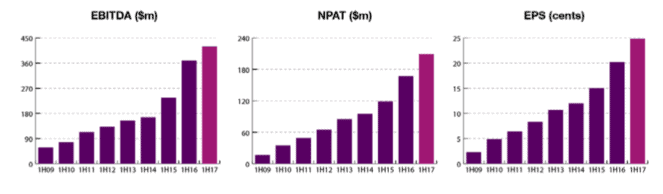
    To my excitement, I found that TPG — despite undercutting its competition — was growing its net profits after tax (NPAT) at an incredible rate. Earnings were $207.5 million at the end of the first half of FY17. Comparatively, the company’s first-half NPAT was $90.1 million only three years prior, as shown below.

    Source: TPG half-year FY17 results commentary

    In my eyes, here was a company that could deliver a competitive service at a cheaper price thanks to its growing participation in industry consolidation. Additionally, word on the street then was that TPG had plans to expand its successful campaign against the incumbents in the 5G mobile market.

    It ticked my boxes: a history of a proven strategy, signs of competitive advantage, room for further growth, and an invested CEO steering the ship (founder David Teoh).

    Why I sold my TPG shares

    Fundamentally, the unravelling of my original investment thesis is what prompted me to sell my TPG shares in April 2021 for $6.10 apiece.

    Firstly, the telecom provider’s plans of delivering a low-cost 5G mobile network began to crumble in 2019 amid a ban on Huawei infrastructure. The China-made devices were intended to underpin TPG’s competitive small-cell network.

    Fortunately, TPG has managed to still tap into the opportunity through the merger with Vodafone Hutchinson Australia. However, I was concerned that Vodafone might come with some unwelcomed baggage given a series of $100 million-plus losses prior to the deal.

    Furthermore, the entrepreneurial spark of David Teoh was extinguished on 26 March 2021 when the founder decided to resign.

    Simply put, most of the factors that played into my justification for buying were now gone — or at minimum, far murkier than before. Feeling unconfident, it seemed only reasonable to sell my TPG shares and reassess my options.

    Time to take another look?

    Including dividends, TPG delivered a 15.2% total return over my holding period. Since selling, shares in the telco giant have netted a 12% loss after dividends.

    I’m not going to claim that I knew the share price was going to fall, because I didn’t. I was more at odds with the likelihood of TPG shares outperforming the Aussie benchmark over the next five years.

    When I sold, I was not convinced that this Aussie internet provider could unlock enough value to beat an equal investment in something like a Vanguard Australian Shares Index ETF (ASX: VAS).

    TradingView Chart

    Credit where it is due, TPG has been growing its earnings and dividends while keeping debt under control, as pictured above. As a result, shares in the company now offer a respectable dividend yield of 3.6% at a 65% payout ratio.

    If the second-largest internet provider is able to continue to steadily grow earnings by chipping away at the market share of Telstra and Optus, I’d consider making a spot for TPG shares in my portfolio again.

    However, the competitive pressures from new retail service providers and emerging low Earth-orbiting (LEO) satellites leave me with reservations.

    In conclusion, I believe I made a reasonable investment decision at the time. As famed investor Peter Lynch once said, “Know what you own, and know why you own it.”

    Following the changes at TPG, I personally no longer knew a solid reason for owning a piece of the company.

    The post Was I dumb to sell my TPG shares? appeared first on The Motley Fool Australia.

    Should you invest $1,000 in Tpg Telecom Limited right now?

    Before you consider Tpg Telecom Limited, you’ll want to hear this.

    Motley Fool Investing expert Scott Phillips just revealed what he believes are the 5 best stocks for investors to buy right now… and Tpg Telecom Limited wasn’t one of them.

    The online investing service he’s run for over a decade, Motley Fool Share Advisor, has provided thousands of paying members with stock picks that have doubled, tripled or even more.* And right now, Scott thinks there are 5 stocks that are better buys.

    See The 5 Stocks
    *Returns as of March 1 2023

    (function() {
    function setButtonColorDefaults(param, property, defaultValue) {
    if( !param || !param.includes(‘#’)) {
    var button = document.getElementsByClassName(“pitch-snippet”)[0].getElementsByClassName(“pitch-button”)[0];
    button.style[property] = defaultValue;
    }
    }

    setButtonColorDefaults(“#0095C8”, ‘background’, ‘#5FA85D’);
    setButtonColorDefaults(“#0095C8”, ‘border-color’, ‘#43A24A’);
    setButtonColorDefaults(“#fff”, ‘color’, ‘#fff’);
    })()

    More reading

    Motley Fool contributor Mitchell Lawler has no position in any of the stocks mentioned. The Motley Fool Australia’s parent company Motley Fool Holdings Inc. has no position in any of the stocks mentioned. The Motley Fool Australia has positions in and has recommended Telstra Group. The Motley Fool Australia has recommended Tpg Telecom. The Motley Fool has a disclosure policy. This article contains general investment advice only (under AFSL 400691). Authorised by Scott Phillips.

    from The Motley Fool Australia https://ift.tt/nzKifFe

  • Here are the 3 most heavily traded ASX 200 shares on Monday

    a man peers between two large piles of papers and files with a wide-eyed, wide-mouth look of dread at the amount of work he has to do.

    a man peers between two large piles of papers and files with a wide-eyed, wide-mouth look of dread at the amount of work he has to do.

    It’s been a strong start to the trading week for the S&P/ASX 200 Index (ASX: XJO) so far this Monday.

    The ASX 200 doesn’t seem to have been held down by any Monday-itis today thus far, with the index currently boasting a pleasing gain of 0.69%, lifting the ASX 200 to just over 7,333 points.

    Let’s hope this optimism holds for the rest of the week. But let’s now turn to the ASX 200 shares that are currently at the top of the share market’s trading volume charts, according to investing.com. 

    The 3 most traded ASX 200 shares by volume this Monday

    Liontown Resources Ltd (ASX: LTR)

    First up today we have ASX 200 lithium stock Liontown. This Monday has seen a decent 14.58 million Liontown shares trade hands as it currently stands. There’s been no fresh news or announcements out of the company itself today.

    But that hasn’t stopped this ASX 200 share from rocketing by a pleasing 4.91% up to $1.71 a share. It’s this gain that seems to be responsible for so many Liontown shares trading today.

    Pilbara Minerals Ltd (ASX: PLS)

    Next up we have another ASX 200 lithium stock in industry-leader Pilbara Minerals. So far today, a hefty 17.25 million Pilbara shares have been bought and sold on the markets. There’s been no new news out of Pilbara either. But this company’s shares don’t seem to have been invited to the party that Liontown is at.

    Pilbara has gone the other way so far today, with its shares presently down by a meaningful 1.67% to $4.11 each, despite spending some time in the green this morning at up to $4.26 a share. It’s probably this bouncing around that has prompted the high number of Pilbara shares flying across the ASX today.

    Core Lithium Ltd (ASX: CXO)

    Lastly this Monday, let’s check out yet another ASX 200 lithium stock in Core Lithium. So far this session, a notable 20.24 million Core shares have been traded on the share market. In Core Lithium’s case, we do have some news that the shares might be reacting to today.

    This morning, the company announced that it has doubled its resource estimate at its flagship Finniss Lithium Project. The Core Lithium share price was up 11% at one point this Monday at $1.07 a share, but investors have since cooled their jets, with the company now up by 6.25% at $1.02 a share. No wonder this stock is topping our charts today with that kind of volatility.

    The post Here are the 3 most heavily traded ASX 200 shares on Monday appeared first on The Motley Fool Australia.

    FREE Investing Guide for Beginners

    Despite what some people may say – we believe investing in shares doesn’t have to be overwhelming or complicated…

    For over a decade, we’ve been helping everyday Aussies get started on their journey.

    And to help even more people cut through some of the confusion “experts’” seem to want to perpetuate – we’ve created a brand-new “how to” guide.

    Yes, Claim my FREE copy!
    *Returns as of March 1 2023

    (function() {
    function setButtonColorDefaults(param, property, defaultValue) {
    if( !param || !param.includes(‘#’)) {
    var button = document.getElementsByClassName(“pitch-snippet”)[0].getElementsByClassName(“pitch-button”)[0];
    button.style[property] = defaultValue;
    }
    }

    setButtonColorDefaults(“#0095C8”, ‘background’, ‘#5FA85D’);
    setButtonColorDefaults(“#0095C8”, ‘border-color’, ‘#43A24A’);
    setButtonColorDefaults(“#fff”, ‘color’, ‘#fff’);
    })()

    More reading

    Motley Fool contributor Sebastian Bowen has no position in any of the stocks mentioned. The Motley Fool Australia’s parent company Motley Fool Holdings Inc. has no position in any of the stocks mentioned. The Motley Fool Australia has no position in any of the stocks mentioned. The Motley Fool has a disclosure policy. This article contains general investment advice only (under AFSL 400691). Authorised by Scott Phillips.

    from The Motley Fool Australia https://ift.tt/dEZaP7g

  • Guess which ASX 200 director just bought 50,000 of their company’s shares

    a man sits on a ridge high above a large city full of high rise buildings as though he is thinking, contemplating the vista below.

    a man sits on a ridge high above a large city full of high rise buildings as though he is thinking, contemplating the vista below.

    Inflation and interest rate hikes have inflicted a lot of damage in the last few months. Central banks are trying to do what they can to calm down demand and slow price increases.

    Some companies have been hit hard by the difficult economic situation, while others are barely over the impacts of COVID-19.

    So while share prices are down, it can be very interesting when a director decides to buy shares.

    Directors may decide to sell shares for a number of different reasons, but the reason to invest in the market is usually because of just one factor – the director thinks the business is good value.

    Here’s why this S&P/ASX 200 Index (ASX: XJO) share could be an underrated buy.

    Buy signal for this ASX 200 share?

    Scentre Group (ASX: SCG) has been through plenty of volatility since the start of COVID-19.

    It was announced that director Ilana Atlas recently bought 50,000 Scentre shares on the market at an average price of $2.935 per security. That translates into a total investment of around $147,000, bringing the director’s total ownership to 130,856 Scentre shares.

    This investment comes after Scentre, the owner of Westfield shopping centres in Australia and New Zealand, unveiled its FY22 results a couple of weeks ago.

    It revealed that its funds from operations (FFO) – essentially the net rental profit – increased by 20.6% to $1.04 billion. The FFO was 20.06 in per-security terms. It also announced that its distribution would be 15.75 cents per security, up 10.5%. Both the FFO and distribution were more than guided.

    In 2022, it saw 480 million customer visits, up by 67 million compared to 2021. When it announced its result, Scentre revealed that in 2023 to date it had seen 70 million customer visits, an increase of more than 10 million compared to the same period in 2022.

    The business noted that its portfolio occupancy increased to 98.9% at 31 December 2022, up from 98.7% at the end of 2021.

    Looking ahead

    The ASX 200 share gave guidance for the year ahead, revealing that it’s expecting FFO for 2023 to be in the range of 20.75 cents to 21.25 cents per security, an increase of between 3.4% to 5.9% for the year.

    The distribution is expected to be at least 16.50 cents per security, which would represent an increase of 4.8% for the year. At the current Scentre share price of $3.02, that distribution guidance represents a yield of 5.2%.

    The post Guess which ASX 200 director just bought 50,000 of their company’s shares appeared first on The Motley Fool Australia.

    FREE Beginners Investing Guide

    Despite what some people may say – we believe investing in shares doesn’t have to be overwhelming or complicated…

    For over a decade, we’ve been helping everyday Aussies get started on their journey.

    And to help even more people cut through some of the confusion “experts’” seem to want to perpetuate – we’ve created a brand-new “how to” guide.

    Yes, Claim my FREE copy!
    *Returns as of March 1 2023

    (function() {
    function setButtonColorDefaults(param, property, defaultValue) {
    if( !param || !param.includes(‘#’)) {
    var button = document.getElementsByClassName(“pitch-snippet”)[0].getElementsByClassName(“pitch-button”)[0];
    button.style[property] = defaultValue;
    }
    }

    setButtonColorDefaults(“#0095C8”, ‘background’, ‘#5FA85D’);
    setButtonColorDefaults(“#0095C8”, ‘border-color’, ‘#43A24A’);
    setButtonColorDefaults(“#fff”, ‘color’, ‘#fff’);
    })()

    More reading

    Motley Fool contributor Tristan Harrison has no position in any of the stocks mentioned. The Motley Fool Australia’s parent company Motley Fool Holdings Inc. has no position in any of the stocks mentioned. The Motley Fool Australia has no position in any of the stocks mentioned. The Motley Fool has a disclosure policy. This article contains general investment advice only (under AFSL 400691). Authorised by Scott Phillips.

    from The Motley Fool Australia https://ift.tt/kEs7jaK

  • Want passive income? These are the ASX dividend shares to buy according to experts

    A woman holds a lightbulb in one hand and a wad of cash in the other

    A woman holds a lightbulb in one hand and a wad of cash in the other

    While interest rates are rising, investors can still beat the returns on offer with savings accounts easily with ASX dividend shares.

    But which shares should you buy for dividends? Two that have recently been rated as buys for investors are listed below. Here’s what you need to know about them:

    Elders Ltd (ASX: ELD)

    This agribusiness company could be an ASX dividend share to buy according to analysts at Goldman Sachs.

    With its shares down materially from their highs, the broker believes investors should be snapping them up before it’s too late. Particularly given that Goldman feels “the fundamentals of this company remain unchanged.” The broker also notes that “ELD is very well positioned to grow through the cycle.”

    Its analysts have a conviction buy rating and $18.40 price target on Elders’ shares.

    As for dividends, Goldman is forecasting fully franked dividends per share of 53 cents in FY 2023 and 57 cents in FY 2024. Based on the current Elders share price of $9.07, this will mean yields of 5.8% and 6.3%, respectively.

    Mineral Resources Ltd (ASX: MIN)

    Another ASX dividend share for income investors to consider buying is Mineral Resources.

    Bell Potters appears to believe it could be a top option for investors right now. That’s because the broker expects the mining and mining services company’s lithium exposure to support strong earnings and big dividends in the coming years.

    Its analysts currently have a buy rating and $110.00 price target on its shares.

    In respect to its dividends, Bell Potter is expecting fully franked dividends of $3.73 per share in FY 2023 and $9.41 per share in FY 2024. Based on the current Mineral Resources share price of $88.70, this will mean 4.2% and 10.6% dividend yields, respectively.

    The post Want passive income? These are the ASX dividend shares to buy according to experts appeared first on The Motley Fool Australia.

    Where should you invest $1,000 right now? 3 dividend stocks to help beat inflation

    This FREE report reveals 3 stocks not only boasting sustainable dividends but that also have strong potential for massive long term returns…

    See the 3 stocks
    *Returns as of March 1 2023

    (function() {
    function setButtonColorDefaults(param, property, defaultValue) {
    if( !param || !param.includes(‘#’)) {
    var button = document.getElementsByClassName(“pitch-snippet”)[0].getElementsByClassName(“pitch-button”)[0];
    button.style[property] = defaultValue;
    }
    }

    setButtonColorDefaults(“#0095C8”, ‘background’, ‘#5FA85D’);
    setButtonColorDefaults(“#0095C8”, ‘border-color’, ‘#43A24A’);
    setButtonColorDefaults(“#fff”, ‘color’, ‘#fff’);
    })()

    More reading

    Motley Fool contributor James Mickleboro has no position in any of the stocks mentioned. The Motley Fool Australia’s parent company Motley Fool Holdings Inc. has no position in any of the stocks mentioned. The Motley Fool Australia has recommended Elders. The Motley Fool has a disclosure policy. This article contains general investment advice only (under AFSL 400691). Authorised by Scott Phillips.

    from The Motley Fool Australia https://ift.tt/vupZr83