Tag: Motley Fool

  • 3 unmissable ASX AI stocks on my radar right now

    A man sits in casual clothes in front of a computer amid graphic images of data superimposed on the image, as though he is engaged in IT or hacking activities.A man sits in casual clothes in front of a computer amid graphic images of data superimposed on the image, as though he is engaged in IT or hacking activities.

    The hype around artificial intelligence (AI) has never been more palpable. But with most AI companies located outside Australia and even fewer publicly listed, where can investors get a slice of AI stocks on the ASX?

    We may not have the likes of Microsoft Corp (NASDAQ: MSFT) or Alphabet Inc (NASDAQ: GOOG) at our fingertips. However, Australia offers some high-quality businesses that may provide some exposure to the red-hot sector.

    Find out what is catching my eye below.

    The next frontier for productivity

    Unless you have been living under a rock, you’ve probably heard of ChatGPT. The AI-powered chatbot owned by OpenAI became the fastest-growing consumer internet app in history in the past week — dethroning TikTok by reaching 100 million users in only two months.

    Now, Microsoft, Google, and China search engine Baidu are all squabbling over which can implement the technology the quickest.

    https://platform.twitter.com/widgets.js

    Critics may consider AI to be an overhyped fad, but the biggest tech companies in the world appear to be taking it seriously. In fact, Microsoft wasted no time integrating several new AI features into its browser yesterday, giving people the ability to leverage what it calls a ‘co-pilot’ directly in Microsoft Edge.

    Which ASX stocks look ripe for the AI boom

    In my opinion, the efficiency benefits of AI in the future will lend themselves to countless applications. As Microsoft CEO Satya Nadella states, “I think that this technology is going to reshape pretty much every software category.”

    That’s why I’m personally keeping an eye on ASX stocks with their toes already in the AI industry.

    TechnologyOne Ltd (ASX: TNE) is one such company that already makes use of the technology in its enterprise software solutions. If more enterprises see the value in AI, TechnologyOne could be well-placed to offer off-the-shelf solutions to its customers.

    Another ASX stock offering AI-powered solutions is Imdex Limited (ASX: IMD). The company is a software provider to the mining industry, helping it make more informed decisions. One such product is their cloud-based AI spectral interpretation system named aiSIRIS.

    Furthermore, Imdex currently trades at a price-to-earnings (P/E) ratio of 24. The valuation and its growth trajectory make it one company I’m seriously considering adding to my portfolio.

    The final ASX stock with AI exposure that I think is appealing is circuit board design software company Altium Limited (ASX: ALU).

    AI software ultimately needs hardware to run on. The company noted AI as a macro trend for driving increased demand for electronics in its 2022 full-year results.

    Altium brings together a long tailwind, a history of executing on growth, and a commendable balance sheet. These ingredients combined make this ASX stock one I’d strongly consider for exposure to AI.

    The post 3 unmissable ASX AI stocks on my radar right now appeared first on The Motley Fool Australia.

    Renowned futurist claims this could be… “The last invention that humanity will ever need to make”?

    Shark Tank billionaire Mark Cuban built his fortune on understanding technology. So when he says this one development is already taking over the business world, you may need to sit up and pay close attention.

    He predicts it will soon become as essential to businesses as personal laptops and smartphones.

    And it’s so revolutionary he’s even admitted “It’s the foundation of how I invest in stocks these days…”

    So if you’re looking to get in front of a groundbreaking innovation… You’ll need to see this…

    Learn more about our AI Boom report
    *Returns as of February 1 2023

    (function() {
    function setButtonColorDefaults(param, property, defaultValue) {
    if( !param || !param.includes(‘#’)) {
    var button = document.getElementsByClassName(“pitch-snippet”)[0].getElementsByClassName(“pitch-button”)[0];
    button.style[property] = defaultValue;
    }
    }

    setButtonColorDefaults(“#0095C8”, ‘background’, ‘#5FA85D’);
    setButtonColorDefaults(“#0095C8”, ‘border-color’, ‘#43A24A’);
    setButtonColorDefaults(“#fff”, ‘color’, ‘#fff’);
    })()

    More reading

    Suzanne Frey, an executive at Alphabet, is a member of The Motley Fool’s board of directors. Motley Fool contributor Mitchell Lawler has no position in any of the stocks mentioned. The Motley Fool Australia’s parent company Motley Fool Holdings Inc. has positions in and has recommended Alphabet, Altium, Imdex, and Microsoft. The Motley Fool Australia has positions in and has recommended Imdex. The Motley Fool Australia has recommended Alphabet and Technology One. The Motley Fool has a disclosure policy. This article contains general investment advice only (under AFSL 400691). Authorised by Scott Phillips.

    from The Motley Fool Australia https://ift.tt/h8cFOqi

  • Boral share price soars 12% on ‘strong profit growth’

    a group of five engineers wearing hard hats and some in high visibility vests raise their arms in happy celebration atop a building site with construction and equipment in the background.a group of five engineers wearing hard hats and some in high visibility vests raise their arms in happy celebration atop a building site with construction and equipment in the background.

    The Boral Limited (ASX: BLD) share price is skybound on news of strong earnings and profit growth during the first half of FY23.

    The ASX building and construction materials company released its FY23 first-half earnings this morning.

    Boral shares opened at $3.75, up 6.5%, before rising to a high of $3.95 — a 12.2% bump on yesterday’s close.

    The Boral share price is currently up 8.4% at $3.815.

    Boral share price jumps on 50% profit lift

    In its ASX statement, the company said it had achieved “strong underlying revenue, earnings, and profit growth”.

    The highlights for the six months to 31 December 2022 are as follows:

    • Revenue $1,681.1 million, up 12% on the previous corresponding period (pcp) of 1H FY23
    • Earnings before interest and taxes (EBIT) $95.3 million, up 15%
    • EBIT margin 5.7%, up 20 basis points
    • Return on funds employed (ROFE) 8.5%, improved by 80 basis points
    • Net profit after tax (NPAT) $56.8 million, up 53%
    • Adjusted earnings per share (EPS) 5.1 cents, up 50%.

    Despite the impressive numbers, Boral shareholders will not receive an interim dividend.

    The company said this was due to “limited availability of franking credits and free cash flow performance for the half”.

    The last time Boral paid a dividend was this time last year, along with a capital return.

    What else happened in 1H FY23?

    While Boral reported a significant boost to its underlying NPAT, its statutory NPAT was actually down 91% at $89.5 million pcp.

    That’s because 1H FY22 included $1,002.4 million of income from discontinued operations in the United States, and the profit on the sale of its US building products business.

    Boral said its 1H FY23 revenue bump of 12% related to volume and price.

    The company said it had offset “a sharp increase in costs felt across the business” due to inflation through “price and cost discipline”.

    Boral said its operating cash flow is up 37% to $117.4 million.

    What did management say?

    Boral CEO Vik Bansal, said:

    While our financial results are pleasing considering a difficult inflationary environment, I know Boral is capable of much more.

    It is promising to see our pricing actions gain traction, which along with volume growth and cost discipline drove EBIT, excluding Property, 23% higher to $95.4 million…

    We will need to remain highly disciplined and focussed in getting price realisation from the market across the country while maintaining a disciplined approach to cost management. Price erosion is not an option for Boral.

    What’s next?

    Boral said it expects 2H FY23 EBIT to be broadly in line with 1H FY23.

    The company said the priorities for 2H FY23 include embedding the new operating model and the continued roll-out of standardisation and simplification initiatives.

    This relates to Bansal’s PEMAF strategy (people, environment and sustainability, markets, assets, and finance), introduced at the annual general meeting last November.

    Bansal said:

    During the first half of the year, we have been quick to move towards a new, decentralised but standardised operating model, aimed at better leveraging our network, extensive downstream footprint, and vertically integrated upstream infrastructure.

    Other priorities include managing inflationary pressures and focusing on price and volume of sales. The company said price realisation is more important than cost recovery.

    Boral share price snapshot

    The Boral share price is up 28.5% over the past six months . This compares to a 7.2% bump for the S&P/ASX 200 Index (ASX: XJO).

    The post Boral share price soars 12% on ‘strong profit growth’ appeared first on The Motley Fool Australia.

    Wondering where you should invest $1,000 right now?

    When investing expert Scott Phillips has a stock tip, it can pay to listen. After all, the flagship Motley Fool Share Advisor newsletter he has run for over ten years has provided thousands of paying members with stock picks that have doubled, tripled or even more.*

    Scott just revealed what he believes could be the ‘five best ASX stocks’ for investors to buy right now. These stocks are trading at near dirt-cheap prices and Scott thinks they could be great buys right now…

    See The 5 Stocks
    *Returns as of February 1 2023

    (function() {
    function setButtonColorDefaults(param, property, defaultValue) {
    if( !param || !param.includes(‘#’)) {
    var button = document.getElementsByClassName(“pitch-snippet”)[0].getElementsByClassName(“pitch-button”)[0];
    button.style[property] = defaultValue;
    }
    }

    setButtonColorDefaults(“#0095C8”, ‘background’, ‘#5FA85D’);
    setButtonColorDefaults(“#0095C8”, ‘border-color’, ‘#43A24A’);
    setButtonColorDefaults(“#fff”, ‘color’, ‘#fff’);
    })()

    More reading

    Motley Fool contributor Bronwyn Allen has no position in any of the stocks mentioned. The Motley Fool Australia’s parent company Motley Fool Holdings Inc. has no position in any of the stocks mentioned. The Motley Fool Australia has no position in any of the stocks mentioned. The Motley Fool has a disclosure policy. This article contains general investment advice only (under AFSL 400691). Authorised by Scott Phillips.

    from The Motley Fool Australia https://ift.tt/yx1v5mf

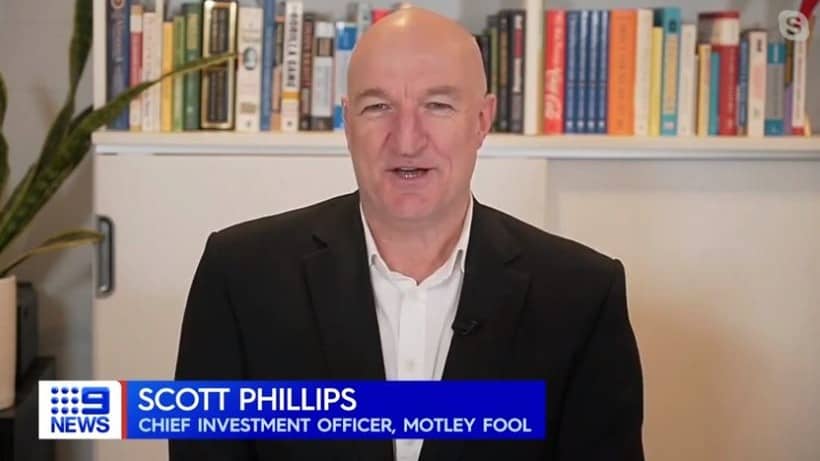
  • RBA increases rates. Again. Scott Phillips on Nine’s Late News

    Scott Phillips on Nine Late News 3 June 2022Scott Phillips on Nine Late News 3 June 2022

    Motley Fool Australia Chief Investment Officer Scott Phillips joined Michael Thomson for Nine’s Late News on Tuesday night to unpack the RBA’s latest interest rate decision, with the likelihood for more on the way. 

    [youtube https://www.youtube.com/watch?v=b30KooyOHAw?feature=oembed&w=500&h=281]

    The post RBA increases rates. Again. Scott Phillips on Nine’s Late News appeared first on The Motley Fool Australia.

    Wondering where you should invest $1,000 right now?

    When investing expert Scott Phillips has a stock tip, it can pay to listen. After all, the flagship Motley Fool Share Advisor newsletter he has run for over ten years has provided thousands of paying members with stock picks that have doubled, tripled or even more.*

    Scott just revealed what he believes could be the ‘five best ASX stocks’ for investors to buy right now. These stocks are trading at near dirt-cheap prices and Scott thinks they could be great buys right now…

    See The 5 Stocks
    *Returns as of February 1 2023

    (function() {
    function setButtonColorDefaults(param, property, defaultValue) {
    if( !param || !param.includes(‘#’)) {
    var button = document.getElementsByClassName(“pitch-snippet”)[0].getElementsByClassName(“pitch-button”)[0];
    button.style[property] = defaultValue;
    }
    }

    setButtonColorDefaults(“#43B02A”, ‘background’, ‘#5FA85D’);
    setButtonColorDefaults(“#43B02A”, ‘border-color’, ‘#43A24A’);
    setButtonColorDefaults(“#fff”, ‘color’, ‘#fff’);
    })()

    More reading

    Motley Fool contributor Scott Phillips has no position in any of the stocks mentioned. The Motley Fool Australia’s parent company Motley Fool Holdings Inc. has no position in any of the stocks mentioned. The Motley Fool Australia has no position in any of the stocks mentioned. The Motley Fool has a disclosure policy. This article contains general investment advice only (under AFSL 400691). Authorised by Scott Phillips.

    from The Motley Fool Australia https://ift.tt/8UwlWdY

  • 2 ASX growth shares that also offer incredible dividends

    Increasing white bar graph with a rising arrow on an orange background.

    Increasing white bar graph with a rising arrow on an orange background.

    There are some wonderful ASX growth shares that are delivering exceptional dividends to investors.

    ASX growth shares may not be known for their dividends, but one of the great things about strong growth in earnings per share (EPS) is that it also enables good growth of the dividend as well.

    While in the first few years a dividend yield of an ASX growth share isn’t likely to be as high as BHP Group Ltd (ASX: BHP), it can rise over time to be bigger.

    Below are two that are paying solid yields and also could deliver excellent growth over time.

    Lovisa Holdings Ltd (ASX: LOV)

    Lovisa is a leading ASX retail share that sells affordable jewellery which is focused on younger shoppers.

    The business has a global network of stores in Australia, North America, Europe and so on. Asia could be the next growth engine for the company if it’s able to achieve a good foothold in places like India or China.

    Let’s have a look at how much dividend income the ASX growth share is projected to pay in 2023.

    Commsec numbers suggest that Lovisa could pay a grossed-up dividend yield of around 3%.

    By FY25, the projections suggest that the EPS could jump by 55% and that the dividend could increase by 43%. These numbers suggest that Lovisa would be retaining a higher proportion of its earnings to fund its growth. In other words, the dividend payout ratio could decrease.

    In FY25, the business could pay a grossed-up dividend yield of 4%. I think the dividend could grow a lot more over the rest of the decade.

    FY23 is looking promising, with the company entering Canada, Poland, Hong Kong, Italy and Mexico. It’s opening itself up to countries with large populations.

    Universal Store Holdings Ltd (ASX: UNI)

    Universal Store is not a well-known name on the ASX, but I think long-term growth of EPS and dividends could make the apparel ASX retail share stand out.

    I like that the business has a fairly easy path to growth through opening new stores. It’s important that the company chooses good locations that don’t cost too much in rent, but its expansion strategy is going well.

    At the company’s annual general meeting (AGM), Universal Store revealed that total sales had grown 40% year over year, which didn’t include the acquired THRILLS business numbers. It also said that the gross profit margin had improved year over year.

    Commsec numbers suggest that the business is going to achieve EPS of 41 cents, putting the company at 14 times FY23’s estimated earnings. EPS is predicted to grow by 30% to FY25.

    This could allow the dividend to grow from 27.4 cents per share – a grossed-up dividend yield of around 7% – to 35.9 cents per share in FY25. That potential FY25 payout would be a grossed-up dividend yield of 9.1%.

    The post 2 ASX growth shares that also offer incredible dividends appeared first on The Motley Fool Australia.

    FREE Investing Guide for Beginners

    Despite what some people may say – we believe investing in shares doesn’t have to be overwhelming or complicated…

    For over a decade, we’ve been helping everyday Aussies get started on their journey.

    And to help even more people cut through some of the confusion “experts’” seem to want to perpetuate – we’ve created a brand-new “how to” guide.

    Yes, Claim my FREE copy!
    *Returns as of February 1 2023

    (function() {
    function setButtonColorDefaults(param, property, defaultValue) {
    if( !param || !param.includes(‘#’)) {
    var button = document.getElementsByClassName(“pitch-snippet”)[0].getElementsByClassName(“pitch-button”)[0];
    button.style[property] = defaultValue;
    }
    }

    setButtonColorDefaults(“#0095C8”, ‘background’, ‘#5FA85D’);
    setButtonColorDefaults(“#0095C8”, ‘border-color’, ‘#43A24A’);
    setButtonColorDefaults(“#fff”, ‘color’, ‘#fff’);
    })()

    More reading

    Motley Fool contributor Tristan Harrison has no position in any of the stocks mentioned. The Motley Fool Australia’s parent company Motley Fool Holdings Inc. has positions in and has recommended Lovisa. The Motley Fool Australia has recommended Lovisa. The Motley Fool has a disclosure policy. This article contains general investment advice only (under AFSL 400691). Authorised by Scott Phillips.

    from The Motley Fool Australia https://ift.tt/uPM7EvB

  • Why this 4%-yielding ASX 200 share looks cheap to me

    A man in trendy clothing sits on a bench in a shopping mall looking at his phone with interest and a surprised look on his face.

    A man in trendy clothing sits on a bench in a shopping mall looking at his phone with interest and a surprised look on his face.

    Collins Foods Ltd (ASX: CKF) shares look like a bargain, and too tasty to miss. The S&P/ASX 200 Index (ASX: XJO) share has gone through a decline, but it could be a great time to buy.

    For readers who don’t know, this business is a franchisee of KFC outlets in both Australia and Europe. It also has a small Taco Bell network in Australia which it’s looking to grow over time.

    The Collins Foods share price is down by 33% over the past 12 months. In other words, it has lost a third of its value.

    What’s going wrong for the ASX 200 share?

    Collins Foods fell throughout 2022 as the business saw investor attention decline amid rising inflation and higher interest rates.

    At the end of November 2022, the company’s share price plunged 24% after delivering its FY23 half-year result. Investors didn’t like what they heard.

    In the first six months of FY23, revenue rose 15% to $614.3 million. However, underlying earnings before interest, tax, depreciation and amortisation (EBITDA) only rose 0.5% to $95.4 million and underlying net profit after tax (NPAT) dropped 14.2% to $24.8 million.

    The ASX 200 share decided to maintain its interim dividend at 12 cents per share.

    Collins Foods noted there was significant cost inflation and wage increases in Australia and Europe. Taco Bell openings have been paused and it said that eight restaurants were underperforming. Taco Bell same store sales fell 7.8%.

    However, Collins Foods is now going to work with Yum! (owner of the Taco Bell brand) to regain traction in sales before recommencing the rollout and scaling the brand.

    Why I think the Collins Foods share price is a bargain

    Management said it’s confident about the future prospects of Taco Bell “given its value position within the fastest growing quick service restaurant segment”.

    Trading in the first six weeks of the FY23 second half was promising, with KFC stores’ same sales growth of 5.6% in Australia and 14.8% in Europe.

    The company is expecting to open nine to 12 new KFC outlets in Australia in FY23.

    In the Netherlands, it’s aiming to reach a long-term target of up to 130 net new KFC restaurants by 2031. This could be an earnings driver.

    The ASX 200 share also continues to look for acquisition opportunities in Australia and Europe.

    Collins Foods thinks same-store sales growth for Taco Bell will return in FY23.

    All of these elements together make me think that FY24 will be more positive, particularly as inflation (hopefully) reduces.

    According to Commsec, Collins Foods is currently trading at 20 times FY23’s estimated earnings. It’s expected to grow its earnings per share (EPS) by 44% to FY25, which would enable the dividend to grow to 32 cents per share. This would be a grossed-up dividend yield of 5.5%.

    I think Collins Foods has plenty of earnings growth in store over the next five years, which can help share price growth and pave the way for a return to good dividends, and higher payouts.

    The post Why this 4%-yielding ASX 200 share looks cheap to me appeared first on The Motley Fool Australia.

    Wondering where you should invest $1,000 right now?

    When investing expert Scott Phillips has a stock tip, it can pay to listen. After all, the flagship Motley Fool Share Advisor newsletter he has run for over ten years has provided thousands of paying members with stock picks that have doubled, tripled or even more.*

    Scott just revealed what he believes could be the ‘five best ASX stocks’ for investors to buy right now. These stocks are trading at near dirt-cheap prices and Scott thinks they could be great buys right now…

    See The 5 Stocks
    *Returns as of February 1 2023

    (function() {
    function setButtonColorDefaults(param, property, defaultValue) {
    if( !param || !param.includes(‘#’)) {
    var button = document.getElementsByClassName(“pitch-snippet”)[0].getElementsByClassName(“pitch-button”)[0];
    button.style[property] = defaultValue;
    }
    }

    setButtonColorDefaults(“#0095C8”, ‘background’, ‘#5FA85D’);
    setButtonColorDefaults(“#0095C8”, ‘border-color’, ‘#43A24A’);
    setButtonColorDefaults(“#fff”, ‘color’, ‘#fff’);
    })()

    More reading

    Motley Fool contributor Tristan Harrison has no position in any of the stocks mentioned. The Motley Fool Australia’s parent company Motley Fool Holdings Inc. has positions in and has recommended Collins Foods. The Motley Fool Australia has recommended Collins Foods. The Motley Fool has a disclosure policy. This article contains general investment advice only (under AFSL 400691). Authorised by Scott Phillips.

    from The Motley Fool Australia https://ift.tt/b6LVHvC

  • Why right now is a once-in-a-decade opportunity to make passive income from ASX shares

    a man sits at his computer screen scrolling with his fingers with a satisfied smile on his face as though he is very content with the news he is receiving.

    a man sits at his computer screen scrolling with his fingers with a satisfied smile on his face as though he is very content with the news he is receiving.

    The ASX share market has been through a lot over the past three years. But the present time could be a rare opportunity to buy ASX dividend shares whilst they offer excellent dividend yields. Of course, this has the potential to significantly grow our passive income.

    Interest rates have shot higher to try to tame inflation and dampen what’s seen as excessive demand in the economy.

    Yesterday, the Reserve Bank of Australia (RBA) decided to increase the official cash rate by another 25 basis points (0.25%) to 3.35%.

    In theory, a higher interest rate should push down asset prices. So, the decline we’ve seen with some assets is probably justified.

    So, not only do shares become cheaper than they used to be, but investors get the opportunity to boost their passive incomes.

    That’s because when share prices fall, it has the effect of increasing dividend yields.

    Passive income boosted by higher dividend income

    Here’s an example. If a company had a dividend yield of 5%, investing $1,000 into that ASX share would achieve $50 of annual passive income.

    If the share market turns into a bear market, sending that share price 10% lower, the dividend yield would translate into a 5.5% dividend yield. Investing $1,000 would achieve $55 of annual income. Certainly, an extra 0.5% return each year can add up over the years.

    Of course, dealing with bigger sums would make a bigger difference. Investing $1 million with that extra 0.5% would be an additional $5,000 of annual income.

    The higher the starting dividend yield, the more of a boost investors get from falling share prices. For example, a 10% dividend yield would turn into an 11% dividend yield after a 10% share price drop.

    I don’t think that some of these businesses are going to experience deteriorating conditions forever. Retailers may be facing a tricky 2023, but the longer term could see the economy return to normal-ish trading conditions.

    ASX dividend shares that are now paying a bigger yield

    There are many examples of ASX companies taking a hit to their share prices, including Wesfarmers Ltd (ASX: WES) as seen below.

    Since August 2021, the Wesfarmers share price has fallen around 25%. Commsec numbers suggest that the owner of Bunnings and Kmart might pay a grossed-up dividend yield of around 5.25% in FY23.

    From November 2021, the Nick Scali Limited (ASX: NCK) share price has declined by around 35%. Commsec numbers suggest the furniture retailer could pay a grossed-up dividend yield of around 11% in FY23.

    Pathology giant Sonic Healthcare Ltd (ASX: SHL) has seen its share price decline 20% over the past year and 35% since the end of 2021. Commsec numbers suggest a grossed-up dividend yield of 4.75% could be the payout in FY23.

    Foolish takeaway

    This period of time seems like a great chance for investors to make passive income from ASX dividend shares while they’re offering boosted dividend yields. Certainly, I’m on the hunt for much cheaper opportunities that could deliver outperformance and income growth over the coming years.

    The post Why right now is a once-in-a-decade opportunity to make passive income from ASX shares appeared first on The Motley Fool Australia.

    FREE Investing Guide for Beginners

    Despite what some people may say – we believe investing in shares doesn’t have to be overwhelming or complicated…

    For over a decade, we’ve been helping everyday Aussies get started on their journey.

    And to help even more people cut through some of the confusion “experts’” seem to want to perpetuate – we’ve created a brand-new “how to” guide.

    Yes, Claim my FREE copy!
    *Returns as of February 1 2023

    (function() {
    function setButtonColorDefaults(param, property, defaultValue) {
    if( !param || !param.includes(‘#’)) {
    var button = document.getElementsByClassName(“pitch-snippet”)[0].getElementsByClassName(“pitch-button”)[0];
    button.style[property] = defaultValue;
    }
    }

    setButtonColorDefaults(“#0095C8”, ‘background’, ‘#5FA85D’);
    setButtonColorDefaults(“#0095C8”, ‘border-color’, ‘#43A24A’);
    setButtonColorDefaults(“#fff”, ‘color’, ‘#fff’);
    })()

    More reading

    Motley Fool contributor Tristan Harrison has no position in any of the stocks mentioned. The Motley Fool Australia’s parent company Motley Fool Holdings Inc. has no position in any of the stocks mentioned. The Motley Fool Australia has positions in and has recommended Wesfarmers. The Motley Fool Australia has recommended Sonic Healthcare. The Motley Fool has a disclosure policy. This article contains general investment advice only (under AFSL 400691). Authorised by Scott Phillips.

    from The Motley Fool Australia https://ift.tt/0R5ZL2t

  • Suncorp share price under pressure despite huge half-year profit growth

    A young woman sits with her hand to her chin staring off to the side thinking about her investments.

    A young woman sits with her hand to her chin staring off to the side thinking about her investments.

    The Suncorp Group Ltd (ASX: SUN) share price is edging lower on Wednesday morning.

    At the time of writing, the banking and insurance giant’s shares are down slightly to $12.46.

    This follows the release of Suncorp’s half-year results.

    Suncorp share price edges lower on half-year results

    • Insurance Australia gross written premium (GWP) up 9% to $4.8 billion
    • Suncorp New Zealand GWP up 12.2% to NZ$1.2 billion
    • Suncorp Bank home lending up 10.4%
    • Net profit after tax up 44.3% to $560 million
    • Cash earnings up 62.9% to $588 million
    • Interim fully franked dividend up 43.5% to 33 cents per share

    What happened during the half?

    For the six months ended 31 December, Suncorp delivered a major jump in earnings thanks to a combination of factors. This includes underlying margin improvement, positive investment returns, premium increases, loan growth, and the release of $150 million from the provision for potential business interruption claims.

    This helped offset the negative impact of elevated natural hazard activity. Suncorp notes that the prevailing La Niña weather pattern across Australia and New Zealand led to eight separate weather events and around 53,000 natural hazard claims during the half. This resulted in Suncorp exceeding its natural hazard allowance by $99 million.

    Nevertheless, this couldn’t stop Suncorp from boosting its interim dividend by a massive 43.5% to a fully franked 33 cents per share. This represents a payout ratio of 71%, which is in the middle of its target payout ratio of 60% to 80%. This dividend will be paid to eligible shareholders on 31 March.

    However, it is worth noting that the market was expecting a net profit of $570 million. So, Suncorp’s $560 million profit appears to have fallen short of expectations. This could be weighing on the Suncorp share price a touch today.

    Management commentary

    Suncorp’s CEO Steve Johnston was pleased with the half. He said:

    Our Australian and New Zealand businesses have achieved strong growth in premiums, while unit growth across our consumer portfolio demonstrates the value of our products and brands, particularly in an inflationary environment. Our Best-in-Class claims program has allowed us to be more disciplined in leveraging scale to deliver lower aggregate inflation outcomes. The Bank continued to grow its home and business lending portfolios and customer deposits.

    Outlook

    Also failing to boost the Suncorp share price was management’s positive outlook commentary.

    Mr Johnston revealed that the company is on track to deliver on its FY 2023 targets. He added:

    Pleasingly, we remain on track to achieve our FY23 targets, which is testament to the strength and resilience of our business amid significant headwinds, and demonstrates our ability to create long-term shareholder value while meeting the evolving needs of our customers and other stakeholders

    This includes operating expenses being in-line with its previous guidance of $2.7 billion, its underlying insurance trading ratio in the range of 10% to 12%, and growth in its GWP.

    The post Suncorp share price under pressure despite huge half-year profit growth appeared first on The Motley Fool Australia.

    Wondering where you should invest $1,000 right now?

    When investing expert Scott Phillips has a stock tip, it can pay to listen. After all, the flagship Motley Fool Share Advisor newsletter he has run for over ten years has provided thousands of paying members with stock picks that have doubled, tripled or even more.*

    Scott just revealed what he believes could be the ‘five best ASX stocks’ for investors to buy right now. These stocks are trading at near dirt-cheap prices and Scott thinks they could be great buys right now…

    See The 5 Stocks
    *Returns as of February 1 2023

    (function() {
    function setButtonColorDefaults(param, property, defaultValue) {
    if( !param || !param.includes(‘#’)) {
    var button = document.getElementsByClassName(“pitch-snippet”)[0].getElementsByClassName(“pitch-button”)[0];
    button.style[property] = defaultValue;
    }
    }

    setButtonColorDefaults(“#43B02A”, ‘background’, ‘#5FA85D’);
    setButtonColorDefaults(“#43B02A”, ‘border-color’, ‘#43A24A’);
    setButtonColorDefaults(“#fff”, ‘color’, ‘#fff’);
    })()

    More reading

    Motley Fool contributor James Mickleboro has no position in any of the stocks mentioned. The Motley Fool Australia’s parent company Motley Fool Holdings Inc. has no position in any of the stocks mentioned. The Motley Fool Australia has no position in any of the stocks mentioned. The Motley Fool has a disclosure policy. This article contains general investment advice only (under AFSL 400691). Authorised by Scott Phillips.

    from The Motley Fool Australia https://ift.tt/k1HQsOK

  • If inflation has peaked, why does the RBA keep raising interest rates?

    A man sits in deep thought with a pen held to his lips as he ponders his computer screen with a laptop open next to him on his desk in a home office environment.

    A man sits in deep thought with a pen held to his lips as he ponders his computer screen with a laptop open next to him on his desk in a home office environment.

    The Reserve Bank of Australia (RBA) just increased the interest rate again despite inflation supposedly peaking. What’s going on and how much more pain will be inflicted on the S&P/ASX 200 Index (ASX: XJO)?

    Yesterday, Australia’s cash rate was increased by another 25 basis points, or 0.25%, to 3.35%. Remember that less than a year ago the interest rate was just 0.10%.

    The main goal of man central banks is to reduce inflation back down to their target range by taking some demand out of the economy. For the RBA, that target range is between 2% to 3% while keeping the economy on an even keel.

    Inflation peaks in Australia?

    As noted by the RBA, CPI inflation over the 12 months to 31 December 2022 was 7.8%, the highest since 1990.

    In underlying terms, inflation was 6.9%. This was higher than expected and may be one of the key reasons why the RBA was concerned enough to announce that 2023 would see more rate rises.

    The RBA believes that “global factors explain much of this high inflation, but strong domestic demand is adding to the inflationary pressures in a number of areas of the economy.”

    Employment remains very strong. The RBA called the labour market “very tight” with the unemployment rate “steady at around 3.5%”, which is the lowest rate since 1974. Job vacancies and job ads are both at “very high levels”, but have declined a little recently, with some businesses reporting a recent easing in labour shortages.

    It noted that as economic growth slows, unemployment is expected to increase to 3.75% by the end of 2023.

    Why are interest rates still going up?

    The key factor seems to be that the RBA wants to do everything it can to avoid strong inflation. RBA boss Dr Lowe isn’t focused on what’s happening with ASX 200 shares. In the statement, the board said:

    The board’s priority is to return inflation to target. High inflation makes life difficult for people and damages the functioning of the economy. And if high inflation were to become entrenched in people’s expectations, it would be very costly to reduce later.

    While some cost inflation may have peaked, the RBA is keeping a close eye on wage growth, which is “continuing to pick up from the low rates of recent years and a further increase is expected due to the tight labour market.” The RBA then said:

    Given the importance of avoiding a prices-wages spiral, the board will continue to pay close attention to both the evolution of labour costs and the price-setting behaviour of firms in the period ahead.

    Despite the 0.25% increase, the RBA “expects that further increases in interest rates will be needed over the months ahead to ensure that inflation returns to target and that this period of high inflation is only temporary.”

    Plenty of economists thought that the RBA would only do two increases – yesterday’s and one more, taking the rate to 3.6%. But, with how the outlook was worded – could the rate reach 3.85%? Or even 4%?

    It’s possible the RBA may only go to 3.75%, but it seems the interest rate is going to be more than most people were expecting.

    The ASX 200 may be resilient as a whole in the face of these hikes. The US Federal Reserve seems to be slowing its rate increases, the ASX bank shares could benefit from higher rates, and the miners are benefiting from higher commodity prices. It’s no mistake that the Commonwealth Bank of Australia (ASX: CBA) share price is close to $110 and its all-time high.

    The post If inflation has peaked, why does the RBA keep raising interest rates? appeared first on The Motley Fool Australia.

    FREE Guide for New Investors

    Despite what some people may say – we believe investing in shares doesn’t have to be overwhelming or complicated…

    For over a decade, we’ve been helping everyday Aussies get started on their journey.

    And to help even more people cut through some of the confusion “experts’” seem to want to perpetuate – we’ve created a brand-new “how to” guide.

    Yes, Claim my FREE copy!
    *Returns as of February 1 2023

    (function() {
    function setButtonColorDefaults(param, property, defaultValue) {
    if( !param || !param.includes(‘#’)) {
    var button = document.getElementsByClassName(“pitch-snippet”)[0].getElementsByClassName(“pitch-button”)[0];
    button.style[property] = defaultValue;
    }
    }

    setButtonColorDefaults(“#0095C8”, ‘background’, ‘#5FA85D’);
    setButtonColorDefaults(“#0095C8”, ‘border-color’, ‘#43A24A’);
    setButtonColorDefaults(“#fff”, ‘color’, ‘#fff’);
    })()

    More reading

    Motley Fool contributor Tristan Harrison has no position in any of the stocks mentioned. The Motley Fool Australia’s parent company Motley Fool Holdings Inc. has no position in any of the stocks mentioned. The Motley Fool Australia has no position in any of the stocks mentioned. The Motley Fool has a disclosure policy. This article contains general investment advice only (under AFSL 400691). Authorised by Scott Phillips.

    from The Motley Fool Australia https://ift.tt/dWifB4C

  • Broker says these small cap ASX shares offer big returns potential

    Broker looking at the share price on her laptop with green and red points in the background.

    Broker looking at the share price on her laptop with green and red points in the background.

    If you have a high tolerance for risk, then you might want to consider adding some small cap exposure to your portfolio.

    But which small cap ASX shares should you buy? Listed below are two that Morgans rates very highly. Here’s why it is bullish on them:

    Acrow Formwork and Construction Services Ltd (ASX: ACF)

    The first small cap ASX share that Morgans is bullish on is Acrow. It provides engineered formwork, scaffolding, and screen systems solutions to the construction sector.

    Morgans likes the company due to its belief that it is well-placed to benefit from growing civil infrastructure activity across the east coast. It also highlights its attractive valuation and even more attractive dividend yield. It said:

    ACF is a well-managed business with leverage to growing civil infrastructure activity over the long-term, especially on the east coast. We believe the valuation remains attractive (~7x FY23F PE and ~6.5% yield) with potential positive catalysts from further meaningful contract wins.

    The broker has an add rating and 84 cents price target on its shares. This suggests potential upside of 23% for investors over the next 12 months based on the current Acrow share price.

    Mach7 Technologies Ltd (ASX: M7T)

    Morgans is positive on this enterprise image management systems provider. It believes Mach7 is well-positioned to deliver strong top line growth over the coming years. It explained:

    Mach 7 is a provider of enterprise image management systems that allow hospitals to identify, connect and share image and patient care data. Revenue growth of at least 20% pa is expected over the next three years.

    The broker currently has an add rating and $1.34 price target on its shares. So, with the Mach7 share price currently fetching 73 cents, this implies potential upside of 83% for investors over the next 12 months.

    The post Broker says these small cap ASX shares offer big returns potential appeared first on The Motley Fool Australia.

    FREE Investing Guide for Beginners

    Despite what some people may say – we believe investing in shares doesn’t have to be overwhelming or complicated…

    For over a decade, we’ve been helping everyday Aussies get started on their journey.

    And to help even more people cut through some of the confusion “experts’” seem to want to perpetuate – we’ve created a brand-new “how to” guide.

    Yes, Claim my FREE copy!
    *Returns as of February 1 2023

    (function() {
    function setButtonColorDefaults(param, property, defaultValue) {
    if( !param || !param.includes(‘#’)) {
    var button = document.getElementsByClassName(“pitch-snippet”)[0].getElementsByClassName(“pitch-button”)[0];
    button.style[property] = defaultValue;
    }
    }

    setButtonColorDefaults(“#0095C8”, ‘background’, ‘#5FA85D’);
    setButtonColorDefaults(“#0095C8”, ‘border-color’, ‘#43A24A’);
    setButtonColorDefaults(“#fff”, ‘color’, ‘#fff’);
    })()

    More reading

    Motley Fool contributor James Mickleboro has no position in any of the stocks mentioned. The Motley Fool Australia’s parent company Motley Fool Holdings Inc. has positions in and has recommended Mach7 Technologies. The Motley Fool Australia has recommended Mach7 Technologies. The Motley Fool has a disclosure policy. This article contains general investment advice only (under AFSL 400691). Authorised by Scott Phillips.

    from The Motley Fool Australia https://ift.tt/bsa4liZ

  • Bought $1,000 of Bendigo Bank shares in 2013? Here’s how much passive income you’ve received

    Australian notes and coins mixed together.Australian notes and coins mixed together.

    The last 10 years have been a wild ride for the Bendigo and Adelaide Bank Ltd (ASX: BEN) share price. But despite its ups and downs, the ASX bank stock hasn’t gone all that far.

    If one were to have invested $1,000 in the not-quite-big-four bank in February 2013, they likely would have walked away with 104 shares and $6 change, having paid $9.55 apiece.

    Today, those 104 shares would be worth $1,035.84. The Bendigo Bank share price has gained 4.3% over the last decade to trade at $9.96 today.

    For comparison, the S&P/ASX 200 Index (ASX: XJO) has risen 51% in that time.

    Could the dividends on offer from Bendigo Bank shares have made up for the stock’s sluggish performance? Let’s take a look.

    All dividends offered by Bendigo Bank shares since 2013

    Here are all the dividends that have been on the table for those invested in Bendigo Bank shares over the last 10 years.

    Bendigo Bank dividends’ pay date Type Dividend amount
    September 2022 Final 26.5 cents
    March 2022 Interim 26.5 cents
    September 2021 Final 26.5 cents
    March 2021 Interim 28 cents
    March 2020 Interim 31 cents
    September 2019 Final 35 cents
    March 2019 Interim 35 cents
    September 2018 Final 35 cents
    March 2018 Interim 35 cents
    September 2017 Final 34 cents
    March 2017 Interim 34 cents
    September 2016 Final 34 cents
    March 2016 Interim 34 cents
    September 2015 Final 33 cents
    March 2015 Interim 33 cents
    September 2014 Final 33 cents
    March 2014 Interim 31 cents
    September 2013 Final 31 cents
    March 2013 Interim 30 cents
    Total:   $6.055

    As readers can see, each Bendigo Bank share has yielded $6.055 of passive income over the last 10 years. That leaves our figurative parcel having brought in $629.72 of dividends over its life.

    Taking that figure and considering its stock’s gains, Bendigo Bank has provided a return on investment (ROI) of around 67.7%. That’s certainly nothing to scoff at.

    And that’s before we consider any potential tax benefits born from the franking credits attached to each of the bank’s dividends.

    Right now, Bendigo Bank shares trade with a 5.3% dividend yield.

    The post Bought $1,000 of Bendigo Bank shares in 2013? Here’s how much passive income you’ve received appeared first on The Motley Fool Australia.

    You beat inflation buying stocks that pay the biggest dividends right? Sorry, you could be falling into a ‘dividend trap’…

    Mammoth dividend yields may look good on the surface… But just because a company is writing big cheques now, doesn’t mean it’ll always be the case. Right now, ‘dividend traps’ are ready to catch unwary investors as they race to income stocks to fight inflation.

    This FREE report reveals 3 stocks not only boasting sustainable dividends but that also have strong potential for massive long term returns…

    See the 3 stocks
    *Returns as of February 1 2023

    (function() {
    function setButtonColorDefaults(param, property, defaultValue) {
    if( !param || !param.includes(‘#’)) {
    var button = document.getElementsByClassName(“pitch-snippet”)[0].getElementsByClassName(“pitch-button”)[0];
    button.style[property] = defaultValue;
    }
    }

    setButtonColorDefaults(“#0095C8”, ‘background’, ‘#5FA85D’);
    setButtonColorDefaults(“#0095C8”, ‘border-color’, ‘#43A24A’);
    setButtonColorDefaults(“#fff”, ‘color’, ‘#fff’);
    })()

    More reading

    Motley Fool contributor Brooke Cooper has no position in any of the stocks mentioned. The Motley Fool Australia’s parent company Motley Fool Holdings Inc. has no position in any of the stocks mentioned. The Motley Fool Australia has positions in and has recommended Bendigo And Adelaide Bank. The Motley Fool has a disclosure policy. This article contains general investment advice only (under AFSL 400691). Authorised by Scott Phillips.

    from The Motley Fool Australia https://ift.tt/4sfu6Yr