Tag: Motley Fool

  • Goldman tips record copper prices in 2023. Which ASX shares have exposure?

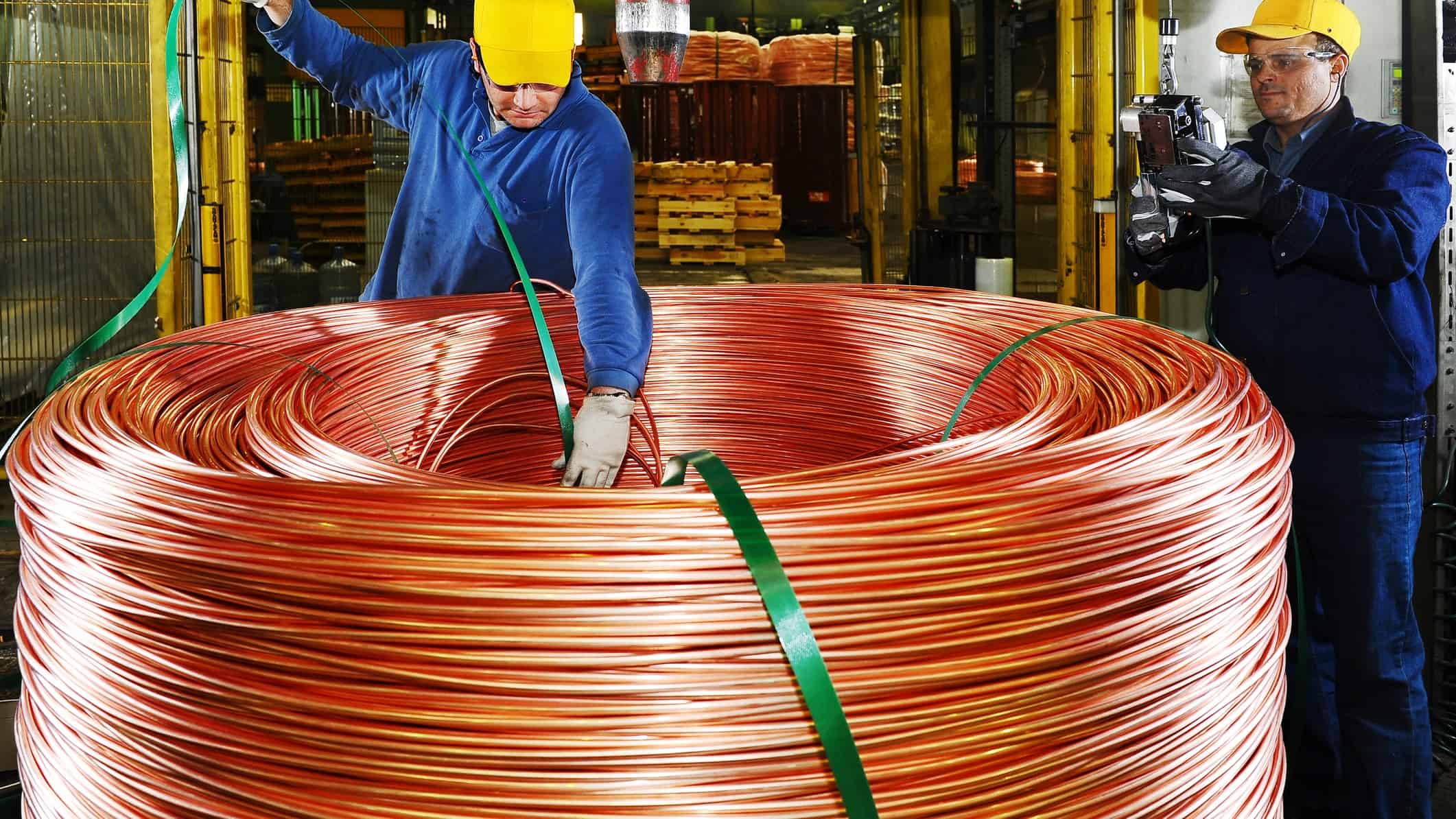
    A worker stands over a large copper coil in a factoryA worker stands over a large copper coil in a factory

    ASX shares with exposure to copper are in the spotlight following a bullish outlook for the price of the red metal from Goldman Sachs.

    With the broker tipping copper prices will hit new all-time highs in 2023 as demand exceeds supply, copper stocks could be set for some fresh tailwinds.

    There are more than a dozen ASX shares exploring for and digging up copper.

    Sticking to the biggest three we have:

    • Oz Minerals Limited (ASX: OZL), with a market cap of $9.2 billion
    • Sandfire Resources Ltd (ASX: SFR), with a market cap of $2.4 billion
    • Aeris Resources Ltd (ASX: AIS), with a market cap of $366 million

    So, why is Goldman forecasting a surge in prices?

    Why might copper prices hit new all-time highs in 2023?

    As The Australian Financial Review reports, Goldman has revised its forecast for the copper market in 2023 from the previous 169,000 tonne surplus to its new expectations of a 178,000 tonne deficit.

    The bullish revision, certainly to be welcomed by ASX shares producing copper, is based on both supply and demand dynamics.

    On the supply side, Goldman expects reduced output from Chile, a major player in the copper space.

    On the demand side, China’s reopening as it moves away from its economy hampering COVID zero policies should see a significant boost from the world’s top copper importer. Copper is also widely used in the construction and green energy sectors, both of which Goldman sees powering ahead in 2023.

    Copper prices previously hit all-time highs on 4 March this year, at US$10,670 per tonne. ASX copper shares, as you’d expect, rallied over that period.

    New record prices would help support ASX copper shares

    That March 2022 record will be broken in 2023 if Goldman is correct, with the broker forecasting the red metal to hit US$11,000 per tonne next year.

    Commenting on that forecast, Nicholas Snowdon, metals strategist at Goldman Sachs said (quoted by The AFR):

    The sequential increase in policy targets and commitments to green transition, alongside a minimal supply response so far… have resulted in earlier and larger open-ended deficit conditions that essentially are already here, not beginning at some point in the future…

    Another deficit in the market next year will take fundamental conditions to an unprecedented extreme in terms of tightness.

    In longer-term good news for ASX shares hunting for and producing copper, Goldman Sachs forecasts copper prices to remain strong, averaging US$12,000 per tonne in 2024.

    Below you can see how the big copper shares have been tracking.

    The post Goldman tips record copper prices in 2023. Which ASX shares have exposure? appeared first on The Motley Fool Australia.

    Wondering where you should invest $1,000 right now?

    When investing expert Scott Phillips has a stock tip, it can pay to listen. After all, the flagship Motley Fool Share Advisor newsletter he has run for over ten years has provided thousands of paying members with stock picks that have doubled, tripled or even more.*

    Scott just revealed what he believes could be the ‘five best ASX stocks’ for investors to buy right now. These stocks are trading at near dirt-cheap prices and Scott thinks they could be great buys right now

    See The 5 Stocks
    *Returns as of December 1 2022

    (function() {
    function setButtonColorDefaults(param, property, defaultValue) {
    if( !param || !param.includes(‘#’)) {
    var button = document.getElementsByClassName(“pitch-snippet”)[0].getElementsByClassName(“pitch-button”)[0];
    button.style[property] = defaultValue;
    }
    }

    setButtonColorDefaults(“#43B02A”, ‘background’, ‘#5FA85D’);
    setButtonColorDefaults(“#43B02A”, ‘border-color’, ‘#43A24A’);
    setButtonColorDefaults(“#fff”, ‘color’, ‘#fff’);
    })()

    More reading

    Motley Fool contributor Bernd Struben has no position in any of the stocks mentioned. The Motley Fool Australia’s parent company Motley Fool Holdings Inc. has no position in any of the stocks mentioned. The Motley Fool Australia has no position in any of the stocks mentioned. The Motley Fool has a disclosure policy. This article contains general investment advice only (under AFSL 400691). Authorised by Scott Phillips.

    from The Motley Fool Australia https://ift.tt/jsIHcmO

  • 5 ASX shares involved with rare earths (aside from Lynas)

    Five guys in suits wearing brightly coloured masks, they are corporate superheroes.Five guys in suits wearing brightly coloured masks, they are corporate superheroes.

    It’s been a big few years for ASX rare earths shares as the market seemingly turned its attention to the critical minerals.

    Indeed, the share price of S&P/ASX 200 Index (ASX: XJO) miner Lynas Rare Earths Ltd (ASX: LYC) has soared nearly 400% over the last five years as demand for its products saw its profits surge.

    But the ASX 200 giant isn’t the only share involved in rare earths. Here are five others that haven’t yet commanded such attention.

    5 often-overlooked ASX shares involved in rare earths

    Demand for rare earths could soar in the coming years amid the world’s transition to renewable energy. The materials are a critical component of most technology ­­– including that needed to harness power from the elements and certain batteries.

    With this in mind, it’s likely no surprise that Lynas is far from the only ASX share working to produce the elements.

    Iluka Resources Limited (ASX: ILU) is a $4 billion mineral sands miner and also works in the rare earths space. The company recently made a final investment decision on its Eneabba rare earths refinery.

    Its shares are currently trading for $10.42.

    Arafura Rare Earths Ltd (ASX: ARU) is also an ASX rare earths stock. The company is working to kick off construction at its Nolans Project – located 135 kilometres from Alice Springs – in 2023.

    Right now, stock in the mining developer is swapping hands for 40.5 cents.

    Another ASX rare earths company is Hastings Technology Metals Ltd (ASX: HAS). It’s developing two resources in Western Australia. Its Yangibana project, in the Gascoyne region, covers around 650 square kilometres.

    The company’s share price is $3.70 at the time of writing.

    The fourth ASX rare earths share market watchers might not have been across is Australian Strategic Materials Ltd (ASX: ASM). As the name suggests, the company is focused on Aussie assets. Its cornerstone project is located in Dubbo, New South Wales, and is ready for construction to begin.

    An investor can snap up the stock for $1.60 apiece today.

    Finally, ASX share Peak Rare Earths Ltd (ASX: PEK) is, of course, working in the rare earths space.

    It’s developing the Ngualla project in Tanzania – one of the world’s largest, highest grade, and lowest cost, neodymium praseodymium deposits. It also has the potential to build a rare earths refinery in the United Kingdom.

    The Peak share price is 47.5 cents right now.

    The post 5 ASX shares involved with rare earths (aside from Lynas) appeared first on The Motley Fool Australia.

    Wondering where you should invest $1,000 right now?

    When investing expert Scott Phillips has a stock tip, it can pay to listen. After all, the flagship Motley Fool Share Advisor newsletter he has run for over ten years has provided thousands of paying members with stock picks that have doubled, tripled or even more.*

    Scott just revealed what he believes could be the ‘five best ASX stocks’ for investors to buy right now. These stocks are trading at near dirt-cheap prices and Scott thinks they could be great buys right now

    See The 5 Stocks
    *Returns as of December 1 2022

    (function() {
    function setButtonColorDefaults(param, property, defaultValue) {
    if( !param || !param.includes(‘#’)) {
    var button = document.getElementsByClassName(“pitch-snippet”)[0].getElementsByClassName(“pitch-button”)[0];
    button.style[property] = defaultValue;
    }
    }

    setButtonColorDefaults(“#0095C8”, ‘background’, ‘#5FA85D’);
    setButtonColorDefaults(“#0095C8”, ‘border-color’, ‘#43A24A’);
    setButtonColorDefaults(“#fff”, ‘color’, ‘#fff’);
    })()

    More reading

    Motley Fool contributor Brooke Cooper has no position in any of the stocks mentioned. The Motley Fool Australia’s parent company Motley Fool Holdings Inc. has no position in any of the stocks mentioned. The Motley Fool Australia has no position in any of the stocks mentioned. The Motley Fool has a disclosure policy. This article contains general investment advice only (under AFSL 400691). Authorised by Scott Phillips.

    from The Motley Fool Australia https://ift.tt/yYz8bcZ

  • Why is the Renascor Resources share price sinking 8% on Thursday?

    Three guys in shirts and ties give the thumbs down.

    Three guys in shirts and ties give the thumbs down.

    The Renascor Resources Ltd (ASX: RNU) share price has returned from its trading halt and dropped into the red.

    In morning trade, the battery materials explorer’s shares are down 8% to 29.5 cents.

    Why is the Renascor share price sinking?

    The weakness in the Renascor share price has been driven by the company launching and completing a fully underwritten institutional placement.

    According to the release, the company has raised approximately $70 million from institutional investors at a 14% discount of 27.5 cents per share.

    The proceeds from the placement will be used to progress the development of the Siviour Battery Anode Material (BAM) project.

    Management notes that on a pro forma basis, Renascor is well-funded with a cash balance of $140 million at 30 November 2022.

    ‘A transformational year’

    Renascor’s managing director, David Christensen, appeared to be very pleased with the news. He said:

    The completion of this Placement caps off a transformational year for Renascor. The strong demand received from both domestic and offshore institutional investors is a testament to the world-class nature of the BAM Project and the significant steps undertaken by the Company to progress its development, following the recent receipt of the PEPR approval and grant of a conditional A$185 million Australian Government loan under the Critical Minerals Facility.

    Christensen also revealed that the placement received strong support from both new and existing institutional investors. He added:

    The Placement was well supported by existing Renascor shareholders and will also see a range of new institutional investors join the register. The introduction of these high-quality investors, together with the support shown by existing shareholders, has provided Renascor with the flexibility to bring forward construction and operation of the Siviour upstream operations and allows the Company to take a staged, de-risked approach to BAM Project development.

    Renascor expects to progress the BAM Project towards a final investment decision in 2023.

    The post Why is the Renascor Resources share price sinking 8% on Thursday? appeared first on The Motley Fool Australia.

    FREE Investing Guide for Beginners

    Despite what some people may say – we believe investing in shares doesn’t have to be overwhelming or complicated…

    For over a decade, we’ve been helping everyday Aussies get started on their journey.

    And to help even more people cut through some of the confusion “experts’” seem to want to perpetuate – we’ve created a brand-new “how to” guide.

    Yes, Claim my FREE copy!
    *Returns as of November 7 2022

    (function() {
    function setButtonColorDefaults(param, property, defaultValue) {
    if( !param || !param.includes(‘#’)) {
    var button = document.getElementsByClassName(“pitch-snippet”)[0].getElementsByClassName(“pitch-button”)[0];
    button.style[property] = defaultValue;
    }
    }

    setButtonColorDefaults(“#0095C8”, ‘background’, ‘#5FA85D’);
    setButtonColorDefaults(“#0095C8”, ‘border-color’, ‘#43A24A’);
    setButtonColorDefaults(“#fff”, ‘color’, ‘#fff’);
    })()

    More reading

    Motley Fool contributor James Mickleboro has no position in any of the stocks mentioned. The Motley Fool Australia’s parent company Motley Fool Holdings Inc. has no position in any of the stocks mentioned. The Motley Fool Australia has no position in any of the stocks mentioned. The Motley Fool has a disclosure policy. This article contains general investment advice only (under AFSL 400691). Authorised by Scott Phillips.

    from The Motley Fool Australia https://ift.tt/bmFMNYS

  • Why is the Link share price crashing 10% on Thursday?

    A young woman holds an open book over her head with a round mouthed expression as if to say oops as she looks at her computer screen in a home office setting with a plant on the desk and shelves of books in the background.

    A young woman holds an open book over her head with a round mouthed expression as if to say oops as she looks at her computer screen in a home office setting with a plant on the desk and shelves of books in the background.

    The Link Administration Holdings Ltd (ASX: LNK) share price is having a difficult time on Thursday.

    In morning trade, the administration services company’s shares are down over 10% to $3.02.

    Why is the Link share price tumbling?

    Investors have been selling down the Link share price this morning after the company released an update on a takeover approach.

    Early in October, Link received a conditional, non-binding and indicative proposal from Dye & Durham Corporation (D&D) to acquire its Corporate Markets business and all of the BCM business for a total cash consideration of $1.27 billion on a cash and debt free basis.

    According to today’s update, despite engaging with D&D over a period of over two months (compared to D&D’s proposed 10 business days), the conditional non-binding proposal has not been able to be progressed to a transaction that is certain, has committed financing, reflects appropriate value, and is on appropriate terms.

    The release notes that the latest form of the conditional non-binding proposal from D&D involved a material portion of the consideration being deferred and payable after a two-year period. D&D also proposed a change in the mix of businesses being acquired.

    In light of this, the company has ceased discussions with D&D and no binding transaction has resulted.

    Trading update

    Failing to stop the Link share price from sinking today has been the release of a trading update.

    That trading update reveals that Link is trading in line with expectations and is forecasting low single digit revenue growth in FY 2023, with operating EBITDA growth of 8% to 10%.

    For the first half of FY 2023, Link expects operating EBIT to be in the $75 million to $80 million range, which is run-rating in line with FY 2023 guidance.

    The post Why is the Link share price crashing 10% on Thursday? appeared first on The Motley Fool Australia.

    FREE Guide for New Investors

    Despite what some people may say – we believe investing in shares doesn’t have to be overwhelming or complicated…

    For over a decade, we’ve been helping everyday Aussies get started on their journey.

    And to help even more people cut through some of the confusion “experts’” seem to want to perpetuate – we’ve created a brand-new “how to” guide.

    Yes, Claim my FREE copy!
    *Returns as of November 7 2022

    (function() {
    function setButtonColorDefaults(param, property, defaultValue) {
    if( !param || !param.includes(‘#’)) {
    var button = document.getElementsByClassName(“pitch-snippet”)[0].getElementsByClassName(“pitch-button”)[0];
    button.style[property] = defaultValue;
    }
    }

    setButtonColorDefaults(“#0095C8”, ‘background’, ‘#5FA85D’);
    setButtonColorDefaults(“#0095C8”, ‘border-color’, ‘#43A24A’);
    setButtonColorDefaults(“#fff”, ‘color’, ‘#fff’);
    })()

    More reading

    Motley Fool contributor James Mickleboro has no position in any of the stocks mentioned. The Motley Fool Australia’s parent company Motley Fool Holdings Inc. has positions in and has recommended Link Administration. The Motley Fool Australia has no position in any of the stocks mentioned. The Motley Fool has a disclosure policy. This article contains general investment advice only (under AFSL 400691). Authorised by Scott Phillips.

    from The Motley Fool Australia https://ift.tt/1DQmdPY

  • BHP shares lose top dividend-payer title, what happened?

    Sad looking miner holding his head down.Sad looking miner holding his head down.

    BHP Group Ltd (ASX: BHP) shares are responsible for being one of the biggest dividend payers in the world.

    That doesn’t necessarily mean that BHP has the biggest dividend yield or the most amount of cash per share. However, when you look at the total dividend payment that leaves BHP’s bank account each result, it’s a huge amount of cash flow that’s sent out.

    A year ago, in the third quarter of 2021, BHP had the astonishing title of being the world’s biggest dividend payer, according to the Janus Henderson Group (ASX: JHG) Global Dividend Index.

    What happened to the BHP dividend title?

    Firstly, while BHP has lost its dividend title, shareholders shouldn’t feel too bad.

    It lost the dividend crown, but in the third quarter of 2022 it was still the second biggest dividend payer in the world.

    Plus, it lost the title to China Construction Bank. It may not be the world’s most recognisable business. But it was the world’s biggest dividend payer in the third quarter of 2016, 2018, 2019 and 2020. The Chinese bank has simply regained its leading position.

    Bloomberg describes the bank’s activities:

    The company offers deposits, loans, fund management, foreign exchange, and other services. China Construction Bank provides its services to individuals, enterprises, and other clients.

    China has a huge economy, so perhaps it’s not surprising that a bank is one of the biggest businesses there.

    FY22 recap

    BHP’s latest dividend was the final dividend of FY22. This amounted to US$1.75 per share, or US$8.9 billion. It was a lower payment than the final dividend of FY21 of US$2 per share, which equated to US$10.1 billion.

    While the final dividend was down, the total dividend for FY22 was up 8% to US$3.25 per share. This came after a 26% increase in continuing operations underlying attributable profit to US$21.3 billion and a 13% rise in continuing operations net operating cash flow to US$29.3 billion.

    What could happen next?

    The BHP share price and dividend are usually closely linked to the profit that the business generates, which in turn comes from commodity prices. There are expert thoughts that the iron ore price could rise back to US$150 per tonne. This would be great for profitability.

    It has been a volatile year for the business. The iron ore price has been rising in recent weeks as a Chinese COVID reopening appears to be getting closer.

    According to CommSec, BHP could generate $4.29 of earnings per share (EPS) and pay an AU$3.08 dividend per share. This translates into the BHP share price being priced at 11x FY23’s estimated earnings with a projected grossed-up dividend yield of 9.4%.

    The post BHP shares lose top dividend-payer title, what happened? appeared first on The Motley Fool Australia.

    You beat inflation buying stocks that pay the biggest dividends right? Sorry, you could be falling into a “dividend trap”…

    Mammoth dividend yields may look good on the surface… But just because a company is writing big cheques now, doesn’t mean it’ll always be the case. Right now “dividend traps” are ready to catch unwary investors as they race to income stocks to fight inflation.

    This FREE report reveals three stocks not only boasting sustainable dividends but also have strong potential for massive long term returns…

    See the 3 stocks
    *Returns as of December 1 2022

    (function() {
    function setButtonColorDefaults(param, property, defaultValue) {
    if( !param || !param.includes(‘#’)) {
    var button = document.getElementsByClassName(“pitch-snippet”)[0].getElementsByClassName(“pitch-button”)[0];
    button.style[property] = defaultValue;
    }
    }

    setButtonColorDefaults(“#0095C8”, ‘background’, ‘#5FA85D’);
    setButtonColorDefaults(“#0095C8”, ‘border-color’, ‘#43A24A’);
    setButtonColorDefaults(“#fff”, ‘color’, ‘#fff’);
    })()

    More reading

    Motley Fool contributor Tristan Harrison has no position in any of the stocks mentioned. The Motley Fool Australia’s parent company Motley Fool Holdings Inc. has no position in any of the stocks mentioned. The Motley Fool Australia has no position in any of the stocks mentioned. The Motley Fool has a disclosure policy. This article contains general investment advice only (under AFSL 400691). Authorised by Scott Phillips.

    from The Motley Fool Australia https://ift.tt/nUCQZpi

  • Core Lithium share price falls after being hit with sell rating from Goldman Sachs

    Keyboard button with the word sell on it.

    Keyboard button with the word sell on it.

    The Core Lithium Ltd (ASX: CXO) share price is under pressure again on Thursday.

    In morning trade, the lithium developer’s shares are down 2% to $1.28.

    Why is the Core Lithium share price falling?

    Investors have been hitting the sell button today after the lithium developer was the subject of a bearish broker note out of Goldman Sachs.

    According to the note, the broker has initiated coverage on the company’s shares with a sell rating and $1.00 price target.

    Based on where Core Lithium’s shares are trading this morning, this implies potential downside of 22%.

    What did the broker say?

    The broker believes that investors have overvalued Core Lithium’s Finniss project. Particularly given the prospect of lithium prices falling materially in the coming years. It commented:

    Core Lithium’s Finniss project will be Australia’s next lithium producer, with spodumene production scheduled for 1H CY23, where we factor in an average ~175ktpa production over a ~12-year M&I resource life. However, while resource upside looks likely, the required magnitude to support the capacity expansion/life extension/future downstream that is currently priced into the stock looks significant, in our view, particularly given the upside case is unlikely to be achieved before lithium prices decline (GSe from 2H CY23).

    Goldman also highlights that the Core Lithium share price is trading at a premium to peers and on low free cash flow multiples. It adds:

    With production/cost risks as the project moves between mining configurations, and the stock trading well above peers at 1.5x NAV (~US$2,400/t LT spodumene) on the lowest average operating FCF/t LCE, we initiate on CXO with a relative Sell rating and a 12-month PT of A$1.00/sh, implying 23% downside.

    All in all, the broker believes there is a better option for investors looking for lithium exposure right now.

    The post Core Lithium share price falls after being hit with sell rating from Goldman Sachs appeared first on The Motley Fool Australia.

    Wondering where you should invest $1,000 right now?

    When investing expert Scott Phillips has a stock tip, it can pay to listen. After all, the flagship Motley Fool Share Advisor newsletter he has run for over ten years has provided thousands of paying members with stock picks that have doubled, tripled or even more.*

    Scott just revealed what he believes could be the ‘five best ASX stocks’ for investors to buy right now. These stocks are trading at near dirt-cheap prices and Scott thinks they could be great buys right now

    See The 5 Stocks
    *Returns as of December 1 2022

    (function() {
    function setButtonColorDefaults(param, property, defaultValue) {
    if( !param || !param.includes(‘#’)) {
    var button = document.getElementsByClassName(“pitch-snippet”)[0].getElementsByClassName(“pitch-button”)[0];
    button.style[property] = defaultValue;
    }
    }

    setButtonColorDefaults(“#0095C8”, ‘background’, ‘#5FA85D’);
    setButtonColorDefaults(“#0095C8”, ‘border-color’, ‘#43A24A’);
    setButtonColorDefaults(“#fff”, ‘color’, ‘#fff’);
    })()

    More reading

    Motley Fool contributor James Mickleboro has no position in any of the stocks mentioned. The Motley Fool Australia’s parent company Motley Fool Holdings Inc. has no position in any of the stocks mentioned. The Motley Fool Australia has no position in any of the stocks mentioned. The Motley Fool has a disclosure policy. This article contains general investment advice only (under AFSL 400691). Authorised by Scott Phillips.

    from The Motley Fool Australia https://ift.tt/DrIscHg

  • Goldman Sachs names the only ASX lithium share to buy today

    A white EV car and an electric vehicle pump with green highlighted swirls representing ASX lithium shares

    A white EV car and an electric vehicle pump with green highlighted swirls representing ASX lithium shares

    The Allkem Ltd (ASX: AKE) share price has been a strong performer over the last 12 months.

    As you can see below, the ASX lithium share has gained over 50% since this time last year.

    Can this ASX lithium share keep rising?

    According to a note out of Goldman Sachs, its analysts have been looking at the Australian lithium industry and believe Allkem is the only ASX lithium share to buy right now.

    A note released this morning reveals that the broker has initiated coverage on Allkem with a buy rating and $15.20 price target.

    Based on the current Allkem share price, this implies potential upside of 10% for investors.

    What did the broker say?

    As I covered here earlier, Goldman Sachs believes that lithium prices will start to decline materially during the second half of 2023.

    It expects spodumene (6% grade) prices to go from an average of US$4,330 a tonne in 2023 to just US$800 a tonne in 2024. This is expected to be driven by lithium production growing larger than demand.

    In light of this, the broker believes investors should be very selective when it comes to buying ASX lithium shares. It commented:

    With the pricing backdrop, we prefer low cost producers with quality resources to underpin growth optionality and vertical integration over developers.

    Based on this, Goldman believes that Allkem is the only ASX lithium share to buy right now. Particularly given its material production growth plans and attractive valuation. It adds:

    With optionality across the Americas and Australia on the largest lithium resource in our coverage growing equity LCE production >4x by FY27E, and at a discount to peers at 1.02x NAV (peer average 1.3x), Allkem is our preferred lithium exposure. We initiate with a Buy rating and a 12-month PT of A$15.2/sh, implying 9% upside, where we see near-term Argentinian FX risk as overdone on the in-country reinvestment profile.

    The post Goldman Sachs names the only ASX lithium share to buy today appeared first on The Motley Fool Australia.

    FREE Beginners Investing Guide

    Despite what some people may say – we believe investing in shares doesn’t have to be overwhelming or complicated…

    For over a decade, we’ve been helping everyday Aussies get started on their journey.

    And to help even more people cut through some of the confusion “experts’” seem to want to perpetuate – we’ve created a brand-new “how to” guide.

    Yes, Claim my FREE copy!
    *Returns as of November 7 2022

    (function() {
    function setButtonColorDefaults(param, property, defaultValue) {
    if( !param || !param.includes(‘#’)) {
    var button = document.getElementsByClassName(“pitch-snippet”)[0].getElementsByClassName(“pitch-button”)[0];
    button.style[property] = defaultValue;
    }
    }

    setButtonColorDefaults(“#0095C8”, ‘background’, ‘#5FA85D’);
    setButtonColorDefaults(“#0095C8”, ‘border-color’, ‘#43A24A’);
    setButtonColorDefaults(“#fff”, ‘color’, ‘#fff’);
    })()

    More reading

    Motley Fool contributor James Mickleboro has positions in Allkem. The Motley Fool Australia’s parent company Motley Fool Holdings Inc. has no position in any of the stocks mentioned. The Motley Fool Australia has no position in any of the stocks mentioned. The Motley Fool has a disclosure policy. This article contains general investment advice only (under AFSL 400691). Authorised by Scott Phillips.

    from The Motley Fool Australia https://ift.tt/wg4ZqFH

  • Almost ready to retire? How I’d find the best ASX dividend shares to buy now

    An older couple with wild hair in colourful clothes enjoy a moment dancing.An older couple with wild hair in colourful clothes enjoy a moment dancing.

    Ah, retirement. The word evokes images of sleepy mornings, time with family, and generally doing whatever one might want. One way I would help bring bliss to my retirement would be to build a passive income by investing in ASX dividend shares now.

    A passive income is just that – passive.

    It means a person doesn’t need to keep a close eye on their investments in order to receive regular payments.

    While no ASX share is guaranteed to continue paying dividends into the future, investing in high-quality yielding stocks can provide greater certainty.

    Here’s how I would find the best ASX dividend shares to buy for retirement now.

    How I would seek out ASX dividend shares for retirement now

    Stock picking is a personal endeavour. As many successful investors advise, it’s often best to search for potential winning businesses in sectors one understands and believes in.

    Though, there are some aspects of picking ASX dividend shares I would employ regardless of the industry or company I’m looking at.

    Here are the three factors I would consider when searching for the best stocks to buy for passive income right now.

    Balance sheet

    The first is a strong balance sheet. I would argue a company’s financial position is of particular importance when investing for passive income.

    That’s because ASX dividend shares generally pay excess profits to shareholders.

    A strong balance sheet might suggest a company is managing its capital well and, thus, could provide more stable dividends.

    Competitive advantages

    The second factor I would consider when searching for ASX dividend shares to buy now is competitive advantages.

    A business with plenty of competitive advantages will likely have a notable ‘edge’ over its peers and boast ‘stickiness’, meaning its customers are more likely to contribute repeat revenue.

    It could also mean a company is offering a sought-after product or service and, therefore, holds pricing power.

    These factors may help a company outperform over the long term.

    Is an ASX dividend share a bargain?

    Speaking of long term, the final factor I would consider often takes a bit more digging. Still, it’s arguably the most important piece of the puzzle to get right.

    That is, timing.

    Before buying a stock I would look at the company’s price-to-earnings (P/E) ratio, price-to-book (P/B) ratio, and debt-to-equity ratio – among other measures – to help me determine if it’s cheap or expensive.

    If I find it’s cheap, I may make the final decision to invest. If not, I would probably hold off for now.

    Beyond that, I would look to the future to imagine where the business might be in five, 10, or 20 years. Doing so, I would consider if its dividend yield is sustainable – perhaps taking into account its dividend history.

    Though, it’s worth remembering that even the most well thought through investments can go awry. No ASX share is guaranteed to continue paying dividends, provide returns, or even downside protection.

    The post Almost ready to retire? How I’d find the best ASX dividend shares to buy now appeared first on The Motley Fool Australia.

    Why skyrocketing inflation doesn’t have to be the death of your savings…

    Goldman Sachs has revealed investors’ savings don’t have to go up in smoke because of skyrocketing inflation… Because in times of high inflation, dividend stocks can potentially beat the wider market.

    The investment bank’s research is based on stocks in the S&P 500 index going as far back as 1940.

    This FREE report reveals THREE stocks not only boasting inflation fighting dividends but also have strong potential for massive long term gains…

    See the 3 stocks
    *Returns as of December 1 2022

    (function() {
    function setButtonColorDefaults(param, property, defaultValue) {
    if( !param || !param.includes(‘#’)) {
    var button = document.getElementsByClassName(“pitch-snippet”)[0].getElementsByClassName(“pitch-button”)[0];
    button.style[property] = defaultValue;
    }
    }

    setButtonColorDefaults(“#0095C8”, ‘background’, ‘#5FA85D’);
    setButtonColorDefaults(“#0095C8”, ‘border-color’, ‘#43A24A’);
    setButtonColorDefaults(“#fff”, ‘color’, ‘#fff’);
    })()

    More reading

    Motley Fool contributor Brooke Cooper has no position in any of the stocks mentioned. The Motley Fool Australia’s parent company Motley Fool Holdings Inc. has no position in any of the stocks mentioned. The Motley Fool Australia has no position in any of the stocks mentioned. The Motley Fool has a disclosure policy. This article contains general investment advice only (under AFSL 400691). Authorised by Scott Phillips.

    from The Motley Fool Australia https://ift.tt/7SsRb8n

  • Is the Rio Tinto share price going to sparkle in December?

    A woman blowing gold glitter out of her hands with a joyous smile on her face.A woman blowing gold glitter out of her hands with a joyous smile on her face.

    The Rio Tinto Limited (ASX: RIO) share price has been on an impressive run in the last few weeks. Since the end of October, it has risen by more than 30%.

    As a major iron ore ASX share, changes in the commodity price can have a sizeable impact on how investors rate the business.

    A higher iron ore price doesn’t change how much it costs to mine the production, so higher iron prices can almost entirely add to profitability, aside from paying more to the government.

    Iron ore prices have come down a long way since earlier in the year. But, are things looking up for the Rio Tinto share price as the end of 2022 gets closer?

    Promising developments in China could lead to higher iron ore price

    The iron ore price has already been climbing and it could reach US$150 per tonne, according to the broker Citi.

    In China there has been a relaxing of some COVID rules in cities like Beijing and Shanghai. In Beijing, people are no longer required to show a negative COVID test to enter supermarkets and commercial buildings.

    According to reporting by the Australian Financial Review, Citi has suggested the iron ore price could hit US$120 per tonne over the next three months.

    Citi pointed out that China is making meaningful progress towards further reopening and, if it takes certain actions, then the rally could reach US$150 per tonne.

    According to the newspaper, China’s leader, President Xi, said in talks with European Union officials that the Omicron variant is less lethal, which Citi suggested could mean further reopening preparations are being done.

    On top of the COVID side of things, Citi noted there has been a “clear shift” in policy towards the property sector, and that policymakers “appear determined to support debt-trapped property developers”. This, Citi says, “reduces the downside risk for iron ore”.

    Can the Rio Tinto share price keep rising?

    Most brokers don’t think so. Citi has a neutral rating on the business, with a price target of $115. This implies no movement for the mining giant in the next 12 months.

    The broker UBS is neutral on Rio Tinto, but the price target is just $90. That implies a possible decline of around 20%.

    Morgan Stanley, another broker, has an add rating on Rio Tinto shares with a price target of $121. That implies a possible rise of around 5%.

    The post Is the Rio Tinto share price going to sparkle in December? appeared first on The Motley Fool Australia.

    FREE Investing Guide for Beginners

    Despite what some people may say – we believe investing in shares doesn’t have to be overwhelming or complicated…

    For over a decade, we’ve been helping everyday Aussies get started on their journey.

    And to help even more people cut through some of the confusion “experts’” seem to want to perpetuate – we’ve created a brand-new “how to” guide.

    Yes, Claim my FREE copy!
    *Returns as of November 7 2022

    (function() {
    function setButtonColorDefaults(param, property, defaultValue) {
    if( !param || !param.includes(‘#’)) {
    var button = document.getElementsByClassName(“pitch-snippet”)[0].getElementsByClassName(“pitch-button”)[0];
    button.style[property] = defaultValue;
    }
    }

    setButtonColorDefaults(“#0095C8”, ‘background’, ‘#5FA85D’);
    setButtonColorDefaults(“#0095C8”, ‘border-color’, ‘#43A24A’);
    setButtonColorDefaults(“#fff”, ‘color’, ‘#fff’);
    })()

    More reading

    Citigroup is an advertising partner of The Ascent, a Motley Fool company. Motley Fool contributor Tristan Harrison has no position in any of the stocks mentioned. The Motley Fool Australia’s parent company Motley Fool Holdings Inc. has no position in any of the stocks mentioned. The Motley Fool Australia has no position in any of the stocks mentioned. The Motley Fool has a disclosure policy. This article contains general investment advice only (under AFSL 400691). Authorised by Scott Phillips.

    from The Motley Fool Australia https://ift.tt/XSzAKFQ

  • ‘Lithium investment is really just beginning’: KPMG

    asx share price growth represented by cartoon man flexing biceps in front of charged batteryasx share price growth represented by cartoon man flexing biceps in front of charged battery

    ASX lithium shares have received much attention in 2022 amid a higher lithium price and growing demand for electric vehicles.

    For example, in 2022 alone, the Pilbara Minerals Ltd (ASX: PLS) share price has gone up by more than 47%. In five years, it’s up more than 400%.

    But while it may seem that the lithium sector is already booming, a report has been released that implies the Australian lithium sector could become much bigger.

    Certainly, the KPMG report forecasts a number of promising prospects for the lithium sector.

    One is that a survey of 322 global mining executives found 87% of them said they will have delivered net zero emissions by 2035.

    Lithium demand is expected to soar

    The report said that as the world transitions away from fossil fuels, substantial decarbonisation minerals will be needed. In turn, this could “drive demand for mining output”.

    Electric vehicles are just one of the key users of the critical mineral for batteries but at the moment, according to KPMG, it’s estimated that there are around 1.4 billion cars in the world, of which only around 15 million (or 1%) are electric vehicles.

    KPMG estimates more than two billion electric vehicles will need to be manufactured to accommodate global demand and transition away from fossil fuel-powered vehicles by 2050.

    National Mining and Metals Leader at KPMG Australia, Nick Harridge, said:

    Lithium investment is really just beginning to meaningfully increase in Australia. Mining investment is increasingly turning towards it and other critical minerals. Given that the price of lithium has surged in the last year, the incentive to invest further in lithium production and circularity remains very high.

    The report noted that “the pace of EV sales is increasing with nearly half of the current stock of electric vehicles sold in the last year”. This rapid pace will be required to continue the transition away from fossil fuels, according to KPMG. For that to happen, the production of critical minerals used for batteries “will also need to continue”.

    However, it was noted that an improvement in technologies will reduce the volume of lithium needed in car batteries and alternative technologies “will provide a partial offset to the level of lithium required”.

    KPMG said:

    KPMG’s view is that alternative technologies, whilst not yet of commercial scale, highlight a counter to lithium demand.  Yet overall, lithium demand will remain very high in the near term and strong investment will be needed to ensure that production of new and circular minerals keeps up with demand, but the required level of production is attainable.

    Australia to turn into a refining hub

    According to the report, Australia produces around half of the global lithium supply, with that share expected to be stable in the near term.

    KPMG believes that a significant level of investment is set to take place, which should support Australian lithium production over the next decade. There’s also potential for more of the lithium value chain to occur in Australia, such as refining.

    Australia has historically exported unrefined lithium to China. But, ASX lithium shares such as Pilbara Minerals, Mineral Resources Limited (ASX: MIN), and Wesfarmers Ltd (ASX: WES) are investing in plans to take part in the lithium supply chain.

    KPMG was keen to point out that it’s not just refining capacity, but how ‘green’ that refining is.

    The report concluded:

    By 2024, Australia should have about 10 percent of global lithium hydroxide refining capacity, rising to about 20 percent of global lithium refining by 2027. Given the higher price for refined lithium – even more for refined lithium with sustainability credentials – the increase in lithium refineries in Australia should help support investment in lithium mining in the years ahead. We therefore expect Australia to maintain a high share of global supply of lithium in the decades ahead.

    While share price movements are very hard to predict, it seems the outlook seems promising for ASX lithium shares.

    The post ‘Lithium investment is really just beginning’: KPMG appeared first on The Motley Fool Australia.

    Wondering where you should invest $1,000 right now?

    When investing expert Scott Phillips has a stock tip, it can pay to listen. After all, the flagship Motley Fool Share Advisor newsletter he has run for over ten years has provided thousands of paying members with stock picks that have doubled, tripled or even more.*

    Scott just revealed what he believes could be the ‘five best ASX stocks’ for investors to buy right now. These stocks are trading at near dirt-cheap prices and Scott thinks they could be great buys right now

    See The 5 Stocks
    *Returns as of December 1 2022

    (function() {
    function setButtonColorDefaults(param, property, defaultValue) {
    if( !param || !param.includes(‘#’)) {
    var button = document.getElementsByClassName(“pitch-snippet”)[0].getElementsByClassName(“pitch-button”)[0];
    button.style[property] = defaultValue;
    }
    }

    setButtonColorDefaults(“#0095C8”, ‘background’, ‘#5FA85D’);
    setButtonColorDefaults(“#0095C8”, ‘border-color’, ‘#43A24A’);
    setButtonColorDefaults(“#fff”, ‘color’, ‘#fff’);
    })()

    More reading

    Motley Fool contributor Tristan Harrison has no position in any of the stocks mentioned. The Motley Fool Australia’s parent company Motley Fool Holdings Inc. has no position in any of the stocks mentioned. The Motley Fool Australia has positions in and has recommended Wesfarmers. The Motley Fool has a disclosure policy. This article contains general investment advice only (under AFSL 400691). Authorised by Scott Phillips.

    from The Motley Fool Australia https://ift.tt/oJ3sY7M