Tag: Motley Fool

  • Why is the Nanosonics share price crashing 12% today?

    A male investor wearing a blue shirt looks off to the side with a miffed look on his face as the share price declines.

    A male investor wearing a blue shirt looks off to the side with a miffed look on his face as the share price declines.

    The Nanosonics Ltd (ASX: NAN) share price is having a day to forget on Monday.

    In morning trade, the infection prevention company’s shares are down 12% to $4.03.

    Why is the Nanosonics share price crashing?

    Investors have been hitting the sell button on Monday after brokers responded negatively to the company’s recent trading update.

    One of those brokers was Goldman Sachs, which has reiterated its sell rating and $3.50 price target on the company’s shares.

    Goldman highlights that Nanosonics has started FY 2023 positively in respect to sales but elected not to comment on its operating costs or earnings. It said:

    As expected, there was no update on Opex at the 4m mark, which remains a key question following the sharp increase in headcount and operational infrastructure required for the new US distribution model. As a reminder, FY23 opex guidance of +15-18% surprised consensus to the upside at the time (following the +28% growth in FY22, which had already included some pull-forward), and was a key driver of our -50-130bps EBIT margin revisions in August.

    Overall, whilst capital revenue continues to run ahead of our expectations, we are less clear on the near/long-term consumables trajectory and the cost/margin profile, and we make no changes to our forecasts (FY23E revenue/EBIT $153m/$10m).

    What else?

    Over at Morgans, the broker has downgraded Nanosonics’ shares to a hold rating with a $4.91 price target.

    Its analysts made the move on valuation grounds following a strong gain by the Nanosonics share price over the last five to six weeks. It explained:

    We recently upgraded our forecasts reflecting favourable currency moves and sit slightly above NAN’s recent revenue guidance range of growth of 20% to 25%. Although the year has started well for NAN with revenue up 42%, we prefer to wait until the 1H23 results before adjusting any forecasts.

    As a result our target price remains unchanged at A$4.91 and given the recent share price strength we move to a Hold rating (from Add).

    Though, with the Nanosonics share price now trading sharply below this price target, it is possible that Morgans’ analysts may soon see value emerging again.

    The post Why is the Nanosonics share price crashing 12% today? appeared first on The Motley Fool Australia.

    Wondering where you should invest $1,000 right now?

    When investing expert Scott Phillips has a stock tip, it can pay to listen. After all, the flagship Motley Fool Share Advisor newsletter he has run for over ten years has provided thousands of paying members with stock picks that have doubled, tripled or even more.* Scott just revealed what he believes could be the “five best ASX stocks” for investors to buy right now. These stocks are trading at near dirt-cheap prices and Scott thinks they could be great buys right now

    See The 5 Stocks
    *Returns as of November 1 2022

    (function() {
    function setButtonColorDefaults(param, property, defaultValue) {
    if( !param || !param.includes(‘#’)) {
    var button = document.getElementsByClassName(“pitch-snippet”)[0].getElementsByClassName(“pitch-button”)[0];
    button.style[property] = defaultValue;
    }
    }

    setButtonColorDefaults(“#0095C8”, ‘background’, ‘#5FA85D’);
    setButtonColorDefaults(“#0095C8”, ‘border-color’, ‘#43A24A’);
    setButtonColorDefaults(“#fff”, ‘color’, ‘#fff’);
    })()

    More reading

    Motley Fool contributor James Mickleboro has no position in any of the stocks mentioned. The Motley Fool Australia’s parent company Motley Fool Holdings Inc. has positions in and has recommended Nanosonics Limited. The Motley Fool Australia has positions in and has recommended Nanosonics Limited. The Motley Fool has a disclosure policy. This article contains general investment advice only (under AFSL 400691). Authorised by Scott Phillips.

    from The Motley Fool Australia https://ift.tt/KqAL8Iw

  • Do you know what happened on the ASX recently?

    A woman sits at her computer with her chin resting on her hand as she contemplates her next potential investment.

    A woman sits at her computer with her chin resting on her hand as she contemplates her next potential investment.

    You might have missed the headlines.

    Actually, I’m kidding – there weren’t any.

    If there were, they would have said:

    “All Ords up 7% over the last month!”

    Nope. Not a single headline.

    Even though the market gained more than the average annual capital gain in a single month.

    Why?

    Well, news needs to be… newsy.

    Recent. Immediate.

    A month’s worth of gains just aren’t very interesting.

    For the uninitiated, it just doesn’t feel very exciting, or even newsworthy.

    More exciting are the big one-day falls that are happening right NOW.

    But which is, truly, more important?

    You know the answer.

    And so it falls to me, here, to do the anti-headlines.

    The stuff that isn’t ‘news’ (the clue is in the first three letters), but is far, far more important.

    But I don’t just want to do the headlines.

    I want to dig a bit deeper.

    See, a month ago, when the ASX was 7% lower, no-one rang a bell.

    No-one said ‘Ready, set… INVEST!’.

    In fact, it was quite the opposite.

    I was being told, via email, social media and more, that worse was coming.

    “Just wait ‘til Tuesday!” was one reply.

    Turned out, the market rose on that day.

    Now, I’m not saying I knew the market would rise 7%.

    Far from it.

    It could have well fallen 7% over the last month, instead.

    No-one could have known.

    Which is precisely why making – and listening to – predictions is dumb.

    Especially, as the Danes say, about the future.

    Are you still waiting for the coast to be clear?

    You just missed out on a 7% gain.

    Ah, but couldn’t the market fall again? And by more?

    Yep.

    Absolutely could.

    I have no idea.

    But remember, it goes up, over time.

    Mathematically, you’ve been better off being invested, than not, over the past, oh, 120 years or so, as long as you have a long-term investment horizon.

    And if you don’t?

    Well, trying to pick short term share price movements is akin to playing metaphorical chicken on the investment highway.

    And from here?

    I don’t know what happens today.

    Or this week, this month or for the rest of this year.

    I don’t know what’ll happen next year, either.

    No-one does, despite what some people will pretend.

    As I’ve said before, those people who say they know are lying to you, or themselves, or both.

    But here’s my stake in the ground, when it comes to my own portfolio.

    I don’t think we’ve seen the peak for democratic capitalism.

    If I’m right, that means more value will be created in the future, by people finding new ways to solve new and old problems.

    And if that’s right, I think it’s also very probable that company profits rise, and with them, share prices.

    Which is why I’m continuing to invest, for the long term, and I reckon you should, too.

    Fool on!

    The post Do you know what happened on the ASX recently? appeared first on The Motley Fool Australia.

    Wondering where you should invest $1,000 right now?

    When investing expert Scott Phillips has a stock tip, it can pay to listen. After all, the flagship Motley Fool Share Advisor newsletter he has run for over ten years has provided thousands of paying members with stock picks that have doubled, tripled or even more.* Scott just revealed what he believes could be the “five best ASX stocks” for investors to buy right now. These stocks are trading at near dirt-cheap prices and Scott thinks they could be great buys right now

    See The 5 Stocks
    *Returns as of November 1 2022

    (function() {
    function setButtonColorDefaults(param, property, defaultValue) {
    if( !param || !param.includes(‘#’)) {
    var button = document.getElementsByClassName(“pitch-snippet”)[0].getElementsByClassName(“pitch-button”)[0];
    button.style[property] = defaultValue;
    }
    }

    setButtonColorDefaults(“#43B02A”, ‘background’, ‘#5FA85D’);
    setButtonColorDefaults(“#43B02A”, ‘border-color’, ‘#43A24A’);
    setButtonColorDefaults(“#fff”, ‘color’, ‘#fff’);
    })()

    More reading

    Motley Fool contributor Scott Phillips has no position in any of the stocks mentioned. The Motley Fool Australia’s parent company Motley Fool Holdings Inc. has no position in any of the stocks mentioned. The Motley Fool Australia has no position in any of the stocks mentioned. The Motley Fool has a disclosure policy. This article contains general investment advice only (under AFSL 400691). Authorised by Scott Phillips.

    from The Motley Fool Australia https://ift.tt/Yk8BmWN

  • Zip share price charges higher as BNPL regulation looms large

    A happy girl in a yellow playsuit with a zip gives the thumbs up

    A happy girl in a yellow playsuit with a zip gives the thumbs up

    The Zip Co Ltd (ASX: ZIP) share price is marching higher in morning trade today, up 1.9% at the time of writing, having earlier posted gains of 4.6%.

    Shares in the buy now, pay later (BNPL) stock closed on Friday trading for 71 cents and are currently changing hands for 79 cents apiece.

    And there’s plenty of interest. More than $1.9 million worth of trades has been executed within the first hour of the opening bell, with more enthusiastic buyers than sellers pushing the Zip share price higher.

    All this comes as news hits the wires that federal regulation is looming for the Aussie BNPL sector.

    Why are regulators eyeing the BNPL sector?

    The Zip share price has shrugged off potential concerns over pending new regulations intended to protect Australian consumers.

    BNPL providers are bound by certain regulations. But they don’t face the same legal guidelines as credit card companies.

    And with BNPL companies like Zip servicing a largely younger customer base, regulators are concerned that some of their clients could get into serious financial difficulties using their interest-free, pay-by-instalment plans.

    According to Finance Minister Katy Gallagher (courtesy of The Australian Financial Review):

    People are starting to see it as a credit card. Whether or not it should be included under the credit card regulations, so under the Credit Code, to give people some protections and also put some responsibility back on the providers, [are] about ensuring that people are able to afford to get into the contracts that they’re entering into.

    Gallagher indicated that more BNPL customers are already having trouble making their repayments.

    “Certainly, if you talk to consumer representatives in the financial sector, they’ll say that they’re seeing more and more people who are getting into strife with buy-now-pay-later,” she said.

    Judging by the reaction of the Zip share price this morning, investors may believe that some additional regulatory scrutiny could be healthy for the BNPL stock moving forward.

    “It’s responsible to have a look at how it is regulated and how people are using it, what some of the problems are and how to provide that protection to people,” Gallagher added.

    Zip share price snapshot

    Down 83% in 2022, the Zip share price has enjoyed a strong rebound over the past month, gaining 27% since 21 October.

    For some context, the All Ordinaries Index (ASX: XAO) is down 6% for the calendar year and up 7% over the last month.

    The post Zip share price charges higher as BNPL regulation looms large appeared first on The Motley Fool Australia.

    Wondering where you should invest $1,000 right now?

    When investing expert Scott Phillips has a stock tip, it can pay to listen. After all, the flagship Motley Fool Share Advisor newsletter he has run for over ten years has provided thousands of paying members with stock picks that have doubled, tripled or even more.* Scott just revealed what he believes could be the “five best ASX stocks” for investors to buy right now. These stocks are trading at near dirt-cheap prices and Scott thinks they could be great buys right now

    See The 5 Stocks
    *Returns as of November 1 2022

    (function() {
    function setButtonColorDefaults(param, property, defaultValue) {
    if( !param || !param.includes(‘#’)) {
    var button = document.getElementsByClassName(“pitch-snippet”)[0].getElementsByClassName(“pitch-button”)[0];
    button.style[property] = defaultValue;
    }
    }

    setButtonColorDefaults(“#43B02A”, ‘background’, ‘#5FA85D’);
    setButtonColorDefaults(“#43B02A”, ‘border-color’, ‘#43A24A’);
    setButtonColorDefaults(“#fff”, ‘color’, ‘#fff’);
    })()

    More reading

    Motley Fool contributor Bernd Struben has no position in any of the stocks mentioned. The Motley Fool Australia’s parent company Motley Fool Holdings Inc. has positions in and has recommended ZIPCOLTD FPO. The Motley Fool Australia has no position in any of the stocks mentioned. The Motley Fool has a disclosure policy. This article contains general investment advice only (under AFSL 400691). Authorised by Scott Phillips.

    from The Motley Fool Australia https://ift.tt/qbwvDSY

  • What does this top broker have against ANZ shares?

    Liar loan ASX banks banker with calculator tries to make sense of the Big Four banks, indicating tough time ahead for banking shares

    Liar loan ASX banks banker with calculator tries to make sense of the Big Four banks, indicating tough time ahead for banking shares

    Australia and New Zealand Banking Group Ltd (ASX: ANZ) shares have dropped 4.5% since 1 November 2022. That compares to a 3% rise for the S&P/ASX 200 Index (ASX: XJO), so ANZ has underperformed the market by around 7.5%.

    A lot of attention is on the large ASX 200 bank shares of ANZ, Commonwealth Bank of Australia (ASX: CBA), Westpac Banking Corp (ASX: WBC) and National Australia Bank Ltd (ASX: NAB) because of rising interest rates.

    However, higher interest rates are not just a free lunch for the big banks. It’s also increasing their costs because they have to pay more to savers, and wholesale costs have also increased.

    Broker cautious on ANZ and other bank shares

    Last week, my colleague Bernd Struben covered reporting by The Australian that the broker Wilsons was lightening its holdings of three of the major ASX 200 bank shares – ANZ, NAB and Westpac.

    The broker said:

    After the banks’ reporting season over the past few weeks, we have become increasingly cautious on the banks.

    The reason for this pessimism is that Wilsons think that the banks may have reached a peak in the net interest margin (NIM).

    A bank’s NIM measures how profitable its lending is. It compares the overall interest rate of its lending versus the cost of funding that lending.

    For example, a $100,000 mortgage with a loan rate of 4.5% may be funded by a $100,000 term deposit costing the bank a rate of 3%. That would be a NIM of 1.5% for the bank.

    NIMs have been rising recently as banks have quickly passed on the Reserve Bank of Australia (RBA) increases but have been slower to pass on the rate rises for savers.

    According to my colleague Struben’s reporting:

    The analysts believe the banks have likely reached a peak in net interest margins. They also pointed to a slowdown in the Aussie economy and housing credit amid rapidly rising interest rates. All up they said this means the earnings estimates for the banks are “too optimistic”.

    The Wilsons Focus Portfolio has reduced its exposure to ASX 200 bank shares to 16.5%.

    What’s the latest investors have heard?

    A month ago, the bank reported its FY22 result, which showed that its total statutory net profit after tax (NPAT) had increased by 16% to $7.1 billion while continuing operations cash profit was up 5% to $6.5 billion.

    However, profit before credit impairments, tax and large items was down 3% to $9.1 billion.

    Profit movements can have a very big impact on the ANZ share price.

    The bank decided to increase its annual dividend per share by 3% to $1.46.

    But, ANZ did reveal that thanks to the higher interest rates, it’s expected to earn approximately $1.5 billion more net interest income in FY23 and $3.2 billion more in FY25.

    Based on ANZ research forecasts, the bank thinks the RBA cash rate will be 3.35% in March 2023 and stay at 3.6% between June 2023 to June 2024.

    Time will tell how much higher interest rates can help ANZ’s bottom line, how it affects current borrowers and if it helps the ANZ share price over time.

    The post What does this top broker have against ANZ shares? appeared first on The Motley Fool Australia.

    FREE Investing Guide for Beginners

    Despite what some people may say – we believe investing in shares doesn’t have to be overwhelming or complicated…

    For over a decade, we’ve been helping everyday Aussies get started on their journey.

    And to help even more people cut through some of the confusion “experts” seem to want to perpetuate – we’ve created a brand-new “how to” guide.

    Yes, Claim my FREE copy!
    *Returns as of November 7 2022

    (function() {
    function setButtonColorDefaults(param, property, defaultValue) {
    if( !param || !param.includes(‘#’)) {
    var button = document.getElementsByClassName(“pitch-snippet”)[0].getElementsByClassName(“pitch-button”)[0];
    button.style[property] = defaultValue;
    }
    }

    setButtonColorDefaults(“#0095C8”, ‘background’, ‘#5FA85D’);
    setButtonColorDefaults(“#0095C8”, ‘border-color’, ‘#43A24A’);
    setButtonColorDefaults(“#fff”, ‘color’, ‘#fff’);
    })()

    More reading

    Motley Fool contributor Tristan Harrison has no position in any of the stocks mentioned. The Motley Fool Australia’s parent company Motley Fool Holdings Inc. has no position in any of the stocks mentioned. The Motley Fool Australia has recommended Westpac Banking Corporation. The Motley Fool has a disclosure policy. This article contains general investment advice only (under AFSL 400691). Authorised by Scott Phillips.

    from The Motley Fool Australia https://ift.tt/qpKQsGR

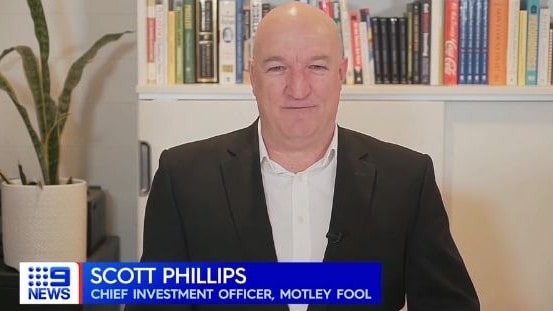
  • Inflation top of mind and confidence in focus. Scott Phillips on Nine’s Late News

    Motley Fool Chief Investment Officer Scott PhillipsMotley Fool Chief Investment Officer Scott Phillips

    Motley Fool Australia Chief Investment Officer Scott Phillips joined Peter Overton for Nine’s Late News on Sunday night to discuss the RBA’s upcoming comments on ‘price stability’ while new consumer confidence data will be released and the tech sector remains vulnerable to more job losses. 

    [youtube https://www.youtube.com/watch?v=GKt9m3-Kvrs?feature=oembed&w=500&h=281]

    The post Inflation top of mind and confidence in focus. Scott Phillips on Nine’s Late News appeared first on The Motley Fool Australia.

    Wondering where you should invest $1,000 right now?

    When investing expert Scott Phillips has a stock tip, it can pay to listen. After all, the flagship Motley Fool Share Advisor newsletter he has run for over ten years has provided thousands of paying members with stock picks that have doubled, tripled or even more.* Scott just revealed what he believes could be the “five best ASX stocks” for investors to buy right now. These stocks are trading at near dirt-cheap prices and Scott thinks they could be great buys right now

    See The 5 Stocks
    *Returns as of November 1 2022

    (function() {
    function setButtonColorDefaults(param, property, defaultValue) {
    if( !param || !param.includes(‘#’)) {
    var button = document.getElementsByClassName(“pitch-snippet”)[0].getElementsByClassName(“pitch-button”)[0];
    button.style[property] = defaultValue;
    }
    }

    setButtonColorDefaults(“#0095C8”, ‘background’, ‘#5FA85D’);
    setButtonColorDefaults(“#0095C8”, ‘border-color’, ‘#43A24A’);
    setButtonColorDefaults(“#fff”, ‘color’, ‘#fff’);
    })()

    More reading

    John Mackey, CEO of Whole Foods Market, an Amazon subsidiary, is a member of The Motley Fool’s board of directors. Randi Zuckerberg, a former director of market development and spokeswoman for Facebook and sister to Meta Platforms CEO Mark Zuckerberg, is a member of The Motley Fool’s board of directors. Motley Fool contributor Scott Phillips has positions in Amazon. The Motley Fool Australia’s parent company Motley Fool Holdings Inc. has positions in and has recommended Amazon, Meta Platforms, Inc., and Whispir Ltd. The Motley Fool Australia has recommended Amazon, Meta Platforms, Inc., and Whispir Ltd. The Motley Fool has a disclosure policy. This article contains general investment advice only (under AFSL 400691). Authorised by Scott Phillips.

    from The Motley Fool Australia https://ift.tt/OmYIQPS

  • Core Lithium share price leaps higher for first time in 5 trading sessions

    A woman with strawberry blonde hair has a huge smile on her face and fist pumps the air having seen good news on her phone.

    A woman with strawberry blonde hair has a huge smile on her face and fist pumps the air having seen good news on her phone.The Core Lithium Ltd (ASX: CXO) share price is back on form at last.

    In morning trade, the lithium miner’s shares are up over 4% to $1.46.

    This will be a welcome relief to shareholders which have watched Core Lithium’s shares record declines during the last five sessions.

    Why is the Core Lithium share price rising?

    Investors have been buying the company’s shares today despite there being no news out of it.

    Though, it is worth noting that the Core Lithium share price isn’t the only one in the lithium industry that is rising today.

    Here’s a quick summary of how other ASX lithium shares are performing:

    • Allkem Ltd (ASX: AKE) shares are up 3%
    • Lake Resources N.L. (ASX: LKE) shares are up 3%
    • Liontown Resources Ltd (ASX: LTR) shares are up 4.5%
    • Pilbara Minerals Ltd (ASX: PLS) shares are up 2%

    Can Core Lithium shares keep rising?

    While analysts at Macquarie currently only have a neutral rating on the company’s shares, their price target of $1.80 is notably higher than where they trade today.

    In fact, based on where Core Lithium’s shares trade today, this price target implies potential upside of 23% for investors over the next 12 months. Not bad for a neutral rating!

    The post Core Lithium share price leaps higher for first time in 5 trading sessions appeared first on The Motley Fool Australia.

    Wondering where you should invest $1,000 right now?

    When investing expert Scott Phillips has a stock tip, it can pay to listen. After all, the flagship Motley Fool Share Advisor newsletter he has run for over ten years has provided thousands of paying members with stock picks that have doubled, tripled or even more.* Scott just revealed what he believes could be the “five best ASX stocks” for investors to buy right now. These stocks are trading at near dirt-cheap prices and Scott thinks they could be great buys right now

    See The 5 Stocks
    *Returns as of November 1 2022

    (function() {
    function setButtonColorDefaults(param, property, defaultValue) {
    if( !param || !param.includes(‘#’)) {
    var button = document.getElementsByClassName(“pitch-snippet”)[0].getElementsByClassName(“pitch-button”)[0];
    button.style[property] = defaultValue;
    }
    }

    setButtonColorDefaults(“#43B02A”, ‘background’, ‘#5FA85D’);
    setButtonColorDefaults(“#43B02A”, ‘border-color’, ‘#43A24A’);
    setButtonColorDefaults(“#fff”, ‘color’, ‘#fff’);
    })()

    More reading

    Motley Fool contributor James Mickleboro has positions in Allkem Limited. The Motley Fool Australia’s parent company Motley Fool Holdings Inc. has no position in any of the stocks mentioned. The Motley Fool Australia has no position in any of the stocks mentioned. The Motley Fool has a disclosure policy. This article contains general investment advice only (under AFSL 400691). Authorised by Scott Phillips.

    from The Motley Fool Australia https://ift.tt/k3FC8sX

  • Here’s why the Transurban share price can ‘reap the benefits’: expert

    An older couple driving in a convertible on a freeway.An older couple driving in a convertible on a freeway.

    The Transurban Group (ASX: TCL) share price has been on a volatile ride since the start of COVID-19. But, after all the pain of 2020, difficulties during 2021 and the valuation plunge in 2022, things are looking up for the toll road operator.

    As a reminder, Transurban owns, builds and operates toll roads in Australia and North America.

    Forecast of traffic growth and distribution growth

    The toll road business itself said that the forecast trends for employment, migration and GDP support Transurban’s traffic growth.

    Transurban points out that Australian GDP is forecast to grow at 1.5% over 2023 and 2024. The business also notes that unemployment is at a historical low and the population is forecast to grow by 20% to 2041.

    In terms of the distributions, higher payments can be supported by an improvement in the amount of ‘free cash‘ that it generates. The company expects its FY23 distribution to be 53 cents per share, a rise of 30% compared to FY22. A higher distribution could help support the Transurban share price by attracting more investors.

    It also notes that its portfolio of urban road assets provides “less exposure to discretionary travel,” suggesting Transurban traffic could be more resilient than other roads.

    Inflation to be a key boost

    Talking at the Sohn investment conference, Wavestone Capital fund manager Catherine Allfrey chose Transurban as her preferred pick, according to reporting by the Australian Financial Review.

    For her, inflation is a positive for the business. Allfrey said that Transurban is:

    Suited to the times… inflation has become something that was going to be temporary, maybe is persistent, it could be peaking, who knows? But with this stock it doesn’t actually matter.

    She noted that Transurban’s toll fees are linked to CPI [the consumer price index], noting that it will get a $400 million boost to revenue over the next three years from inflation. Higher revenue could be a boost for the Transurban share price.

    One of the positive elements of the business for the fund manager was that Transurban continued investing during COVID-19. Allfrey said: “We now stand to reap the benefits.”

    Allfrey concluded:

    You’ve got close to double-digit revenue growth at the top line, 73% earnings before interest tax, depreciation and amortisation (EBITDA) margins, we believe the market is underestimating the leverage on the bottom line of Transurban.

    Transurban view on inflation

    The toll road business said that the portfolio is “well positioned in rising inflation and interest rate environment”.

    Australian CPI is “currently expected to peak at 8% in the near-term” and then “decline to 3.25% by the end of 2024”.

    Transurban explained that the inflation link benefit resets the revenue base and “continues to compound over time”.

    The business also said that “balance sheet management provides near-term protection from interest rates”.

    Transurban share price snapshot

    Over the last month, Transurban shares have gone up by more than 12%. Based on the expected distribution payout of 53 cents per security, the projected distribution yield is 3.8%.

    The post Here’s why the Transurban share price can ‘reap the benefits’: expert appeared first on The Motley Fool Australia.

    Wondering where you should invest $1,000 right now?

    When investing expert Scott Phillips has a stock tip, it can pay to listen. After all, the flagship Motley Fool Share Advisor newsletter he has run for over ten years has provided thousands of paying members with stock picks that have doubled, tripled or even more.* Scott just revealed what he believes could be the “five best ASX stocks” for investors to buy right now. These stocks are trading at near dirt-cheap prices and Scott thinks they could be great buys right now

    See The 5 Stocks
    *Returns as of November 1 2022

    (function() {
    function setButtonColorDefaults(param, property, defaultValue) {
    if( !param || !param.includes(‘#’)) {
    var button = document.getElementsByClassName(“pitch-snippet”)[0].getElementsByClassName(“pitch-button”)[0];
    button.style[property] = defaultValue;
    }
    }

    setButtonColorDefaults(“#43B02A”, ‘background’, ‘#5FA85D’);
    setButtonColorDefaults(“#43B02A”, ‘border-color’, ‘#43A24A’);
    setButtonColorDefaults(“#fff”, ‘color’, ‘#fff’);
    })()

    More reading

    Motley Fool contributor Tristan Harrison has no position in any of the stocks mentioned. The Motley Fool Australia’s parent company Motley Fool Holdings Inc. has no position in any of the stocks mentioned. The Motley Fool Australia has no position in any of the stocks mentioned. The Motley Fool has a disclosure policy. This article contains general investment advice only (under AFSL 400691). Authorised by Scott Phillips.

    from The Motley Fool Australia https://ift.tt/YDAhJRe

  • 3 ASX 200 shares that hiked their dividends by more than 100% this year

    excited young female in business attire and wearing glasses is holding up $100 notes in both hands.excited young female in business attire and wearing glasses is holding up $100 notes in both hands.

    It’s been a rough year for the S&P/ASX 200 Index (ASX: XJO) so far. It’s currently 5.8% lower than it was at the start of 2022. But things haven’t been so bad for these ASX 200 dividend shares.

    They appear to have been thriving, even posting whopping dividend increases.

    So, without further ado, here are three stocks that have grown their payouts by more than 100% this year.

    3 ASX 200 dividend shares upping payouts in 2022

    ASX 200 mining shares are often the talk of the town, and Gold Road Resources Ltd (ASX: GOR) caught investor attention in August when it revealed a dividend worth double that of the prior comparable period.

    The gold miner paid investors a fully franked 1 cent per share interim dividend for the first six months of 2022 – up from a 0.5-cent offering for the same period of 2021.

    Joining in on the action is ASX 200 crop protection and seed technology company Nufarm Ltd (ASX: NUF). It’s blown its 2021 payouts out of the water this year.

    The stock offered investors a final dividend worth 6 cents per share last week. Add that to the 4-cent per share interim dividend declared back in May, and the company has offered 10 cents per share this year.

    Nufarm forewent an interim dividend in 2021 and posted a 4-cent final dividend. That means its payouts have grown a whopping 150% in 2022.

    Finally, ASX 200 coal share Coronado Global Resources Inc (ASX: CRN) has upped its dividends by a whopping amount this year.

    It has so far declared two ordinary dividends ­– worth a combined 23 cents – and three special dividends with an approximate total value of 36.6 cents.

    Interestingly, there were no dividends from the coal miner over the course of 2021. They were suspended due to market conditions in late 2020.

    The post 3 ASX 200 shares that hiked their dividends by more than 100% this year appeared first on The Motley Fool Australia.

    Where should you invest $1,000 right now? 3 Dividend Stocks To Help Beat Inflation

    This FREE report reveals three stocks not only boasting sustainable dividends but also have strong potential for massive long term returns…

    Yes, Claim my FREE copy!
    *Returns as of November 1 2022

    (function() {
    function setButtonColorDefaults(param, property, defaultValue) {
    if( !param || !param.includes(‘#’)) {
    var button = document.getElementsByClassName(“pitch-snippet”)[0].getElementsByClassName(“pitch-button”)[0];
    button.style[property] = defaultValue;
    }
    }

    setButtonColorDefaults(“#0095C8”, ‘background’, ‘#5FA85D’);
    setButtonColorDefaults(“#0095C8”, ‘border-color’, ‘#43A24A’);
    setButtonColorDefaults(“#fff”, ‘color’, ‘#fff’);
    })()

    More reading

    Motley Fool contributor Brooke Cooper has no position in any of the stocks mentioned. The Motley Fool Australia’s parent company Motley Fool Holdings Inc. has no position in any of the stocks mentioned. The Motley Fool Australia has no position in any of the stocks mentioned. The Motley Fool has a disclosure policy. This article contains general investment advice only (under AFSL 400691). Authorised by Scott Phillips.

    from The Motley Fool Australia https://ift.tt/IYoSFn9

  • Why this fund manager sees tailwinds ahead for the Qantas share price

    A woman holds her arms out as a plane flies overhead

    A woman holds her arms out as a plane flies overhead

    The Qantas Airways Ltd (ASX: QAN) share price has been alternately battered and buoyed by fast-moving developments in the COVID pandemic.

    Like every travel stock, the airline’s shares were smashed in the early months of the outbreak. And like most travel stocks, the Qantas share price has also enjoyed some big moves higher amid the early vaccine rollouts and the more recent domestic and international border re-openings.

    As travel numbers quickly rebounded, the airline – like airlines and airports the world over – has struggled with staffing issues. This has led to a spike in flight delays along with misplaced baggage. Which in turn led to Qantas receiving a rather unenviable Shonky Award from consumer advocacy group Choice earlier this month.

    But that doesn’t mean the Qantas share price couldn’t fly significantly higher from here.

    Undervalued and in an earnings upgrade cycle

    We recently spoke to Andrew Martin, principal of Alphinity Investment Management.

    When running his slide rule over any potential S&P/ASX 200 Index (ASX: XJO) shares, Martin stresses the importance of earnings and investing in quality, undervalued companies in an earnings upgrade cycle.

    As far as which ASX 200 shares fit that bill today, Martin said, “Qantas Airways is one of those. We’ve seen some really good earnings upgrades come through.”

    Acknowledging that the airline has had some teething issues getting back up to speed, he sees good growth potential for the Qantas share price.

    According to Martin:

    People have been grumbling about them, lost bags and delays and what have you. But the reality is that pricing is going up, there’s very strong demand domestically and offshore. And there’s just not a lot of capacity around.

    So they are able to generate very good profits, and very good cash flow which rapidly improves the quality of the balance sheet.

    Qantas share price snapshot

    The Qantas share price has outperformed the ASX 200 in 2022, gaining 14% compared to a 6% loss posted by the benchmark index.

    The post Why this fund manager sees tailwinds ahead for the Qantas share price appeared first on The Motley Fool Australia.

    FREE Beginners Investing Guide

    Despite what some people may say – we believe investing in shares doesn’t have to be overwhelming or complicated…

    For over a decade, we’ve been helping everyday Aussies get started on their journey.

    And to help even more people cut through some of the confusion “experts” seem to want to perpetuate – we’ve created a brand-new “how to” guide.

    Yes, Claim my FREE copy!
    *Returns as of November 7 2022

    (function() {
    function setButtonColorDefaults(param, property, defaultValue) {
    if( !param || !param.includes(‘#’)) {
    var button = document.getElementsByClassName(“pitch-snippet”)[0].getElementsByClassName(“pitch-button”)[0];
    button.style[property] = defaultValue;
    }
    }

    setButtonColorDefaults(“#0095C8”, ‘background’, ‘#5FA85D’);
    setButtonColorDefaults(“#0095C8”, ‘border-color’, ‘#43A24A’);
    setButtonColorDefaults(“#fff”, ‘color’, ‘#fff’);
    })()

    More reading

    Motley Fool contributor Bernd Struben has no position in any of the stocks mentioned. The Motley Fool Australia’s parent company Motley Fool Holdings Inc. has no position in any of the stocks mentioned. The Motley Fool Australia has no position in any of the stocks mentioned. The Motley Fool has a disclosure policy. This article contains general investment advice only (under AFSL 400691). Authorised by Scott Phillips.

    from The Motley Fool Australia https://ift.tt/Wlas6rj

  • Worried we’re in another dot-com crash? Here’s the biggest mistake to avoid

    This article was originally published on Fool.com. All figures quoted in US dollars unless otherwise stated.

    Man looking concerned head in hands at laptop

    This article was originally published on Fool.com. All figures quoted in US dollars unless otherwise stated.

    Between March 2000 and October 2007, the S&P 500 Index (SNPINDEX: ^GSPC) increased by a rather paltry 1.43%. To compound that painful six-and-a-half-year period, the S&P would fall more than 55% from the 2007 high during the Great Recession. 

    Combined, the world’s most notable stock index — a collection of 500 of the most-valuable and important public companies on earth — would lose more than half its value in the “lost decade” between March 2000 and March 2009. The tech-heavy Nasdaq Composite (NASDAQINDEX: ^IXIC) would lose nearly three-fourths of its value over the same period.

    The S&P would take another four years to return to the highs it reached in 2000, while the Nasdaq didn’t fully recover until March of 2015. That’s 12 and 15 years respectively for these two indices to fully recover. 

    Fast-forward to today, and investors are fearful that we could be near the start of another lost decade, particularly for tech investors. Is that the case? With rising interest rates and economic pressures changing the game from the cheap-capital, grow-grow-grow days of the past decade, the recent pain could continue for many beaten-down tech stocks for some time to come.

    But there’s more to the story. If you want to avoid the mistakes that likely cost likely millions of people billions in lost wealth, keep reading. 

    How we got here

    The broad stock market downturn we’ve seen this year only tells part of the story. The S&P 500 and Dow Jones Industrials (DJINDICES: ^DJI) peaked in January of 2022 and are down 18% and 9% respectively during a painfully long downturn for stocks this year. The Nasdaq Composite peaked in November of 2021 and is down 31% at recent highs. 

    So far, these drops are a far cry from the near-75% wipeout from the dot com crash. This time around, the most-valuable tech stocks have, relatively speaking, held up much better. Microsoft, for example, has seen its stock fall about 30% from the recent highs, while it lost more than 60% of its value during the dot com bust, and it was still off more than 70% from the high in March 2009. Similarly, Apple shares fell more than 60% in the dot com crash, though the success of the iPod and iPhone during the years of the Great Recession changed its prospects — and stock price. 

    Today, these multi-trillion-dollar tech stocks are massive, stable companies, and that’s helping buoy the Nasdaq in ways that index wasn’t supported following the 2000 peak. But when we peel back the layers, we see the pain: More than 1,600 of the nearly 4,200 Nasdaq-traded stocks are 50% or more below their 52-week highs. More than 1,100 Nasdaq stocks have lost more than twice as much value as the Nasdaq Index. 

    As a result, plenty of investors who’ve focused on smaller, high-growth companies in recent years saw their portfolios lose massive amounts of value over the past 18 months or so.  

    What it means going forward — and the biggest mistake to avoid

    Let’s be honest with ourselves: Many of those stocks won’t fully recover to their prior highs. A lot of unprofitable businesses were able to raise money in an environment where interest rates were low, bond yields were paltry, and plenty of investors were willing to pay premiums and take on more risk to capture returns. Some of those companies won’t be able to make the transition from money-burning to profitable, at least without taking actions that further impair per-share returns. A lot will get acquired for less than investors paid for them, with no better options on the table. 

    But for investors, anchoring on what you paid for a stock, or what it was worth at the peak, won’t help you invest better, make up for losses, or build future wealth. But there is some wisdom we can take from looking at the market’s history. Let’s look past those prior peaks, and consider how stocks did in the periods in between:

    ^IXIC data by YCharts

    Don’t make the mistake of getting caught in up past stock price peaks, and walk away from stocks during the sell-off. Investors make their best money continuing to buy during downturns, when everyone else is afraid it will get worse. 

    Just keep buying

    This is the hard, cold, reality of investing in stocks: In the short term, you can lose money (at least on paper); and sometimes, you can lose money for longer than you expect. This is particularly true during the moments of peak exuberance when markets are near a peak, and recent market gains bring stock buying back into the popular consciousness — at least for a time. Then interest wanes as stock prices falter, and the rush for the exits results in big losses, burning a lot of people and turning them off from stocks entirely. 

    Instead of avoiding that risk, investors can make that an advantage. It’s during these downturns that investors make their money: Find the companies that can still deliver on their long-term goals, buy, and hold.

    It sounds simple, and to some extent it is. But it’s not easy. Living through and investing during painful downturns is hard. But as those sharp gains after every prior downturn should remind us, it’s very profitable. And that makes it another hard thing that’s worth doing well. 

    This article was originally published on Fool.com. All figures quoted in US dollars unless otherwise stated.

    The post Worried we’re in another dot-com crash? Here’s the biggest mistake to avoid appeared first on The Motley Fool Australia.

    Wondering where you should invest $1,000 right now?

    When investing expert Scott Phillips has a stock tip, it can pay to listen. After all, the flagship Motley Fool Share Advisor newsletter he has run for over ten years has provided thousands of paying members with stock picks that have doubled, tripled or even more.* Scott just revealed what he believes could be the “five best ASX stocks” for investors to buy right now. These stocks are trading at near dirt-cheap prices and Scott thinks they could be great buys right now

    See The 5 Stocks
    *Returns as of November 1 2022

    (function() {
    function setButtonColorDefaults(param, property, defaultValue) {
    if( !param || !param.includes(‘#’)) {
    var button = document.getElementsByClassName(“pitch-snippet”)[0].getElementsByClassName(“pitch-button”)[0];
    button.style[property] = defaultValue;
    }
    }

    setButtonColorDefaults(“#0095C8”, ‘background’, ‘#5FA85D’);
    setButtonColorDefaults(“#0095C8”, ‘border-color’, ‘#43A24A’);
    setButtonColorDefaults(“#fff”, ‘color’, ‘#fff’);
    })()

    More reading

    Jason Hall has no position in any of the stocks mentioned. The Motley Fool Australia’s parent company Motley Fool Holdings Inc. has positions in and has recommended Apple and Microsoft. The Motley Fool Australia’s parent company Motley Fool Holdings Inc. has recommended the following options: long March 2023 $120 calls on Apple and short March 2023 $130 calls on Apple. The Motley Fool Australia has recommended Apple. The Motley Fool has a disclosure policy. This article contains general investment advice only (under AFSL 400691). Authorised by Scott Phillips.

    This article was originally published on Fool.com. All figures quoted in US dollars unless otherwise stated.

    from The Motley Fool Australia https://ift.tt/Sk2tTz9