Tag: Motley Fool

  • Why is the Novonix share price surging 16% higher today?

    A man clenches his fists in excitement as gold coins fall from the sky.

    A man clenches his fists in excitement as gold coins fall from the sky.

    The Novonix Ltd (ASX: NVX) share price is having another strong day.

    On Monday morning, the battery materials and technology company’s shares are up 16% to $2.56.

    This means the Novonix share price is now up 31% since this time last week.

    Why is the Novonix share price on fire right now?

    Investors have been scrambling to buy Novonix’s shares in recent sessions thanks to the release of a major announcement last week.

    That announcement revealed that its Anode Materials division has been selected to enter negotiations to receive US$150 million (A$240 million) in grant funding from the US Department of Energy. Under the terms of the grant, the government funds must be at least matched by the recipient.

    This is part of a major government funding package which aims to strengthen the North American battery supply chain amid surging demand and growing calls to onshore these critical industries.

    Management notes that these funds would be dedicated to the construction of a 30,000 tonnes per annum (tpa) US manufacturing facility, including site selection, plant layout, and engineering design with capability for additional expansion.

    What else?

    Also giving the Novonix share price a lift has been news that a leading broker has become bullish.

    According to a note out of Morgans, its analysts have upgraded the company’s shares to a speculative buy rating and lifted their price target by $1.00 to $3.11.

    Even after its strong recent gains, this implies potential upside of over 21% for investors over the next 12 months.

    The broker made the move in response to the US government grant. And while its analysts acknowledge that Novonix’s project costs are greater than it expected, they are overlooking this due to the positive long term outlook for anode prices.

    The post Why is the Novonix share price surging 16% higher today? appeared first on The Motley Fool Australia.

    Wondering where you should invest $1,000 right now?

    When investing expert Scott Phillips has a stock tip, it can pay to listen. After all, the flagship Motley Fool Share Advisor newsletter he has run for over ten years has provided thousands of paying members with stock picks that have doubled, tripled or even more.* Scott just revealed what he believes could be the “five best ASX stocks” for investors to buy right now. These stocks are trading at near dirt-cheap prices and Scott thinks they could be great buys right now

    See The 5 Stocks
    *Returns as of September 1 2022

    (function() {
    function setButtonColorDefaults(param, property, defaultValue) {
    if( !param || !param.includes(‘#’)) {
    var button = document.getElementsByClassName(“pitch-snippet”)[0].getElementsByClassName(“pitch-button”)[0];
    button.style[property] = defaultValue;
    }
    }

    setButtonColorDefaults(“#0095C8”, ‘background’, ‘#5FA85D’);
    setButtonColorDefaults(“#0095C8”, ‘border-color’, ‘#43A24A’);
    setButtonColorDefaults(“#fff”, ‘color’, ‘#fff’);
    })()

    More reading

    Motley Fool contributor James Mickleboro has no position in any of the stocks mentioned. The Motley Fool Australia’s parent company Motley Fool Holdings Inc. has no position in any of the stocks mentioned. The Motley Fool Australia has no position in any of the stocks mentioned. The Motley Fool has a disclosure policy. This article contains general investment advice only (under AFSL 400691). Authorised by Scott Phillips.

    from The Motley Fool Australia https://ift.tt/upyEVKI

  • Galan Lithium share price rockets 28% on ‘game changing’ update

    A miner in hardhat and high visibility clothing makes a thumbs up symbol against a blue sky.A miner in hardhat and high visibility clothing makes a thumbs up symbol against a blue sky.

    The Galan Lithium Ltd (ASX: GLN) share price is storming ahead today.

    Galan shares are up nearly 18% at the time of writing, currently fetching $1.495 apiece. However, in earlier trade, Galan shares soared more than 30% to $1.66 each before retreating.

    Let’s take a look at why Galan shares are exploding today.

    ‘Amazing’ news

    Galan Lithium advised today of a “spectacular” increase to its mineral resource estimate at the Hombre Muerto West Project in Argentina.

    The new resource estimate has leapt 2.5 times to 5.8 million tonnes of lithium carbonate equivalent (LCE) at 866 milligrams per litre (mg/L) lithium.

    Galan said the measured lithium resource at the site is now more than 4.4 million tonnes of LCE at 883 mg/L lithium.

    The company entered a trading halt last week ahead of this “significant” resource update.

    Commenting on the news, Galan managing director Juan Pablo described the result as “amazing”. He added:

    Even the Galan team has been amazed by the scale of this updated Resource for Hombre Muerto West.

    The outcome is game changing in terms of the step-up in the overall technical and economic potential of this world-class lithium brine asset.

    Galan said the project retains its “high grade, low impurity” profile. The revised estimate was completed by the Australian team at SRK Consulting.

    A definitive feasibility study is due for completion by the first quarter of 2023.

    Share price snapshot

    Galan Lithium shares have shed more than 22% year to date, although they have gained nearly 14% in the past month. In the last year, Galan shares have rocketed 34%.

    For perspective, the S&P/ASX 200 (ASX: XJO) has fallen 8% in the past year.

    Galan Lithium has a market capitalisation of about $461 million based on the current share price.

    The post Galan Lithium share price rockets 28% on ‘game changing’ update appeared first on The Motley Fool Australia.

    Wondering where you should invest $1,000 right now?

    When investing expert Scott Phillips has a stock tip, it can pay to listen. After all, the flagship Motley Fool Share Advisor newsletter he has run for over ten years has provided thousands of paying members with stock picks that have doubled, tripled or even more.* Scott just revealed what he believes could be the “five best ASX stocks” for investors to buy right now. These stocks are trading at near dirt-cheap prices and Scott thinks they could be great buys right now

    See The 5 Stocks
    *Returns as of September 1 2022

    (function() {
    function setButtonColorDefaults(param, property, defaultValue) {
    if( !param || !param.includes(‘#’)) {
    var button = document.getElementsByClassName(“pitch-snippet”)[0].getElementsByClassName(“pitch-button”)[0];
    button.style[property] = defaultValue;
    }
    }

    setButtonColorDefaults(“#43B02A”, ‘background’, ‘#5FA85D’);
    setButtonColorDefaults(“#43B02A”, ‘border-color’, ‘#43A24A’);
    setButtonColorDefaults(“#fff”, ‘color’, ‘#fff’);
    })()

    More reading

    Motley Fool contributor Monica O’Shea has no position in any of the stocks mentioned. The Motley Fool Australia’s parent company Motley Fool Holdings Inc. has no position in any of the stocks mentioned. The Motley Fool Australia has no position in any of the stocks mentioned. The Motley Fool has a disclosure policy. This article contains general investment advice only (under AFSL 400691). Authorised by Scott Phillips.

    from The Motley Fool Australia https://ift.tt/aWQEhtx

  • 3 ASX mining shares that turned a $10,000 investment into $500,000

    A group of people in suits and hard hats celebrate the rising share price with champagne.A group of people in suits and hard hats celebrate the rising share price with champagne.

    So far, this year has been rough for many of the market’s favourite ASX mining shares. But looking to the longer term, the materials sector has been a strong performer.

    Despite posting a 7% year-to-date fall, the S&P/ASX 200 Materials Index (ASX: XMJ) has gained around 50% over the last 10 years. Meanwhile, some ASX mining shares have posted gains that dwarf the index’s performance.

    Indeed, an investor who bought these three ASX mining shares in October 2012 would be laughing all the way to the bank today.

    Keep reading to discover which ASX mining shares have turned $10,000 into more than $500,000 over the last decade.

    3 ASX mining shares that turned $10,000 into $500,000

    If you ever needed a reminder of the power of investing, you’ve come to the right place.

    ASX mining company Gains over the
    last decade
    Recent value of
    $3,333 invested
    Chalice Mining Ltd (ASX: CHN) 2,606% $85,482
    AVZ Minerals Ltd (ASX: AVZ) 7,700% $259,974
    Liontown Resources Ltd (ASX: LTR) 4,550% $154,984

    It’s been a good 10 years for these ASX mining shares – and anyone who invested in them in 2012.

    A $10,000 investment spread across the three stocks back then would have been worth $500,440 at Friday’s close.

    The biggest gains of the last decade came from AVZ Minerals. Interestingly, the company hasn’t traded since May amid an ownership dispute over the Manono Lithium Project.

    However, before the stock was frozen it was trading at 78 cents – up from around 1 cent this time 10 years ago. Back then the company was known as Avonlea Minerals. It was renamed AVZ Minerals in December 2012.

    The Liontown share price was the next best performer. Stock in the lithium favourite lifted from 4 cents in October 2012 to $1.86 as of Friday afternoon.

    Finally, the Chalice Mining share price has lifted from around 17 cents this time last decade to its previous close of $4.36.

    The key takeaway

    While volatility has reigned supreme this year, there are likely plenty of winners still to be found among ASX mining shares.

    Indeed, the ASX has ultimately gained over the years, despite plenty of short-lived downturns such as that experienced in 2022.

    The post 3 ASX mining shares that turned a $10,000 investment into $500,000 appeared first on The Motley Fool Australia.

    Wondering where you should invest $1,000 right now?

    When investing expert Scott Phillips has a stock tip, it can pay to listen. After all, the flagship Motley Fool Share Advisor newsletter he has run for over ten years has provided thousands of paying members with stock picks that have doubled, tripled or even more.* Scott just revealed what he believes could be the “five best ASX stocks” for investors to buy right now. These stocks are trading at near dirt-cheap prices and Scott thinks they could be great buys right now

    See The 5 Stocks
    *Returns as of September 1 2022

    (function() {
    function setButtonColorDefaults(param, property, defaultValue) {
    if( !param || !param.includes(‘#’)) {
    var button = document.getElementsByClassName(“pitch-snippet”)[0].getElementsByClassName(“pitch-button”)[0];
    button.style[property] = defaultValue;
    }
    }

    setButtonColorDefaults(“#0095C8”, ‘background’, ‘#5FA85D’);
    setButtonColorDefaults(“#0095C8”, ‘border-color’, ‘#43A24A’);
    setButtonColorDefaults(“#fff”, ‘color’, ‘#fff’);
    })()

    More reading

    Motley Fool contributor Brooke Cooper has no position in any of the stocks mentioned. The Motley Fool Australia’s parent company Motley Fool Holdings Inc. has no position in any of the stocks mentioned. The Motley Fool Australia has no position in any of the stocks mentioned. The Motley Fool has a disclosure policy. This article contains general investment advice only (under AFSL 400691). Authorised by Scott Phillips.

    from The Motley Fool Australia https://ift.tt/pVJ5TxA

  • Is the Vanguard Australian Shares (VAS) ETF the most popular ETF to buy?

    Group of thoughtful business people with eyeglasses reading documents in the office.

    Group of thoughtful business people with eyeglasses reading documents in the office.When it comes to exchange-traded funds (ETFs) on the ASX, the Vanguard Australian Shares Index ETF (ASX: VAS) certainly has a strong presence.

    For one, it has the coveted Vanguard name. Vanguard is a US-based asset manager. It has a few unique distinctions to its name. The first is that Vanguard’s founder, the late John Bogle, is widely credited with ‘inventing’ the concept of an index fund in the first place.

    Back in the 1970s, Bogle initiated the world’s first index fund, tracking the US S&P 500 Index. Today, there are countless S&P 500 index funds, but Vanguard’s will always be the first.

    Secondly, Vanguard, unlike almost all other ETF providers, is a not-for-profit organisation. Bogle’s vision was an asset manager owned by its investors, with profits cycled back into ever-lower fees. This is a vision intact today.

    It’s for these two reasons that the legendary investor Warren Buffett had the highest of praises for Bogle. When Bogle died in 2019, CNBC reported that Warren Buffett had this to say about the man:

    Jack did more for American investors as a whole than any individual I’ve known… A lot of Wall Street is devoted to charging a lot for nothing. He charged nothing to accomplish a huge amount.

    High praise indeed.

    So Vanguard’s Australian Shares Index ETF was always going to be a heavy hitter in the field of ASX ETFs. But is it the most popular ETF on the ASX?

    Is the Vanguard Australian Shares ETF the ASX’s first choice?

    Well, the answer is yes.

    As of 30 September, Vanguard reported that its Australian Shares ETF had a size of $10.759 billion. In the language of ETFs, this means that it has a total of $10.759 billion in funds under management. That’s investors’ dollars in the fund.

    Its closest rivals can’t even come close to competing with this. The nearest index fund rivals are the iShares S&P 500 ETF (ASX: IVV) and the Vanguard MSCI Index International Shares ETF (ASX: VGS). These funds have, on the latest data, $4.933 billion and $4.641 billion in funds under management respectively.

    When it comes to ASX-based index funds, the gap is wider still. The SPDR S&P/ASX 200 Fund (ASX: STW), the oldest ASX index fund on the share market, commands $4.408 billion in funds under management at present.

    The iShares Core S&P/ASX 200 ETF (ASX: IOZ) musters $3.25 billion. The BetaShares Australia 200 ETF (ASX: A200), currently the ASX’s cheapest Australian index fund, has $2.458 billion of its investors’ dollars under its stewardship.

    So we can unequivocally say that the Vanguard Australian Shares Index ETF is Australians’ first choice when it comes to exchange-traded funds. It’s a mighty large gap too.

    The post Is the Vanguard Australian Shares (VAS) ETF the most popular ETF to buy? appeared first on The Motley Fool Australia.

    Why all ETFs may not be as good as you think…

    When ETFs burst on the investing scene, they used to be a passive, low cost way to diversify your savings.

    Fast forward to today – It’s now a spawning ground of speculation… ultra specific and exotic investing themes where complexity – and fees! – reign.

    In this FREE report, Scott Phillips uncovers the dangers of thinking all ETFs are great. Plus the three point checklist investor could run before committing to any Exchange Traded Fund.

    Yes, Access my FREE copy!
    1st October 2022

    (function() {
    function setButtonColorDefaults(param, property, defaultValue) {
    if( !param || !param.includes(‘#’)) {
    var button = document.getElementsByClassName(“pitch-snippet”)[0].getElementsByClassName(“pitch-button”)[0];
    button.style[property] = defaultValue;
    }
    }

    setButtonColorDefaults(“#0095C8”, ‘background’, ‘#5FA85D’);
    setButtonColorDefaults(“#0095C8”, ‘border-color’, ‘#43A24A’);
    setButtonColorDefaults(“#fff”, ‘color’, ‘#fff’);
    })()

    More reading

    Motley Fool contributor Sebastian Bowen has no position in any of the stocks mentioned. The Motley Fool Australia’s parent company Motley Fool Holdings Inc. has positions in and has recommended Vanguard MSCI Index International Shares ETF. The Motley Fool Australia has recommended Vanguard MSCI Index International Shares ETF and iShares Trust – iShares Core S&P 500 ETF. The Motley Fool has a disclosure policy. This article contains general investment advice only (under AFSL 400691). Authorised by Scott Phillips.

    from The Motley Fool Australia https://ift.tt/A5ezvV8

  • The companies Warren Buffett owns might surprise you

    This article was originally published on Fool.com. All figures quoted in US dollars unless otherwise stated.

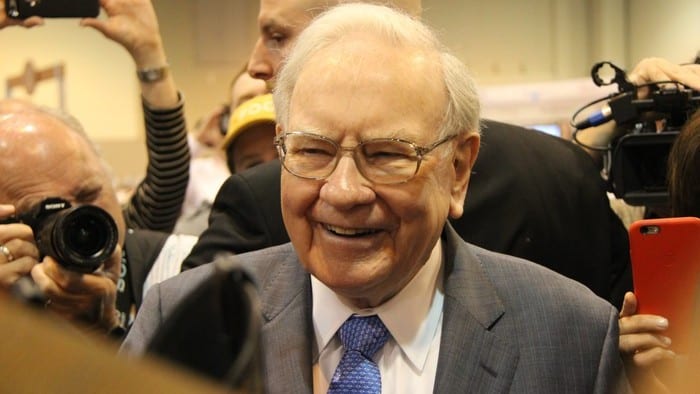
    a smiling picture of legendary US investment guru Warren Buffett.

    This article was originally published on Fool.com. All figures quoted in US dollars unless otherwise stated.

    The more you learn about Warren Buffett, the more impressed you’ll likely be. He’s best known as the CEO of Berkshire Hathaway (NYSE: BRK.A) (NYSE: BRK.B) and for boosting the company’s market value by an average annual rate of about 20% over more than 50 years.

    To put that in context, the S&P 500 averaged only about 10% over that same half-century. Berkshire Hathaway is now one of America’s biggest companies, employing around 372,000 people as of the end of last year.

    Berkshire holds stock in many businesses — recently owning roughly 20% of American Express and about 5.5% of Apple, for example. Buffett far prefers to own all of a great business though, instead of just a chunk of it. So he has amassed a portfolio of many wholly owned subsidiaries — some of which might surprise you. Taking a close look at them might even give you some investing insights.

    Meet the Berkshire subsidiaries

    In its most recent annual report, Berkshire Hathaway listed 62 subsidiaries. Here are a few to know about:

    Benjamin Moore: Paint is big business. Sherwin-Williams, for example, boasts more than 5,000 stores and has a recent market value topping $50 billion. Benjamin Moore, though, has some 7,500 locations globally.

    Berkshire Hathaway Automotive: This unit stems from Buffett’s 2015 acquisition of the Van Tuyl Group, which was the nation’s largest privately owned automotive dealership group.

    Berkshire Hathaway Energy: This big group of energy companies serves about 12 million customers and end users throughout the US, Great Britain, and Alberta, Canada. It’s a major player in alternative energy, too, with billions of dollars invested in some of the largest US solar projects.

    BNSF: Due to consolidation, there are now only a few major railroad companies in the US and BNSF, an acronym for Burlington Northern Santa Fe, is one of them. Its network features 32,500 route miles in 28 states and three Canadian provinces. It’s the largest intermodal carrier in the US, carrying more than five million shipments in 2021. Tracing its roots back to 1849, it’s the result of nearly 400 different railroad lines that merged or were acquired over 170-plus years.

    Brooks Running: Yup, the 108-year-old company belongs to Berkshire. It raked in more than $1 billion in 2021, a 31% increase over the year before.

    Business Wire: Many of the media releases you read, from myriad companies, are hosted on BusinessWire — another Berkshire company.

    Duracell: Those bronze and gold batteries with strong brand recognition belong to Berkshire.

    Fruit of the Loom: Yup, millions of Americans are walking around wearing Berkshire Hathaway undergarments.

    GEICO: GEICO was relatively small when Buffett bought the chunk of it that it didn’t already own back in 1995. Today, with a workforce topping 43,000, it’s the US’s second-largest auto insurer and it offers other insurance coverage too for homes, rentals, flooding, and more.

    HomeServices of America: If you’ve seen some homes for sale with a Berkshire Hathaway sign out front, you’ve seen HomeServices of America in action. It encompasses businesses focused on brokerage, mortgage, franchising, title, escrow, insurance, and relocation services, and includes 46,000 real estate agents in more than 900 offices.

    International Dairy Queen: All those Blizzards and burgers, sold at more than 7,000 locations, belong to Berkshire.

    Johns Manville: Tracing its roots back to 1858, Johns Manville is a leading insulation and commercial roofing company.

    McLane: McLane is a key supply chain specialist in America, delivering groceries and food service offerings to convenience stores, mass merchants, drug stores, and chain restaurants covering more than 100,000 locations. It also has one of the largest private fleets of trucks. 

    Pampered Chef: The direct sales giant recently boasted a force of more than 60,000 sellers of its kitchenwares.

    See’s Candies: See’s has belonged to Berkshire since 1972.

    There are many more Berkshire businesses, each quite impressive in its own right.

    Lessons from Buffett’s businesses

    All the above may be very interesting, but how can it help you? Well, think about why Buffett bought these companies. Clearly, he’s building an empire, but he’s also picky. He favors companies that are very well managed, aiming to keep management in place when he buys a company. He also loves to buy companies that generate a lot of cash, as he can then deploy it to help some of his other businesses grow or to buy more companies.

    You, too, can be Buffett-like when investing: You can favor companies that generate lots of profits — some of which might be spent paying generous dividends to shareholders. You should always aim to favor great companies over merely good companies too. Great companies might have great management, great competitive advantages (such as a strong brand), great financial health, and great growth prospects. 

    Learn more about Buffett, and you might improve your investing results even more. You might even invest in Berkshire Hathaway itself, to benefit from the growth of all the companies above. 

    This article was originally published on Fool.com. All figures quoted in US dollars unless otherwise stated.

    The post The companies Warren Buffett owns might surprise you appeared first on The Motley Fool Australia.

    Wondering where you should invest $1,000 right now?

    When investing expert Scott Phillips has a stock tip, it can pay to listen. After all, the flagship Motley Fool Share Advisor newsletter he has run for over ten years has provided thousands of paying members with stock picks that have doubled, tripled or even more.* Scott just revealed what he believes could be the “five best ASX stocks” for investors to buy right now. These stocks are trading at near dirt-cheap prices and Scott thinks they could be great buys right now

    See The 5 Stocks *Returns as of September 1 2022

    (function() { function setButtonColorDefaults(param, property, defaultValue) { if( !param || !param.includes(‘#’)) { var button = document.getElementsByClassName(“pitch-snippet”)[0].getElementsByClassName(“pitch-button”)[0]; button.style[property] = defaultValue; } } setButtonColorDefaults(“#43B02A”, ‘background’, ‘#5FA85D’); setButtonColorDefaults(“#43B02A”, ‘border-color’, ‘#43A24A’); setButtonColorDefaults(“#fff”, ‘color’, ‘#fff’); })()

    More reading

    American Express is an advertising partner of The Ascent, a Motley Fool company. Selena Maranjian has positions in American Express, Apple, and Berkshire Hathaway (B shares). The Motley Fool Australia’s parent company has positions in and recommends Apple and Berkshire Hathaway (B shares). The Motley Fool Australia’s parent company recommends Sherwin-Williams and recommends the following options: long January 2023 $200 calls on Berkshire Hathaway (B shares), long March 2023 $120 calls on Apple, short January 2023 $200 puts on Berkshire Hathaway (B shares), short January 2023 $265 calls on Berkshire Hathaway (B shares), and short March 2023 $130 calls on Apple. The Motley Fool Australia has recommended Apple. The Motley Fool has a disclosure policy. This article contains general investment advice only (under AFSL 400691). Authorised by Scott Phillips.

    This article was originally published on Fool.com. All figures quoted in US dollars unless otherwise stated.


    from The Motley Fool Australia https://ift.tt/kWhY6vl
  • Here are 3 ASX All Ords shares turning ex-dividend this week

    A man points at a paper as he holds an alarm clock.A man points at a paper as he holds an alarm clock.

    The New Hope Corporation Limited (ASX: NHC) share price is rallying after getting hammered in early trade this morning.

    At the time of writing, the S&P/ASX All Ordinaries Index (ASX: XAO) is storming 1.9% higher while New Hope shares are up 2% at the time of writing.

    This is despite New Hope shares having turned ex-dividend today. In other words, New Hope shares are no longer trading with rights to the ASX 200 coal miner’s recently-declared monster dividend of 56 cents per share.

    While New Hope has already called time on its latest dividends, three more ASX All Ords shares are going ex-dividend over the coming days. Let’s check them out.

    Clover Corporation Limited (ASX: CLV)

    First up is food technology company Clover, which will be turning ex-dividend tomorrow. This means that today is the final day to secure the company’s latest fully franked final dividend of 1 cent per share, which will be paid on 22 November.

    Clover’s operations are underpinned by its microencapsulation technology, which enables nutritional oils such as tuna, fish, and fungal oils to be added to infant formula, foods, and beverages.

    Clover handed in its FY22 results in September, headlined by 17% sales growth as net sales revenue came in at $71 million.

    Momentum accelerated in the second half as international borders opened and order volumes from key infant milk manufacturers lifted. 

    Despite operational challenges, the company grew its net profit after tax (NPAT) by 19% to $7 million. 

    This helped the ASX All Ords share to hike its annual dividend payout to 1.5 cents, fully franked, putting Clover shares on a trailing dividend yield of 1.2%. Including franking credits, this yield bumps up to 1.7%.

    McMillan Shakespeare Limited (ASX: MMS)

    The next cab off the rank is salary packaging and novated leasing company McMillan Shakespeare. Its shares will turn ex-dividend on Wednesday, trading without claims to the company’s fully franked final dividend of 74 cents.

    By the closing bell tomorrow, investors on McMillan’s share register can lock in a payment date of 10 November.

    McMillan released its FY22 results back in August, delivering normalised revenue of $594 million, up 9% from the prior year.

    The company noted that its customer focus drove business momentum across the year amid ongoing disruptions to the automotive supply chain.

    Despite these challenges, the ASX All Ords share achieved statutory NPAT of $70 million, a 15% increase compared to FY21.

    Across the financial year, McMillan declared total dividends of $1.08 per share, fully franked, up 76% from the dividends seen in the prior year. Given that profit only grew by 15%, this was largely due to a major lift in the company’s dividend payout ratio from 66% in FY21 to 100% in FY22. 

    Based on current prices, McMillan Shakespeare shares are flashing an eye-catching trailing dividend yield of 8.0%. With the benefit of franking credits, this yield grosses up to 11.4%.

    Bank of Queensland Ltd (ASX: BOQ)

    Last but certainly not least, Bank of Queensland is the highest-profile name going ex-dividend this week.

    As of Thursday, Bank of Queensland shares will no longer be trading with entitlements to the company’s fully franked final dividend of 24 cents per share. 

    The bank has a dividend reinvestment plan (DRP) available, offering a 1.5% discount for shareholders who opt in. Those preferring to receive their dividends in cash should see the payment come through on 17 November.

    The ASX 200 bank announced its FY22 results earlier this month. The bank’s net interest income decreased slightly by 1% to $1.5 billion, driven by a reduction in its net interest margin (NIM) which dropped by 12 basis points to 1.74%.

    In comparison, Commonwealth Bank of Australia (ASX: CBA) reported a group NIM of 1.90% in FY22.

    On the bottom line, Bank of Queensland reported statutory NPAT of $426 million, up 15% from the prior year. This helped the bank to raise its annual dividends by 18% to 46 cents per share, fully franked.

    As a result, Bank of Queensland shares are currently trading on a sizeable trailing dividend yield of 6.1%, which grosses up to 8.6%.

    The post Here are 3 ASX All Ords shares turning ex-dividend this week appeared first on The Motley Fool Australia.

    Wondering where you should invest $1,000 right now?

    When investing expert Scott Phillips has a stock tip, it can pay to listen. After all, the flagship Motley Fool Share Advisor newsletter he has run for over ten years has provided thousands of paying members with stock picks that have doubled, tripled or even more.* Scott just revealed what he believes could be the “five best ASX stocks” for investors to buy right now. These stocks are trading at near dirt-cheap prices and Scott thinks they could be great buys right now

    See The 5 Stocks
    *Returns as of September 1 2022

    (function() {
    function setButtonColorDefaults(param, property, defaultValue) {
    if( !param || !param.includes(‘#’)) {
    var button = document.getElementsByClassName(“pitch-snippet”)[0].getElementsByClassName(“pitch-button”)[0];
    button.style[property] = defaultValue;
    }
    }

    setButtonColorDefaults(“#0095C8”, ‘background’, ‘#5FA85D’);
    setButtonColorDefaults(“#0095C8”, ‘border-color’, ‘#43A24A’);
    setButtonColorDefaults(“#fff”, ‘color’, ‘#fff’);
    })()

    More reading

    Motley Fool contributor Cathryn Goh has no position in any of the stocks mentioned. The Motley Fool Australia’s parent company Motley Fool Holdings Inc. has positions in and has recommended Clover Corporation Limited. The Motley Fool Australia has no position in any of the stocks mentioned. The Motley Fool has a disclosure policy. This article contains general investment advice only (under AFSL 400691). Authorised by Scott Phillips.

    from The Motley Fool Australia https://ift.tt/WtQ3NZx

  • If I’d invested $1,000 in BrainChip shares a year ago, would I be happy right now?

    A man clasps his hands together while he looks upwards and sideways pondering how the Betashares Nasdaq 100 ETF performed in the 2022 financial yearA man clasps his hands together while he looks upwards and sideways pondering how the Betashares Nasdaq 100 ETF performed in the 2022 financial year

    BrainChip Holdings Ltd (ASX: BRN) shares have rocketed ahead in the past year.

    The artificial intelligence company’s share price has leapt 80% from 49.5 cents at market close on 25 October last year to its current share price of 89 cents. In today’s trade, BrainChip shares are up another 2.3%.

    So what would my investment be worth now if I had invested in this ASX technology share at the start of the year?

    Good investment?

    Let’s imagine I had invested $1,000 in BrainChip shares after market close on 25 October 2021. I would have walked away with 2,020 shares with ten cents left over.

    Today, these shares are fetching 89 cents a share, based on the share price at the time of writing. So this investment would now be worth $1,797.80.

    If I’d invested $10,000 in BrainChip shares a year ago, my investment would now be fetching $17,978.

    Looking at the bigger picture for BrainChip shares, on 19 January 2022, the company’s share price hit a high of $2.13.

    At that time, my $1,000 investment would have been worth a mammoth $4,302.6 If I had cashed in, I could have walked away with a more than $3,300 profit from a $1,000 investment.

    Overall, if I had invested in BrainChip shares a year ago, I would certainly be happy with my investment.

    Currently, BrainChip does not pay any dividends and has never done so in the past. As my Foolish colleague James reported last week, short sellers have also been targeting BrainChip shares of late.

    Brain Chip share price snapshot

    BrainChip shares have soared 31% in the year to date, climbing 3% in the past month.

    For perspective, the S&P/ASX 200 Index (ASX: XJO) has shed around 8% year to date.

    The company has a market capitalisation of about $1.5 billion based on the current share price

    The post If I’d invested $1,000 in BrainChip shares a year ago, would I be happy right now? appeared first on The Motley Fool Australia.

    Wondering where you should invest $1,000 right now?

    When investing expert Scott Phillips has a stock tip, it can pay to listen. After all, the flagship Motley Fool Share Advisor newsletter he has run for over ten years has provided thousands of paying members with stock picks that have doubled, tripled or even more.* Scott just revealed what he believes could be the “five best ASX stocks” for investors to buy right now. These stocks are trading at near dirt-cheap prices and Scott thinks they could be great buys right now

    See The 5 Stocks
    *Returns as of September 1 2022

    (function() {
    function setButtonColorDefaults(param, property, defaultValue) {
    if( !param || !param.includes(‘#’)) {
    var button = document.getElementsByClassName(“pitch-snippet”)[0].getElementsByClassName(“pitch-button”)[0];
    button.style[property] = defaultValue;
    }
    }

    setButtonColorDefaults(“#0095C8”, ‘background’, ‘#5FA85D’);
    setButtonColorDefaults(“#0095C8”, ‘border-color’, ‘#43A24A’);
    setButtonColorDefaults(“#fff”, ‘color’, ‘#fff’);
    })()

    More reading

    Motley Fool contributor Monica O’Shea has no position in any of the stocks mentioned. The Motley Fool Australia’s parent company Motley Fool Holdings Inc. has no position in any of the stocks mentioned. The Motley Fool Australia has no position in any of the stocks mentioned. The Motley Fool has a disclosure policy. This article contains general investment advice only (under AFSL 400691). Authorised by Scott Phillips.

    from The Motley Fool Australia https://ift.tt/R8J7IfT

  • Here’s why the Pilbara Minerals share price is charging higher on Monday

    A young man wearing glasses and a denim shirt sits at his desk and raises his fists and screams with delight.

    A young man wearing glasses and a denim shirt sits at his desk and raises his fists and screams with delight.The Pilbara Minerals Ltd (ASX: PLS) share price is charging higher on Monday.

    In morning trade, the lithium miner’s shares are up 4% to $5.28.

    Why is the Pilbara Minerals share price charging higher?

    There have been a couple of reasons for the rise in the Pilbara Minerals share price this morning.

    The first is a strong gain by the ASX 200 index after a very positive end to the week on Wall Street. At the time of writing, the benchmark index is up 1.9% to 6,802.8 points.

    This major improvement in investor sentiment has given riskier assets a big boost and sent lithium shares flying higher today.

    What else?

    Also giving the Pilbara Minerals share price a boost today has been the release of an announcement which reveals that the insatiable demand for lithium continues.

    According to the release, the company has entered into a further contract of sale for an additional 5,000dmt cargo following completion of the BMX pre-auction held earlier this month.

    Impressively, the company has commanded a price even higher than what it commanded from this month’s auction.

    Pilbara Minerals has entered into a sale contract for 5,000dmt SC5.5 FOB Port Hedland priced at US$7,255/dmt. This is the equivalent of ~US$8,000/dmt on an SC6.0 CIF China basis after adjusting for lithia content on a pro-rata basis and inclusive of freight costs.

    As a comparison, last week, the company accepted a US$7,100/dmt pre-auction bid, which equates to a price of US$7,830/dmt on an SC6.0 CIF China basis.

    As with the other cargo, delivery of this latest sale is expected to be made from mid-November. This means it will be part of the company’s first half sales.

    The post Here’s why the Pilbara Minerals share price is charging higher on Monday appeared first on The Motley Fool Australia.

    Wondering where you should invest $1,000 right now?

    When investing expert Scott Phillips has a stock tip, it can pay to listen. After all, the flagship Motley Fool Share Advisor newsletter he has run for over ten years has provided thousands of paying members with stock picks that have doubled, tripled or even more.* Scott just revealed what he believes could be the “five best ASX stocks” for investors to buy right now. These stocks are trading at near dirt-cheap prices and Scott thinks they could be great buys right now

    See The 5 Stocks
    *Returns as of September 1 2022

    (function() {
    function setButtonColorDefaults(param, property, defaultValue) {
    if( !param || !param.includes(‘#’)) {
    var button = document.getElementsByClassName(“pitch-snippet”)[0].getElementsByClassName(“pitch-button”)[0];
    button.style[property] = defaultValue;
    }
    }

    setButtonColorDefaults(“#43B02A”, ‘background’, ‘#5FA85D’);
    setButtonColorDefaults(“#43B02A”, ‘border-color’, ‘#43A24A’);
    setButtonColorDefaults(“#fff”, ‘color’, ‘#fff’);
    })()

    More reading

    Motley Fool contributor James Mickleboro has no position in any of the stocks mentioned. The Motley Fool Australia’s parent company Motley Fool Holdings Inc. has no position in any of the stocks mentioned. The Motley Fool Australia has no position in any of the stocks mentioned. The Motley Fool has a disclosure policy. This article contains general investment advice only (under AFSL 400691). Authorised by Scott Phillips.

    from The Motley Fool Australia https://ift.tt/FxEGt7u

  • When will the bear market bottom out? This indicator may hold the answer

    This article was originally published on Fool.com. All figures quoted in US dollars unless otherwise stated.

    many investing in stocks online

    This article was originally published on Fool.com. All figures quoted in US dollars unless otherwise stated.

    This has been a challenging year all the way around for the investing community. Since notching their respective all-time highs between mid-November and the first week of January, the ageless Dow Jones Industrial Average (DJINDICES: ^DJI), widely followed S&P 500 (SNPINDEX: ^GSPC), and innovation-driven Nasdaq Composite (NASDAQINDEX: ^IXIC) have all plummeted into a bear market. The bond market hasn’t provided much of a safety net, either, with bonds delivering what may well be their worst year in history!

    The good news — if there’s any to be found among this market tumult — is that every substantive decline in the major U.S. stock indexes has always represented a buying opportunity for patient investors. But this doesn’t change the fact that heightened volatility and the growing prospect of a U.S. recession has investors on edge and wondering, “When will the bear market bottom?”

    Multiple metrics suggest the stock market is headed lower

    Over the past couple of months, I’ve highlighted a number of indicators that have had solid success at calling previous bear market bottoms.

    For example, outstanding margin debt has an uncanny track record of predicting bear markets. Margin debt being the amount of money borrowed from brokerages with interest to purchase or short-sell securities. When the amount of margin debt rises rapidly, it’s often a sign of increased risk-taking by investors — and an ominous warning for the stock market.

    In the three instances since the beginning of 1995 where margin debt rocketed higher by 60% or more in a trailing-12-month (TTM) period, the stock market peaked not long thereafter and entered a bear market. Margin debt plummeted by more than 40% on a TTM basis to signal bottoms for each of the previous two bear markets (2002 and 2009). The current TTM decline in outstanding margin debt is a little over 20%, implying more downside to come.

    Valuation-based indicators have signaled additional downside is likely, too. The S&P 500 Shiller price-to-earnings ratio (also known as the cyclically adjusted price-to-earnings ratio, or CAPE ratio) has accurately predicted bear markets five times since 1870. More importantly, a number of previous double-digit percentage declines found their respective bottoms around a Shiller P/E of 22. The current Shiller P/E is still above 27.   

    Further, the S&P 500’s forward price-to-earnings ratio is still marginally higher than the 13 to 14 multiple that has signaled the bottom for a number of pullbacks over the past quarter of a century.

    Here’s the indicator I’m watching closest to help identify a bottom

    However, none of these aforementioned indicators is my absolute favorite when it comes to predicting bear market bottoms.

    To be clear, there is no such thing as a perfect predictor of bear market bottoms. If there was, you can rest assured that everyone from Wall Street professionals to everyday investors would be using it by now. Nevertheless, this particular metric has proved quite useful during double-digit percentage declines over the past two decades. I’m talking about analyzing the percentage of stocks in the Nasdaq Composite trading above their 200-day moving average.

    Moving averages are used by technical analysts who believe the average price of a stock over a given period provides some form of support. But I’m not thinking of this indicator in this respect. Rather, I’m using the percentage of stocks within the index (Nasdaq) that’s led the market higher and lower for the past quarter of a century as a gauge of investor sentiment.

    Historically, investors have a tendency to become overly optimistic during bull markets and push valuations into the stratosphere. Likewise, they can become overly bearish and overshoot to the downside during short periods of pessimism. This indicator helps recognize when those peak periods of pessimism arrive and are a signal for investors to pounce.  

    Over the past 20 years, there have been six instances where roughly 12% or fewer of all Nasdaq-listed stocks were above their 200-day moving average. This includes the 2002 dot-com bubble bottom (12.12%); 2009 Great Recession bottom (5.23%); first quarter pullback in 2016 (11.29%); fourth quarter of 2018 pullback (10.11%); COVID-19 crash bottom (7.01%), and June 2022 (8.81%).  Although predicting precisely where this metric will bottom is impossible, a value of 12% or less has historically represented an incredible buying opportunity and has pretty closely called most bear market bottoms.   

    As of this writing, following the close of business on Oct. 17, 2022, only 22% of Nasdaq-listed companies were above their 200-day moving average.

    Buying stocks during bear markets is a genius move — here’s why

    But just because I’m keeping a close eye on this bear market bottom indicator, it doesn’t mean I haven’t been putting money to work on a regular basis during this downturn. That’s because any double-digit percentage decline in the broader market is, historically, a smart time to invest — at least for long-term investors.

    As I’ve previously pointed out, market analytics company Crestmont Research publishes the rolling 20-year total returns, including dividends paid, of the S&P 500 every year. For example, the rolling 20-year total return for 1997 would include years 1978 through 1997 and include all dividends paid.

    In total, Crestmont has examined 103 end years (1919-2021), which means it’s evaluated every 20-year holding period since 1900 for the S&P 500. The key takeaway is that no 20-year rolling period has produced a negative total return. Whereas you can count on one hand how many end years finished with an annual average total return of 5% or less over 20 years, there are around 40 ending years where the average annual total return over two decades was 10.9% at minimum. 

    Patience has continually paid off handsomely for investors, which is why you’re a genius if you’re putting your money to work during this significant bear market downturn.      

    This article was originally published on Fool.com. All figures quoted in US dollars unless otherwise stated.

    The post When will the bear market bottom out? This indicator may hold the answer appeared first on The Motley Fool Australia.

    Wondering where you should invest $1,000 right now?

    When investing expert Scott Phillips has a stock tip, it can pay to listen. After all, the flagship Motley Fool Share Advisor newsletter he has run for over ten years has provided thousands of paying members with stock picks that have doubled, tripled or even more.* Scott just revealed what he believes could be the “five best ASX stocks” for investors to buy right now. These stocks are trading at near dirt-cheap prices and Scott thinks they could be great buys right now

    See The 5 Stocks
    *Returns as of September 1 2022

    (function() {
    function setButtonColorDefaults(param, property, defaultValue) {
    if( !param || !param.includes(‘#’)) {
    var button = document.getElementsByClassName(“pitch-snippet”)[0].getElementsByClassName(“pitch-button”)[0];
    button.style[property] = defaultValue;
    }
    }

    setButtonColorDefaults(“#43B02A”, ‘background’, ‘#5FA85D’);
    setButtonColorDefaults(“#43B02A”, ‘border-color’, ‘#43A24A’);
    setButtonColorDefaults(“#fff”, ‘color’, ‘#fff’);
    })()

    More reading

    Sean Williams has no position in any of the stocks mentioned. The Motley Fool Australia’s parent company Motley Fool Holdings Inc. has no position in any of the stocks mentioned. The Motley Fool Australia has no position in any of the stocks mentioned. The Motley Fool has a disclosure policy. This article contains general investment advice only (under AFSL 400691). Authorised by Scott Phillips.

    This article was originally published on Fool.com. All figures quoted in US dollars unless otherwise stated.

    from The Motley Fool Australia https://ift.tt/3SZGguF

  • Why I’m not worried about Fortescue’s $9.6 billion decarbonisation plans smashing my dividends

    A green-caped superhero reveals their identity with a big dollar sign on their chest.

    A green-caped superhero reveals their identity with a big dollar sign on their chest.

    Fortescue Metals Group Limited (ASX: FMG) shares are recognised as a way to get exposure to iron ore. As well, the Fortescue dividend yield has also been one of the largest in the S&P/ASX 200 Index (ASX: XJO) over the last few years.

    However, some analysts are concerned the Fortescue dividend could be headed lower in the coming years.

    It’s certainly true that the ASX mining giant is looking to spend a lot of cash on decarbonisation in the years ahead.

    A month ago, the company revealed a plan for a US$6.2 billion capital investment to eliminate fossil fuels from its business. The idea is to achieve “real zero terrestrial emissions” (scope 1 and 2) across its iron ore operations by 2030.

    Why is Fortescue doing this?

    The iron ore giant said that it will eliminate the company’s fossil fuel risk profile, enabling it it to supply its customers with a carbon-free product.

    The move is expected to help it lead the market in terms of response to growing customer, community, and investor expectations to reduce carbon emissions.

    By 2030, the business is expecting to avert three million tonnes of carbon dioxide (CO2) equivalent emissions per year.

    But it’s not just a ‘green’ move. It’s also expected to lead to significant operating cost savings. From 2030, Fortescue is expecting net operating cost savings of US$818 million per annum, costed on prevailing market prices of diesel, gas, and Australian carbon credit units.

    By 2030, cumulative operating cost savings are expected to be US$3 billion, with a payback of capital by 2034 at current market prices.

    The company said its move will also remove fossil fuel price volatility risks, as well as price risks associated with relying on carbon offsets. Further, it will eliminate risks associated with carbon tax regulation, according to management.

    Why I’m not particularly concerned about the Fortescue dividend

    There’s no doubt there is a big price tag with this plan. But, I think it’s worth noting a number of things.

    First, there are long-term economic (cost) benefits to the plan. The wind and sun don’t cost anything to use each day. Certainly, I want my ASX shares’ management to think about, and invest for, the long term. To me, this seems like a good long-term move.

    Second, there are many benefits to going green. Some might say it’s essential for our future that the biggest carbon emitters reach net zero. Fortescue may also be able to achieve a higher price for its iron by being able to supply customers with a carbon-free product. The resources giant also pointed out there is a “significant” new green growth opportunity through the commercialisation of decarbonisation technologies. Plus, the company noted its plan ensures future access to green-driven capital markets.

    Third, the timing of the spending is largely planned for between FY24 to FY28. The biggest three years of spending, by far, will be FY25, FY26, and FY27. Fortescue said the costs to purchase its green mining fleet will be aligned with its scheduled asset replacement life cycle and included in its sustaining capital expenditure. In other words, an important portion of the overall spending was going to go towards new vehicles regardless, it’s just that they will be green(er).

    In terms of the dividend, I think it’s very likely that the dividend will fall compared to the last two years. But, I put that expectation down to the reduction of the iron ore price in recent months. The commodity price is a key factor for generating revenue and profit for the company. If Fortescue’s profit and dividend were going to stay at FY21 levels for many years, the Fortescue share price may have gone substantially higher.

    Volatility is normal

    That’s one of the things to know about a cyclical business like this iron ore miner – there will be booms, but also leaner times. Supply and demand play an important role. But both supply and demand can each see volatility.

    I think that the times when the iron ore price and Fortescue share price fall significantly could be opportunistic times to invest, but not when the iron ore price is high.

    Plus, I like the long-term outlook for Fortescue with its plan to diversify earnings by producing green hydrogen through its Fortescue Future Industries (FFI) division. When that’s up and running, it could make profit and fund part of future dividends.

    The post Why I’m not worried about Fortescue’s $9.6 billion decarbonisation plans smashing my dividends appeared first on The Motley Fool Australia.

    Wondering where you should invest $1,000 right now?

    When investing expert Scott Phillips has a stock tip, it can pay to listen. After all, the flagship Motley Fool Share Advisor newsletter he has run for over ten years has provided thousands of paying members with stock picks that have doubled, tripled or even more.* Scott just revealed what he believes could be the “five best ASX stocks” for investors to buy right now. These stocks are trading at near dirt-cheap prices and Scott thinks they could be great buys right now

    See The 5 Stocks
    *Returns as of September 1 2022

    (function() {
    function setButtonColorDefaults(param, property, defaultValue) {
    if( !param || !param.includes(‘#’)) {
    var button = document.getElementsByClassName(“pitch-snippet”)[0].getElementsByClassName(“pitch-button”)[0];
    button.style[property] = defaultValue;
    }
    }

    setButtonColorDefaults(“#43B02A”, ‘background’, ‘#5FA85D’);
    setButtonColorDefaults(“#43B02A”, ‘border-color’, ‘#43A24A’);
    setButtonColorDefaults(“#fff”, ‘color’, ‘#fff’);
    })()

    More reading

    Motley Fool contributor Tristan Harrison has positions in Fortescue Metals Group Limited. The Motley Fool Australia’s parent company Motley Fool Holdings Inc. has no position in any of the stocks mentioned. The Motley Fool Australia has no position in any of the stocks mentioned. The Motley Fool has a disclosure policy. This article contains general investment advice only (under AFSL 400691). Authorised by Scott Phillips.

    from The Motley Fool Australia https://ift.tt/Kbi2phB