Tag: Motley Fool

  • Is the Qantas share price fully valued following this week’s surge?

    Man sitting in a plane seat works on his laptop.

    Man sitting in a plane seat works on his laptop.

    The Qantas Airways Limited (ASX: QAN) share price has continued to ascend on Friday.

    In morning trade, the airline operator’s shares are up 3% to $5.79.

    This means the Qantas share price is now up 12% over the last two trading sessions.

    Why is the Qantas share price taking off?

    Investors have been scrambling to buy shares this week after Qantas surprised the market with a particularly strong update.

    Based on forward bookings, current fuel prices, and latest assumptions about the second quarter, Qantas revealed that it expects underlying profit before tax of between $1.2 billion and $1.3 billion for the first half of FY 2023.

    Qantas also advised that its balance sheet was stronger than expected. It now expects its net debt to fall to between $3.2 billion and $3.4 billion at 31 December, which is below the bottom of the target range of $3.9 billion.

    This update blew away analysts at Citi. They commented:

    Almost embarrassingly large beat to us and the market, with QAN expecting a full year’s PBT in a half. Quickly looking at passengers travelled in August, interestingly both domestic and international were actually down compared to July (albeit seasonality), implying what we think is a result largely driven by yields. Our back of the envelope suggests yields at a group level were ~35% higher than a couple months ago.

    Can its shares keep climbing?

    The good news for shareholders is that a number of leading brokers believe the Qantas share price can keep rising from here.

    For example, according to a note out of UBS, its analysts have retained their buy rating and lifted their price target on the company’s shares to $7.20. This implies further potential upside of 24% for investors.

    The team at JP Morgan is even more positive and has retained its overweight rating with an improved price target of $7.50. This suggests potential upside of almost 30% for investors.

    Morgan Stanley agrees with JP Morgan and has retained its overweight rating and $7.50 price target.

    Finally, over at Citi, its analysts have taken their sell rating off the company’s shares and upgraded their recommendation to neutral and lifted their price target to $5.78. This would indicate that Qantas shares are fully valued now. However, as you saw above, Citi has been very wrong with its view on Qantas this year, so it may not be the most reliable recommendation at this point.

    The post Is the Qantas share price fully valued following this week’s surge? appeared first on The Motley Fool Australia.

    More reading

    Motley Fool contributor James Mickleboro has no position in any of the stocks mentioned. The Motley Fool Australia’s parent company Motley Fool Holdings Inc. has no position in any of the stocks mentioned. The Motley Fool Australia has no position in any of the stocks mentioned. The Motley Fool has a disclosure policy. This article contains general investment advice only (under AFSL 400691). Authorised by Scott Phillips.

    from The Motley Fool Australia https://ift.tt/BML5eCc

  • If I’d bought $1,000 of Zip shares at their all-time high, here’s how much I’d have left

    Boy looks confused as he adds up on an abacusBoy looks confused as he adds up on an abacus

    Zip Co Ltd (ASX: ZIP) shares have plunged since they hit an all-time high in 2021.

    The buy now, pay later (BNPL) company’s shares hit a high of $12.35 on 19 February 2021. Right now, Zip shares are worth 64.5 cents a piece based on the current share price.

    That’s a fall of almost 95%.

    So if I had invested $1,000 in Zip during its heyday, how much would I have left?

    Very little left over…

    Let’s say I bought the company’s shares on 19 February 2021. On this day, Zip shares were fetching $12.35 at market close.

    Imagine if I had invested $1,000 in the company at this price. I would have walked away with 80 shares with $12 left over.

    However, these shares are now worth only 64.5 cents each. I would now only have $51.60 remaining from this investment.

    On the flip side, imagine if I had bought Zip shares on 9 February 2015. They were only 10 cents a piece at this stage. With $1,000, I would have fetched 10,000 shares in the company. I would have $6,450 now, from my initial $1,000 investment.

    In recent news, Zip’s CEO and co-founder Larry Diamond has moved to the USA, where he sees a “significant opportunity” for the company. Zip revenue grew 69% in FY22, while Australian revenue lifted 39%.

    Diamond said: “There is still a significant opportunity for fintech in the US, as US banks are asleep at the wheel.”

    Zip share price snapshot

    The Zip share price has sunk 91% in the past year, while it has fallen 85% in the year to date.

    For perspective, the S&P/ASX 200 Index (ASX: XJO) has shed nearly 9% in a year.

    The company has a market capitalisation of about $455 million based on the current share price.

    The post If I’d bought $1,000 of Zip shares at their all-time high, here’s how much I’d have left appeared first on The Motley Fool Australia.

    More reading

    Motley Fool contributor Monica O’Shea has no position in any of the stocks mentioned. The Motley Fool Australia’s parent company Motley Fool Holdings Inc. has positions in and has recommended ZIPCOLTD FPO. The Motley Fool Australia has no position in any of the stocks mentioned. The Motley Fool has a disclosure policy. This article contains general investment advice only (under AFSL 400691). Authorised by Scott Phillips.

    from The Motley Fool Australia https://ift.tt/QVO5E1x

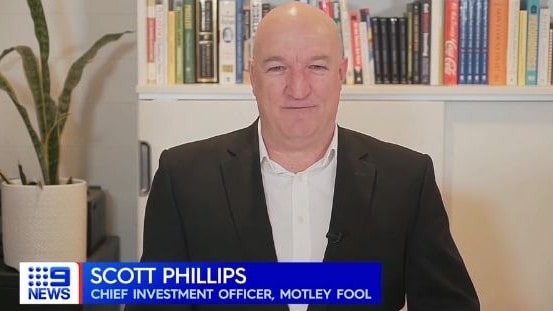
  • Qantas flying; Chalmers and Biden disagree on recession. Scott Phillips on Nine’s Late News

    Motley Fool Chief Investment Officer Scott PhillipsMotley Fool Chief Investment Officer Scott Phillips

    Motley Fool Australia Chief Investment Officer Scott Phillips joined Michael Genovese for Nine’s Late News on Thursday night to discuss Qantas Airways Limited (ASX: QAN) roaring back to profit, some disagreement on a US recession, and our chances of avoiding the same. 

    [youtube https://www.youtube.com/watch?v=opz2xdr9dOU?feature=oembed&w=500&h=281]

    The post Qantas flying; Chalmers and Biden disagree on recession. Scott Phillips on Nine’s Late News appeared first on The Motley Fool Australia.

    More reading

    Motley Fool contributor Scott Phillips has no position in any of the stocks mentioned. The Motley Fool Australia’s parent company Motley Fool Holdings Inc. has no position in any of the stocks mentioned. The Motley Fool Australia has no position in any of the stocks mentioned. The Motley Fool has a disclosure policy. This article contains general investment advice only (under AFSL 400691). Authorised by Scott Phillips.

    from The Motley Fool Australia https://ift.tt/9bPWSOD

  • US inflation data came in hot. So why is the ASX 200 leaping higher today?

    An executive in a suit smooths his hair and laughs as he looks at his laptop feeling surprised and delighted.An executive in a suit smooths his hair and laughs as he looks at his laptop feeling surprised and delighted.

    The S&P/ASX 200 Index (ASX: XJO) is off to a great start on Friday.

    At the time of writing, the benchmark index is up 1.75% in morning trade.

    With the ASX 200 rallying, you might expect that September’s inflation data out of the United States, released yesterday, came in below expectations.

    Lower inflation in the world’s top economy, after all, would foreshadow less aggressive interest rate hikes ahead from the Federal Reserve. And if 2022 has reinforced anything, it’s that equity markets don’t like fast-rising interest rates.

    But here’s the thing.

    September’s inflation numbers out of the US came in hotter than consensus expectations.

    What was the latest inflation print out of the US?

    The series of sharp interest rate rises from the Fed in 2022 have yet to curb fast-rising prices in the US.

    The core consumer price index (CPI), which takes out the more volatile food and energy costs, leapt 6.6% on an annual basis. Core CPI was up 0.6% from the previous month and now stands at its highest level in 40 years.

    Putting food and energy costs back in the mix, overall CPI was up 8.2% over the year and up 0.4% from August.

    Both measures of inflation exceeded consensus expectations, with the median forecasts in a Bloomberg survey of economists predicting a 0.4% monthly rise in the core CPI and a 0.2% lift in overall CPI.

    With inflation continuing to run hot, analysts are now widely predicting the Fed will have no choice but to raise rates by another outsized 0.75% at its upcoming November policy meeting. With more sharp hikes likely in the months ahead.

    Just the kind of expectations you might expect to send US markets and the ASX 200 lower.

    Why is the ASX 200 rallying on higher US inflation data?

    Indeed, US markets did open sharply lower.

    Just minutes after opening, the S&P 500 Index (SP: .INX) was down a painful 2.4%.

    Then something remarkable happened.

    Over the course of the day, the index gained 5.1% from that low to close 2.6% higher.

    As for the ASX 200, the Aussie market looks to again be taking its lead from its US counterparts.

    Commenting on the extraordinary turnaround in US equity markets yesterday, many analysts are pointing to options traders, who’d gone all in on bearish (short) options before the release of the CPI report, needing to cover their positions as the market turned.

    According to Matt Maley, chief market strategist at Miller Tabak & Co (quoted by Bloomberg):

    There were so many people set-up for a big decline after the CPI number that when it didn’t see any downside follow-through, the short-sellers panicked and started buying. There’s no question that traders got caught offside in a major way…

    Those people should have known that the technical setup made the market ripe for a bounce and so they should have covered their shorts at/near the opening. Bear markets do not bottom until the stock market becomes cheap. With earnings very likely to fall in the coming weeks and months, this market is not cheap at all.

    Michael Contopoulos, director of fixed income at Richard Bernstein Advisors, added:

    There may be some short covering going on, but also, a lot was priced in. There has likely been a fair amount of defensive positioning lately in equities and on the rates side, higher policy rates means higher probability of a hard landing.

    With the ASX 200 surging today, there may also be a fair number of short-sellers caught on the wrong side of the trend.

    As for long-term investors, you’re unlikely to hear any of them complaining about today’s strong run.

    The post US inflation data came in hot. So why is the ASX 200 leaping higher today? appeared first on The Motley Fool Australia.

    More reading

    Motley Fool contributor Bernd Struben has no position in any of the stocks mentioned. The Motley Fool Australia’s parent company Motley Fool Holdings Inc. has no position in any of the stocks mentioned. The Motley Fool Australia has no position in any of the stocks mentioned. The Motley Fool has a disclosure policy. This article contains general investment advice only (under AFSL 400691). Authorised by Scott Phillips.

    from The Motley Fool Australia https://ift.tt/OLs9QfY

  • Top fund manager thinks ASX could start to move decisively higher, potentially sooner than you might be expecting

    A man clenches his fists in excitement as gold coins fall from the sky.A man clenches his fists in excitement as gold coins fall from the sky.

    It has been a tough year for small cap investors, with the S&P/ASX Small Ordinaries Index (ASX: XSO) down 23% over the past 12 months.

    That fall, as painful as it is, has been cushioned by the epic performance of a handful of large  commodity stocks, including the Core Lithium Ltd (ASX: CXO) share price surging 177% higher, the New Hope Corporation Limited (ASX: NHC) share price roaring 157% higher, and the Lake Resources N.L. (ASX: LKE) share price jumping 89% higher in the past year.

    How New Hope shares – with its $5.7 billion market capitalisation – are included in the Small Ordinaries Index and are one of life’s mysteries. Also a constituent of the S&P/ASX 200 Index (ASX: XJO), New Hope is around the 80th largest ASX-quoted company in the country.

    Moving on…

    Writing in its September monthly update, the Cyan C3G Fund notes the ongoing severe volatility in global markets, with the US stock market having now experienced its worst first nine months of a calendar year in 20 years.

    If your portfolio is hurting, like mine, you’ll know why. 

    It’s even worse if you don’t hold any of the hot lithium and coal stocks, like me, and the Cyan C3G Fund. Or you do hold some of the many big losers over the past 12 months, like the Aussie Broadband Ltd (ASX: ABB) share price slumping 59% or the Pinnacle Investment Management Group Ltd (ASX: PNI) share price falling 41%, like me.

    Cyan C3G Fund portfolio managers Graeme Carson and Dean Fergie say “the Australian economy appears to be in a stronger position than some of its counterparts, but the financial markets aren’t yet reflecting this.”

    That’s certainly the case in the small-cap space, with the share prices of many companies down 60% or more despite some of them growing quickly, having good balance sheets with no debt, and being cash generative.

    Or perhaps I’m just bemoaning the performance of the small and micro cap stocks in my portfolio…

    Here’s when stock markets could start to move higher…

    Looking for a silver lining amongst these cloudiest of times, the Cyan C3G portfolio managers say that with the market already pricing in an upcoming economic slowdown, the hope is “financial markets will front-run the recovery just as they did the downturn… as they have with all bull and bear market cycles in the past.”

    As for the timing, as ever, no-one knows when markets will turn. That said, it may be sooner rather than later.

    Cyan C3G believes “the most-likely first positive catalyst for a stock market recovery will be a line of sight as to when the interest rate hike cycle will end.” The portfolio managers go on to say it is expected the US will end its cycle in the first quarter of calendar 2023, with Australia perhaps being a month or two earlier.

    That’s not too far away, and markets, being forward-looking beasts, could move higher before then. 

    If I was taking a guess – and it’s nothing more than a guess – I reckon the stock market could be in for a big January as the so-called January Effect kicks into high gear.

    As bottom-up stock pickers, the Cyan C3G portfolio managers are confident the companies in their portfolio will have materially stronger market share positions in their industry in years to come, irrespective of economic conditions.

    The September monthly update outlines the investment rationale for some of the Cyan C3G key portfolio positions including…

    Alcidion Group Ltd (ASX: ALC), a company building a strong position in the digitisation of hospital management systems, both administrative and clinical, in Australia and the much larger UK market. The Alcidion share price is down almost 60% over the past 12 months, yet Cyan say “the timing looks perfect to scale the business significantly over the next 2 years as governments drive the push towards technology in healthcare in a post-Covid environment.”

    Playside Studios Ltd (ASX: PLY) is an independent video game developer with “a business model based on work-for-hire, original IP development and new initiatives like a 3rd party publishing division,” according to Cyan C3G. The Playside share price fell 25% in September, yet the fund managers believe the company “can deliver great returns to shareholders independently or as an M&A target in time (hopefully both). We see this as a unique opportunity to get exposure to these dynamics in the ASX listed space.”

    The post Top fund manager thinks ASX could start to move decisively higher, potentially sooner than you might be expecting appeared first on The Motley Fool Australia.

    More reading

    Motley Fool contributor Bruce Jackson has positions in Aussie Broadband Limited and PINNACLE FPO. The Motley Fool Australia’s parent company Motley Fool Holdings Inc. has positions in and has recommended Alcidion Group Ltd, Aussie Broadband Limited, and PINNACLE FPO. The Motley Fool Australia has positions in and has recommended PINNACLE FPO. The Motley Fool Australia has recommended Alcidion Group Ltd and Aussie Broadband Limited. The Motley Fool has a disclosure policy. This article contains general investment advice only (under AFSL 400691). Authorised by Scott Phillips.

    from The Motley Fool Australia https://ift.tt/S5g8wlI

  • Why is the BrainChip share price underperforming on Friday?

    A man rests his chin in his hands, pondering what is the answer?

    A man rests his chin in his hands, pondering what is the answer?

    The BrainChip Holdings Ltd (ASX: BRN) share price is edging higher on Friday.

    At the time of writing, the semiconductor company’s shares are up 0.5% to 89.5 cents.

    Why is the BrainChip share price rising?

    The BrainChip share price is ending the week in the black thanks to a major improvement in investor sentiment.

    This follows a stellar night on the tech-focused NASDAQ index, which recovered from being down 3% in early trade to end the session 2.2% higher.

    This has given the Australian tech sector a lift on Friday, leading to the S&P/ASX All Technology Index rising 2.1% this morning.

    But, as you might have noticed, the BrainChip share price isn’t rising anywhere near as strongly as its peers.

    What’s going on?

    The BrainChip share price is underperforming today after the company revealed that it will issue 8 million restricted stock units to its former chairman in order to prevent “any potential claim.”

    According to the release, when Emmanuel Hernandez resigned with immediate effect as chairman on 1 March, the options that were granted to him in 2017 lapsed.

    The release states that Mr Hernandez expressed interest in reaching an agreement with the company to avoid exercising his options at the same time and instead to continue holding them beyond his resignation date up to expiration.

    The two parties agreed to find an alternative to exercising the options, as apparently “this was considered to be in the best interest of the Company and shareholders.” However, it was determined that the company could not modify the terms of the options without seeking shareholder approval or a waiver from ASX.

    During the time taken for the $1.5 billion tech company to investigate the proper method of modifying the options and negotiating the terms with Mr Hernandez, the options ultimately lapsed.

    But as this occurred whilst Mr Hernandez was engaging with BrainChip on the process for exercise, the company “considers it appropriate to award Mr Hernandez with the new RSUs.” This will still require shareholder approval, though.

    The release concludes:

    The board does not consider that the issue of the New Rights will materially prejudice the Company or other shareholders. Brainchip also considers the issue of the New Rights to Mr Hernandez to be a necessary step in the prevention of any potential claim by Mr Hernandez.

    The post Why is the BrainChip share price underperforming on Friday? appeared first on The Motley Fool Australia.

    More reading

    Motley Fool contributor James Mickleboro has no position in any of the stocks mentioned. The Motley Fool Australia’s parent company Motley Fool Holdings Inc. has no position in any of the stocks mentioned. The Motley Fool Australia has no position in any of the stocks mentioned. The Motley Fool has a disclosure policy. This article contains general investment advice only (under AFSL 400691). Authorised by Scott Phillips.

    from The Motley Fool Australia https://ift.tt/Ye1mvSG

  • Why crypto cratered before a quick recovery today

    This article was originally published on Fool.com. All figures quoted in US dollars unless otherwise stated.

    Downward spike graph

    This article was originally published on Fool.com. All figures quoted in US dollars unless otherwise stated.

    What happened

    The market went on a wild ride on Thursday morning after inflation data was released and investors tried to project how that would impact the Federal Reserve’s interest-rate moves. Early on, worry about higher rates resulted in falling stock prices, and cryptocurrencies were some of the hardest hit. But the drop passed quickly, and values have mostly recovered.

    For example, Dogecoin (CRYPTO: DOGE) has had a strange day, falling as much as 7.7% in early-morning trading only to recover and trade about flat on the day as of 1:30 p.m. ET. Polkadot (CRYPTO: DOT) dropped up to 7.9% and is now down 1.9%, ChainLink (CRYPTO: LINK) was down as much as 11.7% and is currently off 2.8%, while The Sandbox (CRYPTO: SAND) plunged 10.9% and is now down 3.4% on the day.

    So what

    The biggest news of the day was the Bureau of Labor Statistics releasing data that showed consumer prices were up 8.2% year over year and 0.4% month over month in September 2022. This was a slightly higher inflation rate than investors were expecting, which was why stocks and cryptocurrencies dropped sharply early in trading.

    Investors have spent much of the last six months trying to figure out how far and how fast the Federal Reserve will raise interest rates, and inflation is the Fed’s biggest concern. So higher inflation is seen as a sign that the Fed will keep increasing rates, which hurts the value of risky assets.

    It’s worth keeping in mind that inflation is up big over the last year, but it’s slowed dramatically since June 2022. Although 0.4% inflation month over month seems high, that’s only one month. And the trend is toward tepid inflation right now, which might mean the Fed is closer to slowing rate increases, especially if there’s a recession.

    Now what

    There’s a lot to digest today, and the market seemed to have multiple views in just a few hours. But I think the takeaway is that the Federal Reserve will likely raise rates through the end of the year, and it’s possible that will lead to a recession. This isn’t a new concern; stocks have been falling for months on exactly this uncertainty.

    For crypto, the impact of higher rates isn’t really known. Investors might see this as a risky asset, but cryptocurrencies aren’t risky companies that carry debt loads or aren’t profitable. These are blockchain assets that might or might not continue trading in step with volatile securities like tech stocks.

    I think today’s move is another example of typical market volatility. There’s no underlying change in what’s being built on the blockchain today, but assets are being priced differently based on what the public thinks the Federal Reserve is doing. Investors with a long-term mindset should look past volatile days and focus on the long term, because that’s what matters for our portfolios

    This article was originally published on Fool.com. All figures quoted in US dollars unless otherwise stated.

    The post Why crypto cratered before a quick recovery today appeared first on The Motley Fool Australia.

    More reading

    Travis Hoium has no position in any of the stocks mentioned. The Motley Fool Australia’s parent company Motley Fool Holdings Inc. has positions in and has recommended ChainLink. The Motley Fool Australia owns and has recommended Chainlink. The Motley Fool has a disclosure policy. This article contains general investment advice only (under AFSL 400691). Authorised by Scott Phillips.

    This article was originally published on Fool.com. All figures quoted in US dollars unless otherwise stated.

    from The Motley Fool Australia https://ift.tt/mNJczrL

  • ANZ shares: Buy, hold, or fold?

    a group of people sit around a table playing cards in a work office style setting.a group of people sit around a table playing cards in a work office style setting.

    The Australia and New Zealand Banking Group Ltd (ASX: ANZ) share price has underperformed all the bank’s big four peers through 2022 so far.

    Stock in the smallest of the four banks has dumped around 9% since the start of this year. The ANZ share price is trading at $25.68 right now.

    For comparison, the S&P/ASX 200 Index (ASX: XJO) has fallen 12.5% year to date.

    Does its recent slump put the ANZ share price in the buy zone? Let’s take a look at what experts are predicting for the stock’s future.

    Is now a good time to snap up ANZ shares?

    There are two major themes when it comes to experts’ outlooks for the ANZ share price. They are net interest margins (NIMs) and the bank’s $4.9 billion takeover of Suncorp Group Ltd (ASX: SUN)’s banking business.

    Let’s start with the former. A bank’s NIM represents the difference between the income it receives from interest on loans and the interest it pays out to deposit holders. This can be recalibrated when rates are hiked, as they have been in 2022.

    ANZ’s fellow ASX 200 bank, Bank of Queensland Ltd (ASX: BOQ), revealed its NIM had leapt to 1.81% in the final quarter of financial year 2022 earlier this week.

    In response, JP Morgan is said to have upgraded its outlook for the banking sector, my Fool colleague Bronwyn reports. ANZ is the broker’s second favourite banking pick, behind National Australia Bank Ltd (ASX: NAB).

    The market will likely be watching the metric closely when ANZ reports later this month.

    Meanwhile, Baker Young’s Toby Grimm recently tipped ANZ as the best value ASX 200 big four bank buy, saying it offers the lowest price-to-earnings (P/E) ratio and highest dividend yield, as per The Bull.

    Grimm also liked the bank’s planned acquisition of Suncorp Bank as it “reduces risk and supports medium-term growth”.

    And Citi is bullish on the ANZ share price due to both its potential NIM growth and its takeover, tipping it to lift to $29, as my colleague James reports. That represents a potential 13% upside.

    The top broker also expects the bank to up its dividends in coming years.

    Meanwhile, Goldman Sachs is neutral on ANZ shares, slapping the stock with a $26.36 price target.

    The post ANZ shares: Buy, hold, or fold? appeared first on The Motley Fool Australia.

    More reading

    Motley Fool contributor Brooke Cooper has no position in any of the stocks mentioned. The Motley Fool Australia’s parent company Motley Fool Holdings Inc. has no position in any of the stocks mentioned. The Motley Fool Australia has no position in any of the stocks mentioned. The Motley Fool has a disclosure policy. This article contains general investment advice only (under AFSL 400691). Authorised by Scott Phillips.

    from The Motley Fool Australia https://ift.tt/6yrqn4p

  • Morgans names 2 ASX 200 shares to buy with 50%+ upside

    A woman's hair is blown back and her face is in shock at this big news.

    A woman's hair is blown back and her face is in shock at this big news.

    While the market volatility this year has been very disappointing, it could have created some very attractive buying opportunities for patient investors.

    For example, listed below are a couple of ASX 200 shares that have been beaten down this year but are tipped to rebound strongly from current levels.

    In fact, the team at Morgans believe they each offer potential upside of greater than 50% over the next 12 months. Here’s what you need to know:

    Domino’s Pizza Enterprises Ltd (ASX: DMP)

    The first ASX 200 share that Morgans believes could rocket higher is Domino’s. It is a leading pizza chain operator with operations across the ANZ, Asian, and European markets.

    Morgans is positive on the company due to its store expansion plans. It explained:

    The engine of DMP’s growth is its ability to roll out new stores all over the world. It added 438 stores to its global network in the year to June 2022, a pace of expansion that we forecast to accelerate to nearly 600 in FY23. This will take the total to almost 4,000 stores, up fourfold over a ten-year period. Over the next ten years, DMP expects to grow organically to 7,250 stores in the 13 countries in which it currently operates. This means DMP expects to more than double in size again by 2033, not including any future acquisitions.

    Morgans has an add rating and $90.00 price target on the company’s shares. Based on the current Domino’s share price of $56.61, this implies potential upside of 59%.

    Nextdc Ltd (ASX: NXT)

    Another ASX 200 share that Morgans believes has major upside potential is NextDC. It is a leading data centre operator that it is exposed to structural tailwinds such as the shift to the cloud.

    Morgans is expecting another strong year for NextDC in FY 2023 and suspects that it could outperform its guidance. It explained:

    NXT should deliver another good set of results in FY23 with some upside risk to guidance, in our view. Structural demand for cloud and colocation remains incredibly strong. NXT’s new S3 and M3 data centres are now open. Consequently, we expect significant new customer wins over the next six-to-twelve months (including CSP options being exercised). Sales should drive the share price higher. NXT looks comfortably on-track to generate over $300m of EBITDA in the next three to five years.

    Morgans has an add rating and $13.30 price target on the company’s shares. Based on the current NextDC share price of $8.79, this suggests potential upside of 51% for investors.

    The post Morgans names 2 ASX 200 shares to buy with 50%+ upside appeared first on The Motley Fool Australia.

    More reading

    Motley Fool contributor James Mickleboro has positions in NEXTDC Limited. The Motley Fool Australia’s parent company Motley Fool Holdings Inc. has no position in any of the stocks mentioned. The Motley Fool Australia has recommended Dominos Pizza Enterprises Limited. The Motley Fool has a disclosure policy. This article contains general investment advice only (under AFSL 400691). Authorised by Scott Phillips.

    from The Motley Fool Australia https://ift.tt/uc2t9eg

  • Want to snare the next WAM Capital dividend? Here’s how

    Smiling man holding Australian dollar notes, symbolising dividends.Smiling man holding Australian dollar notes, symbolising dividends.

    WAM Capital Limited (ASX: WAM) is a big listed investment company (LIC) that is soon going to pay its final dividend for the 2022 financial year.

    The business pays a dividend every six months, with the second dividend of FY22 about to go ex-dividend.

    Here are the details.

    WAM Capital’s latest dividend

    The ex-dividend date for WAM Capital is 17 October, which is on Monday.

    That means that today is the last day for investors to be able to buy WAM Capital shares to get entitlement to that dividend.

    The LIC is going to pay investors a final dividend of 7.75 cents per share.

    In terms of the payment date, it’s only two weeks away. The dividend will be headed investors’ way on 28 October.

    How did the LIC afford this?

    It has been a very volatile period for the ASX share market, which is where the Wilson Asset Management team go hunting for opportunities.

    In the 12 months to 30 June 2022, which is the financial year this dividend comes from, the WAM Capital investment portfolio fell by 18.8%. That compares to just a 7.4% drop for the All Ordinaries Index (ASX: XAO).

    However, the portfolio did better than the S&P/ASX Small Ordinaries Accumulation Index (ASX: XSOA), which fell by 19.5% over the year.

    The LIC was able to pay a dividend because it had built up a profit reserve of investment returns generated from previous years.

    It was noted by the company that it had 8.7 cents per share available in its profit reserve before the payment of this final dividend and it will have 1 cent per share after the payment.

    In other words, it needs to generate enough investment returns this year to keep paying its dividend.

    Since its inception in August 1999 to 30 June 2022, the investment portfolio generated gross (total) returns of 14.7% per annum. The LIC has been using the profits from previous financial years to afford the WAM Capital dividend.

    What next?

    There has been a lot of volatility in 2022. Markets continue to jump and fall as investors take in the latest inflation numbers, unemployment rates and so on.

    For WAM Capital, its job is to find undervalued growth opportunities. There are plenty of ASX growth shares that have been sold off heavily.

    At the end of August, some of the names in its portfolio included Hub24 Ltd (ASX: HUB), Idp Education Ltd (ASX: IEL), Xero Limited (ASX: XRO), and Webjet Limited (ASX: WEB).

    It is due to hand in its monthly update today, so it will be interesting to see if the portfolio has changed much.

    The post Want to snare the next WAM Capital dividend? Here’s how appeared first on The Motley Fool Australia.

    More reading

    Motley Fool contributor Tristan Harrison has no position in any of the stocks mentioned. The Motley Fool Australia’s parent company Motley Fool Holdings Inc. has positions in and has recommended Hub24 Ltd, Idp Education Pty Ltd, and Xero. The Motley Fool Australia has positions in and has recommended Hub24 Ltd and Xero. The Motley Fool Australia has recommended Webjet Ltd. The Motley Fool has a disclosure policy. This article contains general investment advice only (under AFSL 400691). Authorised by Scott Phillips.

    from The Motley Fool Australia https://ift.tt/3wKtbiV