Tag: Motley Fool

  • Here’s the Fortescue dividend forecast through to 2026

    A mature aged man with grey hair and glasses holds a fan of Australian hundred dollar bills up against his mouth and looks skywards with his eyes as though he is thinking what he might do with the cash.A mature aged man with grey hair and glasses holds a fan of Australian hundred dollar bills up against his mouth and looks skywards with his eyes as though he is thinking what he might do with the cash.

    The Fortescue Ltd (ASX: FMG) dividend declared this earnings season was by far the most impressive of the three major ASX 200 mining shares.

    The interim Fortescue dividend for 1H FY24 is a fully franked $1.08 per share, which is 44% higher than the interim dividend of FY23.

    That’s some significantly turbocharged passive income, and it also represents one of the biggest dividend boosts of all the ASX 200 shares this earnings season.

    Based on the current Fortescue share price of $25.91, the interim dividend yield is 4.17%. That’s higher than the 4% average that most ASX 200 stocks pay over an entire 12-month period.

    By comparison, Rio Tinto Ltd (ASX: RIO) announced a fully franked final dividend of US$2.58 per share for 2H FY23, which is up 14%. That’s $3.97 in Australian currency at the time of writing.

    Based on the current Rio Tinto share price of $124.96, that’s a yield of 3.18%.

    BHP Group Ltd (ASX: BHP) cut its interim dividend by 20%. The ‘Big Australian’ will pay a fully franked interim dividend of 72 US cents per share for 1H FY24, or $1.11 in Aussie terms.

    Based on the current BHP share price of $44.81, that’s a yield of 2.48%.

    Why did Fortescue pay more?

    One reason is that Fortescue’s earnings were superior, in terms of growth, to BHP and Rio Tinto.

    This was partly because Fortescue is an iron ore pure-play stock. Therefore, it benefitted more from the strong iron ore price.

    By comparison, BHP and Rio are diversified miners. Weaker commodity prices for the other metals and minerals they dig up impacted their earnings.

    What’s next for the Fortescue dividend?

    Of course, Fortescue and the other two major ASX 200 miners will pay another dividend later in the year.

    The consensus forecast published on CommSec today is for Fortescue to pay a final dividend of $1.09 for 2H FY24.

    That will mean a total full-year dividend of $2.17 per share and a total yield of 8.37%.

    Analysts predict a significant dividend drop in 2025 and 2026

    The Fortescue dividend forecast for 2025 is much lower at $1.495 per share.

    For investors buying Fortescue shares at today’s price of $25.91, the 2025 forecast dividend represents a yield of 5.77%.

    For 2026, the forecast Fortescue dividend is $1.03 per share, equating to a yield of 3.97%.

    The post Here’s the Fortescue dividend forecast through to 2026 appeared first on The Motley Fool Australia.

    Wondering where you should invest $1,000 right now?

    When investing expert Scott Phillips has a stock tip, it can pay to listen. After all, the flagship Motley Fool Share Advisor newsletter he has run for over ten years has provided thousands of paying members with stock picks that have doubled, tripled or even more.*

    Scott just revealed what he believes could be the ‘five best ASX stocks’ for investors to buy right now. We believe these stocks are trading at attractive prices and Scott thinks they could be great buys right now…

    See The 5 Stocks
    *Returns as of 1 February 2024

    (function() {
    function setButtonColorDefaults(param, property, defaultValue) {
    if( !param || !param.includes(‘#’)) {
    var button = document.getElementsByClassName(“pitch-snippet”)[0].getElementsByClassName(“pitch-button”)[0];
    button.style[property] = defaultValue;
    }
    }

    setButtonColorDefaults(“#0095C8”, ‘background’, ‘#5FA85D’);
    setButtonColorDefaults(“#0095C8”, ‘border-color’, ‘#43A24A’);
    setButtonColorDefaults(“#fff”, ‘color’, ‘#fff’);
    })()

    More reading

    Motley Fool contributor Bronwyn Allen has positions in BHP Group. The Motley Fool Australia’s parent company Motley Fool Holdings Inc. has no position in any of the stocks mentioned. The Motley Fool Australia has no position in any of the stocks mentioned. The Motley Fool has a disclosure policy. This article contains general investment advice only (under AFSL 400691). Authorised by Scott Phillips.

    from The Motley Fool Australia https://ift.tt/42QiKG9

  • What Dutton’s nuclear push could mean for ASX uranium shares

    A worker with a clipboard stands in front of a nuclear energy facility

    A worker with a clipboard stands in front of a nuclear energy facility

    After a very strong year-long run, ASX uranium shares have come under selling pressure over the past month.

    Amid some likely profit-taking and investor concerns that the rally may have gotten ahead of itself, here’s how these leading uranium stocks have performed since this time last month:

    • Paladin Energy Ltd (ASX: PDN) shares are down 12.3%
    • Bannerman Energy Ltd (ASX: BMN) shares are down 17.5%
    • Deep Yellow Limited (ASX: DYL) shares are down 19.4%
    • Boss Energy Ltd (ASX: BOE) shares are down 20.7%
    • Alligator Energy Ltd (ASX: AGE) shares are down 31.3%

    For some context, the All Ordinaries Index (ASX: XAO) has gained 1.8% over the last month.

    While these are some hefty losses for investors buying last month, long-term investors should still be sitting on some outsized gains.

    Here are the returns from these same ASX uranium shares over the past 12 months:

    • Paladin shares are up 67.6%
    • Bannerman shares are up 69.3%
    • Deep Yellow shares are up 91.2%
    • Boss Energy shares are up 89.6%
    • Alligator Energy shares are up 37.5%

    The All Ords is up 6.1% over this time period.

    With these moves in mind, what might the nuclear energy push from opposition leader Peter Dutton mean for Aussie uranium stocks over the longer term?

    ASX uranium shares slip despite Dutton’s nuclear proposal

    In a proposal that’s firing up some heated debate, Dutton is backing nuclear energy to provide reliable baseload power to support wind and solar as Australia transitions from coal and gas-fired plants.

    The Liberal Party’s policy was reported to likely include not only smaller modular type nuclear plants but also larger capacity next generation reactors.

    “As we go from coal to a new system, we need to make sure that we can firm up the renewables that are in the system,” Dutton said (quoted by The Northwest Star).

    Now even if Australia opts to eventually embrace nuclear power, ASX uranium shares are unlikely to see any domestic demand for their product for many years yet.

    But if Dutton’s proposals are eventually enacted, Australia will join a growing list of major economies that are embracing nuclear energy to reduce emissions while keeping the lights on.

    At December’s United Nations Climate Change Conference (COP28) 22 nations, including the United States, Japan and France, pledged to triple their nuclear power capacity by 2050. And the world’s two most populous nations, India and China, are leading the world in the construction of new nuclear power plants.

    “Some of the smartest minds in the world have picked up what is a revolution within energy,” Dutton said earlier today in his push for Australia to do the same.

    Whether it makes economic sense for Australia to do so remains to be seen.

    But over the longer-term ASX uranium shares should continue to see growing demand for the nuclear fuel they dig from the ground.

    According to the International Energy Agency (IEA), the world will need to double its nuclear capacity by 2050 to meet the current climate goals.

    The post What Dutton’s nuclear push could mean for ASX uranium shares appeared first on The Motley Fool Australia.

    Wondering where you should invest $1,000 right now?

    When investing expert Scott Phillips has a stock tip, it can pay to listen. After all, the flagship Motley Fool Share Advisor newsletter he has run for over ten years has provided thousands of paying members with stock picks that have doubled, tripled or even more.*

    Scott just revealed what he believes could be the ‘five best ASX stocks’ for investors to buy right now. We believe these stocks are trading at attractive prices and Scott thinks they could be great buys right now…

    See The 5 Stocks
    *Returns as of 1 February 2024

    (function() {
    function setButtonColorDefaults(param, property, defaultValue) {
    if( !param || !param.includes(‘#’)) {
    var button = document.getElementsByClassName(“pitch-snippet”)[0].getElementsByClassName(“pitch-button”)[0];
    button.style[property] = defaultValue;
    }
    }

    setButtonColorDefaults(“#0095C8”, ‘background’, ‘#5FA85D’);
    setButtonColorDefaults(“#0095C8”, ‘border-color’, ‘#43A24A’);
    setButtonColorDefaults(“#fff”, ‘color’, ‘#fff’);
    })()

    More reading

    Motley Fool contributor Bernd Struben has no position in any of the stocks mentioned. The Motley Fool Australia’s parent company Motley Fool Holdings Inc. has no position in any of the stocks mentioned. The Motley Fool Australia has no position in any of the stocks mentioned. The Motley Fool has a disclosure policy. This article contains general investment advice only (under AFSL 400691). Authorised by Scott Phillips.

    from The Motley Fool Australia https://ift.tt/8RPHcfg

  • Building approvals down, and economic growth at risk: Scott Phillips on Nine’s Late News

    Screenshot from a media appearance ofScott Phillips on Nine NewsScreenshot from a media appearance ofScott Phillips on Nine News

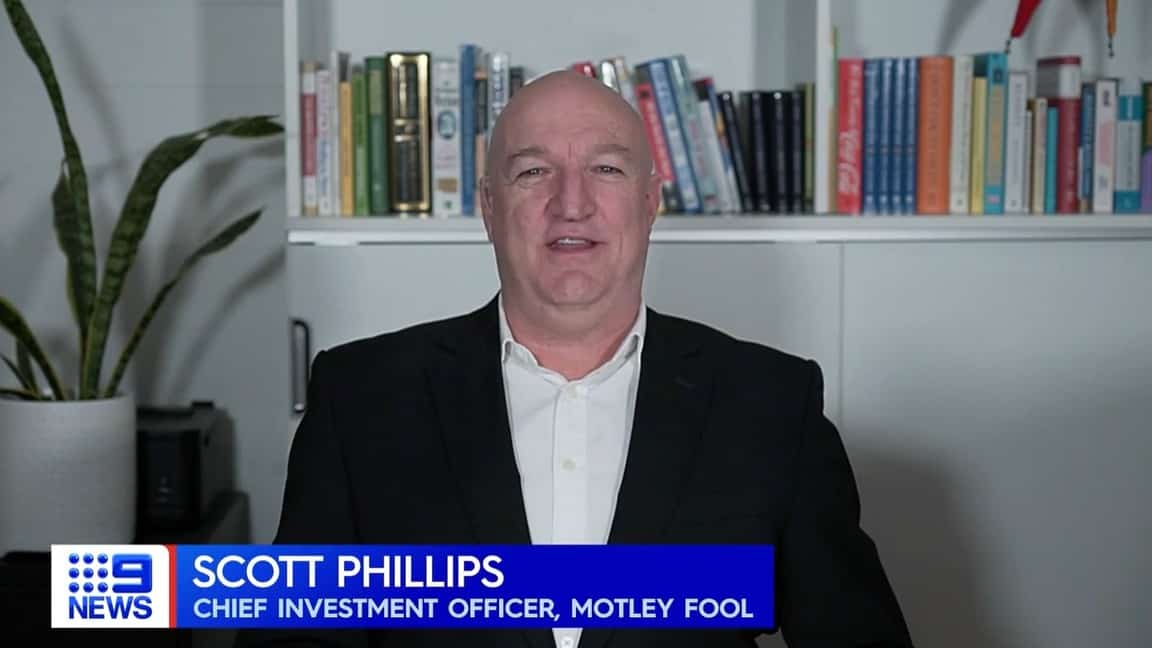
    Motley Fool Australia Chief Investment Officer Scott Phillips joined Natalia Cooper for Nine’s Late News on Monday night to discuss falling building approvals and the challenges facing the economy as businesses destock, putting pressure on GDP growth.  

    [youtube https://www.youtube.com/watch?v=FwoVreUQx8c?feature=oembed&w=500&h=281]

    The post Building approvals down, and economic growth at risk: Scott Phillips on Nine’s Late News appeared first on The Motley Fool Australia.

    Wondering where you should invest $1,000 right now?

    When investing expert Scott Phillips has a stock tip, it can pay to listen. After all, the flagship Motley Fool Share Advisor newsletter he has run for over ten years has provided thousands of paying members with stock picks that have doubled, tripled or even more.*

    Scott just revealed what he believes could be the ‘five best ASX stocks’ for investors to buy right now. We believe these stocks are trading at attractive prices and Scott thinks they could be great buys right now…

    See The 5 Stocks
    *Returns as of 1 February 2024

    (function() {
    function setButtonColorDefaults(param, property, defaultValue) {
    if( !param || !param.includes(‘#’)) {
    var button = document.getElementsByClassName(“pitch-snippet”)[0].getElementsByClassName(“pitch-button”)[0];
    button.style[property] = defaultValue;
    }
    }

    setButtonColorDefaults(“#0095C8”, ‘background’, ‘#5FA85D’);
    setButtonColorDefaults(“#0095C8”, ‘border-color’, ‘#43A24A’);
    setButtonColorDefaults(“#fff”, ‘color’, ‘#fff’);
    })()

    More reading

    Motley Fool contributor Scott Phillips has no position in any of the stocks mentioned. The Motley Fool Australia’s parent company Motley Fool Holdings Inc. has no position in any of the stocks mentioned. The Motley Fool Australia has no position in any of the stocks mentioned. The Motley Fool has a disclosure policy. This article contains general investment advice only (under AFSL 400691). Authorised by Scott Phillips.

    from The Motley Fool Australia https://ift.tt/Y5MEh4s

  • Why Coles, Liontown, Lovisa, and Wildcat shares are dropping today

    Three guys in shirts and ties give the thumbs down.

    In afternoon trade, the S&P/ASX 200 Index (ASX: XJO) has recovered from a poor start and is in positive territory. At the time of writing, the benchmark index is up 0.1% to 7,741 points.

    Four ASX shares that have failed to follow the market’s lead today are listed below. Here’s why they are falling:

    Coles Group Ltd (ASX: COL)

    The Coles share price is down 3.5% to $16.43. This has been driven by the supermarket giant’s shares going ex-dividend on Tuesday. Eligible shareholders can now look forward to receiving Coles’ fully franked interim dividend of 36 cents per share later this month. It is scheduled to be paid on 27 March.

    Liontown Resources Ltd (ASX: LTR)

    The Liontown share price is down 4% to $1.27. This is despite there being no news out of the lithium developer today. However, it is worth noting that most lithium shares are falling on Tuesday. This could be due to profit taking after some strong gains or concerns over an update from Tesla Inc. (NASDAQ: TSLA), which revealed a slump in car shipments.

    Lovisa Holdings Ltd (ASX: LOV)

    The Lovisa share price is down 4% to $30.32. Like Coles, this has been driven by its shares going ex-dividend this morning. Eligible shareholders will be paid the fashion jewellery retailer’s 50 cents per share interim dividend next month on 18 April. In addition, with its shares generating big returns recently, it’s possible that some profit taking is taking place now the dividend rights are settled.

    Wildcat Resources Ltd (ASX: WC8)

    The Wildcat share price is down over 12% to 68 cents. This follows the release of drilling results from the lithium explorer’s Tabba Tabba project. Investors appear to be a touch disappointed with the low grade results.

    The post Why Coles, Liontown, Lovisa, and Wildcat shares are dropping today appeared first on The Motley Fool Australia.

    Wondering where you should invest $1,000 right now?

    When investing expert Scott Phillips has a stock tip, it can pay to listen. After all, the flagship Motley Fool Share Advisor newsletter he has run for over ten years has provided thousands of paying members with stock picks that have doubled, tripled or even more.*

    Scott just revealed what he believes could be the ‘five best ASX stocks’ for investors to buy right now. We believe these stocks are trading at attractive prices and Scott thinks they could be great buys right now…

    See The 5 Stocks
    *Returns as of 1 February 2024

    (function() {
    function setButtonColorDefaults(param, property, defaultValue) {
    if( !param || !param.includes(‘#’)) {
    var button = document.getElementsByClassName(“pitch-snippet”)[0].getElementsByClassName(“pitch-button”)[0];
    button.style[property] = defaultValue;
    }
    }

    setButtonColorDefaults(“#0095C8”, ‘background’, ‘#5FA85D’);
    setButtonColorDefaults(“#0095C8”, ‘border-color’, ‘#43A24A’);
    setButtonColorDefaults(“#fff”, ‘color’, ‘#fff’);
    })()

    More reading

    Motley Fool contributor James Mickleboro has positions in Lovisa. The Motley Fool Australia’s parent company Motley Fool Holdings Inc. has positions in and has recommended Lovisa and Tesla. The Motley Fool Australia has positions in and has recommended Coles Group. The Motley Fool Australia has recommended Lovisa. The Motley Fool has a disclosure policy. This article contains general investment advice only (under AFSL 400691). Authorised by Scott Phillips.

    from The Motley Fool Australia https://ift.tt/LZ2r3TW

  • An 8% yield on CBA shares? Here’s how these passive income investors achieved it!

    Man holding Australian dollar notes, symbolising dividends.Man holding Australian dollar notes, symbolising dividends.

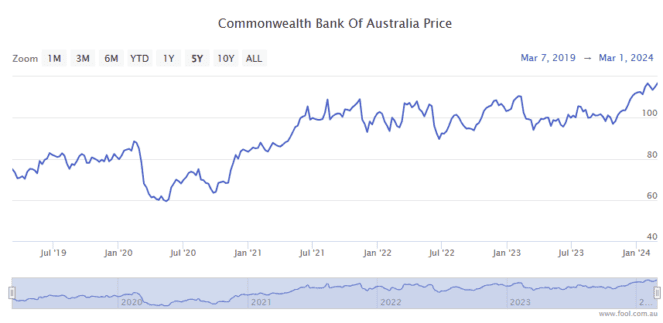
    Commonwealth Bank of Australia (ASX: CBA) shares closed yesterday at a new all-time high of $118.12.

    In early afternoon trade on Tuesday, shares in the S&P/ASX 200 Index (ASX: XJO) bank stock have slipped a touch from those levels, trading for $118.10 apiece.

    Despite numerous analysts cautioning that the biggest of Australia’s banks trades at an unjustifiable premium to its peers, investors have continued to hit the buy button since CommBank reported its half-year results on 14 February.

    The highlight of those results for passive income investors was the 2.4% year on year boost to CBA’s interim dividend. That came out at $2.15 per share, fully franked. Eligible investors can expect to see this hit their bank account on 28 March.

    Atop the boosted interim dividend, CBA’s final dividend of $2.40 per share (paid on 28 September), was up 14.3% from the prior final dividend.

    With the full-year payout of $4.55 per share, CBA shares trade on a fully franked trailing yield of 3.9%.

    So, how are some passive income investors earning a 7.9% yield?

    Buying CBA shares when everyone is selling

    Not many ASX 200 investors were buying stocks during the final weeks of the COVID-19 market meltdown in 2020. Hence the 33% plunge in the benchmark index over a matter of weeks.

    Indeed, trying to time the market and buy in at the lows often sees investors sitting on the sidelines after the market has already turned around.

    But passive income investors who saw through the selling madness in early 2020 and swallowed their fears to buy quality, beaten-down stocks at absolute bargain levels tend to have been richly rewarded for their bravery.

    Take CBA shares, for example.

    On 27 March 2020, the ASX 200 bank stock closed the day trading for $57.66 per share.

    And shares bought at that price will have earned the same $4.55 in fully franked dividends over the past 12 months as the shares bought at over $100 in 2023.

    Meaning those brave investors will be earning a 7.9% yield from the CBA shares bought at bargain basement prices.

    Not to mention the 105% share price gain they’ll have enjoyed since then!

    The post An 8% yield on CBA shares? Here’s how these passive income investors achieved it! appeared first on The Motley Fool Australia.

    Wondering where you should invest $1,000 right now?

    When investing expert Scott Phillips has a stock tip, it can pay to listen. After all, the flagship Motley Fool Share Advisor newsletter he has run for over ten years has provided thousands of paying members with stock picks that have doubled, tripled or even more.*

    Scott just revealed what he believes could be the ‘five best ASX stocks’ for investors to buy right now. We believe these stocks are trading at attractive prices and Scott thinks they could be great buys right now…

    See The 5 Stocks
    *Returns as of 1 February 2024

    (function() {
    function setButtonColorDefaults(param, property, defaultValue) {
    if( !param || !param.includes(‘#’)) {
    var button = document.getElementsByClassName(“pitch-snippet”)[0].getElementsByClassName(“pitch-button”)[0];
    button.style[property] = defaultValue;
    }
    }

    setButtonColorDefaults(“#0095C8”, ‘background’, ‘#5FA85D’);
    setButtonColorDefaults(“#0095C8”, ‘border-color’, ‘#43A24A’);
    setButtonColorDefaults(“#fff”, ‘color’, ‘#fff’);
    })()

    More reading

    Motley Fool contributor Bernd Struben has no position in any of the stocks mentioned. The Motley Fool Australia’s parent company Motley Fool Holdings Inc. has no position in any of the stocks mentioned. The Motley Fool Australia has no position in any of the stocks mentioned. The Motley Fool has a disclosure policy. This article contains general investment advice only (under AFSL 400691). Authorised by Scott Phillips.

    from The Motley Fool Australia https://ift.tt/TPHYiX7

  • Why DroneShield, Healius, Newmont, and Paragon Care shares are pushing higher

    A businessman looking at his digital tablet or strategy planning in hotel conference lobby. He is happy at achieving financial goals.

    A businessman looking at his digital tablet or strategy planning in hotel conference lobby. He is happy at achieving financial goals.

    In afternoon trade, the S&P/ASX 200 Index (ASX: XJO) is edging higher. At the time of writing, the benchmark index is up slightly to 7,740.6 points.

    Four ASX shares that are rising more than most today are listed below. Here’s why they are climbing:

    DroneShield Ltd (ASX: DRO)

    The DroneShield share price is up 3% to 63.5 cents. This morning, analysts at Bell Potter upgraded this counter drone technology company’s shares to a buy rating with a 90 cents price target. This implies potential upside of over 40%.

    Healius Ltd (ASX: HLS)

    The Healius share price is up 13% to $1.27. This follows news that its CEO, Maxine Jaquet, has left the company with immediate effect. She has been replaced by the healthcare company’s chief financial officer, Paul Anderson. He will now lead a wide-ranging strategic review of its structure and assets. Healius shares are down approximately 50% over the last 12 months.

    Newmont Corporation (ASX: NEM)

    The Newmont share price is up 5% to $51.19. Investors have been buying Newmont and other ASX gold shares on Tuesday after the gold price hit its highest level ever. According to CNBC, the gold futures contract for April gained 1.46% or US$30.60 to settle at US$2,126.30. This is the highest level since the contract’s creation in 1974. Rate cut optimism boosted the precious metal.

    Paragon Care Ltd (ASX: PGC)

    The Paragon Care share price is up almost 37% to 28 cents. This follows news that the healthcare supplier has agreed to merge with CH2 Holdings. It is a privately owned, Australian based distributor and wholesaler of pharmaceuticals, medical consumables, and complementary medicines. The combined entity is expected to have pro-forma revenues of $3.3 billion and EBITDA of $93 million in FY 2024.

    The post Why DroneShield, Healius, Newmont, and Paragon Care shares are pushing higher appeared first on The Motley Fool Australia.

    Wondering where you should invest $1,000 right now?

    When investing expert Scott Phillips has a stock tip, it can pay to listen. After all, the flagship Motley Fool Share Advisor newsletter he has run for over ten years has provided thousands of paying members with stock picks that have doubled, tripled or even more.*

    Scott just revealed what he believes could be the ‘five best ASX stocks’ for investors to buy right now. We believe these stocks are trading at attractive prices and Scott thinks they could be great buys right now…

    See The 5 Stocks
    *Returns as of 1 February 2024

    (function() {
    function setButtonColorDefaults(param, property, defaultValue) {
    if( !param || !param.includes(‘#’)) {
    var button = document.getElementsByClassName(“pitch-snippet”)[0].getElementsByClassName(“pitch-button”)[0];
    button.style[property] = defaultValue;
    }
    }

    setButtonColorDefaults(“#0095C8”, ‘background’, ‘#5FA85D’);
    setButtonColorDefaults(“#0095C8”, ‘border-color’, ‘#43A24A’);
    setButtonColorDefaults(“#fff”, ‘color’, ‘#fff’);
    })()

    More reading

    Motley Fool contributor James Mickleboro has no position in any of the stocks mentioned. The Motley Fool Australia’s parent company Motley Fool Holdings Inc. has positions in and has recommended DroneShield. The Motley Fool Australia has no position in any of the stocks mentioned. The Motley Fool has a disclosure policy. This article contains general investment advice only (under AFSL 400691). Authorised by Scott Phillips.

    from The Motley Fool Australia https://ift.tt/80RSvMx

  • Why are ASX lithium shares like Pilbara Minerals crashing on Tuesday?

    a mine worker holds his phone in one hand and a tablet in the other as he stands in front of heavy machinery at a mine site.

    a mine worker holds his phone in one hand and a tablet in the other as he stands in front of heavy machinery at a mine site.

    Tuesday’s trading thus far has been bumpy. At the time of writing, the S&P/ASX 200 Index (ASX: XJO) is essentially flat after spending time in both positive and negative territory today. But let’s talk about what’s going on with ASX lithium shares like Pilbara Minerals Ltd (ASX: PLS).

    Put simply, it’s been a horror day for lithium stocks. Take the Pilbara share price. It’s currently nursing a loss of 4.2% down at $4.22 a share.

    Sayona Mining Ltd (ASX: SYA) is down 4.44% to 4.3 cents, while Liontown Resources Ltd (ASX: LTR) shares have sunk 4.51% to $1.27.

    Core Lithium Ltd (ASX: CXO) and Arcadium Lithium plc (ASX: LTM) are faring a little better, but are still down 2.04% and 2.42% respectively.

    So why is this corner of the market seemingly getting singled out for punishment today?

    Why are ASX lithium stocks getting a Tuesday whack?

    Well, it’s not entirely clear. There hasn’t been any major news or announcements out of any ASX lithium stocks today that might explain this pessimism.

    Saying that, what happened in the US markets last night might give us the clue we need to decipher what’s going on in this space.

    Last night (out time) saw the share price of Albemarle Corporation (NYSE: ALB) tank by a nasty 6.75% down to US$133.20 a share. The company fell another 7.44% during after-hours trading down to US$123.15.

    Albemarle is one of the largest lithium companies in the world and often sets the tone for what happens on the ASX with our own lithium stocks. So this fall was never going to bode well for ASX lithium shares like Pilbara.

    It seems the reason behind Albemarle’s share price plunge was the news that the company is about to conduct a capital raise. According to an SEC filing, Albemarle plans on issuing 35 million new depository shares in order to raise US$1.9 billion.

    Albemarle stated the following regarding how it intends to use this US$1.9 billion:

    We intend to use the net proceeds of this offering for general corporate purposes, which may include, among other uses, funding growth capital expenditures, such as the construction and expansion of lithium operations in Australia and China that are significantly progressed or near completion, and repaying our outstanding commercial paper.

    Given the nature of this capital raise, it’s likely that the plummeting lithium prices we’ve seen in recent months are to blame for Albemarle’s evident lack of capital right now.

    ASX investors are probably sending our own lithium shares down so severely because if Albemarle, one of the world’s largest lithium stocks, needs to raise capital, then it is easy to assume the likes of Pilbara, Aradium, Liontown and Sayona are feeling the squeeze even more acutely.

    ASX investors may even be worried that any one of these ASX lithium shares could be next to come cap-in-hand to shareholders.

    Let’s see if this eventuates.

    The post Why are ASX lithium shares like Pilbara Minerals crashing on Tuesday? appeared first on The Motley Fool Australia.

    Wondering where you should invest $1,000 right now?

    When investing expert Scott Phillips has a stock tip, it can pay to listen. After all, the flagship Motley Fool Share Advisor newsletter he has run for over ten years has provided thousands of paying members with stock picks that have doubled, tripled or even more.*

    Scott just revealed what he believes could be the ‘five best ASX stocks’ for investors to buy right now. We believe these stocks are trading at attractive prices and Scott thinks they could be great buys right now…

    See The 5 Stocks
    *Returns as of 1 February 2024

    (function() {
    function setButtonColorDefaults(param, property, defaultValue) {
    if( !param || !param.includes(‘#’)) {
    var button = document.getElementsByClassName(“pitch-snippet”)[0].getElementsByClassName(“pitch-button”)[0];
    button.style[property] = defaultValue;
    }
    }

    setButtonColorDefaults(“#0095C8”, ‘background’, ‘#5FA85D’);
    setButtonColorDefaults(“#0095C8”, ‘border-color’, ‘#43A24A’);
    setButtonColorDefaults(“#fff”, ‘color’, ‘#fff’);
    })()

    More reading

    Motley Fool contributor Sebastian Bowen has no position in any of the stocks mentioned. The Motley Fool Australia’s parent company Motley Fool Holdings Inc. has no position in any of the stocks mentioned. The Motley Fool Australia has no position in any of the stocks mentioned. The Motley Fool has a disclosure policy. This article contains general investment advice only (under AFSL 400691). Authorised by Scott Phillips.

    from The Motley Fool Australia https://ift.tt/1ZdU2es

  • Key takeouts for ASX shares this earnings season: CBA analysis

    A group of business people in a board room hear the latest company reportA group of business people in a board room hear the latest company report

    Profits were down amid strong inflation, high interest rates, and reined-in consumer spending, however, ASX shares still delivered generous dividends to investors this earnings season.

    CBA has released a note containing expert analysis on the latest earnings season from senior economist Ryan Felsman and chief economist Craig James.

    Let’s take a look at the details.

    What are the key takeaways?

    CBA said profits were weaker but ASX 200 shares still dished out generous dividends this season.

    In aggregate, the revenue of ASX shares increased by 3%, with 73% of companies reporting higher revenue. Expenses increased by 6%, with 83% of ASX shares reporting higher costs.

    Profits declined by 35% in aggregate, with 49.6% of ASX shares reporting higher profits vs. the long-term average of 58%.

    Almost 81% of companies made a profit vs. the long-term average of 87%. CBA says this is the lowest percentage of companies reporting a profit in seven reporting seasons.

    Aggregate cash holdings fell by 25%. Total cash reported was $196 billion, down from $250 billion in the February 2023 reporting season. About 53% of ASX shares reported higher cash holdings.

    What about dividends?

    Despite the profit and cash holdings declines, ASX 200 shares still paid generous dividends this earnings season, totalling $33.9 billion. This is just 2% lower than the dividends paid in the February 2023 season.

    In total, 83% of companies declared a dividend vs. the long-term average of 85%.

    ASX shares that have historically paid dividends but did not this season include Pilbara Minerals Ltd (ASX: PLS), James Hardie Industries plc (ASX: JHX), Adbri Ltd (ASX: ABC), and Alumina Ltd (ASX: AWC).

    Among the stocks paying a dividend, 52% of them are paying a higher amount this time around. Almost 20% of reporting companies kept their dividends steady and 29% cut their dividends.

    Major themes of the reporting season

    Felsman and James said there were a number of key themes among ASX shares reports this season.

    These themes included moderating food inflation, lower airfares, reduced demand for gaming services, lower commodity prices, and artificial intelligence (AI) proliferation.

    There was a positive outlook for housing and building activity. However, the real estate investment trusts (REITs) continued to write down the value of assets, especially office blocks.

    The economists noted resilience among many ASX retailers, including JB Hi-Fi Ltd (ASX: JBH), Lovisa Holdings Ltd (ASX: LOV), Universal Store Holdings Ltd (ASX: UNI), and Nick Scali Limited (ASX: NCK).

    They said:

    … in a surprising sign of strength, Consumer Discretionary shares jumped 8.2 per cent in February at a time when borrowing costs and inflation are high, pressuring consumer sentiment and demand.

    Retailers cleared excess stock, input costs generally eased and shops engaged in price discounting, with margins defended.

    What did ASX shares bosses say?

    Many CEOs described economic conditions as challenging but said their businesses had been resilient.

    Felsman and James said:

    By no means have companies been downbeat.

    Many companies have highlighted their ability to ride out the period punctuated by higher interest rates, cost of living ‘crisis’, inflation and geopolitical uncertainty.

    The economists noted that many companies were “relatively restrained” in providing forward guidance for the second half of 2024.

    A number of company bosses noted the likelihood of interest rate cuts ahead.

    Felsman and James said this would be a particular tailwind for ASX financial stocks and property stocks.

    They commented:

    Companies with a solid record of earnings delivery were rewarded during the reporting season with professional investors looking to rotate out of defensive company exposures with pricing power and strong balance sheets into quality cyclical stocks given the more constructive outlook.

    What now for ASX shares?

    The CBA experts said the S&P/ASX 200 Index (ASX: XJO) price-to-earnings (P/E) ratio is now 16.2 times, which is above the long-term average.

    The 12-month forward dividend yield is 4%, which is below the average.

    Felsman and James said:

    Large cap valuation metrics are less attractive than small cap metrics with emerging companies positioned to benefit from an eventual easing in financial conditions, a soft economic landing, moderating inflation and lower borrowing costs.

    We expect the Aussie sharemarket to drift through to mid-year as rate cut validation is amassed.

    The S&P/ASX 200 index is expected to be trading in 7,750-8,050 point range near the close of 2024.

    Want to know more about earnings season?

    Income investors might like to check out 9 ASX shares that delivered some of the biggest dividend boosts of the season.

    They included AGL Energy Limited (ASX: AGL), Corporate Travel Management Ltd (ASX: CTD), Inghams Group Ltd (ASX: ING), Origin Energy Ltd (ASX: ORG) and QBE Insurance Group Ltd (ASX: QBE).

    We’ve also profiled a dozen ASX shares that reported the biggest profit jumps of earnings season.

    The post Key takeouts for ASX shares this earnings season: CBA analysis appeared first on The Motley Fool Australia.

    Wondering where you should invest $1,000 right now?

    When investing expert Scott Phillips has a stock tip, it can pay to listen. After all, the flagship Motley Fool Share Advisor newsletter he has run for over ten years has provided thousands of paying members with stock picks that have doubled, tripled or even more.*

    Scott just revealed what he believes could be the ‘five best ASX stocks’ for investors to buy right now. We believe these stocks are trading at attractive prices and Scott thinks they could be great buys right now…

    See The 5 Stocks
    *Returns as of 1 February 2024

    (function() {
    function setButtonColorDefaults(param, property, defaultValue) {
    if( !param || !param.includes(‘#’)) {
    var button = document.getElementsByClassName(“pitch-snippet”)[0].getElementsByClassName(“pitch-button”)[0];
    button.style[property] = defaultValue;
    }
    }

    setButtonColorDefaults(“#0095C8”, ‘background’, ‘#5FA85D’);
    setButtonColorDefaults(“#0095C8”, ‘border-color’, ‘#43A24A’);
    setButtonColorDefaults(“#fff”, ‘color’, ‘#fff’);
    })()

    More reading

    Motley Fool contributor Bronwyn Allen has positions in Alumina and Nick Scali. The Motley Fool Australia’s parent company Motley Fool Holdings Inc. has positions in and has recommended Corporate Travel Management and Lovisa. The Motley Fool Australia has recommended Corporate Travel Management, Jb Hi-Fi, Lovisa, and Nick Scali. The Motley Fool has a disclosure policy. This article contains general investment advice only (under AFSL 400691). Authorised by Scott Phillips.

    from The Motley Fool Australia https://ift.tt/KIfzur1

  • One big lesson from earnings season

    A man wearing thick rimmed black glasses and a business shirt with red suspenders sits at his desk sorting through the earnings report of Nickel Mines

    A man wearing thick rimmed black glasses and a business shirt with red suspenders sits at his desk sorting through the earnings report of Nickel Mines

    Well, earnings season is over for another six months. And there was a lot to take in.

    (Quick plug: Members of Motley Fool services can expect some additional video content on earnings season over the next few weeks, so stay tuned!)

    But one thing seems very clear. Unfortunately for many, I think 2024 will be a year of significant cost-cutting across the economy.

    Frankly, we’re already seeing it, with Optus, ANZ Group Holdings Ltd (ASX: ANZ), Westpac Banking Corp (ASX: WBC), BHP Group Ltd (ASX: BHP) and others. And outside the ASX, Paramount Global (the owner of Channel 10) is doing the same. And they’re just for starters.

    Why? Well, it’s the old story.

    Sales growth is hard to come by. Inflation is pushing up costs across the board. And with business owners (including public company shareholders) looking for profits to be maintained or increased, that puts cost-cutting front and centre.

    For employees, that’s grim news. The easiest costs to cut tend to be staff costs (once you’ve frozen discretionary spending on things like travel and events).

    In part, it’s why the RBA and Treasury are expecting the unemployment rate to rise during the year: a slowing economy will have that impact, both on volume (businesses going broke) and cost-cutting grounds.

    And for investors? What are we to make of the economy and market we’re in at the moment?

    Well, I’d start with the observation that economic cycles aren’t new. They might have been sleeping, but turns out this particular parrot wasn’t dead after all.

    It’s one of (the only?) benefit of getting old: we’ve seen this movie before.

    The opportunity for the true long-term investor (‘long term investor’ should be a tautology, by the way, but sadly isn’t always) is to play that out. We may be near the bottom of the cycle, but that means – by definition – that there are better times ahead.

    No, not for every company. Not even for every sector. But overall, a recovering economy will see the better companies grow sales and profits.

    And it’s where the idea of ‘thinking like a business owner’ comes in.

    I’ve used this analogy before, but let’s say you wanted to buy a cafe. The cafe’s sales have been falling, because roadworks have impacted parking and access. Profits have fallen even faster, because a lot of its costs are fixed, even after it has reduced staff numbers.

    Now, it’s possible that the roadworks are so disruptive that the cafe goes broke before they’re finished. You can’t rule out that possibility.

    But it’s also likely that, as a cafe in a good location, with loyal customers and decent-but-not-exceptional competition, it recovers when the roadworks are finished, and profits return to normal.

    If you were going to buy the cafe, what would you base your purchase price on? You might not want to assume a 100% chance of full recovery, of course, but if the owner was selling it cheaply, based on the temporary lull in earnings, you’d probably jump at the chance to buy.

    The benefit of buying a private business, of course, is that you don’t have someone constantly telling you what they think it’s worth between 10am and 4pm, 5 days a week.

    You can focus on the business, and the recovering profits, relative to the price you paid.

    Don’t get me wrong: being able to sell my shares at a moment’s notice is a pretty compelling reason to buy and sell on the ASX. But the downside is that constant price quotes tend to mess with your head.

    We’ve already seen some share price recovery, by the way, for many retail companies, as investors (belatedly) realise the long-term will be brighter than the recent past or the near future.

    But not all. And not completely.

    And by the way, this is a great time to remind yourself that cycles have peaks, too. Yes, it might feel a long way away, but just as you shouldn’t assume a cyclical low won’t last forever, be careful not to get carried away at the peak, when it comes!

    I also want to go back to that cost-cutting thing, too, with an observation that I don’t think is made often enough.

    The share market tends to cheer companies that cut costs, hoping to collect the higher profits that come as a result. But managers shouldn’t be too roundly cheered.

    See, while some labour costs are directly volume-related (you might need fewer warehouse workers if there are fewer boxes to be put on trucks), many/most aren’t.

    So, if a CEO is cutting those staff, today, one of two things is true. Either:

    – Those people shouldn’t have been hired/kept on in the good times, and the business was mismanaged and bloated; or

    – The cost-cutting is too extreme, and those people are actually needed for long-term success, meaning the CEO is putting short-term profits ahead of long-term value creation.

    Sure, a cafe can fire the barista and the cook, and bet/hope that they’ll be able to replace them with similar or better people when the good times return. But if the coffee and the food suffer, the customers might just go elsewhere.

    I’m not saying all cost-cutting is bad. Or that companies should keep people on staff who aren’t contributing equal or greater value to what they receive in compensation.

    Just that we should be careful what we wish for – and what we’re happy to see. As a business owner (because that’s what we are, as shareholders) I’d far rather my company carry good people in the bad times, so it’s ready to rebound, strongly, when good times return, rather than jettison them, and roll the dice on recovery.

    Yes, that means the company needs to have the financial ability to carry those costs. But also, do you really want to own shares in a mob that is so stretched, its very survival is at risk?

    No. Me either.

    Fool on!

    The post One big lesson from earnings season appeared first on The Motley Fool Australia.

    Wondering where you should invest $1,000 right now?

    When investing expert Scott Phillips has a stock tip, it can pay to listen. After all, the flagship Motley Fool Share Advisor newsletter he has run for over ten years has provided thousands of paying members with stock picks that have doubled, tripled or even more.*

    Scott just revealed what he believes could be the ‘five best ASX stocks’ for investors to buy right now. We believe these stocks are trading at attractive prices and Scott thinks they could be great buys right now…

    See The 5 Stocks
    *Returns as of 1 February 2024

    (function() {
    function setButtonColorDefaults(param, property, defaultValue) {
    if( !param || !param.includes(‘#’)) {
    var button = document.getElementsByClassName(“pitch-snippet”)[0].getElementsByClassName(“pitch-button”)[0];
    button.style[property] = defaultValue;
    }
    }

    setButtonColorDefaults(“#0095C8”, ‘background’, ‘#5FA85D’);
    setButtonColorDefaults(“#0095C8”, ‘border-color’, ‘#43A24A’);
    setButtonColorDefaults(“#fff”, ‘color’, ‘#fff’);
    })()

    More reading

    Motley Fool contributor Scott Phillips has no position in any of the stocks mentioned. The Motley Fool Australia’s parent company Motley Fool Holdings Inc. has no position in any of the stocks mentioned. The Motley Fool Australia has no position in any of the stocks mentioned. The Motley Fool has a disclosure policy. This article contains general investment advice only (under AFSL 400691). Authorised by Scott Phillips.

    from The Motley Fool Australia https://ift.tt/XEeHfS7

  • This ASX healthcare stock is up 12% in 2 days since All Ords inclusion: Should you buy?

    A man wearing a white coat and glasses is wide-mouthed in surprise.

    A man wearing a white coat and glasses is wide-mouthed in surprise.

    4DMedical Ltd (ASX: 4DX) shares are having another positive session.

    At one stage today, the ASX healthcare stock was up as much as 7.5% to 78 cents.

    When its shares hit that level, it meant they were up 12% in the space of just two days.

    Why is this ASX healthcare stock jumping this week?

    The catalyst for this rise has been news that the company’s shares will be added to the All Ordinaries index later this month.

    According to the update from S&P Dow Jones Indices, the medical research technology company is one of a number of new additions that will join the famous All Ordinaries index at the next quarterly rebalance on 18 March.

    Furthermore, it will also join the S&P/ASX All Technology Index on the same day in the place of the ejected FINEOS Corporation Holdings PLC (ASX: FCL).

    Is this good news?

    Generally speaking, this can be very good news for a company’s share price.

    That’s because fund managers often have restrictions on the shares they can buy. This is to stop them from risking client funds in speculative investments.

    It’s possible that some fund managers have investment mandates that allow them to invest in All Ordinaries shares. So, if they have been waiting to grab a piece of this ASX healthcare stock, this rebalance will allow them to finally press the buy button.

    In addition, index funds that track the All Ordinaries or S&P/ASX All Technology Index will need to buy shares to reflect the changes.

    Should you invest?

    Bell Potter is very positive on the company, though it sees it as a higher risk option.

    The broker currently has a speculative buy rating and $1.10 price target on the ASX healthcare stock.

    This implies potential upside of over 40% for investors from current levels.

    The post This ASX healthcare stock is up 12% in 2 days since All Ords inclusion: Should you buy? appeared first on The Motley Fool Australia.

    Wondering where you should invest $1,000 right now?

    When investing expert Scott Phillips has a stock tip, it can pay to listen. After all, the flagship Motley Fool Share Advisor newsletter he has run for over ten years has provided thousands of paying members with stock picks that have doubled, tripled or even more.*

    Scott just revealed what he believes could be the ‘five best ASX stocks’ for investors to buy right now. We believe these stocks are trading at attractive prices and Scott thinks they could be great buys right now…

    See The 5 Stocks
    *Returns as of 1 February 2024

    (function() {
    function setButtonColorDefaults(param, property, defaultValue) {
    if( !param || !param.includes(‘#’)) {
    var button = document.getElementsByClassName(“pitch-snippet”)[0].getElementsByClassName(“pitch-button”)[0];
    button.style[property] = defaultValue;
    }
    }

    setButtonColorDefaults(“#0095C8”, ‘background’, ‘#5FA85D’);
    setButtonColorDefaults(“#0095C8”, ‘border-color’, ‘#43A24A’);
    setButtonColorDefaults(“#fff”, ‘color’, ‘#fff’);
    })()

    More reading

    Motley Fool contributor James Mickleboro has no position in any of the stocks mentioned. The Motley Fool Australia’s parent company Motley Fool Holdings Inc. has no position in any of the stocks mentioned. The Motley Fool Australia has no position in any of the stocks mentioned. The Motley Fool has a disclosure policy. This article contains general investment advice only (under AFSL 400691). Authorised by Scott Phillips.

    from The Motley Fool Australia https://ift.tt/fA91sbE