
Tag: Stock pick

  • Nervous investors turn to ASX 200 defensives as global energy shock drags on

    A businessman wears armour and holds a shield and sword.

    The ASX 200 consumer staples and utilities led the market sectors last week, rising 2.73% and 1.92%, respectively.

    Meanwhile, the benchmark S&P/ASX 200 Index (ASX: XJO) fell 1.79% to finish the week at 8,786.5 points.

    ASX investors are feeling increasingly pessimistic that the war in Iran will end anytime soon.

    This was likely a factor behind the support for ASX 200 consumer staples and utilities shares last week.

    Consumer staples and utilities are among the most defensive of the 11 market sectors during economic upheaval.

    This is because staples and utilities companies have reliable income streams, given they sell essential goods and services.

    Another sector considered somewhat defensive is real estate investment trusts (REITs), which lifted 0.14% last week.

    The glaring exception among defensives last week was healthcare, a sector that continues to face multiple headwinds.

    A 42% dive in Cochlear Ltd (ASX: COH) shares pushed the S&P/ASX 200 Health Care Index (ASX: XHJ) to a 6-year low last week.

    Technology also finished just inside the green, as the sector continues its rebound from a prolonged downturn.

    Iran war drags on

    Oil and gas prices spiked 15% to 18% and ASX 200 shares spent four consecutive days in the red last week.

    The world is anxiously awaiting news of when a second round of US-Iran peace talks will begin.

    Lucinda Jerogin, Associate Economist at CBA, said:

    … fundamentally the situation has not changed; no talks, no fighting and no ships passing through the Strait of Hormuz.

    Iran has stated it will neither reopen the Strait nor engage in negotiations until the US lifts its naval blockade.

    The longer the Strait remains closed, the greater the costs to the world economy through higher energy prices and supply chain disruptions.

    The International Monetary Fund (IMF) has warned of a global recession given the long-tail impact of energy shocks.

    In Australia, expectations of higher inflation and more interest rate rises do not bode well for the economy.

    The market is factoring in a 69% chance of a rate rise next month. Meanwhile, consumer confidence has tanked.

    The Westpac-Melbourne Institute Consumer Sentiment Index recorded its biggest fall in five years this month.

    All of these broader macroeconomic concerns likely contributed to support for ASX 200 defensive sectors last week.

    Consumer staple shares led the ASX sectors last week

    The sector’s largest stock, Woolworths Group Ltd (ASX: WOW), gained 2.99% to finish at $37.89 per share on Friday.

    The Coles Group Ltd (ASX: COL) share price rose 2.31% to $23.06.

    IGA network owner Metcash Ltd (ASX: MTS) fell 2.76% to $2.82 per share.

    Endeavour Group Ltd (ASX: EDV) shares rose 7.36% to $3.50.

    The A2 Milk Company Ltd (ASX: A2M) share price edged 0.94% lower to $7.40.

    ASX 200 wine share Treasury Wine Estates Ltd (ASX: TWE) lifted 12.22% to $4.50 on news of a revised operating model.

    Inghams Group Ltd (ASX: ING) shares fell 0.5% to close at $1.98 on Friday.

    Bega Cheese Ltd (ASX: BGA) shares eased 0.51% to $5.87.

    Almond food producer Select Harvests Ltd (ASX: SHV) rose 0.54% to $3.75 per share.

    Cobram Estate Olives Ltd (ASX: CBO) shares lifted 1.69% to $3.61.

    ASX 200 agricultural share Graincorp Ltd (ASX: GNC) increased 0.79% to $6.40.

    The Elders Ltd (ASX: ELD) share price fell 2.13% to $7.35.

    Stock feed producer Ridley Corporation Ltd (ASX: RIC) lifted 4.46% to $2.81.

    The Australian Agricultural Company Ltd (ASX: AAC) lost 2.24% to finish the week at $1.31.

    ASX 200 market sector snapshot

    Here’s how the 11 market sectors stacked up last week, according to CommSec data.

    Over the five trading days:

    S&P/ASX 200 market sector Change last week
    Consumer Staples (ASX: XSJ) 2.73%
    Utilities (ASX: XUJ) 1.92%
    A-REIT (ASX: XPJ) 0.14%
    Consumer Discretionary (ASX: XDJ) 0.11%
    Information Technology (ASX: XIJ) 0.02%
    Industrials (ASX: XNJ) (0.07%)
    Communication (ASX: XTJ) (0.10%)
    Energy (ASX: XEJ) (0.19%)
    Materials (ASX: XMJ) (2.08%)
    Financials (ASX: XFJ) (2.92%)
    Healthcare (ASX: XHJ) (6.54%)

    The post Nervous investors turn to ASX 200 defensives as global energy shock drags on appeared first on The Motley Fool Australia.

    Wondering where you should invest $1,000 right now?

    When investing expert Scott Phillips has a stock tip, it can pay to listen. After all, the flagship Motley Fool Share Advisor newsletter he has run for over ten years has provided thousands of paying members with stock picks that have doubled, tripled or even more.*

    Scott just revealed what he believes could be the ‘five best ASX stocks’ for investors to buy right now. We believe these stocks are trading at attractive prices and Scott thinks they could be great buys right now…

    * Returns as of 20 Feb 2026

    .custom-cta-button p {
    margin-bottom: 0 !important;
    }

    More reading

    Motley Fool contributor Bronwyn Allen has no position in any of the stocks mentioned. The Motley Fool Australia’s parent company Motley Fool Holdings Inc. has positions in and has recommended Treasury Wine Estates. The Motley Fool Australia has positions in and has recommended Treasury Wine Estates and Woolworths Group. The Motley Fool Australia has recommended Elders. The Motley Fool has a disclosure policy. This article contains general investment advice only (under AFSL 400691). Authorised by Scott Phillips.


  • What are the best Australian shares to buy now to try and make a million?

    A couple are happy sitting on their yacht.

    Turning an investment into a million dollars is rarely about a single decision. It is usually the result of backing businesses that can grow consistently over many years.

    That often means focusing on Australian shares with scalable models, strong competitive positions, and exposure to long-term trends.

    Here are three ASX shares that could fit that profile.

    Life360 Inc (ASX: 360)

    One Australian share building momentum through scale is Life360 Inc.

    This technology company has developed a global platform centred on family connectivity and safety. Its app sits on users’ phones and becomes part of their daily routine, which helps drive engagement over time.

    Another positive is how the company is expanding beyond its core offering. It is layering in additional services such as driver protection and emergency assistance, creating more opportunities to increase revenue per user.

    The size of its user base provides a foundation for this strategy. As more users join the platform, even small improvements in monetisation can have a meaningful impact on earnings.

    With engagement already established and additional services being rolled out, Life360 shares offer exposure to a business that is still early in its monetisation journey.

    Lovisa Holdings Ltd (ASX: LOV)

    Lovisa is approaching growth from a different angle.

    Instead of relying on a single market, the company is steadily building a global retail footprint. Its store network continues to expand across regions, supported by a fast product cycle that keeps ranges aligned with current trends.

    A key part of the model is its ability to execute consistently. New stores are opened at a steady pace, and the company has shown it can translate that expansion into sales growth.

    This rollout strategy means growth does not depend on one breakthrough moment. It comes from repeating a model that has already proven effective across multiple markets.

    As long as store expansion continues at pace, Lovisa remains closely tied to a strategy that can drive earnings higher over time.

    Megaport Ltd (ASX: MP1)

    Megaport is an Australian share that offers exposure to the infrastructure behind cloud computing and AI.

    Its platform allows businesses to connect to cloud providers and data centres on demand, creating flexibility compared to traditional network solutions.

    The company benefits from the ongoing shift toward cloud-based services. As more businesses move workloads online, the need for efficient connectivity continues to grow.

    In addition, it recently completed the acquisition of Latitude.sh, which expands its addressable market beyond connectivity into compute.

    As cloud adoption continues to build globally, Megaport is positioned to benefit from that increasing demand.

    The post What are the best Australian shares to buy now to try and make a million? appeared first on The Motley Fool Australia.

    Should you invest $1,000 in Life360 right now?

    Before you buy Life360 shares, consider this:

    Motley Fool investing expert Scott Phillips just revealed what he believes are the 5 best stocks for investors to buy right now… and Life360 wasn’t one of them.

    The online investing service he’s run for over a decade, Motley Fool Share Advisor, has provided thousands of paying members with stock picks that have doubled, tripled or even more.*

    And right now, Scott thinks there are 5 stocks that may be better buys…

    * Returns as of 20 Feb 2026

    .custom-cta-button p {
    margin-bottom: 0 !important;
    }

    More reading

  • The superannuation balance you actually need at 65 to retire without the Age Pension

    An older couple use a calculator to work out what money they have to spend.

    The amount of money you need in your superannuation to retire at age 65 depends nearly entirely on the type of retirement lifestyle you want to live, how long you live beyond retirement, and whether or not you own your home outright.

    The ultimate goal for any soon-to-be retiree is to live a comfortable lifestyle after they stop working.

    That’s one where you can maintain a good standard of living, including top-level private health insurance and regular leisure activities. It would also allow you to own a reasonable car, have funds set aside for home repairs, and the occasional meal out. An annual domestic trip could also be on the cards.

    How much does a comfortable retirement cost?

    Thanks to rising inflation and the cost of living, the Association of Superannuation Funds of Australia (ASFA) raised the benchmarks for both a modest and a comfortable retirement earlier this year. 

    The increase serves as a stark reminder that long-term returns from markets like the S&P/ASX 200 Index (ASX: XJO) play an important role in building retirement savings.

    To live a comfortable retirement lifestyle at age 65, individuals can expect to spend around $54,840 a year, and couples can expect closer to $77,375 a year. 

    How much do I need in my superannuation to fund that retirement lifestyle?

    To fund the level of spending needed to live comfortably, you’ll need a superannuation balance of around $630,000 for a single person, or $730,000 for a couple.

    But these figures assume you retire at age 67 and will need to fund around 11.5 years of retirement for a single person or 9.5 years for a couple.

    They also assume that you own your home outright, that Australians will draw down all their capital at retirement, and that they will receive a part Age Pension.

    The problem is, this isn’t a reliable figure for Australians who want to retire two years earlier (at age 65) or those who aren’t eligible for the Age Pension.

    What if I want to retire at age 65, rather than age 67?

    If you want to retire two years earlier, you’ll need to fund an extra two years (or more) of retirement.

    Using the figures above, that means a single person would need a superannuation balance of around $740,340, and a couple would need around $890,000.

    And also remove the Age Pension payment. What do I need then?

    ASFA’s calculation assumes retirees will receive a part Age Pension. It’s quite difficult to calculate exactly what that would be here because it varies so wildly depending on your income and the value of your assets.

    So let’s calculate this using the maximum basic rate for the Age Pension as an example. 

    As of the 20th of March this year, the Age Pension has a maximum basic rate of $1,100.30 per fortnight for singles and $1,658.80 combined for a couple. 

    That totals $28,607.80 for singles over the course of a year, and $43,128.80 for couples.

    Assuming you need to fund 11.5 years and 9.5 years of retirement, respectively, this would add a total of $328,989 for singles and just shy of $410,000 for couples over and above the figures we calculated above.

    So the answer is…

    The superannuation balance you actually need at 65 to retire without the age pension is around $1.07 million for singles, and $1.3 million combined for couples.

    The post The superannuation balance you actually need at 65 to retire without the Age Pension appeared first on The Motley Fool Australia.

    Wondering where you should invest $1,000 right now?

    When investing expert Scott Phillips has a stock tip, it can pay to listen. After all, the flagship Motley Fool Share Advisor newsletter he has run for over ten years has provided thousands of paying members with stock picks that have doubled, tripled or even more.*

    Scott just revealed what he believes could be the ‘five best ASX stocks’ for investors to buy right now. We believe these stocks are trading at attractive prices and Scott thinks they could be great buys right now…

    * Returns as of 20 Feb 2026

    .custom-cta-button p {
    margin-bottom: 0 !important;
    }

    More reading

    Motley Fool contributor Samantha Menzies has no position in any of the stocks mentioned. The Motley Fool Australia’s parent company Motley Fool Holdings Inc. has no position in any of the stocks mentioned. The Motley Fool Australia has no position in any of the stocks mentioned. The Motley Fool has a disclosure policy. This article contains general investment advice only (under AFSL 400691). Authorised by Scott Phillips.
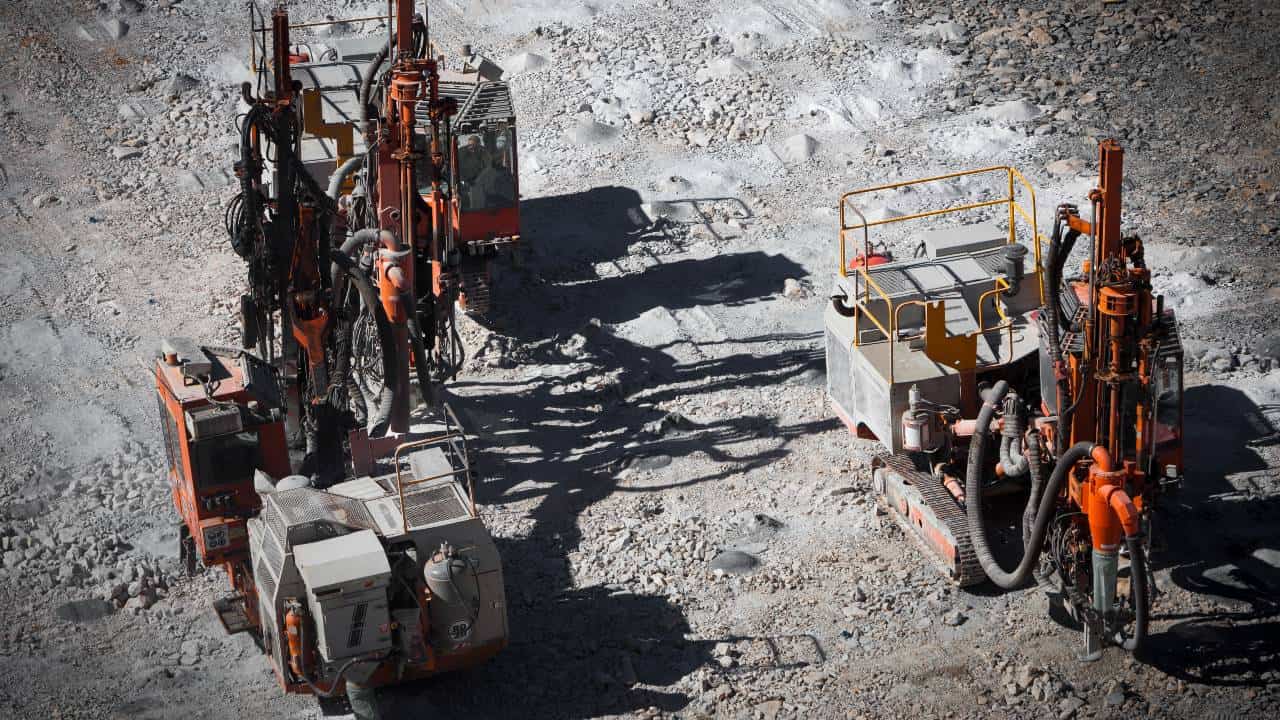
  • This ASX lithium company could more than double in value one broker says, after a “transformational” funding deal

    Young successful engineer, with blueprints, notepad, and digital tablet, observing the project implementation on construction site and in mine.

    Global Lithium Resources Ltd (ASX: GL1) this week announced a major funding deal with a Chinese company, which has the analyst team at Shaw and Partners taking notice.

    Shaw and Partners this week reiterated its buy rating on the ASX lithium stock, albeit with a high-risk rating, and also reiterated its share price target, which we’ll get to shortly.

    Firstly, let’s have a look at what the company announced.

    Major Chinese deal

    Global Lithium Resources said in its statement to the ASX that it had struck a “transformational” funding deal with Chinese company Jiangsu Lopal Tech. Group Co., which is a battery materials producer listed on the Shanghai and Hong Kong stock exchanges.

    Lopal has agreed to make a $7.32 million equity investment in the company, as well as providing an offtake prepayment of US$75 million, “which will accelerate the development of the 100% owned Manna Lithium Project in Western Australia”.

    Global Lithium Resources also agreed to sell its interest in the Marble Bar Lithium Project to Lopal for $14.85 million.

    Global Lithium Resources Managing Director Dr Dianmin Chen said the arrangements with Lopal represented “a pivotal advancement in the Manna Lithium Project toward a final investment decision on its development”.

    He added:

    The arrangements with Lopal provide a robust initial contribution to fund Manna’s future development, securing critical long-term customer relationships and validating the demand for Manna’s substantial and high-quality lithium resource.

    Under the agreement, Lopal will take 40% of the Manna Lithium Project’s annual production, which is expected to be about 70,000 tonnes of spodumene per annum.

    Combined with an existing offtake agreement with Canmax Technologies Co., 70% of the project’s production is now accounted for.

    The investments are not subject to approval by the Foreign Investment Review Board, the company said.

    Shares looking cheap

    Shaw and Partners said in its note to clients that the deal was a positive for the company.

    We continue to forecast EV demand catalysed by the Iran War as a decisive factor underpinning a shift in the lithium market from surplus to deficit by the end of this year. Despite rising prices, lithium supply growth will remain constrained, and this is very positive for both the lithium price and lithium equities. Global Lithium remains one of our preferred lithium developers in a market that is getting tighter by the day. We reiterate our Buy recommendation and discounted cash flow-based $1.50 price target.

    Shaw and Partners noted the company would have $137 million in cash following the conclusion of the new agreement.

    Global Lithium Resources shares were changing hands for 57.5 cents on Friday, well below Shaw’s $1.50 target price.

    The company is valued at $149.9 million.

    The post This ASX lithium company could more than double in value one broker says, after a “transformational” funding deal appeared first on The Motley Fool Australia.

    Should you invest $1,000 in Global Lithium Resources Limited right now?

    Before you buy Global Lithium Resources Limited shares, consider this:

    Motley Fool investing expert Scott Phillips just revealed what he believes are the 5 best stocks for investors to buy right now… and Global Lithium Resources Limited wasn’t one of them.

    The online investing service he’s run for over a decade, Motley Fool Share Advisor, has provided thousands of paying members with stock picks that have doubled, tripled or even more.*

    And right now, Scott thinks there are 5 stocks that may be better buys…

    * Returns as of 20 Feb 2026

    .custom-cta-button p {
    margin-bottom: 0 !important;
    }

    More reading

    Motley Fool contributor Cameron England has no position in any of the stocks mentioned. The Motley Fool Australia’s parent company Motley Fool Holdings Inc. has no position in any of the stocks mentioned. The Motley Fool Australia has no position in any of the stocks mentioned. The Motley Fool has a disclosure policy. This article contains general investment advice only (under AFSL 400691). Authorised by Scott Phillips.

  • Wesfarmers shares: Buy, hold or sell?

    A smiling woman at a hardware shop selects paint colours from a wall display.

    Although they outperformed the S&P/ASX 200 Index (ASX: XJO) this week, Wesfarmers Ltd (ASX: WES) shares have been struggling in 2026.

    Shares in the diversified ASX 200 conglomerate – whose retail subsidiaries include Bunnings Warehouse, Kmart Australia, Officeworks and Priceline – closed on Friday trading for $73.71.

    That saw the stock close the week up 1.2%, outpacing the 2.2% losses posted by the benchmark index over this same time.

    Still, Wesfarmers shares remain down 9.8% year to date, trailing the 0.3% gains delivered by the ASX 200 so far this calendar year.

    Although that underperformance will have been partly mitigated by the $1.02 a share in fully franked dividends the company paid to eligible stockholders on 31 March. Wesfarmers stock trades on a 3.4% fully franked trailing dividend yield.

    But with the ASX 200 stock coming under pressure this year, is Wesfarmers now trading for a bargain, or could it have further to fall?

    Should you buy Wesfarmers shares today?

    Red Leaf Securities’ John Athanasiou recently analysed the outlook for Wesfarmers stock (courtesy of The Bull).

    “Wesfarmers is a diversified industrial conglomerate,” he said. “Major retail brands include Bunnings, Kmart, Target and Officeworks.”

    However, Athanasiou sees headwinds building for Wesfarmers shares.

    “Its businesses are household names, but recent trading suggests slowing consumer demand and cost pressures are weighing on sentiment,” he said.

    Summarising his sell recommendation, Athanasiou concluded:

    With much of its value already priced in amid a mixed outlook on near term retail growth, Wesfarmers lacks fresh catalysts to drive meaningful upside. Trimming positions into strength may be prudent for investors seeking a better risk-reward proposition.

    What’s the latest from the ASX 200 conglomerate?

    The last price sensitive news for Wesfarmers shares was the company’s half year results release (H1 FY 2026) on 19 February.

    Highlights included a 3.1% year-on-year increase in revenue to $24.21 billion. And earnings before interest and tax (EBIT) of $2.49 billion were up 8.4% from H1 FY 2025.

    On the bottom line, the company reported a net profit after tax (NPAT) of $1.60 billion, up 9.3%.

    Commenting on the results, Wesfarmers managing Director Rob Scott said:

    During the half, Wesfarmers’ divisions benefited from productivity initiatives to navigate ongoing challenging market conditions…

    The divisions performed well, driving productivity to mitigate cost pressures and keep prices low for customers.

    Amid high market expectations, and taking note of those ‘cost pressures’, Wesfarmers shares closed down 5.6% on the day of the results release.

    The post Wesfarmers shares: Buy, hold or sell? appeared first on The Motley Fool Australia.

    Should you invest $1,000 in Wesfarmers Limited right now?

    Before you buy Wesfarmers Limited shares, consider this:

    Motley Fool investing expert Scott Phillips just revealed what he believes are the 5 best stocks for investors to buy right now… and Wesfarmers Limited wasn’t one of them.

    The online investing service he’s run for over a decade, Motley Fool Share Advisor, has provided thousands of paying members with stock picks that have doubled, tripled or even more.*

    And right now, Scott thinks there are 5 stocks that may be better buys…

    * Returns as of 20 Feb 2026

    .custom-cta-button p {
    margin-bottom: 0 !important;
    }

    More reading

    Motley Fool contributor Bernd Struben has no position in any of the stocks mentioned. The Motley Fool Australia’s parent company Motley Fool Holdings Inc. has positions in and has recommended Wesfarmers. The Motley Fool Australia has recommended Wesfarmers. The Motley Fool has a disclosure policy. This article contains general investment advice only (under AFSL 400691). Authorised by Scott Phillips.

  • After falling 43% in a week, are Cochlear shares now a buy?

    An arrow crashes through the ground as a businessman watches on.

    Cochlear Ltd (ASX: COH) shares have been hit hard this week, with one of the biggest sell-offs seen in the ASX healthcare sector in recent years.

    At Friday’s close, Cochlear shares finished at $97.35, down roughly 43% over the past week. That move has pulled the stock back to levels last seen in early 2016.

    The question now is whether this is a reset that creates opportunity, or a signal that something more fundamental has changed.

    Here’s what investors are weighing up.

    What triggered the sell-off

    The decline follows a major downgrade to its FY26 earnings guidance.

    Cochlear now expects underlying net profit to be $290 million to $330 million. That is well below its previous guidance range of $435 million to $460 million.

    The downgrade reflects weaker conditions across developed markets.

    Management flagged softer demand for cochlear implants, driven by hospital capacity constraints and lower referral activity. Consumer sentiment has also weakened, particularly in key markets like the United States.

    There are also operational pressures. Industrial action in parts of Europe has delayed procedures, while some regions are seeing longer waiting lists for surgery.

    Is this a short-term issue or something deeper?

    This is where the debate sits.

    On one hand, many of these pressures look cyclical rather than structural. Hospital capacity and referral volumes can recover over time. Consumer sentiment also tends to move in cycles.

    Cochlear’s long-term drivers are still in place. The business operates in a global market supported by ageing populations and increasing diagnosis rates. It also has a strong competitive position, with high switching costs and a large installed base that generates recurring revenue over time.

    That is why, even after the recent volatility, the company is still widely viewed as a high-quality healthcare name.

    But on the other hand, the latest update challenges one key area.

    Demand in developed markets now appears more sensitive to economic conditions than previously thought. That adds uncertainty to earnings and makes forecasting harder.

    It also raises questions about how much of Cochlear’s premium valuation can be justified if growth remains uneven.

    What the market is pricing in now

    The speed of the sell-off suggests investors have moved quickly to price in weaker growth and lower confidence.

    At current levels, the valuation has shrunk significantly from where it sat earlier this year.

    That changes the risk-reward profile.

    After a sharp correction, the balance is no longer about paying up for quality. It is about whether earnings stabilise and recover from here.

    We have seen similar setups across the market recently, where heavy selling has created potential opportunities even as the underlying businesses remain strong.

    Foolish takeaway

    Cochlear’s share price fall shows a clear change in earnings expectations and confidence.

    The long-term drivers remain, but near-term visibility is weaker, and demand looks more cyclical than before.

    At these levels, the stock may start to attract interest from long-term investors.

    But much of the next move will depend on whether conditions in key markets can begin to stabilise.

    The post After falling 43% in a week, are Cochlear shares now a buy? appeared first on The Motley Fool Australia.

    Should you invest $1,000 in Cochlear Limited right now?

    Before you buy Cochlear Limited shares, consider this:

    Motley Fool investing expert Scott Phillips just revealed what he believes are the 5 best stocks for investors to buy right now… and Cochlear Limited wasn’t one of them.

    The online investing service he’s run for over a decade, Motley Fool Share Advisor, has provided thousands of paying members with stock picks that have doubled, tripled or even more.*

    And right now, Scott thinks there are 5 stocks that may be better buys…

    * Returns as of 20 Feb 2026

    .custom-cta-button p {
    margin-bottom: 0 !important;
    }

    More reading

    Motley Fool contributor Aaron Teboneras has no position in any of the stocks mentioned. The Motley Fool Australia’s parent company Motley Fool Holdings Inc. has positions in and has recommended Cochlear. The Motley Fool Australia has recommended Cochlear. The Motley Fool has a disclosure policy. This article contains general investment advice only (under AFSL 400691). Authorised by Scott Phillips.

  • 100,720 shares of this high-yield ASX dividend stock pay income equal to the Age Pension

    An older couple use a calculator to work out what money they have to spend.

    How much would you need to invest in ASX stocks to generate an income similar to the Age Pension?

    Using Harvey Norman Holdings Ltd (ASX: HVN) as an example, we can actually put a clear number on that.

    How much is the Age Pension?

    First, let’s confirm the benchmark.

    For a single person, the full Age Pension currently totals $1,200.90 per fortnight based on the latest government figures. That works out to $31,223.40 per year.

    Now let’s see how that compares to dividend income.

    Turning an ASX dividend stock into a pension-like income

    According to CommSec, Harvey Norman is expected to pay fully franked dividends of 31 cents per share in both FY26 and FY27.

    At the time of writing, the Harvey Norman share price is trading at $4.54. This means that it is offering a potential dividend yield of around 6.8%, before franking credits.

    To generate $31,223.40 per year from dividends alone, you would need approximately 100,720 shares.

    Based on that requirement and its current share price, this implies an investment of roughly $457,269 into the ASX dividend stock.

    Why I still think Harvey Norman is worth a look

    Of course, income is only part of the story.

    Harvey Norman has been sold off heavily in recent months, which is a big reason the dividend yield now looks so attractive. But the underlying business still has a few levers working in its favour.

    One is its international expansion. The company continues to open new stores in markets like the UK, Malaysia, and parts of Europe, which provides a pathway for growth beyond Australia.

    Another is its property portfolio. Harvey Norman owns a significant amount of retail real estate, which adds a layer of asset backing and long-term value that is easy to overlook.

    There is also some support from the broker community. Bell Potter currently has a buy recommendation on the ASX dividend stock with a $6.70 price target. This suggests almost 50% potential upside on top of the income.

    Foolish takeaway

    If you are trying to replicate the income of the Age Pension using dividends, you would need around 100,720 Harvey Norman shares, or roughly $457,000 at today’s price.

    That puts into perspective the level of capital required to fully replace a government income stream.

    Even so, for investors who are building toward that goal over time, high-yield ASX dividend stocks like Harvey Norman can play a role.

    However, income investors should always ensure that they have a balanced and diversified investment portfolio, and not put all their eggs in one basket.

    The post 100,720 shares of this high-yield ASX dividend stock pay income equal to the Age Pension appeared first on The Motley Fool Australia.

    Wondering where you should invest $1,000 right now?

    When investing expert Scott Phillips has a stock tip, it can pay to listen. After all, the flagship Motley Fool Share Advisor newsletter he has run for over ten years has provided thousands of paying members with stock picks that have doubled, tripled or even more.*

    Scott just revealed what he believes could be the ‘five best ASX stocks’ for investors to buy right now. We believe these stocks are trading at attractive prices and Scott thinks they could be great buys right now…

    * Returns as of 20 Feb 2026

    .custom-cta-button p {
    margin-bottom: 0 !important;
    }

    More reading

    Motley Fool contributor Grace Alvino has no position in any of the stocks mentioned. The Motley Fool Australia’s parent company Motley Fool Holdings Inc. has no position in any of the stocks mentioned. The Motley Fool Australia has positions in and has recommended Harvey Norman. The Motley Fool has a disclosure policy. This article contains general investment advice only (under AFSL 400691). Authorised by Scott Phillips.

  • 5 years ago, $10,000 bought 111 CBA shares. But how many would it buy now?

    Bank building with the word bank in gold.

    The Commonwealth Bank of Australia (ASX: CBA) share price is an important element of the ASX share market.

    It’s the biggest ASX bank share, the biggest household lender, a position in many retiree portfolios, a major position in big super’s portfolios and the largest contributor to the Vanguard Australian Shares Index ETF (ASX: VAS). Many Australians are invested in it directly or indirectly.

    It’s clear that the last five years has been a good time to be a CBA shareholder. We’re going to look at just how good.

    The great performance on the CBA share price

    Commonwealth Bank has risen by approximately 94% in the last five years, as of the time of writing. That compares to a 25% rise for the S&P/ASX 200 Index (ASX: XJO). Clearly, CBA has smashed the ASX 200 this decade.

    I wouldn’t expect CBA to outperform the ASX 200 as much as that over the next five years.

    If I had invested $10,000 in CBA shares five years ago, I would have been able to buy 111 CBA shares, with a bit of change left.

    These days, if I invested $10,000 into CBA shares, I’d be able to buy 57 CBA shares, with some change. In other words, we’d only be able to buy close to half the number of shares today as five years ago. That makes sense, considering the CBA share price has close to doubled.

    Why has Commonwealth Bank risen so much?

    I think there are two key factors that would explain this huge gain for the bank.

    Firstly, it has delivered a pleasing level of profit growth. The latest result from the ASX bank share was the FY26 half-year result.

    In that recent report, the company revealed statutory net profit and cash net profit of approximately $5.4 billion. It was helped by lending and deposit volume growth in its core businesses. Commonwealth Bank also declared an interim dividend of $2.35 per share.

    However, five years ago, CBA reported in its HY21 result that it generated $4.88 billion of statutory net profit and $3.89 billion of cash net profit. That result was impacted by the low interest rate environment and COVID-19 impacts. The HY21 interim dividend per share was $1.50 per share.

    Therefore, over that five-year period, statutory net profit has risen 11%, while cash net profit has gone up around 40%. The dividend per share has increased 57% in that time.

    So, in terms of the core profit generation (cash net profit), the profit growth does justify a rise in the CBA share price.

    The rest of the rise in the CBA share price has essentially been the rise in the price/earnings (P/E) ratio because the market is valuing the bank’s earnings at a much higher multiple.

    According to the projection on Commsec, the CBA share price is valued at 26x FY26’s estimated earnings. This is not too far off its all-time high in terms of the P/E ratio.

    Time will tell how it performs over the next five years, but I’m not thinking of an ever-rising P/E ratio is likely, so profit growth will be key.

    The post 5 years ago, $10,000 bought 111 CBA shares. But how many would it buy now? appeared first on The Motley Fool Australia.

    Should you invest $1,000 in Commonwealth Bank Of Australia right now?

    Before you buy Commonwealth Bank Of Australia shares, consider this:

    Motley Fool investing expert Scott Phillips just revealed what he believes are the 5 best stocks for investors to buy right now… and Commonwealth Bank Of Australia wasn’t one of them.

    The online investing service he’s run for over a decade, Motley Fool Share Advisor, has provided thousands of paying members with stock picks that have doubled, tripled or even more.*

    And right now, Scott thinks there are 5 stocks that may be better buys…

    * Returns as of 20 Feb 2026

    .custom-cta-button p {
    margin-bottom: 0 !important;
    }

    More reading

    Motley Fool contributor Tristan Harrison has no position in any of the stocks mentioned. The Motley Fool Australia’s parent company Motley Fool Holdings Inc. has no position in any of the stocks mentioned. The Motley Fool Australia has no position in any of the stocks mentioned. The Motley Fool has a disclosure policy. This article contains general investment advice only (under AFSL 400691). Authorised by Scott Phillips.

  • Morgans sees 2x upside in ASX finance stock after hitting key milestone

    A bland looking man in a brown suit opens his jacket to reveal a red and gold superhero dollar symbol on his chest.

    ASX finance stock Moneyme Ltd (ASX: MME) jumped earlier this week after the ASX finance company said it had hit profitability during the quarter on growth in its loan book.

    Strong growth figures

    The company said in a statement to the ASX that it had generated new loan originations of $325 million in the third quarter of the financial year, which was up 43% on the previous corresponding period and up 18% on the second quarter of FY26.

    The company’s loan book grew by $150 million to $1.9 billion, up 29% on the previous corresponding period, “reaching the scale required to achieve normalised net profit after tax profitability”, the company said.

    Revenue for the quarter came in at $62 million, up 17% on the previous corresponding period, with net credit losses reducing to 2.6%.

    Moneyme Managing Director Clayton Howes said it was a key milestone for the company, and added:

    The third quarter marked a step-change in performance, with originations increasing by $50m quarter-on quarter and the loan book reaching $1.90bn. This represents an inflection point, delivering a positive Normalised NPAT in the quarter, with revenue growth outpacing costs and driving operating leverage. Despite interest rate and inflation pressures, our credit performance remains strong with loss rates declining as we continue to focus on secured vehicle finance and high credit quality segments. This, alongside a predominantly variable interest rate loan book enables us to absorb these market pressures, maintain risk adjusted NIM, and price effectively for capital preservationWe continue to capture market share in under-served segments through fast, innovative and well-priced products and outstanding customer service. At the same time, our multi-product strategy is gaining traction, with momentum building in credit cards. The launch of our Cashback Rewards Credit Card and upcoming white-label partnership with Luxury Escapes will expand access to millions of potential customers. While credit card growth may have a near-term impact on profitability, it is expected to deliver meaningful margin expansion as the portfolio scales.

    Mr Howes said the company’s funding structure was a key strength, “with a robust corporate facility and strategic partnership with iPartners delivering favourable terms, including a 75-basis point reduction in funding costs that further supports growth and margin outcomes”.

    Moneyme also during the quarter launched its own new credit card and entered into a white label credit card partnership with Luxury Escapes.

    Shares looking cheap

    Moneyme shares traded as high as 9.9 cents higher on Wednesday (up more than 16%) when its quarterly results were announced, before settling back over the week to be changing hands for 8.8 cents apiece on Friday.

    Morgans has a price target of 21 cents on Moneyme shares.

    The company is valued at $71.5 million.

    The post Morgans sees 2x upside in ASX finance stock after hitting key milestone appeared first on The Motley Fool Australia.

    Should you invest $1,000 in MoneyMe right now?

    Before you buy MoneyMe shares, consider this:

    Motley Fool investing expert Scott Phillips just revealed what he believes are the 5 best stocks for investors to buy right now… and MoneyMe wasn’t one of them.

    The online investing service he’s run for over a decade, Motley Fool Share Advisor, has provided thousands of paying members with stock picks that have doubled, tripled or even more.*

    And right now, Scott thinks there are 5 stocks that may be better buys…

    * Returns as of 20 Feb 2026

    .custom-cta-button p {
    margin-bottom: 0 !important;
    }

    More reading

    Motley Fool contributor Cameron England has no position in any of the stocks mentioned. The Motley Fool Australia’s parent company Motley Fool Holdings Inc. has no position in any of the stocks mentioned. The Motley Fool Australia has no position in any of the stocks mentioned. The Motley Fool has a disclosure policy. This article contains general investment advice only (under AFSL 400691). Authorised by Scott Phillips.

  • Want to fast-track retirement? These ASX ETFs could get you there

    Retired couple hugging and laughing.

    Building wealth for retirement doesn’t have to mean picking individual stocks or timing the market perfectly. For many investors, ASX exchange-traded funds (ETFs) offer a simpler path, broad diversification, low fees, and exposure to long-term growth trends.

    If the goal is to bring retirement a little closer, a well-chosen mix of ASX-listed ETFs can do much of the heavy lifting.

    SPDR S&P/ASX 200 ETF (ASX: STW)

    A core holding to consider is the SPDR S&P/ASX 200 ETF. This ASX ETF tracks the Australian share market, giving investors exposure to leading companies across sectors like banking, mining, and healthcare.

    The main holdings of this fund are currently Commonwealth Bank of Australia (ASX: CBA) and BHP Group Ltd (ASX: BHP), which account for almost 11% each. It also offers income through dividends, making it a solid foundation for long-term investors.

    iShares S&P 500 ETF (ASX: IVV)

    To complement that, global diversification is essential. The iShares S&P 500 ETF provides exposure to the 500 largest US companies, including major technology and consumer giants.

    This adds a powerful growth engine, tapping into innovation trends that aren’t as prominent locally.

    Vanguard MSCI Index International Shares ETF (ASX: VGS)

    For broader international exposure beyond the US, the Vanguard MSCI Index International Shares ETF spreads investments across developed markets like Europe and Japan. This reduces reliance on any single economy and helps smooth returns over time.

    Investors looking to tilt further toward growth could also consider the BetaShares Nasdaq 100 ETF (ASX: NDQ). This ASX ETF focuses on leading technology companies listed on the Nasdaq. Shares like NVIDIA Corp (NASDAQ: NVDA) offer higher growth potential, though with more volatility along the way.

    SPDR S&P/ASX 200 Listed Property Fund (ASX: SLF)

    Income still plays an important role in retirement planning. The SPDR S&P/ASX 200 Listed Property Fund provides exposure to Australian real estate investment trusts (REITs), which can generate regular income while offering long-term capital growth.

    So how does this mix work together?

    It creates balance. Australian equities provide income and stability. Global ASX ETFs add diversification and growth. Property introduces another income stream and asset class. Together, they help manage risk while keeping the portfolio positioned for long-term returns.

    Over time, consistency matters more than short-term market movements. Regular investing, reinvesting dividends, and staying invested through volatility can significantly improve outcomes.

    The key advantage of ETFs is simplicity. Instead of trying to pick winners, investors gain exposure to entire markets in a single trade. That makes it easier to stay disciplined and focused on the bigger picture.

    No strategy guarantees early retirement. But a diversified ASX ETF portfolio like this can provide a strong foundation, one that steadily builds wealth and helps bring financial independence within reach.

    The post Want to fast-track retirement? These ASX ETFs could get you there appeared first on The Motley Fool Australia.

    Should you invest $1,000 in SPDR S&p/asx 200 Fund right now?

    Before you buy SPDR S&p/asx 200 Fund shares, consider this:

    Motley Fool investing expert Scott Phillips just revealed what he believes are the 5 best stocks for investors to buy right now… and SPDR S&p/asx 200 Fund wasn’t one of them.

    The online investing service he’s run for over a decade, Motley Fool Share Advisor, has provided thousands of paying members with stock picks that have doubled, tripled or even more.*

    And right now, Scott thinks there are 5 stocks that may be better buys…

    * Returns as of 20 Feb 2026

    .custom-cta-button p {
    margin-bottom: 0 !important;
    }

    More reading

    Motley Fool contributor Marc Van Dinther has positions in BHP Group. The Motley Fool Australia’s parent company Motley Fool Holdings Inc. has positions in and has recommended BetaShares Nasdaq 100 ETF, Nvidia, and iShares S&P 500 ETF. The Motley Fool Australia has positions in and has recommended BetaShares Nasdaq 100 ETF. The Motley Fool Australia has recommended BHP Group, Nvidia, Vanguard Msci Index International Shares ETF, and iShares S&P 500 ETF. The Motley Fool has a disclosure policy. This article contains general investment advice only (under AFSL 400691). Authorised by Scott Phillips.