
Tag: Stock pick

  • 2 spectacular monthly income ETFs with yields up to 6%

    Woman laying with $100 notes around her, symbolising dividends.

    For investors who prioritise income, consistency can matter just as much as the headline yield. 

    That is why monthly income ETFs continue to grow in popularity with Australians.

    When used appropriately, they can smooth portfolio income and reduce reliance on selling assets to fund expenses.

    Here are two income-focused ASX ETFs that I think stand out for investors seeking regular distributions, with yields currently above the 5% level.

    Betashares Australian Dividend Harvester Active ETF (ASX: HVST)

    The Betashares Australian Dividend Harvester Active ETF is designed specifically for investors who want high and regular income from Australian equities.

    The HVST ETF follows a rules-based dividend harvesting strategy. Its portfolio is primarily drawn from the largest 100 shares on the ASX, screened for companies expected to deliver higher gross dividend and franking outcomes over the next period. The portfolio is rebalanced approximately every three months to reflect updated dividend expectations.

    What makes the Betashares Australian Dividend Harvester Active ETF different from a traditional Australian shares ETF is its clear income objective. The fund aims to deliver an income stream that exceeds the net income yield of the broader Australian share market over time, with distributions paid monthly rather than semi-annually.

    At present, the ETF has a trailing dividend yield of around 5.8%. That yield will vary over time and is not guaranteed, but it highlights why the fund has attracted attention from income-focused investors.

    VanEck Emerging Income Opportunities Active ETF (ASX: EBND)

    The VanEck Emerging Income Opportunities Active ETF takes a very different approach to income.

    Rather than focusing on Australian equities, this ETF provides exposure to a globally diversified portfolio of emerging market bonds and currencies. 

    The fund invests across government, semi-government, and corporate bonds in emerging economies, with the goal of delivering attractive income and total returns over the medium to long term.

    The VanEck Emerging Income Opportunities Active ETF is actively managed and benchmark-unaware, which means the portfolio managers can take high-conviction positions rather than simply track an index. That flexibility is important in emerging markets, where credit quality, currency movements, and geopolitical risks can vary widely.

    Currently, the VanEck Emerging Income Opportunities Active ETF has a yield of around 6.2%. As with all bond funds, that yield can change depending on market conditions, interest rates, and portfolio positioning. Emerging market debt also carries higher risk than developed market bonds, including credit risk and political risk.

    Why these two stand out to me

    What I like about the Betashares Australian Dividend Harvester Active ETF and the VanEck Emerging Income Opportunities Active ETF is that they approach income from different angles.

    The HVST ETF focuses on Australian equities and dividend harvesting, which suits investors who value franking credits and familiarity. The EBND ETF looks offshore, tapping into higher-yielding emerging market bonds to generate income that is less tied to the Australian economic cycle.

    Neither ETF is risk-free, and yields should never be the only consideration. But for investors seeking monthly income with diversification across asset classes and geographies, these are two ETFs I think are worth a closer look.

    As always, position sizing and portfolio balance matter. Used thoughtfully, monthly income ETFs like these can play a useful role in delivering regular cash flow without sacrificing diversification.

    The post 2 spectacular monthly income ETFs with yields up to 6% appeared first on The Motley Fool Australia.

    Should you invest $1,000 in Betashares Australian Dividend Harvester Fund right now?

    Before you buy Betashares Australian Dividend Harvester Fund shares, consider this:

    Motley Fool investing expert Scott Phillips just revealed what he believes are the 5 best stocks for investors to buy right now… and Betashares Australian Dividend Harvester Fund wasn’t one of them.

    The online investing service he’s run for over a decade, Motley Fool Share Advisor, has provided thousands of paying members with stock picks that have doubled, tripled or even more.*

    And right now, Scott thinks there are 5 stocks that may be better buys…

    * Returns as of 1 Jan 2026

    .custom-cta-button p {
    margin-bottom: 0 !important;
    }

    More reading

    Motley Fool contributor Grace Alvino has no position in any of the stocks mentioned. The Motley Fool Australia’s parent company Motley Fool Holdings Inc. has no position in any of the stocks mentioned. The Motley Fool Australia has no position in any of the stocks mentioned. The Motley Fool has a disclosure policy. This article contains general investment advice only (under AFSL 400691). Authorised by Scott Phillips.


  • Why I look at past performance of ASX shares to help think about the future performance outlook

    A woman smiles at the outlook she sees through binoculars.

    One of the most common phrases when it comes to investing in (ASX) shares is that past performance is not a reliable indicator of future performance.

    On a surface level, I certainly think it’s wise to be cautious about extrapolating great returns to continue over the next year or so. For example, the Telstra Group Ltd (ASX: TLS) share price rose by 20% in 2025 and I’d suggest it’s unlikely (but not impossible) that the huge ASX telecommunication share will rise by another 20% this year.

    However, past business performance could be very informative of future returns. Let me explain what I mean.

    Winners tend to continue winning

    There are not many businesses that have a track record of delivering very strong returns over the long-term.

    Those exceptional companies have managed to deliver such strong performance, likely because they have market-leading products and services, as well as compelling economics.

    These appealing advantages don’t disappear overnight, if ever. In my view, the great winners tend to continue winning over the years because what has helped them thus far will mean they can continue their track record.

    Just think about names like Xero Ltd (ASX: XRO), Wesfarmers Ltd (ASX: WES), Breville Group Ltd (ASX: BRG), Nick Scali Ltd (ASX: NCK) and TechnologyOne Ltd (ASX: TNE). Each of them have long-term track records of executing their strategies successfully.

    So, while we can’t know for sure what their future share price returns will be (particularly in the short-term), I do think it’s clearer whether a business will continue growing its operations and earnings.

    Cyclical opportunities

    Investors can use volatility to their advantage, particularly when it comes to ASX shares with cyclical earnings.

    Commodities are a good example – if a resource price falls then that may lead to some investors selling and the share price falling. However, resource prices don’t fall forever. At certain levels, higher cost producers may start entering loss-making territory and lead to them turning off production, helping the supply-demand balance and potentially helping spark a recovery in the resource price.

    That’s why it can be fruitful to invest in ASX mining shares when prices are down heavily and conditions are weak. Investors can buy low, hoping to benefit from a turn in the cycle.

    It can be a similar story when it comes to other cyclical sectors such as retail.

    But, investors should also be cautious about overpaying for cyclical names when conditions are positive. That’s why I’m being cautious about ASX mining shares like Fortescue Ltd (ASX: FMG) and Rio Tinto Ltd (ASX: RIO) at the current valuations. 

    The post Why I look at past performance of ASX shares to help think about the future performance outlook appeared first on The Motley Fool Australia.

    Should you invest $1,000 in Telstra Corporation Limited right now?

    Before you buy Telstra Corporation Limited shares, consider this:

    Motley Fool investing expert Scott Phillips just revealed what he believes are the 5 best stocks for investors to buy right now… and Telstra Corporation Limited wasn’t one of them.

    The online investing service he’s run for over a decade, Motley Fool Share Advisor, has provided thousands of paying members with stock picks that have doubled, tripled or even more.*

    And right now, Scott thinks there are 5 stocks that may be better buys…

    * Returns as of 1 Jan 2026

    .custom-cta-button p {
    margin-bottom: 0 !important;
    }

    More reading

    Motley Fool contributor Tristan Harrison has positions in Breville Group and Technology One. The Motley Fool Australia’s parent company Motley Fool Holdings Inc. has positions in and has recommended Technology One, Wesfarmers, and Xero. The Motley Fool Australia has positions in and has recommended Telstra Group and Xero. The Motley Fool Australia has recommended Nick Scali, Technology One, and Wesfarmers. The Motley Fool has a disclosure policy. This article contains general investment advice only (under AFSL 400691). Authorised by Scott Phillips.

  • 5 things to watch on the ASX 200 on Wednesday

    Contented looking man leans back in his chair at his desk and smiles.

    On Tuesday, the S&P/ASX 200 Index (ASX: XJO) was on form and charged higher. The benchmark index rose 0.55% to 8,808.5 points.

    Will the market be able to build on this on Wednesday? Here are five things to watch:

    ASX 200 to edge higher

    The Australian share market looks set for a subdued session on Wednesday following a poor night of trade on Wall Street. According to the latest SPI futures, the ASX 200 is expected to open the day 2 points higher this morning. In late trade in the United States, the Dow Jones is down 0.8%, the S&P 500 is down 0.3%, and the Nasdaq is 0.3% lower.

    Oil prices rise

    ASX 200 energy shares including Beach Energy Ltd (ASX: BPT) and Santos Ltd (ASX: STO) could have a good session after oil prices jumped overnight. According to Bloomberg, the WTI crude oil price is up 2.6% to US$61.01 a barrel and the Brent crude oil price is up 2.2% to US$65.31 a barrel. This was driven by news that Donald Trump cancelled meetings with Iran and told protesters that help is on the way.

    Hold Codan shares

    After a huge gain over the past 12 months, Codan Ltd (ASX: CDA) shares are now fairly valued according to analysts at Bell Potter. The broker has retained its hold rating with an increased price target of $36.70 (from $27.80). It said: “We believe CDA shares trade at fair value on 33x EV / EBIT (59% above its 2-year average) amidst improving operating momentum and improving outlook in both segments. Given the seasonality evident in the Metal Detection business we see potential for a FY26e Metal Detection revenue upgrade if positive commentary is given at the 1H26e result.”

    Gold price softens

    ASX 200 gold shares Newmont Corporation (ASX: NEM) and Northern Star Resources Ltd (ASX: NST) could have a subdued session on Wednesday after the gold price softened. According to CNBC, the gold futures price is down 0.3% to US$4,601.5 an ounce. The precious metal hit a record high on increased US Fed interest rate cut bets before easing back.

    Buy Liontown shares

    Lithium miner Liontown Ltd (ASX: LTR) could be in the buy zone according to Bell Potter. In response to stronger than expected lithium prices, the broker has retained its buy rating with a vastly improved price target of $2.48 (from $1.52). It said: “Under our updated price outlook, LTR deleverages from net debt of $274m at 30 September 2025 to a net cash position by the end of 2026. EPS changes as a result of these upgrades are: now +2.3cps (previously -2.3cps); FY27 +230%; & FY28 +106%. LTR’s 100% owned Kathleen Valley lithium project is highly strategic in terms of scale, long project life and location in a tier-one mining jurisdiction.”

    The post 5 things to watch on the ASX 200 on Wednesday appeared first on The Motley Fool Australia.

    Should you invest $1,000 in Beach Energy Limited right now?

    Before you buy Beach Energy Limited shares, consider this:

    Motley Fool investing expert Scott Phillips just revealed what he believes are the 5 best stocks for investors to buy right now… and Beach Energy Limited wasn’t one of them.

    The online investing service he’s run for over a decade, Motley Fool Share Advisor, has provided thousands of paying members with stock picks that have doubled, tripled or even more.*

    And right now, Scott thinks there are 5 stocks that may be better buys…

    * Returns as of 1 Jan 2026

    .custom-cta-button p {
    margin-bottom: 0 !important;
    }

    More reading

    Motley Fool contributor James Mickleboro has no position in any of the stocks mentioned. The Motley Fool Australia’s parent company Motley Fool Holdings Inc. has no position in any of the stocks mentioned. The Motley Fool Australia has no position in any of the stocks mentioned. The Motley Fool has a disclosure policy. This article contains general investment advice only (under AFSL 400691). Authorised by Scott Phillips.

  • $20,000 in savings? Here’s how that could become $10,000 a year in passive income

    An ASX dividend investor lies back in a deck chair with his hands behind his head on a quiet and beautiful beach with blue sky and water in the background.

    If you have $20,000 in savings, it’s a huge achievement. Too many of us don’t have enough cash squirrelled away to be in a position to comfortably invest surplus cash into the markets. Hopefully, that $20,000 is currently sitting in a high-interest savings account and generating passive income with an interest rate of about 4%.

    But even if it is, there is an alternative to cash savings that could get you an even greater bang for your buck. That alternative is investing in ASX shares, of course.

    We have decades of data that consistently show investing in shares is the most likely way to maximise your return on investment. Indeed, back in August, we looked at how $10,000 invested in ASX shares back in June of 1995 was able to turn into $143,786 by 30 June 2025. In contrast, that $10,000 would have grown into just $33,677 if it had been left in the bank.

    So if you want to build wealth as quickly as possible, shares easily trump cash. But today, let’s discuss how you can turn $20,000 into a passive income stream worth $10,000 every year by investing in ASX shares.

     How to turn cash into passive income with ASX shares

    Passive income from the ASX shares comes in the form of dividends. Most ASX shares pay some kind of dividend. But only the highest quality companies tend to be able to increase their dividends above the rate of inflation year in and year out.

    Washington H. Soul Pattinson and Co Ltd (ASX: SOL) is one of those shares. This investing house has the best dividend streak on the ASX, having delivered an annual dividend hike every single year since 1998.

    On the surface, its dividend yield doesn’t look too impressive today – sitting at about 2.7% at present. If you invested $20,000 into Soul Patts stock at current pricing, you could expect to receive an annual passive income stream worth about $540.

    However, Soul Patts has delivered very healthy dividend growth over the past 28 years. Between 1998 and 2025, the company increased its annual dividends by an average rate of 10.5% per annum. Between 2021 and 2025,  the average was 13.5% per annum.

    So let’s, for a moment and for argument’s sake, assume that this company will be able to keep that latter growth rate going forward, which is, of course, not guaranteed. If that ends up being the case, our investor’s $540 in annual passive income would grow to over $1,000 in six years, then over $2,000 by year 12.

    Assuming no additional share purchases or dividend reinvestment, it would take just over 24 years to hit $10,000 in annual passive income. That’s obviously a long time to wait. But it can be sped up by buying more shares along the way, and by ticking that dividend reinvestment plan box. And remember, your initial $20,000 investment would have likely increased dramatically. Far more than it would have done sitting in the bank anyway.

    The post $20,000 in savings? Here’s how that could become $10,000 a year in passive income appeared first on The Motley Fool Australia.

    Should you invest $1,000 in Washington H. Soul Pattinson and Company Limited right now?

    Before you buy Washington H. Soul Pattinson and Company Limited shares, consider this:

    Motley Fool investing expert Scott Phillips just revealed what he believes are the 5 best stocks for investors to buy right now… and Washington H. Soul Pattinson and Company Limited wasn’t one of them.

    The online investing service he’s run for over a decade, Motley Fool Share Advisor, has provided thousands of paying members with stock picks that have doubled, tripled or even more.*

    And right now, Scott thinks there are 5 stocks that may be better buys…

    * Returns as of 1 Jan 2026

    .custom-cta-button p {
    margin-bottom: 0 !important;
    }

    More reading

    Motley Fool contributor Sebastian Bowen has positions in Washington H. Soul Pattinson and Company Limited. The Motley Fool Australia’s parent company Motley Fool Holdings Inc. has positions in and has recommended Washington H. Soul Pattinson and Company Limited. The Motley Fool Australia has positions in and has recommended Washington H. Soul Pattinson and Company Limited. The Motley Fool has a disclosure policy. This article contains general investment advice only (under AFSL 400691). Authorised by Scott Phillips.
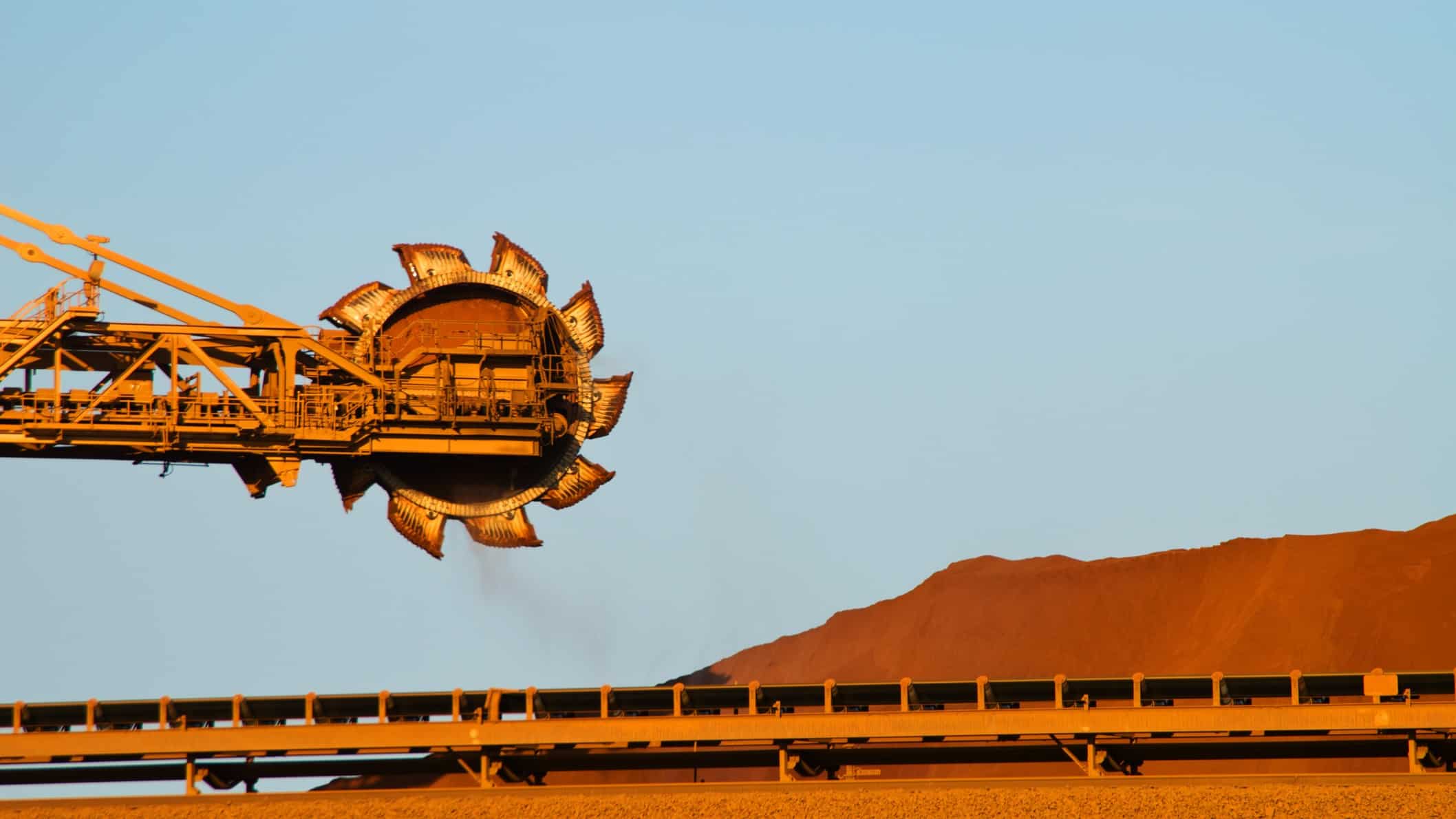
  • BHP share price tipped to rise to $56: expert

    Arrows pointing upwards with a man pointing his finger at one.

    The BHP Group Ltd (ASX: BHP) share price closed at $47.58 on Tuesday, up 2.3% amid a strong day for mining stocks.

    As many commodity prices soar, the market’s largest ASX mining share hit a near two-year high of $48.49 last Wednesday.

    Over the past week, six brokerages and global banks have updated their ratings for the ASX 200 iron ore and copper mining giant.

    The one that stands out is from Jason Fairclough at Bank of America.

    Fairclough reiterated his buy rating on BHP and raised his 12-month share price target from $49 to $56.

    This implies a potential 18% upside for investors who buy BHP shares today.

    A $56 share price would be a record for Australia’s largest mining company.

    The all-time high for the BHP share price was $50.84, reached on 28 December 2023.

    Let’s see how other analysts’ ratings have changed.

    Where to next for the BHP share price?

    Yesterday, Macquarie reiterated its hold rating on BHP and raised its 12-month share price target from $43 to $48.

    Morgan Stanley reiterated its buy rating on BHP shares with a price target of $48.

    Last week, Citi reiterated its hold rating and raised its price target from $47 to $48.

    Barclays also reiterated its hold rating with a price target of $50.12.

    Ord Minnett reiterated its buy rating on BHP shares with a price target of $48.

    Rising commodity prices

    The BHP share price is rising alongside commodity values.

    The iron ore price is up almost 10% over the past year to US$108.25 per tonne.

    The copper price is up 39% to US$5.97 per pound, and hit a record above US$6 per pound last week.

    BHP is now the world’s largest copper producer.

    BHP also has high-quality metallurgical coal operations.

    The coking coal price has risen by almost 20% over the past 12 months to US$235.33 per tonne.

    BHP is building the Jansen potash project in Canada, with first production anticipated in mid-2027.

    While Jansen is not yet operational, a 24% lift in the potash price over the past 12 months bodes well for BHP shares.

    The potash price is currently US$358.33 per tonne.

    BHP announced it was putting its Western Australia Nickel operations into care and maintenance in July 2024 due to a slump in nickel prices.

    The slump was caused by a huge ramp-up in Chinese-backed nickel mining operations in Indonesia.

    But nickel appears to be rebounding, up 26% in one month and 13% year over year.

    On Tuesday, Trading Economics analysts commented:

    Improving demand from Chinese stainless steel mills and EV battery producers is supporting the rebound, while traders adjust speculative positions amid ongoing supply uncertainty from Indonesia, the world’s largest nickel producer.

    Indonesia had signaled a potential 34% cut in 2026 output, but final quotas remain pending.

    According to BHP, the miner intends to review its decision to temporarily suspend Western Australia Nickel by February next year.

    The only commodity not rising that impacts BHP is thermal coal, which is down 6.5% over the past year.

    The post BHP share price tipped to rise to $56: expert appeared first on The Motley Fool Australia.

    Should you invest $1,000 in BHP Group right now?

    Before you buy BHP Group shares, consider this:

    Motley Fool investing expert Scott Phillips just revealed what he believes are the 5 best stocks for investors to buy right now… and BHP Group wasn’t one of them.

    The online investing service he’s run for over a decade, Motley Fool Share Advisor, has provided thousands of paying members with stock picks that have doubled, tripled or even more.*

    And right now, Scott thinks there are 5 stocks that may be better buys…

    * Returns as of 1 Jan 2026

    .custom-cta-button p {
    margin-bottom: 0 !important;
    }

    More reading

    Citigroup is an advertising partner of Motley Fool Money. Bank of America is an advertising partner of Motley Fool Money. Motley Fool contributor Bronwyn Allen has positions in BHP Group. The Motley Fool Australia’s parent company Motley Fool Holdings Inc. has positions in and has recommended Macquarie Group. The Motley Fool Australia’s parent company Motley Fool Holdings Inc. has recommended Barclays Plc. The Motley Fool Australia has positions in and has recommended Macquarie Group. The Motley Fool Australia has recommended BHP Group. The Motley Fool has a disclosure policy. This article contains general investment advice only (under AFSL 400691). Authorised by Scott Phillips.

  • Up 55% since June, are Fortescue shares set for a big retrace?

    Iron ore price Vale dam collapse ASX shares iron ore, iron ore australia, iron ore price, commodity price,

    Fortescue Ltd (ASX: FMG) shares have been on a tear since late June.

    Shares in the S&P/ASX 200 Index (ASX: XJO) mining giant closed up 0.76% on Tuesday, trading for $22.57 apiece.

    That sees the share price up a very impressive 55% since the recent closing lows of $14.54 posted on 23 June.

    Taking a step back, Fortescue shares have gained 26% since this time last year. Atop those capital gains, the ASX 200 mining stock also trades on a fully-franked trailing dividend yield of 4.9%.

    But looking ahead, the analysts at Jeffries expect that shareholders will be giving back some of those gains over the coming months.

    Are Fortescue shares set to fall 18%?

    The team at Jeffries recently downgraded Fortescue to an underperform rating from the prior hold rating (courtesy of The Bull).

    Jeffries reduced its price target for the miner from $19.25 to $18.50. That’s 18% below Tuesday’s closing price, though it’s still more than 27% above the recent June lows.

    What’s been happening with the ASX 200 mining stock?

    A resilient iron ore price counts among the tailwinds helping to lift Fortescue shares over the past seven months.

    At the end of June, the industrial metal was trading for around US$94 per tonne. On Tuesday, that same tonne was trading for around US$109.

    Lower average iron ore prices in FY 2025 were reflected in Fortescue’s full-year results covering the 12 months to 30 June.

    Although Fortescue achieved record iron ore shipments in FY 2025 of 198.4 million tonnes (Mt), the company’s revenue declined 15% year on year to US$15.5 billion. This was driven by an 18% decrease in Fortescue’s average iron ore (hematite) revenue to US$85 per dry metric tonne.

    On the bottom line, Fortescue’s net profit after tax (NPAT) plunged 41% from FY 2024 to US$3.4 billion.

    Although Fortescue shares closed down 3.9% on 26 August, the day the miner reported those results, a rebounding iron ore price saw investors rushing to buy the dip over the following weeks.

    Those investors will have been vindicated following the release of Fortescue’s record-breaking first-quarter (Q1 FY 2026) results, released on 23 October. That included all-time high quarterly iron ore shipments of 49.7 million tonnes, up 4% year on year.

    The average price the miner received for its iron ore lifted to US$89 per dry metric tonne.

    “Fortescue has delivered a strong start to FY26,” CEO Dino Otranto said.

    But if Jeffries has it right, now may be an opportune time to cash in some gains on Fortescue shares.

    The post Up 55% since June, are Fortescue shares set for a big retrace? appeared first on The Motley Fool Australia.

    Should you invest $1,000 in Fortescue Metals Group right now?

    Before you buy Fortescue Metals Group shares, consider this:

    Motley Fool investing expert Scott Phillips just revealed what he believes are the 5 best stocks for investors to buy right now… and Fortescue Metals Group wasn’t one of them.

    The online investing service he’s run for over a decade, Motley Fool Share Advisor, has provided thousands of paying members with stock picks that have doubled, tripled or even more.*

    And right now, Scott thinks there are 5 stocks that may be better buys…

    * Returns as of 1 Jan 2026

    .custom-cta-button p {
    margin-bottom: 0 !important;
    }

    More reading

    Motley Fool contributor Bernd Struben has no position in any of the stocks mentioned. The Motley Fool Australia’s parent company Motley Fool Holdings Inc. has positions in and has recommended Jefferies Financial Group. The Motley Fool Australia has no position in any of the stocks mentioned. The Motley Fool has a disclosure policy. This article contains general investment advice only (under AFSL 400691). Authorised by Scott Phillips.

  • Investing in the iShares S&P 500 ETF (IVV)? Here’s what you’re really buying

    Zig zaggy green arrow with an American note in the background.

    The iShares S&P 500 ETF (ASX: IVV) is one of the most popular exchange-traded funds (ETFs) on the ASX. With more than $13 billion under management, it is currently the third-most bought fund on the ASX, and the second-most popular fund that tracks non-ASX shares.

    So it goes without saying that there are more than a few Australian investors who own the iShares S&P 500 ETF within their stock portfolios.

    But how many of those investors know what they’re actually buying when purchasing this index fund? Many might have just heard the legendary investor Warren Buffett endorse an S&P 500 investment and followed suit.

    So today, let’s get into the S&P 500 ETF and check what ASX investors are really putting their money into when buying IVV units.

    How does the iShares S&P 500 ETF work?

    Like most index funds, the ASX’s IVV ETF works by mirroring an index. That index, in this case, is the flagship S&P 500 Index (SP: .INX), the most widely tracked of its kind in the world. The S&P 500 represents the largest 500 companies that are listed on the American stock markets, weighted by market capitalisation. Warren Buffett calls this index a ‘slice of America’.

    It includes everything from the tech titans like Apple, Microsoft, and Amazon to smaller stocks like Ford Motor Co, Colgate-Palmolive, and Kraft Heinz.

    So at any one time, an ASX investor who owns the iShares S&P 500 ETF owns a small slice of all of those shares, plus hundreds more. The 500 largest US stocks aren’t a static list, though. They are in constant flux, with sizes changing every day that the share market is open. To ensure that the IVV ETF always holds the largest 500 American stocks, it is rebalanced every three months. The stocks that are on the rise get added to the IVV portfolio, while the losers are sold down, and in some cases, removed entirely.

    It’s for this reason that passive investors love investing in ETFs like IVV. The fund does the hard work for you over time, while you can just leave it in the proverbial bottom drawer.

    What does buying IVV get you?

    Since IVV is weighted by market capitalisation, the largest American companies get to hold the largest positions in the IVV portfolio. That’s why the most valuable US stocks can account for more than 7% of the ETF’s portfolio, whilst the smallest barely make an impact at 0.01%.

    But let’s get into what the iShares S&P 500 ETF’s current portfolio looks like.

    As of 9 January, this ASX ETF’s largest ten holdings are as follows:

    1. Nvidia Corp (NASDAQ: NVDA), worth 7.53% of IVV’s portfolio
    2. Apple Inc (NASDAQ: AAPL), at 6.42%
    3. Microsoft Corp (NASDAQ: MSFT) at 5.97%
    4. Alphabet Inc (NASDAQ: GOOG)(NASDAQ: GOOGL) at 5.77%
    5. Amazon.com Inc (NASDAQ: AMZN) at 4.03%
    6. Broadcom Inc (NASDAQ: AVGO) at 2.73%
    7. Meta Platforms Inc (NASDAQ: META) at 2.38%
    8. Tesla Inc (NASDAQ: TSLA) at 2.1%
    9. Berkshire Hathaway Inc (NYSE: BRK.A)(NYSE: BRK.B) at 1.53%
    10. JPMorgan Chase & Co Inc (NYSE: JPM)

    Other big names that are also at the top of the IVV pack include Johnson & Johnson, Visa, Walmart, and ExxonMobil.

    You might notice a notable tech bias to IVV’s current holdings. Indeed, all seven of the ‘Magnificent 7’ stocks are in IVV’s largest ten holdings. Together, they account for 34.2% of the entire portfolio of the iShares S&P 500 ETF. That means that for every $100 you invest in IVV units, $34.20 ends up invested in these seven stocks. That’s something to keep in mind if you’re concerned about diversification.

    The post Investing in the iShares S&P 500 ETF (IVV)? Here’s what you’re really buying appeared first on The Motley Fool Australia.

    Should you invest $1,000 in iShares S&P 500 ETF right now?

    Before you buy iShares S&P 500 ETF shares, consider this:

    Motley Fool investing expert Scott Phillips just revealed what he believes are the 5 best stocks for investors to buy right now… and iShares S&P 500 ETF wasn’t one of them.

    The online investing service he’s run for over a decade, Motley Fool Share Advisor, has provided thousands of paying members with stock picks that have doubled, tripled or even more.*

    And right now, Scott thinks there are 5 stocks that may be better buys…

    * Returns as of 1 Jan 2026

    .custom-cta-button p {
    margin-bottom: 0 !important;
    }

    More reading

    JPMorgan Chase is an advertising partner of Motley Fool Money. Motley Fool contributor Sebastian Bowen has positions in Alphabet, Amazon, Apple, Berkshire Hathaway, Kraft Heinz, Meta Platforms, Microsoft, and Visa. The Motley Fool Australia’s parent company Motley Fool Holdings Inc. has positions in and has recommended Alphabet, Amazon, Apple, Berkshire Hathaway, Colgate-Palmolive, JPMorgan Chase, Meta Platforms, Microsoft, Nvidia, Tesla, Visa, and iShares S&P 500 ETF. The Motley Fool Australia’s parent company Motley Fool Holdings Inc. has recommended Broadcom, Johnson & Johnson, and Kraft Heinz and has recommended the following options: long January 2026 $395 calls on Microsoft and short January 2026 $405 calls on Microsoft. The Motley Fool Australia has recommended Alphabet, Amazon, Apple, Berkshire Hathaway, Meta Platforms, Microsoft, Nvidia, Visa, and iShares S&P 500 ETF. The Motley Fool has a disclosure policy. This article contains general investment advice only (under AFSL 400691). Authorised by Scott Phillips.

  • 3 ASX 200 blue chip shares built for the long term

    Emotional euphoric young woman giving high five to male partner, celebrating family achievement, getting bank loan approval, or financial or investing success.

    Blue chip investing is often misunderstood. It is not about buying the biggest ASX 200 shares simply because they are big.

    It is about owning companies with proven business models, strong competitive advantages, and the ability to keep adapting as markets evolve over the years.

    The best ASX 200 blue chip shares do not just defend their position, they continue to find ways to grow. This is what creates shareholder wealth.

    With that in mind, let’s now take a look at three ASX 200 blue chip shares that combine scale, quality, and long-term relevance. Here’s what you need to know about them:

    Goodman Group (ASX: GMG)

    Goodman Group shows how a blue chip does not have to be static. While often categorised as a property company, Goodman’s exposure goes far beyond traditional real estate. Its global portfolio increasingly supports logistics, automation, and digital infrastructure. The latter includes a rapidly growing exposure to data centres across the globe.

    Through its development-led and partnership-based model, this ASX 200 blue chip share continues to grow its earnings while maintaining balance sheet flexibility. This gives it leverage to some of the most important long-term trends shaping global commerce.

    TechnologyOne Ltd (ASX: TNE)

    TechnologyOne has spent decades building mission-critical software for governments, universities, and large organisations.

    In recent years, the company has been transformed by its transition to a software-as-a-service model. This has dramatically improved revenue visibility, increased recurring income, and strengthened cash generation.

    Looking ahead, the ASX 200 blue chip share still appears to be in a growth phase rather than a mature one. International expansion, particularly in the United Kingdom, is opening up new opportunities, while ongoing product development allows the company to sell more functionality to existing customers.

    With a highly sticky customer base and a growing suite of cloud-based solutions, TechnologyOne has multiple levers it can pull to keep expanding over time.

    Woolworths Group Ltd (ASX: WOW)

    Woolworths earns its blue chip status through its dominance of the Australian supermarket industry.

    As Australia’s leading supermarket operator, it benefits from steady demand regardless of economic conditions. Food and everyday essentials are not discretionary, which supports resilient cash flows through cycles.

    At the same time, Woolworths continues to invest in supply chain efficiency, digital platforms, and data-driven customer engagement to entrench its leadership position and leave it placed for growth. This combination of stability and incremental improvement is what allows a blue chip like Woolworths to remain relevant over decades.

    And while the last 12 months have been challenging, there are signs that it is now over the worst and returning to form.

    The post 3 ASX 200 blue chip shares built for the long term appeared first on The Motley Fool Australia.

    Should you invest $1,000 in Goodman Group right now?

    Before you buy Goodman Group shares, consider this:

    Motley Fool investing expert Scott Phillips just revealed what he believes are the 5 best stocks for investors to buy right now… and Goodman Group wasn’t one of them.

    The online investing service he’s run for over a decade, Motley Fool Share Advisor, has provided thousands of paying members with stock picks that have doubled, tripled or even more.*

    And right now, Scott thinks there are 5 stocks that may be better buys…

    * Returns as of 1 Jan 2026

    .custom-cta-button p {
    margin-bottom: 0 !important;
    }

    More reading

    Motley Fool contributor James Mickleboro has positions in Goodman Group, Technology One, and Woolworths Group. The Motley Fool Australia’s parent company Motley Fool Holdings Inc. has positions in and has recommended Goodman Group and Technology One. The Motley Fool Australia has positions in and has recommended Woolworths Group. The Motley Fool Australia has recommended Goodman Group and Technology One. The Motley Fool has a disclosure policy. This article contains general investment advice only (under AFSL 400691). Authorised by Scott Phillips.

  • Here are the top 10 ASX 200 shares today

    Multi-ethnic people looking at a camera in a public place and screaming, shouting, and feeling overjoyed.

    It was another strong day for the S&P/ASX 200 Index (ASX: XJO) and many ASX shares this Tuesday, as investors evidently look to make this week a good one, at least so far.

    By the time trading closed today, the ASX 200 had risen by a hearty 0.56%, leaving the index back above 8,800 points at 8,808.5.

    This exciting Tuesday session for the Australian markets follows a positive start to the American trading week on Wall Street this morning.

    The Dow Jones Industrial Average Index (DJX: .DJI) managed to shake off some early pessimism to close 0.17% higher.

    The tech-heavy Nasdaq Composite Index (NASDAQ: .IXIC) was a little more decisive, finishing up 0.26%.

    But let’s get back to ASX shares now and take stock of how the various ASX sectors benefited, or not, from today’s pleasant market conditions.

    Winners and losers

    Despite the market’s rise, there were still a few sectors that were left behind.

    The most-shunned corner of the markets today was energy stocks. The S&P/ASX 200 Energy Index (ASX: XEJ) wasn’t making friends, tanking by 1.16%.

    Consumer staples shares were no safe haven either, with the S&P/ASX 200 Consumer Staples Index (ASX: XSJ) plunging 0.85%.

    Its consumer discretionary counterpart also missed out. The S&P/ASX 200 Consumer Discretionary Index (ASX: XDJ) was walked back by 0.81% this session.

    Utilities shares were unlucky too, as you can see from the S&P/ASX 200 Utilities Index (ASX: XUJ)’s 0.877% slide.

    Our next losers were tech stocks. The S&P/ASX 200 Information Technology Index (ASX: XIJ) couldn’t quite keep investors onside and retreated 0.73%.

    Healthcare shares came next, with the S&P/ASX 200 Healthcare Index (ASX: XHJ) sinking 0.42% today.

    Communications stocks were our final losers. The S&P/ASX 200 Communication Services Index (ASX: XTJ) saw its value slip 0.25% this session.

    Let’s get to the winners now. Leading the charge higher this Tuesday were gold shares, illustrated by the All Ordinaries Gold Index (ASX: XGD)’s 2.2% surge.

    Broader mining stocks did well, too. The S&P/ASX 200 Materials Index (ASX: XMJ) vaulted 2.02% higher by the closing bell.

    Financial shares received plenty of attention, with the S&P/ASX 200 Financials Index (ASX: XFJ) lifting 0.7%.

    Real estate investment trusts (REITs) didn’t miss out on some extra cash. The S&P/ASX 200 A-REIT Index (ASX: XPJ) managed a 0.64% bounce.

    Finally, industrial stocks squeaked in with a rise, evidenced by the S&P/ASX 200 Industrials Index (ASX: XNJ)’s 0.1% bump.

    Top 10 ASX 200 shares countdown

    Fending off an avalanche of gold miners, our best share this Tuesday was mining services company Imdex Ltd (ASX: IMD). Imdex stock shot up 6.72% this session to $3.95 a share. That was despite an absence of news or announcements from the company itself.

    Here’s how the other top performers pulled up at the kerb:

    ASX-listed company Share price Price change
    Imdex Ltd (ASX: IMD) $3.95 6.76%
    Austal Ltd (ASX: ASB) $8.73 6.72%
    Iluka Resources Ltd (ASX: ILU) $6.68 6.20%
    Greatland Resources Ltd (ASX: GGP) $12.61 5.17%
    Emerald Resources N.L. (ASX: EMR) $6.60 4.60%
    West African Resources Ltd (ASX: WAF) $3.41 3.96%
    Northern Star Resources Ltd (ASX: NST) $26.35 3.62%
    Deterra Royalties Ltd (ASX: DRR) $4.41 3.52%
    Mineral Resources Ltd (ASX: MIN) $60.50 3.28%
    Capricorn Metals Ltd (ASX: CMM)
    $14.45 2.92%

    Our top 10 shares countdown is a recurring end-of-day summary that shows which companies made big moves on the day. Check in at Fool.com.au after the weekday market closes to see which stocks make the countdown.

    The post Here are the top 10 ASX 200 shares today appeared first on The Motley Fool Australia.

    Should you invest $1,000 in Imdex Limited right now?

    Before you buy Imdex Limited shares, consider this:

    Motley Fool investing expert Scott Phillips just revealed what he believes are the 5 best stocks for investors to buy right now… and Imdex Limited wasn’t one of them.

    The online investing service he’s run for over a decade, Motley Fool Share Advisor, has provided thousands of paying members with stock picks that have doubled, tripled or even more.*

    And right now, Scott thinks there are 5 stocks that may be better buys…

    * Returns as of 1 Jan 2026

    .custom-cta-button p {
    margin-bottom: 0 !important;
    }

    More reading

    Motley Fool contributor Sebastian Bowen has no position in any of the stocks mentioned. The Motley Fool Australia’s parent company Motley Fool Holdings Inc. has no position in any of the stocks mentioned. The Motley Fool Australia has positions in and has recommended Imdex. The Motley Fool has a disclosure policy. This article contains general investment advice only (under AFSL 400691). Authorised by Scott Phillips.

  • Why are commodity prices going crazy?

    group of traders cheering at stock market

    Surging commodity prices are providing tremendous support to ASX mining shares as new global trends take hold.

    Today, we saw plenty of ASX mining shares hit new 52-week highs as metal and mineral prices lifted again.

    Those stocks included iron ore and lithium producer Mineral Resources Ltd (ASX: MIN), lithium pure-play PLS Group Ltd (ASX: PLS), silver miner South32 Ltd (ASX: S32), gold miner Newmont Corporation CDI (ASX: NEM), and aluminium stock Alcoa Corporation CDI (ASX: AAI)

    Some commodities have risen by more than 25% and even up to 70% over the past month alone.

    What’s pushing commodity values higher?

    Strong central bank buying, falling US interest rates, and less faith in the US dollar are supporting safe-haven commodities, gold and silver.

    Additionally, after decades of discussion and years of government planning, the green energy transition is well underway.

    This is showing up in surging demand for copper and silver, which have high electrical conductivity and other industrial usages.

    Silver is used to make solar panels and modern tech devices, and is used in the wiring for electric vehicles (EVs) and data centres.

    Lithium prices have been on the rise for six months after three years of global oversupply finally thinned out.

    Demand for lithium to power batteries, such as those in EVs, is increasing as the world embraces low-emissions cars.

    EVs outsold traditional vehicles for the first time in China last October.

    Many nations are also resetting their supply chains after COVID highlighted the need for home-based manufacturing and diversified sources of essential inputs.

    US tariffs are partly aimed at encouraging global companies to set up at least some of their manufacturing inside the US.

    The US also wants to diversify away from China, which was the impetus behind an $8.5 billion trade deal with Australia last year.

    The deal centred around rare earths and other critical minerals essential for mobile phones, rockets, aircraft, and EVs.

    Both the US and China are limiting exports to protect home-based manufacturing and limit other nations’ access to critical minerals.

    This is changing the global supply/demand dynamic, pushing commodity prices up and benefiting many ASX mining shares.

    Additionally, amid growing geopolitical tensions, developed nations are seeking to strengthen their military might.

    Last year, NATO made a commitment to increase its defence spending from 2% to 5% of GDP over the next 10 years.

    To build ships and military tanks, along with high-tech software for defence applications, a lot of metals and minerals are required.

    This is also lifting many commodity values.

    Nations incentivise critical minerals producers

    Many developed nations, including the US and Australia, have developed critical minerals lists and offered incentives to local producers.

    The US added silver to its Critical Minerals List in November.

    Other metals and minerals on the list include copper, used in wiring and cables  for decades, but now also in demand for wind turbines.

    There is also aluminium, used to build cars, trucks, planes, electrical transmission lines, and machinery.

    Antimony is also on the list. It has many industrial and defence uses and is found in lead-acid batteries, bullets, and semiconductors.

    Lithium is on the list, as is gallium, used in semiconductors, and indium, used in flat-panel LED TVs and tech gadget touchscreens.   

    Platinum, palladium, and rhodium are on the list. They’re used in catalytic converters in low-emission vehicles.

    4 commodities up 25% to 70% in a month

    Here are four commodities that have surged over the past month, benefitting many ASX mining shares.

    Silver

    The silver price is up 34% in just one month and up 181% year over year.

    Today, analysts at Trading Economics said:

    Silver remained above $85 per ounce on Tuesday, hovering near record highs as concerns over the US Federal Reserve’s independence, geopolitical tensions, and renewed trade fears bolstered demand for safe-haven metals.

    Investors were also watching escalating protests in Iran, which raised fears of potential US intervention, alongside President Trump’s statements on annexing Greenland.

    Lithium

    The lithium carbonate price is up 68% in one month and 110% year over year.

    On Tuesday, the analysts said “signs of strong demand for power storage coincided with the outlook of capped supply”.

    They added:

    Chinese authorities lowered export rebates for battery producers from April, driving manufacturers to front-run lithium orders.

    In the meantime, ambitious bets in power and datacenter infrastructure by the Chinese government was combined with the announcement of higher power storage spending, supporting the outlook for lithium and other battery metals.

    This was combined with Beijing stating it would double EV charging capacity to 180 gigawatts by 2027, supporting lithium-rich energy storage systems.

    Platinum

    The platinum price is up 27% in a month and up 150% over 12 months.

    The surge reflects strong safe-haven demand amid geopolitical tensions in Iran, where unrest has claimed hundreds of lives.

    At the same time, slower-than-expected US employment growth in December, despite a resilient unemployment rate, supported expectations of Federal Reserve rate cuts, boosting demand for non-yielding assets like platinum.

    Nickel

    The nickel price is up 26% in one month and 13% year over year.

    Nickel appears to be starting a recovery after a three-year slump created by an explosion in Chinese-backed nickel mining in Indonesia.

    The Trading Economics analysts commented:

    Improving demand from Chinese stainless steel mills and EV battery producers is supporting the rebound, while traders adjust speculative positions amid ongoing supply uncertainty from Indonesia, the world’s largest nickel producer.

    Indonesia had signaled a potential 34% cut in 2026 output, but final quotas remain pending.

    Check out the 12 fastest-rising commodities of 2025 here.

    The post Why are commodity prices going crazy? appeared first on The Motley Fool Australia.

    Wondering where you should invest $1,000 right now?

    When investing expert Scott Phillips has a stock tip, it can pay to listen. After all, the flagship Motley Fool Share Advisor newsletter he has run for over ten years has provided thousands of paying members with stock picks that have doubled, tripled or even more.*

    Scott just revealed what he believes could be the ‘five best ASX stocks’ for investors to buy right now. We believe these stocks are trading at attractive prices and Scott thinks they could be great buys right now…

    * Returns as of 1 Jan 2026

    .custom-cta-button p {
    margin-bottom: 0 !important;
    }

    More reading

    Motley Fool contributor Bronwyn Allen has positions in Alcoa and South32. The Motley Fool Australia’s parent company Motley Fool Holdings Inc. has no position in any of the stocks mentioned. The Motley Fool Australia has no position in any of the stocks mentioned. The Motley Fool has a disclosure policy. This article contains general investment advice only (under AFSL 400691). Authorised by Scott Phillips.