
Tag: Stock pick

  • Why I think this ASX small-cap stock is a bargain at $4.26

    three businessmen high five each other outside an office building with graphic images of graphs and metrics superimposed on the shot.

    The ASX small-cap stock Kelsian Group Ltd (ASX: KLS) has the potential to deliver very pleasing returns to investors, and I think it’s a solid buy for the long-term.

    The fact that its share price has slipped 18% since 7 October 2025 makes it even more appealing buy, in my opinion.

    Kelsian describes itself as a leading global operator of bus, motorcoach and marine services, which has been contracted by governments and private clients to deliver safe, reliable and sustainable passenger transport solutions.

    The business has operations across Australia, the UK, Singapore, the USA and the Channel Islands. The ASX small-cap stock operates one of Australia’s largest public bus operators, the second largest motorcoach business in the USA and bus franchising in the UK and Singapore. It also has significant marine operations, providing ferry services for commuters, tourism and regional communities.

    Overall, the company operates more than 5,800 buses, 124 vessels and 24 light rail vehicles, enabling 383 million customer journeys over the past year.

    Let me outline some of the positives about the ASX small-cap stock.

    Low valuation

    At a time when many of the most appealing investments globally are trading at expensive prices, Kelsian looks like it’s trading on a cheap price/earnings (P/E) ratio.

    According to the forecast on CMC Markets, the business is expected to make earnings per share (EPS) of 36.4 cents in FY26. That means it’s currently valued at under 12x FY26’s estimated earnings.

    That P/E ratio looks cheap considering the business is projected to grow its EPS by another 10% in FY27, which I believe looks very promising.

    Good core growth

    Over the last year or so, the ASX small-cap stock has focused on addressing underperforming assets, divesting non-core assets (such as tourism assets), ensuring its debt levels are appropriate and improving communication about capital allocation.

    The company says that it has strong market positions with a pipeline of opportunities that “will drive organic growth” across its markets. Kelsian said that its focus remains on capitalising on those opportunities.

    It highlighted that in the first quarter of FY26 it won its first bus public transport contract in Queensland, the Ipswich and Logan bus improvement package.

    Dividend income

    The final thing I’ll highlight is that the business is rewarding investors with a solid level of passive income each year. It’s pleasing to be rewarded as a shareholder just for owning shares over time. Hopefully, the company can deliver capital growth too, resulting in solid overall total shareholder returns.

    The ASX small-cap stock is expected to pay a grossed-up dividend yield of 6.2% in FY26 and 6.9% in FY27, including franking credits, according to the projection on CMC Markets.

    The post Why I think this ASX small-cap stock is a bargain at $4.26 appeared first on The Motley Fool Australia.

    Should you invest $1,000 in Kelsian Group Limited right now?

    Before you buy Kelsian Group Limited shares, consider this:

    Motley Fool investing expert Scott Phillips just revealed what he believes are the 5 best stocks for investors to buy right now… and Kelsian Group Limited wasn’t one of them.

    The online investing service he’s run for over a decade, Motley Fool Share Advisor, has provided thousands of paying members with stock picks that have doubled, tripled or even more.*

    And right now, Scott thinks there are 5 stocks that may be better buys…

    * Returns as of 18 November 2025

    .custom-cta-button p {
    margin-bottom: 0 !important;
    }

    More reading

    Motley Fool contributor Tristan Harrison has no position in any of the stocks mentioned. The Motley Fool Australia’s parent company Motley Fool Holdings Inc. has no position in any of the stocks mentioned. The Motley Fool Australia has no position in any of the stocks mentioned. The Motley Fool has a disclosure policy. This article contains general investment advice only (under AFSL 400691). Authorised by Scott Phillips.


  • Why these brokers are bullish on the Santos share price

    Happy man standing in front of an oil rig.

    The Santos Ltd (ASX: STO) share price has fallen by more than 20% from August 2025, as the chart below shows. A key question is whether the ASX energy share is good value at this level.

    A decline in valuation could be an attractive buying opportunity because of the cyclical nature of energy prices. It can be useful to buy cyclical businesses after they’ve gone through a period of weakness.

    At the moment, there are multiple analysts that rate the business as a buy. At the time of writing, there are currently nine buy ratings on the business, according to a Commsec collation of analyst opinions on the company.

    Let’s take a look at what brokers are seeing with the ASX energy share.

    Expert views on the ASX energy share

    UBS is one of the brokers that rates the Santos share price as a buy, with a price target of $8.10. That implies the broker expects a possible rise of almost 30% within the next year. I think that’s likely to be a market-beating return, if it eventuates.

    The broker noted that the company’s quarterly production for the three months to September 2025 saw production and sales revenue was slightly weaker than analyst estimates because of the impact of flooding in the Cooper basis, a slower ramp-up of production at Fairview from the drilling program under way (within GLNG) and a marginally slower ramp-up from the new Barossa gas project.

    This led to Santos trimming its 2025 production and sales volume guidance, leading to a modest reduction of projected earnings per share (EPS) over the next two to three years.

    Successful commissioning of Barossa provides a “material de-risking” of the Santos investment thesis and should support the Santos share price.

    UBS commented that the oil outlook faces a number of supply and demand uncertainties, but the broker believes Santos’ fundamentals are solid. The broker thinks the ASX energy share is on the cusp of “material deleveraging” and a “step change” in free cash flow, making Santos shares its preferred pick in the Australia energy sector.

    The broker also suggests that the business could decide to lift its distribution payout ratio from more than 40% of free cash flow excluding major growth to more than 60% of all-in free cash flow.

    UBS said with its final thoughts:

    We also believe the ADNOC process has revealed that other strategic competitors see considerable value in STO’s undeveloped asset portfolio, presenting STO numerous options for asset recycling, growth funding & improving shareholder returns. Following the resignation of the CFO and recognising that the CEO’s long-term performance rights vest from 2026, we think executive succession planning must become a key focus of the board.

    Santos share price valuation

    UBS projects the business could generate US$1.5 billion of net profit in FY26 and US$1.7 billion in FY28.

    That means the Santos share price is valued at 9x FY26’s estimated earnings and 8x FY28’s estimated earnings. That certainly is a cheap price/earnings (P/E) ratio.

    The post Why these brokers are bullish on the Santos share price appeared first on The Motley Fool Australia.

    Should you invest $1,000 in Santos Limited right now?

    Before you buy Santos Limited shares, consider this:

    Motley Fool investing expert Scott Phillips just revealed what he believes are the 5 best stocks for investors to buy right now… and Santos Limited wasn’t one of them.

    The online investing service he’s run for over a decade, Motley Fool Share Advisor, has provided thousands of paying members with stock picks that have doubled, tripled or even more.*

    And right now, Scott thinks there are 5 stocks that may be better buys…

    * Returns as of 18 November 2025

    .custom-cta-button p {
    margin-bottom: 0 !important;
    }

    More reading

    Motley Fool contributor Tristan Harrison has no position in any of the stocks mentioned. The Motley Fool Australia’s parent company Motley Fool Holdings Inc. has no position in any of the stocks mentioned. The Motley Fool Australia has no position in any of the stocks mentioned. The Motley Fool has a disclosure policy. This article contains general investment advice only (under AFSL 400691). Authorised by Scott Phillips.

  • Better Artificial Intelligence (AI) stock for 2026: Nvidia or AMD?

    Data Centre Technology

    This article was originally published on Fool.com. All figures quoted in US dollars unless otherwise stated.

    The debate of AMD (NASDAQ: AMD) versus Nvidia (NASDAQ: NVDA) hardware for tasks like gaming or PCs is one that could wage forever. But the debate of Nvidia versus AMD hardware for artificial intelligence (AI) processing is a short one: Nvidia beats AMD all day long. However, that’s an older notion that’s beginning to shift.

    AMD is starting to see real momentum in its product offering, and may start competing with Nvidia on a more level playing field in the near future. A shift in the landscape could make AMD a better investment than Nvidia for 2026.

    So, which am I picking for 2026? Let’s find out.

    AMD’s key weakness is starting to improve

    From a product offering standpoint, Nvidia has owned the data center space since the artificial intelligence (AI) buildout began in 2023. Nvidia’s technology stack, plus its leading software, made it the no-brainer choice to train AI models on, but AMD has improved its offering.

    Thanks to a handful of acquisitions and partnerships, AMD’s ROCm software has improved to become a more competitive offering with CUDA (Nvidia’s software). During its recent financial analyst day, AMD noted that ROCm downloads have increased 10x year over year, showcasing that this software may be gaining traction in the AI community.

    If AMD can offer a similar level of performance to Nvidia, Nvidia may be in trouble. It’s no secret that Nvidia’s hardware is far more expensive than AMD’s, and this shows up in the two companies’ margins.

    AMD Gross Profit Margin data by YCharts

    Nvidia’s gross margin and net income margin are far greater than AMD’s, which shows that a huge chunk of the cost of Nvidia GPUs goes to paying its profits. With a greater scrutiny on how much money AI hyperscalers are spending on their data center capital expenditures, turning to cheaper alternatives like AMD in exchange for some performance decrease may be a smart move.

    As of right now, I doubt this will happen. Companies are fairly locked into the Nvidia ecosystem, and Nvidia CEO Jensen Huang noted the company was “sold out” of cloud GPUs right now. This wouldn’t be the case if Nvidia were losing market share to cheaper alternatives, but this could open the door for AMD.

    If potential customers are trying to obtain more computing power in a short time frame and Nvidia doesn’t have the capacity, those companies may go to AMD to fulfill their needs. If those clients find that AMD’s hardware is comparable, they could start moving more business from Nvidia to AMD.

    We’ll see if that thesis plays out, but the reality is there is plenty of room for both these companies to thrive.

    The AI computing market is massive

    Nvidia believes that global data center capital expenditures will rise to $3 trillion to $4 trillion by 2030, up from $600 billion in 2025. AMD is also bullish on this space and believes there will be a $1 trillion compute market by 2030. These two projections are fairly similar, as Nvidia’s projections include all data center costs, while AMD’s focuses on just compute.

    If both companies are right on the market opportunity, there is a massive growth runway, which is why AMD told investors to expect a 60% compounded annual growth rate (CAGR) in its data center division. Nvidia likely expects a similar growth rate, making both stocks genius investments for 2026 if the 2030 projections from each company pan out.

    Currently, Nvidia is the far cheaper stock, trading at 25 times next year’s earnings versus 34 for AMD.

    AMD PE Ratio (Forward 1y) data by YCharts

    That’s a significant premium that investors must pay to own AMD, which hasn’t been as successful in its AI endeavors.

    As a result, I think Nvidia is the better stock pick over AMD, as there are fewer expectations priced in. However, if AMD starts to deliver on its growth projections, don’t be surprised if AMD outperforms Nvidia in 2026. Both companies are valid investments, and I won’t be surprised when either beats the market in 2026.

     The Motley Fool has positions in and recommends Advanced Micro Devices and Nvidia. The Motley Fool has a disclosure policy.

    This article was originally published on Fool.com. All figures quoted in US dollars unless otherwise stated.

    The post Better Artificial Intelligence (AI) stock for 2026: Nvidia or AMD? appeared first on The Motley Fool Australia.

    This article was originally published on Fool.com. All figures quoted in US dollars unless otherwise stated.

    Should you invest $1,000 in Advanced Micro Devices right now?

    Before you buy Advanced Micro Devices shares, consider this:

    Motley Fool investing expert Scott Phillips just revealed what he believes are the 5 best stocks for investors to buy right now… and Advanced Micro Devices wasn’t one of them.

    The online investing service he’s run for over a decade, Motley Fool Share Advisor, has provided thousands of paying members with stock picks that have doubled, tripled or even more.*

    And right now, Scott thinks there are 5 stocks that may be better buys…

    * Returns as of 18 November 2025

    .custom-cta-button p { margin-bottom: 0 !important; }

    This article was originally published on Fool.com. All figures quoted in US dollars unless otherwise stated.

    More reading

    Keithen Drury has positions in Nvidia. The Motley Fool Australia’s parent company Motley Fool Holdings Inc. has positions in and has recommended Advanced Micro Devices and Nvidia. The Motley Fool Australia has recommended Advanced Micro Devices and Nvidia. The Motley Fool has a disclosure policy. This article contains general investment advice only (under AFSL 400691). Authorised by Scott Phillips.

  • Buy these 2 ASX 200 retail shares for growth and income

    Young lady in JB Hi-Fi electronics store checking out laptops for sale

    These 2 ASX 200 retail shares are quiet achievers. Both companies generate strong, repeatable cash flows, which fuel fully franked dividends.

    Investors hunting for both growth and income might want to have a closer look at these 2 ASX 200 retail shares, which currently happen to be trading well below their recent peaks.

    JB Hi-Fi Ltd (ASX: JBH)

    JB Hi-Fi has a knack for proving sceptics wrong. Just when analysts wonder how much more a bricks-and-mortar electronics chain can squeeze out of Australian shoppers, JB Hi-Fi finds another margin to defend, another cost to trim and another store to outperform.

    That consistency is exactly why the stock keeps popping up on “growth and income” shortlists. This might be a good time to jump in, as the ASX share has tumbled 17.5% in the past 6 months to $91.81.

    Then there’s the income. JB Hi-Fi remains one of the ASX’s most reliable dividend generators. Investors get a fully franked yield that often looks better than term deposits, with the bonus of capital growth potential.

    The company decided to increase its dividend payout ratio from 65% to a range of between 70% to 80% of net profit from FY26, suggesting larger dividends are likely in the coming years.

    The ASX 200 retailer also decided to increase its annual dividend per share to $2.75, representing a 5.4% increase year-over-year. At the current JB Hi-Fi share price, that represents a grossed-up dividend yield of 3.2%, including franking credits. It also declared a special dividend of $1 per share in FY25.

    RBC Capital Markets is positive on the company’s outlook, saying the company has an “industry-best cost base efficiency”.

    RBC just set a price target of $101 for the next 12 months on JB Hi-Fi shares, which points to an 11% upside.

    Premier Investments Ltd (ASX: PMV)

    Premier Investments isn’t the kind of retailer that shouts for attention. Its portfolio includes Smiggle, Peter Alexander and a string of high-performing apparel brands.

    The ASX 200 share has managed to carve out a rare position. It offers dependable income and could offer genuine growth potential at its current level. At the time of writing, it’s at a 52-week low of $14.17, a loss of 56% for the year.

    Premier’s magic ingredient is control. Premier Investments runs tight operations, squeezes every dollar out of its store network and has a habit of turning niche brands into category killers. Peter Alexander remains Premier’s crown jewel, clocking strong sales and enviable margins thanks to its cult-like following and premium pricing.

    Cash generation is where Premier Investments quietly flexes its muscles. The company’s balance sheet is robust, dividends flow consistently and a strong franking profile makes payout days even sweeter for investors seeking income.

    Analysts expect attractive dividend income in the years ahead. CMC Markets forecasts the business could pay an annual dividend per share of 79 cents in FY26. That translates into a potential grossed-up dividend yield of 6.5%, including franking credits.

    Last week, the ASX retail share got smashed after a trading update highlighted weaker discretionary spending in 1H FY26.

    Macquarie responded by retaining its neutral rating on Premier Investments but reduced its 12-month price target on Premier Investments from $20.80 to $16.20 per share.

    This implies a potential upside of 14% in the new year.

    The post Buy these 2 ASX 200 retail shares for growth and income appeared first on The Motley Fool Australia.

    Should you invest $1,000 in JB Hi-Fi Limited right now?

    Before you buy JB Hi-Fi Limited shares, consider this:

    Motley Fool investing expert Scott Phillips just revealed what he believes are the 5 best stocks for investors to buy right now… and JB Hi-Fi Limited wasn’t one of them.

    The online investing service he’s run for over a decade, Motley Fool Share Advisor, has provided thousands of paying members with stock picks that have doubled, tripled or even more.*

    And right now, Scott thinks there are 5 stocks that may be better buys…

    * Returns as of 18 November 2025

    .custom-cta-button p {
    margin-bottom: 0 !important;
    }

    More reading

    Motley Fool contributor Marc Van Dinther has no position in any of the stocks mentioned. The Motley Fool Australia’s parent company Motley Fool Holdings Inc. has no position in any of the stocks mentioned. The Motley Fool Australia has recommended Premier Investments. The Motley Fool has a disclosure policy. This article contains general investment advice only (under AFSL 400691). Authorised by Scott Phillips.

  • Over 51% down this year, how low can Treasury Wine shares go?

    Young fruit picker clipping bunch of grapes in vineyard.

    Treasury Wine Estates Ltd (ASX: TWE) shares are limping through a brutal year. The ASX 200 shares have been under constant pressure as investors digest softer sales and a procession of downgrades.

    Treasury Wine shares are trading at $5.49 apiece at the time of writing. That sees the stock down 51.4% this year and at levels that remain at 10-year lows.

    For some context, the S&P/ASX 200 Index (ASX: XJO) gained 6.6% in 2025.

    Structural headwinds in China and US

    The drop is painful for a prestigious 68-year-old company that is known for premium wine labels such as Penfolds, 19 Crimes and Lindeman’s, which are sold in more than 70 countries around the world.

    Treasury Wines’ fall reflects not just short-term noise but structural headwinds. The company’s board has flagged distribution challenges in key markets, such as the US.

    Another strategically important market, China, has recovered more slowly than expected despite the easing of trade hurdles in 2024. Trade and geopolitical shifts, particularly in the US, add to the company’s challenges.  

    Paused buyback program

    Those setbacks have led to earnings downgrades, the withdrawal of formal earnings guidance from the company and a pause to the company’s $200 million buyback program.

    These moves have shaken investor confidence, and as a result, the share price has suffered significantly.

    The 40 cents per share in partly franked dividends that Treasury Wine paid over the full year will only compensate its shareholders modestly for their share price losses. At the current share price, Treasury Wine shares trade on a dividend yield of 7.3%.

    What next for Treasury Wine shares?

    Analysts have responded with varying degrees of caution, and recent broker notes show some downgrades. However, most analysts see Treasury Wine shares as positive, with a ‘hold’, ‘buy’ or even ‘strong buy’ recommendation. 

    TradingView data shows that the most optimistic analysts expect Treasury Wine shares to climb as high as $9.90, which implies 80% upside at the time of writing. The average share price target for the next 12 months is $7.37 and that still suggests a possible gain of almost 17%.   

    Analysts at Morgans recently retained the hold rating for the wine stock and set a $6.10 price target for the next 12 months.

    The broker noted:

    We suspect that trading has been weaker than expected and wouldn’t be surprised if consensus is too high. The 1H26 result will be particularly weak. We have made large revisions to our forecasts and stress that earnings uncertainty remains high. Consequently, we maintain a HOLD rating.

    The post Over 51% down this year, how low can Treasury Wine shares go? appeared first on The Motley Fool Australia.

    Wondering where you should invest $1,000 right now?

    When investing expert Scott Phillips has a stock tip, it can pay to listen. After all, the flagship Motley Fool Share Advisor newsletter he has run for over ten years has provided thousands of paying members with stock picks that have doubled, tripled or even more.*

    Scott just revealed what he believes could be the ‘five best ASX stocks’ for investors to buy right now. We believe these stocks are trading at attractive prices and Scott thinks they could be great buys right now…

    * Returns as of 18 November 2025

    .custom-cta-button p {
    margin-bottom: 0 !important;
    }

    More reading

    Motley Fool contributor Marc Van Dinther has no position in any of the stocks mentioned. The Motley Fool Australia’s parent company Motley Fool Holdings Inc. has positions in and has recommended Treasury Wine Estates. The Motley Fool Australia has positions in and has recommended Treasury Wine Estates. The Motley Fool has a disclosure policy. This article contains general investment advice only (under AFSL 400691). Authorised by Scott Phillips.
  • 2 ASX shares to buy and hold for the next decade

    Green arrow with green stock prices symbolising a rising share price.

    Buy-and-hold investing with ASX shares makes a lot of sense because it allows compounding to work its magic for a long period of time.

    Lower turnover means fewer opportunities to lose some of the portfolio value to the ATO because of capital gains tax.

    But, I’d only want to own great investments for a long time, not mediocre businesses. I’d expect strong companies to deliver better returns over time thanks to the above-average profit growth.

    The two ideas below are high-quality ones that I’ve bought for my own portfolio and I’m excited about.

    TechnologyOne Ltd (ASX: TNE)

    The world is rapidly changing in some areas, including AI. Having the right technology for organisational operations is important, which is what TechnologyOne offers. It provides enterprise resource planning (ERP) software to governments, local councils, businesses and universities.

    TechnologyOne invests around a quarter of its revenue each year into research and development (R&D), ensuring that it can continue to provide customers with the best (and improving) software. This initiative is also helping the ASX share unlock more revenue from subscribers as they pay for more features.

    The company is aiming for a net revenue retention (NRR) of 115%, implying 15% growth of revenue from its existing customer base each year. At that pace, revenue would double in five years.

    With the business targeting large addressable markets, such as the UK and education sector, I think it has a very attractive future. This ASX share is a great candidate for a buy and hold strategy. When also considering its rising dividend and growing profit margins, it’s a very appealing investment.

    According to the forecast on CMC Markets, the TechnologyOne share price is valued at 46x FY27’s estimated earnings. In a decade, I’m expecting the company’s annual recurring revenue (ARR) to be well over $1 billion.  

    VanEck MSCI International Quality ETF (ASX: QUAL)

    This is one of the exchange-traded funds (ETFs) that I’m putting my long-term retirement money into.

    I’m a big believer that Australians should allocate a significant portion of their portfolio to international shares directly or indirectly because of how many great businesses are listed overseas.

    But, we don’t necessarily need to own a piece of thousands of companies, just the best ones. That’s what the QUAL ETF is trying to provide – it owns 300 of the highest-quality global businesses from across various countries and sectors.

    There are a few factors that all of the businesses inside of the QUAL ETF need to have. It’s this combination of factors that makes them appealing.

    Firstly, they must have a high return on equity (ROE). In other words, they make a high level of profit on how much shareholder funds are retained within the business.

    Second, they have stable earnings. That means profits aren’t going backwards – they’re usually going upwards!

    Finally, the companies must have low leverage. They should have low levels of debt for their size, making them more sustainable businesses. By utilising this quality-focused strategy, the QUAL ETF has managed to deliver an average return per year of 15.75% over the prior five years, outperforming many ASX shares in that time.

    The post 2 ASX shares to buy and hold for the next decade appeared first on The Motley Fool Australia.

    Should you invest $1,000 in Technology One Limited right now?

    Before you buy Technology One Limited shares, consider this:

    Motley Fool investing expert Scott Phillips just revealed what he believes are the 5 best stocks for investors to buy right now… and Technology One Limited wasn’t one of them.

    The online investing service he’s run for over a decade, Motley Fool Share Advisor, has provided thousands of paying members with stock picks that have doubled, tripled or even more.*

    And right now, Scott thinks there are 5 stocks that may be better buys…

    * Returns as of 18 November 2025

    .custom-cta-button p {
    margin-bottom: 0 !important;
    }

    More reading

    Motley Fool contributor Tristan Harrison has positions in Technology One and VanEck Msci International Quality ETF. The Motley Fool Australia’s parent company Motley Fool Holdings Inc. has positions in and has recommended Technology One. The Motley Fool Australia has recommended Technology One. The Motley Fool has a disclosure policy. This article contains general investment advice only (under AFSL 400691). Authorised by Scott Phillips.

  • What Warren Buffett’s latest portfolio moves say about the market

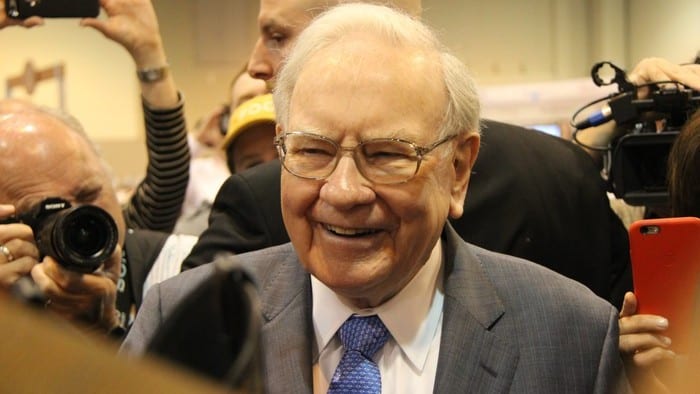
    a smiling picture of legendary US investment guru Warren Buffett.

    This article was originally published on Fool.com. All figures quoted in US dollars unless otherwise stated.

    Investors generally are unanimous about the following: Warren Buffett is an investor to watch during any market environment. This is because the billionaire has delivered a track record of success that spans nearly 60 years. As chairman and chief executive of Berkshire Hathaway, Buffett has helped generate a compounded annual gain of nearly 20%. This largely beats the S&P 500‘s 10% compounded increase over that time period.

    Buffett is now approaching retirement, with plans to hand over his CEO role to Greg Abel, currently the company’s vice-chairman of non-insurance operations, at the end of the year. But this expert investor has remained active in his final months and quarters of leadership. And that means we can take a look at what Buffett’s latest portfolio moves say about the market…

    Good news for Buffett fans

    First, though, here’s some good news for all of you Buffett-watchers: Buffett still will be around as chairman, will go into the Berkshire Hathaway office to share ideas with the team, and he’s promised to continue communications through an annual Thanksgiving message. So we may hear about Buffett’s thoughts on key subjects well into the future.

    Now, let’s consider Buffett’s general investment strategy over time and the moves he’s made in recent quarters. Buffett is known for choosing quality companies with solid competitive advantages, or moats, and investing in them for the long term. The billionaire won’t jump into the latest trend even if everyone else is doing so — and even if it’s delivering big returns fast. Buffett prefers companies he can count on over time, and this strategy has been a successful one.

    One extremely important point is that Buffett favors value stocks, meaning he aims to buy stocks trading for less than what they truly are worth. The idea is that the rest of the investment community eventually will recognize the strengths of these particular companies and buy the shares — and these stocks then will rise.

    So, what has Buffett been doing lately? The billionaire’s moves have been very clear: Over the past 12 quarters, he’s been a net seller of stocks, and he’s built up Berkshire Hathaway’s cash position to reach record levels.

    BRK.B Cash and Short Term Investments (Quarterly) Chart

    BRK.B Cash and Short Term Investments (Quarterly) data by YCharts

    Meanwhile, in his 2024 letter to shareholders, Buffett wrote that it’s rare to be “knee-deep” in buying opportunities.

    Buffett’s moves suggest one thing…

    This, along with Buffett’s focus on value, says something very clear about the market today — and a key market metric supports this. The S&P 500 Shiller CAPE ratio, a view of stock price in relation to earnings over 10 years, recently reached beyond 39, a level it’s only surpassed once before.

    S&P 500 Shiller CAPE Ratio Chart

    S&P 500 Shiller CAPE Ratio data by YCharts

    Buffett’s actions, supported by this valuation metric, suggest the stock market is expensive and has been so for a while. But, before you make any abrupt investing decisions based on this, it’s important to take a deeper look into Buffett’s moves. The Oracle of Omaha, as he’s often called, hasn’t stopped investing. He’s still found opportunities — for example, he picked up shares of UnitedHealth Group in the second quarter and shares of Alphabet in the third quarter.

    Both of these stocks were inexpensive at the time, and they continue to be reasonably priced. This shows us that, even if the overall stock market is pricey, investors still may find interesting opportunities.

    UNH PE Ratio (Forward) Chart

    UNH PE Ratio (Forward) data by YCharts

    Now, looking specifically at the Alphabet purchase, we can draw an additional conclusion. Though technology and artificial intelligence (AI) stocks have climbed over the past few years, this doesn’t mean that every AI player is expensive. It’s important to consider each company individually — if you don’t, you might miss out on a deal today that may become a winner down the road.

    So, Buffett’s moves over the past several quarters — from his selling activity to his accumulation of cash — suggest that today’s market is expensive. And the Shiller CAPE ratio confirms this. But Buffett doesn’t recommend staying away. Instead, his investing principles ring true in any market environment, including today’s: Look for value, and when you find it, buy and hold for the long term.

    This article was originally published on Fool.com. All figures quoted in US dollars unless otherwise stated.

    The post What Warren Buffett’s latest portfolio moves say about the market appeared first on The Motley Fool Australia.

    This article was originally published on Fool.com. All figures quoted in US dollars unless otherwise stated.

    Should you invest $1,000 in Alphabet right now?

    Before you buy Alphabet shares, consider this:

    Motley Fool investing expert Scott Phillips just revealed what he believes are the 5 best stocks for investors to buy right now… and Alphabet wasn’t one of them.

    The online investing service he’s run for over a decade, Motley Fool Share Advisor, has provided thousands of paying members with stock picks that have doubled, tripled or even more.*

    And right now, Scott thinks there are 5 stocks that may be better buys…

    * Returns as of 18 November 2025

    .custom-cta-button p { margin-bottom: 0 !important; }

    This article was originally published on Fool.com. All figures quoted in US dollars unless otherwise stated.

    More reading

    Adria Cimino has no position in any of the stocks mentioned.  The Motley Fool Australia’s parent company Motley Fool Holdings Inc. has positions in and has recommended Alphabet and Berkshire Hathaway. The Motley Fool Australia’s parent company Motley Fool Holdings Inc. has recommended UnitedHealth Group. The Motley Fool Australia has recommended Alphabet and Berkshire Hathaway. The Motley Fool has a disclosure policy. This article contains general investment advice only (under AFSL 400691). Authorised by Scott Phillips.

  • 3 stocks that in 20 years have turned $5,000 into more than $1 million

    A family of three sit on the sofa watching television.

    This article was originally published on Fool.com. All figures quoted in US dollars unless otherwise stated.

    Key Points

    • Growth stocks may not be predictable, but they have the potential to generate incredible returns for investors.
    • Nvidia, Netflix, and Booking Holdings have been some of the best growth stocks to own over the past two decades.
    • These companies have all established themselves as leading players in their respective industries.

    It isn’t always obvious that a growth stock will take off and generate massive returns for your portfolio. However, that’s one of the reasons why sometimes taking a chance on an up-and-coming stock can be a worthwhile move, even if you’re not entirely confident that it’ll be successful. Taking on some risk can result in monstrous gains and rewards later on.

    Three stocks that have made long-term investors rich over the past two decades include Nvidia (NASDAQ: NVDA), Netflix (NASDAQ: NFLX), and Booking Holdings (NASDAQ: BKNG). Here’s a look at just how much your investment would be worth if you bought $5,000 worth of shares in each of these companies 20 years ago.

    Where to invest $1,000 right now? Our analyst team just revealed what they believe are the 10 best stocks to buy right now. Continue » 

    1. Nvidia: $3 million

    The least-surprising stock on this list is likely Nvidia. The chipmaker has made people rich over just the past five years, let alone 20. If you invested $5,000 into the tech stock back on Dec. 1, 2005, your investment would be worth a staggering $3 million right now.

    Today, Nvidia has become the most valuable company in the world, with a market cap of $4.5 trillion. A couple of decades ago, it was primarily known for its graphics cards. Nowadays, its cutting-edge chips are used in the development of artificial intelligence (AI) models, which has led to game-changing results for the business.

    Over the past four quarters, the company has generated $187 billion in revenue. Just a few years ago, the company’s annual revenue was less than $30 billion. Nvidia’s gains have come rapidly, and for investors who want exposure to artificial intelligence (AI), this can be one of the safer stocks to hang on to for the long haul.

    2. Netflix: $1.2 million

    Another stock that would have made you rich over the past 20 years is streaming giant Netflix. A $5,000 investment a couple of decades ago would now have ballooned to be worth $1.2 million. Its ascent has been more gradual than Nvidia’s, and there have been challenges along the way. However, Netflix has established itself as a leader in video streaming.

    The company’s relentless pursuit of growth is evident with its recent acquisition attempt of Warner Bros. Discovery for $72 billion. Although the deal may not end up going through, as Paramount Skydance has announced a hostile bid, and there are concerns about whether this may hurt competition, it’s yet another example of Netflix looking for ways to grow and add value for its customers.

    The streaming giant has gone from posting losses to now enjoying strong profit margins of 24%. Netflix is a household name and yet another good growth stock to hold for the long haul.

    3. Booking Holdings: $1.1 million

    Rounding out this list of impressive stocks is Booking Holdings. A $5,000 investment in the business 20 years ago would now be worth around $1.1 million. The growth in the travel industry, particularly in online bookings, has enabled it to grow at an incredible pace.

    Last year, it reported $23.7 billion in sales and $5.9 billion in profit, a significant improvement from the $11 billion in sales it posted just three years earlier, when its bottom line was around $1.2 billion. Analysts from Grand View Research project that the online travel booking market is still growing at a compounded annual growth rate of roughly 10% until 2030, as there’s still more growth potential ahead for Booking Holdings.

    Given the plentiful opportunities ahead, it may still not be too late to invest in Booking Holdings stock. It trades at a forward price-to-earnings multiple of 21, based on analyst expectations. That’s slightly below the S&P 500 average of 22. For long-term growth investors, this can be a fantastic investment to simply buy and hold. 

    This article was originally published on Fool.com. All figures quoted in US dollars unless otherwise stated.

    The post 3 stocks that in 20 years have turned $5,000 into more than $1 million appeared first on The Motley Fool Australia.

    This article was originally published on Fool.com. All figures quoted in US dollars unless otherwise stated.

    Should you invest $1,000 in Booking Holdings right now?

    Before you buy Booking Holdings shares, consider this:

    Motley Fool investing expert Scott Phillips just revealed what he believes are the 5 best stocks for investors to buy right now… and Booking Holdings wasn’t one of them.

    The online investing service he’s run for over a decade, Motley Fool Share Advisor, has provided thousands of paying members with stock picks that have doubled, tripled or even more.*

    And right now, Scott thinks there are 5 stocks that may be better buys…

    * Returns as of 18 November 2025

    .custom-cta-button p { margin-bottom: 0 !important; }

    This article was originally published on Fool.com. All figures quoted in US dollars unless otherwise stated.

    More reading

    David Jagielski, CPA has no position in any of the stocks mentioned. The Motley Fool Australia’s parent company Motley Fool Holdings Inc. has positions in and has recommended Booking Holdings, Netflix, Nvidia, and Warner Bros. Discovery. The Motley Fool Australia has recommended Booking Holdings, Netflix, and Nvidia. The Motley Fool has a disclosure policy. This article contains general investment advice only (under AFSL 400691). Authorised by Scott Phillips.

  • Will the Droneshield share price double in 2026?

    Business people discussing project on digital tablet.

    It certainly has been an eventful year for the DroneShield Ltd (ASX: DRO) share price.

    After starting it at 77 cents, the counter drone technology company’s shares reached as high as $6.71 before coming back down to Earth like Icarus.

    At the end of last week, the company’s shares closed at $2.08.

    Will the DroneShield share price double again in 2026?

    Nobody can say for sure what will happen in 2026, but there’s certainly potential for the doubling of its share price again.

    Firstly, the company is operating in a market that is experiencing incredible demand. If that continues and its sales and earnings continue to grow, its share price is likely to push higher again.

    Though, this assumes it can avoid any more controversies like those that have weighed on investor sentiment in recent months.

    Bullish broker tips big returns

    Also supporting the case for a major re-rating is a recent broker note out of Bell Potter.

    According to the note, the broker has a buy rating and $5.30 price target on DroneShield’s shares.

    Based on its current share price of $2.08, this implies potential upside of over 150% for investors over the next 12 months.

    Bell Potter highlights that DroneShield has a sales pipeline valued at $2.55 billion. To put that into context, its current market capitalisation is approximately $1.9 billion.

    Commenting on its buy recommendation, the broker said:

    We believe DRO has the market leading counter-drone offering and a strengthening competitive advantage owing to its years of experience and large R&D team, focused on detect and defeat capabilities. We expect 2026 will be an inflection point for the global counter-drone industry with countries poised to unleash a wave of spending on soft-kill detect and defeat solutions. Consequently, we believe DRO should see material contracts flowing from its $2,550m potential sales pipeline over the next 3-6 months as defence budgets roll over to FY26.

    Though, there are risks to its thesis. The broker warns investors that:

    Failure to retain existing customers or attract new customers will severely impact revenue growth and the overall financial performance of the company. […] DRO operates in a competitive market including large multi-national defence contractors who have extensive resources and scale.

    Whatever happens, it certainly will be worth watching the DroneShield share price in 2026. And for shareholders (and prospective shareholders), hopefully it will be a very successful year for them.

    The post Will the Droneshield share price double in 2026? appeared first on The Motley Fool Australia.

    Should you invest $1,000 in DroneShield Limited right now?

    Before you buy DroneShield Limited shares, consider this:

    Motley Fool investing expert Scott Phillips just revealed what he believes are the 5 best stocks for investors to buy right now… and DroneShield Limited wasn’t one of them.

    The online investing service he’s run for over a decade, Motley Fool Share Advisor, has provided thousands of paying members with stock picks that have doubled, tripled or even more.*

    And right now, Scott thinks there are 5 stocks that may be better buys…

    * Returns as of 18 November 2025

    .custom-cta-button p {
    margin-bottom: 0 !important;
    }

    More reading

    Motley Fool contributor James Mickleboro has no position in any of the stocks mentioned. The Motley Fool Australia’s parent company Motley Fool Holdings Inc. has positions in and has recommended DroneShield. The Motley Fool Australia has no position in any of the stocks mentioned. The Motley Fool has a disclosure policy. This article contains general investment advice only (under AFSL 400691). Authorised by Scott Phillips.

  • Top brokers name 3 ASX shares to buy next week

    Broker written in white with a man drawing a yellow underline.

    It was another busy week for Australia’s top brokers. This has led to the release of a number of broker notes.

    Three broker buy ratings that you might want to know more about are summarised below. Here’s why brokers think these ASX shares are in the buy zone:

    Flight Centre Travel Group Ltd (ASX: FLT)

    According to a note out of Citi, its analysts have retained their buy rating on this travel agent giant’s shares with an increased price target of $16.75. This follows news that the company is acquiring UK based online cruise platform Iglu for 122 million British pounds. Citi notes that this is the second cruise related acquisition the company has made in two years. It believes this indicates that management is making a strategic push into higher-value and less volatile leisure segments. In response to the news, Citi has boosted its earnings estimates and its valuation for the company accordingly. The Flight Centre share price ended the week at $14.81.

    Megaport Ltd (ASX: MP1)

    A note out of Macquarie reveals that its analysts have retained their outperform rating on this network as a service provider’s shares with an increased price target of $21.70. The broker has been looking at Megaport’s recent acquisition of Latitude. It highlights that it expands the immediate addressable share of customer wallet as customers already consume compute products, but Megaport has not historically sold compute. Furthermore, Latitude’s product offering is highly complementary to its existing product set and offers a direct position in a large and fast-growing end market according to Macquarie. It estimates that Bare Metal as a Service (BMaaS) is a large, end market currently worth US$15 billion, and growing rapidly. Combined with the stabilisation of core revenue, Macquarie believes this leaves Megaport is well-placed for long term growth. The Megaport share price was fetching $13.17 at Friday’s close.

    NextDC Ltd (ASX: NXT)

    Analysts at Ord Minnett have retained their buy rating on this data centre operator’s shares with an increased price target of $20.50. According to the note, the broker was pleased to see that NextDC has signed a memorandum of understanding with OpenAI. It is the owner of ChatGPT. The deal is for the proposed S7 data centre in Eastern Creek, Sydney, which will be a hyperscale AI campus and the largest in the southern hemisphere with 650MW capacity. Ord Minnett sees big positives from the arrangement and believes it could be a boost to its valuation if it goes ahead as expected. The NextDC share price ended last week at $13.51.

    The post Top brokers name 3 ASX shares to buy next week appeared first on The Motley Fool Australia.

    Should you invest $1,000 in Flight Centre Travel Group Limited right now?

    Before you buy Flight Centre Travel Group Limited shares, consider this:

    Motley Fool investing expert Scott Phillips just revealed what he believes are the 5 best stocks for investors to buy right now… and Flight Centre Travel Group Limited wasn’t one of them.

    The online investing service he’s run for over a decade, Motley Fool Share Advisor, has provided thousands of paying members with stock picks that have doubled, tripled or even more.*

    And right now, Scott thinks there are 5 stocks that may be better buys…

    * Returns as of 18 November 2025

    .custom-cta-button p {
    margin-bottom: 0 !important;
    }

    More reading

    Citigroup is an advertising partner of Motley Fool Money. Motley Fool contributor James Mickleboro has positions in Megaport and Nextdc. The Motley Fool Australia’s parent company Motley Fool Holdings Inc. has positions in and has recommended Macquarie Group and Megaport. The Motley Fool Australia has positions in and has recommended Macquarie Group. The Motley Fool Australia has recommended Flight Centre Travel Group. The Motley Fool has a disclosure policy. This article contains general investment advice only (under AFSL 400691). Authorised by Scott Phillips.