
Tag: Stock pick

  • An 8.7% special dividend sounds great, but there’s a catch!

    Man holding Australian dollar notes, symbolising dividends.

    Shareholders in junior listed investment company ECP Emerging Growth Ltd (ASX: ECP) could soon be in line for a healthy special dividend, but there’s a significant catch attached.

    The company on Friday said it wanted to pay a 10-cent fully-franked special dividend to its shareholders, but only if participation in the company’s dividend reinvestment plan (DRP) reached 80%.

    The 10-cent special dividend would constitute an extra 8.7% fully-franked yield for shareholders, on top of the company’s current yield of 4.84%, according to the ASX website.

    How to pay out dividends without depleting cash

    Speaking at the company’s annual general meeting in November, Chair Murray d’Almeida explained the conundrum facing the company.

    He said that one of the issues shareholders regularly brought up was the significant amount of franking credits accrued by the company, and how these could be passed back to shareholders.

    As Mr d’Almeida said:

    The franking account is accumulated through tax paid by the company and represents value that could be distributed to shareholders by way of dividends. ECP has accumulated a very robust franking balance after multiple years of strong returns, particularly utilising the leveraged portfolio from the convertible note raising. The franking account balance allows the board to maintain our fully franked dividend payments even during periods of lacklustre portfolio performance, however given the market movements over the last few years there has been substantial credits accumulated in excess of normal prudent management.

    But, Mr d’Almeida said, the challenge was how to distribute the franking credits without depleting the company’s cash balance for investment, “and therefore shrink the size of ECP”.

    As such, the company has come up with what it says is a “truly unique” approach.

    The company on Friday said it would pay out the special dividend, but only if 80% of its shares were enrolled in the company’s dividend reinvestment plan (DRP).

    As the company said:

    The rationale behind the DRP criteria is to ensure the company can continue growing its overall size yet still provide shareholders with access to the franking credits.

    Level well short at the moment

    The company stated that the DRP participation rate was currently at 36.7%, and it encouraged its shareholders to contact its share registry and sign up in an effort to reach the 80% mark.

    ECP added that it would keep its shareholders apprised of progress towards the 80% hurdle when it released its net tangible asset report each month.

    ECP shares were steady at $1.14 on Friday, with no trades going through by about noon. The company was valued at $21 million at the close of trade on Thursday.  

    The post An 8.7% special dividend sounds great, but there’s a catch! appeared first on The Motley Fool Australia.

    Should you invest $1,000 in ECP Emerging Growth Ltd right now?

    Before you buy ECP Emerging Growth Ltd shares, consider this:

    Motley Fool investing expert Scott Phillips just revealed what he believes are the 5 best stocks for investors to buy right now… and ECP Emerging Growth Ltd wasn’t one of them.

    The online investing service he’s run for over a decade, Motley Fool Share Advisor, has provided thousands of paying members with stock picks that have doubled, tripled or even more.*

    And right now, Scott thinks there are 5 stocks that may be better buys…

    * Returns as of 18 November 2025

    .custom-cta-button p {
    margin-bottom: 0 !important;
    }

    More reading

    Motley Fool contributor Cameron England has no position in any of the stocks mentioned. The Motley Fool Australia’s parent company Motley Fool Holdings Inc. has no position in any of the stocks mentioned. The Motley Fool Australia has no position in any of the stocks mentioned. The Motley Fool has a disclosure policy. This article contains general investment advice only (under AFSL 400691). Authorised by Scott Phillips.

  • Why Austal, Fenix Resources, Metcash, and Polynovo shares are falling today

    Bored man sitting at his desk with his laptop.

    The S&P/ASX 200 Index (ASX: XJO) is heading into the weekend in style on Friday. In afternoon trade, the benchmark index is up 1.15% to 8,690.9 points.

    Four ASX shares that have failed to follow the market higher today are listed below. Here’s why they are dropping:

    Austal Ltd (ASX: ASB)

    The Austal share price is down 1.5% to $6.33. This morning, the shipbuilder revealed that the Foreign Investment Review Board and Federal Treasurer Jim Chalmers have approved an application South Korean giant Hanwha Corporation to increase its direct equity shareholding in Austal from 9.9% to 19.9%. Not everyone is happy with the decision, with the ABC reporting that Japanese officials twice contacted the Department of Defence to raise concerns about the Hanwha bid.

    Fenix Resources Ltd (ASX: FEX)

    The Fenix Resources share price is down 3.5% to 48.2 cents. This may have been driven by profit taking from some investors after the iron miner’s shares jumped on Thursday. That was driven by the release of its three-year production plan. After delivering production of 2.4Mt in FY 2025, it is now aiming to increase this to between 4.2 million and 4.8 million tonnes in FY 2026, 4.7 million and 5.3 million tonnes in FY 2027, and then 5.4 million and 6 million tonnes in FY 2028.

    Metcash Ltd (ASX: MTS)

    The Metcash share price is down 3% to $3.25. This has been caused by the wholesale distributor’s shares going ex-dividend this morning for its latest payout. At the start of the month, Metcash released its half year results and reported a 5.9% decrease in underlying profit after tax to $126.7 million. Nevertheless, the Metcash board elected to maintain its fully franked interim dividend at 8.5 cents per share. Eligible shareholders can look forward to receiving this dividend late next month on 28 January.

    Polynovo Ltd (ASX: PNV)

    The Polynovo share price is down 1.5% to $1.22. This is despite the medical device company being the subject of a bullish broker note out of Morgans today. According to the note, the broker has upgraded Polynovo’s shares to a buy rating with a $2.03 price target. This implies potential upside of approximately 65% for investors over the next 12 months. Its analysts said: “Following changes to its Board and with the appointment of a new CEO, we see more stability and focus returning to the PNV business.”

    The post Why Austal, Fenix Resources, Metcash, and Polynovo shares are falling today appeared first on The Motley Fool Australia.

    Should you invest $1,000 in Austal Limited right now?

    Before you buy Austal Limited shares, consider this:

    Motley Fool investing expert Scott Phillips just revealed what he believes are the 5 best stocks for investors to buy right now… and Austal Limited wasn’t one of them.

    The online investing service he’s run for over a decade, Motley Fool Share Advisor, has provided thousands of paying members with stock picks that have doubled, tripled or even more.*

    And right now, Scott thinks there are 5 stocks that may be better buys…

    * Returns as of 18 November 2025

    .custom-cta-button p {
    margin-bottom: 0 !important;
    }

    More reading

    Motley Fool contributor James Mickleboro has no position in any of the stocks mentioned. The Motley Fool Australia’s parent company Motley Fool Holdings Inc. has positions in and has recommended PolyNovo. The Motley Fool Australia has recommended PolyNovo. The Motley Fool has a disclosure policy. This article contains general investment advice only (under AFSL 400691). Authorised by Scott Phillips.

  • Austal shares fall after Treasurer greenlights higher Hanwha stake

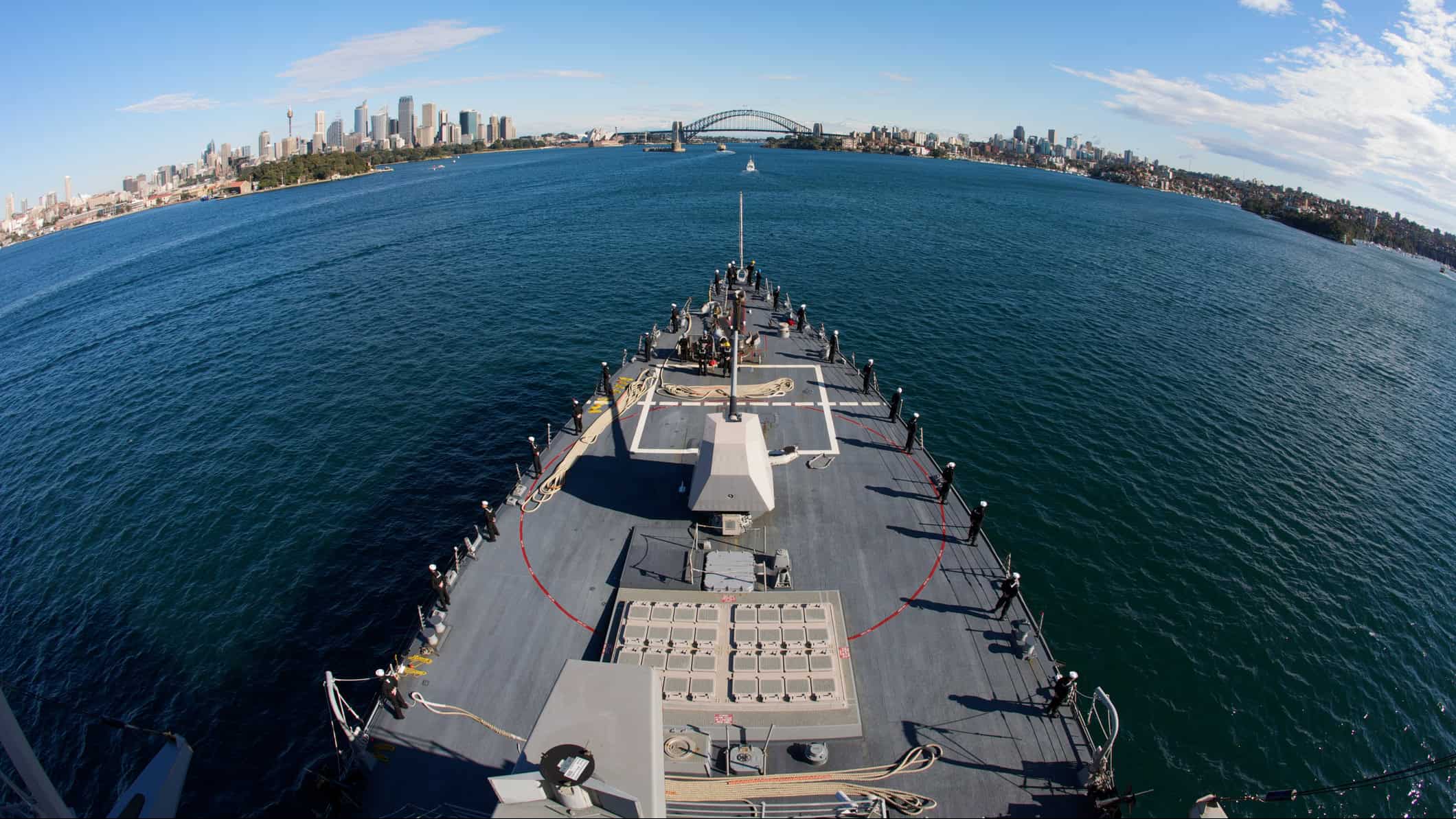
    A U.S. Naval Ship (DDG) enters Sydney harbour.

    Austal Ltd (ASX: ASB) shares have fallen on news that a foreign shipbuilder has been granted permission to raise its stake.

    Treasurer Jim Chalmers and the Foreign Investment Review Board (FIRB) have approved an application lodged in June by HAA Pty
    Ltd, an entity controlled by South Korean shipbuilder Hanwha Corp, to buy up to a 19.9% stake in Austal.

    That’s just below the 20% threshold at which a shareholder must make a formal takeover offer under the Corporations Act.

    The Austal share price is currently $6.27, down 2.34% on Friday, while the S&P/ASX 200 Index (ASX: XJO) is up 1.1%.

    Austal is Australia’s largest defence exporter. It owns shipyards in the US, Australia, Vietnam, and the Philippines.

    Its clients include the Australian Navy and the US Navy.

    Hanwha is a diversified Fortune 500 company with interests in defence, aerospace, clean energy, finance, and retail.

    Hanwha already owns 9.9% of Austal plus a further 9.9% economic interest through a cash-settled total return swap.

    This makes Hanwha one of Austal’s largest shareholders, and it’s been a long-time suitor for the Australian defence shipbuilder.

    In fact, Hanwha tried to buy Austal outright last year when it offered $2.825 per share in cash to take over the company.

    Why did the Treasurer approve Hanwha’s request?

    A statement from Chalmers said the approval is subject to strict conditions.

    These include Hanwha’s access to and storage of sensitive information.

    There are also conditions regarding who Hanwha may nominate to the Austal board, if Austal were to accept any nomination.

    In a statement, Chalmers said:

    My decision was not taken lightly and comes after extensive consultation and long and careful deliberation.

    It follows a thorough and robust process that took account of all the relevant economic, national security and other national interest issues.

    Hanwha would remain a minority shareholder under this proposal and cannot increase its shareholding above 19.9 per cent.

    This decision ensures there are greater protections for our Strategic Shipbuilder and the Government’s sovereign interests in Austal.

    In August, the Government signed the Strategic Shipbuilding Agreement with Austal after naming it our sovereign shipbuilder for Tier 2 surface combatant vessels.

    Chalmers said the agreement remained an essential part of the Future Made in Australia agenda.

    This decision and associated conditions will protect our sovereign interests in this capability and ensure the company can continue to grow, invest, and deliver continuous shipbuilding in Western Australia.

    What did Austal management say?

    In a statement today, Austal CEO Paddy Gregg said:

    Treasurer Chalmers has made his decision and we respect that decision.

    With the clarity provided by this decision, the Board and management are firmly focused on delivering value for all Austal shareholders as Australia’s sovereign shipbuilder under the Strategic Shipbuilding Agreement (SSA), a major contributor to the US defence industrial base, and with significant growth opportunities at our US and Australasia operations.

    Will Hanwha get a seat on the board?

    Hanwha has previously indicated that it would seek to partner with Austal on various opportunities and also seek a board position if granted approval to raise its stake to 19.9%.

    Today, Austal said:

    The Austal board will closely review the opportunities and risks associated with those partnership and board position requests, should they be made officially, before it determines whether this would deliver demonstrable benefits for all Austal shareholders.

    Austal shares double in 2025

    Austal shares have ripped in 2025 amid the global megatrend in rising defence spending.

    The Austal share price is up 102% in the year to date.

    The industrials stock entered the benchmark ASX 200 at the June quarter rebalance.

    For FY25, Austal reported a record $1.8 billion of revenue and EBIT of $113 million.

    Its EBIT guidance for FY26 is $135 million, which would be a record for the company.

    Austal’s order book is currently worth more than $13 billion.

    In October, Austal executed a US$100 million loan agreement from Export Finance Australia (EFA).

    EFA is the Australian Government’s export credit agency.

    Austal will use the funding for the construction of vessels for the US Navy and US Coast Guard at its Alabama shipyard.

    In March, Austal conducted a $200 million institutional placement to fund the expansion of its Alabama shipyard.

    The post Austal shares fall after Treasurer greenlights higher Hanwha stake appeared first on The Motley Fool Australia.

    Should you invest $1,000 in Austal Limited right now?

    Before you buy Austal Limited shares, consider this:

    Motley Fool investing expert Scott Phillips just revealed what he believes are the 5 best stocks for investors to buy right now… and Austal Limited wasn’t one of them.

    The online investing service he’s run for over a decade, Motley Fool Share Advisor, has provided thousands of paying members with stock picks that have doubled, tripled or even more.*

    And right now, Scott thinks there are 5 stocks that may be better buys…

    * Returns as of 18 November 2025

    .custom-cta-button p {
    margin-bottom: 0 !important;
    }

    More reading

    Motley Fool contributor Bronwyn Allen has no position in any of the stocks mentioned. The Motley Fool Australia’s parent company Motley Fool Holdings Inc. has positions in and has recommended Austal and Macquarie Group. The Motley Fool Australia has positions in and has recommended Macquarie Group. The Motley Fool has a disclosure policy. This article contains general investment advice only (under AFSL 400691). Authorised by Scott Phillips.

  • This ASX income ETF is trading on a 7% yield right now

    Australian dollar notes in the pocket of a man's jeans, symbolising dividends.

    Looking at the ASX landscape right now, dividend investors would be hard-pressed to find an income stock that is trading on a dividend yield of over 5%. At least, one that isn’t showing clear signs of being a dividend trap. That’s why those investors might wish to check out an ASX income ETF that has a yield of the magnitude on the table today.

    Even a 5% yield wasn’t that hard to find until quite recently. The ASX’s ascent to a series of new record highs earlier this year was good news for most ASX investors. But rising stock prices mean lower dividend yields if the payouts don’t rise in tandem. That they haven’t been for most prominent ASX dividend shares.

    Shares that investors may have been used to seeing with yields of 4 to 5% in years gone by are now offering noticeably lower yields.

    That’s true from Telstra Group Ltd (ASX: TLS) to Wesfarmers Ltd (ASX: WES), from Coles Group Ltd (ASX: COL) to Westpac Banking Corp (ASX: WBC). And particularly so for Commonwealth Bank of Australia (ASX: CBA), which spent much of 2025 with a very unbank-like yield of below 3%.

    But let’s check out an ASX income ETF that has far more than that on the table today.

    An ASX income ETF with a 7% yield?

    That ASX ETF is the SPDR S&P Global Dividend ETF (ASX: WDIV). This fund is a dividend-focused ETF that holds around 100 high-yielding companies sourced from all around the world. These companies are assessed for their dividend stability over the past ten years. Any stocks that have cut their payouts in this period are excluded.

    It holds companies from the United States, Canada and Japan, as well as from China, Hong Kong and Europe. Australia is represented as well, although it contributes about 2% to WDIV’s overall portfolio.

    Some of this income ETF’s top positions include CVS Healthcare Corporation, Altria Group, Pfizer and Mitsui Chemicals. The ASX’s APA Group (ASX: APA) flies the local flag.

    But let’s talk dividends. WDIV ETF pays out two dividend distributions annually. Over 2025, investors enjoyed a January dividend distribution worth 30.94 cents per share, as well as the July payment worth $1.26 per share. At the current WDIV unit price of $21.95 (at the time of writing), that annual total of $1.57 per unit gives this ASX income ETF a trailing yield of 7.15%.

    Before you rush out to buy this ETF to secure a 7% yield, though, investors should be aware that WDIV’s payouts, like most ETFs, do bounce around from year to year.

    Yes, investors got a bumper year in 2025. But if this ETF had instead paid out 91.7 cents per share in payouts over 2025, as it did in 2024, its yield would be about 4.18% today.

    Even so, this ASX income ETF has a strong history of paying large upfront dividends from a portfolio of stocks that have demonstrated defensiveness when it comes to payouts. That’s arguably not something to ignore for income investors in the current environment.

    The post This ASX income ETF is trading on a 7% yield right now appeared first on The Motley Fool Australia.

    Should you invest $1,000 in SPDR S&P Global Dividend Fund right now?

    Before you buy SPDR S&P Global Dividend Fund shares, consider this:

    Motley Fool investing expert Scott Phillips just revealed what he believes are the 5 best stocks for investors to buy right now… and SPDR S&P Global Dividend Fund wasn’t one of them.

    The online investing service he’s run for over a decade, Motley Fool Share Advisor, has provided thousands of paying members with stock picks that have doubled, tripled or even more.*

    And right now, Scott thinks there are 5 stocks that may be better buys…

    * Returns as of 18 November 2025

    .custom-cta-button p {
    margin-bottom: 0 !important;
    }

    More reading

    Motley Fool contributor Sebastian Bowen has positions in Altria Group and Wesfarmers. The Motley Fool Australia’s parent company Motley Fool Holdings Inc. has positions in and has recommended Pfizer and Wesfarmers. The Motley Fool Australia’s parent company Motley Fool Holdings Inc. has recommended CVS Health. The Motley Fool Australia has positions in and has recommended Apa Group and Telstra Group. The Motley Fool Australia has recommended Wesfarmers. The Motley Fool has a disclosure policy. This article contains general investment advice only (under AFSL 400691). Authorised by Scott Phillips.

  • Why 4DMedical, Dateline, Deep Yellow, and Newmont shares are pushing higher today

    Person pointing at an increasing blue graph which represents a rising share price.

    In afternoon trade, the S&P/ASX 200 Index (ASX: XJO) is on course to end the week on a positive note. At the time of writing, the benchmark index is up 1.1% to 8,688.6 points.

    Four ASX shares that are rising more than most today are listed below. Here’s why they are climbing:

    4DMedical Ltd (ASX: 4DX)

    The 4DMedical share price is up 10% to $2.25. Investors have been buying this medical technology company’s shares after it secured a cash injection of $30.2 million through the underwriting of options. 4DMedical’s founder-CEO, Andreas Fouras, said: “2025 has been an outstanding year for 4DMedical and our shareholders. We are moving at remarkable speed, and our momentum continues to build. This agreement ensures that we have more than sufficient capital to execute our plans to commercialise CT:VQ and to lead the Company through to profitability.”

    Dateline Resources Ltd (ASX: DTR)

    The Dateline Resources share price is up 2% to 24 cents. This morning, the rare earths producer released an update on legal proceedings against Dateline’s CEO, Stephen Baghdadi. The proceedings are an attempt to procure the transfer of certain rare earth elements (REE) tenements in the USA. In a preliminary hearing, no findings were made by the Court. However, it notes that “a timetable was agreed under which USC/Gladiator is required to provide further information regarding its claim, pending a further hearing on 23 December 2025. Until then, Stephen Baghdadi, on behalf of Dateline, agreed to maintain the status quo in relation to the tenements that are subject to USC/Gladiator’s claims.”

    Deep Yellow Ltd (ASX: DYL)

    The Deep Yellow share price is up 5% to $1.94. This may have been driven by a broker note out of Ord Minnett this morning. According to the note, its analysts have upgraded this uranium producer’s shares to an accumulate rating from hold with a price target of $2.00. The broker made the move after increasing its earnings estimates to reflect improving commodity prices in 2026.

    Newmont Corporation (ASX: NEM)

    The Newmont share price is up 5% to $149.63. Investors have been buying Newmont’s shares following a strong rise in the gold price overnight after the US Federal Reserve cut interest rates this week. It isn’t just Newmont that is rising today. Almost all ASX gold miners are climbing in response, which has lifted the S&P/ASX All Ordinaries Gold index by a sizeable 3.5%.

    The post Why 4DMedical, Dateline, Deep Yellow, and Newmont shares are pushing higher today appeared first on The Motley Fool Australia.

    Should you invest $1,000 in 4DMedical Limited right now?

    Before you buy 4DMedical Limited shares, consider this:

    Motley Fool investing expert Scott Phillips just revealed what he believes are the 5 best stocks for investors to buy right now… and 4DMedical Limited wasn’t one of them.

    The online investing service he’s run for over a decade, Motley Fool Share Advisor, has provided thousands of paying members with stock picks that have doubled, tripled or even more.*

    And right now, Scott thinks there are 5 stocks that may be better buys…

    * Returns as of 18 November 2025

    .custom-cta-button p {
    margin-bottom: 0 !important;
    }

    More reading

    Motley Fool contributor James Mickleboro has no position in any of the stocks mentioned. The Motley Fool Australia’s parent company Motley Fool Holdings Inc. has no position in any of the stocks mentioned. The Motley Fool Australia has no position in any of the stocks mentioned. The Motley Fool has a disclosure policy. This article contains general investment advice only (under AFSL 400691). Authorised by Scott Phillips.

  • Does Macquarie rate Transurban Group shares a buy, hold or sell?

    Toll road at night time.

    Transurban Group (ASX: TCL) shares give investors the chance to invest in one of the world’s largest toll road businesses. Analysts at Macquarie have revealed whether they think the ASX dividend share is a buy, hold or sell.

    Transurban owns and operates toll roads in Australia (including in Brisbane, Melbourne and Sydney) and North America. Some of the roads it owns include WestConnex and CityLink.

    The business generates significant cash flow each year, allowing Transurban to provide investors with a sizeable distribution each year. Its tolls largely increase at the rate of inflation, or grow on ‘ratchet clauses’ at the greater of CPI of 4%.

    Is the Transurban share price a buy?

    Transurban’s average daily traffic (ADT) continues to grow on its roads.

    In the three months to September 2025, group ADT rose 2.7% year-over-year. Within that, Sydney ADT rose 1.7%, Melbourne ADT rose 3.2%, Brisbane ADT grew 2.6% and North America ADT went up 6.8%.

    Macquarie currently has a neutral rating on the business with a price target of $14.62. A price target is where the broker thinks the share price will be in 12 months from now. That implies little change from where it is today.

    The biggest part of the return could come from the income distribution, which is predicted to be 69 cents per security in FY26. That translates into a forward distribution yield of 4.7%, at the time of writing.

    Latest thoughts on the toll road business

    Macquarie provided some commentary on Transurban after the NSW government updated the market for additional NSW toll reform.

    The Premier had already pre-released the toll cap of $60 per week will continue, though Macquarie said the “wrinkle” was that it is now capped at $5,000 per account, with the broker seeing no impact on traffic as a result. Administration fees are being removed from FY27.

    Macquarie then said the following on developments and potential outcomes for certain roads:

    Shifts to bidirectional tolling on SHB/T/WHT in FY29 (opening of WHT) were anticipated. This adds ~$200m of revenue to fund reform around tolls, which government said it is still seeking. There could be a variety of possibilities – two we see having merit: simply a step-down in the flag fall for cars on WCX (i.e., $1.00 is ~12% toll reduction), or elimination of the CPI+ component in the M2, NCX and WCX for cars. ED concession needs to be adjusted for bidirectional tolling, and removing its CPI+ component could be included in this.

    There remains ~$1.0-1.5bn of latent value in the ED, M7 and M2 concession, through removal of IRR caps and gearing limitations. This provides government currency to negotiate price reductions or enable the M2/M7 widening of the northern sections.

    In terms of the potential financials, Macquarie is projecting that in FY26 Transurban could generate $4.1 billion of revenue, $3.2 billion of operating profit (EBITDA) and $2.15 billion of net profit.

    The post Does Macquarie rate Transurban Group shares a buy, hold or sell? appeared first on The Motley Fool Australia.

    Should you invest $1,000 in Transurban Group right now?

    Before you buy Transurban Group shares, consider this:

    Motley Fool investing expert Scott Phillips just revealed what he believes are the 5 best stocks for investors to buy right now… and Transurban Group wasn’t one of them.

    The online investing service he’s run for over a decade, Motley Fool Share Advisor, has provided thousands of paying members with stock picks that have doubled, tripled or even more.*

    And right now, Scott thinks there are 5 stocks that may be better buys…

    * Returns as of 18 November 2025

    .custom-cta-button p {
    margin-bottom: 0 !important;
    }

    More reading

    Motley Fool contributor Tristan Harrison has no position in any of the stocks mentioned. The Motley Fool Australia’s parent company Motley Fool Holdings Inc. has positions in and has recommended Macquarie Group and Transurban Group. The Motley Fool Australia has positions in and has recommended Macquarie Group and Transurban Group. The Motley Fool has a disclosure policy. This article contains general investment advice only (under AFSL 400691). Authorised by Scott Phillips.

  • New silver and zinc mining aspirant debuts at a 20% premium in a quick win for shareholders

    Miner holding a silver nugget

    Shares in BMC Minerals Ltd (ASX: BMC) got off to a strong start on their first day on the ASX on Friday, changing hands at more than a 20% premium to their offer price.

    The shares in the silver and zinc mining aspirant traded as high as $2.44 before settling back slightly to be changing hands for $2.40, 20% up on the company’s initial public offer (IPO) price.

    BMC raised $100 million before listing on the ASX in what it described as a “heavily oversubscribed” initial public offer.

    Pushing forward with development

    BMC chair Steven Michael said it was an important milestone for the company which would now press on with developing its Kudz Ze Kayah (KZK) mine project in the Yukon region of Canada, which the company said would be the nation’s largest silver and zinc operation once brought into production.

    Mr Michael went on to say:

    BMC is focused on accelerating the existing workstreams at our 100%-owned KZK polymetallic project by planning a major drilling program to commence early in the new year and anticipate receiving several licences and permits from Yukon and Federal regulatory bodies. We look forward to executing on our growth strategy, at a time when silver, gold and copper prices are extremely strong and establishing the ABM Mine as Canada’s largest silver and zinc producer and a top 15 copper producer.

    The company said it had owned the KZK project since 2015, and since then had delineated 27.9 million tonnes of ore across two deposits, ABM and Kona.

    The company said it had completed a feasibility study which showed the ABM deposit could be mined for nine years, with a payback period of about two years.

    The company added on Friday:

    BMC has completed a range of technical studies at ABM based on the development of a 2 million tonne per annum mine, which contemplates that about 89% of ore reserves will be mined via open pits and 11% from an underground mine, which will be developed to access the deeper portions of the Krakatoa zone. The company’s feasibility study has outlined a pre-tax net present value of US$835 million for the ABM Mine at conservative commodity prices compared to the current long-term consensus, with a capital payback period of about 2 years.

    The mine would produce three concentrates conating silver and gold, copper, and zinc, with binding offtake agreements already signed across all commodities for the first five years of production.

    The $100 million raised in the IPO will now be used for more exploration to extend the potential mine life and to complete optimisation studies.

    The post New silver and zinc mining aspirant debuts at a 20% premium in a quick win for shareholders appeared first on The Motley Fool Australia.

    Wondering where you should invest $1,000 right now?

    When investing expert Scott Phillips has a stock tip, it can pay to listen. After all, the flagship Motley Fool Share Advisor newsletter he has run for over ten years has provided thousands of paying members with stock picks that have doubled, tripled or even more.*

    Scott just revealed what he believes could be the ‘five best ASX stocks’ for investors to buy right now. We believe these stocks are trading at attractive prices and Scott thinks they could be great buys right now…

    * Returns as of 18 November 2025

    .custom-cta-button p {
    margin-bottom: 0 !important;
    }

    More reading

    Motley Fool contributor Cameron England has no position in any of the stocks mentioned. The Motley Fool Australia’s parent company Motley Fool Holdings Inc. has no position in any of the stocks mentioned. The Motley Fool Australia has no position in any of the stocks mentioned. The Motley Fool has a disclosure policy. This article contains general investment advice only (under AFSL 400691). Authorised by Scott Phillips.

  • Why is everyone talking about NAB shares on Friday?

    Bank building in a financial district.

    National Australia Bank Ltd (ASX: NAB) shares are marching higher today.

    Shares in the S&P/ASX 200 Index (ASX: XJO) bank stock closed yesterday trading for $41.38. During the Friday lunch hour, shares are changing hands for $41.85 apiece, up 1.1%.

    For some context, the ASX 200 is also up 1.1% at this same time.

    Over the past year, however, NAB shares have significantly outperformed the benchmark index, gaining 11.4% compared to the 4.3% 12-month gains posted by the ASX 200.

    Atop those capital gains, NAB stock also trades on a fully franked 4.1% trailing dividend yield. And if you owned shares at market close on 10 November, you’ll be seeing the final NAB dividend payout of 85 cents a share hitting your bank account today.

    But that’s not why the ASX 200 bank is in focus today.

    Instead, the bank is grabbing headlines following its annual general meeting (AGM).

    Here’s what’s happening.

    NAB shares in focus amid AGM

    Opening the meeting, NAB chair Philip Chronican said, “Building a simpler, more modern bank is a key focus. We want our bank to be fit for the long-term and capable of delivering for customers in a rapidly changing world.”

    Addressing the resurgence of historic employee underpayment issues, which date back to 2012 and have thrown up past headwinds for NAB shares, Chronican said:

    Unfortunately, more payroll issues were uncovered this year. In response, NAB launched a broader review into payroll-related benefits under current and historical agreements. Management is working hard to resolve and remediate these payroll issues as quickly as possible for our colleagues.

    Turning to the returns delivered by NAB shares, Chronican added:

    The board declared dividends for the year of 170 cents per share, in line with our target payout ratio, and returned $5.2 billion to shareholders. We retain a bias towards reducing the share count over time, which helps drive sustainable returns for shareholders.

    Since August 2021, we have completed $8 billion in on-market buybacks and continue to neutralise NAB’s dividend reinvestment plan.

    Over the past five years to 30 September 2025, our total shareholder return reached 190%, higher than the average of 168% for NAB’s major bank peers.

    A word from the CEO

    NAB CEO Andrew Irvine took the podium next.

    He noted that across the year, “Australian business lending balances rose by 9%, and total customer deposits grew by 7%.”

    Commenting on NAB’s market-leading business banking segment, Irvine said:

    NAB improved market share in both total business lending and business deposits. Competition in business banking continues to increase and NAB competes from a position of strength. We know this market well, have a leading position and we intend to extend our position, not just defend it.

    NAB shares could also enjoy longer-term support from the bank’s ongoing investments into artificial intelligence.

    According to Irvine:

    AI is supporting fraud detection, improving cybersecurity, streamlining home loan application processes and reducing low-value work for our NAB colleagues.

    We are pursuing a range of use cases for generative and agentic AI, as well as assisting our colleagues to develop the AI skills of the future.

    The post Why is everyone talking about NAB shares on Friday? appeared first on The Motley Fool Australia.

    Should you invest $1,000 in National Australia Bank Limited right now?

    Before you buy National Australia Bank Limited shares, consider this:

    Motley Fool investing expert Scott Phillips just revealed what he believes are the 5 best stocks for investors to buy right now… and National Australia Bank Limited wasn’t one of them.

    The online investing service he’s run for over a decade, Motley Fool Share Advisor, has provided thousands of paying members with stock picks that have doubled, tripled or even more.*

    And right now, Scott thinks there are 5 stocks that may be better buys…

    * Returns as of 18 November 2025

    .custom-cta-button p {
    margin-bottom: 0 !important;
    }

    More reading

    Motley Fool contributor Bernd Struben has no position in any of the stocks mentioned. The Motley Fool Australia’s parent company Motley Fool Holdings Inc. has no position in any of the stocks mentioned. The Motley Fool Australia has no position in any of the stocks mentioned. The Motley Fool has a disclosure policy. This article contains general investment advice only (under AFSL 400691). Authorised by Scott Phillips.
  • Up 752% in one year! This roaring ASX AI stock just hit all-time highs on major revenue milestone

    A medical professional uses a tablet showing a digital image of a human body.

    Investors in Artrya Ltd (ASX: AYA) have been on a whirlwind ride in recent months.

    Barely one year ago, shares in this ASX AI stock were changing hands at $0.46 apiece.

    Today, Artrya shares reached a new all-time high of $4.29 in morning trade before easing back to $3.92 apiece at the time of writing.

    This powerful rally represents a staggering 752% return in just twelve months, blowing the broader market out of the water.

    For context, the All Ordinaries Index (ASX: XAO) has risen by 4.53% over the same timeframe.

    So, what’s behind this remarkable performance?

    Let’s take a closer look at what’s driving the heat for this ASX AI stock.

    Improving heart disease diagnostics

    Founded in 2019, Artrya is a medical technology company commercialising cloud-based AI solutions for heart disease diagnostics.

    Its flagship platform, Salix, provides rapid assessment of chest pain across emergency and primary care settings.

    Management believes Salix can improve patient outcomes, lower treatment costs, and streamline clinical workflows.

    A major catalyst arrived in August when Artrya secured regulatory approval from the US Food and Drug Administration (FDA) for its Salix Coronary Plaque module.

    This milestone followed earlier FDA consent for its Salix Coronary Anatomy product.

    These formal ticks of approval paved the way for Artrya to pursue entry into the lucrative American market.

    Here, the ASX AI stock is targeting a US market opportunity estimated at US$4.4 billion.

    And its commercialisation push appears to be gaining traction.

    What happened?

    Today, Artrya announced it has now achieved its first revenue from the Salix Coronary Plaque module.

    More specifically, US-based Tanner Health has commenced commercial use of the module, generating maiden fee-per-scan revenues for Artrya.

    Tanner Health is a community-focused healthcare network serving west Georgia and east Alabama with five hospitals and several practices.

    The organisation has now activated the module at its primary hospital in Georgia, with a wider roll-out to further hospitals expected soon.

    Artrya Co-Founder and Chief Executive Officer, John Konstantopoulos, stated:

    We are thrilled to commence the first clinical use of the Salix® Coronary Plaque module at Tanner Health, which has been well supported by our new U.S. Customer Support team. The ease of activation within the Salix® Coronary Anatomy platform has been well received by the clinicians and the back end processes through to billing are also now established. We look forward to growing adoption across the entire Tanner Health network in the near term, which will generate an attractive ongoing fee to Artrya, from each scan they assess.

    What else?

    Today’s news follows another significant step in Artrya’s US expansion.

    Last week, shares in the ASX AI stock jumped sharply after unveiling a three-year commercial agreement with Northeast Georgia Health System.

    This deal carries a minimum value of US$0.3 million, with further fee-per-scan revenue expected from the Coronary Plaque module and, pending FDA clearance, the Salix Coronary Flow module.

    The post Up 752% in one year! This roaring ASX AI stock just hit all-time highs on major revenue milestone appeared first on The Motley Fool Australia.

    Should you invest $1,000 in Artrya Limited right now?

    Before you buy Artrya Limited shares, consider this:

    Motley Fool investing expert Scott Phillips just revealed what he believes are the 5 best stocks for investors to buy right now… and Artrya Limited wasn’t one of them.

    The online investing service he’s run for over a decade, Motley Fool Share Advisor, has provided thousands of paying members with stock picks that have doubled, tripled or even more.*

    And right now, Scott thinks there are 5 stocks that may be better buys…

    * Returns as of 18 November 2025

    .custom-cta-button p {
    margin-bottom: 0 !important;
    }

    More reading

    Motley Fool contributor Bart Bogacz has no position in any of the stocks mentioned. The Motley Fool Australia’s parent company Motley Fool Holdings Inc. has no position in any of the stocks mentioned. The Motley Fool Australia has no position in any of the stocks mentioned. The Motley Fool has a disclosure policy. This article contains general investment advice only (under AFSL 400691). Authorised by Scott Phillips.

  • Whyalla steelworks connection puts a rocket under this resources tech stock’s shares

    Iron ore price Vale dam collapse ASX shares iron ore, iron ore australia, iron ore price, commodity price,

    Shares in Hazer Group Ltd (ASX: HZR) piled on more than 25% in early trade on Friday after the company’s technology was attached to a bid to take over the Whyalla steelworks in South Australia.

    Control of the steelworks was wrested from the control of controversial British steel magnate Sanjeev Gupta in February this year, with the South Australian Government forcing the steelworks into administration.

    The steelworks is now being propped up by the state and federal governments while administrator KordaMentha seeks bids from potential new owners, with names such as BlueScope Steel Ltd (ASX: BSL) in the mix.

    Another company that has put its name in the ring is global steelmaking raw materials and mining services company M Resources, which, according to its website, turns over about US$1 billion a year, trading more than 20 million tonnes of commodities.

    Hydrogen solution the key

    Hazer said on Friday that its technology had been selected by M Resources to be part of its bid, as a “low-cost, decarbonisation solution”.

    The company said it had signed a memorandum of understanding to be part of the M Resources bid to operate Whyalla.

    The company added:

    Under the partnership, Hazer’s proprietary methane pyrolysis technology, in conjunction with KBR, has been incorporated on an exclusive basis into M Resources’ proposal for Whyalla, significantly strengthening the envisioned development of a revitalised, low carbon emissions steelmaking hub in South Australia.

    Hazer said the M Resources bid to operate the steelworks “prioritises an economically viable long-term industrial renewal with a strong emphasis on carbon abatement”.

    Hazer’s technology, producing clean hydrogen and high-value graphite from methane, is well positioned to play an enabling role in the establishment of a low-carbon emissions steel manufacturing precinct at Whyalla.

    Hazer technology adaptable

    Under the memorandum of understanding, the companies have agreed to collaborate on how to integrate Hazer’s technology into the direct reduction process – a key part of the proposed revitalisation of the steelworks in which hydrogen will replace natural gas in the process used to make iron ore pellets.

    In addition, Hazer Graphite will be used in the Electric Arc Furnace (EAF) to produce steel. The planned Hazer facility is expected to target large-scale commercial hydrogen production capacity with additional synergies coming from the use of an iron-ore catalyst in the Hazer process.

    Hazer Managing Director Glenn Corrie said the partnership with M Resources was “a clear demonstration of the Hazer Process’s ability to integrate into steelmaking, particularly through the use of low-cost clean hydrogen for direct iron reduction and the application of Hazer graphite in electric arc furnaces”.

    Hazer shares traded as high as 52.5 cents on the news, up 28%, before settling back to be 20.7% higher at 49.5 cents.

    The company was valued at $108.8 million at the close of trade on Thursday.

    The post Whyalla steelworks connection puts a rocket under this resources tech stock’s shares appeared first on The Motley Fool Australia.

    Should you invest $1,000 in Hazer Group Limited right now?

    Before you buy Hazer Group Limited shares, consider this:

    Motley Fool investing expert Scott Phillips just revealed what he believes are the 5 best stocks for investors to buy right now… and Hazer Group Limited wasn’t one of them.

    The online investing service he’s run for over a decade, Motley Fool Share Advisor, has provided thousands of paying members with stock picks that have doubled, tripled or even more.*

    And right now, Scott thinks there are 5 stocks that may be better buys…

    * Returns as of 18 November 2025

    .custom-cta-button p {
    margin-bottom: 0 !important;
    }

    More reading

    Motley Fool contributor Cameron England has no position in any of the stocks mentioned. The Motley Fool Australia’s parent company Motley Fool Holdings Inc. has no position in any of the stocks mentioned. The Motley Fool Australia has no position in any of the stocks mentioned. The Motley Fool has a disclosure policy. This article contains general investment advice only (under AFSL 400691). Authorised by Scott Phillips.