
Tag: Stock pick

  • Why are Northern Star shares crashing 10% today?

    A man holds his head in his hands, despairing at the bad result he's reading on his computer.

    Northern Star Resources Ltd (ASX: NST) shares are starting the year in a disappointing fashion.

    In morning trade, the gold miner’s shares are down 10% to $23.99.

    Why are Northern Star shares crashing?

    The catalyst for today’s selloff has been the release of an operational update this morning.

    According to the release, Northern Star’s December quarter gold sales were impacted by a number of isolated negative events coinciding at its operations late in the quarter.

    Total sales were ~348,000 ounces during the three months, resulting in first half FY 2026 gold sales of ~729,000 ounces.

    This was well short of expectations. As a result of this softer operational performance, the company has revised its annual production guidance to between 1.6 million ounces and 1.7 million ounces, from between 1.7 million ounces and 1.85 million ounces.

    Management also revealed that its lower gold sales are expected to impact its cost performance. However, it will provide its December quarter costs and revised annual cost guidance with its quarterly results release later this month.

    What happened to its production?

    In addition to previously disclosed events at its Jundee and South Kalgoorlie operations, which collectively impacted production by up to 20,000 ounces, management notes that the quarter was further affected by several unplanned maintenance and operational challenges.

    For the Kalgoorlie Production Centre, December gold sales totalled ~203,000 ounces. At KCGM, gold sold was ~110,000 ounces driven by reduced throughput in the processing plant because of the primary crusher failure, which has impacted production for four weeks. Milled grades achieved were ~1.6g/t, higher than the September quarter.

    While the processing plant will return to normal operations in early January, throughput is expected to remain variable during the second half as it transitions from the existing plant to the new expanded mill. It is on track for commissioning in early FY 2027.

    For the Yandal Production Centre, December gold sales were ~91,000 ounces. This reflects weaker performances at both Jundee and Thunderbox.

    At Jundee, recovery works have taken longer than planned, with a return to normal operations now expected during the March quarter. At Thunderbox, gold sales were impacted by continued lower mined grades from the Orelia open pit and unplanned processing downtime associated with carbon-in-leach tank failures.

    Finally, at Pogo, gold sales of ~53,000 ounces were affected by lower mined grades due to underground mining dilution. The Pogo underground mine and mill operated at an annualised run rate of 1.4Mtpa during the December quarter.

    The post Why are Northern Star shares crashing 10% today? appeared first on The Motley Fool Australia.

    Should you invest $1,000 in Northern Star Resources Limited right now?

    Before you buy Northern Star Resources Limited shares, consider this:

    Motley Fool investing expert Scott Phillips just revealed what he believes are the 5 best stocks for investors to buy right now… and Northern Star Resources Limited wasn’t one of them.

    The online investing service he’s run for over a decade, Motley Fool Share Advisor, has provided thousands of paying members with stock picks that have doubled, tripled or even more.*

    And right now, Scott thinks there are 5 stocks that may be better buys…

    * Returns as of 18 November 2025

    .custom-cta-button p {
    margin-bottom: 0 !important;
    }

    More reading

    Motley Fool contributor James Mickleboro has no position in any of the stocks mentioned. The Motley Fool Australia’s parent company Motley Fool Holdings Inc. has no position in any of the stocks mentioned. The Motley Fool Australia has no position in any of the stocks mentioned. The Motley Fool has a disclosure policy. This article contains general investment advice only (under AFSL 400691). Authorised by Scott Phillips.

  • Want to invest better this year? Start here

    Cheerful boyfriend showing mobile phone to girlfriend in dining room. They are spending leisure time together at home and planning their financial future.

    Well, we woke up yesterday to a new, blank page on the calendar.

    We do every morning, of course, but due to the way we organise our measurement and acknowledgement of time, this page comes with an updated year.

    I’ve written before about the arbitrary nature of our 365-day calendar, and also the understandable – but often unhelpful – nature of measuring things over that sort of timeframe.

    To our ancestors, and to the primary producers today, an understanding of seasonal cycles is vital, of course.

    But for the rest of us, using one year as the benchmark for anything is a little… quaint, if not harmful.

    Especially in investing.

    Why is 365 days the right yardstick for measuring investment performance? What natural law do we expect share prices to follow, just because we’ve returned to the same place in our solar orbit?

    (By the way, many people reading will be trying to justify that reality with a range of different arguments, but I suspect almost all of them will be a version of simply defending the status quo, because that’s what we’re used to, and comfortable with. Humans really don’t like our preconceptions challenged, or our worldviews shaken.)

    I mean, if you’re investing in an agricultural company, maybe you can justify using the seasonal calendar to assess the business. But then, as we all know, the vagaries of weather (even putting aside long term climate changes) mean that year-to-year profitability can rely more on changes in rainfall than how the business is run.

    And even if we could adjust for those things, that’s the company itself. Overlay that with share price movements – in the short term impacted more by sentiment than business fundamentals – and we’re back to shaking our heads at the arbitrariness of the solar calendar.

    Instead, each of us should be making new investments, and assessing our current investments, by asking over what timeframe we can reasonably expect to assess success.

    Is BHP Group Ltd (ASX: BHP) really going to be a meaningfully different company in 12 months? Is Woolworths Group Ltd (ASX: WOW)? Commonwealth Bank of Australia (ASX: CBA)?

    And even if it is, should we really expect the market to perfectly reflect those changes in the companies’ share prices?

    I hope you’ll agree the answer is a resounding ‘no’.

    The same goes for the stock market as a whole.

    So, a reminder of Ben Graham’s lesson to the (newly-retired, as of yesterday morning) Warren Buffett:

    In the short term, the market is a voting machine, measuring sentiments like greed, fear, excitement, despondency, hype and hopelessness.

    In the long term, the market is a weighing machine, tending to give full value to the underpinnings of the businesses themselves: their ability to attract customers, retain customers, and do so at prices that allow them to keep some of the proceeds for the benefit of shareholders.

    It’s why ’12 month price targets’ are complete nonsense. No-one knows what other investors and traders will think in a year’s time.

    Back in April of 2024, did investors expect ‘Liberation Day’ tariffs to hit markets for six one year later, with the biggest daily fall since COVID?

    Of course not.

    And yet, our desire for some degree of certainty leads us to ignore the repeated past failings of short-term prognostication, and to hope – despite evidence to the contrary! – that maybe this time they’ll get it right.

    So let me be crystal clear: I don’t know the future. Nor does anyone else.

    And anyone who thinks they do is either lying to you, or to themselves, or both. And probably because they’re caught up in their own ego and hubris.

    Instead, they’d be well advised to understand that some things are unknowable, and to make their peace with that.

    My view?

    The shorter the time period, the more likely that the share price is driven by feelings.

    The longer the time period, the more likely that the share price is driven by business quality and prospects.

    But back to the calendar. One of the features of a new year is the phenomenon of the New Year’s Resolution.

    There’s no real difference between setting a goal on September 17, compared to January 1, other than that we are drawn to the fresh start. The clean page. The opportunity and possibility to begin anew.

    And while I’m not generally a resolutions guy, I’m not going to pooh-pooh that idea, if it gives people a little extra impetus to reset and recommit to their goals.

    (It occurs to me that the beginning of Spring might be a more appropriate time for new beginnings, but I’m probably not going to change decades of tradition!)

    And so, in the spirit of resolutions – albeit not fresh ones – I’m going to do something I try otherwise not to do, and re-use some stuff I’ve posted here before, because it’s been reviewed and refined to something I think is a pretty good standard.

    Years ago I wrote some New Year’s Resolutions that I hoped would be helpful for members of Motley Fool Share Advisor, the investment service I run. Soon after, some of the Motley Fool team helped me improve them, and they’ve stayed the same ever since.

    You won’t find any blinding flashes of insight, here: there is no magic formula for getting rich quick.

    Believe it or not, that’s good news. Because it means almost anyone can follow them, as long as you earn at least a modest wage.

    The other thing? You might have to make some sacrifices, but the value of long-term compounding will almost certainly pay you back in spades.

    And so, here are our 13 Foolish New Year’s Resolutions:

    13 Foolish New Year’s Resolutions

    1. I will live below my means — spending less than I earn.

    2. I will save money into a rainy-day fund so I’m ready for what life might bring.

    3. I will pay off my credit card debt, and then only spend what I can pay off within the interest free period each month.

    4. I will regularly add to my investment account.

    5. I will invest money I don’t need for at least 3-5 years to build my nest egg.

    6. I will learn more about investing, taking control of my financial future.

    7. I will invest in quality businesses, remembering that I’m buying a slice of the company, not just a code on a screen.

    8. I will buy shares in a company with the intention of holding them for the long term.

    9. I will sell when my investment thesis fails, the company is overvalued or I have a better idea.

    10. I will avoid anchoring my decisions to the price I paid for my shares.

    11. I will remember that the market can be moody and over-react, both on the upside and the downside.

    12. I will expect volatility, and I won’t let it spook me into selling. Indeed, volatility can offer me great opportunities!

    13. I will let the market offer me prices (be my servant), not dictate my mood or actions (be my master).

    (Want a printable version? I’m glad you asked. Here it is!)

    From all of us at The Motley Fool, we hope you have a wonderful, prosperous and safe 2026.

    Fool on!

    The post Want to invest better this year? Start here appeared first on The Motley Fool Australia.

    Wondering where you should invest $1,000 right now?

    When investing expert Scott Phillips has a stock tip, it can pay to listen. After all, the flagship Motley Fool Share Advisor newsletter he has run for over ten years has provided thousands of paying members with stock picks that have doubled, tripled or even more.*

    Scott just revealed what he believes could be the ‘five best ASX stocks’ for investors to buy right now. We believe these stocks are trading at attractive prices and Scott thinks they could be great buys right now…

    * Returns as of 18 November 2025

    .custom-cta-button p {
    margin-bottom: 0 !important;
    }

    More reading

    Motley Fool contributor Scott Phillips has no position in any of the stocks mentioned. The Motley Fool Australia’s parent company Motley Fool Holdings Inc. has no position in any of the stocks mentioned. The Motley Fool Australia has positions in and has recommended Woolworths Group. The Motley Fool Australia has recommended BHP Group. The Motley Fool has a disclosure policy. This article contains general investment advice only (under AFSL 400691). Authorised by Scott Phillips.

  • Analysts name 3 ASX dividend stocks to buy with $10,000

    Man holding out Australian dollar notes, symbolising dividends.

    Looking to bolster your income portfolio in 2026?

    If you are, then it could be worth checking out the three ASX dividend stocks named below.

    They have been rated as buys by brokers and tipped to offer attractive dividend yields. Here’s what you need to know about them:

    HomeCo Daily Needs REIT (ASX: HDN)

    HomeCo Daily Needs REIT is highly rated by analysts. It is a real estate investment trust (REIT) that focuses on convenience-based assets, including supermarkets, pharmacies, and medical clinics. At the last count, it owned 47 properties with an average weighted lease expiry of 4.9 years and 99% occupancy.

    UBS is a fan of the company and sees value in its shares at current levels. The broker currently has a buy rating and $1.53 price target on its shares.

    As for income, it is expecting the company to reward shareholders with dividends of 8.6 cents per share in FY 2026 and then 8.7 cents per share FY 2027. Based on its current share price of $1.37, this would mean dividend yields of 6.3% and 6.4%, respectively.

    Elders Ltd (ASX: ELD)

    Elders could be an ASX dividend stock to buy.

    It is an agribusiness company that provides rural and livestock services, agricultural inputs, and real estate services to Australia’s farming sector.

    Macquarie is positive on the company’s outlook and recently put an outperform rating and $8.25 price target on its shares.

    With respect to income, the broker believes Elders is positioned to pay fully franked dividends of 36 cents per share in FY 2026 and then 37 cents per share in FY 2027. Based on its current share price of $6.85, this would mean dividend yields of 5.25% and 5.4%, respectively.

    IPH Ltd (ASX: IPH)

    Another ASX dividend stock that could be worth a closer look is IPH.

    It is an international intellectual property (IP) services group with businesses operating across 26 IP jurisdictions. It counts Fortune Global 500 companies, multinationals, public sector research organisations, SMEs, and professional services firms as clients.

    Morgans remains bullish on the company and is expecting it to reward shareholders with fully franked dividends of 37 cents per share in FY 2026 and FY 2027. Based on its latest share price of $3.52, this would mean generous 10.5% dividend yields for both years.

    Morgans has a buy rating and $6.05 price target on its shares.

    The post Analysts name 3 ASX dividend stocks to buy with $10,000 appeared first on The Motley Fool Australia.

    Should you invest $1,000 in Elders Limited right now?

    Before you buy Elders Limited shares, consider this:

    Motley Fool investing expert Scott Phillips just revealed what he believes are the 5 best stocks for investors to buy right now… and Elders Limited wasn’t one of them.

    The online investing service he’s run for over a decade, Motley Fool Share Advisor, has provided thousands of paying members with stock picks that have doubled, tripled or even more.*

    And right now, Scott thinks there are 5 stocks that may be better buys…

    * Returns as of 18 November 2025

    .custom-cta-button p {
    margin-bottom: 0 !important;
    }

    More reading

    Motley Fool contributor James Mickleboro has no position in any of the stocks mentioned. The Motley Fool Australia’s parent company Motley Fool Holdings Inc. has positions in and has recommended Macquarie Group. The Motley Fool Australia has positions in and has recommended Macquarie Group. The Motley Fool Australia has recommended Elders, HomeCo Daily Needs REIT, and IPH Ltd. The Motley Fool has a disclosure policy. This article contains general investment advice only (under AFSL 400691). Authorised by Scott Phillips.

  • How did the CBA share price perform in 2025?

    Worried woman calculating domestic bills.

    Was it a good idea to own Commonwealth Bank of Australia (ASX: CBA) shares in 2025?

    While it wasn’t an incredible year for Australia’s largest bank, at least compared to recent years, shareholders are still likely to have been smiling at the end of it.

    What happened with the CBA share price in 2025?

    The banking giant’s shares ended 2024 trading at $153.25.

    At one stage in June, the CBA share price had gone on an incredible run and found itself at a record high of $192.00.

    This meant that up to that point, the bank’s shares had risen by an impressive 25%. At this point, it was looking like another year of outperformance for its shares despite brokers warning of overvaluation.

    That was arguably the time to lock in your gains, because it wasn’t too long after reaching this record high that its shares started to head south.

    For example, its shares were down at around $151.00 in November following the release of a softer-than-expected quarterly update from the bank. From top to bottom, that’s a decline of 21%.

    Fortunately, its shares were able to find their legs by the end of the year and recovered to finish the period at $160.57. This means that the CBA share price recorded an annual gain of 4.8%.

    However, this was a touch short of the performance of the S&P/ASX 200 Index (ASX: XJO), which rose 6.8% in 2025.

    Don’t forget the dividends

    CBA is one of the nation’s biggest dividend payers and 2025 was no exception.

    During the 12 months, the bank paid a $2.25 per share fully franked interim dividend in March, followed by a $2.60 per share fully franked final dividend in September.

    This represents a dividend yield of approximately 3.2%, which boosts the total annual return to 8%.

    That may not be as great as in recent years, but is certainly a decent return all things considered.

    What’s next for CBA shares?

    As was the case in previous years, brokers overwhelmingly believe that the CBA share price could be heading lower in 2026 for valuation reasons.

    For example, the team at Morgans has a sell rating and $99.81 price target on its shares. This implies potential downside of almost 40% for investors from current levels. It said:

    We’ve downgraded FY26-28F EPS and DPS by c.3%. Lower earnings also reduces terminal ROTE and sustainable growth in our DCF valuation. DCF-based target price declines to $96.07/sh. We remain SELL rated on CBA, recommending clients aggressively reduce overweight positions given the risk of poor future investment returns arising from the even-now overvalued share price and low-to-mid single digit EPS/DPS growth outlook.

    Time will tell if brokers are on the money with their recommendations this year.

    The post How did the CBA share price perform in 2025? appeared first on The Motley Fool Australia.

    Should you invest $1,000 in Commonwealth Bank of Australia right now?

    Before you buy Commonwealth Bank of Australia shares, consider this:

    Motley Fool investing expert Scott Phillips just revealed what he believes are the 5 best stocks for investors to buy right now… and Commonwealth Bank of Australia wasn’t one of them.

    The online investing service he’s run for over a decade, Motley Fool Share Advisor, has provided thousands of paying members with stock picks that have doubled, tripled or even more.*

    And right now, Scott thinks there are 5 stocks that may be better buys…

    * Returns as of 18 November 2025

    .custom-cta-button p {
    margin-bottom: 0 !important;
    }

    More reading

    Motley Fool contributor James Mickleboro has no position in any of the stocks mentioned. The Motley Fool Australia’s parent company Motley Fool Holdings Inc. has no position in any of the stocks mentioned. The Motley Fool Australia has no position in any of the stocks mentioned. The Motley Fool has a disclosure policy. This article contains general investment advice only (under AFSL 400691). Authorised by Scott Phillips.

  • Berkshire without Buffett? It starts now.

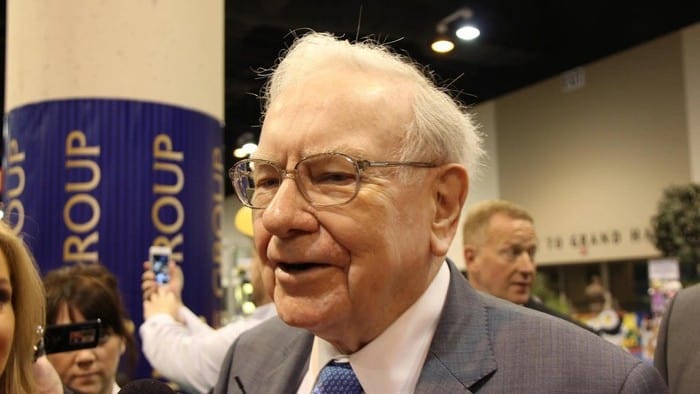
    A head shot of legendary investor Warren Buffett speaking into a microphone at an event.

    I had to make a decision yesterday, about what to write about, here.

    I chose New Year’s Resolutions, because I hope they might help even just one or two of our readers get 2026 off to a good start, financially.

    The other choice? Marking Warren Buffett’s departure from the corner office at Berkshire Hathaway Inc (NYSE: BRK.A) (NYSE: BRK.B) (I own shares).

    He will remain Chairman of the company’s board, but the 95-year old has decided that after six decades in charge, he’ll no longer be the CEO.

    And fair enough.

    In his characteristically humble way, he recently wrote that he would step down because he wasn’t as sharp as he used to be, and because he believed his anointed successor, Greg Abel, would do a better job.

    I hope that if you’ve been reading these notes for any length of time, the name ‘Buffett’ is a familiar one.

    But just in case you’re not, Warren Buffett is the investing GOAT – the ‘Greatest Of All Time’.

    He ran Berkshire Hathaway for 60 years, turning a struggling New England textile mill into his personal investing canvas – and delivered some astonishing returns for himself and for the company’s shareholders.

    How good?

    When he took over, Berkshire shares were changing hands for US$19 each.

    Now? Well, they finished 2025 at US$754,800.

    No. That’s not a typo.

    More than three-quarters of a million dollars, each.

    And he’s retiring, undefeated.

    For sixty years, Buffett compounded the company’s value by around 20% per annum, on average.

    That is simply astonishing.

    (‘Astonishing’ is a dramatic understatement, of course, but I don’t know what string of superlatives could do a better job than the numbers themselves!).

    More than that, though, Buffett spent those 60 years as a teacher. He and his late business partner Charlie Munger freely and happily dispensed their investing wisdom, inviting others to invest the same way.

    They didn’t hide their expertise, or pretend there was some black box. Other than questions about what Berkshire was buying or selling, any topic was fair game, and they answered question after question from shareholders at the company’s annual meeting each year, while writing plenty and giving regular media interviews.

    Buffett could rightly have lorded his success over everyone. He could have taken a massive cut of the company’s performance as a ‘performance fee’, and no-one would have considered it unreasonable, given his astonishing run.

    Instead?

    He lives in the same house he bought decades ago. He took a $100,000 salary (only!) and insisted on paying the company back for any and all use of company assets.

    Instead of seeking glory and adulation, he is giving 99% of his wealth to charity and wrote his last letter to shareholders about, of all things, kindness.

    Oh he’s plenty human. He’s made mistakes, personally and professionally. He would be – he is – the first to mention that.

    In his last letter, he wrote:

    “One perhaps self-serving observation. I’m happy to say I feel better about the second half of my life than the first. My advice: Don’t beat yourself up over past mistakes – learn at least a little from them and move on. It is never too late to improve. Get the right heroes and copy them.”

    And again, perhaps fittingly, his executive career at Berkshire ended not with a bang, but a whimper.

    I don’t know what happened in the office at Kiewit Plaza, Omaha, on December 31, but there was no external fanfare, no press release, no grand gestures.

    I suspect he just shook some hands, had a Coca-Cola (his drink of choice), and left the building.

    On a personal level, I have Buffett and The Motley Fool to thank for my professional trajectory – and my personal investing approach.

    I found The Oracle of Omaha through my early reading of The Motley Fool’s then US-only website, and his teachings and example have shaped my investing approach.

    Don’t get me wrong: I have no delusions of grandeur. There is only, and will only ever be, one Warren Buffett. But we can learn from his words and actions, and aim to improve our investing, accordingly.

    Berkshire will not be the same without Buffett at the executive helm. Nor will the investing world.

    He was the man we turned to for reassurance and reminders of the right way to invest when things got tough.

    He was the man companies and governments turned to, too, in times of crisis.

    He’s not gone yet, of course, but he has said will be “going quiet”.

    His record will likely never be eclipsed, and his example will similarly hard to match, in words, deeds and actions.

    We have been lucky to be the recipients of his wisdom and public counsel over his time at Berkshire.

    And what should investors take away from that immense body of work?

    A few things:

    – The value of long-term investing. It works.

    – The concept of a company’s ‘moat‘: the sustainable competitive advantage that allows it to survive and thrive.

    – The idea of having a ‘circle of competence’ – the things that you know that you know.

    – How to think about that circle: it’s not the size that counts, it’s knowing where the edges are.

    – Thinking independently: being fearful when others are greedy, and greedy when they’re fearful

    – Buffett’s popularisation of Ben Graham’s concept of ‘Mr. Market’ – the volatile business partner whose moods you should take advantage of, but whose counsel you should never seek, nor accept.

    – The importance of seeing shares as pieces of real businesses, not just digital trading cards.

    – The idea of ‘intrinsic value’ – that a company’s shares are worth the value you calculate for them, not just what the market is offering them for on a given day

    -The importance of management quality: if they’re smart, hard working but lack integrity, you’re on a hiding to nothing

    – ‘The three most important words in investing: Margin of safety’: making sure you allow room for error

    … and a whole lot more!

    Each of those ideas deserves its own article, of course, but hopefully it’ll be a reminder of how Buffett invests, and gives you some touchstones to take into 2026 and beyond, courtesy of the investing GOAT.

    Well done, Uncle Warren. We thank you and salute you.

    Fool on!

    The post Berkshire without Buffett? It starts now. appeared first on The Motley Fool Australia.

    Should you invest $1,000 in Berkshire Hathaway Inc. right now?

    Before you buy Berkshire Hathaway Inc. shares, consider this:

    Motley Fool investing expert Scott Phillips just revealed what he believes are the 5 best stocks for investors to buy right now… and Berkshire Hathaway Inc. wasn’t one of them.

    The online investing service he’s run for over a decade, Motley Fool Share Advisor, has provided thousands of paying members with stock picks that have doubled, tripled or even more.*

    And right now, Scott thinks there are 5 stocks that may be better buys…

    * Returns as of 18 November 2025

    .custom-cta-button p {
    margin-bottom: 0 !important;
    }

    More reading

    Motley Fool contributor Scott Phillips has positions in Berkshire Hathaway. The Motley Fool Australia’s parent company Motley Fool Holdings Inc. has positions in and has recommended Berkshire Hathaway. The Motley Fool Australia has recommended Berkshire Hathaway. The Motley Fool has a disclosure policy. This article contains general investment advice only (under AFSL 400691). Authorised by Scott Phillips.

  • Northern Star Resources trims FY26 gold guidance after soft December quarter

    A boy holds a gold bar with a surprised look on his face.

    The Northern Star Resources Ltd (ASX: NST) share price is in the spotlight today after the company revealed softer gold sales for the December 2025 quarter and trimmed its full-year production guidance to 1.6–1.7 million ounces.

    What did Northern Star Resources report?

    • December quarter gold sales: approximately 348,000 ounces
    • First half FY26 gold sales: approximately 729,000 ounces
    • Revised FY26 gold sales guidance: 1,600,000 – 1,700,000 ounces (previously 1,700,000 – 1,850,000 ounces)
    • KCGM December gold sales: ~110,000 ounces, impacted by crusher failure
    • Yandal December gold sales: ~91,000 ounces, affected by unplanned downtimes
    • Pogo gold sales: ~53,000 ounces due to lower mined grades

    What else do investors need to know?

    Operational hiccups during the December quarter—including equipment failures and ongoing recovery works—led to lower gold sales across all three production centres. Unplanned maintenance at sites like Jundee, South Kalgoorlie, and Thunderbox affected output by up to 20,000 ounces combined.

    Looking ahead, Northern Star plans to transition to an expanded mill at KCGM in early FY27 and continues cost-focused initiatives at Yandal. Gold grades were mixed, but mining activity overall tracked towards annual guidance targets.

    What’s next for Northern Star Resources?

    Investors can expect more details when Northern Star releases its full December quarter results and revised cost guidance on 22 January 2026. The company is focusing on stabilising operations, completing its plant expansion at KCGM, and recovering output at Jundee and Thunderbox.

    The expanded plant at KCGM is on schedule, and the company is working to minimise future operational disruptions. Management will hold an investor call on 5 January 2026 to discuss the outlook in more detail.

    Northern Star Resources share price snapshot

    Over the past 12 months, Northern Star Resources shares have risen 73%, outperforming the S&P/ASX 200 Index (ASX: XJO) which has risen 6% over the same period.

    View Original Announcement

    The post Northern Star Resources trims FY26 gold guidance after soft December quarter appeared first on The Motley Fool Australia.

    Should you invest $1,000 in Northern Star Resources Limited right now?

    Before you buy Northern Star Resources Limited shares, consider this:

    Motley Fool investing expert Scott Phillips just revealed what he believes are the 5 best stocks for investors to buy right now… and Northern Star Resources Limited wasn’t one of them.

    The online investing service he’s run for over a decade, Motley Fool Share Advisor, has provided thousands of paying members with stock picks that have doubled, tripled or even more.*

    And right now, Scott thinks there are 5 stocks that may be better buys…

    * Returns as of 18 November 2025

    .custom-cta-button p {
    margin-bottom: 0 !important;
    }

    More reading

    Motley Fool contributor Laura Stewart has no position in any of the stocks mentioned. The Motley Fool Australia’s parent company Motley Fool Holdings Inc. has no position in any of the stocks mentioned. The Motley Fool Australia has no position in any of the stocks mentioned. The Motley Fool has a disclosure policy. This article contains general investment advice only (under AFSL 400691). Authorised by Scott Phillips. This article was prepared with the assistance of Large Language Model (LLM) tools for the initial summary of the company announcement. Any content assisted by AI is subject to our robust human-in-the-loop quality control framework, involving thorough review, substantial editing, and fact-checking by our experienced writers and editors holding appropriate credentials. The Motley Fool Australia stands behind the work of our editorial team and takes ultimate responsibility for the content published by The Motley Fool Australia.

  • Here’s why Tesla will win the EV market

    A Tesla car driving along a road at sunset.

    This article was originally published on Fool.com. All figures quoted in US dollars unless otherwise stated.

    The coming year is shaping up to be a pivotal one for Tesla (NASDAQ: TSLA), and it will be a year in which the underlying debate about the future of the electric vehicle (EV) industry will come into intense focus. There are two polemic positions that automakers and investors can take on the debate, but as ever, the reality probably lies somewhere in between.

    The good news for Tesla investors is that the company has the opportunity to emerge victorious, regardless of the outcome. 

    The great debate over electric vehicles

    The crux of the matter was outlined during Tesla’s third earnings call in 2024 when management fielded a question on the timing of a $25,000 “non-robotaxi regular car model.” Musk’s response was to reiterate that “the future is autonomous electric vehicles,” which he then claimed most automakers hadn’t “internalized” yet. He went on to argue that “I think having a regular $25,000 model is pointless” and “It’s fully considered cost per mile is what matters.”

    Musk is arguing that the lower cost per mile advantage of EVs becomes apparent when the car is driven. Moreover, if the car driven is an autonomous EV in the form of a robotaxi, then that advantage is even higher. Consequently, the most efficient use of an EV is as a robotaxi.

    In terms of cost per mile, you could think of matters as follows: Tesla Cybercab robotaxi > Tesla transformed into robotaxi using autonomous full self driving (FSD) > EVs (including Teslas) > regular internal combustion engine (ICE) car > ICE taxi.

    Estimates for the cost per mile fluctuate due to external factors (such as fuel costs), but for a rough idea, Musk has mentioned as low as $0.30 per mile for a Cybercab, compared to an average of over $2 for an ICE taxi.

    There are a couple of points to consider in addition to this argument. First, a Tesla with autonomous FSD has the potential to have a lower cost per mile than other EVs because the software can drive it in a more efficient manner.

    Second, and this is a crucial point in the ICE world, the ICE taxi is the more expensive option on a cost-per-mile basis, which is a major reason why consumers buy cars. However, in the EV world, a consumer will see a robotaxi as a cheaper option on a cost-per-mile basis.

    As such, the advent of robotaxis will usher in a fundamentally different way of thinking about mobility than applied in the ICE era.

    Tesla’s robotaxi plan is to build that future, and investors are buying the stock in anticipation of a massive stream of recurring revenue from its robotaxis in the future. That’s why Tesla is aggressively pursuing its robotaxi rollout.

    The market needs cheaper electric vehicles

    The alternative view has it that the immediate future of the EV industry (the growth area of the auto market) is through the development of low-cost models to reduce the overall cost of ownership. That’s why Ford (whose management, in 2016, promised commercial robotaxis by 2021) is investing $5 billion in a universal EV platform, with the aim of offering a $30,000 electric pickup truck in 2027.

    Moreover, Ford and General Motors (an automaker that only ended robotaxi development in 2024) are among many automakers that have scaled back their pre-existing EV plans in response to weaker-than-expected sales in 2025 and significant losses on their EV investments.

    They believe they are responding to consumer preferences, and the near future will feature the kind of affordable EVs that Musk thought were “pointless,” as discussed above.

    Which side is right?

    They are probably both right, at least in the near term.

    The costly Cybertruck and Ford’s F-150 Lightning pickup truck have underperformed in sales, while Tesla’s most affordable car, the Model 3, has seen sales growth of nearly 18% through 2025, and GM’s affordable Chevy Equinox has also experienced strong sales growth. At the same time, the pace of robotaxi rollouts, adoption, and regulatory approval is uncertain and slower than most hoped it would be.

    However, Tesla and others are making progress on robotaxis, and the long-term case remains intact. It appears to be an issue of timing. 

    Why Tesla could win either way

    But here’s the thing. Tesla is well-positioned to strategically win in the long term with its robotaxi development, and it’s arguably best positioned to win in the near term if the transition takes longer than expected. Unlike peers like Ford and GM, Tesla’s EV business is profitable, and in fact, it’s already producing lower-cost versions of the Model Y and Model 3 in reaction to market conditions.

    It also has the market position and scale to develop lower-cost models. While that’s no guarantee that Tesla will produce one if the robotaxi transition is slow, the company is in a much better position to do so than its peers, and that counts for a lot in the investing world.

    This article was originally published on Fool.com. All figures quoted in US dollars unless otherwise stated.

    The post Here’s why Tesla will win the EV market appeared first on The Motley Fool Australia.

    This article was originally published on Fool.com. All figures quoted in US dollars unless otherwise stated.

    Should you invest $1,000 in Tesla right now?

    Before you buy Tesla shares, consider this:

    Motley Fool investing expert Scott Phillips just revealed what he believes are the 5 best stocks for investors to buy right now… and Tesla wasn’t one of them.

    The online investing service he’s run for over a decade, Motley Fool Share Advisor, has provided thousands of paying members with stock picks that have doubled, tripled or even more.*

    And right now, Scott thinks there are 5 stocks that may be better buys…

    * Returns as of 18 November 2025

    .custom-cta-button p { margin-bottom: 0 !important; }

    This article was originally published on Fool.com. All figures quoted in US dollars unless otherwise stated.

    More reading

    Lee Samaha has no position in any of the stocks mentioned. The Motley Fool Australia’s parent company Motley Fool Holdings Inc. has positions in and has recommended Tesla. The Motley Fool Australia’s parent company Motley Fool Holdings Inc. has recommended General Motors. The Motley Fool Australia has no position in any of the stocks mentioned. The Motley Fool has a disclosure policy. This article contains general investment advice only (under AFSL 400691). Authorised by Scott Phillips.

  • Nickel Industries partners with Sphere Corp in landmark ENC deal

    A silhouette shot of two business man shake hands in a boardroom setting with light coming from full length glass windows beyond them.

    The Nickel Industries Ltd (ASX: NIC) share price is in focus following the announcement of a strategic partnership with Sphere Corp, including a US$2.4 billion valuation for its ENC HPAL project and the first Western offtake agreement for ENC nickel cathode.

    What did Nickel Industries report?

    • Announced a deal with South Korean-listed Sphere Corp, which will acquire a 10% stake in the ENC HPAL project at a US$2.4 billion valuation.
    • Sphere Corp enters an offtake agreement for ENC nickel cathode at market prices, including volumes above its 10% ownership share.
    • NIC’s shareholding in ENC remains unchanged at 44% despite the Sphere transaction.
    • The funding completion is expected in early Q1 2026.
    • ENC is targeting annual production of 72,000 tonnes of nickel metal once commissioned.

    What else do investors need to know?

    The partnership marks ENC’s first offtake deal into Western markets, specifically targeting the fast-growing aerospace and aeronautical industries. Sphere’s investment is significant, as it is a Tier 1 supplier to global aerospace and space companies—including a 10-year supply contract with SpaceX.

    By qualifying ENC nickel cathode through Sphere, Nickel Industries could open up broader opportunities in North American aerospace supply chains. The company highlights that the transaction aligns with its focus on sustainable operations and reducing its carbon emissions profile.

    What did Nickel Industries management say?

    Nickel Industries Managing Director Justin Werner said:

    We are very pleased to announce this transaction with Sphere for the acquisition of a 10% interest in ENC and associated offtake of nickel cathode. The fact that Sphere, as one of the key accredited suppliers to SpaceX, has chosen to invest in ENC demonstrates the quality of the ENC cathode, the traceability of the product and our goal for ENC to be a global showpiece as a bottom cost-quartile, sustainable producer of high-quality nickel.

    This transaction marks the first offtake agreement for ENC material into Western markets, and we are particularly pleased that it is into the growing aerospace and aeronautical industries which demands the highest product quality and is forecast to grow by approximately 8% CAGR to 2030.

    What’s next for Nickel Industries?

    Nickel Industries is progressing towards the commissioning of the ENC HPAL project, which is set to diversify its product offering with nickel cathode, MHP, and cobalt sulphate. Management expects the partnership with Sphere to help position ENC as a key supplier to the aerospace sector and expand its reach into North America.

    With ENC anticipated to produce around 72,000 tonnes of nickel per year, the company continues its strategic shift from stainless steel markets to serving the growing electric vehicle battery and aerospace supply chains.

    Nickel Industries share price snapshot

    Over the past 12 months, Nickel Industries shares have risen 1%, trailing the S&P/ASX 200 Index (ASX: XJO) which has risen 6% over the same period.

    View Original Announcement

    The post Nickel Industries partners with Sphere Corp in landmark ENC deal appeared first on The Motley Fool Australia.

    Should you invest $1,000 in Nickel Industries Limited right now?

    Before you buy Nickel Industries Limited shares, consider this:

    Motley Fool investing expert Scott Phillips just revealed what he believes are the 5 best stocks for investors to buy right now… and Nickel Industries Limited wasn’t one of them.

    The online investing service he’s run for over a decade, Motley Fool Share Advisor, has provided thousands of paying members with stock picks that have doubled, tripled or even more.*

    And right now, Scott thinks there are 5 stocks that may be better buys…

    * Returns as of 18 November 2025

    .custom-cta-button p {
    margin-bottom: 0 !important;
    }

    More reading

    Motley Fool contributor Laura Stewart has no position in any of the stocks mentioned. The Motley Fool Australia’s parent company Motley Fool Holdings Inc. has no position in any of the stocks mentioned. The Motley Fool Australia has no position in any of the stocks mentioned. The Motley Fool has a disclosure policy. This article contains general investment advice only (under AFSL 400691). Authorised by Scott Phillips. This article was prepared with the assistance of Large Language Model (LLM) tools for the initial summary of the company announcement. Any content assisted by AI is subject to our robust human-in-the-loop quality control framework, involving thorough review, substantial editing, and fact-checking by our experienced writers and editors holding appropriate credentials. The Motley Fool Australia stands behind the work of our editorial team and takes ultimate responsibility for the content published by The Motley Fool Australia.

  • What are the 2 top artificial intelligence (AI) stocks to buy right now?

    Hand with AI in capital letters and AI-related digital icons.

    This article was originally published on Fool.com. All figures quoted in US dollars unless otherwise stated.

    Artificial intelligence (AI) continues to be the biggest driving theme in the market today, and there is little reason to think that this won’t continue. Demand for both AI infrastructure and services appears insatiable, and it still looks as if we’re still in the very early innings of this trend.

    Against this backdrop, let’s look at the top two AI stocks to buy right now. 

    1. Nvidia

    Nvidia (NASDAQ: NVDA) is the king of AI infrastructure, and the company’s recent acquisitions have made it even stronger. It’s best known for its graphics processing units (GPUs), which provide the processing power for the majority of AI workloads. GPUs are particularly dominant in large language model (LLM) training, where the company’s CUDA software platform adds to its wide moat. Nearly all foundational AI code was written on CUDA, and that code only works natively with Nvidia’s chips.

    With its recent acquisition of SchedMD, Nvidia has only expanded its software moat. SchedMD is the developer of Slurm, an open-source software platform that helps manage GPUs by determining which tasks they perform and when. With this acquisition, Nvidia now controls the primary orchestration platform for AI chips. While it says it will keep Slurm open-source, its control over the platform will allow it to more tightly integrate it with CUDA to offer an even more seamless experience.

    Then, on Christmas Eve, the company acquired top talent from Groq and signed a licensing agreement with the company for its technology. The deal essentially gives Nvidia access to Groq’s language processing units (LPUs), which are specialized chips designed specifically for AI inference. Demand for AI inference processing is eventually expected to become larger than demand for training, so this deal can be viewed as Nvidia playing both offense and defense to get ahead of that shift.

    Overall, Nvidia remains the company best positioned to profit from the continued AI buildout, and its recent acquisitions only strengthen its position. The stock is also reasonably valued, trading at a forward price-to-earnings (P/E) ratio of about 25, based on analysts’ estimates for its fiscal 2027, which will begin in late January 2026.

    2. Alphabet

    Alphabet (NASDAQ: GOOGL) (NASDAQ: GOOG) is arguably the best positioned AI company because it is the only one not reliant on Nvidia.

    While other companies are working on designing their own custom AI accelerator chips, Alphabet’s Tensor Processing Units (TPUs) are now in their seventh generation and have been battle-tested by running Google’s workloads for more than a decade. Those years of experience aren’t something that its competitors can easily emulate.

    As such, the company enjoys a big structural cost advantage in both AI training (having trained its world-class AI model Gemini) and inference relative to companies that rely largely on Nvidia for chips. Its TPUs have proven so good that Anthropic signed a large deal with Alphabet to deploy TPUs to power its AI workloads. Morgan Stanley estimates that for every 500,000 TPUs that Alphabet rents out, it generates around $13 billion in revenue.

    Alphabet’s other advantage over its cloud computing competitors is that it owns a world-class LLM that rivals OpenAI’s ChatGPT. First, this lets it capture more cloud computing revenue by offering its own model. Second, it can monetize its AI model more readily by integrating it into its products, including Google Search, its Android operating systems, YouTube, Google Maps, Gmail, and its workplace productivity tools. With lower costs for training and inference, as well as more platforms upon which it can deploy and monetize its models, Alphabet holds significant advantages over OpenAI and other LLM developers.

    As the most vertically integrated AI company, Alphabet is in a strong position, and its advantages should only widen in the coming years. Meanwhile, the stock is attractively valued, trading at a forward P/E of 28. 

    This article was originally published on Fool.com. All figures quoted in US dollars unless otherwise stated.

    The post What are the 2 top artificial intelligence (AI) stocks to buy right now? appeared first on The Motley Fool Australia.

    This article was originally published on Fool.com. All figures quoted in US dollars unless otherwise stated.

    Should you invest $1,000 in Alphabet right now?

    Before you buy Alphabet shares, consider this:

    Motley Fool investing expert Scott Phillips just revealed what he believes are the 5 best stocks for investors to buy right now… and Alphabet wasn’t one of them.

    The online investing service he’s run for over a decade, Motley Fool Share Advisor, has provided thousands of paying members with stock picks that have doubled, tripled or even more.*

    And right now, Scott thinks there are 5 stocks that may be better buys…

    * Returns as of 18 November 2025

    .custom-cta-button p { margin-bottom: 0 !important; }

    This article was originally published on Fool.com. All figures quoted in US dollars unless otherwise stated.

    More reading

    Geoffrey Seiler has positions in Alphabet. The Motley Fool Australia’s parent company Motley Fool Holdings Inc. has positions in and has recommended Alphabet and Nvidia. The Motley Fool Australia has recommended Alphabet and Nvidia. The Motley Fool has a disclosure policy. This article contains general investment advice only (under AFSL 400691). Authorised by Scott Phillips.

  • Keen to invest outside the ASX? UBS reveals 2026 forecast for US, China, and Euro stocks

    A woman looks internationally at a digital interface of the world.

    The continuing outperformance of US stocks vs. ASX shares reminds us of the value of considering overseas shares for our portfolios.

    As the results below show, geographical diversification can pay off handsomely.

    ASX exchange-traded funds (ETFs) have made it easier for Aussie investors to put money into overseas stocks via our local exchange.

    If you’re considering investing outside the ASX, start your research here.

    Top global broker UBS has revealed its 2026 forecast for three key markets outside the ASX: US, China, and Europe.

    Here’s what UBS had to say, plus some examples of ASX ETFs that track these markets and how they performed in 2025.

    US stocks

    The S&P 500 Index (SP: .INX) rose by 16.39% in 2025 and has risen 82.25% over the past five years.

    This compares to a 6.8% lift for the S&P/ASX 200 Index (ASX: XJO) last year and a 32.3% increase over five years.

    In a recent article, UBS said:

    US equities have room to rally further. We expect the S&P 500 to reach 7,300 by June next year and 7,700 by the end of 2026, driven by strong estimated earnings growth of 10% and looser Fed policy.

    In addition to the transformative force of AI, we believe the structural trends of electrification and longevity will also drive equity performance for the long term.

    Tactically, we believe AI beneficiaries are broadening out both within and beyond tech, and we see opportunities in companies facilitating grid modernization and supply critical raw materials.

    In the longevity field, we expect strong growth in the obesity, oncology, and medical device markets.

    Example ASX ETF tracking the US stock market: iShares S&P 500 AUD ETF (ASX: IVV)

    The IVV ASX seeks to mirror the performance of the S&P 500 after fees, and rose 8.24% in 2025.

    China stocks

    The SSE Composite Index increased by 18.41% in 2025 and is currently 14.27% higher than where it was five years ago.

    SSE stands for Shanghai Stock Exchange. This index is considered the benchmark for mainland China shares.

    UBS comments:

    China remains Attractive, and we view the correction in tech as an opportunity to add exposure. China’s tech shares have fallen sharply over the past two and a half months, with the Hang Seng TECH index down over 19% since its early October high.

    But we expect the sector to recover over time, maintaining our preference on the broader Chinese market as well as its tech sector. In fact, we see reasons to buy the dip in Chinese tech stocks, which remain our highest conviction stock idea across global markets.

    With Beijing doubling down on self-sufficiency, ramping up chip manufacturing capabilities, and subsidizing data centers, we expect capex from major tech companies to grow 26% in 2026.

    In addition, Chinese internet giants have demonstrated their ability to integrate AI into profitable business models, while domestic liquidity remains a key pillar of support for China’s equity market.

    Chinese tech stock valuations are also attractive, and we expect the sector to deliver earnings growth of over 25% per annum over the next two years.

    Example ASX ETF tracking the China stock market: VanEck FTSE China A50 ETF (ASX: CETF).

    Rising 10.4% in 2025, CETF tracks the FTSE China A50 Index, representing the 50 largest China equities.

    There is no ASX ETF tracking the SSE Composite.

    European stocks

    The MSCI Europe Index lifted 31.95% in 2025 and has gained 43.61% over the past five years.

    MSCI Europe covers approximately 85% of stocks listed across Europe’s developed markets.

    UBS says:

    European equities should benefit from a recovery in growth. Eurozone industrial production in October rose at the fastest pace in five months, and the December flash PMI rounded off the region’s best quarterly performance in two and a half years.

    We anticipate that positive macroeconomic momentum in the Eurozone will persist, and we expect corporate profit growth to pick up to 7% in 2026 and 18% in 2027.

    Germany’s increased defense and infrastructure spending should boost investment, while improved banking sector health would support business lending.

    Europe is also home to some firms that are driving structural trends … Within the region, we particularly like banks, utilities, industrials, technology, and Germany.

    Example ASX ETF tracking the European stock market: Vanguard FTSE Europe Shares ETF (ASX: VEQ).

    Up 22.4% in 2025, VEQ ETF tracks the FTSE Developed Europe All Cap Index (net dividends reinvested) in Australian dollars, before fees.

    There is no ASX ETF tracking the MSCI Europe Index.

    The post Keen to invest outside the ASX? UBS reveals 2026 forecast for US, China, and Euro stocks appeared first on The Motley Fool Australia.

    Should you invest $1,000 in iShares S&P 500 ETF right now?

    Before you buy iShares S&P 500 ETF shares, consider this:

    Motley Fool investing expert Scott Phillips just revealed what he believes are the 5 best stocks for investors to buy right now… and iShares S&P 500 ETF wasn’t one of them.

    The online investing service he’s run for over a decade, Motley Fool Share Advisor, has provided thousands of paying members with stock picks that have doubled, tripled or even more.*

    And right now, Scott thinks there are 5 stocks that may be better buys…

    * Returns as of 18 November 2025

    .custom-cta-button p {
    margin-bottom: 0 !important;
    }

    More reading

    Motley Fool contributor Bronwyn Allen has positions in iShares S&P 500 ETF. The Motley Fool Australia’s parent company Motley Fool Holdings Inc. has positions in and has recommended iShares S&P 500 ETF. The Motley Fool Australia has recommended iShares S&P 500 ETF. The Motley Fool has a disclosure policy. This article contains general investment advice only (under AFSL 400691). Authorised by Scott Phillips.