
Tag: Stock pick

  • Newmont stock has plunged 17% in March. Here’s why

    A man in a business suit looks at a gold phone with his head in an exploding cloud of gold dust.

    March has been a rough month for the Australian share market as a whole. Since the beginning of the month, the S&P/ASX 200 Index (ASX: XJO) has dropped by a nasty 6.4% or so. That’s what a destabilising war, which brought an oil shock, can do to markets. But let’s talk about one ASX 200 share that has done even worse than that. That ASX 200 share is gold stock Newmont Corporation (ASX: NEM).

    Newmont stock has had a shocking month. This US-based gold miner closed at $187.22 a share on 2 March, not far from its January all-time record high of $190.91. But it has been all downhill since then. At $154.69 (at the time of writing), Newmont stock has fallen a horrid 17.4% from that 2 March price. That includes the nasty 4.35% drop we’ve seen over just today’s session.

    Newmont was a company that, until this month, had seen one of its best runs in years. Over 2025, the gold miner saw its stock increase by approximately 150%, with the first two months of 2026 adding another 23.9%.

    This ascent largely mirrored the price of gold itself. Gold had been increasing in value steadily over 2025 and into 2026, hitting a new record high of over US$5,600 an ounce in January. So it was no real surprise to see Newmont shares fare so well.

    Newmont stock collapses on lower demand for gold

    However, the tables have well and truly turned this March. Gold prices have been hit hard by the onset of the US-Iran war. The precious metal has lost about 10% of its value since the onset of hostilities against Iran, and is trading at about US$5,040 an ounce today. With this fall in the gold price, it’s no surprise to see Newmont stock follow suit. As a gold miner, Newmont’s profitability is highly correlated to the price of gold itself.

    This plunge in the price of gold is an interesting dynamic. Gold has long been viewed as a safe-haven asset, and has historically seen demand rise when global economic or geopolitical tensions increase. However, this new war has seen the opposite occur.

    One possible explanation is that fears of a severe oil shock that could lead to a sharp rise in global inflation are outweighing more generalised geopolitical concerns to dampen demand for gold. Gold is often viewed as an inflation hedge. However, investors often sell down gold if they expect interest rates to rise. Higher interest rates reduce demand for gold, as gold is an investment that pays no interest.

    Given that we are already hearing that our own Reserve Bank of Australia (RBA) could be considering a steeper interest rate hiking cycle this year due to rising oil prices, this could well be what is happening here. Let’s see how Newmont stock fares over the rest of this month.

    The post Newmont stock has plunged 17% in March. Here’s why appeared first on The Motley Fool Australia.

    Should you invest $1,000 in Newmont right now?

    Before you buy Newmont shares, consider this:

    Motley Fool investing expert Scott Phillips just revealed what he believes are the 5 best stocks for investors to buy right now… and Newmont wasn’t one of them.

    The online investing service he’s run for over a decade, Motley Fool Share Advisor, has provided thousands of paying members with stock picks that have doubled, tripled or even more.*

    And right now, Scott thinks there are 5 stocks that may be better buys…

    * Returns as of 20 Feb 2026

    .custom-cta-button p {
    margin-bottom: 0 !important;
    }

    More reading

    Motley Fool contributor Sebastian Bowen has positions in Newmont. The Motley Fool Australia’s parent company Motley Fool Holdings Inc. has no position in any of the stocks mentioned. The Motley Fool Australia has no position in any of the stocks mentioned. The Motley Fool has a disclosure policy. This article contains general investment advice only (under AFSL 400691). Authorised by Scott Phillips.


  • Why the IperionX share price just crashed 22% today

    Stock market crash concept of young man screaming at laptop on the sofa.

    Shares in IperionX Ltd (ASX: IPX) have tumbled sharply on Monday, with the titanium producer extending a steep sell-off that has wiped out a large portion of its recent gains.

    The company’s shares are down a massive 22.62% to $4.07, leaving the stock more than 40% lower over the past week.

    Let’s take a closer look at what appears to be driving the sell-off.

    ASX queries sharp share price fall

    The Australian Securities Exchange (ASX) issued a price query after the company’s shares dropped rapidly in recent sessions.

    In response, IperionX said it was not aware of any undisclosed information that could explain the fall in its share price.

    The company confirmed it remained compliant with ASX listing rules and had no additional market-sensitive information to release.

    That response suggests the sell-off is not linked to a new announcement or previously undisclosed development.

    Investors take profits after recent results

    Instead, the sharp decline appears to be driven by investors offloading shares following the company’s latest results, which were released last week.

    IperionX’s share price had rallied strongly in recent months, climbing to a high above $7 earlier in March before reversing quickly in the days following the report.

    Since then, the stock has recorded multiple double-digit daily losses, with heavy trading volumes indicating significant selling pressure.

    The company’s shares were down 14.29% on Thursday, then fell another 14.05% on Friday, extending the decline into Monday.

    Government support and titanium supply progress

    Despite the recent share price volatility, IperionX continues to advance projects aimed at building a domestic US titanium supply chain.

    The company recently confirmed that the US Department of War had obligated the final US$4.6 million of funding under the Industrial Base Analysis and Sustainment (IBAS) program. This funding supports the development of a domestic US titanium supply chain.

    Separately, the US Government transferred approximately 290 metric tonnes of high-quality titanium alloy scrap to IperionX at no cost.

    The material is expected to provide roughly 1.5 years of titanium feedstock for the company’s current scrap-processing capacity.

    IperionX also announced that it had received a US$3.3 million prototype purchase order from a major German defence company, Rheinmetall. The order is for the production of titanium components for US Army applications.

    Foolish bottom line

    With its share price having surged earlier this year, the company’s latest results appear to have prompted profit-taking from investors.

    This has triggered a sharp reversal in the stock.

    Whether the selling pressure continues will depend on how quickly IperionX can convert its government partnerships into larger commercial agreements.

    The post Why the IperionX share price just crashed 22% today appeared first on The Motley Fool Australia.

    Should you invest $1,000 in IperionX Ltd right now?

    Before you buy IperionX Ltd shares, consider this:

    Motley Fool investing expert Scott Phillips just revealed what he believes are the 5 best stocks for investors to buy right now… and IperionX Ltd wasn’t one of them.

    The online investing service he’s run for over a decade, Motley Fool Share Advisor, has provided thousands of paying members with stock picks that have doubled, tripled or even more.*

    And right now, Scott thinks there are 5 stocks that may be better buys…

    * Returns as of 20 Feb 2026

    .custom-cta-button p {
    margin-bottom: 0 !important;
    }

    More reading

    Motley Fool contributor Aaron Teboneras has no position in any of the stocks mentioned. The Motley Fool Australia’s parent company Motley Fool Holdings Inc. has no position in any of the stocks mentioned. The Motley Fool Australia has no position in any of the stocks mentioned. The Motley Fool has a disclosure policy. This article contains general investment advice only (under AFSL 400691). Authorised by Scott Phillips.

  • This beaten-down ASX airline stock just saw insider buying

    Airport waiting lounge.

    The Alliance Aviation Services Ltd (ASX: AQZ) share price is drifting lower in Monday trade, extending a difficult run for the regional aviation operator.

    At the time of writing, the Alliance Aviation share price is down 0.85% to 58.5 cents.

    The stock has had a rough start to the year and is now down more than 50% in 2026. It is currently trading near its lowest level in almost a decade.

    The latest move comes as fresh insider buying has emerged from within the company’s leadership ranks.

    Let’s unpack.

    Chairman buys shares on market

    According to a recent filing, Alliance Aviation Chairman James Jackson has been purchasing shares on market this month.

    The disclosure shows that Jackson acquired 50,000 ordinary shares at 59.8 cents each on 13 March.

    The purchase was made through an indirect holding associated with Federal Pacific Holdings Pty Ltd, an entity where Jackson is a director.

    Following the transaction, Jackson now holds:

    • 100,000 shares indirectly through Federal Pacific Holdings
    • 20,000 shares indirectly through Mistover Pty Ltd
    • 4,050 shares directly

    The filing confirmed that the shares were acquired through on market trades.

    Director buying is closely watched by investors because it can indicate confidence from insiders with detailed knowledge of a company’s operations.

    However, the purchase also comes during a challenging period for the aviation services provider.

    Shares have slumped this year

    Alliance Aviation’s share price has been under heavy pressure in recent months.

    The stock has now fallen more than 50% since the start of 2026. Over the past 12 months, the decline has been even steeper, with the company losing a significant portion of its market value.

    The company currently has a market capitalisation of about $94 million and roughly 161 million shares on issue.

    Alliance Aviation operates a fleet of aircraft providing contract, charter, and allied aviation services to the mining sector and major airlines across Australia.

    Its business model includes fly in, fly out services for resource companies as well as aircraft leasing and wet lease arrangements with airlines.

    Challenges continue to weigh on the business

    Recent financial results highlight the pressures the company is facing.

    Alliance Aviation reported a statutory loss of $105.8 million for the first half of FY26. The loss reflected a $164.8 million write down related to the value of its Fokker aircraft fleet and inventory.

    Management also warned that its wet lease arrangement with Qantas Airways Ltd (ASX: QAN) had become commercially unviable under existing terms.

    Negotiations with Qantas are currently underway as the companies work to restructure aspects of the agreement.

    The company has previously been linked to takeover interest. Qantas once sought to acquire the business in a $611 million deal, but the proposed transaction was blocked by the Australian Competition and Consumer Commission (ACCC).

    Alliance Aviation shares remain under pressure as investors weigh the company’s financial performance and ongoing strategic negotiations.

    The post This beaten-down ASX airline stock just saw insider buying appeared first on The Motley Fool Australia.

    Should you invest $1,000 in Alliance Aviation Services Limited right now?

    Before you buy Alliance Aviation Services Limited shares, consider this:

    Motley Fool investing expert Scott Phillips just revealed what he believes are the 5 best stocks for investors to buy right now… and Alliance Aviation Services Limited wasn’t one of them.

    The online investing service he’s run for over a decade, Motley Fool Share Advisor, has provided thousands of paying members with stock picks that have doubled, tripled or even more.*

    And right now, Scott thinks there are 5 stocks that may be better buys…

    * Returns as of 20 Feb 2026

    .custom-cta-button p {
    margin-bottom: 0 !important;
    }

    More reading

    Motley Fool contributor Aaron Teboneras has no position in any of the stocks mentioned. The Motley Fool Australia’s parent company Motley Fool Holdings Inc. has no position in any of the stocks mentioned. The Motley Fool Australia has no position in any of the stocks mentioned. The Motley Fool has a disclosure policy. This article contains general investment advice only (under AFSL 400691). Authorised by Scott Phillips.

  • Why are these ASX 200 shares diving to near 52-week lows?

    Workers at a wind farm in front of wind turbines.

    Meridian Energy Ltd (ASX: MEZ) shares are sliding toward a 52-week low after investors reacted coolly to the company’s latest results announcement.

    Despite customer growth, the market response has been muted. During afternoon trading, Meridian shares have drifted toward their 52-week low, losing almost 1% at $4.41.

    Over the past 12 months, Meridian shares have dropped 11%, trailing the S&P/ASX 200 Index (ASX: XJO), which has risen 10% over the same period.

    Here’s what stood out from today’s update and what it could mean for Meridian shares.

    Customer growth, retail sales down

    The ASX energy company released its operating update for February 2026. It showed customer growth of 2.1% during the month and a year-to-date lift in total water inflows.

    However, retail sales volumes in February were 2.7% lower than a year ago, mainly from reduced irrigation demand.

    Meridian CEO Mike Roan said:

    Although inflows eased during February, this is the first below-average month in the past six. Storage levels remain robust, leaving the system well placed heading into autumn. Our retail growth remains strong. While lower irrigation demand saw sales volumes dip marginally year-on-year, customer numbers increased 2.1% during February, lifting total growth to nearly 20% over the past year, adding further scale and momentum to our Retail business.

    Key player Kiwi clean energy

    Meridian is one of the largest electricity generators in New Zealand and is heavily focused on renewable energy.

    The $6 billion Meridian share primarily generates power from hydro and wind, selling electricity to wholesale markets and to residential and business customers through its retail brands.

    Because its generation portfolio is almost entirely renewable, Meridian is often viewed as a key player in New Zealand’s transition to cleaner energy.

    Low operating costs, strong margins

    One of Meridian’s biggest advantages is its renewable generation base. Hydro and wind assets can deliver low operating costs once built, which can support strong margins when electricity prices are favourable.

    Another positive is Meridian’s expanding retail customer base. Recent gains in market share and strong customer growth have helped drive higher electricity sales volumes.

    Weather risks and lower demand

    At the same time, the earnings of Meridian shares can be highly sensitive to external factors. Electricity prices, water inflows into hydro lakes, and weather conditions can all influence generation and profitability.

    The company is also exposed to broader electricity demand trends. Recent data showed national electricity demand in New Zealand was slightly lower than a year earlier, which can pressure pricing and sales volumes.

    What next for Meridian shares?

    In the near term, Meridian shares could remain volatile as investors assess the outlook for electricity prices and renewable generation.

    The latest results showed Meridian returning to profitability with strong operating earnings. However, falling retail sales in February and softer wholesale power prices may continue to weigh on sentiment.

    Longer term, however, Meridian’s renewable energy portfolio and growing retail customer base could position the company to benefit from the global shift toward cleaner electricity.

    The post Why are these ASX 200 shares diving to near 52-week lows? appeared first on The Motley Fool Australia.

    Should you invest $1,000 in Meridian Energy Limited right now?

    Before you buy Meridian Energy Limited shares, consider this:

    Motley Fool investing expert Scott Phillips just revealed what he believes are the 5 best stocks for investors to buy right now… and Meridian Energy Limited wasn’t one of them.

    The online investing service he’s run for over a decade, Motley Fool Share Advisor, has provided thousands of paying members with stock picks that have doubled, tripled or even more.*

    And right now, Scott thinks there are 5 stocks that may be better buys…

    * Returns as of 20 Feb 2026

    .custom-cta-button p {
    margin-bottom: 0 !important;
    }

    More reading

    Motley Fool contributor Marc Van Dinther has no position in any of the stocks mentioned. The Motley Fool Australia’s parent company Motley Fool Holdings Inc. has no position in any of the stocks mentioned. The Motley Fool Australia has no position in any of the stocks mentioned. The Motley Fool has a disclosure policy. This article contains general investment advice only (under AFSL 400691). Authorised by Scott Phillips.

  • Leading brokers name 3 ASX shares to buy today

    Broker looking at the share price.

    With so many shares to choose from on the Australian share market, it can be difficult to decide which ones to buy. The good news is that brokers across the country are doing a lot of the hard work for you.

    Three top ASX shares that leading brokers have named as buys this week are listed below. Here’s why they are bullish on them:

    ANZ Group Holdings Ltd (ASX: ANZ)

    According to a note out of Citi, its analysts have retained their buy rating and $40.30 price target on this banking giant’s shares. The broker believes that ANZ is the best bank stock to buy now due to its attractive valuation and earnings leverage to higher interest rates. And with interest rates likely to rise in the near future, this bodes well for revenue and earnings growth. Citi also likes ANZ due to its institutional banking exposure and strong balance sheet. The ANZ share price is trading at $37.41 on Monday afternoon.

    Breville Group Ltd (ASX: BRG)

    Another note out of Citi reveals that its analysts have retained their buy rating and $39.85 price target on this appliance manufacturer’s shares. This follows the release of results from the company’s rival, De’Longhi. Citi believes the results were positive for Breville, highlighting that they demonstrated that coffee machine demand has remained strong. While there are disruption and freight cost risks from the war in the Middle East, the broker remains positive and continues to see plenty of value in Breville’s shares at current levels. The Breville share price is fetching $28.02 at the time of writing.

    Northern Star Resources Ltd (ASX: NST)

    Analysts at Bell Potter have retained their buy rating and $35.00 price target on this gold miner’s shares. According to the note, Bell Potter was disappointed that Northern Star downgraded its FY 2026 guidance for a second time. This is especially the case given that it thought the company was finally seeing light at the end of the tunnel. While Northern Star has held firm with its cost guidance, Bell Potter expects this to be retracted with its third-quarter update. But despite all these negatives, the broker remains positive. It highlights potential positives from asset rationalisation, given the high capital and operating costs at the likes of Jundee and Thunderbox. The Northern Star share price is trading at $20.64 this afternoon.

    The post Leading brokers name 3 ASX shares to buy today appeared first on The Motley Fool Australia.

    Should you invest $1,000 in Australia And New Zealand Banking Group right now?

    Before you buy Australia And New Zealand Banking Group shares, consider this:

    Motley Fool investing expert Scott Phillips just revealed what he believes are the 5 best stocks for investors to buy right now… and Australia And New Zealand Banking Group wasn’t one of them.

    The online investing service he’s run for over a decade, Motley Fool Share Advisor, has provided thousands of paying members with stock picks that have doubled, tripled or even more.*

    And right now, Scott thinks there are 5 stocks that may be better buys…

    * Returns as of 20 Feb 2026

    .custom-cta-button p {
    margin-bottom: 0 !important;
    }

    More reading

    Citigroup is an advertising partner of Motley Fool Money. Motley Fool contributor James Mickleboro has no position in any of the stocks mentioned. The Motley Fool Australia’s parent company Motley Fool Holdings Inc. has no position in any of the stocks mentioned. The Motley Fool Australia has no position in any of the stocks mentioned. The Motley Fool has a disclosure policy. This article contains general investment advice only (under AFSL 400691). Authorised by Scott Phillips.

  • Here’s the average superannuation balance at age 66 in 2026

    An older woman gazes over the top of her glasses with a quizzical expression as if she is considering some information.

    Once you reach your late-60s, your superannuation should be at the forefront of your mind. After all, retirement is only around the corner.

    By this point in your life, you should know exactly how much superannuation you have and what you need to be able to have the type of retirement you want.

    Here’s a breakdown of the average superannuation balance of Aussies aged 66. How does yours compare?

    What is the average superannuation balance at age 66 in Australia?

    According to Rest Super, the average superannuation balance for Australian men aged 65-69 is $448,518, and for women it is $392,274.

    If your superannuation balance is on track with the rest of the population, that’s great news. But it doesn’t mean you have enough to live the retirement lifestyle you want. 

    But, how much superannuation do I need to have at age 66?

    According to the latest ASFA Retirement Standard, the benchmark for a comfortable retirement has just climbed higher.

    Australians now need $54,840 a year, or $77,375 a year for a couple.

    To support that level of spending, ASFA estimates you’ll need a super balance of roughly $630,000 as a single and $730,000 as a couple by the age of 67. 

    The figures also assume you own your home outright and that you’re receiving the age pension.

    In fact, in order to reach that number, ASFA calculates that at the age of 66, for a comfortable retirement, Australians should have a current superannuation balance close to $618,500.

    That’s significantly higher than the average balances for Australians aged 65-69.

    Why is the average Australian so far behind on their super?

    Unfortunately, there are a multitude of reasons.

    It’s possible to access your super early in very limited circumstances, including to pay certain expenses on compassionate grounds, as well as terminal illness, incapacity, and severe financial hardship.

    For example, there was an uptick in Aussies accessing their super early in the COVID-19 pandemic, driven by soaring living costs, sky-high inflation, and widespread lockdowns that caused significant income losses.

    Between 20 April 2020 and 31 December 2020 alone, the ATO received 4.78 million applications for early-release of superannuation, totalling $39.2 billion.

    Whatever the reason for accessing your superannuation early, removing funds severely affects long-term compounding growth and lowers balances in the long term. 

    At the same time, economic uncertainty and high cost-of-living also mean that individuals have severely curbed the amount of voluntary contributions going into super fund accounts. 

    High fees and poor performance also eat into retirement savings. Meanwhile, sticking with an underperforming fund or default option is a mistake that can cost your super balance over time.

    Default superannuation investment options are generally designed to benefit a range of investors, but what is considered balanced for one person might not apply to the next.

    Growth assets on the S&P/ASX 200 Index (ASX: XJO) might be more appropriate for Aussies with time to ride out any market fluctuations, but those closer to retirement might be more suited to stable assets that can weather a last-minute share market crash. 

    The post Here’s the average superannuation balance at age 66 in 2026 appeared first on The Motley Fool Australia.

    Wondering where you should invest $1,000 right now?

    When investing expert Scott Phillips has a stock tip, it can pay to listen. After all, the flagship Motley Fool Share Advisor newsletter he has run for over ten years has provided thousands of paying members with stock picks that have doubled, tripled or even more.*

    Scott just revealed what he believes could be the ‘five best ASX stocks’ for investors to buy right now. We believe these stocks are trading at attractive prices and Scott thinks they could be great buys right now…

    * Returns as of 20 Feb 2026

    .custom-cta-button p {
    margin-bottom: 0 !important;
    }

    More reading

    Motley Fool contributor Samantha Menzies has no position in any of the stocks mentioned. The Motley Fool Australia’s parent company Motley Fool Holdings Inc. has no position in any of the stocks mentioned. The Motley Fool Australia has no position in any of the stocks mentioned. The Motley Fool has a disclosure policy. This article contains general investment advice only (under AFSL 400691). Authorised by Scott Phillips.

  • No savings at 50? I’d follow Warren Buffett’s method to build retirement wealth

    Frazzled couple sitting out their kitchen table trying to figure out their finances or taxes.

    Reaching your 50s without much in savings can feel confronting.

    Retirement suddenly doesn’t seem as far away as it once did, and it’s easy to start worrying that you may have left things too late to build meaningful wealth.

    But one thing I’ve learned from studying long-term investors like Warren Buffett is that wealth isn’t always built quickly. In fact, Buffett himself has often pointed out that most of his wealth was accumulated later in life thanks to the power of compounding.

    So even if you feel behind financially at 50, there can still be time to turn things around. The key is focusing on the right strategy.

    Focus on buying quality ASX shares

    One of Buffett’s most famous principles is his preference for buying wonderful companies at fair prices rather than average companies at cheap prices.

    In simple terms, that means looking for businesses with strong competitive advantages, reliable earnings, and products or services that are likely to remain relevant for decades. Think Commonwealth Bank of Australia (ASX: CBA) or Goodman Group (ASX: GMG).

    Companies with these characteristics often have the ability to grow steadily over time, which can lead to rising profits, increasing dividends, and higher share prices.

    For someone starting later in life, owning businesses like this can be especially important. Instead of constantly trading in and out of shares, the goal is to buy quality companies and give them time to work for you.

    Think long term, not short term

    Another key part of Warren Buffett’s philosophy is patience.

    The share market moves up and down all the time, and short-term volatility can be uncomfortable. But historically, markets have trended higher over long periods as businesses grow and economies expand.

    Even starting at 50, an investor could still have a time horizon of 15 to 20 years before retirement. That is a long enough period for compounding to make a meaningful difference.

    The important thing is staying invested and allowing strong businesses to grow over time rather than reacting to every market swing.

    Let compounding work for you

    Compounding is often called the eighth wonder of the world for a reason.

    When investments generate returns and those returns are reinvested, the growth begins to accelerate over time. Earnings lead to more earnings, dividends lead to more shares, and the overall portfolio gradually becomes larger.

    Even modest annual returns can produce surprisingly large outcomes when given enough time.

    For example, an investor who consistently adds to their portfolio and earns long-term share market returns could still build a meaningful nest egg over the next couple of decades.

    An investment of $500 a month into ASX shares with an average annual return of 9% (not guaranteed but achievable) would become approximately $320,000 after 20 years.

    If you can afford to put $1,000 into the market each month, your investment portfolio would be worth $640,000 in two decades with the same annual return.

    Foolish takeaway

    Starting to invest at 50 may feel late, but it doesn’t mean the opportunity to build wealth has passed.

    Warren Buffett’s approach shows that long-term investing in quality businesses at fair prices can still produce powerful results over time.

    By focusing on strong companies, remaining patient, and allowing compounding to work, it is still possible to build meaningful retirement wealth even if you feel like you are starting behind.

    The post No savings at 50? I’d follow Warren Buffett’s method to build retirement wealth appeared first on The Motley Fool Australia.

    Should you invest $1,000 in Commonwealth Bank of Australia right now?

    Before you buy Commonwealth Bank of Australia shares, consider this:

    Motley Fool investing expert Scott Phillips just revealed what he believes are the 5 best stocks for investors to buy right now… and Commonwealth Bank of Australia wasn’t one of them.

    The online investing service he’s run for over a decade, Motley Fool Share Advisor, has provided thousands of paying members with stock picks that have doubled, tripled or even more.*

    And right now, Scott thinks there are 5 stocks that may be better buys…

    * Returns as of 20 Feb 2026

    .custom-cta-button p {
    margin-bottom: 0 !important;
    }

    More reading

    Motley Fool contributor Grace Alvino has positions in Commonwealth Bank Of Australia. The Motley Fool Australia’s parent company Motley Fool Holdings Inc. has positions in and has recommended Goodman Group. The Motley Fool Australia has recommended Goodman Group. The Motley Fool has a disclosure policy. This article contains general investment advice only (under AFSL 400691). Authorised by Scott Phillips.

  • What are analysts saying about ResMed, Downer, and Nuix shares?

    man looks at phone while disappointed

    Analysts have been busy running the rule over a number of popular ASX shares.

    But what are they saying about them? Let’s find out if analysts are bullish or bearish, courtesy of The Bull. Here’s what you need to know:

    Downer EDI Ltd (ASX: DOW)

    Baker Young reckons that investors should be selling this integrated services provider’s shares this week.

    The broker highlights that its current valuation leaves little margin for error and poses meaningful downside risk should trading conditions soften. It said:

    Downer provides integrated services that maintains infrastructure across Australia and New Zealand. It’s benefited from highly supportive macroeconomic conditions and favourable government infrastructure spending during the past two years. The company’s first half result in fiscal year 2026 highlighted statutory net profit after tax of $98 million, up 29.8 per cent on the prior corresponding period.

    Management expects further margin expansion through fiscal years 2026 and 2027. However, the share price increase has far outpaced underlying earnings growth. At current valuation levels, we see limited margin for error and little valuation support should conditions soften. Consequently, we believe it’s prudent to take profits.

    Nuix Ltd (ASX: NXL)

    Another ASX share that has been named as a sell is investigative and analytics software provider Nuix.

    Peak Asset Management thinks that its shares are fully valued now and that investors should be taking profit. Talking about the tech stock, it said:

    Nuix is an investigative analytics software provider. It enables customers to process and search large data sets of unstructured information, including emails, documents and communications records. The company earns most of its revenue from licence and maintenance fees. Revenue of $121.2 million in the first half of fiscal year 2026 was up 15.2 per cent on the prior corresponding period.

    Annualised contract value of $234.4 million was up 8.4 per cent. Investors may want to consider taking a profit as we believe gains are priced in following the half year result. We see limited scope for upside amid increasing competition.

    ResMed Inc. (ASX: RMD)

    Over at Securities Vault, its analysts think this sleep disorder treatment company’s shares are a hold.

    It is a big fan of ResMed but feels its shares are fully valued at current levels and recommends waiting for a better entry point. It said:

    ResMed remains a global leader in sleep apnoea devices and digital health monitoring. Structural demand drivers, including ageing populations, increasing diagnosis rates and broader awareness of sleep health, continue to support long term growth. However, a strong share price recovery following concerns about the impact of weight loss drugs on sleep apnoea treatment appears to leave much of the near-term optimism priced into the stock.

    While the company’s fundamentals remain robust, the valuation reflects its market leadership and growth outlook. Investors may prefer to retain existing positions, while awaiting further earnings expansion, or more attractive entry points.

    The post What are analysts saying about ResMed, Downer, and Nuix shares? appeared first on The Motley Fool Australia.

    Should you invest $1,000 in Downer EDI Limited right now?

    Before you buy Downer EDI Limited shares, consider this:

    Motley Fool investing expert Scott Phillips just revealed what he believes are the 5 best stocks for investors to buy right now… and Downer EDI Limited wasn’t one of them.

    The online investing service he’s run for over a decade, Motley Fool Share Advisor, has provided thousands of paying members with stock picks that have doubled, tripled or even more.*

    And right now, Scott thinks there are 5 stocks that may be better buys…

    * Returns as of 20 Feb 2026

    .custom-cta-button p {
    margin-bottom: 0 !important;
    }

    More reading

    Motley Fool contributor James Mickleboro has positions in ResMed. The Motley Fool Australia’s parent company Motley Fool Holdings Inc. has positions in and has recommended ResMed. The Motley Fool Australia has positions in and has recommended ResMed. The Motley Fool Australia has recommended Nuix. The Motley Fool has a disclosure policy. This article contains general investment advice only (under AFSL 400691). Authorised by Scott Phillips.
  • Virgin Australia shares slide again as global turmoil rattles key partnership

    Woman on a tablet waiting in for her flight in an airport and looking through a window.

    Shares in Virgin Australia Holdings Ltd (ASX: VGN) are heading south on Monday. This comes as the airline faces fresh pressure linked to the ongoing war across the Middle East.

    At the time of writing, the Virgin Australia share price is down 2.56% to $2.66. The stock has had a difficult run recently and is now down about 24% since the start of 2026.

    Here’s what investors need to know.

    Middle East conflict disrupts flights

    According to The Australian, Virgin Australia’s partnership with Qatar Airways is being tested as the conflict in the Middle East continues to affect aviation routes.

    Qatar Airways currently owns 25% of Virgin Australia and provides aircraft and crew for several services under a wet lease arrangement.

    However, the Gulf carrier has reportedly cancelled all of the wet lease flights it operates on behalf of Virgin while the conflict continues.

    As a result, daily services from Sydney, Brisbane, Perth, and Melbourne to Doha have not been operating since fighting escalated in the region. Virgin has extended cancellations through to at least Thursday.

    These routes form a key part of Virgin’s strategy to expand its international network following its return to the ASX in 2025.

    Qatar Airways hit hardest by cancellations

    Data from aviation analytics firm Cirium show that Qatar Airways has been the airline most affected in the Gulf region since the conflict intensified.

    The data shows 2,479 flight cancellations out of 2,669 scheduled services, impacting an estimated 741,000 travellers.

    The situation has also affected airline operations across the wider region.

    Between February 28 and March 13, more than 52,000 flights were cancelled, affecting an estimated 6 million passengers.

    Several airlines are now operating under restricted schedules while governments review airspace safety conditions.

    Virgin Australia share price under pressure

    The latest developments appear to be weighing on investor sentiment toward Virgin Australia shares.

    The airline’s stock has fallen roughly 19% since early March, leaving it well below the levels seen shortly after its relisting last year.

    Virgin Australia returned to the ASX in June 2025, when private equity owner Bain Capital sold a 30% stake to investors at $2.90 per share.

    Today’s price of $2.66 puts the stock below that listing level.

    By comparison, rival Qantas Airways Ltd (ASX: QAN) has also declined recently, although the pullback has been smaller.

    Travel demand shifting

    Despite the disruption to Middle East travel routes, broader demand for flights appears to remain resilient.

    Online travel group Webjet Group Ltd (ASX: WJL) said booking data shows travellers are increasingly shifting toward destinations closer to home.

    Bookings to locations such as Ho Chi Minh City, Bali, Tokyo, and Manila have been rising, while domestic destinations, including the Gold Coast, are also seeing increased interest.

    This suggests that while geopolitical tensions may temporarily affect certain routes, overall travel demand remains relatively strong.

    However, the near-term focus will likely remain on managing operational issues linked to its international partnership network.

    The post Virgin Australia shares slide again as global turmoil rattles key partnership appeared first on The Motley Fool Australia.

    Should you invest $1,000 in Virgin Australia right now?

    Before you buy Virgin Australia shares, consider this:

    Motley Fool investing expert Scott Phillips just revealed what he believes are the 5 best stocks for investors to buy right now… and Virgin Australia wasn’t one of them.

    The online investing service he’s run for over a decade, Motley Fool Share Advisor, has provided thousands of paying members with stock picks that have doubled, tripled or even more.*

    And right now, Scott thinks there are 5 stocks that may be better buys…

    * Returns as of 20 Feb 2026

    .custom-cta-button p {
    margin-bottom: 0 !important;
    }

    More reading

    Motley Fool contributor Aaron Teboneras has no position in any of the stocks mentioned. The Motley Fool Australia’s parent company Motley Fool Holdings Inc. has no position in any of the stocks mentioned. The Motley Fool Australia has no position in any of the stocks mentioned. The Motley Fool has a disclosure policy. This article contains general investment advice only (under AFSL 400691). Authorised by Scott Phillips.

  • How many Westpac shares do I need to buy for a $10,000 annual passive income?

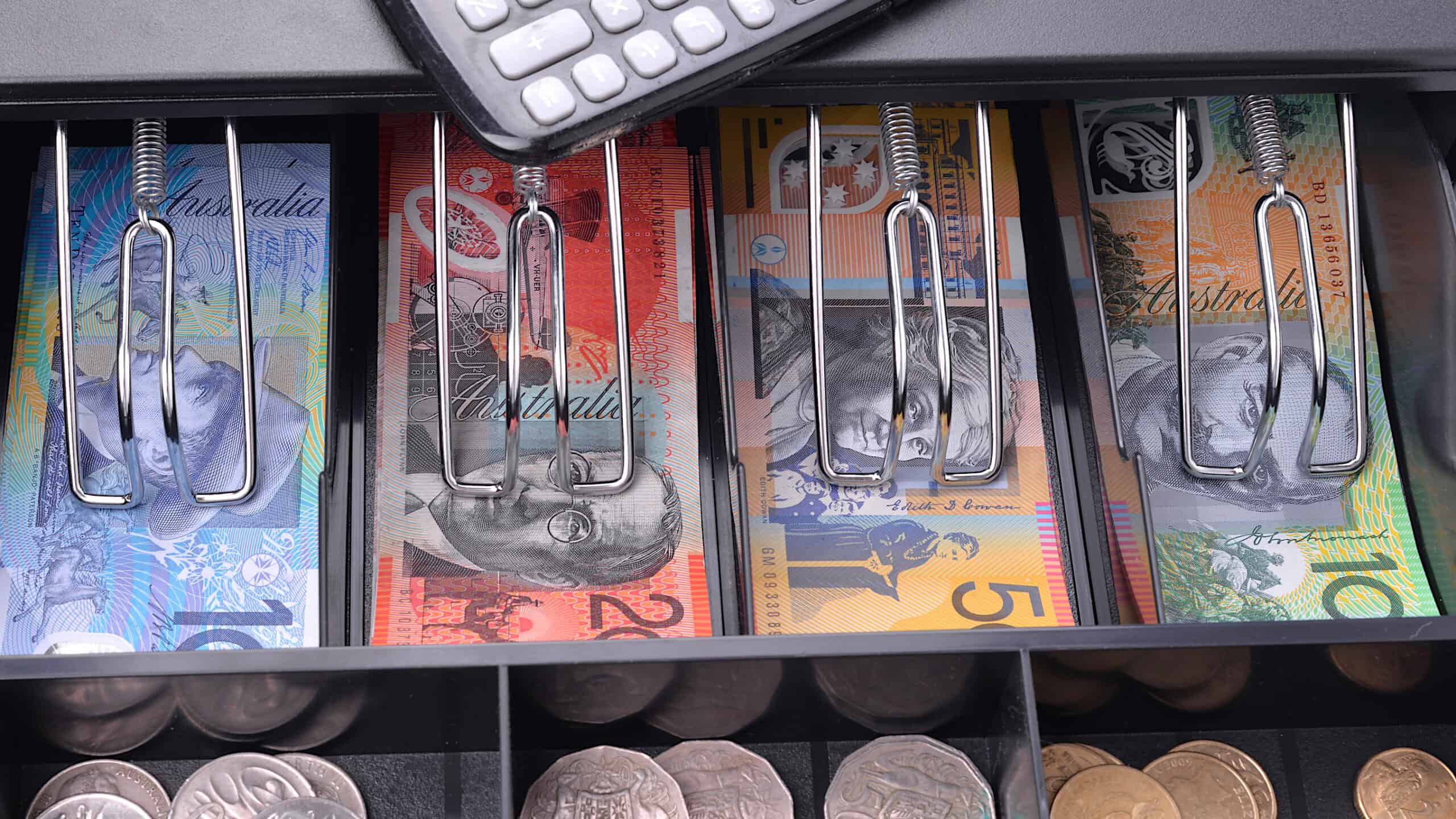
    Australian dollar notes and coins in a till.

    If it’s an extra $10,000 a year in passive income you’re after, then Westpac Banking Corp (ASX: WBC) shares are worth a closer look.

    Atop potential further share price gains, Westpac has historically paid out two fully franked dividends a year.

    As for the share price, in early afternoon trade today, shares in the S&P/ASX 200 Index (ASX: XJO) bank stock are up a slender 0.1%, changing hands for $41.01 apiece.

    For some context, the ASX 200 is down 0.4% at this same time.

    Taking a step back, Westpac shares have strongly outperformed over the past year, now up 37.2% and handily outpacing the 9.3% 12-month gains delivered by the benchmark index.

    We’ll take a look at just how many Westpac shares you’d need to buy for a $10,000 annual passive income below.

    But first…

    Important reminders on your passive income goals

    Before digging into the passive income potential from Westpac, remember that a properly diversified ASX dividend portfolio will contain a lot more than just a single stock.

    There’s no magic number. But somewhere in the range of 10 to 20 dividend stocks is a decent ballpark figure. Ideally these will operate in various segments and geographic locations. That will reduce the risk of your income stream taking a big hit if any one company or sector runs into a rough patch.

    Also, remember that the yields you generally see quoted are trailing yields. Future yields may be higher or lower depending on a range of company specific and macroeconomic factors.

    In Westpac’s case those include the performance of the Aussie economy, with banks generally more profitable during times of economic growth. And interest rates also play a factor. Banks are often able to improve their net interest margin (NIM) amid higher interest rate environments.

    Now, returning to our headline question…

    Banking on Westpac shares for $10,000 a year in passive income

    Over the past 12 months, Westpac paid two fully franked dividend.

    The ASX 200 bank paid an interim dividend of 76 cents per share on 27 June. And Westpac paid out its final dividend of 77 cents per share on 19 December.

    That equates to a full year passive income payout of $1.53 a share.

    So, to secure your $10,000 yearly passive income stream (based on the trailing yield), you’d need to buy 6,536 Westpac shares today, with potential tax benefits from those franked credits.

    How much would that cost?

    At the current Westpac share price of $41.01, you’d need to invest $268,041 now to aim for that $10,000 yearly passive income.

    You could also invest smaller amounts on a monthly basis to reach that income goal over time.

    Westpac shares trade on a fully franked trailing dividend yield of 3.7%.

    The post How many Westpac shares do I need to buy for a $10,000 annual passive income? appeared first on The Motley Fool Australia.

    Should you invest $1,000 in Westpac Banking Corporation right now?

    Before you buy Westpac Banking Corporation shares, consider this:

    Motley Fool investing expert Scott Phillips just revealed what he believes are the 5 best stocks for investors to buy right now… and Westpac Banking Corporation wasn’t one of them.

    The online investing service he’s run for over a decade, Motley Fool Share Advisor, has provided thousands of paying members with stock picks that have doubled, tripled or even more.*

    And right now, Scott thinks there are 5 stocks that may be better buys…

    * Returns as of 20 Feb 2026

    .custom-cta-button p {
    margin-bottom: 0 !important;
    }

    More reading

    Motley Fool contributor Bernd Struben has no position in any of the stocks mentioned. The Motley Fool Australia’s parent company Motley Fool Holdings Inc. has no position in any of the stocks mentioned. The Motley Fool Australia has no position in any of the stocks mentioned. The Motley Fool has a disclosure policy. This article contains general investment advice only (under AFSL 400691). Authorised by Scott Phillips.