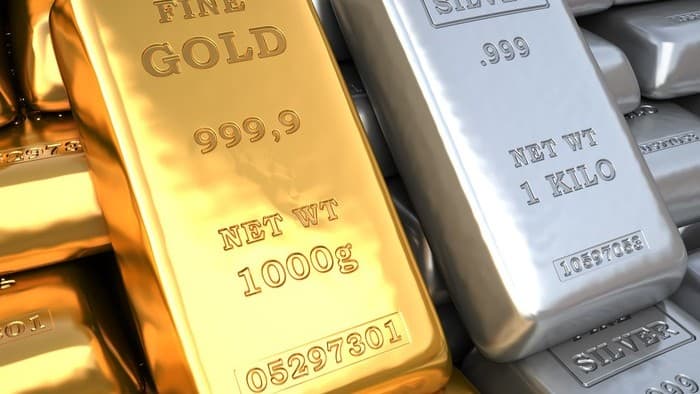
Precious metals have returned to the spotlight after a strong rally late last year, followed by a sharp pullback. Both gold and silver pushed to record highs before retreating as investors took profits and broader markets weakened.
Silver is currently trading around US$82 per ounce after reaching a record US$121.64 last month. Gold is sitting near US$5,042 per ounce, down from its recent all-time high of about US$5,608.
Let’s take a look at the difference below.
Why investors look to precious metals
Gold and silver tend to attract attention during periods of uncertainty. When confidence in shares, currencies, or the economy weakens, investors often look for assets that can hold value.
This pattern has repeated many times. During the Global Financial Crisis and again during COVID, gold in particular benefited as markets sold off and fear rose.
Historically, major market shocks tend to occur every 8 to 10 years, which keeps precious metals relevant even during calm periods.
Silver also benefits from this behaviour, but it has another major driver in industrial demand, which can amplify price swings.
Gold’s role as a defensive asset
Gold is widely viewed as a store of value. Central banks hold it, governments trade it, and long-term investors use it as a hedge against financial stress.
Its price is influenced by interest rates, inflation, currency movements, and geopolitical risk. Importantly, gold demand does not rely heavily on economic growth. That gives it a more defensive profile during downturns.
While gold prices can still move sharply, those moves are usually more controlled than silver’s. This makes gold easier to hold through volatile markets without needing to constantly react.
Silver’s higher risk and higher swings
Silver sits in a more complicated position. It is both a precious metal and an industrial input. Large amounts of silver are used in electronics, solar panels, and manufacturing.
This dual role can drive strong rallies when economic growth looks healthy. It can also lead to sudden drops when growth expectations weaken, or speculative trading unwinds.
The recent price action highlights this risk. Silver surged to record highs and then fell hard in a short period. That volatility can suit traders, but it can be challenging for long-term investors seeking stability.
ASX options for everyday investors
Australian investors can access both metals through exchange-traded products.
The Global X Physical Gold Structured ETF (ASX: GOLD) is up about 9% so far this year, reflecting gold’s strong run despite the recent pullback.
The Global X Physical Silver Structured ETF (ASX: ETPMAG) has gained around 6% this year, but with much larger swings along the way.
Both track the price of the underlying metal and remove the need to store physical bullion. Investors should also be aware that these products charge a small management fee, which is deducted over time.
Foolish Takeaway
Gold and silver can both play a role in a diversified portfolio, but they serve different purposes. Silver offers higher potential upside, but with larger price moves and greater risk. Gold offers more stable behaviour and a long history as a defensive asset.
If I had to choose just one metal to hold going into the end of this year, I would choose gold. It has generally held up better during market downturns, is less volatile than silver, and is more widely used as a form of protection when financial conditions deteriorate.
The post Gold vs silver. Here’s where I’d put my money in 2026 appeared first on The Motley Fool Australia.
Should you invest $1,000 in Etfs Metal Securities Australia – Etfs Physical Gold right now?
Before you buy Etfs Metal Securities Australia – Etfs Physical Gold shares, consider this:
Motley Fool investing expert Scott Phillips just revealed what he believes are the 5 best stocks for investors to buy right now… and Etfs Metal Securities Australia – Etfs Physical Gold wasn’t one of them.
The online investing service he’s run for over a decade, Motley Fool Share Advisor, has provided thousands of paying members with stock picks that have doubled, tripled or even more.*
And right now, Scott thinks there are 5 stocks that may be better buys…
* Returns as of 1 Jan 2026
.custom-cta-button p {
margin-bottom: 0 !important;
}
More reading
- Gold ETFs attracted a record US$19 billion in January
- Silver’s record run hits turbulence as prices slide 13%
- Silver rebounds 5%. Is this a dead cat bounce or a recovery?
- These were the 10 most traded Australian shares last week
- 4 ASX ETFs that produced 110% to 150% returns in 2025
Motley Fool contributor Aaron Teboneras has no position in any of the stocks mentioned. The Motley Fool Australia’s parent company Motley Fool Holdings Inc. has no position in any of the stocks mentioned. The Motley Fool Australia has no position in any of the stocks mentioned. The Motley Fool has a disclosure policy. This article contains general investment advice only (under AFSL 400691). Authorised by Scott Phillips.