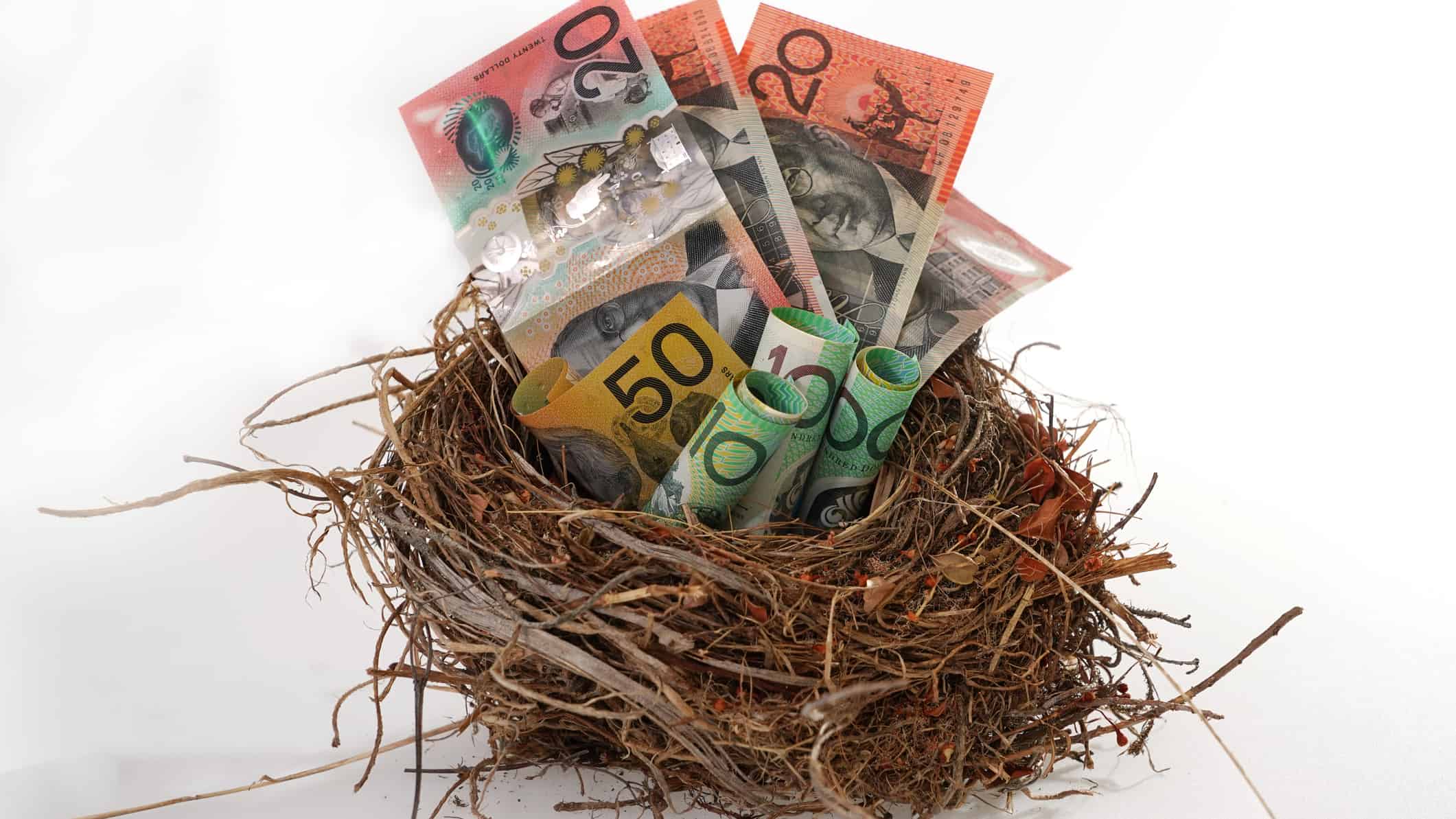
Receiving passive income in the form of dividends is one of the best and most tangible ways ASX shares put money back into our pockets. The ASX is full of dividend stocks that will perform this service for investors.
However, not all ASX dividend stocks are equal. The vast majority only pay two dividends per year. Some pay out every quarter, but there are only a handful that will dole out a dividend every single month. The BetaShares S&P Australian Shares High Yield ETF (ASX: HYLD) is one of those.
This income-focused exchange-traded fund (ETF) is a relatively new passive income stock on the ASX. It functions in a manner consistent with most ASX ETFs, holding a portfolio of underlying shares that are managed on behalf of its investors. This portfolio, in HYLD’s case, consists of about 50 ASX dividend stocks. On the most recent data, these included BHP Group Ltd (ASX: BHP), National Australia Bank Ltd (ASX: NAB), Wesfarmers Ltd (ASX: WES), and Telstra Group Ltd (ASX: TLS).
These 50 stocks are selected following ASX-wide screens. These include volatility, a stock’s dividend history, and the stock’s perceived ability to maintain or increase dividends going forward. The fund goes out of its way to avoid dreaded ‘dividend traps’. In this way, this ASX dividend stock aims to deliver higher passive dividend income than the broader market.
The BetaShares S&P Australian Shares High Yield ETF was only listed in August of last year. Even so, HYLD has notched up some pretty impressive achievements since then.
A good ASX start for this passive income ETF
As of 30 January 2026, this ETF has returned a total of 9.43% to investors. That’s well above the 4.02% that the broader S&P/ASX 200 Index (ASX: XJO) has delivered.
HYLD units have also paid out six dividend distributions, each worth 11.92 cents per unit. If this ASX dividend stock continues to pay the same monthly dividend, its shares would have a dividend yield of 4.24% at current pricing.
Now, we can never be certain that any ASX dividend stock will maintain its past dividends into the future. However, given the healthy dividend rises that we have seen this earnings season amongst many of HYLD’s holdings (that includes BHP, Wesfarmers, and Telstra, amongst others), investors arguably have some cause to feel optimistic.
If the HYLD ETF does maintain its monthly dividends going forward, investors can expect to receive approximately $1,700 in passive dividend income annually from a $40,000 investment today. That works out to be roughly $141 every month.
The BetaShares S&P Australian Shares High Yield ETF charges a management fee of 0.25% per annum.
The post Invest $40,000 in this ASX dividend stock for $140 in monthly passive income appeared first on The Motley Fool Australia.
Should you invest $1,000 in Betashares S&P Australian Shares High Yield Etf right now?
Before you buy Betashares S&P Australian Shares High Yield Etf shares, consider this:
Motley Fool investing expert Scott Phillips just revealed what he believes are the 5 best stocks for investors to buy right now… and Betashares S&P Australian Shares High Yield Etf wasn’t one of them.
The online investing service he’s run for over a decade, Motley Fool Share Advisor, has provided thousands of paying members with stock picks that have doubled, tripled or even more.*
And right now, Scott thinks there are 5 stocks that may be better buys…
* Returns as of 20 Feb 2026
.custom-cta-button p {
margin-bottom: 0 !important;
}
More reading
- How ETFs can help investors build significant passive income
- Here are my 2 favourite ASX ETFs to buy for high-yield passive income in 2026
- 3 ASX ETFs for passive income in 2026
- 5 ASX ETFs to buy for passive income
- 3 high yield ASX ETFs perfect for income investors
Motley Fool contributor Sebastian Bowen has positions in Wesfarmers. The Motley Fool Australia’s parent company Motley Fool Holdings Inc. has positions in and has recommended Wesfarmers. The Motley Fool Australia has positions in and has recommended Telstra Group. The Motley Fool Australia has recommended BHP Group and Wesfarmers. The Motley Fool has a disclosure policy. This article contains general investment advice only (under AFSL 400691). Authorised by Scott Phillips.