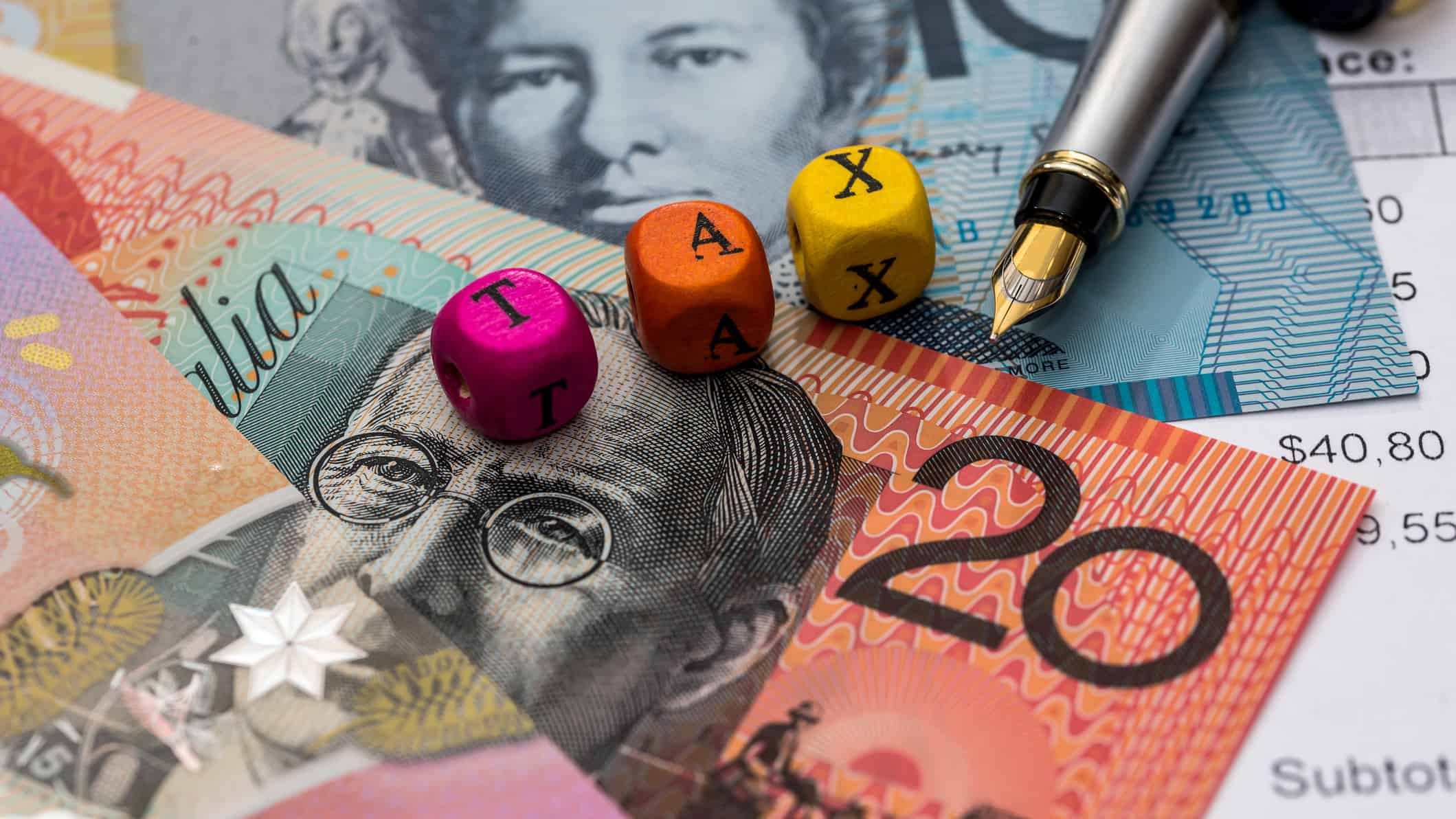
If you didn’t get a chance to watch the budget last night, chances are you will have seen, read or heard about it by now. The budget is one of the most important nights on the political and economic calendar. The government outlines the state of our nation’s finances for the coming fiscal year, and it is normally where major policy changes are announced when an election is not around the corner. Today, we’re going to focus on the changes to capital gains tax (CGT) that were just unveiled.
If you’ve been investing in ASX shares for any length of time, or any houses for that matter, you may already be familiar with capital gains tax. In fact, this tax in particular is one of the most impactful for investors. CGT is a bit of a strange tax. It is not technically a tax in its own right, like the goods and services tax (GST) or tobacco excise is. Rather, it is an extension of income tax, specifically designed to cover assets that are bought and sold for a profit, or capital gain.
Inflation and discounts
Between its introduction in 1985 and 1999, CGT worked by adding any profit an investor made on an investable asset purchased after 1985 (investment property, shares, a business, gold bullion, art, etc.) to an individual’s taxable income in the year that it was sold. Before 1985, capital gains were not taxed, believe it or not. Until last night (more on that in a moment), any asset bought before 1985 could still have been sold and the profit pocketed tax-free.
To illustrate, if one bought an investment property for $100,000 back in 1984, and sold it for $200,000 in 1996, then that person could just keep the whole $200,000, no questions asked. However, if they bought that $100,000 property in 1986 and sold it in 1996, a $100,000 profit would be added to their taxable income in 1996.
To account for the corrosive effects of inflation, investors were allowed to deduct any profits that could be attributed to inflation rather than asset growth before getting the bill from the taxman.
That all changed in 1999. The Howard government threw out this inflation indexation and replaced it with the 50% CGT discount. This meant that, rather than deducting inflation from an asset’s capital gain, investors could simply get a 50% discount on the tax owed from an asset sale. That’s if they had owned that asset for 12 months or longer. If that property owner we mentioned earlier had waited another five years before selling their property for $200,000, they would only need to declare a capital gain of $50,000, rather than $100,000, minus the gains attributed to inflation.
This 50% discount model for CGT has been in place ever since.
But last night, Treasurer Jim Chalmers announced that we will soon be going back to the future.
What do the CGT changes mean for ASX investors?
One of the announcements in last night’s budget was the return of the inflation indexation model. From 1 July 2027, capital gains will have to be indexed to inflation once more, with the 50% discount set to go the way of the dodo. In a double hit for property investors, negative gearing has also been abolished for new purchases of existing properties from today. But that’s an issue for another time.
For now, any assets sold, ASX shares or otherwise, can continue to use the 50% discount model. But from 1 July next year, all asset owners will need to move to the inflation indexation model. That includes assets owned prior to 1985, marking the end of a very old grandfathering period. Capital losses will still be able to be carried and used to offset gains, though.
Tax changes will vary from case to case, of course. But there is a high likelihood that the changes will result in the average stock market investor paying more tax when selling a profitable investment than under the prior system.
Keep an eye out for more budget coverage from us this week, including how other changes announced last night will affect ASX investors and shares.
The post How will the new capital gains tax affect ASX shares? appeared first on The Motley Fool Australia.
Wondering where you should invest $1,000 right now?
When investing expert Scott Phillips has a stock tip, it can pay to listen. After all, the flagship Motley Fool Share Advisor newsletter he has run for over ten years has provided thousands of paying members with stock picks that have doubled, tripled or even more.*
Scott just revealed what he believes could be the ‘five best ASX stocks’ for investors to buy right now. We believe these stocks are trading at attractive prices and Scott thinks they could be great buys right nowâ¦
* Returns as of 20 Feb 2026
.custom-cta-button p {
margin-bottom: 0 !important;
}
More reading
- Is this ASX 200 stock a buy, hold or sell after impressive earnings results?
- 3 key takeaways from the 2026 federal budget
- Why JB Hi-Fi shares can turn things around despite a tough retail environment
- 5 things to watch on the ASX 200 on Wednesday
- Why I think Wesfarmers shares could be a bargain buy
Motley Fool contributor Sebastian Bowen has no position in any of the stocks mentioned. The Motley Fool Australia’s parent company Motley Fool Holdings Inc. has no position in any of the stocks mentioned. The Motley Fool Australia has no position in any of the stocks mentioned. The Motley Fool has a disclosure policy. This article contains general investment advice only (under AFSL 400691). Authorised by Scott Phillips.