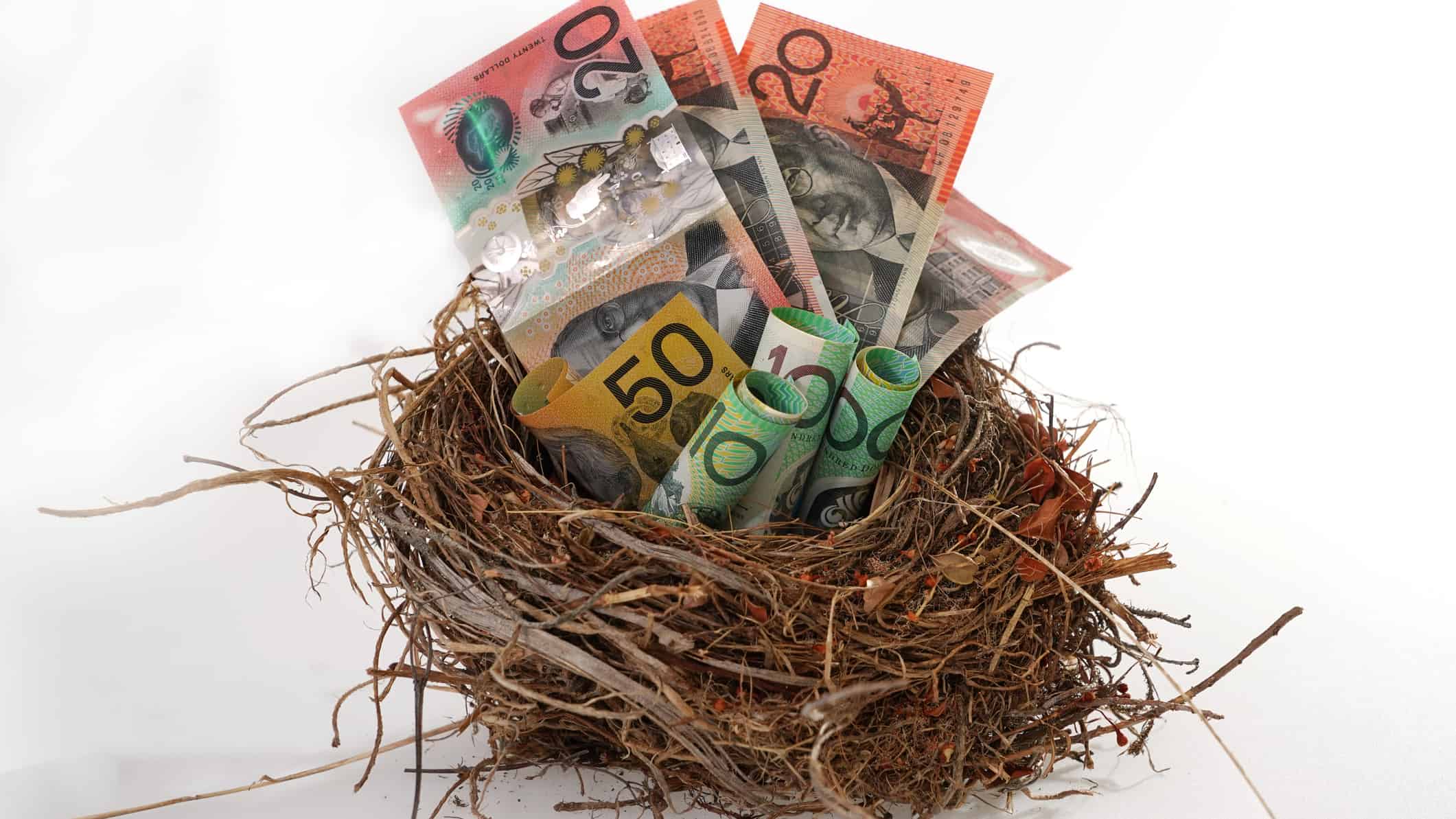
Investing money into your superannuation is for many Australians a great, tax-effective way to build wealth.
The downside is that the funds are locked away until we hit at least 60 years of age, but for those who start early, the magic of compound interest can build a substantial nest egg.
Superannuation calculations can help achieve your goal
So, how much superannuation do you need? That’s obviously a very subjective question, but the Association of Superannuation Funds of Australia (ASFA) has pegged the number at $55,923 per year for singles and $78,566 per year for couples for what they have determined to be a comfortable retirement.
ASFA’s numbers also assume the retiree owns their own home.
Today, I’m looking at how much superannuation is needed to support $6000 per month in passive income, which equates to $72,000 per year, well above the comfortable benchmark.
How much money you’ll need in your superannuation to generate this amount depends on the income stream you can depend on from your portfolio â assuming you don’t sell down any shares to generate income.
If you can generate a 7.2% return, you’d need $1 million worth of investments.
While this might sound like a high return, remember that superannuation funds benefit from franking credits â in lay terms, they are paid back the tax already paid by a company on its earnings.
If you generate just a 5% return on your investments, you’d need $1.44 million in superannuation savings, while if you were able to generate 10% returns, the figure drops to just $720,000.
How much can be generated from superannuation savings?
I would argue that it is possible to put together a diversified portfolio that can consistently generate returns of about 7%.
In terms of stocks to buy, there are some income-focused funds and exchange-traded funds that might be worth a look.
For example, WAM Active Ltd (ASX: WAA) just this week announced it had a stellar year, and declared a special dividend on top of its final dividend, which the fund said in a statement to the ASX would bring its fully-franked dividend yield to 8.6% and its grossed-up dividend yield to 12.3%.
On the ETF front, there are products such as the Betashares Global High Dividend Aristocrats ETF (ASX: INCM), which pays a quarterly dividend and, for the July quarter, paid out 5.74%.
There is also the S&P/ASX 200 Covered Call Complex ETF (ASX: AYLD), which uses a more complex strategy to deliver high yields, paying 9.64% over the past 12 months, albeit only franked at 15.3%.
There are also traditional stocks which pay strong dividends, including Fortescue Ltd (ASX: FMG) at 6.49%, Woodside Energy Group Ltd (ASX: WDS) at 5.63%, and on the lower but dependable end, Telstra Group Ltd (ASX: TLS) at 4.01%.
The post How much do I need in superannuation to receive $6000 per month in passive income? appeared first on The Motley Fool Australia.
Should you invest $1,000 in Wam Active right now?
Before you buy Wam Active shares, consider this:
Motley Fool investing expert Scott Phillips just revealed what he believes are the 5 best stocks for investors to buy right now… and Wam Active wasn’t one of them.
The online investing service he’s run for over a decade, Motley Fool Share Advisor, has provided thousands of paying members with stock picks that have doubled, tripled or even more.*
And right now, Scott thinks there are 5 stocks that may be better buys…
* Returns as of 16 June 2026
.custom-cta-button p {
margin-bottom: 0 !important;
}
More reading
- How to build a successful ASX dividend portfolio
- How much superannuation do you need to earn $5,000 a month in passive income?
- Here are the top 10 ASX 200 shares today
- With Hormuz closed, is there an opening to buy Woodside shares?
- This fund’s 75% return smashed its benchmark, and it’s celebrating with a special dividend
Motley Fool contributor Cameron England has no position in any of the stocks mentioned. The Motley Fool Australia’s parent company Motley Fool Holdings Inc. has no position in any of the stocks mentioned. The Motley Fool Australia has positions in and has recommended Telstra Group. The Motley Fool has a disclosure policy. This article contains general investment advice only (under AFSL 400691). Authorised by Scott Phillips.