Author: openjargon

  • Troops are self-censoring and scrubbing social media amid a Pentagon crackdown on political speech

    The Pentagon's hunt for speech crimes by US troops is suppressing political comments they have the right to make, military law experts say.
    The Pentagon's hunt for speech crimes by US troops is suppressing political comments they have the right to make, military law experts say.

    • Troops are scrubbing their social media amid fears over a Pentagon crackdown on political speech.
    • "I had to take my pronouns off my LinkedIn," a Marine sergeant told Business Insider.
    • Pentagon leaders have said their moves are intended to depoliticize the military.

    Pentagon leadership's intensifying scrutiny of speech that is critical of conservatives and the Trump administration is fueling anxiety in the ranks and has some service members scrambling to protect their careers.

    In interviews with Business Insider, troops and legal advisors detailed how behavior has changed amid the recent crackdown, which has some facing administrative actions that can end a career without a court-martial.

    • A field-grade officer deactivated their Facebook and avoids responding to colleagues who text news articles, worried about being baited into criticizing the Trump administration.
    • An enlisted Marine says a mentor warned her to erase any public-facing support for progressive causes.

    "I had to take my pronouns off my LinkedIn. I've scrubbed everything that has ever mentioned or supported" LGBTQ causes, the Marine sergeant told Business Insider. She said her mentor warned that Pentagon officials may be looking for "anything that could be construed as contrary to the vision that the current administration has."

    These individual acts of self-censorship mirror a broader chill sweeping the ranks, especially as the crackdown has burst into the open at the highest levels. Tensions flared again this week as the Defense Department said it was launching a command investigation of Democratic Sen. Mark Kelly after a preliminary review of his video urging troops to defy unlawful orders.

    The Trump administration says it has a prerogative to police speech it deems offensive or inappropriate, and Defense Secretary Pete Hegseth has said the administration's policies are intended "to rip out the politics" from the services. Some experts on military law say the scrutiny and its repercussions are an abuse of the military's authority.

    One of the flashpoints has been the September murder of conservative activist Charlie Kirk. Top Pentagon leaders have said it's "unacceptable" for troops "to celebrate or mock" the killing.

    After Kirk's killing, some service members said things online like "glad he's dead." Others criticized his rhetoric or, more broadly, complained about Trump administration policies or conservatives. In one case, a colonel was suspended for lamenting to friends the angry arguments that followed Kirk's death.

    More than 120 service members have been investigated for political comments since Kirk's death, according to a tally reported by The Washington Post.

    Nearly a dozen military-law experts told Business Insider the punishments generally wouldn't hold up in a military courtroom because they lack the elements of speech crimes, such as "contemptuous" words against an elected leader, or because the comments were unrelated to the military and not said in uniform.

    "What we're seeing now is abuse of speech restrictions," said Rachel VanLandingham, a Southwestern Law School professor and retired Air Force JAG who is an expert on military speech.

    "Our service members understand that their rights are more restricted within the military. Now they're being chilled into giving up the rights they actually do have," she said. "It's unprecedented."

    The Defense Department is investigating Sen. Mark Kelly for a video he made with fellow Democratic lawmakers. Kelly has said troops have the right to disobey an unlawful order.
    The Defense Department is investigating Sen. Mark Kelly for a video he made with fellow Democratic lawmakers. Kelly has said troops have the right to disobey an unlawful order.

    A wide range of allegations

    Military leaders have disclosed that they are tracking "unprofessional" social media use. An October message from the Navy secretary encouraged sailors and Marines to "refrain from social media engagement" about official government or military policies.

    "This is more than just policing manners," said Frank Rosenblatt, a professor at the Mississippi College School of Law and a retired Army JAG. "A wider muzzling of the military seems to really serve what they're trying to do — identify these deep state people who are not politically trustworthy."

    The Uniform Code of Military Justice imposes some restrictions on troops, criminalizing speech that disrespects officers and civilian leaders, or that undermines the obedience necessary to carry out orders. Troops retain many First Amendment protections; hate speech, for instance, is lawful unless it has a military connection, such as if it was uttered on a base or warship.

    The hunt for speech crimes is fueling suspicion and distrust among some. The field-grade officer who shut down her Facebook said she now worries that a casual remark could brand her as liberal and thus politically suspect.

    She has begun scrutinizing parts of her career she never imagined — where her office is located, who works nearby, whether to respond to articles shared in group chats, and even whether to travel with coworkers she doesn't know well.

    "It just takes one person to flag you as disloyal to end your career — or worse," said the officer, who asked for anonymity to avoid official retaliation.

    'You better be careful'

    Don C. King, a civilian defense attorney, said he got a call recently from a worried service member. They'd written a social media post critical of the Trump administration's lethal attacks on suspected drug-smuggling boats near Venezuela. Someone at their command saw it and told them, "'Hey, you better be careful with your social media.'"

    "I've been in the military my entire adult life, over 30 years, and I've never seen any of the services or DoD scout social media for what it considers to be inappropriate speech," said King, who retired as a Navy JAG in 2022 and owns the King Military Law firm specializing in military clients.

    The allegations against rank-and-file troops are unfolding in the military's administrative system, which can discipline troops and end careers outside of public court proceedings.

    "These cases are early, and both the government and the affected individuals are figuring out how they want to fight," said Eugene R. Fidell, an influential military law expert and senior research scholar at Yale. "The simple wear and tear of having to defend and try to overturn one of these administrative sanctions is itself a punishment."

    Defense Secretary Pete Hegseth recently accused Sen. Mark Kelly of "potentially unlawful comments" in a letter directing a review. The investigation and statements sent a strong message to troops, legal experts told Business Insider.
    Defense Secretary Pete Hegseth recently accused Sen. Mark Kelly of "potentially unlawful comments" in a letter directing a review. The investigation and statements sent a strong message to troops, legal experts told Business Insider.

    First Amendment restrictions on troops stem from the military's apolitical role and its reliance on obedience to orders. Officers can face criminal penalties for "contemptuous" words about the president, as can all personnel for disrespecting a senior officer. However, troops can comment politically, donate to a campaign, or display bumper stickers. Their protections are strongest when their comments are in a personal capacity, made out of uniform and without any hint of official endorsement.

    Social media can amplify a service member's comments far beyond a bumper sticker, regardless of intention. That poses higher risks that the military as an institution could be seen as backing a political party or objective, said Peter Feaver, a professor of political science at Duke University who authored a 2023 book, "Thanks For Your Service," about how high confidence in the military has depended on beliefs about its competence and its avoidance of partisan politics.

    "The military is becoming combatants in the culture wars," he said. Part of the way to change that, he said, "requires the military not to sound like they're culture warriors."

    "So you may have a right to say it, but it wouldn't be right to say it," he added.

    Military law criminalizes conduct that disgraces an officer or damages good order and discipline; however, case law has set a high bar when the conduct at issue is purely private speech otherwise protected by the First Amendment.

    The allegations against rank-and-file troops are unfolding in the military's administrative system, rather than in public court proceedings.
    The allegations against rank-and-file troops are unfolding in the military's administrative system, rather than in public court proceedings.

    Brent Sadler, a defense expert at a leading conservative think tank, said speech monitoring is justified to enforce the Uniform Code of Military Justice.

    "The issue is more about professionalism and protecting any appearance of the military interfering with political-civil control," said Sadler, a retired Navy captain and senior research fellow at the Heritage Foundation.

    "I do think numerous conservatives in the military have been persecuted legally and professionally," he said, pointing to the 8,000 troops kicked out for refusing the COVID vaccine mandate before the Pentagon rescinded it in 2023.

    Mark Jensen, a former Army JAG who retired earlier this year, said the Pentagon's policing has expanded over the past few months from "despicable" speech about Kirk, to rebukes of his politics, to advocacy for transgender people, to criticism of the Trump administration.

    Jensen represents four military clients and a civilian who face punishment for their speech. The fact that some of the allegations are public is the result of an anti-"woke" online army that publishes hearsay and leaked comments on sites like X.

    On top of being "smeared," Jensen said, these troops undergo the stress of an investigation, a relief if they're in leadership, a poor evaluation, a reprimand by a general, and face a review that can reduce their rank.

    "It's like a 1-2-3-4-5 punch," Jensen said. "All of it with minimal due process."

    Kelly is not the only veteran to unexpectedly face punishment. In one recent case, an ex-soldier on the inactive reserve — a roster of those who can be reactivated in a national emergency — told a civilian attorney he was investigated by military officials for a private social media post, the attorney said.

    "Even when people are in the normal reserves, the regulations are pretty clear that conduct in a civilian capacity shouldn't be punished in a military capacity," said Cody Harnish, a private defense attorney and former Army JAG who specializes in UCMJ cases.

    "They're way out of their depth here."

    Staff writer Kelsey Baker contributed to this report.
    Read the original article on Business Insider
  • What’s changing about healthcare in 2026 — Medicare, Medicaid, ACA, premiums, and enrollment deadlines

    hospital hallway
    Healthcare costs will change for Americans in 2026.

    • Health insurance costs are expected to rise for Americans in 2026.
    • ACA subsidies may expire, increasing marketplace prices for middle and low-income households.
    • Here's what to know about employer- and government-based health insurance coverage.

    As 2025 comes to a close, Americans are decorating for the holidays and agonizing over which health insurance plan to choose.

    The decisions are complex and personal, as enrollees think about which plans best fit their income and medical needs. And, regardless of whether they have private or public coverage, most households are budgeting for higher costs.

    Here's what to know about insurance plans, enrollment deadlines, and policy changes in the new year.

    When are the health insurance enrollment deadlines?

    Most Americans have private, employer-sponsored health insurance or a government-based plan. Nearly all of these programs have active enrollment, meaning that people need to sign up for insurance every year — even if they don't intend to switch providers.

    For Affordable Care Act plans, the enrollment deadline was December 15, with some options to make changes until January 15 for a later coverage start date. The Medicare enrollment deadline for older Americans was December 7. Most coverage begins January 1.

    Deadlines for employer-based plans vary, but open enrollment tends to start November 1 and close in late November or early December, with coverage beginning on January 1.

    Once Americans select their 2026 healthcare plan, they generally aren't able to change their coverage until the next open enrollment cycle. Missing open enrollment means you will need to wait until next year to sign up for insurance.

    People with qualifying life events, however, can adjust their plan if they file necessary paperwork with the government or their employer at any time throughout the year. Qualifying life events include a marriage, divorce, new baby, move, job loss, or major change of income.

    Medicaid rules are different from other insurance plans because it is income based. Americans can enroll in the program on a rolling basis throughout the year if they meet the qualifying criteria.

    How are Medicare and Medicaid different?

    Both Medicare and Medicaid are government-based health insurance plans, though they serve different demographics.

    Medicare is typically for Americans age 65 and older, many of whom also receive Social Security — though some people with disabilities are also eligible. The program has four main plan types: Parts A and Part B are standalone insurance that cover inpatient and outpatient care; Medicare Advantage allows older Americans to join private plans governed by Medicare rules and out-of-pocket caps; and Part D is supplemental insurance that covers prescription drugs and basic provider visits.

    Medicaid is federally-funded health insurance for low-income households. The qualification threshold varies slightly by state, but tends to be based on the poverty line — which is $32,150 for a family of four. Most states have cutoffs between 138% and 260% of that level. These plans typically cover preventative visits, inpatient and outpatient care, and prescription drugs.

    It's possible for low-income older adults to enroll in Medicare and Medicaid at the same time.

    Some families and pregnant women who earn above the Medicaid threshold but not enough for private insurance can also enroll in The Children's Health Insurance Program (CHIP). The requirements are different in every state, but are usually between 170% and 400% of the federal poverty line.

    Does marketplace insurance have income limits?

    There are no income limits to enroll in marketplace insurance.

    Income does come into play when deciding whether or not enrollees will receive tax credits that make their marketplace coverage more affordable. Between 2021 and 2025, Americans had access to enhanced Affordable Care Act subsidies. These credits lowered care and premium costs for low- and middle-income households based on their proximity to the federal poverty line.

    Marketplace insurance will still be available to Americans regardless of income in 2026, though it's likely that Congress will not extend the subsidies beyond their December 31 expiration date. Republican and Democratic senators are meeting this week to discuss the issue and plan to make a final announcement before they leave office on December 18. If the subsidies aren't renewed, it could make the cost of marketplace insurance skyrocket for many low- and middle-income enrollees and some may be priced out of coverage.

    window.addEventListener(“message”,function(a){if(void 0!==a.data[“datawrapper-height”]){var e=document.querySelectorAll(“iframe”);for(var t in a.data[“datawrapper-height”])for(var r,i=0;r=e[i];i++)if(r.contentWindow===a.source){var d=a.data[“datawrapper-height”][t]+”px”;r.style.height=d}}});

    What are EPO, PPO, and HMO plans?

    EPO plans are often the cheapest option for private coverage, with low or nonexistent premiums. Americans may choose this coverage because it's more affordable to maintain, though the plans tend to be restrictive about care. Enrollees are required to see only in-network providers and may also need to seek in-network emergency care. If someone on an EPO plan sees an out-of-network provider or pharmacist, they're likely to be fully responsible for cost out of pocket.

    PPO plans have more flexibility but a higher price tag. The in-network coverage available to enrollees offers more doctor, clinic, and pharmacy options, and allows people to go out of network when needed. Though premiums are more expensive, these plans tend to be a better fit for Americans with chronic health conditions or ongoing prescription needs.

    HMO plans usually have a low monthly premium, but enrollees are limited to in-network providers except in emergency situations. These plans are best for older Americans who need preventative care, but don't have chronic conditions and rarely need to see a specialist. These plans are also common among older Americans with Medicare Advantage.

    Americans aren't able to change their health coverage between EPO, PPO, or HMO plans once open enrollment ends, except if they have a qualifying life event.

    How will health insurance costs change in 2026?

    Costs for both private and public health insurance are expected to rise in the new year. This is due to a combination of factors: ACA subsidies are set to expire for marketplace plans, President Donald Trump's One Big Beautiful Bill Act is set to limit Medicaid funding, and the price of private health insurance is rising for companies — a burden that many are partially passing to employees.

    Though actual cost changes will vary widely, it's likely that Americans will experience higher premiums and deductibles for care going forward.

    Read the original article on Business Insider
  • The ugly truth at the heart of America’s miserable job market

    A gentleman siting at a work desk while a large crack in the ground approaches from behind

    When Gbenga Ajilore thinks about America's job market, a few things keep him up at night: The slowing demand for entry-level talent, tariff chaos, and high interest rates.

    ChatGPT isn't one of them.

    "There is going to come a point where AI is just a part of everything that we do, but we're not there yet," Ajilore, who is chief economist at the left-leaning Center for Budget Policy and Priorities, said, adding, "The economy is paralyzed."

    The labor market is showing clear signs of weakness. Long-term unemployment has been trending upward, and the share of Americans looking for work recently eclipsed the number of available roles. Alongside a steady drum of layoff headlines, unemployment ticked up more than expected last month to 4.6%. Young people are having trouble breaking in, older workers are hesitant to retire, and with the "flattening" of many companies, the middle rungs of the career ladder are crumbling. Only healthcare and construction showed substantial growth. It's been called the white-collar recession, an unwelcome awakening for Americans who hoped their college degree would translate to long-term stability and a comfortable salary.

    Given the timing, it's easy to villainize artificial intelligence. C-Suite leaders across industries have said they're "all in on AI," often to the dismay of rank-and-file employees. The tech is quickly reshaping how workers are assessed on the job and how companies define productivity. It's even shaking up the hiring process: My colleagues have talked to job seekers who submitted hundreds of résumés without landing a role, as HR departments are swamped by AI-assisted applications. Economists and investors can't agree if chatbots are the future of the workforce or a vastly overblown bubble.

    But, in shouldering the blame for America's job market woes, AI has become a scapegoat for something else: The economy itself is deteriorating. Years of higher interest rates and stubborn inflation, along with slowing wage growth and restrictive trade policies, have created an environment where businesses are slashing budgets and the middle class is living paycheck to paycheck.

    If you're frustrated by a lower-than-expected raise or the inability to land a new gig, don't blame the robots. Blame Jerome Powell.


    There is no better example of the AI-is-wrecking-the-job-market fears than the so-called "Scariest Chart in the World." The chart has popped up in X and Bluesky posts, news reports, and a thick stack of Substack newsletters. The simple, two-line chart tracks two pieces of data: the S&P 500 and the number of US job vacancies since 2015. The two run closely together for the first couple of years, but there is a decided break in 2022 — the stock market continues to soar, and the number of available jobs begins to decline. AI doomers are quick to point out that the date those two lines diverged corresponds to the public launch of OpenAI's ChatGPT. The implication being that the explosion of large language models immediately began replacing thousands of jobs while pouring money into Wall Street.

    window.addEventListener(“message”,function(a){if(void 0!==a.data[“datawrapper-height”]){var e=document.querySelectorAll(“iframe”);for(var t in a.data[“datawrapper-height”])for(var r,i=0;r=e[i];i++)if(r.contentWindow===a.source){var d=a.data[“datawrapper-height”][t]+”px”;r.style.height=d}}});

    As chatbots and AI tools make employees more productive — drafting emails, writing code, and streamlining administrative tasks — and employers more profitable, the thinking goes, there will be less need for hiring human workers. There's plenty of anecdotal evidence from high-profile companies to support the idea. Nvidia wants employees to use AI "for every task possible," Microsoft is "rethinking" its business model for the AI age, Big Law is hoping AI can make its services faster and cheaper, and top banks and consulting firms are transferring some tasks from people to bots.

    But is AI already replacing a bunch of jobs? Probably not.

    Ajilore thinks the AI-sparked white collar downturn is "overblown." Many companies are "using AI as a cheat code as opposed to something that makes them more efficient," he said, "With the cheat code, you actually end up making mistakes and cutting corners." He believes that both chatbots and Corporate America's tech strategy have a long way to go before AI truly disrupts the workforce.

    Even Federal Reserve Chair Jerome Powell, the most powerful economic policymaker in the world, isn't sold on AI's effects on the current job market. When asked about the technology during the Fed's December meeting, Powell said AI "is part of the story, but it's not a big part of the story yet."

    There's also an important piece of context missing from "The Scariest Chart in the World": the federal funds rate. Decided eight times a year by Powell and his colleagues on the all-important (and dully-named) Federal Open Markets Committee, the Fed funds rate is the key interest rate that anchors all types of loans. For banks and businesses, the number determines how easily and cheaply they can borrow money. For consumers, Fed rates impact everything from home prices to auto loans and credit card rates.

    When interest rates are low, businesses can access debt more affordably, which helps them fuel growth and hiring. As the fed fund rate increases, however, the price of borrowing rises too. This can help keep inflation in check, but higher rates make it more expensive for companies to operate, meaning that many are seeking other areas to cut costs — often at the expense of employees.

    It's true that the S&P 500 and job openings began to diverge right as ChatGPT launched, but that's also when interest rates started to climb. Between early 2022 and late 2024, federal funds jumped by over 5 percentage points. This was a reshaping of monetary strategy meant to curb soaring prices and cool off a too-hot economy, and it was a major break with nearly a generation of previous policy. The Fed originally slashed interest rates to zero in 2008 to address the fallout from the financial crisis, and in the following 12 years, the benchmark interest rate never rose above 2.4%. Following the emergency measures of the early pandemic, the dramatic hikes of 2022 were a sign that the zero-interest-rate era of the 2010s had officially come to an end.

    window.addEventListener(“message”,function(a){if(void 0!==a.data[“datawrapper-height”]){var e=document.querySelectorAll(“iframe”);for(var t in a.data[“datawrapper-height”])for(var r,i=0;r=e[i];i++)if(r.contentWindow===a.source){var d=a.data[“datawrapper-height”][t]+”px”;r.style.height=d}}});

    This sudden interest rate rise was a turning point many businesses. «tweaked the wording here since it was similar to a sentence in the graf above Hiring boomed in the early pandemic: Job openings skyrocketed to record highs as tech and business fields scrambled to snap up new talent. The Beige Book — a collection of quotes and insights gathered from business owners across the country by the various regional Federal Reserve banks — provides a valuable window into the thinking of hiring managers and executives during this period. Labor market commentary across 2021 and 2022 Beige Books tend to reference "modest to strong" job growth, robust hiring demand, and a shortage of workers, with very few mentions of interest rates. This changed when the Fed started hiking rates. One note in the November 2022 edition of the Beige Book said that "Interest rates and inflation continued to weigh on activity," another said "labor demand weakened overall," pointing to layoffs in tech, finance, and real estate. Both blue-collar and white-collar sectors felt the brunt of interest rates that year, citing steep borrowing costs as a central reason they're not hiring. Americans, meanwhile, stopped quitting their jobs as vacancies dried up, and the job market saw its biggest layoff spike since the 2020 shutdown.

    Corporate America began to lean into "efficiency" rhetoric alongside rising rates. Reduced bureaucracy and red tape, along with a smaller workforce, were sold by the C-Suite as a profit panacea in the face of higher financing costs. Leaders at Meta, Amazon, Google, Microsoft, and others spoke about hiring freezes and job cuts as a productivity bet versus a financial issue.

    The trend continued: An October 2023 Beige Book note said many sectors "reduced hiring plans" and were "rightsizing" their budgets because of rising rates. Fast forward to today, and businesses are still grappling with the increased cost of funding, even as Powell and the Fed have moved slowly to lower their benchmark rate. In October's Beige Book, businesses big and small mentioned layoffs and attrition more so than new hiring. Beige Book reports over the past year suggest that AI is contributing to hiring softening in certain areas, such as call centers and accounting firms, but not widespread job displacement. Instead, "uncertainty" and "tariffs" were two of the most frequently mentioned words by companies such as Tesla, JPMorgan, and Whirlpool during earnings calls.

    window.addEventListener(“message”,function(a){if(void 0!==a.data[“datawrapper-height”]){var e=document.querySelectorAll(“iframe”);for(var t in a.data[“datawrapper-height”])for(var r,i=0;r=e[i];i++)if(r.contentWindow===a.source){var d=a.data[“datawrapper-height”][t]+”px”;r.style.height=d}}});

    But saying the need for layoffs is the result of a long-term change in the cost of financing isn't very sexy. Better to point to AI as both an excuse for layoffs and a way to give investors hope for the future. Chen Zhao, head of economics research at the real estate firm Redfin, said many companies are struggling to balance profits with the steep cost of borrowing money. This is especially true in the housing sector, she said, because it's sensitive to the federal funds rate. She said fields like tech are similarly vulnerable.

    "I think that what's happening is just simple economics," she said, adding, "But when you say that you're going to do layoffs or you're not going to be hiring as much, it doesn't sound very good to investors. It sounds a lot better if you say that you're seeing all these productivity enhancements because of AI."

    Each recent technological development — computers, cellphones, the internet — has reshaped the job market and the workplace, but people tend to underestimate the timeline. Economists said it will take years, possibly decades, before we have concrete evidence that AI is replacing jobs on a large scale. And AI may create thousands of jobs as it makes others obsolete.

    "I think the overall evolution of the technology is going to be a lot slower than both the optimists and doomers think," said Scott Lincicome, vice president of economics and trade at the right-leaning Cato Institute. AI has developed rapidly, and while it can perform basic tasks, it is still a long way from replacing human judgment, creativity, and decision-making. "There will certainly be disruptions, that's inevitable," he said. "But it won't be cataclysmic."


    The job market is in a rut — but chatbots aren't the sole, or even the main, culprit.

    Despite the weakening job market numbers, the Federal Reserve has cut rates three times this year, a cautious policy stance brought on by economic precarity. Recent Fed reports show that trade policy and inflation are keeping Powell and company from cutting rates at a faster pace, even as the employment outlook weakens. It has also sparked division within the central bank itself: The December meeting saw the highest number of Fed members disagreeing with the interest rate committee's final decision since 2019. Economic projections also show the median committee member expects one rate cut in 2026, less than projected at this time last year. The moves signal an economic situation that isn't catastrophic, so long as Powell plays his cards carefully.

    A pattern of cuts could start bringing relief for borrowers, but it will take time for the economy to recover — and there are still steep headwinds. Fast-changing tariffs are exacerbating the impact of high rates, making many businesses hesitant to invest or spend money. As Lincicome put it, "Tariff uncertainty is really a drag on the job market because companies are saddled with millions, if not billions, of dollars in additional taxes and tariff costs."

    Declining immigration due to Trump's deportation policies is also part of the equation: Fewer immigrants in the workforce is contributing to a slowing labor force participation rate. Ajilore also said that the sweeping cost-cutting strategy of DOGE for the federal workforce added fuel to the corporate world's "efficiency" crusade. It all adds up to some extremely valid job anxiety for workers.

    Economists expect the market to grow and adapt alongside new technology — and the AI takeover forecast is far less grim than most people realize. The chatbot revolution may come someday. But, for better or worse, the real headliner is the federal funds rate.


    Allie Kelly is a reporter on Business Insider's Economy team. She writes about social safety nets and how policy impacts people.

    Read the original article on Business Insider
  • Gen Z feels weird talking about drinking — and it’s forcing bars to change

    A young woman holds a cocktail while racking balls at a pool table.
    Gen Z's approach to alcohol is forcing bars to change their strategy and menu offerings.

    • New data shows Gen Z lags older generations in their comfort level with saying they're not drinking.
    • Younger adults drink less than previous generations, but their rates of consumption are increasing.
    • Their split approach to drinking is forcing bars to rethink their strategies and menu offerings.

    Gen Z drinks less than the generations before them, but the awkwardness they feel talking about alcohol is starting to transform where they go out, what they order, and how bars are built for them.

    Younger consumers say they feel more awkward than older consumers when explaining why they aren't drinking, new research from Heineken shows. While an increasing percentage of Americans feel comfortable declining an alcoholic drink with a simple "no thanks" (72%) or opting for a non-alcoholic alternative at parties (86%), only about half of Americans under 35 are comfortable drinking low or no-alcohol drinks in public.

    They're also more likely to expect someone will question them, and more likely to feel they need an excuse for not drinking — a paradox, given that Gen Z drinks less overall.

    As younger adults pull back from drinking while still worrying about how to justify it, nightlife operators are rebuilding their menus, spaces, and social experiences around a generation that wants to go out without having to explain what's in their glass.

    Laura Fenton, a research associate at the University of Sheffield's School of Medicine and Population Health who studies youth drinking behavior, said the tension around talking about drinking likely stems from social expectations. Even for Gen Z consumers, she said, "drinking together can be really important to friendship and to negotiating kind of a sense of belonging."

    A Danish study she cited found that young people feel like they have to give a good reason when they don't drink or when they turn down alcohol with their friends, because "drinking is kind of a demonstration of reciprocity."

    "So if you're going to not be on the same level, you have to have a good reason," Fenton said.

    Gen Z's approach to alcohol is also shaped by a notable anxiety about health concerns and other risks associated with drinking, as well as an aversion to the high costs. With cocktails priced at $15 or more in most cities, many young adults opt for soda, coffee, or mocktails, perceiving them as offering better value than booze.

    "They're just a much more conscious consumer," Marten Lodewijks, president of the beverage market data firm, IWSR, told Business Insider. "It's not that they just don't want to drink. They enjoy it, and they enjoy it as much as other generations. It's just that they're conscious that it's not good for them, and so they don't do it as frequently."

    Bars are revamping their strategies as Gen Z makes alcohol optional

    Operators say the shift isn't theoretical; they're seeing it in real time.

    Michelin-starred chef David Chang said in a November interview with TBPN talk-show hosts John Coogan and Jordi Hays that the decline in Gen Z's drinking is a "real existential threat" to restaurants if they don't pivot, given the industry's already thin margins.

    Sober bars are cropping up across major metropolitan areas — and one operator told Business Insider in January that every bar will have to expand its non-alcoholic offerings to stay competitive.

    That change is already taking place: mocktails now appear on menus not as afterthoughts but as full-fledged offerings that look, feel, and cost like traditional cocktails, Stacy Molnar, a designer who has worked on restaurant and bar concepts for more than 30 years, told Business Insider.

    "At the end of the day, it's about revenue per seat," said Molnar. "If someone wants to order a $15 mocktail instead of a $15 cocktail, great — it makes them feel included, and the operator still hits their numbers."

    Heineken USA's Chief Corporate Affairs Officer, Anne de Graaf, told Business Insider that "Zebra Striping," which is when people choose to alternate between alcohol and non-alcoholic drinks, is also on the rise.

    But it's not just the drink list that's changing; it's the overall bar experience.

    Younger consumers want something to gather around when they go out, such as board games, trivia nights, themed environments, Instagrammable bathrooms, striking focal points, and distinctive décor.

    In other words, Molnar said, they want atmosphere.

    "They're not going to a bar just to sit," Molnar, who has two Gen Z kids of his own, said. "They want an activity. They want a vibe."

    From all-pink cafés trending on TikTok to bars built around entertainment, the industry is shifting away from alcohol as the main draw. Instead, it's centering aesthetic experiences that make socializing feel low-stakes — and alcohol optional.

    "This isn't just about alcohol," Fenton, the youth-drinking researcher, said. "It's about what young adults want from social life. If you think about it, for young adults, drinking is a social behavior, and it's largely geared toward forming and maintaining social bonds."

    Bars that succeed with younger customers aren't just offering alcohol-free options; they're de-emphasizing alcohol altogether. They're transforming into multi-experience spaces where friends can hang out without feeling judged, pressured, or out of sync with the group, Molnar said.

    So, what comes next? Expect to see more bars that are less about booze and more about belonging — and more spaces where saying "I'm not drinking tonight" doesn't require a speech.

    Read the original article on Business Insider
  • Ukraine says its small propeller battle drones can now go faster than Formula 1 cars

    Ukrainian anti-aircraft FPV drone operator wearing a headset remotely controls a drone from a shelter at his workplace in Donetsk.
    Ukraine has been pushing the speed of its interceptors as Russia develops its newer jet-powered Shaheds.

    • Ukraine said that one of its interceptor drones just reached 400 kmph, making it faster than F1 cars.
    • Mykhailo Fedorov said the speed was achieved with a motor, meaning it uses propellers to fly.
    • Kyiv has been pushing its interceptors to go faster as Russia develops more advanced Shahed drones.

    A small Ukrainian drone built to chase down and intercept other aerial systems has recently achieved a speed of 400 kmph, or 248.5 mph, Kyiv's digital transformation minister said on Tuesday.

    "400 km/h — that's the speed reached by an interceptor drone powered by a motor from Motor-G, a member of Brave1UA," Mykhailo Fedorov wrote in a social media post. Brave1 is Ukraine's defense innovation platform.

    Such a velocity means that the interceptor can beat the official speed record for Formula 1 racing, achieved by Valtteri Bottas in 2016 at 231.46 mph.

    A speed of 248.5 mph also allows the drone to nearly match the fastest high-speed trains in the world. The Shanghai Maglev, for example, reached speeds of 280 mph during tests in October, but is commercially operated at 186 mph.

    And a motor-powered interceptor would be doing so with propellers, rather than the jet engines or high-thrust combustion systems that propel other vehicles to extreme speeds. Because interceptor drones are designed to destroy other drones at a low cost, Ukraine's manufacturers typically price them below $6,000 each.

    It's another sign of how quickly the war is transforming the local weapons industry, which has turned hobbyist drones into some of the fastest yet cheapest aircraft on the battlefield. Four months ago, another Ukrainian interceptor drew widespread attention for reaching 195 mph in flight.

    Ukraine is now ramping up ambitions to export such war technology, saying that its locally built missiles, drones, and anti-air systems have been tried and tested against Russia.

    A video posted by Fedorov on Tuesday said that producing drone motors in Ukraine "seemed impossible" just two years ago, but that Motor-G is now making 100,000 motors a month.

    "Today, more and more drones are flying on motors made in Ukraine," the minister wrote.

    Kyiv has been particularly focused on increasing the speed of its interceptors because Russia has been developing its own versions of the Iranian Shahed, which are long-range attack drones.

    The most commonly used models of these loitering munitions fly at roughly 115 to 180 mph, and are often released in large numbers to overwhelm Ukrainian air defenses. The Russian tactic created the urgent need for Ukraine to develop cheap ways to destroy the Shaheds, which led to the rise of interceptor drones.

    However, Moscow has been repeatedly reported to be experimenting with smaller waves of new jet-powered Shaheds, which are believed to reach speeds of 230 mph.

    Their emergence at the start of the year initially sparked fears in Ukraine that they would be too fast for interceptors to catch, though recent reports and war footage indicate that Ukrainian manufacturers have managed to close the gap.

    One jet-powered Shahed, for example, was filmed being approached by a Ukrainian interceptor from behind in late November.

    Read the original article on Business Insider
  • Russia’s wartime lifeline from China comes with a price: an ’embarrassing reversal’ for Moscow

    Russia's President Vladimir Putin and China's leader Xi Jinping.
    Russia's President Vladimir Putin and China's leader Xi Jinping.

    • Sanctions have forced Russia to lean heavily on China to keep its economy afloat.
    • China ships high-tech goods to Russia and buys its oil cheap — a combo that boosts Beijing's leverage.
    • Russia's role has shrunk to junior partner as China gains economic influence.

    Moscow's wartime pivot to Beijing has helped keep Russia's economy afloat under the weight of sweeping Western sanctions — but at a cost.

    What looks like a lifeline today may lock Moscow into a long-term role as Beijing's junior economic partner. Russia is now heavily dependent on China for key manufactured goods and advanced inputs blocked by Western sanctions, according to a report from the Atlantic Council, a think tank, published on Friday.

    "Economically and politically, Russia's relationship with China is simultaneously deeply asymmetrical and mutually beneficial," wrote Elina Ribakova, a nonresident senior fellow at the Peterson Institute for International Economics, and Lucas Risinger, an economic analyst and nonresident research fellow at the Kyiv School of Economics Institute.

    China buys up Russian oil at volumes that offset lost European customers — at a discount — while Russia buys machinery, vehicles, and electronics from the East Asian giant amid Western boycotts and sanctions.

    "This is a complete and embarrassing reversal in the relationship compared to the 2000s, when Russia exported higher value-added goods to China," wrote the analysts.

    Since Russia's full-scale invasion of Ukraine in February 2022, the Kremlin has steered the country's economy into a wartime footing. Heavy defense and government spending help sustain topline resilience, despite sanctions and export restrictions.

    But cracks are emerging as energy export revenues have fallen sharply in a low oil-price environment. Consumer demand has also weakened amid still high inflation.

    Russia needs China far more than China needs Russia

    China now accounts for a large share of Russia's imports, and the vast majority of its trade with China is settled in the Chinese yuan.

    Russia became China's top crude oil supplier in 2023, but the country accounts for just one-fifth of China's imports of the commodity. Meanwhile, oil and gas revenues account for a substantial one-third of Russia's budget inflows.

    To be sure, China needs global buyers for its massive manufacturing sector, and Russia has become one of them. Still, the gains are "far more important to Russia than to China," since Beijing doesn't rely on Moscow the way Europe relied on Russian energy, wrote the analysts.

    Furthermore, "from an economic point of view, China is not a better trading partner for Russia than the European Union was. It buys oil and gas at lower prices, it invests far less in Russia, and its products are often technologically inferior," they added.

    This skewed relationship gives Beijing substantial leverage in negotiations and transactions. China purchases Russian oil at steep discounts, knowing Moscow's alternatives are limited.

    "While Moscow has not become Beijing's vassal — at least not to the extent that it would attack NATO purely to distract the Alliance from a war for Taiwan — Russia is certainly the junior partner in the 'no limits' partnership," the analysts wrote.

    Read the original article on Business Insider
  • Here are the top 10 ASX 200 shares today

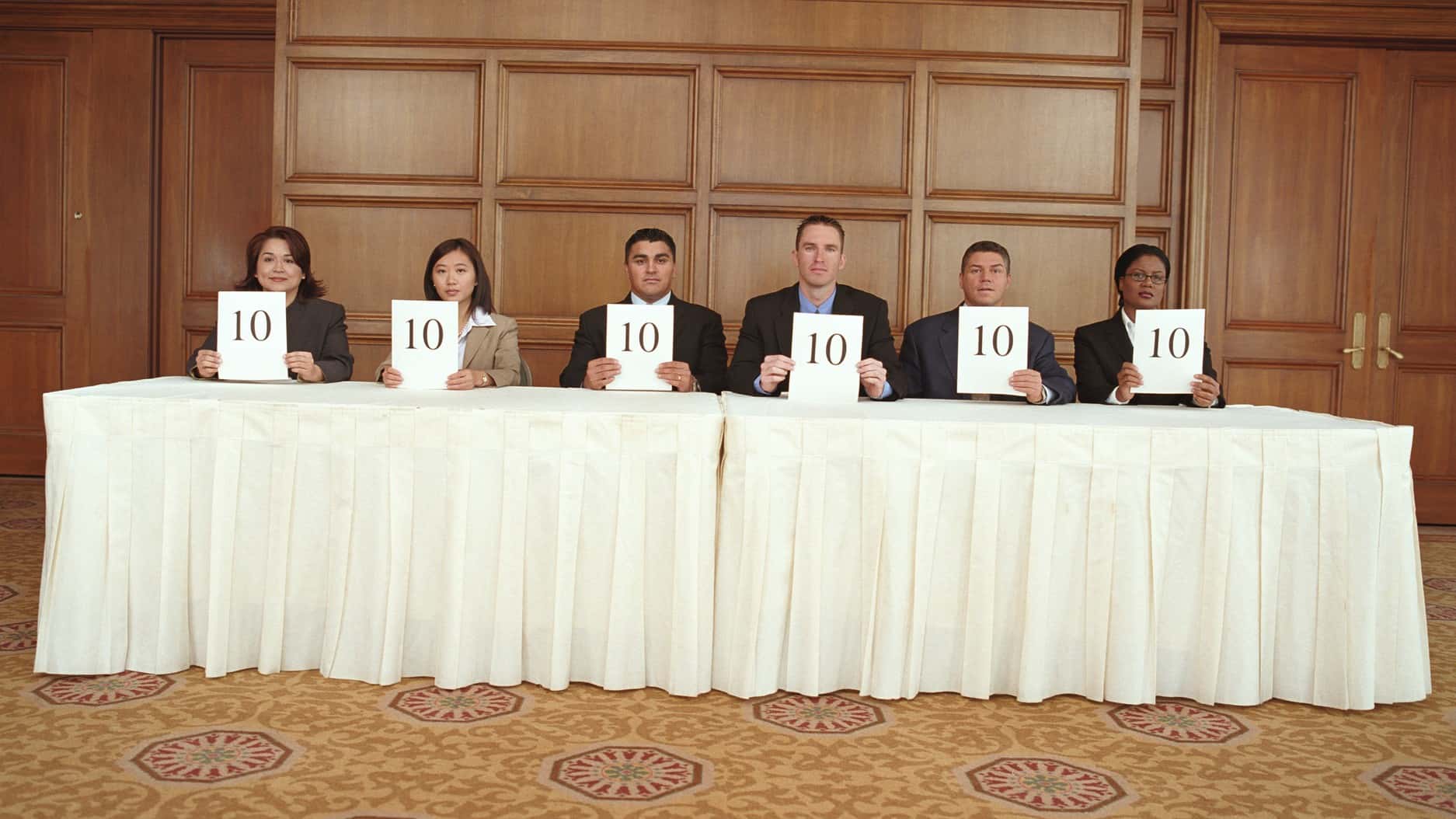
    An old-fashioned panel of judges each holding a card with the number 10

    It was a rather woeful Wednesday for the S&P/ASX 200 Index (ASX: XJO) and many ASX shares today, as the red theme of the week continued. After falling on both Monday and Tuesday, the ASX 200 made it three for three this session, dropping another 0.16%. That leaves the index at 8,585.2 points.

    Today’s falls on the local markets followed a more tempered morning up on Wall Street.

    The Dow Jones Industrial Average Index (DJX: .DJI) had another rough day, losing 0.62% of its value.

    But the tech-heavy Nasdaq Composite Index (NASDAQ: .IXIC) managed to go the other way, recording a rise worth 0.23%.

    Let’s return to ASX shares now and take stock of what the various ASX sectors were up to today.

    Winners and losers

    There were far more losers than winners this Wednesday.

    Leading those losers were, somewhat ironically, healthcare stocks. The S&P/ASX 200 Healthcare Index (ASX: XHJ) had a horrid day, tanking 1.92%.

    Energy shares had another tough session too, with the S&P/ASX 200 Energy Index (ASX: XEJ) cratering 1.38%.

    Consumer staples stocks were no safe haven. The S&P/ASX 200 Consumer Staples Index (ASX: XSJ) saw its value plunge 1.3%.

    Nor were tech shares, illustrated by the S&P/ASX 200 Information Technology Index (ASX: XIJ)’s 1.06% dive.

    Utilities stocks weren’t making friends either. The S&P/ASX 200 Utilities Index (ASX: XUJ) lost 0.86% today.

    Consumer discretionary shares found more sellers than buyers, too, with the S&P/ASX 200 Consumer Discretionary Index (ASX: XDJ) dipping 0.6%.

    Financial stocks came next. The S&P/ASX 200 Financials Index (ASX: XFJ) lost 0.43% this hump day.

    Real estate investment trusts (REITs) were treated similarly, as you can see from the S&P/ASX 200 A-REIT Index (ASX: XPJ)’s 0.4% downgrade.

    Industrial shares also had a rough time. The S&P/ASX 200 Industrials Index (ASX: XNJ) slid 0.32% lower by the closing bell.

    Our last losers were communications stocks, with the S&P/ASX 200 Communication Services Index (ASX: XTJ) slipping 0.28% lower.

    Turning to the winners now, it was gold shares that topped the index chart this Wednesday. The All Ordinaries Gold Index (ASX: XGD) rocketed up a happy 4.08%.

    The other winners were broader mining stocks, evidenced by the S&P/ASX 200 Materials Index (ASX: XMJ)’s 1.62% surge.

    Top 10 ASX 200 shares countdown

    It was lithium stock Liontown Ltd (ASX: LTR) that took the cake today.

    Liontown shares had a blowout this session, shooting 11.81% higher to close at $1.52 each. There wasn’t any news out of the company, but most lithium stocks had a similarly bullish session.

    Here’s how the other top stocks tied up at the dock:

    ASX-listed company Share price Price change
    Liontown Ltd (ASX: LTR) $1.52 11.81%
    IGO Ltd (ASX: IGO) $7.63 11.55%
    Catalyst Metals Ltd (ASX: CYL) $7.00 8.36%
    Deep Yellow Ltd (ASX: DYL) $1.80 6.85%
    Westgold Resources Ltd (ASX: WGX) $6.22 6.51%
    Genesis Minerals Ltd (ASX: GMD) $6.86 6.36%
    Regis Resources Ltd (ASX: RRL) $7.70 5.91%
    PLS Group Ltd (ASX: PLS) $4.06 4.64%
    Bellevue Gold Ltd (ASX: BGL) $1.64 5.14%
    Evolution Mining Ltd (ASX: EVN) $12.66 4.54%

    Our top 10 shares countdown is a recurring end-of-day summary that shows which companies made big moves on the day. Check in at Fool.com.au after the weekday market closes to see which stocks make the countdown.

    The post Here are the top 10 ASX 200 shares today appeared first on The Motley Fool Australia.

    Should you invest $1,000 in Liontown Resources Limited right now?

    Before you buy Liontown Resources Limited shares, consider this:

    Motley Fool investing expert Scott Phillips just revealed what he believes are the 5 best stocks for investors to buy right now… and Liontown Resources Limited wasn’t one of them.

    The online investing service he’s run for over a decade, Motley Fool Share Advisor, has provided thousands of paying members with stock picks that have doubled, tripled or even more.*

    And right now, Scott thinks there are 5 stocks that may be better buys…

    * Returns as of 18 November 2025

    .custom-cta-button p {
    margin-bottom: 0 !important;
    }

    More reading

    Motley Fool contributor Sebastian Bowen has no position in any of the stocks mentioned. The Motley Fool Australia’s parent company Motley Fool Holdings Inc. has no position in any of the stocks mentioned. The Motley Fool Australia has no position in any of the stocks mentioned. The Motley Fool has a disclosure policy. This article contains general investment advice only (under AFSL 400691). Authorised by Scott Phillips.

  • 3 ASX ETFs to generate passive income in retirement

    Happy couple enjoying ice cream in retirement.

    When you reach retirement, investing priorities tend to shift.

    While growth still matters, reliability, diversification, and dependable income usually take centre stage.

    For many retirees, exchange-traded funds (ETFs) can be an ideal solution, offering exposure to dozens or even hundreds of shares while delivering regular distributions without the need to manage individual shares.

    With that in mind, here are three ASX ETFs that could play a role in generating passive income throughout retirement.

    Vanguard Australian Shares High Yield ETF (ASX: VHY)

    The Vanguard Australian Shares High Yield ETF is a popular choice among income-focused investors, and it is easy to see why.

    This ASX ETF invests in Australian shares with above-average forecast dividend yields, providing exposure to some of the ASX’s most established dividend payers.

    Its portfolio includes major names such as BHP Group Ltd (ASX: BHP), Commonwealth Bank of Australia (ASX: CBA), National Australia Bank Ltd (ASX: NAB), Westpac Banking Corp (ASX: WBC), and Telstra Group Ltd (ASX: TLS). These are businesses with long histories of generating strong cash flows and returning capital to shareholders.

    For retirees, the Vanguard Australian Shares High Yield ETF offers a relatively straightforward way to access a diversified stream of Australian dividends, with the added benefit of franking credits.

    Betashares S&P Australian Shares High Yield ETF (ASX: HYLD)

    The Betashares S&P Australian Shares High Yield ETF is another option for income investors to consider in retirement. It targets a basket of ASX shares with high forecast dividend yields, while applying screens designed to avoid dividend traps.

    This includes avoiding companies that are projected to pay unsustainably high dividend yields, as well as those that exhibit high levels of volatility relative to their forecast dividend payout.

    Current holdings include the banks and blue chips such as QBE Insurance Group Ltd (ASX: QBE), Transurban Group (ASX: TCL), and Woodside Energy Group Ltd (ASX: WDS). It was recently recommended by analysts at Betashares.

    Betashares Australian Quality ETF (ASX: AQLT)

    While the Betashares Australian Quality ETF may not look like a traditional income ETF, it can still play an important role in a retirement portfolio.

    This ASX ETF focuses on high-quality Australian shares with strong balance sheets, consistent earnings, and sustainable business models. Its holdings include Wesfarmers Ltd (ASX: WES), Telstra Group Ltd (ASX: TLS), ANZ Group Holdings Ltd (ASX: ANZ), and Macquarie Group Ltd (ASX: MQG).

    The fund pays distributions semi-annually and currently offers a 12-month distribution yield of 3.4%, or 4.3% on a grossed-up basis. Importantly for retirees, around 61% of those distributions are currently franked. It was also recently recommended by analysts at Betashares.

    The post 3 ASX ETFs to generate passive income in retirement appeared first on The Motley Fool Australia.

    Should you invest $1,000 in BetaShares Australian Quality ETF right now?

    Before you buy BetaShares Australian Quality ETF shares, consider this:

    Motley Fool investing expert Scott Phillips just revealed what he believes are the 5 best stocks for investors to buy right now… and BetaShares Australian Quality ETF wasn’t one of them.

    The online investing service he’s run for over a decade, Motley Fool Share Advisor, has provided thousands of paying members with stock picks that have doubled, tripled or even more.*

    And right now, Scott thinks there are 5 stocks that may be better buys…

    * Returns as of 18 November 2025

    .custom-cta-button p {
    margin-bottom: 0 !important;
    }

    More reading

    Motley Fool contributor James Mickleboro has positions in Woodside Energy Group. The Motley Fool Australia’s parent company Motley Fool Holdings Inc. has positions in and has recommended Macquarie Group, Transurban Group, and Wesfarmers. The Motley Fool Australia has positions in and has recommended Macquarie Group, Telstra Group, and Transurban Group. The Motley Fool Australia has recommended BHP Group, Vanguard Australian Shares High Yield ETF, and Wesfarmers. The Motley Fool has a disclosure policy. This article contains general investment advice only (under AFSL 400691). Authorised by Scott Phillips.

  • Google DeepMind CEO Demis Hassabis says some AI startups are wildly overpriced — and a correction is coming

    Demis Hassabis
    Demis Hassabis says some AI startups are raising tons of money before they've built anything — and he warns a correction is likely.

    • Google DeepMind CEO Demis Hassabis says some early AI startups are raising big money.
    • But these startups "haven't even got going yet," he said, adding that an over-correction is likely.
    • His comments come amid growing scrutiny of soaring AI startup valuations.

    Demis Hassabis has a blunt message for parts of the AI startup world: Some of this looks unsustainable.

    The DeepMind cofounder and CEO said in an episode of "Google DeepMind: The Podcast" published Tuesday that there are likely "bubbles" forming in today's AI funding frenzy, particularly among early-stage startups raising money at huge valuations.

    Some startups "basically haven't even got going yet," he said, yet are raising at "tens of billions of dollars valuations just out of the gate."

    "It's sort of interesting to see how can that be sustainable. You know, my guess is probably not, at least not in general," he added.

    Hassabis drew a distinction between those sky-high seed rounds and the large tech companies pouring billions into AI infrastructure. There's "a lot of real business" underpinning Big Tech's valuations, he said.

    AI is "overhyped in the short term" but "still underappreciated in the medium to long-term," he added.

    Hassabis said an "over-correction" is imminent for any major technology shift like AI, especially when it goes from skepticism to obsession quickly.

    "When we started DeepMind, no one believed in it," he said. "Fast forward 10, 15 years, and now, obviously, it seems to be the only thing people talk about in business."

    That kind of swing often pushes valuations too far and too fast. "It's almost an overreaction to the underreaction," he said.

    Hassabis also said he isn't worried about whether AI is in a bubble — he's focused on his job. Google DeepMind builds the AI models that power Google's products, including Gemini, and leads the company's frontier AI research.

    Sky-high valuations for AI startups

    Hassabis' comments come as AI startups continue to rake in soaring valuations.

    Business Insider reported last week that young founders — some of whom are fresh out of school — are raising millions for their AI startups. Many have dropped out to ride the AI wave, pulling in top investors and talent.

    A Stanford graduate dropout raised $64 million for her AI math startup earlier this year. Carina Hong, the founder of Axiom Math, even recruited top AI talent from Meta and Google Brain.

    The 16 young founders Business Insider spoke with this year have secured over $100 million in funding.

    But not everyone is buying the hype. Howard Marks, the cofounder of Oaktree Capital Management, said on an episode of "We Study Billionaires" podcast published last week that investors are flocking to AI startups with little track record.

    "Do you want to have a novel entrepreneurial startup pure play which has no revenues and no profits today, but could be a moonshot if it works?" the billionaire asked.

    "Or do you want to invest in a great tech company, which is already existing and making a lot of money where AI could be incremental but not life-changing? It's a choice."

    Read the original article on Business Insider
  • Cate Blanchett says she swears by a ‘cliché’ morning habit to kickstart her day

    Cate Blanchett.
    Cate Blanchett.

    • Cate Blanchett, 56, says she loves a good icy plunge in the morning to "jolt" her awake.
    • The actor also swears by Tai Chi and facial massages to give her a youthful glow.
    • "If your skin is in good shape, there's no need for a lot of cover-up," she said.

    Cate Blanchett, 56, says she doesn't skip her go-to wellness routine, even when traveling.

    "It's so popular it's almost a cliché, but I do get into cold water every morning. It's a real leveler and brings me into the day with a fabulous jolt," Blanchett told Byrdie in an interview published on Tuesday.

    To keep her complexion looking its best, Blanchett turns to a few trusted practices.

    "Lymphatic drainage, lymphatic drainage, lymphatic drainage. I love a good facial massage. It's simultaneously relaxing and invigorating. A few minutes of Tai Chi. It wakes everything up," she said.

    Blanchett says the glow is enough to skip heavy makeup altogether.

    "If your skin is in good shape, there's no need for a lot of cover-up. So for me, just mascara. And a fabulous lipstick," she said.

    This isn't the first time that the actor has spoken about her love for her icy morning routine.

    "The only thing keeping me remotely sane at the moment is getting into cold water every day," Blanchett told The Guardian in a March interview. "I get up and get in. Five minutes, and it just brings everything back down. Because you have to connect with where you are."

    Cold plunges, also known as ice baths, have become a popular wellness trend. Once the domain of wealthy celebrities and athletes, it has gone mainstream, fueled by the growing obsession with longevity.

    Research is mixed. Some studies show ice baths can ease muscle soreness after an intense workout, while others suggest they might interfere with long-term muscle growth.

    Still, it remains a staple in the routines of many athletes, including Stephen Curry, who told Business Insider in March that "getting in cold tubs" is a key part of his recovery routine.

    "If I skip one of those, I feel it, and it doesn't give me the maximum recovery that I need, especially at this stage," Curry said.

    If a cold plunge isn't an option, a cold shower might do the trick.

    NBA All-Star Kevin Love told Business Insider in April that he takes a cold shower for one to five minutes after waking up.

    "When I need to really wake up and get that, boom, dopamine hit and be firing, I'll do that," Love said. "My mind is working at a very high level as well as my body being just refreshed."

    Read the original article on Business Insider