
Author: openjargon

  • Here’s the new Telstra dividend forecast through to 2026

    A smartly-dressed businesswoman walks outside while making a trade on her mobile phone.

    There are a lot of options for income investors to choose from on the Australian share market.

    One of the most popular options out there is Telstra Group Ltd (ASX: TLS).

    The telco giant features in countless portfolios and super funds across the country. This is thanks largely to its defensive earnings and the Telstra board’s decision to regularly share a good portion of these profits with its shareholders each year in the form of dividends.

    For example, in FY 2023 Telstra’s solid financial performance enabled the board to resolve to pay dividends of 17 cents per share, returning $2 billion to shareholders.

    But what is next for the Telstra dividend?

    Telstra recently released an update on its guidance for FY 2024 and FY 2025.

    In respect to the former, Telstra has reaffirmed its earnings guidance for FY 2024. It continues to expect underlying EBITDA in the range of $8.2 billion to $8.3 billion.

    However, it introduced guidance for FY 2025 which was short of expectations. Telstra is guiding to underlying EBITDA of $8.4 billion to $8.7 billion. A key driver of this growth will be a $350 million cost reduction plan.

    Commenting on next year’s guidance, Goldman Sachs said:

    Overall mid-point of guidance of $8.55bn is disappointing given we previously noted our views that $8.6bn was very achievable. Although the differences vs. GSe are not clear, it potentially relates to: (1) Timing of Enterprise restructure; or (2) Lower than CPI postpaid mobile pricing.

    In light of this, it may not come as a surprise to learn that this guidance has implications for the Telstra dividend.

    Dividend forecast through to 2027

    According to a note out of Goldman Sachs, its analysts have downgraded their estimates for the Telstra dividend.

    For FY 2024, the broker continues to expect a fully franked 18 cents per share dividend. This represents a 5.1% dividend yield based on the current Telstra share price of $3.53.

    However, in FY 2025, Goldman now only expects a half cent increase to 18.5 cents per share. This is down from its previous estimate of 19 cents per share. Though, Goldman’s new dividend estimate still equates to an above-average dividend yield of 5.25%.

    Looking ahead, it is a similar story in FY 2026, with Goldman now pencilling in a 19.5 cents per share fully franked dividend for that financial year. This is down from its previous estimate of 20 cents per share.

    But once again, an attractive dividend yield would be on offer with Telstra’s shares if this dividend estimate is accurate. Based on its current share price, 19.5 cents per share equates to a 5.5% yield.

    Should you invest?

    Goldman may have been disappointed with Telstra’s update, but it still sees a lot of value in its shares.

    It currently has a buy rating and $4.25 price target on them, which implies potential upside of 20% for investors over the next 12 months.

    The post Here’s the new Telstra dividend forecast through to 2026 appeared first on The Motley Fool Australia.

    Should you invest $1,000 in Telstra Corporation Limited right now?

    Before you buy Telstra Corporation Limited shares, consider this:

    Motley Fool investing expert Scott Phillips just revealed what he believes are the 5 best stocks for investors to buy right now… and Telstra Corporation Limited wasn’t one of them.

    The online investing service he’s run for over a decade, Motley Fool Share Advisor, has provided thousands of paying members with stock picks that have doubled, tripled or even more.*

    And right now, Scott thinks there are 5 stocks that may be better buys…

    See The 5 Stocks
    *Returns as of 5 May 2024

    More reading

    Motley Fool contributor James Mickleboro has no position in any of the stocks mentioned. The Motley Fool Australia’s parent company Motley Fool Holdings Inc. has positions in and has recommended Goldman Sachs Group. The Motley Fool Australia has positions in and has recommended Telstra Group. The Motley Fool has a disclosure policy. This article contains general investment advice only (under AFSL 400691). Authorised by Scott Phillips.

  • Joining the revolution: How I’d invest in ASX AI shares right now

    A white and black robot in the form of a human being stands in front of a green graphic holding a laptop and discussing robotics and automation ASX shares

    Artificial intelligence (AI) could be one of the next great megatrends to affect society, potentially as impactful as the Industrial Revolution.

    While there is some trepidation about this rapidly developing new technology, there is also an incredible amount of excitement and optimism. AI could upend whole industries and fundamentally change the way we all work. But it also has the capability to massively enrich and improve our lives.

    In this article, we take a look at what makes AI such an exciting field to invest in. Then, we’ll list some of the ASX stocks best positioned to benefit from the emergence of AI.

    What even is AI, anyway?

    Our ideas about AI have changed a lot over the past few decades. We used to think of AI as the friendly robots that ‘beep-booped’ their way around the Star Wars universe.

    But nowadays, in the era of ChatGPT and DALL-E 3, we’re probably more likely to think of AI as a piece of complex computer software that we interact with on a computer screen than a clunky humanoid robot that follows us around on intergalactic adventures.

    As our understanding of AI has changed and evolved, it has become a much more nebulous concept to define. Essentially, it is now an umbrella term that includes just about any computer process designed to simulate the patterns of human thought.

    For example, ChatGPT is a large language model that is designed to produce fluent, human-sounding responses to just about any prompt. And, as I’m sure you’re already aware, it’s pretty convincing.

    AI systems like ChatGPT use machine learning, an algorithmically driven process. In this process, the AI program is fed huge amounts of data, which it then analyses for patterns, connections, and correlations.

    In the case of ChatGPT, if you give the program enough language data, it will begin to learn how language is constructed. Eventually, the program will be able to simulate that language and even generate its own unique responses to questions.

    Why should you invest in it?

    Putting all those uncomfortable Blade Runner­-type questions about what it even means to be human anymore to one side, today’s AI technology is undoubtedly extremely cool. And it’s developing at a rapid pace.

    The commercial applications of AI are potentially limitless. Tasks that would normally take a human hours to complete, AI could bash out in mere seconds. It could replace a corporation’s whole logistics, accounting and cybersecurity departments.

    It could develop marketing campaigns based on a deep analysis of consumer trends, improve medical care, help advance scientific discoveries, and drive our cars for us.

    Given its potential, AI could be a great section of the market to focus on for growth-minded investors. It does, of course, come with risks – the fast pace of development means that today’s industry leaders might become tomorrow’s laggards.

    So, be sure to diversify across a few different AI stocks and balance them out in your portfolio with some less risky shares, like defensive stocks and blue chips.

    ASX AI shares

    Luckily for ASX investors, there are plenty of stocks available on the ASX that tap into the AI trend. Some develop AI technology, while others provide the infrastructure that supports it.

    I’ve selected a bit of a mix below to give you an indication of the different ways you can gain exposure to AI.

    NextDC Ltd (ASX: NXT)

    AI programs like ChatGPT and other machine learning systems require huge amounts of data to function effectively. And all that data needs to be stored somewhere.

    That’s where NextDC comes in. It is a leading Australia-based company operating data centres in Australia, New Zealand, Japan and Malaysia. As AI technology continues to develop, demand for data storage will only increase, creating growth opportunities for companies like NextDC.

    And the company knows it – it launched a $1.3 billion capital raise back in April to help finance its growth plans.

    Telstra Group Ltd (ASX: TLS)

    In addition to data storage, AI needs fast and reliable internet connectivity. As the nation’s leading telco, Telstra could have the potential to be Australian AI’s infrastructure backbone.

    According to its website, Telstra’s mobile network covers 2.7 million square kilometres of Australia’s landmass – about 60% more than its next biggest rival.

    Telstra is a good choice for income-seeking investors as it pays a consistent, fully franked dividend. Based on current prices, its dividend yield is a healthy 5%.

    BetaShares Global Robotics and Artificial Intelligence ETF (ASX: RBTZ)

    Exchange-traded funds (ETFs) are a great option for investors seeking diversified exposure to global AI stocks. When you buy a unit of an ETF like RBTZ, you’re really buying a small ownership stake in a portfolio of stocks overseen by a fund manager.

    This means that in a single trade, you can gain exposure to an entire industry.

    The RBTZ ETF invests in companies worldwide that specialise in robotics, AI, automation, and driverless cars and have a market capitalisation of at least US$100 million.

    Currently, the fund’s largest holding is American tech company and AI champion NVIDIA Corp (NASDAQ: NVDA), which makes up about 10% of its portfolio,

    The post Joining the revolution: How I’d invest in ASX AI shares right now appeared first on The Motley Fool Australia.

    Should you invest $1,000 in Nextdc Limited right now?

    Before you buy Nextdc Limited shares, consider this:

    Motley Fool investing expert Scott Phillips just revealed what he believes are the 5 best stocks for investors to buy right now… and Nextdc Limited wasn’t one of them.

    The online investing service he’s run for over a decade, Motley Fool Share Advisor, has provided thousands of paying members with stock picks that have doubled, tripled or even more.*

    And right now, Scott thinks there are 5 stocks that may be better buys…

    See The 5 Stocks
    *Returns as of 5 May 2024

    More reading

    Motley Fool contributor Rhys Brock has positions in Nextdc. The Motley Fool Australia’s parent company Motley Fool Holdings Inc. has positions in and has recommended Nvidia. The Motley Fool Australia has positions in and has recommended Telstra Group. The Motley Fool Australia has recommended Nvidia. The Motley Fool has a disclosure policy. This article contains general investment advice only (under AFSL 400691). Authorised by Scott Phillips.

  • ‘Pronatalist’ parents are under fire after the dad publicly slapped his toddler — and they think the criticism is racist

    Malcolm and Simone Collins
    Malcolm and Simone Collins.

    • A Pennsylvania couple has gained internet fame for their "pronatalist" goal of having many kids.
    • Now the parents have come under fire after the father publicly slapped his toddler in the face.
    • The parents, Malcolm and Simone Collins, told BI they think the backlash is overstated — and racist.

    Remember the American couple who's following in the steps of the ultra-rich people who want to repopulate the world with their children?

    Now they're in hot water after publicly smacking one of their kids.

    Malcolm and Simone Collins previously told Business Insider that they're on a mission to have a litter of children because, as pronatalists, they want to "set the future of our species."

    "I do not think humanity is in a great situation right now. And I think if somebody doesn't fix the problem, we could be gone," Malcolm Collins previously told BI in 2022. The couple has done several interviews with the press in an effort to explain their objectives as a couple and speak on behalf of a burgeoning pronatalist movement.

    But a recent interview the couple gave to The Guardian is getting a bad reception. The Guardian described a scene when Malcolm Collins slapped one of his toddlers in public after the child "knocked the table with his foot and caused it to teeter, to almost topple, before it rights itself."

    "Immediately – like a reflex – Malcolm hits him in the face," The Guardian's Jenny Kleeman wrote. "It is not a heavy blow, but it is a slap with the palm of his hand direct to his two-year-old son's face that's firm enough for me to hear on my voice recorder when I play it back later. And Malcolm has done it in the middle of a public place, in front of a journalist, who he knows is recording everything."

    Malcolm Collins resumed his conversation with the stunned reporter after telling his child: "I love you but you gotta be nice in restaurants. No, Toastie. You're going to get bopped if you do that."

    Soon afterward, the episode went viral on X — the platform owned by Elon Musk, whom Malcolm Collins was incidentally gushing over moments before striking his toddler.

    "The pro-natalist couple hits their children," one X user said, sharing a screenshot of the article.

    "Jesus Christ the kid is two!!!! My kid is two!!!! The idea of hitting her has simply never occurred to me and if you know any two-year-olds it should be obvious how obviously nuts it is to do this!!!!" another shared on X.

    In an email to Business Insider, Simone Collins said the toddler, named Torsten Savage, was intentionally acting out, and tipping over a table with glassware on top of it "could be deadly in a house with infants" if it were to happen at the couple's Pennsylvania home.

    "He is an incredibly sweet, smart, analytic kid, but he also has a major rebellious streak and is in the middle of his twos. This is all to say that yes, 100%, Torsten was pushing boundaries and not acting unintentionally," Simone Collins wrote. "Incidents in which we 'bop' our kids are unusual—usually when physical safety is at stake."

    Over the phone, Malcolm Collins told Business Insider that he "bopped" his son on the nose to jar him, not to hurt him. The couple chose the punishment specifically after observing "animal parenting models," he said.

    "Basically, across the nose is what we aim for," Malcolm Collins said. "The reason I think it's better than a slap on the wrist is because it doesn't need to be painful to have the same impact. By that, what I mean is when somebody enters the space around your face, it is very shocking and very reorienting, especially if you're in an emotional loop, which is easy for kids to get into."

    He added: "The only way you could achieve the same effect by hitting a child's wrist is to hit it large enough to cause a significant amount of pain, which I wouldn't want to do, but I can understand why visually people might be, 'Oh, the slight hit on the nose or the face is really bad' because it looks visually bad."

    The couple both said they found the backlash they faced on social media to be racist since, they argued, minorities often hit their children without the same backlash.

    "We are kind of shocked by the racism threaded throughout this recent controversy. It is pretty well-documented that African Americans and other minority groups practice corporal punishment much more than other groups," Simone Collins said via email, linking to a CNN article published in 2011.

    Malcolm Collins said it was "uniquely offensive" to him considering "the majority of Americans practice some form of corporal punishment, as you can see from the statistics with specifically that being the minority groups of Americans. So yeah, I think it's an arguably racist position."

    Read the original article on Business Insider
  • iPhone home screens may get a total redesign when Apple launches iOS 18. Here’s what they might look like.

    A 12-year-old schoolboy and an iPhone screen showing various social media apps, including TikTok, Facebook, and X
    The current layout of iPhone home screens is a grid that allows users to organize their apps into folders.

    • iPhone home screens may look different when iOS 18 arrives.
    • The upcoming update could make home screens much more customizable, Bloomberg reported.
    • Apple is expected to make more major announcements at WWDC in June. 

    The home screen layout of Apple devices has remained largely unchanged since the iPhone debuted in 2007, but an upcoming update could mean an all-new design.

    Although many predict that Apple's upcoming Worldwide Developers Conference in June will be heavily focused on artificial intelligence announcements, Bloomberg reported that iOS 18 will also let users customize their home screens.

    iPhone uers will be able to change the color of app icons and arrange them however they want instead of in the grid pattern Apple is known for, according to Bloomberg. While some users might sort their apps in folders today, the update could allow them to color code their home screen.

    Along with a new home screen and AI-powered updates to several iPhone apps, iOS 18 reportedly includes new AI-enabled emojis capabilities.

    By pairing generative AI with its iconic emojis, Apple would allow users to create custom specialized emojis on the spot.

    The tech giant will be playing catch-up at its upcoming conference following splashy AI announcements from competitors like Google and Microsoft over the past few weeks.

    Wedbush Securities managing director Dan Ives called it Apple's "most anticipated event in a decade."

    Apple didn't immediately respond to a request for comment from Business Insider, but more is expected to be revealed at WWDC, which kicks off on June 10.

    Read the original article on Business Insider
  • 4 excellent ASX dividend stocks to buy in June

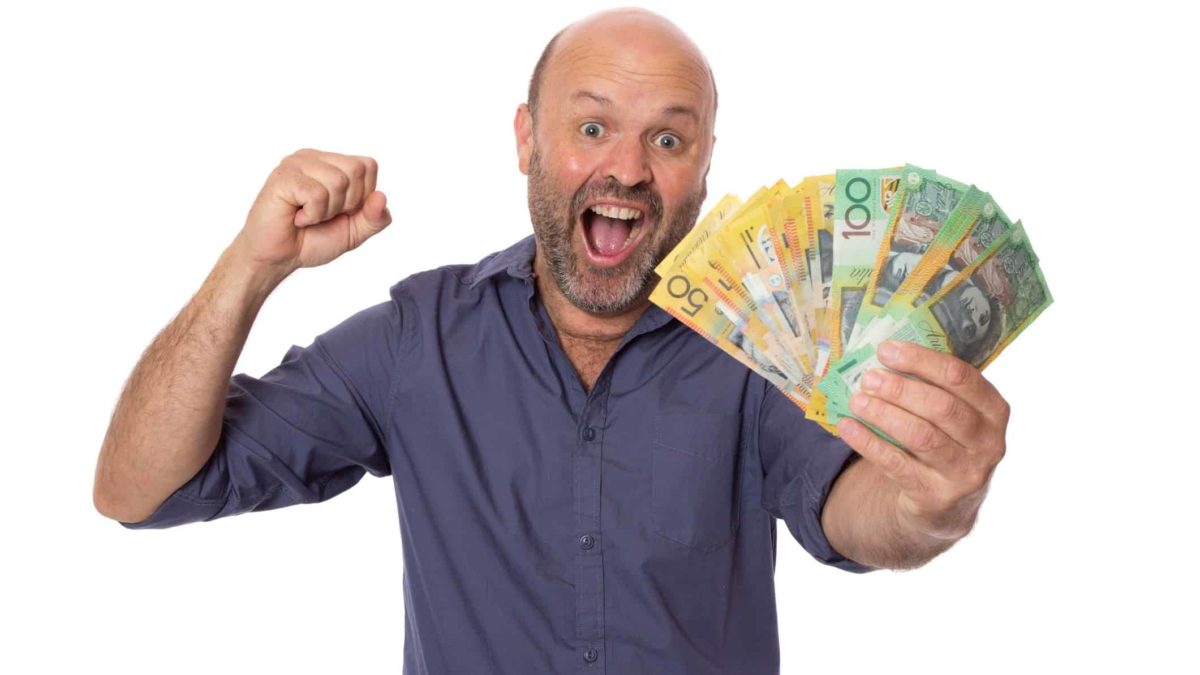
    Happy man holding Australian dollar notes, representing dividends.

    With a new month just days away, let’s take a look at four ASX dividend stocks that analysts think could be worth adding to your portfolio in June.

    Here’s what you need to know about them:

    Accent Group Ltd (ASX: AX1)

    Accent could be an ASX dividend stock to buy in June. It is the footwear-focused retailer behind brands such as HYPEDC, Platypus, Stylerunner, Subtype, and The Athlete’s Foot.

    Bell Potter is a big fan of the company and sees significant value in its shares at current levels. The broker currently has a buy rating and $2.50 price target on them.

    As for dividends, Bell Potter expects fully franked dividends per share of 13 cents in FY 2024 and then 14.6 cents in FY 2025. Based on the latest Accent share price of $1.89, this represents dividend yields of 6.9% and 7.7%, respectively.

    Centuria Industrial REIT (ASX: CIP)

    Another ASX dividend stock for investors to consider buying in June is Centuria Industrial. It is the country’s largest domestic pure play industrial property investment company.

    Analysts at UBS are feeling very positive about the company’s outlook and have a buy rating and $3.71 price target on its shares.

    The broker is also expecting some decent yields from its shares in the near term. It is forecasting dividends per share of 16 cents in both FY 2024 and in FY 2025. Based on the current Centuria Industrial share price of $3.20, this represents dividend yields of 5% in both years.

    Deterra Royalties Ltd (ASX: DRR)

    Deterra Royalties could be another excellent ASX dividend stock to buy next month. It is a mining royalties company with a collection of cash-generating assets across Australia.

    Morgan Stanley is positive on the company and has an overweight rating and $5.60 price target on its shares.

    It also expects Deterra Royalties to be in a position to pay some big dividends in the near term. It is forecasting fully franked dividends per share of 32.7 cents in FY 2024 and 39 cents in FY 2025. Based on the current Deterra Royalties share price of $4.77, this will mean yields of 6.8% and 8.2%, respectively.

    Eagers Automotive Ltd (ASX: APE)

    A final ASX dividend stock that could be a buy in June is Eagers Automotive. It is operates one of Australia’s largest auto dealership networks.

    Bell Potter sees a lot of value in its shares following a recent selloff. The broker reiterated its buy rating with a price target of $13.35.

    As for income, it expects Eagers Automotive to pay fully franked dividends of 64.5 cents per share in FY 2024 and then 73 cents per share in FY 2025. Based on its current share price of $10.52, this represents dividend yields of 6.1% and 6.9%, respectively.

    The post 4 excellent ASX dividend stocks to buy in June appeared first on The Motley Fool Australia.

    Should you invest $1,000 in Eagers Automotive Ltd right now?

    Before you buy Eagers Automotive Ltd shares, consider this:

    Motley Fool investing expert Scott Phillips just revealed what he believes are the 5 best stocks for investors to buy right now… and Eagers Automotive Ltd wasn’t one of them.

    The online investing service he’s run for over a decade, Motley Fool Share Advisor, has provided thousands of paying members with stock picks that have doubled, tripled or even more.*

    And right now, Scott thinks there are 5 stocks that may be better buys…

    See The 5 Stocks
    *Returns as of 5 May 2024

    More reading

    Motley Fool contributor James Mickleboro has no position in any of the stocks mentioned. The Motley Fool Australia’s parent company Motley Fool Holdings Inc. has no position in any of the stocks mentioned. The Motley Fool Australia has recommended Accent Group and Eagers Automotive Ltd. The Motley Fool has a disclosure policy. This article contains general investment advice only (under AFSL 400691). Authorised by Scott Phillips.
  • If I had to own only one ASX 200 share forever, this would be it

    A businessman hugs his computer and smiles.

    The S&P/ASX 200 Index (ASX: XJO) share Washington H. Soul Pattinson and Co. Ltd (ASX: SOL) is a stalwart in my portfolio, and I expect to own it for the rest of my life.

    Soul Patts is an investment house that has been listed since 1903, making it one of the oldest companies on the ASX.

    It started as a chemist with 21 pharmacy stores, but it’s now a very different business. Incredibly, Soul Patts has been managed by the same family from the start – Robert Millner is the fourth generation of the family to chair the company.

    Being old doesn’t automatically make it a compelling investment, though longevity is a useful characteristic for a long-term investment. It means I can confidently hold the ASX 200 share for a long time.

    Three factors really matter to me about this business.

    Diversification and investment flexibility

    Diversification is appealing because it lowers the risk to the Soul Patts portfolio if a particular investment goes wrong.

    The portfolio is invested in multiple industries and asset classes, including ASX blue-chip shares, ASX small-cap shares, private businesses, property, and credit/bonds.

    In terms of individual ASX companies, some of its main investments include Brickworks Limited (ASX: BKW), New Hope Corporation Ltd (ASX: NHC), TPG Telecom Ltd (ASX: TPG), Tuas Ltd (ASX: TUA), BHP Group Ltd (ASX: BHP), Macquarie Group Ltd (ASX: MQG), CSL Ltd (ASX: CSL), Goodman Group (ASX: GMG) and Wesfarmers Ltd (ASX: WES).

    Other areas it’s invested in include agriculture, resources, financial services, retirement living, swimming schools, electrification and more.

    I like that the business has the flexibility to invest almost anywhere, opening up lots of opportunities for the company to find the best investment.

    Re-investment

    One of the most substantial financial moves that can help an ASX 200 share deliver long-term returns is the re-investment of profit back into itself for more growth.

    With Soul Patts, there’s a double layer of re-investment occuring. The investment house’s portfolio of companies are re-investing inside their own businesses. Soul Patts doesn’t need to do anything for Wesfarmers, Goodman and Brickworks to invest in and grow their operations.

    On top of that, Soul Patts receives dividends and distributions from its portfolio of assets. After paying for its costs and sending a majority of the net cash flow to shareholders as a dividend, Soul Patts re-invests some of that cash flow into more opportunities, adding more financial power to the snowballing effect of growth.

    Growing dividends

    The ASX 200 share has grown its annual ordinary dividend every year since 2000, the longest streak of consecutive dividend increases on the ASX.

    Dividend hikes aren’t guaranteed, but it’s nice to know that there’s a good chance next year’s dividend payment will be larger than this year’s.

    In the FY24 first-half result, Soul Patts increased its interim payout by 11.1% after its net cash flow from investments increased by 6.9%.

    It currently has a grossed-up dividend yield of around 4%.

    I like that I can own Soul Patts shares and receive dividends, meaning I don’t need to sell shares to capitalise on the growth it’s generating.

    The post If I had to own only one ASX 200 share forever, this would be it appeared first on The Motley Fool Australia.

    Should you invest $1,000 in Washington H. Soul Pattinson And Company Limited right now?

    Before you buy Washington H. Soul Pattinson And Company Limited shares, consider this:

    Motley Fool investing expert Scott Phillips just revealed what he believes are the 5 best stocks for investors to buy right now… and Washington H. Soul Pattinson And Company Limited wasn’t one of them.

    The online investing service he’s run for over a decade, Motley Fool Share Advisor, has provided thousands of paying members with stock picks that have doubled, tripled or even more.*

    And right now, Scott thinks there are 5 stocks that may be better buys…

    See The 5 Stocks
    *Returns as of 5 May 2024

    More reading

    Motley Fool contributor Tristan Harrison has positions in Brickworks and Washington H. Soul Pattinson and Company Limited. The Motley Fool Australia’s parent company Motley Fool Holdings Inc. has positions in and has recommended Brickworks, CSL, Goodman Group, Macquarie Group, Washington H. Soul Pattinson and Company Limited, and Wesfarmers. The Motley Fool Australia has positions in and has recommended Brickworks, Macquarie Group, Washington H. Soul Pattinson and Company Limited, and Wesfarmers. The Motley Fool Australia has recommended CSL and Goodman Group. The Motley Fool has a disclosure policy. This article contains general investment advice only (under AFSL 400691). Authorised by Scott Phillips.

  • Here are the top 10 states for working remotely based on utility costs, internet speeds, and job openings

    Blacksburg, Virginia.
    Blacksburg, Virginia.

    • A look at internet speeds, power costs, and job openings revealed the top states for remote gigs.
    • The furniture maker Desky identified Virginia as the No. 1 state for remote work.
    • Washington and Arizona also ranked well for work-from-home jobs based on these factors.

    Working from home can lead to odd-looking ensembles, pairing fancy shirts with comfy pants.

    But beyond worrying about your on-camera appearance, WFH setups can also lead to concerns about the speed of your internet connection or how much you spend to run the AC on hot days.

    Desky, which makes ergonomic furniture, reviewed internet speeds, electricity costs, and openings for remote jobs to determine which US states are ideal for work-from-home gigs.

    Here are the top 10:

    10. Oklahoma
    Two cabins sit on the edge of a lake.
    Hochatown, Oklahoma.

    Average internet speed: 351 Mbps

    Average electricity cost: 10.72 cents per kilowatt-hour

    Remote job openings per 10,000 people: 15

    9. Louisiana
    The top of a tall white building, overlooking a green city with a wide river.
    Baton Rouge, Louisiana.

    Average internet speed: 324.9 Mbps

    Average electricity cost: 9.37 cents per kilowatt-hour

    Remote job openings per 10,000 people: 11

    8. Georgia
    Columbus, Georgia
    Columbus, Georgia.

    Average internet speed: 414.9 Mbps

    Average electricity cost: 12.26 cents per kilowatt-hour

    Remote job openings per 10,000 people: 17

    7. Tennessee
    Homes in Knoxville, Tennessee.
    Knoxville, Tennessee.

    Average internet speed: 351.1 Mbps

    Average electricity cost: 10.79 cents per kilowatt-hour

    Remote job openings per 10,000 people: 19

    6. Texas
    Houston skyline at dusk
    Houston, Texas.

    Average internet speed: 425.9 Mbps

    Average electricity cost: 11.36 cents per kilowatt-hour

    Remote job openings per 10,000 people: 16

    5. Maryland
    Baltimore, Maryland, downtown cityscape at dusk.
    Baltimore, Maryland.

    Average internet speed: 506.7 Mbps

    Average electricity cost: 13.92 cents per kilowatt-hour

    Remote job openings per 10,000 people: 18

    4. Delaware
    Aerial shot of waterside homes in Delaware.
    Delaware.

    Average internet speed: 469.7 Mbps

    Average electricity cost: 13.21 cents per kilowatt-hour

    Remote job openings per 10,000 people: 21

    3. Arizona
    Scottsdale, Arizona.
    Scottsdale, Arizona.

    Average internet speed: 396.1 Mbps

    Average electricity cost: 13.16 cents per kilowatt-hour

    Remote job openings per 10,000 people: 40

    2. Washington
    An aerial view of lakeside houses in Seattle.
    Washington.

    Average internet speed: 451 Mbps

    Average electricity cost: 9.79 cents per kilowatt-hour

    Remote job openings per 10,000 people: 14

    1. Virginia
    Arlington, Virginia.
    Arlington, Virginia.

    Average internet speed: 505.6 Mbps

    Average electricity cost: 12.4 cents per kilowatt-hour

    Remote job openings per 10,000 people: 23

    Read the original article on Business Insider
  • Nvidia’s Jensen Huang praises Elon Musk’s efforts at Tesla

    Composite image of Jensen Huang (right) and Elon Musk (left)
    Elon Musk (left) is doing something right at Tesla, according to Jensen Huang (right).

    • Jensen Huang had positive words about Tesla's efforts in an interview last week.
    • The Nvidia CEO said the EV maker is "far ahead in self-driving cars."
    • The support comes weeks before Tesla shareholders are set to vote on Elon Musk's pay package.

    Nvidia CEO Jensen Huang gave electric vehicle maker Tesla a shoutout during an interview with Yahoo Finance last week.

    Huang, whose computer chip company is at the pinnacle of Silicon Valley these days, offered praise when asked about automakers other than Tesla venturing into the self-driving space.

    "Tesla is far ahead in self-driving cars, but every single car, someday, will have to have autonomous capability," Huang said in the interview posted to YouTube Thursday.

    As CEO of the EV maker, Elon Musk has led company efforts to produce self-driving vehicles. Tesla has promoted its Full Self-Driving technology (FSD) hard in 2024, and halved the monthly price of the software to $99.

    But, FSD has been met with questions around its safety — prompting a recent rebrand to FSD (Supervised) — since the beta launched in 2020. Tesla estimated about 400,000 cars in the US have FSD installed.

    Huang's support comes at a good time for Musk. Tesla shareholders will hold a vote in June to reinstate his pay package as the top exec, which is valued at $47 billion. A Delaware court voided his compensation in January after a shareholder filed a lawsuit arguing that the package was excessive.

    Nvidia artificial intelligence chips are in high demand among tech companies. Customers lining up to buy the Blackwell chips include Google Meta, OpenAI, and more, according to the company.

    Musk compared the current arms race happening in AI to a poker game and said Tesla will be betting big with Nvidia in January.

    In a post on X, Musk said that Tesla will spend over $500 million on Nvidia's AI chips in 2024.

    "The table stakes for being competitive in AI are at least several billion dollars per year at this point," he said in the post.

    Read the original article on Business Insider
  • Royal Caribbean and Carnival Cruise ships leave from Baltimore for the first time since the collapse of the Key Bridge

    The Port of Baltimore in May 2024
    The Port of Baltimore in May 2024

    • Cruise ships left the Port of Baltimore for the first time since March 26.
    • The port's terminal was blocked after the Francis Scott Key Bridge collapsed and killed six workers.
    • Rebuilding the bridge will take four years and could cost up to $1.9 billion.

    Two months after Baltimore's Francis Scott Key Bridge collapsed, cruise ships are now taking off from the Port of Baltimore.

    A Royal Caribbean ship called Vision of the Seas left from the port on Saturday for a trip to Bermuda. And a Carnival Cruise ship called Pride destined for Greenland and Canada left Baltimore on Sunday.

    The two trips are notable as the first cruise ships to leave Baltimore since the port was blocked by the collapse of the Francis Scott Key Bridge on March 26. The bridge collapsed after being hit by a cargo ship, killing six workers. The Francis Scott Key Bridge services about 30,000 people a day.

    "We've been working through this process for the past two months," Jonathan Daniels, the director for the Port of Baltimore said in a video posted to X on May 25 by the port.

    One week ago, the port's terminal was the headquarters for the recovery operations for the Francis Scott Key Bridge, Daniels added. The terminal is also a massive area of tourism for Maryland, bringing in 440,000 cruise passengers a year, Daniels told the Baltimore Sun.

    The project to rebuild the Francis Scott Key Bridge will take four years and is estimated to cost between $1.7 billion and $1.9 billion, a spokesperson for the Maryland Department of Transportation said in May 2023.

    Read the original article on Business Insider
  • 3 pearls of Warren Buffett wisdom I think all ASX investors need right now

    Legendary share market investing expert and owner of Berkshire Hathaway Warren Buffett

    Warren Buffett is one of the world’s greatest investors. Berkshire Hathaway, the business Buffett has led for decades, achieved an average annual return of 19.8% between 1965 and 2023.

    Buffett is also one of the world’s most generous people with his money and advice. He plans to donate most of his huge wealth to charity. He also spends hours every year at the Berkshire Hathaway annual general meeting answering questions from shareholders and has given numerous pieces of advice over the years.

    I will talk about three Buffett pearls of wisdom that I think are very relevant to today’s investment conditions.

    Interest rates

    Inflation remains higher than central banks would like, so interest rates may stay at this level for longer. The US Federal Reserve boss Jerome Powell said earlier in May:

    We did not expect this to be a smooth road. But these [inflation readings] were higher than I think anybody expected.

    What that has told us is that we’ll need to be patient and let restrictive policy do its work.

    Of course, that doesn’t mean we shouldn’t invest at all. But, I believe investors should continue to assess company valuations on their merits and only buy if they think long-term returns can be solid.

    Warren Buffett once explained why interest rates are so important to valuations:

    The value of every business, the value of a farm, the value of an apartment house, the value of any economic asset, is 100% sensitive to interest rates because all you are doing in investing is transferring some money to somebody now in exchange for what you expect the stream of money to be, to come in over a period of time, and the higher interest rates are the less that present value is going to be. So every business by its nature…its intrinsic valuation is 100% sensitive to interest rates.

    Don’t have to swing at every pitch

    At a time when the share prices of many businesses are close to 52-week highs or all-time highs, I think it would be reasonable for investors to be discerning about which investments they’re buying.

    Investing is not like baseball, where batters must swing at pitches sooner or later. We can take our time with investments and only buy shares at a price we like.

    Warren Buffett explained how to handle investing in this situation:

    The trick in investing is just to sit there and watch pitch after pitch go by and wait for the one right in your sweet spot. And if people are yelling, ‘Swing, you bum!,’ ignore them.

    When the market does become fearful, that could be the time to be greedy. There doesn’t need to be a bear market to find opportunities, though; I’ve written plenty of articles recently where I see opportunities right now.

    Great companies at fair prices

    There is a wide range of potential ASX share investments for us to buy. Warren Buffett and Charlie Munger have been advocates of investors focusing on wonderful companies rather than average businesses. Warren Buffett said:

    It’s far better to buy a wonderful company at a fair price than a fair company at a wonderful price.

    By choosing great businesses, I think those investments are much more likely to deliver strong metrics such as a higher return on equity (ROE) and better compounding of net profit after tax (NPAT) over the long term. Owning wonderful companies can deliver good share price (and dividend) returns over time.

    The post 3 pearls of Warren Buffett wisdom I think all ASX investors need right now appeared first on The Motley Fool Australia.

    Wondering where you should invest $1,000 right now?

    When investing expert Scott Phillips has a stock tip, it can pay to listen. After all, the flagship Motley Fool Share Advisor newsletter he has run for over ten years has provided thousands of paying members with stock picks that have doubled, tripled or even more.*

    Scott just revealed what he believes could be the ‘five best ASX stocks’ for investors to buy right now. We believe these stocks are trading at attractive prices and Scott thinks they could be great buys right now…

    See The 5 Stocks
    *Returns as of 5 May 2024

    More reading

    Motley Fool contributor Tristan Harrison has no position in any of the stocks mentioned. The Motley Fool Australia’s parent company Motley Fool Holdings Inc. has positions in and has recommended Berkshire Hathaway. The Motley Fool Australia has recommended Berkshire Hathaway. The Motley Fool has a disclosure policy. This article contains general investment advice only (under AFSL 400691). Authorised by Scott Phillips.