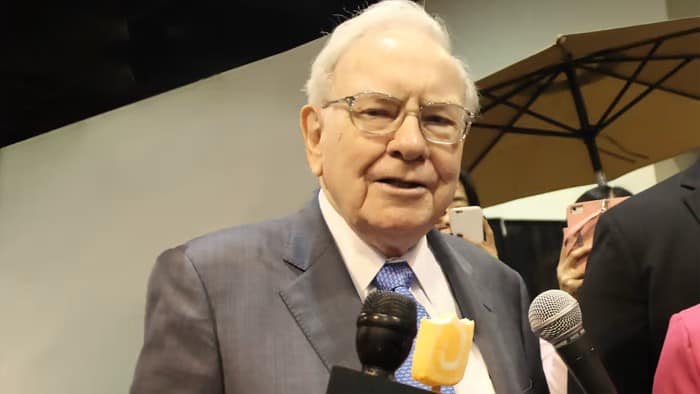
Author: openjargon

  • Millennials explain the joy and sacrifice of living alone

    Portrait image of Jess Munday.

    Not many of Jess Munday's San Francisco friends live alone. But Munday, a 29-year-old who works in tech marketing, was able to swing it.

    It took living with her parents for a few months during the pandemic, during which time she saved some money. Then, she struck in January 2021 when, according to Zillow, rent prices in the city were the lowest they've been in the past five years.

    She pays about $2,600 for a one-bedroom apartment in San Francisco's Mission neighborhood and makes $175,000 annually. It's a deal compared with the median rent of about $2,900 for a one-bedroom apartment in San Francisco.

    "I even know people who are a lot older than me who are living with roommates in San Francisco," Munday said. "I'm thankfully in a financial situation where I don't have to do that."

    The 30-something American dream used to look a little like this: You're married, you have two or three kids, and you own your starter house (white picket fence optional).

    But things have shifted. Millennials are getting married later, if at all. They're having kids later, if at all. And forget owning a sprawling suburban home.

    That's helping establish a new millennial milestone for some: Ditching roommates, moving out from the family home, and landing on living alone.

    Going solo as a younger worker has become increasingly popular in the past few decades, though it's still relatively uncommon in the US. Census data indicates that in the late 1960s and early 1970s, under 3% of Americans between 18 and 34 lived alone; by 2023, that number had tripled. Business Insider's analysis of American Community Survey microdata from IPUMS found that 10.5% of millennials lived alone in 2022.

    !function(){“use strict”;window.addEventListener(“message”,(function(a){if(void 0!==a.data[“datawrapper-height”]){var e=document.querySelectorAll(“iframe”);for(var t in a.data[“datawrapper-height”])for(var r=0;r<e.length;r++)if(e[r].contentWindow===a.source){var i=a.data["datawrapper-height"][t]+"px";e[r].style.height=i}}}))}();

    Bella DePaulo, a social scientist who studies single people and who wrote the book "Single at Heart," said the rise in solo living could be a result of Americans delaying marriage.

    "Marriage is no longer the marker of adulthood that it once was. Now younger people are more likely to feel like they're an adult if they've had other accomplishments, and sometimes living alone is one of them," DePaulo said. "Living alone can mean that you can afford to do so, and that's something to feel proud of."

    For this article, Business Insider spoke to nine millennials who live alone. While their situations vary, they all said that living alone is very much a sacrifice — but one worth making.

    In doing so, they outlined the promises and pitfalls of hitting this new millennial milestone.

    Munday acknowledged that if she lost her job, she'd most likely have to move back home or get roommates, but for now, it's worth the risk.

    "I personally like living alone. I can control the space, how I decorate," Munday said. "I do enjoy having space and being able to clean or leave it messy depending on my mood."

    Jess Munday outside her apartment building.
    Jess Munday.

    The singles tax

    Aria Velasquez, 32, lives alone in her one-bedroom apartment in Chicago, paying about $1,500 in rent and service fees. She was laid off from her journalism job earlier this year.

    She said the biggest challenge is taking on the financial burden alone. Her partnered friends, on the other hand, get a break.

    "Now that we're in our early to mid-30s, a lot of people are getting married or partnering up so they're moving in with their partners even if they're not married," Velasquez said. "They will cite living with someone to split the bills with as a benefit of moving in with someone."

    Zillow recently estimated that people living alone in one-bedroom rentals spent over $7,000 more annually on housing costs than people living with others — a difference often described as the singles tax.

    Velasquez said that she loves living alone and that it has always been her goal. She values privacy and quiet and loves coming home to nothing but the "hum of the fridge." At the same time, she acknowledged that the cost of many items, including groceries, had risen, adding that there's "no discount for single-person shopping."

    "You buy a loaf of bread, but you may not eat the entire loaf in a short period of time because maybe you don't want a sandwich every day," Velasquez said.

    Though she's able to rent on her own, buying her own place feels like a distant dream: "I view it the same way people think about winning the lottery."

    More millennials living with Mom and Dad

    Erica Charles, 28, a publicist in Washington, DC, said that while she and many of her peers live alone, others had moved back in with family in recent years. She said she's considered it as well.

    "I could save $700 a month," Charles said, adding that it could go toward saving for her graduate school tuition. "I'm thinking about how I can scale back a lot. I'm thinking about jobs that pay more and how to bring in more money through freelancing."

    Rick Fry, a senior researcher at Pew, said the share of 18- to 34-year-olds living in their families' homes has been slowly rising since 1971 "and particularly kind of picked up during the Great Recession," per Pew's research. As of 2023, he said, it was about 32%.

    "If you look at the metro areas that have the highest median rents, those are the metro areas where you see the young adults most likely to be living with Mom and/or Dad," Fry said. Per BI's analysis of American Community Survey data via IPUMS, 16% of millennials lived with at least one parent as of 2022. (The data doesn't specify if that means they're living with their parents or if their parents are living with them.)

    Charles said that before the pandemic, she liked living alone. "I thought it was a rite of passage into young adulthood," she said.

    This year, Charles has been rethinking her living situation. Her lease is ending in June. She says she's been laid off three times since 2020. Because of finances, she's put plans to pursue a Ph.D. in media communications on hold, and she's not planning to have children anytime soon. She'd also like to buy a house in the next three years. Housing prices in Florida, where she's from, have increased significantly over the past five years.

    She's thought about whether she wants to move in with her family or with a roommate. She's been cutting back on spending and has been doing more budgeting. She's even taken on part-time food-delivery and freelancing gigs.

    "It's really a privilege to live alone," Charles said. "Now it's become a luxury."

    Subsidized solo living

    Some lower-earning millennials are able to get assistance reaching the solo-living milestone — but it's not always easy.

    Man sitting in his home alone with a cat on the background.
    Garak Clibborn.

    Garak Clibborn, 39, a veteran in California, has been homeless before. He's also cycled through at least eight roommates while renting a room in a house and applying for housing assistance so he could live on his own. After waiting nearly a year, his name was called for a housing voucher, he said — and he was told he had 60 days to find a place before it expired.

    Many apartments had yearslong waitlists, and others wouldn't accept vouchers, which is government rental assistance. After calling over 350 places, he finally found a spot. He's been living alone there since 2012. His rent just went up, to over $1,900. With his subsidy, he pays about $380 a month; he uses the money from his VA pension to help cover the cost.

    Man sitting alone in a yard "in process".
    Garak Clibborn.

    "Even with a subsidy, it's extraordinarily difficult" to live alone, Clibborn said. He added that he still has to cover many other expenses on his own.

    "If I run out of money, I'm screwed. I don't have anything to help me," he said.

    Way behind in homeownership

    Chaz Zimmer, a 28-year-old who sells cars at a Subaru dealership, has lived alone in his apartment in Waverly, New York, since February 2021. He pays $550 a month in rent. He tried to purchase a home last year, but interest rates made it expensive. He'd eventually like to move to a bigger place, but his rent is so cheap that it's hard to justify moving, he said.

    An analysis of American Community Survey data published last year found that non-college-educated millennials were half as likely to own homes at 30 as non-college-educated baby boomers were at that age. It also found that 38% of college-educated millennials owned homes at 30, less than the 54% of college-educated boomers who owned a home at that age.

    Portrait image of Chaz Zimmer.
    Chaz Zimmer.

    Tomasz Piskorski, a professor of real estate at Columbia Business School, said it's become more difficult to buy a home because of the increases in home prices and interest rates after 2022.

    "For the millennial generation, it could take years to catch up in homeownership," Piskorski said.

    Zimmer hasn't given up hope. "Some of it comes down to opportunity and timing," Zimmer said. He works on commission, so his salary has ranged from $62,000 to $79,000 in the last couple of years. He said he's "fortunate to have a pretty good job that makes a decent enough salary."

    Chaz Zimmer at home.
    Chaz Zimmer.

    Rent versus a mortgage

    James Paniagua, 30, lives in Oakland, California. Throughout college, he lived at home and stayed there until right before the pandemic. He briefly lived in Los Angeles with a roommate, but the pandemic sent him back home.

    "I have essentially been living at home for the majority of my twenties," he said. Last year, he decided to move up north for work and was lucky enough to find his own place in Oakland. Before making that move, a few financial pieces had to fall into place: He had to fix his credit score, and he needed to find a job that paid him enough to move out.

    Today, he makes around $125,000; his 700-square-foot apartment with a parking spot costs him around $2,100 in monthly rent.

    "Starting to pay rent was the biggest adjustment, which is obviously a huge payment adjustment, but I took the time to plan out that as much as possible and shift some things around to be able to live alone, but still live the lifestyle that I had had before," he said.

    He's stopped making weekly mall trips and eats at home more regularly now. He said he likes to stay at home and wants to make his space as cozy as possible.

    While he said he's getting a good deal for what he has, some older adults can't believe how much he's paying for rent, "they're shook."

    "It's more than some of my relative's mortgages," Paniagua said.

    The experience of living alone has evolved

    For those who are able to buy, snagging a solo property is a pivotal life event, and may provide comfort amid the uncertainty of other traditional milestones.

    After attending graduate school in London, Julia Mazur, now 30, moved back home with her parents for two years. She worked a tech job that paid a six-figure salary and offered a generous equity package, she said. At age 25, she saved up enough to buy her own condo in Los Angeles.

    During the pandemic, she refinanced her mortgage and got a lower rate; she said her monthly costs totaled about $3,000. Now she's swapping homes with a couple in Austin who have a similarly priced mortgage.

    For her, living alone is empowering. She said she thinks some millennials are finding their person and settling down while others, including her, are finding fulfillment in different aspects of their lives.

    "For me, I like the ability to move around and to travel, to get to experience what living on my own is like and the responsibilities that come with it. I feel very fulfilled by that," she said. "And I also think that with living alone, there does come a need to connect with humans in real life. And so I kind of make myself go and do things to try and connect with people, go to tennis classes, go sit up alone at bars, go to meetups and friend dates."

    DePaulo said the experience of living alone has changed significantly in the past few years. She's found that people living alone are more likely to be connected to more diverse people — and more people overall — and engage more with civic life and community institutions.

    Living alone is worth it for many, despite the challenges.

    Kathy Pierre, 31, pays $1,280 a month in base rent for a two-bedroom apartment in Charlotte, North Carolina. When she moved to Charlotte, she didn't know anyone there and didn't want to take risks with living with a stranger after past experiences with roommates. "I needed to make myself afford it," she said.

    At the same time, she says if she lived with family or a roommate, she'd be able to save money and get closer to buying a home. All the bills, including food, utilities, and rent, are her own when living alone. What's more, it can be easy not to talk to another human in person while working from home.

    "It's just very lovely to be able to live on my own and have my own space," Pierre said. "I don't have to negotiate with other people about what happens here. I think that is really awesome. I say jokingly, but not jokingly, I would move out of Charlotte before I look for a roommate."


    Read the original article on Business Insider
  • Bill Gates shares the Warren Buffett-inspired scheduling tip he wishes he had learned earlier

    warren buffett bill gates
    Warren Buffett and Bill Gates

    • Bill Gates said he learned an important scheduling lesson from fellow billionaire Warren Buffett.
    • The Microsoft founder used to schedule his day down to the minute.
    • But Buffett's intentionally light calendar helped him ditch the overbooked schedule. 

    Microsoft founder Bill Gates says you should stop overbooking your calendar.

    The billionaire shared a scheduling tip in a Friday Threads post, citing fellow billionaire Warren Buffett.

    "It took far too long for me to realize that you don't have to fill every second of your schedule to be successful," Gates wrote. "(In hindsight, it's a lesson I could have learned a lot sooner had I taken more peeks at Warren Buffett's intentionally light calendar.)"

    While at Microsoft, Gates was known for his meticulous schedules, literally planning his day down to the minute — an approach Tesla CEO Elon Musk has also been said to take.

    Last year, Gates admitted that he previously thought sleep was "lazy" and competed with his colleagues to see who could get the least rest.

    "I thought that was the only way you could do things," Gates said of his packed schedule in a 2017 interview alongside Buffett.

    Gates said things changed for him when he saw Buffett's intentionally sparse calendar.

    "You control your time," Gates said. "It's not a proxy of your seriousness that you fill every minute in your schedule."

    Buffett, who is CEO of Berkshire Hathaway, has long been a champion of increasing productivity by decreasing busy work — an approach supported by science.

    People who have the freedom to focus their time on creative work as opposed to performative busywork are happier, more productive, and more engaged at work, Business Insider previously reported. 

    After seeing Buffett's schedule, Gates relaxed his own calendar. In 2020, BI documented a day in the life of the Microsoft billionaire, which included ample amounts of time for playing tennis, reading, blogging, and spending time with his family.

    Read the original article on Business Insider
  • These ASX 300 shares could rise 35% to 65%

    A man clenches his fists in excitement as gold coins fall from the sky.

    If you are looking to supercharge your portfolio’s returns, then it could be worth looking at the ASX 300 shares in this article.

    That’s because analysts have named them as buys and tipped them to rise 35% and 65%. Here’s what you need to know about them:

    Accent Group Ltd (ASX: AX1)

    The first ASX 300 share that could deliver big returns over the next 12 months is Accent Group.

    It is the footwear focused retailer behind store brands such as HypeDC, Stylerunner, Platypus, and The Athlete’s Foot. It also has exclusive distribution rights in Australia for a number of popular global brands.

    Bell Potter thinks that Accent Group’s shares are cheap at current levels. The broker currently has a buy rating and $2.50 price target on them. Based on its current share price of $1.84, this implies potential upside of 36% for investors over the next 12 months.

    In addition, the broker is forecasting fully franked dividends per share of 13 cents in FY 2024 and then 14.6 cents in FY 2025. This equates to dividend yields of 7% and 7.9%, respectively.

    Domino’s Pizza Enterprises Ltd (ASX: DMP)

    This beaten down pizza chain operator’s shares could have major upside potential according to analysts at Ord Minnett.

    According to a recent note, the broker has an accumulate rating and $61.00 price target on the ASX 300 share. This implies potential upside of 65% for investors between now and this time next year.

    In addition, the broker is forecasting dividends per share of $1.08 in FY 2024 and $1.51 in FY 2025. This will mean dividend yields of 2.9% and 4.1%, respectively, for investors.

    Regis Resources Ltd (ASX: RRL)

    A third ASX 300 share that could deliver big returns for investors is Western Australia-based gold miner Regis Resources.

    Despite the booming gold price, Regis Resources’ shares are down 14% since the start of the year.

    Bell Potter thinks this could be a buying opportunity for investors. It highlights that it is “attracted to its all- Australian asset portfolio and organic growth options which are unique at this scale.”

    In addition, its analysts see “key opportunities in the fundamental, medium-term outlook and, in our view, these may also make RRL an appealing corporate target in the current conducive M&A environment.”

    Bell Potter has a buy rating and $2.80 price target on its shares. This implies potential upside of almost 50% for investors from current levels.

    The post These ASX 300 shares could rise 35% to 65% appeared first on The Motley Fool Australia.

    Should you invest $1,000 in Accent Group Limited right now?

    Before you buy Accent Group Limited shares, consider this:

    Motley Fool investing expert Scott Phillips just revealed what he believes are the 5 best stocks for investors to buy right now… and Accent Group Limited wasn’t one of them.

    The online investing service he’s run for over a decade, Motley Fool Share Advisor, has provided thousands of paying members with stock picks that have doubled, tripled or even more.*

    And right now, Scott thinks there are 5 stocks that may be better buys…

    See The 5 Stocks
    *Returns as of 5 May 2024

    More reading

    Motley Fool contributor James Mickleboro has positions in Domino’s Pizza Enterprises. The Motley Fool Australia’s parent company Motley Fool Holdings Inc. has positions in and has recommended Domino’s Pizza Enterprises. The Motley Fool Australia has recommended Accent Group and Domino’s Pizza Enterprises. The Motley Fool has a disclosure policy. This article contains general investment advice only (under AFSL 400691). Authorised by Scott Phillips.

  • Signal CEO: OpenAI’s ScarJo stunt is some ‘edge lord’ nonsense

    Meredith Whittaker
    Meredith Whittaker

    • Signal's CEO criticized OpenAI's handling of the Scarlett Johansson controversy in a TechCrunch interview.
    • Meredith Whittaker said OpenAI's leadership is pulling "disrespectful" and "unnecessary" "Edge Lord bullshit."
    • Johansson accused OpenAI of stealing her voice for its "Sky" assistant, which OpenAI denies.

    Meredith Whittaker isn't holding back against OpenAI.

    Signal's CEO has weighed in on the OpenAI-Scarlett Johansson controversy, accusing the buzzy AI company of having a "dorm room" culture.

    In an interview with TechCrunch published on Friday, Whittaker was asked what she thought about allegations that OpenAI CEO Sam Altman asked Scarlett Johansson to provide her voice for the company's AI assistant and then, after Johansson declined, released a voice for their product that sounded similar to the actor.

    "It's just like … 'Edge Lord' bullshit. It's so disrespectful. It's so unnecessary," Whittaker told TechCrunch.

    She continued: "And it really tears the veil on this mythology that you're all serious people at the apex of science building the next Godhead, when it's very clear that the culture is dorm room high-jinks egged-on by a bunch of 'Yes men' who think every joke you say is funny, because they're paid to do that, and no one around there is taking this leadership by the shoulders and saying 'What the fuck are you doing!?'" 

    OpenAI did not immediately respond to a request for comment from Business Insider on Whittaker's interview.

    Earlier in the week, Whittaker took to X, formerly Twitter, to voice her opinions on the topic.

    In response to an account reposting Johansson's statement accusing OpenAI of ripping off her voice, Whittaker wrote on Tuesday, "The edge lord disrespect, unprofessionalism, strategic blundering typical of actual decision making in the AI industry speaks infinitely louder than all the voluntary safety pledges ever could."

    "In fact," Whittaker continued, "Those pledges serve mainly to highlight how far the walk is from the talk."

    OpenAI unveiled the "Sky" artificial intelligence voice option last week alongside an announcement about the company's new GPT-4o large language model. People immediately began noting the voice's similarity to Johansson's, particularly her performance in the 2013 film "Her," where the actor played an AI assistant that the main character falls in love with.

    On Monday, Johansson released a statement alleging that Altman had previously approached her about voicing Sky, which she declined.

    Altman has said in a blog post that OpenAI did not intend for Sky's voice to resemble Johansson's, and that the voice belongs to a different actress the company hired. But Altman had posted a single-word statement on X after the product's launch: "her."

    The company has paused using the Sky voice in its products, OpenAI said.

    Read the original article on Business Insider
  • Own the ASX’s Vanguard US Total Markets ETF (VTS)? Here’s what you’re invested in

    Diverse group of university students smiling and using laptops

    Interest in the Vanguard US Total Market Shares Index ETF (ASX: VTS) has been growing on the ASX in recent months. Perhaps the ultra-low management fee of 0.03% per annum is attracting investors to the broad-scale index fund.

    But this exchange-traded fund (ETF) is one of the largest in scope and scale on the ASX. It means what it says on the tin when it comes to ‘total market’.

    So today, let’s break down this rather unique ASX ETF and look at what you will actually own if you purchase VTS units on the share market today.

    What does the VTS ETF do for ASX investors?

    Unlike other US-based index funds like the iShares S&P 500 ETF (ASX: IVV) or the BetaShares Nasdaq 100 ETF (ASX: NDQ), the Vanguard US Total Market ETF doesn’t invest in a commonly known index. Nor does it hold just 500 or 100 companies respectively. Instead, it tracks the CRSP US Total Market Index, which, at last count, consisted of no fewer than 3,719 individual companies.

    In this way, the VTS gives ASX investors unrivalled access to the full spectrum of what American capitalism and the US public markets have to offer.

    However, unfortunately for ASX fans of true diversification, this VTS ETF isn’t quite as different from other US-based index funds as it might first appear. Yes, it has 3,719 individual holdings, against the IVV ETF’s 500. But this doesn’t mean that VTS offers six times more diversification.

    To illustrate, let’s look at the Vanguard US Total Market ETF’s largest holdings. They are none other than the big US tech giants we all know and may or may not love.

    Coming in at the top spot is tech behemoth Microsoft. Apple is next, followed by NVIDIA, Alphabet and Amazon. Then there’s Meta Platforms, Warren Buffett’s Berkshire Hathaway, and Eli Lilly & Co. Broadcom and JPMorgan Chase bring up the rear.

    3,719 vs. 500

    If every share had an equal weighting in the fund’s portfolio, those 10 shares would account for just 0.27% of the VTS portfolio. However, given that VTS is instead structured using the conventional market-capitalisation-weighted method, these 10 stocks make up a whopping 29.4% of this fund’s portfolio.

    This means that out of every dollar invested in VTS units, 29.4 cents will go to the 10 names listed above.

    That’s really not too different from the iShares S&P 500 ETF, which would see 34.73 cents out of every dollar going to those same 10 companies.

    Saying that, the iShares S&P 500 ETF charges a management fee of 0.04% per annum. So those who want the added diversification of VTS have no financial reason to go for another option.

    But if you think the iShares S&P 500 ETF and the Vanguard US Total Market ETF are wildly different funds, you might want to think again.

    The post Own the ASX’s Vanguard US Total Markets ETF (VTS)? Here’s what you’re invested in appeared first on The Motley Fool Australia.

    Should you invest $1,000 in Ishares S&p 500 Etf right now?

    Before you buy Ishares S&p 500 Etf shares, consider this:

    Motley Fool investing expert Scott Phillips just revealed what he believes are the 5 best stocks for investors to buy right now… and Ishares S&p 500 Etf wasn’t one of them.

    The online investing service he’s run for over a decade, Motley Fool Share Advisor, has provided thousands of paying members with stock picks that have doubled, tripled or even more.*

    And right now, Scott thinks there are 5 stocks that may be better buys…

    See The 5 Stocks
    *Returns as of 5 May 2024

    More reading

    JPMorgan Chase is an advertising partner of The Ascent, a Motley Fool company. John Mackey, former CEO of Whole Foods Market, an Amazon subsidiary, is a member of The Motley Fool’s board of directors. Randi Zuckerberg, a former director of market development and spokeswoman for Facebook and sister to Meta Platforms CEO Mark Zuckerberg, is a member of The Motley Fool’s board of directors. Suzanne Frey, an executive at Alphabet, is a member of The Motley Fool’s board of directors. Motley Fool contributor Sebastian Bowen has positions in Alphabet, Amazon, Apple, Berkshire Hathaway, Betashares Nasdaq 100 ETF – Currency Hedged, Meta Platforms, and Microsoft. The Motley Fool Australia’s parent company Motley Fool Holdings Inc. has positions in and has recommended Alphabet, Amazon, Apple, Berkshire Hathaway, BetaShares Nasdaq 100 ETF, JPMorgan Chase, Meta Platforms, Microsoft, Nvidia, and iShares S&P 500 ETF. The Motley Fool Australia’s parent company Motley Fool Holdings Inc. has recommended Broadcom and has recommended the following options: long January 2026 $395 calls on Microsoft and short January 2026 $405 calls on Microsoft. The Motley Fool Australia has positions in and has recommended BetaShares Nasdaq 100 ETF. The Motley Fool Australia has recommended Alphabet, Amazon, Apple, Berkshire Hathaway, Betashares Nasdaq 100 ETF – Currency Hedged, Meta Platforms, Microsoft, Nvidia, and iShares S&P 500 ETF. The Motley Fool has a disclosure policy. This article contains general investment advice only (under AFSL 400691). Authorised by Scott Phillips.

  • How you could retire rich by investing like Warren Buffett

    A head shot of legendary investor Warren Buffett speaking into a microphone at an event.

    Over multiple decades, Warren Buffett has achieved stunning returns for Berkshire Hathaway Inc (NYSE: BRK.B).

    This makes the Oracle of Omaha a great person to follow when it comes to your own investments.

    Particularly given that Buffett doesn’t have any complex trading strategies or try to time the market. This means that even a beginner investor could try to replicate his investment style in an effort to retire rich.

    Retiring rich the Warren Buffett way

    Warren Buffett is known to take a very patient approach to investing. A famous quote of his encapsulates this. He said:

    Someone’s sitting in the shade today because someone planted a tree a long time ago.

    Let’s imagine that you were to invest $5,000 into ASX shares today. This is your seed.

    Well, thanks to the power of compounding, if you were to continue investing $5,000 each year for a total of 30 years and averaged a total return of 10% per annum, you would grow your investment portfolio to approximately $1 million. This is your tree. A very large tree that is providing you ample shade in retirement.

    But which ASX shares should you buy? Let’s take a look at what Warren Buffett looks for when he makes his investments.

    Buying ASX shares

    It can be tempting to try and find ASX shares that are trading at dirt cheap prices.

    However, chances are that anything you find at these levels will not be among the best companies out there. After all, the truly great companies rarely trade at such a discount because smart investors realise that snapping them up at fair prices is sufficient.

    Buffett spoke about this when he said:

    It’s far better to buy a wonderful company at a fair price than a fair company at a wonderful price.

    What makes a wonderful company? Well, Warren Buffett is known to have a penchant for companies with sustainable competitive advantages or wide moats.

    And given his track record of doubling the market return for over 50 years, it is hard to argue against this strategy.

    ASX shares that could tick these boxes for Buffett include hearing solutions company Cochlear Limited (ASX: COH), biotech giant CSL Ltd (ASX: CSL), and investment bank Macquarie Group Ltd (ASX: MQG). They could be worth further investigation.

    But overall, the secret to retiring rich isn’t so secret. It is simply investing in high quality companies at fair prices and letting compounding work its magic over many years.

    The post How you could retire rich by investing like Warren Buffett appeared first on The Motley Fool Australia.

    Should you invest $1,000 in Cochlear Limited right now?

    Before you buy Cochlear Limited shares, consider this:

    Motley Fool investing expert Scott Phillips just revealed what he believes are the 5 best stocks for investors to buy right now… and Cochlear Limited wasn’t one of them.

    The online investing service he’s run for over a decade, Motley Fool Share Advisor, has provided thousands of paying members with stock picks that have doubled, tripled or even more.*

    And right now, Scott thinks there are 5 stocks that may be better buys…

    See The 5 Stocks
    *Returns as of 5 May 2024

    More reading

    Motley Fool contributor James Mickleboro has positions in CSL. The Motley Fool Australia’s parent company Motley Fool Holdings Inc. has positions in and has recommended Berkshire Hathaway, CSL, Cochlear, and Macquarie Group. The Motley Fool Australia has positions in and has recommended Macquarie Group. The Motley Fool Australia has recommended Berkshire Hathaway, CSL, and Cochlear. The Motley Fool has a disclosure policy. This article contains general investment advice only (under AFSL 400691). Authorised by Scott Phillips.

  • Educating workplaces about AI will lead to better outcomes, say business leaders

    Human AI interaction event Matt Baker and Dr. Mozziyar Etemadi
    Matt Baker, the senior vice president of AI enablement at Dell Technologies and Dr. Mozziyar Etemadi, the medical director of advanced technologies at Northwestern Medicine discussed the future of workplace AI during BI's event "Human-AI Collaboration: The Key to Workplace Efficiency and Innovation."

    • AI tools have become increasingly popular in the workplace, but adoption can feel daunting.
    • Three business leaders told Business Insider education is the key to unlocking AI's possibilities.
    • The discussion was part of BI's event "Human-AI Collaboration: The Key to Workplace Efficiency and Innovation," presented by Dell Technologies and held on April 23.
    • Click here to learn more.

    Artificial intelligence is virtually everywhere now. Companies are recognizing that they need to adopt the technology in their businesses, but given all the possibilities it offers, it's hard to know where to start.

    During Business Insider's virtual event "Human-AI Collaboration: The Key to Workplace Efficiency and Innovation," presented by Dell Technologies, a panel of business leaders and innovation experts advised workplaces on how to integrate AI into their systems.

    One of the biggest hurdles to adopting AI is demystifying the technology and shifting its narrative to being a learnable tool. "This is well within your reach," said Matt Baker, the senior vice president of AI enablement at Dell Technologies. "And that big ecosystem is something that is approachable today."

    Baker described AI's "embarrassment of riches." The market has exploded with new AI systems in the past year that tackle many different processes from task management to generative writing with competence. But with almost limitless applications, refining the use cases of AI will be the key to guiding its future in the workplace.

    "We are so early in this phase of this really tremendous new technology that it's important to keep an open mind and also to just see what works and what doesn't work," said Dr. Mozziyar Etemadi, the medical director of advanced technologies at Northwestern Medicine. "The last thing we want is for this to create just another big vendor lock-in piece of software that everyone has to use and nobody likes using."

    Baker and Etemadi were joined by Peter Miscovich, the global consulting practice lead, future of work for JLL. Miscovich said the biggest hurdle in AI adoption is figuring out exactly how to use the tech. "The need for training and change management and education could not be greater. I think I use generative AI every day, and it's taken me a year to become comfortable with that intervention and interface," he said.

    At Dell, Baker's team has made education a core aspect of their AI adoption. "We have an entire educational pillar of what we're doing to ensure that we move our team members through that process so that they understand the technology," he said. "It's going to lead to better outcomes for them and ultimately and more importantly, better outcomes for our customers."

    The panel also warned against a timid approach to AI. Demystifying the technology requires fully embracing AI's capabilities. For Dr. Mozziyar, that comes down to the design of the AI itself. "People should design the AI to kind of interact as close as you would interact with a person in a similar role," he said.

    Baker added that building new systems around AI, rather than plugging AI into existing workflows, is crucial: "If it's a garbage process to begin with, you get a garbage outcome."

    There should be intentionality behind these systems as well, Baker continued. "There's a framework for thinking through how you develop your own approach to that so that it's tailored to your company, your business, your organization," he said.

    "We're very strong believers in use-case diagnostics," said Miscovich of his team's approach to configuring better ways to use AI. He explained that they first evaluate "how current processes are organized" before figuring out how generative AI can help make those processes "much more efficient and much more effective."

    JLL recently launched multiple AI initiatives, including an HVAC energy-optimization platform to help reduce energy and service costs, and JLL GPT, a generative AI project built for the commercial-real-estate industry.

    For Dr. Mozziyar, AI's greatest potential in the medical field is its ability to assess patients' conditions. His team is currently using AI tools that can analyze texts of patient appointments to find issues to follow up on. They're also using an in-house AI assistant that helps radiologists catch critical issues.

    "We want the interaction with AI, or the use of AI, to paradoxically remove the barriers between, in our case physician and the computer," said Dr. Mozziyar. "Ideally it's just you and the patient."

    But as the AI landscape accelerates and more companies begin adoption, Baker said that those who get on board now will reap the greatest rewards. "Run your own race, understand how it best applies, but understand it is a race," he said. "So get started."

    Read the original article on Business Insider
  • Trump lawyer blasts ‘The Apprentice’ biopic in legal warning letter, calling it foreign election interference

    the apprentice trump movie
    Jeremy Strong as Roy Cohn and Sebastian Stan as Donald Trump in "The Apprentice."

    • Trump threatened legal action over "The Apprentice" biopic that played at the Cannes Film Festival.
    • It depicts Trump's rise in New York under the tutelage of Roy Cohn.
    • Even if a lawsuit isn't successful, the threat can make it difficult for the movie to be released.

    In the 1970s, the lawyer Roy Cohn taught Donald Trump a simple playbook for political fights: attack, counterattack, and never apologize.

    Trump is employing that strategy on "The Apprentice," an independently produced biopic about him that premiered this week at the Cannes Film Festival.

    In a cease-and-desist letter, one of Trump's attorneys threatened to sue over the movie's release, calling it "direct foreign interference in America's elections."

    "If you do not immediately cease and desist all distribution and marketing of this libelous farce, we will be forced to pursue all appropriate legal remedies," lawyer David Warrington wrote in the letter, obtained Friday by Business Insider.

    The movie depicts the rise of Trump as a New York real estate mogul in the 1970s and 1980s. Trump is played by Sebastian Stan, who is best known for his role in Marvel movies as an American soldier brainwashed by Russians.

    In the biopic, he rises as a New York power broker under the tutelage of Cohn (played by "Succession" actor Jeremy Strong), a colorful and controversial figure in American politics who made his name in the 1950s as a Senate lawyer rooting out Communist Party members with US Sen. Joseph McCarthy.

    According to critics who have seen it, the biopic depicts Trump undergoing liposuction, receiving surgery for hair loss, living with erectile dysfunction, and rejecting his brother, who suffered from alcohol addiction. It also shows Trump raping his first wife, Ivana.

    "The Apprentice," produced by Dublin-based production company Tailored Films, is still seeking deals with distribution companies that would put it in American theaters and on streaming services. Although a lawsuit against the filmmakers may not be successful, the threat of litigation may chill those negotiations.

    The threat of a lawsuit may also work in the other direction, creating a Streisand Effect that draws more eyes to a movie that may have been otherwise relegated to the arthouse film market.

    Warrington works for Dhillon Law, a firm that has represented Trump in several other cases — it collected nearly $900,000 from Trump's donor-funded PACs last year — and has brought defamation lawsuits against journalists in the past.

    The cease-and-desist letter is addressed to director Ali Abbasi and screenwriter Gabriel Sherman, who directed Business Insider to a statement attributed to the movie's producers.

    "The film is a fair and balanced portrait of the former president," the producers. "We want everyone to see it and then decide."

    At a Cannes Film Festival press conference this week, Abbasi said the movie was really about "the way the system is built and the way the power runs through the system," according to the Los Angeles Times, and seemed unconcerned about a potential lawsuit.

    "Everybody talks about him suing a lot of people," he said. "They don't talk about his success rate, though."

    In a statement issued earlier this week, Strong compared Trump's attacks on journalism to rhetoric from Joseph Stalin and Mao Zedong — comparisons Warrington called "unhinged."

    Warrington also criticized Sherman, a Vanity Fair reporter, for making what he said were "racist, Marxist, and otherwise disparaging statements" about Trump in the past.

    "The Apprentice" was partly funded by foreigners, according to Warrington's letter. The letter warns that the movie's release in the United States would amount to "foreign interference in our elections."

    "The Movie, released six months before the November 2024 election, is directed at influencing the 2024 election by falsely defaming President Trump," he wrote.

    Steven Cheung, a spokesperson for Trump's 2024 presidential campaign, said the independently produced movie "doesn't even deserve a place in the straight-to-DVD section of a bargain bin at a soon-to-be-closed discount movie store" and "is election interference by Hollywood elites, who know that President Trump will retake the White House and beat their candidate of choice because nothing they have done has worked."

    "We sent a cease and desist letter to address the blatantly false assertions from these pretend filmmakers," he said in a statement. "This garbage is pure fiction which sensationalizes lies that have been long debunked.

    Read the original article on Business Insider
  • Taylor Swift’s posture-correcting bra costs $185. A posture historian shares why she’s skeptical of ‘one-size-fits-all’ solutions.

    taylor swift eras tour
    Taylor Swift performs in France.

    • While rehearsing for the Eras tour, Taylor Swift wore the $185 posture-correcting Forme Power Bra.
    • The bra is designed to "immediately improve upper body alignment" and fix your posture.
    • Beth Linker, author of "Slouch: Posture Panic in Modern America," is skeptical of such products.

    It appears that even global pop stars may have a hard time standing up straight.

    In Taylor Swift's profile for TIME's 2023 Person of the Year, photos revealed that she wore the Forme Power Bra while rehearsing for the Eras Tour last year. This is a sports bra designed by an orthopedic surgeon to help improve body alignment.

    It comes with a hefty price tag but, at least, for Business Insider's senior editor Conz Preti, it's worth it. "I love this bra so much," Preti said after wearing it for nine months to help prevent her shoulders from hunching forward too much when playing tennis.

    Woman posing for selfie
    The author, after a workout, wearing the Forme bra.

    For $185, wearers should feel their upper body alignment "immediately improve" as the bra "activates and supports key muscle groups, helping guide the body into proper alignment naturally, without any discomfort," according to Forme's website.

    This bra isn't the only posture-fixing product on the market. In fact, there's an entire industry built around posture-enhancing devices and fitness programs, totaling $1.25 billion spent annually worldwide, Beth Linker reported in her new book "Slouch: Posture Panic in Modern America."

    If you find that one of these products works for you, then go ahead and use it, Linker said. But otherwise, she advised against shopping for a quick solution because you risk wasting money and injuring yourself while using a product that may not be right for you.

    Linker is an author, medical historian, and former physical therapist. In "Slouch," she takes readers on a journey through the history of our societal obsession with good posture. From her point of view, trying to fix posture with pricey, one-step products isn't the best approach.

    "The kind of bra that Taylor is wearing is incredibly expensive," Linker told BI. Companies can get away with marking up products like this by promising that they'll fix posture, she said, but she's not convinced they'll work for everyone. Forme didn't respond to Business Insider's request for comment.

    Why she's skeptical

    bad posture
    Posture-fixing products may not work for everyone, and could even cause injury if they aren't properly suited to the user.

    Linker considers posture-fixing products like Taylor Swift's bra to be "one-size-fits-all solutions." They're designed to work for everybody, and that's where Linker takes issue.

    These products don't account for the unique, individual physiological characteristics, lifestyle choices, and injuries that could be contributing to a person's "bad" posture.

    A quick Google search for "posture-fixing products" yields countless results, ranging in price from a few bucks to a few hundred dollars. For example, you can buy a $16 harness-like posture corrector that uses compression to align the spine, kind of like Swift's bra. Or, you can opt for a bigger purchase, like this $349 "posture pump" that inflates when you lie down on it to align, decompress, and lubricate the spine, according to posturepump.com.

    Before purchasing one of these products, Linker recommended asking yourself whether your posture really needs fixing in the first place.

    The idea that slouching is bad for your health and well-being isn't grounded in science, but rather decades of "cultural shaming," which Linker outlines in her book. She explains the history and stigma against "bad" posture in the US.

    "What I show in the book is that there have been a few studies that indicate that there isn't solid scientific evidence to show that a person who slouches more is more likely to have back pain," she said.

    However, if you are experiencing pain or discomfort and think improving your spinal alignment will help, here are some things you can do.

    The right way to care for your spine

    Senior businessman doing a yoga exercise in office - stock photo
    Getting up and moving throughout the work day is a good way to keep back pain at bay, Linker said.

    Linker recommended consulting a doctor, physical therapist, or body-work professional before beginning to work on your posture. That way, they can expertly assess your unique needs and help you achieve your specific goals safely.

    "Each person's back pain is individualistic," she said.

    Incorporating movement into your daily routine is also a great way to reduce back pain and create better spinal alignment, Linker said, especially for those who sit for long hours during the work week. It's important to get up from your desk, walk around, stretch, and make sure you're not sitting in the same position for too long.

    For example, she always keeps a standing desk handy not because standing is necessarily "better" than sitting, but because it gives her the option of changing positions throughout the day.

    She also suggests practicing yoga or pilates. These types of exercise stretch and strengthen the muscles throughout the entire body, and can foster healthy alignment.

    The bottom line: be skeptical of one-size-fits-all products that promise to "fix" your posture, Linker said. Instead, seek professional advice, move your body, and don't obsess over achieving perfect posture.

    Read the original article on Business Insider
  • Buy and hold these ASX ETFs for 10 years

    ETF with different images around it on top of a tablet.

    I think that buy and hold investing is one of the best ways to grow your wealth.

    This is because the longer you are able to leave your money in the market, the longer it has to compound.

    Compounding is what happens when you earn interest on top of interest or returns on top of returns.

    It explains why a 10% annual return turns $10,000 into $11,000 after one year and then almost $70,000 in 20 years.

    The only problem is that not everybody is confident enough to pick stocks to invest in for the long term. But don’t worry because exchange-traded funds (ETFs) are here to make life easy for investors.

    They remove the need to pick individual stocks and allow investors to buy large groups of them with a single click of a button.

    But which ASX ETFs could be good buy and hold options for investors? Let’s take a quick look at three:

    BetaShares NASDAQ 100 ETF (ASX: NDQ)

    The BetaShares NASDAQ 100 ETF could be a great buy and hold investment option for investors.

    It provides investors with exposure to many of the best companies in the world. These are the 100 largest (non-financial) stocks on Wall Street’s famous NASDAQ index.

    This is where you will find tech giant such as Amazon, Apple, Microsoft, Nvidia, and Tesla, as well as well-known non-tech companies including coffee chain behemoth Starbucks, energy drink seller Monster Beverage, yoga retailer Lululemon, and drinks giant PepsiCo.

    Collectively, these 100 companies have very bright long term outlook. It is for this reason that it could make the ETF a great place to invest over the next decade and even beyond.

    VanEck Vectors Morningstar Wide Moat ETF (ASX: MOAT)

    The VanEck Vectors Morningstar Wide Moat ETF could be another ASX ETF to buy and hold.

    In fact, it could be the epitome of what investors should look for when making long term investments.

    That’s because this ETF aims to invest in the style of Warren Buffett, who is the unofficial king of buy and hold investing. He has smashed the market over multiple decades thanks to his focus on buying high quality companies with sustainable competitive advantages and fair valuations.

    These are the types of companies that you will find in the VanEck Vectors Morningstar Wide Moat ETF.

    Vanguard All-World ex-U.S. Shares Index ETF (ASX: VEU)

    Finally, another buy and hold option could be the Vanguard All-World ex-U.S. Shares Index ETF.

    This ASX ETF offers investors easy access to a massive ~3,500 companies listed in developed and emerging markets across the globe (but excluding the United States).

    Among the ASX ETF’s holdings you will find quality companies such as HSBC Holdings, LVMH Moet Hennessy Louis Vuitton, Samsung, and Taiwan Semiconductor.

    The post Buy and hold these ASX ETFs for 10 years appeared first on The Motley Fool Australia.

    Should you invest $1,000 in Vaneck Investments Limited – Vaneck Vectors Morningstar Wide Moat Etf right now?

    Before you buy Vaneck Investments Limited – Vaneck Vectors Morningstar Wide Moat Etf shares, consider this:

    Motley Fool investing expert Scott Phillips just revealed what he believes are the 5 best stocks for investors to buy right now… and Vaneck Investments Limited – Vaneck Vectors Morningstar Wide Moat Etf wasn’t one of them.

    The online investing service he’s run for over a decade, Motley Fool Share Advisor, has provided thousands of paying members with stock picks that have doubled, tripled or even more.*

    And right now, Scott thinks there are 5 stocks that may be better buys…

    See The 5 Stocks
    *Returns as of 5 May 2024

    More reading

    HSBC Holdings is an advertising partner of The Ascent, a Motley Fool company. John Mackey, former CEO of Whole Foods Market, an Amazon subsidiary, is a member of The Motley Fool’s board of directors. Motley Fool contributor James Mickleboro has positions in BetaShares Nasdaq 100 ETF. The Motley Fool Australia’s parent company Motley Fool Holdings Inc. has positions in and has recommended Amazon, Apple, BetaShares Nasdaq 100 ETF, Lululemon Athletica, Microsoft, Monster Beverage, Nvidia, Starbucks, Taiwan Semiconductor Manufacturing, and Tesla. The Motley Fool Australia’s parent company Motley Fool Holdings Inc. has recommended HSBC Holdings and has recommended the following options: long January 2026 $395 calls on Microsoft and short January 2026 $405 calls on Microsoft. The Motley Fool Australia has positions in and has recommended BetaShares Nasdaq 100 ETF. The Motley Fool Australia has recommended Amazon, Apple, Microsoft, Nvidia, Starbucks, and VanEck Morningstar Wide Moat ETF. The Motley Fool has a disclosure policy. This article contains general investment advice only (under AFSL 400691). Authorised by Scott Phillips.