Author: openjargon

  • BofA banker whose death shook Wall Street was looking for new job and willing to take a lower salary for better hours, recruiter says: report

    Bank of America sign
    Leo Lukenas III was an investment banker at Bank of America.

    • The Bank of America banker who died on May 2 wanted a better work-life balance, a recruiter told Reuters.
    • The recruiter said he was in touch with Leo Lukenas III about a new job prior to his death.
    • Lukenas said he had been working more than 100 hours a week, the recruiter said.

    The Bank of America banker whose death this month renewed concerns about Wall Street's grueling working conditions had been looking for a new job with a better work-life balance, an executive recruiter told Reuters.

    Leo Lukenas III, a 35-year-old Army veteran, became an investment-banking associate at Bank of America last year, where he worked on transactions for financial-services companies.

    He died on May 2. Reuters reported that the New York City Office of the Chief Medical Examiner deemed the cause of death "acute coronary artery thrombus," which causes blood to clot in the heart. The coroner's report did not establish a connection between Lukenas' working conditions and his death.

    A new report from Reuters released Wednesday raised more questions about the hours Lukenas may have been logging leading up to his untimely death.

    Douglas Walters, an executive recruiter and managing partner at GrayFox Recruitment, told Reuters in an interview that he was in touch with Lukenas in the months before he died and that the banker was seeking a job with better hours. Walters said Lukenas told him he was putting in more than 100 hours a week at Bank of America.

    Lukenas was even willing to take a pay cut to work at a boutique investment banking firm as long as the hours were better, according to Walters' interview with Reuters. The recruiter declined to share the name of the firm. "He made a comment saying like, 'Hey, I'll trade hours of sleep for a 10% (pay) cut,'" Walters told Reuters.

    Walters said he had helped Lukenas put together his application for that firm. He also told the outlet Lukenas asked if it was normal to work 110-hour weeks. Walters said he told Lukenas that was excessive, even by Wall Street's standards.

    Walters did not return requests for comment sent via LinkedIn by BI on Wednesday, and GrayFox Recruitment could not be reached. GrayFox says it services companies in investment banking, private equity, and corporate mergers and acquisitions.

    Bank of America did not immediately respond to a request for comment from BI. In an emailed statement to BI last week, a spokesperson for the bank said: "We are very saddened by the loss of our teammate. We continue to focus on doing whatever we can to support the family and our team, especially those who worked closely with him."

    Current and former investment bankers told Business Insider following Lukenas' death that his passing had dominated industry chatter and sparked concerns within the firm and the investment banking sector — a pressure-cooker business known for its onerous work culture, and often crushing demands on junior professionals.

    Prior to Lukenas' death, he had been participating on deal work related to UMB's $2 billion all-stock acquisition of Heartland Financial USA — a transaction that was announced in late April. Last week, the nonprofit organization 51 Vets launched a fundraiser for the Lukenas family, which has raised more than $380,000 of its intended $1 million goal.

    Are you a Bank of America or Wall Street employee with details to share? Contact these reporters. Reed Alexander can be reached via email at ralexander@businessinsider.com, or SMS/the encrypted app Signal at 561-247-5758.


    Read the original article on Business Insider
  • ASX 200 rockets higher on Thursday as S&P 500 smashes record highs

    Businessman smiles with arms outstretched after receiving good news.

    The new record-breaking run on the S&P 500 (INDEXSP: .INX) overnight is helping fuel another big day on the S&P/ASX 200 Index (ASX: XJO).

    The S&P 500 closed up 1.2% in the US market yesterday, finishing the day for a new closing high of 5,308.2 points.

    The benchmark US index has been on a tear this year, with the new closing high marking the 23rd new record close in 2024.

    In late morning trade on Thursday here in Australia, the ASX 200 is up 1.34% at 7,857.6 points. That puts the ASX 200 within a whisker of its own record closing high of 7,896.9 points, set on 28 March.

    As for the big US tech stocks, the Nasdaq Composite Index (INDEXNASDAQ: .IXIC) closed up 1.4% yesterday.

    What’s sending the S&P 500 and the ASX 200 soaring?

    The biggest tailwinds helping lift the S&P 500 overnight and the ASX 200 today look to be more good news on the inflation front out of the United States.

    The US consumer price index (CPI) increased 0.3% in April, down from 0.4% in March. That saw the annual inflation rate retreat to 3.4%, down from 3.5% a month earlier.

    Core CPI, which excludes volatile items like food and energy prices, was also up 0.3% for an annual rate of 3.6%. That’s the lowest core inflation level recorded by the world’s top economy in three years.

    As you’d expect, this is fuelling renewed hopes of earlier interest rate cuts from the US Federal Reserve, which should prove a boon for equities.

    What are the experts saying?

    Commenting on the US inflation data that sent the S&P 500 to new all-time highs and is seeing the ASX 200 rocket today, National Australia Bank Ltd (ASX: NAB) said (quoted by The Australian Financial Review), “US CPI was in line with expectations, but came as a relief for markets after a string of upside surprises.”

    NAB added, “Pricing for a September start to Fed easing firmed, the US dollar showed broad-based declines, and equities rose to fresh all-time highs.”

    CIBC Private Wealth’s Gary Pzegeo said (quoted by Bloomberg):

    The market likes it. The news on core inflation was better than expected. Retail sales also showed some deceleration from the previously hot consumer sector. Taken together, this supports a Fed rate-cut in the fall.

    Nationwide’s said Mark Hackett added:

    Equity markets continue to show impressive resilience. The sustainability of the recent rally will rely on the belief that we are heading for a ‘soft landing’, with easing inflation and moderate growth.

    So, with the S&P 500 at new record levels and the ASX 200 close to setting its own new record, can equities continue to rally in 2024?

    According to Infrastructure Capital Advisors’ Jay Hatfield, very much so.

    Hatfield said:

    We continue to believe that our 5,750 target on the S&P will prove to be conservative as global rate cuts and AI propel global stock and bond markets higher after global cuts commence, with the ECB to act in early June.

    Hatfield’s “conservative” end of 2024 target represents a potential upside of more than 8% for the S&P 500 over the next seven months.

    One ASX share to capture the S&P 500 performance

    There’s a surprisingly simple way for Aussie investors to mirror the performance of the S&P 500 without buying all 500 large-cap companies in the US index. Namely, via an index-tracking ASX-listed exchange-traded fund (ETF), like the SPDR S&P 500 ETF Trust (ASX: SPY).

    The ETF provides exposure to those 500 stocks with a single investment, aiming to track the performance returns of the S&P 500. Management costs come to just under 0.10% per year.

    Over the past 12 months the ASX ETF is up 28%.

    The post ASX 200 rockets higher on Thursday as S&P 500 smashes record highs appeared first on The Motley Fool Australia.

    Should you invest $1,000 in Spdr S&p 500 Etf Trust right now?

    Before you buy Spdr S&p 500 Etf Trust shares, consider this:

    Motley Fool investing expert Scott Phillips just revealed what he believes are the 5 best stocks for investors to buy right now… and Spdr S&p 500 Etf Trust wasn’t one of them.

    The online investing service he’s run for over a decade, Motley Fool Share Advisor, has provided thousands of paying members with stock picks that have doubled, tripled or even more.*

    And right now, Scott thinks there are 5 stocks that may be better buys…

    See The 5 Stocks
    *Returns as of 5 May 2024

    More reading

    Motley Fool contributor Bernd Struben has no position in any of the stocks mentioned. The Motley Fool Australia’s parent company Motley Fool Holdings Inc. has no position in any of the stocks mentioned. The Motley Fool Australia has no position in any of the stocks mentioned. The Motley Fool has a disclosure policy. This article contains general investment advice only (under AFSL 400691). Authorised by Scott Phillips.

  • Graincorp share price lifts off as dividend is maintained and debts plunge

    Agricultural ASX share price on watch represented by farmer in field looking at tablet computer.

    The Graincorp Ltd (ASX: GNC) share price is charging higher today.

    Shares in the S&P/ASX 200 Index (ASX: XJO) agribusiness and processing company closed yesterday trading for $8.07. In morning trade on Thursday, shares are swapping hands for $8.27 apiece, up 2.5%.

    For some context, the ASX 200 is up 1.3% at this same time.

    This comes following the release of Graincorp’s half year results for the six months ending 31 March (1H FY 2024).

    Here’s what ASX 200 investors are mulling over today.

    Graincorp share price lifts amid falling debt and swelling cash

    • Underlying earnings before interest, taxes, depreciation and amortisation (EBITDA) of $164 million, down 57% from $383 million in 1H 2023
    • Net profit after tax (NPAT) of $50 million, down 75% from $200 million in 1H FY 2023
    • Underlying NPAT: $57 million, down 72.5% year on year
    • Core cash of $495 million, up from $349 million year on year
    • Fully franked interim dividend of 24 cents per share, in line with last year

    What else happened during the half year?

    The big earnings hit that’s failing to dampen the Graincorp share price rally today was driven in part by a $125 million dollar half year EBITDA decline in the company’s Agribusiness, which came in at $101 million for the six months.

    The company said global grain market conditions hit its Agribusiness segment amid increasing global production, commodity prices decline and moderating global trade flow risks.

    Graincorp’s Nutrition and Energy segment reported EBITDA of $76 million, down from $131 million in 1H 2023. The fall in earnings came as improved volumes were offset by moderated crush margins, with the company citing a lower supply of canola seed and weaker vegetable oil prices year on year.

    The ASX 200 stock’s strong core cash position of $495 million was up $146 million year on year. That’s partly thanks to the company’s $104 million post tax take from the sale of its stake in United Malt Group in November.

    Net debt at 31 March was $765 million, down from $1.42 billion a year earlier.

    Eligible investors can expect to receive the interim dividend payout on 18 July.

    What did management say?

    Commenting on the results boosting the Graincorp share price today, CEO Robert Spurway said:

    Graincorp delivered a resilient result in 1H 2024, as grain and oilseed markets normalise following three extraordinary years for the industry.

    As expected, we have experienced a decline in overall production across East Coast Australia  and lower supply chain and crush margins relative to 1H 2023. Strong volumes in Southern New South Wales and Victoria have been offset by below average conditions in Queensland and Northern NSW.

    Now what?

    Looking to what could impact the Graincorp share price in the months ahead, the company maintained its FY 2024 guidance provided earlier this month, stressing this “remains subject to a range of variables”. The company forecasts underlying EBITDA of $25 million to $280 million and underlying NPAT of $60 million to $80 million.

    “Despite the moderation in industry conditions in FY24, the long-term fundamentals of the agriculture sector remain strong,” Spurway said.

    He added:

    The industry plays a pivotal role in human and animal nutrition, and as a feedstock source for global decarbonisation efforts.

    We remain confident in our average earnings through-the-cycle EBITDA, which we have increased by $10 million to $320 million, following the acquisition of XF Australia

    Graincorp share price snapshot

    With today’s intraday gains factored in, the Graincorp share price is up 14% so far in 2024.

    The post Graincorp share price lifts off as dividend is maintained and debts plunge appeared first on The Motley Fool Australia.

    Should you invest $1,000 in Graincorp Limited right now?

    Before you buy Graincorp Limited shares, consider this:

    Motley Fool investing expert Scott Phillips just revealed what he believes are the 5 best stocks for investors to buy right now… and Graincorp Limited wasn’t one of them.

    The online investing service he’s run for over a decade, Motley Fool Share Advisor, has provided thousands of paying members with stock picks that have doubled, tripled or even more.*

    And right now, Scott thinks there are 5 stocks that may be better buys…

    See The 5 Stocks
    *Returns as of 5 May 2024

    More reading

    Motley Fool contributor Bernd Struben has no position in any of the stocks mentioned. The Motley Fool Australia’s parent company Motley Fool Holdings Inc. has no position in any of the stocks mentioned. The Motley Fool Australia has no position in any of the stocks mentioned. The Motley Fool has a disclosure policy. This article contains general investment advice only (under AFSL 400691). Authorised by Scott Phillips.

  • 2 high-yield ASX dividend shares to buy as they bounce

    Two happy shoppers finding bargains amongst clothes on a store rack

    The ASX dividend shares we’ll explore in this article look cheap to me. They offer big dividend yields, and they’re starting to rise again.

    When dividend stocks are trading lower, they can boost their dividend yield. For example, if a business has a 5% dividend yield and its share price falls 10%, then the dividend yield becomes 5.5%. However, if a business has a 5% yield and its share price rises 10%, then the yield drops to 4.55%.

    Therefore, it can be a smart strategy to buy quality undervalued dividend stocks before they rise too far in a recovery. With that in mind, here are two ASX dividend shares that I think are passive income opportunities.

    Charter Hall Long WALE REIT (ASX: CLW)

    This is a real estate investment trust (REIT) that owns commercial property. What I particularly like about this ASX share is that its property portfolio is diversified, and it has a long weighted average lease expiry (WALE).

    Its portfolio includes buildings across industrial and logistics, social infrastructure, office, service stations, pubs, agri-logistics and retail.

    The WALE of more than 10 years means the business has strong rental income visibility and resilience. Almost all (99%) of the tenants are blue-chip players, including the Australian Government, Telstra Group Ltd (ASX: TLS) and BP.

    The ASX dividend share’s rental income is steadily growing, with some leases on fixed annual increases and other contracts linked to inflation.

    As we can see on the chart below, the Charter Hall Long WALE REIT share price has climbed around 5% since 26 April. I think this could be a good time to buy while it offers a guided FY24 distribution yield of 7.4%.

    APA Group (ASX: APA)

    APA owns and operates Australian energy infrastructure worth billions of dollars, including huge gas pipelines, electricity transmission assets, renewable energy generation and gas storage, processing and energy generation.

    Impressively, the business has grown its distribution every year for 20 years, meaning it has one of the best records for long-term passive income growth on the ASX, though that’s not guaranteed to continue forever.

    APA keeps growing its asset base – it’s working on new pipelines right now. It also recently acquired Alinta Energy Pilbara. This means APA can be a leading provider of renewable energy infrastructure solutions for remote regions in Australia (with miners as major customers).

    The ASX dividend share expects to pay a distribution per security of 56 cents in FY24, which is a forward distribution yield of more than 6.2%.

    The chart below shows that the APA share price has risen more than 7% in the last month, so now could be a good time to invest.

    The post 2 high-yield ASX dividend shares to buy as they bounce appeared first on The Motley Fool Australia.

    Should you invest $1,000 in Apa Group right now?

    Before you buy Apa Group shares, consider this:

    Motley Fool investing expert Scott Phillips just revealed what he believes are the 5 best stocks for investors to buy right now… and Apa Group wasn’t one of them.

    The online investing service he’s run for over a decade, Motley Fool Share Advisor, has provided thousands of paying members with stock picks that have doubled, tripled or even more.*

    And right now, Scott thinks there are 5 stocks that may be better buys…

    See The 5 Stocks
    *Returns as of 5 May 2024

    More reading

    Motley Fool contributor Tristan Harrison has no position in any of the stocks mentioned. The Motley Fool Australia’s parent company Motley Fool Holdings Inc. has no position in any of the stocks mentioned. The Motley Fool Australia has positions in and has recommended Apa Group and Telstra Group. The Motley Fool has a disclosure policy. This article contains general investment advice only (under AFSL 400691). Authorised by Scott Phillips.

  • 3 reasons to buy Nvidia stock before May 22 (and 1 reason to sell)

    A woman holds a soldering tool as she sits in front of a computer screen while working on the manufacturing of technology equipment in a laboratory environment.

    This article was originally published on Fool.com. All figures quoted in US dollars unless otherwise stated.

    If you’re an Nvidia (NASDAQ: NVDA) or any type of artificial intelligence (AI) investor, then May 22 is a day you must have circled on your calendar. That’s when Nvidia reports Q1 FY 2025 results, which will give investors some clues as to how strong the market is for Nvidia’s class-leading GPUs (graphics processing units).

    With how big of a move Nvidia’s stock has made after previous earnings releases, it may be wise to consider buying (or selling) some shares before then. I’ve analyzed Nvidia and come up with three reasons to buy and one to sell. So what should you do before May 22?

    1. Reason to buy: Other companies are still talking about AI infrastructure demand

    Nvidia’s primary product, the GPU, is vital for AI model development and training. GPUs allow parallel processing, giving them the ability to do multiple tasks at the same time. This is crucial for training AI models, as multiple iterations must occur before an AI model is usable.

    Nvidia’s GPUs are the best on the market for AI training, and its customers are buying thousands of them at a time to outfit their servers with the best technology possible.

    This caused Nvidia’s initial boom last year, but some investors (including myself) were worried that there would be little demand for more capacity once initial demand is satisfied. However, that isn’t the case.

    Meta Platforms raised its long-term capital expenditure guidance to build more computing power to capture the massive AI opportunity it sees. On its conference call, Tesla CEO Elon Musk mentioned that they have about 35,000 Nvidia H100 GPUs active, with another 85,000 slated to be up and running by the end of this year.

    The demand for Nvidia’s products is still there, which should bode well for it this quarter.

    2. Reason to buy: The stock isn’t as expensive as investors might think

    One gripe about Nvidia’s stock has been how expensive it is. That’s true if you look at the trailing-price-to-earnings (P/E) ratio. At 76 times earnings, it could be considered outrageously expensive. But that doesn’t do the stock justice. Nvidia is undergoing a massive transformation and is expected to post another massive quarter of growth (Wall Street projects 250% growth in Q1).

    As a result, looking at trailing earnings does investors no good. Instead, they should utilize the forward P/E to value Nvidia.

    NVDA PE Ratio (Forward) data by YCharts

    At 36 times forward earnings estimates, Nvidia is far from cheap. However, it’s undergoing a massive shift, and this figure could be incredibly off the mark if Nvidia’s growth continues. Furthermore, it’s not far off from Microsoft, which trades at 35 times forward earnings despite growing much slower.

    If valuation is a top reason to avoid Nvidia’s stock, you may need to rethink that, as many other stocks trade in a similar range as Nvidia despite not having the growth.

    3. Reason to buy: New product launches could drive another demand wave

    Although Nvidia may have some of the best products on the market, it isn’t resting on its laurels. Nvidia has launched a few new upgraded GPUs, like the Blackwell GPU. But what investors (and many companies) are waiting for is the H200.

    This system is expected to launch in the second quarter of 2024 and is a massive upgrade over the already popular H100. Some companies may be holding out until the H200 is launched to future-proof their servers, as they don’t want to upgrade in a couple of years when the H100s become obsolete.

    Although that’s speculation, the H200 will undoubtedly drive new demand, especially from companies willing to pay top dollar to have the best products available.

    These are great reasons to buy Nvidia’s stock before its Q1 earnings date, but there’s also a reason to sell.

    Reason to sell: Anything short of perfection could ignite a sell-off

    While I mentioned that Nvidia’s stock isn’t as expensive as many think, it’s still priced for perfection. If Nvidia misses the mark in any way this quarter, there will likely be a heavy sell-off.

    I think that’s unlikely because the heavy demand for Nvidia’s GPUs is still present. However, the company’s execution is unknown until investors see the financials.

    Should Nvidia report a less-than-perfect quarter, investors must examine the situation more closely to determine whether the sell-off is warranted or a buying opportunity.

    Although the odds of this happening are pretty low, something as simple as a slip-up or a tone on a conference call can make or break a stock.

    With how the industry currently looks, I see no problem with buying Nvidia’s stock before Q1 results, as it’s slated to be another quarter of incredibly strong growth. 

    This article was originally published on Fool.com. All figures quoted in US dollars unless otherwise stated.

    The post 3 reasons to buy Nvidia stock before May 22 (and 1 reason to sell) appeared first on The Motley Fool Australia.

    Should you invest $1,000 in Nvidia right now?

    Before you buy Nvidia shares, consider this:

    Motley Fool investing expert Scott Phillips just revealed what he believes are the 5 best stocks for investors to buy right now… and Nvidia wasn’t one of them.

    The online investing service he’s run for over a decade, Motley Fool Share Advisor, has provided thousands of paying members with stock picks that have doubled, tripled or even more.*

    And right now, Scott thinks there are 5 stocks that may be better buys…

    See The 5 Stocks
    *Returns as of 5 May 2024

    More reading

    Keithen Drury has positions in Meta Platforms and Tesla. Randi Zuckerberg, a former director of market development and spokeswoman for Facebook and sister to Meta Platforms CEO Mark Zuckerberg, is a member of The Motley Fool’s board of directors. The Motley Fool Australia’s parent company Motley Fool Holdings Inc. has positions in and has recommended Meta Platforms, Microsoft, Nvidia, and Tesla. The Motley Fool Australia’s parent company Motley Fool Holdings Inc. has recommended the following options: long January 2026 $395 calls on Microsoft and short January 2026 $405 calls on Microsoft. The Motley Fool Australia has recommended Meta Platforms, Microsoft, and Nvidia. The Motley Fool has a disclosure policy. This article contains general investment advice only (under AFSL 400691). Authorised by Scott Phillips.

  • 3 excellent ASX ETFs I think are a buy right now

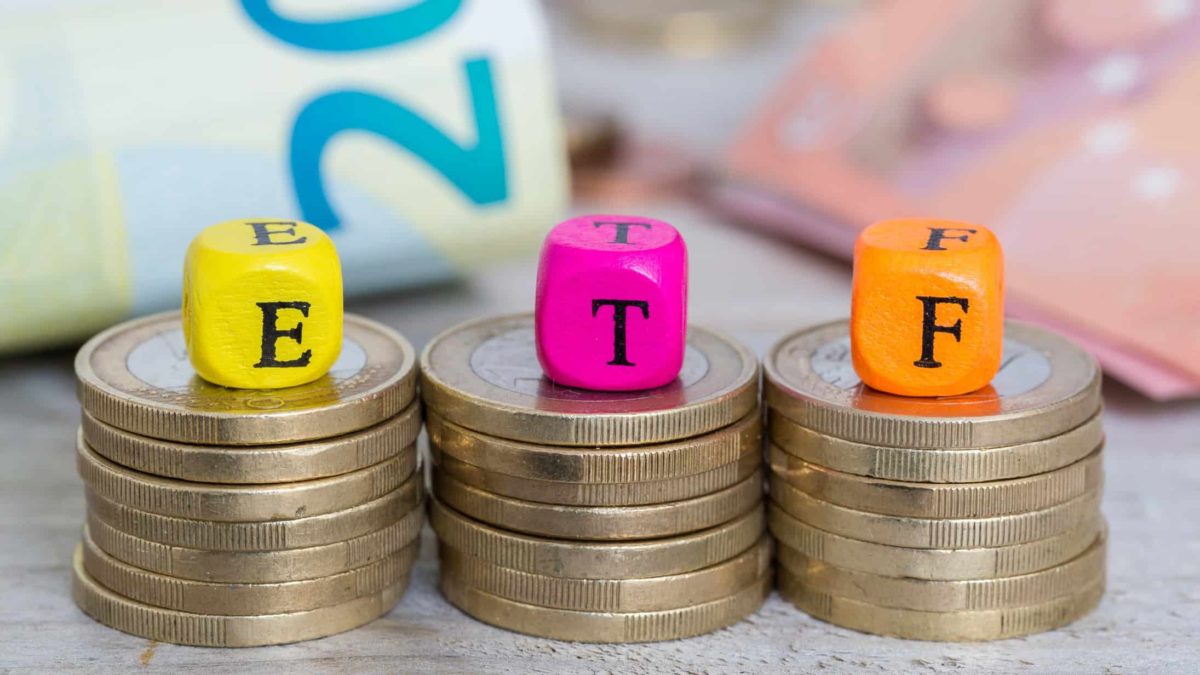
    ETF written on cubes sitting on piles of coins.

    The ASX-listed exchange-traded funds (ETFs) I’m going to talk about all have very compelling futures.

    There are plenty of good businesses on the ASX, but not to the same size and growth potential that we can find overseas. We can’t directly buy these global companies on the ASX, but there are plenty of different ways to get exposure to quality businesses through diversified funds.

    With that in mind, these are three of my favourites.

    Global X Fang+ ETF (ASX: FANG)

    For investors wanting exposure to the big US tech companies like Alphabet, Apple, Amazon.com, Nvidia, Microsoft and Meta Platforms, this could be the best way to do it. These businesses are some of the strongest in the world, with strong balance sheets and incredibly strong market positions.

    There are only 10 positions in this ASX ETF portfolio, with the weightings currently ranging between 9.09% to 11.63%, so the allocations are largely even.

    Not only are the weightings to those businesses huge, but the FANG ETF actually has a fairly low management fee of 0.35%, compared to an annual fee of 0.48% for the Betashares Nasdaq 100 ETF (ASX: NDQ).

    Past performance is not a reliable indicator of future performance with the FANG ETF, but it has returned an average of 23.7% per annum over the past three years. The underlying businesses are doing well.

    With the ongoing technology developments, I think the FANG ETF portfolio holdings could continue growing profit for the long term.  

    Betashares Global Quality Leaders ETF (ASX: QLTY)

    I like owning businesses that meet quality metrics because, over time, I believe those metrics can help a business keep reinvesting profit at a good rate of return. Growing profits can push share prices higher, as that’s normally what investors focus on.

    Companies only make it into the QLTY ETF portfolio if they rank well on four metrics: return on equity (ROE), debt-to-capital, cash flow generation ability and earnings stability. Putting those metrics together, it results in a list of very strong investments for the ASX ETF.

    At the moment, the biggest positions of the 150-name portfolio are Alphabet, Texas Instruments, Unitedhealth, Coca Cola and Microsoft.

    Considering the diversification across different industries (not just technology), I think the QLTY ETF has done very well since inception, with an average return per annum of 14.7%. Again, it’s not guaranteed to keep doing that well, but the quality metrics are compelling.

    Betashares Global Cybersecurity ETF (ASX: HACK)

    Cybersecurity is one of the most compelling industries because of the ongoing digitalisation around the world and the rise of cybercrime.

    Businesses, governments and households need to protect themselves from the bad guys, even in a downturn, so the earnings of the businesses in the portfolio are quite defensive.

    The ASX ETF’s portfolio of 30 names includes global leaders and smaller players, including Broadcom, Crowdstrike, Cisco Systems, Palo Alto Networks, Infosys, Darktrace, Cloudflare, Okta, and Zscaler.

    Over the past five years, the HACK ETF has delivered an average return per annum of 15.2%, which is impressive in my opinion. If earnings keep growing, then I think this ASX ETF can keep performing.

    The post 3 excellent ASX ETFs I think are a buy right now appeared first on The Motley Fool Australia.

    Should you invest $1,000 in Etfs Fang+ Etf right now?

    Before you buy Etfs Fang+ Etf shares, consider this:

    Motley Fool investing expert Scott Phillips just revealed what he believes are the 5 best stocks for investors to buy right now… and Etfs Fang+ Etf wasn’t one of them.

    The online investing service he’s run for over a decade, Motley Fool Share Advisor, has provided thousands of paying members with stock picks that have doubled, tripled or even more.*

    And right now, Scott thinks there are 5 stocks that may be better buys…

    See The 5 Stocks
    *Returns as of 5 May 2024

    More reading

    Randi Zuckerberg, a former director of market development and spokeswoman for Facebook and sister to Meta Platforms CEO Mark Zuckerberg, is a member of The Motley Fool’s board of directors. Suzanne Frey, an executive at Alphabet, is a member of The Motley Fool’s board of directors. John Mackey, former CEO of Whole Foods Market, an Amazon subsidiary, is a member of The Motley Fool’s board of directors. Motley Fool contributor Tristan Harrison has no position in any of the stocks mentioned. The Motley Fool Australia’s parent company Motley Fool Holdings Inc. has positions in and has recommended Alphabet, Amazon, Apple, BetaShares Global Cybersecurity ETF, BetaShares Nasdaq 100 ETF, Cisco Systems, Cloudflare, CrowdStrike, Meta Platforms, Microsoft, Nvidia, Okta, Palo Alto Networks, Texas Instruments, and Zscaler. The Motley Fool Australia’s parent company Motley Fool Holdings Inc. has recommended Broadcom and UnitedHealth Group and has recommended the following options: long January 2026 $395 calls on Microsoft and short January 2026 $405 calls on Microsoft. The Motley Fool Australia has positions in and has recommended BetaShares Global Cybersecurity ETF and BetaShares Nasdaq 100 ETF. The Motley Fool Australia has recommended Alphabet, Amazon, Apple, CrowdStrike, Meta Platforms, Microsoft, Nvidia, and Okta. The Motley Fool has a disclosure policy. This article contains general investment advice only (under AFSL 400691). Authorised by Scott Phillips.

  • How Fortescue shares could gain from the Federal budget

    happy mining worker fortescue share price

    Fortescue Metals Group Ltd (ASX: FMG) shares closed up 0.5% yesterday, trading for $25.94 apiece.

    That was roughly in line with the 0.4% gains posted by the S&P/ASX 200 Index (ASX: XJO).

    This came amid an overall positive reaction from investors to the new Federal budget.

    And while Fortescue shares didn’t widely outperform the benchmark index yesterday, the ASX 200 miner could catch sustained tailwinds from some of the spending measures unveiled by Treasurer Jim Chalmers.

    Among those measures, the budget contains $6.7 billion in tax incentives for green hydrogen production and an additional $1.7 billion to spur innovation in producing green iron production along with low emissions fuels.

    And Andrew Forest’s Fortescue is leading its rivals in these sustainable ventures.

    As the miner states on its website:

    Fortescue is leading the green industrial revolution by developing the technologies to decarbonise hard-to-abate sectors (like our iron ore operations) while building a global portfolio of renewable energy projects.

    We’ll help our planet step beyond fossil fuels by harnessing the world’s renewable energy resources to produce renewable electricity, green hydrogen, green ammonia and other green industrial products such as green iron.

    How Fortescue shares are embracing green hydrogen

    Green hydrogen, if you’re not familiar, is produced by splitting the oxygen atoms from hydrogen atoms in water using sustainable energy sources like solar, wind or thermal.

    Gray hydrogen, on the other hand, makes use of gas to split up water molecules.

    Green iron, then, is iron produced using green hydrogen as an energy source.

    And Fortescue shares already have a sizeable footprint in the green hydrogen space.

    In November, the company reported it had approved a Final Investment Decision (FID) on its Phoenix Hydrogen Hub, located in the United States; its Gladstone PEM50 Project, located in Queensland; and its Green Iron Trial Commercial Plant, located in Western Australia.

    Commenting on the FID decision and Fortescue’s green iron ambitions at the time, CEO Dino Otranto said, “Fortescue is taking a proactive approach to green iron, including embracing innovative technologies that will help us step away from the use of fossil fuels.”

    When the ASX 200 miner reported its half-year results, Fortescue Energy CEO Mark Hutchinson said:

    Over the half we also continued to make important progress across the four verticals now established within our Energy business – green energy production, battery technology development, hydrogen systems and capital.

    And in April, Fortescue shares got a lift after the miner announced a joint venture with OCP Group.

    Hutchinson noted:

    The pipeline of green energy projects continues to develop, and Fortescue entered a landmark joint venture with OCP Group in Morocco which aims to supply green hydrogen and ammonia for use as sources of green energy and in the manufacture of carbon-neutral and customised fertilisers.

    With Fortescue shares having gotten a head start over much of the competition in this space, the ASX 200 miner looks well-placed to benefit from the Federal budget’s multi-billion-dollar green hydrogen and green iron tax incentives.

    The post How Fortescue shares could gain from the Federal budget appeared first on The Motley Fool Australia.

    Should you invest $1,000 in Fortescue Metals Group right now?

    Before you buy Fortescue Metals Group shares, consider this:

    Motley Fool investing expert Scott Phillips just revealed what he believes are the 5 best stocks for investors to buy right now… and Fortescue Metals Group wasn’t one of them.

    The online investing service he’s run for over a decade, Motley Fool Share Advisor, has provided thousands of paying members with stock picks that have doubled, tripled or even more.*

    And right now, Scott thinks there are 5 stocks that may be better buys…

    See The 5 Stocks
    *Returns as of 5 May 2024

    More reading

    Motley Fool contributor Bernd Struben has no position in any of the stocks mentioned. The Motley Fool Australia’s parent company Motley Fool Holdings Inc. has no position in any of the stocks mentioned. The Motley Fool Australia has no position in any of the stocks mentioned. The Motley Fool has a disclosure policy. This article contains general investment advice only (under AFSL 400691). Authorised by Scott Phillips.

  • Waymo, the self-driving car company owned by Google’s parent, Alphabet: How to ride, cost, accident record

    A white, self-driving Waymo car sits parked in a San Francisco street.
    Waymo is Alphabet's robotaxi service currently operating in multiple US cities, with plans to launch in more.

    • Waymo is Alphabet's robotaxi service formerly known as the Google Self-Driving Car Project.
    • Waymo's driverless taxis are currently operating in Phoenix, San Francisco, and Los Angeles.
    • Like its main competitor, Cruise, Waymo's autonomous vehicles have been involved in accidents.

    Waymo is a robotaxi service owned by Google's parent company, Alphabet Inc. It was initially formed by Google and known as the Google Self-Driving Car Project, following seven years of research and development before eventually being spun out to its own company.

    Google started developing Waymo and its self-driving technology in 2009 at the Google X lab, which was led by Google co-founder Sergey Brin. After almost two years of testing the technology, Google and The New York Times revealed its existence in 2010.

    US lawmakers raised concerns at the time about the lack of regulations for this new technological front. Google was a prominent supporter, lobbying for regulation. By 2012, Nevada's Department of Motor Vehicles had licensed a self-driving Prius running Google's software. This was the first time that a self-driving vehicle was licensed in the United States.

    In 2022, Alphabet CEO Sundar Pichai distanced Waymo and Alphabet's other subsidiaries from Google by granting them more autonomy to design job structures and compensations outside of Google's job architecture.

    Waymo has been impacted by Google layoffs in recent years: The company cut roughly 8% of Waymo's staff in 2023. 

    Despite the restructuring, Waymo's offices are still located in Mountain View, California, just a short drive from the Googleplex, Google's global headquarters.

    What does Waymo do?

    The interior of a Waymo driverless taxi is shown navigating down a Los Angeles street.
    Waymo first began publicly operating in Phoenix in 2020. Its services are waitlisted in San Francisco and Los Angeles.

    Waymo provides driverless taxi services in San Francisco, Los Angeles, and Phoenix, using its fleet of autonomous vehicles. 

    In 2014, Google was granted a patent for a transportation service involving automated vehicles that would be funded by advertising fees. That May, Google unveiled a prototype autonomous vehicle that did not contain a gas pedal, brake pedal, or steering wheel.

    In 2015, they gave their first fully autonomous ride to a legally blind friend of principal engineer Nathaniel Fairfield; unlike earlier tests, there was no police escort, no test driver, and it was not on a closed course.

    In 2016, this self-driving car project was spun out of Google and made a subsidiary of Google's parent company, Alphabet Inc. At this time, the company also ordered 100 Chrysler Pacifica hybrid minivans to test the technology. The next year, they were able to reduce manufacturing costs by 90% and partnered with other auto manufacturers and the ridesharing service Lyft.

    Waymo started its public operations in Phoenix in 2020.

    Who can take a Waymo?

    So far, Waymo only operates in Phoenix, San Francisco, and Los Angeles, but is set to launch in Austin by the end of 2024.

    Prospective riders can sign up to the company's Waymo One service by downloading the Waymo One app from either Google Play or the iOS App Store. Waymo is currently widely available to the public in Phoenix, but services are waitlisted for San Francisco, Los Angeles, and Austin. Like major competitors, prospective riders are quoted the fare while booking.

    Waymo ride prices are based on the distance and time of a trip, in addition to a minimum price charged for all trips. In April of 2023, when a Business Insider reporter tested the technology in Phoenix, a five-mile, 20-minute Waymo ride cost $11, the same price as an Uber trip to the same location. 

    Waymo has had multiple accidents

    As with any new technology — or, indeed, any motor vehicles — mishaps can be expected. In February 2024, Waymo voluntarily recalled and updated its robotaxi software after two of its autonomous vehicles crashed into the same towed pickup truck in Phoenix. 

    This was the latest in a string of incidents over the prior weeks, affecting more than one company. A couple of weeks earlier, a Waymo vehicle non-fatally struck a cyclist in San Francisco and rival Cruise suspended operations following an October crash that struck and dragged a pedestrian.

    Read the original article on Business Insider
  • Guess which ASX dividends stocks analysts think are top buys

    Man holding out Australian dollar notes, symbolising dividends.

    Income investors have a lot of options on the Australian share market.

    So much so, it can be hard to decide which ASX dividend stocks to buy above others.

    But don’t worry, to narrow things down I have picked out three options that are rated highly by brokers right now. They are as follows:

    Eagers Automotive Ltd (ASX: APE)

    Bell Potter thinks that this automotive retailer could be a top ASX dividend stock to buy this month.

    According to a note from this week, the broker has reiterated its buy rating on its shares with a slightly trimmed price target of $14.75. This is notably higher than its current share price, which means market-beating returns could be on the cards.

    In addition, Bell Potter expects Eagers Automotive to pay 74 cents per share fully franked dividends in FY 2024, FY 2025, and FY 2026. Based on its current share price of $12.50, this represents 5.9% dividend yields each years.

    Inghams Group Ltd (ASX: ING)

    Over at Morgans, its analysts think that Inghams could be an ASX dividend stock to buy. It is Australia’s leading poultry producer.

    The broker believes that its shares are cheap at current levels. Especially for a company that has a market leadership position and looks set to provide investors with big dividend yields in the near term.

    Morgans currently has an add rating and $4.40 price target on the company’s shares.

    As for dividends, the broker is forecasting fully franked dividends of 22 cents per share in FY 2024 and then 23 cents per share in FY 2025. Based on the current Inghams share price of $3.87, this equates to dividend yields of 5.7% and 5.95%, respectively.

    Sonic Healthcare Limited (ASX: SHL)

    Another ASX dividend stock that Morgans is positive on is Sonic Healthcare. It is a leading medical diagnostics company with operations across the world.

    The broker believes that now could be a good time to pounce on the company’s shares after a tough period. It highlights that “management remains confident in a turnaround, outlining numerous near/medium term drivers supporting underlying profitability and reflected in guidance, which we view as achievable.”

    Morgans has an add rating and $34.94 price target on its shares.

    As for income, the broker is forecasting dividends per share of $1.04 in FY 2024 and then $1.16 in FY 2025. Based on the current Sonic share price of $26.69, this will mean yields of 3.9% and 4.3%, respectively.

    The post Guess which ASX dividends stocks analysts think are top buys appeared first on The Motley Fool Australia.

    Should you invest $1,000 in Eagers Automotive Ltd right now?

    Before you buy Eagers Automotive Ltd shares, consider this:

    Motley Fool investing expert Scott Phillips just revealed what he believes are the 5 best stocks for investors to buy right now… and Eagers Automotive Ltd wasn’t one of them.

    The online investing service he’s run for over a decade, Motley Fool Share Advisor, has provided thousands of paying members with stock picks that have doubled, tripled or even more.*

    And right now, Scott thinks there are 5 stocks that may be better buys…

    See The 5 Stocks
    *Returns as of 5 May 2024

    More reading

    Motley Fool contributor James Mickleboro has no position in any of the stocks mentioned. The Motley Fool Australia’s parent company Motley Fool Holdings Inc. has no position in any of the stocks mentioned. The Motley Fool Australia has recommended Eagers Automotive Ltd and Sonic Healthcare. The Motley Fool has a disclosure policy. This article contains general investment advice only (under AFSL 400691). Authorised by Scott Phillips.

  • How much passive income would I make from 300 BHP shares?

    A female miner wearing a high vis vest and hard hard smiles and holds a clipboard while inspecting a mine site with a colleague.

    BHP Group Ltd (ASX: BHP) shares are a popular option for passive income investors.

    That’s because the mining giant returns a good portion of its bumper profits each year to its shareholders. This often sees tens of billions of dollars lining shareholders’ pockets.

    But what sort of passive income could be coming your way if you were to buy BHP shares today? Let’s have a look and see what could be on the cards for investors.

    Passive income from BHP shares

    Let’s imagine that you were to pick up 300 shares in the Big Australian.

    With BHP shares currently changing hands for $44.09, this would mean an investment of $13,227 is needed.

    This is a fairly large investment, but would it be worth it?

    Goldman Sachs appears to believe it could be. Firstly, the broker currently has a buy rating and $49.00 price target on its shares.

    This means that if the mining giant’s shares were to rise to that level, your 300 units would have a market value of $14,700. That’s approximately 11% or $1,473 greater than your original investment, which means you are off to a great start.

    Now let’s look at what passive income BHP shares could provide for investors.

    According to a note out of Goldman Sachs, its analysts are forecasting a fully franked US$1.45 (A$2.17) per share dividend in FY 2024. This means that those 300 units would generate passive income of A$651.

    But the dividends won’t stop there, so let’s keep going and see what future years could bring.

    As I covered here recently, Goldman then expects a fully franked US$1.26 (A$1.88) per share dividend in FY 2025. This will mean passive income of A$564 for that year.

    Moving on, in FY 2026 the broker expects another small cut to US$1.22 (A$1.82) per share, fully franked. If this proves accurate, it will lead to passive income of A$546 for investors.

    Goldman then expects fully franked dividends per share of US$1.12 (A$1.67) in FY 2027 and US$1.07 (A$1.60) in FY 2028. This would generate income of A$501 and A$480, respectively.

    Commenting on its buy recommendation, the broker said:

    BHP is currently trading at ~6.0x NTM EBITDA, (25-yr average EV/EBITDA of ~6-7x) vs. RIO on ~5.5x. BHP is trading at 0.9x NAV (A$49.2/sh), vs. RIO at ~0.9x NAV. That said, we believe this premium vs. peers can be partly maintained due to ongoing superior margins and operating performance (particularly in Pilbara iron ore where BHP maintains superior FCF/t vs. peers), high returning copper growth, and lower iron ore replacement & decarbonisation capex.

    The post How much passive income would I make from 300 BHP shares? appeared first on The Motley Fool Australia.

    Should you invest $1,000 in Bhp Group right now?

    Before you buy Bhp Group shares, consider this:

    Motley Fool investing expert Scott Phillips just revealed what he believes are the 5 best stocks for investors to buy right now… and Bhp Group wasn’t one of them.

    The online investing service he’s run for over a decade, Motley Fool Share Advisor, has provided thousands of paying members with stock picks that have doubled, tripled or even more.*

    And right now, Scott thinks there are 5 stocks that may be better buys…

    See The 5 Stocks
    *Returns as of 5 May 2024

    More reading

    Motley Fool contributor James Mickleboro has no position in any of the stocks mentioned. The Motley Fool Australia’s parent company Motley Fool Holdings Inc. has positions in and has recommended Goldman Sachs Group. The Motley Fool Australia has no position in any of the stocks mentioned. The Motley Fool has a disclosure policy. This article contains general investment advice only (under AFSL 400691). Authorised by Scott Phillips.