Michael Cohen and Stormy Daniels dropped a string of bombshells during Donald Trump's $130,000 hush money trial, all pointing toward Trump's knowledge of the bribe.
Read the original article on Business Insider
Michael Cohen and Stormy Daniels dropped a string of bombshells during Donald Trump's $130,000 hush money trial, all pointing toward Trump's knowledge of the bribe.
Sameer Samat is a powerful guy these days.
I recently saw him on Netflix's Drive to Survive TV show, bringing the hammer down on Zak Brown, the head of McLaren's Formula 1 racing team. Google is a big sponsor and Samat wanted to see improvement.
And last month, Samat moved up via a reorg at the top of Google. He's now President of Android Ecosystems, which means he runs Android, the world's most popular smartphone platform. This job also includes Android TV, Android Auto, and new augmented and mixed-reality technology.
At Google IO, I got a chance to interview Samat. I started by asking him how AI is changing the smartphone market, competition with Apple, and the distribution of Google's technology.
"AI is having a moment. It's a huge opportunity for the Android ecosystem," he said. "We are going to be very fast-moving to not miss this opportunity. It's a once-in-a-generation moment to reinvent what phones can do. We are going to seize that moment."
With Google's new Gemini AI models, "we can do things that have never been possible on smartphones," he added.
The 800 pound smartphone gorilla, Apple — this was not a word uttered by Samat during the interview. At one point he said "the other OS," referring to Apple's iOS mobile platform, which leads in the US, but still lags far behind Android globally.
On that "other OS," Google's Gemini is just an app. On Android, it's way more, according to Samat.
He showed me an example, by pressing and holding the power button on his Pixel 8 phone. This summoned Gemini to appear on top of the YouTube app he was in.
There was a video playing and he asked Gemini questions about the clip. Gemini analyzed the footage and responded from the relevant part of the video. He then pulled out a Samsung S24 and did the same thing, but touched and dragged up from the bottom right of the screen to summon Gemini.
This is possible because Google has baked Gemini AI models and assistant technology into the "System UI" level on Android devices. That's below the app level, where the technical important stuff happens.
"You can't do stuff like this if you're just an app on a device," Samat said. "We can do this on Android, so Gemini can come into the situation with context, above or to the side of what's happening."
Without being hemmed into an app, Gemini is free to roam around more of the device and understand the context of what you're doing at any moment.
Samat stressed that this only happens if users summon the AI with intentional actions such as that button press on the Pixel 8 or the swipe on the S24.
He cited another example: On-device AI with the smaller Gemini Nano model. This runs on the Pixel 8 and the S24, with more Android devices coming soon.
This allows Gemini to do useful things while not sending user data to cloud data centers.
One use case for this approach: If you're using an encrypted messaging service on your phone, you can't send that data off to a data center for AI models to process. So an AI assistant or agent can't help you write replies and do other cool stuff when texting.
With Nano, Google has on-device AI that can process these encrypted messages and provide help on crafting replies and taking other actions. None of that data will leave the device, Samat said.
Then I asked Samat a big business-strategy question: Does Google want its best Gemini models distributed more prominently on Apple devices?
Google already pays Apple billions of dollars a year to have Search as the default on Safari. Will it do a similar deal to distribute Gemini on iPhones, for instance?
Samat declined to comment. More generally, he said Google's broad goal is to serve all users around the world.
However, he stressed that this doesn't mean the company can't build unique experiences on Android devices, including many new AI experiences.
He cited Circle to Search as an example. This lets you search for anything you see on your phone screen by simply circling, scribbling or highlighting it. For example, if you're looking at a video and find a hat or sunglasses you want to buy, all you need to do is launch the Circle to Search feature and circle the product.
This works through a combination of Google Search, Gemini AI technology, and Android — something that's not possible on any other platform, Samat said.
These experiences require end-to-end optimization, which is what Google is doing with its Pixel devices and with Samsung, and soon other Android providers.
"AI is a fundamental differentiator for Android. Samsung is a critical part of this, as is Pixel," he said.
"Is this all about our Pixel devices? No!" he added. Samsung and other Android device makers are crucial in this next wave of AI-powered devices, he explained.
When you buy through our links, Business Insider may earn an affiliate commission. Learn more
Amazon; Walmart; Insider
Every year, Amazon Prime Day offers a fantastic assortment of limited-time deals, including big discounts on headphones across all budgets. Though an exact date hasn't been announced, Prime Day 2024 is set to arrive in July. We'll be rounding up the best Prime Day headphone deals once the event begins.
During last year's Prime Day, many popular headphones from Apple, Bose, and Sony went on sale, and we expect similar savings in 2024. But while the biggest discounts won't pop up until Prime Day officially starts, we're already seeing some excellent deals on headphones right now. Apple's latest AirPods Pro are down to $190, just $10 more than their all-time low. And the Sennheiser Momentum 4, one of our picks for the best noise-canceling headphones, are on sale for $100 off.
Below, you can find all the best early headphone deals ahead of Prime Day. We'll be updating our list with more discounts in the lead-up to Prime Day, so be sure to check back. And for more details, head over to our full Amazon Prime Day guide packed with helpful information.
This year's Amazon Prime Day event will take place in July. However, Amazon has not announced the official date just yet.
Most Prime Day events last 48 hours, so we expect a similar duration in 2024. Last year's Prime Day sale took place from July 11 through July 12.
Prime Day typically offers excellent discounts on headphones. Over-ear models, earbuds, and even gaming headsets sometimes drop to all-time low prices, with deals that often rival those on Black Friday and Cyber Monday.
Based on what we've seen during past sales, it's safe to assume that we'll see Prime Day 2024 headphone deals from popular brands like Apple, Sony, Bose, Beats, Sennheiser, Anker, Jabra, JBL, and Samsung.
Last year, top deals included Apple's AirPods (2nd Generation) for 40% off. The second-gen AirPods are our pick for the best AirPods on a budget, so any additional deals make them an even better value. We also saw Bose's highly-rated QuietComfort 45 Headphones drop to only $200.
Yes, Prime Day deals are exclusive to Amazon Prime members. This includes Lightning Deals and Invite-only purchase opportunities, which give access to some of the event's best products and prices on a limited basis. Read more about how to sign up for Amazon Prime.
GM-DESIGN
Of the more than 15 million cars sold in the US last year, none wore the badge of a Chinese car brand.
Chinese EV heavy hitters like BYD and SAIC are conspicuously missing from US showrooms. With the government's existing 27.5% tariffs on Chinese-made cars and Tuesday's new 100% tariffs on Chinese-made EVs imported to the US, the situation isn't likely to change anytime soon.
What some people might not realize, however, is that tens of thousands of cars manufactured in China are sold in the US every year.
Volvo's S60L sedan was one of the first Chinese-made cars to be sold in the US starting in 2016, followed by Buick's Envision SUV and Cadillac's CT6 Hybrid.
According to Automotive News data, US consumers purchased more than 104,000 Chinese-made vehicles in 2023, up 45% from 2022.
Americans bought another 28,000 Chinese-made cars during the first quarter of 2024.
Currently, Buick, Lincoln, Polestar, and Volvo sell Chinese-made vehicles in the US. Of those, the only Chinese-made EVs come from Polestar, a brand co-owned by Volvo and its parent company, Geely Automotive. The EV brand imported just 2,217 cars in the first three months of 2024.
It is unclear how the new tariffs will affect Polestar's future production plans. The company eventually plans to move some of its car production to South Carolina in 2024.
In a statement to Business Insider, a Polestar spokesperson said the company is evaluating the Biden Administration's announcement.
Here's a closer look at the Chinese-made cars on sale in the US.
GM
Lincoln
Polestar
Polestar
Volvo
Justin Sullivan/Getty Images
When it comes to the trends and technologies shaping marketing today, it's easy to see why AI has dominated the headlines.
The rise of generative AI is a watershed moment for marketers, transforming the landscape for creative expression. To stay relevant in the age of quantum marketing, CMOs must embrace and leverage AI — and the majority of marketers are already beginning to. But it is worth remembering that AI is far from the only emerging technology presenting an outsized opportunity.
In fact, there are two dozen digital technologies disrupting the industry at this very moment, including augmented and virtual reality, 5G, robotics, and wearable devices. The confluence of these technologies will have a profound impact on marketing, influencing every facet of a brand's relationship with consumers.
To survive in this new paradigm, marketers must be open-minded —acting swiftly and smartly to embrace, test and prove the value of these technologies, all while safeguarding consumers' privacy and data.
Marketers need to face the reality that technology is changing how we can, and should, engage consumers and customers. Skilled marketers forge emotional connections, and that kind of creativity can't be replaced. But new technologies can vastly enhance our creative capabilities, extending our reach and helping us measure results. Achieving this balance creates the best of both worlds and ensures that marketers — not robots — are the ones driving the industry forward.
We are amidst a period of rapid and ongoing shifts in consumer behavior that show no signs of slowing down. For instance, Apple's recent launch of the Vision Pro, with reported sales of 200,000 units, may seem modest, but it serves as a compelling signal for marketers to take note. As AR / VR / MR devices become increasingly mainstream, a wealth of new opportunities will emerge, fundamentally altering how we engage with audiences on these novel platforms.
Mastercard
Embracing a culture of continuous learning is paramount to ensuring a brand's resilience in the future, yet traditional budgets are predominantly focused on delivering performance and results in the short term. By dedicating a portion of the overall budget to innovation, our focus shifts from merely meeting and beating benchmarks to fostering curiosity in real-time. This allows us to actively—and quickly—explore how emerging tools and strategies can deepen our connection with customers.
At Mastercard, "Sandbox" innovation challenges ask employees to submit ideas that solve a specific problem or embrace a new technology. The enthusiasm for these challenges has been remarkable, as they give everyone the opportunity to think beyond their usual roles and display their creativity. We also set aside a budget to bring key ideas to life.
One example is the Mastercard Artist Accelerator — a tech- and talent-centered music program geared to helping emerging artists create, collaborate and monetize their work using emerging tech like GenAI and Web3. Launched in 2023, the successful initiative went from a Sandbox challenge submission to in-market launch in a matter of weeks.
It's important to remember that, at the leading edge of marketing, traditional key performance indicators alone may not be a good gauge of success. Emerging platforms might have smaller audiences or non-traditional use cases, making them ill-suited for an apples-to-apples comparison. If you're pursuing a platform or strategy that has yet to be truly harnessed, you don't have the benefit of case studies or established benchmarks.
On the flipside, new data-driven capabilities allow us to connect dots across the consumer journey—proving quantifiable impact whereas we just assumed value before. The upside is that this gives marketers tremendous freedom to determine if, and how, investments are paying off.
In a world driven by emerging tech, where every device is getting connected, and every connected device is capturing loads of information, it is not surprising that Marketers possess more consumer data than any other professional group. And marketing substantially contributes to and shapes the data ecosystem.
This underscores the critical role CMOs play in responsibly reshaping our approach to collecting, securing and utilizing the data consumers share with us. Consent and Privacy by Design, a philosophy that minimizes data collection and embeds privacy considerations into every stage of product development, are terrific guiding principles for every business in our rapidly shifting digital landscape.
By embracing change, handling data responsibly and investing in innovation, brand leaders can make emerging tech their stepping stones — not stumbling blocks — as they push the industry forward.
Raja Rajamannar is the chief marketing and communications officer and president of healthcare, at Mastercard

Next week will be a big one for Xero Ltd (ASX: XRO) shares and its shareholders.
That’s because the cloud accounting platform provider will be releasing its FY 2024 results on Thursday 23 May.
Ahead of the release, let’s take a look at what analysts are expecting from the market darling tech stock.
According to a note out of Goldman Sachs, its analysts are expecting the company to deliver revenue slightly ahead of consensus estimates.
The broker has pencilled in a 22% increase in revenue to NZ$1,709 million. The consensus estimate is for revenue of NZ$1,696 million.
Goldman also expects Xero’s earnings to grow quicker than the market is expecting. It has pencilled in EBITDA of NZ$480 million for FY 2024. This represents a 59% increase on the prior corresponding period and is ahead of the consensus estimate of NZ$469 million.
This will mean an operating expense ratio (as a percentage of sales) of 75.3% for the period, which is broadly in line with management’s target. Though, Goldman expects this number to reduce into the low 70s in FY 2025 and will be looking for this in its guidance statement. In fact, the broker referred to this as one of its “key focus points.”
Another key focus point will be its second half subscriber growth. Goldman is expecting subs growth in the UK and North America of 50,000 and 23,000, respectively.
In addition, it thinks that average revenue per user (ARPU) trends will be worth watching, “particularly any underlying expansion outside of price growth – which would suggest strong mix/upsell/transactions growth.”
It also wants to see if management reiterates its “Rule of 40 or greater aspiration, and whether this could be achieved in FY25.”
Goldman thinks that Xero shares would be a great option for investors right now.
The broker has reiterated its conviction buy rating and $156.00 price target on them. This implies potential upside of 28% for investors over the next 12 months.
Commenting on its buy recommendation, the broker said:
Xero is a Global Cloud Accounting SaaS player, with existing focuses in ANZ, UK, North American and SE Asian markets. We see Xero as very well-placed to take advantage of the digitisation of SMBs globally, driven by compelling efficiency benefits and regulatory tailwinds, with >100mn SMBs worldwide representing a >NZ$100bn TAM. Given the company’s pivot to profitable growth and corresponding faster earnings ramp, we see an attractive entry point into a global growth story with Xero our preferred large-cap technology name in ANZ â the stock is Buy rated (on CL).
The post Own Xero shares? Here’s what to expect from next week’s results appeared first on The Motley Fool Australia.
Before you buy Xero Limited shares, consider this:
Motley Fool investing expert Scott Phillips just revealed what he believes are the 5 best stocks for investors to buy right now… and Xero Limited wasn’t one of them.
The online investing service heâs run for over a decade, Motley Fool Share Advisor, has provided thousands of paying members with stock picks that have doubled, tripled or even more.*
And right now, Scott thinks there are 5 stocks that may be better buys…
See The 5 Stocks
*Returns as of 5 May 2024
More reading
Motley Fool contributor James Mickleboro has positions in Xero. The Motley Fool Australia’s parent company Motley Fool Holdings Inc. has positions in and has recommended Goldman Sachs Group and Xero. The Motley Fool Australia has positions in and has recommended Xero. The Motley Fool has a disclosure policy. This article contains general investment advice only (under AFSL 400691). Authorised by Scott Phillips.
Sebastian Gollnow/Getty Images
Tesla is going all in on its efforts to push through approval of Elon Musk's $55 billion pay package.
The automaker, which has traditionally avoided advertising, has even spent some money on ads calling for Tesla investors to vote in favor of the compensation plan. Tesla showed in a filing with the Securities and Exchange Commission it had paid for some ads on Google, as well as through Musk's social media site X.
"You deserve the final say on matters affecting your investment in Tesla," one ad on X reads. "Vote FOR the protection of stockholder rights and to preserve present and future value creation by supporting Tesla proposals 3 and 4."
SEC
The company aims to pass two separate proposals, one moving its state of incorporation from Delaware to Texas and another reapproving Musk's pay, which was struck down by a Delaware judge earlier this year. In January, when the pay plan was voided, Court of Chancery Judge Kathleen St. J. McCormick said that Musk had undue influence over the package due to his close ties to several board members and said Musk's influence over Tesla's board resulted in an "unfair price."
A spokesperson for Tesla did not immediately respond to a request for comment.
Musk does not receive a salary from Tesla and his pay package centered on a series of goalposts around the carmaker's financial growth. The compensation plan was initially set in place in 2018. Specifically, it involves a 10-year grant of 12 tranches of stock options which are vested when Tesla hits specific targets. When each milestone is passed, Musk gets stock equal to 1% of outstanding shares at the time of the grant. Tesla has accomplished all of the 12 targets as of 2023, according to the carmaker.
The package was valued at around $55 billion at the time it was struck down by the judge.
The ad spending is one of several methods Tesla is using to attempt to push shareholders to vote in favor of the proposal. On Wednesday, The Wall Street Journal reported that Tesla's board chair, Robyn Denholm, plans to spend the weeks leading up to the shareholder vote on June 13 traveling in order to drum up support for the initiative. Separately, Bloomberg reported on Wednesday that Tesla had brought on a strategic advisor to promote the agenda.
Earlier in May, Denholm even sat down for a video promoting the pay plan.
"We don't believe one judge's opinion should void the will of millions of votes cast by all of the owners of the company," the Tesla chair said in the video. "So once again, we're asking you to make your voices heard by voting for the ratification of the 2018 performance award."
Do you work for Tesla or have a tip? Reach out to the reporter via a non-work email and device at gkay@businessinsider.com or 248-894-6012
AP
For a fleeting 30 years during the 20th century, supersonic commercial air travel was a reality. But on October 24, 2003, that era came to an abrupt end.
That day, British Airways operated its last commercial Concorde service from JFK International Airport to London Heathrow. Air France pulled its Concordes from service a few months earlier. Thus, it would be the Concorde's last ever commercial flight in a career that started in January 1976.
The Anglo-French Concorde was co-developed by BAC, a forerunner of BAE Systems, and Aerospatiale, now a part of Airbus.
The supersonic jet has a storied history.
The Concorde was never the commercial success for which its creators had hoped. Environmental and operational limitations of the Concorde hampered its commercial appeal among airline customers. Only 20 of the planes were ever built, and just 14 of them were production aircraft. The Concorde saw service with only two airlines — Air France and British Airways — on just two routes.
However, its lack of commercial success doesn't diminish its role as an icon of modern aviation and as a technological marvel, one which plane makers and aerospace startups still talk about replicating.
Over 20 years after its last flight for British Airways, the world is still without a viable form of supersonic passenger service.
Here's a look back at the awesome history of the Aerospatiale-BAC Concorde supersonic airliner.
This article was originally published by Benjamin Zhang in October 2018. It was updated by David Slotnick in March 2020 and Talia Lakritz in May 2024.
REUTERS
AP
REUTERS/Viktor Korotayev
AP
AP
AP
AP
AP
AP
Peter Kem, File/AP
AP
AP
Air France/AP
ROQ/AP
AP
AP
AP
AP
AP
AP
Press Association/AP
Press Association/AP
Stringer/Reuters
Stefan Rousseau/Pool/Reuters
AP
Kevin Lamarque/Reuters
AP
AP
AP
AP
Max Nash/AP
Timothy E. Black/AP
REUTERS
When you buy through our links, Business Insider may earn an affiliate commission. Learn more
Fitbit; Alyssa Powell/Business Insider
Fitbit's wearables do almost everything. From counting steps and tracking workouts to monitoring sleep patterns and stress levels, the best Fitbit can help improve your well-being. And there are a variety of Fitbit models designed for different types of users.
Our top pick is the Fitbit Sense 2. Although it's an average smartwatch, it's a quality health and fitness tracker offering multi-day battery life, a suite of health-monitoring tools, and comprehensive activity tracking. For a budget pick, we recommend the Fitbit Inspire 3 — an effective entry-level wearable with basic health and fitness tools for less than $100.
We chose our list based on tracking accuracy, fit and comfort, battery life, and ease of use. Although every Fitbit offers similar activity-tracking capabilities, some are better for certain users. Picking the best Fitbit depends on how you intend to use it and the advanced features you need.
Best overall: Fitbit Sense 2 – See at Amazon
The Fitbit Sense 2 is not only the brand's flagship, but it's also the best wearable in its lineup, featuring accurate activity tracking, decent smartwatch capability, and a variety of useful health insights.
Best fitness-tracking: Fitbit Charge 5 – See at Amazon
The Charge 5 hits a nice price point while offering stellar activity tracking in a smaller footprint than a standard smartwatch.
Best budget: Fitbit Inspire 3 – See at Amazon
Fitbit's Inspire 3 is an excellent entry-level wearable that offers basic health and fitness tracking in a small, comfortable, and budget-friendly package.
Best stylish: Fitbit Luxe – See at Amazon
With a stainless steel casing, the Fitbit Luxe is a sleek and unassuming activity tracker with broad appeal for users of any kind.
Best for kids: Fitbit Ace 3 – See at Amazon
Fitbit designed the Ace 3 from the ground up specifically for kids as it includes unique parental controls, programmable activity tools, and a variety of fun cartoon themes.
Fitbit's flagship, the Sense 2, nails everything a quality fitness tracker should be. It offers a variety of activity tracking and useful fitness insights, tracks sleep, stress, and menstrual cycles, and has built-in GPS and a battery that lasts around five to six days on a single charge.
It does lack in one major area, however: smarts. Though it's touted as a "smartwatch," it doesn't quite stack up in that department the way an effective smartwatch should. For starters, it doesn't offer third-party app support, which is disappointing, and it doesn't allow access to things like Google Assistant. It also can't store or play music.
Rick Stella/Insider
But those drawbacks don't equate to being a dealbreaker. The Sense 2 offers a suite of useful health and wellness insights that put it on par with some of the best in the industry. There's a skin temperature sensor, ECG readings, and a real-time stress tracker.
The stress tracker is especially interesting as it not only charts your body's stress levels but also provides feedback on how to lower it and can paint a picture of how your body handles stress overall.
It's also an accurate fitness tracker. Its built-in GPS synced well during our tests and it's compatible with a variety of activities and exercises. Plus, its interface is easy and intuitive to use, making it a great watch for beginners.
Read our full review of the Sense 2.
If you want a tracker to record your workouts and daily movement, but don't care about fancy features like answering calls via your watch or connecting with Alexa or Google Assistant, the Charge 5 is your watch.
This tracker records and displays all the stats you want from your workout: current and average exercise pace, distance, heart rate zones, total time, steps taken, and calories burned. Within the Fitbit app, you can also see a map of your run, complete with intensity zones showing where your heart rate climbed highest and dipped lowest.
One of its best features is its built-in GPS, which is often a rare inclusion on wearables this small. This allows it to natively provide accurate activity tracking, which is a huge plus for those who don't like to tote their smartphone while working out.
Fitbit
It's not completely without smart features, either. You can sync your calendar and get app updates, as well as text, email, and phone call notifications. The Charge 5 also offers in-depth sleep tracking that charts sleep patterns and habits and allows you to see how much REM, deep, and light sleep you get each night.
The battery life on the Charge 5 is longer than both the Versa and the Sense, too. Plus, the design is smaller and takes up less space on your arm, which is nice for folks with smaller wrists. It's also compatible with a variety of the best Charge 5 bands, which help upgrade its look or make it more useful for certain activities.
Fitbit's Inspire line of entry-level activity trackers is the brand's most basic offering. Its latest model, the Inspire 3, features a slim, vertical screen that sits comfortably on your wrist while offering a suite of advanced health and fitness tracking features right at your fingertips. It even has a skin temperature sensor and can track your sleep habits. The original Fitbit has come a long way.
But what makes the Inspire 3 especially attractive is its price, which makes it attractive for beginners or those new to wearing activity trackers. At under $100, it delivers a wearable experience similar to the Sense 2 without the large touchscreen, downloadable apps, or built-in GPS. It's also compatible with a range of the best Inspire 3 bands to change up its look a bit.
Shannon Ullman/Insider
That may seem like the Inspire 3 lacks key features, but those are typically hallmarks of a smartwatch, and the Inspire 3 is a bona fide fitness tracker. That is, it offers straightforward health and fitness features in an easy-to-use and intuitive package. It uses the same fitness tracking tech as all of Fitbit's other wearables, tracks heart rate, skin temperature, and sleep patterns, and even offers the brand's new Daily Readiness Score feature.
That's a lot in such a small, budget-friendly package. Advanced athletes may view the lack of built-in GPS as a dealbreaker but for anyone looking for a basic, straightforward activity tracker, the Inspire 3 is the best Fitbit has.
Read our full review of the Inspire 3.
Although the Fitbit Luxe looks similar to the Inspire 3, it has a few subtle design features that give it some style. There's a stainless steel casing that achieves a nice, clean look for either the office or a night out, a bright AMOLED screen, and the ability to swap out the band for something like a chic mesh or metal option.
As a quality health and fitness wearable, the Fitbit Luxe tracks basics like running and cycling. It offers insights into sleep patterns, stress management, and fitness trends. Some features require a paid subscription to Fitbit Premium (as is the case for several watches in this guide), but even the basic features are highly useful.
Lisa Eadicicco/Insider
One area where it lags is in the smartwatch department, but it was never designed to be one in the first place. However, it can still display text and phone call notifications, and you can use things like timers and alarms, but that's about the extent of it. It also has a battery that lasts upward of six days.
Read our full review of the Fitbit Luxe.
Most fitness trackers are inherently designed for adult use. Then, there's the Fitbit Ace 3, an activity tracker designed entirely for kids ages six and up, outfitted with features such as parental controls, a custom kid-friendly stat viewer, and fun customization options.
What makes the Ace 3 great for kids is its whimsical approach. There are band options with Minion-themed designs, as well as colorful custom watch faces. It is also water-resistant up to 50 meters or 164 feet, so kids can wear it in the pool.
Fitbit
One of the Ace 3's best features is its focus on gamification. The wearable offers various challenges and badges that can motivate kids as they achieve a certain step goal or complete an activity.
It's also a great communication tool for parents as it delivers text notifications. What's particularly great about this is that parents can utilize the parental controls to manage exactly what connections are permitted on the watch. These controls are set up via the Fitbit app and require a family account, but they can be customized at any time, with or without the watch nearby.
These parental controls ultimately make it a better purchase for kids than, say, the Inspire 3. While the Inspire 3 offers a similar tracking experience, the ability to customize and tailor everything from the wearable's settings to the specific activity goals makes the Ace 3 a more family-friendly option.
Our favorite budget Fitbit that's also a smartwatch rather than purely a fitness tracker, the Versa 3, was discontinued to make way for the Versa 4. However, we cannot recommend the Versa 4, unless the budget smartwatch you're looking for has to be a Fitbit. Even then, you should look at the Pixel Watch 2 from Fitbit's parent, Google, which is a terrific fitness tracker and smartwatch, albeit compatible with Android only.
Rick Stella/Insider
The Versa 4 offers few or no appreciable upgrades over the Versa 3 and actually omits features that made the Versa 3 a great option for the price, including third-party app support and music playback. The Versa 4's watered-down experience would have been acceptable if it had a lower price than the Versa 3, but it has the exact same price tag.
Fitbit Premium is the brand's monthly membership option that offers access to more in-depth health and fitness features like nutrition insights, advanced sleep tracking, and the Daily Readiness Score.
Fitbit
It also provides access to guided meditations, exclusive video workouts, in-depth goal setting, various unique challenges, and other health insights such as blood oxygen level readings, heart rate variability, and breathing rate.
All Fitbit Premium features are accessible via the Fitbit app and do a lot to elevate the base Fitbit experience, especially for wearables like the Sense 2 or Versa 4. The brand does offer a free trial to new Fitbit users, allowing you to test out the service before committing to its recurring membership fee (which costs $10 per month).
In addition to testing past iterations of Fitbit trackers and smartwatches when they launched, I tested each on the list below for several days (some weeks, even) wearing them 24/7 in most cases. I wore each during different workouts, from runs and walks to strength sets and yoga. I also wore the trackers to bed and for mindfulness sessions.
Here are the key features I looked for when testing:
Workout tracking
To successfully record stats during a workout and easily check these as you go, it's important that a watch clearly displays numbers, and quickly and continuously connects to the GPS, particularly if it's built into the watch. I judged the trackers and watches on whether I could easily see my current pace, distance, and time, and if I had quick access to metrics like average pace and heart rate.
Rick Stella/insider
Additionally, I ran another fitness tracking app on my phone to test the accuracy of the watch's distance and pace. For every Fitbit featured, the numbers were always relatively close (and within the normal range you'd find if you compared almost any other fitness tracker).
Because Fitbit offers automatic tracking, I did a few workouts without manually pressing the start button to confirm that it picked up my movement, which it almost always did.
Tracking and comfort while sleeping
I wore these watches and trackers to bed to test the automatic sleep tracking. I checked these stats in the morning to make sure they recorded my time in bed and wake-up times throughout the night. I also wore the devices when occasionally taking naps throughout the day, which they also picked up on.
The devices needed to be comfortable enough to wear all night to get those stats, too. While the bands occasionally stuck to my skin if I got sweaty at night, it never disturbed my sleep — I only noticed this after waking up.
Battery life
I tested the battery life of each Fitbit by charging it to 100% battery and wearing it through workouts, nights of sleep, and throughout the day to see how long each would last. They all surprised me, too — the life lasted even after several workouts, including those using the built-in GPS (which typically drains batteries quickly).
App usability
One huge perk of Fitbit is the built-in stress-reducing apps, so how easy these were to use was a key part of testing. I tried Fitbit's mindfulness program, the Relax app, on all devices, and the EDA scan app on the Sense 2, which contributes to stress management numbers. I looked for ease of use, visuals, and the stats provided after recording a mindfulness session, like changes in heart rate.
Yes, especially if you want a reliable fitness wearable. A Fitbit can be beneficial for anyone who keeps active each day, even if that activity is walking a few blocks around the neighborhood or lifting weights at home.
They do an excellent job of counting steps, tracking a wide range of activities, and providing other useful health information like sleep insights and calories burned. You don't need to be an avid fitness pro or athlete to get a lot out of a Fitbit and with so many options in the brand's lineup, finding one that's "worth it" means just picking out the option that best fits your lifestyle.
Plus, Fitbits are device agnostic, so they're compatible with devices running iOS or Android. This makes them one of the best Android smartwatches you can buy, as well as one of the best fitness trackers.
This ultimately comes down to personal preference. The Apple Watch Series 9 and Ultra 2 are undoubtedly more powerful and full-featured but if you don't need access to a suite of apps, then a Fitbit will suffice. Both watches offer deep tracking capability for activities like running, cycling, and lifting weights, and each comes standard with a user-friendly interface.
One area where Apple outdoes Fitbit is in terms of its ecosystem. Anyone using an iPhone can get more out of an Apple Watch compared to a Fitbit (but as touched on below, it's not always enough to be considered a dealbreaker).
And although the Apple Watch now offers a deep well of fitness and activity tracking capability, it still leans more heavily toward being a smartwatch (similar to Fitbit's Versa line), so if it's basic fitness tracking you're after without the frills, something like Fitbit's Charge would be more your speed.
Perhaps the biggest advantage of a Fitbit is that no matter the price point or type (tracker versus smartwatch), it comes with all the foundational features you want in a health and fitness tracker. This includes the ability to automatically track sleep and activity, which is the best thing about the brand, in my opinion.
Then, all the models track pace, distance, and calories burned during your workouts, and calculate your heart rate training zones, including fat burn, cardio, and peak. For sleep, you not only get the total hours you slept, but the time you spent in deep and REM sleep, plus the percentage of time you spent below your resting heart rate.
With some models, these stats are easier to access than others — namely, the Sense 2 and Versa 3 because their larger screens are easier to read at a glance. But even with the smaller, more narrow faces of the Charge 5, the numbers are very large which is nice to have. The Inspire 3 is the hardest to glance stats quickly off of.
The Fitbit app, accessed via your phone, is easy to navigate and displays steps, miles, active zone minutes, daily calorie burns, mindfulness days, exercise, and activity per hour. It also reminds you to take 250 steps per hour. Additionally, you can track your menstrual cycle, food and water intake, and weight (though these require more manual entries).
The main disadvantage of owning a Fitbit would be its lack of ecosystem outside of the wearable itself and the Fitbit app. The Apple Watch or, for instance, the Samsung Galaxy Watch 5 Pro, each offers advanced compatibility with iOS- and Android-compatible smartphones, respectively. That allows each to offer features specific to those devices and operating systems.
However, this shouldn't be seen as a total dealbreaker. Not being able to customize text responses or notifications doesn't have to preclude you from buying a Fitbit.
Each Fitbit in the line has top-notch battery life, lasting days even with auto-activity and auto-sleep tracking turned on, so you don't have to worry about charging it every night.
Officially, the battery for all Fitbits featured lasts six to 10 days, depending on the device and your usage. In my experience, the Versa 2, Versa 3, and Sense last an average of six days on one charge, the Charge 5 for seven days, and the Inspire 3 for up to 10 days.
Almost all Fitbits offer plenty of customization options. Each wearable comes with a basic band but all have different colors and material bands you can purchase, from stainless steel mesh for a professional look to expressive prints to more breathable sports bands. The only watch on our list that doesn't offer a sport-specific band is the Inspire 3.
You can also customize the watch faces for aesthetics and readability, and to personalize shortcuts on the devices and what's displayed on the main app page. The Sense 2 and Versa 3 have the most options for watch faces. You can even download third-party designs or use your photos, which you can't do with the other models.
This depends on the model. While Fitbit releases new models annually, that doesn't always mean the prior generation version becomes unusable. For example, when the Fitbit Versa 4 was released in 2022, the prior generation Versa 3 was still available for purchase and, in some ways, was the better wearable overall (which is why it's in our guide and the Versa 4 isn't).
So, even if you own a Fitbit that's a generation or two older than the current model, rest assured that it's only outdated by its model number and not regarding its actual performance or capability.
Rick Stella/Insider
Fitbit
Shannon Ullman/Insider
Mark Knapp/Insider
Lisa Eadicicco/Insider
Fitbit
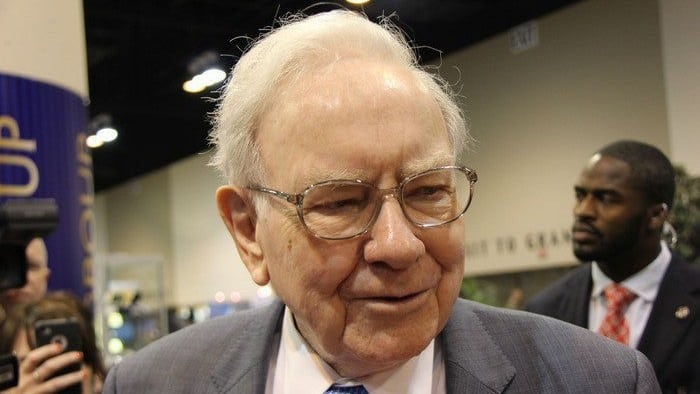
Warren Buffett’s legendary company Berkshire Hathaway Inc (NYSE: BRK.A)(NYSE: BRK.B) is one of the most popular investments in the world. And fair enough.
Many investors (including this writer) can’t resist hitching their financial wagons to a company (and an investor in Buffett) that has achieved some of the most remarkable returns of any stock on the US markets over the past 60 years or so.
To illustrate, one Berkshire Class A share was asking US$1,345 each back in May of 1984. Today, that same share (with no stock splits) was going for US$619,250 at recent pricing. That’s a return of around 46,000% over four decades, enough to make anyone who was lucky enough to own even one share over this period immensely rich.
Buffett himself only owns Berkshire stock, which is why he has an estimated net worth of US$136 billion today.
But those returns reflect the past, not the future of course. So are there any reasons to buy Berkshire Hathaway shares today? Well, I can think of two reasons to buy and one reason why investors might want to hold off.
First up is Berkshire’s enormous and diversified portfolio of underlying investments. Unlike most companies, Berkshire has diversification built in. This stock basically functions as a holding company for Buffett’s underlying investment portfolio. It owns dozens of listed and unlisted assets within it, including public companies, private companies, and government bonds.
Some of Berkshire’s most famous holdings, which have been held for decades in some cases, include Coca-Cola, American Express, Chevron, Bank of America, Kraft Heinz, Geico, BNSF Railway, See’s Candies and Dairy Queen. The company’s largest investment by a country mile is a massive stake in a company we all know â Apple.
But simply, an investment in Berkshire is an investment in a vast and diverse collection of some of the best businesses in America, if not the world.
The second reason to buy Berkshire Hathaway shares today is the company’s culture. Buffett might be in his 90s (more on that in a moment). But he has worked assiduously over the years to ensure that the company’s culture of seeking substantial but honest returns for long-term investors remains Berkshire’s north star. Buffett’s right-hand man, Charlie Munger, is sadly no longer with us. But Buffett has handpicked Greg Abel as his successor at the company, and has also employed two investment officers â Todd Combs and Ted Weschler â in which he has confidence. Buffett tells us that Berkshire will remain in good hands as a result for decades to come.
Well, the elephant in the room when discussing investing in Berkshire today is Buffett’s age. At 93, Buffett’s time at Berkshire and on this planet is lamentably in its inevitable twilight.
Now Buffett may have put a succession plan into place that most investors would be confident in. But at the end of the day, there is only one Warren Buffett. Investors have no guarantee that Abel, Weschler and Combs will be able to keep Berkshire’s past track record going at Berkshire once Buffett has exited the stage.
In addition, Berkshire is a giant of a company today, with a market capitalisation of close to US$900 billion. At this size the company’s growth rate will be difficult to maintain, a problem Buffett himself has struggled with in recent years. Investors might have to face an eventual breakup of Berkshire once Buffett is no longer at the helm, which would make the company’s future even more uncertain.
I’m a shareholder of Berkshire myself, and I would happily buy more shares today if the price were right. Even though Buffett is getting on, I have confidence that he has set up Berkshire for success well into the future. But once Buffett has left the building, investors might want to endeavour to keep a closer eye on the company he will leave behind than they are used to.
The post 2 reasons to buy Berkshire Hathaway shares today (and one not to) appeared first on The Motley Fool Australia.
Before you buy Berkshire Hathaway Inc. shares, consider this:
Motley Fool investing expert Scott Phillips just revealed what he believes are the 5 best stocks for investors to buy right now… and Berkshire Hathaway Inc. wasn’t one of them.
The online investing service heâs run for over a decade, Motley Fool Share Advisor, has provided thousands of paying members with stock picks that have doubled, tripled or even more.*
And right now, Scott thinks there are 5 stocks that may be better buys…
See The 5 Stocks
*Returns as of 5 May 2024
More reading
Bank of America is an advertising partner of The Ascent, a Motley Fool company. American Express is an advertising partner of The Ascent, a Motley Fool company. Motley Fool contributor Sebastian Bowen has positions in American Express, Apple, Berkshire Hathaway, Coca-Cola, and Kraft Heinz. The Motley Fool Australia’s parent company Motley Fool Holdings Inc. has positions in and has recommended Apple, Bank of America, Berkshire Hathaway, and Chevron. The Motley Fool Australia’s parent company Motley Fool Holdings Inc. has recommended Kraft Heinz. The Motley Fool Australia has recommended Apple and Berkshire Hathaway. The Motley Fool has a disclosure policy. This article contains general investment advice only (under AFSL 400691). Authorised by Scott Phillips.